User login
Trump Nominations for US Health Agencies Spark Controversy, Criticism, Praise
President-elect Donald Trump’s vision for the nation’s top health agencies is coming into focus with three nominations announced Nov. 22 that drew both criticism and praise:
- Surgeon and health researcher Martin A. Makary, MD, MPH, to lead the US Food and Drug Administration (FDA).
- Former Republican congressman and physician David J. Weldon, MD, for director of the US Centers for Disease Control and Prevention (CDC).
- Fox News contributor Janette Nesheiwat, MD, for surgeon general.
Earlier in November, Trump nominated vaccine skeptic and former presidential candidate Robert F. Kennedy Jr. to lead the US Department of Health and Human Services (HHS).
Here’s what to know about the latest nominees, who, like Kennedy, must be confirmed by the US Senate.
Martin A. Makary
Currently a professor at the Johns Hopkins School of Medicine and chief of islet transplant surgery at Johns Hopkins Hospital, Makary co-invented in 2006 a surgery checklist that became a widely-used patient safety tool.
As a US FDA commissioner, Makary would preside over a $6.5 billion agency with more than 18,000 employees. The agency, part of HHS, oversees human and animal drugs and vaccines, medical devices, food, tobacco and other products. Some of Makary’s views align closely with those of HHS nominee Kennedy.
Makary is also chief medical officer of telehealth platform Sesame.
Makary was primarily known as a health researcher and author of books about price transparency and the cost of health care until the COVID-19 pandemic, when he became an outspoken critic of the federal response, lambasting restrictions and mandates advocated by the CDC and other public health officials.
In 2023, Makary told the House Select Subcommittee on the COVID Pandemic that federal officials had ignored what he called “natural immunity.” Studies have shown that natural immunity is “at least as effective as vaccinated immunity, and probably better,” testified Makary.
Makary called for an overhaul of the US FDA in a 2021 Fox News opinion, saying that its culture was “defined by counterproductive rigidity and a refusal to adapt.”
Blind Spots, his most recent book, takes on what he calls “medical dogma” and challenges conventional views on subjects ranging from the microbiome to marijuana to cancer prevention, hormone replacement therapy, antibiotics and peanut allergies.
In an interview he posted to X, Makary blames inappropriate use of antibiotics for a variety of childhood illnesses. He cites increases in obesity, learning disabilities, attention deficit disorder, asthma, celiac disease, ulcerative colitis and Crohn’s disease as all potentially causally related to antibiotics given in childhood.
Makary is an advisor to two conservative think tanks, the Foundation for Research on Equal Opportunity, and to Paragon Health Institute, begun in 2021 by two former top officials in the previous Trump administration.
Makary would “cut the bureaucratic red tape at the agency to make sure Americans get the medical cures and treatments they deserve,” Trump said on his social media platform, Truth Social, and in a press release.
While Los Angeles Times owner and physician-entrepreneur Patrick Soon-Shiong, MBBCh, MSc, praised the nomination of Makary (and the two other nominees) as “inspired,” other physicians criticized Makary for his anti-COVID mandate views and “fear-mongering” over COVID vaccine side effects.
Janette Nesheiwat
As surgeon general, Nesheiwat would serve as the top “health communicator in chief” and oversee the 6000 member US Public Health Service Commissioned Corps.
She is a frequent medical contributor to Fox News and serves as a medical director for a group of urgent care clinics in New York. She received her medical degree from the American University of the Caribbean School of Medicine and completed a family medicine residency at the University of Arkansas for Medical Sciences. She is board-certified in family medicine.
Nesheiwat sells vitamin supplements on her website and in December will publish a book on “miracles in medicine” and her Christian faith.
Trump said in a statement that Nesheiwat “is a fierce advocate and strong communicator for preventive medicine and public health. She is committed to ensuring that Americans have access to affordable, quality healthcare, and believes in empowering individuals to take charge of their health to live longer, healthier lives.”
While Nesheiwat was critical of COVID mandates, she voiced more support for COVID vaccines and mask-wearing during the pandemic than her fellow nominees, leading some Trump supporters to criticize her nomination.
“A good appointment, happy about this: I got to know @DoctorJanette during the pandemic, exchanging information. She is very smart, thoughtful, interested in learning, and a compassionate doctor, and…a truly nice person,” noted vaccine researcher Peter Hotez, MD, PhD, said on X.
David J. Weldon
If confirmed, former congressman Weldon would oversee the sprawling CDC, an agency with a roughly $17 billion budget, 15,000 employees or contractors, and numerous centers covering everything from health statistics to vaccines to epidemiology.
After earning his medical degree from the University at Buffalo School of Medicine, Weldon served in the US Army and US Army reserve. The Republican later served for 14 years in Congress representing Florida’s 15th district, which covers the Tampa region.
He now practices as an internist in Brevard County, Florida.
In Congress, Weldon raised concerns about the safety of some vaccines and promoted the false narrative that a former vaccine ingredient, thimerosal, caused autism, the Washington Post reported. Thimerosal has not been used in child vaccines for more than two decades. He also introduced a bill to move vaccine safety oversight from the CDC to an independent agency within HHS.
Trump said in a statement that Weldon “will proudly restore the CDC to its true purpose, and will work to end the Chronic Disease Epidemic.”
But some physicians criticized Weldon for what they called his anti-vaccine views.
A version of this article first appeared on Medscape.com.
President-elect Donald Trump’s vision for the nation’s top health agencies is coming into focus with three nominations announced Nov. 22 that drew both criticism and praise:
- Surgeon and health researcher Martin A. Makary, MD, MPH, to lead the US Food and Drug Administration (FDA).
- Former Republican congressman and physician David J. Weldon, MD, for director of the US Centers for Disease Control and Prevention (CDC).
- Fox News contributor Janette Nesheiwat, MD, for surgeon general.
Earlier in November, Trump nominated vaccine skeptic and former presidential candidate Robert F. Kennedy Jr. to lead the US Department of Health and Human Services (HHS).
Here’s what to know about the latest nominees, who, like Kennedy, must be confirmed by the US Senate.
Martin A. Makary
Currently a professor at the Johns Hopkins School of Medicine and chief of islet transplant surgery at Johns Hopkins Hospital, Makary co-invented in 2006 a surgery checklist that became a widely-used patient safety tool.
As a US FDA commissioner, Makary would preside over a $6.5 billion agency with more than 18,000 employees. The agency, part of HHS, oversees human and animal drugs and vaccines, medical devices, food, tobacco and other products. Some of Makary’s views align closely with those of HHS nominee Kennedy.
Makary is also chief medical officer of telehealth platform Sesame.
Makary was primarily known as a health researcher and author of books about price transparency and the cost of health care until the COVID-19 pandemic, when he became an outspoken critic of the federal response, lambasting restrictions and mandates advocated by the CDC and other public health officials.
In 2023, Makary told the House Select Subcommittee on the COVID Pandemic that federal officials had ignored what he called “natural immunity.” Studies have shown that natural immunity is “at least as effective as vaccinated immunity, and probably better,” testified Makary.
Makary called for an overhaul of the US FDA in a 2021 Fox News opinion, saying that its culture was “defined by counterproductive rigidity and a refusal to adapt.”
Blind Spots, his most recent book, takes on what he calls “medical dogma” and challenges conventional views on subjects ranging from the microbiome to marijuana to cancer prevention, hormone replacement therapy, antibiotics and peanut allergies.
In an interview he posted to X, Makary blames inappropriate use of antibiotics for a variety of childhood illnesses. He cites increases in obesity, learning disabilities, attention deficit disorder, asthma, celiac disease, ulcerative colitis and Crohn’s disease as all potentially causally related to antibiotics given in childhood.
Makary is an advisor to two conservative think tanks, the Foundation for Research on Equal Opportunity, and to Paragon Health Institute, begun in 2021 by two former top officials in the previous Trump administration.
Makary would “cut the bureaucratic red tape at the agency to make sure Americans get the medical cures and treatments they deserve,” Trump said on his social media platform, Truth Social, and in a press release.
While Los Angeles Times owner and physician-entrepreneur Patrick Soon-Shiong, MBBCh, MSc, praised the nomination of Makary (and the two other nominees) as “inspired,” other physicians criticized Makary for his anti-COVID mandate views and “fear-mongering” over COVID vaccine side effects.
Janette Nesheiwat
As surgeon general, Nesheiwat would serve as the top “health communicator in chief” and oversee the 6000 member US Public Health Service Commissioned Corps.
She is a frequent medical contributor to Fox News and serves as a medical director for a group of urgent care clinics in New York. She received her medical degree from the American University of the Caribbean School of Medicine and completed a family medicine residency at the University of Arkansas for Medical Sciences. She is board-certified in family medicine.
Nesheiwat sells vitamin supplements on her website and in December will publish a book on “miracles in medicine” and her Christian faith.
Trump said in a statement that Nesheiwat “is a fierce advocate and strong communicator for preventive medicine and public health. She is committed to ensuring that Americans have access to affordable, quality healthcare, and believes in empowering individuals to take charge of their health to live longer, healthier lives.”
While Nesheiwat was critical of COVID mandates, she voiced more support for COVID vaccines and mask-wearing during the pandemic than her fellow nominees, leading some Trump supporters to criticize her nomination.
“A good appointment, happy about this: I got to know @DoctorJanette during the pandemic, exchanging information. She is very smart, thoughtful, interested in learning, and a compassionate doctor, and…a truly nice person,” noted vaccine researcher Peter Hotez, MD, PhD, said on X.
David J. Weldon
If confirmed, former congressman Weldon would oversee the sprawling CDC, an agency with a roughly $17 billion budget, 15,000 employees or contractors, and numerous centers covering everything from health statistics to vaccines to epidemiology.
After earning his medical degree from the University at Buffalo School of Medicine, Weldon served in the US Army and US Army reserve. The Republican later served for 14 years in Congress representing Florida’s 15th district, which covers the Tampa region.
He now practices as an internist in Brevard County, Florida.
In Congress, Weldon raised concerns about the safety of some vaccines and promoted the false narrative that a former vaccine ingredient, thimerosal, caused autism, the Washington Post reported. Thimerosal has not been used in child vaccines for more than two decades. He also introduced a bill to move vaccine safety oversight from the CDC to an independent agency within HHS.
Trump said in a statement that Weldon “will proudly restore the CDC to its true purpose, and will work to end the Chronic Disease Epidemic.”
But some physicians criticized Weldon for what they called his anti-vaccine views.
A version of this article first appeared on Medscape.com.
President-elect Donald Trump’s vision for the nation’s top health agencies is coming into focus with three nominations announced Nov. 22 that drew both criticism and praise:
- Surgeon and health researcher Martin A. Makary, MD, MPH, to lead the US Food and Drug Administration (FDA).
- Former Republican congressman and physician David J. Weldon, MD, for director of the US Centers for Disease Control and Prevention (CDC).
- Fox News contributor Janette Nesheiwat, MD, for surgeon general.
Earlier in November, Trump nominated vaccine skeptic and former presidential candidate Robert F. Kennedy Jr. to lead the US Department of Health and Human Services (HHS).
Here’s what to know about the latest nominees, who, like Kennedy, must be confirmed by the US Senate.
Martin A. Makary
Currently a professor at the Johns Hopkins School of Medicine and chief of islet transplant surgery at Johns Hopkins Hospital, Makary co-invented in 2006 a surgery checklist that became a widely-used patient safety tool.
As a US FDA commissioner, Makary would preside over a $6.5 billion agency with more than 18,000 employees. The agency, part of HHS, oversees human and animal drugs and vaccines, medical devices, food, tobacco and other products. Some of Makary’s views align closely with those of HHS nominee Kennedy.
Makary is also chief medical officer of telehealth platform Sesame.
Makary was primarily known as a health researcher and author of books about price transparency and the cost of health care until the COVID-19 pandemic, when he became an outspoken critic of the federal response, lambasting restrictions and mandates advocated by the CDC and other public health officials.
In 2023, Makary told the House Select Subcommittee on the COVID Pandemic that federal officials had ignored what he called “natural immunity.” Studies have shown that natural immunity is “at least as effective as vaccinated immunity, and probably better,” testified Makary.
Makary called for an overhaul of the US FDA in a 2021 Fox News opinion, saying that its culture was “defined by counterproductive rigidity and a refusal to adapt.”
Blind Spots, his most recent book, takes on what he calls “medical dogma” and challenges conventional views on subjects ranging from the microbiome to marijuana to cancer prevention, hormone replacement therapy, antibiotics and peanut allergies.
In an interview he posted to X, Makary blames inappropriate use of antibiotics for a variety of childhood illnesses. He cites increases in obesity, learning disabilities, attention deficit disorder, asthma, celiac disease, ulcerative colitis and Crohn’s disease as all potentially causally related to antibiotics given in childhood.
Makary is an advisor to two conservative think tanks, the Foundation for Research on Equal Opportunity, and to Paragon Health Institute, begun in 2021 by two former top officials in the previous Trump administration.
Makary would “cut the bureaucratic red tape at the agency to make sure Americans get the medical cures and treatments they deserve,” Trump said on his social media platform, Truth Social, and in a press release.
While Los Angeles Times owner and physician-entrepreneur Patrick Soon-Shiong, MBBCh, MSc, praised the nomination of Makary (and the two other nominees) as “inspired,” other physicians criticized Makary for his anti-COVID mandate views and “fear-mongering” over COVID vaccine side effects.
Janette Nesheiwat
As surgeon general, Nesheiwat would serve as the top “health communicator in chief” and oversee the 6000 member US Public Health Service Commissioned Corps.
She is a frequent medical contributor to Fox News and serves as a medical director for a group of urgent care clinics in New York. She received her medical degree from the American University of the Caribbean School of Medicine and completed a family medicine residency at the University of Arkansas for Medical Sciences. She is board-certified in family medicine.
Nesheiwat sells vitamin supplements on her website and in December will publish a book on “miracles in medicine” and her Christian faith.
Trump said in a statement that Nesheiwat “is a fierce advocate and strong communicator for preventive medicine and public health. She is committed to ensuring that Americans have access to affordable, quality healthcare, and believes in empowering individuals to take charge of their health to live longer, healthier lives.”
While Nesheiwat was critical of COVID mandates, she voiced more support for COVID vaccines and mask-wearing during the pandemic than her fellow nominees, leading some Trump supporters to criticize her nomination.
“A good appointment, happy about this: I got to know @DoctorJanette during the pandemic, exchanging information. She is very smart, thoughtful, interested in learning, and a compassionate doctor, and…a truly nice person,” noted vaccine researcher Peter Hotez, MD, PhD, said on X.
David J. Weldon
If confirmed, former congressman Weldon would oversee the sprawling CDC, an agency with a roughly $17 billion budget, 15,000 employees or contractors, and numerous centers covering everything from health statistics to vaccines to epidemiology.
After earning his medical degree from the University at Buffalo School of Medicine, Weldon served in the US Army and US Army reserve. The Republican later served for 14 years in Congress representing Florida’s 15th district, which covers the Tampa region.
He now practices as an internist in Brevard County, Florida.
In Congress, Weldon raised concerns about the safety of some vaccines and promoted the false narrative that a former vaccine ingredient, thimerosal, caused autism, the Washington Post reported. Thimerosal has not been used in child vaccines for more than two decades. He also introduced a bill to move vaccine safety oversight from the CDC to an independent agency within HHS.
Trump said in a statement that Weldon “will proudly restore the CDC to its true purpose, and will work to end the Chronic Disease Epidemic.”
But some physicians criticized Weldon for what they called his anti-vaccine views.
A version of this article first appeared on Medscape.com.
Fibrosis Risk High in Young Adults With Both Obesity and T2D
TOPLINE:
METHODOLOGY:
- Researchers aimed to assess the prevalence of hepatic steatosis and clinically significant fibrosis (stage ≥ 2) in young adults without a history of metabolic dysfunction–associated steatotic liver disease (MASLD), hypothesizing that the rates would be comparable with those in older adults, especially in the presence of cardiometabolic risk factors.
- Overall, 1420 participants aged 21-79 years with or without T2D (63% or 37%, respectively) were included from outpatient clinics at the University of Florida, Gainesville, Florida, and divided into two age groups: < 45 years (n = 243) and ≥ 45 years (n = 1177).
- All the participants underwent assessment of liver stiffness via transient elastography, with magnetic resonance elastography (MRE) or liver biopsy recommended when indicated.
- Participants also underwent a medical history review, physical examination, and fasting blood tests to rule out secondary causes of liver disease.
TAKEAWAY:
- Overall, 52% of participants had hepatic steatosis, and 9.5% had clinically significant fibrosis.
- There were no significant differences in the frequencies of hepatic steatosis (50.2% vs 52.7%; P = .6) or clinically significant hepatic fibrosis (7.5% vs 9.9%; P = .2) observed between young and older adults.
- The presence of either T2D or obesity was linked to an increased prevalence of both hepatic steatosis and fibrosis in both the age groups (P < .01).
- In young and older adults, the presence of both T2D and obesity led to the highest rates of both hepatic steatosis and clinically significant fibrosis, with the latter rate being statistically similar between the groups (15.7% vs 17.3%; P = .2).
- The presence of T2D and obesity was the strongest risk factors for hepatic fibrosis in young adults (odds ratios, 4.33 and 1.16, respectively; P < .05 for both).
IN PRACTICE:
“The clinical implication is that young adults with obesity and T2D carry a high risk of future cirrhosis, possibly as high as older adults, and must be aggressively screened at the first visit and carefully followed,” the authors wrote.
SOURCE:
This study, led by Anu Sharma, University of Florida College of Medicine, Gainesville, was published online in Obesity.
LIMITATIONS:
The diagnosis of clinically significant hepatic fibrosis was confirmed via MRE and/or liver biopsy in only 30% of all participants. The study population included a slightly higher proportion of young adults with obesity, T2D, and other cardiometabolic risk factors than that in national averages, which may have limited its generalizability. Genetic variants associated with MASLD were not included in this study.
DISCLOSURES:
This study was funded partly by grants from the National Institutes of Health and Echosens. One author disclosed receiving research support and serving as a consultant for various pharmaceutical companies.
This article was created using several editorial tools, including AI, as part of the process. Human editors reviewed this content before publication. A version of this article first appeared on Medscape.com.
TOPLINE:
METHODOLOGY:
- Researchers aimed to assess the prevalence of hepatic steatosis and clinically significant fibrosis (stage ≥ 2) in young adults without a history of metabolic dysfunction–associated steatotic liver disease (MASLD), hypothesizing that the rates would be comparable with those in older adults, especially in the presence of cardiometabolic risk factors.
- Overall, 1420 participants aged 21-79 years with or without T2D (63% or 37%, respectively) were included from outpatient clinics at the University of Florida, Gainesville, Florida, and divided into two age groups: < 45 years (n = 243) and ≥ 45 years (n = 1177).
- All the participants underwent assessment of liver stiffness via transient elastography, with magnetic resonance elastography (MRE) or liver biopsy recommended when indicated.
- Participants also underwent a medical history review, physical examination, and fasting blood tests to rule out secondary causes of liver disease.
TAKEAWAY:
- Overall, 52% of participants had hepatic steatosis, and 9.5% had clinically significant fibrosis.
- There were no significant differences in the frequencies of hepatic steatosis (50.2% vs 52.7%; P = .6) or clinically significant hepatic fibrosis (7.5% vs 9.9%; P = .2) observed between young and older adults.
- The presence of either T2D or obesity was linked to an increased prevalence of both hepatic steatosis and fibrosis in both the age groups (P < .01).
- In young and older adults, the presence of both T2D and obesity led to the highest rates of both hepatic steatosis and clinically significant fibrosis, with the latter rate being statistically similar between the groups (15.7% vs 17.3%; P = .2).
- The presence of T2D and obesity was the strongest risk factors for hepatic fibrosis in young adults (odds ratios, 4.33 and 1.16, respectively; P < .05 for both).
IN PRACTICE:
“The clinical implication is that young adults with obesity and T2D carry a high risk of future cirrhosis, possibly as high as older adults, and must be aggressively screened at the first visit and carefully followed,” the authors wrote.
SOURCE:
This study, led by Anu Sharma, University of Florida College of Medicine, Gainesville, was published online in Obesity.
LIMITATIONS:
The diagnosis of clinically significant hepatic fibrosis was confirmed via MRE and/or liver biopsy in only 30% of all participants. The study population included a slightly higher proportion of young adults with obesity, T2D, and other cardiometabolic risk factors than that in national averages, which may have limited its generalizability. Genetic variants associated with MASLD were not included in this study.
DISCLOSURES:
This study was funded partly by grants from the National Institutes of Health and Echosens. One author disclosed receiving research support and serving as a consultant for various pharmaceutical companies.
This article was created using several editorial tools, including AI, as part of the process. Human editors reviewed this content before publication. A version of this article first appeared on Medscape.com.
TOPLINE:
METHODOLOGY:
- Researchers aimed to assess the prevalence of hepatic steatosis and clinically significant fibrosis (stage ≥ 2) in young adults without a history of metabolic dysfunction–associated steatotic liver disease (MASLD), hypothesizing that the rates would be comparable with those in older adults, especially in the presence of cardiometabolic risk factors.
- Overall, 1420 participants aged 21-79 years with or without T2D (63% or 37%, respectively) were included from outpatient clinics at the University of Florida, Gainesville, Florida, and divided into two age groups: < 45 years (n = 243) and ≥ 45 years (n = 1177).
- All the participants underwent assessment of liver stiffness via transient elastography, with magnetic resonance elastography (MRE) or liver biopsy recommended when indicated.
- Participants also underwent a medical history review, physical examination, and fasting blood tests to rule out secondary causes of liver disease.
TAKEAWAY:
- Overall, 52% of participants had hepatic steatosis, and 9.5% had clinically significant fibrosis.
- There were no significant differences in the frequencies of hepatic steatosis (50.2% vs 52.7%; P = .6) or clinically significant hepatic fibrosis (7.5% vs 9.9%; P = .2) observed between young and older adults.
- The presence of either T2D or obesity was linked to an increased prevalence of both hepatic steatosis and fibrosis in both the age groups (P < .01).
- In young and older adults, the presence of both T2D and obesity led to the highest rates of both hepatic steatosis and clinically significant fibrosis, with the latter rate being statistically similar between the groups (15.7% vs 17.3%; P = .2).
- The presence of T2D and obesity was the strongest risk factors for hepatic fibrosis in young adults (odds ratios, 4.33 and 1.16, respectively; P < .05 for both).
IN PRACTICE:
“The clinical implication is that young adults with obesity and T2D carry a high risk of future cirrhosis, possibly as high as older adults, and must be aggressively screened at the first visit and carefully followed,” the authors wrote.
SOURCE:
This study, led by Anu Sharma, University of Florida College of Medicine, Gainesville, was published online in Obesity.
LIMITATIONS:
The diagnosis of clinically significant hepatic fibrosis was confirmed via MRE and/or liver biopsy in only 30% of all participants. The study population included a slightly higher proportion of young adults with obesity, T2D, and other cardiometabolic risk factors than that in national averages, which may have limited its generalizability. Genetic variants associated with MASLD were not included in this study.
DISCLOSURES:
This study was funded partly by grants from the National Institutes of Health and Echosens. One author disclosed receiving research support and serving as a consultant for various pharmaceutical companies.
This article was created using several editorial tools, including AI, as part of the process. Human editors reviewed this content before publication. A version of this article first appeared on Medscape.com.
Eliminate Clozapine REMS, FDA Panels Say
Two Food and Drug Administration (FDA) advisory panels are urging the agency to eliminate the risk management program for the antipsychotic drug clozapine, saying that restrictions are limiting access to a life-changing and life-saving medication for people with schizophrenia.
Members of the Drug Safety and Risk Management and Psychopharmacologic Drugs advisory committees held a joint meeting on November 19 to address whether frequently revised restrictions that have been in place since clozapine was introduced in 1989 should be changed again. Clozapine — the only FDA-approved drug for treatment-resistant schizophrenia — can cause severe neutropenia, so is subject to a Risk Evaluation and Management Strategy (REMS).
Calling the current rules overly burdensome, a majority of committee members voted against continuing a requirement that pharmacies and physicians must provide documentation of a patient’s absolute neutrophil count (ANC) results through the REMS. Monitoring should continue, as directed in the labeling, said the panel.
Panelists also voted overwhelmingly that it is not necessary to mandate physician education about clozapine’s risk of neutropenia and the need for ANC monitoring.
The panel did not vote, however, on whether the REMS should be eliminated altogether. The FDA did not pose that as a voting question for the panels’ consideration.
Following intense lobbying by the American Psychiatric Association (APA), the National Alliance on Mental Illness, and others, the FDA announced in 2022 that the agency would exercise “enforcement discretion” by allowing prescribers and pharmacists to skirt the clozapine REMS rules. But the agency doesn’t know whether the program is meeting its goals, said Tiffany R. Farchione, MD, director of the division of psychiatry at the FDA’s Center for Drug Evaluation and Research.
Among other things, the REMS requires that physicians and pharmacists be certified to prescribe and dispense the drug, that patients be enrolled, and that patient status forms be submitted monthly, showing ANC levels and appropriateness of continuing treatment.
At the meeting, FDA officials said that 148,000 outpatient clozapine prescriptions were written in 2023. But an estimated 814,000–1.2 million Americans have treatment-resistant schizophrenia, the main indication for clozapine.
“We know the drug is being underutilized,” said Farchione, adding that the agency wants to ensure that physicians and pharmacists “can use the drug, use it safely and help the patients who need it.”
REMS a ‘Hindrance’
As reported by this news organization, research presented earlier this year at the APA annual meeting showed that the risk of moderate and severe neutropenia is low to minimal in people taking clozapine for treatment-resistant schizophrenia. Those findings prompted the study’s investigators to suggest clozapine REMS should be reconsidered.
In the November 19th committee meeting, many panelists said that clozapine was no more dangerous than many antipsychotics and that the administrative requirements were preventing clinicians from prescribing.
“I have fantasized for years about abolishing the clozapine REMS,” said Jacob S. Ballon, MD, MPH, a temporary panel member and associate professor of psychiatry at Stanford University in California.
Panelists Jess Fiedorowicz, MD, PhD, professor and senior research chair in adult psychiatry at the University of Ottawa, Canada; Megan J. Ehret, PharmD, MS, a panelist and professor at the University of Maryland School of Pharmacy, Baltimore; and Rajesh Narendran, MD, a professor in radiology and psychiatry at the University of Pittsburgh School of Medicine in Pennsylvania, agreed.
“I strongly feel that the REMS at this point is just a hindrance,” Narendran said. “I think you should get rid of the REMS.”
However, panelist Walter Dunn, MD, PhD, staff psychiatrist at the VA Greater Los Angeles Healthcare System, cautioned that modifying or eliminating the REMS might not necessarily increase prescribers. If monitoring ANC levels is still recommended in labeling, clinicians will still regard it as the standard of care, said Dunn. And “there are a whole host of other issues associated with clozapine,” that he said were “more concerning.”
Many patients are accessing clozapine without going through the REMS, which is also of concern to the FDA and drug manufacturers.
“We estimate about 42,000 patients are not participating in the REMS, said James Shamp, VP of data intelligence and program analytics at United BioSource, a company that supports drug makers.
Leah Hart, PharmD, a risk management analyst with the FDA, told the panel that the agency estimates that 25%-35% of patients taking clozapine may not be participating in the REMS.
“Today, prescribers, pharmacies, and patients do not have to participate in the REMS in order patients to obtain clozapine,” Hart said.
Public Testimony Sways Panel
But psychiatrists, pharmacists, families, and patients who testified during the 90-minute open portion of the meeting disagreed with that assessment, saying the REMS program had a devastatingly chilling effect on clozapine access.
Patty Taggart of Las Vegas said her daughter had nine suicide attempts over the past 14 years, while having tried eight different antipsychotics. In August, after the most-recent attempt, Taggart begged the psychiatrist to prescribe clozapine to her daughter. The clinician refused, citing the REMS. After her daughter’s discharge, Taggart said she found another provider who would prescribe the medication.
Lisa Castellanos said her son Daniel had been treated with a variety of antipsychotics but denied clozapine until he was arrested in 2012 for assault during a psychotic break. The state used the medication to improve Daniel’s mental state so he could stand trial. But when he went to jail after accepting a plea deal, the prison stopped the clozapine. Daniel has since deteriorated and was recently ruled ineligible for parole.
Patients and families also described being rejected at pharmacies — most of which, despite the FDA’s supposed “enforcement discretion” continue to rigorously follow REMS requirements.
Many panelists said they were moved by patients and family testimony. A dozen or more members of the public were wearing black t-shirts with white writing that declared: “Clozapine is the safest antipsychotic in the world.”
‘Blood-for-Drug Program’
Brian Barnett, MD, director of the psychiatric treatment-resistance program at the Cleveland Clinic in Ohio, said during the public portion of the meeting that “many pharmacies simply refuse to dispense clozapine likely because of the administrative burden and lack of financial incentives.”
Others want faxed lab results even when the results have been filed electronically, he said. “One of the most dangerous features of the current REMS system is its inflexibility, driven by the so-called ‘no blood, no drug’ ethos which has been baked into the minds of America’s pharmacists.”
“This is a blood-for-drug program,” agreed Rachel Strieff of Tempe, Arizona, who noted that her advocacy group, Angry Moms, and others had submitted 4,000 signatures calling for the end of the REMS. “The largest category of patients harmed by the clozapine REMS have never taken a single dose,” she said, noting that millions of eligible individuals are not getting the drug.
Panel chair James Floyd, MD, professor of medicine at the University of Washington, Seattle, said the public testimony was “very moving.” Families and patients had described “the intensity of suffering that people go through prior to getting to clozapine,” he added.
“We have to listen to that,” said Floyd.
“I want you to know that we hear you,” said Farchione. “We’re here today because of you and your loved ones. And your stories are important, and your experience is important, and what you’ve shared today will have an impact on regulatory decision making.”
While the FDA typically follows its panels’ advice, it’s unclear if the agency will do so for clozapine REMS or when it will release its final decision.
A version of this article appeared on Medscape.com.
Two Food and Drug Administration (FDA) advisory panels are urging the agency to eliminate the risk management program for the antipsychotic drug clozapine, saying that restrictions are limiting access to a life-changing and life-saving medication for people with schizophrenia.
Members of the Drug Safety and Risk Management and Psychopharmacologic Drugs advisory committees held a joint meeting on November 19 to address whether frequently revised restrictions that have been in place since clozapine was introduced in 1989 should be changed again. Clozapine — the only FDA-approved drug for treatment-resistant schizophrenia — can cause severe neutropenia, so is subject to a Risk Evaluation and Management Strategy (REMS).
Calling the current rules overly burdensome, a majority of committee members voted against continuing a requirement that pharmacies and physicians must provide documentation of a patient’s absolute neutrophil count (ANC) results through the REMS. Monitoring should continue, as directed in the labeling, said the panel.
Panelists also voted overwhelmingly that it is not necessary to mandate physician education about clozapine’s risk of neutropenia and the need for ANC monitoring.
The panel did not vote, however, on whether the REMS should be eliminated altogether. The FDA did not pose that as a voting question for the panels’ consideration.
Following intense lobbying by the American Psychiatric Association (APA), the National Alliance on Mental Illness, and others, the FDA announced in 2022 that the agency would exercise “enforcement discretion” by allowing prescribers and pharmacists to skirt the clozapine REMS rules. But the agency doesn’t know whether the program is meeting its goals, said Tiffany R. Farchione, MD, director of the division of psychiatry at the FDA’s Center for Drug Evaluation and Research.
Among other things, the REMS requires that physicians and pharmacists be certified to prescribe and dispense the drug, that patients be enrolled, and that patient status forms be submitted monthly, showing ANC levels and appropriateness of continuing treatment.
At the meeting, FDA officials said that 148,000 outpatient clozapine prescriptions were written in 2023. But an estimated 814,000–1.2 million Americans have treatment-resistant schizophrenia, the main indication for clozapine.
“We know the drug is being underutilized,” said Farchione, adding that the agency wants to ensure that physicians and pharmacists “can use the drug, use it safely and help the patients who need it.”
REMS a ‘Hindrance’
As reported by this news organization, research presented earlier this year at the APA annual meeting showed that the risk of moderate and severe neutropenia is low to minimal in people taking clozapine for treatment-resistant schizophrenia. Those findings prompted the study’s investigators to suggest clozapine REMS should be reconsidered.
In the November 19th committee meeting, many panelists said that clozapine was no more dangerous than many antipsychotics and that the administrative requirements were preventing clinicians from prescribing.
“I have fantasized for years about abolishing the clozapine REMS,” said Jacob S. Ballon, MD, MPH, a temporary panel member and associate professor of psychiatry at Stanford University in California.
Panelists Jess Fiedorowicz, MD, PhD, professor and senior research chair in adult psychiatry at the University of Ottawa, Canada; Megan J. Ehret, PharmD, MS, a panelist and professor at the University of Maryland School of Pharmacy, Baltimore; and Rajesh Narendran, MD, a professor in radiology and psychiatry at the University of Pittsburgh School of Medicine in Pennsylvania, agreed.
“I strongly feel that the REMS at this point is just a hindrance,” Narendran said. “I think you should get rid of the REMS.”
However, panelist Walter Dunn, MD, PhD, staff psychiatrist at the VA Greater Los Angeles Healthcare System, cautioned that modifying or eliminating the REMS might not necessarily increase prescribers. If monitoring ANC levels is still recommended in labeling, clinicians will still regard it as the standard of care, said Dunn. And “there are a whole host of other issues associated with clozapine,” that he said were “more concerning.”
Many patients are accessing clozapine without going through the REMS, which is also of concern to the FDA and drug manufacturers.
“We estimate about 42,000 patients are not participating in the REMS, said James Shamp, VP of data intelligence and program analytics at United BioSource, a company that supports drug makers.
Leah Hart, PharmD, a risk management analyst with the FDA, told the panel that the agency estimates that 25%-35% of patients taking clozapine may not be participating in the REMS.
“Today, prescribers, pharmacies, and patients do not have to participate in the REMS in order patients to obtain clozapine,” Hart said.
Public Testimony Sways Panel
But psychiatrists, pharmacists, families, and patients who testified during the 90-minute open portion of the meeting disagreed with that assessment, saying the REMS program had a devastatingly chilling effect on clozapine access.
Patty Taggart of Las Vegas said her daughter had nine suicide attempts over the past 14 years, while having tried eight different antipsychotics. In August, after the most-recent attempt, Taggart begged the psychiatrist to prescribe clozapine to her daughter. The clinician refused, citing the REMS. After her daughter’s discharge, Taggart said she found another provider who would prescribe the medication.
Lisa Castellanos said her son Daniel had been treated with a variety of antipsychotics but denied clozapine until he was arrested in 2012 for assault during a psychotic break. The state used the medication to improve Daniel’s mental state so he could stand trial. But when he went to jail after accepting a plea deal, the prison stopped the clozapine. Daniel has since deteriorated and was recently ruled ineligible for parole.
Patients and families also described being rejected at pharmacies — most of which, despite the FDA’s supposed “enforcement discretion” continue to rigorously follow REMS requirements.
Many panelists said they were moved by patients and family testimony. A dozen or more members of the public were wearing black t-shirts with white writing that declared: “Clozapine is the safest antipsychotic in the world.”
‘Blood-for-Drug Program’
Brian Barnett, MD, director of the psychiatric treatment-resistance program at the Cleveland Clinic in Ohio, said during the public portion of the meeting that “many pharmacies simply refuse to dispense clozapine likely because of the administrative burden and lack of financial incentives.”
Others want faxed lab results even when the results have been filed electronically, he said. “One of the most dangerous features of the current REMS system is its inflexibility, driven by the so-called ‘no blood, no drug’ ethos which has been baked into the minds of America’s pharmacists.”
“This is a blood-for-drug program,” agreed Rachel Strieff of Tempe, Arizona, who noted that her advocacy group, Angry Moms, and others had submitted 4,000 signatures calling for the end of the REMS. “The largest category of patients harmed by the clozapine REMS have never taken a single dose,” she said, noting that millions of eligible individuals are not getting the drug.
Panel chair James Floyd, MD, professor of medicine at the University of Washington, Seattle, said the public testimony was “very moving.” Families and patients had described “the intensity of suffering that people go through prior to getting to clozapine,” he added.
“We have to listen to that,” said Floyd.
“I want you to know that we hear you,” said Farchione. “We’re here today because of you and your loved ones. And your stories are important, and your experience is important, and what you’ve shared today will have an impact on regulatory decision making.”
While the FDA typically follows its panels’ advice, it’s unclear if the agency will do so for clozapine REMS or when it will release its final decision.
A version of this article appeared on Medscape.com.
Two Food and Drug Administration (FDA) advisory panels are urging the agency to eliminate the risk management program for the antipsychotic drug clozapine, saying that restrictions are limiting access to a life-changing and life-saving medication for people with schizophrenia.
Members of the Drug Safety and Risk Management and Psychopharmacologic Drugs advisory committees held a joint meeting on November 19 to address whether frequently revised restrictions that have been in place since clozapine was introduced in 1989 should be changed again. Clozapine — the only FDA-approved drug for treatment-resistant schizophrenia — can cause severe neutropenia, so is subject to a Risk Evaluation and Management Strategy (REMS).
Calling the current rules overly burdensome, a majority of committee members voted against continuing a requirement that pharmacies and physicians must provide documentation of a patient’s absolute neutrophil count (ANC) results through the REMS. Monitoring should continue, as directed in the labeling, said the panel.
Panelists also voted overwhelmingly that it is not necessary to mandate physician education about clozapine’s risk of neutropenia and the need for ANC monitoring.
The panel did not vote, however, on whether the REMS should be eliminated altogether. The FDA did not pose that as a voting question for the panels’ consideration.
Following intense lobbying by the American Psychiatric Association (APA), the National Alliance on Mental Illness, and others, the FDA announced in 2022 that the agency would exercise “enforcement discretion” by allowing prescribers and pharmacists to skirt the clozapine REMS rules. But the agency doesn’t know whether the program is meeting its goals, said Tiffany R. Farchione, MD, director of the division of psychiatry at the FDA’s Center for Drug Evaluation and Research.
Among other things, the REMS requires that physicians and pharmacists be certified to prescribe and dispense the drug, that patients be enrolled, and that patient status forms be submitted monthly, showing ANC levels and appropriateness of continuing treatment.
At the meeting, FDA officials said that 148,000 outpatient clozapine prescriptions were written in 2023. But an estimated 814,000–1.2 million Americans have treatment-resistant schizophrenia, the main indication for clozapine.
“We know the drug is being underutilized,” said Farchione, adding that the agency wants to ensure that physicians and pharmacists “can use the drug, use it safely and help the patients who need it.”
REMS a ‘Hindrance’
As reported by this news organization, research presented earlier this year at the APA annual meeting showed that the risk of moderate and severe neutropenia is low to minimal in people taking clozapine for treatment-resistant schizophrenia. Those findings prompted the study’s investigators to suggest clozapine REMS should be reconsidered.
In the November 19th committee meeting, many panelists said that clozapine was no more dangerous than many antipsychotics and that the administrative requirements were preventing clinicians from prescribing.
“I have fantasized for years about abolishing the clozapine REMS,” said Jacob S. Ballon, MD, MPH, a temporary panel member and associate professor of psychiatry at Stanford University in California.
Panelists Jess Fiedorowicz, MD, PhD, professor and senior research chair in adult psychiatry at the University of Ottawa, Canada; Megan J. Ehret, PharmD, MS, a panelist and professor at the University of Maryland School of Pharmacy, Baltimore; and Rajesh Narendran, MD, a professor in radiology and psychiatry at the University of Pittsburgh School of Medicine in Pennsylvania, agreed.
“I strongly feel that the REMS at this point is just a hindrance,” Narendran said. “I think you should get rid of the REMS.”
However, panelist Walter Dunn, MD, PhD, staff psychiatrist at the VA Greater Los Angeles Healthcare System, cautioned that modifying or eliminating the REMS might not necessarily increase prescribers. If monitoring ANC levels is still recommended in labeling, clinicians will still regard it as the standard of care, said Dunn. And “there are a whole host of other issues associated with clozapine,” that he said were “more concerning.”
Many patients are accessing clozapine without going through the REMS, which is also of concern to the FDA and drug manufacturers.
“We estimate about 42,000 patients are not participating in the REMS, said James Shamp, VP of data intelligence and program analytics at United BioSource, a company that supports drug makers.
Leah Hart, PharmD, a risk management analyst with the FDA, told the panel that the agency estimates that 25%-35% of patients taking clozapine may not be participating in the REMS.
“Today, prescribers, pharmacies, and patients do not have to participate in the REMS in order patients to obtain clozapine,” Hart said.
Public Testimony Sways Panel
But psychiatrists, pharmacists, families, and patients who testified during the 90-minute open portion of the meeting disagreed with that assessment, saying the REMS program had a devastatingly chilling effect on clozapine access.
Patty Taggart of Las Vegas said her daughter had nine suicide attempts over the past 14 years, while having tried eight different antipsychotics. In August, after the most-recent attempt, Taggart begged the psychiatrist to prescribe clozapine to her daughter. The clinician refused, citing the REMS. After her daughter’s discharge, Taggart said she found another provider who would prescribe the medication.
Lisa Castellanos said her son Daniel had been treated with a variety of antipsychotics but denied clozapine until he was arrested in 2012 for assault during a psychotic break. The state used the medication to improve Daniel’s mental state so he could stand trial. But when he went to jail after accepting a plea deal, the prison stopped the clozapine. Daniel has since deteriorated and was recently ruled ineligible for parole.
Patients and families also described being rejected at pharmacies — most of which, despite the FDA’s supposed “enforcement discretion” continue to rigorously follow REMS requirements.
Many panelists said they were moved by patients and family testimony. A dozen or more members of the public were wearing black t-shirts with white writing that declared: “Clozapine is the safest antipsychotic in the world.”
‘Blood-for-Drug Program’
Brian Barnett, MD, director of the psychiatric treatment-resistance program at the Cleveland Clinic in Ohio, said during the public portion of the meeting that “many pharmacies simply refuse to dispense clozapine likely because of the administrative burden and lack of financial incentives.”
Others want faxed lab results even when the results have been filed electronically, he said. “One of the most dangerous features of the current REMS system is its inflexibility, driven by the so-called ‘no blood, no drug’ ethos which has been baked into the minds of America’s pharmacists.”
“This is a blood-for-drug program,” agreed Rachel Strieff of Tempe, Arizona, who noted that her advocacy group, Angry Moms, and others had submitted 4,000 signatures calling for the end of the REMS. “The largest category of patients harmed by the clozapine REMS have never taken a single dose,” she said, noting that millions of eligible individuals are not getting the drug.
Panel chair James Floyd, MD, professor of medicine at the University of Washington, Seattle, said the public testimony was “very moving.” Families and patients had described “the intensity of suffering that people go through prior to getting to clozapine,” he added.
“We have to listen to that,” said Floyd.
“I want you to know that we hear you,” said Farchione. “We’re here today because of you and your loved ones. And your stories are important, and your experience is important, and what you’ve shared today will have an impact on regulatory decision making.”
While the FDA typically follows its panels’ advice, it’s unclear if the agency will do so for clozapine REMS or when it will release its final decision.
A version of this article appeared on Medscape.com.
Low-Dose Oral Minoxidil: Expert Consensus Provide Guidance for Treating Hair Loss
. With large randomized, controlled trials lacking, the guidelines authors and other dermatologists said the paper provides practical pointers that should increase clinicians’ confidence in prescribing LDOM for hair loss.
Comfort and Confidence
Benjamin N. Ungar, MD, director of the Alopecia Center of Excellence at Mount Sinai Icahn School of Medicine, New York City, said he hopes that the guidelines will “make dermatologists in practice more comfortable with the use of low-dose oral minoxidil to treat different kinds of hair loss, and therefore, more patients will benefit.” He was not an author of the paper, which was published online in JAMA Dermatology on November 20, but was asked to comment.
Members of the multidisciplinary Low-Dose Oral Minoxidil Initiation steering committee recruited dermatologists with hair loss expertise from 12 countries. Using a modified four-round Delphi process that required at least 70% agreement, the group of 43 dermatologists crafted 76 consensus statements. “Notably,” said Co-senior author Jennifer Fu, MD, director of the Hair Disorders Clinic at the University of California, San Francisco, “27 items achieved at least 90% consensus after the first two rounds, indicating broad agreement in expert practice.”

Indications for LDOM
At least 90% of experts concurred regarding the appropriateness of LDOM use for androgenetic alopecia (AGA) and age-related thinning and in cases where topical minoxidil proves ineffective or problematic. Additional situations in which LDOM might provide direct benefit involve follicular miniaturization, such as alopecia areata, or hair cycle disruption, such as chemotherapy. The authors also recommended considering LDOM over topical minoxidil when the latter is more expensive and when patients desire enhanced hypertrichosis.
Contraindications and Precautions
Before prescribing LDOM, the authors wrote, clinicians may consult with primary care or cardiology when contraindications (cardiovascular issues, pregnancy/nursing, and potential drug interactions) or precautions (history of tachycardia or arrhythmia, hypotension, or impaired kidney function) exist. Patients with precautions may require blood pressure monitoring, as well as monitoring for adverse effects of treatment. The panel also suggested the latter for all patients at the time of LDOM initiation and dose escalation. The authors advised against routine baseline laboratory and EKG testing in cases without relevant precautions.

Dosing Considerations
Along with systemic adverse event risk and baseline hair loss severity, key dosing considerations include patient age, sex, and whether patients desire hypertrichosis. Consensus on daily doses for adolescent females and males begins at 0.625 mg and 1.25 mg, respectively, and ranges up to 2.5 mg for adolescent females vs 5 mg for adult females and adolescent and adult males.
Presently, said Ungar, many dermatologists — including some who prescribe LDOM — remain uncomfortable even with very low doses, perhaps because of an invalid perception of cardiovascular safety issues including potential hypotension and pericardial effusions. However, recently published data include a review published November 7 in the Journal of the American Academy of Dermatology, which showed no significant effect of LDOM on blood pressure. And in a September Journal of Drugs in Dermatology article the authors found no impact on pericardial effusions in a 100-patient cohort.
Some dermatologists worry about the impact hypertrichosis may have on patients, Ungar added. Although incidence estimates range from 15% to 30%, he said, more than half of his patients experience hypertrichosis. “However, most continue treatment because the beneficial effects outweigh the effect of hypertrichosis.”
Practical Roadmap
Adam Friedman, MD, who was not involved with the publication, applauds its inclusion of pragmatic clinical guidance, which he said consensus papers often lack. “This paper sets a great roadmap for working low-dose oral minoxidil into your clinical practice, Friedman, professor and chair of dermatology at George Washington University, Washington, DC, said in an interview.
Rather than limiting LDOM use to AGA, he said, the paper is most helpful in showing the spectrum of disease states for which the expert panel prescribes LDOM. “We use it as adjunctive therapy for many other things, both scarring and nonscarring hair loss,” he added.
In appropriate clinical contexts, the authors wrote, clinicians may consider combining LDOM with spironolactone or beta-blockers. Friedman said that in his hands, combining LDOM with a 5-alpha reductase inhibitor (5ARI) is “absolutely outstanding.” Minoxidil increases blood flow to the scalp, he explained, while 5ARIs prevent production of dihydrotestosterone, which miniaturizes hair.
Fu said, “We hope these consensus outcomes will be helpful to dermatology colleagues as they consider using LDOM to treat hair loss in their adult and adolescent patient populations. We anticipate that these guidelines will be updated as additional evidence-based data emerges and are encouraged that we are already seeing new publications on this topic.”
Important areas for future research, she noted, include pediatric use of LDOM, the comparative efficacy of topical vs oral minoxidil, the safety of oral minoxidil for patients with a history of allergic contact dermatitis to topical minoxidil, and the use of other off-label forms of minoxidil, such as compounded oral minoxidil and sublingual minoxidil.
The study was funded by the University of California, San Francisco, Department of Dermatology Medical Student Summer Research Fellowship Program. Fu reported personal fees from Pfizer, Eli Lilly and Company, and Sun Pharma outside of the study. The full list of author disclosures can be found in the paper. Ungar and Friedman reported no relevant financial relationships.
A version of this article appeared on Medscape.com.
. With large randomized, controlled trials lacking, the guidelines authors and other dermatologists said the paper provides practical pointers that should increase clinicians’ confidence in prescribing LDOM for hair loss.
Comfort and Confidence
Benjamin N. Ungar, MD, director of the Alopecia Center of Excellence at Mount Sinai Icahn School of Medicine, New York City, said he hopes that the guidelines will “make dermatologists in practice more comfortable with the use of low-dose oral minoxidil to treat different kinds of hair loss, and therefore, more patients will benefit.” He was not an author of the paper, which was published online in JAMA Dermatology on November 20, but was asked to comment.
Members of the multidisciplinary Low-Dose Oral Minoxidil Initiation steering committee recruited dermatologists with hair loss expertise from 12 countries. Using a modified four-round Delphi process that required at least 70% agreement, the group of 43 dermatologists crafted 76 consensus statements. “Notably,” said Co-senior author Jennifer Fu, MD, director of the Hair Disorders Clinic at the University of California, San Francisco, “27 items achieved at least 90% consensus after the first two rounds, indicating broad agreement in expert practice.”
Indications for LDOM
At least 90% of experts concurred regarding the appropriateness of LDOM use for androgenetic alopecia (AGA) and age-related thinning and in cases where topical minoxidil proves ineffective or problematic. Additional situations in which LDOM might provide direct benefit involve follicular miniaturization, such as alopecia areata, or hair cycle disruption, such as chemotherapy. The authors also recommended considering LDOM over topical minoxidil when the latter is more expensive and when patients desire enhanced hypertrichosis.
Contraindications and Precautions
Before prescribing LDOM, the authors wrote, clinicians may consult with primary care or cardiology when contraindications (cardiovascular issues, pregnancy/nursing, and potential drug interactions) or precautions (history of tachycardia or arrhythmia, hypotension, or impaired kidney function) exist. Patients with precautions may require blood pressure monitoring, as well as monitoring for adverse effects of treatment. The panel also suggested the latter for all patients at the time of LDOM initiation and dose escalation. The authors advised against routine baseline laboratory and EKG testing in cases without relevant precautions.
Dosing Considerations
Along with systemic adverse event risk and baseline hair loss severity, key dosing considerations include patient age, sex, and whether patients desire hypertrichosis. Consensus on daily doses for adolescent females and males begins at 0.625 mg and 1.25 mg, respectively, and ranges up to 2.5 mg for adolescent females vs 5 mg for adult females and adolescent and adult males.
Presently, said Ungar, many dermatologists — including some who prescribe LDOM — remain uncomfortable even with very low doses, perhaps because of an invalid perception of cardiovascular safety issues including potential hypotension and pericardial effusions. However, recently published data include a review published November 7 in the Journal of the American Academy of Dermatology, which showed no significant effect of LDOM on blood pressure. And in a September Journal of Drugs in Dermatology article the authors found no impact on pericardial effusions in a 100-patient cohort.
Some dermatologists worry about the impact hypertrichosis may have on patients, Ungar added. Although incidence estimates range from 15% to 30%, he said, more than half of his patients experience hypertrichosis. “However, most continue treatment because the beneficial effects outweigh the effect of hypertrichosis.”
Practical Roadmap
Adam Friedman, MD, who was not involved with the publication, applauds its inclusion of pragmatic clinical guidance, which he said consensus papers often lack. “This paper sets a great roadmap for working low-dose oral minoxidil into your clinical practice, Friedman, professor and chair of dermatology at George Washington University, Washington, DC, said in an interview.
Rather than limiting LDOM use to AGA, he said, the paper is most helpful in showing the spectrum of disease states for which the expert panel prescribes LDOM. “We use it as adjunctive therapy for many other things, both scarring and nonscarring hair loss,” he added.
In appropriate clinical contexts, the authors wrote, clinicians may consider combining LDOM with spironolactone or beta-blockers. Friedman said that in his hands, combining LDOM with a 5-alpha reductase inhibitor (5ARI) is “absolutely outstanding.” Minoxidil increases blood flow to the scalp, he explained, while 5ARIs prevent production of dihydrotestosterone, which miniaturizes hair.
Fu said, “We hope these consensus outcomes will be helpful to dermatology colleagues as they consider using LDOM to treat hair loss in their adult and adolescent patient populations. We anticipate that these guidelines will be updated as additional evidence-based data emerges and are encouraged that we are already seeing new publications on this topic.”
Important areas for future research, she noted, include pediatric use of LDOM, the comparative efficacy of topical vs oral minoxidil, the safety of oral minoxidil for patients with a history of allergic contact dermatitis to topical minoxidil, and the use of other off-label forms of minoxidil, such as compounded oral minoxidil and sublingual minoxidil.
The study was funded by the University of California, San Francisco, Department of Dermatology Medical Student Summer Research Fellowship Program. Fu reported personal fees from Pfizer, Eli Lilly and Company, and Sun Pharma outside of the study. The full list of author disclosures can be found in the paper. Ungar and Friedman reported no relevant financial relationships.
A version of this article appeared on Medscape.com.
. With large randomized, controlled trials lacking, the guidelines authors and other dermatologists said the paper provides practical pointers that should increase clinicians’ confidence in prescribing LDOM for hair loss.
Comfort and Confidence
Benjamin N. Ungar, MD, director of the Alopecia Center of Excellence at Mount Sinai Icahn School of Medicine, New York City, said he hopes that the guidelines will “make dermatologists in practice more comfortable with the use of low-dose oral minoxidil to treat different kinds of hair loss, and therefore, more patients will benefit.” He was not an author of the paper, which was published online in JAMA Dermatology on November 20, but was asked to comment.
Members of the multidisciplinary Low-Dose Oral Minoxidil Initiation steering committee recruited dermatologists with hair loss expertise from 12 countries. Using a modified four-round Delphi process that required at least 70% agreement, the group of 43 dermatologists crafted 76 consensus statements. “Notably,” said Co-senior author Jennifer Fu, MD, director of the Hair Disorders Clinic at the University of California, San Francisco, “27 items achieved at least 90% consensus after the first two rounds, indicating broad agreement in expert practice.”
Indications for LDOM
At least 90% of experts concurred regarding the appropriateness of LDOM use for androgenetic alopecia (AGA) and age-related thinning and in cases where topical minoxidil proves ineffective or problematic. Additional situations in which LDOM might provide direct benefit involve follicular miniaturization, such as alopecia areata, or hair cycle disruption, such as chemotherapy. The authors also recommended considering LDOM over topical minoxidil when the latter is more expensive and when patients desire enhanced hypertrichosis.
Contraindications and Precautions
Before prescribing LDOM, the authors wrote, clinicians may consult with primary care or cardiology when contraindications (cardiovascular issues, pregnancy/nursing, and potential drug interactions) or precautions (history of tachycardia or arrhythmia, hypotension, or impaired kidney function) exist. Patients with precautions may require blood pressure monitoring, as well as monitoring for adverse effects of treatment. The panel also suggested the latter for all patients at the time of LDOM initiation and dose escalation. The authors advised against routine baseline laboratory and EKG testing in cases without relevant precautions.
Dosing Considerations
Along with systemic adverse event risk and baseline hair loss severity, key dosing considerations include patient age, sex, and whether patients desire hypertrichosis. Consensus on daily doses for adolescent females and males begins at 0.625 mg and 1.25 mg, respectively, and ranges up to 2.5 mg for adolescent females vs 5 mg for adult females and adolescent and adult males.
Presently, said Ungar, many dermatologists — including some who prescribe LDOM — remain uncomfortable even with very low doses, perhaps because of an invalid perception of cardiovascular safety issues including potential hypotension and pericardial effusions. However, recently published data include a review published November 7 in the Journal of the American Academy of Dermatology, which showed no significant effect of LDOM on blood pressure. And in a September Journal of Drugs in Dermatology article the authors found no impact on pericardial effusions in a 100-patient cohort.
Some dermatologists worry about the impact hypertrichosis may have on patients, Ungar added. Although incidence estimates range from 15% to 30%, he said, more than half of his patients experience hypertrichosis. “However, most continue treatment because the beneficial effects outweigh the effect of hypertrichosis.”
Practical Roadmap
Adam Friedman, MD, who was not involved with the publication, applauds its inclusion of pragmatic clinical guidance, which he said consensus papers often lack. “This paper sets a great roadmap for working low-dose oral minoxidil into your clinical practice, Friedman, professor and chair of dermatology at George Washington University, Washington, DC, said in an interview.
Rather than limiting LDOM use to AGA, he said, the paper is most helpful in showing the spectrum of disease states for which the expert panel prescribes LDOM. “We use it as adjunctive therapy for many other things, both scarring and nonscarring hair loss,” he added.
In appropriate clinical contexts, the authors wrote, clinicians may consider combining LDOM with spironolactone or beta-blockers. Friedman said that in his hands, combining LDOM with a 5-alpha reductase inhibitor (5ARI) is “absolutely outstanding.” Minoxidil increases blood flow to the scalp, he explained, while 5ARIs prevent production of dihydrotestosterone, which miniaturizes hair.
Fu said, “We hope these consensus outcomes will be helpful to dermatology colleagues as they consider using LDOM to treat hair loss in their adult and adolescent patient populations. We anticipate that these guidelines will be updated as additional evidence-based data emerges and are encouraged that we are already seeing new publications on this topic.”
Important areas for future research, she noted, include pediatric use of LDOM, the comparative efficacy of topical vs oral minoxidil, the safety of oral minoxidil for patients with a history of allergic contact dermatitis to topical minoxidil, and the use of other off-label forms of minoxidil, such as compounded oral minoxidil and sublingual minoxidil.
The study was funded by the University of California, San Francisco, Department of Dermatology Medical Student Summer Research Fellowship Program. Fu reported personal fees from Pfizer, Eli Lilly and Company, and Sun Pharma outside of the study. The full list of author disclosures can be found in the paper. Ungar and Friedman reported no relevant financial relationships.
A version of this article appeared on Medscape.com.
AGA Guidelines Endorse Earlier Use of High-Efficacy Drugs for Ulcerative Colitis
In a rapidly expanding therapeutic landscape,
“These are the first living guidelines published by a GI society, highlighting the interest and need to provide timely guidance to all stakeholders in a rapidly evolving field,” first author Siddharth Singh, MD, of the Division of Gastroenterology in the Department of Medicine at University of California, San Diego, said in an interview. Living guidance allows for ongoing revision of individual recommendations as new data emerge. Nearly 2 million Americans have UC.

Issued in Gastroenterology and updating the last guidance in 2020, the recommendations suggest more efficacious drugs should be used sooner. “Early use of advanced therapies including biologics and small-molecule drugs are more effective than 5-aminosalicylates [5-ASAs] or thiopurines and methotrexate for most patients with moderate to severe UC and those with poor prognostic factors,” coauthor and gastroenterologist Manasi Agrawal, MD, MS, an assistant professor of medicine at Icahn School of Medicine at Mount Sinai in New York City, said in an interview.
“We provide a practical guidance based on best-available evidence to make it easy for the treating clinician to make informed choices from the multiplicity of available treatments for UC,” added guidelines coauthor Ashwin Ananthakrishnan, MBBS, MPH, AGAF, a gastroenterologist at Massachusetts General Hospital in Boston.
The comprehensive, patient-centered document comes with this caveat from the AGA panel: “These guidelines are meant to be broad recommendations for management of patients with moderate to severe UC and are not intended to address the intricacies of individual patients,” they wrote. “Provider experience and patient values and preferences can inform treating providers and patients to reasonably choose alternative treatment options.”
One gastroenterologist who has been eagerly awaiting these guidelines but not involved in the panel is James D. Lewis, MD, MSCE, AGAF, a professor of medicine and epidemiology at Perelman School of Medicine at the University of Pennsylvania, Philadelphia. “The choice of medications for moderately to severely active UC has expanded tremendously in the past few years,” he said in an interview. “This resulted in the dismantling of the historical therapeutic pyramid.” And while there are many more treatment options, knowing which medication to use for which patient and in which sequence has become much more complicated.
“These guidelines will be extremely helpful for clinicians trying to navigate this new era of UC care,” he said.
The guidelines also outline implementation considerations for optimal use in different scenarios. “Key considerations include patient-related factors such as age, frailty, other health conditions, consideration for pregnancy, patient preferences, and access to healthcare,” Agrawal said.
Specifics
Overall, the guidance recommends advanced or immunomodulatory therapy after failure of 5-ASAs rather than a step-up approach. Moderate to severe disease is defined as a Mayo endoscopic severity subscore of 2 or 3.
The recommendation may also apply to mild disease in the presence of a high burden of inflammation and a poor prognosis or steroid dependence or resistance.
The AGA guideline panelists took account of differences in treatment efficacy between drugs within the same therapeutic class and made their recommendations by specific drugs rather than therapy class.
Based on varying degrees of evidence certainty, the AGA recommends or suggests the following management specifics in adult outpatients with moderate to severe disease:
- Any of the following is recommended over no treatment: infliximab (Remicade), golimumab (Simponi), vedolizumab (Entyvio), tofacitinib (Xeljanz), upadacitinib (Rinvoq), ustekinumab (Stelara), ozanimod (Zeposia), etrasimod (Velsipity), risankizumab (Skyrizi), and guselkumab (Tremfya).
- Adalimumab (Humira), filgotinib (Jyseleca), and mirikizumab (Omvoh) are suggested over no treatment.
- Biosimilars to infliximab, adalimumab, and ustekinumab can be considered of equivalent efficacy to their originator drugs.
- For patients naive to advanced therapies, the AGA panel proposes using a higher-efficacy medication (eg, infliximab, vedolizumab, ozanimod, etrasimod, upadacitinib, risankizumab, and guselkumab) or an intermediate-efficacy medication (golimumab, ustekinumab, tofacitinib, filgotinib, and mirikizumab) rather than a lower-efficacy medication such as adalimumab.
- In patients previously exposed to advanced therapy, particularly tumor necrosis factor (TNF)–alpha antagonists, the panel suggests using a higher-efficacy medication (tofacitinib, upadacitinib, and ustekinumab) or an intermediate-efficacy agent (filgotinib, mirikizumab, risankizumab, and guselkumab) over a lower-efficacy medication (adalimumab, vedolizumab, ozanimod, and etrasimod).
- The panel suggests against the use of thiopurine monotherapy for inducing remission but suggests thiopurine monotherapy over no treatment for maintenance of (typically corticosteroid-induced) remission.
- The panel suggests against the use of methotrexate monotherapy for induction or maintenance of remission.
- Infliximab, adalimumab, and golimumab in combination with an immunomodulator are suggested over monotherapy.
- The panel makes no recommendation for or against non-TNF antagonist biologics in combination with an immunomodulator over non-TNF biologics alone.
- For patients in corticosteroid-free clinical remission for at least 6 months on combination therapy with TNF antagonists and immunomodulators, the panel suggests against withdrawing TNF antagonists but makes no recommendation for or against withdrawing immunomodulators.
- For those who have failed 5-ASAs and have escalated to immunomodulators or advanced therapies, the panel suggests stopping these agents. It suggests the early use of advanced therapies and/or immunomodulator therapy rather than gradual step-up after failure of 5-ASAs.

According to Lewis, the guidance will be useful to both community physicians and highly specialized gastroenterologists. “While few practicing physicians will be able to commit the entirety of the classifications in this guideline to memory, the tool is a quick reference resource to help providers and patients to choose between the many options,” he said.
However, he noted that not all patients and providers may have the same priorities as the guidelines. “There are a few nuances to the methods of the AGA guidelines. For example, the panel prioritized efficacy over safety because the incidence of serious adverse events secondary to medications is relatively rare.”
Lewis also noted that the way the panel classified higher-, intermediate-, and lower-efficacy medications sometimes produced surprising results. “For example, among patients naive to advanced therapies, the IL [interleukin]–23 inhibitors risankizumab and guselkumab were classified as higher efficacy, while the IL-12/23 inhibitor ustekinumab was considered intermediate efficacy,” he said. “These were reversed for patients with prior exposure to advanced therapies, where ustekinumab was considered higher efficacy and all three IL-23 inhibitors were considered intermediate efficacy.”
The Future
The panel identified several knowledge gaps that future studies should address. These include a paucity of head-to-head comparison trials, including active comparators to accurately inform positioning of different treatments and therapeutic mechanisms.
The panelists also noted a literature gap on the efficacy of different therapies in the setting of failure or intolerance to non-TNF antagonist advanced therapy, which could be relevant to drugs that may have a greater overlap in their therapeutic mechanisms — for instance, anti-trafficking agents.
They pointed to a paucity of data on how predictive models can inform future treatment selection in the real-world setting. “There is clearly a need for identifying biomarkers predictive of response to individual therapies, to facilitate optimal choice of therapies,” they wrote.
The panel also recognized that novel therapeutic strategies may soon be in use, including combination advanced therapy or episodic use of nonimmunogenic advanced therapies such as small molecules. “Further primary data are required to accurately inform the positioning of such strategies,” they wrote.
These guidelines were fully funded by the AGA Institute. Singh and Agrawal are supported by the National Institute of Diabetes and Digestive and Kidney Disease (NIDDK), and Ananthakrishnan is supported by the NIDDK, as well as by the Leona M. and Harry B. Helmsley Charitable Trust and the Chleck Family Foundation. Singh disclosed Institutional research grants from Pfizer. Agrawal reported consulting for Douglas Pharmaceuticals. Several coauthors disclosed receiving consulting fees and/or research support from various private companies in the healthcare field. One author reported stock ownership stock in Exact Sciences. Lewis reported consulting, advisory board service, or data monitoring for Amgen, Arena Pharmaceuticals, Bristol Myers Squibb, Celgene, Eli Lilly and Company, Galapagos, Gilead, Janssen Pharmaceuticals, Merck, Pfizer, Protagonist Therapeutics, and Sanofi. He received research funding or in-kind support from Nestle Health Science, Takeda, Janssen Pharmaceuticals, AbbVie, and Eli Lilly and has had educational grants from Janssen.
A version of this article appeared on Medscape.com.
In a rapidly expanding therapeutic landscape,
“These are the first living guidelines published by a GI society, highlighting the interest and need to provide timely guidance to all stakeholders in a rapidly evolving field,” first author Siddharth Singh, MD, of the Division of Gastroenterology in the Department of Medicine at University of California, San Diego, said in an interview. Living guidance allows for ongoing revision of individual recommendations as new data emerge. Nearly 2 million Americans have UC.
Issued in Gastroenterology and updating the last guidance in 2020, the recommendations suggest more efficacious drugs should be used sooner. “Early use of advanced therapies including biologics and small-molecule drugs are more effective than 5-aminosalicylates [5-ASAs] or thiopurines and methotrexate for most patients with moderate to severe UC and those with poor prognostic factors,” coauthor and gastroenterologist Manasi Agrawal, MD, MS, an assistant professor of medicine at Icahn School of Medicine at Mount Sinai in New York City, said in an interview.
“We provide a practical guidance based on best-available evidence to make it easy for the treating clinician to make informed choices from the multiplicity of available treatments for UC,” added guidelines coauthor Ashwin Ananthakrishnan, MBBS, MPH, AGAF, a gastroenterologist at Massachusetts General Hospital in Boston.
The comprehensive, patient-centered document comes with this caveat from the AGA panel: “These guidelines are meant to be broad recommendations for management of patients with moderate to severe UC and are not intended to address the intricacies of individual patients,” they wrote. “Provider experience and patient values and preferences can inform treating providers and patients to reasonably choose alternative treatment options.”
One gastroenterologist who has been eagerly awaiting these guidelines but not involved in the panel is James D. Lewis, MD, MSCE, AGAF, a professor of medicine and epidemiology at Perelman School of Medicine at the University of Pennsylvania, Philadelphia. “The choice of medications for moderately to severely active UC has expanded tremendously in the past few years,” he said in an interview. “This resulted in the dismantling of the historical therapeutic pyramid.” And while there are many more treatment options, knowing which medication to use for which patient and in which sequence has become much more complicated.
“These guidelines will be extremely helpful for clinicians trying to navigate this new era of UC care,” he said.
The guidelines also outline implementation considerations for optimal use in different scenarios. “Key considerations include patient-related factors such as age, frailty, other health conditions, consideration for pregnancy, patient preferences, and access to healthcare,” Agrawal said.
Specifics
Overall, the guidance recommends advanced or immunomodulatory therapy after failure of 5-ASAs rather than a step-up approach. Moderate to severe disease is defined as a Mayo endoscopic severity subscore of 2 or 3.
The recommendation may also apply to mild disease in the presence of a high burden of inflammation and a poor prognosis or steroid dependence or resistance.
The AGA guideline panelists took account of differences in treatment efficacy between drugs within the same therapeutic class and made their recommendations by specific drugs rather than therapy class.
Based on varying degrees of evidence certainty, the AGA recommends or suggests the following management specifics in adult outpatients with moderate to severe disease:
- Any of the following is recommended over no treatment: infliximab (Remicade), golimumab (Simponi), vedolizumab (Entyvio), tofacitinib (Xeljanz), upadacitinib (Rinvoq), ustekinumab (Stelara), ozanimod (Zeposia), etrasimod (Velsipity), risankizumab (Skyrizi), and guselkumab (Tremfya).
- Adalimumab (Humira), filgotinib (Jyseleca), and mirikizumab (Omvoh) are suggested over no treatment.
- Biosimilars to infliximab, adalimumab, and ustekinumab can be considered of equivalent efficacy to their originator drugs.
- For patients naive to advanced therapies, the AGA panel proposes using a higher-efficacy medication (eg, infliximab, vedolizumab, ozanimod, etrasimod, upadacitinib, risankizumab, and guselkumab) or an intermediate-efficacy medication (golimumab, ustekinumab, tofacitinib, filgotinib, and mirikizumab) rather than a lower-efficacy medication such as adalimumab.
- In patients previously exposed to advanced therapy, particularly tumor necrosis factor (TNF)–alpha antagonists, the panel suggests using a higher-efficacy medication (tofacitinib, upadacitinib, and ustekinumab) or an intermediate-efficacy agent (filgotinib, mirikizumab, risankizumab, and guselkumab) over a lower-efficacy medication (adalimumab, vedolizumab, ozanimod, and etrasimod).
- The panel suggests against the use of thiopurine monotherapy for inducing remission but suggests thiopurine monotherapy over no treatment for maintenance of (typically corticosteroid-induced) remission.
- The panel suggests against the use of methotrexate monotherapy for induction or maintenance of remission.
- Infliximab, adalimumab, and golimumab in combination with an immunomodulator are suggested over monotherapy.
- The panel makes no recommendation for or against non-TNF antagonist biologics in combination with an immunomodulator over non-TNF biologics alone.
- For patients in corticosteroid-free clinical remission for at least 6 months on combination therapy with TNF antagonists and immunomodulators, the panel suggests against withdrawing TNF antagonists but makes no recommendation for or against withdrawing immunomodulators.
- For those who have failed 5-ASAs and have escalated to immunomodulators or advanced therapies, the panel suggests stopping these agents. It suggests the early use of advanced therapies and/or immunomodulator therapy rather than gradual step-up after failure of 5-ASAs.
According to Lewis, the guidance will be useful to both community physicians and highly specialized gastroenterologists. “While few practicing physicians will be able to commit the entirety of the classifications in this guideline to memory, the tool is a quick reference resource to help providers and patients to choose between the many options,” he said.
However, he noted that not all patients and providers may have the same priorities as the guidelines. “There are a few nuances to the methods of the AGA guidelines. For example, the panel prioritized efficacy over safety because the incidence of serious adverse events secondary to medications is relatively rare.”
Lewis also noted that the way the panel classified higher-, intermediate-, and lower-efficacy medications sometimes produced surprising results. “For example, among patients naive to advanced therapies, the IL [interleukin]–23 inhibitors risankizumab and guselkumab were classified as higher efficacy, while the IL-12/23 inhibitor ustekinumab was considered intermediate efficacy,” he said. “These were reversed for patients with prior exposure to advanced therapies, where ustekinumab was considered higher efficacy and all three IL-23 inhibitors were considered intermediate efficacy.”
The Future
The panel identified several knowledge gaps that future studies should address. These include a paucity of head-to-head comparison trials, including active comparators to accurately inform positioning of different treatments and therapeutic mechanisms.
The panelists also noted a literature gap on the efficacy of different therapies in the setting of failure or intolerance to non-TNF antagonist advanced therapy, which could be relevant to drugs that may have a greater overlap in their therapeutic mechanisms — for instance, anti-trafficking agents.
They pointed to a paucity of data on how predictive models can inform future treatment selection in the real-world setting. “There is clearly a need for identifying biomarkers predictive of response to individual therapies, to facilitate optimal choice of therapies,” they wrote.
The panel also recognized that novel therapeutic strategies may soon be in use, including combination advanced therapy or episodic use of nonimmunogenic advanced therapies such as small molecules. “Further primary data are required to accurately inform the positioning of such strategies,” they wrote.
These guidelines were fully funded by the AGA Institute. Singh and Agrawal are supported by the National Institute of Diabetes and Digestive and Kidney Disease (NIDDK), and Ananthakrishnan is supported by the NIDDK, as well as by the Leona M. and Harry B. Helmsley Charitable Trust and the Chleck Family Foundation. Singh disclosed Institutional research grants from Pfizer. Agrawal reported consulting for Douglas Pharmaceuticals. Several coauthors disclosed receiving consulting fees and/or research support from various private companies in the healthcare field. One author reported stock ownership stock in Exact Sciences. Lewis reported consulting, advisory board service, or data monitoring for Amgen, Arena Pharmaceuticals, Bristol Myers Squibb, Celgene, Eli Lilly and Company, Galapagos, Gilead, Janssen Pharmaceuticals, Merck, Pfizer, Protagonist Therapeutics, and Sanofi. He received research funding or in-kind support from Nestle Health Science, Takeda, Janssen Pharmaceuticals, AbbVie, and Eli Lilly and has had educational grants from Janssen.
A version of this article appeared on Medscape.com.
In a rapidly expanding therapeutic landscape,
“These are the first living guidelines published by a GI society, highlighting the interest and need to provide timely guidance to all stakeholders in a rapidly evolving field,” first author Siddharth Singh, MD, of the Division of Gastroenterology in the Department of Medicine at University of California, San Diego, said in an interview. Living guidance allows for ongoing revision of individual recommendations as new data emerge. Nearly 2 million Americans have UC.
Issued in Gastroenterology and updating the last guidance in 2020, the recommendations suggest more efficacious drugs should be used sooner. “Early use of advanced therapies including biologics and small-molecule drugs are more effective than 5-aminosalicylates [5-ASAs] or thiopurines and methotrexate for most patients with moderate to severe UC and those with poor prognostic factors,” coauthor and gastroenterologist Manasi Agrawal, MD, MS, an assistant professor of medicine at Icahn School of Medicine at Mount Sinai in New York City, said in an interview.
“We provide a practical guidance based on best-available evidence to make it easy for the treating clinician to make informed choices from the multiplicity of available treatments for UC,” added guidelines coauthor Ashwin Ananthakrishnan, MBBS, MPH, AGAF, a gastroenterologist at Massachusetts General Hospital in Boston.
The comprehensive, patient-centered document comes with this caveat from the AGA panel: “These guidelines are meant to be broad recommendations for management of patients with moderate to severe UC and are not intended to address the intricacies of individual patients,” they wrote. “Provider experience and patient values and preferences can inform treating providers and patients to reasonably choose alternative treatment options.”
One gastroenterologist who has been eagerly awaiting these guidelines but not involved in the panel is James D. Lewis, MD, MSCE, AGAF, a professor of medicine and epidemiology at Perelman School of Medicine at the University of Pennsylvania, Philadelphia. “The choice of medications for moderately to severely active UC has expanded tremendously in the past few years,” he said in an interview. “This resulted in the dismantling of the historical therapeutic pyramid.” And while there are many more treatment options, knowing which medication to use for which patient and in which sequence has become much more complicated.
“These guidelines will be extremely helpful for clinicians trying to navigate this new era of UC care,” he said.
The guidelines also outline implementation considerations for optimal use in different scenarios. “Key considerations include patient-related factors such as age, frailty, other health conditions, consideration for pregnancy, patient preferences, and access to healthcare,” Agrawal said.
Specifics
Overall, the guidance recommends advanced or immunomodulatory therapy after failure of 5-ASAs rather than a step-up approach. Moderate to severe disease is defined as a Mayo endoscopic severity subscore of 2 or 3.
The recommendation may also apply to mild disease in the presence of a high burden of inflammation and a poor prognosis or steroid dependence or resistance.
The AGA guideline panelists took account of differences in treatment efficacy between drugs within the same therapeutic class and made their recommendations by specific drugs rather than therapy class.
Based on varying degrees of evidence certainty, the AGA recommends or suggests the following management specifics in adult outpatients with moderate to severe disease:
- Any of the following is recommended over no treatment: infliximab (Remicade), golimumab (Simponi), vedolizumab (Entyvio), tofacitinib (Xeljanz), upadacitinib (Rinvoq), ustekinumab (Stelara), ozanimod (Zeposia), etrasimod (Velsipity), risankizumab (Skyrizi), and guselkumab (Tremfya).
- Adalimumab (Humira), filgotinib (Jyseleca), and mirikizumab (Omvoh) are suggested over no treatment.
- Biosimilars to infliximab, adalimumab, and ustekinumab can be considered of equivalent efficacy to their originator drugs.
- For patients naive to advanced therapies, the AGA panel proposes using a higher-efficacy medication (eg, infliximab, vedolizumab, ozanimod, etrasimod, upadacitinib, risankizumab, and guselkumab) or an intermediate-efficacy medication (golimumab, ustekinumab, tofacitinib, filgotinib, and mirikizumab) rather than a lower-efficacy medication such as adalimumab.
- In patients previously exposed to advanced therapy, particularly tumor necrosis factor (TNF)–alpha antagonists, the panel suggests using a higher-efficacy medication (tofacitinib, upadacitinib, and ustekinumab) or an intermediate-efficacy agent (filgotinib, mirikizumab, risankizumab, and guselkumab) over a lower-efficacy medication (adalimumab, vedolizumab, ozanimod, and etrasimod).
- The panel suggests against the use of thiopurine monotherapy for inducing remission but suggests thiopurine monotherapy over no treatment for maintenance of (typically corticosteroid-induced) remission.
- The panel suggests against the use of methotrexate monotherapy for induction or maintenance of remission.
- Infliximab, adalimumab, and golimumab in combination with an immunomodulator are suggested over monotherapy.
- The panel makes no recommendation for or against non-TNF antagonist biologics in combination with an immunomodulator over non-TNF biologics alone.
- For patients in corticosteroid-free clinical remission for at least 6 months on combination therapy with TNF antagonists and immunomodulators, the panel suggests against withdrawing TNF antagonists but makes no recommendation for or against withdrawing immunomodulators.
- For those who have failed 5-ASAs and have escalated to immunomodulators or advanced therapies, the panel suggests stopping these agents. It suggests the early use of advanced therapies and/or immunomodulator therapy rather than gradual step-up after failure of 5-ASAs.
According to Lewis, the guidance will be useful to both community physicians and highly specialized gastroenterologists. “While few practicing physicians will be able to commit the entirety of the classifications in this guideline to memory, the tool is a quick reference resource to help providers and patients to choose between the many options,” he said.
However, he noted that not all patients and providers may have the same priorities as the guidelines. “There are a few nuances to the methods of the AGA guidelines. For example, the panel prioritized efficacy over safety because the incidence of serious adverse events secondary to medications is relatively rare.”
Lewis also noted that the way the panel classified higher-, intermediate-, and lower-efficacy medications sometimes produced surprising results. “For example, among patients naive to advanced therapies, the IL [interleukin]–23 inhibitors risankizumab and guselkumab were classified as higher efficacy, while the IL-12/23 inhibitor ustekinumab was considered intermediate efficacy,” he said. “These were reversed for patients with prior exposure to advanced therapies, where ustekinumab was considered higher efficacy and all three IL-23 inhibitors were considered intermediate efficacy.”
The Future
The panel identified several knowledge gaps that future studies should address. These include a paucity of head-to-head comparison trials, including active comparators to accurately inform positioning of different treatments and therapeutic mechanisms.
The panelists also noted a literature gap on the efficacy of different therapies in the setting of failure or intolerance to non-TNF antagonist advanced therapy, which could be relevant to drugs that may have a greater overlap in their therapeutic mechanisms — for instance, anti-trafficking agents.
They pointed to a paucity of data on how predictive models can inform future treatment selection in the real-world setting. “There is clearly a need for identifying biomarkers predictive of response to individual therapies, to facilitate optimal choice of therapies,” they wrote.
The panel also recognized that novel therapeutic strategies may soon be in use, including combination advanced therapy or episodic use of nonimmunogenic advanced therapies such as small molecules. “Further primary data are required to accurately inform the positioning of such strategies,” they wrote.
These guidelines were fully funded by the AGA Institute. Singh and Agrawal are supported by the National Institute of Diabetes and Digestive and Kidney Disease (NIDDK), and Ananthakrishnan is supported by the NIDDK, as well as by the Leona M. and Harry B. Helmsley Charitable Trust and the Chleck Family Foundation. Singh disclosed Institutional research grants from Pfizer. Agrawal reported consulting for Douglas Pharmaceuticals. Several coauthors disclosed receiving consulting fees and/or research support from various private companies in the healthcare field. One author reported stock ownership stock in Exact Sciences. Lewis reported consulting, advisory board service, or data monitoring for Amgen, Arena Pharmaceuticals, Bristol Myers Squibb, Celgene, Eli Lilly and Company, Galapagos, Gilead, Janssen Pharmaceuticals, Merck, Pfizer, Protagonist Therapeutics, and Sanofi. He received research funding or in-kind support from Nestle Health Science, Takeda, Janssen Pharmaceuticals, AbbVie, and Eli Lilly and has had educational grants from Janssen.
A version of this article appeared on Medscape.com.
FROM GASTROENTEROLOGY
Spinal Cord Stimulation Promising for Chronic Back, Leg Pain
TOPLINE:
Spinal cord stimulation (SCS) therapies for chronic back and/or leg pain is superior to conventional medical management (CMM) for reduced pain intensity and functional disability, new research suggests.
METHODOLOGY:
- Researchers performed a systematic review and network meta-analysis of 13 randomized clinical trials that compared conventional and novel SCS therapies with CMM.
- More than 1500 adults with chronic back and/or leg pain and no past history of receiving SCS therapies were included.
- Novel therapies included high frequency, burst, differential target multiplexed, and closed-loop SCS; conventional therapies included tonic SCS wave forms.
- Study outcomes included pain intensity in the back and in the leg, proportion of patients achieving at least 50% pain reduction in the back and in the leg, quality of life as measured by the EuroQol-5 Dimensions (EQ-5D) index, and functional disability on the Oswestry Disability Index.
- The analysis included data from multiple follow-up points at 3, 6, 12, and 24 months, with 6-month data being those from the longest mutually reported timepoint across all outcomes.
TAKEAWAY:
- Both conventional and novel SCS therapies demonstrated superior efficacy vs CMM in pain reduction, but the novel SCS therapies were more likely to provide ≥ 50% reduction in back pain (odds ratio, 8.76; 95% credible interval [CrI], 3.84-22.31).
- Both SCS therapies showed a significant reduction in pain intensity, with novel SCS providing the greatest mean difference (MD) for back pain (–2.34; 95% CrI, –2.96 to –1.73) and lower leg pain (MD, –4.01; 95% CrI, –5.31 to –2.75).
- Quality of life improved with both types of SCS therapies, with novel SCS therapies yielding the highest MD (0.17; 95% CrI, 0.13-0.21) in EQ-5D index score.
- Conventional SCS showed greater improvement in functionality vs CMM, yielding the lowest MD (–7.10; 95% CrI, –10.91 to –3.36) in Oswestry Disability Index score.
IN PRACTICE:
“We found that SCS was associated with improved pain and QOL [quality of life] and reduced disability, compared with CMM, after 6 months of follow-up. These findings highlight the potential of SCS therapies as an effective and valuable option in chronic pain management,” the investigators wrote.
SOURCE:
The study was led by Frank J.P.M. Huygen, PhD, MD, Erasmus Medical Center, Rotterdam, the Netherlands. It was published online in JAMA Network Open.
LIMITATIONS:
The lack of randomized clinical trials with long-term follow-up data restricted the inclusion of extended outcome assessments. Most included studies showed a high risk for bias. Safety estimates could not be evaluated as adverse events were only reported as procedure-related outcomes, which are not applicable for CMM. Additionally, the network meta-analytical approach, which combined evidence from studies with varying patient eligibility criteria, may have introduced bias because of between-study heterogeneity.
DISCLOSURES:
This study was funded by Medtronic. Huygen reported receiving personal fees from Abbott, Saluda, and Grunenthal outside the submitted work. The four other authors reported receiving funding from Medtronic.
This article was created using several editorial tools, including AI, as part of the process. Human editors reviewed this content before publication. A version of this article appeared on Medscape.com.
TOPLINE:
Spinal cord stimulation (SCS) therapies for chronic back and/or leg pain is superior to conventional medical management (CMM) for reduced pain intensity and functional disability, new research suggests.
METHODOLOGY:
- Researchers performed a systematic review and network meta-analysis of 13 randomized clinical trials that compared conventional and novel SCS therapies with CMM.
- More than 1500 adults with chronic back and/or leg pain and no past history of receiving SCS therapies were included.
- Novel therapies included high frequency, burst, differential target multiplexed, and closed-loop SCS; conventional therapies included tonic SCS wave forms.
- Study outcomes included pain intensity in the back and in the leg, proportion of patients achieving at least 50% pain reduction in the back and in the leg, quality of life as measured by the EuroQol-5 Dimensions (EQ-5D) index, and functional disability on the Oswestry Disability Index.
- The analysis included data from multiple follow-up points at 3, 6, 12, and 24 months, with 6-month data being those from the longest mutually reported timepoint across all outcomes.
TAKEAWAY:
- Both conventional and novel SCS therapies demonstrated superior efficacy vs CMM in pain reduction, but the novel SCS therapies were more likely to provide ≥ 50% reduction in back pain (odds ratio, 8.76; 95% credible interval [CrI], 3.84-22.31).
- Both SCS therapies showed a significant reduction in pain intensity, with novel SCS providing the greatest mean difference (MD) for back pain (–2.34; 95% CrI, –2.96 to –1.73) and lower leg pain (MD, –4.01; 95% CrI, –5.31 to –2.75).
- Quality of life improved with both types of SCS therapies, with novel SCS therapies yielding the highest MD (0.17; 95% CrI, 0.13-0.21) in EQ-5D index score.
- Conventional SCS showed greater improvement in functionality vs CMM, yielding the lowest MD (–7.10; 95% CrI, –10.91 to –3.36) in Oswestry Disability Index score.
IN PRACTICE:
“We found that SCS was associated with improved pain and QOL [quality of life] and reduced disability, compared with CMM, after 6 months of follow-up. These findings highlight the potential of SCS therapies as an effective and valuable option in chronic pain management,” the investigators wrote.
SOURCE:
The study was led by Frank J.P.M. Huygen, PhD, MD, Erasmus Medical Center, Rotterdam, the Netherlands. It was published online in JAMA Network Open.
LIMITATIONS:
The lack of randomized clinical trials with long-term follow-up data restricted the inclusion of extended outcome assessments. Most included studies showed a high risk for bias. Safety estimates could not be evaluated as adverse events were only reported as procedure-related outcomes, which are not applicable for CMM. Additionally, the network meta-analytical approach, which combined evidence from studies with varying patient eligibility criteria, may have introduced bias because of between-study heterogeneity.
DISCLOSURES:
This study was funded by Medtronic. Huygen reported receiving personal fees from Abbott, Saluda, and Grunenthal outside the submitted work. The four other authors reported receiving funding from Medtronic.
This article was created using several editorial tools, including AI, as part of the process. Human editors reviewed this content before publication. A version of this article appeared on Medscape.com.
TOPLINE:
Spinal cord stimulation (SCS) therapies for chronic back and/or leg pain is superior to conventional medical management (CMM) for reduced pain intensity and functional disability, new research suggests.
METHODOLOGY:
- Researchers performed a systematic review and network meta-analysis of 13 randomized clinical trials that compared conventional and novel SCS therapies with CMM.
- More than 1500 adults with chronic back and/or leg pain and no past history of receiving SCS therapies were included.
- Novel therapies included high frequency, burst, differential target multiplexed, and closed-loop SCS; conventional therapies included tonic SCS wave forms.
- Study outcomes included pain intensity in the back and in the leg, proportion of patients achieving at least 50% pain reduction in the back and in the leg, quality of life as measured by the EuroQol-5 Dimensions (EQ-5D) index, and functional disability on the Oswestry Disability Index.
- The analysis included data from multiple follow-up points at 3, 6, 12, and 24 months, with 6-month data being those from the longest mutually reported timepoint across all outcomes.
TAKEAWAY:
- Both conventional and novel SCS therapies demonstrated superior efficacy vs CMM in pain reduction, but the novel SCS therapies were more likely to provide ≥ 50% reduction in back pain (odds ratio, 8.76; 95% credible interval [CrI], 3.84-22.31).
- Both SCS therapies showed a significant reduction in pain intensity, with novel SCS providing the greatest mean difference (MD) for back pain (–2.34; 95% CrI, –2.96 to –1.73) and lower leg pain (MD, –4.01; 95% CrI, –5.31 to –2.75).
- Quality of life improved with both types of SCS therapies, with novel SCS therapies yielding the highest MD (0.17; 95% CrI, 0.13-0.21) in EQ-5D index score.
- Conventional SCS showed greater improvement in functionality vs CMM, yielding the lowest MD (–7.10; 95% CrI, –10.91 to –3.36) in Oswestry Disability Index score.
IN PRACTICE:
“We found that SCS was associated with improved pain and QOL [quality of life] and reduced disability, compared with CMM, after 6 months of follow-up. These findings highlight the potential of SCS therapies as an effective and valuable option in chronic pain management,” the investigators wrote.
SOURCE:
The study was led by Frank J.P.M. Huygen, PhD, MD, Erasmus Medical Center, Rotterdam, the Netherlands. It was published online in JAMA Network Open.
LIMITATIONS:
The lack of randomized clinical trials with long-term follow-up data restricted the inclusion of extended outcome assessments. Most included studies showed a high risk for bias. Safety estimates could not be evaluated as adverse events were only reported as procedure-related outcomes, which are not applicable for CMM. Additionally, the network meta-analytical approach, which combined evidence from studies with varying patient eligibility criteria, may have introduced bias because of between-study heterogeneity.
DISCLOSURES:
This study was funded by Medtronic. Huygen reported receiving personal fees from Abbott, Saluda, and Grunenthal outside the submitted work. The four other authors reported receiving funding from Medtronic.
This article was created using several editorial tools, including AI, as part of the process. Human editors reviewed this content before publication. A version of this article appeared on Medscape.com.
Europe’s Lifeline: Science Weighs in on Suicide Prevention
Suicide and self-harm continue to be serious concerns in Europe, despite decreasing rates over the past two decades. In 2021 alone, 47,346 people died by suicide in the European Union, close to 1% of all deaths reported that year. Measures have been taken at population, subpopulation, and individual levels to prevent suicide and suicide attempts. But can more be done? Yes, according to experts.
Researchers are investigating factors that contribute to suicide at the individual level, as well as environmental and societal pressures that may increase risk. New predictive tools show promise in identifying individuals at high risk, and ongoing programs offer hope for early and ongoing interventions. Successful preventive strategies are multimodal, emphasizing the need for trained primary care and mental health professionals to work together to identify and support individuals at risk at every age and in all settings.
‘Radical Change’ Needed
The medical community’s approach to suicide prevention is all wrong, according to Igor Galynker, MD, PhD, clinical professor of psychiatry and director of the Mount Sinai Suicide Prevention Research Lab in New York City.
Galynker is collaborating with colleagues in various parts of the world, including Europe, to validate the use of suicide crisis syndrome (SCS) as a diagnosis to help imminent suicide risk evaluation and treatment.
SCS is a negative cognitive-affective state associated with imminent suicidal behavior in those who are already at high risk for suicide. Galynker and his colleagues want to see SCS recognized and accepted as a suicide-specific diagnosis in the Diagnostic and Statistical Manual of Mental Disorders and the World Health Organization’s International Classification of Diseases.
Currently, he explained to this news organization, clinicians depend on a person at risk for suicide telling them that this is what they are feeling. This is “absurd,” he said, because people in this situation are in acute pain and distress and cannot answer accurately.
“It is the most lethal psychiatric condition, because people die from it ... yet we rely on people at the worst moment of their lives to tell us accurately when and how they are going to kill themselves. We don’t ask people with serious mental illness to diagnose their own mental illness and rely on that diagnosis.”
Data show that most people who attempt or die by suicide deny suicidal thoughts when assessed by healthcare providers using current questionnaires and scales. Thus, there needs to be “a radical change” in how patients at acute risk are assessed and treated to help “prevent suicides and avoid lost opportunities to intervene,” he said.
Galynker explained that SCS is the final and most acute stage of the “ narrative crisis model” of suicide, which reflects the progression of suicidal risk from chronic risk factors to imminent suicidal risk. “The narrative crisis model has four distinct and successive stages, with specific guidance and applicable interventions that enable patients to receive a stage-specific treatment.”
“Suicide crisis syndrome is a very treatable syndrome that rapidly resolves” with appropriate interventions, he said. “Once it is treated, the patient can engage with psychotherapy and other treatments.”
Galynker said he and his colleagues have had encouraging results with their studies so far on the subjective and objective views of clinicians using the risk assessment tools they are developing to assess suicidal ideation. Further studies are ongoing.
Improving Prediction
There is definitely room for improvement in current approaches to suicide prevention, said Raffaella Calati, PhD, assistant professor of clinical psychology at the University of Milano-Bicocca, Italy, who has had research collaborations with Galynker.
Calati advocates for a more integrated approach across disciplines, institutions, and the community to provide an effective support network for those at risk.
Accurately predicting suicide risk is challenging, she told this news organization. She and colleagues are working to develop more precise predictive tools for identifying individuals at risk, often by leveraging artificial intelligence and data analytics. They have designed and implemented app-based interventions for psychiatric patients at risk for suicide and university students with psychological distress. The interventions are personalized and based on multiple approaches, such as cognitive-behavioral therapy (CBT) and third-wave CBT.
The results of current studies are preliminary, she acknowledged, “but even if apps are extremely complex, our projects received high interest from participants and the scientific community,” she said. The aim now is to integrate these tools into healthcare systems so that monitoring high-risk patients becomes part of regular care.
Another area of focus is the identification of specific subtypes of individuals at risk for suicide, particularly by examining factors such as pain, dissociation, and interoception — the ability to sense and interpret internal signals from the body.
“By understanding how these experiences intersect and contribute to suicide risk, I aim to identify distinct profiles within at-risk populations, which could ultimately enable more tailored and effective prevention efforts,” she said.
Her work also involves meta-research to build large, comprehensive datasets that increase statistical power for exploring suicide risk factors, such as physical health conditions and symptoms associated with borderline personality disorder. By creating these datasets, she aims to “improve understanding of how various factors contribute to suicide risk, ultimately supporting more effective prevention strategies.”
Country-Level Efforts
Preventive work is underway in other countries as well. In Nordic countries such as Denmark, Finland, and Sweden, large-scale national registries that track people’s medical histories, prescriptions, and demographic information are being used to develop predictive algorithms that identify those at high risk for suicide. The predictions are based on known risk factors like previous mental health diagnoses, substance abuse, and social determinants of health.
A recent Norwegian study found that a novel assessment tool used at admission to an acute inpatient unit was a powerful predictor of suicide within 3 years post-discharge.
Researchers in the Netherlands have also recently co-designed a digital integrated suicide prevention program, which has led to a significant reduction in suicide mortality.
SUPREMOCOL (suicide prevention by monitoring and collaborative care) was implemented in Noord-Brabant, a province in the Netherlands that historically had high suicide rates. It combines technology and personal care, allowing healthcare providers to track a person’s mental health, including by phone calls, text messages, and mobile apps that help people express their feelings and report any changes in their mental state. By staying connected, the program aims to identify warning signs early and provide timely interventions.
The results from the 5-year project showed that rates dropped by 21.5%, from 14.4 per 100,000 to 11.8 per 100,000, and remained low, with a rate of 11.3 per 100,000 by 2021.
Finland used to have one of the highest suicide rates in the world. Now it is implementing its suicide prevention program for 2020-2030, with 36 proposed measures to prevent suicide mortality.
The program includes measures such as increasing public awareness, early intervention, supporting at-risk groups, developing new treatment options, and enhancing research efforts. Earlier successful interventions included limiting access to firearms and poison, and increasing use of antidepressants and other targeted interventions.
“A key is to ensure that the individuals at risk of suicide have access to adequate, timely, and evidence-based care,” said Timo Partonen, MD, research professor at the Finnish Institute for Health and Welfare and associate professor of psychiatry at the University of Helsinki.
“Emergency and frontline professionals, as well as general practitioners and occupational health physicians, have a key role in identifying people at risk of suicide,” he noted. “High-quality competencies will be developed for healthcare professionals, including access to evidence-based suicide prevention models for addressing and assessing suicide risk.”
Global Strategies
Policymakers across Europe are increasingly recognizing the importance of enhanced public health approaches to suicide prevention.
The recently adopted EU Action Plan on Mental Health emphasizes the need for comprehensive suicide prevention strategies across Europe, including the promotion of mental health literacy and the provision of accessible mental health services.
The plan was informed by initiatives such as the European Alliance Against Depression (EAAD)-Best project, which ran from 2021 until March 2024. The collaborative project brought together researchers, healthcare providers, and community organizations to improve care for patients with depression and to prevent suicidal behavior in Europe.
The multimodal approach included community engagement and training for healthcare professionals, as well as promoting the international uptake of the iFightDepression tool, an internet-based self-management approach for patients with depression. It has shown promise in reducing suicide rates in participating regions, including Europe, Australia, South America, and Africa.
“What we now know is that multiple interventions produce a synergic effect with a tendency to reduce suicidal behavior,” said EAAD founding member Ricardo Gusmão, MD, PhD, professor of public mental health at the University of Porto, Portugal. Current approaches to suicide prevention globally vary widely, with “many, fragmentary, atomized interventions, and we know that none of them, in isolation, produces spectacular results.”
Gusmão explained that promising national suicide prevention strategies are based on multicomponent community interventions. On the clinical side, they encompass training primary health and specialized mental health professionals, and have a guaranteed chain of care and functioning pathways for access. They also involve educational programs in schools, universities, prisons, work settings, and geriatric care centers. Additionally, they have well-developed good standards for media communication and health marketing campaigns on well-being and mental health literacy.
Relevant and cohesive themes for successful strategies include the promotion of positive mental health, the identification and available treatments for depression and common mental disorders, and the management of suicidal crisis stigma.
“We are now focusing on workplace settings and vulnerable groups such as youth, the elderly, unemployed, migrants and, of course, people affected by mental disorders,” he said. “Suicide prevention is like a web that must be weaved by long-lasting efforts and intersectoral collaboration.”
“Even one suicide is one too many,” Brendan Kelly, MD, PhD, professor of psychiatry, Trinity College Dublin, and author of The Modern Psychiatrist’s Guide to Contemporary Practice, told this news organization. “Nobody is born wanting to die by suicide. And every suicide is an individual tragedy, not a statistic. We need to work ever more intensively to reduce rates of suicide. All contributions to research and fresh thinking are welcome.”
Galynker, Calati, Partonen, and Kelly have disclosed no relevant financial relationships. Gusmão has been involved in organizing Janssen-funded trainings for registrars on suicidal crisis management.
A version of this article first appeared on Medscape.com.
Suicide and self-harm continue to be serious concerns in Europe, despite decreasing rates over the past two decades. In 2021 alone, 47,346 people died by suicide in the European Union, close to 1% of all deaths reported that year. Measures have been taken at population, subpopulation, and individual levels to prevent suicide and suicide attempts. But can more be done? Yes, according to experts.
Researchers are investigating factors that contribute to suicide at the individual level, as well as environmental and societal pressures that may increase risk. New predictive tools show promise in identifying individuals at high risk, and ongoing programs offer hope for early and ongoing interventions. Successful preventive strategies are multimodal, emphasizing the need for trained primary care and mental health professionals to work together to identify and support individuals at risk at every age and in all settings.
‘Radical Change’ Needed
The medical community’s approach to suicide prevention is all wrong, according to Igor Galynker, MD, PhD, clinical professor of psychiatry and director of the Mount Sinai Suicide Prevention Research Lab in New York City.
Galynker is collaborating with colleagues in various parts of the world, including Europe, to validate the use of suicide crisis syndrome (SCS) as a diagnosis to help imminent suicide risk evaluation and treatment.
SCS is a negative cognitive-affective state associated with imminent suicidal behavior in those who are already at high risk for suicide. Galynker and his colleagues want to see SCS recognized and accepted as a suicide-specific diagnosis in the Diagnostic and Statistical Manual of Mental Disorders and the World Health Organization’s International Classification of Diseases.
Currently, he explained to this news organization, clinicians depend on a person at risk for suicide telling them that this is what they are feeling. This is “absurd,” he said, because people in this situation are in acute pain and distress and cannot answer accurately.
“It is the most lethal psychiatric condition, because people die from it ... yet we rely on people at the worst moment of their lives to tell us accurately when and how they are going to kill themselves. We don’t ask people with serious mental illness to diagnose their own mental illness and rely on that diagnosis.”
Data show that most people who attempt or die by suicide deny suicidal thoughts when assessed by healthcare providers using current questionnaires and scales. Thus, there needs to be “a radical change” in how patients at acute risk are assessed and treated to help “prevent suicides and avoid lost opportunities to intervene,” he said.
Galynker explained that SCS is the final and most acute stage of the “ narrative crisis model” of suicide, which reflects the progression of suicidal risk from chronic risk factors to imminent suicidal risk. “The narrative crisis model has four distinct and successive stages, with specific guidance and applicable interventions that enable patients to receive a stage-specific treatment.”
“Suicide crisis syndrome is a very treatable syndrome that rapidly resolves” with appropriate interventions, he said. “Once it is treated, the patient can engage with psychotherapy and other treatments.”
Galynker said he and his colleagues have had encouraging results with their studies so far on the subjective and objective views of clinicians using the risk assessment tools they are developing to assess suicidal ideation. Further studies are ongoing.
Improving Prediction
There is definitely room for improvement in current approaches to suicide prevention, said Raffaella Calati, PhD, assistant professor of clinical psychology at the University of Milano-Bicocca, Italy, who has had research collaborations with Galynker.
Calati advocates for a more integrated approach across disciplines, institutions, and the community to provide an effective support network for those at risk.
Accurately predicting suicide risk is challenging, she told this news organization. She and colleagues are working to develop more precise predictive tools for identifying individuals at risk, often by leveraging artificial intelligence and data analytics. They have designed and implemented app-based interventions for psychiatric patients at risk for suicide and university students with psychological distress. The interventions are personalized and based on multiple approaches, such as cognitive-behavioral therapy (CBT) and third-wave CBT.
The results of current studies are preliminary, she acknowledged, “but even if apps are extremely complex, our projects received high interest from participants and the scientific community,” she said. The aim now is to integrate these tools into healthcare systems so that monitoring high-risk patients becomes part of regular care.
Another area of focus is the identification of specific subtypes of individuals at risk for suicide, particularly by examining factors such as pain, dissociation, and interoception — the ability to sense and interpret internal signals from the body.
“By understanding how these experiences intersect and contribute to suicide risk, I aim to identify distinct profiles within at-risk populations, which could ultimately enable more tailored and effective prevention efforts,” she said.
Her work also involves meta-research to build large, comprehensive datasets that increase statistical power for exploring suicide risk factors, such as physical health conditions and symptoms associated with borderline personality disorder. By creating these datasets, she aims to “improve understanding of how various factors contribute to suicide risk, ultimately supporting more effective prevention strategies.”
Country-Level Efforts
Preventive work is underway in other countries as well. In Nordic countries such as Denmark, Finland, and Sweden, large-scale national registries that track people’s medical histories, prescriptions, and demographic information are being used to develop predictive algorithms that identify those at high risk for suicide. The predictions are based on known risk factors like previous mental health diagnoses, substance abuse, and social determinants of health.
A recent Norwegian study found that a novel assessment tool used at admission to an acute inpatient unit was a powerful predictor of suicide within 3 years post-discharge.
Researchers in the Netherlands have also recently co-designed a digital integrated suicide prevention program, which has led to a significant reduction in suicide mortality.
SUPREMOCOL (suicide prevention by monitoring and collaborative care) was implemented in Noord-Brabant, a province in the Netherlands that historically had high suicide rates. It combines technology and personal care, allowing healthcare providers to track a person’s mental health, including by phone calls, text messages, and mobile apps that help people express their feelings and report any changes in their mental state. By staying connected, the program aims to identify warning signs early and provide timely interventions.
The results from the 5-year project showed that rates dropped by 21.5%, from 14.4 per 100,000 to 11.8 per 100,000, and remained low, with a rate of 11.3 per 100,000 by 2021.
Finland used to have one of the highest suicide rates in the world. Now it is implementing its suicide prevention program for 2020-2030, with 36 proposed measures to prevent suicide mortality.
The program includes measures such as increasing public awareness, early intervention, supporting at-risk groups, developing new treatment options, and enhancing research efforts. Earlier successful interventions included limiting access to firearms and poison, and increasing use of antidepressants and other targeted interventions.
“A key is to ensure that the individuals at risk of suicide have access to adequate, timely, and evidence-based care,” said Timo Partonen, MD, research professor at the Finnish Institute for Health and Welfare and associate professor of psychiatry at the University of Helsinki.
“Emergency and frontline professionals, as well as general practitioners and occupational health physicians, have a key role in identifying people at risk of suicide,” he noted. “High-quality competencies will be developed for healthcare professionals, including access to evidence-based suicide prevention models for addressing and assessing suicide risk.”
Global Strategies
Policymakers across Europe are increasingly recognizing the importance of enhanced public health approaches to suicide prevention.
The recently adopted EU Action Plan on Mental Health emphasizes the need for comprehensive suicide prevention strategies across Europe, including the promotion of mental health literacy and the provision of accessible mental health services.
The plan was informed by initiatives such as the European Alliance Against Depression (EAAD)-Best project, which ran from 2021 until March 2024. The collaborative project brought together researchers, healthcare providers, and community organizations to improve care for patients with depression and to prevent suicidal behavior in Europe.
The multimodal approach included community engagement and training for healthcare professionals, as well as promoting the international uptake of the iFightDepression tool, an internet-based self-management approach for patients with depression. It has shown promise in reducing suicide rates in participating regions, including Europe, Australia, South America, and Africa.
“What we now know is that multiple interventions produce a synergic effect with a tendency to reduce suicidal behavior,” said EAAD founding member Ricardo Gusmão, MD, PhD, professor of public mental health at the University of Porto, Portugal. Current approaches to suicide prevention globally vary widely, with “many, fragmentary, atomized interventions, and we know that none of them, in isolation, produces spectacular results.”
Gusmão explained that promising national suicide prevention strategies are based on multicomponent community interventions. On the clinical side, they encompass training primary health and specialized mental health professionals, and have a guaranteed chain of care and functioning pathways for access. They also involve educational programs in schools, universities, prisons, work settings, and geriatric care centers. Additionally, they have well-developed good standards for media communication and health marketing campaigns on well-being and mental health literacy.
Relevant and cohesive themes for successful strategies include the promotion of positive mental health, the identification and available treatments for depression and common mental disorders, and the management of suicidal crisis stigma.
“We are now focusing on workplace settings and vulnerable groups such as youth, the elderly, unemployed, migrants and, of course, people affected by mental disorders,” he said. “Suicide prevention is like a web that must be weaved by long-lasting efforts and intersectoral collaboration.”
“Even one suicide is one too many,” Brendan Kelly, MD, PhD, professor of psychiatry, Trinity College Dublin, and author of The Modern Psychiatrist’s Guide to Contemporary Practice, told this news organization. “Nobody is born wanting to die by suicide. And every suicide is an individual tragedy, not a statistic. We need to work ever more intensively to reduce rates of suicide. All contributions to research and fresh thinking are welcome.”
Galynker, Calati, Partonen, and Kelly have disclosed no relevant financial relationships. Gusmão has been involved in organizing Janssen-funded trainings for registrars on suicidal crisis management.
A version of this article first appeared on Medscape.com.
Suicide and self-harm continue to be serious concerns in Europe, despite decreasing rates over the past two decades. In 2021 alone, 47,346 people died by suicide in the European Union, close to 1% of all deaths reported that year. Measures have been taken at population, subpopulation, and individual levels to prevent suicide and suicide attempts. But can more be done? Yes, according to experts.
Researchers are investigating factors that contribute to suicide at the individual level, as well as environmental and societal pressures that may increase risk. New predictive tools show promise in identifying individuals at high risk, and ongoing programs offer hope for early and ongoing interventions. Successful preventive strategies are multimodal, emphasizing the need for trained primary care and mental health professionals to work together to identify and support individuals at risk at every age and in all settings.
‘Radical Change’ Needed
The medical community’s approach to suicide prevention is all wrong, according to Igor Galynker, MD, PhD, clinical professor of psychiatry and director of the Mount Sinai Suicide Prevention Research Lab in New York City.
Galynker is collaborating with colleagues in various parts of the world, including Europe, to validate the use of suicide crisis syndrome (SCS) as a diagnosis to help imminent suicide risk evaluation and treatment.
SCS is a negative cognitive-affective state associated with imminent suicidal behavior in those who are already at high risk for suicide. Galynker and his colleagues want to see SCS recognized and accepted as a suicide-specific diagnosis in the Diagnostic and Statistical Manual of Mental Disorders and the World Health Organization’s International Classification of Diseases.
Currently, he explained to this news organization, clinicians depend on a person at risk for suicide telling them that this is what they are feeling. This is “absurd,” he said, because people in this situation are in acute pain and distress and cannot answer accurately.
“It is the most lethal psychiatric condition, because people die from it ... yet we rely on people at the worst moment of their lives to tell us accurately when and how they are going to kill themselves. We don’t ask people with serious mental illness to diagnose their own mental illness and rely on that diagnosis.”
Data show that most people who attempt or die by suicide deny suicidal thoughts when assessed by healthcare providers using current questionnaires and scales. Thus, there needs to be “a radical change” in how patients at acute risk are assessed and treated to help “prevent suicides and avoid lost opportunities to intervene,” he said.
Galynker explained that SCS is the final and most acute stage of the “ narrative crisis model” of suicide, which reflects the progression of suicidal risk from chronic risk factors to imminent suicidal risk. “The narrative crisis model has four distinct and successive stages, with specific guidance and applicable interventions that enable patients to receive a stage-specific treatment.”
“Suicide crisis syndrome is a very treatable syndrome that rapidly resolves” with appropriate interventions, he said. “Once it is treated, the patient can engage with psychotherapy and other treatments.”
Galynker said he and his colleagues have had encouraging results with their studies so far on the subjective and objective views of clinicians using the risk assessment tools they are developing to assess suicidal ideation. Further studies are ongoing.
Improving Prediction
There is definitely room for improvement in current approaches to suicide prevention, said Raffaella Calati, PhD, assistant professor of clinical psychology at the University of Milano-Bicocca, Italy, who has had research collaborations with Galynker.
Calati advocates for a more integrated approach across disciplines, institutions, and the community to provide an effective support network for those at risk.
Accurately predicting suicide risk is challenging, she told this news organization. She and colleagues are working to develop more precise predictive tools for identifying individuals at risk, often by leveraging artificial intelligence and data analytics. They have designed and implemented app-based interventions for psychiatric patients at risk for suicide and university students with psychological distress. The interventions are personalized and based on multiple approaches, such as cognitive-behavioral therapy (CBT) and third-wave CBT.
The results of current studies are preliminary, she acknowledged, “but even if apps are extremely complex, our projects received high interest from participants and the scientific community,” she said. The aim now is to integrate these tools into healthcare systems so that monitoring high-risk patients becomes part of regular care.
Another area of focus is the identification of specific subtypes of individuals at risk for suicide, particularly by examining factors such as pain, dissociation, and interoception — the ability to sense and interpret internal signals from the body.
“By understanding how these experiences intersect and contribute to suicide risk, I aim to identify distinct profiles within at-risk populations, which could ultimately enable more tailored and effective prevention efforts,” she said.
Her work also involves meta-research to build large, comprehensive datasets that increase statistical power for exploring suicide risk factors, such as physical health conditions and symptoms associated with borderline personality disorder. By creating these datasets, she aims to “improve understanding of how various factors contribute to suicide risk, ultimately supporting more effective prevention strategies.”
Country-Level Efforts
Preventive work is underway in other countries as well. In Nordic countries such as Denmark, Finland, and Sweden, large-scale national registries that track people’s medical histories, prescriptions, and demographic information are being used to develop predictive algorithms that identify those at high risk for suicide. The predictions are based on known risk factors like previous mental health diagnoses, substance abuse, and social determinants of health.
A recent Norwegian study found that a novel assessment tool used at admission to an acute inpatient unit was a powerful predictor of suicide within 3 years post-discharge.
Researchers in the Netherlands have also recently co-designed a digital integrated suicide prevention program, which has led to a significant reduction in suicide mortality.
SUPREMOCOL (suicide prevention by monitoring and collaborative care) was implemented in Noord-Brabant, a province in the Netherlands that historically had high suicide rates. It combines technology and personal care, allowing healthcare providers to track a person’s mental health, including by phone calls, text messages, and mobile apps that help people express their feelings and report any changes in their mental state. By staying connected, the program aims to identify warning signs early and provide timely interventions.
The results from the 5-year project showed that rates dropped by 21.5%, from 14.4 per 100,000 to 11.8 per 100,000, and remained low, with a rate of 11.3 per 100,000 by 2021.
Finland used to have one of the highest suicide rates in the world. Now it is implementing its suicide prevention program for 2020-2030, with 36 proposed measures to prevent suicide mortality.
The program includes measures such as increasing public awareness, early intervention, supporting at-risk groups, developing new treatment options, and enhancing research efforts. Earlier successful interventions included limiting access to firearms and poison, and increasing use of antidepressants and other targeted interventions.
“A key is to ensure that the individuals at risk of suicide have access to adequate, timely, and evidence-based care,” said Timo Partonen, MD, research professor at the Finnish Institute for Health and Welfare and associate professor of psychiatry at the University of Helsinki.
“Emergency and frontline professionals, as well as general practitioners and occupational health physicians, have a key role in identifying people at risk of suicide,” he noted. “High-quality competencies will be developed for healthcare professionals, including access to evidence-based suicide prevention models for addressing and assessing suicide risk.”
Global Strategies
Policymakers across Europe are increasingly recognizing the importance of enhanced public health approaches to suicide prevention.
The recently adopted EU Action Plan on Mental Health emphasizes the need for comprehensive suicide prevention strategies across Europe, including the promotion of mental health literacy and the provision of accessible mental health services.
The plan was informed by initiatives such as the European Alliance Against Depression (EAAD)-Best project, which ran from 2021 until March 2024. The collaborative project brought together researchers, healthcare providers, and community organizations to improve care for patients with depression and to prevent suicidal behavior in Europe.
The multimodal approach included community engagement and training for healthcare professionals, as well as promoting the international uptake of the iFightDepression tool, an internet-based self-management approach for patients with depression. It has shown promise in reducing suicide rates in participating regions, including Europe, Australia, South America, and Africa.
“What we now know is that multiple interventions produce a synergic effect with a tendency to reduce suicidal behavior,” said EAAD founding member Ricardo Gusmão, MD, PhD, professor of public mental health at the University of Porto, Portugal. Current approaches to suicide prevention globally vary widely, with “many, fragmentary, atomized interventions, and we know that none of them, in isolation, produces spectacular results.”
Gusmão explained that promising national suicide prevention strategies are based on multicomponent community interventions. On the clinical side, they encompass training primary health and specialized mental health professionals, and have a guaranteed chain of care and functioning pathways for access. They also involve educational programs in schools, universities, prisons, work settings, and geriatric care centers. Additionally, they have well-developed good standards for media communication and health marketing campaigns on well-being and mental health literacy.
Relevant and cohesive themes for successful strategies include the promotion of positive mental health, the identification and available treatments for depression and common mental disorders, and the management of suicidal crisis stigma.
“We are now focusing on workplace settings and vulnerable groups such as youth, the elderly, unemployed, migrants and, of course, people affected by mental disorders,” he said. “Suicide prevention is like a web that must be weaved by long-lasting efforts and intersectoral collaboration.”
“Even one suicide is one too many,” Brendan Kelly, MD, PhD, professor of psychiatry, Trinity College Dublin, and author of The Modern Psychiatrist’s Guide to Contemporary Practice, told this news organization. “Nobody is born wanting to die by suicide. And every suicide is an individual tragedy, not a statistic. We need to work ever more intensively to reduce rates of suicide. All contributions to research and fresh thinking are welcome.”
Galynker, Calati, Partonen, and Kelly have disclosed no relevant financial relationships. Gusmão has been involved in organizing Janssen-funded trainings for registrars on suicidal crisis management.
A version of this article first appeared on Medscape.com.
RA Assessment Via Automated Ultrasound Scanner With AI Saves Time, Performs as Well as Rheumatologists
WASHINGTON — A fully automated ultrasound scanning system combined with artificial intelligence–based disease activity scoring performed as well as expert rheumatologists in hand joint assessment of patients with rheumatoid arthritis (RA), new research found.
The system, made by a Danish company called ROPCA, comprises an ultrasound scanner called ARTHUR (RA Ultrasound Robot) that interacts directly with the patient and scans 11 joints per hand and a neural network–based software system, DIANA (Diagnosis Aid Network for RA), that evaluates the images and monitors RA activity.
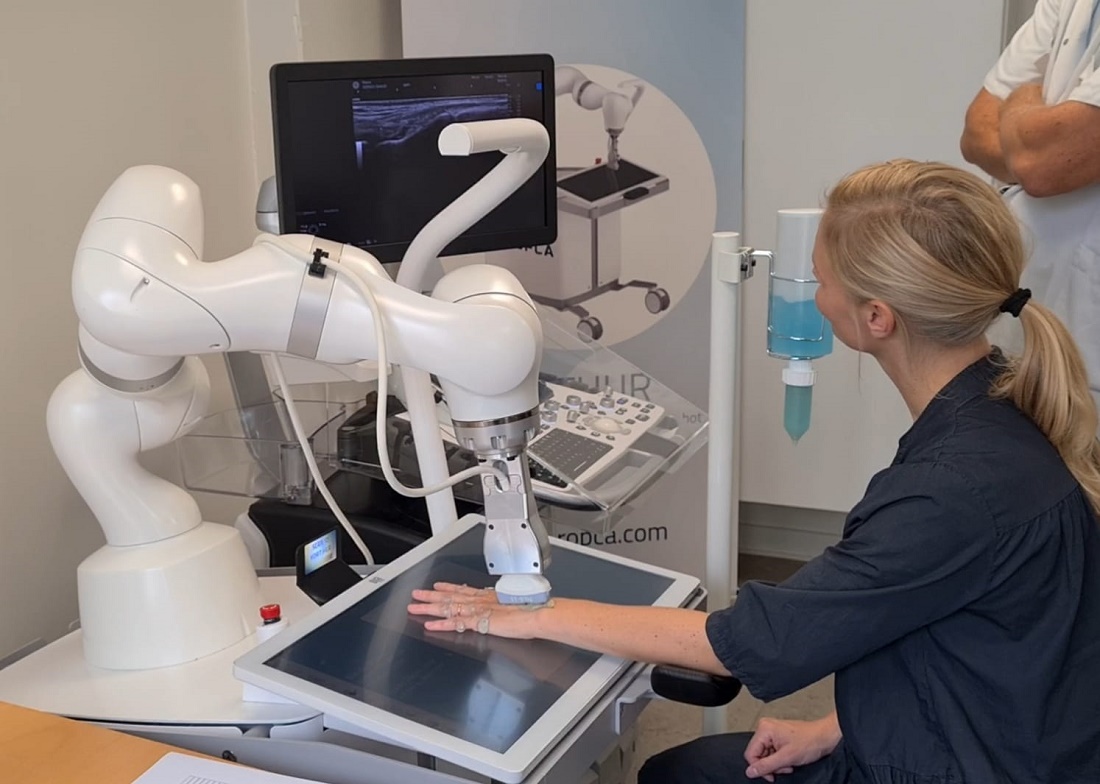
The combined system classifies the degree of RA according to the joint European Alliance of Associations for Rheumatology (EULAR)–Outcome Measures in Rheumatology (OMERACT) standards for RA diagnosis. It received a CE Mark in Europe in 2022 and is currently in use in six rheumatology clinics in Denmark, Germany, Switzerland, and Austria, with more to come, ROPCA Co-founder and Chief Medical Officer Søren A. Just, MD, said in an interview.
“Automated systems could help rheumatologists in the early detection and monitoring of arthritis diseases. Systems can be placed or move in areas with insufficient rheumatological expertise,” Just said during a special late-breaker session presentation at the annual meeting of the American College of Rheumatology (ACR).
He said in an interview: “Currently, there are so many people referred and few and fewer rheumatologists. So we need to think differently. We need good automated assistants.” As a screening tool, the system can determine whether a person with hand pain has RA or just osteoarthritis “and also can give the patient an immediate answer, instead of waiting sometimes up to 6 months to get the information.”
Just, who is also a senior physician in the Department of Internal Medicine at Odense University Hospital in Denmark, said that his department is also using the system to assess flares in patients with established RA. “They can have a blood sample taken. They’re scanned by the robot, and you can see if there is any disease activity. But I think that screening of patients with joint pain is the beginning.”
Asked to comment, session moderator Gregory C. Gardner, MD, Emeritus Professor in the Division of Rheumatology at the University of Washington, Seattle, and a member of the ACR conference program committee, said in an interview “one of the reasons we chose to feature this abstract is because we’re interested in science at the convergence. We really thought this was a potential way to move the field forward for rheumatologists.”
Gardner said it’s an advantage that the patient could potentially have an ARTHUR scan with a DIANA report and get blood tests done prior to a visit with the rheumatologist. “It’s really time-consuming for a human to do these studies, so if you automate it, that’s a step forward in terms of having the data available for the rheumatologist to view and use sequentially to follow how patients are doing.”
When introducing Just’s presentation, Gardner called it “the coolest abstract of the meeting.”
Both DIANA and ARTHUR Performed At Least as Well as Human Rheumatologists
In the study, 30 patients with RA underwent two scans by ARTHUR, followed by a scan from a rheumatologist specialist in musculoskeletal ultrasound. The scans were sent to DIANA, who graded the images according to the Global OMERACT-EULAR Synovitis Score, as did the human rheumatologist.
A “ground truth” was established by another human expert who evaluated both ARTHUR’s and the other rheumatologist’s images, blinded to the scanning method. The image with the highest disease activity was deemed “ground truth,” and agreement with that was assessed for the two individual methods.

Just showed a video of a patient being scanned by ARTHUR. The machine verbally guided her through removing her jewelry, applying the gel, and placing her hand on the screen under the scanner. ARTHUR’s arm moved around on the patient’s hand, locating the best angles to take grayscale images and Doppler images and Doppler video. The scan takes 15-20 minutes, and the images are stored, Just said.
The study patients had a mean age of 65 years, and 23 of the 30 were men. Their average disease duration was 11 years, and mean Disease Activity Score in 28 joints using C-reactive protein was 3.86, indicating moderate disease. A majority (73%) of patients were taking disease-modifying antirheumatic drugs, and about one third were taking biologics. ARTHUR scanned a total of 660 joints, and 564 scans were successful.
For repeatability between the two ARTHUR scans, percent exact agreement was 63% for synovial hypertrophy, 75% for Doppler activity, and 60% combined. Percent close (within a point) agreements were 93%, 94%, and 92%, respectively. Binary agreements as to whether the joint was healthy vs diseased were 88%, 91%, and 85%, respectively.
At the joint level, ARTHUR and DIANA’s percent exact agreement with ground truth was 49% for synovial hypertrophy, 63% for Doppler activity, and 48% combined. Binary agreements with disease vs healthy were 80%, 88%, and 78%, respectively.
The human rheumatologists scored very similarly. Percent exact agreement with ground truth was 51% for synovial hypertrophy, 64% for Doppler activity, and 50% combined. Percent close agreements were 94%, 94%, and 92%, respectively. And binary agreements with diseased vs healthy were 83%, 91%, and 80%, respectively.
At the patient level (all joints combined), ARTHUR and DIANA’s binary disease assessment of healthy vs disease showed agreement with the ground truth of 87% for synovial hypertrophy, 83% for Doppler activity, and 87% combined. Here, the rheumatologists scored lower, at 53%, 67%, and 60%, respectively.
“In this study, we think the precision of ARTHUR and DIANA was comparable to that of an experienced rheumatologist, at both the joint and patient level,” Just said.
Gardner pointed out another advantage of the system. “DIANA doesn’t get fatigued. ... With human reading, the precision may change based on the time of day or stress level. ... But with DIANA, you’re going to get consistent information.”
Just said that the Arthritis Foundation in Germany recently put ARTHUR and DIANA on a bus and took it to cities that lacked a rheumatologist. Patients lined up, answered a questionnaire, had blood drawn, and received their scans. A rheumatologist on the bus then interpreted the data and consulted with the individuals about their RA risk. “In the last trip, we screened 800 patients in 6 days. So there are definitely possibilities here.”
Just is co-owner of ROPCA. Gardner had no disclosures.
A version of this article appeared on Medscape.com.
WASHINGTON — A fully automated ultrasound scanning system combined with artificial intelligence–based disease activity scoring performed as well as expert rheumatologists in hand joint assessment of patients with rheumatoid arthritis (RA), new research found.
The system, made by a Danish company called ROPCA, comprises an ultrasound scanner called ARTHUR (RA Ultrasound Robot) that interacts directly with the patient and scans 11 joints per hand and a neural network–based software system, DIANA (Diagnosis Aid Network for RA), that evaluates the images and monitors RA activity.
The combined system classifies the degree of RA according to the joint European Alliance of Associations for Rheumatology (EULAR)–Outcome Measures in Rheumatology (OMERACT) standards for RA diagnosis. It received a CE Mark in Europe in 2022 and is currently in use in six rheumatology clinics in Denmark, Germany, Switzerland, and Austria, with more to come, ROPCA Co-founder and Chief Medical Officer Søren A. Just, MD, said in an interview.
“Automated systems could help rheumatologists in the early detection and monitoring of arthritis diseases. Systems can be placed or move in areas with insufficient rheumatological expertise,” Just said during a special late-breaker session presentation at the annual meeting of the American College of Rheumatology (ACR).
He said in an interview: “Currently, there are so many people referred and few and fewer rheumatologists. So we need to think differently. We need good automated assistants.” As a screening tool, the system can determine whether a person with hand pain has RA or just osteoarthritis “and also can give the patient an immediate answer, instead of waiting sometimes up to 6 months to get the information.”
Just, who is also a senior physician in the Department of Internal Medicine at Odense University Hospital in Denmark, said that his department is also using the system to assess flares in patients with established RA. “They can have a blood sample taken. They’re scanned by the robot, and you can see if there is any disease activity. But I think that screening of patients with joint pain is the beginning.”
Asked to comment, session moderator Gregory C. Gardner, MD, Emeritus Professor in the Division of Rheumatology at the University of Washington, Seattle, and a member of the ACR conference program committee, said in an interview “one of the reasons we chose to feature this abstract is because we’re interested in science at the convergence. We really thought this was a potential way to move the field forward for rheumatologists.”
Gardner said it’s an advantage that the patient could potentially have an ARTHUR scan with a DIANA report and get blood tests done prior to a visit with the rheumatologist. “It’s really time-consuming for a human to do these studies, so if you automate it, that’s a step forward in terms of having the data available for the rheumatologist to view and use sequentially to follow how patients are doing.”
When introducing Just’s presentation, Gardner called it “the coolest abstract of the meeting.”
Both DIANA and ARTHUR Performed At Least as Well as Human Rheumatologists
In the study, 30 patients with RA underwent two scans by ARTHUR, followed by a scan from a rheumatologist specialist in musculoskeletal ultrasound. The scans were sent to DIANA, who graded the images according to the Global OMERACT-EULAR Synovitis Score, as did the human rheumatologist.
A “ground truth” was established by another human expert who evaluated both ARTHUR’s and the other rheumatologist’s images, blinded to the scanning method. The image with the highest disease activity was deemed “ground truth,” and agreement with that was assessed for the two individual methods.
Just showed a video of a patient being scanned by ARTHUR. The machine verbally guided her through removing her jewelry, applying the gel, and placing her hand on the screen under the scanner. ARTHUR’s arm moved around on the patient’s hand, locating the best angles to take grayscale images and Doppler images and Doppler video. The scan takes 15-20 minutes, and the images are stored, Just said.
The study patients had a mean age of 65 years, and 23 of the 30 were men. Their average disease duration was 11 years, and mean Disease Activity Score in 28 joints using C-reactive protein was 3.86, indicating moderate disease. A majority (73%) of patients were taking disease-modifying antirheumatic drugs, and about one third were taking biologics. ARTHUR scanned a total of 660 joints, and 564 scans were successful.
For repeatability between the two ARTHUR scans, percent exact agreement was 63% for synovial hypertrophy, 75% for Doppler activity, and 60% combined. Percent close (within a point) agreements were 93%, 94%, and 92%, respectively. Binary agreements as to whether the joint was healthy vs diseased were 88%, 91%, and 85%, respectively.
At the joint level, ARTHUR and DIANA’s percent exact agreement with ground truth was 49% for synovial hypertrophy, 63% for Doppler activity, and 48% combined. Binary agreements with disease vs healthy were 80%, 88%, and 78%, respectively.
The human rheumatologists scored very similarly. Percent exact agreement with ground truth was 51% for synovial hypertrophy, 64% for Doppler activity, and 50% combined. Percent close agreements were 94%, 94%, and 92%, respectively. And binary agreements with diseased vs healthy were 83%, 91%, and 80%, respectively.
At the patient level (all joints combined), ARTHUR and DIANA’s binary disease assessment of healthy vs disease showed agreement with the ground truth of 87% for synovial hypertrophy, 83% for Doppler activity, and 87% combined. Here, the rheumatologists scored lower, at 53%, 67%, and 60%, respectively.
“In this study, we think the precision of ARTHUR and DIANA was comparable to that of an experienced rheumatologist, at both the joint and patient level,” Just said.
Gardner pointed out another advantage of the system. “DIANA doesn’t get fatigued. ... With human reading, the precision may change based on the time of day or stress level. ... But with DIANA, you’re going to get consistent information.”
Just said that the Arthritis Foundation in Germany recently put ARTHUR and DIANA on a bus and took it to cities that lacked a rheumatologist. Patients lined up, answered a questionnaire, had blood drawn, and received their scans. A rheumatologist on the bus then interpreted the data and consulted with the individuals about their RA risk. “In the last trip, we screened 800 patients in 6 days. So there are definitely possibilities here.”
Just is co-owner of ROPCA. Gardner had no disclosures.
A version of this article appeared on Medscape.com.
WASHINGTON — A fully automated ultrasound scanning system combined with artificial intelligence–based disease activity scoring performed as well as expert rheumatologists in hand joint assessment of patients with rheumatoid arthritis (RA), new research found.
The system, made by a Danish company called ROPCA, comprises an ultrasound scanner called ARTHUR (RA Ultrasound Robot) that interacts directly with the patient and scans 11 joints per hand and a neural network–based software system, DIANA (Diagnosis Aid Network for RA), that evaluates the images and monitors RA activity.
The combined system classifies the degree of RA according to the joint European Alliance of Associations for Rheumatology (EULAR)–Outcome Measures in Rheumatology (OMERACT) standards for RA diagnosis. It received a CE Mark in Europe in 2022 and is currently in use in six rheumatology clinics in Denmark, Germany, Switzerland, and Austria, with more to come, ROPCA Co-founder and Chief Medical Officer Søren A. Just, MD, said in an interview.
“Automated systems could help rheumatologists in the early detection and monitoring of arthritis diseases. Systems can be placed or move in areas with insufficient rheumatological expertise,” Just said during a special late-breaker session presentation at the annual meeting of the American College of Rheumatology (ACR).
He said in an interview: “Currently, there are so many people referred and few and fewer rheumatologists. So we need to think differently. We need good automated assistants.” As a screening tool, the system can determine whether a person with hand pain has RA or just osteoarthritis “and also can give the patient an immediate answer, instead of waiting sometimes up to 6 months to get the information.”
Just, who is also a senior physician in the Department of Internal Medicine at Odense University Hospital in Denmark, said that his department is also using the system to assess flares in patients with established RA. “They can have a blood sample taken. They’re scanned by the robot, and you can see if there is any disease activity. But I think that screening of patients with joint pain is the beginning.”
Asked to comment, session moderator Gregory C. Gardner, MD, Emeritus Professor in the Division of Rheumatology at the University of Washington, Seattle, and a member of the ACR conference program committee, said in an interview “one of the reasons we chose to feature this abstract is because we’re interested in science at the convergence. We really thought this was a potential way to move the field forward for rheumatologists.”
Gardner said it’s an advantage that the patient could potentially have an ARTHUR scan with a DIANA report and get blood tests done prior to a visit with the rheumatologist. “It’s really time-consuming for a human to do these studies, so if you automate it, that’s a step forward in terms of having the data available for the rheumatologist to view and use sequentially to follow how patients are doing.”
When introducing Just’s presentation, Gardner called it “the coolest abstract of the meeting.”
Both DIANA and ARTHUR Performed At Least as Well as Human Rheumatologists
In the study, 30 patients with RA underwent two scans by ARTHUR, followed by a scan from a rheumatologist specialist in musculoskeletal ultrasound. The scans were sent to DIANA, who graded the images according to the Global OMERACT-EULAR Synovitis Score, as did the human rheumatologist.
A “ground truth” was established by another human expert who evaluated both ARTHUR’s and the other rheumatologist’s images, blinded to the scanning method. The image with the highest disease activity was deemed “ground truth,” and agreement with that was assessed for the two individual methods.
Just showed a video of a patient being scanned by ARTHUR. The machine verbally guided her through removing her jewelry, applying the gel, and placing her hand on the screen under the scanner. ARTHUR’s arm moved around on the patient’s hand, locating the best angles to take grayscale images and Doppler images and Doppler video. The scan takes 15-20 minutes, and the images are stored, Just said.
The study patients had a mean age of 65 years, and 23 of the 30 were men. Their average disease duration was 11 years, and mean Disease Activity Score in 28 joints using C-reactive protein was 3.86, indicating moderate disease. A majority (73%) of patients were taking disease-modifying antirheumatic drugs, and about one third were taking biologics. ARTHUR scanned a total of 660 joints, and 564 scans were successful.
For repeatability between the two ARTHUR scans, percent exact agreement was 63% for synovial hypertrophy, 75% for Doppler activity, and 60% combined. Percent close (within a point) agreements were 93%, 94%, and 92%, respectively. Binary agreements as to whether the joint was healthy vs diseased were 88%, 91%, and 85%, respectively.
At the joint level, ARTHUR and DIANA’s percent exact agreement with ground truth was 49% for synovial hypertrophy, 63% for Doppler activity, and 48% combined. Binary agreements with disease vs healthy were 80%, 88%, and 78%, respectively.
The human rheumatologists scored very similarly. Percent exact agreement with ground truth was 51% for synovial hypertrophy, 64% for Doppler activity, and 50% combined. Percent close agreements were 94%, 94%, and 92%, respectively. And binary agreements with diseased vs healthy were 83%, 91%, and 80%, respectively.
At the patient level (all joints combined), ARTHUR and DIANA’s binary disease assessment of healthy vs disease showed agreement with the ground truth of 87% for synovial hypertrophy, 83% for Doppler activity, and 87% combined. Here, the rheumatologists scored lower, at 53%, 67%, and 60%, respectively.
“In this study, we think the precision of ARTHUR and DIANA was comparable to that of an experienced rheumatologist, at both the joint and patient level,” Just said.
Gardner pointed out another advantage of the system. “DIANA doesn’t get fatigued. ... With human reading, the precision may change based on the time of day or stress level. ... But with DIANA, you’re going to get consistent information.”
Just said that the Arthritis Foundation in Germany recently put ARTHUR and DIANA on a bus and took it to cities that lacked a rheumatologist. Patients lined up, answered a questionnaire, had blood drawn, and received their scans. A rheumatologist on the bus then interpreted the data and consulted with the individuals about their RA risk. “In the last trip, we screened 800 patients in 6 days. So there are definitely possibilities here.”
Just is co-owner of ROPCA. Gardner had no disclosures.
A version of this article appeared on Medscape.com.
FROM ACR 2024
Uric Acid Levels, Gout Symptoms Improved With Plant-Based Diet in Pilot Trial
A Mediterranean-inspired plant-based diet improved self-reported measures of gout as well as uric acid levels, a pilot study has found.
There hasn’t been a lot of research on diet in gout, according to Anna Kretova, RD, who presented the study at the annual research symposium of the Gout Hyperuricemia and Crystal-Associated Disease Network. She noted that a 2019 systematic review of low-calorie diets, low-purine diets, and Mediterranean diets found that uric acid levels below 0.6 mmol/L were achieved only in those on the Mediterranean diet (Nutrients. 2019 Dec 4;11[12]:2955). A 2020 study compared a low-fat, high-carbohydrate, plant-based diet vs an animal-based, ketogenic diet in healthy individuals. After 2 weeks, uric acid levels increased in those on the animal-based, low-carb diet and decreased in those on the plant-based diet.
Some foods are considered to be proinflammatory and generally come from animal origins, including saturated fats and animal protein in addition to ultraprocessed foods. Foods that have anti-inflammatory properties are mostly plant based and unprocessed and often rich in fiber. “From recent interventional studies, we also know that the whole-foods plant-based diet has shown to be effective as treatments of the main comorbidities of gout, such as obesity, cardiovascular disease, or [osteoarthritis],” said Kretova, who is a registered dietitian and a researcher at the Reade Rehabilitation and Rheumatology Center, Amsterdam, the Netherlands.
Those findings led the researchers to develop a whole-foods, plant-based diet and test its effect on serum uric acid in patients with gout, as well as gout disease activity and cardiovascular disease risk. Participants could not eat meat, fish, eggs, or dairy.
The trial included 33 individuals with gout who were randomized to a 16-week intervention with five consultations with a registered dietitian (n = 18) or a wait-list control group (n = 15) who received standard care. The mean age overall was 52 years, and 91% were men. The mean body mass index (BMI) was 32.6 kg/m2, and the median uric acid level was 0.50 mmol/L (8.4 mg/dL).
Among gout-related outcomes, the researchers noted improvements in gout severity as measured by visual analog scale (VAS; between group difference, –2.0; P =.01), pain as measured by VAS (between group difference, –2.0; P =.04), and uric acid levels after adjustment for age, sex, and BMI (between group difference, –0.05 mmol/L, P =.004). There were also improvements in the intervention group in weight loss (between group difference, –5.3 kg; P <.0001), BMI (between group difference, –1.7; P < .0001), waist circumference (between group difference, –3.9 cm; P = .004), and low-density lipoprotein (LDL) cholesterol (between group difference, –0.5; P = .007).
At 16 weeks, “we concluded that a Mediterranean-inspired whole-foods, plant-based diet significantly lowers serum uric acid in patients with gout and abdominal obesity, and additionally, the diet reduces gout-related pain and disease activity, promotes substantial weight loss, decreases weight circumference, and improves LDL cholesterol levels, and thus decreases [cardiovascular disease] risk in these patients,” Kretova said.
She added that some might question whether a uric acid reduction of –0.05 mmol/L is clinically relevant. “We would argue it is because of the strong decrease in disease activity and pain in the intervention group,” Kretova said.
The study is limited by its small size, the fact that it was not blinded, and the 4-month duration, which might be too short to capture potential indirect effects of diet on hyperuricemia and chronic inflammation, Kretova said. The group is planning to follow participants out to 12 months in an extension study.
During the Q&A session after the presentation, an audience member asked if the participants were vegetarians before they entered the study, and whether the dietary change could be sustained. “It’s a very good proof-of-concept study, but whether an intervention based entirely on plant-based therapy will be something that patients will be able to adhere to long term [is uncertain],” Kretova said.
She was optimistic, even though the participants generally enjoyed food and ate a lot of red meat. “I think there will be a gradation of people who can sustain and who cannot sustain [the diet]. From what we saw, people actually found it easier to follow than they expected, and a lot of participants changed their diet permanently for the better. Not everyone became [entirely] plant-based, but they became much more plant-based than they expected from themselves. So, it is definitely feasible,” she said.
Kretova reported no relevant financial relationships.
A version of this article appeared on Medscape.com.
A Mediterranean-inspired plant-based diet improved self-reported measures of gout as well as uric acid levels, a pilot study has found.
There hasn’t been a lot of research on diet in gout, according to Anna Kretova, RD, who presented the study at the annual research symposium of the Gout Hyperuricemia and Crystal-Associated Disease Network. She noted that a 2019 systematic review of low-calorie diets, low-purine diets, and Mediterranean diets found that uric acid levels below 0.6 mmol/L were achieved only in those on the Mediterranean diet (Nutrients. 2019 Dec 4;11[12]:2955). A 2020 study compared a low-fat, high-carbohydrate, plant-based diet vs an animal-based, ketogenic diet in healthy individuals. After 2 weeks, uric acid levels increased in those on the animal-based, low-carb diet and decreased in those on the plant-based diet.
Some foods are considered to be proinflammatory and generally come from animal origins, including saturated fats and animal protein in addition to ultraprocessed foods. Foods that have anti-inflammatory properties are mostly plant based and unprocessed and often rich in fiber. “From recent interventional studies, we also know that the whole-foods plant-based diet has shown to be effective as treatments of the main comorbidities of gout, such as obesity, cardiovascular disease, or [osteoarthritis],” said Kretova, who is a registered dietitian and a researcher at the Reade Rehabilitation and Rheumatology Center, Amsterdam, the Netherlands.
Those findings led the researchers to develop a whole-foods, plant-based diet and test its effect on serum uric acid in patients with gout, as well as gout disease activity and cardiovascular disease risk. Participants could not eat meat, fish, eggs, or dairy.
The trial included 33 individuals with gout who were randomized to a 16-week intervention with five consultations with a registered dietitian (n = 18) or a wait-list control group (n = 15) who received standard care. The mean age overall was 52 years, and 91% were men. The mean body mass index (BMI) was 32.6 kg/m2, and the median uric acid level was 0.50 mmol/L (8.4 mg/dL).
Among gout-related outcomes, the researchers noted improvements in gout severity as measured by visual analog scale (VAS; between group difference, –2.0; P =.01), pain as measured by VAS (between group difference, –2.0; P =.04), and uric acid levels after adjustment for age, sex, and BMI (between group difference, –0.05 mmol/L, P =.004). There were also improvements in the intervention group in weight loss (between group difference, –5.3 kg; P <.0001), BMI (between group difference, –1.7; P < .0001), waist circumference (between group difference, –3.9 cm; P = .004), and low-density lipoprotein (LDL) cholesterol (between group difference, –0.5; P = .007).
At 16 weeks, “we concluded that a Mediterranean-inspired whole-foods, plant-based diet significantly lowers serum uric acid in patients with gout and abdominal obesity, and additionally, the diet reduces gout-related pain and disease activity, promotes substantial weight loss, decreases weight circumference, and improves LDL cholesterol levels, and thus decreases [cardiovascular disease] risk in these patients,” Kretova said.
She added that some might question whether a uric acid reduction of –0.05 mmol/L is clinically relevant. “We would argue it is because of the strong decrease in disease activity and pain in the intervention group,” Kretova said.
The study is limited by its small size, the fact that it was not blinded, and the 4-month duration, which might be too short to capture potential indirect effects of diet on hyperuricemia and chronic inflammation, Kretova said. The group is planning to follow participants out to 12 months in an extension study.
During the Q&A session after the presentation, an audience member asked if the participants were vegetarians before they entered the study, and whether the dietary change could be sustained. “It’s a very good proof-of-concept study, but whether an intervention based entirely on plant-based therapy will be something that patients will be able to adhere to long term [is uncertain],” Kretova said.
She was optimistic, even though the participants generally enjoyed food and ate a lot of red meat. “I think there will be a gradation of people who can sustain and who cannot sustain [the diet]. From what we saw, people actually found it easier to follow than they expected, and a lot of participants changed their diet permanently for the better. Not everyone became [entirely] plant-based, but they became much more plant-based than they expected from themselves. So, it is definitely feasible,” she said.
Kretova reported no relevant financial relationships.
A version of this article appeared on Medscape.com.
A Mediterranean-inspired plant-based diet improved self-reported measures of gout as well as uric acid levels, a pilot study has found.
There hasn’t been a lot of research on diet in gout, according to Anna Kretova, RD, who presented the study at the annual research symposium of the Gout Hyperuricemia and Crystal-Associated Disease Network. She noted that a 2019 systematic review of low-calorie diets, low-purine diets, and Mediterranean diets found that uric acid levels below 0.6 mmol/L were achieved only in those on the Mediterranean diet (Nutrients. 2019 Dec 4;11[12]:2955). A 2020 study compared a low-fat, high-carbohydrate, plant-based diet vs an animal-based, ketogenic diet in healthy individuals. After 2 weeks, uric acid levels increased in those on the animal-based, low-carb diet and decreased in those on the plant-based diet.
Some foods are considered to be proinflammatory and generally come from animal origins, including saturated fats and animal protein in addition to ultraprocessed foods. Foods that have anti-inflammatory properties are mostly plant based and unprocessed and often rich in fiber. “From recent interventional studies, we also know that the whole-foods plant-based diet has shown to be effective as treatments of the main comorbidities of gout, such as obesity, cardiovascular disease, or [osteoarthritis],” said Kretova, who is a registered dietitian and a researcher at the Reade Rehabilitation and Rheumatology Center, Amsterdam, the Netherlands.
Those findings led the researchers to develop a whole-foods, plant-based diet and test its effect on serum uric acid in patients with gout, as well as gout disease activity and cardiovascular disease risk. Participants could not eat meat, fish, eggs, or dairy.
The trial included 33 individuals with gout who were randomized to a 16-week intervention with five consultations with a registered dietitian (n = 18) or a wait-list control group (n = 15) who received standard care. The mean age overall was 52 years, and 91% were men. The mean body mass index (BMI) was 32.6 kg/m2, and the median uric acid level was 0.50 mmol/L (8.4 mg/dL).
Among gout-related outcomes, the researchers noted improvements in gout severity as measured by visual analog scale (VAS; between group difference, –2.0; P =.01), pain as measured by VAS (between group difference, –2.0; P =.04), and uric acid levels after adjustment for age, sex, and BMI (between group difference, –0.05 mmol/L, P =.004). There were also improvements in the intervention group in weight loss (between group difference, –5.3 kg; P <.0001), BMI (between group difference, –1.7; P < .0001), waist circumference (between group difference, –3.9 cm; P = .004), and low-density lipoprotein (LDL) cholesterol (between group difference, –0.5; P = .007).
At 16 weeks, “we concluded that a Mediterranean-inspired whole-foods, plant-based diet significantly lowers serum uric acid in patients with gout and abdominal obesity, and additionally, the diet reduces gout-related pain and disease activity, promotes substantial weight loss, decreases weight circumference, and improves LDL cholesterol levels, and thus decreases [cardiovascular disease] risk in these patients,” Kretova said.
She added that some might question whether a uric acid reduction of –0.05 mmol/L is clinically relevant. “We would argue it is because of the strong decrease in disease activity and pain in the intervention group,” Kretova said.
The study is limited by its small size, the fact that it was not blinded, and the 4-month duration, which might be too short to capture potential indirect effects of diet on hyperuricemia and chronic inflammation, Kretova said. The group is planning to follow participants out to 12 months in an extension study.
During the Q&A session after the presentation, an audience member asked if the participants were vegetarians before they entered the study, and whether the dietary change could be sustained. “It’s a very good proof-of-concept study, but whether an intervention based entirely on plant-based therapy will be something that patients will be able to adhere to long term [is uncertain],” Kretova said.
She was optimistic, even though the participants generally enjoyed food and ate a lot of red meat. “I think there will be a gradation of people who can sustain and who cannot sustain [the diet]. From what we saw, people actually found it easier to follow than they expected, and a lot of participants changed their diet permanently for the better. Not everyone became [entirely] plant-based, but they became much more plant-based than they expected from themselves. So, it is definitely feasible,” she said.
Kretova reported no relevant financial relationships.
A version of this article appeared on Medscape.com.
FROM G-CAN 2024
Three Vascular Risk Factors May Up Severe Stroke Risk
TOPLINE:
, a global study shows.
METHODOLOGY:
- The INTERSTROKE case-control study included nearly 27,000 participants, half of whom had a first acute stroke (ischemic or hemorrhagic) and the other half acting as age- and sex-matched controls.
- Participants (mean age, 62 years; 40% women) were recruited across 142 centers in 32 countries between 2007 and 2015. Baseline demographics and lifestyle risk factors for stroke were gathered using standardized questionnaires
- Modified Rankin Scale (mRS) scores measured within 72 hours of hospital admission were used to classify stroke severity (0-3, nonsevere stroke; 4-6, severe stroke).
TAKEAWAY:
- Among the participants with acute stroke, 64% had nonsevere stroke and 36% had severe stroke, based on the mRS.
- Hypertension, atrial fibrillation, and smoking showed a significantly stronger association with severe stroke than with nonsevere stroke (odds ratios [ORs], 3.21 vs 2.87, 4.70 vs 3.61, and 1.87 vs 1.65, respectively; all P < .001).
- A high waist-to-hip ratio showed a stronger association with nonsevere stroke than with severe stroke (OR, 1.37 vs 1.11, respectively; P < .001).
- Diabetes, poor diet, physical inactivity, and stress were linked to increased odds of both severe and nonsevere stroke, whereas alcohol consumption and high apolipoprotein B levels were linked to higher odds of only nonsevere stroke. No significant differences in odds were observed between stroke severities in matched individuals.
IN PRACTICE:
“Our findings emphasize the importance of controlling high blood pressure, which is the most important modifiable risk factor for stroke globally,” lead author Catriona Reddin, MB BCh, BAO, MSc, School of Medicine, University of Galway, in Ireland, said in a press release.
SOURCE:
The study was published online in Neurology.
LIMITATIONS:
The study limitations included potential unmeasured confounders; reliance on the mRS score, which may have underestimated stroke severity; and challenges with recruiting patients with severe stroke in a case-control study. Smoking-related comorbidities and regional or sex-related variations in alcohol intake may also have influenced the results.
DISCLOSURES:
The study was funded by various organizations, including health research councils and foundations from Canada, Sweden, and Scotland, and pharmaceutical companies such as AstraZeneca, Boehringer Ingelheim, Pfizer, and MSD. One investigator reported receiving funding from the Irish Clinical Academic Training Programme, the Wellcome Trust and the Health Research Board, the Health Service Executive, National Doctors Training and Planning, and the Health and Social Care, Research and Development Division in Northern Ireland. No other conflicts of interest were reported.
This article was created using several editorial tools, including AI, as part of the process. Human editors reviewed this content before publication. A version of this article appeared on Medscape.com.
TOPLINE:
, a global study shows.
METHODOLOGY:
- The INTERSTROKE case-control study included nearly 27,000 participants, half of whom had a first acute stroke (ischemic or hemorrhagic) and the other half acting as age- and sex-matched controls.
- Participants (mean age, 62 years; 40% women) were recruited across 142 centers in 32 countries between 2007 and 2015. Baseline demographics and lifestyle risk factors for stroke were gathered using standardized questionnaires
- Modified Rankin Scale (mRS) scores measured within 72 hours of hospital admission were used to classify stroke severity (0-3, nonsevere stroke; 4-6, severe stroke).
TAKEAWAY:
- Among the participants with acute stroke, 64% had nonsevere stroke and 36% had severe stroke, based on the mRS.
- Hypertension, atrial fibrillation, and smoking showed a significantly stronger association with severe stroke than with nonsevere stroke (odds ratios [ORs], 3.21 vs 2.87, 4.70 vs 3.61, and 1.87 vs 1.65, respectively; all P < .001).
- A high waist-to-hip ratio showed a stronger association with nonsevere stroke than with severe stroke (OR, 1.37 vs 1.11, respectively; P < .001).
- Diabetes, poor diet, physical inactivity, and stress were linked to increased odds of both severe and nonsevere stroke, whereas alcohol consumption and high apolipoprotein B levels were linked to higher odds of only nonsevere stroke. No significant differences in odds were observed between stroke severities in matched individuals.
IN PRACTICE:
“Our findings emphasize the importance of controlling high blood pressure, which is the most important modifiable risk factor for stroke globally,” lead author Catriona Reddin, MB BCh, BAO, MSc, School of Medicine, University of Galway, in Ireland, said in a press release.
SOURCE:
The study was published online in Neurology.
LIMITATIONS:
The study limitations included potential unmeasured confounders; reliance on the mRS score, which may have underestimated stroke severity; and challenges with recruiting patients with severe stroke in a case-control study. Smoking-related comorbidities and regional or sex-related variations in alcohol intake may also have influenced the results.
DISCLOSURES:
The study was funded by various organizations, including health research councils and foundations from Canada, Sweden, and Scotland, and pharmaceutical companies such as AstraZeneca, Boehringer Ingelheim, Pfizer, and MSD. One investigator reported receiving funding from the Irish Clinical Academic Training Programme, the Wellcome Trust and the Health Research Board, the Health Service Executive, National Doctors Training and Planning, and the Health and Social Care, Research and Development Division in Northern Ireland. No other conflicts of interest were reported.
This article was created using several editorial tools, including AI, as part of the process. Human editors reviewed this content before publication. A version of this article appeared on Medscape.com.
TOPLINE:
, a global study shows.
METHODOLOGY:
- The INTERSTROKE case-control study included nearly 27,000 participants, half of whom had a first acute stroke (ischemic or hemorrhagic) and the other half acting as age- and sex-matched controls.
- Participants (mean age, 62 years; 40% women) were recruited across 142 centers in 32 countries between 2007 and 2015. Baseline demographics and lifestyle risk factors for stroke were gathered using standardized questionnaires
- Modified Rankin Scale (mRS) scores measured within 72 hours of hospital admission were used to classify stroke severity (0-3, nonsevere stroke; 4-6, severe stroke).
TAKEAWAY:
- Among the participants with acute stroke, 64% had nonsevere stroke and 36% had severe stroke, based on the mRS.
- Hypertension, atrial fibrillation, and smoking showed a significantly stronger association with severe stroke than with nonsevere stroke (odds ratios [ORs], 3.21 vs 2.87, 4.70 vs 3.61, and 1.87 vs 1.65, respectively; all P < .001).
- A high waist-to-hip ratio showed a stronger association with nonsevere stroke than with severe stroke (OR, 1.37 vs 1.11, respectively; P < .001).
- Diabetes, poor diet, physical inactivity, and stress were linked to increased odds of both severe and nonsevere stroke, whereas alcohol consumption and high apolipoprotein B levels were linked to higher odds of only nonsevere stroke. No significant differences in odds were observed between stroke severities in matched individuals.
IN PRACTICE:
“Our findings emphasize the importance of controlling high blood pressure, which is the most important modifiable risk factor for stroke globally,” lead author Catriona Reddin, MB BCh, BAO, MSc, School of Medicine, University of Galway, in Ireland, said in a press release.
SOURCE:
The study was published online in Neurology.
LIMITATIONS:
The study limitations included potential unmeasured confounders; reliance on the mRS score, which may have underestimated stroke severity; and challenges with recruiting patients with severe stroke in a case-control study. Smoking-related comorbidities and regional or sex-related variations in alcohol intake may also have influenced the results.
DISCLOSURES:
The study was funded by various organizations, including health research councils and foundations from Canada, Sweden, and Scotland, and pharmaceutical companies such as AstraZeneca, Boehringer Ingelheim, Pfizer, and MSD. One investigator reported receiving funding from the Irish Clinical Academic Training Programme, the Wellcome Trust and the Health Research Board, the Health Service Executive, National Doctors Training and Planning, and the Health and Social Care, Research and Development Division in Northern Ireland. No other conflicts of interest were reported.
This article was created using several editorial tools, including AI, as part of the process. Human editors reviewed this content before publication. A version of this article appeared on Medscape.com.