User login
Treating psoriasis with biologics: Recommendations from an expert
LAS VEGAS – If you’re considering adding biologics for psoriasis to your clinical practice, dermatologist Kristina C. Duffin, MD, has some advice: Don’t expect to just use one drug, focus on comorbidities, and embrace strategies to bypass the potential obstacle of prior-authorization approvals.
Here are some tips from Dr. Duffin, who spoke at the Skin Disease Education Foundation’s annual Las Vegas Dermatology Seminar:
- Don’t expect a one-size-fits-all medication. “There is no one, single go-to drug,” said Dr. Duffin, who is cochair of the department of dermatology at the University of Utah, Salt Lake City. “Maybe someday, we will have a biological personalized medicine marker to say this is the right drug, but for now we don’t.” More than 10 biologics are available to treat psoriasis, she said, and more are in the pipeline.
- Pay close attention to comorbidities. It’s important to “have a good grasp” of a patient’s comorbidities, which can help focus the choice of a biologic, Dr. Duffin said. She recommends starting with an anti–tumor necrosis factor (TNF) agents for patients with psoriatic arthritis. For patients with Crohn’s disease, she recommends anti-TNF (adalimumab, infliximab) and anti-interleukin–12/23 or anti-IL-23 agents (ustekinumab). Anti-TNF agents should be avoided in patients with multiple sclerosis, and anti-IL-17 agents shouldn’t be given to patients with recurrent candidiasis, she noted.
- Encourage patients to make prompt decisions. Dr. Duffin sits down with patients to discuss various biologic options, and she goes over information in handouts. She also focuses on their needs: “Are they interested in getting better fast? Do they want to be clear for their wedding in a month?” She prefers to not let patients go home to think about what they’d like to do. Instead, she advises patients to make choices while at the office visit.
- Order lab tests and be careful about vaccines. Dr. Duffin orders the following tests for all patients who are starting on biologics: CBC, comprehensive metabolic panel, hepatitis B and C, and tuberculosis. She orders HIV, Hba1c and lipid tests, if appropriate. She prefers that patients treated with biologics avoid live vaccines. She suggests other vaccines, if indicated, such as seasonal influenza and pneumonia vaccines, and for those aged 50 years and older, herpes zoster vaccine. She urges patients to call the office if they have an infection or need surgery because they may need to discuss putting a temporary hold on the biologics.
- Understand how to navigate formularies.“Getting drugs approved for patients with Medicare is a challenge,” Dr. Duffin said. It’s helpful to understand how insurers handle specific psoriasis drugs so you can choose one that’s likely to be covered if you’re unsure which one is best. The website www.covermymeds.com allows physicians to easily check insurer formularies, free of charge, she said.
- Documentation is crucial when you’re dealing with an insurer. Document body surface area, Psoriasis Area Severity Index scores, or physician global assessment measures, she advised. An app provided by the Group for Research and Assessment of Psoriasis and Psoriatic Arthritis, is a helpful in determining these measurements, she said. Also include information about failed treatments and the rationale behind why you chose a specific treatment, she said. “If denial happens, get the details,” she said. This may turn up a clerical error on the insurer’s part that incorrectly led to a denial.
- Escalate challenges to drug denials. If the preferred treatment is denied, one option is to appeal the denial. As a resource, Dr. Duffin pointed to sample letters for appealing denials for physicians and patients on the websites for the American Academy of Dermatology and the National Psoriasis Foundation. Ask for a limited 6-month approval, she said, or have the patient write a letter to the insurer using one of the sample letter templates. Another option is to ask the insurer for a “peer-to-peer” review, she said. “Sometimes it’s really hard for insurance company folks to say no to you if you have a really good story,” she commented.
- Help your patients get financial assistance. Almost every biologic manufacturer has a patient assistance plan, which can also help with deductibles and copays, Dr. Duffin said.
Dr. Duffin discloses consulting for AbbVie, Amgen, Celgene, Janssen, Lilly, Novartis, Pfizer, and Sienna. She has received grant/contracted research support from AbbVie, Bristol-Myers Squibb, Celgene, Eli Lilly, Janssen, Novartis, Pfizer, Sienna, Stiefel, and UCB.
SDEF and this news organization are owned by the same parent company.
LAS VEGAS – If you’re considering adding biologics for psoriasis to your clinical practice, dermatologist Kristina C. Duffin, MD, has some advice: Don’t expect to just use one drug, focus on comorbidities, and embrace strategies to bypass the potential obstacle of prior-authorization approvals.
Here are some tips from Dr. Duffin, who spoke at the Skin Disease Education Foundation’s annual Las Vegas Dermatology Seminar:
- Don’t expect a one-size-fits-all medication. “There is no one, single go-to drug,” said Dr. Duffin, who is cochair of the department of dermatology at the University of Utah, Salt Lake City. “Maybe someday, we will have a biological personalized medicine marker to say this is the right drug, but for now we don’t.” More than 10 biologics are available to treat psoriasis, she said, and more are in the pipeline.
- Pay close attention to comorbidities. It’s important to “have a good grasp” of a patient’s comorbidities, which can help focus the choice of a biologic, Dr. Duffin said. She recommends starting with an anti–tumor necrosis factor (TNF) agents for patients with psoriatic arthritis. For patients with Crohn’s disease, she recommends anti-TNF (adalimumab, infliximab) and anti-interleukin–12/23 or anti-IL-23 agents (ustekinumab). Anti-TNF agents should be avoided in patients with multiple sclerosis, and anti-IL-17 agents shouldn’t be given to patients with recurrent candidiasis, she noted.
- Encourage patients to make prompt decisions. Dr. Duffin sits down with patients to discuss various biologic options, and she goes over information in handouts. She also focuses on their needs: “Are they interested in getting better fast? Do they want to be clear for their wedding in a month?” She prefers to not let patients go home to think about what they’d like to do. Instead, she advises patients to make choices while at the office visit.
- Order lab tests and be careful about vaccines. Dr. Duffin orders the following tests for all patients who are starting on biologics: CBC, comprehensive metabolic panel, hepatitis B and C, and tuberculosis. She orders HIV, Hba1c and lipid tests, if appropriate. She prefers that patients treated with biologics avoid live vaccines. She suggests other vaccines, if indicated, such as seasonal influenza and pneumonia vaccines, and for those aged 50 years and older, herpes zoster vaccine. She urges patients to call the office if they have an infection or need surgery because they may need to discuss putting a temporary hold on the biologics.
- Understand how to navigate formularies.“Getting drugs approved for patients with Medicare is a challenge,” Dr. Duffin said. It’s helpful to understand how insurers handle specific psoriasis drugs so you can choose one that’s likely to be covered if you’re unsure which one is best. The website www.covermymeds.com allows physicians to easily check insurer formularies, free of charge, she said.
- Documentation is crucial when you’re dealing with an insurer. Document body surface area, Psoriasis Area Severity Index scores, or physician global assessment measures, she advised. An app provided by the Group for Research and Assessment of Psoriasis and Psoriatic Arthritis, is a helpful in determining these measurements, she said. Also include information about failed treatments and the rationale behind why you chose a specific treatment, she said. “If denial happens, get the details,” she said. This may turn up a clerical error on the insurer’s part that incorrectly led to a denial.
- Escalate challenges to drug denials. If the preferred treatment is denied, one option is to appeal the denial. As a resource, Dr. Duffin pointed to sample letters for appealing denials for physicians and patients on the websites for the American Academy of Dermatology and the National Psoriasis Foundation. Ask for a limited 6-month approval, she said, or have the patient write a letter to the insurer using one of the sample letter templates. Another option is to ask the insurer for a “peer-to-peer” review, she said. “Sometimes it’s really hard for insurance company folks to say no to you if you have a really good story,” she commented.
- Help your patients get financial assistance. Almost every biologic manufacturer has a patient assistance plan, which can also help with deductibles and copays, Dr. Duffin said.
Dr. Duffin discloses consulting for AbbVie, Amgen, Celgene, Janssen, Lilly, Novartis, Pfizer, and Sienna. She has received grant/contracted research support from AbbVie, Bristol-Myers Squibb, Celgene, Eli Lilly, Janssen, Novartis, Pfizer, Sienna, Stiefel, and UCB.
SDEF and this news organization are owned by the same parent company.
LAS VEGAS – If you’re considering adding biologics for psoriasis to your clinical practice, dermatologist Kristina C. Duffin, MD, has some advice: Don’t expect to just use one drug, focus on comorbidities, and embrace strategies to bypass the potential obstacle of prior-authorization approvals.
Here are some tips from Dr. Duffin, who spoke at the Skin Disease Education Foundation’s annual Las Vegas Dermatology Seminar:
- Don’t expect a one-size-fits-all medication. “There is no one, single go-to drug,” said Dr. Duffin, who is cochair of the department of dermatology at the University of Utah, Salt Lake City. “Maybe someday, we will have a biological personalized medicine marker to say this is the right drug, but for now we don’t.” More than 10 biologics are available to treat psoriasis, she said, and more are in the pipeline.
- Pay close attention to comorbidities. It’s important to “have a good grasp” of a patient’s comorbidities, which can help focus the choice of a biologic, Dr. Duffin said. She recommends starting with an anti–tumor necrosis factor (TNF) agents for patients with psoriatic arthritis. For patients with Crohn’s disease, she recommends anti-TNF (adalimumab, infliximab) and anti-interleukin–12/23 or anti-IL-23 agents (ustekinumab). Anti-TNF agents should be avoided in patients with multiple sclerosis, and anti-IL-17 agents shouldn’t be given to patients with recurrent candidiasis, she noted.
- Encourage patients to make prompt decisions. Dr. Duffin sits down with patients to discuss various biologic options, and she goes over information in handouts. She also focuses on their needs: “Are they interested in getting better fast? Do they want to be clear for their wedding in a month?” She prefers to not let patients go home to think about what they’d like to do. Instead, she advises patients to make choices while at the office visit.
- Order lab tests and be careful about vaccines. Dr. Duffin orders the following tests for all patients who are starting on biologics: CBC, comprehensive metabolic panel, hepatitis B and C, and tuberculosis. She orders HIV, Hba1c and lipid tests, if appropriate. She prefers that patients treated with biologics avoid live vaccines. She suggests other vaccines, if indicated, such as seasonal influenza and pneumonia vaccines, and for those aged 50 years and older, herpes zoster vaccine. She urges patients to call the office if they have an infection or need surgery because they may need to discuss putting a temporary hold on the biologics.
- Understand how to navigate formularies.“Getting drugs approved for patients with Medicare is a challenge,” Dr. Duffin said. It’s helpful to understand how insurers handle specific psoriasis drugs so you can choose one that’s likely to be covered if you’re unsure which one is best. The website www.covermymeds.com allows physicians to easily check insurer formularies, free of charge, she said.
- Documentation is crucial when you’re dealing with an insurer. Document body surface area, Psoriasis Area Severity Index scores, or physician global assessment measures, she advised. An app provided by the Group for Research and Assessment of Psoriasis and Psoriatic Arthritis, is a helpful in determining these measurements, she said. Also include information about failed treatments and the rationale behind why you chose a specific treatment, she said. “If denial happens, get the details,” she said. This may turn up a clerical error on the insurer’s part that incorrectly led to a denial.
- Escalate challenges to drug denials. If the preferred treatment is denied, one option is to appeal the denial. As a resource, Dr. Duffin pointed to sample letters for appealing denials for physicians and patients on the websites for the American Academy of Dermatology and the National Psoriasis Foundation. Ask for a limited 6-month approval, she said, or have the patient write a letter to the insurer using one of the sample letter templates. Another option is to ask the insurer for a “peer-to-peer” review, she said. “Sometimes it’s really hard for insurance company folks to say no to you if you have a really good story,” she commented.
- Help your patients get financial assistance. Almost every biologic manufacturer has a patient assistance plan, which can also help with deductibles and copays, Dr. Duffin said.
Dr. Duffin discloses consulting for AbbVie, Amgen, Celgene, Janssen, Lilly, Novartis, Pfizer, and Sienna. She has received grant/contracted research support from AbbVie, Bristol-Myers Squibb, Celgene, Eli Lilly, Janssen, Novartis, Pfizer, Sienna, Stiefel, and UCB.
SDEF and this news organization are owned by the same parent company.
EXPERT ANALYSIS FROM SDEF LAS VEGAS DERMATOLOGY SEMINAR
Use CARE MD protocol to treat somatic disorders
SAN DIEGO – Patients with somatic symptom and related disorders can get better in primary care when clinicians use a few key strategies, according to an expert.
When it comes to these disorders, “a lot of our anxiety and gallows humor comes from a place of not knowing what we want to do, how we can treat these individuals,” said Matthew Reed, MD, MPH, a psychiatrist and pain specialist at the University of California, Irvine. “It became more appealing once I learned a little bit more about what was going on with some of these disorders and how I might be able to intervene.”
Dr. Reed spoke at Pain Care for Primary Care, held by the American Pain Society and Global Academy for Medical Education. Global Academy and this news organization are owned by the same company.
Throughout his presentation, Dr. Reed drew upon the listing of somatic symptom and related disorders as outlined in the Diagnostic and Statistical Manual of Mental Disorders, 5th edition (DSM-5). Among the disorders he discussed:
Somatic symptom disorder
This disorder causes significant distress because of at least one somatic symptom and is persistent (lasting over 6 months). A medical illness might be present, and depression and anxiety are common.
“This diagnosis says you have pathology – this somatic disorder – which is making your life miserable,” Dr. Reed said.
He’s often thrilled when patients also have comorbid depression and/or anxiety. “You treat that primary issue, and the somatic disorder melts away,” he said. “It’s harder when you have the pure version of somatic disorder, and there is no anxiety or depressive disorder.”
Illness anxiety disorder (formerly known as hypochondriasis)
Patients with this disorder have been preoccupied about having a serious illness for at least 6 months but do not have somatic symptoms. Reassurance typically is not effective, Dr. Reed said. In response to a statement such as “nothing’s wrong,” he said, patients might reply with a statement along the lines of “something’s wrong because I’m suffering.”
Patients with this condition can command “high rates of medical utilization, often pretty inappropriate,” especially if they are VIPs, he said.
Conversion disorder (also known as functional neurological symptom disorder)
This is less common than the other disorders. Patients with this condition develop “one or more symptoms of altered voluntary motor or sensory function” that’s “not better explained by another medical condition.”
A “listening ear” and physical therapy can prove helpful, Dr. Reed said.
Factitious disorder
Patients with this condition falsify or induce signs of illness, impairment, or injury. “There’s more of an overt feigning of symptoms in order to maintain that sick role,” said Dr. Reed, who cautioned that some people with this condition actually might be suffering.
Protocol can guide treatment
How can these conditions be treated in patients? Dr. Reed pointed to the protocol discussed by Robert McCarron, DO, and embedded in the mnemonic “CARE MD”: Cognitive-behavioral therapy (CBT)/consultation, regular visits, empathy, med-psych interface, and do no harm.
“Reassure them that you value them,” he said. Under CARE MD, the idea of multiple visits is to help the patient develop coping strategies and stop overusing medical care.
Return visits should not be too frequent, Dr. Reed said, and they should be short. Physicians must remember to take care of themselves and other patients, he said, and not spend too much time with these patients. “We need to be compassionate,” he said, but “we don’t need to be compassionate in a way that we don’t have our sanity after clinic.”
As for CBT, Dr. Reed likes to suggest it in a way that doesn’t aggravate patients who are sensitive to the idea that their condition is all in their heads.
Physicians, he said, can say: “Wow, this is really affecting your life. You have 17 specialists working on you. You’ll continue to see them, I know. But I worry. I look at your chart, and we’re missing a whole area of treatment.”
He then mentions CBT. “Other providers may have told you about it,” he’ll say. “I’ve seen such good benefits with CBT, even with patients who were in motor vehicle accidents. It doesn’t matter where it’s coming from. This CBT seems to work.”
Ideally, he said, patients agree to try it.
Dr. Reed had no disclosures.
SAN DIEGO – Patients with somatic symptom and related disorders can get better in primary care when clinicians use a few key strategies, according to an expert.
When it comes to these disorders, “a lot of our anxiety and gallows humor comes from a place of not knowing what we want to do, how we can treat these individuals,” said Matthew Reed, MD, MPH, a psychiatrist and pain specialist at the University of California, Irvine. “It became more appealing once I learned a little bit more about what was going on with some of these disorders and how I might be able to intervene.”
Dr. Reed spoke at Pain Care for Primary Care, held by the American Pain Society and Global Academy for Medical Education. Global Academy and this news organization are owned by the same company.
Throughout his presentation, Dr. Reed drew upon the listing of somatic symptom and related disorders as outlined in the Diagnostic and Statistical Manual of Mental Disorders, 5th edition (DSM-5). Among the disorders he discussed:
Somatic symptom disorder
This disorder causes significant distress because of at least one somatic symptom and is persistent (lasting over 6 months). A medical illness might be present, and depression and anxiety are common.
“This diagnosis says you have pathology – this somatic disorder – which is making your life miserable,” Dr. Reed said.
He’s often thrilled when patients also have comorbid depression and/or anxiety. “You treat that primary issue, and the somatic disorder melts away,” he said. “It’s harder when you have the pure version of somatic disorder, and there is no anxiety or depressive disorder.”
Illness anxiety disorder (formerly known as hypochondriasis)
Patients with this disorder have been preoccupied about having a serious illness for at least 6 months but do not have somatic symptoms. Reassurance typically is not effective, Dr. Reed said. In response to a statement such as “nothing’s wrong,” he said, patients might reply with a statement along the lines of “something’s wrong because I’m suffering.”
Patients with this condition can command “high rates of medical utilization, often pretty inappropriate,” especially if they are VIPs, he said.
Conversion disorder (also known as functional neurological symptom disorder)
This is less common than the other disorders. Patients with this condition develop “one or more symptoms of altered voluntary motor or sensory function” that’s “not better explained by another medical condition.”
A “listening ear” and physical therapy can prove helpful, Dr. Reed said.
Factitious disorder
Patients with this condition falsify or induce signs of illness, impairment, or injury. “There’s more of an overt feigning of symptoms in order to maintain that sick role,” said Dr. Reed, who cautioned that some people with this condition actually might be suffering.
Protocol can guide treatment
How can these conditions be treated in patients? Dr. Reed pointed to the protocol discussed by Robert McCarron, DO, and embedded in the mnemonic “CARE MD”: Cognitive-behavioral therapy (CBT)/consultation, regular visits, empathy, med-psych interface, and do no harm.
“Reassure them that you value them,” he said. Under CARE MD, the idea of multiple visits is to help the patient develop coping strategies and stop overusing medical care.
Return visits should not be too frequent, Dr. Reed said, and they should be short. Physicians must remember to take care of themselves and other patients, he said, and not spend too much time with these patients. “We need to be compassionate,” he said, but “we don’t need to be compassionate in a way that we don’t have our sanity after clinic.”
As for CBT, Dr. Reed likes to suggest it in a way that doesn’t aggravate patients who are sensitive to the idea that their condition is all in their heads.
Physicians, he said, can say: “Wow, this is really affecting your life. You have 17 specialists working on you. You’ll continue to see them, I know. But I worry. I look at your chart, and we’re missing a whole area of treatment.”
He then mentions CBT. “Other providers may have told you about it,” he’ll say. “I’ve seen such good benefits with CBT, even with patients who were in motor vehicle accidents. It doesn’t matter where it’s coming from. This CBT seems to work.”
Ideally, he said, patients agree to try it.
Dr. Reed had no disclosures.
SAN DIEGO – Patients with somatic symptom and related disorders can get better in primary care when clinicians use a few key strategies, according to an expert.
When it comes to these disorders, “a lot of our anxiety and gallows humor comes from a place of not knowing what we want to do, how we can treat these individuals,” said Matthew Reed, MD, MPH, a psychiatrist and pain specialist at the University of California, Irvine. “It became more appealing once I learned a little bit more about what was going on with some of these disorders and how I might be able to intervene.”
Dr. Reed spoke at Pain Care for Primary Care, held by the American Pain Society and Global Academy for Medical Education. Global Academy and this news organization are owned by the same company.
Throughout his presentation, Dr. Reed drew upon the listing of somatic symptom and related disorders as outlined in the Diagnostic and Statistical Manual of Mental Disorders, 5th edition (DSM-5). Among the disorders he discussed:
Somatic symptom disorder
This disorder causes significant distress because of at least one somatic symptom and is persistent (lasting over 6 months). A medical illness might be present, and depression and anxiety are common.
“This diagnosis says you have pathology – this somatic disorder – which is making your life miserable,” Dr. Reed said.
He’s often thrilled when patients also have comorbid depression and/or anxiety. “You treat that primary issue, and the somatic disorder melts away,” he said. “It’s harder when you have the pure version of somatic disorder, and there is no anxiety or depressive disorder.”
Illness anxiety disorder (formerly known as hypochondriasis)
Patients with this disorder have been preoccupied about having a serious illness for at least 6 months but do not have somatic symptoms. Reassurance typically is not effective, Dr. Reed said. In response to a statement such as “nothing’s wrong,” he said, patients might reply with a statement along the lines of “something’s wrong because I’m suffering.”
Patients with this condition can command “high rates of medical utilization, often pretty inappropriate,” especially if they are VIPs, he said.
Conversion disorder (also known as functional neurological symptom disorder)
This is less common than the other disorders. Patients with this condition develop “one or more symptoms of altered voluntary motor or sensory function” that’s “not better explained by another medical condition.”
A “listening ear” and physical therapy can prove helpful, Dr. Reed said.
Factitious disorder
Patients with this condition falsify or induce signs of illness, impairment, or injury. “There’s more of an overt feigning of symptoms in order to maintain that sick role,” said Dr. Reed, who cautioned that some people with this condition actually might be suffering.
Protocol can guide treatment
How can these conditions be treated in patients? Dr. Reed pointed to the protocol discussed by Robert McCarron, DO, and embedded in the mnemonic “CARE MD”: Cognitive-behavioral therapy (CBT)/consultation, regular visits, empathy, med-psych interface, and do no harm.
“Reassure them that you value them,” he said. Under CARE MD, the idea of multiple visits is to help the patient develop coping strategies and stop overusing medical care.
Return visits should not be too frequent, Dr. Reed said, and they should be short. Physicians must remember to take care of themselves and other patients, he said, and not spend too much time with these patients. “We need to be compassionate,” he said, but “we don’t need to be compassionate in a way that we don’t have our sanity after clinic.”
As for CBT, Dr. Reed likes to suggest it in a way that doesn’t aggravate patients who are sensitive to the idea that their condition is all in their heads.
Physicians, he said, can say: “Wow, this is really affecting your life. You have 17 specialists working on you. You’ll continue to see them, I know. But I worry. I look at your chart, and we’re missing a whole area of treatment.”
He then mentions CBT. “Other providers may have told you about it,” he’ll say. “I’ve seen such good benefits with CBT, even with patients who were in motor vehicle accidents. It doesn’t matter where it’s coming from. This CBT seems to work.”
Ideally, he said, patients agree to try it.
Dr. Reed had no disclosures.
REPORTING FROM PAIN CARE FOR PRIMARY CARE
CKD, and even dialysis, may not be barriers to pregnancy
SAN DIEGO – Nephrologists are often uncomfortable with the idea of advising women with chronic kidney disease (CKD) about pregnancy, a physician told colleagues. They must do better, she said, with sensitivity and insight into once-extreme possibilities like pregnancy during dialysis.
“For many women, having a child is a life goal, and our women with chronic kidney disease are not different,” said Michelle Hladunewich, MD, of Toronto’s Sunnybrook Health Sciences Center. “When we don’t know what we should do, we tend to over-aggressively counsel our women, and that can traumatize them. It’s our role as nephrologists to help them find the safest window to have their pregnancy,” she said at the meeting sponsored by the American Society of Nephrology.
According to Dr. Hladunewich, there are tens of thousands of women of child-bearing age in the United States who have CKD, end-stage renal disease (ESRD), and kidney transplants. However, she said, research presented at Kidney Week 2018 suggested that many nephrologists do not feel confident about counseling patients regarding issues such as pregnancy outcomes in CKD. “We are not that comfortable with it, but we have to become more comfortable,” she said. “We need to be prepared to talk about contraception if they don’t want to have a child or the plan about how to have a child if they do.”
It’s especially important to understand that while women can fear birth defects and the exacerbation of their disease, they may also feel “they’re not fulfilling a societal norm to have a child like everyone else,” she said.
The risks of pregnancy in CKD can affect the mother (via worse kidney function) and/or the fetus (preeclampsia, poor fetal growth, preterm delivery).
In a 2015 study, Italian researchers compared 504 pregnancies in women with CKD to 836 low-risk pregnancies in women without CKD. They found that the risks of adverse outcomes increased in women at higher stages of CKD, compared with those at lower stages: “Renal function matters, and a stepwise increase in the risk of adverse maternal-fetal outcomes is observed from stage 1 to stages 4-5.”
In addition, the researchers noted that their research suggests “the presence of a baseline risk linked to CKD per se” (J Am Soc Nephrol. 2015 Aug; 26[8]:2011-22).
Dr. Hladunewich recommended focusing on “the safest window of opportunity.” Some patients will progress to end-stage renal disease, and an earlier pregnancy during CKD is a better option, she said. As a result, encouraging an earlier pregnancy can be a wise idea.
In some cases, though, a patient may be far into the stages of CKD. Dr. Hladunewich spoke about the case of a 31-year-old patient with a 29-year history of type 1 diabetes mellitus. She’d had one miscarriage, one preterm birth, and one twin pregnancy that was terminated because of safety concerns including rapid loss of kidney function.
The patient saw Dr. Hladunewich when she had a glomerular filtration rate of 25 mL/min, 3.5 g per 24 hour of proteinuria, and hypertension. The patient had a question: “Dr. Michelle, when can I try again?”
Dr. Hladunewich joked that “I had a small stroke.” But then, she said, “I got to the business of pregnancy counseling.”
She told the woman that her progression to end-stage renal disease was likely inevitable, and “adverse pregnancy outcomes were almost guaranteed.”
The woman responded: “Not now? When?” That, Dr. Hladunewich said, “was when I had my second stroke.”
But there is a possible solution: Pregnancy during dialysis. “Historically, we’ve said absolutely no pregnancy on dialysis,” she said, “but times are changing. We believe aggressive dialysis improves fetal maternal and fetal outcomes.”
Indeed, Dr. Hladunewich led a 2014 study that linked extensive dialysis during pregnancy (compared with less dialysis) to a better likelihood of outcomes such as live birth rate and normal birth weight (JASN May 2014;25[5]:1103-9).
As she noted, “we do offer it as a reproductive option” to patients like the one she mentioned – those who are in ESRD, approaching it, or are nearing the end of their child-bearing years with no transplant in sight. In transplant cases, she said, adequate graft function is linked to good pregnancy outcomes.
Dr. Hladunewich added that it’s important to monitor and adjust treatment of patients during the postpartum period. She said it’s especially important to understand the risks of drugs during breastfeeding. Both dialysis and transplant patients can breastfeed, she said.
Dr. Hladunewich reports no disclosures.
SOURCE: Kidney Week 2018, Abstract FR-OR078.
SAN DIEGO – Nephrologists are often uncomfortable with the idea of advising women with chronic kidney disease (CKD) about pregnancy, a physician told colleagues. They must do better, she said, with sensitivity and insight into once-extreme possibilities like pregnancy during dialysis.
“For many women, having a child is a life goal, and our women with chronic kidney disease are not different,” said Michelle Hladunewich, MD, of Toronto’s Sunnybrook Health Sciences Center. “When we don’t know what we should do, we tend to over-aggressively counsel our women, and that can traumatize them. It’s our role as nephrologists to help them find the safest window to have their pregnancy,” she said at the meeting sponsored by the American Society of Nephrology.
According to Dr. Hladunewich, there are tens of thousands of women of child-bearing age in the United States who have CKD, end-stage renal disease (ESRD), and kidney transplants. However, she said, research presented at Kidney Week 2018 suggested that many nephrologists do not feel confident about counseling patients regarding issues such as pregnancy outcomes in CKD. “We are not that comfortable with it, but we have to become more comfortable,” she said. “We need to be prepared to talk about contraception if they don’t want to have a child or the plan about how to have a child if they do.”
It’s especially important to understand that while women can fear birth defects and the exacerbation of their disease, they may also feel “they’re not fulfilling a societal norm to have a child like everyone else,” she said.
The risks of pregnancy in CKD can affect the mother (via worse kidney function) and/or the fetus (preeclampsia, poor fetal growth, preterm delivery).
In a 2015 study, Italian researchers compared 504 pregnancies in women with CKD to 836 low-risk pregnancies in women without CKD. They found that the risks of adverse outcomes increased in women at higher stages of CKD, compared with those at lower stages: “Renal function matters, and a stepwise increase in the risk of adverse maternal-fetal outcomes is observed from stage 1 to stages 4-5.”
In addition, the researchers noted that their research suggests “the presence of a baseline risk linked to CKD per se” (J Am Soc Nephrol. 2015 Aug; 26[8]:2011-22).
Dr. Hladunewich recommended focusing on “the safest window of opportunity.” Some patients will progress to end-stage renal disease, and an earlier pregnancy during CKD is a better option, she said. As a result, encouraging an earlier pregnancy can be a wise idea.
In some cases, though, a patient may be far into the stages of CKD. Dr. Hladunewich spoke about the case of a 31-year-old patient with a 29-year history of type 1 diabetes mellitus. She’d had one miscarriage, one preterm birth, and one twin pregnancy that was terminated because of safety concerns including rapid loss of kidney function.
The patient saw Dr. Hladunewich when she had a glomerular filtration rate of 25 mL/min, 3.5 g per 24 hour of proteinuria, and hypertension. The patient had a question: “Dr. Michelle, when can I try again?”
Dr. Hladunewich joked that “I had a small stroke.” But then, she said, “I got to the business of pregnancy counseling.”
She told the woman that her progression to end-stage renal disease was likely inevitable, and “adverse pregnancy outcomes were almost guaranteed.”
The woman responded: “Not now? When?” That, Dr. Hladunewich said, “was when I had my second stroke.”
But there is a possible solution: Pregnancy during dialysis. “Historically, we’ve said absolutely no pregnancy on dialysis,” she said, “but times are changing. We believe aggressive dialysis improves fetal maternal and fetal outcomes.”
Indeed, Dr. Hladunewich led a 2014 study that linked extensive dialysis during pregnancy (compared with less dialysis) to a better likelihood of outcomes such as live birth rate and normal birth weight (JASN May 2014;25[5]:1103-9).
As she noted, “we do offer it as a reproductive option” to patients like the one she mentioned – those who are in ESRD, approaching it, or are nearing the end of their child-bearing years with no transplant in sight. In transplant cases, she said, adequate graft function is linked to good pregnancy outcomes.
Dr. Hladunewich added that it’s important to monitor and adjust treatment of patients during the postpartum period. She said it’s especially important to understand the risks of drugs during breastfeeding. Both dialysis and transplant patients can breastfeed, she said.
Dr. Hladunewich reports no disclosures.
SOURCE: Kidney Week 2018, Abstract FR-OR078.
SAN DIEGO – Nephrologists are often uncomfortable with the idea of advising women with chronic kidney disease (CKD) about pregnancy, a physician told colleagues. They must do better, she said, with sensitivity and insight into once-extreme possibilities like pregnancy during dialysis.
“For many women, having a child is a life goal, and our women with chronic kidney disease are not different,” said Michelle Hladunewich, MD, of Toronto’s Sunnybrook Health Sciences Center. “When we don’t know what we should do, we tend to over-aggressively counsel our women, and that can traumatize them. It’s our role as nephrologists to help them find the safest window to have their pregnancy,” she said at the meeting sponsored by the American Society of Nephrology.
According to Dr. Hladunewich, there are tens of thousands of women of child-bearing age in the United States who have CKD, end-stage renal disease (ESRD), and kidney transplants. However, she said, research presented at Kidney Week 2018 suggested that many nephrologists do not feel confident about counseling patients regarding issues such as pregnancy outcomes in CKD. “We are not that comfortable with it, but we have to become more comfortable,” she said. “We need to be prepared to talk about contraception if they don’t want to have a child or the plan about how to have a child if they do.”
It’s especially important to understand that while women can fear birth defects and the exacerbation of their disease, they may also feel “they’re not fulfilling a societal norm to have a child like everyone else,” she said.
The risks of pregnancy in CKD can affect the mother (via worse kidney function) and/or the fetus (preeclampsia, poor fetal growth, preterm delivery).
In a 2015 study, Italian researchers compared 504 pregnancies in women with CKD to 836 low-risk pregnancies in women without CKD. They found that the risks of adverse outcomes increased in women at higher stages of CKD, compared with those at lower stages: “Renal function matters, and a stepwise increase in the risk of adverse maternal-fetal outcomes is observed from stage 1 to stages 4-5.”
In addition, the researchers noted that their research suggests “the presence of a baseline risk linked to CKD per se” (J Am Soc Nephrol. 2015 Aug; 26[8]:2011-22).
Dr. Hladunewich recommended focusing on “the safest window of opportunity.” Some patients will progress to end-stage renal disease, and an earlier pregnancy during CKD is a better option, she said. As a result, encouraging an earlier pregnancy can be a wise idea.
In some cases, though, a patient may be far into the stages of CKD. Dr. Hladunewich spoke about the case of a 31-year-old patient with a 29-year history of type 1 diabetes mellitus. She’d had one miscarriage, one preterm birth, and one twin pregnancy that was terminated because of safety concerns including rapid loss of kidney function.
The patient saw Dr. Hladunewich when she had a glomerular filtration rate of 25 mL/min, 3.5 g per 24 hour of proteinuria, and hypertension. The patient had a question: “Dr. Michelle, when can I try again?”
Dr. Hladunewich joked that “I had a small stroke.” But then, she said, “I got to the business of pregnancy counseling.”
She told the woman that her progression to end-stage renal disease was likely inevitable, and “adverse pregnancy outcomes were almost guaranteed.”
The woman responded: “Not now? When?” That, Dr. Hladunewich said, “was when I had my second stroke.”
But there is a possible solution: Pregnancy during dialysis. “Historically, we’ve said absolutely no pregnancy on dialysis,” she said, “but times are changing. We believe aggressive dialysis improves fetal maternal and fetal outcomes.”
Indeed, Dr. Hladunewich led a 2014 study that linked extensive dialysis during pregnancy (compared with less dialysis) to a better likelihood of outcomes such as live birth rate and normal birth weight (JASN May 2014;25[5]:1103-9).
As she noted, “we do offer it as a reproductive option” to patients like the one she mentioned – those who are in ESRD, approaching it, or are nearing the end of their child-bearing years with no transplant in sight. In transplant cases, she said, adequate graft function is linked to good pregnancy outcomes.
Dr. Hladunewich added that it’s important to monitor and adjust treatment of patients during the postpartum period. She said it’s especially important to understand the risks of drugs during breastfeeding. Both dialysis and transplant patients can breastfeed, she said.
Dr. Hladunewich reports no disclosures.
SOURCE: Kidney Week 2018, Abstract FR-OR078.
REPORTING FROM KIDNEY WEEK 2018
Necrotizing lunchitis, pneumonia throwdown, global gamete warming
Global gamete warming
Apparently, increasing deadly wildfires, hurricanes, and global famine aren’t enough. Turns out, climate change has found yet another way to harm its arch nemeses, a.k.a. every single species on the planet. A study originally published in Nature Communications found that rising temperatures also have a significant effect on male (but not female) fertility. Men: so fragile.

Testing fertility in flour beetles, researchers concluded that successive heat waves of 5-7° C above normal for 5 days reduced sperm competitiveness and practically sterilized the males. Inseminated sperm inside females were also not spared the devastating effects of the heat-wave conditions. And, as the icing on the cake, reduced fertility persisted amongst later generations.
Unless we can figure out how robot sperm can deliver DNA, we’re in trouble.
Pneumonia throwdown
Previously, we pitted Clostridium difficile against cockroaches in a battle of toughness. In this week’s edition of Bacteria vs. the World, bacterial pneumonia goes up against another worthy adversary, viral pneumonia.

“We’ve always known pneumonia was a risk factor for a major adverse cardiac event,” said J. Brent Muhlestein, MD, of Intermountain Medical Center in Salt Lake City. “What we didn’t know was which type of pneumonia was more dangerous.”
To find out, he and his associates followed almost 4,800 patients hospitalized with pneumonia and tracked nonfatal heart attacks, stroke, heart failure, or death. Data they presented at the American Heart Association scientific sessions in Chicago show that 34% of patients with bacterial pneumonia had a major cardiovascular event within 90 days, compared with 26% of those diagnosed with viral pneumonia. It is likely “that bacterial pneumonia causes greater inflammation of the arteries compared to viral pneumonia,” Dr. Muhlestein said.
So the bacteria stay undefeated, and somewhere Chuck Norris, who will never have a heart attack – even a heart isn’t foolish enough to attack Chuck Norris – is smiling.
Ch-ch-check it out
Drop the beat! Researchers at the University of California were interested in examining beatboxing processes to explore how the human mind works.

These crazy scientists threw some beatboxers into an MRI for an exclusive performance and studied the movements of their mouth and tongue. Researchers hypothesized that beatboxers base their sounds on already-known speech. But they discovered that these talented virtuosos are creating a whole new language.
“They’re coming up with ways to create these really complex acrobatic sounds by taking approaches drawn from different parts of the mouth that they don’t use in any language, and nobody uses for any language,” according to the lead researcher.
Does that mean beatboxing will be taught in schools as a foreign language? Perhaps. It might be more useful than learning Latin.
Keloid castration
Keloids – those pesky overgrowths of scar tissue – can be mighty hard to treat.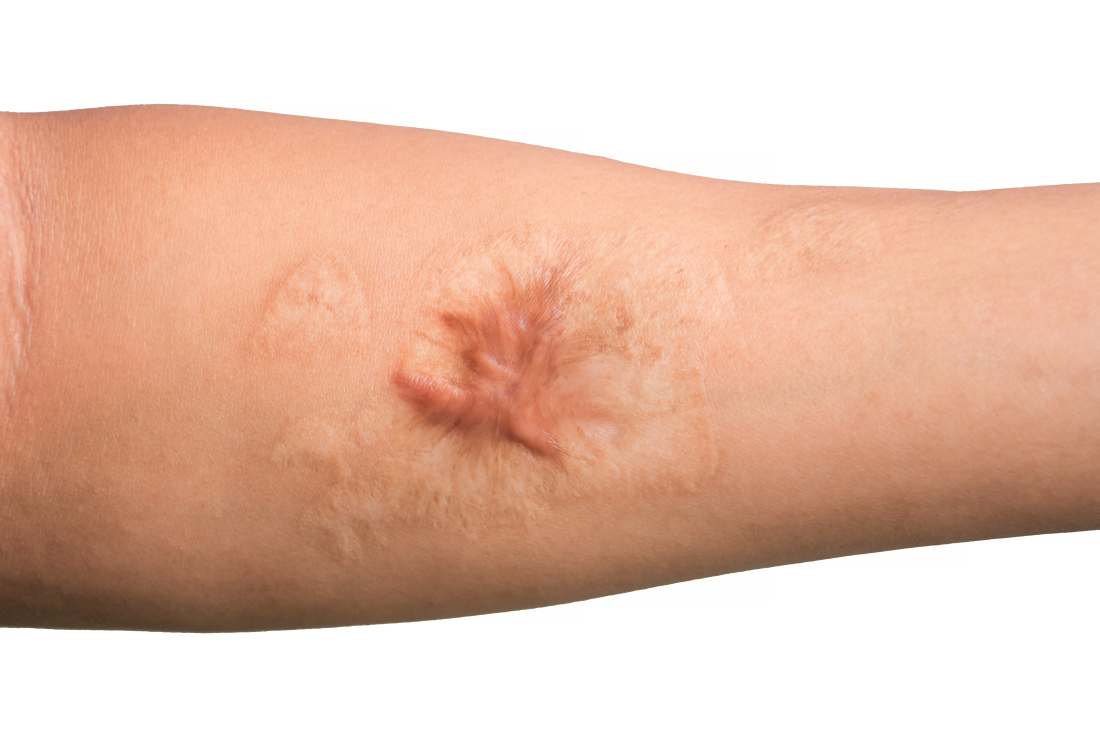
“Virtually every patient says, ‘I want this cut off – I want it gone,’ ” dermatologist Hilary E. Baldwin, MD, said in a presentation at the recent Las Vegas Dermatology Seminar. She responds to patients with reality checks about what’s actually possible in keloid treatment.
But sometimes, they just want to adjust the appearance of their keloids. Like the man who complained that “my keloid looks like my junk.” Dr. Baldwin took a look and had to agree – the keloid on his deltoid was the spitting image of male genitalia. She treated the keloid with the equivalent of castration (removing its “testicles” via surgery) and circumcision of sorts (flattening its “glans penis” via corticosteroids).
“It didn’t look pretty,” she said, as at least one male member of the audience squirmed, “but it no longer looked offensive to him.”
‘Necrotizing lunchitis’
Here at the Bureau of Livin’ on the MDedge, we pride ourselves on having the best words. And being University of Michigan graduates. So, the pain is Likert-scale 10 when Big Ten rivals have better words – and worse office fridges.

Exhibit A: the operative report surgical-taped to a Penn State University call room refrigerator, which general surgery resident and American hero Dr. Cassie Sonntag shared on Twitter. The 18-cubic-foot communal Kenmore’s diagnosis? “Necrotizing lunchitis.”
The grave condition called for immediate intervention by surgeon “Whitt,” with assistance from circulating nurse “Liu.” The surgical team performed “debridement of the upper, middle, and lower compartments of the call room refrigerator with extension into the fridge door, disarticulation and washout of the lower chamber, explantation of necrotic lunches of varying ages.” Complications? “Multiple never-before-seen species of mold casually exterminated.” The patient’s postprocedure condition is “guarded.” The complete report is well worth your review. Even if the Sears appliance’s specimens were “refused by path.”

Global gamete warming
Apparently, increasing deadly wildfires, hurricanes, and global famine aren’t enough. Turns out, climate change has found yet another way to harm its arch nemeses, a.k.a. every single species on the planet. A study originally published in Nature Communications found that rising temperatures also have a significant effect on male (but not female) fertility. Men: so fragile.
Testing fertility in flour beetles, researchers concluded that successive heat waves of 5-7° C above normal for 5 days reduced sperm competitiveness and practically sterilized the males. Inseminated sperm inside females were also not spared the devastating effects of the heat-wave conditions. And, as the icing on the cake, reduced fertility persisted amongst later generations.
Unless we can figure out how robot sperm can deliver DNA, we’re in trouble.
Pneumonia throwdown
Previously, we pitted Clostridium difficile against cockroaches in a battle of toughness. In this week’s edition of Bacteria vs. the World, bacterial pneumonia goes up against another worthy adversary, viral pneumonia.
“We’ve always known pneumonia was a risk factor for a major adverse cardiac event,” said J. Brent Muhlestein, MD, of Intermountain Medical Center in Salt Lake City. “What we didn’t know was which type of pneumonia was more dangerous.”
To find out, he and his associates followed almost 4,800 patients hospitalized with pneumonia and tracked nonfatal heart attacks, stroke, heart failure, or death. Data they presented at the American Heart Association scientific sessions in Chicago show that 34% of patients with bacterial pneumonia had a major cardiovascular event within 90 days, compared with 26% of those diagnosed with viral pneumonia. It is likely “that bacterial pneumonia causes greater inflammation of the arteries compared to viral pneumonia,” Dr. Muhlestein said.
So the bacteria stay undefeated, and somewhere Chuck Norris, who will never have a heart attack – even a heart isn’t foolish enough to attack Chuck Norris – is smiling.
Ch-ch-check it out
Drop the beat! Researchers at the University of California were interested in examining beatboxing processes to explore how the human mind works.
These crazy scientists threw some beatboxers into an MRI for an exclusive performance and studied the movements of their mouth and tongue. Researchers hypothesized that beatboxers base their sounds on already-known speech. But they discovered that these talented virtuosos are creating a whole new language.
“They’re coming up with ways to create these really complex acrobatic sounds by taking approaches drawn from different parts of the mouth that they don’t use in any language, and nobody uses for any language,” according to the lead researcher.
Does that mean beatboxing will be taught in schools as a foreign language? Perhaps. It might be more useful than learning Latin.
Keloid castration
Keloids – those pesky overgrowths of scar tissue – can be mighty hard to treat.
“Virtually every patient says, ‘I want this cut off – I want it gone,’ ” dermatologist Hilary E. Baldwin, MD, said in a presentation at the recent Las Vegas Dermatology Seminar. She responds to patients with reality checks about what’s actually possible in keloid treatment.
But sometimes, they just want to adjust the appearance of their keloids. Like the man who complained that “my keloid looks like my junk.” Dr. Baldwin took a look and had to agree – the keloid on his deltoid was the spitting image of male genitalia. She treated the keloid with the equivalent of castration (removing its “testicles” via surgery) and circumcision of sorts (flattening its “glans penis” via corticosteroids).
“It didn’t look pretty,” she said, as at least one male member of the audience squirmed, “but it no longer looked offensive to him.”
‘Necrotizing lunchitis’
Here at the Bureau of Livin’ on the MDedge, we pride ourselves on having the best words. And being University of Michigan graduates. So, the pain is Likert-scale 10 when Big Ten rivals have better words – and worse office fridges.
Exhibit A: the operative report surgical-taped to a Penn State University call room refrigerator, which general surgery resident and American hero Dr. Cassie Sonntag shared on Twitter. The 18-cubic-foot communal Kenmore’s diagnosis? “Necrotizing lunchitis.”
The grave condition called for immediate intervention by surgeon “Whitt,” with assistance from circulating nurse “Liu.” The surgical team performed “debridement of the upper, middle, and lower compartments of the call room refrigerator with extension into the fridge door, disarticulation and washout of the lower chamber, explantation of necrotic lunches of varying ages.” Complications? “Multiple never-before-seen species of mold casually exterminated.” The patient’s postprocedure condition is “guarded.” The complete report is well worth your review. Even if the Sears appliance’s specimens were “refused by path.”
Global gamete warming
Apparently, increasing deadly wildfires, hurricanes, and global famine aren’t enough. Turns out, climate change has found yet another way to harm its arch nemeses, a.k.a. every single species on the planet. A study originally published in Nature Communications found that rising temperatures also have a significant effect on male (but not female) fertility. Men: so fragile.
Testing fertility in flour beetles, researchers concluded that successive heat waves of 5-7° C above normal for 5 days reduced sperm competitiveness and practically sterilized the males. Inseminated sperm inside females were also not spared the devastating effects of the heat-wave conditions. And, as the icing on the cake, reduced fertility persisted amongst later generations.
Unless we can figure out how robot sperm can deliver DNA, we’re in trouble.
Pneumonia throwdown
Previously, we pitted Clostridium difficile against cockroaches in a battle of toughness. In this week’s edition of Bacteria vs. the World, bacterial pneumonia goes up against another worthy adversary, viral pneumonia.
“We’ve always known pneumonia was a risk factor for a major adverse cardiac event,” said J. Brent Muhlestein, MD, of Intermountain Medical Center in Salt Lake City. “What we didn’t know was which type of pneumonia was more dangerous.”
To find out, he and his associates followed almost 4,800 patients hospitalized with pneumonia and tracked nonfatal heart attacks, stroke, heart failure, or death. Data they presented at the American Heart Association scientific sessions in Chicago show that 34% of patients with bacterial pneumonia had a major cardiovascular event within 90 days, compared with 26% of those diagnosed with viral pneumonia. It is likely “that bacterial pneumonia causes greater inflammation of the arteries compared to viral pneumonia,” Dr. Muhlestein said.
So the bacteria stay undefeated, and somewhere Chuck Norris, who will never have a heart attack – even a heart isn’t foolish enough to attack Chuck Norris – is smiling.
Ch-ch-check it out
Drop the beat! Researchers at the University of California were interested in examining beatboxing processes to explore how the human mind works.
These crazy scientists threw some beatboxers into an MRI for an exclusive performance and studied the movements of their mouth and tongue. Researchers hypothesized that beatboxers base their sounds on already-known speech. But they discovered that these talented virtuosos are creating a whole new language.
“They’re coming up with ways to create these really complex acrobatic sounds by taking approaches drawn from different parts of the mouth that they don’t use in any language, and nobody uses for any language,” according to the lead researcher.
Does that mean beatboxing will be taught in schools as a foreign language? Perhaps. It might be more useful than learning Latin.
Keloid castration
Keloids – those pesky overgrowths of scar tissue – can be mighty hard to treat.
“Virtually every patient says, ‘I want this cut off – I want it gone,’ ” dermatologist Hilary E. Baldwin, MD, said in a presentation at the recent Las Vegas Dermatology Seminar. She responds to patients with reality checks about what’s actually possible in keloid treatment.
But sometimes, they just want to adjust the appearance of their keloids. Like the man who complained that “my keloid looks like my junk.” Dr. Baldwin took a look and had to agree – the keloid on his deltoid was the spitting image of male genitalia. She treated the keloid with the equivalent of castration (removing its “testicles” via surgery) and circumcision of sorts (flattening its “glans penis” via corticosteroids).
“It didn’t look pretty,” she said, as at least one male member of the audience squirmed, “but it no longer looked offensive to him.”
‘Necrotizing lunchitis’
Here at the Bureau of Livin’ on the MDedge, we pride ourselves on having the best words. And being University of Michigan graduates. So, the pain is Likert-scale 10 when Big Ten rivals have better words – and worse office fridges.
Exhibit A: the operative report surgical-taped to a Penn State University call room refrigerator, which general surgery resident and American hero Dr. Cassie Sonntag shared on Twitter. The 18-cubic-foot communal Kenmore’s diagnosis? “Necrotizing lunchitis.”
The grave condition called for immediate intervention by surgeon “Whitt,” with assistance from circulating nurse “Liu.” The surgical team performed “debridement of the upper, middle, and lower compartments of the call room refrigerator with extension into the fridge door, disarticulation and washout of the lower chamber, explantation of necrotic lunches of varying ages.” Complications? “Multiple never-before-seen species of mold casually exterminated.” The patient’s postprocedure condition is “guarded.” The complete report is well worth your review. Even if the Sears appliance’s specimens were “refused by path.”
Monitoring limited in stage 3 chronic kidney disease
SAN DIEGO – Fewer than a quarter of patients with signs of stage 3 chronic kidney disease (CKD) underwent follow-up testing within 1 year, even though most of these patients underwent repeat cholesterol screening during the same time.

Considering that CKD can be asymptomatic until the late stages, “this is a lost opportunity to get a proper evaluation by a nephrologist,” study coauthor and nephrologist Barbara S. Gillespie, MD, MMS, of Covance, the drug development business of LabCorp, said in an interview. Dr. Gillespie and her colleagues presented their findings at Kidney Week 2018, sponsored by the American Society of Nephrology.
More than 90% of patients with stages 1-3 CKD didn’t know they had the condition, based on 2013-2016 data gathered by the United States Renal Data System . Just 57% of those with stage 4 CKD were aware of their disease.
For the retrospective study, the researchers identified 4.9 million patients (58% were women; mean age was 71) who had estimated glomerular filtration rate (eGFR) results below 60 mL/min per 1.73 m2 from 2011 to 2018, based on serum creatinine tests performed at least twice and at least 3 months apart by LabCorp. The researchers tracked the patients for a median 26 months.
Based on the initial results, 92% of the patients had stage 3 CKD, 6% had stage 4, and 2% had stage 5. However, at 1 year, the percentages of overall patients who underwent urine albumin/creatinine ratio, serum phosphorus, and plasma parathyroid hormone were 24%, 12%, and 17%, respectively, lead author Jennifer Ennis, MD, of LabCorp, said in an interview.
Kidney Disease Improving Global Outcomes guidelines from 2012 recommend “assessments of GFR and albuminuria at least annually ... and more often for individuals at higher risk of progression, and/or where measurement will impact therapeutic decisions” (Ann Intern Med. 2013 Jun 4;158[11]:825-30).
Yet 76% of these patients also underwent annual LDL cholesterol screening. “This suggests that the patients were receiving evaluation and treatment for other common conditions, but that CKD may not have been specifically addressed,” Dr. Ennis said.

“These results suggest that guideline recommendations for monitoring of CKD are not well implemented in the primary care setting, which is where the majority of this testing took place,” she added. “There are possibly many reasons for this, including lack of guideline awareness, familiarity, or agreement; inertia; or other external barriers such as time constraints and the burden of having to remember numerous guidelines for a single patient with multiple conditions.”
Dr. Gillespie said the findings may help to explain why so many patients with CKD are unaware of their condition and “crash into dialysis” within 24 hours of winding up in the emergency department with kidney failure. “Often they note they did not know they had kidney disease,” she said, “or did not know how bad it was.”
The authors disclosed employment by LabCorp, which funded the study.
SOURCE: Ennis JL et al. Kidney Week 2018, Abstract PUB111.
SAN DIEGO – Fewer than a quarter of patients with signs of stage 3 chronic kidney disease (CKD) underwent follow-up testing within 1 year, even though most of these patients underwent repeat cholesterol screening during the same time.
Considering that CKD can be asymptomatic until the late stages, “this is a lost opportunity to get a proper evaluation by a nephrologist,” study coauthor and nephrologist Barbara S. Gillespie, MD, MMS, of Covance, the drug development business of LabCorp, said in an interview. Dr. Gillespie and her colleagues presented their findings at Kidney Week 2018, sponsored by the American Society of Nephrology.
More than 90% of patients with stages 1-3 CKD didn’t know they had the condition, based on 2013-2016 data gathered by the United States Renal Data System . Just 57% of those with stage 4 CKD were aware of their disease.
For the retrospective study, the researchers identified 4.9 million patients (58% were women; mean age was 71) who had estimated glomerular filtration rate (eGFR) results below 60 mL/min per 1.73 m2 from 2011 to 2018, based on serum creatinine tests performed at least twice and at least 3 months apart by LabCorp. The researchers tracked the patients for a median 26 months.
Based on the initial results, 92% of the patients had stage 3 CKD, 6% had stage 4, and 2% had stage 5. However, at 1 year, the percentages of overall patients who underwent urine albumin/creatinine ratio, serum phosphorus, and plasma parathyroid hormone were 24%, 12%, and 17%, respectively, lead author Jennifer Ennis, MD, of LabCorp, said in an interview.
Kidney Disease Improving Global Outcomes guidelines from 2012 recommend “assessments of GFR and albuminuria at least annually ... and more often for individuals at higher risk of progression, and/or where measurement will impact therapeutic decisions” (Ann Intern Med. 2013 Jun 4;158[11]:825-30).
Yet 76% of these patients also underwent annual LDL cholesterol screening. “This suggests that the patients were receiving evaluation and treatment for other common conditions, but that CKD may not have been specifically addressed,” Dr. Ennis said.
“These results suggest that guideline recommendations for monitoring of CKD are not well implemented in the primary care setting, which is where the majority of this testing took place,” she added. “There are possibly many reasons for this, including lack of guideline awareness, familiarity, or agreement; inertia; or other external barriers such as time constraints and the burden of having to remember numerous guidelines for a single patient with multiple conditions.”
Dr. Gillespie said the findings may help to explain why so many patients with CKD are unaware of their condition and “crash into dialysis” within 24 hours of winding up in the emergency department with kidney failure. “Often they note they did not know they had kidney disease,” she said, “or did not know how bad it was.”
The authors disclosed employment by LabCorp, which funded the study.
SOURCE: Ennis JL et al. Kidney Week 2018, Abstract PUB111.
SAN DIEGO – Fewer than a quarter of patients with signs of stage 3 chronic kidney disease (CKD) underwent follow-up testing within 1 year, even though most of these patients underwent repeat cholesterol screening during the same time.
Considering that CKD can be asymptomatic until the late stages, “this is a lost opportunity to get a proper evaluation by a nephrologist,” study coauthor and nephrologist Barbara S. Gillespie, MD, MMS, of Covance, the drug development business of LabCorp, said in an interview. Dr. Gillespie and her colleagues presented their findings at Kidney Week 2018, sponsored by the American Society of Nephrology.
More than 90% of patients with stages 1-3 CKD didn’t know they had the condition, based on 2013-2016 data gathered by the United States Renal Data System . Just 57% of those with stage 4 CKD were aware of their disease.
For the retrospective study, the researchers identified 4.9 million patients (58% were women; mean age was 71) who had estimated glomerular filtration rate (eGFR) results below 60 mL/min per 1.73 m2 from 2011 to 2018, based on serum creatinine tests performed at least twice and at least 3 months apart by LabCorp. The researchers tracked the patients for a median 26 months.
Based on the initial results, 92% of the patients had stage 3 CKD, 6% had stage 4, and 2% had stage 5. However, at 1 year, the percentages of overall patients who underwent urine albumin/creatinine ratio, serum phosphorus, and plasma parathyroid hormone were 24%, 12%, and 17%, respectively, lead author Jennifer Ennis, MD, of LabCorp, said in an interview.
Kidney Disease Improving Global Outcomes guidelines from 2012 recommend “assessments of GFR and albuminuria at least annually ... and more often for individuals at higher risk of progression, and/or where measurement will impact therapeutic decisions” (Ann Intern Med. 2013 Jun 4;158[11]:825-30).
Yet 76% of these patients also underwent annual LDL cholesterol screening. “This suggests that the patients were receiving evaluation and treatment for other common conditions, but that CKD may not have been specifically addressed,” Dr. Ennis said.
“These results suggest that guideline recommendations for monitoring of CKD are not well implemented in the primary care setting, which is where the majority of this testing took place,” she added. “There are possibly many reasons for this, including lack of guideline awareness, familiarity, or agreement; inertia; or other external barriers such as time constraints and the burden of having to remember numerous guidelines for a single patient with multiple conditions.”
Dr. Gillespie said the findings may help to explain why so many patients with CKD are unaware of their condition and “crash into dialysis” within 24 hours of winding up in the emergency department with kidney failure. “Often they note they did not know they had kidney disease,” she said, “or did not know how bad it was.”
The authors disclosed employment by LabCorp, which funded the study.
SOURCE: Ennis JL et al. Kidney Week 2018, Abstract PUB111.
REPORTING FROM KIDNEY WEEK 2018
Key clinical point: Physicians often ignore blood test results that indicate chronic kidney disease.
Major finding: Over 1 year, 24% of patients with signs of CKD underwent a recommended follow-up test, even though about 76% had cholesterol screening.
Study details: Retrospective study of 4.9 million U.S. patients who had signs of CKD based on LabCorp blood tests during 2011-2018.
Disclosures: The authors disclosed employment by LabCorp, which funded the study.
Source: Ennis JL et al. Kidney Week 2018, Abstract PUB111.
Dialysis decision in elderly needs to factor in comorbidities
SAN DIEGO – The wider picture of the patient’s health and prognosis, not just chronologic age, should enter into the clinical decision to initiate dialysis, according to Bjorg Thorsteinsdottir, MD, a palliative care physician at the Mayo Clinic in Rochester, Minn.

“People perceive they have no choice [but treatment], and we perceive we have to do things to them until everything is lost, then we expect them to do a 180 [degree turn],” she said in a presentation at the meeting sponsored by the American Society of Nephrology.
“A 90-year-old fit individual, with minimal comorbidity living independently, would absolutely be a good candidate for dialysis, while a 75-year-old patient with bad peripheral vascular disease and dementia, living in a nursing home, would be unlikely to live longer on dialysis than off dialysis,” she said. “We need to weigh the risks and benefits for each individual patient against their goals and values. We need to be honest about the lack of benefit for certain subgroups of patients and the heavy treatment burdens of dialysis. Age, comorbidity, and frailty all factor into these deliberations and prognosis.”
More than 107,000 people over age 75 in the United States received dialysis in 2015, according to statistics gathered by the National Kidney Foundation. Yet the survival advantage of dialysis is more limited in elderly patients with multiple comorbidities, Dr. Thorsteinsdottir said. “It becomes important to think about the harms of treatment.”
A 2016 study from the Netherlands found no survival advantage to dialysis, compared with conservative management among kidney failure patients aged 80 and older. The survival advantage was limited with dialysis in patients aged 70 and older who also had multiple comorbidities. (Clin J Am Soc Nephrol. 2016 Apr;11(4):633-40)
In an interview, Dr. Thorsteinsdottir acknowledged that “determining who is unlikely to benefit from dialysis is complicated.” However, she said, “we know that the following comorbidities are the worst: dementia and peripheral vascular disease.”
“No one that I know of currently has an age cutoff for dialysis,” Dr. Thorsteinsdottir said in the interview, “and I do not believe the U.S. is ready for any kind of explicit limit setting by the government on dialysis treatment.”
“We must respond to legitimate concerns raised by recent studies that suggest that strong moral imperatives – to treat anyone we can treat – have created a situation where we are not pausing and asking hard questions about whether the patient in front of us is likely to benefit from dialysis,” she said in the interview. “Patients sense this and do not feel that they are given any alternatives to dialysis treatment. This needs to change.”
Dr. Thorsteinsdottir reported no relevant financial disclosures.
SAN DIEGO – The wider picture of the patient’s health and prognosis, not just chronologic age, should enter into the clinical decision to initiate dialysis, according to Bjorg Thorsteinsdottir, MD, a palliative care physician at the Mayo Clinic in Rochester, Minn.
“People perceive they have no choice [but treatment], and we perceive we have to do things to them until everything is lost, then we expect them to do a 180 [degree turn],” she said in a presentation at the meeting sponsored by the American Society of Nephrology.
“A 90-year-old fit individual, with minimal comorbidity living independently, would absolutely be a good candidate for dialysis, while a 75-year-old patient with bad peripheral vascular disease and dementia, living in a nursing home, would be unlikely to live longer on dialysis than off dialysis,” she said. “We need to weigh the risks and benefits for each individual patient against their goals and values. We need to be honest about the lack of benefit for certain subgroups of patients and the heavy treatment burdens of dialysis. Age, comorbidity, and frailty all factor into these deliberations and prognosis.”
More than 107,000 people over age 75 in the United States received dialysis in 2015, according to statistics gathered by the National Kidney Foundation. Yet the survival advantage of dialysis is more limited in elderly patients with multiple comorbidities, Dr. Thorsteinsdottir said. “It becomes important to think about the harms of treatment.”
A 2016 study from the Netherlands found no survival advantage to dialysis, compared with conservative management among kidney failure patients aged 80 and older. The survival advantage was limited with dialysis in patients aged 70 and older who also had multiple comorbidities. (Clin J Am Soc Nephrol. 2016 Apr;11(4):633-40)
In an interview, Dr. Thorsteinsdottir acknowledged that “determining who is unlikely to benefit from dialysis is complicated.” However, she said, “we know that the following comorbidities are the worst: dementia and peripheral vascular disease.”
“No one that I know of currently has an age cutoff for dialysis,” Dr. Thorsteinsdottir said in the interview, “and I do not believe the U.S. is ready for any kind of explicit limit setting by the government on dialysis treatment.”
“We must respond to legitimate concerns raised by recent studies that suggest that strong moral imperatives – to treat anyone we can treat – have created a situation where we are not pausing and asking hard questions about whether the patient in front of us is likely to benefit from dialysis,” she said in the interview. “Patients sense this and do not feel that they are given any alternatives to dialysis treatment. This needs to change.”
Dr. Thorsteinsdottir reported no relevant financial disclosures.
SAN DIEGO – The wider picture of the patient’s health and prognosis, not just chronologic age, should enter into the clinical decision to initiate dialysis, according to Bjorg Thorsteinsdottir, MD, a palliative care physician at the Mayo Clinic in Rochester, Minn.
“People perceive they have no choice [but treatment], and we perceive we have to do things to them until everything is lost, then we expect them to do a 180 [degree turn],” she said in a presentation at the meeting sponsored by the American Society of Nephrology.
“A 90-year-old fit individual, with minimal comorbidity living independently, would absolutely be a good candidate for dialysis, while a 75-year-old patient with bad peripheral vascular disease and dementia, living in a nursing home, would be unlikely to live longer on dialysis than off dialysis,” she said. “We need to weigh the risks and benefits for each individual patient against their goals and values. We need to be honest about the lack of benefit for certain subgroups of patients and the heavy treatment burdens of dialysis. Age, comorbidity, and frailty all factor into these deliberations and prognosis.”
More than 107,000 people over age 75 in the United States received dialysis in 2015, according to statistics gathered by the National Kidney Foundation. Yet the survival advantage of dialysis is more limited in elderly patients with multiple comorbidities, Dr. Thorsteinsdottir said. “It becomes important to think about the harms of treatment.”
A 2016 study from the Netherlands found no survival advantage to dialysis, compared with conservative management among kidney failure patients aged 80 and older. The survival advantage was limited with dialysis in patients aged 70 and older who also had multiple comorbidities. (Clin J Am Soc Nephrol. 2016 Apr;11(4):633-40)
In an interview, Dr. Thorsteinsdottir acknowledged that “determining who is unlikely to benefit from dialysis is complicated.” However, she said, “we know that the following comorbidities are the worst: dementia and peripheral vascular disease.”
“No one that I know of currently has an age cutoff for dialysis,” Dr. Thorsteinsdottir said in the interview, “and I do not believe the U.S. is ready for any kind of explicit limit setting by the government on dialysis treatment.”
“We must respond to legitimate concerns raised by recent studies that suggest that strong moral imperatives – to treat anyone we can treat – have created a situation where we are not pausing and asking hard questions about whether the patient in front of us is likely to benefit from dialysis,” she said in the interview. “Patients sense this and do not feel that they are given any alternatives to dialysis treatment. This needs to change.”
Dr. Thorsteinsdottir reported no relevant financial disclosures.
REPORTING FROM KIDNEY WEEK 2018
Good news, bad news about HCV in kidney disease
SAN DIEGO – There’s good news and bad news about hepatitis C virus (HCV) in patients with chronic kidney disease (CKD): The new generation of drugs that cures HCV is effective in this population, but outbreaks of infection are still plaguing the nation’s dialysis clinics.

These perspectives came in a presentation about infections in CKD at Kidney Week 2018, sponsored by the American Society of Nephrology.
First, the good news about HCV. “Treatment is now feasible for all stages of chronic kidney disease,” said gastroenterologist Paul Martin, MD, of the University of Miami. “It was possible to achieve biological cure in 99% of patients, which is truly remarkable considering what a problem kidney patients were for hepatitis C until very recently.”
The key is to treat HCV with drug combinations that lower the risk of viral resistance. “These drugs are extremely well tolerated. They’re not like interferon or ribavirin,” he said, referring to a drug combo that was formerly used to treat HCV. “We can anticipate curing hepatitis C with a finite amount of therapy in virtually every patient we see, including those with kidney disease.”
In patients with CKD, all the new drugs are approved for glomerular filtration rates greater than 30 mL/min. Sofosbuvir (Sovaldi) is not approved for patients with a filtration rate under 30 mL/min, he said, but other options are available.
Ribavirin, he added, is no longer needed with current regimens.
Dr. Martin pointed to two studies that reveal the power of the new regimens against HCV in patients with CKD. One of the studies, a 2015 industry-funded report in the Lancet, found that “once-daily grazoprevir and elbasvir for 12 weeks had a low rate of adverse events and was effective in patients infected with HCV genotype 1 and stage 4-5 chronic kidney disease.” The other study, also funded by industry and published in 2017 in the New England Journal of Medicine, found that “treatment with glecaprevir and pibrentasvir for 12 weeks resulted in a high rate of sustained virologic response in patients with stage 4 or 5 chronic kidney disease and HCV infection.”
Meanwhile, there are signs that HCV treatment may boost survival in CKD patients on dialysis, Dr. Martin said.
In terms of bad news, Priti R. Patel, MD, MPH, a medical officer with the Centers for Disease Control and Prevention, warned that dialysis clinics are still seeing HCV outbreaks. “It’s a continuing problem,” she said. “What we hear about at the CDC is the tip of the iceberg.”
The CDC says it received word of 21 HCV outbreaks of two or more cases in dialysis clinics during 2008-2017. These affected 102 patients, and more than 3,000 patients were notified that they were at risk and should be screened.
One dialysis clinic in Philadelphia had 18 cases of HCV during 2008-2013; they were blamed on “multiple lapses in infection control ... including hand hygiene and glove use, vascular access care, medication preparation, cleaning, and disinfection.”
“There should be no more than one case that has to happen for a facility to detect that it has a problem and identify a solution,” Dr. Patel said.
Since acute HCV can appear without symptoms, every dialysis patients should be tested for HCV antibodies, she added. “If it’s positive, confirm it. If confirmed, they should be informed of their infection status and have an evaluation for treatment.”
Dr. Martin reported consulting for Bristol-Myers Squibb and AbbVie and receiving research funding from Gilead, Bristol-Myers Squibb, AbbVie, and Merck. Dr. Patel reported no disclosures.
SAN DIEGO – There’s good news and bad news about hepatitis C virus (HCV) in patients with chronic kidney disease (CKD): The new generation of drugs that cures HCV is effective in this population, but outbreaks of infection are still plaguing the nation’s dialysis clinics.
These perspectives came in a presentation about infections in CKD at Kidney Week 2018, sponsored by the American Society of Nephrology.
First, the good news about HCV. “Treatment is now feasible for all stages of chronic kidney disease,” said gastroenterologist Paul Martin, MD, of the University of Miami. “It was possible to achieve biological cure in 99% of patients, which is truly remarkable considering what a problem kidney patients were for hepatitis C until very recently.”
The key is to treat HCV with drug combinations that lower the risk of viral resistance. “These drugs are extremely well tolerated. They’re not like interferon or ribavirin,” he said, referring to a drug combo that was formerly used to treat HCV. “We can anticipate curing hepatitis C with a finite amount of therapy in virtually every patient we see, including those with kidney disease.”
In patients with CKD, all the new drugs are approved for glomerular filtration rates greater than 30 mL/min. Sofosbuvir (Sovaldi) is not approved for patients with a filtration rate under 30 mL/min, he said, but other options are available.
Ribavirin, he added, is no longer needed with current regimens.
Dr. Martin pointed to two studies that reveal the power of the new regimens against HCV in patients with CKD. One of the studies, a 2015 industry-funded report in the Lancet, found that “once-daily grazoprevir and elbasvir for 12 weeks had a low rate of adverse events and was effective in patients infected with HCV genotype 1 and stage 4-5 chronic kidney disease.” The other study, also funded by industry and published in 2017 in the New England Journal of Medicine, found that “treatment with glecaprevir and pibrentasvir for 12 weeks resulted in a high rate of sustained virologic response in patients with stage 4 or 5 chronic kidney disease and HCV infection.”
Meanwhile, there are signs that HCV treatment may boost survival in CKD patients on dialysis, Dr. Martin said.
In terms of bad news, Priti R. Patel, MD, MPH, a medical officer with the Centers for Disease Control and Prevention, warned that dialysis clinics are still seeing HCV outbreaks. “It’s a continuing problem,” she said. “What we hear about at the CDC is the tip of the iceberg.”
The CDC says it received word of 21 HCV outbreaks of two or more cases in dialysis clinics during 2008-2017. These affected 102 patients, and more than 3,000 patients were notified that they were at risk and should be screened.
One dialysis clinic in Philadelphia had 18 cases of HCV during 2008-2013; they were blamed on “multiple lapses in infection control ... including hand hygiene and glove use, vascular access care, medication preparation, cleaning, and disinfection.”
“There should be no more than one case that has to happen for a facility to detect that it has a problem and identify a solution,” Dr. Patel said.
Since acute HCV can appear without symptoms, every dialysis patients should be tested for HCV antibodies, she added. “If it’s positive, confirm it. If confirmed, they should be informed of their infection status and have an evaluation for treatment.”
Dr. Martin reported consulting for Bristol-Myers Squibb and AbbVie and receiving research funding from Gilead, Bristol-Myers Squibb, AbbVie, and Merck. Dr. Patel reported no disclosures.
SAN DIEGO – There’s good news and bad news about hepatitis C virus (HCV) in patients with chronic kidney disease (CKD): The new generation of drugs that cures HCV is effective in this population, but outbreaks of infection are still plaguing the nation’s dialysis clinics.
These perspectives came in a presentation about infections in CKD at Kidney Week 2018, sponsored by the American Society of Nephrology.
First, the good news about HCV. “Treatment is now feasible for all stages of chronic kidney disease,” said gastroenterologist Paul Martin, MD, of the University of Miami. “It was possible to achieve biological cure in 99% of patients, which is truly remarkable considering what a problem kidney patients were for hepatitis C until very recently.”
The key is to treat HCV with drug combinations that lower the risk of viral resistance. “These drugs are extremely well tolerated. They’re not like interferon or ribavirin,” he said, referring to a drug combo that was formerly used to treat HCV. “We can anticipate curing hepatitis C with a finite amount of therapy in virtually every patient we see, including those with kidney disease.”
In patients with CKD, all the new drugs are approved for glomerular filtration rates greater than 30 mL/min. Sofosbuvir (Sovaldi) is not approved for patients with a filtration rate under 30 mL/min, he said, but other options are available.
Ribavirin, he added, is no longer needed with current regimens.
Dr. Martin pointed to two studies that reveal the power of the new regimens against HCV in patients with CKD. One of the studies, a 2015 industry-funded report in the Lancet, found that “once-daily grazoprevir and elbasvir for 12 weeks had a low rate of adverse events and was effective in patients infected with HCV genotype 1 and stage 4-5 chronic kidney disease.” The other study, also funded by industry and published in 2017 in the New England Journal of Medicine, found that “treatment with glecaprevir and pibrentasvir for 12 weeks resulted in a high rate of sustained virologic response in patients with stage 4 or 5 chronic kidney disease and HCV infection.”
Meanwhile, there are signs that HCV treatment may boost survival in CKD patients on dialysis, Dr. Martin said.
In terms of bad news, Priti R. Patel, MD, MPH, a medical officer with the Centers for Disease Control and Prevention, warned that dialysis clinics are still seeing HCV outbreaks. “It’s a continuing problem,” she said. “What we hear about at the CDC is the tip of the iceberg.”
The CDC says it received word of 21 HCV outbreaks of two or more cases in dialysis clinics during 2008-2017. These affected 102 patients, and more than 3,000 patients were notified that they were at risk and should be screened.
One dialysis clinic in Philadelphia had 18 cases of HCV during 2008-2013; they were blamed on “multiple lapses in infection control ... including hand hygiene and glove use, vascular access care, medication preparation, cleaning, and disinfection.”
“There should be no more than one case that has to happen for a facility to detect that it has a problem and identify a solution,” Dr. Patel said.
Since acute HCV can appear without symptoms, every dialysis patients should be tested for HCV antibodies, she added. “If it’s positive, confirm it. If confirmed, they should be informed of their infection status and have an evaluation for treatment.”
Dr. Martin reported consulting for Bristol-Myers Squibb and AbbVie and receiving research funding from Gilead, Bristol-Myers Squibb, AbbVie, and Merck. Dr. Patel reported no disclosures.
EXPERT ANALYSIS FROM KIDNEY WEEK 2018
DPP-4 drugs for diabetes may protect kidneys too
SAN DIEGO – Dipeptidyl peptidase–4 (DPP-4) inhibitors appear to delay the progression of chronic kidney disease (CKD) in patients with type 2 diabetes mellitus (T2DM), a new study has found. Researchers also found that all-cause long-term mortality dropped by an astonishing 78% in patients who took the drugs for an average of more than 3 years.
While the reasons for the impressive mortality results are a mystery, “these medications could have a beneficial effect on the kidneys, and it begins to show after 3 years,” said lead author Mariana Garcia-Touza, MD, of the Kansas City (Missouri) Department of Veterans Affairs Medical Center, in an interview. She presented the results at the meeting, sponsored by the American Society of Nephrology.
DPP-4 inhibitor drugs have been available for more than a decade in the United States. The medications, which include sitagliptin (Januvia) and linagliptin (Tradjenta), are used to treat patients with T2DM who are inadequately controlled by first-line treatments.
The drugs have critics. As UpToDate notes, they’re expensive and their effect on glucose levels is “modest.” In addition, UpToDate says, “some of the DPP-4 inhibitors have been associated with an increased risk of heart failure resulting in hospitalization.”
The authors of the new study sought to understand whether the drugs affect kidney function. As Dr. Garcia-Touza noted, metformin, which is processed in part by the kidneys, is considered harmful to certain patients with kidney disease. However, DPP-4 inhibitors are cleared through the liver. In fact, research has suggested the drugs may actually benefit the liver (Med Sci Monit. 2014 Sep 17;20:1662-7).
For the new study, researchers retrospectively analyzed 20,424 patients with T2DM in the VA system who took DPP-4 inhibitors (average age, 68 years) and compared them with a matched group of 52,118 patients with T2DM who didn’t take the drugs, tracking all patients for a mean of over 3 years.
T2DM control improved slightly in the DPP-4 group but remained worse than the non–DPP-4 group. However, “a significant reduction in progression of CKD was seen” in the DPP-4 group, she said.
The number of patients with creatinine levels above 1.5 mg/dL, 3 mg/dL, and 6 mg/dL was reduced by 7%, 41%, and 47%, respectively, in the DPP-4 group, compared with the other group (P less than .01). And the time to end-stage renal disease (creatinine above 6 mg/dL) was delayed by 144 days in the DPP-4 group (P less than .01).
All-cause mortality also fell by 78% in the DPP-4 group (P less than .0001). “Despite having worse glucose control [than the non–DPP-4 group], these patients have better overall mortality,” Dr. Garcia-Touza said.
The drugs may reduce the burden on the kidneys by decreasing inflammation, she said.
Could DPP-4 drugs be beneficial to patients with CKD even if they don’t have T2DM? Dr. Garcia-Touza wasn’t sure. However, she had a theory about why these kidney benefits didn’t show up in previous research. “My impression is that they didn’t go far enough [in time]. That was the main difference.”
Going forward, Dr. Garcia-Touza said her team plans to study the effects of the drugs on retinopathy and diabetic neuropathy.
The study was funded by the Midwest Biomedical Research Foundation and the VA. The study authors reported no relevant disclosures.
SOURCE: Garcia-Tourza M et al. Kidney Week 2018, Abstract TH-OR035.
SAN DIEGO – Dipeptidyl peptidase–4 (DPP-4) inhibitors appear to delay the progression of chronic kidney disease (CKD) in patients with type 2 diabetes mellitus (T2DM), a new study has found. Researchers also found that all-cause long-term mortality dropped by an astonishing 78% in patients who took the drugs for an average of more than 3 years.
While the reasons for the impressive mortality results are a mystery, “these medications could have a beneficial effect on the kidneys, and it begins to show after 3 years,” said lead author Mariana Garcia-Touza, MD, of the Kansas City (Missouri) Department of Veterans Affairs Medical Center, in an interview. She presented the results at the meeting, sponsored by the American Society of Nephrology.
DPP-4 inhibitor drugs have been available for more than a decade in the United States. The medications, which include sitagliptin (Januvia) and linagliptin (Tradjenta), are used to treat patients with T2DM who are inadequately controlled by first-line treatments.
The drugs have critics. As UpToDate notes, they’re expensive and their effect on glucose levels is “modest.” In addition, UpToDate says, “some of the DPP-4 inhibitors have been associated with an increased risk of heart failure resulting in hospitalization.”
The authors of the new study sought to understand whether the drugs affect kidney function. As Dr. Garcia-Touza noted, metformin, which is processed in part by the kidneys, is considered harmful to certain patients with kidney disease. However, DPP-4 inhibitors are cleared through the liver. In fact, research has suggested the drugs may actually benefit the liver (Med Sci Monit. 2014 Sep 17;20:1662-7).
For the new study, researchers retrospectively analyzed 20,424 patients with T2DM in the VA system who took DPP-4 inhibitors (average age, 68 years) and compared them with a matched group of 52,118 patients with T2DM who didn’t take the drugs, tracking all patients for a mean of over 3 years.
T2DM control improved slightly in the DPP-4 group but remained worse than the non–DPP-4 group. However, “a significant reduction in progression of CKD was seen” in the DPP-4 group, she said.
The number of patients with creatinine levels above 1.5 mg/dL, 3 mg/dL, and 6 mg/dL was reduced by 7%, 41%, and 47%, respectively, in the DPP-4 group, compared with the other group (P less than .01). And the time to end-stage renal disease (creatinine above 6 mg/dL) was delayed by 144 days in the DPP-4 group (P less than .01).
All-cause mortality also fell by 78% in the DPP-4 group (P less than .0001). “Despite having worse glucose control [than the non–DPP-4 group], these patients have better overall mortality,” Dr. Garcia-Touza said.
The drugs may reduce the burden on the kidneys by decreasing inflammation, she said.
Could DPP-4 drugs be beneficial to patients with CKD even if they don’t have T2DM? Dr. Garcia-Touza wasn’t sure. However, she had a theory about why these kidney benefits didn’t show up in previous research. “My impression is that they didn’t go far enough [in time]. That was the main difference.”
Going forward, Dr. Garcia-Touza said her team plans to study the effects of the drugs on retinopathy and diabetic neuropathy.
The study was funded by the Midwest Biomedical Research Foundation and the VA. The study authors reported no relevant disclosures.
SOURCE: Garcia-Tourza M et al. Kidney Week 2018, Abstract TH-OR035.
SAN DIEGO – Dipeptidyl peptidase–4 (DPP-4) inhibitors appear to delay the progression of chronic kidney disease (CKD) in patients with type 2 diabetes mellitus (T2DM), a new study has found. Researchers also found that all-cause long-term mortality dropped by an astonishing 78% in patients who took the drugs for an average of more than 3 years.
While the reasons for the impressive mortality results are a mystery, “these medications could have a beneficial effect on the kidneys, and it begins to show after 3 years,” said lead author Mariana Garcia-Touza, MD, of the Kansas City (Missouri) Department of Veterans Affairs Medical Center, in an interview. She presented the results at the meeting, sponsored by the American Society of Nephrology.
DPP-4 inhibitor drugs have been available for more than a decade in the United States. The medications, which include sitagliptin (Januvia) and linagliptin (Tradjenta), are used to treat patients with T2DM who are inadequately controlled by first-line treatments.
The drugs have critics. As UpToDate notes, they’re expensive and their effect on glucose levels is “modest.” In addition, UpToDate says, “some of the DPP-4 inhibitors have been associated with an increased risk of heart failure resulting in hospitalization.”
The authors of the new study sought to understand whether the drugs affect kidney function. As Dr. Garcia-Touza noted, metformin, which is processed in part by the kidneys, is considered harmful to certain patients with kidney disease. However, DPP-4 inhibitors are cleared through the liver. In fact, research has suggested the drugs may actually benefit the liver (Med Sci Monit. 2014 Sep 17;20:1662-7).
For the new study, researchers retrospectively analyzed 20,424 patients with T2DM in the VA system who took DPP-4 inhibitors (average age, 68 years) and compared them with a matched group of 52,118 patients with T2DM who didn’t take the drugs, tracking all patients for a mean of over 3 years.
T2DM control improved slightly in the DPP-4 group but remained worse than the non–DPP-4 group. However, “a significant reduction in progression of CKD was seen” in the DPP-4 group, she said.
The number of patients with creatinine levels above 1.5 mg/dL, 3 mg/dL, and 6 mg/dL was reduced by 7%, 41%, and 47%, respectively, in the DPP-4 group, compared with the other group (P less than .01). And the time to end-stage renal disease (creatinine above 6 mg/dL) was delayed by 144 days in the DPP-4 group (P less than .01).
All-cause mortality also fell by 78% in the DPP-4 group (P less than .0001). “Despite having worse glucose control [than the non–DPP-4 group], these patients have better overall mortality,” Dr. Garcia-Touza said.
The drugs may reduce the burden on the kidneys by decreasing inflammation, she said.
Could DPP-4 drugs be beneficial to patients with CKD even if they don’t have T2DM? Dr. Garcia-Touza wasn’t sure. However, she had a theory about why these kidney benefits didn’t show up in previous research. “My impression is that they didn’t go far enough [in time]. That was the main difference.”
Going forward, Dr. Garcia-Touza said her team plans to study the effects of the drugs on retinopathy and diabetic neuropathy.
The study was funded by the Midwest Biomedical Research Foundation and the VA. The study authors reported no relevant disclosures.
SOURCE: Garcia-Tourza M et al. Kidney Week 2018, Abstract TH-OR035.
REPORTING FROM KIDNEY WEEK 2018
Key clinical point: Dipeptidyl peptidase–4 (DPP-4) inhibitors may delay progression of chronic kidney disease in patients with type 2 diabetes mellitus (T2DM) and may dramatically reduce all-cause mortality.
Major finding: Compared with those who didn’t take the drugs, patients with T2DM who took DPP-4 inhibitors were much less likely to progress to creatinine levels above 1.5 mg/dL, 3 mg/dL, and 6 mg/dL (reduction of 7%, 41%, and 47%, respectively; P less than .01). All-cause mortality in the DPP-4 group fell by 78% (P less than .0001).
Study details: A retrospective study of 20,424 patients with T2DM in the Department of Veterans Affairs system who took DPP-4 inhibitors for mean of more than 3 years and a matched group of 52,118 patients with T2DM who didn’t take the drugs.
Disclosures: The study was funded by the Midwest Biomedical Research Foundation and the VA. The study authors reported no relevant disclosures.
Source: Garcia-Tourza M et al. Kidney Week 2018, Abstract TH-OR035.
Dark-roast dementia, cocktail dermatitis, and violent good guys
Dark roast has the most

The most … best chance … dark-roast coffee may protect your brain against Parkinson’s disease, okay? Rhyming can be hard. A Canadian study recently found that the compounds in brewed coffee, called phenylindanes, may have neuroprotective effects by inhibiting amyloid-beta, tau, or alpha-synuclein. Researchers examined light roast, dark roast, and decaf dark roast and concluded that the dark roast contains stronger inhibitors. We always figured those ridiculous light-roast coffees were for the weak, but now we have proof.
Researchers also looked at the effect of caffeine. Sweet, sweet caffeine. While a potent psychoactive component, pure caffeine appeared to have no effect on amyloid-beta, tau, or alpha-synuclein aggregation. Does this mean coffee is the cure for Parkinson’s disease? Not quite yet, but keep on chuggin’. And while you’re at it, have some pomegranate, too.
Cocktail dermatitis

Dermatologist Vincent DeLeo, MD, isn’t a psychic or a seer. But he plays one in the examination room. Every now and then, a patient walks in with noninflammatory blisters or hyperpigmentation, often on their hands. Dr. DeLeo takes a look and asks if the patient was enjoying some gin and tonics the previous weekend. “They think you’re God because of course they were,” he told an audience at the recent Coastal Dermatology Symposium.
The culprit? An allergy to the dark green skin of limes, a.k.a. “margarita photodermatitis.” Dr. DeLeo says it may take a few days for the blisters to appear. And he advised colleagues to not photo test the patient because it could make things worse. As for treatment, steroids can help. So can switching to Scotch and soda.
The animals are getting high

Australian animals are getting a contact high, according to a research team that studied stream invertebrates around Melbourne. When we consume pharmaceuticals, our bodies do not totally absorb them. Now, evidence shows that the residual drugs that leave our system are ending up in waterways. What does that mean? It means animals are getting free drugs, and that’s just not fair.
The water-dwelling invertebrates are also passing on these residual compounds to other animals, like spiders who eat invertebrate larvae. Researchers also predicted that platypuses in particular might soon be exposed to high levels of antidepressants. At least the platypuses will be happy.
Health care goes to the movies

Science, as many of those involved in the time-honored but often misunderstood pursuit of truthiness would agree, is a strange, wonderful, yet fickle mistress. One day, she’ll have you comparing the quantity and quality of infant stools or shoving whooping cough bacteria up people’s noses. And the next day, she’ll invite you to join her at the local mega-movie multiplex for the latest Hollywood blockbuster.
Just ask Robert Olympia, MD, of Penn State University, Hershey, and his associates, who watched 10 superhero-based films from 2015 and 2016 and counted the violent acts committed by “good guys” and “bad guys.” Their analysis, presented at the annual meeting of the American Academy of Pediatrics in Orlando, shows that good guys committed 23 violent acts per hour, compared with 18 per hour for the bad guys. Young people who watch these movies “may be influenced by their portrayal of risk-taking behaviors and acts of violence. … Pediatric health care providers should educate families about the violence depicted in this genre of film and the potential dangers that may occur when children attempt to emulate these perceived heroes,” said Dr. Olympia.
Of course, his own superhero-ready name suggests that he may be battling – in a nonviolent way, we’re sure – Bleeding Ulcer, The Bowel Movement, Anal Fissure, Migraineur, and/or The Endoscopist in the next Avengers movie.
Dark roast has the most
The most … best chance … dark-roast coffee may protect your brain against Parkinson’s disease, okay? Rhyming can be hard. A Canadian study recently found that the compounds in brewed coffee, called phenylindanes, may have neuroprotective effects by inhibiting amyloid-beta, tau, or alpha-synuclein. Researchers examined light roast, dark roast, and decaf dark roast and concluded that the dark roast contains stronger inhibitors. We always figured those ridiculous light-roast coffees were for the weak, but now we have proof.
Researchers also looked at the effect of caffeine. Sweet, sweet caffeine. While a potent psychoactive component, pure caffeine appeared to have no effect on amyloid-beta, tau, or alpha-synuclein aggregation. Does this mean coffee is the cure for Parkinson’s disease? Not quite yet, but keep on chuggin’. And while you’re at it, have some pomegranate, too.
Cocktail dermatitis
Dermatologist Vincent DeLeo, MD, isn’t a psychic or a seer. But he plays one in the examination room. Every now and then, a patient walks in with noninflammatory blisters or hyperpigmentation, often on their hands. Dr. DeLeo takes a look and asks if the patient was enjoying some gin and tonics the previous weekend. “They think you’re God because of course they were,” he told an audience at the recent Coastal Dermatology Symposium.
The culprit? An allergy to the dark green skin of limes, a.k.a. “margarita photodermatitis.” Dr. DeLeo says it may take a few days for the blisters to appear. And he advised colleagues to not photo test the patient because it could make things worse. As for treatment, steroids can help. So can switching to Scotch and soda.
The animals are getting high
Australian animals are getting a contact high, according to a research team that studied stream invertebrates around Melbourne. When we consume pharmaceuticals, our bodies do not totally absorb them. Now, evidence shows that the residual drugs that leave our system are ending up in waterways. What does that mean? It means animals are getting free drugs, and that’s just not fair.
The water-dwelling invertebrates are also passing on these residual compounds to other animals, like spiders who eat invertebrate larvae. Researchers also predicted that platypuses in particular might soon be exposed to high levels of antidepressants. At least the platypuses will be happy.
Health care goes to the movies
Science, as many of those involved in the time-honored but often misunderstood pursuit of truthiness would agree, is a strange, wonderful, yet fickle mistress. One day, she’ll have you comparing the quantity and quality of infant stools or shoving whooping cough bacteria up people’s noses. And the next day, she’ll invite you to join her at the local mega-movie multiplex for the latest Hollywood blockbuster.
Just ask Robert Olympia, MD, of Penn State University, Hershey, and his associates, who watched 10 superhero-based films from 2015 and 2016 and counted the violent acts committed by “good guys” and “bad guys.” Their analysis, presented at the annual meeting of the American Academy of Pediatrics in Orlando, shows that good guys committed 23 violent acts per hour, compared with 18 per hour for the bad guys. Young people who watch these movies “may be influenced by their portrayal of risk-taking behaviors and acts of violence. … Pediatric health care providers should educate families about the violence depicted in this genre of film and the potential dangers that may occur when children attempt to emulate these perceived heroes,” said Dr. Olympia.
Of course, his own superhero-ready name suggests that he may be battling – in a nonviolent way, we’re sure – Bleeding Ulcer, The Bowel Movement, Anal Fissure, Migraineur, and/or The Endoscopist in the next Avengers movie.
Dark roast has the most
The most … best chance … dark-roast coffee may protect your brain against Parkinson’s disease, okay? Rhyming can be hard. A Canadian study recently found that the compounds in brewed coffee, called phenylindanes, may have neuroprotective effects by inhibiting amyloid-beta, tau, or alpha-synuclein. Researchers examined light roast, dark roast, and decaf dark roast and concluded that the dark roast contains stronger inhibitors. We always figured those ridiculous light-roast coffees were for the weak, but now we have proof.
Researchers also looked at the effect of caffeine. Sweet, sweet caffeine. While a potent psychoactive component, pure caffeine appeared to have no effect on amyloid-beta, tau, or alpha-synuclein aggregation. Does this mean coffee is the cure for Parkinson’s disease? Not quite yet, but keep on chuggin’. And while you’re at it, have some pomegranate, too.
Cocktail dermatitis
Dermatologist Vincent DeLeo, MD, isn’t a psychic or a seer. But he plays one in the examination room. Every now and then, a patient walks in with noninflammatory blisters or hyperpigmentation, often on their hands. Dr. DeLeo takes a look and asks if the patient was enjoying some gin and tonics the previous weekend. “They think you’re God because of course they were,” he told an audience at the recent Coastal Dermatology Symposium.
The culprit? An allergy to the dark green skin of limes, a.k.a. “margarita photodermatitis.” Dr. DeLeo says it may take a few days for the blisters to appear. And he advised colleagues to not photo test the patient because it could make things worse. As for treatment, steroids can help. So can switching to Scotch and soda.
The animals are getting high
Australian animals are getting a contact high, according to a research team that studied stream invertebrates around Melbourne. When we consume pharmaceuticals, our bodies do not totally absorb them. Now, evidence shows that the residual drugs that leave our system are ending up in waterways. What does that mean? It means animals are getting free drugs, and that’s just not fair.
The water-dwelling invertebrates are also passing on these residual compounds to other animals, like spiders who eat invertebrate larvae. Researchers also predicted that platypuses in particular might soon be exposed to high levels of antidepressants. At least the platypuses will be happy.
Health care goes to the movies
Science, as many of those involved in the time-honored but often misunderstood pursuit of truthiness would agree, is a strange, wonderful, yet fickle mistress. One day, she’ll have you comparing the quantity and quality of infant stools or shoving whooping cough bacteria up people’s noses. And the next day, she’ll invite you to join her at the local mega-movie multiplex for the latest Hollywood blockbuster.
Just ask Robert Olympia, MD, of Penn State University, Hershey, and his associates, who watched 10 superhero-based films from 2015 and 2016 and counted the violent acts committed by “good guys” and “bad guys.” Their analysis, presented at the annual meeting of the American Academy of Pediatrics in Orlando, shows that good guys committed 23 violent acts per hour, compared with 18 per hour for the bad guys. Young people who watch these movies “may be influenced by their portrayal of risk-taking behaviors and acts of violence. … Pediatric health care providers should educate families about the violence depicted in this genre of film and the potential dangers that may occur when children attempt to emulate these perceived heroes,” said Dr. Olympia.
Of course, his own superhero-ready name suggests that he may be battling – in a nonviolent way, we’re sure – Bleeding Ulcer, The Bowel Movement, Anal Fissure, Migraineur, and/or The Endoscopist in the next Avengers movie.
Experience – not evidence – is best guide in keloid treatment
LAS VEGAS – The first written mention of keloids in history came about 4,500 years ago. But there is still so much more to be learned about keloids, according to dermatologist Hilary E. Baldwin, MD.
Yes, there is more information about who gets keloids and where they appear on the body. “What we do not know is everything else,” Dr. Baldwin said at Skin Disease Education Foundation’s annual Las Vegas Dermatology Seminar. “We don’t even know which treatments work. Not a single treatment has any evidence basis behind it. It’s all fly-by-night, seat-of-your-pants, based on your knowledge and that of those who treat keloids frequently.”
. Cases show an unknown factor serves as a contributing factor, she said.
There’s no gender disparity in keloids, she said, and they’re more likely to occur after puberty than before. Family history isn’t helpful.
Also, while darker skin produces keloids more easily and consistently than other skin types, these keloids aren’t the hardest to treat, said Dr. Baldwin, medical director of the Acne Treatment and Research Center in Morristown, N.J. “From my personal experience – but not from data or papers – keloids are the most difficult to treat and recur the most when you see them in a Caucasian patient.”
Patients want the keloids to disappear forever along with any evidence that they ever existed. “Virtually every patient says ‘I want this cut off, I want it gone,’” Dr. Baldwin said. “And they want it gone yesterday. Few understand this is a long process. I tell them we’ll become extraordinarily good friends over the next 6-12 months while we get rid of this thing.” Moreover, it’s not possible to eliminate keloids without leaving a sign behind. “Most want it eradicated with normal skin,” but the skin beneath a keloid “will never look normal,” she observed.
The following are some tips for treating patients with keloids that she provided during her presentation:
- Surgery is usually not an option, and it may be necessary to convince patients about other treatment options. “Most don’t want corticosteroid injections, but that is how we treat them and keep them from coming back,” Dr. Baldwin said.
- Surgery may be appropriate in certain cases, such as keloids that are shaped like mushrooms and are attached to the skin via a stalk. Patient compliance with adjunctive therapy (injected corticosteroids) is crucial to prevent recurrence after surgery. Be aware that some patients – such as those who are afraid of needles – may refuse to return. Earlobes, a common site of keloids because of earrings, are a special case in surgery. Patients with earlobe keloids often fare well after surgery, Dr. Baldwin said, and recurrence is less common than in other parts of the body, especially when corticosteroids are added. It helps that patients are often more compliant with adjunctive therapy, she added, because the keloids are highly visible, and they want to wear earrings again.
- Ask patients what bothers them the most about the keloids. Some may want to eliminate burning, itching, or stinging, and Dr. Baldwin attempts to treat those issues. Patients may want keloids to be softer, flatter, or lighter, she said.
- Modification of the keloid’s appearance may be enough for some patients. For example, one of her patients objected to extensive keloids around his breasts because they gave him the appearance of cleavage. Another believed – accurately – that his keloid looked like male genitalia. Dr. Baldwin treated it with the keloid equivalent of castration (surgically removing its “testicles”) and circumcision of sorts (a flattening of its “glans penis” with corticosteroids). “It didn’t look pretty,” she said, “but it no longer looked offensive to him.”
- Many patients present with keloids on the chest, back, and deltoids, “which have to have been from acne, but you can’t actually see the pimples,” Dr. Baldwin said. In these cases, she may turn to isotretinoin. This is not for treatment of keloids, but is a preventive strategy to stop further lesions from appearing and causing more keloids, she explained.
- In addition to corticosteroids, other postsurgical options include freezing, interferon, pressure dressings, dextran hydrogel scaffolding, and radiation therapy.
Moving forward, researchers “are looking at biologics, TNF-alpha inhibitors, and tyrosine kinase inhibitors in hopes that we can find something that will stop the incessant forward movement of some of our keloid patients,” Dr. Baldwin noted.
Dr. Baldwin reported no relevant disclosures.
SDEF and this news organization are owned by the same parent company.
LAS VEGAS – The first written mention of keloids in history came about 4,500 years ago. But there is still so much more to be learned about keloids, according to dermatologist Hilary E. Baldwin, MD.
Yes, there is more information about who gets keloids and where they appear on the body. “What we do not know is everything else,” Dr. Baldwin said at Skin Disease Education Foundation’s annual Las Vegas Dermatology Seminar. “We don’t even know which treatments work. Not a single treatment has any evidence basis behind it. It’s all fly-by-night, seat-of-your-pants, based on your knowledge and that of those who treat keloids frequently.”
. Cases show an unknown factor serves as a contributing factor, she said.
There’s no gender disparity in keloids, she said, and they’re more likely to occur after puberty than before. Family history isn’t helpful.
Also, while darker skin produces keloids more easily and consistently than other skin types, these keloids aren’t the hardest to treat, said Dr. Baldwin, medical director of the Acne Treatment and Research Center in Morristown, N.J. “From my personal experience – but not from data or papers – keloids are the most difficult to treat and recur the most when you see them in a Caucasian patient.”
Patients want the keloids to disappear forever along with any evidence that they ever existed. “Virtually every patient says ‘I want this cut off, I want it gone,’” Dr. Baldwin said. “And they want it gone yesterday. Few understand this is a long process. I tell them we’ll become extraordinarily good friends over the next 6-12 months while we get rid of this thing.” Moreover, it’s not possible to eliminate keloids without leaving a sign behind. “Most want it eradicated with normal skin,” but the skin beneath a keloid “will never look normal,” she observed.
The following are some tips for treating patients with keloids that she provided during her presentation:
- Surgery is usually not an option, and it may be necessary to convince patients about other treatment options. “Most don’t want corticosteroid injections, but that is how we treat them and keep them from coming back,” Dr. Baldwin said.
- Surgery may be appropriate in certain cases, such as keloids that are shaped like mushrooms and are attached to the skin via a stalk. Patient compliance with adjunctive therapy (injected corticosteroids) is crucial to prevent recurrence after surgery. Be aware that some patients – such as those who are afraid of needles – may refuse to return. Earlobes, a common site of keloids because of earrings, are a special case in surgery. Patients with earlobe keloids often fare well after surgery, Dr. Baldwin said, and recurrence is less common than in other parts of the body, especially when corticosteroids are added. It helps that patients are often more compliant with adjunctive therapy, she added, because the keloids are highly visible, and they want to wear earrings again.
- Ask patients what bothers them the most about the keloids. Some may want to eliminate burning, itching, or stinging, and Dr. Baldwin attempts to treat those issues. Patients may want keloids to be softer, flatter, or lighter, she said.
- Modification of the keloid’s appearance may be enough for some patients. For example, one of her patients objected to extensive keloids around his breasts because they gave him the appearance of cleavage. Another believed – accurately – that his keloid looked like male genitalia. Dr. Baldwin treated it with the keloid equivalent of castration (surgically removing its “testicles”) and circumcision of sorts (a flattening of its “glans penis” with corticosteroids). “It didn’t look pretty,” she said, “but it no longer looked offensive to him.”
- Many patients present with keloids on the chest, back, and deltoids, “which have to have been from acne, but you can’t actually see the pimples,” Dr. Baldwin said. In these cases, she may turn to isotretinoin. This is not for treatment of keloids, but is a preventive strategy to stop further lesions from appearing and causing more keloids, she explained.
- In addition to corticosteroids, other postsurgical options include freezing, interferon, pressure dressings, dextran hydrogel scaffolding, and radiation therapy.
Moving forward, researchers “are looking at biologics, TNF-alpha inhibitors, and tyrosine kinase inhibitors in hopes that we can find something that will stop the incessant forward movement of some of our keloid patients,” Dr. Baldwin noted.
Dr. Baldwin reported no relevant disclosures.
SDEF and this news organization are owned by the same parent company.
LAS VEGAS – The first written mention of keloids in history came about 4,500 years ago. But there is still so much more to be learned about keloids, according to dermatologist Hilary E. Baldwin, MD.
Yes, there is more information about who gets keloids and where they appear on the body. “What we do not know is everything else,” Dr. Baldwin said at Skin Disease Education Foundation’s annual Las Vegas Dermatology Seminar. “We don’t even know which treatments work. Not a single treatment has any evidence basis behind it. It’s all fly-by-night, seat-of-your-pants, based on your knowledge and that of those who treat keloids frequently.”
. Cases show an unknown factor serves as a contributing factor, she said.
There’s no gender disparity in keloids, she said, and they’re more likely to occur after puberty than before. Family history isn’t helpful.
Also, while darker skin produces keloids more easily and consistently than other skin types, these keloids aren’t the hardest to treat, said Dr. Baldwin, medical director of the Acne Treatment and Research Center in Morristown, N.J. “From my personal experience – but not from data or papers – keloids are the most difficult to treat and recur the most when you see them in a Caucasian patient.”
Patients want the keloids to disappear forever along with any evidence that they ever existed. “Virtually every patient says ‘I want this cut off, I want it gone,’” Dr. Baldwin said. “And they want it gone yesterday. Few understand this is a long process. I tell them we’ll become extraordinarily good friends over the next 6-12 months while we get rid of this thing.” Moreover, it’s not possible to eliminate keloids without leaving a sign behind. “Most want it eradicated with normal skin,” but the skin beneath a keloid “will never look normal,” she observed.
The following are some tips for treating patients with keloids that she provided during her presentation:
- Surgery is usually not an option, and it may be necessary to convince patients about other treatment options. “Most don’t want corticosteroid injections, but that is how we treat them and keep them from coming back,” Dr. Baldwin said.
- Surgery may be appropriate in certain cases, such as keloids that are shaped like mushrooms and are attached to the skin via a stalk. Patient compliance with adjunctive therapy (injected corticosteroids) is crucial to prevent recurrence after surgery. Be aware that some patients – such as those who are afraid of needles – may refuse to return. Earlobes, a common site of keloids because of earrings, are a special case in surgery. Patients with earlobe keloids often fare well after surgery, Dr. Baldwin said, and recurrence is less common than in other parts of the body, especially when corticosteroids are added. It helps that patients are often more compliant with adjunctive therapy, she added, because the keloids are highly visible, and they want to wear earrings again.
- Ask patients what bothers them the most about the keloids. Some may want to eliminate burning, itching, or stinging, and Dr. Baldwin attempts to treat those issues. Patients may want keloids to be softer, flatter, or lighter, she said.
- Modification of the keloid’s appearance may be enough for some patients. For example, one of her patients objected to extensive keloids around his breasts because they gave him the appearance of cleavage. Another believed – accurately – that his keloid looked like male genitalia. Dr. Baldwin treated it with the keloid equivalent of castration (surgically removing its “testicles”) and circumcision of sorts (a flattening of its “glans penis” with corticosteroids). “It didn’t look pretty,” she said, “but it no longer looked offensive to him.”
- Many patients present with keloids on the chest, back, and deltoids, “which have to have been from acne, but you can’t actually see the pimples,” Dr. Baldwin said. In these cases, she may turn to isotretinoin. This is not for treatment of keloids, but is a preventive strategy to stop further lesions from appearing and causing more keloids, she explained.
- In addition to corticosteroids, other postsurgical options include freezing, interferon, pressure dressings, dextran hydrogel scaffolding, and radiation therapy.
Moving forward, researchers “are looking at biologics, TNF-alpha inhibitors, and tyrosine kinase inhibitors in hopes that we can find something that will stop the incessant forward movement of some of our keloid patients,” Dr. Baldwin noted.
Dr. Baldwin reported no relevant disclosures.
SDEF and this news organization are owned by the same parent company.
AT SDEF LAS VEGAS DERMATOLOGY SEMINAR