User login
Study finds picosecond laser, with diffractive lens array, effective wrinkle treatment
An industry-funded study suggests that picosecond lasers, touted for their effectiveness at tattoo removal, can safely and effectively treat perioral and periocular wrinkles.
Six months after treatment with picosecond 755-nm alexandrite laser with a diffractive lens array, subjects reported high levels of satisfaction and blinded physicians rated the treated wrinkles as improved or much improved over the same time period (Lasers Surg Med. 2016 Sep 29. doi: 10.1002/lsm.22577).
The laser “is very useful for treating fine lines and other visible signs of premature photoaging,” said study coauthor David H. McDaniel, MD, a dermatologist in Virginia Beach, Va., and codirector of the Hampton University Skin of Color Research Institute. “These types of lasers have great potential benefit for patients and minimal risk of any significant adverse events.”
According to Dr. McDaniel, picosecond 755-nm alexandrite lasers are commonly used to treat wrinkles, acne scars, and pigment dyschromia, while picosecond 532- and 1,064-nm lasers are used to remove tattoos and treat some pigment dyschromia.
He and his coinvestigators sought to “better define the parameters that are uniquely contributing to wrinkle reduction and dermal matrix remodeling and also define the actual clinical benefits and treatment protocol,” Dr. McDaniel said in an interview.
At four 1-month intervals, they used a picosecond 755 nm alexandrite laser with diffractive lens array to treat the full faces of 40 women with wrinkles caused by photodamage. The subjects were all healthy white nonsmokers, whose average age was 58 years.
At 6 months following treatment, the average Fitzpatrick wrinkle score improved, dropping from 5.48 to 3.47 (P less than .05). Also at 6 months, blinded physician evaluators rated the average degree of improvement from baseline as “moderate” (for fine lines) “less than mild” (for erythema), “high moderate” (for dyschromia) and “mid moderate” (for global improvement).
The evaluators successfully identified posttreatment photos in 82% of cases. As for patients, 36.8% said they were extremely satisfied and 57.9% said they were satisfied at 6 months. Adverse effects were reported as mild: One patient reported 2 days of erythema, another reported 4 days of edema, and one experienced bruising. Serial punch biopsies obtained at 6 months after the last treatment in six patients revealed increases in dermal collagen and thicker, denser elastin fibers.
The picosecond 755- nm alexandrite laser produces “very little thermal effect, which reduces both treatment discomfort as well as the risk of adverse events,” Dr. McDaniel said in an interview. “It typically leads to shorter recovery time socially, as erythema is very mild and quite transient.”
He noted that the laser can be used in conjunction with other lasers. “Some of the other gold standard fractional lasers are still used in our practice, and they still deliver good results when properly indicated,” he said. “For example, we may use – or even combine with the picosecond laser – a fractional erbium laser to reach deeper into the dermis for severe acne scarring or for deep wrinkles. Or we may use a fractional thulium laser for people with early actinic keratosis or also combine it with the picosecond laser.
Cynosure, a maker of picosecond lasers, funded the study and provided a discounted price for the laser. Dr. McDaniel and another author report serving as consultants, researchers and speakers for Cynosure.
An industry-funded study suggests that picosecond lasers, touted for their effectiveness at tattoo removal, can safely and effectively treat perioral and periocular wrinkles.
Six months after treatment with picosecond 755-nm alexandrite laser with a diffractive lens array, subjects reported high levels of satisfaction and blinded physicians rated the treated wrinkles as improved or much improved over the same time period (Lasers Surg Med. 2016 Sep 29. doi: 10.1002/lsm.22577).
The laser “is very useful for treating fine lines and other visible signs of premature photoaging,” said study coauthor David H. McDaniel, MD, a dermatologist in Virginia Beach, Va., and codirector of the Hampton University Skin of Color Research Institute. “These types of lasers have great potential benefit for patients and minimal risk of any significant adverse events.”
According to Dr. McDaniel, picosecond 755-nm alexandrite lasers are commonly used to treat wrinkles, acne scars, and pigment dyschromia, while picosecond 532- and 1,064-nm lasers are used to remove tattoos and treat some pigment dyschromia.
He and his coinvestigators sought to “better define the parameters that are uniquely contributing to wrinkle reduction and dermal matrix remodeling and also define the actual clinical benefits and treatment protocol,” Dr. McDaniel said in an interview.
At four 1-month intervals, they used a picosecond 755 nm alexandrite laser with diffractive lens array to treat the full faces of 40 women with wrinkles caused by photodamage. The subjects were all healthy white nonsmokers, whose average age was 58 years.
At 6 months following treatment, the average Fitzpatrick wrinkle score improved, dropping from 5.48 to 3.47 (P less than .05). Also at 6 months, blinded physician evaluators rated the average degree of improvement from baseline as “moderate” (for fine lines) “less than mild” (for erythema), “high moderate” (for dyschromia) and “mid moderate” (for global improvement).
The evaluators successfully identified posttreatment photos in 82% of cases. As for patients, 36.8% said they were extremely satisfied and 57.9% said they were satisfied at 6 months. Adverse effects were reported as mild: One patient reported 2 days of erythema, another reported 4 days of edema, and one experienced bruising. Serial punch biopsies obtained at 6 months after the last treatment in six patients revealed increases in dermal collagen and thicker, denser elastin fibers.
The picosecond 755- nm alexandrite laser produces “very little thermal effect, which reduces both treatment discomfort as well as the risk of adverse events,” Dr. McDaniel said in an interview. “It typically leads to shorter recovery time socially, as erythema is very mild and quite transient.”
He noted that the laser can be used in conjunction with other lasers. “Some of the other gold standard fractional lasers are still used in our practice, and they still deliver good results when properly indicated,” he said. “For example, we may use – or even combine with the picosecond laser – a fractional erbium laser to reach deeper into the dermis for severe acne scarring or for deep wrinkles. Or we may use a fractional thulium laser for people with early actinic keratosis or also combine it with the picosecond laser.
Cynosure, a maker of picosecond lasers, funded the study and provided a discounted price for the laser. Dr. McDaniel and another author report serving as consultants, researchers and speakers for Cynosure.
An industry-funded study suggests that picosecond lasers, touted for their effectiveness at tattoo removal, can safely and effectively treat perioral and periocular wrinkles.
Six months after treatment with picosecond 755-nm alexandrite laser with a diffractive lens array, subjects reported high levels of satisfaction and blinded physicians rated the treated wrinkles as improved or much improved over the same time period (Lasers Surg Med. 2016 Sep 29. doi: 10.1002/lsm.22577).
The laser “is very useful for treating fine lines and other visible signs of premature photoaging,” said study coauthor David H. McDaniel, MD, a dermatologist in Virginia Beach, Va., and codirector of the Hampton University Skin of Color Research Institute. “These types of lasers have great potential benefit for patients and minimal risk of any significant adverse events.”
According to Dr. McDaniel, picosecond 755-nm alexandrite lasers are commonly used to treat wrinkles, acne scars, and pigment dyschromia, while picosecond 532- and 1,064-nm lasers are used to remove tattoos and treat some pigment dyschromia.
He and his coinvestigators sought to “better define the parameters that are uniquely contributing to wrinkle reduction and dermal matrix remodeling and also define the actual clinical benefits and treatment protocol,” Dr. McDaniel said in an interview.
At four 1-month intervals, they used a picosecond 755 nm alexandrite laser with diffractive lens array to treat the full faces of 40 women with wrinkles caused by photodamage. The subjects were all healthy white nonsmokers, whose average age was 58 years.
At 6 months following treatment, the average Fitzpatrick wrinkle score improved, dropping from 5.48 to 3.47 (P less than .05). Also at 6 months, blinded physician evaluators rated the average degree of improvement from baseline as “moderate” (for fine lines) “less than mild” (for erythema), “high moderate” (for dyschromia) and “mid moderate” (for global improvement).
The evaluators successfully identified posttreatment photos in 82% of cases. As for patients, 36.8% said they were extremely satisfied and 57.9% said they were satisfied at 6 months. Adverse effects were reported as mild: One patient reported 2 days of erythema, another reported 4 days of edema, and one experienced bruising. Serial punch biopsies obtained at 6 months after the last treatment in six patients revealed increases in dermal collagen and thicker, denser elastin fibers.
The picosecond 755- nm alexandrite laser produces “very little thermal effect, which reduces both treatment discomfort as well as the risk of adverse events,” Dr. McDaniel said in an interview. “It typically leads to shorter recovery time socially, as erythema is very mild and quite transient.”
He noted that the laser can be used in conjunction with other lasers. “Some of the other gold standard fractional lasers are still used in our practice, and they still deliver good results when properly indicated,” he said. “For example, we may use – or even combine with the picosecond laser – a fractional erbium laser to reach deeper into the dermis for severe acne scarring or for deep wrinkles. Or we may use a fractional thulium laser for people with early actinic keratosis or also combine it with the picosecond laser.
Cynosure, a maker of picosecond lasers, funded the study and provided a discounted price for the laser. Dr. McDaniel and another author report serving as consultants, researchers and speakers for Cynosure.
FROM LASERS IN SURGERY AND MEDICINE
Key clinical point: Wrinkle treatment via picosecond 755-nm alexandrite laser with a diffractive lens array appears to be safe and effective.
Major finding: Six months after the last treatment, 36.8% of patients were extremely satisfied and 57.9% were satisfied with the results, with minor, transient adverse effects. Blinded physician evaluators reported “mid moderate” global improvement.
Data source: A prospective, blinded study of 40 healthy white women, nonsmokers, average age 58 (range: 47-64), who underwent four full-face treatments via laser at 1-month intervals.
Disclosures: Cynosure, a maker of picosecond lasers, funded the study and provided a discounted price for the laser. Dr. McDaniel and another author report serving as consultants, researchers, and speakers for Cynosure.
Exenatide/dapagliflozin combo may be better in stubborn diabetes
The combination of exenatide and dapagliflozin produced better results than did either drug alone in patients with type 2 diabetes whose glucose levels aren’t controlled effectively by metformin.
At 28 weeks, HbA1c levels were lower in the combination group, where a third of patients lost more than 5% of their body weight, and 45% reached HbA1c levels under 7.0%, outpacing those on the solo treatments.
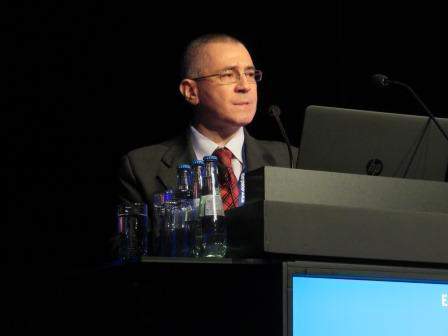
Cristian Guja, MD, of the Carol Davila University of Medicine and Pharmacy in Bucharest, Romania, presented the findings of DURATION-8, a 28-week randomized, double-blinded study at 109 sites in six countries, Sept. 16 at the annual meeting of the European Association for the Study of Diabetes. The study was published simultaneously in the Lancet Diabetes & Endocrinology.
In 2014 and 2015, 695 adults with type 2 diabetes and insufficient glycemic control, defined as HbA1c 8%-12%, were randomly assigned to one of three groups: exenatide plus dapagliflozin (n = 231), exenatide alone (n = 231; n = 1 untreated), or dapagliflozin alone (n = 233). All were given placebo pills or injections for 1 week before randomization.
Patients’ average age was 54-55 years, most were white (82%-85%), with 37%-42% reporting Hispanic heritage. Men and women were nearly equally represented. The average body mass index was 32-33 kg/m2. Patients took basal insulin on a rescue basis as needed and were continued on prescribed blood pressure and cholesterol medications.
At 28 weeks, baseline HbA1c in the combination group fell by 2.0% (9.3% to 7.3%), compared with 1.6% (9.3% to 7.6%) in the exenatide-only group and by 1.4% (9.3% to 7.8%) in the dapagliflozin-only group.
Combination therapy was “significantly superior” to either drug alone for all secondary endpoints, including reduced fasting plasma and postprandial glucose, more patients with an HbA1c less than 7.0%, weight-related measures, and lowered systolic blood pressure (Lancet Diabetes Endocrinol. 2016 Sep 16. doi. org/10.1016/S2213-8587(16)30267-4).
Specifically, the percentage of patients with an HbA1c less than 7.0% was 45% for the combination group, 27% for the exenatide group, and 19% for the dapagliflozin group at 28 weeks. A third of patients taking the combination lost more than 5% of their weight, compared with 14% of those on exenatide alone and 20% of those on dapagliflozin.
The side-effect rate (57%) was highest in the combination group and lower (54% and 52%, respectively) for the exenatide and dapagliflozin groups.
Diarrhea, injection-site nodules, nausea, and urinary tract infection occurred in 5% or more of patients in at least one of the three groups. Across all study groups, 2%-5% of patients discontinued treatment because of side effects; discontinuation was greatest (5%) in the exenatide group. Three patients in the combination group died, as did one patient in each of the solo-treatment groups.
This study “provides high-quality evidence that the combination of exenatide and dapagliflozin is more effective than either drug alone in patients with inadequate response to metformin monotherapy,” Dr. Guja and his colleagues noted.
In a commentary, Michael A. Nauck, MD, and Juris J. Meier, MD, both of St. Josef Hospital in Bochum, Germany, called the percentage of patients (45%) who reached an HbA1c level of less than 7.0% in the combination treatment group “disappointing.” They suggested that GLP-1 receptor agonists (i.e., exenatide) may be more effective when combined with SGLT2 inhibitors (i.e., dapagliflozin) than when used with insulin treatment.
The study was funded by AstraZeneca, maker of both exenatide and dapagliflozin.
The combination of exenatide and dapagliflozin produced better results than did either drug alone in patients with type 2 diabetes whose glucose levels aren’t controlled effectively by metformin.
At 28 weeks, HbA1c levels were lower in the combination group, where a third of patients lost more than 5% of their body weight, and 45% reached HbA1c levels under 7.0%, outpacing those on the solo treatments.
Cristian Guja, MD, of the Carol Davila University of Medicine and Pharmacy in Bucharest, Romania, presented the findings of DURATION-8, a 28-week randomized, double-blinded study at 109 sites in six countries, Sept. 16 at the annual meeting of the European Association for the Study of Diabetes. The study was published simultaneously in the Lancet Diabetes & Endocrinology.
In 2014 and 2015, 695 adults with type 2 diabetes and insufficient glycemic control, defined as HbA1c 8%-12%, were randomly assigned to one of three groups: exenatide plus dapagliflozin (n = 231), exenatide alone (n = 231; n = 1 untreated), or dapagliflozin alone (n = 233). All were given placebo pills or injections for 1 week before randomization.
Patients’ average age was 54-55 years, most were white (82%-85%), with 37%-42% reporting Hispanic heritage. Men and women were nearly equally represented. The average body mass index was 32-33 kg/m2. Patients took basal insulin on a rescue basis as needed and were continued on prescribed blood pressure and cholesterol medications.
At 28 weeks, baseline HbA1c in the combination group fell by 2.0% (9.3% to 7.3%), compared with 1.6% (9.3% to 7.6%) in the exenatide-only group and by 1.4% (9.3% to 7.8%) in the dapagliflozin-only group.
Combination therapy was “significantly superior” to either drug alone for all secondary endpoints, including reduced fasting plasma and postprandial glucose, more patients with an HbA1c less than 7.0%, weight-related measures, and lowered systolic blood pressure (Lancet Diabetes Endocrinol. 2016 Sep 16. doi. org/10.1016/S2213-8587(16)30267-4).
Specifically, the percentage of patients with an HbA1c less than 7.0% was 45% for the combination group, 27% for the exenatide group, and 19% for the dapagliflozin group at 28 weeks. A third of patients taking the combination lost more than 5% of their weight, compared with 14% of those on exenatide alone and 20% of those on dapagliflozin.
The side-effect rate (57%) was highest in the combination group and lower (54% and 52%, respectively) for the exenatide and dapagliflozin groups.
Diarrhea, injection-site nodules, nausea, and urinary tract infection occurred in 5% or more of patients in at least one of the three groups. Across all study groups, 2%-5% of patients discontinued treatment because of side effects; discontinuation was greatest (5%) in the exenatide group. Three patients in the combination group died, as did one patient in each of the solo-treatment groups.
This study “provides high-quality evidence that the combination of exenatide and dapagliflozin is more effective than either drug alone in patients with inadequate response to metformin monotherapy,” Dr. Guja and his colleagues noted.
In a commentary, Michael A. Nauck, MD, and Juris J. Meier, MD, both of St. Josef Hospital in Bochum, Germany, called the percentage of patients (45%) who reached an HbA1c level of less than 7.0% in the combination treatment group “disappointing.” They suggested that GLP-1 receptor agonists (i.e., exenatide) may be more effective when combined with SGLT2 inhibitors (i.e., dapagliflozin) than when used with insulin treatment.
The study was funded by AstraZeneca, maker of both exenatide and dapagliflozin.
The combination of exenatide and dapagliflozin produced better results than did either drug alone in patients with type 2 diabetes whose glucose levels aren’t controlled effectively by metformin.
At 28 weeks, HbA1c levels were lower in the combination group, where a third of patients lost more than 5% of their body weight, and 45% reached HbA1c levels under 7.0%, outpacing those on the solo treatments.
Cristian Guja, MD, of the Carol Davila University of Medicine and Pharmacy in Bucharest, Romania, presented the findings of DURATION-8, a 28-week randomized, double-blinded study at 109 sites in six countries, Sept. 16 at the annual meeting of the European Association for the Study of Diabetes. The study was published simultaneously in the Lancet Diabetes & Endocrinology.
In 2014 and 2015, 695 adults with type 2 diabetes and insufficient glycemic control, defined as HbA1c 8%-12%, were randomly assigned to one of three groups: exenatide plus dapagliflozin (n = 231), exenatide alone (n = 231; n = 1 untreated), or dapagliflozin alone (n = 233). All were given placebo pills or injections for 1 week before randomization.
Patients’ average age was 54-55 years, most were white (82%-85%), with 37%-42% reporting Hispanic heritage. Men and women were nearly equally represented. The average body mass index was 32-33 kg/m2. Patients took basal insulin on a rescue basis as needed and were continued on prescribed blood pressure and cholesterol medications.
At 28 weeks, baseline HbA1c in the combination group fell by 2.0% (9.3% to 7.3%), compared with 1.6% (9.3% to 7.6%) in the exenatide-only group and by 1.4% (9.3% to 7.8%) in the dapagliflozin-only group.
Combination therapy was “significantly superior” to either drug alone for all secondary endpoints, including reduced fasting plasma and postprandial glucose, more patients with an HbA1c less than 7.0%, weight-related measures, and lowered systolic blood pressure (Lancet Diabetes Endocrinol. 2016 Sep 16. doi. org/10.1016/S2213-8587(16)30267-4).
Specifically, the percentage of patients with an HbA1c less than 7.0% was 45% for the combination group, 27% for the exenatide group, and 19% for the dapagliflozin group at 28 weeks. A third of patients taking the combination lost more than 5% of their weight, compared with 14% of those on exenatide alone and 20% of those on dapagliflozin.
The side-effect rate (57%) was highest in the combination group and lower (54% and 52%, respectively) for the exenatide and dapagliflozin groups.
Diarrhea, injection-site nodules, nausea, and urinary tract infection occurred in 5% or more of patients in at least one of the three groups. Across all study groups, 2%-5% of patients discontinued treatment because of side effects; discontinuation was greatest (5%) in the exenatide group. Three patients in the combination group died, as did one patient in each of the solo-treatment groups.
This study “provides high-quality evidence that the combination of exenatide and dapagliflozin is more effective than either drug alone in patients with inadequate response to metformin monotherapy,” Dr. Guja and his colleagues noted.
In a commentary, Michael A. Nauck, MD, and Juris J. Meier, MD, both of St. Josef Hospital in Bochum, Germany, called the percentage of patients (45%) who reached an HbA1c level of less than 7.0% in the combination treatment group “disappointing.” They suggested that GLP-1 receptor agonists (i.e., exenatide) may be more effective when combined with SGLT2 inhibitors (i.e., dapagliflozin) than when used with insulin treatment.
The study was funded by AstraZeneca, maker of both exenatide and dapagliflozin.
FROM EASD 2016
Key clinical point: An exenatide-dapagliflozin combination may be better than either drug alone for patients with type 2 diabetes who have not responded to metformin.
Major finding: At 28 weeks, baseline HbA1c was reduced by 2.0% to 7.3% in the combination group, compared with 1.6% to 7.6% in the exenatide-only group and by 1.4% to 7.8% in the dapagliflozin-only group.
Data source: Double-blind, randomized, active-controlled phase III trial of 685 patients (611 completed) over 28 weeks.
Disclosures: The study was funded by AstraZeneca. Study authors reported grants and similar funding from many pharmaceutical companies including AstraZeneca.
Experts: Insulin apps can pose major risks
SAN DIEGO – How much damage could a diabetes app do? Plenty. That was the word from a Food and Drug Administration official and a technology guru who spoke to a crowd of diabetes educators about the dangers lurking in apps that promise to track things like insulin dosing.
An app could jeopardize the safety of a patient and provide inaccurate data, advised Molly McElwee, RN, CDE, head of Patient Engagement at TypeZero Technologies. “Vet the app that your patient is using or wants to use. Really vet your apps for these patients.”

Ms. McElwee told an audience at the annual meeting of the American Association of Diabetes Educators that more than 84 “bolus calculator” apps are available for iPhone and Android. But only one, the Accu-Check Connect app, is cleared by the FDA for use with a prescription, she confirmed in an interview. Some app makers claim that their technology has been cleared in their countries of origin, but that raises questions about whether the technology has gone through proper vetting, she said.
“The idea you’d let someone with no medical experience just design [an app], put it out there for you, and then tell you how to dose seems a bit odd,” but that’s the way things work in the “murky, uncharted territory” of apps, she said.
Why is there a need for diabetes apps in the first place? As Ms. McElwee noted, many diabetes patients make crucial decisions about their insulin injections each day. “There aren’t a lot of other diseases where you’re dosing something that could kill you if you dose it incorrectly.” That is exactly why “people look for things like an app that can help them,” she noted.
The FDA does indeed regulate medical apps but far from all of them. It doesn’t regulate apps such as calorie counters and exercise trackers because they’re considered to be low risk, said Courtney Lias, PhD, director of the FDA’s Division of Chemistry and Toxicology Devices. “They don’t give advice or tell patients what action to take,” she said. Nor does the FDA regulate apps that retrospectively analyze data from insulin pumps, she said.
The FDA regulates apps such as insulin-dosing calculators and those used to calculate the levels of insulin injections via a pump, she said. But Apple’s App Store and Google’s Google Play, both of which sell apps, aren’t required to take down apps that don’t comply with FDA regulations, according to Ms. McElwee. Indeed, the FDA says it doesn’t regulate app stores, nor does it regulate manufacturers of devices such as smartphones, although the stores may set their own policies. Instead, “the onus is on the company, the developer, to take the correct regulatory pathway,” Ms. McElwee said.
What’s next? Dr. Lias noted that the FDA will monitor apps that command and control insulin pumps, especially as automated insulin delivery systems loom on the horizon. But there are a variety of technical challenges. How will operating systems be updated? What will happen to critical functions when a phone call interrupts the operation of a diabetes app? What about warnings when the phone is muted? Dr. Lias wondered.
One thing is clear, she said: “The explosion of apps is directly related to how much they’re needed.”
Ms. McElwee and Dr. Lias reported having no relevant financial disclosures.
SAN DIEGO – How much damage could a diabetes app do? Plenty. That was the word from a Food and Drug Administration official and a technology guru who spoke to a crowd of diabetes educators about the dangers lurking in apps that promise to track things like insulin dosing.
An app could jeopardize the safety of a patient and provide inaccurate data, advised Molly McElwee, RN, CDE, head of Patient Engagement at TypeZero Technologies. “Vet the app that your patient is using or wants to use. Really vet your apps for these patients.”
Ms. McElwee told an audience at the annual meeting of the American Association of Diabetes Educators that more than 84 “bolus calculator” apps are available for iPhone and Android. But only one, the Accu-Check Connect app, is cleared by the FDA for use with a prescription, she confirmed in an interview. Some app makers claim that their technology has been cleared in their countries of origin, but that raises questions about whether the technology has gone through proper vetting, she said.
“The idea you’d let someone with no medical experience just design [an app], put it out there for you, and then tell you how to dose seems a bit odd,” but that’s the way things work in the “murky, uncharted territory” of apps, she said.
Why is there a need for diabetes apps in the first place? As Ms. McElwee noted, many diabetes patients make crucial decisions about their insulin injections each day. “There aren’t a lot of other diseases where you’re dosing something that could kill you if you dose it incorrectly.” That is exactly why “people look for things like an app that can help them,” she noted.
The FDA does indeed regulate medical apps but far from all of them. It doesn’t regulate apps such as calorie counters and exercise trackers because they’re considered to be low risk, said Courtney Lias, PhD, director of the FDA’s Division of Chemistry and Toxicology Devices. “They don’t give advice or tell patients what action to take,” she said. Nor does the FDA regulate apps that retrospectively analyze data from insulin pumps, she said.
The FDA regulates apps such as insulin-dosing calculators and those used to calculate the levels of insulin injections via a pump, she said. But Apple’s App Store and Google’s Google Play, both of which sell apps, aren’t required to take down apps that don’t comply with FDA regulations, according to Ms. McElwee. Indeed, the FDA says it doesn’t regulate app stores, nor does it regulate manufacturers of devices such as smartphones, although the stores may set their own policies. Instead, “the onus is on the company, the developer, to take the correct regulatory pathway,” Ms. McElwee said.
What’s next? Dr. Lias noted that the FDA will monitor apps that command and control insulin pumps, especially as automated insulin delivery systems loom on the horizon. But there are a variety of technical challenges. How will operating systems be updated? What will happen to critical functions when a phone call interrupts the operation of a diabetes app? What about warnings when the phone is muted? Dr. Lias wondered.
One thing is clear, she said: “The explosion of apps is directly related to how much they’re needed.”
Ms. McElwee and Dr. Lias reported having no relevant financial disclosures.
SAN DIEGO – How much damage could a diabetes app do? Plenty. That was the word from a Food and Drug Administration official and a technology guru who spoke to a crowd of diabetes educators about the dangers lurking in apps that promise to track things like insulin dosing.
An app could jeopardize the safety of a patient and provide inaccurate data, advised Molly McElwee, RN, CDE, head of Patient Engagement at TypeZero Technologies. “Vet the app that your patient is using or wants to use. Really vet your apps for these patients.”
Ms. McElwee told an audience at the annual meeting of the American Association of Diabetes Educators that more than 84 “bolus calculator” apps are available for iPhone and Android. But only one, the Accu-Check Connect app, is cleared by the FDA for use with a prescription, she confirmed in an interview. Some app makers claim that their technology has been cleared in their countries of origin, but that raises questions about whether the technology has gone through proper vetting, she said.
“The idea you’d let someone with no medical experience just design [an app], put it out there for you, and then tell you how to dose seems a bit odd,” but that’s the way things work in the “murky, uncharted territory” of apps, she said.
Why is there a need for diabetes apps in the first place? As Ms. McElwee noted, many diabetes patients make crucial decisions about their insulin injections each day. “There aren’t a lot of other diseases where you’re dosing something that could kill you if you dose it incorrectly.” That is exactly why “people look for things like an app that can help them,” she noted.
The FDA does indeed regulate medical apps but far from all of them. It doesn’t regulate apps such as calorie counters and exercise trackers because they’re considered to be low risk, said Courtney Lias, PhD, director of the FDA’s Division of Chemistry and Toxicology Devices. “They don’t give advice or tell patients what action to take,” she said. Nor does the FDA regulate apps that retrospectively analyze data from insulin pumps, she said.
The FDA regulates apps such as insulin-dosing calculators and those used to calculate the levels of insulin injections via a pump, she said. But Apple’s App Store and Google’s Google Play, both of which sell apps, aren’t required to take down apps that don’t comply with FDA regulations, according to Ms. McElwee. Indeed, the FDA says it doesn’t regulate app stores, nor does it regulate manufacturers of devices such as smartphones, although the stores may set their own policies. Instead, “the onus is on the company, the developer, to take the correct regulatory pathway,” Ms. McElwee said.
What’s next? Dr. Lias noted that the FDA will monitor apps that command and control insulin pumps, especially as automated insulin delivery systems loom on the horizon. But there are a variety of technical challenges. How will operating systems be updated? What will happen to critical functions when a phone call interrupts the operation of a diabetes app? What about warnings when the phone is muted? Dr. Lias wondered.
One thing is clear, she said: “The explosion of apps is directly related to how much they’re needed.”
Ms. McElwee and Dr. Lias reported having no relevant financial disclosures.
AT AADE 16

Sleep doctor: Less than 7 hours can worsen diabetes
SAN DIEGO – A sleep specialist told an audience of diabetes educators that quality sleep is “profoundly important” to the health of their patients, and regularly sleeping fewer than 7 hours a night can wreak havoc on glucose levels and insulin resistance.
There’s even evidence of a link between lack of sleep, diabetes, and heart disease, according to Terese C. Hammond, MD, medical director of the Keck Hospital of the University of Southern California Sleep Disorders Center in Los Angeles. “We don’t know which way the cause goes, but we know there’s a connection,” she said.

Dr. Hammond, who spoke at the annual meeting of the American Association of Diabetes Educators, noted that the vast majority of adults need 7-9 hours of sleep a night.
If you repeatedly don’t reach 7 hours, “there is ample evidence that some metabolic and biologic things happen to your body. Glucose goes up and insulin is secreted. Leptin decreases – the protein that tells us when we’re sated, when our hunger is satisfied. It’s a pretty potent combination, and this is associated with increases in weight and carbohydrate intake,” Dr. Hammond said.
Indeed, findings from one small study suggest a link between chronic insufficient sleep to consumption of more calories, mostly carbohydrates. The study authors speculated this may be because people eat extra food to account for being awake more but take in more than they need (Proc Natl Acad Sci USA. 2013 Apr;110[14]:5695-700).
It is possible for people to pay off a “sleep debt” by catching up on sleep, Dr. Hammond said, but only if the sleep is lost temporarily, as during a heavy medical rotation or after a personal tragedy. When sleep loss is chronic, she said, “it’s becoming apparent that the end-organ consequences are not fully recoverable.”
In regard to diabetes specifically, she said, research has linked insufficient sleep to higher rates of central obesity, higher rates of diabetes in blacks and whites, impaired glucose tolerance, decreased insulin, metabolic syndrome, and high lipids. Too much sleep has also been linked to poor health outcomes.
How can medical professionals help patients improve sleep? “The most important thing to remember about sleep is that it’s a very primitive process,” according to Dr. Hammond. “You can’t think yourself into better sleep. You have to act yourself into better sleep through light, temperature, sound, and repetitive behaviors.”
Controversial research has linked sleeping pills to higher mortality rates, she says.“I try to avoid them long term for insomnia, and not only because there’s probably an increased risk. They stop working eventually.”
Another approach, cognitive behavioral therapy (CBT), is “the most potent way to change behavior,” she said.
“CBT improves sleep efficiency in a vast majority of chronic medical diseases,” she said. “It does just as well as drugs and better than most sleeping pills.”
According to Dr. Hammond, CBT focuses on several strategies:
• Education about sleep hygiene, such as limiting the bedroom to nighttime sleep and intimacy, going to bed at the same time every night, and focusing on a dark, cool, quiet environment.
• Increasing the “sleep drive” through temporary sleep deprivation.
• Relaxation training through techniques like guided imagery, biofeedback, progressive muscle relaxation, and self-hypnosis.
Dr. Hammond reported having no relevant financial disclosures.
SAN DIEGO – A sleep specialist told an audience of diabetes educators that quality sleep is “profoundly important” to the health of their patients, and regularly sleeping fewer than 7 hours a night can wreak havoc on glucose levels and insulin resistance.
There’s even evidence of a link between lack of sleep, diabetes, and heart disease, according to Terese C. Hammond, MD, medical director of the Keck Hospital of the University of Southern California Sleep Disorders Center in Los Angeles. “We don’t know which way the cause goes, but we know there’s a connection,” she said.
Dr. Hammond, who spoke at the annual meeting of the American Association of Diabetes Educators, noted that the vast majority of adults need 7-9 hours of sleep a night.
If you repeatedly don’t reach 7 hours, “there is ample evidence that some metabolic and biologic things happen to your body. Glucose goes up and insulin is secreted. Leptin decreases – the protein that tells us when we’re sated, when our hunger is satisfied. It’s a pretty potent combination, and this is associated with increases in weight and carbohydrate intake,” Dr. Hammond said.
Indeed, findings from one small study suggest a link between chronic insufficient sleep to consumption of more calories, mostly carbohydrates. The study authors speculated this may be because people eat extra food to account for being awake more but take in more than they need (Proc Natl Acad Sci USA. 2013 Apr;110[14]:5695-700).
It is possible for people to pay off a “sleep debt” by catching up on sleep, Dr. Hammond said, but only if the sleep is lost temporarily, as during a heavy medical rotation or after a personal tragedy. When sleep loss is chronic, she said, “it’s becoming apparent that the end-organ consequences are not fully recoverable.”
In regard to diabetes specifically, she said, research has linked insufficient sleep to higher rates of central obesity, higher rates of diabetes in blacks and whites, impaired glucose tolerance, decreased insulin, metabolic syndrome, and high lipids. Too much sleep has also been linked to poor health outcomes.
How can medical professionals help patients improve sleep? “The most important thing to remember about sleep is that it’s a very primitive process,” according to Dr. Hammond. “You can’t think yourself into better sleep. You have to act yourself into better sleep through light, temperature, sound, and repetitive behaviors.”
Controversial research has linked sleeping pills to higher mortality rates, she says.“I try to avoid them long term for insomnia, and not only because there’s probably an increased risk. They stop working eventually.”
Another approach, cognitive behavioral therapy (CBT), is “the most potent way to change behavior,” she said.
“CBT improves sleep efficiency in a vast majority of chronic medical diseases,” she said. “It does just as well as drugs and better than most sleeping pills.”
According to Dr. Hammond, CBT focuses on several strategies:
• Education about sleep hygiene, such as limiting the bedroom to nighttime sleep and intimacy, going to bed at the same time every night, and focusing on a dark, cool, quiet environment.
• Increasing the “sleep drive” through temporary sleep deprivation.
• Relaxation training through techniques like guided imagery, biofeedback, progressive muscle relaxation, and self-hypnosis.
Dr. Hammond reported having no relevant financial disclosures.
SAN DIEGO – A sleep specialist told an audience of diabetes educators that quality sleep is “profoundly important” to the health of their patients, and regularly sleeping fewer than 7 hours a night can wreak havoc on glucose levels and insulin resistance.
There’s even evidence of a link between lack of sleep, diabetes, and heart disease, according to Terese C. Hammond, MD, medical director of the Keck Hospital of the University of Southern California Sleep Disorders Center in Los Angeles. “We don’t know which way the cause goes, but we know there’s a connection,” she said.
Dr. Hammond, who spoke at the annual meeting of the American Association of Diabetes Educators, noted that the vast majority of adults need 7-9 hours of sleep a night.
If you repeatedly don’t reach 7 hours, “there is ample evidence that some metabolic and biologic things happen to your body. Glucose goes up and insulin is secreted. Leptin decreases – the protein that tells us when we’re sated, when our hunger is satisfied. It’s a pretty potent combination, and this is associated with increases in weight and carbohydrate intake,” Dr. Hammond said.
Indeed, findings from one small study suggest a link between chronic insufficient sleep to consumption of more calories, mostly carbohydrates. The study authors speculated this may be because people eat extra food to account for being awake more but take in more than they need (Proc Natl Acad Sci USA. 2013 Apr;110[14]:5695-700).
It is possible for people to pay off a “sleep debt” by catching up on sleep, Dr. Hammond said, but only if the sleep is lost temporarily, as during a heavy medical rotation or after a personal tragedy. When sleep loss is chronic, she said, “it’s becoming apparent that the end-organ consequences are not fully recoverable.”
In regard to diabetes specifically, she said, research has linked insufficient sleep to higher rates of central obesity, higher rates of diabetes in blacks and whites, impaired glucose tolerance, decreased insulin, metabolic syndrome, and high lipids. Too much sleep has also been linked to poor health outcomes.
How can medical professionals help patients improve sleep? “The most important thing to remember about sleep is that it’s a very primitive process,” according to Dr. Hammond. “You can’t think yourself into better sleep. You have to act yourself into better sleep through light, temperature, sound, and repetitive behaviors.”
Controversial research has linked sleeping pills to higher mortality rates, she says.“I try to avoid them long term for insomnia, and not only because there’s probably an increased risk. They stop working eventually.”
Another approach, cognitive behavioral therapy (CBT), is “the most potent way to change behavior,” she said.
“CBT improves sleep efficiency in a vast majority of chronic medical diseases,” she said. “It does just as well as drugs and better than most sleeping pills.”
According to Dr. Hammond, CBT focuses on several strategies:
• Education about sleep hygiene, such as limiting the bedroom to nighttime sleep and intimacy, going to bed at the same time every night, and focusing on a dark, cool, quiet environment.
• Increasing the “sleep drive” through temporary sleep deprivation.
• Relaxation training through techniques like guided imagery, biofeedback, progressive muscle relaxation, and self-hypnosis.
Dr. Hammond reported having no relevant financial disclosures.
AT AADE 16

Endocrinologist links nighttime hypoglycemia to many ills
SAN DIEGO – A top endocrinologist cautioned diabetes educators that research is linking nighttime hypoglycemia to a variety of ills, and technology isn’t providing much hope – yet.
Patients with nocturnal low blood sugar “say this is the hardest thing they have to deal with. It upsets their whole day and they feel terrible,” said Anthony L. McCall, MD, PhD, James M. Moss Professor of Diabetes at the University of Virginia, Charlottesville, and vice president of clinical science with the Endocrine Society.
Dr. McCall told an audience at the annual meeting of the American Association of Diabetes Educators that half of hypoglycemia is nocturnal and unrecognized despite its dangers. According to him, hypoglycemia represents a blood glucose level of at or under 70 mg/dL (3.9 mmol/L). This is higher than the threshold for hypoglycemia in nondiabetics and those with well controlled diabetes.
Even as few as two values in a week in the range of the 60s (mg/dL) can go unrecognized and lead to full-blown hypoglycemia-associated autonomic failure, he said. There are other possible risks: “impaired sleep quality, daytime drowsiness, mood changes, risk for nocturnal falls,” he said.
Cognitive dysfunction is possible, especially in children, he added. “Neurological dysfunction may be temporary, but those who can answer simple questions may not be OK.”
There’s a potential for a vicious cycle here, he said, because people with diabetes can also develop impaired hypoglycemia awareness, making it less likely they’ll notice the low blood sugar levels that contribute to autonomic failure.
Dr. McCall reported that nighttime hypoglycemia may also:
• Trigger neurologic symptoms like those of strokes or temporary ischemic attacks. “Someone’s got check to their blood sugar,” he says.
• Lengthen the QT interval and boost the risk of irregular heartbeats.
• Contribute to “dead in bed” syndrome in which young people with type 1 diabetes are discovered dead despite not having any complications or showing signs of convulsion.
What can be done to help these patients? One approach is to combat impaired hypoglycemia awareness. Bedtime snacks, caffeine, and uncooked cornstarch are among the many nutrition supplements (and medications) that have shown inconsistent results at best on this front, Dr. McCall said. If they work, he said, they often lead to hyperglycemia.
Another strategy is to look for factors that raise the risk of nighttime hypoglycemia, such as basal insulin overtreatment, long periods between meals, delayed effects of exercise, and higher insulin sensitivity overnight.
Insulin pumps may be helpful, he said, and he generally favors their use. However, he cautioned that it’s hard to show that they reduce hypoglycemia, and some patients don’t use them properly.
Data have been mixed until recently regarding real-time continuous glucose monitoring, he said, and the devices must be worn 75%-85% of the time to show benefit. As for sensor-augmented insulin pumps, he said they’ve shown mixed results.
Dr. McCall said the artificial pancreas, once it makes it to market, could mark the beginning of a new era. “This was around the corner 40 years ago. But it’s closer now,” he said. “I have great hope that we’re going to do better.”
Dr. McCall reported being a consultant to Sanofi regarding new insulin studies and serving on the advisory board of DexCom/Google regarding the use of continuous glucose monitoring.
SAN DIEGO – A top endocrinologist cautioned diabetes educators that research is linking nighttime hypoglycemia to a variety of ills, and technology isn’t providing much hope – yet.
Patients with nocturnal low blood sugar “say this is the hardest thing they have to deal with. It upsets their whole day and they feel terrible,” said Anthony L. McCall, MD, PhD, James M. Moss Professor of Diabetes at the University of Virginia, Charlottesville, and vice president of clinical science with the Endocrine Society.
Dr. McCall told an audience at the annual meeting of the American Association of Diabetes Educators that half of hypoglycemia is nocturnal and unrecognized despite its dangers. According to him, hypoglycemia represents a blood glucose level of at or under 70 mg/dL (3.9 mmol/L). This is higher than the threshold for hypoglycemia in nondiabetics and those with well controlled diabetes.
Even as few as two values in a week in the range of the 60s (mg/dL) can go unrecognized and lead to full-blown hypoglycemia-associated autonomic failure, he said. There are other possible risks: “impaired sleep quality, daytime drowsiness, mood changes, risk for nocturnal falls,” he said.
Cognitive dysfunction is possible, especially in children, he added. “Neurological dysfunction may be temporary, but those who can answer simple questions may not be OK.”
There’s a potential for a vicious cycle here, he said, because people with diabetes can also develop impaired hypoglycemia awareness, making it less likely they’ll notice the low blood sugar levels that contribute to autonomic failure.
Dr. McCall reported that nighttime hypoglycemia may also:
• Trigger neurologic symptoms like those of strokes or temporary ischemic attacks. “Someone’s got check to their blood sugar,” he says.
• Lengthen the QT interval and boost the risk of irregular heartbeats.
• Contribute to “dead in bed” syndrome in which young people with type 1 diabetes are discovered dead despite not having any complications or showing signs of convulsion.
What can be done to help these patients? One approach is to combat impaired hypoglycemia awareness. Bedtime snacks, caffeine, and uncooked cornstarch are among the many nutrition supplements (and medications) that have shown inconsistent results at best on this front, Dr. McCall said. If they work, he said, they often lead to hyperglycemia.
Another strategy is to look for factors that raise the risk of nighttime hypoglycemia, such as basal insulin overtreatment, long periods between meals, delayed effects of exercise, and higher insulin sensitivity overnight.
Insulin pumps may be helpful, he said, and he generally favors their use. However, he cautioned that it’s hard to show that they reduce hypoglycemia, and some patients don’t use them properly.
Data have been mixed until recently regarding real-time continuous glucose monitoring, he said, and the devices must be worn 75%-85% of the time to show benefit. As for sensor-augmented insulin pumps, he said they’ve shown mixed results.
Dr. McCall said the artificial pancreas, once it makes it to market, could mark the beginning of a new era. “This was around the corner 40 years ago. But it’s closer now,” he said. “I have great hope that we’re going to do better.”
Dr. McCall reported being a consultant to Sanofi regarding new insulin studies and serving on the advisory board of DexCom/Google regarding the use of continuous glucose monitoring.
SAN DIEGO – A top endocrinologist cautioned diabetes educators that research is linking nighttime hypoglycemia to a variety of ills, and technology isn’t providing much hope – yet.
Patients with nocturnal low blood sugar “say this is the hardest thing they have to deal with. It upsets their whole day and they feel terrible,” said Anthony L. McCall, MD, PhD, James M. Moss Professor of Diabetes at the University of Virginia, Charlottesville, and vice president of clinical science with the Endocrine Society.
Dr. McCall told an audience at the annual meeting of the American Association of Diabetes Educators that half of hypoglycemia is nocturnal and unrecognized despite its dangers. According to him, hypoglycemia represents a blood glucose level of at or under 70 mg/dL (3.9 mmol/L). This is higher than the threshold for hypoglycemia in nondiabetics and those with well controlled diabetes.
Even as few as two values in a week in the range of the 60s (mg/dL) can go unrecognized and lead to full-blown hypoglycemia-associated autonomic failure, he said. There are other possible risks: “impaired sleep quality, daytime drowsiness, mood changes, risk for nocturnal falls,” he said.
Cognitive dysfunction is possible, especially in children, he added. “Neurological dysfunction may be temporary, but those who can answer simple questions may not be OK.”
There’s a potential for a vicious cycle here, he said, because people with diabetes can also develop impaired hypoglycemia awareness, making it less likely they’ll notice the low blood sugar levels that contribute to autonomic failure.
Dr. McCall reported that nighttime hypoglycemia may also:
• Trigger neurologic symptoms like those of strokes or temporary ischemic attacks. “Someone’s got check to their blood sugar,” he says.
• Lengthen the QT interval and boost the risk of irregular heartbeats.
• Contribute to “dead in bed” syndrome in which young people with type 1 diabetes are discovered dead despite not having any complications or showing signs of convulsion.
What can be done to help these patients? One approach is to combat impaired hypoglycemia awareness. Bedtime snacks, caffeine, and uncooked cornstarch are among the many nutrition supplements (and medications) that have shown inconsistent results at best on this front, Dr. McCall said. If they work, he said, they often lead to hyperglycemia.
Another strategy is to look for factors that raise the risk of nighttime hypoglycemia, such as basal insulin overtreatment, long periods between meals, delayed effects of exercise, and higher insulin sensitivity overnight.
Insulin pumps may be helpful, he said, and he generally favors their use. However, he cautioned that it’s hard to show that they reduce hypoglycemia, and some patients don’t use them properly.
Data have been mixed until recently regarding real-time continuous glucose monitoring, he said, and the devices must be worn 75%-85% of the time to show benefit. As for sensor-augmented insulin pumps, he said they’ve shown mixed results.
Dr. McCall said the artificial pancreas, once it makes it to market, could mark the beginning of a new era. “This was around the corner 40 years ago. But it’s closer now,” he said. “I have great hope that we’re going to do better.”
Dr. McCall reported being a consultant to Sanofi regarding new insulin studies and serving on the advisory board of DexCom/Google regarding the use of continuous glucose monitoring.
AT AADE 16
FDA official: We’re monitoring DIY artificial pancreas boom
SAN DIEGO – A Food and Drug Administration official told diabetes educators that her agency is carefully monitoring the growth of an unusual development in diabetes care: the do-it-yourself artificial pancreas.
While the homemade insulin pumps are serving a need that has been unmet by manufacturers, the unregulated devices can be dangerous, according to Courtney Lias, PhD, director of the FDA’s Division of Chemistry and Toxicology Devices, who spoke at the annual meeting of the American Association of Diabetes Educators. “As they go toward a larger community, we see that the risk is raised.”
Still, “people are doing this because they feel this is the best way for them to help themselves or their children. We understand why people are doing it, but we want to make sure they do it safely,” Dr. Lias said.
At issue: The need for a “closed loop” artificial pancreas that needs little or no human intervention to measure blood sugar levels and deliver insulin as needed.
While current insulin pumps can deliver basal insulin continuously, users must program them to deliver an insulin bolus after meals or to address high blood sugar. Manufacturers are trying to develop a closed-loop artificial pancreas (also known as a bionic pancreas) that will simplify the process.
On their own, computer experts have been experimenting with jury-rigged homemade do-it-yourself (DIY) systems. “We recognize that for many PWDs [people with diabetes] the available help is not yet enough, so we are not waiting,” according to Dana Lewis and Scott Leibrand, two bloggers on a site called DIYPS.org.
In May 2016, The Wall Street Journal profiled a San Diego third-grader who uses a homemade “robotic pancreas” designed by his software engineer father. “More than 50 people have soldered, tinkered, and written software to make such devices for themselves or their children,” according to the Wall Street Journal report.
In her talk at the American Association of Diabetes Educators meeting, Dr. Lias noted that “there are a lot of questions about whether this is something that should be done.”
The algorithm behind a homemade device is one of area of concern, she said. “Who developed it and who’s responsible for having developed it? You may not understand how the algorithm is developed and what information is behind it. If something goes wrong, there’s no recourse.”
There are also questions about quality control, she noted: “Is there a responsible party for understanding things, for collecting information and making corrections?”
Dr. Lias said physicians should ask these questions if patients say they are using a DIY artificial pancreas: Do you understand exactly what algorithm is being used? Is it right for you? Have you checked the code to ensure it implements the algorithm correctly? Have you double-checked? When new, modified versions of code are shared, have you re-validated your entire system before implementing it?
It’s also important, she said, to note that these devices have not been determined to be safe and effective.
As the FDA monitors these DIY devices, Dr. Lias said, it’s also working to be ready to consider the work of manufacturers who are trying to develop the first commercial artificial pancreas device.
“Artificial pancreas devices do not have to be perfect with zero risk to be beneficial,” she says. “The approval decision is a benefit/risk decision. We make this decision in the context of the high risks that people with diabetes face every day.”
For now, she says, one focus is to make it easier for companies to work together to create the components of an artificial pancreas device.
The FDA is also concerned about what newly diagnosed people with diabetes will do if their devices break down, and they don’t know how to give themselves an insulin injection. “That’s a scenario that we will need to work out,” she said. “We’re talking with manufacturers about how they plan to work with that.”
SAN DIEGO – A Food and Drug Administration official told diabetes educators that her agency is carefully monitoring the growth of an unusual development in diabetes care: the do-it-yourself artificial pancreas.
While the homemade insulin pumps are serving a need that has been unmet by manufacturers, the unregulated devices can be dangerous, according to Courtney Lias, PhD, director of the FDA’s Division of Chemistry and Toxicology Devices, who spoke at the annual meeting of the American Association of Diabetes Educators. “As they go toward a larger community, we see that the risk is raised.”
Still, “people are doing this because they feel this is the best way for them to help themselves or their children. We understand why people are doing it, but we want to make sure they do it safely,” Dr. Lias said.
At issue: The need for a “closed loop” artificial pancreas that needs little or no human intervention to measure blood sugar levels and deliver insulin as needed.
While current insulin pumps can deliver basal insulin continuously, users must program them to deliver an insulin bolus after meals or to address high blood sugar. Manufacturers are trying to develop a closed-loop artificial pancreas (also known as a bionic pancreas) that will simplify the process.
On their own, computer experts have been experimenting with jury-rigged homemade do-it-yourself (DIY) systems. “We recognize that for many PWDs [people with diabetes] the available help is not yet enough, so we are not waiting,” according to Dana Lewis and Scott Leibrand, two bloggers on a site called DIYPS.org.
In May 2016, The Wall Street Journal profiled a San Diego third-grader who uses a homemade “robotic pancreas” designed by his software engineer father. “More than 50 people have soldered, tinkered, and written software to make such devices for themselves or their children,” according to the Wall Street Journal report.
In her talk at the American Association of Diabetes Educators meeting, Dr. Lias noted that “there are a lot of questions about whether this is something that should be done.”
The algorithm behind a homemade device is one of area of concern, she said. “Who developed it and who’s responsible for having developed it? You may not understand how the algorithm is developed and what information is behind it. If something goes wrong, there’s no recourse.”
There are also questions about quality control, she noted: “Is there a responsible party for understanding things, for collecting information and making corrections?”
Dr. Lias said physicians should ask these questions if patients say they are using a DIY artificial pancreas: Do you understand exactly what algorithm is being used? Is it right for you? Have you checked the code to ensure it implements the algorithm correctly? Have you double-checked? When new, modified versions of code are shared, have you re-validated your entire system before implementing it?
It’s also important, she said, to note that these devices have not been determined to be safe and effective.
As the FDA monitors these DIY devices, Dr. Lias said, it’s also working to be ready to consider the work of manufacturers who are trying to develop the first commercial artificial pancreas device.
“Artificial pancreas devices do not have to be perfect with zero risk to be beneficial,” she says. “The approval decision is a benefit/risk decision. We make this decision in the context of the high risks that people with diabetes face every day.”
For now, she says, one focus is to make it easier for companies to work together to create the components of an artificial pancreas device.
The FDA is also concerned about what newly diagnosed people with diabetes will do if their devices break down, and they don’t know how to give themselves an insulin injection. “That’s a scenario that we will need to work out,” she said. “We’re talking with manufacturers about how they plan to work with that.”
SAN DIEGO – A Food and Drug Administration official told diabetes educators that her agency is carefully monitoring the growth of an unusual development in diabetes care: the do-it-yourself artificial pancreas.
While the homemade insulin pumps are serving a need that has been unmet by manufacturers, the unregulated devices can be dangerous, according to Courtney Lias, PhD, director of the FDA’s Division of Chemistry and Toxicology Devices, who spoke at the annual meeting of the American Association of Diabetes Educators. “As they go toward a larger community, we see that the risk is raised.”
Still, “people are doing this because they feel this is the best way for them to help themselves or their children. We understand why people are doing it, but we want to make sure they do it safely,” Dr. Lias said.
At issue: The need for a “closed loop” artificial pancreas that needs little or no human intervention to measure blood sugar levels and deliver insulin as needed.
While current insulin pumps can deliver basal insulin continuously, users must program them to deliver an insulin bolus after meals or to address high blood sugar. Manufacturers are trying to develop a closed-loop artificial pancreas (also known as a bionic pancreas) that will simplify the process.
On their own, computer experts have been experimenting with jury-rigged homemade do-it-yourself (DIY) systems. “We recognize that for many PWDs [people with diabetes] the available help is not yet enough, so we are not waiting,” according to Dana Lewis and Scott Leibrand, two bloggers on a site called DIYPS.org.
In May 2016, The Wall Street Journal profiled a San Diego third-grader who uses a homemade “robotic pancreas” designed by his software engineer father. “More than 50 people have soldered, tinkered, and written software to make such devices for themselves or their children,” according to the Wall Street Journal report.
In her talk at the American Association of Diabetes Educators meeting, Dr. Lias noted that “there are a lot of questions about whether this is something that should be done.”
The algorithm behind a homemade device is one of area of concern, she said. “Who developed it and who’s responsible for having developed it? You may not understand how the algorithm is developed and what information is behind it. If something goes wrong, there’s no recourse.”
There are also questions about quality control, she noted: “Is there a responsible party for understanding things, for collecting information and making corrections?”
Dr. Lias said physicians should ask these questions if patients say they are using a DIY artificial pancreas: Do you understand exactly what algorithm is being used? Is it right for you? Have you checked the code to ensure it implements the algorithm correctly? Have you double-checked? When new, modified versions of code are shared, have you re-validated your entire system before implementing it?
It’s also important, she said, to note that these devices have not been determined to be safe and effective.
As the FDA monitors these DIY devices, Dr. Lias said, it’s also working to be ready to consider the work of manufacturers who are trying to develop the first commercial artificial pancreas device.
“Artificial pancreas devices do not have to be perfect with zero risk to be beneficial,” she says. “The approval decision is a benefit/risk decision. We make this decision in the context of the high risks that people with diabetes face every day.”
For now, she says, one focus is to make it easier for companies to work together to create the components of an artificial pancreas device.
The FDA is also concerned about what newly diagnosed people with diabetes will do if their devices break down, and they don’t know how to give themselves an insulin injection. “That’s a scenario that we will need to work out,” she said. “We’re talking with manufacturers about how they plan to work with that.”
AT AADE 16
Rethinking diabetes nutrition: No more carb mixes?
SAN DIEGO – Weight loss isn’t always a top priority for people with diabetes. Patients can figure out their proper carb intake. And don’t fret over an optimal percentage mix of carbs, fat and proteins.
A nutrition consultant gave this advice to colleagues at the annual meeting of the American Association of Diabetes Educators, startling some of those in the audience. And no wonder: A few years ago, these kinds of tips would have surprised the educator herself, Mary Ann Hodorowicz, RN, MBA, a licensed registered dietitian and certified diabetes educator based in the Chicago area.
For instance, she was taught that specific percentages of our diets must come from carbohydrates, protein, and fat. “If you didn’t do it that way, you committed the most major mortal sin,” she said. “You’ll go to diabetes jail, and you’ll probably be fired from your job, and the patient will die.”
In fact, “there’s no evidence to support those percentages,” she said. “They don’t mean anything in terms of blood glucose control, although we do have percentages of fat to control lipids and percentages of protein for health and well-being.”
So how many carbs should diabetics eat? She acknowledges to patients that she doesn’t know: “I don’t have a clue.” Instead, she urges them to figure it out themselves: “How many can you get away with and reach your 2-hour post-meal target? My job is to teach you what how to measure, whether it’s by handfuls, exchanges, servings, or grams. Here’s a log sheet, go home and write about how many carbs you’re eating, and test your blood sugar 2 hours later. You’ll find out really quickly how many carbs you can eat to reach that post-meal target.”
Ms. Hodorowicz provided other “evidence-based” tips about nutrition for diabetes patients:
• Assess the need for weight loss in overweight and obese patients, and don’t assume that weight loss is always the top priority.
In new patients with type 2 diabetes, weight loss of 7% is optimal and can typically be achieved with an energy deficit of 500-750 calories a day: a limit of 1,200-1,500 calories for women and 1,500-1,800 for men.
However, “studies of sustained weight loss at 1 or more years have shown inconsistent effects on hemoglobin A1c, even though modest weight loss is shown to improve insulin resistance in overweight and obese insulin-resistant persons. This blows out what we’ve been taught in our careers,” she said.
Why? Weight reduction does improve blood glucose in these type 2 patients at first, she said, but they’ll go into insulin deficiency if they live long enough.
After that happens, she said, “weight loss is not that effective in controlling blood glucose. At that point, the gurus are saying that we really want to prevent weight gain and seek blood glucose control.”
• Don’t go overboard on the glycemic index.
Ms. Hodorowicz advises patients to substitute low-glycemic foods for high-glycemic foods. However, “the evidence does not support the glycemic index as the best meal planning strategy for a patient with diabetes. It doesn’t do better than controlling carbs.”
In addition, she said, teaching patients about the confusing glycemic index is a drag: “Good luck!” But, she said, “substituting foods is a good thing.”
• Be aware of the limited evidence supporting supplements for glucose control.
On the supplement front, chromium, cinnamon, herbs and vitamin D haven’t been clearly demonstrated to control glucose, she says.
• Encourage consumption – even via supplementation – of fiber and plant stanols and sterols.
Ms. Hodorowicz encourages patients to consume 1.6-3.0 grams a day in plant stanols and sterols, which can be purchased in over-the-counter capsules and via fortified foods like certain Minute Maid and Benecol products.
“You’re fooling the body into thinking it’s cholesterol,” she said, “but it’s innocuous.”
She also advises patients to boost viscous soluble fiber to 7-13 g/day. Since it’s not feasible to do this through food, she recommends supplements: “You really need to supplement your diet with psyllium fiber that you get in a bottle.”
Ms. Hodorowicz reported having no relevant financial disclosures.
SAN DIEGO – Weight loss isn’t always a top priority for people with diabetes. Patients can figure out their proper carb intake. And don’t fret over an optimal percentage mix of carbs, fat and proteins.
A nutrition consultant gave this advice to colleagues at the annual meeting of the American Association of Diabetes Educators, startling some of those in the audience. And no wonder: A few years ago, these kinds of tips would have surprised the educator herself, Mary Ann Hodorowicz, RN, MBA, a licensed registered dietitian and certified diabetes educator based in the Chicago area.
For instance, she was taught that specific percentages of our diets must come from carbohydrates, protein, and fat. “If you didn’t do it that way, you committed the most major mortal sin,” she said. “You’ll go to diabetes jail, and you’ll probably be fired from your job, and the patient will die.”
In fact, “there’s no evidence to support those percentages,” she said. “They don’t mean anything in terms of blood glucose control, although we do have percentages of fat to control lipids and percentages of protein for health and well-being.”
So how many carbs should diabetics eat? She acknowledges to patients that she doesn’t know: “I don’t have a clue.” Instead, she urges them to figure it out themselves: “How many can you get away with and reach your 2-hour post-meal target? My job is to teach you what how to measure, whether it’s by handfuls, exchanges, servings, or grams. Here’s a log sheet, go home and write about how many carbs you’re eating, and test your blood sugar 2 hours later. You’ll find out really quickly how many carbs you can eat to reach that post-meal target.”
Ms. Hodorowicz provided other “evidence-based” tips about nutrition for diabetes patients:
• Assess the need for weight loss in overweight and obese patients, and don’t assume that weight loss is always the top priority.
In new patients with type 2 diabetes, weight loss of 7% is optimal and can typically be achieved with an energy deficit of 500-750 calories a day: a limit of 1,200-1,500 calories for women and 1,500-1,800 for men.
However, “studies of sustained weight loss at 1 or more years have shown inconsistent effects on hemoglobin A1c, even though modest weight loss is shown to improve insulin resistance in overweight and obese insulin-resistant persons. This blows out what we’ve been taught in our careers,” she said.
Why? Weight reduction does improve blood glucose in these type 2 patients at first, she said, but they’ll go into insulin deficiency if they live long enough.
After that happens, she said, “weight loss is not that effective in controlling blood glucose. At that point, the gurus are saying that we really want to prevent weight gain and seek blood glucose control.”
• Don’t go overboard on the glycemic index.
Ms. Hodorowicz advises patients to substitute low-glycemic foods for high-glycemic foods. However, “the evidence does not support the glycemic index as the best meal planning strategy for a patient with diabetes. It doesn’t do better than controlling carbs.”
In addition, she said, teaching patients about the confusing glycemic index is a drag: “Good luck!” But, she said, “substituting foods is a good thing.”
• Be aware of the limited evidence supporting supplements for glucose control.
On the supplement front, chromium, cinnamon, herbs and vitamin D haven’t been clearly demonstrated to control glucose, she says.
• Encourage consumption – even via supplementation – of fiber and plant stanols and sterols.
Ms. Hodorowicz encourages patients to consume 1.6-3.0 grams a day in plant stanols and sterols, which can be purchased in over-the-counter capsules and via fortified foods like certain Minute Maid and Benecol products.
“You’re fooling the body into thinking it’s cholesterol,” she said, “but it’s innocuous.”
She also advises patients to boost viscous soluble fiber to 7-13 g/day. Since it’s not feasible to do this through food, she recommends supplements: “You really need to supplement your diet with psyllium fiber that you get in a bottle.”
Ms. Hodorowicz reported having no relevant financial disclosures.
SAN DIEGO – Weight loss isn’t always a top priority for people with diabetes. Patients can figure out their proper carb intake. And don’t fret over an optimal percentage mix of carbs, fat and proteins.
A nutrition consultant gave this advice to colleagues at the annual meeting of the American Association of Diabetes Educators, startling some of those in the audience. And no wonder: A few years ago, these kinds of tips would have surprised the educator herself, Mary Ann Hodorowicz, RN, MBA, a licensed registered dietitian and certified diabetes educator based in the Chicago area.
For instance, she was taught that specific percentages of our diets must come from carbohydrates, protein, and fat. “If you didn’t do it that way, you committed the most major mortal sin,” she said. “You’ll go to diabetes jail, and you’ll probably be fired from your job, and the patient will die.”
In fact, “there’s no evidence to support those percentages,” she said. “They don’t mean anything in terms of blood glucose control, although we do have percentages of fat to control lipids and percentages of protein for health and well-being.”
So how many carbs should diabetics eat? She acknowledges to patients that she doesn’t know: “I don’t have a clue.” Instead, she urges them to figure it out themselves: “How many can you get away with and reach your 2-hour post-meal target? My job is to teach you what how to measure, whether it’s by handfuls, exchanges, servings, or grams. Here’s a log sheet, go home and write about how many carbs you’re eating, and test your blood sugar 2 hours later. You’ll find out really quickly how many carbs you can eat to reach that post-meal target.”
Ms. Hodorowicz provided other “evidence-based” tips about nutrition for diabetes patients:
• Assess the need for weight loss in overweight and obese patients, and don’t assume that weight loss is always the top priority.
In new patients with type 2 diabetes, weight loss of 7% is optimal and can typically be achieved with an energy deficit of 500-750 calories a day: a limit of 1,200-1,500 calories for women and 1,500-1,800 for men.
However, “studies of sustained weight loss at 1 or more years have shown inconsistent effects on hemoglobin A1c, even though modest weight loss is shown to improve insulin resistance in overweight and obese insulin-resistant persons. This blows out what we’ve been taught in our careers,” she said.
Why? Weight reduction does improve blood glucose in these type 2 patients at first, she said, but they’ll go into insulin deficiency if they live long enough.
After that happens, she said, “weight loss is not that effective in controlling blood glucose. At that point, the gurus are saying that we really want to prevent weight gain and seek blood glucose control.”
• Don’t go overboard on the glycemic index.
Ms. Hodorowicz advises patients to substitute low-glycemic foods for high-glycemic foods. However, “the evidence does not support the glycemic index as the best meal planning strategy for a patient with diabetes. It doesn’t do better than controlling carbs.”
In addition, she said, teaching patients about the confusing glycemic index is a drag: “Good luck!” But, she said, “substituting foods is a good thing.”
• Be aware of the limited evidence supporting supplements for glucose control.
On the supplement front, chromium, cinnamon, herbs and vitamin D haven’t been clearly demonstrated to control glucose, she says.
• Encourage consumption – even via supplementation – of fiber and plant stanols and sterols.
Ms. Hodorowicz encourages patients to consume 1.6-3.0 grams a day in plant stanols and sterols, which can be purchased in over-the-counter capsules and via fortified foods like certain Minute Maid and Benecol products.
“You’re fooling the body into thinking it’s cholesterol,” she said, “but it’s innocuous.”
She also advises patients to boost viscous soluble fiber to 7-13 g/day. Since it’s not feasible to do this through food, she recommends supplements: “You really need to supplement your diet with psyllium fiber that you get in a bottle.”
Ms. Hodorowicz reported having no relevant financial disclosures.
EXPERT ANALYSIS FROM THE AADE ANNUAL MEETING
Former chief of Endocrine Society: Send HbA1c packing
SAN DIEGO – The former president of the Endocrine Society told diabetes educators that it’s time to replace the much-used hemoglobin A1c level with a measurement that better reflects how diabetes patients are faring.
The problem is that the HbA1c is “woefully inadequate,” said Robert Vigersky, MD, the medical director of Medtronic Diabetes and president of the Endocrine Society in 2009-2010. “It doesn’t tell you about time-in-range or the frequency, duration, and severity of hypoglycemia or hyperglycemia. And there’s nothing about glycemic variability.”
These measurements are important, he told an audience at the annual meeting of the American Association of Diabetes Educators. For example, “there are several new classes of medication and new technologies. Some decrease HbA1c with no effect on hypoglycemia. Some affect hypoglycemia with no effect on HbA1c. How do we think about these globally and compare them to one another?”
To shed more light on the true condition of patients, he said, it’s time to “change the conversation from HbA1c alone to one that is more glucose-centric. It’s about thinking about glucose as a vital sign, not HbA1c. This may help health care providers, regulators, and payers better understand what is best for patients.”
He is also thinking about going beyond sugar levels. “Maybe a future composite metric will have more than just glucose numbers,” he said.
Indeed, last hear Dr. Vigersky proposed a composite metric known as “the hypoglycemia-A1C score” that can also take factors like weight, quality of life and costs into account (J Diabetes Sci Technol. 2015 Feb 19;9[5]:1148-51).
But he acknowledged there are challenges. For one, there are at least a dozen different ways to measure hypoglycemia, he said, “and every paper cherry-picks the method they want to show their data in the best light.”
It’s also not clear how best to represent the data once researchers figure out which statistics should be included. Should the overall measurement be a single number? Or should there be multiple numbers? In that case, should the numbers be represented graphically?
Dr. Vigersky said he is working on an approach that illustrates various measurements through a pentagon shape. Its appearance reflects measurements such as mean glucose and duration of high glucose.
However, he predicted the future will produce a simpler measurement: “a multicomponent single value.”
What’s next? “We need to educate the payers about how we can’t stay with HbA1c. This will take an effort with professional societies. Once everyone agrees, we need to get some consensus about what the elements of the composite metric are.”
Dr. Vigersky is hopeful that the HbA1c is on its way out, although he acknowledges that it won’t be a rapid process. “It took 20 or more years for everyone to buy into A1C and understand what it represented,” he said. “Changing the conversation isn’t going to happen overnight. But unless we start to address it, it will never happen.”
Dr. Vigersky reported having no relevant financial disclosures.
SAN DIEGO – The former president of the Endocrine Society told diabetes educators that it’s time to replace the much-used hemoglobin A1c level with a measurement that better reflects how diabetes patients are faring.
The problem is that the HbA1c is “woefully inadequate,” said Robert Vigersky, MD, the medical director of Medtronic Diabetes and president of the Endocrine Society in 2009-2010. “It doesn’t tell you about time-in-range or the frequency, duration, and severity of hypoglycemia or hyperglycemia. And there’s nothing about glycemic variability.”
These measurements are important, he told an audience at the annual meeting of the American Association of Diabetes Educators. For example, “there are several new classes of medication and new technologies. Some decrease HbA1c with no effect on hypoglycemia. Some affect hypoglycemia with no effect on HbA1c. How do we think about these globally and compare them to one another?”
To shed more light on the true condition of patients, he said, it’s time to “change the conversation from HbA1c alone to one that is more glucose-centric. It’s about thinking about glucose as a vital sign, not HbA1c. This may help health care providers, regulators, and payers better understand what is best for patients.”
He is also thinking about going beyond sugar levels. “Maybe a future composite metric will have more than just glucose numbers,” he said.
Indeed, last hear Dr. Vigersky proposed a composite metric known as “the hypoglycemia-A1C score” that can also take factors like weight, quality of life and costs into account (J Diabetes Sci Technol. 2015 Feb 19;9[5]:1148-51).
But he acknowledged there are challenges. For one, there are at least a dozen different ways to measure hypoglycemia, he said, “and every paper cherry-picks the method they want to show their data in the best light.”
It’s also not clear how best to represent the data once researchers figure out which statistics should be included. Should the overall measurement be a single number? Or should there be multiple numbers? In that case, should the numbers be represented graphically?
Dr. Vigersky said he is working on an approach that illustrates various measurements through a pentagon shape. Its appearance reflects measurements such as mean glucose and duration of high glucose.
However, he predicted the future will produce a simpler measurement: “a multicomponent single value.”
What’s next? “We need to educate the payers about how we can’t stay with HbA1c. This will take an effort with professional societies. Once everyone agrees, we need to get some consensus about what the elements of the composite metric are.”
Dr. Vigersky is hopeful that the HbA1c is on its way out, although he acknowledges that it won’t be a rapid process. “It took 20 or more years for everyone to buy into A1C and understand what it represented,” he said. “Changing the conversation isn’t going to happen overnight. But unless we start to address it, it will never happen.”
Dr. Vigersky reported having no relevant financial disclosures.
SAN DIEGO – The former president of the Endocrine Society told diabetes educators that it’s time to replace the much-used hemoglobin A1c level with a measurement that better reflects how diabetes patients are faring.
The problem is that the HbA1c is “woefully inadequate,” said Robert Vigersky, MD, the medical director of Medtronic Diabetes and president of the Endocrine Society in 2009-2010. “It doesn’t tell you about time-in-range or the frequency, duration, and severity of hypoglycemia or hyperglycemia. And there’s nothing about glycemic variability.”
These measurements are important, he told an audience at the annual meeting of the American Association of Diabetes Educators. For example, “there are several new classes of medication and new technologies. Some decrease HbA1c with no effect on hypoglycemia. Some affect hypoglycemia with no effect on HbA1c. How do we think about these globally and compare them to one another?”
To shed more light on the true condition of patients, he said, it’s time to “change the conversation from HbA1c alone to one that is more glucose-centric. It’s about thinking about glucose as a vital sign, not HbA1c. This may help health care providers, regulators, and payers better understand what is best for patients.”
He is also thinking about going beyond sugar levels. “Maybe a future composite metric will have more than just glucose numbers,” he said.
Indeed, last hear Dr. Vigersky proposed a composite metric known as “the hypoglycemia-A1C score” that can also take factors like weight, quality of life and costs into account (J Diabetes Sci Technol. 2015 Feb 19;9[5]:1148-51).
But he acknowledged there are challenges. For one, there are at least a dozen different ways to measure hypoglycemia, he said, “and every paper cherry-picks the method they want to show their data in the best light.”
It’s also not clear how best to represent the data once researchers figure out which statistics should be included. Should the overall measurement be a single number? Or should there be multiple numbers? In that case, should the numbers be represented graphically?
Dr. Vigersky said he is working on an approach that illustrates various measurements through a pentagon shape. Its appearance reflects measurements such as mean glucose and duration of high glucose.
However, he predicted the future will produce a simpler measurement: “a multicomponent single value.”
What’s next? “We need to educate the payers about how we can’t stay with HbA1c. This will take an effort with professional societies. Once everyone agrees, we need to get some consensus about what the elements of the composite metric are.”
Dr. Vigersky is hopeful that the HbA1c is on its way out, although he acknowledges that it won’t be a rapid process. “It took 20 or more years for everyone to buy into A1C and understand what it represented,” he said. “Changing the conversation isn’t going to happen overnight. But unless we start to address it, it will never happen.”
Dr. Vigersky reported having no relevant financial disclosures.
EXPERT ANALYSIS FROM AADE 16
As Preventive, H2RA Poses Risks for Patients on Clopidogrel After Bleeding Ulcer
SAN DIEGO – New research suggests histamine-2 receptor antagonists aren’t a viable alternative to proton pump inhibitors to prevent recurrence of bleeding peptic ulcers in clopidogrel users.
U.S. and European agencies have warned of interactions between proton pump inhibitors (PPIs) and clopidogrel. But a study presented at the annual Digestive Disease Week finds significant upper GI events were much more common in patients who took famotidine (Protonix), a histamine-2 receptor antagonist (H2RA), compared with those who took pantoprazole (Pepcid), a PPI, as a preventive treatment.

“The findings will change the practice of some physicians who prescribe H2RA to prevent UGI [upper GI] events in clopidogrel users,” said study lead author Dr. Ping-I Hsu, chief of gastroenterology at Kaohsiung Veterans General Hospital and professor of medicine at National Yang-Ming University, both in Taiwan.
Currently, Dr. Hsu said, “physicians often use PPIs to prevent ulcer complications in clopidogrel users because it is the only drug proven useful in the prevention of peptic ulcers and ulcer complications in clopidogrel users.”
But “both the U.S. Food & Drug Administration and the European Medicines Agency have posted safety warnings and discourage the use of PPIs with clopidogrel unless absolutely necessary,” he said.
Enter the prospect of H2RA medications as an alternative. The new study, Dr. Hsu said, is the first to explore the GI protection effect and safety of H2RAs in patients on clopidogrel monotherapy.
The randomized prospective study followed 120 patients with a history of peptic ulcer bleeding (but not at initial endoscopy) and atherosclerosis. All long-term users of ADP receptor antagonists, they were assigned to pantoprazole (40 mg daily) or famotidine (40 mg daily) for 48 weeks.
Patients were examined via endoscopy when they experienced events like severe epigastric discomfort.
The famotidine group had more significant upper GI events (13.3%) than the pantoprazole group (1.7%). Diarrhea was equal in both groups (1.7%). Pneumonia was comparable (0% and 1.7% for pantoprazole and famotidine, respectively), as was fracture (1.7% and 0%).
Wider differences were found in acute myocardial infarction (1.5% and 4.5%), and cerebral vascular accident (0% and 3.4%) for pantoprazole and famotidine, respectively.
According to Dr. Hsu, three earlier studies linked concurrent use of PPIs and clopidogrel to significant increases in cardiovascular events. But this study linked a higher cardiac risk to the H2RA medication.
The researchers found no differences between the drugs in sequential changes of serum magnesium levels and bone mineral densities.
Dr. Hsu made this recommendation to physicians: “Please don’t use H2RAs to prevent peptic ulcer or ulcer complications in clopidogrel users. It is ineffective to prevent UGI [upper GI] events in clopidogrel users who have a history of ulcer bleeding. PPIs can effectively prevent UGI events in clopidogrel users with a history of ulcer bleeding.”
In addition, he said, the risk of thrombotic events is lower on a PPI.
SAN DIEGO – New research suggests histamine-2 receptor antagonists aren’t a viable alternative to proton pump inhibitors to prevent recurrence of bleeding peptic ulcers in clopidogrel users.
U.S. and European agencies have warned of interactions between proton pump inhibitors (PPIs) and clopidogrel. But a study presented at the annual Digestive Disease Week finds significant upper GI events were much more common in patients who took famotidine (Protonix), a histamine-2 receptor antagonist (H2RA), compared with those who took pantoprazole (Pepcid), a PPI, as a preventive treatment.
“The findings will change the practice of some physicians who prescribe H2RA to prevent UGI [upper GI] events in clopidogrel users,” said study lead author Dr. Ping-I Hsu, chief of gastroenterology at Kaohsiung Veterans General Hospital and professor of medicine at National Yang-Ming University, both in Taiwan.
Currently, Dr. Hsu said, “physicians often use PPIs to prevent ulcer complications in clopidogrel users because it is the only drug proven useful in the prevention of peptic ulcers and ulcer complications in clopidogrel users.”
But “both the U.S. Food & Drug Administration and the European Medicines Agency have posted safety warnings and discourage the use of PPIs with clopidogrel unless absolutely necessary,” he said.
Enter the prospect of H2RA medications as an alternative. The new study, Dr. Hsu said, is the first to explore the GI protection effect and safety of H2RAs in patients on clopidogrel monotherapy.
The randomized prospective study followed 120 patients with a history of peptic ulcer bleeding (but not at initial endoscopy) and atherosclerosis. All long-term users of ADP receptor antagonists, they were assigned to pantoprazole (40 mg daily) or famotidine (40 mg daily) for 48 weeks.
Patients were examined via endoscopy when they experienced events like severe epigastric discomfort.
The famotidine group had more significant upper GI events (13.3%) than the pantoprazole group (1.7%). Diarrhea was equal in both groups (1.7%). Pneumonia was comparable (0% and 1.7% for pantoprazole and famotidine, respectively), as was fracture (1.7% and 0%).
Wider differences were found in acute myocardial infarction (1.5% and 4.5%), and cerebral vascular accident (0% and 3.4%) for pantoprazole and famotidine, respectively.
According to Dr. Hsu, three earlier studies linked concurrent use of PPIs and clopidogrel to significant increases in cardiovascular events. But this study linked a higher cardiac risk to the H2RA medication.
The researchers found no differences between the drugs in sequential changes of serum magnesium levels and bone mineral densities.
Dr. Hsu made this recommendation to physicians: “Please don’t use H2RAs to prevent peptic ulcer or ulcer complications in clopidogrel users. It is ineffective to prevent UGI [upper GI] events in clopidogrel users who have a history of ulcer bleeding. PPIs can effectively prevent UGI events in clopidogrel users with a history of ulcer bleeding.”
In addition, he said, the risk of thrombotic events is lower on a PPI.
SAN DIEGO – New research suggests histamine-2 receptor antagonists aren’t a viable alternative to proton pump inhibitors to prevent recurrence of bleeding peptic ulcers in clopidogrel users.
U.S. and European agencies have warned of interactions between proton pump inhibitors (PPIs) and clopidogrel. But a study presented at the annual Digestive Disease Week finds significant upper GI events were much more common in patients who took famotidine (Protonix), a histamine-2 receptor antagonist (H2RA), compared with those who took pantoprazole (Pepcid), a PPI, as a preventive treatment.
“The findings will change the practice of some physicians who prescribe H2RA to prevent UGI [upper GI] events in clopidogrel users,” said study lead author Dr. Ping-I Hsu, chief of gastroenterology at Kaohsiung Veterans General Hospital and professor of medicine at National Yang-Ming University, both in Taiwan.
Currently, Dr. Hsu said, “physicians often use PPIs to prevent ulcer complications in clopidogrel users because it is the only drug proven useful in the prevention of peptic ulcers and ulcer complications in clopidogrel users.”
But “both the U.S. Food & Drug Administration and the European Medicines Agency have posted safety warnings and discourage the use of PPIs with clopidogrel unless absolutely necessary,” he said.
Enter the prospect of H2RA medications as an alternative. The new study, Dr. Hsu said, is the first to explore the GI protection effect and safety of H2RAs in patients on clopidogrel monotherapy.
The randomized prospective study followed 120 patients with a history of peptic ulcer bleeding (but not at initial endoscopy) and atherosclerosis. All long-term users of ADP receptor antagonists, they were assigned to pantoprazole (40 mg daily) or famotidine (40 mg daily) for 48 weeks.
Patients were examined via endoscopy when they experienced events like severe epigastric discomfort.
The famotidine group had more significant upper GI events (13.3%) than the pantoprazole group (1.7%). Diarrhea was equal in both groups (1.7%). Pneumonia was comparable (0% and 1.7% for pantoprazole and famotidine, respectively), as was fracture (1.7% and 0%).
Wider differences were found in acute myocardial infarction (1.5% and 4.5%), and cerebral vascular accident (0% and 3.4%) for pantoprazole and famotidine, respectively.
According to Dr. Hsu, three earlier studies linked concurrent use of PPIs and clopidogrel to significant increases in cardiovascular events. But this study linked a higher cardiac risk to the H2RA medication.
The researchers found no differences between the drugs in sequential changes of serum magnesium levels and bone mineral densities.
Dr. Hsu made this recommendation to physicians: “Please don’t use H2RAs to prevent peptic ulcer or ulcer complications in clopidogrel users. It is ineffective to prevent UGI [upper GI] events in clopidogrel users who have a history of ulcer bleeding. PPIs can effectively prevent UGI events in clopidogrel users with a history of ulcer bleeding.”
In addition, he said, the risk of thrombotic events is lower on a PPI.
AT DDW® 2016

As preventive, H2RA poses risks for patients on clopidogrel after bleeding ulcer
SAN DIEGO – New research suggests histamine-2 receptor antagonists aren’t a viable alternative to proton pump inhibitors to prevent recurrence of bleeding peptic ulcers in clopidogrel users.
U.S. and European agencies have warned of interactions between proton pump inhibitors (PPIs) and clopidogrel. But a study presented at the annual Digestive Disease Week finds significant upper GI events were much more common in patients who took famotidine (Protonix), a histamine-2 receptor antagonist (H2RA), compared with those who took pantoprazole (Pepcid), a PPI, as a preventive treatment.

“The findings will change the practice of some physicians who prescribe H2RA to prevent UGI [upper GI] events in clopidogrel users,” said study lead author Dr. Ping-I Hsu, chief of gastroenterology at Kaohsiung Veterans General Hospital and professor of medicine at National Yang-Ming University, both in Taiwan.
Currently, Dr. Hsu said, “physicians often use PPIs to prevent ulcer complications in clopidogrel users because it is the only drug proven useful in the prevention of peptic ulcers and ulcer complications in clopidogrel users.”
But “both the U.S. Food & Drug Administration and the European Medicines Agency have posted safety warnings and discourage the use of PPIs with clopidogrel unless absolutely necessary,” he said.
Enter the prospect of H2RA medications as an alternative. The new study, Dr. Hsu said, is the first to explore the GI protection effect and safety of H2RAs in patients on clopidogrel monotherapy.
The randomized prospective study followed 120 patients with a history of peptic ulcer bleeding (but not at initial endoscopy) and atherosclerosis. All long-term users of ADP receptor antagonists, they were assigned to pantoprazole (40 mg daily) or famotidine (40 mg daily) for 48 weeks.
Patients were examined via endoscopy when they experienced events like severe epigastric discomfort.
The famotidine group had more significant upper GI events (13.3%) than the pantoprazole group (1.7%). Diarrhea was equal in both groups (1.7%). Pneumonia was comparable (0% and 1.7% for pantoprazole and famotidine, respectively), as was fracture (1.7% and 0%).
Wider differences were found in acute myocardial infarction (1.5% and 4.5%), and cerebral vascular accident (0% and 3.4%) for pantoprazole and famotidine, respectively.
According to Dr. Hsu, three earlier studies linked concurrent use of PPIs and clopidogrel to significant increases in cardiovascular events. But this study linked a higher cardiac risk to the H2RA medication.
The researchers found no differences between the drugs in sequential changes of serum magnesium levels and bone mineral densities.
Dr. Hsu made this recommendation to physicians: “Please don’t use H2RAs to prevent peptic ulcer or ulcer complications in clopidogrel users. It is ineffective to prevent UGI [upper GI] events in clopidogrel users who have a history of ulcer bleeding. PPIs can effectively prevent UGI events in clopidogrel users with a history of ulcer bleeding.”
In addition, he said, the risk of thrombotic events is lower on a PPI.
SAN DIEGO – New research suggests histamine-2 receptor antagonists aren’t a viable alternative to proton pump inhibitors to prevent recurrence of bleeding peptic ulcers in clopidogrel users.
U.S. and European agencies have warned of interactions between proton pump inhibitors (PPIs) and clopidogrel. But a study presented at the annual Digestive Disease Week finds significant upper GI events were much more common in patients who took famotidine (Protonix), a histamine-2 receptor antagonist (H2RA), compared with those who took pantoprazole (Pepcid), a PPI, as a preventive treatment.
“The findings will change the practice of some physicians who prescribe H2RA to prevent UGI [upper GI] events in clopidogrel users,” said study lead author Dr. Ping-I Hsu, chief of gastroenterology at Kaohsiung Veterans General Hospital and professor of medicine at National Yang-Ming University, both in Taiwan.
Currently, Dr. Hsu said, “physicians often use PPIs to prevent ulcer complications in clopidogrel users because it is the only drug proven useful in the prevention of peptic ulcers and ulcer complications in clopidogrel users.”
But “both the U.S. Food & Drug Administration and the European Medicines Agency have posted safety warnings and discourage the use of PPIs with clopidogrel unless absolutely necessary,” he said.
Enter the prospect of H2RA medications as an alternative. The new study, Dr. Hsu said, is the first to explore the GI protection effect and safety of H2RAs in patients on clopidogrel monotherapy.
The randomized prospective study followed 120 patients with a history of peptic ulcer bleeding (but not at initial endoscopy) and atherosclerosis. All long-term users of ADP receptor antagonists, they were assigned to pantoprazole (40 mg daily) or famotidine (40 mg daily) for 48 weeks.
Patients were examined via endoscopy when they experienced events like severe epigastric discomfort.
The famotidine group had more significant upper GI events (13.3%) than the pantoprazole group (1.7%). Diarrhea was equal in both groups (1.7%). Pneumonia was comparable (0% and 1.7% for pantoprazole and famotidine, respectively), as was fracture (1.7% and 0%).
Wider differences were found in acute myocardial infarction (1.5% and 4.5%), and cerebral vascular accident (0% and 3.4%) for pantoprazole and famotidine, respectively.
According to Dr. Hsu, three earlier studies linked concurrent use of PPIs and clopidogrel to significant increases in cardiovascular events. But this study linked a higher cardiac risk to the H2RA medication.
The researchers found no differences between the drugs in sequential changes of serum magnesium levels and bone mineral densities.
Dr. Hsu made this recommendation to physicians: “Please don’t use H2RAs to prevent peptic ulcer or ulcer complications in clopidogrel users. It is ineffective to prevent UGI [upper GI] events in clopidogrel users who have a history of ulcer bleeding. PPIs can effectively prevent UGI events in clopidogrel users with a history of ulcer bleeding.”
In addition, he said, the risk of thrombotic events is lower on a PPI.
SAN DIEGO – New research suggests histamine-2 receptor antagonists aren’t a viable alternative to proton pump inhibitors to prevent recurrence of bleeding peptic ulcers in clopidogrel users.
U.S. and European agencies have warned of interactions between proton pump inhibitors (PPIs) and clopidogrel. But a study presented at the annual Digestive Disease Week finds significant upper GI events were much more common in patients who took famotidine (Protonix), a histamine-2 receptor antagonist (H2RA), compared with those who took pantoprazole (Pepcid), a PPI, as a preventive treatment.
“The findings will change the practice of some physicians who prescribe H2RA to prevent UGI [upper GI] events in clopidogrel users,” said study lead author Dr. Ping-I Hsu, chief of gastroenterology at Kaohsiung Veterans General Hospital and professor of medicine at National Yang-Ming University, both in Taiwan.
Currently, Dr. Hsu said, “physicians often use PPIs to prevent ulcer complications in clopidogrel users because it is the only drug proven useful in the prevention of peptic ulcers and ulcer complications in clopidogrel users.”
But “both the U.S. Food & Drug Administration and the European Medicines Agency have posted safety warnings and discourage the use of PPIs with clopidogrel unless absolutely necessary,” he said.
Enter the prospect of H2RA medications as an alternative. The new study, Dr. Hsu said, is the first to explore the GI protection effect and safety of H2RAs in patients on clopidogrel monotherapy.
The randomized prospective study followed 120 patients with a history of peptic ulcer bleeding (but not at initial endoscopy) and atherosclerosis. All long-term users of ADP receptor antagonists, they were assigned to pantoprazole (40 mg daily) or famotidine (40 mg daily) for 48 weeks.
Patients were examined via endoscopy when they experienced events like severe epigastric discomfort.
The famotidine group had more significant upper GI events (13.3%) than the pantoprazole group (1.7%). Diarrhea was equal in both groups (1.7%). Pneumonia was comparable (0% and 1.7% for pantoprazole and famotidine, respectively), as was fracture (1.7% and 0%).
Wider differences were found in acute myocardial infarction (1.5% and 4.5%), and cerebral vascular accident (0% and 3.4%) for pantoprazole and famotidine, respectively.
According to Dr. Hsu, three earlier studies linked concurrent use of PPIs and clopidogrel to significant increases in cardiovascular events. But this study linked a higher cardiac risk to the H2RA medication.
The researchers found no differences between the drugs in sequential changes of serum magnesium levels and bone mineral densities.
Dr. Hsu made this recommendation to physicians: “Please don’t use H2RAs to prevent peptic ulcer or ulcer complications in clopidogrel users. It is ineffective to prevent UGI [upper GI] events in clopidogrel users who have a history of ulcer bleeding. PPIs can effectively prevent UGI events in clopidogrel users with a history of ulcer bleeding.”
In addition, he said, the risk of thrombotic events is lower on a PPI.
AT DDW® 2016
Key clinical point: Compared with PPIs, H2RAs pose more risks – on both GI and cardiovascular fronts – as a preventive in patients with atherosclerosis and a history of peptic ulcer bleeding.
Major finding: After 48 weeks, 1.7% of patients in the pantoprazole (PPI) group (n = 60) suffered significant upper GI events; 13.3% of patients in the famotidine (H2RA) group (n = 60) did (P = 0.017). Cardiovascular events were also more common in the H2RA group.
Data source: Randomized prospective study of 120 patients with history of peptic ulcer bleeding (but not at initial endoscopy) assigned to pantoprazole (40 mg daily) or famotidine (40 mg daily) for 48 weeks.
Disclosures: The study is hospital funded. The authors report no disclosures.