User login
Low-Dose Aspirin Cuts Cancer Death Rate by 30%-40%
LONDON – The daily, long-term use of low-dose aspirin cuts the risk of death from several types of cancer, in addition to colorectal cancer, according to data published online Dec. 6 in the Lancet.

In a meta-analysis of eight randomized clinical trials involving 25,570 patients, low-dose aspirin taken for 5 years or longer reduced mortality from esophageal, pancreatic, brain, stomach, colorectal, prostate, and even lung cancer, with doses as low as 75 mg/day having an effect.
This is the first time that low-dose aspirin has been linked to a reduction in cancer mortality other than colorectal cancer, said Dr. Peter M. Rothwell, who conceived and coordinated the research.
Dr. Rothwell of the John Radcliffe Hospital and the University of Oxford, U.K., and his associates in October 2010 showed that low-dose aspirin reduced the 20-year risk of new colon cancer cases by approximately one-quarter and deaths by a third (Lancet 2010;376:1741-50).
The current study looked at all deaths from cancer that occurred during or after completion of eight randomized clinical trials that had been performed to look at the effects of daily aspirin vs. control for the primary or secondary prevention of vascular events (Lancet 2010 [doi:10.1016/S0140-6736(10)62110-1]).
Across all eight trials, 674 cancer deaths occurred in 25,570 patients, with aspirin treatment significantly reducing the risk of death, compared with no aspirin treatment (pooled odds ratio [OR] 0.79, 95% confidence interval [CI] 0.68-0.92, P = .003).
Using individual patient data available for seven of the trials and in which 657 cancer deaths occurred in 23,535 patients, the benefit of aspirin therapy was apparent only after 5 years or more of follow-up. The hazard ratio (HR) for death from all types of cancer was 0.66 (95% CI 0.50-0.87, P =.003), with a greater effect seen in patients with gastrointestinal tumors (HR 0.46, 95% CI 0.27-0.77, P =.003).
"We found that within the trials, while people were still on aspirin vs. no aspirin, the aspirin group had about a 30%-40% reduction in cancer deaths between year 5 and the end of the trial," Dr. Rothwell said at a press briefing.
To determine the longer-term effects of aspirin on cancer mortality, the team looked more closely at data from three of the trials. These had all been conducted in the United Kingdom and continued to collect information on cancer deaths via national death certification and cancer registration systems long after the trials had concluded.
In all, individual patient data were obtained on 1,634 cancer deaths that had occurred in 12,659 patients. Aspirin was found to reduce the 20-year risk of death from all solid cancers by 20% (HR 0.80, 95% CI 0.72-0.88, P less than .0001). Again, the effect on gastrointestinal cancer was greater (HR 0.65, 95% CI 0.54-0.78, P less than .0001), but there was no effect on hematologic malignancies.
At least 5 years of therapy were needed to reduce the risk of death from esophageal, pancreatic, brain, or lung cancer, with 10 years or more treatment required to see any effect on stomach and colorectal cancer death rates, and 15 years or more for prostate cancer. With regard to both lung and esophageal cancer, the effect of aspirin was limited to adenocarcinomas.
While the findings do not mean that everyone over the age of 40 years should now suddenly start taking a daily dose of aspirin to prevent cancer, given the increased risk of bleeding in some individuals, "We should probably stop taking people off aspirin unless they’ve got side effects," Dr. Rothwell said in an interview, adding "We probably shouldn’t discourage those who want to take aspirin as actively as we have been doing," and perhaps physicians should "think about prescribing aspirin more in people at increased vascular risk, because they certainly benefit already."
"There is a fundamental difference between the treatment and the prevention of a disease," said Dr. Peter Elwood, professor of epidemiology at Cardiff University, Wales.
Dr. Elwood suggested that deciding to take a daily dose of aspirin to prevent cancer could be another choice patients make once they have all the relevant facts, much as lifestyle changes are advised but not prescribed for cardiovascular disease prevention.
The study was conducted independently of commercial interests. Dr. Rothwell has received honoraria from pharmaceutical companies with an interest in antiplatelet therapy, including AstraZeneca, Bayer, Boehringer Ingelheim, Sanofi-Aventis/BMS, and Servier. Dr. Elwood reported no relevant financial disclosures.
LONDON – The daily, long-term use of low-dose aspirin cuts the risk of death from several types of cancer, in addition to colorectal cancer, according to data published online Dec. 6 in the Lancet.
In a meta-analysis of eight randomized clinical trials involving 25,570 patients, low-dose aspirin taken for 5 years or longer reduced mortality from esophageal, pancreatic, brain, stomach, colorectal, prostate, and even lung cancer, with doses as low as 75 mg/day having an effect.
This is the first time that low-dose aspirin has been linked to a reduction in cancer mortality other than colorectal cancer, said Dr. Peter M. Rothwell, who conceived and coordinated the research.
Dr. Rothwell of the John Radcliffe Hospital and the University of Oxford, U.K., and his associates in October 2010 showed that low-dose aspirin reduced the 20-year risk of new colon cancer cases by approximately one-quarter and deaths by a third (Lancet 2010;376:1741-50).
The current study looked at all deaths from cancer that occurred during or after completion of eight randomized clinical trials that had been performed to look at the effects of daily aspirin vs. control for the primary or secondary prevention of vascular events (Lancet 2010 [doi:10.1016/S0140-6736(10)62110-1]).
Across all eight trials, 674 cancer deaths occurred in 25,570 patients, with aspirin treatment significantly reducing the risk of death, compared with no aspirin treatment (pooled odds ratio [OR] 0.79, 95% confidence interval [CI] 0.68-0.92, P = .003).
Using individual patient data available for seven of the trials and in which 657 cancer deaths occurred in 23,535 patients, the benefit of aspirin therapy was apparent only after 5 years or more of follow-up. The hazard ratio (HR) for death from all types of cancer was 0.66 (95% CI 0.50-0.87, P =.003), with a greater effect seen in patients with gastrointestinal tumors (HR 0.46, 95% CI 0.27-0.77, P =.003).
"We found that within the trials, while people were still on aspirin vs. no aspirin, the aspirin group had about a 30%-40% reduction in cancer deaths between year 5 and the end of the trial," Dr. Rothwell said at a press briefing.
To determine the longer-term effects of aspirin on cancer mortality, the team looked more closely at data from three of the trials. These had all been conducted in the United Kingdom and continued to collect information on cancer deaths via national death certification and cancer registration systems long after the trials had concluded.
In all, individual patient data were obtained on 1,634 cancer deaths that had occurred in 12,659 patients. Aspirin was found to reduce the 20-year risk of death from all solid cancers by 20% (HR 0.80, 95% CI 0.72-0.88, P less than .0001). Again, the effect on gastrointestinal cancer was greater (HR 0.65, 95% CI 0.54-0.78, P less than .0001), but there was no effect on hematologic malignancies.
At least 5 years of therapy were needed to reduce the risk of death from esophageal, pancreatic, brain, or lung cancer, with 10 years or more treatment required to see any effect on stomach and colorectal cancer death rates, and 15 years or more for prostate cancer. With regard to both lung and esophageal cancer, the effect of aspirin was limited to adenocarcinomas.
While the findings do not mean that everyone over the age of 40 years should now suddenly start taking a daily dose of aspirin to prevent cancer, given the increased risk of bleeding in some individuals, "We should probably stop taking people off aspirin unless they’ve got side effects," Dr. Rothwell said in an interview, adding "We probably shouldn’t discourage those who want to take aspirin as actively as we have been doing," and perhaps physicians should "think about prescribing aspirin more in people at increased vascular risk, because they certainly benefit already."
"There is a fundamental difference between the treatment and the prevention of a disease," said Dr. Peter Elwood, professor of epidemiology at Cardiff University, Wales.
Dr. Elwood suggested that deciding to take a daily dose of aspirin to prevent cancer could be another choice patients make once they have all the relevant facts, much as lifestyle changes are advised but not prescribed for cardiovascular disease prevention.
The study was conducted independently of commercial interests. Dr. Rothwell has received honoraria from pharmaceutical companies with an interest in antiplatelet therapy, including AstraZeneca, Bayer, Boehringer Ingelheim, Sanofi-Aventis/BMS, and Servier. Dr. Elwood reported no relevant financial disclosures.
LONDON – The daily, long-term use of low-dose aspirin cuts the risk of death from several types of cancer, in addition to colorectal cancer, according to data published online Dec. 6 in the Lancet.
In a meta-analysis of eight randomized clinical trials involving 25,570 patients, low-dose aspirin taken for 5 years or longer reduced mortality from esophageal, pancreatic, brain, stomach, colorectal, prostate, and even lung cancer, with doses as low as 75 mg/day having an effect.
This is the first time that low-dose aspirin has been linked to a reduction in cancer mortality other than colorectal cancer, said Dr. Peter M. Rothwell, who conceived and coordinated the research.
Dr. Rothwell of the John Radcliffe Hospital and the University of Oxford, U.K., and his associates in October 2010 showed that low-dose aspirin reduced the 20-year risk of new colon cancer cases by approximately one-quarter and deaths by a third (Lancet 2010;376:1741-50).
The current study looked at all deaths from cancer that occurred during or after completion of eight randomized clinical trials that had been performed to look at the effects of daily aspirin vs. control for the primary or secondary prevention of vascular events (Lancet 2010 [doi:10.1016/S0140-6736(10)62110-1]).
Across all eight trials, 674 cancer deaths occurred in 25,570 patients, with aspirin treatment significantly reducing the risk of death, compared with no aspirin treatment (pooled odds ratio [OR] 0.79, 95% confidence interval [CI] 0.68-0.92, P = .003).
Using individual patient data available for seven of the trials and in which 657 cancer deaths occurred in 23,535 patients, the benefit of aspirin therapy was apparent only after 5 years or more of follow-up. The hazard ratio (HR) for death from all types of cancer was 0.66 (95% CI 0.50-0.87, P =.003), with a greater effect seen in patients with gastrointestinal tumors (HR 0.46, 95% CI 0.27-0.77, P =.003).
"We found that within the trials, while people were still on aspirin vs. no aspirin, the aspirin group had about a 30%-40% reduction in cancer deaths between year 5 and the end of the trial," Dr. Rothwell said at a press briefing.
To determine the longer-term effects of aspirin on cancer mortality, the team looked more closely at data from three of the trials. These had all been conducted in the United Kingdom and continued to collect information on cancer deaths via national death certification and cancer registration systems long after the trials had concluded.
In all, individual patient data were obtained on 1,634 cancer deaths that had occurred in 12,659 patients. Aspirin was found to reduce the 20-year risk of death from all solid cancers by 20% (HR 0.80, 95% CI 0.72-0.88, P less than .0001). Again, the effect on gastrointestinal cancer was greater (HR 0.65, 95% CI 0.54-0.78, P less than .0001), but there was no effect on hematologic malignancies.
At least 5 years of therapy were needed to reduce the risk of death from esophageal, pancreatic, brain, or lung cancer, with 10 years or more treatment required to see any effect on stomach and colorectal cancer death rates, and 15 years or more for prostate cancer. With regard to both lung and esophageal cancer, the effect of aspirin was limited to adenocarcinomas.
While the findings do not mean that everyone over the age of 40 years should now suddenly start taking a daily dose of aspirin to prevent cancer, given the increased risk of bleeding in some individuals, "We should probably stop taking people off aspirin unless they’ve got side effects," Dr. Rothwell said in an interview, adding "We probably shouldn’t discourage those who want to take aspirin as actively as we have been doing," and perhaps physicians should "think about prescribing aspirin more in people at increased vascular risk, because they certainly benefit already."
"There is a fundamental difference between the treatment and the prevention of a disease," said Dr. Peter Elwood, professor of epidemiology at Cardiff University, Wales.
Dr. Elwood suggested that deciding to take a daily dose of aspirin to prevent cancer could be another choice patients make once they have all the relevant facts, much as lifestyle changes are advised but not prescribed for cardiovascular disease prevention.
The study was conducted independently of commercial interests. Dr. Rothwell has received honoraria from pharmaceutical companies with an interest in antiplatelet therapy, including AstraZeneca, Bayer, Boehringer Ingelheim, Sanofi-Aventis/BMS, and Servier. Dr. Elwood reported no relevant financial disclosures.
FROM A REPORT IN THE LANCET
Major Finding: A total of 674 cancer deaths occurred in 25,570 patients, with aspirin treatment significantly reducing the risk of death compared to no aspirin treatment (odds ratio 0.79, 95% confidence interval 0.68-0.92, P = .003).
Data Source: Meta-analysis and review of individual patient data on cancer deaths from randomized controlled clinical trials (n = 25,570) that had compared at least 4 years’ treatment with aspirin versus no aspirin, originally performed for the prevention of vascular events.
Disclosures: The study was conducted independently of the Pharmaceutical industry and other commercial interests. Dr. Rothwell has received honoraria from pharmaceutical companies with an interest in anti-platelet therapy, including AstraZeneca, Bayer, Boehringer Ingelheim, Sanofi-Aventis/BMS, and Servier. Dr. Elwood reported no relevant financial disclosures.
BRAF Kinase Inhibitor Shrinks Melanoma Brain Metastases
MILAN – Hope for patients with melanoma who develop brain metastases may be on the horizon with the finding that a novel targeted agent reduces the size of multiple brain lesions.
Data from a phase I/II study in 10 patients show that all but one of the participants treated with the oral agent GSK2118436 experienced a partial or complete response, with overall reductions in the size of brain metastases ranging from -20% to -100%.
"These are extremely promising results," said Dr. Caroline Robert of Institut Gustave-Roussy, Villejuif, France, who was asked to comment on the study at the annual congress of the European Society for Medical Oncology.
GSK2118436 inhibits a specific mutation (V600) in the BRAF gene that is present in around 50% of melanomas and "locks BRAF into its active conformation," study investigator Dr. Georgina V. Long explained. The researcher, from Melanoma Institute Australia and Westmead Hospital in Sydney, added that the mutation enhances cancer cells' ability to proliferate, grow, and survive and that GSK2118436 disrupts this unwanted activity.
The positive effect of the novel agent in treating brain metastases was first seen about a year ago, Dr. Long said in an interview: "We had an inkling at the end of 2009, and that's when we really pushed to do a formal, prospective study of the brain cohort."
The melanoma brain cohort consisted of 10 patients with one or more brain lesions of at least 3 mm in size who were asymptomatic and who had not received any prior treatment specifically for their brain lesions. The median age of recruited patients was 59 years, 90% had the V600E mutation in the BRAF gene, and 30% had more than three brain metastases.
Gadolinium-enhanced and T1-weighted magnetic resonance imaging showed that twice-daily oral dosing (150 mg) of GSK2118436 resulted in reductions in brain lesions that correlated to extracranial tumor responses.
The tolerability was very similar to that presented recently at the American Society of Clinical Oncology (J. Clin. Oncol. 2010;28(15s):Abstr 8503). Grade 3/4 adverse events reported in the brain cohort included pyrexia/chills, fatigue, dehydration, nausea, in one patient each, and anemia in two patients.
Patients remained on treatment for a relatively short period of time, however, and it is too early to tell if GSK2118436 is likely to have any effect on the very poor overall survival of patients who develop brain metastases, which is currently around 16 weeks from the time that brain involvement in diagnosed.
"We need to do the phase II study in more patients to get better data," Dr. Long said. A phase II trial has already been started in patients who do not have brain metastases, now it is time to set up a similar trial in those that do, she added.
The phase II brain cohort trial should start recruitment early in 2011 and accruing enough patients should not be an issue. "In melanoma, brain metastases is a major problem; 15%-20% of patients have them at baseline, and nearly three-quarters develop them eventually. It is the cancer where brain metastases are a major problem, more so than any other cancer," commented Dr. Long.
Dr. Long's travel expenses to present the study data were paid for by GlaxoSmithKline, the study's sponsor. She also participated in a phase I advisory board in 2009. Dr. Long's coauthors have received consultancy fees and research report from the company, and three were current employees of GSK with stock ownership. Dr. Robert had no relevant conflicts of interest.
MILAN – Hope for patients with melanoma who develop brain metastases may be on the horizon with the finding that a novel targeted agent reduces the size of multiple brain lesions.
Data from a phase I/II study in 10 patients show that all but one of the participants treated with the oral agent GSK2118436 experienced a partial or complete response, with overall reductions in the size of brain metastases ranging from -20% to -100%.
"These are extremely promising results," said Dr. Caroline Robert of Institut Gustave-Roussy, Villejuif, France, who was asked to comment on the study at the annual congress of the European Society for Medical Oncology.
GSK2118436 inhibits a specific mutation (V600) in the BRAF gene that is present in around 50% of melanomas and "locks BRAF into its active conformation," study investigator Dr. Georgina V. Long explained. The researcher, from Melanoma Institute Australia and Westmead Hospital in Sydney, added that the mutation enhances cancer cells' ability to proliferate, grow, and survive and that GSK2118436 disrupts this unwanted activity.
The positive effect of the novel agent in treating brain metastases was first seen about a year ago, Dr. Long said in an interview: "We had an inkling at the end of 2009, and that's when we really pushed to do a formal, prospective study of the brain cohort."
The melanoma brain cohort consisted of 10 patients with one or more brain lesions of at least 3 mm in size who were asymptomatic and who had not received any prior treatment specifically for their brain lesions. The median age of recruited patients was 59 years, 90% had the V600E mutation in the BRAF gene, and 30% had more than three brain metastases.
Gadolinium-enhanced and T1-weighted magnetic resonance imaging showed that twice-daily oral dosing (150 mg) of GSK2118436 resulted in reductions in brain lesions that correlated to extracranial tumor responses.
The tolerability was very similar to that presented recently at the American Society of Clinical Oncology (J. Clin. Oncol. 2010;28(15s):Abstr 8503). Grade 3/4 adverse events reported in the brain cohort included pyrexia/chills, fatigue, dehydration, nausea, in one patient each, and anemia in two patients.
Patients remained on treatment for a relatively short period of time, however, and it is too early to tell if GSK2118436 is likely to have any effect on the very poor overall survival of patients who develop brain metastases, which is currently around 16 weeks from the time that brain involvement in diagnosed.
"We need to do the phase II study in more patients to get better data," Dr. Long said. A phase II trial has already been started in patients who do not have brain metastases, now it is time to set up a similar trial in those that do, she added.
The phase II brain cohort trial should start recruitment early in 2011 and accruing enough patients should not be an issue. "In melanoma, brain metastases is a major problem; 15%-20% of patients have them at baseline, and nearly three-quarters develop them eventually. It is the cancer where brain metastases are a major problem, more so than any other cancer," commented Dr. Long.
Dr. Long's travel expenses to present the study data were paid for by GlaxoSmithKline, the study's sponsor. She also participated in a phase I advisory board in 2009. Dr. Long's coauthors have received consultancy fees and research report from the company, and three were current employees of GSK with stock ownership. Dr. Robert had no relevant conflicts of interest.
MILAN – Hope for patients with melanoma who develop brain metastases may be on the horizon with the finding that a novel targeted agent reduces the size of multiple brain lesions.
Data from a phase I/II study in 10 patients show that all but one of the participants treated with the oral agent GSK2118436 experienced a partial or complete response, with overall reductions in the size of brain metastases ranging from -20% to -100%.
"These are extremely promising results," said Dr. Caroline Robert of Institut Gustave-Roussy, Villejuif, France, who was asked to comment on the study at the annual congress of the European Society for Medical Oncology.
GSK2118436 inhibits a specific mutation (V600) in the BRAF gene that is present in around 50% of melanomas and "locks BRAF into its active conformation," study investigator Dr. Georgina V. Long explained. The researcher, from Melanoma Institute Australia and Westmead Hospital in Sydney, added that the mutation enhances cancer cells' ability to proliferate, grow, and survive and that GSK2118436 disrupts this unwanted activity.
The positive effect of the novel agent in treating brain metastases was first seen about a year ago, Dr. Long said in an interview: "We had an inkling at the end of 2009, and that's when we really pushed to do a formal, prospective study of the brain cohort."
The melanoma brain cohort consisted of 10 patients with one or more brain lesions of at least 3 mm in size who were asymptomatic and who had not received any prior treatment specifically for their brain lesions. The median age of recruited patients was 59 years, 90% had the V600E mutation in the BRAF gene, and 30% had more than three brain metastases.
Gadolinium-enhanced and T1-weighted magnetic resonance imaging showed that twice-daily oral dosing (150 mg) of GSK2118436 resulted in reductions in brain lesions that correlated to extracranial tumor responses.
The tolerability was very similar to that presented recently at the American Society of Clinical Oncology (J. Clin. Oncol. 2010;28(15s):Abstr 8503). Grade 3/4 adverse events reported in the brain cohort included pyrexia/chills, fatigue, dehydration, nausea, in one patient each, and anemia in two patients.
Patients remained on treatment for a relatively short period of time, however, and it is too early to tell if GSK2118436 is likely to have any effect on the very poor overall survival of patients who develop brain metastases, which is currently around 16 weeks from the time that brain involvement in diagnosed.
"We need to do the phase II study in more patients to get better data," Dr. Long said. A phase II trial has already been started in patients who do not have brain metastases, now it is time to set up a similar trial in those that do, she added.
The phase II brain cohort trial should start recruitment early in 2011 and accruing enough patients should not be an issue. "In melanoma, brain metastases is a major problem; 15%-20% of patients have them at baseline, and nearly three-quarters develop them eventually. It is the cancer where brain metastases are a major problem, more so than any other cancer," commented Dr. Long.
Dr. Long's travel expenses to present the study data were paid for by GlaxoSmithKline, the study's sponsor. She also participated in a phase I advisory board in 2009. Dr. Long's coauthors have received consultancy fees and research report from the company, and three were current employees of GSK with stock ownership. Dr. Robert had no relevant conflicts of interest.
FROM THE ANNUAL CONGRESS OF THE EUROPEAN SOCIETY FOR MEDICAL ONCOLOGY
Major Finding: Overall reductions in the size of brain metastases after treatment with the BRAF kinase inhibitor ranged from –20% to –100%.
Data Source: Open-label, phase I/II study of GSK2118436 in 10 patients with melanoma brain metastases.
Disclosures: Dr. Long's travel expenses to present the study data were paid for by GlaxoSmithKline, the study’s sponsor. She also participated in a phase I advisory board in 2009. Dr. Long’s coauthors have also received advisory fees and research support from the company, and three were current employees of GSK with stock ownership. Dr. Robert had no relevant conflicts of interest.
In the Pipeline: BRAF Kinase Inhibitor Shrinks Melanoma Brain Metastases
MILAN – Hope for patients with melanoma who develop brain metastases may be on the horizon with the finding that a novel targeted agent reduces the size of multiple brain lesions.
Data from a phase I/II study in 10 patients show that all but one of the participants treated with the oral agent GSK2118436 experienced a partial or complete response, with overall reductions in the size of brain metastases ranging from -20% to -100%.
“These are extremely promising results,” said Dr. Caroline Robert of Institut Gustave-Roussy, Villejuif, France, who was asked to comment on the study at the annual congress of the European Society for Medical Oncology.
GSK2118436 inhibits a specific mutation (V600) in the BRAF gene that is present in around 50% of melanomas and “locks BRAF into its active conformation,” study investigator Dr. Georgina V. Long explained. The researcher, from Melanoma Institute Australia and Westmead Hospital in Sydney, added that the mutation enhances cancer cells’ ability to proliferate, grow, and survive and that GSK2118436 disrupts this unwanted activity.
The positive effect of the novel agent in treating brain metastases was first seen about a year ago, Dr. Long said in an interview: “We had an inkling at the end of 2009, and that’s when we really pushed to do a formal, prospective study of the brain cohort.”
The melanoma brain cohort consisted of 10 patients with one or more brain lesions of at least 3 mm in size who were asymptomatic and who had not received any prior treatment specifically for their brain lesions. The median age of recruited patients was 59 years, 90% had the V600E mutation in the BRAF gene, and 30% had more than three brain metastases.
Gadolinium-enhanced and T1-weighted magnetic resonance imaging showed that twice-daily oral dosing (150 mg) of GSK2118436 resulted in reductions in brain lesions that correlated to extracranial tumor responses.
The tolerability was very similar to that presented recently at the American Society of Clinical Oncology (J. Clin. Oncol. 2010;28(15s):Abstr 8503). Grade 3/4 adverse events reported in the brain cohort included pyrexia/chills, fatigue, dehydration, nausea, in one patient each, and anemia in two patients.
Patients remained on treatment for a relatively short period of time, however, and it is too early to tell if GSK2118436 is likely to have any effect on the very poor overall survival of patients who develop brain metastases, which is currently around 16 weeks from the time that brain involvement in diagnosed.
“We need to do the phase II study in more patients to get better data,” Dr. Long said. A phase II trial has already been started in patients who do not have brain metastases, now it is time to set up a similar trial in those that do, she added.
The phase II brain cohort trial should start recruitment early in 2011 and accruing enough patients should not be an issue. “In melanoma, brain metastases is a major problem; 15%-20% of patients have them at baseline, and nearly three-quarters develop them eventually. It is the cancer where brain metastases are a major problem, more so than any other cancer,” commented Dr. Long.
Dr. Long’s travel expenses to present the study data were paid for by GlaxoSmithKline, the study’s sponsor. She also participated in a phase I advisory board in 2009. Dr. Long’s coauthors have received consultancy fees and research report from the company, and three were current employees of GSK with stock ownership. Dr. Robert had no relevant conflicts of interest.
MILAN – Hope for patients with melanoma who develop brain metastases may be on the horizon with the finding that a novel targeted agent reduces the size of multiple brain lesions.
Data from a phase I/II study in 10 patients show that all but one of the participants treated with the oral agent GSK2118436 experienced a partial or complete response, with overall reductions in the size of brain metastases ranging from -20% to -100%.
“These are extremely promising results,” said Dr. Caroline Robert of Institut Gustave-Roussy, Villejuif, France, who was asked to comment on the study at the annual congress of the European Society for Medical Oncology.
GSK2118436 inhibits a specific mutation (V600) in the BRAF gene that is present in around 50% of melanomas and “locks BRAF into its active conformation,” study investigator Dr. Georgina V. Long explained. The researcher, from Melanoma Institute Australia and Westmead Hospital in Sydney, added that the mutation enhances cancer cells’ ability to proliferate, grow, and survive and that GSK2118436 disrupts this unwanted activity.
The positive effect of the novel agent in treating brain metastases was first seen about a year ago, Dr. Long said in an interview: “We had an inkling at the end of 2009, and that’s when we really pushed to do a formal, prospective study of the brain cohort.”
The melanoma brain cohort consisted of 10 patients with one or more brain lesions of at least 3 mm in size who were asymptomatic and who had not received any prior treatment specifically for their brain lesions. The median age of recruited patients was 59 years, 90% had the V600E mutation in the BRAF gene, and 30% had more than three brain metastases.
Gadolinium-enhanced and T1-weighted magnetic resonance imaging showed that twice-daily oral dosing (150 mg) of GSK2118436 resulted in reductions in brain lesions that correlated to extracranial tumor responses.
The tolerability was very similar to that presented recently at the American Society of Clinical Oncology (J. Clin. Oncol. 2010;28(15s):Abstr 8503). Grade 3/4 adverse events reported in the brain cohort included pyrexia/chills, fatigue, dehydration, nausea, in one patient each, and anemia in two patients.
Patients remained on treatment for a relatively short period of time, however, and it is too early to tell if GSK2118436 is likely to have any effect on the very poor overall survival of patients who develop brain metastases, which is currently around 16 weeks from the time that brain involvement in diagnosed.
“We need to do the phase II study in more patients to get better data,” Dr. Long said. A phase II trial has already been started in patients who do not have brain metastases, now it is time to set up a similar trial in those that do, she added.
The phase II brain cohort trial should start recruitment early in 2011 and accruing enough patients should not be an issue. “In melanoma, brain metastases is a major problem; 15%-20% of patients have them at baseline, and nearly three-quarters develop them eventually. It is the cancer where brain metastases are a major problem, more so than any other cancer,” commented Dr. Long.
Dr. Long’s travel expenses to present the study data were paid for by GlaxoSmithKline, the study’s sponsor. She also participated in a phase I advisory board in 2009. Dr. Long’s coauthors have received consultancy fees and research report from the company, and three were current employees of GSK with stock ownership. Dr. Robert had no relevant conflicts of interest.
MILAN – Hope for patients with melanoma who develop brain metastases may be on the horizon with the finding that a novel targeted agent reduces the size of multiple brain lesions.
Data from a phase I/II study in 10 patients show that all but one of the participants treated with the oral agent GSK2118436 experienced a partial or complete response, with overall reductions in the size of brain metastases ranging from -20% to -100%.
“These are extremely promising results,” said Dr. Caroline Robert of Institut Gustave-Roussy, Villejuif, France, who was asked to comment on the study at the annual congress of the European Society for Medical Oncology.
GSK2118436 inhibits a specific mutation (V600) in the BRAF gene that is present in around 50% of melanomas and “locks BRAF into its active conformation,” study investigator Dr. Georgina V. Long explained. The researcher, from Melanoma Institute Australia and Westmead Hospital in Sydney, added that the mutation enhances cancer cells’ ability to proliferate, grow, and survive and that GSK2118436 disrupts this unwanted activity.
The positive effect of the novel agent in treating brain metastases was first seen about a year ago, Dr. Long said in an interview: “We had an inkling at the end of 2009, and that’s when we really pushed to do a formal, prospective study of the brain cohort.”
The melanoma brain cohort consisted of 10 patients with one or more brain lesions of at least 3 mm in size who were asymptomatic and who had not received any prior treatment specifically for their brain lesions. The median age of recruited patients was 59 years, 90% had the V600E mutation in the BRAF gene, and 30% had more than three brain metastases.
Gadolinium-enhanced and T1-weighted magnetic resonance imaging showed that twice-daily oral dosing (150 mg) of GSK2118436 resulted in reductions in brain lesions that correlated to extracranial tumor responses.
The tolerability was very similar to that presented recently at the American Society of Clinical Oncology (J. Clin. Oncol. 2010;28(15s):Abstr 8503). Grade 3/4 adverse events reported in the brain cohort included pyrexia/chills, fatigue, dehydration, nausea, in one patient each, and anemia in two patients.
Patients remained on treatment for a relatively short period of time, however, and it is too early to tell if GSK2118436 is likely to have any effect on the very poor overall survival of patients who develop brain metastases, which is currently around 16 weeks from the time that brain involvement in diagnosed.
“We need to do the phase II study in more patients to get better data,” Dr. Long said. A phase II trial has already been started in patients who do not have brain metastases, now it is time to set up a similar trial in those that do, she added.
The phase II brain cohort trial should start recruitment early in 2011 and accruing enough patients should not be an issue. “In melanoma, brain metastases is a major problem; 15%-20% of patients have them at baseline, and nearly three-quarters develop them eventually. It is the cancer where brain metastases are a major problem, more so than any other cancer,” commented Dr. Long.
Dr. Long’s travel expenses to present the study data were paid for by GlaxoSmithKline, the study’s sponsor. She also participated in a phase I advisory board in 2009. Dr. Long’s coauthors have received consultancy fees and research report from the company, and three were current employees of GSK with stock ownership. Dr. Robert had no relevant conflicts of interest.
FROM THE ANNUAL CONGRESS OF THE EUROPEAN SOCIETY FOR MEDICAL ONCOLOGY
Major Finding: Overall reductions in the size of brain metastases after treatment with the BRAF kinase inhibitor GSK2118436 ranged from –20% to –100%.
Data Source: Open-label, phase I/II study of GSK2118436 in 10 patients with melanoma brain metastases.
Disclosures: Dr. Long’s travel expenses to present the study data were paid for by GlaxoSmithKline, the study’s sponsor. She also participated in a phase I advisory board in 2009. Dr. Long’s coauthors have also received advisory fees and research support from the company, and three were current employees of GSK with stock ownership. Dr. Robert had no relevant conflicts of interest.
Aurora A Kinase Inhibitor Active in Ovarian Cancer
MILAN – One-fourth of women with platinum-resistant or refractory epithelial ovarian, fallopian tube, or primary peritoneal carcinoma cancer obtained clinical benefit from treatment with an experimental, targeted agent used as monotherapy in a small phase II study.
The early trial results show that the Aurora A kinase inhibitor MLN8237 was associated with an objective response rate of 10% in the 31-patient study. Among three patients who responded by CA 125 criteria was one woman who also had a partial response by RECIST (Response Evaluation Criteria in Solid Tumors).
Another five women had prolonged stable disease, bringing the clinical benefit rate to 26%. The investigators defined clinical benefit as the achievement of a complete, partial, or CA 125 response or stable disease with no progression for at least four treatment cycles.
Dr. Ursula A. Matulonis, medical director of gynecologic oncology at the Dana-Farber Cancer Institute in Boston, and coauthors reported the results in a poster at the annual meeting of the European Society of Medical Oncology.
“In patients who have platinum-resistant ovarian cancer, there are very few options available. ... The duration of chemotherapy is at most 3 or 4 months before they start to show progression,” Dr. Matulonis said in an interview.
“The fact that four patients were able to stay on treatment for 12 months or longer I think is significant, and I think the significance is going to become more important as we try to pick which patients are going to be able to respond to the drug,” she added.
Most patients (25) in the trial had ovarian cancer. Median progression-free survival was 36.5 days in patients with platinum-refractory disease and 77 days in patients with platinum-resistant disease.
Serious adverse events occurred in 11 patients (35%) during the first one or two cycles of treatment, and included myelosuppression (neutropenia, anemia, leukopenia), pyrexia, abdominal pain, small intestinal obstruction, and stomatitis. Dose reduction, withdrawal, or administration of appropriate concomitant medication generally reversed these effects, and no on-treatment deaths were reported.
“This is a very interesting study,” said James Brenton, Ph.D., an honorary consultant in medical oncology for Cancer Research UK at the University of Cambridge (England), who was invited to discuss the trial. “What is striking is that, in what is of course a fairly heavily pretreated population of patients, the number of doses of MLN8237 given on a 3-weekly cycle was rather limited,” he said.
Platinum-resistant patients received a median of one and a half treatment cycles, whereas platinum-refractory patients received a median of three cycles, but Dr. Brenton pointed out that there were six patients who only received one cycle of the drug, whereas there were four patients in whom treatment was ongoing and they had received 12 cycles or more.
“The response rates in platinum-refractory patients are not surprisingly low,” Dr. Brenton said, noting that they were a little higher in patients with platinum-resistant disease, although the 77-day progression-free survival achieved was “pretty similar to historical controls.”
To be “very charitable about the study,” three (10%) patients showed some evidence of achieving a partial response, Dr. Brenton observed, “but the key question is, what is the genotype/response relationship? We’ve got a molecular target; what are the [bio]markers?”
In an interview, he added that although the effects of MLN8237 were not particularly dramatic, there were “some very interesting outliers.” For instance, “one patient who had stable disease after treatment, at the end of the year of treatment has had significant disease reduction,” he said.
“Aurora A kinase is a great theoretical target,” Dr. Brenton noted, adding that “while we haven’t seen overwhelming efficacy with this agent,” it is perhaps not surprising given the multiple functions that Aurora A kinase performs.
MLN8237 is being tested in combination with paclitaxel in the same patient population in a phase I/II study to see whether it can improve response to taxane therapy.
Millennium Pharmaceuticals Inc. funded the research. Dr. Matulonis and some coauthors had received research funding from or were employed by the company. Dr. Brenton had no conflict of interest.
MILAN – One-fourth of women with platinum-resistant or refractory epithelial ovarian, fallopian tube, or primary peritoneal carcinoma cancer obtained clinical benefit from treatment with an experimental, targeted agent used as monotherapy in a small phase II study.
The early trial results show that the Aurora A kinase inhibitor MLN8237 was associated with an objective response rate of 10% in the 31-patient study. Among three patients who responded by CA 125 criteria was one woman who also had a partial response by RECIST (Response Evaluation Criteria in Solid Tumors).
Another five women had prolonged stable disease, bringing the clinical benefit rate to 26%. The investigators defined clinical benefit as the achievement of a complete, partial, or CA 125 response or stable disease with no progression for at least four treatment cycles.
Dr. Ursula A. Matulonis, medical director of gynecologic oncology at the Dana-Farber Cancer Institute in Boston, and coauthors reported the results in a poster at the annual meeting of the European Society of Medical Oncology.
“In patients who have platinum-resistant ovarian cancer, there are very few options available. ... The duration of chemotherapy is at most 3 or 4 months before they start to show progression,” Dr. Matulonis said in an interview.
“The fact that four patients were able to stay on treatment for 12 months or longer I think is significant, and I think the significance is going to become more important as we try to pick which patients are going to be able to respond to the drug,” she added.
Most patients (25) in the trial had ovarian cancer. Median progression-free survival was 36.5 days in patients with platinum-refractory disease and 77 days in patients with platinum-resistant disease.
Serious adverse events occurred in 11 patients (35%) during the first one or two cycles of treatment, and included myelosuppression (neutropenia, anemia, leukopenia), pyrexia, abdominal pain, small intestinal obstruction, and stomatitis. Dose reduction, withdrawal, or administration of appropriate concomitant medication generally reversed these effects, and no on-treatment deaths were reported.
“This is a very interesting study,” said James Brenton, Ph.D., an honorary consultant in medical oncology for Cancer Research UK at the University of Cambridge (England), who was invited to discuss the trial. “What is striking is that, in what is of course a fairly heavily pretreated population of patients, the number of doses of MLN8237 given on a 3-weekly cycle was rather limited,” he said.
Platinum-resistant patients received a median of one and a half treatment cycles, whereas platinum-refractory patients received a median of three cycles, but Dr. Brenton pointed out that there were six patients who only received one cycle of the drug, whereas there were four patients in whom treatment was ongoing and they had received 12 cycles or more.
“The response rates in platinum-refractory patients are not surprisingly low,” Dr. Brenton said, noting that they were a little higher in patients with platinum-resistant disease, although the 77-day progression-free survival achieved was “pretty similar to historical controls.”
To be “very charitable about the study,” three (10%) patients showed some evidence of achieving a partial response, Dr. Brenton observed, “but the key question is, what is the genotype/response relationship? We’ve got a molecular target; what are the [bio]markers?”
In an interview, he added that although the effects of MLN8237 were not particularly dramatic, there were “some very interesting outliers.” For instance, “one patient who had stable disease after treatment, at the end of the year of treatment has had significant disease reduction,” he said.
“Aurora A kinase is a great theoretical target,” Dr. Brenton noted, adding that “while we haven’t seen overwhelming efficacy with this agent,” it is perhaps not surprising given the multiple functions that Aurora A kinase performs.
MLN8237 is being tested in combination with paclitaxel in the same patient population in a phase I/II study to see whether it can improve response to taxane therapy.
Millennium Pharmaceuticals Inc. funded the research. Dr. Matulonis and some coauthors had received research funding from or were employed by the company. Dr. Brenton had no conflict of interest.
MILAN – One-fourth of women with platinum-resistant or refractory epithelial ovarian, fallopian tube, or primary peritoneal carcinoma cancer obtained clinical benefit from treatment with an experimental, targeted agent used as monotherapy in a small phase II study.
The early trial results show that the Aurora A kinase inhibitor MLN8237 was associated with an objective response rate of 10% in the 31-patient study. Among three patients who responded by CA 125 criteria was one woman who also had a partial response by RECIST (Response Evaluation Criteria in Solid Tumors).
Another five women had prolonged stable disease, bringing the clinical benefit rate to 26%. The investigators defined clinical benefit as the achievement of a complete, partial, or CA 125 response or stable disease with no progression for at least four treatment cycles.
Dr. Ursula A. Matulonis, medical director of gynecologic oncology at the Dana-Farber Cancer Institute in Boston, and coauthors reported the results in a poster at the annual meeting of the European Society of Medical Oncology.
“In patients who have platinum-resistant ovarian cancer, there are very few options available. ... The duration of chemotherapy is at most 3 or 4 months before they start to show progression,” Dr. Matulonis said in an interview.
“The fact that four patients were able to stay on treatment for 12 months or longer I think is significant, and I think the significance is going to become more important as we try to pick which patients are going to be able to respond to the drug,” she added.
Most patients (25) in the trial had ovarian cancer. Median progression-free survival was 36.5 days in patients with platinum-refractory disease and 77 days in patients with platinum-resistant disease.
Serious adverse events occurred in 11 patients (35%) during the first one or two cycles of treatment, and included myelosuppression (neutropenia, anemia, leukopenia), pyrexia, abdominal pain, small intestinal obstruction, and stomatitis. Dose reduction, withdrawal, or administration of appropriate concomitant medication generally reversed these effects, and no on-treatment deaths were reported.
“This is a very interesting study,” said James Brenton, Ph.D., an honorary consultant in medical oncology for Cancer Research UK at the University of Cambridge (England), who was invited to discuss the trial. “What is striking is that, in what is of course a fairly heavily pretreated population of patients, the number of doses of MLN8237 given on a 3-weekly cycle was rather limited,” he said.
Platinum-resistant patients received a median of one and a half treatment cycles, whereas platinum-refractory patients received a median of three cycles, but Dr. Brenton pointed out that there were six patients who only received one cycle of the drug, whereas there were four patients in whom treatment was ongoing and they had received 12 cycles or more.
“The response rates in platinum-refractory patients are not surprisingly low,” Dr. Brenton said, noting that they were a little higher in patients with platinum-resistant disease, although the 77-day progression-free survival achieved was “pretty similar to historical controls.”
To be “very charitable about the study,” three (10%) patients showed some evidence of achieving a partial response, Dr. Brenton observed, “but the key question is, what is the genotype/response relationship? We’ve got a molecular target; what are the [bio]markers?”
In an interview, he added that although the effects of MLN8237 were not particularly dramatic, there were “some very interesting outliers.” For instance, “one patient who had stable disease after treatment, at the end of the year of treatment has had significant disease reduction,” he said.
“Aurora A kinase is a great theoretical target,” Dr. Brenton noted, adding that “while we haven’t seen overwhelming efficacy with this agent,” it is perhaps not surprising given the multiple functions that Aurora A kinase performs.
MLN8237 is being tested in combination with paclitaxel in the same patient population in a phase I/II study to see whether it can improve response to taxane therapy.
Millennium Pharmaceuticals Inc. funded the research. Dr. Matulonis and some coauthors had received research funding from or were employed by the company. Dr. Brenton had no conflict of interest.
Major Finding: Eight patients (26%) achieved a clinical benefit following treatment with the investigational agent.
Data Source: Open-label, multicenter, single-arm, phase II study of 31 women with platinum-resistant or refractory epithelial ovarian, fallopian tube, or primary peritoneal carcinoma.
Disclosures: Millennium Pharmaceuticals Inc. funded the research. Dr. Matulonis and some coauthors had received research funding from or were employed by the company. Dr. Brenton had no conflict of interest.
RADIANT Trials: Everolimus Outshines Placebo in Neuroendocrine Tumors
MILAN – Everolimus gave a 5.1-month gain in median progression-free survival when it was added to the standard therapy of octreotide LAR in the treatment of patients with advanced nonpancreatic neuroendocrine tumors in the phase III RADIANT-2 trial.

In the treatment of advanced pancreatic neuroendocrine tumors, everolimus (Afinitor) was also associated with a significant 6.4-month increase in median progression-free survival vs. placebo when it was added to the best supportive care in the RADIANT-3 trial (P less than .0001).
Based on these results reported at the annual meeting of the European Society for Medical Oncology, Novartis has announced that it will seek regulatory approvals worldwide for everolimus, a mammalian target of rapamycin (mTOR) inhibitor. Everolimus is approved in advanced renal cell cancer that has not improved after treatment with sunitinib (Sutent) or sorafenib (Nexavar).
RADIANT-2: Nonpancreatic NET
Neuroendocrine tumors (NETs) are a rare form of cancer arising from hormone-producing cells. Although the result of the RADIANT-2 trial “just missed statistical significance” (P = .026) at the predetermined level set by the study’s design (P = .0246), the findings are important, as they expand treatment options for patients with this difficult-to-treat tumor type said Dr. Marianne Pavel, who reported results of the Novartis-sponsored trial.
“We really have an unmet medical need ... and for the first time we have a drug that may work in this type of neuroendocrine tumor,” Dr. Pavel, professor of neuroendocrine disease at the Charité Medical University Berlin, said in an interview. She noted that advanced NET could be fatal within 5 years of diagnosis in about two-thirds of patients.
The 429 patients who were randomized into the trial between January 2007 and March 2008 all had advanced NET with a history of carcinoid symptoms. Of these, 216 patients were assigned to everolimus 10 mg/day and octreotide LAR (Sandostatin LAR Depot) 30 mg every 28 days, and 213 received the somatostatin analog plus placebo.
Median progression-free survival reached 16.4 months with everolimus vs. 11.3 months in the control arm (hazard ratio, 0.77), with benefits seen in all subgroups.
Interim analysis demonstrated no overall gain in overall survival (HR, 1.22; P = .908), with 2-year overall survival rates of 57.1% in the everolimus–octreotide LAR arm vs. 63.3% in the placebo–octreotide LAR arm. Another 67 events are needed before the final overall survival analysis can be performed, however.
The tolerability of the combination was acceptable, Dr. Pavel noted, with all-grade stomatitis (62% vs. 14%), infections (20% vs. 6%), and pulmonary events (12% vs. 0%) more common in the experimental arm than in the control arm.
“The everolimus and octreotide LAR combination demonstrates a clinically meaningful prolongation” of median progression-free survival, Dr. Pavel said. “Together with the data from the RADIANT-3 trial, these results support the efficacy in advanced NET. We now need to establish the subpopulations that might benefit from this combination, and from the early use of this combination.”
RADIANT-3: Pancreatic NET
“Everolimus should be considered a standard of care for patients with [advanced pancreatic] neuroendocrine tumors,” said Dr. James C. Yao, who presented the RADIANT-3 findings.
The trial randomized 410 patients with advanced low- or intermediate-grade NET to 10 mg/day of everolimus plus best supportive care or to best supportive care plus placebo until progression.
Dr. Yao of the University of Texas M.D. Anderson Cancer Center in Houston reported that everolimus produced a statistically significant 65% reduction in the risk for progression, compared with placebo (P less than .0001). Median progression-free survival was 11 months with everolimus plus best supportive care, compared with 4.6 months for placebo plus best supportive care. All subgroups benefited from everolimus.
Overall survival was not different, but 148 control arm patients received everolimus after their disease progressed.
“The 18-months’ progression-free survival rate of 34% vs. 9% for placebo demonstrates that the benefit provided by everolimus is durable,” Dr. Yao said.
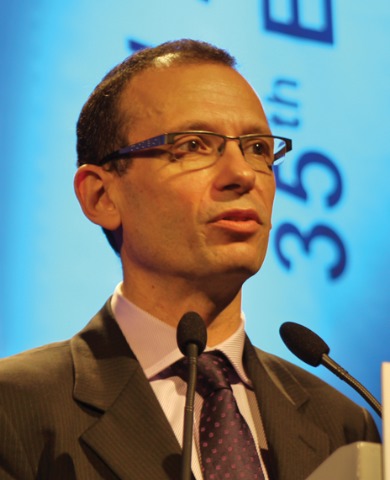
Commenting on the two RADIANT trials, Dr. Michel Ducreux of the Institut de Cancérologie Gustave Roussy in Villejuif, France, said that the treatment of well-differentiated NET has changed. Clearly the RADIANT-3 results show that everolimus is now an option alongside others such as interferon, somatostatin analogs, metabolic radiotherapy, sunitinib, and chemotherapy.
For nonpancreatic NET, however, the situation is less clear. “We have less weapons to fight the disease,” Dr. Ducreux said, noting that it does not respond well to chemotherapy.
“A lot of treatments are more active in pancreatic NET than in nonpancreatic NET,” he added with the observation that pancreatic NET is more aggressive, but easier to treat.
In a press statement, Dr. Roberto Labianca from the Ospedali Riuniti di Bergamo (Italy) said of the RADIANT-2 results, “This trial should be considered a practice-changing achievement, but it is essential that selection criteria are refined in order to identify the population more likely to respond to this approach.”
Novartis sponsored both studies. Dr. Pavel and Dr. Yao and several coauthors have received honoraria, consultancy fees, and research support from Novartis, or were employees or stockholders in the company. Dr. Yao has also received research support from Genentech Inc. and acted as an advisor to the Ipsen Group, Pfizer Inc., and Endo Pharmaceuticals. Dr. Ducreux had no personal disclosures other than noting some of his patients had been treated in RADIANT-2 and -3.
MILAN – Everolimus gave a 5.1-month gain in median progression-free survival when it was added to the standard therapy of octreotide LAR in the treatment of patients with advanced nonpancreatic neuroendocrine tumors in the phase III RADIANT-2 trial.
In the treatment of advanced pancreatic neuroendocrine tumors, everolimus (Afinitor) was also associated with a significant 6.4-month increase in median progression-free survival vs. placebo when it was added to the best supportive care in the RADIANT-3 trial (P less than .0001).
Based on these results reported at the annual meeting of the European Society for Medical Oncology, Novartis has announced that it will seek regulatory approvals worldwide for everolimus, a mammalian target of rapamycin (mTOR) inhibitor. Everolimus is approved in advanced renal cell cancer that has not improved after treatment with sunitinib (Sutent) or sorafenib (Nexavar).
RADIANT-2: Nonpancreatic NET
Neuroendocrine tumors (NETs) are a rare form of cancer arising from hormone-producing cells. Although the result of the RADIANT-2 trial “just missed statistical significance” (P = .026) at the predetermined level set by the study’s design (P = .0246), the findings are important, as they expand treatment options for patients with this difficult-to-treat tumor type said Dr. Marianne Pavel, who reported results of the Novartis-sponsored trial.
“We really have an unmet medical need ... and for the first time we have a drug that may work in this type of neuroendocrine tumor,” Dr. Pavel, professor of neuroendocrine disease at the Charité Medical University Berlin, said in an interview. She noted that advanced NET could be fatal within 5 years of diagnosis in about two-thirds of patients.
The 429 patients who were randomized into the trial between January 2007 and March 2008 all had advanced NET with a history of carcinoid symptoms. Of these, 216 patients were assigned to everolimus 10 mg/day and octreotide LAR (Sandostatin LAR Depot) 30 mg every 28 days, and 213 received the somatostatin analog plus placebo.
Median progression-free survival reached 16.4 months with everolimus vs. 11.3 months in the control arm (hazard ratio, 0.77), with benefits seen in all subgroups.
Interim analysis demonstrated no overall gain in overall survival (HR, 1.22; P = .908), with 2-year overall survival rates of 57.1% in the everolimus–octreotide LAR arm vs. 63.3% in the placebo–octreotide LAR arm. Another 67 events are needed before the final overall survival analysis can be performed, however.
The tolerability of the combination was acceptable, Dr. Pavel noted, with all-grade stomatitis (62% vs. 14%), infections (20% vs. 6%), and pulmonary events (12% vs. 0%) more common in the experimental arm than in the control arm.
“The everolimus and octreotide LAR combination demonstrates a clinically meaningful prolongation” of median progression-free survival, Dr. Pavel said. “Together with the data from the RADIANT-3 trial, these results support the efficacy in advanced NET. We now need to establish the subpopulations that might benefit from this combination, and from the early use of this combination.”
RADIANT-3: Pancreatic NET
“Everolimus should be considered a standard of care for patients with [advanced pancreatic] neuroendocrine tumors,” said Dr. James C. Yao, who presented the RADIANT-3 findings.
The trial randomized 410 patients with advanced low- or intermediate-grade NET to 10 mg/day of everolimus plus best supportive care or to best supportive care plus placebo until progression.
Dr. Yao of the University of Texas M.D. Anderson Cancer Center in Houston reported that everolimus produced a statistically significant 65% reduction in the risk for progression, compared with placebo (P less than .0001). Median progression-free survival was 11 months with everolimus plus best supportive care, compared with 4.6 months for placebo plus best supportive care. All subgroups benefited from everolimus.
Overall survival was not different, but 148 control arm patients received everolimus after their disease progressed.
“The 18-months’ progression-free survival rate of 34% vs. 9% for placebo demonstrates that the benefit provided by everolimus is durable,” Dr. Yao said.
Commenting on the two RADIANT trials, Dr. Michel Ducreux of the Institut de Cancérologie Gustave Roussy in Villejuif, France, said that the treatment of well-differentiated NET has changed. Clearly the RADIANT-3 results show that everolimus is now an option alongside others such as interferon, somatostatin analogs, metabolic radiotherapy, sunitinib, and chemotherapy.
For nonpancreatic NET, however, the situation is less clear. “We have less weapons to fight the disease,” Dr. Ducreux said, noting that it does not respond well to chemotherapy.
“A lot of treatments are more active in pancreatic NET than in nonpancreatic NET,” he added with the observation that pancreatic NET is more aggressive, but easier to treat.
In a press statement, Dr. Roberto Labianca from the Ospedali Riuniti di Bergamo (Italy) said of the RADIANT-2 results, “This trial should be considered a practice-changing achievement, but it is essential that selection criteria are refined in order to identify the population more likely to respond to this approach.”
Novartis sponsored both studies. Dr. Pavel and Dr. Yao and several coauthors have received honoraria, consultancy fees, and research support from Novartis, or were employees or stockholders in the company. Dr. Yao has also received research support from Genentech Inc. and acted as an advisor to the Ipsen Group, Pfizer Inc., and Endo Pharmaceuticals. Dr. Ducreux had no personal disclosures other than noting some of his patients had been treated in RADIANT-2 and -3.
MILAN – Everolimus gave a 5.1-month gain in median progression-free survival when it was added to the standard therapy of octreotide LAR in the treatment of patients with advanced nonpancreatic neuroendocrine tumors in the phase III RADIANT-2 trial.
In the treatment of advanced pancreatic neuroendocrine tumors, everolimus (Afinitor) was also associated with a significant 6.4-month increase in median progression-free survival vs. placebo when it was added to the best supportive care in the RADIANT-3 trial (P less than .0001).
Based on these results reported at the annual meeting of the European Society for Medical Oncology, Novartis has announced that it will seek regulatory approvals worldwide for everolimus, a mammalian target of rapamycin (mTOR) inhibitor. Everolimus is approved in advanced renal cell cancer that has not improved after treatment with sunitinib (Sutent) or sorafenib (Nexavar).
RADIANT-2: Nonpancreatic NET
Neuroendocrine tumors (NETs) are a rare form of cancer arising from hormone-producing cells. Although the result of the RADIANT-2 trial “just missed statistical significance” (P = .026) at the predetermined level set by the study’s design (P = .0246), the findings are important, as they expand treatment options for patients with this difficult-to-treat tumor type said Dr. Marianne Pavel, who reported results of the Novartis-sponsored trial.
“We really have an unmet medical need ... and for the first time we have a drug that may work in this type of neuroendocrine tumor,” Dr. Pavel, professor of neuroendocrine disease at the Charité Medical University Berlin, said in an interview. She noted that advanced NET could be fatal within 5 years of diagnosis in about two-thirds of patients.
The 429 patients who were randomized into the trial between January 2007 and March 2008 all had advanced NET with a history of carcinoid symptoms. Of these, 216 patients were assigned to everolimus 10 mg/day and octreotide LAR (Sandostatin LAR Depot) 30 mg every 28 days, and 213 received the somatostatin analog plus placebo.
Median progression-free survival reached 16.4 months with everolimus vs. 11.3 months in the control arm (hazard ratio, 0.77), with benefits seen in all subgroups.
Interim analysis demonstrated no overall gain in overall survival (HR, 1.22; P = .908), with 2-year overall survival rates of 57.1% in the everolimus–octreotide LAR arm vs. 63.3% in the placebo–octreotide LAR arm. Another 67 events are needed before the final overall survival analysis can be performed, however.
The tolerability of the combination was acceptable, Dr. Pavel noted, with all-grade stomatitis (62% vs. 14%), infections (20% vs. 6%), and pulmonary events (12% vs. 0%) more common in the experimental arm than in the control arm.
“The everolimus and octreotide LAR combination demonstrates a clinically meaningful prolongation” of median progression-free survival, Dr. Pavel said. “Together with the data from the RADIANT-3 trial, these results support the efficacy in advanced NET. We now need to establish the subpopulations that might benefit from this combination, and from the early use of this combination.”
RADIANT-3: Pancreatic NET
“Everolimus should be considered a standard of care for patients with [advanced pancreatic] neuroendocrine tumors,” said Dr. James C. Yao, who presented the RADIANT-3 findings.
The trial randomized 410 patients with advanced low- or intermediate-grade NET to 10 mg/day of everolimus plus best supportive care or to best supportive care plus placebo until progression.
Dr. Yao of the University of Texas M.D. Anderson Cancer Center in Houston reported that everolimus produced a statistically significant 65% reduction in the risk for progression, compared with placebo (P less than .0001). Median progression-free survival was 11 months with everolimus plus best supportive care, compared with 4.6 months for placebo plus best supportive care. All subgroups benefited from everolimus.
Overall survival was not different, but 148 control arm patients received everolimus after their disease progressed.
“The 18-months’ progression-free survival rate of 34% vs. 9% for placebo demonstrates that the benefit provided by everolimus is durable,” Dr. Yao said.
Commenting on the two RADIANT trials, Dr. Michel Ducreux of the Institut de Cancérologie Gustave Roussy in Villejuif, France, said that the treatment of well-differentiated NET has changed. Clearly the RADIANT-3 results show that everolimus is now an option alongside others such as interferon, somatostatin analogs, metabolic radiotherapy, sunitinib, and chemotherapy.
For nonpancreatic NET, however, the situation is less clear. “We have less weapons to fight the disease,” Dr. Ducreux said, noting that it does not respond well to chemotherapy.
“A lot of treatments are more active in pancreatic NET than in nonpancreatic NET,” he added with the observation that pancreatic NET is more aggressive, but easier to treat.
In a press statement, Dr. Roberto Labianca from the Ospedali Riuniti di Bergamo (Italy) said of the RADIANT-2 results, “This trial should be considered a practice-changing achievement, but it is essential that selection criteria are refined in order to identify the population more likely to respond to this approach.”
Novartis sponsored both studies. Dr. Pavel and Dr. Yao and several coauthors have received honoraria, consultancy fees, and research support from Novartis, or were employees or stockholders in the company. Dr. Yao has also received research support from Genentech Inc. and acted as an advisor to the Ipsen Group, Pfizer Inc., and Endo Pharmaceuticals. Dr. Ducreux had no personal disclosures other than noting some of his patients had been treated in RADIANT-2 and -3.
RADIANT Trials: Everolimus Outshines Placebo in Neuroendocrine Tumors
MILAN – Everolimus gave a 5.1-month gain in median progression-free survival when it was added to the standard therapy of octreotide LAR in the treatment of patients with advanced nonpancreatic neuroendocrine tumors in the phase III RADIANT-2 trial.

In the treatment of advanced pancreatic neuroendocrine tumors, everolimus (Afinitor) was also associated with a significant 6.4-month increase in median progression-free survival vs. placebo when it was added to the best supportive care in the RADIANT-3 trial (P less than .0001).
Based on these results reported at the annual meeting of the European Society for Medical Oncology, Novartis has announced that it will seek regulatory approvals worldwide for everolimus, a mammalian target of rapamycin (mTOR) inhibitor. Everolimus is approved in advanced renal cell cancer that has not improved after treatment with sunitinib (Sutent) or sorafenib (Nexavar).
RADIANT-2: Nonpancreatic NET
Neuroendocrine tumors (NETs) are a rare form of cancer arising from hormone-producing cells. Although the result of the RADIANT-2 trial “just missed statistical significance” (P = .026) at the predetermined level set by the study’s design (P = .0246), the findings are important, as they expand treatment options for patients with this difficult-to-treat tumor type said Dr. Marianne Pavel, who reported results of the Novartis-sponsored trial.
“We really have an unmet medical need ... and for the first time we have a drug that may work in this type of neuroendocrine tumor,” Dr. Pavel, professor of neuroendocrine disease at the Charité Medical University Berlin, said in an interview. She noted that advanced NET could be fatal within 5 years of diagnosis in about two-thirds of patients.
The 429 patients who were randomized into the trial between January 2007 and March 2008 all had advanced NET with a history of carcinoid symptoms. Of these, 216 patients were assigned to everolimus 10 mg/day and octreotide LAR (Sandostatin LAR Depot) 30 mg every 28 days, and 213 received the somatostatin analog plus placebo.
Median progression-free survival reached 16.4 months with everolimus vs. 11.3 months in the control arm (hazard ratio, 0.77), with benefits seen in all subgroups.
Interim analysis demonstrated no overall gain in overall survival (HR, 1.22; P = .908), with 2-year overall survival rates of 57.1% in the everolimus–octreotide LAR arm vs. 63.3% in the placebo–octreotide LAR arm. Another 67 events are needed before the final overall survival analysis can be performed, however.
The tolerability of the combination was acceptable, Dr. Pavel noted, with all-grade stomatitis (62% vs. 14%), infections (20% vs. 6%), and pulmonary events (12% vs. 0%) more common in the experimental arm than in the control arm.
“The everolimus and octreotide LAR combination demonstrates a clinically meaningful prolongation” of median progression-free survival, Dr. Pavel said. “Together with the data from the RADIANT-3 trial, these results support the efficacy in advanced NET. We now need to establish the subpopulations that might benefit from this combination, and from the early use of this combination.”
RADIANT-3: Pancreatic NET
“Everolimus should be considered a standard of care for patients with [advanced pancreatic] neuroendocrine tumors,” said Dr. James C. Yao, who presented the RADIANT-3 findings.
The trial randomized 410 patients with advanced low- or intermediate-grade NET to 10 mg/day of everolimus plus best supportive care or to best supportive care plus placebo until progression.
Dr. Yao of the University of Texas M.D. Anderson Cancer Center in Houston reported that everolimus produced a statistically significant 65% reduction in the risk for progression, compared with placebo (P less than .0001). Median progression-free survival was 11 months with everolimus plus best supportive care, compared with 4.6 months for placebo plus best supportive care. All subgroups benefited from everolimus.
Overall survival was not different, but 148 control arm patients received everolimus after their disease progressed.
“The 18-months’ progression-free survival rate of 34% vs. 9% for placebo demonstrates that the benefit provided by everolimus is durable,” Dr. Yao said.
Commenting on the two RADIANT trials, Dr. Michel Ducreux of the Institut de Cancérologie Gustave Roussy in Villejuif, France, said that the treatment of well-differentiated NET has changed. Clearly the RADIANT-3 results show that everolimus is now an option alongside others such as interferon, somatostatin analogs, metabolic radiotherapy, sunitinib, and chemotherapy.
For nonpancreatic NET, however, the situation is less clear. “We have less weapons to fight the disease,” Dr. Ducreux said, noting that it does not respond well to chemotherapy.
“A lot of treatments are more active in pancreatic NET than in nonpancreatic NET,” he added with the observation that pancreatic NET is more aggressive, but easier to treat.
In a press statement, Dr. Roberto Labianca from the Ospedali Riuniti di Bergamo (Italy) said of the RADIANT-2 results, “This trial should be considered a practice-changing achievement, but it is essential that selection criteria are refined in order to identify the population more likely to respond to this approach.”
Novartis sponsored both studies. Dr. Pavel and Dr. Yao and several coauthors have received honoraria, consultancy fees, and research support from Novartis, or were employees or stockholders in the company. Dr. Yao has also received research support from Genentech Inc. and acted as an advisor to the Ipsen Group, Pfizer Inc., and Endo Pharmaceuticals. Dr. Ducreux had no personal disclosures other than noting some of his patients had been treated in RADIANT-2 and -3.
MILAN – Everolimus gave a 5.1-month gain in median progression-free survival when it was added to the standard therapy of octreotide LAR in the treatment of patients with advanced nonpancreatic neuroendocrine tumors in the phase III RADIANT-2 trial.
In the treatment of advanced pancreatic neuroendocrine tumors, everolimus (Afinitor) was also associated with a significant 6.4-month increase in median progression-free survival vs. placebo when it was added to the best supportive care in the RADIANT-3 trial (P less than .0001).
Based on these results reported at the annual meeting of the European Society for Medical Oncology, Novartis has announced that it will seek regulatory approvals worldwide for everolimus, a mammalian target of rapamycin (mTOR) inhibitor. Everolimus is approved in advanced renal cell cancer that has not improved after treatment with sunitinib (Sutent) or sorafenib (Nexavar).
RADIANT-2: Nonpancreatic NET
Neuroendocrine tumors (NETs) are a rare form of cancer arising from hormone-producing cells. Although the result of the RADIANT-2 trial “just missed statistical significance” (P = .026) at the predetermined level set by the study’s design (P = .0246), the findings are important, as they expand treatment options for patients with this difficult-to-treat tumor type said Dr. Marianne Pavel, who reported results of the Novartis-sponsored trial.
“We really have an unmet medical need ... and for the first time we have a drug that may work in this type of neuroendocrine tumor,” Dr. Pavel, professor of neuroendocrine disease at the Charité Medical University Berlin, said in an interview. She noted that advanced NET could be fatal within 5 years of diagnosis in about two-thirds of patients.
The 429 patients who were randomized into the trial between January 2007 and March 2008 all had advanced NET with a history of carcinoid symptoms. Of these, 216 patients were assigned to everolimus 10 mg/day and octreotide LAR (Sandostatin LAR Depot) 30 mg every 28 days, and 213 received the somatostatin analog plus placebo.
Median progression-free survival reached 16.4 months with everolimus vs. 11.3 months in the control arm (hazard ratio, 0.77), with benefits seen in all subgroups.
Interim analysis demonstrated no overall gain in overall survival (HR, 1.22; P = .908), with 2-year overall survival rates of 57.1% in the everolimus–octreotide LAR arm vs. 63.3% in the placebo–octreotide LAR arm. Another 67 events are needed before the final overall survival analysis can be performed, however.
The tolerability of the combination was acceptable, Dr. Pavel noted, with all-grade stomatitis (62% vs. 14%), infections (20% vs. 6%), and pulmonary events (12% vs. 0%) more common in the experimental arm than in the control arm.
“The everolimus and octreotide LAR combination demonstrates a clinically meaningful prolongation” of median progression-free survival, Dr. Pavel said. “Together with the data from the RADIANT-3 trial, these results support the efficacy in advanced NET. We now need to establish the subpopulations that might benefit from this combination, and from the early use of this combination.”
RADIANT-3: Pancreatic NET
“Everolimus should be considered a standard of care for patients with [advanced pancreatic] neuroendocrine tumors,” said Dr. James C. Yao, who presented the RADIANT-3 findings.
The trial randomized 410 patients with advanced low- or intermediate-grade NET to 10 mg/day of everolimus plus best supportive care or to best supportive care plus placebo until progression.
Dr. Yao of the University of Texas M.D. Anderson Cancer Center in Houston reported that everolimus produced a statistically significant 65% reduction in the risk for progression, compared with placebo (P less than .0001). Median progression-free survival was 11 months with everolimus plus best supportive care, compared with 4.6 months for placebo plus best supportive care. All subgroups benefited from everolimus.
Overall survival was not different, but 148 control arm patients received everolimus after their disease progressed.
“The 18-months’ progression-free survival rate of 34% vs. 9% for placebo demonstrates that the benefit provided by everolimus is durable,” Dr. Yao said.
Commenting on the two RADIANT trials, Dr. Michel Ducreux of the Institut de Cancérologie Gustave Roussy in Villejuif, France, said that the treatment of well-differentiated NET has changed. Clearly the RADIANT-3 results show that everolimus is now an option alongside others such as interferon, somatostatin analogs, metabolic radiotherapy, sunitinib, and chemotherapy.
For nonpancreatic NET, however, the situation is less clear. “We have less weapons to fight the disease,” Dr. Ducreux said, noting that it does not respond well to chemotherapy.
“A lot of treatments are more active in pancreatic NET than in nonpancreatic NET,” he added with the observation that pancreatic NET is more aggressive, but easier to treat.
In a press statement, Dr. Roberto Labianca from the Ospedali Riuniti di Bergamo (Italy) said of the RADIANT-2 results, “This trial should be considered a practice-changing achievement, but it is essential that selection criteria are refined in order to identify the population more likely to respond to this approach.”
Novartis sponsored both studies. Dr. Pavel and Dr. Yao and several coauthors have received honoraria, consultancy fees, and research support from Novartis, or were employees or stockholders in the company. Dr. Yao has also received research support from Genentech Inc. and acted as an advisor to the Ipsen Group, Pfizer Inc., and Endo Pharmaceuticals. Dr. Ducreux had no personal disclosures other than noting some of his patients had been treated in RADIANT-2 and -3.
MILAN – Everolimus gave a 5.1-month gain in median progression-free survival when it was added to the standard therapy of octreotide LAR in the treatment of patients with advanced nonpancreatic neuroendocrine tumors in the phase III RADIANT-2 trial.
In the treatment of advanced pancreatic neuroendocrine tumors, everolimus (Afinitor) was also associated with a significant 6.4-month increase in median progression-free survival vs. placebo when it was added to the best supportive care in the RADIANT-3 trial (P less than .0001).
Based on these results reported at the annual meeting of the European Society for Medical Oncology, Novartis has announced that it will seek regulatory approvals worldwide for everolimus, a mammalian target of rapamycin (mTOR) inhibitor. Everolimus is approved in advanced renal cell cancer that has not improved after treatment with sunitinib (Sutent) or sorafenib (Nexavar).
RADIANT-2: Nonpancreatic NET
Neuroendocrine tumors (NETs) are a rare form of cancer arising from hormone-producing cells. Although the result of the RADIANT-2 trial “just missed statistical significance” (P = .026) at the predetermined level set by the study’s design (P = .0246), the findings are important, as they expand treatment options for patients with this difficult-to-treat tumor type said Dr. Marianne Pavel, who reported results of the Novartis-sponsored trial.
“We really have an unmet medical need ... and for the first time we have a drug that may work in this type of neuroendocrine tumor,” Dr. Pavel, professor of neuroendocrine disease at the Charité Medical University Berlin, said in an interview. She noted that advanced NET could be fatal within 5 years of diagnosis in about two-thirds of patients.
The 429 patients who were randomized into the trial between January 2007 and March 2008 all had advanced NET with a history of carcinoid symptoms. Of these, 216 patients were assigned to everolimus 10 mg/day and octreotide LAR (Sandostatin LAR Depot) 30 mg every 28 days, and 213 received the somatostatin analog plus placebo.
Median progression-free survival reached 16.4 months with everolimus vs. 11.3 months in the control arm (hazard ratio, 0.77), with benefits seen in all subgroups.
Interim analysis demonstrated no overall gain in overall survival (HR, 1.22; P = .908), with 2-year overall survival rates of 57.1% in the everolimus–octreotide LAR arm vs. 63.3% in the placebo–octreotide LAR arm. Another 67 events are needed before the final overall survival analysis can be performed, however.
The tolerability of the combination was acceptable, Dr. Pavel noted, with all-grade stomatitis (62% vs. 14%), infections (20% vs. 6%), and pulmonary events (12% vs. 0%) more common in the experimental arm than in the control arm.
“The everolimus and octreotide LAR combination demonstrates a clinically meaningful prolongation” of median progression-free survival, Dr. Pavel said. “Together with the data from the RADIANT-3 trial, these results support the efficacy in advanced NET. We now need to establish the subpopulations that might benefit from this combination, and from the early use of this combination.”
RADIANT-3: Pancreatic NET
“Everolimus should be considered a standard of care for patients with [advanced pancreatic] neuroendocrine tumors,” said Dr. James C. Yao, who presented the RADIANT-3 findings.
The trial randomized 410 patients with advanced low- or intermediate-grade NET to 10 mg/day of everolimus plus best supportive care or to best supportive care plus placebo until progression.
Dr. Yao of the University of Texas M.D. Anderson Cancer Center in Houston reported that everolimus produced a statistically significant 65% reduction in the risk for progression, compared with placebo (P less than .0001). Median progression-free survival was 11 months with everolimus plus best supportive care, compared with 4.6 months for placebo plus best supportive care. All subgroups benefited from everolimus.
Overall survival was not different, but 148 control arm patients received everolimus after their disease progressed.
“The 18-months’ progression-free survival rate of 34% vs. 9% for placebo demonstrates that the benefit provided by everolimus is durable,” Dr. Yao said.
Commenting on the two RADIANT trials, Dr. Michel Ducreux of the Institut de Cancérologie Gustave Roussy in Villejuif, France, said that the treatment of well-differentiated NET has changed. Clearly the RADIANT-3 results show that everolimus is now an option alongside others such as interferon, somatostatin analogs, metabolic radiotherapy, sunitinib, and chemotherapy.
For nonpancreatic NET, however, the situation is less clear. “We have less weapons to fight the disease,” Dr. Ducreux said, noting that it does not respond well to chemotherapy.
“A lot of treatments are more active in pancreatic NET than in nonpancreatic NET,” he added with the observation that pancreatic NET is more aggressive, but easier to treat.
In a press statement, Dr. Roberto Labianca from the Ospedali Riuniti di Bergamo (Italy) said of the RADIANT-2 results, “This trial should be considered a practice-changing achievement, but it is essential that selection criteria are refined in order to identify the population more likely to respond to this approach.”
Novartis sponsored both studies. Dr. Pavel and Dr. Yao and several coauthors have received honoraria, consultancy fees, and research support from Novartis, or were employees or stockholders in the company. Dr. Yao has also received research support from Genentech Inc. and acted as an advisor to the Ipsen Group, Pfizer Inc., and Endo Pharmaceuticals. Dr. Ducreux had no personal disclosures other than noting some of his patients had been treated in RADIANT-2 and -3.
Major Finding: Everolimus plus octreotide LAR was associated with a median progression-free survival of 16.4 months vs. 11.3 months for octreotide LAR plus placebo in patients with advanced, nonpancreatic neuroendocrine tumors (HR, 0.77; P = .026). In patients with advanced pancreatic NET, everolimus increased median progression-free survival 2.4-fold.
Data Source: Two randomized, phase III clinical trials: RADIANT-2 in 429 patients with advanced nonpancreatic NET, and RADIANT-3 in 410 patients with advanced pancreatic NET.
Disclosures: Novartis sponsored both studies. Dr. Pavel, Dr Yao, and several coauthors have received honoraria, consultancy fees, and research support from Novartis, or were employees or stockholders in the company. Dr. Yao has also received research support from Genentech and acted as an advisor to the Ipsen Group, Pfizer, and Endo Pharmaceuticals. Dr. Ducreux had no personal disclosures other than noting some of his patients had been treated in RADIANT-2 and -3.
In the Pipeline: Positive Early Results with Pazopanib in Bladder Cancer
MILAN – Pazopanib has antitumor activity in heavily pretreated patients with relapsed or refractory urothelial carcinoma, data from an ongoing phase II study have shown.
The early findings of the trial, which began in February 2010 and is expected to run for 2 years, suggest that the antiangiogenic agent produces a partial response or stable disease in the majority of patients.
The median time on treatment to date is 3 months, and nearly two-thirds of patients (64.7%) were progression free at 2 months, Dr. Andrea Necchi of the Fondazione IRCCS Instituo Nazionale dei Tumori in Milan reported Oct. 11.
“Bladder cancer is a common cancer worldwide ... and despite promising results achieved with first-line chemotherapy there has been no substantial improvement over the past 20 years and effective second-line chemotherapy is still lacking,” Dr. Necchi observed during a presentation at the annual congress of the European Society for Medical Oncology.
Urothelial cancer is an aggressive disease, which remains essentially incurable when it becomes metastatic, he added. Pazopanib (Votrient), a multitargeted tyrosine kinase inhibitor, is already approved in the United States and Europe for the treatment of advanced renal cell carcinoma.
The target accrual of the trial is 41 patients, and in all, 18 (17 evaluable) patients have been recruited to date. The median age of participants so far is 65 years, and 55% have tumors primarily affecting the urinary bladder, whereas the remaining 45% have tumors primarily affecting the upper urinary tract. On average, participants have received two prior chemotherapy regimens, with almost 40% also receiving radiotherapy, and 72% having undergone some type of major surgery.
According to RECIST (Response Evaluation Criteria in Solid Tumors), four (22%) patients experienced a partial response, 11 (61%) had stable disease, and two (11%) had progressive disease following treatment with pazopanib (800 mg once daily).
The drug was well tolerated overall, with grade 3/4 nausea or anorexia reported in two (11%) patients and hypertension in one (5%) patient. Grade 1/2 adverse events observed included anemia, asthenia, diarrhea, abdominal pain, and hand-foot syndrome.
“Of course, we are only at the first step of this phase II trial, and caution is needed when interpreting the results,” Dr. Necchi said in a press statement. Although more patients need to be recruited and longer follow-up is required, “this is the first time in this disease we are generating interest among investigators and, particularly, of the pharmaceutical industry.”
Dr. Necchi noted that the trial was being conducted independently of GlaxoSmithKline, the company that manufactures pazopanib. “The study shows that it is possible in Europe to promote independent research that focuses attention on challenging problematic matters, such as salvage therapy in urothelial cancer,” he observed.
Dr. Joaquim Bellmunt of the Hospital del Mar in Barcelona said in the same press statement that “these preliminary results underline the value of angiogenesis as a target in bladder cancer. They add to the results other groups have published recently using similar drugs to treat bladder cancer.”
The Fondazione IRCCS Instituo Nazionale dei Tumori in Milan sponsored the study. Dr. Necchi has participated in advisory board meetings held by GlaxoSmithKline, manufacturer of pazopanib; his coauthors declared they had no conflicts of interest.
MILAN – Pazopanib has antitumor activity in heavily pretreated patients with relapsed or refractory urothelial carcinoma, data from an ongoing phase II study have shown.
The early findings of the trial, which began in February 2010 and is expected to run for 2 years, suggest that the antiangiogenic agent produces a partial response or stable disease in the majority of patients.
The median time on treatment to date is 3 months, and nearly two-thirds of patients (64.7%) were progression free at 2 months, Dr. Andrea Necchi of the Fondazione IRCCS Instituo Nazionale dei Tumori in Milan reported Oct. 11.
“Bladder cancer is a common cancer worldwide ... and despite promising results achieved with first-line chemotherapy there has been no substantial improvement over the past 20 years and effective second-line chemotherapy is still lacking,” Dr. Necchi observed during a presentation at the annual congress of the European Society for Medical Oncology.
Urothelial cancer is an aggressive disease, which remains essentially incurable when it becomes metastatic, he added. Pazopanib (Votrient), a multitargeted tyrosine kinase inhibitor, is already approved in the United States and Europe for the treatment of advanced renal cell carcinoma.
The target accrual of the trial is 41 patients, and in all, 18 (17 evaluable) patients have been recruited to date. The median age of participants so far is 65 years, and 55% have tumors primarily affecting the urinary bladder, whereas the remaining 45% have tumors primarily affecting the upper urinary tract. On average, participants have received two prior chemotherapy regimens, with almost 40% also receiving radiotherapy, and 72% having undergone some type of major surgery.
According to RECIST (Response Evaluation Criteria in Solid Tumors), four (22%) patients experienced a partial response, 11 (61%) had stable disease, and two (11%) had progressive disease following treatment with pazopanib (800 mg once daily).
The drug was well tolerated overall, with grade 3/4 nausea or anorexia reported in two (11%) patients and hypertension in one (5%) patient. Grade 1/2 adverse events observed included anemia, asthenia, diarrhea, abdominal pain, and hand-foot syndrome.
“Of course, we are only at the first step of this phase II trial, and caution is needed when interpreting the results,” Dr. Necchi said in a press statement. Although more patients need to be recruited and longer follow-up is required, “this is the first time in this disease we are generating interest among investigators and, particularly, of the pharmaceutical industry.”
Dr. Necchi noted that the trial was being conducted independently of GlaxoSmithKline, the company that manufactures pazopanib. “The study shows that it is possible in Europe to promote independent research that focuses attention on challenging problematic matters, such as salvage therapy in urothelial cancer,” he observed.
Dr. Joaquim Bellmunt of the Hospital del Mar in Barcelona said in the same press statement that “these preliminary results underline the value of angiogenesis as a target in bladder cancer. They add to the results other groups have published recently using similar drugs to treat bladder cancer.”
The Fondazione IRCCS Instituo Nazionale dei Tumori in Milan sponsored the study. Dr. Necchi has participated in advisory board meetings held by GlaxoSmithKline, manufacturer of pazopanib; his coauthors declared they had no conflicts of interest.
MILAN – Pazopanib has antitumor activity in heavily pretreated patients with relapsed or refractory urothelial carcinoma, data from an ongoing phase II study have shown.
The early findings of the trial, which began in February 2010 and is expected to run for 2 years, suggest that the antiangiogenic agent produces a partial response or stable disease in the majority of patients.
The median time on treatment to date is 3 months, and nearly two-thirds of patients (64.7%) were progression free at 2 months, Dr. Andrea Necchi of the Fondazione IRCCS Instituo Nazionale dei Tumori in Milan reported Oct. 11.
“Bladder cancer is a common cancer worldwide ... and despite promising results achieved with first-line chemotherapy there has been no substantial improvement over the past 20 years and effective second-line chemotherapy is still lacking,” Dr. Necchi observed during a presentation at the annual congress of the European Society for Medical Oncology.
Urothelial cancer is an aggressive disease, which remains essentially incurable when it becomes metastatic, he added. Pazopanib (Votrient), a multitargeted tyrosine kinase inhibitor, is already approved in the United States and Europe for the treatment of advanced renal cell carcinoma.
The target accrual of the trial is 41 patients, and in all, 18 (17 evaluable) patients have been recruited to date. The median age of participants so far is 65 years, and 55% have tumors primarily affecting the urinary bladder, whereas the remaining 45% have tumors primarily affecting the upper urinary tract. On average, participants have received two prior chemotherapy regimens, with almost 40% also receiving radiotherapy, and 72% having undergone some type of major surgery.
According to RECIST (Response Evaluation Criteria in Solid Tumors), four (22%) patients experienced a partial response, 11 (61%) had stable disease, and two (11%) had progressive disease following treatment with pazopanib (800 mg once daily).
The drug was well tolerated overall, with grade 3/4 nausea or anorexia reported in two (11%) patients and hypertension in one (5%) patient. Grade 1/2 adverse events observed included anemia, asthenia, diarrhea, abdominal pain, and hand-foot syndrome.
“Of course, we are only at the first step of this phase II trial, and caution is needed when interpreting the results,” Dr. Necchi said in a press statement. Although more patients need to be recruited and longer follow-up is required, “this is the first time in this disease we are generating interest among investigators and, particularly, of the pharmaceutical industry.”
Dr. Necchi noted that the trial was being conducted independently of GlaxoSmithKline, the company that manufactures pazopanib. “The study shows that it is possible in Europe to promote independent research that focuses attention on challenging problematic matters, such as salvage therapy in urothelial cancer,” he observed.
Dr. Joaquim Bellmunt of the Hospital del Mar in Barcelona said in the same press statement that “these preliminary results underline the value of angiogenesis as a target in bladder cancer. They add to the results other groups have published recently using similar drugs to treat bladder cancer.”
The Fondazione IRCCS Instituo Nazionale dei Tumori in Milan sponsored the study. Dr. Necchi has participated in advisory board meetings held by GlaxoSmithKline, manufacturer of pazopanib; his coauthors declared they had no conflicts of interest.
Major Finding: Four patients (22%) experienced a partial response, and 11 (61%) had stable disease.
Data Source: Ongoing phase II, single-center, open-label trial of pazopanib monotherapy in patients with relapsed or refractory urothelial cancer.
Disclosures: The Fondazione IRCCS Instituo Nazionale dei Tumori in Milan sponsored the study. Dr. Necchi has participated in advisory board meetings held by GlaxoSmithKline, which manufactures pazopanib; his coauthors declared they had no conflicts of interest.
In the Pipeline: Tivozanib Tops Placebo in Renal Cell Carcinoma
MILAN – Tivozanib, an investigational agent, is not only active in the treatment of renal cell carcinoma, but is also associated with minimal “off target” toxicity, according to phase II study findings.
The tyrosine kinase inhibitor (TKI), which targets all three vascular epithelial growth factor (VEGF) receptors, was associated with an overall median progression-free survival of 11.8 months in a difficult-to-treat patient population; 17% of 272 patients had nonclear cell histology, 27% did not have prior nephrectomy, and 46% had received at least one prior treatment.
Median progression-free survival was slightly longer, at 14.8 months, in patients with clear cell histology who had also undergone nephrectomy, which is the population of patients that is most commonly studied to gain drug approval in renal cell carcinoma.
“Patients randomized to continue tivozanib had a significantly higher disease control rate and median progression-free survival compared with those randomized to placebo,” said Dr. Dimitry Nosov of the N.N. Blokhin Russian Cancer Research Center in Moscow, who presented preliminary results of the randomized discontinuation trial at the annual congress of the European Society for Medical Oncology.
The trial involved a 16-week, open-label phase during which all patients received treatment with tivozanib, at a dosage of 1.5 mg/day for 3 weeks of a 4-week cycle. In all, 76 patients with progressive disease then stopped treatment, 78 of those with partial or complete responses continued open-label treatment, and 111 patients with stable disease were randomized to receive tivozanib or placebo for a further 12 weeks.
Dr. Nosov noted that the percentage of patients who remained progression free at 12 weeks following randomization to either tivozanib or placebo doubled with the active treatment (48% vs. 21%; P = .003).
The drug is reported to have greater potency for VEGF receptors 1, 2, and 3 than do other available agents, including Pfizer Inc.’s investigational agent axitinib, which may account for its low rate of “off-target” adverse events such as mucositis, stomatitis, fatigue, neutropenia, and hand-foot syndrome as seen in the trial. The most common side effects (all grades) reported for at least 10% of patients were hypertension (50%), dysphonia (22%), asthenia (approximately 13%), and diarrhea (12%).
“What’s extremely encouraging is the very good tolerability of this agent,” Dr. Tim Eisen, a professor at the University of Cambridge (England).
Dr. Eisen noted that although the number of patients who discontinued treatment was high at the end of the open-label treatment phase, it was also encouraging that progression-free survival was almost as good in patients who had stable disease and continued treatment with tivozanib as it was in those who had achieved a partial or complete response and received continued open-label treatment. “This might influence how we use the agent,” in clinical practice, he suggested.
The study was sponsored by AVEO Pharmaceuticals Inc. Dr. Nosov had no potential conflicts of interest, but several of his coauthors were employees of AVEO. The discussant, Dr. Eisen, has acted in advisory capacity for AVEO and GlaxoSmithKline, and has received research support and acted as an advisor to Bayer, Pfizer, and Roche.
MILAN – Tivozanib, an investigational agent, is not only active in the treatment of renal cell carcinoma, but is also associated with minimal “off target” toxicity, according to phase II study findings.
The tyrosine kinase inhibitor (TKI), which targets all three vascular epithelial growth factor (VEGF) receptors, was associated with an overall median progression-free survival of 11.8 months in a difficult-to-treat patient population; 17% of 272 patients had nonclear cell histology, 27% did not have prior nephrectomy, and 46% had received at least one prior treatment.
Median progression-free survival was slightly longer, at 14.8 months, in patients with clear cell histology who had also undergone nephrectomy, which is the population of patients that is most commonly studied to gain drug approval in renal cell carcinoma.
“Patients randomized to continue tivozanib had a significantly higher disease control rate and median progression-free survival compared with those randomized to placebo,” said Dr. Dimitry Nosov of the N.N. Blokhin Russian Cancer Research Center in Moscow, who presented preliminary results of the randomized discontinuation trial at the annual congress of the European Society for Medical Oncology.
The trial involved a 16-week, open-label phase during which all patients received treatment with tivozanib, at a dosage of 1.5 mg/day for 3 weeks of a 4-week cycle. In all, 76 patients with progressive disease then stopped treatment, 78 of those with partial or complete responses continued open-label treatment, and 111 patients with stable disease were randomized to receive tivozanib or placebo for a further 12 weeks.
Dr. Nosov noted that the percentage of patients who remained progression free at 12 weeks following randomization to either tivozanib or placebo doubled with the active treatment (48% vs. 21%; P = .003).
The drug is reported to have greater potency for VEGF receptors 1, 2, and 3 than do other available agents, including Pfizer Inc.’s investigational agent axitinib, which may account for its low rate of “off-target” adverse events such as mucositis, stomatitis, fatigue, neutropenia, and hand-foot syndrome as seen in the trial. The most common side effects (all grades) reported for at least 10% of patients were hypertension (50%), dysphonia (22%), asthenia (approximately 13%), and diarrhea (12%).
“What’s extremely encouraging is the very good tolerability of this agent,” Dr. Tim Eisen, a professor at the University of Cambridge (England).
Dr. Eisen noted that although the number of patients who discontinued treatment was high at the end of the open-label treatment phase, it was also encouraging that progression-free survival was almost as good in patients who had stable disease and continued treatment with tivozanib as it was in those who had achieved a partial or complete response and received continued open-label treatment. “This might influence how we use the agent,” in clinical practice, he suggested.
The study was sponsored by AVEO Pharmaceuticals Inc. Dr. Nosov had no potential conflicts of interest, but several of his coauthors were employees of AVEO. The discussant, Dr. Eisen, has acted in advisory capacity for AVEO and GlaxoSmithKline, and has received research support and acted as an advisor to Bayer, Pfizer, and Roche.
MILAN – Tivozanib, an investigational agent, is not only active in the treatment of renal cell carcinoma, but is also associated with minimal “off target” toxicity, according to phase II study findings.
The tyrosine kinase inhibitor (TKI), which targets all three vascular epithelial growth factor (VEGF) receptors, was associated with an overall median progression-free survival of 11.8 months in a difficult-to-treat patient population; 17% of 272 patients had nonclear cell histology, 27% did not have prior nephrectomy, and 46% had received at least one prior treatment.
Median progression-free survival was slightly longer, at 14.8 months, in patients with clear cell histology who had also undergone nephrectomy, which is the population of patients that is most commonly studied to gain drug approval in renal cell carcinoma.
“Patients randomized to continue tivozanib had a significantly higher disease control rate and median progression-free survival compared with those randomized to placebo,” said Dr. Dimitry Nosov of the N.N. Blokhin Russian Cancer Research Center in Moscow, who presented preliminary results of the randomized discontinuation trial at the annual congress of the European Society for Medical Oncology.
The trial involved a 16-week, open-label phase during which all patients received treatment with tivozanib, at a dosage of 1.5 mg/day for 3 weeks of a 4-week cycle. In all, 76 patients with progressive disease then stopped treatment, 78 of those with partial or complete responses continued open-label treatment, and 111 patients with stable disease were randomized to receive tivozanib or placebo for a further 12 weeks.
Dr. Nosov noted that the percentage of patients who remained progression free at 12 weeks following randomization to either tivozanib or placebo doubled with the active treatment (48% vs. 21%; P = .003).
The drug is reported to have greater potency for VEGF receptors 1, 2, and 3 than do other available agents, including Pfizer Inc.’s investigational agent axitinib, which may account for its low rate of “off-target” adverse events such as mucositis, stomatitis, fatigue, neutropenia, and hand-foot syndrome as seen in the trial. The most common side effects (all grades) reported for at least 10% of patients were hypertension (50%), dysphonia (22%), asthenia (approximately 13%), and diarrhea (12%).
“What’s extremely encouraging is the very good tolerability of this agent,” Dr. Tim Eisen, a professor at the University of Cambridge (England).
Dr. Eisen noted that although the number of patients who discontinued treatment was high at the end of the open-label treatment phase, it was also encouraging that progression-free survival was almost as good in patients who had stable disease and continued treatment with tivozanib as it was in those who had achieved a partial or complete response and received continued open-label treatment. “This might influence how we use the agent,” in clinical practice, he suggested.
The study was sponsored by AVEO Pharmaceuticals Inc. Dr. Nosov had no potential conflicts of interest, but several of his coauthors were employees of AVEO. The discussant, Dr. Eisen, has acted in advisory capacity for AVEO and GlaxoSmithKline, and has received research support and acted as an advisor to Bayer, Pfizer, and Roche.
In the Pipeline: Tivozanib Tops Placebo in Renal Cell Carcinoma
MILAN – Tivozanib, an investigational agent, is not only active in the treatment of renal cell carcinoma, but is also associated with minimal “off target” toxicity, according to phase II study findings.
The tyrosine kinase inhibitor (TKI), which targets all three vascular epithelial growth factor (VEGF) receptors, was associated with an overall median progression-free survival of 11.8 months in a difficult-to-treat patient population; 17% of 272 patients had nonclear cell histology, 27% did not have prior nephrectomy, and 46% had received at least one prior treatment.
Median progression-free survival was slightly longer, at 14.8 months, in patients with clear cell histology who had also undergone nephrectomy, which is the population of patients that is most commonly studied to gain drug approval in renal cell carcinoma.
“Patients randomized to continue tivozanib had a significantly higher disease control rate and median progression-free survival compared with those randomized to placebo,” said Dr. Dimitry Nosov of the N.N. Blokhin Russian Cancer Research Center in Moscow, who presented preliminary results of the randomized discontinuation trial at the annual congress of the European Society for Medical Oncology.
The trial involved a 16-week, open-label phase during which all patients received treatment with tivozanib, at a dosage of 1.5 mg/day for 3 weeks of a 4-week cycle. In all, 76 patients with progressive disease then stopped treatment, 78 of those with partial or complete responses continued open-label treatment, and 111 patients with stable disease were randomized to receive tivozanib or placebo for a further 12 weeks.
Dr. Nosov noted that the percentage of patients who remained progression free at 12 weeks following randomization to either tivozanib or placebo doubled with the active treatment (48% vs. 21%; P = .003).
The drug is reported to have greater potency for VEGF receptors 1, 2, and 3 than do other available agents, including Pfizer Inc.’s investigational agent axitinib, which may account for its low rate of “off-target” adverse events such as mucositis, stomatitis, fatigue, neutropenia, and hand-foot syndrome as seen in the trial. The most common side effects (all grades) reported for at least 10% of patients were hypertension (50%), dysphonia (22%), asthenia (approximately 13%), and diarrhea (12%).
“What’s extremely encouraging is the very good tolerability of this agent,” Dr. Tim Eisen, a professor at the University of Cambridge (England).
Dr. Eisen noted that although the number of patients who discontinued treatment was high at the end of the open-label treatment phase, it was also encouraging that progression-free survival was almost as good in patients who had stable disease and continued treatment with tivozanib as it was in those who had achieved a partial or complete response and received continued open-label treatment. “This might influence how we use the agent,” in clinical practice, he suggested.
The study was sponsored by AVEO Pharmaceuticals Inc. Dr. Nosov had no potential conflicts of interest, but several of his coauthors were employees of AVEO. The discussant, Dr. Eisen, has acted in advisory capacity for AVEO and GlaxoSmithKline, and has received research support and acted as an advisor to Bayer, Pfizer, and Roche.
MILAN – Tivozanib, an investigational agent, is not only active in the treatment of renal cell carcinoma, but is also associated with minimal “off target” toxicity, according to phase II study findings.
The tyrosine kinase inhibitor (TKI), which targets all three vascular epithelial growth factor (VEGF) receptors, was associated with an overall median progression-free survival of 11.8 months in a difficult-to-treat patient population; 17% of 272 patients had nonclear cell histology, 27% did not have prior nephrectomy, and 46% had received at least one prior treatment.
Median progression-free survival was slightly longer, at 14.8 months, in patients with clear cell histology who had also undergone nephrectomy, which is the population of patients that is most commonly studied to gain drug approval in renal cell carcinoma.
“Patients randomized to continue tivozanib had a significantly higher disease control rate and median progression-free survival compared with those randomized to placebo,” said Dr. Dimitry Nosov of the N.N. Blokhin Russian Cancer Research Center in Moscow, who presented preliminary results of the randomized discontinuation trial at the annual congress of the European Society for Medical Oncology.
The trial involved a 16-week, open-label phase during which all patients received treatment with tivozanib, at a dosage of 1.5 mg/day for 3 weeks of a 4-week cycle. In all, 76 patients with progressive disease then stopped treatment, 78 of those with partial or complete responses continued open-label treatment, and 111 patients with stable disease were randomized to receive tivozanib or placebo for a further 12 weeks.
Dr. Nosov noted that the percentage of patients who remained progression free at 12 weeks following randomization to either tivozanib or placebo doubled with the active treatment (48% vs. 21%; P = .003).
The drug is reported to have greater potency for VEGF receptors 1, 2, and 3 than do other available agents, including Pfizer Inc.’s investigational agent axitinib, which may account for its low rate of “off-target” adverse events such as mucositis, stomatitis, fatigue, neutropenia, and hand-foot syndrome as seen in the trial. The most common side effects (all grades) reported for at least 10% of patients were hypertension (50%), dysphonia (22%), asthenia (approximately 13%), and diarrhea (12%).
“What’s extremely encouraging is the very good tolerability of this agent,” Dr. Tim Eisen, a professor at the University of Cambridge (England).
Dr. Eisen noted that although the number of patients who discontinued treatment was high at the end of the open-label treatment phase, it was also encouraging that progression-free survival was almost as good in patients who had stable disease and continued treatment with tivozanib as it was in those who had achieved a partial or complete response and received continued open-label treatment. “This might influence how we use the agent,” in clinical practice, he suggested.
The study was sponsored by AVEO Pharmaceuticals Inc. Dr. Nosov had no potential conflicts of interest, but several of his coauthors were employees of AVEO. The discussant, Dr. Eisen, has acted in advisory capacity for AVEO and GlaxoSmithKline, and has received research support and acted as an advisor to Bayer, Pfizer, and Roche.
MILAN – Tivozanib, an investigational agent, is not only active in the treatment of renal cell carcinoma, but is also associated with minimal “off target” toxicity, according to phase II study findings.
The tyrosine kinase inhibitor (TKI), which targets all three vascular epithelial growth factor (VEGF) receptors, was associated with an overall median progression-free survival of 11.8 months in a difficult-to-treat patient population; 17% of 272 patients had nonclear cell histology, 27% did not have prior nephrectomy, and 46% had received at least one prior treatment.
Median progression-free survival was slightly longer, at 14.8 months, in patients with clear cell histology who had also undergone nephrectomy, which is the population of patients that is most commonly studied to gain drug approval in renal cell carcinoma.
“Patients randomized to continue tivozanib had a significantly higher disease control rate and median progression-free survival compared with those randomized to placebo,” said Dr. Dimitry Nosov of the N.N. Blokhin Russian Cancer Research Center in Moscow, who presented preliminary results of the randomized discontinuation trial at the annual congress of the European Society for Medical Oncology.
The trial involved a 16-week, open-label phase during which all patients received treatment with tivozanib, at a dosage of 1.5 mg/day for 3 weeks of a 4-week cycle. In all, 76 patients with progressive disease then stopped treatment, 78 of those with partial or complete responses continued open-label treatment, and 111 patients with stable disease were randomized to receive tivozanib or placebo for a further 12 weeks.
Dr. Nosov noted that the percentage of patients who remained progression free at 12 weeks following randomization to either tivozanib or placebo doubled with the active treatment (48% vs. 21%; P = .003).
The drug is reported to have greater potency for VEGF receptors 1, 2, and 3 than do other available agents, including Pfizer Inc.’s investigational agent axitinib, which may account for its low rate of “off-target” adverse events such as mucositis, stomatitis, fatigue, neutropenia, and hand-foot syndrome as seen in the trial. The most common side effects (all grades) reported for at least 10% of patients were hypertension (50%), dysphonia (22%), asthenia (approximately 13%), and diarrhea (12%).
“What’s extremely encouraging is the very good tolerability of this agent,” Dr. Tim Eisen, a professor at the University of Cambridge (England).
Dr. Eisen noted that although the number of patients who discontinued treatment was high at the end of the open-label treatment phase, it was also encouraging that progression-free survival was almost as good in patients who had stable disease and continued treatment with tivozanib as it was in those who had achieved a partial or complete response and received continued open-label treatment. “This might influence how we use the agent,” in clinical practice, he suggested.
The study was sponsored by AVEO Pharmaceuticals Inc. Dr. Nosov had no potential conflicts of interest, but several of his coauthors were employees of AVEO. The discussant, Dr. Eisen, has acted in advisory capacity for AVEO and GlaxoSmithKline, and has received research support and acted as an advisor to Bayer, Pfizer, and Roche.
Major Finding: Compared with placebo, tivozanib more than doubled the percentage of patients who were progression free at the end of the 12-week, double-blind treatment phase of a randomized, phase II discontinuation study (48% vs. 21%; P = .003).
Data Source: A trial of 272 patients with advanced renal cell carcinoma who had not received any previous anti-VEGF therapy.
Disclosures: The study was sponsored by AVEO Pharmaceuticals Inc. Dr. Nosov had no potential conflicts of interest, but several of his coauthors were employees of AVEO. The discussant, Dr. Eisen, has acted in advisory capacity for AVEO and GlaxoSmithKline, and has received research support and acted as an advisor to Bayer, Pfizer, and Roche.
In the Pipeline: Figitumumab Active in Refractory Ewing's Sarcoma
MILAN – Figitumumab was active against refractory Ewing’s sarcoma in heavily pretreated adolescents who were enrolled in a phase I/II study.
Treatment with Pfizer Inc.’s investigational agent was associated with an overall response rate of 14.2%, a median progression-free survival of 1.87 months, and a median overall survival 8.87 months.

“This is another weapon in the fight against Ewing’s sarcoma,” study investigator Dr. Heribert Jürgens said at the annual congress of the European Society of Medical Oncology.
“It’s a miracle to see a patient who has received first-, second-, third-, fourth-line chemotherapy suddenly respond,” said Dr. Jürgens of the department of pediatric hematology and oncology at the University Children’s Hospital Münster (Germany).
Figitumumab is a fully human anti-IgG2 monoclonal antibody that acts by blocking, internalizing, and degrading the insulin-like growth factor type I receptor (IGF-IR). IGF-IR is an attractive therapeutic target in pediatric sarcomas; not only does it play a key role in cancer cell survival, but its levels tend to peak around puberty when growth hormone levels are high.
The drug is one of several IGF-IR monoclonal antibodies currently being investigated in sarcoma and other solid tumors; these include Amgen Inc.’s AMG 479, ImClone Systems Inc.’s IMC-A12, and Schering-Plough’s SCH-717454 and robatumumab.
To date, however, the results with figitumumab in other tumor types have been disappointing, with phase III trial data that was presented at the American Society of Clinical Oncology not showing a benefit of adding the drug to standard chemotherapy (carboplatin and paclitaxel) in non–small cell lung cancer, despite initially promising phase II results (J. Clin. Oncol. 2010;28[15s]:abstract 7500).
The preliminary findings reported by Dr. Jürgens involved 138 patients aged 10-18 years with Ewing’s sarcoma, osteosarcoma, or other rare sarcomas for whom no curative therapies were available. The median age of patients was 16 years among 31 youngsters in phase I, and 18 years among 107 in phase II. The patient population was almost two-thirds male. Figitumumab was given every 4 weeks at a dose of 20 or 30 mg/kg in phase I and 30 mg/kg in phase II.
No dose-limiting toxicities were reported in phase I of the trial, with “acceptable tolerability” seen in the phase II part. Grade 4 adverse events attributed to figitumumab in phase II included one case each of decreased appetite and leukemia, with the most commonly reported grade 3 adverse events being hyperglycemia (2.8%), transaminase increases (1.9%), and neutropenia (1.9%).
The primary end point in phase II was the overall response rate, which could be evaluated in 106 patients. It comprised 15 partial responses, given an ORR of 14.2%. The median duration of response was 4.7 months, ranging from 3.5 to 11.7 months with two patients still ongoing.
Dr. Jürgens reported that progression-free survival was significantly longer in patients with free IGF-I serum levels of 0.65 ng/mL or higher vs. those with less than 0.65 ng/mL before treatment (10.41 vs. 3.65 months; P less than .001). Similar results were observed for total IGF-I levels, with patients doing better with higher (at least 10 ng/mL) than with lower (less than 110 ng/mL) levels. “The potential association of pretreatment IGF-I serum levels with survival benefit warrants further investigation,” Dr. Jürgens said.
“There are some interesting responses in Ewing’s sarcoma,” commented the invited discussant, Dr. Hans Gelderblom, a medical oncologist at Leiden (the Netherlands) University Medical Center. He noted that responses to IGF-IR monoclonal antibodies tend to be short lived, however, and suggested that the way forward might be to combine these agents with other therapies.
Pfizer sponsored the study. Dr. Jürgens and coauthors have received research funds from the company, and two of the authors are employees. Dr. Gelderblom has received payment for attending Pfizer advisory board meetings.
MILAN – Figitumumab was active against refractory Ewing’s sarcoma in heavily pretreated adolescents who were enrolled in a phase I/II study.
Treatment with Pfizer Inc.’s investigational agent was associated with an overall response rate of 14.2%, a median progression-free survival of 1.87 months, and a median overall survival 8.87 months.
“This is another weapon in the fight against Ewing’s sarcoma,” study investigator Dr. Heribert Jürgens said at the annual congress of the European Society of Medical Oncology.
“It’s a miracle to see a patient who has received first-, second-, third-, fourth-line chemotherapy suddenly respond,” said Dr. Jürgens of the department of pediatric hematology and oncology at the University Children’s Hospital Münster (Germany).
Figitumumab is a fully human anti-IgG2 monoclonal antibody that acts by blocking, internalizing, and degrading the insulin-like growth factor type I receptor (IGF-IR). IGF-IR is an attractive therapeutic target in pediatric sarcomas; not only does it play a key role in cancer cell survival, but its levels tend to peak around puberty when growth hormone levels are high.
The drug is one of several IGF-IR monoclonal antibodies currently being investigated in sarcoma and other solid tumors; these include Amgen Inc.’s AMG 479, ImClone Systems Inc.’s IMC-A12, and Schering-Plough’s SCH-717454 and robatumumab.
To date, however, the results with figitumumab in other tumor types have been disappointing, with phase III trial data that was presented at the American Society of Clinical Oncology not showing a benefit of adding the drug to standard chemotherapy (carboplatin and paclitaxel) in non–small cell lung cancer, despite initially promising phase II results (J. Clin. Oncol. 2010;28[15s]:abstract 7500).
The preliminary findings reported by Dr. Jürgens involved 138 patients aged 10-18 years with Ewing’s sarcoma, osteosarcoma, or other rare sarcomas for whom no curative therapies were available. The median age of patients was 16 years among 31 youngsters in phase I, and 18 years among 107 in phase II. The patient population was almost two-thirds male. Figitumumab was given every 4 weeks at a dose of 20 or 30 mg/kg in phase I and 30 mg/kg in phase II.
No dose-limiting toxicities were reported in phase I of the trial, with “acceptable tolerability” seen in the phase II part. Grade 4 adverse events attributed to figitumumab in phase II included one case each of decreased appetite and leukemia, with the most commonly reported grade 3 adverse events being hyperglycemia (2.8%), transaminase increases (1.9%), and neutropenia (1.9%).
The primary end point in phase II was the overall response rate, which could be evaluated in 106 patients. It comprised 15 partial responses, given an ORR of 14.2%. The median duration of response was 4.7 months, ranging from 3.5 to 11.7 months with two patients still ongoing.
Dr. Jürgens reported that progression-free survival was significantly longer in patients with free IGF-I serum levels of 0.65 ng/mL or higher vs. those with less than 0.65 ng/mL before treatment (10.41 vs. 3.65 months; P less than .001). Similar results were observed for total IGF-I levels, with patients doing better with higher (at least 10 ng/mL) than with lower (less than 110 ng/mL) levels. “The potential association of pretreatment IGF-I serum levels with survival benefit warrants further investigation,” Dr. Jürgens said.
“There are some interesting responses in Ewing’s sarcoma,” commented the invited discussant, Dr. Hans Gelderblom, a medical oncologist at Leiden (the Netherlands) University Medical Center. He noted that responses to IGF-IR monoclonal antibodies tend to be short lived, however, and suggested that the way forward might be to combine these agents with other therapies.
Pfizer sponsored the study. Dr. Jürgens and coauthors have received research funds from the company, and two of the authors are employees. Dr. Gelderblom has received payment for attending Pfizer advisory board meetings.
MILAN – Figitumumab was active against refractory Ewing’s sarcoma in heavily pretreated adolescents who were enrolled in a phase I/II study.
Treatment with Pfizer Inc.’s investigational agent was associated with an overall response rate of 14.2%, a median progression-free survival of 1.87 months, and a median overall survival 8.87 months.
“This is another weapon in the fight against Ewing’s sarcoma,” study investigator Dr. Heribert Jürgens said at the annual congress of the European Society of Medical Oncology.
“It’s a miracle to see a patient who has received first-, second-, third-, fourth-line chemotherapy suddenly respond,” said Dr. Jürgens of the department of pediatric hematology and oncology at the University Children’s Hospital Münster (Germany).
Figitumumab is a fully human anti-IgG2 monoclonal antibody that acts by blocking, internalizing, and degrading the insulin-like growth factor type I receptor (IGF-IR). IGF-IR is an attractive therapeutic target in pediatric sarcomas; not only does it play a key role in cancer cell survival, but its levels tend to peak around puberty when growth hormone levels are high.
The drug is one of several IGF-IR monoclonal antibodies currently being investigated in sarcoma and other solid tumors; these include Amgen Inc.’s AMG 479, ImClone Systems Inc.’s IMC-A12, and Schering-Plough’s SCH-717454 and robatumumab.
To date, however, the results with figitumumab in other tumor types have been disappointing, with phase III trial data that was presented at the American Society of Clinical Oncology not showing a benefit of adding the drug to standard chemotherapy (carboplatin and paclitaxel) in non–small cell lung cancer, despite initially promising phase II results (J. Clin. Oncol. 2010;28[15s]:abstract 7500).
The preliminary findings reported by Dr. Jürgens involved 138 patients aged 10-18 years with Ewing’s sarcoma, osteosarcoma, or other rare sarcomas for whom no curative therapies were available. The median age of patients was 16 years among 31 youngsters in phase I, and 18 years among 107 in phase II. The patient population was almost two-thirds male. Figitumumab was given every 4 weeks at a dose of 20 or 30 mg/kg in phase I and 30 mg/kg in phase II.
No dose-limiting toxicities were reported in phase I of the trial, with “acceptable tolerability” seen in the phase II part. Grade 4 adverse events attributed to figitumumab in phase II included one case each of decreased appetite and leukemia, with the most commonly reported grade 3 adverse events being hyperglycemia (2.8%), transaminase increases (1.9%), and neutropenia (1.9%).
The primary end point in phase II was the overall response rate, which could be evaluated in 106 patients. It comprised 15 partial responses, given an ORR of 14.2%. The median duration of response was 4.7 months, ranging from 3.5 to 11.7 months with two patients still ongoing.
Dr. Jürgens reported that progression-free survival was significantly longer in patients with free IGF-I serum levels of 0.65 ng/mL or higher vs. those with less than 0.65 ng/mL before treatment (10.41 vs. 3.65 months; P less than .001). Similar results were observed for total IGF-I levels, with patients doing better with higher (at least 10 ng/mL) than with lower (less than 110 ng/mL) levels. “The potential association of pretreatment IGF-I serum levels with survival benefit warrants further investigation,” Dr. Jürgens said.
“There are some interesting responses in Ewing’s sarcoma,” commented the invited discussant, Dr. Hans Gelderblom, a medical oncologist at Leiden (the Netherlands) University Medical Center. He noted that responses to IGF-IR monoclonal antibodies tend to be short lived, however, and suggested that the way forward might be to combine these agents with other therapies.
Pfizer sponsored the study. Dr. Jürgens and coauthors have received research funds from the company, and two of the authors are employees. Dr. Gelderblom has received payment for attending Pfizer advisory board meetings.
Major Finding: Median progression-free survival was 1.87 months and median overall survival was 8.87 months, with greater effect in those with a free IGF-I level of 0.65 ng/mL or higher vs. those with less than 0.65 ng/mL (10.41 vs. 3.65 months; P less than .001).
Data Source: Multicenter, single-arm, open-label, phase I/II study of 138 adolescents with sarcoma who were treated with figitumumab, 20 or 30 mg/kg every 4 weeks.
Disclosures: Pfizer sponsored the study. Dr. Jürgens and coauthors have received research funds from the company, and three are employees. Dr. Gelderblom has received payment for attending Pfizer advisory board meetings.