User login
AAD Unveils SPOT Program: The Skinny Podcast
In this month's program, Dr. Daniel E. Furst delivers tips for differentiating arthritis types in psoriasis patients with joint pain.
Dr. Thomas E. Rohrer shares the unveiling of the AAD's new prevention program: SPOT Skin Cancer.

Then, Dr. Lawrence F. Eichenfield discusses the first-ever acne treatment guidelines for children.
Cosmetic counter host Dr. Lily Talakoub explains how to talk to patients about the potentially toxic chemicals in their makeup bag.
And finally, Dr. Alan Rockoff explains why his young grandson doesn't want to be a "lotion" doctor.
In this month's program, Dr. Daniel E. Furst delivers tips for differentiating arthritis types in psoriasis patients with joint pain.
Dr. Thomas E. Rohrer shares the unveiling of the AAD's new prevention program: SPOT Skin Cancer.
Then, Dr. Lawrence F. Eichenfield discusses the first-ever acne treatment guidelines for children.
Cosmetic counter host Dr. Lily Talakoub explains how to talk to patients about the potentially toxic chemicals in their makeup bag.
And finally, Dr. Alan Rockoff explains why his young grandson doesn't want to be a "lotion" doctor.
In this month's program, Dr. Daniel E. Furst delivers tips for differentiating arthritis types in psoriasis patients with joint pain.
Dr. Thomas E. Rohrer shares the unveiling of the AAD's new prevention program: SPOT Skin Cancer.
Then, Dr. Lawrence F. Eichenfield discusses the first-ever acne treatment guidelines for children.
Cosmetic counter host Dr. Lily Talakoub explains how to talk to patients about the potentially toxic chemicals in their makeup bag.
And finally, Dr. Alan Rockoff explains why his young grandson doesn't want to be a "lotion" doctor.
ACR Endorses Provisional Sjögren’s Classification Criteria
Provisional new classification criteria for Sjögren’s syndrome take into account the availability of new biologic treatment agents, rely solely on objective measures, and improve classification performance when compared with existing alternatives, according to the American College of Rheumatology.
The new criteria, which are the first to be endorsed by the ACR, target individuals with signs and symptoms suggestive of Sjögren’s syndrome and are based on expert opinion derived by analysis of data from the more than 1,300 patients in the SICCA (Sjögren’s International Collaborative Clinical Alliance) registry. They also differ from previous criteria in that only objective tests related to oral, ocular, and systemic manifestations of the syndrome are included.
This brings together three medical specialties – rheumatology, ophthalmology, and oral medicine – for the purpose of determining a patient’s disease status, and reinforces the importance of collaboration among these specialties when it comes to assessment and management of patients with Sjögren’s syndrome. It also protects patients by reducing the likelihood of misclassification, which could lead to unnecessary exposure to investigational drugs, according to Stephen C. Shiboski, Ph.D., of the University of California, San Francisco, and colleagues from the SICCA Research Groups, which authored the classification criteria.
Under the provisional guidelines, a classification as having Sjögren’s syndrome requires that a patient meet at least two of these three conditions:
• A blood test indicating the presence of anti–Sjögren’s syndrome antigen A and/or anti–Sjögren’s syndrome antigen B, or positive rheumatoid factor and antinuclear antibody titer of at least 1:320.
• An impaired ability to produce tears, as determined by an eye examination with an ocular staining score of 3 or greater.
• The presence of autoimmune impairment of salivary function, as determined by a focus score of 1 or more focus/4 mm2 in labial salivary gland biopsy samples, the investigators said (Arthritis Care Res. 2012;64:475-87).
A high level of consensus was reached by the 20 members of the expert panel with respect to the use of the these objective measures, with 86% agreeing or strongly agreeing that meeting two of these three criteria should be required to classify Sjögren’s syndrome.
Preliminary validation of the classification criteria was based on comparison with the American-European Consensus Group criteria, which are likely the most frequently used criteria, and with cases and controls from external sources to the population used for criteria development. These comparisons showed high levels of sensitivity (96.3%) and specificity (83%) for the new criteria, which exceeded those of the alternative criteria, the investigators noted.
The findings are important, given the availability and development of new biologic agents for the treatment of Sjögren’s syndrome.
"Until recently, since few therapeutic agents were being considered in the systemic management of [Sjögren’s syndrome], the development of classification criteria was mainly for the purpose of epidemiologic studies to estimate the prevalence of the disease. However, the development of new biologic immunomodulating agents that are being considered in the treatment of [Sjögren’s syndrome] increases the need and importance of developing stringent classification criteria that can be used in the context of clinical trials," the investigators wrote, explaining that the consequences of misclassifying someone as having Sjögren’s syndrome would be serious, given the potentially toxic side effects of the biologic agents.
The results of the validation analyses performed in the development of these criteria indicate that they constitute a set of criteria that are stringent enough to be used for allowing entry into clinical trials, they said.
These new classification criteria have been quantitatively validated using patient data, and have been approved by the ACR board of directors, but have not yet undergone validation based on an external data set.
This work was supported by the National Institutes of Health, including the National Institute for Dental and Craniofacial Research, the National Eye Institute, and the Office of Research on Women’s Health. Three authors made disclosures, including Dr. F. Vivino, who has received consultant fees and/or honoraria from Daiichi-Sankyo and Parion Sciences; Dr. A. Wu, who owns stock and/or stock options in Isis Pharmaceuticals and Schering-Plough; and Dr. J. S. Greenspan, who has received consultant fees from GlaxoSmithKline.
Provisional new classification criteria for Sjögren’s syndrome take into account the availability of new biologic treatment agents, rely solely on objective measures, and improve classification performance when compared with existing alternatives, according to the American College of Rheumatology.
The new criteria, which are the first to be endorsed by the ACR, target individuals with signs and symptoms suggestive of Sjögren’s syndrome and are based on expert opinion derived by analysis of data from the more than 1,300 patients in the SICCA (Sjögren’s International Collaborative Clinical Alliance) registry. They also differ from previous criteria in that only objective tests related to oral, ocular, and systemic manifestations of the syndrome are included.
This brings together three medical specialties – rheumatology, ophthalmology, and oral medicine – for the purpose of determining a patient’s disease status, and reinforces the importance of collaboration among these specialties when it comes to assessment and management of patients with Sjögren’s syndrome. It also protects patients by reducing the likelihood of misclassification, which could lead to unnecessary exposure to investigational drugs, according to Stephen C. Shiboski, Ph.D., of the University of California, San Francisco, and colleagues from the SICCA Research Groups, which authored the classification criteria.
Under the provisional guidelines, a classification as having Sjögren’s syndrome requires that a patient meet at least two of these three conditions:
• A blood test indicating the presence of anti–Sjögren’s syndrome antigen A and/or anti–Sjögren’s syndrome antigen B, or positive rheumatoid factor and antinuclear antibody titer of at least 1:320.
• An impaired ability to produce tears, as determined by an eye examination with an ocular staining score of 3 or greater.
• The presence of autoimmune impairment of salivary function, as determined by a focus score of 1 or more focus/4 mm2 in labial salivary gland biopsy samples, the investigators said (Arthritis Care Res. 2012;64:475-87).
A high level of consensus was reached by the 20 members of the expert panel with respect to the use of the these objective measures, with 86% agreeing or strongly agreeing that meeting two of these three criteria should be required to classify Sjögren’s syndrome.
Preliminary validation of the classification criteria was based on comparison with the American-European Consensus Group criteria, which are likely the most frequently used criteria, and with cases and controls from external sources to the population used for criteria development. These comparisons showed high levels of sensitivity (96.3%) and specificity (83%) for the new criteria, which exceeded those of the alternative criteria, the investigators noted.
The findings are important, given the availability and development of new biologic agents for the treatment of Sjögren’s syndrome.
"Until recently, since few therapeutic agents were being considered in the systemic management of [Sjögren’s syndrome], the development of classification criteria was mainly for the purpose of epidemiologic studies to estimate the prevalence of the disease. However, the development of new biologic immunomodulating agents that are being considered in the treatment of [Sjögren’s syndrome] increases the need and importance of developing stringent classification criteria that can be used in the context of clinical trials," the investigators wrote, explaining that the consequences of misclassifying someone as having Sjögren’s syndrome would be serious, given the potentially toxic side effects of the biologic agents.
The results of the validation analyses performed in the development of these criteria indicate that they constitute a set of criteria that are stringent enough to be used for allowing entry into clinical trials, they said.
These new classification criteria have been quantitatively validated using patient data, and have been approved by the ACR board of directors, but have not yet undergone validation based on an external data set.
This work was supported by the National Institutes of Health, including the National Institute for Dental and Craniofacial Research, the National Eye Institute, and the Office of Research on Women’s Health. Three authors made disclosures, including Dr. F. Vivino, who has received consultant fees and/or honoraria from Daiichi-Sankyo and Parion Sciences; Dr. A. Wu, who owns stock and/or stock options in Isis Pharmaceuticals and Schering-Plough; and Dr. J. S. Greenspan, who has received consultant fees from GlaxoSmithKline.
Provisional new classification criteria for Sjögren’s syndrome take into account the availability of new biologic treatment agents, rely solely on objective measures, and improve classification performance when compared with existing alternatives, according to the American College of Rheumatology.
The new criteria, which are the first to be endorsed by the ACR, target individuals with signs and symptoms suggestive of Sjögren’s syndrome and are based on expert opinion derived by analysis of data from the more than 1,300 patients in the SICCA (Sjögren’s International Collaborative Clinical Alliance) registry. They also differ from previous criteria in that only objective tests related to oral, ocular, and systemic manifestations of the syndrome are included.
This brings together three medical specialties – rheumatology, ophthalmology, and oral medicine – for the purpose of determining a patient’s disease status, and reinforces the importance of collaboration among these specialties when it comes to assessment and management of patients with Sjögren’s syndrome. It also protects patients by reducing the likelihood of misclassification, which could lead to unnecessary exposure to investigational drugs, according to Stephen C. Shiboski, Ph.D., of the University of California, San Francisco, and colleagues from the SICCA Research Groups, which authored the classification criteria.
Under the provisional guidelines, a classification as having Sjögren’s syndrome requires that a patient meet at least two of these three conditions:
• A blood test indicating the presence of anti–Sjögren’s syndrome antigen A and/or anti–Sjögren’s syndrome antigen B, or positive rheumatoid factor and antinuclear antibody titer of at least 1:320.
• An impaired ability to produce tears, as determined by an eye examination with an ocular staining score of 3 or greater.
• The presence of autoimmune impairment of salivary function, as determined by a focus score of 1 or more focus/4 mm2 in labial salivary gland biopsy samples, the investigators said (Arthritis Care Res. 2012;64:475-87).
A high level of consensus was reached by the 20 members of the expert panel with respect to the use of the these objective measures, with 86% agreeing or strongly agreeing that meeting two of these three criteria should be required to classify Sjögren’s syndrome.
Preliminary validation of the classification criteria was based on comparison with the American-European Consensus Group criteria, which are likely the most frequently used criteria, and with cases and controls from external sources to the population used for criteria development. These comparisons showed high levels of sensitivity (96.3%) and specificity (83%) for the new criteria, which exceeded those of the alternative criteria, the investigators noted.
The findings are important, given the availability and development of new biologic agents for the treatment of Sjögren’s syndrome.
"Until recently, since few therapeutic agents were being considered in the systemic management of [Sjögren’s syndrome], the development of classification criteria was mainly for the purpose of epidemiologic studies to estimate the prevalence of the disease. However, the development of new biologic immunomodulating agents that are being considered in the treatment of [Sjögren’s syndrome] increases the need and importance of developing stringent classification criteria that can be used in the context of clinical trials," the investigators wrote, explaining that the consequences of misclassifying someone as having Sjögren’s syndrome would be serious, given the potentially toxic side effects of the biologic agents.
The results of the validation analyses performed in the development of these criteria indicate that they constitute a set of criteria that are stringent enough to be used for allowing entry into clinical trials, they said.
These new classification criteria have been quantitatively validated using patient data, and have been approved by the ACR board of directors, but have not yet undergone validation based on an external data set.
This work was supported by the National Institutes of Health, including the National Institute for Dental and Craniofacial Research, the National Eye Institute, and the Office of Research on Women’s Health. Three authors made disclosures, including Dr. F. Vivino, who has received consultant fees and/or honoraria from Daiichi-Sankyo and Parion Sciences; Dr. A. Wu, who owns stock and/or stock options in Isis Pharmaceuticals and Schering-Plough; and Dr. J. S. Greenspan, who has received consultant fees from GlaxoSmithKline.
FROM ARTHRITIS CARE & RESEARCH
Major Finding: Preliminary validation of the classification criteria based on comparison with the AECG criteria and controls from external sources to the population used for criteria development show high levels of sensitivity (96.3%) and specificity (83%) for the new criteria, which exceeded those of the alternate criteria.
Data Source: The data came from the SICCA registry.
Disclosures: This work was supported by the National Institutes of Health, including the National Institute for Dental and Craniofacial Research, the National Eye Institute, and the Office of Research on Women’s Health. Three authors made disclosures, including Dr. F. Vivino, who has received consultant fees and/or honoraria from Daiichi-Sankyo and Parion Sciences; Dr. A. Wu, who owns stock and/or stock options in Isis Pharmaceuticals and Schering-Plough; and Dr. J. S. Greenspan, who has received consultant fees from GlaxoSmithKline.
Combination Therapy With Infliximab and Methotrexate in Recalcitrant Mucocutaneous Behçet Disease
Thorough Work-Up Crucial in Sarcoidosis Cases
SAN DIEGO – While it’s well known that sarcoidosis commonly affects pulmonary function, it’s perhaps less known that the disorder can be detrimental to cardiac function in approximately 5% of cases.
"A common way that patients present with cardiac sarcoidosis is with sudden cardiac death," Dr. Misha Rosenbach said at the annual meeting of the American Academy of Dermatology. "This is a terrible way to present to your doctor with a problem."

A multisystem disorder of unknown cause, sarcoidosis commonly affects young and middle-aged adults and frequently presents with bilateral hilar lymphadenopathy, pulmonary infiltration, and ocular and skin lesions. Other organs may be involved. The diagnosis is established when clinicoradiologic findings are supported by histologic evidence of noncaseating epithelioid cell granulomas.
"Sarcoidosis is primarily a pulmonary disease, but patients can also present with profound systemic symptoms," said Dr. Rosenbach of the departments of dermatology and internal medicine at the University of Pennsylvania, Philadelphia. "When you’re evaluating a patient with cutaneous sarcoidosis, and making a diagnosis of granulomatous disease of the skin, and looking for extracutaneous involvement, it’s important to know what else can be affected."
Although pulmonary function is affected in more than 90% of cases, other commonly affected sites include the eyes (25%-50% of cases), lymph nodes (about 33% of cases), musculoskeletal system (25%-40% of cases), endocrine system (10%-25% of cases), and liver (20%-50% of cases). The initial evaluation should consist of history and physical exam; chest x-ray; pulmonary function tests (including carbon monoxide diffusing capacity); ophthalmologic examination; complete blood count and serum chemistries (including calcium); urinalysis; EKG (plus additional testing if there is a history of palpitations); tuberculin skin test (TST) or interferon (IFN)–gamma release assay; and thyroid and vitamin D testing.
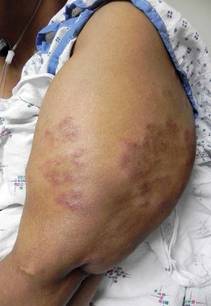
"Patients with sarcoidosis often have low levels of 25-hydroxyvitamin D, but elevated levels of 1,25-dihydroxyvitamin D3," Dr. Rosenbach said. "Inappropriate supplementation can lead to hypercalcemia."
For latent tuberculosis testing, he pointed out that the IFN-gamma release assay (IGRA) is thought to be more accurate than the TST. "IGRA significantly reduces false-positive results" in bacille Calmette-Guérin–vaccinated patients, said Dr. Rosenbach, who is also director of the cutaneous sarcoidosis clinic at the University of Pennsylvania. "Cost-benefit analyses suggest that IGRA [is] cost equivalent to TST, and the Centers for Disease Control and Prevention recommends that IGRA may be used in all circumstances in which the TST is currently used. However, both TST and IGRA have decreased responsiveness and lower sensitivity in patients with impaired immune systems."
In terms of the impact of sarcoidosis on the thyroid gland, a recent analysis of a large database in the United Kingdom found that hyper- and hypothyroidism were twice as common in patients with sarcoidosis, compared with a control population (Postgrad. Med. J. 2009;85:233-7).
A more recent study of 50 patients with cutaneous sarcoidosis conducted by Dr. Rosenbach and his colleagues found that 25% of patients had abnormal thyroid laboratory test results (J. Am. Acad. Dermatol. 2012;66:167-8).
The precise association between sarcoidosis and malignancy remains unclear, he said, but the best available studies suggest that the incidence of lymphoproliferative disorder may be increased in patients with sarcoidosis. Other granulomatous dermatitides may be associated with hematologic abnormalities. Authors of one review found that granulomatous dermatitides may be the first sign of underlying myelodysplastic syndrome (MDS), and recommended that clinicians consider looking for underlying MDS in patients with unexplained or atypical granulomatous skin eruptions (Arch. Dermatol. 2011;147:331-5).

A common stepwise approach for treating patients, Dr. Rosenbach said, begins with skin-directed therapies in the form of steroids or injections. The second step involves the use of antimalarials and tetracycline-class antibiotics; the third step involves methotrexate and/or prednisone, and the fourth step involves consideration for treatment with infliximab or adalimumab. "At this point, etanercept should probably not be used," Dr. Rosenbach said. "It appears to be less effective, and in a few reports has been associated with worsening of disease."
The data are strongest for infliximab, he said, at a recommended dosage of 5 mg/kg at 0, 2, and 6 weeks, and then with maintenance therapy every 6-8 weeks. Adalimumab appeared to work best at 40 mg every week, he said, "but the addition of low-dose methotrexate is sometimes necessary to either regimen."
Dr. Rosenbach disclosed that he was an investigator for a clinical trial sponsored by Centocor and Johnson & Johnson to investigate biologics for chronic/refractory sarcoidosis.
SAN DIEGO – While it’s well known that sarcoidosis commonly affects pulmonary function, it’s perhaps less known that the disorder can be detrimental to cardiac function in approximately 5% of cases.
"A common way that patients present with cardiac sarcoidosis is with sudden cardiac death," Dr. Misha Rosenbach said at the annual meeting of the American Academy of Dermatology. "This is a terrible way to present to your doctor with a problem."
A multisystem disorder of unknown cause, sarcoidosis commonly affects young and middle-aged adults and frequently presents with bilateral hilar lymphadenopathy, pulmonary infiltration, and ocular and skin lesions. Other organs may be involved. The diagnosis is established when clinicoradiologic findings are supported by histologic evidence of noncaseating epithelioid cell granulomas.
"Sarcoidosis is primarily a pulmonary disease, but patients can also present with profound systemic symptoms," said Dr. Rosenbach of the departments of dermatology and internal medicine at the University of Pennsylvania, Philadelphia. "When you’re evaluating a patient with cutaneous sarcoidosis, and making a diagnosis of granulomatous disease of the skin, and looking for extracutaneous involvement, it’s important to know what else can be affected."
Although pulmonary function is affected in more than 90% of cases, other commonly affected sites include the eyes (25%-50% of cases), lymph nodes (about 33% of cases), musculoskeletal system (25%-40% of cases), endocrine system (10%-25% of cases), and liver (20%-50% of cases). The initial evaluation should consist of history and physical exam; chest x-ray; pulmonary function tests (including carbon monoxide diffusing capacity); ophthalmologic examination; complete blood count and serum chemistries (including calcium); urinalysis; EKG (plus additional testing if there is a history of palpitations); tuberculin skin test (TST) or interferon (IFN)–gamma release assay; and thyroid and vitamin D testing.
"Patients with sarcoidosis often have low levels of 25-hydroxyvitamin D, but elevated levels of 1,25-dihydroxyvitamin D3," Dr. Rosenbach said. "Inappropriate supplementation can lead to hypercalcemia."
For latent tuberculosis testing, he pointed out that the IFN-gamma release assay (IGRA) is thought to be more accurate than the TST. "IGRA significantly reduces false-positive results" in bacille Calmette-Guérin–vaccinated patients, said Dr. Rosenbach, who is also director of the cutaneous sarcoidosis clinic at the University of Pennsylvania. "Cost-benefit analyses suggest that IGRA [is] cost equivalent to TST, and the Centers for Disease Control and Prevention recommends that IGRA may be used in all circumstances in which the TST is currently used. However, both TST and IGRA have decreased responsiveness and lower sensitivity in patients with impaired immune systems."
In terms of the impact of sarcoidosis on the thyroid gland, a recent analysis of a large database in the United Kingdom found that hyper- and hypothyroidism were twice as common in patients with sarcoidosis, compared with a control population (Postgrad. Med. J. 2009;85:233-7).
A more recent study of 50 patients with cutaneous sarcoidosis conducted by Dr. Rosenbach and his colleagues found that 25% of patients had abnormal thyroid laboratory test results (J. Am. Acad. Dermatol. 2012;66:167-8).
The precise association between sarcoidosis and malignancy remains unclear, he said, but the best available studies suggest that the incidence of lymphoproliferative disorder may be increased in patients with sarcoidosis. Other granulomatous dermatitides may be associated with hematologic abnormalities. Authors of one review found that granulomatous dermatitides may be the first sign of underlying myelodysplastic syndrome (MDS), and recommended that clinicians consider looking for underlying MDS in patients with unexplained or atypical granulomatous skin eruptions (Arch. Dermatol. 2011;147:331-5).
A common stepwise approach for treating patients, Dr. Rosenbach said, begins with skin-directed therapies in the form of steroids or injections. The second step involves the use of antimalarials and tetracycline-class antibiotics; the third step involves methotrexate and/or prednisone, and the fourth step involves consideration for treatment with infliximab or adalimumab. "At this point, etanercept should probably not be used," Dr. Rosenbach said. "It appears to be less effective, and in a few reports has been associated with worsening of disease."
The data are strongest for infliximab, he said, at a recommended dosage of 5 mg/kg at 0, 2, and 6 weeks, and then with maintenance therapy every 6-8 weeks. Adalimumab appeared to work best at 40 mg every week, he said, "but the addition of low-dose methotrexate is sometimes necessary to either regimen."
Dr. Rosenbach disclosed that he was an investigator for a clinical trial sponsored by Centocor and Johnson & Johnson to investigate biologics for chronic/refractory sarcoidosis.
SAN DIEGO – While it’s well known that sarcoidosis commonly affects pulmonary function, it’s perhaps less known that the disorder can be detrimental to cardiac function in approximately 5% of cases.
"A common way that patients present with cardiac sarcoidosis is with sudden cardiac death," Dr. Misha Rosenbach said at the annual meeting of the American Academy of Dermatology. "This is a terrible way to present to your doctor with a problem."
A multisystem disorder of unknown cause, sarcoidosis commonly affects young and middle-aged adults and frequently presents with bilateral hilar lymphadenopathy, pulmonary infiltration, and ocular and skin lesions. Other organs may be involved. The diagnosis is established when clinicoradiologic findings are supported by histologic evidence of noncaseating epithelioid cell granulomas.
"Sarcoidosis is primarily a pulmonary disease, but patients can also present with profound systemic symptoms," said Dr. Rosenbach of the departments of dermatology and internal medicine at the University of Pennsylvania, Philadelphia. "When you’re evaluating a patient with cutaneous sarcoidosis, and making a diagnosis of granulomatous disease of the skin, and looking for extracutaneous involvement, it’s important to know what else can be affected."
Although pulmonary function is affected in more than 90% of cases, other commonly affected sites include the eyes (25%-50% of cases), lymph nodes (about 33% of cases), musculoskeletal system (25%-40% of cases), endocrine system (10%-25% of cases), and liver (20%-50% of cases). The initial evaluation should consist of history and physical exam; chest x-ray; pulmonary function tests (including carbon monoxide diffusing capacity); ophthalmologic examination; complete blood count and serum chemistries (including calcium); urinalysis; EKG (plus additional testing if there is a history of palpitations); tuberculin skin test (TST) or interferon (IFN)–gamma release assay; and thyroid and vitamin D testing.
"Patients with sarcoidosis often have low levels of 25-hydroxyvitamin D, but elevated levels of 1,25-dihydroxyvitamin D3," Dr. Rosenbach said. "Inappropriate supplementation can lead to hypercalcemia."
For latent tuberculosis testing, he pointed out that the IFN-gamma release assay (IGRA) is thought to be more accurate than the TST. "IGRA significantly reduces false-positive results" in bacille Calmette-Guérin–vaccinated patients, said Dr. Rosenbach, who is also director of the cutaneous sarcoidosis clinic at the University of Pennsylvania. "Cost-benefit analyses suggest that IGRA [is] cost equivalent to TST, and the Centers for Disease Control and Prevention recommends that IGRA may be used in all circumstances in which the TST is currently used. However, both TST and IGRA have decreased responsiveness and lower sensitivity in patients with impaired immune systems."
In terms of the impact of sarcoidosis on the thyroid gland, a recent analysis of a large database in the United Kingdom found that hyper- and hypothyroidism were twice as common in patients with sarcoidosis, compared with a control population (Postgrad. Med. J. 2009;85:233-7).
A more recent study of 50 patients with cutaneous sarcoidosis conducted by Dr. Rosenbach and his colleagues found that 25% of patients had abnormal thyroid laboratory test results (J. Am. Acad. Dermatol. 2012;66:167-8).
The precise association between sarcoidosis and malignancy remains unclear, he said, but the best available studies suggest that the incidence of lymphoproliferative disorder may be increased in patients with sarcoidosis. Other granulomatous dermatitides may be associated with hematologic abnormalities. Authors of one review found that granulomatous dermatitides may be the first sign of underlying myelodysplastic syndrome (MDS), and recommended that clinicians consider looking for underlying MDS in patients with unexplained or atypical granulomatous skin eruptions (Arch. Dermatol. 2011;147:331-5).
A common stepwise approach for treating patients, Dr. Rosenbach said, begins with skin-directed therapies in the form of steroids or injections. The second step involves the use of antimalarials and tetracycline-class antibiotics; the third step involves methotrexate and/or prednisone, and the fourth step involves consideration for treatment with infliximab or adalimumab. "At this point, etanercept should probably not be used," Dr. Rosenbach said. "It appears to be less effective, and in a few reports has been associated with worsening of disease."
The data are strongest for infliximab, he said, at a recommended dosage of 5 mg/kg at 0, 2, and 6 weeks, and then with maintenance therapy every 6-8 weeks. Adalimumab appeared to work best at 40 mg every week, he said, "but the addition of low-dose methotrexate is sometimes necessary to either regimen."
Dr. Rosenbach disclosed that he was an investigator for a clinical trial sponsored by Centocor and Johnson & Johnson to investigate biologics for chronic/refractory sarcoidosis.
EXPERT ANALYSIS FROM THE ANNUAL MEETING OF THE AMERICAN ACADEMY OF DERMATOLOGY
Brodalumab, Ixekizumab Rapidly Improve Psoriasis
Two monoclonal antibodies targeting interleukin-17 proved effective and safe for moderate to severe plaque psoriasis, according to the results of two phase II clinical trials reported in the March 29 issue of the New England Journal of Medicine.
Both agents had a rapid onset of action and improved scores on the psoriasis area and severity (PASI) index, as well as on measures of dermatology-related quality of life and overall well-being, compared with placebo. Both agents also showed increasing efficacy at higher doses, indicating a dose-response effect, according to the industry-sponsored studies.
Brodalumab
In the first study, researchers assessed brodalumab (AMG 827), a human anti-interleukin-17RA monoclonal antibody that antagonizes the interleukin-17 pathway, in 198 patients at 23 international sites.

The study patients were randomly assigned to receive 70 mg, 140 mg, or 210 mg of brodalumab (at weeks 1, 2, 4, 6, 8, and 10), 280 mg of brodalumab monthly, or placebo injections. A subgroup of 20 patients also underwent skin biopsy at baseline and at week 12, reported Dr. Kim A. Papp of Probity Medical Research, Waterloo, Ont., and his associates.
The mean patient age was 43 years, and the mean duration of psoriasis was 19 years. Most patients had previously received topical and systemic treatments, including phototherapy, and 35% had previously received biologic therapy.
The primary efficacy outcome – percentage improvement in PASI score at week 12 – was significantly greater in every brodalumab group than in the placebo group. Mean improvements were 45% with 70 mg, 85.9% with 140 mg, 86.3% with 210 mg, and 76% with 280 mg, and 16% with placebo.
"Similarly, a significantly higher percentage of patients in the brodalumab groups than in the placebo group [was] assessed as being clear of psoriasis (score of 0 on the physician’s global assessment) or as having minimal disease (score of 1) at week 12," Dr. Papp and his colleagues wrote (N. Engl. J. Med. 2012;366:1181-9)
In addition, the extent of the affected body-surface area was significantly smaller with active treatment than with placebo. Scores on the Dermatology Life Quality Index (DLQI) were significantly lower in the brodalumab groups, indicating that psoriasis had less of an impact on health-related quality of life. And scores on both physical and mental components of the SF-36 were significantly higher, indicating improved well-being, with brodalumab.
Among study patients who underwent skin biopsy, keratin 16 staining of the upper epidermis was reduced, and epidermal thickness and CD3 counts were decreased, at all doses of brodalumab except 70 mg. "This finding indicates a reversal of regenerative epidermal maturation, which is the essential pathological characteristic of psoriasis that causes epidermal hyperplasia and abnormal differentiation, with scaling and thickness as the clinical correlates," Dr. Papp and his associates noted.
At 16-week follow-up, which was 6-8 weeks after the final dose of brodalumab, PASI scores showed a diminished drug effect but were still better than those at baseline.
There were three serious adverse events, only one of which was related to the study drug. This was an asymptomatic case of grade 3 neutropenia, which resolved when the study drug was discontinued. A less serious case of neutropenia developed in another patient.
Ixekizumab

The second study assessed ixekizumab (LY2439821), a humanized IgG4 monoclonal antibody that neutralizes interleukin-17, in 142 patients with moderate to severe plaque psoriasis. The study patients were randomly assigned to receive subcutaneous injections of placebo or 10 mg, 25 mg, 75 mg, or 150 mg of ixekizumab at baseline and at 2, 4, 8, 12, and 16 weeks, reported Dr. Craig Leonardi of the department of dermatology, St. Louis University, and his associates.
The primary efficacy end point was the proportion of patients who achieved at least a 75% improvement in PASI score at 12 weeks. Significantly more patients at all ixekizumab doses except 10 mg achieved this benchmark (76.7%-82.8%), compared with placebo (7.7%).
In addition, significantly more patients (approximately 40%) in the higher-dose groups achieved a 100% improvement in PASI scores, indicating complete clearance of psoriasis, than in the placebo group. And significantly more patients receiving active treatment received physician’s global assessment scores of 0, indicating complete clearance, or 1, indicating minimal disease.
As with brodalumab, the beneficial effect of ixekizumab was evident as early as 1 week into treatment. The drug also significantly improved DLQI scores and decreased the severity of itching, Dr. Leonardi and his colleagues reported (New Engl. J. Med. 2012;366:1190-9).
Of note, ixekizumab was significantly more effective than placebo in patients who had psoriasis in difficult to treat areas such as the scalp and nails.
There were no serious adverse events. Two patients developed grade 2 neutropenia. Two patients showed elevations in liver enzymes that subsided when the drug was discontinued.
Both groups of investigators said their findings demonstrate that interleukin-17 is an appropriate target for psoriasis treatment. They also noted that the phase-II studies were too small and too brief to assess these agents’ effects on the risk of infection and cardiovascular events, and noted that further, longer-term studies of safety and efficacy are needed.
Even though there were few adverse effects in these two clinical trials and few patients withdrew from the studies, "a 12-week follow-up period is too short to assess the safety of treatments targeting interleukin-17," said Ari Waisman, Ph.D., in remarks taken from his editorial accompanying the reports on brodalumab and ixekizumab (N. Engl. J. Med. 2012;366:1251-2).
Despite the patients’ marked improvements with both brodalumab and ixekizumab, "future trials involving larger numbers of patients treated and followed for a much longer period of time will be needed," Dr. Waisman of the Institute for Molecular Medicine at Johannes-Gutenberg University of Mainz (Germany) said.
Dr. Papp’s study was funded by Amgen; Dr. Papp and his associates reported ties to numerous industry sources. Dr. Leonardi’s study was funded by Eli Lilly; Dr. Leonardi reported ties to Abbott, Amgen, Celgene, Centocor, Eli Lilly, Pfizer, Galderma, Incyte, Maruho, Schering-Plough, Sirtris, Stiefel, Novartis, Novo Nordisk, Vascular Biogenics, and Wyeth. Dr. Waisman reported ties to Teva, Phenex, and GlaxoSmithKline.
Even though there were few adverse effects in these two clinical trials and few patients withdrew from the studies, "a 12-week follow-up period is too short to assess the safety of treatments targeting interleukin-17," said Dr. Ari Waisman.
Despite the patients’ marked improvements with both brodalumab and ixekizumab, "future trials involving larger numbers of patients treated and followed for a much longer period of time will be needed," he said.
Ari Waisman, Ph.D., is at the Institute for Molecular Medicine at Johannes-Gutenberg University of Mainz (Germany). He reported ties to Teva, Phenex, and GlaxoSmithKline. These remarks were taken from his editorial accompanying the reports on brodalumab and ixekizumab (N. Engl. J. Med. 2012;366:1251-2).
Even though there were few adverse effects in these two clinical trials and few patients withdrew from the studies, "a 12-week follow-up period is too short to assess the safety of treatments targeting interleukin-17," said Dr. Ari Waisman.
Despite the patients’ marked improvements with both brodalumab and ixekizumab, "future trials involving larger numbers of patients treated and followed for a much longer period of time will be needed," he said.
Ari Waisman, Ph.D., is at the Institute for Molecular Medicine at Johannes-Gutenberg University of Mainz (Germany). He reported ties to Teva, Phenex, and GlaxoSmithKline. These remarks were taken from his editorial accompanying the reports on brodalumab and ixekizumab (N. Engl. J. Med. 2012;366:1251-2).
Even though there were few adverse effects in these two clinical trials and few patients withdrew from the studies, "a 12-week follow-up period is too short to assess the safety of treatments targeting interleukin-17," said Dr. Ari Waisman.
Despite the patients’ marked improvements with both brodalumab and ixekizumab, "future trials involving larger numbers of patients treated and followed for a much longer period of time will be needed," he said.
Ari Waisman, Ph.D., is at the Institute for Molecular Medicine at Johannes-Gutenberg University of Mainz (Germany). He reported ties to Teva, Phenex, and GlaxoSmithKline. These remarks were taken from his editorial accompanying the reports on brodalumab and ixekizumab (N. Engl. J. Med. 2012;366:1251-2).
Two monoclonal antibodies targeting interleukin-17 proved effective and safe for moderate to severe plaque psoriasis, according to the results of two phase II clinical trials reported in the March 29 issue of the New England Journal of Medicine.
Both agents had a rapid onset of action and improved scores on the psoriasis area and severity (PASI) index, as well as on measures of dermatology-related quality of life and overall well-being, compared with placebo. Both agents also showed increasing efficacy at higher doses, indicating a dose-response effect, according to the industry-sponsored studies.
Brodalumab
In the first study, researchers assessed brodalumab (AMG 827), a human anti-interleukin-17RA monoclonal antibody that antagonizes the interleukin-17 pathway, in 198 patients at 23 international sites.
The study patients were randomly assigned to receive 70 mg, 140 mg, or 210 mg of brodalumab (at weeks 1, 2, 4, 6, 8, and 10), 280 mg of brodalumab monthly, or placebo injections. A subgroup of 20 patients also underwent skin biopsy at baseline and at week 12, reported Dr. Kim A. Papp of Probity Medical Research, Waterloo, Ont., and his associates.
The mean patient age was 43 years, and the mean duration of psoriasis was 19 years. Most patients had previously received topical and systemic treatments, including phototherapy, and 35% had previously received biologic therapy.
The primary efficacy outcome – percentage improvement in PASI score at week 12 – was significantly greater in every brodalumab group than in the placebo group. Mean improvements were 45% with 70 mg, 85.9% with 140 mg, 86.3% with 210 mg, and 76% with 280 mg, and 16% with placebo.
"Similarly, a significantly higher percentage of patients in the brodalumab groups than in the placebo group [was] assessed as being clear of psoriasis (score of 0 on the physician’s global assessment) or as having minimal disease (score of 1) at week 12," Dr. Papp and his colleagues wrote (N. Engl. J. Med. 2012;366:1181-9)
In addition, the extent of the affected body-surface area was significantly smaller with active treatment than with placebo. Scores on the Dermatology Life Quality Index (DLQI) were significantly lower in the brodalumab groups, indicating that psoriasis had less of an impact on health-related quality of life. And scores on both physical and mental components of the SF-36 were significantly higher, indicating improved well-being, with brodalumab.
Among study patients who underwent skin biopsy, keratin 16 staining of the upper epidermis was reduced, and epidermal thickness and CD3 counts were decreased, at all doses of brodalumab except 70 mg. "This finding indicates a reversal of regenerative epidermal maturation, which is the essential pathological characteristic of psoriasis that causes epidermal hyperplasia and abnormal differentiation, with scaling and thickness as the clinical correlates," Dr. Papp and his associates noted.
At 16-week follow-up, which was 6-8 weeks after the final dose of brodalumab, PASI scores showed a diminished drug effect but were still better than those at baseline.
There were three serious adverse events, only one of which was related to the study drug. This was an asymptomatic case of grade 3 neutropenia, which resolved when the study drug was discontinued. A less serious case of neutropenia developed in another patient.
Ixekizumab
The second study assessed ixekizumab (LY2439821), a humanized IgG4 monoclonal antibody that neutralizes interleukin-17, in 142 patients with moderate to severe plaque psoriasis. The study patients were randomly assigned to receive subcutaneous injections of placebo or 10 mg, 25 mg, 75 mg, or 150 mg of ixekizumab at baseline and at 2, 4, 8, 12, and 16 weeks, reported Dr. Craig Leonardi of the department of dermatology, St. Louis University, and his associates.
The primary efficacy end point was the proportion of patients who achieved at least a 75% improvement in PASI score at 12 weeks. Significantly more patients at all ixekizumab doses except 10 mg achieved this benchmark (76.7%-82.8%), compared with placebo (7.7%).
In addition, significantly more patients (approximately 40%) in the higher-dose groups achieved a 100% improvement in PASI scores, indicating complete clearance of psoriasis, than in the placebo group. And significantly more patients receiving active treatment received physician’s global assessment scores of 0, indicating complete clearance, or 1, indicating minimal disease.
As with brodalumab, the beneficial effect of ixekizumab was evident as early as 1 week into treatment. The drug also significantly improved DLQI scores and decreased the severity of itching, Dr. Leonardi and his colleagues reported (New Engl. J. Med. 2012;366:1190-9).
Of note, ixekizumab was significantly more effective than placebo in patients who had psoriasis in difficult to treat areas such as the scalp and nails.
There were no serious adverse events. Two patients developed grade 2 neutropenia. Two patients showed elevations in liver enzymes that subsided when the drug was discontinued.
Both groups of investigators said their findings demonstrate that interleukin-17 is an appropriate target for psoriasis treatment. They also noted that the phase-II studies were too small and too brief to assess these agents’ effects on the risk of infection and cardiovascular events, and noted that further, longer-term studies of safety and efficacy are needed.
Even though there were few adverse effects in these two clinical trials and few patients withdrew from the studies, "a 12-week follow-up period is too short to assess the safety of treatments targeting interleukin-17," said Ari Waisman, Ph.D., in remarks taken from his editorial accompanying the reports on brodalumab and ixekizumab (N. Engl. J. Med. 2012;366:1251-2).
Despite the patients’ marked improvements with both brodalumab and ixekizumab, "future trials involving larger numbers of patients treated and followed for a much longer period of time will be needed," Dr. Waisman of the Institute for Molecular Medicine at Johannes-Gutenberg University of Mainz (Germany) said.
Dr. Papp’s study was funded by Amgen; Dr. Papp and his associates reported ties to numerous industry sources. Dr. Leonardi’s study was funded by Eli Lilly; Dr. Leonardi reported ties to Abbott, Amgen, Celgene, Centocor, Eli Lilly, Pfizer, Galderma, Incyte, Maruho, Schering-Plough, Sirtris, Stiefel, Novartis, Novo Nordisk, Vascular Biogenics, and Wyeth. Dr. Waisman reported ties to Teva, Phenex, and GlaxoSmithKline.
Two monoclonal antibodies targeting interleukin-17 proved effective and safe for moderate to severe plaque psoriasis, according to the results of two phase II clinical trials reported in the March 29 issue of the New England Journal of Medicine.
Both agents had a rapid onset of action and improved scores on the psoriasis area and severity (PASI) index, as well as on measures of dermatology-related quality of life and overall well-being, compared with placebo. Both agents also showed increasing efficacy at higher doses, indicating a dose-response effect, according to the industry-sponsored studies.
Brodalumab
In the first study, researchers assessed brodalumab (AMG 827), a human anti-interleukin-17RA monoclonal antibody that antagonizes the interleukin-17 pathway, in 198 patients at 23 international sites.
The study patients were randomly assigned to receive 70 mg, 140 mg, or 210 mg of brodalumab (at weeks 1, 2, 4, 6, 8, and 10), 280 mg of brodalumab monthly, or placebo injections. A subgroup of 20 patients also underwent skin biopsy at baseline and at week 12, reported Dr. Kim A. Papp of Probity Medical Research, Waterloo, Ont., and his associates.
The mean patient age was 43 years, and the mean duration of psoriasis was 19 years. Most patients had previously received topical and systemic treatments, including phototherapy, and 35% had previously received biologic therapy.
The primary efficacy outcome – percentage improvement in PASI score at week 12 – was significantly greater in every brodalumab group than in the placebo group. Mean improvements were 45% with 70 mg, 85.9% with 140 mg, 86.3% with 210 mg, and 76% with 280 mg, and 16% with placebo.
"Similarly, a significantly higher percentage of patients in the brodalumab groups than in the placebo group [was] assessed as being clear of psoriasis (score of 0 on the physician’s global assessment) or as having minimal disease (score of 1) at week 12," Dr. Papp and his colleagues wrote (N. Engl. J. Med. 2012;366:1181-9)
In addition, the extent of the affected body-surface area was significantly smaller with active treatment than with placebo. Scores on the Dermatology Life Quality Index (DLQI) were significantly lower in the brodalumab groups, indicating that psoriasis had less of an impact on health-related quality of life. And scores on both physical and mental components of the SF-36 were significantly higher, indicating improved well-being, with brodalumab.
Among study patients who underwent skin biopsy, keratin 16 staining of the upper epidermis was reduced, and epidermal thickness and CD3 counts were decreased, at all doses of brodalumab except 70 mg. "This finding indicates a reversal of regenerative epidermal maturation, which is the essential pathological characteristic of psoriasis that causes epidermal hyperplasia and abnormal differentiation, with scaling and thickness as the clinical correlates," Dr. Papp and his associates noted.
At 16-week follow-up, which was 6-8 weeks after the final dose of brodalumab, PASI scores showed a diminished drug effect but were still better than those at baseline.
There were three serious adverse events, only one of which was related to the study drug. This was an asymptomatic case of grade 3 neutropenia, which resolved when the study drug was discontinued. A less serious case of neutropenia developed in another patient.
Ixekizumab
The second study assessed ixekizumab (LY2439821), a humanized IgG4 monoclonal antibody that neutralizes interleukin-17, in 142 patients with moderate to severe plaque psoriasis. The study patients were randomly assigned to receive subcutaneous injections of placebo or 10 mg, 25 mg, 75 mg, or 150 mg of ixekizumab at baseline and at 2, 4, 8, 12, and 16 weeks, reported Dr. Craig Leonardi of the department of dermatology, St. Louis University, and his associates.
The primary efficacy end point was the proportion of patients who achieved at least a 75% improvement in PASI score at 12 weeks. Significantly more patients at all ixekizumab doses except 10 mg achieved this benchmark (76.7%-82.8%), compared with placebo (7.7%).
In addition, significantly more patients (approximately 40%) in the higher-dose groups achieved a 100% improvement in PASI scores, indicating complete clearance of psoriasis, than in the placebo group. And significantly more patients receiving active treatment received physician’s global assessment scores of 0, indicating complete clearance, or 1, indicating minimal disease.
As with brodalumab, the beneficial effect of ixekizumab was evident as early as 1 week into treatment. The drug also significantly improved DLQI scores and decreased the severity of itching, Dr. Leonardi and his colleagues reported (New Engl. J. Med. 2012;366:1190-9).
Of note, ixekizumab was significantly more effective than placebo in patients who had psoriasis in difficult to treat areas such as the scalp and nails.
There were no serious adverse events. Two patients developed grade 2 neutropenia. Two patients showed elevations in liver enzymes that subsided when the drug was discontinued.
Both groups of investigators said their findings demonstrate that interleukin-17 is an appropriate target for psoriasis treatment. They also noted that the phase-II studies were too small and too brief to assess these agents’ effects on the risk of infection and cardiovascular events, and noted that further, longer-term studies of safety and efficacy are needed.
Even though there were few adverse effects in these two clinical trials and few patients withdrew from the studies, "a 12-week follow-up period is too short to assess the safety of treatments targeting interleukin-17," said Ari Waisman, Ph.D., in remarks taken from his editorial accompanying the reports on brodalumab and ixekizumab (N. Engl. J. Med. 2012;366:1251-2).
Despite the patients’ marked improvements with both brodalumab and ixekizumab, "future trials involving larger numbers of patients treated and followed for a much longer period of time will be needed," Dr. Waisman of the Institute for Molecular Medicine at Johannes-Gutenberg University of Mainz (Germany) said.
Dr. Papp’s study was funded by Amgen; Dr. Papp and his associates reported ties to numerous industry sources. Dr. Leonardi’s study was funded by Eli Lilly; Dr. Leonardi reported ties to Abbott, Amgen, Celgene, Centocor, Eli Lilly, Pfizer, Galderma, Incyte, Maruho, Schering-Plough, Sirtris, Stiefel, Novartis, Novo Nordisk, Vascular Biogenics, and Wyeth. Dr. Waisman reported ties to Teva, Phenex, and GlaxoSmithKline.
FROM THE NEW ENGLAND JOURNAL OF MEDICINE
Major Finding: Mean improvements in PASI scores, with brodalumab were 45% with 70 mg, 86% with 140 mg, 86% with 210 mg, and 76% with 280 mg. Those given placebo had a 16% mean improvement in PASI.
Data Source: The brodalumab data were taken from a 12-week phase II randomized trial with 198 subjects.
Disclosures: Dr. Papp’s study was funded by Amgen; Dr. Papp and his associates reported ties to numerous industry sources. Dr. Leonardi’s study was funded by Eli Lilly; Dr. Leonardi reported ties to Abbott, Amgen, Celgene, Centocor, Eli Lilly, Pfizer, Galderma, Incyte, Maruho, Schering-Plough, Sirtris, Stiefel, Novartis, Novo Nordisk, Vascular Biogenics, and Wyeth.
Investigational Psoriasis Drug Reduces Vessel Inflammation
SAN DIEGO – An investigational first-in-class drug not only improved plaque psoriasis but reduced atherosclerotic inflammation in major vessels, a study has shown.
At 12 weeks there was a dose-related response in inflammation in the most-diseased vessels. Those in the placebo group had a 4% decrease in the target-to-baseline ratio (a validated PET/CT measure of changes in vessel inflammation), while those on 20 mg and 80 mg of VB-201 had decreases of 7% and 13%.

"As we look at our patients with psoriasis, where cardiovascular risk factors are a huge public health problem, this type of approach may have multiple benefits for them," said Dr. Alexa B. Kimball, who presented the results at the annual meeting of the American Academy of Dermatology.
The results come from a phase II trial of 184 patients with moderate to severe plaque psoriasis and a PET/CT substudy of 47 patients with cardiovascular risk factors. The patients in the double-blind, randomized, placebo-controlled study received either 20 or 80 mg of VB-201 or placebo once daily for 12 weeks.
VB-201, a phospholipid analogue, is being developed by VBL Therapeutics as an oral disease-modifying agent for chronic immunoinflammatory disease and atherosclerosis inflammation, and is the first in the lecinoxoid molecular class.
The compound’s novel mechanism of action for the control and attenuation of chronic immunoinflammatory diseases is thought to be through the highly selective modulation of components of the innate immune system. The drug is proposed to work by inhibiting cell-surface toll-like receptor signal cascade. "It’s mimicking some of the native molecules, but this turns out to be specific to antigen-presenting cells, endothelial cells, and monocytes," said Dr. Kimball. Thus, chemokine-mediated migration of monocytes to inflamed tissue is limited.
In the subanalysis, patients had to have a target-to-baseline ratio on PET/CT scan that was greater than 1.6 in order to be eligible.
PET/CT was used to evaluate inflammation in the vessels over time. The primary endpoint in this substudy included the mean of the maximum values of the target-to-baseline ratio in the most-diseased segment of vessel. The secondary endpoint involved looking at all of the inflammation in the vessels to determine a mean value for the vessels in a given patient; these mean values were then used to calculate an overall mean value of inflammation.
"One of the challenges in cardiovascular studies looking at atherosclerotic disease is that the endpoint that you’re most interested in is actually myocardial infarction, typically," said Dr. Kimball. "This form of PET/CT has been shown to be a pretty sensitive measure for inflammation in these vessels and is being used in investigational settings to be a surrogate marker for risk."
In addition, the technique correlates well with histopathologic inflammation and with cardiovascular risk factors. "It also seems to be predictive of future clinical vascular events," she said. High-fluorine-18fluorodeoxyglucose uptake appears to correlate with future vascular events.
"We did enhance the substudy with patients with additional cardiovascular risk factors to make sure that we had a population at risk where we actually could see inflammation to begin with," she said.
In the substudy, 13 patients were on placebo, 18 were on 20 mg VB-201, and 16 were taking 80 mg VB-201. These patients were a little older and had such risk factors as vascular disease dyslipidemia, diabetes, and obesity. Many were on statins.
At 12 weeks, there was a dose-related response in inflammation in the most-diseased vessel. Those in the placebo group had a 4% decrease in target-to-baseline ratio, while those on 20 mg and 80 mg of VB-201 had decreases of 7% and 13%.
"To put that into context with high-dose statin therapy, we would typically see these types of responses in the 7%-10% reduction range usually over 6 months rather than just 3 months," said Dr. Kimball of the dermatology department at Massachusetts General Hospital in Boston.
In the main study, the researchers looked at the effects of the drug on plaque psoriasis, compared with placebo. The primary endpoint was a Psoriasis Area and Severity Index (PASI) score of 75.
The 184 patients were randomized to receive 20 mg VB-201 (66), 80 mg VB-201 (59), or placebo (59). The study cohort was primarily composed of overweight men (BMI approximately 30 kg/m2) with an average age of 45 years. Overall, the group had a baseline PASI score close to 20.
Statistically significant improvements were achieved on the Physician Global Assessment and Patient Global Assessment. In terms of PASI 75, "there was a dose response as well," said Dr. Kimball. "This is not a drug that is achieving high levels of PASI 90 or PASI 100 ... but there is some benefit."
"This drug is moving people from substantial severity to reduced severity ... It may not be a drug that clears psoriasis to zero, but you can move patients out of the severe category," she said.
"VBL-201 is thought to be – at least in these initial studies – quite well tolerated. ... The study met its primary endpoint in the PET-CT substudy, demonstrating a statistically significant reduction in vascular inflammation," Dr. Kimball noted. "Importantly, these reductions occurred also in patients who were on statin therapy."
There were no treatment-related serious adverse events; the overall rates of adverse events were similar for both doses of VB-201 drug and placebo.
The study was funded by VBL Pharmaceuticals. Dr. Kimball is a consultant for VBL and several other pharmaceutical companies.
SAN DIEGO – An investigational first-in-class drug not only improved plaque psoriasis but reduced atherosclerotic inflammation in major vessels, a study has shown.
At 12 weeks there was a dose-related response in inflammation in the most-diseased vessels. Those in the placebo group had a 4% decrease in the target-to-baseline ratio (a validated PET/CT measure of changes in vessel inflammation), while those on 20 mg and 80 mg of VB-201 had decreases of 7% and 13%.
"As we look at our patients with psoriasis, where cardiovascular risk factors are a huge public health problem, this type of approach may have multiple benefits for them," said Dr. Alexa B. Kimball, who presented the results at the annual meeting of the American Academy of Dermatology.
The results come from a phase II trial of 184 patients with moderate to severe plaque psoriasis and a PET/CT substudy of 47 patients with cardiovascular risk factors. The patients in the double-blind, randomized, placebo-controlled study received either 20 or 80 mg of VB-201 or placebo once daily for 12 weeks.
VB-201, a phospholipid analogue, is being developed by VBL Therapeutics as an oral disease-modifying agent for chronic immunoinflammatory disease and atherosclerosis inflammation, and is the first in the lecinoxoid molecular class.
The compound’s novel mechanism of action for the control and attenuation of chronic immunoinflammatory diseases is thought to be through the highly selective modulation of components of the innate immune system. The drug is proposed to work by inhibiting cell-surface toll-like receptor signal cascade. "It’s mimicking some of the native molecules, but this turns out to be specific to antigen-presenting cells, endothelial cells, and monocytes," said Dr. Kimball. Thus, chemokine-mediated migration of monocytes to inflamed tissue is limited.
In the subanalysis, patients had to have a target-to-baseline ratio on PET/CT scan that was greater than 1.6 in order to be eligible.
PET/CT was used to evaluate inflammation in the vessels over time. The primary endpoint in this substudy included the mean of the maximum values of the target-to-baseline ratio in the most-diseased segment of vessel. The secondary endpoint involved looking at all of the inflammation in the vessels to determine a mean value for the vessels in a given patient; these mean values were then used to calculate an overall mean value of inflammation.
"One of the challenges in cardiovascular studies looking at atherosclerotic disease is that the endpoint that you’re most interested in is actually myocardial infarction, typically," said Dr. Kimball. "This form of PET/CT has been shown to be a pretty sensitive measure for inflammation in these vessels and is being used in investigational settings to be a surrogate marker for risk."
In addition, the technique correlates well with histopathologic inflammation and with cardiovascular risk factors. "It also seems to be predictive of future clinical vascular events," she said. High-fluorine-18fluorodeoxyglucose uptake appears to correlate with future vascular events.
"We did enhance the substudy with patients with additional cardiovascular risk factors to make sure that we had a population at risk where we actually could see inflammation to begin with," she said.
In the substudy, 13 patients were on placebo, 18 were on 20 mg VB-201, and 16 were taking 80 mg VB-201. These patients were a little older and had such risk factors as vascular disease dyslipidemia, diabetes, and obesity. Many were on statins.
At 12 weeks, there was a dose-related response in inflammation in the most-diseased vessel. Those in the placebo group had a 4% decrease in target-to-baseline ratio, while those on 20 mg and 80 mg of VB-201 had decreases of 7% and 13%.
"To put that into context with high-dose statin therapy, we would typically see these types of responses in the 7%-10% reduction range usually over 6 months rather than just 3 months," said Dr. Kimball of the dermatology department at Massachusetts General Hospital in Boston.
In the main study, the researchers looked at the effects of the drug on plaque psoriasis, compared with placebo. The primary endpoint was a Psoriasis Area and Severity Index (PASI) score of 75.
The 184 patients were randomized to receive 20 mg VB-201 (66), 80 mg VB-201 (59), or placebo (59). The study cohort was primarily composed of overweight men (BMI approximately 30 kg/m2) with an average age of 45 years. Overall, the group had a baseline PASI score close to 20.
Statistically significant improvements were achieved on the Physician Global Assessment and Patient Global Assessment. In terms of PASI 75, "there was a dose response as well," said Dr. Kimball. "This is not a drug that is achieving high levels of PASI 90 or PASI 100 ... but there is some benefit."
"This drug is moving people from substantial severity to reduced severity ... It may not be a drug that clears psoriasis to zero, but you can move patients out of the severe category," she said.
"VBL-201 is thought to be – at least in these initial studies – quite well tolerated. ... The study met its primary endpoint in the PET-CT substudy, demonstrating a statistically significant reduction in vascular inflammation," Dr. Kimball noted. "Importantly, these reductions occurred also in patients who were on statin therapy."
There were no treatment-related serious adverse events; the overall rates of adverse events were similar for both doses of VB-201 drug and placebo.
The study was funded by VBL Pharmaceuticals. Dr. Kimball is a consultant for VBL and several other pharmaceutical companies.
SAN DIEGO – An investigational first-in-class drug not only improved plaque psoriasis but reduced atherosclerotic inflammation in major vessels, a study has shown.
At 12 weeks there was a dose-related response in inflammation in the most-diseased vessels. Those in the placebo group had a 4% decrease in the target-to-baseline ratio (a validated PET/CT measure of changes in vessel inflammation), while those on 20 mg and 80 mg of VB-201 had decreases of 7% and 13%.
"As we look at our patients with psoriasis, where cardiovascular risk factors are a huge public health problem, this type of approach may have multiple benefits for them," said Dr. Alexa B. Kimball, who presented the results at the annual meeting of the American Academy of Dermatology.
The results come from a phase II trial of 184 patients with moderate to severe plaque psoriasis and a PET/CT substudy of 47 patients with cardiovascular risk factors. The patients in the double-blind, randomized, placebo-controlled study received either 20 or 80 mg of VB-201 or placebo once daily for 12 weeks.
VB-201, a phospholipid analogue, is being developed by VBL Therapeutics as an oral disease-modifying agent for chronic immunoinflammatory disease and atherosclerosis inflammation, and is the first in the lecinoxoid molecular class.
The compound’s novel mechanism of action for the control and attenuation of chronic immunoinflammatory diseases is thought to be through the highly selective modulation of components of the innate immune system. The drug is proposed to work by inhibiting cell-surface toll-like receptor signal cascade. "It’s mimicking some of the native molecules, but this turns out to be specific to antigen-presenting cells, endothelial cells, and monocytes," said Dr. Kimball. Thus, chemokine-mediated migration of monocytes to inflamed tissue is limited.
In the subanalysis, patients had to have a target-to-baseline ratio on PET/CT scan that was greater than 1.6 in order to be eligible.
PET/CT was used to evaluate inflammation in the vessels over time. The primary endpoint in this substudy included the mean of the maximum values of the target-to-baseline ratio in the most-diseased segment of vessel. The secondary endpoint involved looking at all of the inflammation in the vessels to determine a mean value for the vessels in a given patient; these mean values were then used to calculate an overall mean value of inflammation.
"One of the challenges in cardiovascular studies looking at atherosclerotic disease is that the endpoint that you’re most interested in is actually myocardial infarction, typically," said Dr. Kimball. "This form of PET/CT has been shown to be a pretty sensitive measure for inflammation in these vessels and is being used in investigational settings to be a surrogate marker for risk."
In addition, the technique correlates well with histopathologic inflammation and with cardiovascular risk factors. "It also seems to be predictive of future clinical vascular events," she said. High-fluorine-18fluorodeoxyglucose uptake appears to correlate with future vascular events.
"We did enhance the substudy with patients with additional cardiovascular risk factors to make sure that we had a population at risk where we actually could see inflammation to begin with," she said.
In the substudy, 13 patients were on placebo, 18 were on 20 mg VB-201, and 16 were taking 80 mg VB-201. These patients were a little older and had such risk factors as vascular disease dyslipidemia, diabetes, and obesity. Many were on statins.
At 12 weeks, there was a dose-related response in inflammation in the most-diseased vessel. Those in the placebo group had a 4% decrease in target-to-baseline ratio, while those on 20 mg and 80 mg of VB-201 had decreases of 7% and 13%.
"To put that into context with high-dose statin therapy, we would typically see these types of responses in the 7%-10% reduction range usually over 6 months rather than just 3 months," said Dr. Kimball of the dermatology department at Massachusetts General Hospital in Boston.
In the main study, the researchers looked at the effects of the drug on plaque psoriasis, compared with placebo. The primary endpoint was a Psoriasis Area and Severity Index (PASI) score of 75.
The 184 patients were randomized to receive 20 mg VB-201 (66), 80 mg VB-201 (59), or placebo (59). The study cohort was primarily composed of overweight men (BMI approximately 30 kg/m2) with an average age of 45 years. Overall, the group had a baseline PASI score close to 20.
Statistically significant improvements were achieved on the Physician Global Assessment and Patient Global Assessment. In terms of PASI 75, "there was a dose response as well," said Dr. Kimball. "This is not a drug that is achieving high levels of PASI 90 or PASI 100 ... but there is some benefit."
"This drug is moving people from substantial severity to reduced severity ... It may not be a drug that clears psoriasis to zero, but you can move patients out of the severe category," she said.
"VBL-201 is thought to be – at least in these initial studies – quite well tolerated. ... The study met its primary endpoint in the PET-CT substudy, demonstrating a statistically significant reduction in vascular inflammation," Dr. Kimball noted. "Importantly, these reductions occurred also in patients who were on statin therapy."
There were no treatment-related serious adverse events; the overall rates of adverse events were similar for both doses of VB-201 drug and placebo.
The study was funded by VBL Pharmaceuticals. Dr. Kimball is a consultant for VBL and several other pharmaceutical companies.
FROM THE ANNUAL MEETING OF THE AMERICAN ACADEMY OF DERMATOLOGY
Major Finding: At 12 weeks there was a dose-related response in inflammation in the most-diseased vessels of patients with plaque psoriasis and cardiovascular risk factors: Those in the placebo group had a 4% decrease, while those on 20 mg and 80 mg of VB-201 had decreases of 7% and 13%.
Data Source: The phase II, double-blind, randomized placebo-controlled study enrolled 184 patients with moderate to severe psoriasis; a PET/CT substudy was done of 47 patients with cardiovascular risk factors.
Disclosures: The study was funded by VBL Pharmaceuticals. Dr. Kimball is a consultant for VBL and several other pharmaceutical companies.
NETosis May Provide Novel Target in SLE
SNOWMASS, COLO. – Neutrophil extracellular traps are a recently identified component of innate immunity shaping up as a potential driving force in systemic lupus erythematosus and small-vessel vasculitis associated with antineutrophil cytoplasmic antibodies.
Many key questions about neutrophil extracellular traps (NETs) remain to be answered in the next few years. The most clinically relevant include these: Can suppression of abnormal NET formation improve systemic lupus erythematosus (SLE) or small-vessel vasculitis? And can NET activity – that is, the NETosis level – serve as a biomarker for disease activity in patients with these disabling autoimmune disorders?
NETosis is the process by which activated neutrophils undergo a unique, nonapoptotic form of cell death. Intracellular chromatin unwinds, the nuclear membrane disintegrates, and the plasma membrane opens. This allows extrusion of large, net-like strands comprised of chromatin fibers, antimicrobial proteins, elastase, myeloperoxidase, and defensins. These cast nets are capable of rapidly trapping a broad range of microbes. But microbes aren’t the only entities that can trigger NETosis; interferon alpha and tumor necrosis factor can activate netting neutrophils as well, Dr. Mary Beth Humphrey explained at the symposium.
It had long been recognized that neutrophils figure in the pathogenesis of SLE, but their precise role has remained unknown until quite recently. Then last year, separate groups of investigators reported that netting neutrophils activate the immune system in both adult and pediatric SLE.
"Our results support a model that positions this unique type of neutrophil death linked with plasmacytoid dendritic cell activation and type I interferon production at the core of SLE pathogenesis," said Dr. Gina S. Carcia-Romo and associates at the Baylor Institute for Immunology Research, Dallas (Sci. Transl. Med. 2011;3:73ra20).
Separately, investigators at Houston’s M.D. Anderson Cancer Center showed that a large percentage of SLE patients have high titer antibodies against NET proteins, including the antimicrobial protein LL37 and human neutrophil peptides. This results in formation of highly stable immunogenic complexes composed of these proteins plus self-DNA. In vitro, these immune complexes activate dendritic cells, causing release of large quantities of interferon alpha, which is part of the lupus signature in both adult and pediatric SLE. In contrast, neither healthy controls nor patients with scleroderma make antibodies against NETs (Sci. Transl.Med. 2011;3:73ra19).
The current thinking is that NETosis, under the wrong circumstances, results in the creation of stable self-DNA/antibody complexes that are recognized by B cells and shown to toll-like receptor 9, leading to formation of autoantibodies. The emerging picture is one of a vicious cycle of chronic autoimmunity. But there aren’t yet enough data to say which comes first in lupus: abnormal NETosis leading to excessive presentation of chromatin and nuclear antigens, or autoantigens triggering overexuberant NETosis.
"The innate immune scientist in me would like to believe that it’s the abnormal netting that starts the process in the right genetic background," confessed Dr. Humphrey of the University of Oklahoma at Oklahoma City.
Putting lupus aside, Dr. Humphrey noted that an international team of investigators from the University of California, San Francisco, and multiple German universities have reported that NETosis appears to trigger vasculitis and promotes the autoimmune response in patients with small-vessel vasculitis. They showed that ANCAs trigger NETosis, and the nets that are subsequently cast contain the autoantigens proteinase-3 and myeloperoxidase, which figure prominently in Wegener’s granulomatosis and microscopic polyangiitis, respectively.
Also, they demonstrated that NETs are deposited in the inflamed kidneys of individuals with small-vessel vasculitis. And they also offered the tantalizing observation that another autoinflammatory condition – psoriasis – can be driven by activated plasmacytoid dendritic cells in the presence of LL37, which, as it turns out, is highly expressed in the skin of psoriasis patients (Nat. Med. 2009;15:623-5).
How might NET formation be suppressed to the benefit of patients with SLE or vasculitis? NETosis is a process driven by reactive oxygen species. Potential strategies include administering reactive oxygen scavengers and blocking nicotinamide adenine dinucleotide phosphate oxidase, according to Dr. Humphrey.
She reported having no financial conflicts.
SNOWMASS, COLO. – Neutrophil extracellular traps are a recently identified component of innate immunity shaping up as a potential driving force in systemic lupus erythematosus and small-vessel vasculitis associated with antineutrophil cytoplasmic antibodies.
Many key questions about neutrophil extracellular traps (NETs) remain to be answered in the next few years. The most clinically relevant include these: Can suppression of abnormal NET formation improve systemic lupus erythematosus (SLE) or small-vessel vasculitis? And can NET activity – that is, the NETosis level – serve as a biomarker for disease activity in patients with these disabling autoimmune disorders?
NETosis is the process by which activated neutrophils undergo a unique, nonapoptotic form of cell death. Intracellular chromatin unwinds, the nuclear membrane disintegrates, and the plasma membrane opens. This allows extrusion of large, net-like strands comprised of chromatin fibers, antimicrobial proteins, elastase, myeloperoxidase, and defensins. These cast nets are capable of rapidly trapping a broad range of microbes. But microbes aren’t the only entities that can trigger NETosis; interferon alpha and tumor necrosis factor can activate netting neutrophils as well, Dr. Mary Beth Humphrey explained at the symposium.
It had long been recognized that neutrophils figure in the pathogenesis of SLE, but their precise role has remained unknown until quite recently. Then last year, separate groups of investigators reported that netting neutrophils activate the immune system in both adult and pediatric SLE.
"Our results support a model that positions this unique type of neutrophil death linked with plasmacytoid dendritic cell activation and type I interferon production at the core of SLE pathogenesis," said Dr. Gina S. Carcia-Romo and associates at the Baylor Institute for Immunology Research, Dallas (Sci. Transl. Med. 2011;3:73ra20).
Separately, investigators at Houston’s M.D. Anderson Cancer Center showed that a large percentage of SLE patients have high titer antibodies against NET proteins, including the antimicrobial protein LL37 and human neutrophil peptides. This results in formation of highly stable immunogenic complexes composed of these proteins plus self-DNA. In vitro, these immune complexes activate dendritic cells, causing release of large quantities of interferon alpha, which is part of the lupus signature in both adult and pediatric SLE. In contrast, neither healthy controls nor patients with scleroderma make antibodies against NETs (Sci. Transl.Med. 2011;3:73ra19).
The current thinking is that NETosis, under the wrong circumstances, results in the creation of stable self-DNA/antibody complexes that are recognized by B cells and shown to toll-like receptor 9, leading to formation of autoantibodies. The emerging picture is one of a vicious cycle of chronic autoimmunity. But there aren’t yet enough data to say which comes first in lupus: abnormal NETosis leading to excessive presentation of chromatin and nuclear antigens, or autoantigens triggering overexuberant NETosis.
"The innate immune scientist in me would like to believe that it’s the abnormal netting that starts the process in the right genetic background," confessed Dr. Humphrey of the University of Oklahoma at Oklahoma City.
Putting lupus aside, Dr. Humphrey noted that an international team of investigators from the University of California, San Francisco, and multiple German universities have reported that NETosis appears to trigger vasculitis and promotes the autoimmune response in patients with small-vessel vasculitis. They showed that ANCAs trigger NETosis, and the nets that are subsequently cast contain the autoantigens proteinase-3 and myeloperoxidase, which figure prominently in Wegener’s granulomatosis and microscopic polyangiitis, respectively.
Also, they demonstrated that NETs are deposited in the inflamed kidneys of individuals with small-vessel vasculitis. And they also offered the tantalizing observation that another autoinflammatory condition – psoriasis – can be driven by activated plasmacytoid dendritic cells in the presence of LL37, which, as it turns out, is highly expressed in the skin of psoriasis patients (Nat. Med. 2009;15:623-5).
How might NET formation be suppressed to the benefit of patients with SLE or vasculitis? NETosis is a process driven by reactive oxygen species. Potential strategies include administering reactive oxygen scavengers and blocking nicotinamide adenine dinucleotide phosphate oxidase, according to Dr. Humphrey.
She reported having no financial conflicts.
SNOWMASS, COLO. – Neutrophil extracellular traps are a recently identified component of innate immunity shaping up as a potential driving force in systemic lupus erythematosus and small-vessel vasculitis associated with antineutrophil cytoplasmic antibodies.
Many key questions about neutrophil extracellular traps (NETs) remain to be answered in the next few years. The most clinically relevant include these: Can suppression of abnormal NET formation improve systemic lupus erythematosus (SLE) or small-vessel vasculitis? And can NET activity – that is, the NETosis level – serve as a biomarker for disease activity in patients with these disabling autoimmune disorders?
NETosis is the process by which activated neutrophils undergo a unique, nonapoptotic form of cell death. Intracellular chromatin unwinds, the nuclear membrane disintegrates, and the plasma membrane opens. This allows extrusion of large, net-like strands comprised of chromatin fibers, antimicrobial proteins, elastase, myeloperoxidase, and defensins. These cast nets are capable of rapidly trapping a broad range of microbes. But microbes aren’t the only entities that can trigger NETosis; interferon alpha and tumor necrosis factor can activate netting neutrophils as well, Dr. Mary Beth Humphrey explained at the symposium.
It had long been recognized that neutrophils figure in the pathogenesis of SLE, but their precise role has remained unknown until quite recently. Then last year, separate groups of investigators reported that netting neutrophils activate the immune system in both adult and pediatric SLE.
"Our results support a model that positions this unique type of neutrophil death linked with plasmacytoid dendritic cell activation and type I interferon production at the core of SLE pathogenesis," said Dr. Gina S. Carcia-Romo and associates at the Baylor Institute for Immunology Research, Dallas (Sci. Transl. Med. 2011;3:73ra20).
Separately, investigators at Houston’s M.D. Anderson Cancer Center showed that a large percentage of SLE patients have high titer antibodies against NET proteins, including the antimicrobial protein LL37 and human neutrophil peptides. This results in formation of highly stable immunogenic complexes composed of these proteins plus self-DNA. In vitro, these immune complexes activate dendritic cells, causing release of large quantities of interferon alpha, which is part of the lupus signature in both adult and pediatric SLE. In contrast, neither healthy controls nor patients with scleroderma make antibodies against NETs (Sci. Transl.Med. 2011;3:73ra19).
The current thinking is that NETosis, under the wrong circumstances, results in the creation of stable self-DNA/antibody complexes that are recognized by B cells and shown to toll-like receptor 9, leading to formation of autoantibodies. The emerging picture is one of a vicious cycle of chronic autoimmunity. But there aren’t yet enough data to say which comes first in lupus: abnormal NETosis leading to excessive presentation of chromatin and nuclear antigens, or autoantigens triggering overexuberant NETosis.
"The innate immune scientist in me would like to believe that it’s the abnormal netting that starts the process in the right genetic background," confessed Dr. Humphrey of the University of Oklahoma at Oklahoma City.
Putting lupus aside, Dr. Humphrey noted that an international team of investigators from the University of California, San Francisco, and multiple German universities have reported that NETosis appears to trigger vasculitis and promotes the autoimmune response in patients with small-vessel vasculitis. They showed that ANCAs trigger NETosis, and the nets that are subsequently cast contain the autoantigens proteinase-3 and myeloperoxidase, which figure prominently in Wegener’s granulomatosis and microscopic polyangiitis, respectively.
Also, they demonstrated that NETs are deposited in the inflamed kidneys of individuals with small-vessel vasculitis. And they also offered the tantalizing observation that another autoinflammatory condition – psoriasis – can be driven by activated plasmacytoid dendritic cells in the presence of LL37, which, as it turns out, is highly expressed in the skin of psoriasis patients (Nat. Med. 2009;15:623-5).
How might NET formation be suppressed to the benefit of patients with SLE or vasculitis? NETosis is a process driven by reactive oxygen species. Potential strategies include administering reactive oxygen scavengers and blocking nicotinamide adenine dinucleotide phosphate oxidase, according to Dr. Humphrey.
She reported having no financial conflicts.
EXPERT ANALYSIS FROM A SYMPOSIUM SPONSORED BY THE AMERICAN COLLEGE OF RHEUMATOLOGY
Lung Disease Often Overlooked in Amyopathic Dermatomyositis
SNOWMASS, COLO. – Serial pulmonary function testing, including diffusion capacity, is routinely warranted – but all too often overlooked – in patients with skin-predominant dermatomyositis.
It’s not widely appreciated that patients with clinically amyopathic dermatomyositis and those with classic dermatomyositis are at similarly high risk for developing interstitial lung disease, Dr. Ruth Ann Vleugels observed at a symposium sponsored by the American College of Rheumatology.

"I often see patients with clinically amyopathic dermatomyositis who are assumed to have skin-limited disease and have never had pulmonary function tests. All these patients really should have serial pulmonary function tests with diffusion capacity studies. This is probably what’s most often forgotten, particularly in the evaluation of our amyopathic patients," declared Dr. Vleugels, a dermatologist who is director of the connective tissue disease clinic at Brigham and Women’s Hospital in Boston and codirector of the rheumatology-dermatology clinic at Children’s Hospital Boston.
She added that patients with amyopathic dermatomyositis, like those with classic dermatomyositis, are also at elevated risk for internal malignancy.
"The take-home message is, clinically amyopathic patients can have cancer and interstitial lung disease. So even though they don’t have muscle disease, we need to screen identically for malignancy and also work them up for interstitial lung disease," the dermatologist continued.
Dr. Vleugels highlighted a retrospective study by investigators at the University of Pennsylvania in Philadelphia that underscored the similarly high risk of interstitial lung disease (ILD) in patients with skin-predominant and classic dermatomyositis.
The study involved 71 patients with dermatomyositis who were screened for ILD via thin-slice chest CT scans and pulmonary function testing that included diffusing capacity for carbon monoxide (DLCO). In all, 35 patients had clinically amyopathic dermatomyositis (a condition formerly known as dermatomyositis sine myositis) and 36 had the classic form of the disease featuring muscle involvement.
The overall prevalence of ILD by CT scan was 23%. The pulmonary disease was present in 10 of 35 patients with clinically amyopathic dermatomyositis and in 6 of 36 subjects with the classic form of dermatomyositis featuring muscle involvement, rates that were not significantly different (Arch. Dermatol. 2010;146:729-38).
All dermatomyositis patients with ILD had a reduced DLCO. In addition, 7 of 35 with clinically amyopathic dermatomyositis and 11 of 36 with classic dermatomyositis had a low DLCO in the absence of CT evidence of ILD. The clinical implication of such findings remains unclear. It may be that an isolated low DLCO with a normal chest CT is an indication of early ILD, or perhaps pulmonary hypertension, but a larger study with longer follow-up will be required to learn whether, in fact, an isolated low DLCO in the setting of dermatomyositis predicts progression to restrictive lung disease.
Because all patients in this study with CT evidence of ILD also had a low DLCO, the investigators recommended that all dermatomyositis patients routinely undergo serial screening with pulmonary function tests. Those with a moderate or severe reduction in DLCO (that is, less than 61% of the predicted value) should undergo thin-slice CT and referral to a pulmonologist for further management.
Dermatomyositis patients with a mildly low DLCO (defined as 61%-75% of predicted) should also have a high-resolution chest CT, as well as echocardiography to rule out pulmonary hypertension. If these studies prove negative, close follow-up with serial pulmonary function tests as well as inquiry regarding the clinical symptoms of shortness of breath and cough is appropriate, according to the Penn investigators.
Dr. Vleugels endorsed this strategy. In addition, because the best available data suggest that 18%-32% of patients with dermatomyositis – whether classic or clinically amyopathic – have or will develop internal malignancy, she and her Boston colleagues routinely obtain CT scans of the chest, abdomen, and pelvis in all patients diagnosed with dermatomyositis. Women with dermatomyositis also undergo transvaginal pelvic ultrasound, which is a better screening tool for ovarian cancer. These studies are supplemented by age-appropriate GI endoscopy and stool occult blood tests. Women also get Pap smears and CA 125 measurement.
The cancer risk is greatest in the first 3 years following diagnosis of dermatomyositis, and remains high for at least 5 years.
The best data on the incidence of dermatomyositis in the United States, according to Dr. Vleugels, come from a population-based Mayo Clinic study conducted in Olmsted County, Minn. The overall incidence of dermatomyositis was 9.63 cases per 1 million population, with 21% of affected individuals having clinically amyopathic dermatomyositis. The internal malignancy rate wasn’t significantly different between patients with classic and clinically amyopathic dermatomyositis (Arch. Dermatol. 2010;146:26-30).
Dr. Vleugels reported having no financial conflicts.
SNOWMASS, COLO. – Serial pulmonary function testing, including diffusion capacity, is routinely warranted – but all too often overlooked – in patients with skin-predominant dermatomyositis.
It’s not widely appreciated that patients with clinically amyopathic dermatomyositis and those with classic dermatomyositis are at similarly high risk for developing interstitial lung disease, Dr. Ruth Ann Vleugels observed at a symposium sponsored by the American College of Rheumatology.
"I often see patients with clinically amyopathic dermatomyositis who are assumed to have skin-limited disease and have never had pulmonary function tests. All these patients really should have serial pulmonary function tests with diffusion capacity studies. This is probably what’s most often forgotten, particularly in the evaluation of our amyopathic patients," declared Dr. Vleugels, a dermatologist who is director of the connective tissue disease clinic at Brigham and Women’s Hospital in Boston and codirector of the rheumatology-dermatology clinic at Children’s Hospital Boston.
She added that patients with amyopathic dermatomyositis, like those with classic dermatomyositis, are also at elevated risk for internal malignancy.
"The take-home message is, clinically amyopathic patients can have cancer and interstitial lung disease. So even though they don’t have muscle disease, we need to screen identically for malignancy and also work them up for interstitial lung disease," the dermatologist continued.
Dr. Vleugels highlighted a retrospective study by investigators at the University of Pennsylvania in Philadelphia that underscored the similarly high risk of interstitial lung disease (ILD) in patients with skin-predominant and classic dermatomyositis.
The study involved 71 patients with dermatomyositis who were screened for ILD via thin-slice chest CT scans and pulmonary function testing that included diffusing capacity for carbon monoxide (DLCO). In all, 35 patients had clinically amyopathic dermatomyositis (a condition formerly known as dermatomyositis sine myositis) and 36 had the classic form of the disease featuring muscle involvement.
The overall prevalence of ILD by CT scan was 23%. The pulmonary disease was present in 10 of 35 patients with clinically amyopathic dermatomyositis and in 6 of 36 subjects with the classic form of dermatomyositis featuring muscle involvement, rates that were not significantly different (Arch. Dermatol. 2010;146:729-38).
All dermatomyositis patients with ILD had a reduced DLCO. In addition, 7 of 35 with clinically amyopathic dermatomyositis and 11 of 36 with classic dermatomyositis had a low DLCO in the absence of CT evidence of ILD. The clinical implication of such findings remains unclear. It may be that an isolated low DLCO with a normal chest CT is an indication of early ILD, or perhaps pulmonary hypertension, but a larger study with longer follow-up will be required to learn whether, in fact, an isolated low DLCO in the setting of dermatomyositis predicts progression to restrictive lung disease.
Because all patients in this study with CT evidence of ILD also had a low DLCO, the investigators recommended that all dermatomyositis patients routinely undergo serial screening with pulmonary function tests. Those with a moderate or severe reduction in DLCO (that is, less than 61% of the predicted value) should undergo thin-slice CT and referral to a pulmonologist for further management.
Dermatomyositis patients with a mildly low DLCO (defined as 61%-75% of predicted) should also have a high-resolution chest CT, as well as echocardiography to rule out pulmonary hypertension. If these studies prove negative, close follow-up with serial pulmonary function tests as well as inquiry regarding the clinical symptoms of shortness of breath and cough is appropriate, according to the Penn investigators.
Dr. Vleugels endorsed this strategy. In addition, because the best available data suggest that 18%-32% of patients with dermatomyositis – whether classic or clinically amyopathic – have or will develop internal malignancy, she and her Boston colleagues routinely obtain CT scans of the chest, abdomen, and pelvis in all patients diagnosed with dermatomyositis. Women with dermatomyositis also undergo transvaginal pelvic ultrasound, which is a better screening tool for ovarian cancer. These studies are supplemented by age-appropriate GI endoscopy and stool occult blood tests. Women also get Pap smears and CA 125 measurement.
The cancer risk is greatest in the first 3 years following diagnosis of dermatomyositis, and remains high for at least 5 years.
The best data on the incidence of dermatomyositis in the United States, according to Dr. Vleugels, come from a population-based Mayo Clinic study conducted in Olmsted County, Minn. The overall incidence of dermatomyositis was 9.63 cases per 1 million population, with 21% of affected individuals having clinically amyopathic dermatomyositis. The internal malignancy rate wasn’t significantly different between patients with classic and clinically amyopathic dermatomyositis (Arch. Dermatol. 2010;146:26-30).
Dr. Vleugels reported having no financial conflicts.
SNOWMASS, COLO. – Serial pulmonary function testing, including diffusion capacity, is routinely warranted – but all too often overlooked – in patients with skin-predominant dermatomyositis.
It’s not widely appreciated that patients with clinically amyopathic dermatomyositis and those with classic dermatomyositis are at similarly high risk for developing interstitial lung disease, Dr. Ruth Ann Vleugels observed at a symposium sponsored by the American College of Rheumatology.
"I often see patients with clinically amyopathic dermatomyositis who are assumed to have skin-limited disease and have never had pulmonary function tests. All these patients really should have serial pulmonary function tests with diffusion capacity studies. This is probably what’s most often forgotten, particularly in the evaluation of our amyopathic patients," declared Dr. Vleugels, a dermatologist who is director of the connective tissue disease clinic at Brigham and Women’s Hospital in Boston and codirector of the rheumatology-dermatology clinic at Children’s Hospital Boston.
She added that patients with amyopathic dermatomyositis, like those with classic dermatomyositis, are also at elevated risk for internal malignancy.
"The take-home message is, clinically amyopathic patients can have cancer and interstitial lung disease. So even though they don’t have muscle disease, we need to screen identically for malignancy and also work them up for interstitial lung disease," the dermatologist continued.
Dr. Vleugels highlighted a retrospective study by investigators at the University of Pennsylvania in Philadelphia that underscored the similarly high risk of interstitial lung disease (ILD) in patients with skin-predominant and classic dermatomyositis.
The study involved 71 patients with dermatomyositis who were screened for ILD via thin-slice chest CT scans and pulmonary function testing that included diffusing capacity for carbon monoxide (DLCO). In all, 35 patients had clinically amyopathic dermatomyositis (a condition formerly known as dermatomyositis sine myositis) and 36 had the classic form of the disease featuring muscle involvement.
The overall prevalence of ILD by CT scan was 23%. The pulmonary disease was present in 10 of 35 patients with clinically amyopathic dermatomyositis and in 6 of 36 subjects with the classic form of dermatomyositis featuring muscle involvement, rates that were not significantly different (Arch. Dermatol. 2010;146:729-38).
All dermatomyositis patients with ILD had a reduced DLCO. In addition, 7 of 35 with clinically amyopathic dermatomyositis and 11 of 36 with classic dermatomyositis had a low DLCO in the absence of CT evidence of ILD. The clinical implication of such findings remains unclear. It may be that an isolated low DLCO with a normal chest CT is an indication of early ILD, or perhaps pulmonary hypertension, but a larger study with longer follow-up will be required to learn whether, in fact, an isolated low DLCO in the setting of dermatomyositis predicts progression to restrictive lung disease.
Because all patients in this study with CT evidence of ILD also had a low DLCO, the investigators recommended that all dermatomyositis patients routinely undergo serial screening with pulmonary function tests. Those with a moderate or severe reduction in DLCO (that is, less than 61% of the predicted value) should undergo thin-slice CT and referral to a pulmonologist for further management.
Dermatomyositis patients with a mildly low DLCO (defined as 61%-75% of predicted) should also have a high-resolution chest CT, as well as echocardiography to rule out pulmonary hypertension. If these studies prove negative, close follow-up with serial pulmonary function tests as well as inquiry regarding the clinical symptoms of shortness of breath and cough is appropriate, according to the Penn investigators.
Dr. Vleugels endorsed this strategy. In addition, because the best available data suggest that 18%-32% of patients with dermatomyositis – whether classic or clinically amyopathic – have or will develop internal malignancy, she and her Boston colleagues routinely obtain CT scans of the chest, abdomen, and pelvis in all patients diagnosed with dermatomyositis. Women with dermatomyositis also undergo transvaginal pelvic ultrasound, which is a better screening tool for ovarian cancer. These studies are supplemented by age-appropriate GI endoscopy and stool occult blood tests. Women also get Pap smears and CA 125 measurement.
The cancer risk is greatest in the first 3 years following diagnosis of dermatomyositis, and remains high for at least 5 years.
The best data on the incidence of dermatomyositis in the United States, according to Dr. Vleugels, come from a population-based Mayo Clinic study conducted in Olmsted County, Minn. The overall incidence of dermatomyositis was 9.63 cases per 1 million population, with 21% of affected individuals having clinically amyopathic dermatomyositis. The internal malignancy rate wasn’t significantly different between patients with classic and clinically amyopathic dermatomyositis (Arch. Dermatol. 2010;146:26-30).
Dr. Vleugels reported having no financial conflicts.
EXPERT ANALYSIS FROM A SYMPOSIUM SPONSORED BY THE AMERICAN COLLEGE OF RHEUMATOLOGY
Rethinking the Pathogenesis of Psoriatic Arthritis
SNOWMASS, COLO. – Some of the most widely accepted core concepts regarding the pathogenesis of psoriatic arthritis are probably incorrect.
Conventional wisdom holds that psoriatic arthritis – like rheumatoid arthritis – is an autoimmune disease, that the mechanisms underlying the two inflammatory diseases run parallel, and that the therapeutic response of psoriatic arthritis (PsA) to a variety of agents is similar to that in RA. All three of these paradigms are likely headed for the scrap heap, according to Dr. Christopher T. Ritchlin, professor of medicine and director of the translational immunology research center at the University of Rochester (N.Y.).

Here’s why:
• Autoimmunity. RA is an autoantibody-mediated disease involving MHC (major histocompatibility complex) class II. In contrast, no autoantibodies have been linked to PsA, an MHC class I–related disorder.
Moreover, the foci of joint inflammation are quite different in the two diseases. In RA, the primary site of inflammation is synovial tissue, whereas in PsA the targets of inflammation – including the bone marrow and entheses as well as synovium – are strikingly heterogeneous.
The alterations in bone are very different in RA and PsA. The bone remodeling characteristic of RA is a catabolic process marked by focal bony erosions and osteopenia. In contrast, patients with PsA can have bone destruction and bone formation going on simultaneously in the same hand.
The extra-articular manifestations of the two diseases are different as well. RA is associated with vasculitis, Sjögren’s syndrome, and nodules. PsA has psoriasis, uveitis, and bowel inflammation as its chief extra-articular manifestations. Indeed, acute or chronic bowel inflammation has been detected in 15%-30% of PsA patients without abdominal symptoms; it’s most common in patients with axial involvement.
"I have in my own practice three patients whose psoriatic arthritis has been effectively controlled with etanercept. Then I get a phone call that they’re having fevers, they’re not feeling well, losing weight. A work-up for infection ensues, and it turns out after a couple of weeks that the bowel symptoms are predominating and these patients have developed florid Crohn’s disease. In talking to rheumatologists around the country, this is something others have seen as well. It’s an intriguing phenomenon: You can control one arm of inflammation in the joints and the skin, but the bowel seems to break through by mechanisms that are not well understood," Dr. Ritchlin said.
PsA is also distinct from RA in terms of potentially modifiable environmental risk factors. Epidemiologic studies have linked an increased risk of PsA to more-severe psoriatic skin disease, nail dystrophy, moving to a new home, trauma leading to medical care, vaccination for rubella, and obesity (Arch. Dermatol. 2010;146:785-8). The link with rubella vaccination definitely needs confirmation before gaining acceptance. However, the association between obesity and increased risk of PsA has been validated, Dr. Ritchlin observed.
"My view and that of many others in the field is that perhaps psoriatic arthritis is not a typical autoimmune disease. But rather, it involves a more innate immune response that has yet to be fully understood," the rheumatologist said.
• Divergent cellular pathobiology. The T cell clearly plays a crucial role in the pathogenesis of RA. But there is little evidence to suggest that T lymphocytes are key cells in the pathobiology of psoriatic arthritis. Instead, the monocyte appears to be the most important cell in that disease, Dr. Ritchlin noted.
Increased levels of circulating osteoclast precursor cells are a feature of both psoriatic arthritis and psoriasis but not RA.
Interleukin-17’s exact role in the immunopathology of psoriatic arthritis isn’t yet understood. Three major clinical trials are looking at the therapeutic impact of blocking IL-17 in psoriatic arthritis, including two recently completed phase III studies of ustekinumab (Stelara); the first, conducted in TNF (tumor necrosis factor) inhibitor–naive subjects, will be presented at EULAR in Berlin in June, with data from the other two studies to come in the following half-year. One of the trials involves a monoclonal antibody to the IL-17 receptor; this agent has shown spectacular efficacy in psoriasis but is not effective in RA, so its impact in PsA will be of particular interest.
"I think having the data from these trials will make for a major advance in helping us to understand the pathogenic pathways," Dr. Ritchlin said.
• Treatment response. There is no evidence that the conventional DMARDs (disease-modifying antirheumatic drugs) that have well-established benefit in RA also slow radiographic progression of PsA. Moreover, recent studies of abatacept and rituximab (biologic agents that are highly effective in RA) failed to show benefit in PsA.
Methotrexate is widely prescribed for the treatment of psoriatic arthritis, yet its role remains controversial and unsupported by persuasive evidence. The British MIPA (Methotrexate in Psoriatic Arthritis) trial concluded that methotrexate wasn’t superior to placebo, and hence can’t be considered a DMARD in PsA (Rheumatology [Oxford] 2012 Feb. 17 [epub ahead of print]). Design limitations rendered MIPA a less-than-definitive study; however, it’s unlikely any further placebo-controlled trials of methotrexate in PsA will be carried out, in Dr. Ritchlin’s view.
"The role of methotrexate remains to be determined, but it’s not looking good at this point," he observed.
Rheumatologists with RA patients on methotrexate typically monitor them for hepatic fibrosis via liver function tests rather than liver biopsy. However, Dr. Ritchlin believes that more-invasive monitoring is warranted in psoriatic arthritis patients with type 2 diabetes, obesity, or both, as these have been shown to be risk factors for accelerated liver fibrosis in psoriasis patients on methotrexate (J. Hepatol. 2007;46:1111-8).
"When I have a patient with psoriatic arthritis, and we’re going to use methotrexate, and they have type 2 diabetes or are obese, I tell them about that study, in which investigators did biopsies and showed that these two risk factors, alone or together, identify rapid progressors in terms of fibrosis. I tell those patients they should have liver biopsies at 2-g intervals. And most of those patients will elect to use another therapy when I tell them that. But I think it’s important to enlighten them" on those data, Dr. Ritchlin said.
On the therapeutic horizon – in addition to the studies of IL-17 inhibition – is a phase III clinical trial of apremilast in the treatment of PsA, which has been completed and submitted for publication following a successful placebo-controlled, phase II study of the investigational novel oral phosphodiesterase-4 inhibitor.
"This drug has a very low side-effect profile," Dr. Ritchlin commented.
Promising new targets in psoriatic arthritis that have yet to be explored include RANKL (receptor-activated nuclear factor–kappaB ligand) and the JAK/STAT (Janus kinase/signal transducer and activator of transcription) signaling pathway.
The TNF inhibitors are the best established agents today for treatment of PsA. In phase III trials, all of the TNF inhibitors showed similar efficacy for the joint disease, whereas the skin response was better with the antibody agents.
Dr. Ritchlin said he is asked all the time about what to do for PsA patients who are TNF-inhibitor nonresponders. His strategy is first to focus on treating the site of the flare; for example, if it’s a skin flare, he works with a dermatologist, who may address the skin lesions with phototherapy or topical agents.
Next, he considers switching to a different TNF inhibitor or adding or switching a conventional DMARD. "A switch to leflunomide (Arava) can be very effective in this population, especially for joint flares," the rheumatologist continued.
If the patient’s response is still inadequate, Dr. Ritchlin switches from a TNF inhibitor to ustekinumab on the strength of a favorable phase II study (Lancet 2009;373:633-40).
Dr. Ritchlin reported serving as a consultant to Abbott, Amgen, Centocor, UCB, Wyeth, Genentech, and Targacept, as well as receiving research funding from multiple sources.
SNOWMASS, COLO. – Some of the most widely accepted core concepts regarding the pathogenesis of psoriatic arthritis are probably incorrect.
Conventional wisdom holds that psoriatic arthritis – like rheumatoid arthritis – is an autoimmune disease, that the mechanisms underlying the two inflammatory diseases run parallel, and that the therapeutic response of psoriatic arthritis (PsA) to a variety of agents is similar to that in RA. All three of these paradigms are likely headed for the scrap heap, according to Dr. Christopher T. Ritchlin, professor of medicine and director of the translational immunology research center at the University of Rochester (N.Y.).
Here’s why:
• Autoimmunity. RA is an autoantibody-mediated disease involving MHC (major histocompatibility complex) class II. In contrast, no autoantibodies have been linked to PsA, an MHC class I–related disorder.
Moreover, the foci of joint inflammation are quite different in the two diseases. In RA, the primary site of inflammation is synovial tissue, whereas in PsA the targets of inflammation – including the bone marrow and entheses as well as synovium – are strikingly heterogeneous.
The alterations in bone are very different in RA and PsA. The bone remodeling characteristic of RA is a catabolic process marked by focal bony erosions and osteopenia. In contrast, patients with PsA can have bone destruction and bone formation going on simultaneously in the same hand.
The extra-articular manifestations of the two diseases are different as well. RA is associated with vasculitis, Sjögren’s syndrome, and nodules. PsA has psoriasis, uveitis, and bowel inflammation as its chief extra-articular manifestations. Indeed, acute or chronic bowel inflammation has been detected in 15%-30% of PsA patients without abdominal symptoms; it’s most common in patients with axial involvement.
"I have in my own practice three patients whose psoriatic arthritis has been effectively controlled with etanercept. Then I get a phone call that they’re having fevers, they’re not feeling well, losing weight. A work-up for infection ensues, and it turns out after a couple of weeks that the bowel symptoms are predominating and these patients have developed florid Crohn’s disease. In talking to rheumatologists around the country, this is something others have seen as well. It’s an intriguing phenomenon: You can control one arm of inflammation in the joints and the skin, but the bowel seems to break through by mechanisms that are not well understood," Dr. Ritchlin said.
PsA is also distinct from RA in terms of potentially modifiable environmental risk factors. Epidemiologic studies have linked an increased risk of PsA to more-severe psoriatic skin disease, nail dystrophy, moving to a new home, trauma leading to medical care, vaccination for rubella, and obesity (Arch. Dermatol. 2010;146:785-8). The link with rubella vaccination definitely needs confirmation before gaining acceptance. However, the association between obesity and increased risk of PsA has been validated, Dr. Ritchlin observed.
"My view and that of many others in the field is that perhaps psoriatic arthritis is not a typical autoimmune disease. But rather, it involves a more innate immune response that has yet to be fully understood," the rheumatologist said.
• Divergent cellular pathobiology. The T cell clearly plays a crucial role in the pathogenesis of RA. But there is little evidence to suggest that T lymphocytes are key cells in the pathobiology of psoriatic arthritis. Instead, the monocyte appears to be the most important cell in that disease, Dr. Ritchlin noted.
Increased levels of circulating osteoclast precursor cells are a feature of both psoriatic arthritis and psoriasis but not RA.
Interleukin-17’s exact role in the immunopathology of psoriatic arthritis isn’t yet understood. Three major clinical trials are looking at the therapeutic impact of blocking IL-17 in psoriatic arthritis, including two recently completed phase III studies of ustekinumab (Stelara); the first, conducted in TNF (tumor necrosis factor) inhibitor–naive subjects, will be presented at EULAR in Berlin in June, with data from the other two studies to come in the following half-year. One of the trials involves a monoclonal antibody to the IL-17 receptor; this agent has shown spectacular efficacy in psoriasis but is not effective in RA, so its impact in PsA will be of particular interest.
"I think having the data from these trials will make for a major advance in helping us to understand the pathogenic pathways," Dr. Ritchlin said.
• Treatment response. There is no evidence that the conventional DMARDs (disease-modifying antirheumatic drugs) that have well-established benefit in RA also slow radiographic progression of PsA. Moreover, recent studies of abatacept and rituximab (biologic agents that are highly effective in RA) failed to show benefit in PsA.
Methotrexate is widely prescribed for the treatment of psoriatic arthritis, yet its role remains controversial and unsupported by persuasive evidence. The British MIPA (Methotrexate in Psoriatic Arthritis) trial concluded that methotrexate wasn’t superior to placebo, and hence can’t be considered a DMARD in PsA (Rheumatology [Oxford] 2012 Feb. 17 [epub ahead of print]). Design limitations rendered MIPA a less-than-definitive study; however, it’s unlikely any further placebo-controlled trials of methotrexate in PsA will be carried out, in Dr. Ritchlin’s view.
"The role of methotrexate remains to be determined, but it’s not looking good at this point," he observed.
Rheumatologists with RA patients on methotrexate typically monitor them for hepatic fibrosis via liver function tests rather than liver biopsy. However, Dr. Ritchlin believes that more-invasive monitoring is warranted in psoriatic arthritis patients with type 2 diabetes, obesity, or both, as these have been shown to be risk factors for accelerated liver fibrosis in psoriasis patients on methotrexate (J. Hepatol. 2007;46:1111-8).
"When I have a patient with psoriatic arthritis, and we’re going to use methotrexate, and they have type 2 diabetes or are obese, I tell them about that study, in which investigators did biopsies and showed that these two risk factors, alone or together, identify rapid progressors in terms of fibrosis. I tell those patients they should have liver biopsies at 2-g intervals. And most of those patients will elect to use another therapy when I tell them that. But I think it’s important to enlighten them" on those data, Dr. Ritchlin said.
On the therapeutic horizon – in addition to the studies of IL-17 inhibition – is a phase III clinical trial of apremilast in the treatment of PsA, which has been completed and submitted for publication following a successful placebo-controlled, phase II study of the investigational novel oral phosphodiesterase-4 inhibitor.
"This drug has a very low side-effect profile," Dr. Ritchlin commented.
Promising new targets in psoriatic arthritis that have yet to be explored include RANKL (receptor-activated nuclear factor–kappaB ligand) and the JAK/STAT (Janus kinase/signal transducer and activator of transcription) signaling pathway.
The TNF inhibitors are the best established agents today for treatment of PsA. In phase III trials, all of the TNF inhibitors showed similar efficacy for the joint disease, whereas the skin response was better with the antibody agents.
Dr. Ritchlin said he is asked all the time about what to do for PsA patients who are TNF-inhibitor nonresponders. His strategy is first to focus on treating the site of the flare; for example, if it’s a skin flare, he works with a dermatologist, who may address the skin lesions with phototherapy or topical agents.
Next, he considers switching to a different TNF inhibitor or adding or switching a conventional DMARD. "A switch to leflunomide (Arava) can be very effective in this population, especially for joint flares," the rheumatologist continued.
If the patient’s response is still inadequate, Dr. Ritchlin switches from a TNF inhibitor to ustekinumab on the strength of a favorable phase II study (Lancet 2009;373:633-40).
Dr. Ritchlin reported serving as a consultant to Abbott, Amgen, Centocor, UCB, Wyeth, Genentech, and Targacept, as well as receiving research funding from multiple sources.
SNOWMASS, COLO. – Some of the most widely accepted core concepts regarding the pathogenesis of psoriatic arthritis are probably incorrect.
Conventional wisdom holds that psoriatic arthritis – like rheumatoid arthritis – is an autoimmune disease, that the mechanisms underlying the two inflammatory diseases run parallel, and that the therapeutic response of psoriatic arthritis (PsA) to a variety of agents is similar to that in RA. All three of these paradigms are likely headed for the scrap heap, according to Dr. Christopher T. Ritchlin, professor of medicine and director of the translational immunology research center at the University of Rochester (N.Y.).
Here’s why:
• Autoimmunity. RA is an autoantibody-mediated disease involving MHC (major histocompatibility complex) class II. In contrast, no autoantibodies have been linked to PsA, an MHC class I–related disorder.
Moreover, the foci of joint inflammation are quite different in the two diseases. In RA, the primary site of inflammation is synovial tissue, whereas in PsA the targets of inflammation – including the bone marrow and entheses as well as synovium – are strikingly heterogeneous.
The alterations in bone are very different in RA and PsA. The bone remodeling characteristic of RA is a catabolic process marked by focal bony erosions and osteopenia. In contrast, patients with PsA can have bone destruction and bone formation going on simultaneously in the same hand.
The extra-articular manifestations of the two diseases are different as well. RA is associated with vasculitis, Sjögren’s syndrome, and nodules. PsA has psoriasis, uveitis, and bowel inflammation as its chief extra-articular manifestations. Indeed, acute or chronic bowel inflammation has been detected in 15%-30% of PsA patients without abdominal symptoms; it’s most common in patients with axial involvement.
"I have in my own practice three patients whose psoriatic arthritis has been effectively controlled with etanercept. Then I get a phone call that they’re having fevers, they’re not feeling well, losing weight. A work-up for infection ensues, and it turns out after a couple of weeks that the bowel symptoms are predominating and these patients have developed florid Crohn’s disease. In talking to rheumatologists around the country, this is something others have seen as well. It’s an intriguing phenomenon: You can control one arm of inflammation in the joints and the skin, but the bowel seems to break through by mechanisms that are not well understood," Dr. Ritchlin said.
PsA is also distinct from RA in terms of potentially modifiable environmental risk factors. Epidemiologic studies have linked an increased risk of PsA to more-severe psoriatic skin disease, nail dystrophy, moving to a new home, trauma leading to medical care, vaccination for rubella, and obesity (Arch. Dermatol. 2010;146:785-8). The link with rubella vaccination definitely needs confirmation before gaining acceptance. However, the association between obesity and increased risk of PsA has been validated, Dr. Ritchlin observed.
"My view and that of many others in the field is that perhaps psoriatic arthritis is not a typical autoimmune disease. But rather, it involves a more innate immune response that has yet to be fully understood," the rheumatologist said.
• Divergent cellular pathobiology. The T cell clearly plays a crucial role in the pathogenesis of RA. But there is little evidence to suggest that T lymphocytes are key cells in the pathobiology of psoriatic arthritis. Instead, the monocyte appears to be the most important cell in that disease, Dr. Ritchlin noted.
Increased levels of circulating osteoclast precursor cells are a feature of both psoriatic arthritis and psoriasis but not RA.
Interleukin-17’s exact role in the immunopathology of psoriatic arthritis isn’t yet understood. Three major clinical trials are looking at the therapeutic impact of blocking IL-17 in psoriatic arthritis, including two recently completed phase III studies of ustekinumab (Stelara); the first, conducted in TNF (tumor necrosis factor) inhibitor–naive subjects, will be presented at EULAR in Berlin in June, with data from the other two studies to come in the following half-year. One of the trials involves a monoclonal antibody to the IL-17 receptor; this agent has shown spectacular efficacy in psoriasis but is not effective in RA, so its impact in PsA will be of particular interest.
"I think having the data from these trials will make for a major advance in helping us to understand the pathogenic pathways," Dr. Ritchlin said.
• Treatment response. There is no evidence that the conventional DMARDs (disease-modifying antirheumatic drugs) that have well-established benefit in RA also slow radiographic progression of PsA. Moreover, recent studies of abatacept and rituximab (biologic agents that are highly effective in RA) failed to show benefit in PsA.
Methotrexate is widely prescribed for the treatment of psoriatic arthritis, yet its role remains controversial and unsupported by persuasive evidence. The British MIPA (Methotrexate in Psoriatic Arthritis) trial concluded that methotrexate wasn’t superior to placebo, and hence can’t be considered a DMARD in PsA (Rheumatology [Oxford] 2012 Feb. 17 [epub ahead of print]). Design limitations rendered MIPA a less-than-definitive study; however, it’s unlikely any further placebo-controlled trials of methotrexate in PsA will be carried out, in Dr. Ritchlin’s view.
"The role of methotrexate remains to be determined, but it’s not looking good at this point," he observed.
Rheumatologists with RA patients on methotrexate typically monitor them for hepatic fibrosis via liver function tests rather than liver biopsy. However, Dr. Ritchlin believes that more-invasive monitoring is warranted in psoriatic arthritis patients with type 2 diabetes, obesity, or both, as these have been shown to be risk factors for accelerated liver fibrosis in psoriasis patients on methotrexate (J. Hepatol. 2007;46:1111-8).
"When I have a patient with psoriatic arthritis, and we’re going to use methotrexate, and they have type 2 diabetes or are obese, I tell them about that study, in which investigators did biopsies and showed that these two risk factors, alone or together, identify rapid progressors in terms of fibrosis. I tell those patients they should have liver biopsies at 2-g intervals. And most of those patients will elect to use another therapy when I tell them that. But I think it’s important to enlighten them" on those data, Dr. Ritchlin said.
On the therapeutic horizon – in addition to the studies of IL-17 inhibition – is a phase III clinical trial of apremilast in the treatment of PsA, which has been completed and submitted for publication following a successful placebo-controlled, phase II study of the investigational novel oral phosphodiesterase-4 inhibitor.
"This drug has a very low side-effect profile," Dr. Ritchlin commented.
Promising new targets in psoriatic arthritis that have yet to be explored include RANKL (receptor-activated nuclear factor–kappaB ligand) and the JAK/STAT (Janus kinase/signal transducer and activator of transcription) signaling pathway.
The TNF inhibitors are the best established agents today for treatment of PsA. In phase III trials, all of the TNF inhibitors showed similar efficacy for the joint disease, whereas the skin response was better with the antibody agents.
Dr. Ritchlin said he is asked all the time about what to do for PsA patients who are TNF-inhibitor nonresponders. His strategy is first to focus on treating the site of the flare; for example, if it’s a skin flare, he works with a dermatologist, who may address the skin lesions with phototherapy or topical agents.
Next, he considers switching to a different TNF inhibitor or adding or switching a conventional DMARD. "A switch to leflunomide (Arava) can be very effective in this population, especially for joint flares," the rheumatologist continued.
If the patient’s response is still inadequate, Dr. Ritchlin switches from a TNF inhibitor to ustekinumab on the strength of a favorable phase II study (Lancet 2009;373:633-40).
Dr. Ritchlin reported serving as a consultant to Abbott, Amgen, Centocor, UCB, Wyeth, Genentech, and Targacept, as well as receiving research funding from multiple sources.
EXPERT ANALYSIS FROM A SYMPOSIUM SPONSORED BY THE AMERICAN COLLEGE OF RHEUMATOLOGY
Obesity Gives Independent Weight to Psoriatic Arthritis Risk
SNOWMASS, COLO. – It’s now confirmed: obesity in psoriasis patients is a major independent risk factor for psoriatic arthritis.
This finding is actually good news. It opens the door to the potential prevention of psoriatic arthritis (PsA) through weight loss. Many psoriasis patients are obese and have the metabolic syndrome. And since a decade goes by on average between onset of psoriasis and development of joint disease, the prospect of a lowered risk of PsA could be a powerful motivator for heavy psoriasis patients to shed pounds, according to Dr. Christopher T. Ritchlin, professor of medicine and director of the Translational Immunology Research Center at the University of Rochester (N.Y.).

That being said, it must be noted that there is as yet no solid evidence that weight loss actually lowers a psoriasis patient’s risk of developing PsA. A few studies are looking into whether weight loss makes a difference, but these investigations have been hampered – no surprise – by difficulty in getting patients to achieve and maintain significant weight loss, the rheumatologist noted.
Obesity is an established risk factor for psoriasis. The possibility that obesity among psoriasis patients is also a risk factor for PsA was raised in a study by investigators with the Utah Psoriasis Initiative, who found that self-reported increased body mass index (BMI) at age 18 years was associated with greater risk of PsA (Arch. Dermatol. 2010;146:721-6).
The Utah finding that greater obesity contributes to an increased risk of PsA has since been confirmed in an impressively large cohort study using data from The Health Improvement Network (THIN), a general practice electronic medical records database that includes more than 7.5 million U.K. patients. THIN is a newer database that is separate from the renowned U.K. General Practice Research Database, which has generated key findings on psoriasis as an independent cardiovascular risk factor.
At last year’s annual meeting of the American College of Rheumatology, THIN investigators reported that among 75,395 THIN enrollees with psoriasis followed for a mean of 5 years, 976 developed PsA.
The incidence of PsA was 23.09 cases/10,000 person-years in subjects whose first BMI measurement after diagnosis of psoriasis showed a BMI of less than 25 kg/m2. The incidence climbed stepwise with increasing BMI. Among subjects with a BMI of 25-29.9 kg/m2, the incidence was 25.37 cases/10,000 person-years. For those with a BMI of 30-34.9 kg/m2, it was 29.33 cases/10,000, while in those with a BMI of 35 kg/m2 or more the incidence of PsA was 38.04 cases/10,000.
In a multivariate analysis adjusted for potential confounders, the risk of developing PsA was 12% higher in subjects with a BMI of 25-29.9 than in those with a BMI below 25 kg/m2, 46% greater in those with a BMI of 30-34.9 kg/m2, and 75% higher in subjects with a BMI of 35 kg/m2 or more.
Dr. Ritchlin noted that a separate THIN analysis recently demonstrated that the prevalence of PsA climbs dramatically with more extensive psoriasis independent of other risk factors. This analysis included 4,539 middle-aged psoriasis patients. The overall prevalence of PsA was 8.4%. The lifetime prevalence of PsA was 4.5% among patients whose psoriasis involved 2% or less of their body surface area (BSA), 9.3% among those with 3%-10% BSA involvement, and 22.1% in subjects whose psoriasis affected more than 10% of their BSA.
"I know you’re all going to say, ‘Wait a minute, I have patients who have almost no psoriasis and yet have psoriatic arthritis.’ That’s very true. I have the same experience. But if you look at population-based data, the more severe your psoriasis, the more likely you are to get psoriatic arthritis," the rheumatologist declared.
He reported serving as a consultant to Abbott, Amgen, Centocor, Genentech, Targacept, UCB, and Wyeth and receiving research funding from multiple sources.
SNOWMASS, COLO. – It’s now confirmed: obesity in psoriasis patients is a major independent risk factor for psoriatic arthritis.
This finding is actually good news. It opens the door to the potential prevention of psoriatic arthritis (PsA) through weight loss. Many psoriasis patients are obese and have the metabolic syndrome. And since a decade goes by on average between onset of psoriasis and development of joint disease, the prospect of a lowered risk of PsA could be a powerful motivator for heavy psoriasis patients to shed pounds, according to Dr. Christopher T. Ritchlin, professor of medicine and director of the Translational Immunology Research Center at the University of Rochester (N.Y.).
That being said, it must be noted that there is as yet no solid evidence that weight loss actually lowers a psoriasis patient’s risk of developing PsA. A few studies are looking into whether weight loss makes a difference, but these investigations have been hampered – no surprise – by difficulty in getting patients to achieve and maintain significant weight loss, the rheumatologist noted.
Obesity is an established risk factor for psoriasis. The possibility that obesity among psoriasis patients is also a risk factor for PsA was raised in a study by investigators with the Utah Psoriasis Initiative, who found that self-reported increased body mass index (BMI) at age 18 years was associated with greater risk of PsA (Arch. Dermatol. 2010;146:721-6).
The Utah finding that greater obesity contributes to an increased risk of PsA has since been confirmed in an impressively large cohort study using data from The Health Improvement Network (THIN), a general practice electronic medical records database that includes more than 7.5 million U.K. patients. THIN is a newer database that is separate from the renowned U.K. General Practice Research Database, which has generated key findings on psoriasis as an independent cardiovascular risk factor.
At last year’s annual meeting of the American College of Rheumatology, THIN investigators reported that among 75,395 THIN enrollees with psoriasis followed for a mean of 5 years, 976 developed PsA.
The incidence of PsA was 23.09 cases/10,000 person-years in subjects whose first BMI measurement after diagnosis of psoriasis showed a BMI of less than 25 kg/m2. The incidence climbed stepwise with increasing BMI. Among subjects with a BMI of 25-29.9 kg/m2, the incidence was 25.37 cases/10,000 person-years. For those with a BMI of 30-34.9 kg/m2, it was 29.33 cases/10,000, while in those with a BMI of 35 kg/m2 or more the incidence of PsA was 38.04 cases/10,000.
In a multivariate analysis adjusted for potential confounders, the risk of developing PsA was 12% higher in subjects with a BMI of 25-29.9 than in those with a BMI below 25 kg/m2, 46% greater in those with a BMI of 30-34.9 kg/m2, and 75% higher in subjects with a BMI of 35 kg/m2 or more.
Dr. Ritchlin noted that a separate THIN analysis recently demonstrated that the prevalence of PsA climbs dramatically with more extensive psoriasis independent of other risk factors. This analysis included 4,539 middle-aged psoriasis patients. The overall prevalence of PsA was 8.4%. The lifetime prevalence of PsA was 4.5% among patients whose psoriasis involved 2% or less of their body surface area (BSA), 9.3% among those with 3%-10% BSA involvement, and 22.1% in subjects whose psoriasis affected more than 10% of their BSA.
"I know you’re all going to say, ‘Wait a minute, I have patients who have almost no psoriasis and yet have psoriatic arthritis.’ That’s very true. I have the same experience. But if you look at population-based data, the more severe your psoriasis, the more likely you are to get psoriatic arthritis," the rheumatologist declared.
He reported serving as a consultant to Abbott, Amgen, Centocor, Genentech, Targacept, UCB, and Wyeth and receiving research funding from multiple sources.
SNOWMASS, COLO. – It’s now confirmed: obesity in psoriasis patients is a major independent risk factor for psoriatic arthritis.
This finding is actually good news. It opens the door to the potential prevention of psoriatic arthritis (PsA) through weight loss. Many psoriasis patients are obese and have the metabolic syndrome. And since a decade goes by on average between onset of psoriasis and development of joint disease, the prospect of a lowered risk of PsA could be a powerful motivator for heavy psoriasis patients to shed pounds, according to Dr. Christopher T. Ritchlin, professor of medicine and director of the Translational Immunology Research Center at the University of Rochester (N.Y.).
That being said, it must be noted that there is as yet no solid evidence that weight loss actually lowers a psoriasis patient’s risk of developing PsA. A few studies are looking into whether weight loss makes a difference, but these investigations have been hampered – no surprise – by difficulty in getting patients to achieve and maintain significant weight loss, the rheumatologist noted.
Obesity is an established risk factor for psoriasis. The possibility that obesity among psoriasis patients is also a risk factor for PsA was raised in a study by investigators with the Utah Psoriasis Initiative, who found that self-reported increased body mass index (BMI) at age 18 years was associated with greater risk of PsA (Arch. Dermatol. 2010;146:721-6).
The Utah finding that greater obesity contributes to an increased risk of PsA has since been confirmed in an impressively large cohort study using data from The Health Improvement Network (THIN), a general practice electronic medical records database that includes more than 7.5 million U.K. patients. THIN is a newer database that is separate from the renowned U.K. General Practice Research Database, which has generated key findings on psoriasis as an independent cardiovascular risk factor.
At last year’s annual meeting of the American College of Rheumatology, THIN investigators reported that among 75,395 THIN enrollees with psoriasis followed for a mean of 5 years, 976 developed PsA.
The incidence of PsA was 23.09 cases/10,000 person-years in subjects whose first BMI measurement after diagnosis of psoriasis showed a BMI of less than 25 kg/m2. The incidence climbed stepwise with increasing BMI. Among subjects with a BMI of 25-29.9 kg/m2, the incidence was 25.37 cases/10,000 person-years. For those with a BMI of 30-34.9 kg/m2, it was 29.33 cases/10,000, while in those with a BMI of 35 kg/m2 or more the incidence of PsA was 38.04 cases/10,000.
In a multivariate analysis adjusted for potential confounders, the risk of developing PsA was 12% higher in subjects with a BMI of 25-29.9 than in those with a BMI below 25 kg/m2, 46% greater in those with a BMI of 30-34.9 kg/m2, and 75% higher in subjects with a BMI of 35 kg/m2 or more.
Dr. Ritchlin noted that a separate THIN analysis recently demonstrated that the prevalence of PsA climbs dramatically with more extensive psoriasis independent of other risk factors. This analysis included 4,539 middle-aged psoriasis patients. The overall prevalence of PsA was 8.4%. The lifetime prevalence of PsA was 4.5% among patients whose psoriasis involved 2% or less of their body surface area (BSA), 9.3% among those with 3%-10% BSA involvement, and 22.1% in subjects whose psoriasis affected more than 10% of their BSA.
"I know you’re all going to say, ‘Wait a minute, I have patients who have almost no psoriasis and yet have psoriatic arthritis.’ That’s very true. I have the same experience. But if you look at population-based data, the more severe your psoriasis, the more likely you are to get psoriatic arthritis," the rheumatologist declared.
He reported serving as a consultant to Abbott, Amgen, Centocor, Genentech, Targacept, UCB, and Wyeth and receiving research funding from multiple sources.
EXPERT ANALYSIS FROM A SYMPOSIUM SPONSORED BY THE AMERICAN COLLEGE OF RHEUMATOLOGY