User login
Forceps blamed for infant’s eye injury
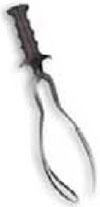
<court>San Diego County (Calif) Superior Court</court>—After an Ob/Gyn delivered a baby via forceps and vacuum extraction, the nurses noticed that the infant’s right eye was swollen and opaque. The child was later diagnosed with a corneal tear and would have to undergo a cornea transplant by age 1.
In suing, the parents contended that the obstetrician misapplied the forceps during the course of delivery, resulting in the corneal tear.
The physician argued that he did not apply the forceps improperly. Instead, other factors such as bony prominence or vacuum suction caused the eye injury.
The jury awarded the plaintiffs $425,000.
The cases presented here were compiled by Lewis L. Laska, editor of Medical Malpractice Verdicts, Settlements & Experts. While there are instances when the available information is incomplete, these cases represent the types of clinical situations that typically result in litigation.
<court>San Diego County (Calif) Superior Court</court>—After an Ob/Gyn delivered a baby via forceps and vacuum extraction, the nurses noticed that the infant’s right eye was swollen and opaque. The child was later diagnosed with a corneal tear and would have to undergo a cornea transplant by age 1.
In suing, the parents contended that the obstetrician misapplied the forceps during the course of delivery, resulting in the corneal tear.
The physician argued that he did not apply the forceps improperly. Instead, other factors such as bony prominence or vacuum suction caused the eye injury.
The jury awarded the plaintiffs $425,000.
The cases presented here were compiled by Lewis L. Laska, editor of Medical Malpractice Verdicts, Settlements & Experts. While there are instances when the available information is incomplete, these cases represent the types of clinical situations that typically result in litigation.
<court>San Diego County (Calif) Superior Court</court>—After an Ob/Gyn delivered a baby via forceps and vacuum extraction, the nurses noticed that the infant’s right eye was swollen and opaque. The child was later diagnosed with a corneal tear and would have to undergo a cornea transplant by age 1.
In suing, the parents contended that the obstetrician misapplied the forceps during the course of delivery, resulting in the corneal tear.
The physician argued that he did not apply the forceps improperly. Instead, other factors such as bony prominence or vacuum suction caused the eye injury.
The jury awarded the plaintiffs $425,000.
The cases presented here were compiled by Lewis L. Laska, editor of Medical Malpractice Verdicts, Settlements & Experts. While there are instances when the available information is incomplete, these cases represent the types of clinical situations that typically result in litigation.
Lack of further testing blamed for missed cancer
In suing, the woman claimed that because she had a family history of breast and ovarian cancer, the physician also should have performed a laparoscopy and referred her to a gynecologic oncologist.
The physician argued that since the laboratory and imaging results were all normal, there was no indication to perform additional testing. She believed the abnormal Pap was probably a false-positive reading. Lastly, she maintained that the ovarian cancer was not present during the tests performed in 1998 and that it most likely developed 2 to 4 months prior to diagnosis.
The jury returned a defense verdict.
The cases presented here were compiled by Lewis L. Laska, editor of Medical Malpractice Verdicts, Settlements & Experts. While there are instances when the available information is incomplete, these cases represent the types of clinical situations that typically result in litigation.
In suing, the woman claimed that because she had a family history of breast and ovarian cancer, the physician also should have performed a laparoscopy and referred her to a gynecologic oncologist.
The physician argued that since the laboratory and imaging results were all normal, there was no indication to perform additional testing. She believed the abnormal Pap was probably a false-positive reading. Lastly, she maintained that the ovarian cancer was not present during the tests performed in 1998 and that it most likely developed 2 to 4 months prior to diagnosis.
The jury returned a defense verdict.
The cases presented here were compiled by Lewis L. Laska, editor of Medical Malpractice Verdicts, Settlements & Experts. While there are instances when the available information is incomplete, these cases represent the types of clinical situations that typically result in litigation.
In suing, the woman claimed that because she had a family history of breast and ovarian cancer, the physician also should have performed a laparoscopy and referred her to a gynecologic oncologist.
The physician argued that since the laboratory and imaging results were all normal, there was no indication to perform additional testing. She believed the abnormal Pap was probably a false-positive reading. Lastly, she maintained that the ovarian cancer was not present during the tests performed in 1998 and that it most likely developed 2 to 4 months prior to diagnosis.
The jury returned a defense verdict.
The cases presented here were compiled by Lewis L. Laska, editor of Medical Malpractice Verdicts, Settlements & Experts. While there are instances when the available information is incomplete, these cases represent the types of clinical situations that typically result in litigation.
Did high spinal during cesarean cause maternal brain damage?
One hour later, during a CT scan, it was discovered that the endotracheal tube had become dislodged. A code blue was issued, but the patient had already developed hypoxic anoxic encephalopathy. She is now in a vegetative state and requires lifetime subacute care.
In suing, the patient’s husband claimed that his wife suffered a high spinal, whereby the anesthesia level had risen above her rib cage, restricting her breathing and depriving her brain of oxygen. He maintained that the doctor failed to recognize the high spinal and to properly secure the endotracheal tube.
The physician argued that the patient suffered either an air embolism or an amniotic fluid embolism during delivery, resulting in massive brain damage.
The jury awarded the plaintiff $5,524,163.
The cases presented here were compiled by Lewis L. Laska, editor of Medical Malpractice Verdicts, Settlements & Experts. While there are instances when the available information is incomplete, these cases represent the types of clinical situations that typically result in litigation.
One hour later, during a CT scan, it was discovered that the endotracheal tube had become dislodged. A code blue was issued, but the patient had already developed hypoxic anoxic encephalopathy. She is now in a vegetative state and requires lifetime subacute care.
In suing, the patient’s husband claimed that his wife suffered a high spinal, whereby the anesthesia level had risen above her rib cage, restricting her breathing and depriving her brain of oxygen. He maintained that the doctor failed to recognize the high spinal and to properly secure the endotracheal tube.
The physician argued that the patient suffered either an air embolism or an amniotic fluid embolism during delivery, resulting in massive brain damage.
The jury awarded the plaintiff $5,524,163.
The cases presented here were compiled by Lewis L. Laska, editor of Medical Malpractice Verdicts, Settlements & Experts. While there are instances when the available information is incomplete, these cases represent the types of clinical situations that typically result in litigation.
One hour later, during a CT scan, it was discovered that the endotracheal tube had become dislodged. A code blue was issued, but the patient had already developed hypoxic anoxic encephalopathy. She is now in a vegetative state and requires lifetime subacute care.
In suing, the patient’s husband claimed that his wife suffered a high spinal, whereby the anesthesia level had risen above her rib cage, restricting her breathing and depriving her brain of oxygen. He maintained that the doctor failed to recognize the high spinal and to properly secure the endotracheal tube.
The physician argued that the patient suffered either an air embolism or an amniotic fluid embolism during delivery, resulting in massive brain damage.
The jury awarded the plaintiff $5,524,163.
The cases presented here were compiled by Lewis L. Laska, editor of Medical Malpractice Verdicts, Settlements & Experts. While there are instances when the available information is incomplete, these cases represent the types of clinical situations that typically result in litigation.
Suprapubic catheter insertion
The code 51040 (cystotomy, cystotomy with drainage) is used less frequently, usually in conjunction with an abdominal Burch procedure. In this case, the surgeon performs a cystotomy to inspect the lumen of the bladder for any misplaced sutures. Then, he or she inserts a drainage catheter through the cystotomy incision and sutures it around the catheter.
It is important to note that some payers will not reimburse for a procedure that involves checking for suture placement (e.g., cystotomy) because it is considered a standard surgical technique. However, catheter placement is necessary to prevent urinary retention and is a separately billable part of the procedure (51010).
This article was written by Melanie Witt, RN, CPC, MA, former program manager in the Department of Coding and Nomenclature at ACOG. She is now an independent coding and documentation consultant. Her comments reflect the most commonly accepted interpretations of CPT-4 and ICD-9-CM coding. When in doubt on a coding or billing matter, check with your individual payer.
The code 51040 (cystotomy, cystotomy with drainage) is used less frequently, usually in conjunction with an abdominal Burch procedure. In this case, the surgeon performs a cystotomy to inspect the lumen of the bladder for any misplaced sutures. Then, he or she inserts a drainage catheter through the cystotomy incision and sutures it around the catheter.
It is important to note that some payers will not reimburse for a procedure that involves checking for suture placement (e.g., cystotomy) because it is considered a standard surgical technique. However, catheter placement is necessary to prevent urinary retention and is a separately billable part of the procedure (51010).
This article was written by Melanie Witt, RN, CPC, MA, former program manager in the Department of Coding and Nomenclature at ACOG. She is now an independent coding and documentation consultant. Her comments reflect the most commonly accepted interpretations of CPT-4 and ICD-9-CM coding. When in doubt on a coding or billing matter, check with your individual payer.
The code 51040 (cystotomy, cystotomy with drainage) is used less frequently, usually in conjunction with an abdominal Burch procedure. In this case, the surgeon performs a cystotomy to inspect the lumen of the bladder for any misplaced sutures. Then, he or she inserts a drainage catheter through the cystotomy incision and sutures it around the catheter.
It is important to note that some payers will not reimburse for a procedure that involves checking for suture placement (e.g., cystotomy) because it is considered a standard surgical technique. However, catheter placement is necessary to prevent urinary retention and is a separately billable part of the procedure (51010).
This article was written by Melanie Witt, RN, CPC, MA, former program manager in the Department of Coding and Nomenclature at ACOG. She is now an independent coding and documentation consultant. Her comments reflect the most commonly accepted interpretations of CPT-4 and ICD-9-CM coding. When in doubt on a coding or billing matter, check with your individual payer.
Repair of female circumcision
For the surgery itself, the repair codes are best because the physician first creates the defect (incision) and then repairs it. Look at codes 12001 to 12007, 12041 to 12047, and 13131 to 13133, or consider 56800 (plastic repair of the introitus) if more extensive repair work was performed. If there are labial adhesions, use the code 56441. The code 58999 can be used as a backup, as circumcision reversal may truly be an unlisted procedure. Always submit documentation with the claim.
This article was written by Melanie Witt, RN, CPC, MA, former program manager in the Department of Coding and Nomenclature at ACOG. She is now an independent coding and documentation consultant. Her comments reflect the most commonly accepted interpretations of CPT-4 and ICD-9-CM coding. When in doubt on a coding or billing matter, check with your individual payer.
For the surgery itself, the repair codes are best because the physician first creates the defect (incision) and then repairs it. Look at codes 12001 to 12007, 12041 to 12047, and 13131 to 13133, or consider 56800 (plastic repair of the introitus) if more extensive repair work was performed. If there are labial adhesions, use the code 56441. The code 58999 can be used as a backup, as circumcision reversal may truly be an unlisted procedure. Always submit documentation with the claim.
This article was written by Melanie Witt, RN, CPC, MA, former program manager in the Department of Coding and Nomenclature at ACOG. She is now an independent coding and documentation consultant. Her comments reflect the most commonly accepted interpretations of CPT-4 and ICD-9-CM coding. When in doubt on a coding or billing matter, check with your individual payer.
For the surgery itself, the repair codes are best because the physician first creates the defect (incision) and then repairs it. Look at codes 12001 to 12007, 12041 to 12047, and 13131 to 13133, or consider 56800 (plastic repair of the introitus) if more extensive repair work was performed. If there are labial adhesions, use the code 56441. The code 58999 can be used as a backup, as circumcision reversal may truly be an unlisted procedure. Always submit documentation with the claim.
This article was written by Melanie Witt, RN, CPC, MA, former program manager in the Department of Coding and Nomenclature at ACOG. She is now an independent coding and documentation consultant. Her comments reflect the most commonly accepted interpretations of CPT-4 and ICD-9-CM coding. When in doubt on a coding or billing matter, check with your individual payer.
Infertility testing
To appropriately bill for the diagnostic testing, use the code V26.21 (fertility testing) or V26.39 (other investigation and testing). While the former lists only fallopian tube insufflation and sperm count testing as specific examples, this code can be used to bill for any type of testing performed for infertility.
This article was written by Melanie Witt, RN, CPC, MA, former program manager in the Department of Coding and Nomenclature at ACOG. She is now an independent coding and documentation consultant. Her comments reflect the most commonly accepted interpretations of CPT-4 and ICD-9-CM coding. When in doubt on a coding or billing matter, check with your individual payer.
To appropriately bill for the diagnostic testing, use the code V26.21 (fertility testing) or V26.39 (other investigation and testing). While the former lists only fallopian tube insufflation and sperm count testing as specific examples, this code can be used to bill for any type of testing performed for infertility.
This article was written by Melanie Witt, RN, CPC, MA, former program manager in the Department of Coding and Nomenclature at ACOG. She is now an independent coding and documentation consultant. Her comments reflect the most commonly accepted interpretations of CPT-4 and ICD-9-CM coding. When in doubt on a coding or billing matter, check with your individual payer.
To appropriately bill for the diagnostic testing, use the code V26.21 (fertility testing) or V26.39 (other investigation and testing). While the former lists only fallopian tube insufflation and sperm count testing as specific examples, this code can be used to bill for any type of testing performed for infertility.
This article was written by Melanie Witt, RN, CPC, MA, former program manager in the Department of Coding and Nomenclature at ACOG. She is now an independent coding and documentation consultant. Her comments reflect the most commonly accepted interpretations of CPT-4 and ICD-9-CM coding. When in doubt on a coding or billing matter, check with your individual payer.
Parvovirus in pregnancy
If an IgG-positive gravida was simply exposed to the virus, use the code V23.89 (other high-risk pregnancy) plus V01.7 (contact with or exposure to other viral diseases).
This article was written by Melanie Witt, RN, CPC, MA, former program manager in the Department of Coding and Nomenclature at ACOG. She is now an independent coding and documentation consultant. Her comments reflect the most commonly accepted interpretations of CPT-4 and ICD-9-CM coding. When in doubt on a coding or billing matter, check with your individual payer.
If an IgG-positive gravida was simply exposed to the virus, use the code V23.89 (other high-risk pregnancy) plus V01.7 (contact with or exposure to other viral diseases).
This article was written by Melanie Witt, RN, CPC, MA, former program manager in the Department of Coding and Nomenclature at ACOG. She is now an independent coding and documentation consultant. Her comments reflect the most commonly accepted interpretations of CPT-4 and ICD-9-CM coding. When in doubt on a coding or billing matter, check with your individual payer.
If an IgG-positive gravida was simply exposed to the virus, use the code V23.89 (other high-risk pregnancy) plus V01.7 (contact with or exposure to other viral diseases).
This article was written by Melanie Witt, RN, CPC, MA, former program manager in the Department of Coding and Nomenclature at ACOG. She is now an independent coding and documentation consultant. Her comments reflect the most commonly accepted interpretations of CPT-4 and ICD-9-CM coding. When in doubt on a coding or billing matter, check with your individual payer.
Assigning responsibility, liability for neonatal resuscitation
<huc>Q</huc> At the community, non-training hospital where I work, the administration states that it is the pediatrician’s responsibility to perform neonatal resuscitation. However, the pediatricians, as well as the anesthesiologists, contend that it is not their duty, ultimately leaving it up to the obstetricians. For their part, the Ob/Gyns are frustrated with this situation, especially in light of increasing malpractice lawsuits.
In this type of hospital, who is responsible for performing neonatal resuscitation? And who is at fault if this lack of a sense of duty leads to brain damage or death?
<huc>A</huc> According to a recent joint committee opinion of ACOG and the American Society of Anesthesiologists (ASA), “Personnel other than the surgical team should be immediately available to assume responsibility for resuscitation of the depressed newborn. The surgeon and anesthesiologist are responsible for the mother and may not be able to leave her to care for the newborn even when a regional anesthetic is functioning adequately.”1
This opinion reflects the Guidelines for Perinatal Care2 and the now defunct ACOG Standards for Obstetric-Gynecologic Services,3 which stated—as early as 1988—that a separate, specially trained individual (a physician, nurse-midwife, labor and delivery nurse, neonatal nurse practitioner, nurse-anesthetist, or respiratory therapist) whose primary responsibility is the care of the newborn infant should be present at every delivery or immediately available in the hospital. In addition, the documents placed the responsibility of developing protocols for the resuscitation of a distressed neonate on the individual hospitals.

The cost of time. The problem, of course, is economics. Pediatricians, neonatologists, and anesthesiologists who are not already assisting in the delivery have found that they are frequently uncompensated for “waiting around” for a neonatal resuscitation. As a result, many of them are reluctant to make themselves “immediately available” unless they already are in the hospital and simply can be paged to the labor and delivery room.
The joint committee opinion of ACOG and ASA attempts to address this issue in the following fashion: “The availability of the appropriate personnel to assist in the management of a variety of obstetric problems is a necessary feature of good obstetric care. The presence of a pediatrician or other trained physician at a high-risk cesarean delivery to care for the newborn or the availability of an anesthesiologist during active labor and delivery when VBAC is attempted and at a breech or twin delivery are examples.
“Frequently, these professionals spend a considerable amount of time standing by for the possibility that their services may be needed emergently but may ultimately not be required to perform the task for which they are present. Reasonable compensation for these standby services is justifiable and necessary.”1
Weighing medicolegal risks. With regard to liability, hospital protocols have the same force and effect as standards of care in malpractice lawsuits. As a result, a pediatrician’s failure to obey your hospital protocols in the case of a distressed neonate could, and should, make him or her legally responsible if brain damage or death ensues. Unfortunately, if you were the delivering Ob/Gyn in such a case and you attempted the neonatal resuscitation yourself when the pediatrician failed to respond, you would likely be sued as well. The pediatrician would have primary culpability because of the violation of the hospital protocol, but since you provided care to the patient and a bad outcome occurred, a plaintiff attorney would probably name you in the lawsuit as well.
The good news is that the hospital also would be a co-defendant in this type of case. Therefore, you might want to bring this matter to the attention of your hospital administration. This sort of turf battle between Ob/Gyns, pediatricians, and anesthesiologists is a perfect example of how the system itself can lead to bad outcomes. The hospital administration would be well advised to revisit its protocol to provide financial incentive for the physician responsible for neonatal resuscitation—in this case, the oncall pediatrician. The best defended lawsuits are the ones that are avoided in the first place.
Disclaimer:
Mr. Heland’s comments reflect generally applicable legal principles. However, these comments should not be construed as constituting legal advice. Because laws can vary considerably from state to state and because each legal situation has its own unique characteristics, readers should consult their own attorneys about how best to manage a particular situation or issue.
1. American College of Obstetricians and Gynecologists and American Society of Anesthesiologists. Optimal goal for anesthesia care in obstetrics. ACOG Committee on Obstetric Practice and ASA Committee on Obstetric Anesthesia #256. Washington, DC: ACOG/ASA; May 2001.
2. American Academy of Pediatrics and American College of Obstetricians and Gynecologists. Guidelines for perinatal care. 2nd ed. Washington, DC: AAP/ACOG; 1988:74.
3. American College of Obstetricians and Gynecologists. Standards for obstetric-gynecologic services. 7th ed. Washington, DC: ACOG; 1989:40.
<huc>Q</huc> At the community, non-training hospital where I work, the administration states that it is the pediatrician’s responsibility to perform neonatal resuscitation. However, the pediatricians, as well as the anesthesiologists, contend that it is not their duty, ultimately leaving it up to the obstetricians. For their part, the Ob/Gyns are frustrated with this situation, especially in light of increasing malpractice lawsuits.
In this type of hospital, who is responsible for performing neonatal resuscitation? And who is at fault if this lack of a sense of duty leads to brain damage or death?
<huc>A</huc> According to a recent joint committee opinion of ACOG and the American Society of Anesthesiologists (ASA), “Personnel other than the surgical team should be immediately available to assume responsibility for resuscitation of the depressed newborn. The surgeon and anesthesiologist are responsible for the mother and may not be able to leave her to care for the newborn even when a regional anesthetic is functioning adequately.”1
This opinion reflects the Guidelines for Perinatal Care2 and the now defunct ACOG Standards for Obstetric-Gynecologic Services,3 which stated—as early as 1988—that a separate, specially trained individual (a physician, nurse-midwife, labor and delivery nurse, neonatal nurse practitioner, nurse-anesthetist, or respiratory therapist) whose primary responsibility is the care of the newborn infant should be present at every delivery or immediately available in the hospital. In addition, the documents placed the responsibility of developing protocols for the resuscitation of a distressed neonate on the individual hospitals.
The cost of time. The problem, of course, is economics. Pediatricians, neonatologists, and anesthesiologists who are not already assisting in the delivery have found that they are frequently uncompensated for “waiting around” for a neonatal resuscitation. As a result, many of them are reluctant to make themselves “immediately available” unless they already are in the hospital and simply can be paged to the labor and delivery room.
The joint committee opinion of ACOG and ASA attempts to address this issue in the following fashion: “The availability of the appropriate personnel to assist in the management of a variety of obstetric problems is a necessary feature of good obstetric care. The presence of a pediatrician or other trained physician at a high-risk cesarean delivery to care for the newborn or the availability of an anesthesiologist during active labor and delivery when VBAC is attempted and at a breech or twin delivery are examples.
“Frequently, these professionals spend a considerable amount of time standing by for the possibility that their services may be needed emergently but may ultimately not be required to perform the task for which they are present. Reasonable compensation for these standby services is justifiable and necessary.”1
Weighing medicolegal risks. With regard to liability, hospital protocols have the same force and effect as standards of care in malpractice lawsuits. As a result, a pediatrician’s failure to obey your hospital protocols in the case of a distressed neonate could, and should, make him or her legally responsible if brain damage or death ensues. Unfortunately, if you were the delivering Ob/Gyn in such a case and you attempted the neonatal resuscitation yourself when the pediatrician failed to respond, you would likely be sued as well. The pediatrician would have primary culpability because of the violation of the hospital protocol, but since you provided care to the patient and a bad outcome occurred, a plaintiff attorney would probably name you in the lawsuit as well.
The good news is that the hospital also would be a co-defendant in this type of case. Therefore, you might want to bring this matter to the attention of your hospital administration. This sort of turf battle between Ob/Gyns, pediatricians, and anesthesiologists is a perfect example of how the system itself can lead to bad outcomes. The hospital administration would be well advised to revisit its protocol to provide financial incentive for the physician responsible for neonatal resuscitation—in this case, the oncall pediatrician. The best defended lawsuits are the ones that are avoided in the first place.
Disclaimer:
Mr. Heland’s comments reflect generally applicable legal principles. However, these comments should not be construed as constituting legal advice. Because laws can vary considerably from state to state and because each legal situation has its own unique characteristics, readers should consult their own attorneys about how best to manage a particular situation or issue.
<huc>Q</huc> At the community, non-training hospital where I work, the administration states that it is the pediatrician’s responsibility to perform neonatal resuscitation. However, the pediatricians, as well as the anesthesiologists, contend that it is not their duty, ultimately leaving it up to the obstetricians. For their part, the Ob/Gyns are frustrated with this situation, especially in light of increasing malpractice lawsuits.
In this type of hospital, who is responsible for performing neonatal resuscitation? And who is at fault if this lack of a sense of duty leads to brain damage or death?
<huc>A</huc> According to a recent joint committee opinion of ACOG and the American Society of Anesthesiologists (ASA), “Personnel other than the surgical team should be immediately available to assume responsibility for resuscitation of the depressed newborn. The surgeon and anesthesiologist are responsible for the mother and may not be able to leave her to care for the newborn even when a regional anesthetic is functioning adequately.”1
This opinion reflects the Guidelines for Perinatal Care2 and the now defunct ACOG Standards for Obstetric-Gynecologic Services,3 which stated—as early as 1988—that a separate, specially trained individual (a physician, nurse-midwife, labor and delivery nurse, neonatal nurse practitioner, nurse-anesthetist, or respiratory therapist) whose primary responsibility is the care of the newborn infant should be present at every delivery or immediately available in the hospital. In addition, the documents placed the responsibility of developing protocols for the resuscitation of a distressed neonate on the individual hospitals.
The cost of time. The problem, of course, is economics. Pediatricians, neonatologists, and anesthesiologists who are not already assisting in the delivery have found that they are frequently uncompensated for “waiting around” for a neonatal resuscitation. As a result, many of them are reluctant to make themselves “immediately available” unless they already are in the hospital and simply can be paged to the labor and delivery room.
The joint committee opinion of ACOG and ASA attempts to address this issue in the following fashion: “The availability of the appropriate personnel to assist in the management of a variety of obstetric problems is a necessary feature of good obstetric care. The presence of a pediatrician or other trained physician at a high-risk cesarean delivery to care for the newborn or the availability of an anesthesiologist during active labor and delivery when VBAC is attempted and at a breech or twin delivery are examples.
“Frequently, these professionals spend a considerable amount of time standing by for the possibility that their services may be needed emergently but may ultimately not be required to perform the task for which they are present. Reasonable compensation for these standby services is justifiable and necessary.”1
Weighing medicolegal risks. With regard to liability, hospital protocols have the same force and effect as standards of care in malpractice lawsuits. As a result, a pediatrician’s failure to obey your hospital protocols in the case of a distressed neonate could, and should, make him or her legally responsible if brain damage or death ensues. Unfortunately, if you were the delivering Ob/Gyn in such a case and you attempted the neonatal resuscitation yourself when the pediatrician failed to respond, you would likely be sued as well. The pediatrician would have primary culpability because of the violation of the hospital protocol, but since you provided care to the patient and a bad outcome occurred, a plaintiff attorney would probably name you in the lawsuit as well.
The good news is that the hospital also would be a co-defendant in this type of case. Therefore, you might want to bring this matter to the attention of your hospital administration. This sort of turf battle between Ob/Gyns, pediatricians, and anesthesiologists is a perfect example of how the system itself can lead to bad outcomes. The hospital administration would be well advised to revisit its protocol to provide financial incentive for the physician responsible for neonatal resuscitation—in this case, the oncall pediatrician. The best defended lawsuits are the ones that are avoided in the first place.
Disclaimer:
Mr. Heland’s comments reflect generally applicable legal principles. However, these comments should not be construed as constituting legal advice. Because laws can vary considerably from state to state and because each legal situation has its own unique characteristics, readers should consult their own attorneys about how best to manage a particular situation or issue.
1. American College of Obstetricians and Gynecologists and American Society of Anesthesiologists. Optimal goal for anesthesia care in obstetrics. ACOG Committee on Obstetric Practice and ASA Committee on Obstetric Anesthesia #256. Washington, DC: ACOG/ASA; May 2001.
2. American Academy of Pediatrics and American College of Obstetricians and Gynecologists. Guidelines for perinatal care. 2nd ed. Washington, DC: AAP/ACOG; 1988:74.
3. American College of Obstetricians and Gynecologists. Standards for obstetric-gynecologic services. 7th ed. Washington, DC: ACOG; 1989:40.
1. American College of Obstetricians and Gynecologists and American Society of Anesthesiologists. Optimal goal for anesthesia care in obstetrics. ACOG Committee on Obstetric Practice and ASA Committee on Obstetric Anesthesia #256. Washington, DC: ACOG/ASA; May 2001.
2. American Academy of Pediatrics and American College of Obstetricians and Gynecologists. Guidelines for perinatal care. 2nd ed. Washington, DC: AAP/ACOG; 1988:74.
3. American College of Obstetricians and Gynecologists. Standards for obstetric-gynecologic services. 7th ed. Washington, DC: ACOG; 1989:40.
Gifts to physicians: a question of ethics
<huc>Q</huc> Does the $300 cap on gifts from pharmaceutical companies to physicians apply to such traditional activities as dinner presentations or “Speakers’ Bureau” educational meetings sponsored by these companies? In addition, how did this rule originate?
<huc>A</huc> You might understand the rule better if I answer your second question first. In December 1990, the American Medical Association’s (AMA) Council on Ethical and Judicial Affairs published guidelines regarding inappropriate gifts to physicians from industry representatives.1 Initially, 7 rules were promulgated so that physicians could avoid accepting gifts that were inconsistent with the Principles of Medical Ethics. The council subsequently issued an addendum that attempted to clarify the ethical guidelines in a question-and-answer format, with direct answers to specific gift situations.2
Increasing physician awareness. Since these guidelines are now more than 10 years old, the AMA has become concerned that many physicians are not aware of their existence. In fact, media reports in early 2001 suggested there was an increase in gift-giving practices that did not adhere to these rules. As a result, in August 2001, the AMA established the Working Group for the Communication of Ethical Guidelines on Gifts to Physicians from Industry. This group is comprised of the AMA and more than 30 physician organizations, including the American College of Obstetricians and Gynecologists (ACOG), healthcare organizations, and industry representatives (both pharmaceutical companies and equipment manufacturers). Further, the ACOG Committee on Ethics updated its committee opinion on this subject in October 2001.3
Defining who is affected. Most physician organizations, including ACOG, have incorporated the AMA Ethical Opinions/Guidelines into their own code of ethics, and many state and local medical societies have done the same. Translation: It is highly likely that these guidelines—or variations thereof—apply to you whether or not you are a member of the AMA. For example, some societies have adopted more specific gift guidelines. I suspect that the $300 cap on gifts that you mentioned is a state or local society rule because the AMA addendum states that gifts in excess of $100 are inappropriate.

Applying the rules. To answer your first question, dinner presentations are appropriate if the dinner is a modest meal. It should be similar to what a physician routinely might have when dining at his or her own expense. The educational component must have an independent value such as a presentation by an authoritative speaker rather than a sales representative from the sponsoring company.
As far as Speakers’ Bureau meetings are concerned, I assume you are referring to whole-day or weekend seminars with a number of authoritative speakers and Continuing Medical Education (CME) credit. These meetings are more questionable, especially when they are directly conducted by the pharmaceutical company or equipment manufacturer, with minimal participation, input, or control from an academic or accredited medical society sponsor or intermediary. As with dinner meetings, the guidelines permit only modest hospitality in connection with such programs. Rather, it is preferred that industry provide funds to academic institutions or accredited medical societies so they can conduct independent educational seminars.
A look at the key points. Following are some excerpts from the guidelines:
- Gifts should not be of substantial value, i.e., anything in excess of $100.
- Gifts should primarily entail a benefit to patients, not the physician, e.g., complimentary drug samples. Diagnostic equipment such as a stethoscope is only appropriate if it is of modest value. Value is determined by what the physician would pay at retail, not what the company paid at wholesale. Educational programs are appropriate because they can provide an indirect benefit to patients by enhancing the quality of care.
- Reimbursement of travel, lodging, and meal expenses for an educational meeting is inappropriate unless the physician is a bona fide member of the faculty for that meeting.
- Social or entertainment events at a conference should not be lavish and expensive and should be open to all conference participants.
- The modest meal rule can include payment for the meals of a physician’s spouse.
For more information on these guidelines, visit the AMA Web site at www.ama-assn.org/ama/pub/category/4002.html.
Disclaimer:
Mr. Heland’s comments reflect generally applicable legal principles. However, these comments should not be construed as constituting legal advice. Because laws can vary considerably from state to state and because each legal situation has its own unique characteristics, readers should consult their own attorneys about how best to manage a particular situation or issue.
1. American Medical Association. Gifts to physicians from industry. AMA Ethical Opinions/Guidelines #E-8.061. Chicago, Ill: AMA.
2. American Medical Association. Council on ethical and judicial affairs clarification on gifts to physicians from industry. AMA Ethical Opinions/Guidelines #E-Addendum II. Chicago, Ill: AMA.
3. American College of Obstetricians and Gynecologists. Guidelines for relationships with industry. ACOG Committee on Ethics #259. Washington, DC:ACOG; October 2001.
KENNETH V. HELAND, JD
Mr. Heland is an attorney and was ACOG’s director for professional liability from 1984 to 1998. He also served as chairman of the board and executive director of the AMA/Specialty Society Medical Liability Project, a coalition created to address professional liability issues. He currently is president of the health-care consulting firm Heland & Heland in Richmond, Va.
KENNETH V. HELAND, JD
Mr. Heland is an attorney and was ACOG’s director for professional liability from 1984 to 1998. He also served as chairman of the board and executive director of the AMA/Specialty Society Medical Liability Project, a coalition created to address professional liability issues. He currently is president of the health-care consulting firm Heland & Heland in Richmond, Va.
KENNETH V. HELAND, JD
Mr. Heland is an attorney and was ACOG’s director for professional liability from 1984 to 1998. He also served as chairman of the board and executive director of the AMA/Specialty Society Medical Liability Project, a coalition created to address professional liability issues. He currently is president of the health-care consulting firm Heland & Heland in Richmond, Va.
<huc>Q</huc> Does the $300 cap on gifts from pharmaceutical companies to physicians apply to such traditional activities as dinner presentations or “Speakers’ Bureau” educational meetings sponsored by these companies? In addition, how did this rule originate?
<huc>A</huc> You might understand the rule better if I answer your second question first. In December 1990, the American Medical Association’s (AMA) Council on Ethical and Judicial Affairs published guidelines regarding inappropriate gifts to physicians from industry representatives.1 Initially, 7 rules were promulgated so that physicians could avoid accepting gifts that were inconsistent with the Principles of Medical Ethics. The council subsequently issued an addendum that attempted to clarify the ethical guidelines in a question-and-answer format, with direct answers to specific gift situations.2
Increasing physician awareness. Since these guidelines are now more than 10 years old, the AMA has become concerned that many physicians are not aware of their existence. In fact, media reports in early 2001 suggested there was an increase in gift-giving practices that did not adhere to these rules. As a result, in August 2001, the AMA established the Working Group for the Communication of Ethical Guidelines on Gifts to Physicians from Industry. This group is comprised of the AMA and more than 30 physician organizations, including the American College of Obstetricians and Gynecologists (ACOG), healthcare organizations, and industry representatives (both pharmaceutical companies and equipment manufacturers). Further, the ACOG Committee on Ethics updated its committee opinion on this subject in October 2001.3
Defining who is affected. Most physician organizations, including ACOG, have incorporated the AMA Ethical Opinions/Guidelines into their own code of ethics, and many state and local medical societies have done the same. Translation: It is highly likely that these guidelines—or variations thereof—apply to you whether or not you are a member of the AMA. For example, some societies have adopted more specific gift guidelines. I suspect that the $300 cap on gifts that you mentioned is a state or local society rule because the AMA addendum states that gifts in excess of $100 are inappropriate.
Applying the rules. To answer your first question, dinner presentations are appropriate if the dinner is a modest meal. It should be similar to what a physician routinely might have when dining at his or her own expense. The educational component must have an independent value such as a presentation by an authoritative speaker rather than a sales representative from the sponsoring company.
As far as Speakers’ Bureau meetings are concerned, I assume you are referring to whole-day or weekend seminars with a number of authoritative speakers and Continuing Medical Education (CME) credit. These meetings are more questionable, especially when they are directly conducted by the pharmaceutical company or equipment manufacturer, with minimal participation, input, or control from an academic or accredited medical society sponsor or intermediary. As with dinner meetings, the guidelines permit only modest hospitality in connection with such programs. Rather, it is preferred that industry provide funds to academic institutions or accredited medical societies so they can conduct independent educational seminars.
A look at the key points. Following are some excerpts from the guidelines:
- Gifts should not be of substantial value, i.e., anything in excess of $100.
- Gifts should primarily entail a benefit to patients, not the physician, e.g., complimentary drug samples. Diagnostic equipment such as a stethoscope is only appropriate if it is of modest value. Value is determined by what the physician would pay at retail, not what the company paid at wholesale. Educational programs are appropriate because they can provide an indirect benefit to patients by enhancing the quality of care.
- Reimbursement of travel, lodging, and meal expenses for an educational meeting is inappropriate unless the physician is a bona fide member of the faculty for that meeting.
- Social or entertainment events at a conference should not be lavish and expensive and should be open to all conference participants.
- The modest meal rule can include payment for the meals of a physician’s spouse.
For more information on these guidelines, visit the AMA Web site at www.ama-assn.org/ama/pub/category/4002.html.
Disclaimer:
Mr. Heland’s comments reflect generally applicable legal principles. However, these comments should not be construed as constituting legal advice. Because laws can vary considerably from state to state and because each legal situation has its own unique characteristics, readers should consult their own attorneys about how best to manage a particular situation or issue.
<huc>Q</huc> Does the $300 cap on gifts from pharmaceutical companies to physicians apply to such traditional activities as dinner presentations or “Speakers’ Bureau” educational meetings sponsored by these companies? In addition, how did this rule originate?
<huc>A</huc> You might understand the rule better if I answer your second question first. In December 1990, the American Medical Association’s (AMA) Council on Ethical and Judicial Affairs published guidelines regarding inappropriate gifts to physicians from industry representatives.1 Initially, 7 rules were promulgated so that physicians could avoid accepting gifts that were inconsistent with the Principles of Medical Ethics. The council subsequently issued an addendum that attempted to clarify the ethical guidelines in a question-and-answer format, with direct answers to specific gift situations.2
Increasing physician awareness. Since these guidelines are now more than 10 years old, the AMA has become concerned that many physicians are not aware of their existence. In fact, media reports in early 2001 suggested there was an increase in gift-giving practices that did not adhere to these rules. As a result, in August 2001, the AMA established the Working Group for the Communication of Ethical Guidelines on Gifts to Physicians from Industry. This group is comprised of the AMA and more than 30 physician organizations, including the American College of Obstetricians and Gynecologists (ACOG), healthcare organizations, and industry representatives (both pharmaceutical companies and equipment manufacturers). Further, the ACOG Committee on Ethics updated its committee opinion on this subject in October 2001.3
Defining who is affected. Most physician organizations, including ACOG, have incorporated the AMA Ethical Opinions/Guidelines into their own code of ethics, and many state and local medical societies have done the same. Translation: It is highly likely that these guidelines—or variations thereof—apply to you whether or not you are a member of the AMA. For example, some societies have adopted more specific gift guidelines. I suspect that the $300 cap on gifts that you mentioned is a state or local society rule because the AMA addendum states that gifts in excess of $100 are inappropriate.
Applying the rules. To answer your first question, dinner presentations are appropriate if the dinner is a modest meal. It should be similar to what a physician routinely might have when dining at his or her own expense. The educational component must have an independent value such as a presentation by an authoritative speaker rather than a sales representative from the sponsoring company.
As far as Speakers’ Bureau meetings are concerned, I assume you are referring to whole-day or weekend seminars with a number of authoritative speakers and Continuing Medical Education (CME) credit. These meetings are more questionable, especially when they are directly conducted by the pharmaceutical company or equipment manufacturer, with minimal participation, input, or control from an academic or accredited medical society sponsor or intermediary. As with dinner meetings, the guidelines permit only modest hospitality in connection with such programs. Rather, it is preferred that industry provide funds to academic institutions or accredited medical societies so they can conduct independent educational seminars.
A look at the key points. Following are some excerpts from the guidelines:
- Gifts should not be of substantial value, i.e., anything in excess of $100.
- Gifts should primarily entail a benefit to patients, not the physician, e.g., complimentary drug samples. Diagnostic equipment such as a stethoscope is only appropriate if it is of modest value. Value is determined by what the physician would pay at retail, not what the company paid at wholesale. Educational programs are appropriate because they can provide an indirect benefit to patients by enhancing the quality of care.
- Reimbursement of travel, lodging, and meal expenses for an educational meeting is inappropriate unless the physician is a bona fide member of the faculty for that meeting.
- Social or entertainment events at a conference should not be lavish and expensive and should be open to all conference participants.
- The modest meal rule can include payment for the meals of a physician’s spouse.
For more information on these guidelines, visit the AMA Web site at www.ama-assn.org/ama/pub/category/4002.html.
Disclaimer:
Mr. Heland’s comments reflect generally applicable legal principles. However, these comments should not be construed as constituting legal advice. Because laws can vary considerably from state to state and because each legal situation has its own unique characteristics, readers should consult their own attorneys about how best to manage a particular situation or issue.
1. American Medical Association. Gifts to physicians from industry. AMA Ethical Opinions/Guidelines #E-8.061. Chicago, Ill: AMA.
2. American Medical Association. Council on ethical and judicial affairs clarification on gifts to physicians from industry. AMA Ethical Opinions/Guidelines #E-Addendum II. Chicago, Ill: AMA.
3. American College of Obstetricians and Gynecologists. Guidelines for relationships with industry. ACOG Committee on Ethics #259. Washington, DC:ACOG; October 2001.
1. American Medical Association. Gifts to physicians from industry. AMA Ethical Opinions/Guidelines #E-8.061. Chicago, Ill: AMA.
2. American Medical Association. Council on ethical and judicial affairs clarification on gifts to physicians from industry. AMA Ethical Opinions/Guidelines #E-Addendum II. Chicago, Ill: AMA.
3. American College of Obstetricians and Gynecologists. Guidelines for relationships with industry. ACOG Committee on Ethics #259. Washington, DC:ACOG; October 2001.
Did delayed preeclampsia diagnosis lead to stillbirth?
In suing, the patient claimed the physician failed to diagnose her preeclampsia quickly and accurately.
In his defense, the physician argued that the patient had preeclampsia during delivery, but not during her office visit.
The jury awarded the plaintiff $500,000 and the husband $350,000 for emotional distress.
The cases presented here were compiled by Lewis L. Laska, editor of Medical Malpractice Verdicts, Settlements & Experts. While there are instances when the available information is incomplete, these cases represent the types of clinical situations that typically result in litigation.
In suing, the patient claimed the physician failed to diagnose her preeclampsia quickly and accurately.
In his defense, the physician argued that the patient had preeclampsia during delivery, but not during her office visit.
The jury awarded the plaintiff $500,000 and the husband $350,000 for emotional distress.
The cases presented here were compiled by Lewis L. Laska, editor of Medical Malpractice Verdicts, Settlements & Experts. While there are instances when the available information is incomplete, these cases represent the types of clinical situations that typically result in litigation.
In suing, the patient claimed the physician failed to diagnose her preeclampsia quickly and accurately.
In his defense, the physician argued that the patient had preeclampsia during delivery, but not during her office visit.
The jury awarded the plaintiff $500,000 and the husband $350,000 for emotional distress.
The cases presented here were compiled by Lewis L. Laska, editor of Medical Malpractice Verdicts, Settlements & Experts. While there are instances when the available information is incomplete, these cases represent the types of clinical situations that typically result in litigation.