User login
ACS: Less pneumonia, fewer deaths with ketamine for rib fracture pain
CHICAGO – Ketamine is a safe and simple alternative to epidural anesthesia for pain control in the setting of multiple rib fractures, investigators from the Jacobi Medical Center in the Bronx (N.Y.) concluded after reviewing their experience with the drug.
Epidural analgesia has been the standard for controlling pain after multiple rib fractures, but epidurals are sometimes contraindicated in trauma, especially with back and neck injuries. There’s also a bleeding risk, and the need for an on-call anesthesia team to place them, something not all hospitals have.
Those problems – and the success Jacobi surgeons reported with ketamine pain control after thoracotomy – led the hospital to switch to a ketamine-based rib fracture protocol in 2007.
“As far as we know, we are the only people doing this routinely for multiple rib fractures,” Dr. Joelle Getrajdman, a second-year surgery resident at the medical center, said at the annual clinical congress of the American College of Surgeons.
Patients there with two or more rib fractures get a low-dose peripheral intravenous infusion of ketamine 0.05 mg/kg per hour while in the ICU and step-down unit, along with other pain medications as indicated. The hospital discontinues ketamine once patients leave the step-down unit to prevent diversion for illicit use.
To see how well the protocol has worked, the investigators reviewed all 128 adult trauma patients who received ketamine for multiple rib fractures from 2007 to 2014.
These patients were 60 years old on average, with a median of six rib fractures, many of them bilateral. Almost half had injury severity scores above 15, and most had chest Abbreviated Injury Scores of at least 3. Pneumo- and hemothoraces were common. Patients spent a mean of 6 days in the surgical ICU and 13 days in the hospital.
Along with ketamine, almost all had a morphine or hydromorphone (Dilaudid) patient-controlled analgesia (PCA) pumps, more than half received IV ketorolac (Toradol), and about 40% IV Tylenol. Only 14% had paravertebral or intercostal blocks.
Fourteen patients (10.9%) developed pneumonia, and four (3.1%) died, which compares favorably with outcomes in patients receiving epidurals. Historically, epidural analgesia for multiple traumatic rib fractures has been associated with about an 18% pneumonia rate, and about 9% mortality.
Ketamine side effects were minimal; none of the patients had hallucinations or tachycardia, and three (2.3%) were hypotensive on the drug.
Jacobi’s database did not record how many times patients used their PCA pumps, so the study did not have a direct measure of pain control. The investigators plan to look into this question prospectively.
Even so, when patients hurt from rib fractures, they breathe shallowly, which puts them at risk for pneumonia and death. “We have lower rates” of both than with epidurals, “so you could extrapolate that we must be controlling pain better,” Dr. Getrajdman said.
Ketamine at high doses is an anesthetic, but at lower doses it’s an antagonist of N-methyl-D-aspartate (NMDA), and a mild opioid receptor agonist, “so we can give patients the same amount of morphine but achieve a higher analgesic effect,” she said.
Ketamine had been the subject of intense interest in recent years for pain control in a wide variety of settings, as well as for psychiatric and other problems. Clinicaltrials.gov currently lists 138 open investigations of the drug.
Among them is a randomized trial from the Medical College of Wisconsin pitting ketamine against placebo for rib fracture pain following blunt trauma.
Dr. Getrajdman has no disclosures, and there was no outside funding for the work.
CHICAGO – Ketamine is a safe and simple alternative to epidural anesthesia for pain control in the setting of multiple rib fractures, investigators from the Jacobi Medical Center in the Bronx (N.Y.) concluded after reviewing their experience with the drug.
Epidural analgesia has been the standard for controlling pain after multiple rib fractures, but epidurals are sometimes contraindicated in trauma, especially with back and neck injuries. There’s also a bleeding risk, and the need for an on-call anesthesia team to place them, something not all hospitals have.
Those problems – and the success Jacobi surgeons reported with ketamine pain control after thoracotomy – led the hospital to switch to a ketamine-based rib fracture protocol in 2007.
“As far as we know, we are the only people doing this routinely for multiple rib fractures,” Dr. Joelle Getrajdman, a second-year surgery resident at the medical center, said at the annual clinical congress of the American College of Surgeons.
Patients there with two or more rib fractures get a low-dose peripheral intravenous infusion of ketamine 0.05 mg/kg per hour while in the ICU and step-down unit, along with other pain medications as indicated. The hospital discontinues ketamine once patients leave the step-down unit to prevent diversion for illicit use.
To see how well the protocol has worked, the investigators reviewed all 128 adult trauma patients who received ketamine for multiple rib fractures from 2007 to 2014.
These patients were 60 years old on average, with a median of six rib fractures, many of them bilateral. Almost half had injury severity scores above 15, and most had chest Abbreviated Injury Scores of at least 3. Pneumo- and hemothoraces were common. Patients spent a mean of 6 days in the surgical ICU and 13 days in the hospital.
Along with ketamine, almost all had a morphine or hydromorphone (Dilaudid) patient-controlled analgesia (PCA) pumps, more than half received IV ketorolac (Toradol), and about 40% IV Tylenol. Only 14% had paravertebral or intercostal blocks.
Fourteen patients (10.9%) developed pneumonia, and four (3.1%) died, which compares favorably with outcomes in patients receiving epidurals. Historically, epidural analgesia for multiple traumatic rib fractures has been associated with about an 18% pneumonia rate, and about 9% mortality.
Ketamine side effects were minimal; none of the patients had hallucinations or tachycardia, and three (2.3%) were hypotensive on the drug.
Jacobi’s database did not record how many times patients used their PCA pumps, so the study did not have a direct measure of pain control. The investigators plan to look into this question prospectively.
Even so, when patients hurt from rib fractures, they breathe shallowly, which puts them at risk for pneumonia and death. “We have lower rates” of both than with epidurals, “so you could extrapolate that we must be controlling pain better,” Dr. Getrajdman said.
Ketamine at high doses is an anesthetic, but at lower doses it’s an antagonist of N-methyl-D-aspartate (NMDA), and a mild opioid receptor agonist, “so we can give patients the same amount of morphine but achieve a higher analgesic effect,” she said.
Ketamine had been the subject of intense interest in recent years for pain control in a wide variety of settings, as well as for psychiatric and other problems. Clinicaltrials.gov currently lists 138 open investigations of the drug.
Among them is a randomized trial from the Medical College of Wisconsin pitting ketamine against placebo for rib fracture pain following blunt trauma.
Dr. Getrajdman has no disclosures, and there was no outside funding for the work.
CHICAGO – Ketamine is a safe and simple alternative to epidural anesthesia for pain control in the setting of multiple rib fractures, investigators from the Jacobi Medical Center in the Bronx (N.Y.) concluded after reviewing their experience with the drug.
Epidural analgesia has been the standard for controlling pain after multiple rib fractures, but epidurals are sometimes contraindicated in trauma, especially with back and neck injuries. There’s also a bleeding risk, and the need for an on-call anesthesia team to place them, something not all hospitals have.
Those problems – and the success Jacobi surgeons reported with ketamine pain control after thoracotomy – led the hospital to switch to a ketamine-based rib fracture protocol in 2007.
“As far as we know, we are the only people doing this routinely for multiple rib fractures,” Dr. Joelle Getrajdman, a second-year surgery resident at the medical center, said at the annual clinical congress of the American College of Surgeons.
Patients there with two or more rib fractures get a low-dose peripheral intravenous infusion of ketamine 0.05 mg/kg per hour while in the ICU and step-down unit, along with other pain medications as indicated. The hospital discontinues ketamine once patients leave the step-down unit to prevent diversion for illicit use.
To see how well the protocol has worked, the investigators reviewed all 128 adult trauma patients who received ketamine for multiple rib fractures from 2007 to 2014.
These patients were 60 years old on average, with a median of six rib fractures, many of them bilateral. Almost half had injury severity scores above 15, and most had chest Abbreviated Injury Scores of at least 3. Pneumo- and hemothoraces were common. Patients spent a mean of 6 days in the surgical ICU and 13 days in the hospital.
Along with ketamine, almost all had a morphine or hydromorphone (Dilaudid) patient-controlled analgesia (PCA) pumps, more than half received IV ketorolac (Toradol), and about 40% IV Tylenol. Only 14% had paravertebral or intercostal blocks.
Fourteen patients (10.9%) developed pneumonia, and four (3.1%) died, which compares favorably with outcomes in patients receiving epidurals. Historically, epidural analgesia for multiple traumatic rib fractures has been associated with about an 18% pneumonia rate, and about 9% mortality.
Ketamine side effects were minimal; none of the patients had hallucinations or tachycardia, and three (2.3%) were hypotensive on the drug.
Jacobi’s database did not record how many times patients used their PCA pumps, so the study did not have a direct measure of pain control. The investigators plan to look into this question prospectively.
Even so, when patients hurt from rib fractures, they breathe shallowly, which puts them at risk for pneumonia and death. “We have lower rates” of both than with epidurals, “so you could extrapolate that we must be controlling pain better,” Dr. Getrajdman said.
Ketamine at high doses is an anesthetic, but at lower doses it’s an antagonist of N-methyl-D-aspartate (NMDA), and a mild opioid receptor agonist, “so we can give patients the same amount of morphine but achieve a higher analgesic effect,” she said.
Ketamine had been the subject of intense interest in recent years for pain control in a wide variety of settings, as well as for psychiatric and other problems. Clinicaltrials.gov currently lists 138 open investigations of the drug.
Among them is a randomized trial from the Medical College of Wisconsin pitting ketamine against placebo for rib fracture pain following blunt trauma.
Dr. Getrajdman has no disclosures, and there was no outside funding for the work.
AT THE ACS CLINICAL CONGRESS
Key clinical point: Patients with multiple rib fractures treated with ketamine for pain control had less risk of pneumonia and death than did patients receiving epidural for pain.
Major finding: Overall, 14 ketamine patients (10.9%) developed pneumonia, and four (3.1%) died.
Data source: Review of 128 rib fracture patients.
Disclosures: The lead investigator has no disclosures, and there was no outside funding for the work.

Decline in antibiotic effectiveness could harm surgical, chemotherapy patients
An increase of surgical site infections (SSIs) stemming from pathogens resistant to antibiotic prophylaxis could result in thousands of infection-related deaths in surgical and chemotherapy patients, according to a new study published in the Lancet Infectious Diseases.
A total of 31 published meta-analyses of randomized or quasi–randomized controlled trials were included in the study by Dr. Ramanan Laxminarayan of the Center for Disease Dynamics, Economics & Policy in Washington, and his associates. The researchers surveyed the 10 most common surgeries in which antibiotic prophylaxis provides the greatest benefit. The infection rate in surgical patients receiving prophylaxis was 4.2%, and was 11.1% in patients who did not receive prophylaxis. Relative risk reduction for infection was least in cancer chemotherapy at 35% and greatest in pacemaker implantation at 86%.
Between 38.7% and 50.9% of SSIs and 26.8% of infections after chemotherapy are caused by antibiotic-resistant pathogens. A decrease in prophylaxis effectiveness of 10% would cause 40,000 additional infections and 2,100 additional deaths, while a decrease in effectiveness of 70% would cause 280,000 additional infections and 15,000 additional deaths.
The authors say more data are needed to establish how antibiotic prophylaxis recommendations should be modified in the context of increasing rates of resistance.
In a related comment, Dr. Joshua Wolf from St. Jude Children’s Research Hospital, Memphis, said, “To improve stewardship outcomes, we need more research that focuses on understanding impediments to appropriate antibiotic prescribing, strategies that target these impediments, resources to implement the strategies, and leadership that understands the urgency and complexity of the task. In view of the lack of progress so far, mandatory implementation of these steps could be necessary to achieve notable change.”
Find the full study in the Lancet Infectious Diseases (doi: 10.1016/S1473-3099[15]00270-4).
An increase of surgical site infections (SSIs) stemming from pathogens resistant to antibiotic prophylaxis could result in thousands of infection-related deaths in surgical and chemotherapy patients, according to a new study published in the Lancet Infectious Diseases.
A total of 31 published meta-analyses of randomized or quasi–randomized controlled trials were included in the study by Dr. Ramanan Laxminarayan of the Center for Disease Dynamics, Economics & Policy in Washington, and his associates. The researchers surveyed the 10 most common surgeries in which antibiotic prophylaxis provides the greatest benefit. The infection rate in surgical patients receiving prophylaxis was 4.2%, and was 11.1% in patients who did not receive prophylaxis. Relative risk reduction for infection was least in cancer chemotherapy at 35% and greatest in pacemaker implantation at 86%.
Between 38.7% and 50.9% of SSIs and 26.8% of infections after chemotherapy are caused by antibiotic-resistant pathogens. A decrease in prophylaxis effectiveness of 10% would cause 40,000 additional infections and 2,100 additional deaths, while a decrease in effectiveness of 70% would cause 280,000 additional infections and 15,000 additional deaths.
The authors say more data are needed to establish how antibiotic prophylaxis recommendations should be modified in the context of increasing rates of resistance.
In a related comment, Dr. Joshua Wolf from St. Jude Children’s Research Hospital, Memphis, said, “To improve stewardship outcomes, we need more research that focuses on understanding impediments to appropriate antibiotic prescribing, strategies that target these impediments, resources to implement the strategies, and leadership that understands the urgency and complexity of the task. In view of the lack of progress so far, mandatory implementation of these steps could be necessary to achieve notable change.”
Find the full study in the Lancet Infectious Diseases (doi: 10.1016/S1473-3099[15]00270-4).
An increase of surgical site infections (SSIs) stemming from pathogens resistant to antibiotic prophylaxis could result in thousands of infection-related deaths in surgical and chemotherapy patients, according to a new study published in the Lancet Infectious Diseases.
A total of 31 published meta-analyses of randomized or quasi–randomized controlled trials were included in the study by Dr. Ramanan Laxminarayan of the Center for Disease Dynamics, Economics & Policy in Washington, and his associates. The researchers surveyed the 10 most common surgeries in which antibiotic prophylaxis provides the greatest benefit. The infection rate in surgical patients receiving prophylaxis was 4.2%, and was 11.1% in patients who did not receive prophylaxis. Relative risk reduction for infection was least in cancer chemotherapy at 35% and greatest in pacemaker implantation at 86%.
Between 38.7% and 50.9% of SSIs and 26.8% of infections after chemotherapy are caused by antibiotic-resistant pathogens. A decrease in prophylaxis effectiveness of 10% would cause 40,000 additional infections and 2,100 additional deaths, while a decrease in effectiveness of 70% would cause 280,000 additional infections and 15,000 additional deaths.
The authors say more data are needed to establish how antibiotic prophylaxis recommendations should be modified in the context of increasing rates of resistance.
In a related comment, Dr. Joshua Wolf from St. Jude Children’s Research Hospital, Memphis, said, “To improve stewardship outcomes, we need more research that focuses on understanding impediments to appropriate antibiotic prescribing, strategies that target these impediments, resources to implement the strategies, and leadership that understands the urgency and complexity of the task. In view of the lack of progress so far, mandatory implementation of these steps could be necessary to achieve notable change.”
Find the full study in the Lancet Infectious Diseases (doi: 10.1016/S1473-3099[15]00270-4).
Hospitals report inadequate duodenoscope reprocessing practices
SAN DIEGO – Less than a third of hospitals reprocessed duodenoscopes adequately to prevent potential transmission of carbapenem-resistant Enterobacteriaceae (CRE) and other pathogens, investigators reported at an annual scientific meeting on infectious diseases.
Moreover, only a third of facilities had conducted active surveillance for multidrug-resistant infections related to use of their duodenoscopes in the past year, reported Susan Beekmann of the Emerging Infections Network of the Infectious Diseases Society of America. “These findings suggest that endemic bacterial transmission associated with duodenoscopy may occur and may go unrecognized,” said Ms. Beekmann, program coordinator for EIN at the University of Iowa Carver College of Medicine in Iowa City.

Duodenoscopes, which are used in endoscopic retrograde cholangiopancreatography (ERCP), became a hot topic earlier this year after causing outbreaks of fatal CRE infections in Los Angeles County. The Food and Drug Administration has acknowledged that the “complex design of the devices makes it difficult to remove contaminants compared to other types of endoscopes,” and both the CDC and the FDA have recommended specific reprocessing and surveillance steps to reduce the chances that the scopes transmit serious infections.
To understand how hospitals were actually reprocessing and culturing the scopes at the time CDC released its guidance, Ms. Beekmann and her colleagues electronically surveyed 740 hospital epidemiologists through IDSA-EIN. They received responses from 378 physicians (52%), of which half said their facilities used duodenoscopes, Ms. Beekmann reported at the combined annual meetings of the Infectious Diseases Society of America, the Society for Healthcare Epidemiology of America, the HIV Medicine Association, and the Pediatric Infectious Diseases Society.
Only 55 (29%) of these respondents said their facilities reprocessed duodenoscopes to an extent that the IDSA researchers defined as adequate – that is, manual reprocessing with high-level disinfection, either alone or in combination with other options, Ms. Beekmann said. Furthermore, only a third of facilities had cultured their duodenoscopes or done any other surveillance for bacterial transmission after duodenoscopy in the past year, even though most said they reviewed their reprocessing policies and procedures more often than once a year.
Respondents also described widely varying methodologies for sampling and culturing, Ms. Beekmann said. “Although we did not ask about them, ten respondents mentioned ATP bioluminescence assays,” she added. Based on the findings, better reprocessing technologies and consistent, real-time strategies to monitor the effectiveness of scope reprocessing are “urgent patient safety needs,” she and her colleagues concluded.
Ms. Beekmann and her associates reported no relevant financial disclosures.
SAN DIEGO – Less than a third of hospitals reprocessed duodenoscopes adequately to prevent potential transmission of carbapenem-resistant Enterobacteriaceae (CRE) and other pathogens, investigators reported at an annual scientific meeting on infectious diseases.
Moreover, only a third of facilities had conducted active surveillance for multidrug-resistant infections related to use of their duodenoscopes in the past year, reported Susan Beekmann of the Emerging Infections Network of the Infectious Diseases Society of America. “These findings suggest that endemic bacterial transmission associated with duodenoscopy may occur and may go unrecognized,” said Ms. Beekmann, program coordinator for EIN at the University of Iowa Carver College of Medicine in Iowa City.
Duodenoscopes, which are used in endoscopic retrograde cholangiopancreatography (ERCP), became a hot topic earlier this year after causing outbreaks of fatal CRE infections in Los Angeles County. The Food and Drug Administration has acknowledged that the “complex design of the devices makes it difficult to remove contaminants compared to other types of endoscopes,” and both the CDC and the FDA have recommended specific reprocessing and surveillance steps to reduce the chances that the scopes transmit serious infections.
To understand how hospitals were actually reprocessing and culturing the scopes at the time CDC released its guidance, Ms. Beekmann and her colleagues electronically surveyed 740 hospital epidemiologists through IDSA-EIN. They received responses from 378 physicians (52%), of which half said their facilities used duodenoscopes, Ms. Beekmann reported at the combined annual meetings of the Infectious Diseases Society of America, the Society for Healthcare Epidemiology of America, the HIV Medicine Association, and the Pediatric Infectious Diseases Society.
Only 55 (29%) of these respondents said their facilities reprocessed duodenoscopes to an extent that the IDSA researchers defined as adequate – that is, manual reprocessing with high-level disinfection, either alone or in combination with other options, Ms. Beekmann said. Furthermore, only a third of facilities had cultured their duodenoscopes or done any other surveillance for bacterial transmission after duodenoscopy in the past year, even though most said they reviewed their reprocessing policies and procedures more often than once a year.
Respondents also described widely varying methodologies for sampling and culturing, Ms. Beekmann said. “Although we did not ask about them, ten respondents mentioned ATP bioluminescence assays,” she added. Based on the findings, better reprocessing technologies and consistent, real-time strategies to monitor the effectiveness of scope reprocessing are “urgent patient safety needs,” she and her colleagues concluded.
Ms. Beekmann and her associates reported no relevant financial disclosures.
SAN DIEGO – Less than a third of hospitals reprocessed duodenoscopes adequately to prevent potential transmission of carbapenem-resistant Enterobacteriaceae (CRE) and other pathogens, investigators reported at an annual scientific meeting on infectious diseases.
Moreover, only a third of facilities had conducted active surveillance for multidrug-resistant infections related to use of their duodenoscopes in the past year, reported Susan Beekmann of the Emerging Infections Network of the Infectious Diseases Society of America. “These findings suggest that endemic bacterial transmission associated with duodenoscopy may occur and may go unrecognized,” said Ms. Beekmann, program coordinator for EIN at the University of Iowa Carver College of Medicine in Iowa City.
Duodenoscopes, which are used in endoscopic retrograde cholangiopancreatography (ERCP), became a hot topic earlier this year after causing outbreaks of fatal CRE infections in Los Angeles County. The Food and Drug Administration has acknowledged that the “complex design of the devices makes it difficult to remove contaminants compared to other types of endoscopes,” and both the CDC and the FDA have recommended specific reprocessing and surveillance steps to reduce the chances that the scopes transmit serious infections.
To understand how hospitals were actually reprocessing and culturing the scopes at the time CDC released its guidance, Ms. Beekmann and her colleagues electronically surveyed 740 hospital epidemiologists through IDSA-EIN. They received responses from 378 physicians (52%), of which half said their facilities used duodenoscopes, Ms. Beekmann reported at the combined annual meetings of the Infectious Diseases Society of America, the Society for Healthcare Epidemiology of America, the HIV Medicine Association, and the Pediatric Infectious Diseases Society.
Only 55 (29%) of these respondents said their facilities reprocessed duodenoscopes to an extent that the IDSA researchers defined as adequate – that is, manual reprocessing with high-level disinfection, either alone or in combination with other options, Ms. Beekmann said. Furthermore, only a third of facilities had cultured their duodenoscopes or done any other surveillance for bacterial transmission after duodenoscopy in the past year, even though most said they reviewed their reprocessing policies and procedures more often than once a year.
Respondents also described widely varying methodologies for sampling and culturing, Ms. Beekmann said. “Although we did not ask about them, ten respondents mentioned ATP bioluminescence assays,” she added. Based on the findings, better reprocessing technologies and consistent, real-time strategies to monitor the effectiveness of scope reprocessing are “urgent patient safety needs,” she and her colleagues concluded.
Ms. Beekmann and her associates reported no relevant financial disclosures.
AT IDWEEK 2015
Key clinical point: Most hospitals did not reprocess duodenoscopes in a way that the Infectious Diseases Society of America considers adequate.
Major finding: Only 29% of facilities followed the minimum adequate practices.
Data source: A cross-sectional electronic survey of 378 physician members of the Emerging Infections Network of the Infectious Diseases Society of America.
Disclosures: Susan Beekmann reported no relevant financial disclosures.

VIDEO: Take steps now to keep gram-negative resistance at bay
CHICAGO – Gram-negative bacteria are the new frontier of antimicrobial resistance.
Resistant Escherichia coli, Klebsiella, and other organisms are increasingly common in Asia, South America, and southern Europe, but haven’t quite established themselves yet in the United States.
In an interview at the annual clinical congress of the American College of Surgeons, Dr. John Mazuski, a professor of surgery at Washington University in St. Louis, explained what’s known so far, and the steps to take now to keep the organisms in check.
The video associated with this article is no longer available on this site. Please view all of our videos on the MDedge YouTube channel
CHICAGO – Gram-negative bacteria are the new frontier of antimicrobial resistance.
Resistant Escherichia coli, Klebsiella, and other organisms are increasingly common in Asia, South America, and southern Europe, but haven’t quite established themselves yet in the United States.
In an interview at the annual clinical congress of the American College of Surgeons, Dr. John Mazuski, a professor of surgery at Washington University in St. Louis, explained what’s known so far, and the steps to take now to keep the organisms in check.
The video associated with this article is no longer available on this site. Please view all of our videos on the MDedge YouTube channel
CHICAGO – Gram-negative bacteria are the new frontier of antimicrobial resistance.
Resistant Escherichia coli, Klebsiella, and other organisms are increasingly common in Asia, South America, and southern Europe, but haven’t quite established themselves yet in the United States.
In an interview at the annual clinical congress of the American College of Surgeons, Dr. John Mazuski, a professor of surgery at Washington University in St. Louis, explained what’s known so far, and the steps to take now to keep the organisms in check.
The video associated with this article is no longer available on this site. Please view all of our videos on the MDedge YouTube channel
EXPERT ANALYSIS FROM THE ACS CLINICAL CONGRESS

Self-harm emergencies rise 50% after bariatric surgery
The number of self-harm emergencies increases by 50% after bariatric surgery, according to a report published online Oct. 7 in JAMA Surgery.
Mental health problems are common among both morbidly obese adults and patients undergoing bariatric surgery, and a recent meta-analysis of 30 studies found that suicide risk was four times higher among patients undergoing bariatric surgery than in the general population. To examine this association, researchers performed a population-based longitudinal cohort study comparing self-harm behaviors during the 3 years before bariatric surgery with those during the 3 years after bariatric surgery in all 8,815 adults who underwent gastric bypass, intestinal bypass, and sleeve gastrectomy in Ontario during a 5-year period.

This cohort reflects the practice of approximately 200 surgeons. Self-harm behaviors were categorized as medication overdose, alcohol-related, poisoning by toxic chemicals, or physical trauma. Approximately 64% of the study population had a history of anxiety disorders, 7.8% had general mental health disorders, and 0.6% reported alcohol misuse before undergoing bariatric surgery, wrote Junaid A. Bhatti, Ph.D., of the department of evaluative clinical sciences, Sunnybrook Research Institute, Toronto, and the department of surgery, University of Toronto.
There were 62 self-harm events during the preoperative interval and 96 during the postoperative interval. The mean incidence of self harm was 2.33 events per 1,000 patients during the 3 years before surgery and 3.63 per 1,000 during the 3 years after surgery, for a rate ratio of 1.54. This represents an increase of approximately 50% after bariatric surgery. The postoperative self-harm rate also was three times as high as that in the general Ontario population (1.2 per 1,000 people) during the same period.
Most of these incidents (73%) were medication overdoses. These were considered serious suicide attempts posing significant risk to the patients; they required ambulance transport and hospital admission. Physical trauma such as self-hanging accounted for another 21%. Almost all of the patients with postoperative self-harm behaviors had a known history of mental health problems, chiefly major depression. These findings suggest the need for increased screening and monitoring for excessive drug or alcohol use, as well as activating a reliable support network to mitigate the stress that follows profound changes in diet and lifestyle, Dr. Bhatti and his associates said (JAMA Surg. 2015 Oct 7. doi: 10.1001/jamasurg.2015.3414).
The reason for this rise in self-harm behaviors is not yet known. Some experts contend that changes in alcohol metabolism following bariatric surgery raise the likelihood of intoxication or alcohol-related disinhibition, both of which can escalate impulsivity. Others argue that morbid obesity arises from a food addiction, and after the procedure patients may turn from overeating to alcohol/substance abuse. Most agree that the surgery and the lifestyle changes it requires increase the patient’s stress and anxiety, which can exacerbate preexisting mental health problems. Finally, bariatric surgery itself alters neurohormone levels, which could in turn predispose patients to depression or suicidal behaviors, the investigators said.
This study was limited in that the data didn’t allow the researchers to account for some important surgery-related factors, including patients’ failure to lose a significant amount of weight. In addition, the study focused on self-harm behaviors that led to emergency-department visits; since completed suicides generally don’t include ED visits, some cases of self-harm that ended in death could not be included.
The Canadian Institutes of Health Research, the Canada Research Chair in Medical Decision Sciences, and the Da Souza Chair in Trauma Research funded the study. Dr. Bhatti and his associates reported having no relevant financial disclosures.
Bhatti et al. reported that most self-harm emergencies in this study population occurred in the second and third years following bariatric surgery. But most bariatric surgery programs follow patients only for the first postoperative year, when most weight loss occurs.
This study thus supports the call for longer-term follow-up, especially for patients who have a history of major depressive disorder or self harm. The findings underscore the unique vulnerability of patients undergoing bariatric surgery and force us to closely examine why suicide rates are so much higher in these patients than in the general population.
Amir A. Ghaferi, M.D., and Carol Lindsay-Westphal, Ph.D., are at Ann Arbor (Mich.) Veterans Administration Healthcare System. Dr. Ghaferi is also at the University of Michigan’s Center for Healthcare Outcomes and Policy and department of surgery, and Dr. Lindsay-Westphal is also in the department of psychiatry at the university. Dr. Ghaferi and Dr. Lindsay-Westphal made these remarks in an Invited Commentary accompanying Dr. Bhatti’s report (JAMA Surg. 2015 Oct 7. doi: 10.1001/jamasurg.2015.3396).
Bhatti et al. reported that most self-harm emergencies in this study population occurred in the second and third years following bariatric surgery. But most bariatric surgery programs follow patients only for the first postoperative year, when most weight loss occurs.
This study thus supports the call for longer-term follow-up, especially for patients who have a history of major depressive disorder or self harm. The findings underscore the unique vulnerability of patients undergoing bariatric surgery and force us to closely examine why suicide rates are so much higher in these patients than in the general population.
Amir A. Ghaferi, M.D., and Carol Lindsay-Westphal, Ph.D., are at Ann Arbor (Mich.) Veterans Administration Healthcare System. Dr. Ghaferi is also at the University of Michigan’s Center for Healthcare Outcomes and Policy and department of surgery, and Dr. Lindsay-Westphal is also in the department of psychiatry at the university. Dr. Ghaferi and Dr. Lindsay-Westphal made these remarks in an Invited Commentary accompanying Dr. Bhatti’s report (JAMA Surg. 2015 Oct 7. doi: 10.1001/jamasurg.2015.3396).
Bhatti et al. reported that most self-harm emergencies in this study population occurred in the second and third years following bariatric surgery. But most bariatric surgery programs follow patients only for the first postoperative year, when most weight loss occurs.
This study thus supports the call for longer-term follow-up, especially for patients who have a history of major depressive disorder or self harm. The findings underscore the unique vulnerability of patients undergoing bariatric surgery and force us to closely examine why suicide rates are so much higher in these patients than in the general population.
Amir A. Ghaferi, M.D., and Carol Lindsay-Westphal, Ph.D., are at Ann Arbor (Mich.) Veterans Administration Healthcare System. Dr. Ghaferi is also at the University of Michigan’s Center for Healthcare Outcomes and Policy and department of surgery, and Dr. Lindsay-Westphal is also in the department of psychiatry at the university. Dr. Ghaferi and Dr. Lindsay-Westphal made these remarks in an Invited Commentary accompanying Dr. Bhatti’s report (JAMA Surg. 2015 Oct 7. doi: 10.1001/jamasurg.2015.3396).
The number of self-harm emergencies increases by 50% after bariatric surgery, according to a report published online Oct. 7 in JAMA Surgery.
Mental health problems are common among both morbidly obese adults and patients undergoing bariatric surgery, and a recent meta-analysis of 30 studies found that suicide risk was four times higher among patients undergoing bariatric surgery than in the general population. To examine this association, researchers performed a population-based longitudinal cohort study comparing self-harm behaviors during the 3 years before bariatric surgery with those during the 3 years after bariatric surgery in all 8,815 adults who underwent gastric bypass, intestinal bypass, and sleeve gastrectomy in Ontario during a 5-year period.
This cohort reflects the practice of approximately 200 surgeons. Self-harm behaviors were categorized as medication overdose, alcohol-related, poisoning by toxic chemicals, or physical trauma. Approximately 64% of the study population had a history of anxiety disorders, 7.8% had general mental health disorders, and 0.6% reported alcohol misuse before undergoing bariatric surgery, wrote Junaid A. Bhatti, Ph.D., of the department of evaluative clinical sciences, Sunnybrook Research Institute, Toronto, and the department of surgery, University of Toronto.
There were 62 self-harm events during the preoperative interval and 96 during the postoperative interval. The mean incidence of self harm was 2.33 events per 1,000 patients during the 3 years before surgery and 3.63 per 1,000 during the 3 years after surgery, for a rate ratio of 1.54. This represents an increase of approximately 50% after bariatric surgery. The postoperative self-harm rate also was three times as high as that in the general Ontario population (1.2 per 1,000 people) during the same period.
Most of these incidents (73%) were medication overdoses. These were considered serious suicide attempts posing significant risk to the patients; they required ambulance transport and hospital admission. Physical trauma such as self-hanging accounted for another 21%. Almost all of the patients with postoperative self-harm behaviors had a known history of mental health problems, chiefly major depression. These findings suggest the need for increased screening and monitoring for excessive drug or alcohol use, as well as activating a reliable support network to mitigate the stress that follows profound changes in diet and lifestyle, Dr. Bhatti and his associates said (JAMA Surg. 2015 Oct 7. doi: 10.1001/jamasurg.2015.3414).
The reason for this rise in self-harm behaviors is not yet known. Some experts contend that changes in alcohol metabolism following bariatric surgery raise the likelihood of intoxication or alcohol-related disinhibition, both of which can escalate impulsivity. Others argue that morbid obesity arises from a food addiction, and after the procedure patients may turn from overeating to alcohol/substance abuse. Most agree that the surgery and the lifestyle changes it requires increase the patient’s stress and anxiety, which can exacerbate preexisting mental health problems. Finally, bariatric surgery itself alters neurohormone levels, which could in turn predispose patients to depression or suicidal behaviors, the investigators said.
This study was limited in that the data didn’t allow the researchers to account for some important surgery-related factors, including patients’ failure to lose a significant amount of weight. In addition, the study focused on self-harm behaviors that led to emergency-department visits; since completed suicides generally don’t include ED visits, some cases of self-harm that ended in death could not be included.
The Canadian Institutes of Health Research, the Canada Research Chair in Medical Decision Sciences, and the Da Souza Chair in Trauma Research funded the study. Dr. Bhatti and his associates reported having no relevant financial disclosures.
The number of self-harm emergencies increases by 50% after bariatric surgery, according to a report published online Oct. 7 in JAMA Surgery.
Mental health problems are common among both morbidly obese adults and patients undergoing bariatric surgery, and a recent meta-analysis of 30 studies found that suicide risk was four times higher among patients undergoing bariatric surgery than in the general population. To examine this association, researchers performed a population-based longitudinal cohort study comparing self-harm behaviors during the 3 years before bariatric surgery with those during the 3 years after bariatric surgery in all 8,815 adults who underwent gastric bypass, intestinal bypass, and sleeve gastrectomy in Ontario during a 5-year period.
This cohort reflects the practice of approximately 200 surgeons. Self-harm behaviors were categorized as medication overdose, alcohol-related, poisoning by toxic chemicals, or physical trauma. Approximately 64% of the study population had a history of anxiety disorders, 7.8% had general mental health disorders, and 0.6% reported alcohol misuse before undergoing bariatric surgery, wrote Junaid A. Bhatti, Ph.D., of the department of evaluative clinical sciences, Sunnybrook Research Institute, Toronto, and the department of surgery, University of Toronto.
There were 62 self-harm events during the preoperative interval and 96 during the postoperative interval. The mean incidence of self harm was 2.33 events per 1,000 patients during the 3 years before surgery and 3.63 per 1,000 during the 3 years after surgery, for a rate ratio of 1.54. This represents an increase of approximately 50% after bariatric surgery. The postoperative self-harm rate also was three times as high as that in the general Ontario population (1.2 per 1,000 people) during the same period.
Most of these incidents (73%) were medication overdoses. These were considered serious suicide attempts posing significant risk to the patients; they required ambulance transport and hospital admission. Physical trauma such as self-hanging accounted for another 21%. Almost all of the patients with postoperative self-harm behaviors had a known history of mental health problems, chiefly major depression. These findings suggest the need for increased screening and monitoring for excessive drug or alcohol use, as well as activating a reliable support network to mitigate the stress that follows profound changes in diet and lifestyle, Dr. Bhatti and his associates said (JAMA Surg. 2015 Oct 7. doi: 10.1001/jamasurg.2015.3414).
The reason for this rise in self-harm behaviors is not yet known. Some experts contend that changes in alcohol metabolism following bariatric surgery raise the likelihood of intoxication or alcohol-related disinhibition, both of which can escalate impulsivity. Others argue that morbid obesity arises from a food addiction, and after the procedure patients may turn from overeating to alcohol/substance abuse. Most agree that the surgery and the lifestyle changes it requires increase the patient’s stress and anxiety, which can exacerbate preexisting mental health problems. Finally, bariatric surgery itself alters neurohormone levels, which could in turn predispose patients to depression or suicidal behaviors, the investigators said.
This study was limited in that the data didn’t allow the researchers to account for some important surgery-related factors, including patients’ failure to lose a significant amount of weight. In addition, the study focused on self-harm behaviors that led to emergency-department visits; since completed suicides generally don’t include ED visits, some cases of self-harm that ended in death could not be included.
The Canadian Institutes of Health Research, the Canada Research Chair in Medical Decision Sciences, and the Da Souza Chair in Trauma Research funded the study. Dr. Bhatti and his associates reported having no relevant financial disclosures.
FROM JAMA SURGERY
Key clinical point: The number of self-harm emergencies increased by 50% after bariatric surgery, according to data from a Canadian study.
Major finding: The mean incidence of self harm was 2.33 events per 1,000 patients during the 3 years before surgery and 3.63 per 1,000 during the 3 years after surgery (RR, 1.54).
Data source: A population-based longitudinal cohort study involving all 8,815 adults who had bariatric surgery in Ontario during a 5-year period.
Disclosures: The Canadian Institutes of Health Research, the Canada Research Chair in Medical Decision Sciences, and the Da Souza Chair in Trauma Research funded the study. Dr. Bhatti and his associates reported having no relevant financial disclosures.

Results mixed in hospital efforts to tackle antimicrobial resistance
SAN DIEGO – Canadian hospitals are making progress in reducing the rates of methicillin-resistant Staphylococcus aureus, but the rates of antimicrobial resistance in Canadian hospitals increased significantly for extended-spectrum beta-lactamase–producing Escherichia coli and Klebsiella pneumoniae, as well as vancomycin-resistant enterococci.
Those are among the key findings from a large national analysis known as CANWARD that were presented at the annual Interscience Conference on Antimicrobial Agents and Chemotherapy. “What it’s telling us is that some of the things that we’re doing on the antimicrobial resistance side are working,” lead study author George G. Zhanel, Pharm.D., professor of microbiology and infectious diseases at the University of Manitoba, Winnipeg, said in an interview. “But it also tells us that some of these pathogens like [vancomycin-resistant enterococci] and [extended-spectrum beta-lactamase]–producing E. coli continue to go up. So there is some good news and some bad news, but it tells us that it’s not all just doom and gloom. Some progress has been made, but there’s still a long way to go.”

Conducted annually, CANWARD is a national health surveillance study that assesses pathogens causing infections in Canadian hospitals and their patterns of antimicrobial resistance. For the current analysis, Dr. Zhanel and his associates collected 36,607 isolates from patients in tertiary care hospitals in Canada from January 2007 to December 2014. They used Clinical and Laboratory Standards Institute broth microdilution methods to perform antimicrobial susceptibility testing on more than 45 marketed and investigational agents.
Slightly more than half of the patients (55%) were male, and 87% were over age 18. The most common pathogens were E. coli (19.7%), methicillin-susceptible Staphylococcus aureus (MSSA; 16.4%), Pseudomonas aeruginosa (8.7%), S. pneumoniae (6.5%), K. pneumoniae (6.1%), methicillin-resistant S. aureus (MRSA; 4.7%), Enterococcus species (4.0%), and Hemophilus influenzae (4.0%). Susceptibility rates for E. coli were 99.9% for meropenem and tigecycline, 99.7% for ertapenem, 97.7% for piperacillin/tazobactam, 92.5% for ceftriaxone, 90.4% for gentamicin, 77.2% for ciprofloxacin, and 73.0% for trimethoprim and sulfamethoxazole. Susceptibility rates for P. aeruginosa were 94.2% for colistin, 84.3% for piperacillin/tazobactam, 83.3% for ceftazidime, 81.2% for meropenem, 77.6% for gentamicin, and 74.1% for ciprofloxacin. Susceptibility rates for MRSA were 100% for linezolid and telavancin, 99.9% for daptomycin, 99.4% for tigecycline, 99.1% for vancomycin, and 93.3% for trimethoprim and sulfamethoxazole. The rates of resistant organisms between 2007 and 2014 increased significantly for extended-spectrum beta-lactamase–producing E. coli (from 3.4% to 11.6%) and K. pneumoniae (from 1.5% to 6.5%), as well as vancomycin-resistant enterococci (from 1.8% to 7.0%), while rates of MRSA significantly declined (from 26.1% to 20.2%).
“The biggest surprise to me is that the hospital-acquired genotype of MRSA is going down,” Dr. Zhanel commented. “The community-acquired genotype is still going up, but the hospital-acquired [genotype] has plummeted in hospitals.”
He noted that CANWARD data suggest that antimicrobial resistance “is not confined to one part of the hospital. We have resistance happening in medical wards, ICUs, and hospital emergency rooms. We consistently find that resistance is highest in the ICU and by far the lowest in the ER. With clinics we find that it’s a variable scenario.”
The study was supported in part by Abbott, Achaogen, Affinium, Astellas, Astra Zeneca, Bayer, Cerexa/Forest, Cubist, Galderma Laboratories, Merck, Paladin Labs, Pfizer/Wyeth, Sunovion, and the Medicines Co. The researchers reported having no relevant financial disclosures.
SAN DIEGO – Canadian hospitals are making progress in reducing the rates of methicillin-resistant Staphylococcus aureus, but the rates of antimicrobial resistance in Canadian hospitals increased significantly for extended-spectrum beta-lactamase–producing Escherichia coli and Klebsiella pneumoniae, as well as vancomycin-resistant enterococci.
Those are among the key findings from a large national analysis known as CANWARD that were presented at the annual Interscience Conference on Antimicrobial Agents and Chemotherapy. “What it’s telling us is that some of the things that we’re doing on the antimicrobial resistance side are working,” lead study author George G. Zhanel, Pharm.D., professor of microbiology and infectious diseases at the University of Manitoba, Winnipeg, said in an interview. “But it also tells us that some of these pathogens like [vancomycin-resistant enterococci] and [extended-spectrum beta-lactamase]–producing E. coli continue to go up. So there is some good news and some bad news, but it tells us that it’s not all just doom and gloom. Some progress has been made, but there’s still a long way to go.”
Conducted annually, CANWARD is a national health surveillance study that assesses pathogens causing infections in Canadian hospitals and their patterns of antimicrobial resistance. For the current analysis, Dr. Zhanel and his associates collected 36,607 isolates from patients in tertiary care hospitals in Canada from January 2007 to December 2014. They used Clinical and Laboratory Standards Institute broth microdilution methods to perform antimicrobial susceptibility testing on more than 45 marketed and investigational agents.
Slightly more than half of the patients (55%) were male, and 87% were over age 18. The most common pathogens were E. coli (19.7%), methicillin-susceptible Staphylococcus aureus (MSSA; 16.4%), Pseudomonas aeruginosa (8.7%), S. pneumoniae (6.5%), K. pneumoniae (6.1%), methicillin-resistant S. aureus (MRSA; 4.7%), Enterococcus species (4.0%), and Hemophilus influenzae (4.0%). Susceptibility rates for E. coli were 99.9% for meropenem and tigecycline, 99.7% for ertapenem, 97.7% for piperacillin/tazobactam, 92.5% for ceftriaxone, 90.4% for gentamicin, 77.2% for ciprofloxacin, and 73.0% for trimethoprim and sulfamethoxazole. Susceptibility rates for P. aeruginosa were 94.2% for colistin, 84.3% for piperacillin/tazobactam, 83.3% for ceftazidime, 81.2% for meropenem, 77.6% for gentamicin, and 74.1% for ciprofloxacin. Susceptibility rates for MRSA were 100% for linezolid and telavancin, 99.9% for daptomycin, 99.4% for tigecycline, 99.1% for vancomycin, and 93.3% for trimethoprim and sulfamethoxazole. The rates of resistant organisms between 2007 and 2014 increased significantly for extended-spectrum beta-lactamase–producing E. coli (from 3.4% to 11.6%) and K. pneumoniae (from 1.5% to 6.5%), as well as vancomycin-resistant enterococci (from 1.8% to 7.0%), while rates of MRSA significantly declined (from 26.1% to 20.2%).
“The biggest surprise to me is that the hospital-acquired genotype of MRSA is going down,” Dr. Zhanel commented. “The community-acquired genotype is still going up, but the hospital-acquired [genotype] has plummeted in hospitals.”
He noted that CANWARD data suggest that antimicrobial resistance “is not confined to one part of the hospital. We have resistance happening in medical wards, ICUs, and hospital emergency rooms. We consistently find that resistance is highest in the ICU and by far the lowest in the ER. With clinics we find that it’s a variable scenario.”
The study was supported in part by Abbott, Achaogen, Affinium, Astellas, Astra Zeneca, Bayer, Cerexa/Forest, Cubist, Galderma Laboratories, Merck, Paladin Labs, Pfizer/Wyeth, Sunovion, and the Medicines Co. The researchers reported having no relevant financial disclosures.
SAN DIEGO – Canadian hospitals are making progress in reducing the rates of methicillin-resistant Staphylococcus aureus, but the rates of antimicrobial resistance in Canadian hospitals increased significantly for extended-spectrum beta-lactamase–producing Escherichia coli and Klebsiella pneumoniae, as well as vancomycin-resistant enterococci.
Those are among the key findings from a large national analysis known as CANWARD that were presented at the annual Interscience Conference on Antimicrobial Agents and Chemotherapy. “What it’s telling us is that some of the things that we’re doing on the antimicrobial resistance side are working,” lead study author George G. Zhanel, Pharm.D., professor of microbiology and infectious diseases at the University of Manitoba, Winnipeg, said in an interview. “But it also tells us that some of these pathogens like [vancomycin-resistant enterococci] and [extended-spectrum beta-lactamase]–producing E. coli continue to go up. So there is some good news and some bad news, but it tells us that it’s not all just doom and gloom. Some progress has been made, but there’s still a long way to go.”
Conducted annually, CANWARD is a national health surveillance study that assesses pathogens causing infections in Canadian hospitals and their patterns of antimicrobial resistance. For the current analysis, Dr. Zhanel and his associates collected 36,607 isolates from patients in tertiary care hospitals in Canada from January 2007 to December 2014. They used Clinical and Laboratory Standards Institute broth microdilution methods to perform antimicrobial susceptibility testing on more than 45 marketed and investigational agents.
Slightly more than half of the patients (55%) were male, and 87% were over age 18. The most common pathogens were E. coli (19.7%), methicillin-susceptible Staphylococcus aureus (MSSA; 16.4%), Pseudomonas aeruginosa (8.7%), S. pneumoniae (6.5%), K. pneumoniae (6.1%), methicillin-resistant S. aureus (MRSA; 4.7%), Enterococcus species (4.0%), and Hemophilus influenzae (4.0%). Susceptibility rates for E. coli were 99.9% for meropenem and tigecycline, 99.7% for ertapenem, 97.7% for piperacillin/tazobactam, 92.5% for ceftriaxone, 90.4% for gentamicin, 77.2% for ciprofloxacin, and 73.0% for trimethoprim and sulfamethoxazole. Susceptibility rates for P. aeruginosa were 94.2% for colistin, 84.3% for piperacillin/tazobactam, 83.3% for ceftazidime, 81.2% for meropenem, 77.6% for gentamicin, and 74.1% for ciprofloxacin. Susceptibility rates for MRSA were 100% for linezolid and telavancin, 99.9% for daptomycin, 99.4% for tigecycline, 99.1% for vancomycin, and 93.3% for trimethoprim and sulfamethoxazole. The rates of resistant organisms between 2007 and 2014 increased significantly for extended-spectrum beta-lactamase–producing E. coli (from 3.4% to 11.6%) and K. pneumoniae (from 1.5% to 6.5%), as well as vancomycin-resistant enterococci (from 1.8% to 7.0%), while rates of MRSA significantly declined (from 26.1% to 20.2%).
“The biggest surprise to me is that the hospital-acquired genotype of MRSA is going down,” Dr. Zhanel commented. “The community-acquired genotype is still going up, but the hospital-acquired [genotype] has plummeted in hospitals.”
He noted that CANWARD data suggest that antimicrobial resistance “is not confined to one part of the hospital. We have resistance happening in medical wards, ICUs, and hospital emergency rooms. We consistently find that resistance is highest in the ICU and by far the lowest in the ER. With clinics we find that it’s a variable scenario.”
The study was supported in part by Abbott, Achaogen, Affinium, Astellas, Astra Zeneca, Bayer, Cerexa/Forest, Cubist, Galderma Laboratories, Merck, Paladin Labs, Pfizer/Wyeth, Sunovion, and the Medicines Co. The researchers reported having no relevant financial disclosures.
AT ICAAC 2015
Key clinical point: In Canadian hospitals, the rate of resistant organisms have increased significantly for E. coli and other pathogens but have decreased for MRSA.
Major finding: Rates of resistant organisms between 2007 and 2014 increased significantly for extended-spectrum beta-lactamase–producing E. coli (from 3.4% to 11.6%) and K. pneumoniae (from 1.5% to 6.5%), as well as vancomycin-resistant enterococci (from 1.8% to 7.0%), while rates of MRSA significantly declined (from 26.1% to 20.2%).
Data source: A lab analysis of 36,607 isolates from patients in tertiary care hospitals in Canada from January 2007 to December 2014.
Disclosures: The study was supported in part by Abbott, Achaogen, Affinium, Astellas, Astra Zeneca, Bayer, Cerexa/Forest, Cubist, Galderma Laboratories, Merck, Paladin Labs, Pfizer/Wyeth, Sunovion, and the Medicines Co. The researchers reported having no relevant financial disclosures.

Sleeve gastrectomy cut biochemical cardiac risk factors
CHICAGO – Many traditional and novel biochemical cardiac risk markers show dramatic and stable improvements following sleeve gastrectomy, a prospective, observational study shows.
C-reactive protein (CRP) levels were elevated in 78% of patients preoperatively, but they fell early in the preoperative course at 3 months (median 6.6 mg/L vs. 4.5 mg/L; P less than .0001) and continued to decline throughout the 12-month follow-up (median 5.8 mg/L vs. 2.4 mg/L; P less than .0001).
“This gradual improvement and normalization of this inflammatory marker may reflect the slower resolution of the chronic inflammatory burden that obesity brings along with it,” Ms. Tara Mokhtari said at the American College of Surgeons Clinical Congress.
Though prior studies have shown that gastric bypass and adjustable gastric banding improved biochemical cardiac risk factors (BCRFs), this is the first prospective study to detail such improvements following sleeve gastrectomy.
The study evaluated 10 BCRFs (total cholesterol (TC), low-density lipoprotein cholesterol, high-density lipoprotein cholesterol, triglycerides (TG), TC/HDL ratio, hemoglobin A1c, TG/HDL ratio, homocysteine, lipoprotein A, and CRP) in 334 morbidly obese patients undergoing laparoscopic sleeve gastrectomy during 2006-2015. Their mean age was 45 years, 76.4% were women, 55% were hypertensive, 29.4% had diabetes, 9.6% had known coronary artery disease, and 26.4% were on a lipid-lowering medication.
Many patients had abnormal cardiac risk factors prior to surgery, the most striking being the 78% of patients with elevated CRP levels (at least 3 mg/L), according to Ms. Mokhtari of Stanford (Calif.) University.
One-third also had abnormal HDL levels, total cholesterol, and triglyceride/HDL ratio and 20% had LDL levels above the 130 mg/dL threshold. Statin use was discontinued in all patients following surgery, per hospital protocol.
After sleeve gastrectomy, body mass index declined from 43.5 preoperatively to 36.6 at 3 months, 34.3 at 6 months, and 33.1 at 12 months, according to the study authors, led by Dr. John M. Morton, also of Stanford.
Similar to the early changes observed in CRP, there were significant changes from baseline at 3 months in triglycerides (116.5 mg/dL vs. 98.5 mg/dL; P less than .0001) and HbA1c (5.8% vs. 5.5%; P less than .0001).
Six months after sleeve gastrectomy, significant improvements were seen in these same risk factors as well as HDL cholesterol (47 mg/dL vs. 51 mg/dL; P less than .0001), TG/HDL ratio, a surrogate marker for metabolic syndrome (2.5 vs. 1.9; P less than .0001), and lipoprotein A (8.9 mg/dL vs. 5.4 mg/dL; P = .016), Ms. Mokhtari said.
By 12 months, all cardiac risk factors except LDL cholesterol (median preop 101.5 mg/dL vs. 102.5 mg/dL; P = .062) were significantly improved. Notably, HDL increased to a median of 54 mg/dL, triglycerides continued to decline to 93 mg/dL, and HgA1c held steady at 5.5%.
“Triglycerides fell dramatically and remained stable, which in combination with the increase in HDL, reflects a much healthier overall lipid profile for our post-sleeve patients,” Ms. Mokhtari said. “It’s important to recall that all of these improvements were seen without the use of a statin drug.”
Improvement in these cardiac biomarkers may further represent improvements in other obesity-related diseases, as evidenced by improvements in the markers for type II diabetes and metabolic syndrome, she said.
“Such risk factors are useful in determining baseline risk for our sleeve patients and also can be followed very easily in the postoperative period,” Ms. Mokhtari added.
Discussant Dr. Aurora D. Pryor of State University of New York at Stony Brook, congratulated the authors on their research and asked how sleeve gastrectomy stacks up to gastric bypass or banding as a procedure for metabolic disease and whether the biomarker improvements will translate into improved mortality.
There are several published reports on cardiac risk factors and gastric banding and Roux-en-Y gastric bypass, but many do not include the newer biomarkers of lipoprotein A, homocysteine, or CRP, Ms. Mokhtari observed. A 2006 study by the Stanford investigators, however, suggests that “overall, Roux-en-Y allowed for a more significant improvement in these risk factors compared to sleeve,” she said.
Ms. Mokhtari went on to say that the SOS study reported a decrease in cardiovascular events after Roux-en-Y bypass, but that no such solid evidence exists for sleeve gastrectomy. However, studies have shown comparable improvements in Framingham risk scores at 1 year between sleeve and Roux-en-Y.
CHICAGO – Many traditional and novel biochemical cardiac risk markers show dramatic and stable improvements following sleeve gastrectomy, a prospective, observational study shows.
C-reactive protein (CRP) levels were elevated in 78% of patients preoperatively, but they fell early in the preoperative course at 3 months (median 6.6 mg/L vs. 4.5 mg/L; P less than .0001) and continued to decline throughout the 12-month follow-up (median 5.8 mg/L vs. 2.4 mg/L; P less than .0001).
“This gradual improvement and normalization of this inflammatory marker may reflect the slower resolution of the chronic inflammatory burden that obesity brings along with it,” Ms. Tara Mokhtari said at the American College of Surgeons Clinical Congress.
Though prior studies have shown that gastric bypass and adjustable gastric banding improved biochemical cardiac risk factors (BCRFs), this is the first prospective study to detail such improvements following sleeve gastrectomy.
The study evaluated 10 BCRFs (total cholesterol (TC), low-density lipoprotein cholesterol, high-density lipoprotein cholesterol, triglycerides (TG), TC/HDL ratio, hemoglobin A1c, TG/HDL ratio, homocysteine, lipoprotein A, and CRP) in 334 morbidly obese patients undergoing laparoscopic sleeve gastrectomy during 2006-2015. Their mean age was 45 years, 76.4% were women, 55% were hypertensive, 29.4% had diabetes, 9.6% had known coronary artery disease, and 26.4% were on a lipid-lowering medication.
Many patients had abnormal cardiac risk factors prior to surgery, the most striking being the 78% of patients with elevated CRP levels (at least 3 mg/L), according to Ms. Mokhtari of Stanford (Calif.) University.
One-third also had abnormal HDL levels, total cholesterol, and triglyceride/HDL ratio and 20% had LDL levels above the 130 mg/dL threshold. Statin use was discontinued in all patients following surgery, per hospital protocol.
After sleeve gastrectomy, body mass index declined from 43.5 preoperatively to 36.6 at 3 months, 34.3 at 6 months, and 33.1 at 12 months, according to the study authors, led by Dr. John M. Morton, also of Stanford.
Similar to the early changes observed in CRP, there were significant changes from baseline at 3 months in triglycerides (116.5 mg/dL vs. 98.5 mg/dL; P less than .0001) and HbA1c (5.8% vs. 5.5%; P less than .0001).
Six months after sleeve gastrectomy, significant improvements were seen in these same risk factors as well as HDL cholesterol (47 mg/dL vs. 51 mg/dL; P less than .0001), TG/HDL ratio, a surrogate marker for metabolic syndrome (2.5 vs. 1.9; P less than .0001), and lipoprotein A (8.9 mg/dL vs. 5.4 mg/dL; P = .016), Ms. Mokhtari said.
By 12 months, all cardiac risk factors except LDL cholesterol (median preop 101.5 mg/dL vs. 102.5 mg/dL; P = .062) were significantly improved. Notably, HDL increased to a median of 54 mg/dL, triglycerides continued to decline to 93 mg/dL, and HgA1c held steady at 5.5%.
“Triglycerides fell dramatically and remained stable, which in combination with the increase in HDL, reflects a much healthier overall lipid profile for our post-sleeve patients,” Ms. Mokhtari said. “It’s important to recall that all of these improvements were seen without the use of a statin drug.”
Improvement in these cardiac biomarkers may further represent improvements in other obesity-related diseases, as evidenced by improvements in the markers for type II diabetes and metabolic syndrome, she said.
“Such risk factors are useful in determining baseline risk for our sleeve patients and also can be followed very easily in the postoperative period,” Ms. Mokhtari added.
Discussant Dr. Aurora D. Pryor of State University of New York at Stony Brook, congratulated the authors on their research and asked how sleeve gastrectomy stacks up to gastric bypass or banding as a procedure for metabolic disease and whether the biomarker improvements will translate into improved mortality.
There are several published reports on cardiac risk factors and gastric banding and Roux-en-Y gastric bypass, but many do not include the newer biomarkers of lipoprotein A, homocysteine, or CRP, Ms. Mokhtari observed. A 2006 study by the Stanford investigators, however, suggests that “overall, Roux-en-Y allowed for a more significant improvement in these risk factors compared to sleeve,” she said.
Ms. Mokhtari went on to say that the SOS study reported a decrease in cardiovascular events after Roux-en-Y bypass, but that no such solid evidence exists for sleeve gastrectomy. However, studies have shown comparable improvements in Framingham risk scores at 1 year between sleeve and Roux-en-Y.
CHICAGO – Many traditional and novel biochemical cardiac risk markers show dramatic and stable improvements following sleeve gastrectomy, a prospective, observational study shows.
C-reactive protein (CRP) levels were elevated in 78% of patients preoperatively, but they fell early in the preoperative course at 3 months (median 6.6 mg/L vs. 4.5 mg/L; P less than .0001) and continued to decline throughout the 12-month follow-up (median 5.8 mg/L vs. 2.4 mg/L; P less than .0001).
“This gradual improvement and normalization of this inflammatory marker may reflect the slower resolution of the chronic inflammatory burden that obesity brings along with it,” Ms. Tara Mokhtari said at the American College of Surgeons Clinical Congress.
Though prior studies have shown that gastric bypass and adjustable gastric banding improved biochemical cardiac risk factors (BCRFs), this is the first prospective study to detail such improvements following sleeve gastrectomy.
The study evaluated 10 BCRFs (total cholesterol (TC), low-density lipoprotein cholesterol, high-density lipoprotein cholesterol, triglycerides (TG), TC/HDL ratio, hemoglobin A1c, TG/HDL ratio, homocysteine, lipoprotein A, and CRP) in 334 morbidly obese patients undergoing laparoscopic sleeve gastrectomy during 2006-2015. Their mean age was 45 years, 76.4% were women, 55% were hypertensive, 29.4% had diabetes, 9.6% had known coronary artery disease, and 26.4% were on a lipid-lowering medication.
Many patients had abnormal cardiac risk factors prior to surgery, the most striking being the 78% of patients with elevated CRP levels (at least 3 mg/L), according to Ms. Mokhtari of Stanford (Calif.) University.
One-third also had abnormal HDL levels, total cholesterol, and triglyceride/HDL ratio and 20% had LDL levels above the 130 mg/dL threshold. Statin use was discontinued in all patients following surgery, per hospital protocol.
After sleeve gastrectomy, body mass index declined from 43.5 preoperatively to 36.6 at 3 months, 34.3 at 6 months, and 33.1 at 12 months, according to the study authors, led by Dr. John M. Morton, also of Stanford.
Similar to the early changes observed in CRP, there were significant changes from baseline at 3 months in triglycerides (116.5 mg/dL vs. 98.5 mg/dL; P less than .0001) and HbA1c (5.8% vs. 5.5%; P less than .0001).
Six months after sleeve gastrectomy, significant improvements were seen in these same risk factors as well as HDL cholesterol (47 mg/dL vs. 51 mg/dL; P less than .0001), TG/HDL ratio, a surrogate marker for metabolic syndrome (2.5 vs. 1.9; P less than .0001), and lipoprotein A (8.9 mg/dL vs. 5.4 mg/dL; P = .016), Ms. Mokhtari said.
By 12 months, all cardiac risk factors except LDL cholesterol (median preop 101.5 mg/dL vs. 102.5 mg/dL; P = .062) were significantly improved. Notably, HDL increased to a median of 54 mg/dL, triglycerides continued to decline to 93 mg/dL, and HgA1c held steady at 5.5%.
“Triglycerides fell dramatically and remained stable, which in combination with the increase in HDL, reflects a much healthier overall lipid profile for our post-sleeve patients,” Ms. Mokhtari said. “It’s important to recall that all of these improvements were seen without the use of a statin drug.”
Improvement in these cardiac biomarkers may further represent improvements in other obesity-related diseases, as evidenced by improvements in the markers for type II diabetes and metabolic syndrome, she said.
“Such risk factors are useful in determining baseline risk for our sleeve patients and also can be followed very easily in the postoperative period,” Ms. Mokhtari added.
Discussant Dr. Aurora D. Pryor of State University of New York at Stony Brook, congratulated the authors on their research and asked how sleeve gastrectomy stacks up to gastric bypass or banding as a procedure for metabolic disease and whether the biomarker improvements will translate into improved mortality.
There are several published reports on cardiac risk factors and gastric banding and Roux-en-Y gastric bypass, but many do not include the newer biomarkers of lipoprotein A, homocysteine, or CRP, Ms. Mokhtari observed. A 2006 study by the Stanford investigators, however, suggests that “overall, Roux-en-Y allowed for a more significant improvement in these risk factors compared to sleeve,” she said.
Ms. Mokhtari went on to say that the SOS study reported a decrease in cardiovascular events after Roux-en-Y bypass, but that no such solid evidence exists for sleeve gastrectomy. However, studies have shown comparable improvements in Framingham risk scores at 1 year between sleeve and Roux-en-Y.
AT THE AMERICAN COLLEGE OF SURGEONS CLINICAL CONGRESS
Key clinical point: Sleeve gastrectomy provided 12-month improvements in biochemical cardiovascular risk factors as well as weight and diabetes.
Major finding: CRP showed significant improvement within 3 months (median, 6.6 mg/L vs. 4.5 mg/L; P less than .0001).
Data source: Prospective, observational study in 334 morbidly obese patients undergoing sleeve gastrectomy.
Disclosures: Dr. Morton reported serving as a consultant for Ethicon and Medtronic.

ACS Surgery News September issue digital version is available
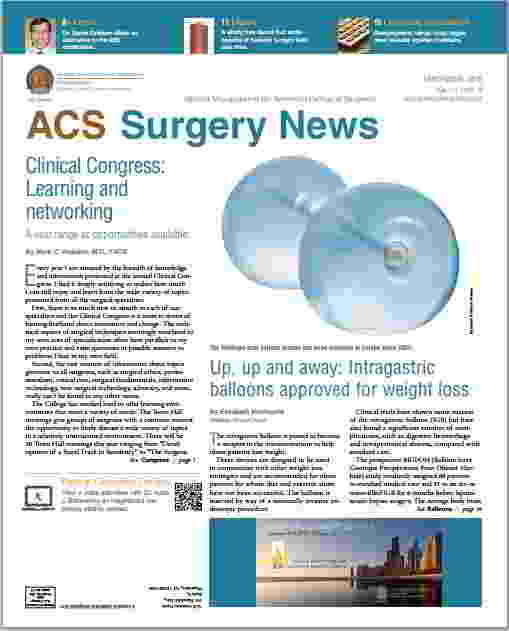
The September issue of ACS Surgery News is available online -- use the mobile app to download or view as a pdf.
This month's issue features news about intragastric balloons now approved by the FDA, commentary by Dr. Mark Weissler on the rich variety of learning and networking opportunities at the upcoming Clinical Congress, and an update on the implications of a recent court ruling on the number of lawsuits brought against doctors.
The September issue of ACS Surgery News is available online -- use the mobile app to download or view as a pdf.
This month's issue features news about intragastric balloons now approved by the FDA, commentary by Dr. Mark Weissler on the rich variety of learning and networking opportunities at the upcoming Clinical Congress, and an update on the implications of a recent court ruling on the number of lawsuits brought against doctors.
The September issue of ACS Surgery News is available online -- use the mobile app to download or view as a pdf.
This month's issue features news about intragastric balloons now approved by the FDA, commentary by Dr. Mark Weissler on the rich variety of learning and networking opportunities at the upcoming Clinical Congress, and an update on the implications of a recent court ruling on the number of lawsuits brought against doctors.
Readmissions for C. difficile infections high among elderly
LAS VEGAS – More than one in 10 patients with Clostridium difficile infection at the time of hospital discharge are readmitted for C. difficile infection within 90 days, according to findings from a review of Medicare data from 2009 to 2011.
Of a random sample of nearly 900,000 Part A inpatients and Part D prescription drug claimants during the study period, about 8,500 were hospitalized with a primary or secondary diagnosis of C. difficile infection, and of 7,042 of those who were discharged alive and who were eligible for the study, 945 (13.4%) were readmitted within 90 days, Dr. Charles M. Psoinos reported at the annual meeting of the American Association for the Surgery of Trauma.

Compared with 1,900 patients not readmitted for any reason, those who were readmitted had more baseline comorbidities (average Elixhauser index, 5.9 vs. 4.7), and a significantly shorter length of stay during the index hospitalization (9.2 vs. 11.8 days), and those older than 95 years were twice as likely as those aged 65-70 years to be readmitted, as were those with an emergent vs. nonemergent index hospitalization, said Dr. Psoinos of the University of Massachusetts, Worcester.
Further, the readmission rate was lower in the 39% of patients discharged on oral metronidazole (19%), and in the 12% discharged on oral vancomycin (28%), than among the 38% discharged with no ongoing treatment (48%), while those discharged on both oral metronidazole and vancomycin were at increased risk for readmission (odds ratio, 1.29), he said.
The 90-day all cause mortality rate was nearly doubled in those who were readmitted, compared with those who were not (17.8% vs. 8.9%; OR, 1.77), he said.
Patients who were and were not readmitted did not differ significantly with respect to age (mean of about 80 years) and race distribution, and the outcomes were adjusted for the differences in baseline comorbidities and other confounding factors.
The findings could have important implications for reducing readmissions among Medicare beneficiaries, Dr. Psoinos said.
The incidence of C. difficile infections has increased nearly eightfold in the elderly population over the last several decades, and the elderly now account for more than 70% of hospitalized patients with such infections. Recurrence rates range from 5% to 31% after cessation of therapy, and readmission rates are similar, he explained, noting that treatment recommendations for C. difficile infections are commonly based on symptoms and their severity, with oral metronidazole recommended for mild and moderate disease, vancomycin only for severe disease, and dual therapy for complicated severe disease.
Though limited by the retrospective design of the study, the findings suggest that C. difficile patients discharged from the hospital may benefit from ongoing monotherapy treatment to reduce subclinical infections and induce long-term eradication, and that elderly patients on dual therapy may benefit from continued hospitalization until they are appropriate for discharge on monotherapy.
These strategies could reduce the rate of readmissions, Dr. Psoinos concluded.
Dr. Psoinos reported having no relevant financial conflicts.
LAS VEGAS – More than one in 10 patients with Clostridium difficile infection at the time of hospital discharge are readmitted for C. difficile infection within 90 days, according to findings from a review of Medicare data from 2009 to 2011.
Of a random sample of nearly 900,000 Part A inpatients and Part D prescription drug claimants during the study period, about 8,500 were hospitalized with a primary or secondary diagnosis of C. difficile infection, and of 7,042 of those who were discharged alive and who were eligible for the study, 945 (13.4%) were readmitted within 90 days, Dr. Charles M. Psoinos reported at the annual meeting of the American Association for the Surgery of Trauma.
Compared with 1,900 patients not readmitted for any reason, those who were readmitted had more baseline comorbidities (average Elixhauser index, 5.9 vs. 4.7), and a significantly shorter length of stay during the index hospitalization (9.2 vs. 11.8 days), and those older than 95 years were twice as likely as those aged 65-70 years to be readmitted, as were those with an emergent vs. nonemergent index hospitalization, said Dr. Psoinos of the University of Massachusetts, Worcester.
Further, the readmission rate was lower in the 39% of patients discharged on oral metronidazole (19%), and in the 12% discharged on oral vancomycin (28%), than among the 38% discharged with no ongoing treatment (48%), while those discharged on both oral metronidazole and vancomycin were at increased risk for readmission (odds ratio, 1.29), he said.
The 90-day all cause mortality rate was nearly doubled in those who were readmitted, compared with those who were not (17.8% vs. 8.9%; OR, 1.77), he said.
Patients who were and were not readmitted did not differ significantly with respect to age (mean of about 80 years) and race distribution, and the outcomes were adjusted for the differences in baseline comorbidities and other confounding factors.
The findings could have important implications for reducing readmissions among Medicare beneficiaries, Dr. Psoinos said.
The incidence of C. difficile infections has increased nearly eightfold in the elderly population over the last several decades, and the elderly now account for more than 70% of hospitalized patients with such infections. Recurrence rates range from 5% to 31% after cessation of therapy, and readmission rates are similar, he explained, noting that treatment recommendations for C. difficile infections are commonly based on symptoms and their severity, with oral metronidazole recommended for mild and moderate disease, vancomycin only for severe disease, and dual therapy for complicated severe disease.
Though limited by the retrospective design of the study, the findings suggest that C. difficile patients discharged from the hospital may benefit from ongoing monotherapy treatment to reduce subclinical infections and induce long-term eradication, and that elderly patients on dual therapy may benefit from continued hospitalization until they are appropriate for discharge on monotherapy.
These strategies could reduce the rate of readmissions, Dr. Psoinos concluded.
Dr. Psoinos reported having no relevant financial conflicts.
LAS VEGAS – More than one in 10 patients with Clostridium difficile infection at the time of hospital discharge are readmitted for C. difficile infection within 90 days, according to findings from a review of Medicare data from 2009 to 2011.
Of a random sample of nearly 900,000 Part A inpatients and Part D prescription drug claimants during the study period, about 8,500 were hospitalized with a primary or secondary diagnosis of C. difficile infection, and of 7,042 of those who were discharged alive and who were eligible for the study, 945 (13.4%) were readmitted within 90 days, Dr. Charles M. Psoinos reported at the annual meeting of the American Association for the Surgery of Trauma.
Compared with 1,900 patients not readmitted for any reason, those who were readmitted had more baseline comorbidities (average Elixhauser index, 5.9 vs. 4.7), and a significantly shorter length of stay during the index hospitalization (9.2 vs. 11.8 days), and those older than 95 years were twice as likely as those aged 65-70 years to be readmitted, as were those with an emergent vs. nonemergent index hospitalization, said Dr. Psoinos of the University of Massachusetts, Worcester.
Further, the readmission rate was lower in the 39% of patients discharged on oral metronidazole (19%), and in the 12% discharged on oral vancomycin (28%), than among the 38% discharged with no ongoing treatment (48%), while those discharged on both oral metronidazole and vancomycin were at increased risk for readmission (odds ratio, 1.29), he said.
The 90-day all cause mortality rate was nearly doubled in those who were readmitted, compared with those who were not (17.8% vs. 8.9%; OR, 1.77), he said.
Patients who were and were not readmitted did not differ significantly with respect to age (mean of about 80 years) and race distribution, and the outcomes were adjusted for the differences in baseline comorbidities and other confounding factors.
The findings could have important implications for reducing readmissions among Medicare beneficiaries, Dr. Psoinos said.
The incidence of C. difficile infections has increased nearly eightfold in the elderly population over the last several decades, and the elderly now account for more than 70% of hospitalized patients with such infections. Recurrence rates range from 5% to 31% after cessation of therapy, and readmission rates are similar, he explained, noting that treatment recommendations for C. difficile infections are commonly based on symptoms and their severity, with oral metronidazole recommended for mild and moderate disease, vancomycin only for severe disease, and dual therapy for complicated severe disease.
Though limited by the retrospective design of the study, the findings suggest that C. difficile patients discharged from the hospital may benefit from ongoing monotherapy treatment to reduce subclinical infections and induce long-term eradication, and that elderly patients on dual therapy may benefit from continued hospitalization until they are appropriate for discharge on monotherapy.
These strategies could reduce the rate of readmissions, Dr. Psoinos concluded.
Dr. Psoinos reported having no relevant financial conflicts.
AT THE AAST ANNUAL MEETING
Key clinical point: More than 1 in 10 patients with Clostridium difficile infection at the time of hospital discharge are readmitted for C. difficile infection within 90 days, according to findings from a review of Medicare data from 2009 to 2011.
Major finding: Of 7,042 discharged patients, 945 (13.4%) were readmitted within 90 days.
Data source: A retrospective cohort study of about 900,000 Medicare beneficiaries.
Disclosures: Dr. Psoinos reported having no relevant financial disclosures.

From the Washington Office
This month I am writing to encourage Fellows to contact their representatives and senators to ask that they support the Critical Access Hospital Relief Act, H.R. 169 and S. 258.
Approximately 2 years ago, surgeons working at Critical Access Hospitals (CAHs) began to encounter a new barrier to caring for their patients and in some cases have been forced to send patients to other hospitals far from their homes to receive care. The barrier responsible is contained in legislation originally passed in the Balanced Budget Act of 1997, the same legislation responsible for the sustainable growth rate (SGR) and the current caps on Medicare-sponsored graduate medical education positions.

Under current law, for facilities to qualify for Medicare certification and thus participate in the Medicare program itself, CAHs must meet minimum health and safety standards known as conditions of participation. In addition, the Centers for Medicare & Medicaid Services (CMS) imposes certain Medicare conditions of payment that must be met for a CAH to receive Medicare Part A reimbursement.
The CAH 96-hour rule imposes both a condition of participation and a condition of payment on CAHs. As mentioned above, though this provision has been in the law since 1997, it was not until fall of 2013 that the condition of payment began to be enforced. Prior to that time, only the condition of participation, requiring that acute inpatient care not exceed 96 hours per patient on an average basis, had been enforced by the CMS. Despite being written in the same legislation passed in 1997, the condition of payment was virtually unknown until September of 2013 when the CMS released a statement in a document pertaining to a related policy. At that time, it was indicated that the condition of payment in the 96-hour rule would be more strictly enforced. That condition of payment states that CAHs will receive Medicare Part A reimbursement only if the admitting physician certifies, at the time of admission, that the patient can reasonably be expected to be discharged or transferred within 96 hours. This was the first time many CAHs and the surgeons and other physicians working in such facilities had ever heard of the 96-hour rule’s condition of payment certification requirement.
Since the advisory was released, administrators at some CAHs have begun requiring surgeons to sign certifications upon admission stating that the patient being admitted can reasonably be expected to be discharged or transferred within 96 hours of admission. Obviously, this has caused great concern for surgeons and other providers serving populations who receive care in CAHs. Many surgeons practicing in such rural settings routinely perform procedures and provide care for surgical patients in those CAHs with expected stays likely to exceed 4 days. On the other hand, while any individual patient may require inpatient admission exceeding 96 hours, CAHs have generally not had difficulty maintaining the 96-hour average required by the condition of participation.
In response to the CMS notice on enforcement of the 96-hour rule, Representative Adrian Smith (R-Neb.) and Senator Pat Roberts (R-Kan.) introduced the Critical Access Hospital Relief Act (H.R. 169/S. 258). The legislation proposes to simply remove the 96-hour rule condition of payment, leaving in place the currently enforced 96-hour average patient stay required by the condition of participation. As of Aug. 26, 2015, there were 75 cosponsors (58 R and 17 D) in the House of Representatives for H.R. 169 and 30 cosponsors (19 R and 11 D) in the Senate for S. 258.
While it is unlikely this legislation will progress to the floor of either the House or Senate as a “standalone” bill, it is entirely possible that the Critical Access Hospital Relief Act could be included in a larger package of legislation moving in the coming months before Congress recesses for the holidays.
The American College of Surgeons strongly supports this straightforward legislation and we would urge Fellows, especially those who either serve populations receiving care in CAHs or those practicing in states with large numbers of CAHs, to contact their representatives and senators to request that they sign on as cosponsors of H.R. 169 or S. 258 and support the inclusion of the bill in any legislation coming to the floor of either chamber for a vote this year.
Until next month …
Dr. Bailey is a pediatric surgeon and Medical Director, Advocacy, for the Division of Advocacy and Health Policy, in the ACS offices in Washington.
This month I am writing to encourage Fellows to contact their representatives and senators to ask that they support the Critical Access Hospital Relief Act, H.R. 169 and S. 258.
Approximately 2 years ago, surgeons working at Critical Access Hospitals (CAHs) began to encounter a new barrier to caring for their patients and in some cases have been forced to send patients to other hospitals far from their homes to receive care. The barrier responsible is contained in legislation originally passed in the Balanced Budget Act of 1997, the same legislation responsible for the sustainable growth rate (SGR) and the current caps on Medicare-sponsored graduate medical education positions.
Under current law, for facilities to qualify for Medicare certification and thus participate in the Medicare program itself, CAHs must meet minimum health and safety standards known as conditions of participation. In addition, the Centers for Medicare & Medicaid Services (CMS) imposes certain Medicare conditions of payment that must be met for a CAH to receive Medicare Part A reimbursement.
The CAH 96-hour rule imposes both a condition of participation and a condition of payment on CAHs. As mentioned above, though this provision has been in the law since 1997, it was not until fall of 2013 that the condition of payment began to be enforced. Prior to that time, only the condition of participation, requiring that acute inpatient care not exceed 96 hours per patient on an average basis, had been enforced by the CMS. Despite being written in the same legislation passed in 1997, the condition of payment was virtually unknown until September of 2013 when the CMS released a statement in a document pertaining to a related policy. At that time, it was indicated that the condition of payment in the 96-hour rule would be more strictly enforced. That condition of payment states that CAHs will receive Medicare Part A reimbursement only if the admitting physician certifies, at the time of admission, that the patient can reasonably be expected to be discharged or transferred within 96 hours. This was the first time many CAHs and the surgeons and other physicians working in such facilities had ever heard of the 96-hour rule’s condition of payment certification requirement.
Since the advisory was released, administrators at some CAHs have begun requiring surgeons to sign certifications upon admission stating that the patient being admitted can reasonably be expected to be discharged or transferred within 96 hours of admission. Obviously, this has caused great concern for surgeons and other providers serving populations who receive care in CAHs. Many surgeons practicing in such rural settings routinely perform procedures and provide care for surgical patients in those CAHs with expected stays likely to exceed 4 days. On the other hand, while any individual patient may require inpatient admission exceeding 96 hours, CAHs have generally not had difficulty maintaining the 96-hour average required by the condition of participation.
In response to the CMS notice on enforcement of the 96-hour rule, Representative Adrian Smith (R-Neb.) and Senator Pat Roberts (R-Kan.) introduced the Critical Access Hospital Relief Act (H.R. 169/S. 258). The legislation proposes to simply remove the 96-hour rule condition of payment, leaving in place the currently enforced 96-hour average patient stay required by the condition of participation. As of Aug. 26, 2015, there were 75 cosponsors (58 R and 17 D) in the House of Representatives for H.R. 169 and 30 cosponsors (19 R and 11 D) in the Senate for S. 258.
While it is unlikely this legislation will progress to the floor of either the House or Senate as a “standalone” bill, it is entirely possible that the Critical Access Hospital Relief Act could be included in a larger package of legislation moving in the coming months before Congress recesses for the holidays.
The American College of Surgeons strongly supports this straightforward legislation and we would urge Fellows, especially those who either serve populations receiving care in CAHs or those practicing in states with large numbers of CAHs, to contact their representatives and senators to request that they sign on as cosponsors of H.R. 169 or S. 258 and support the inclusion of the bill in any legislation coming to the floor of either chamber for a vote this year.
Until next month …
Dr. Bailey is a pediatric surgeon and Medical Director, Advocacy, for the Division of Advocacy and Health Policy, in the ACS offices in Washington.
This month I am writing to encourage Fellows to contact their representatives and senators to ask that they support the Critical Access Hospital Relief Act, H.R. 169 and S. 258.
Approximately 2 years ago, surgeons working at Critical Access Hospitals (CAHs) began to encounter a new barrier to caring for their patients and in some cases have been forced to send patients to other hospitals far from their homes to receive care. The barrier responsible is contained in legislation originally passed in the Balanced Budget Act of 1997, the same legislation responsible for the sustainable growth rate (SGR) and the current caps on Medicare-sponsored graduate medical education positions.
Under current law, for facilities to qualify for Medicare certification and thus participate in the Medicare program itself, CAHs must meet minimum health and safety standards known as conditions of participation. In addition, the Centers for Medicare & Medicaid Services (CMS) imposes certain Medicare conditions of payment that must be met for a CAH to receive Medicare Part A reimbursement.
The CAH 96-hour rule imposes both a condition of participation and a condition of payment on CAHs. As mentioned above, though this provision has been in the law since 1997, it was not until fall of 2013 that the condition of payment began to be enforced. Prior to that time, only the condition of participation, requiring that acute inpatient care not exceed 96 hours per patient on an average basis, had been enforced by the CMS. Despite being written in the same legislation passed in 1997, the condition of payment was virtually unknown until September of 2013 when the CMS released a statement in a document pertaining to a related policy. At that time, it was indicated that the condition of payment in the 96-hour rule would be more strictly enforced. That condition of payment states that CAHs will receive Medicare Part A reimbursement only if the admitting physician certifies, at the time of admission, that the patient can reasonably be expected to be discharged or transferred within 96 hours. This was the first time many CAHs and the surgeons and other physicians working in such facilities had ever heard of the 96-hour rule’s condition of payment certification requirement.
Since the advisory was released, administrators at some CAHs have begun requiring surgeons to sign certifications upon admission stating that the patient being admitted can reasonably be expected to be discharged or transferred within 96 hours of admission. Obviously, this has caused great concern for surgeons and other providers serving populations who receive care in CAHs. Many surgeons practicing in such rural settings routinely perform procedures and provide care for surgical patients in those CAHs with expected stays likely to exceed 4 days. On the other hand, while any individual patient may require inpatient admission exceeding 96 hours, CAHs have generally not had difficulty maintaining the 96-hour average required by the condition of participation.
In response to the CMS notice on enforcement of the 96-hour rule, Representative Adrian Smith (R-Neb.) and Senator Pat Roberts (R-Kan.) introduced the Critical Access Hospital Relief Act (H.R. 169/S. 258). The legislation proposes to simply remove the 96-hour rule condition of payment, leaving in place the currently enforced 96-hour average patient stay required by the condition of participation. As of Aug. 26, 2015, there were 75 cosponsors (58 R and 17 D) in the House of Representatives for H.R. 169 and 30 cosponsors (19 R and 11 D) in the Senate for S. 258.
While it is unlikely this legislation will progress to the floor of either the House or Senate as a “standalone” bill, it is entirely possible that the Critical Access Hospital Relief Act could be included in a larger package of legislation moving in the coming months before Congress recesses for the holidays.
The American College of Surgeons strongly supports this straightforward legislation and we would urge Fellows, especially those who either serve populations receiving care in CAHs or those practicing in states with large numbers of CAHs, to contact their representatives and senators to request that they sign on as cosponsors of H.R. 169 or S. 258 and support the inclusion of the bill in any legislation coming to the floor of either chamber for a vote this year.
Until next month …
Dr. Bailey is a pediatric surgeon and Medical Director, Advocacy, for the Division of Advocacy and Health Policy, in the ACS offices in Washington.