User login
Clemastine Fumarate May Repair Myelin in People With MS
VANCOUVER—Among people with multiple sclerosis (MS) and chronic demyelinating optic neuropathy, clemastine fumarate reduces visual evoked potential latency delay, a putative biomarker for remyelination, according to a phase II study presented at the 68th Annual Meeting of the American Academy of Neurology.
"This is the first randomized controlled trial documenting efficacy for a candidate remyelinating agent in MS," said Ari Green, MD, Assistant Clinical Director of the Multiple Sclerosis Center at the University of California San Francisco (UCSF), and colleagues.

Ari Green, MD
Investigators at UCSF identified clemastine fumarate, an antihistamine that is available over the counter, as a potential remyelinating agent using an in vitro micropillar screen. In an animal model, the agent led to robust remyelination and appeared to protect axons, said Dr. Green.
To assess the efficacy of clemastine fumarate for remyelination in patients with MS and chronic optic neuropathy, Dr. Green and colleagues conducted a double-blind, randomized, placebo-controlled, crossover study.
They enrolled 50 participants who had a delay in transmission time greater than 118 ms in at least one eye. Patients had an average age of 40, Expanded Disability Status Scale score of 2.1, and disease duration of 5.1 years. The study period was 150 days.
Patients were grouped into two treatment arms. For the first treatment period, 25 patients received oral clemastine fumarate and 25 patients received placebo twice daily. The primary efficacy end point was change in latency delay on visual evoked potential.
Visual evoked potential latency delay was reduced by 1.9 ms per eye for the period on treatment. A strong trend for improvement of the secondary end point of low contrast visual acuity also was observed. Clemastine treatment was associated with mild worsening of fatigue on the Multidimensional Assessment of Fatigue, however.
Among patients who first received clemastine, the treatment effect was sustained "even into the second epoch, suggesting that we were in fact having a remyelinating effect, and not just a transient effect on ion channels," Dr. Green said.
Larger studies are needed before doctors can recommend clemastine fumarate for people with MS, Dr. Green said. New medications are in development, and researchers aim to improve the targeting and reduce the side effects from these drugs.
"While the improvement in vision appears modest, this study is promising because it is the first time a drug has been shown to possibly reverse the damage done by MS," said Dr. Green. "Findings are preliminary, but this study provides a framework for future MS repair studies and will hopefully herald discoveries that will enhance the brain's innate capacity for repair."
—Jake Remaly
VANCOUVER—Among people with multiple sclerosis (MS) and chronic demyelinating optic neuropathy, clemastine fumarate reduces visual evoked potential latency delay, a putative biomarker for remyelination, according to a phase II study presented at the 68th Annual Meeting of the American Academy of Neurology.
"This is the first randomized controlled trial documenting efficacy for a candidate remyelinating agent in MS," said Ari Green, MD, Assistant Clinical Director of the Multiple Sclerosis Center at the University of California San Francisco (UCSF), and colleagues.
Ari Green, MD
Investigators at UCSF identified clemastine fumarate, an antihistamine that is available over the counter, as a potential remyelinating agent using an in vitro micropillar screen. In an animal model, the agent led to robust remyelination and appeared to protect axons, said Dr. Green.
To assess the efficacy of clemastine fumarate for remyelination in patients with MS and chronic optic neuropathy, Dr. Green and colleagues conducted a double-blind, randomized, placebo-controlled, crossover study.
They enrolled 50 participants who had a delay in transmission time greater than 118 ms in at least one eye. Patients had an average age of 40, Expanded Disability Status Scale score of 2.1, and disease duration of 5.1 years. The study period was 150 days.
Patients were grouped into two treatment arms. For the first treatment period, 25 patients received oral clemastine fumarate and 25 patients received placebo twice daily. The primary efficacy end point was change in latency delay on visual evoked potential.
Visual evoked potential latency delay was reduced by 1.9 ms per eye for the period on treatment. A strong trend for improvement of the secondary end point of low contrast visual acuity also was observed. Clemastine treatment was associated with mild worsening of fatigue on the Multidimensional Assessment of Fatigue, however.
Among patients who first received clemastine, the treatment effect was sustained "even into the second epoch, suggesting that we were in fact having a remyelinating effect, and not just a transient effect on ion channels," Dr. Green said.
Larger studies are needed before doctors can recommend clemastine fumarate for people with MS, Dr. Green said. New medications are in development, and researchers aim to improve the targeting and reduce the side effects from these drugs.
"While the improvement in vision appears modest, this study is promising because it is the first time a drug has been shown to possibly reverse the damage done by MS," said Dr. Green. "Findings are preliminary, but this study provides a framework for future MS repair studies and will hopefully herald discoveries that will enhance the brain's innate capacity for repair."
—Jake Remaly
VANCOUVER—Among people with multiple sclerosis (MS) and chronic demyelinating optic neuropathy, clemastine fumarate reduces visual evoked potential latency delay, a putative biomarker for remyelination, according to a phase II study presented at the 68th Annual Meeting of the American Academy of Neurology.
"This is the first randomized controlled trial documenting efficacy for a candidate remyelinating agent in MS," said Ari Green, MD, Assistant Clinical Director of the Multiple Sclerosis Center at the University of California San Francisco (UCSF), and colleagues.
Ari Green, MD
Investigators at UCSF identified clemastine fumarate, an antihistamine that is available over the counter, as a potential remyelinating agent using an in vitro micropillar screen. In an animal model, the agent led to robust remyelination and appeared to protect axons, said Dr. Green.
To assess the efficacy of clemastine fumarate for remyelination in patients with MS and chronic optic neuropathy, Dr. Green and colleagues conducted a double-blind, randomized, placebo-controlled, crossover study.
They enrolled 50 participants who had a delay in transmission time greater than 118 ms in at least one eye. Patients had an average age of 40, Expanded Disability Status Scale score of 2.1, and disease duration of 5.1 years. The study period was 150 days.
Patients were grouped into two treatment arms. For the first treatment period, 25 patients received oral clemastine fumarate and 25 patients received placebo twice daily. The primary efficacy end point was change in latency delay on visual evoked potential.
Visual evoked potential latency delay was reduced by 1.9 ms per eye for the period on treatment. A strong trend for improvement of the secondary end point of low contrast visual acuity also was observed. Clemastine treatment was associated with mild worsening of fatigue on the Multidimensional Assessment of Fatigue, however.
Among patients who first received clemastine, the treatment effect was sustained "even into the second epoch, suggesting that we were in fact having a remyelinating effect, and not just a transient effect on ion channels," Dr. Green said.
Larger studies are needed before doctors can recommend clemastine fumarate for people with MS, Dr. Green said. New medications are in development, and researchers aim to improve the targeting and reduce the side effects from these drugs.
"While the improvement in vision appears modest, this study is promising because it is the first time a drug has been shown to possibly reverse the damage done by MS," said Dr. Green. "Findings are preliminary, but this study provides a framework for future MS repair studies and will hopefully herald discoveries that will enhance the brain's innate capacity for repair."
—Jake Remaly

Small study: OTC antihistamine shows potential as a remyelinating agent in MS
VANCOUVER – Clemastine fumarate (Tavist) reduced delay in visual evoked potentials by 1.9 ms per eye, with a trend toward improved low contrast visual acuity, in a small randomized, placebo-controlled trial of patients with multiple sclerosis and chronic, stable optic neuropathy.
An improvement in visual evoked potential (VEP) transmission delay, the time for signal transmission from the retina to the visual cortex, was considered a marker of myelin repair. To be included in the study, participants had to have a transmission delay of at least 118 ms in one or both eyes

The idea was to assess the remyelination potential of clemastine in patients with multiple sclerosis (MS) and chronic optic neuropathy. “While the improvement in [VEP] appears modest, this study is promising because it is the first time a drug has been shown to possibly reverse the damage done by MS. This study provides a framework for future MS repair studies,” said Dr. Ari Green, assistant clinical director of the University of California, San Francisco (UCSF) Multiple Sclerosis Center.
“We certainly wouldn’t promote this for clinical use, but it’s a promising indication that there’s a potential for remyelination” in MS. “We need to further investigate this,” he said at the annual meeting of the American Academy of Neurology.
A total of 50 patients were randomized to oral clemastine 4 mg twice daily or matched placebo for 3 months, then switched to the opposite arm for 2 months. The dosage was a bit higher than that typically used in adults for allergic disease.
The VEP improvement persisted even when clemastine patients were switched to placebo, which suggests “we were having a remyelinating effect, not just a transient effect on ion channels,” Dr. Green said.
Patients were 40 years old, on average, with mean disease duration of 5 years and mean Expanded Disability Status Scale score of 2.1. They had to have had a bout of optic neuropathy within the previous 5 years, but not within the previous 6 months. They were allowed to stay on their disease-modifying therapies while in the study. Clemastine was associated with mild worsening of fatigue.
Previous studies at UCSF suggest that clemastine is one of several antimuscarinic agents that can induce oligodendrocyte precursor cells (OPC) into mature, myelin-producing cells, which might help account for the findings. The next step in the work is to see how well longer dosing works, and how well clemastine works in acute optic neuropathy. The team also wants to test stronger OPC inducers.
The University of California, San Francisco, funded the work. Dr. Green is an adviser for Bionure, Mylan Pharma, MedImmune, Inception 5, and Novartis, and receives research support from Novartis.
aotto@frontlinemedcom.com
VANCOUVER – Clemastine fumarate (Tavist) reduced delay in visual evoked potentials by 1.9 ms per eye, with a trend toward improved low contrast visual acuity, in a small randomized, placebo-controlled trial of patients with multiple sclerosis and chronic, stable optic neuropathy.
An improvement in visual evoked potential (VEP) transmission delay, the time for signal transmission from the retina to the visual cortex, was considered a marker of myelin repair. To be included in the study, participants had to have a transmission delay of at least 118 ms in one or both eyes
The idea was to assess the remyelination potential of clemastine in patients with multiple sclerosis (MS) and chronic optic neuropathy. “While the improvement in [VEP] appears modest, this study is promising because it is the first time a drug has been shown to possibly reverse the damage done by MS. This study provides a framework for future MS repair studies,” said Dr. Ari Green, assistant clinical director of the University of California, San Francisco (UCSF) Multiple Sclerosis Center.
“We certainly wouldn’t promote this for clinical use, but it’s a promising indication that there’s a potential for remyelination” in MS. “We need to further investigate this,” he said at the annual meeting of the American Academy of Neurology.
A total of 50 patients were randomized to oral clemastine 4 mg twice daily or matched placebo for 3 months, then switched to the opposite arm for 2 months. The dosage was a bit higher than that typically used in adults for allergic disease.
The VEP improvement persisted even when clemastine patients were switched to placebo, which suggests “we were having a remyelinating effect, not just a transient effect on ion channels,” Dr. Green said.
Patients were 40 years old, on average, with mean disease duration of 5 years and mean Expanded Disability Status Scale score of 2.1. They had to have had a bout of optic neuropathy within the previous 5 years, but not within the previous 6 months. They were allowed to stay on their disease-modifying therapies while in the study. Clemastine was associated with mild worsening of fatigue.
Previous studies at UCSF suggest that clemastine is one of several antimuscarinic agents that can induce oligodendrocyte precursor cells (OPC) into mature, myelin-producing cells, which might help account for the findings. The next step in the work is to see how well longer dosing works, and how well clemastine works in acute optic neuropathy. The team also wants to test stronger OPC inducers.
The University of California, San Francisco, funded the work. Dr. Green is an adviser for Bionure, Mylan Pharma, MedImmune, Inception 5, and Novartis, and receives research support from Novartis.
aotto@frontlinemedcom.com
VANCOUVER – Clemastine fumarate (Tavist) reduced delay in visual evoked potentials by 1.9 ms per eye, with a trend toward improved low contrast visual acuity, in a small randomized, placebo-controlled trial of patients with multiple sclerosis and chronic, stable optic neuropathy.
An improvement in visual evoked potential (VEP) transmission delay, the time for signal transmission from the retina to the visual cortex, was considered a marker of myelin repair. To be included in the study, participants had to have a transmission delay of at least 118 ms in one or both eyes
The idea was to assess the remyelination potential of clemastine in patients with multiple sclerosis (MS) and chronic optic neuropathy. “While the improvement in [VEP] appears modest, this study is promising because it is the first time a drug has been shown to possibly reverse the damage done by MS. This study provides a framework for future MS repair studies,” said Dr. Ari Green, assistant clinical director of the University of California, San Francisco (UCSF) Multiple Sclerosis Center.
“We certainly wouldn’t promote this for clinical use, but it’s a promising indication that there’s a potential for remyelination” in MS. “We need to further investigate this,” he said at the annual meeting of the American Academy of Neurology.
A total of 50 patients were randomized to oral clemastine 4 mg twice daily or matched placebo for 3 months, then switched to the opposite arm for 2 months. The dosage was a bit higher than that typically used in adults for allergic disease.
The VEP improvement persisted even when clemastine patients were switched to placebo, which suggests “we were having a remyelinating effect, not just a transient effect on ion channels,” Dr. Green said.
Patients were 40 years old, on average, with mean disease duration of 5 years and mean Expanded Disability Status Scale score of 2.1. They had to have had a bout of optic neuropathy within the previous 5 years, but not within the previous 6 months. They were allowed to stay on their disease-modifying therapies while in the study. Clemastine was associated with mild worsening of fatigue.
Previous studies at UCSF suggest that clemastine is one of several antimuscarinic agents that can induce oligodendrocyte precursor cells (OPC) into mature, myelin-producing cells, which might help account for the findings. The next step in the work is to see how well longer dosing works, and how well clemastine works in acute optic neuropathy. The team also wants to test stronger OPC inducers.
The University of California, San Francisco, funded the work. Dr. Green is an adviser for Bionure, Mylan Pharma, MedImmune, Inception 5, and Novartis, and receives research support from Novartis.
aotto@frontlinemedcom.com
AT THE AAN 2016 ANNUAL MEETING
Key clinical point: Clemastine led to a modest reduction in visual evoked potential delay in MS patients with chronic, stable optic neuropathy.
Major finding: Clemastine fumarate (Tavist) reduced delay in visual evoked potentials by 1.9 ms per eye, with a trend toward improvement of low contrast visual acuity, in MS patients with chronic, stable optic neuropathy.
Data source: Randomized, blinded crossover trial in 50 MS patients.
Disclosures: The University of California, San Francisco, funded the work. Dr. Green is an adviser for Bionure, Mylan Pharma, MedImmune, Inception 5, and Novartis, and receives research support from Novartis.

New data help guide the stopping of disease-modifying drugs in MS
VANCOUVER – Certain patient and disease characteristics may help guide decisions about starting and stopping therapy in progressive multiple sclerosis, according to a pair of longitudinal cohort studies reported at the annual meeting of the American Academy of Neurology.
In a cohort of patients transitioning from relapsing-remitting to progressive multiple sclerosis (MS), the age at onset of progression predicted the likelihood of subsequent relapses. The absolute lifetime risk ranged from 18% for patients younger than 35 years at the time to just 5% for those aged 55 years or older at the time.

And in a cohort of patients with secondary progressive MS, the annual rate of clinical relapse fell in the third year after immunomodulator discontinuation. Overall, 35% had a clinical relapse or radiologic disease activity. Patients had a lower risk of this outcome if they had greater disability at the time of discontinuation or if they had not had any radiologic disease activity in the antecedent years.
“These studies address a very important question, because not many people talk about stopping drugs,” commented session comoderator Helen Tremlett, Ph.D., of the division of neurology at the University of British Columbia, Vancouver, and the Canada Research Chair in Neuroepidemiology and Multiple Sclerosis. “I would like to see some of these findings validated in other cohorts. But I did like the questions they are asking.”
Age, risk of postprogression relapse
The first study focused on ongoing relapses in patients transitioning to progressive MS. “We have recently shown that these relapses indeed matter. People who continue to relapse after progressive MS onset develop a need for a cane 2 years earlier than those who don’t” continue to have relapses, explained senior author Dr. Orhun H. Kantarci of the department of neurology at the Mayo Clinic in Rochester, Minn. Therefore, continuation or initiation of disease-modifying drugs (DMDs) during this period of overlap may be beneficial.

He and his colleagues followed 946 patients with MS from a clinic- and population-based cohort, assessing the age at various disease landmarks.
Results showed the mean age at first relapse was 33 years, the mean age at the onset of progressive MS was 45 years, and the mean age at last relapse (whether it occurred before or after the onset of progressive disease) was 43 years.
The 95% overlap age range for age at first relapse and age at onset of progressive MS was 27-46 years, Dr. Kantarci reported. Therefore, DMDs would be expected to have a some impact during those years.
Further analyses showed that if the age of progressive MS onset was before 35 years, 35-44 years, 45-54 years, and 55 years or older, the absolute lifetime risk of relapse after progressive MS onset was 18%, 17%, 13%, and 5%, respectively. The corresponding last predicted relapse for these groups was before age 50, age 60, age 70, and age 70.
Taken together, the data suggest that in patients transitioning to progressive MS, initiation or continuation of a DMD is most likely to be beneficial if the patient is younger than 35, with some benefit, albeit less, up to the age of 54, according to Dr. Kantarci.
“But above 55, if a person has never been on a DMD, it is unlikely to be recommended, because I don’t expect it to do anything from the data we have,” he said. Furthermore, “DMD stopping can be offered to these patients. If a person is on a DMD and they are asking, ‘Can I stop it? I have been stable,’ and they are above age 55, it can be considered.”
The investigators are performing additional analyses of the data to assess the impact of DMDs on disease course, including the influence of initial and maintenance treatment choices, and factors that prompt physicians to switch treatments.
“What we haven’t done and will not be possible with this data ... the most interesting question is the impact of subclinical MRI disease, which is a different question,” Dr. Kantarci concluded. “And ultimately, we will have to have an actual stopping experiment and [assess] outcomes, which is an ongoing major planned effort.”
Outcomes after stopping immunomodulators
The second study assessed clinical and radiologic outcomes after discontinuation of immunomodulatory therapy in patients with secondary progressive MS.
“We have more and more patients [with secondary progressive disease] treated for several years, yet the natural history of the disease is less and less relapse, and progression of disability,” commented first author Dr. Julien Bonenfant, a neurologist at the Rennes University Hospital in France. Thus, the benefit of continuing treatment is unclear, especially given its cost and side effects.

He and his colleagues studied 106 consecutive patients with secondary progressive MS who had been on immunomodulators for at least 6 months, were taken off the immunomodulators, and were followed for a mean of 5 years.
Results showed that 16% of the patients had a clinical relapse after discontinuation, nearly all within the first 3 years. The annualized rate of clinical relapse actually fell from 0.13 in the 3 years before discontinuation to 0.07 in the 3 years afterward.
Overall, 35% of patients had either a clinical relapse and/or new contrast enhancement on MRI. Again, most of these events occurred within the first 3 years of discontinuation.
Patients had a lower risk of this outcome after treatment discontinuation if they had an Expanded Disability Status Scale (EDSS) score of 6 or greater at the time of discontinuation (hazard ratio, 0.4) and if they had not had any gadolinium enhancement on MRI in the 3 years before treatment discontinuation (HR, 0.4).
“Disease activity remained low after treatment withdrawal. We found no rebound of relapse rate in our population,” Dr. Bonenfant summarized. “There was no consequence on the slope of disability progression,” nor on the finding of enhancement on MRI alone.
Thirty patients were restarted on immunomodulators, about half of them solely because of MRI findings, he noted. This raises “the controversial question, is it relevant or not to resume treatment in these patients?”
“This study suggests that immunomodulatory treatment withdrawal seems reasonable for patients with advanced secondary progressive MS, especially with an EDSS of 6 or greater and no focal inflammatory disease [clinical or radiologic] at least in the past 3 years,” Dr. Bonenfant maintained. “It shows the importance of MRI monitoring to define the patients who are still in a focal immunoreactive state.”
“The results are far from being definitive, and further prospective studies are needed to provide evidence-based recommendations for clinical practice,” he concluded.
Dr. Kantarci disclosed that he has given scientific presentations at meetings supported by Novartis Pharmaceuticals and has presented as an invited speaker for Biogen but has received no personal compensation from either company. Dr. Bonenfant disclosed that he had no relevant conflicts of interest.
VANCOUVER – Certain patient and disease characteristics may help guide decisions about starting and stopping therapy in progressive multiple sclerosis, according to a pair of longitudinal cohort studies reported at the annual meeting of the American Academy of Neurology.
In a cohort of patients transitioning from relapsing-remitting to progressive multiple sclerosis (MS), the age at onset of progression predicted the likelihood of subsequent relapses. The absolute lifetime risk ranged from 18% for patients younger than 35 years at the time to just 5% for those aged 55 years or older at the time.
And in a cohort of patients with secondary progressive MS, the annual rate of clinical relapse fell in the third year after immunomodulator discontinuation. Overall, 35% had a clinical relapse or radiologic disease activity. Patients had a lower risk of this outcome if they had greater disability at the time of discontinuation or if they had not had any radiologic disease activity in the antecedent years.
“These studies address a very important question, because not many people talk about stopping drugs,” commented session comoderator Helen Tremlett, Ph.D., of the division of neurology at the University of British Columbia, Vancouver, and the Canada Research Chair in Neuroepidemiology and Multiple Sclerosis. “I would like to see some of these findings validated in other cohorts. But I did like the questions they are asking.”
Age, risk of postprogression relapse
The first study focused on ongoing relapses in patients transitioning to progressive MS. “We have recently shown that these relapses indeed matter. People who continue to relapse after progressive MS onset develop a need for a cane 2 years earlier than those who don’t” continue to have relapses, explained senior author Dr. Orhun H. Kantarci of the department of neurology at the Mayo Clinic in Rochester, Minn. Therefore, continuation or initiation of disease-modifying drugs (DMDs) during this period of overlap may be beneficial.
He and his colleagues followed 946 patients with MS from a clinic- and population-based cohort, assessing the age at various disease landmarks.
Results showed the mean age at first relapse was 33 years, the mean age at the onset of progressive MS was 45 years, and the mean age at last relapse (whether it occurred before or after the onset of progressive disease) was 43 years.
The 95% overlap age range for age at first relapse and age at onset of progressive MS was 27-46 years, Dr. Kantarci reported. Therefore, DMDs would be expected to have a some impact during those years.
Further analyses showed that if the age of progressive MS onset was before 35 years, 35-44 years, 45-54 years, and 55 years or older, the absolute lifetime risk of relapse after progressive MS onset was 18%, 17%, 13%, and 5%, respectively. The corresponding last predicted relapse for these groups was before age 50, age 60, age 70, and age 70.
Taken together, the data suggest that in patients transitioning to progressive MS, initiation or continuation of a DMD is most likely to be beneficial if the patient is younger than 35, with some benefit, albeit less, up to the age of 54, according to Dr. Kantarci.
“But above 55, if a person has never been on a DMD, it is unlikely to be recommended, because I don’t expect it to do anything from the data we have,” he said. Furthermore, “DMD stopping can be offered to these patients. If a person is on a DMD and they are asking, ‘Can I stop it? I have been stable,’ and they are above age 55, it can be considered.”
The investigators are performing additional analyses of the data to assess the impact of DMDs on disease course, including the influence of initial and maintenance treatment choices, and factors that prompt physicians to switch treatments.
“What we haven’t done and will not be possible with this data ... the most interesting question is the impact of subclinical MRI disease, which is a different question,” Dr. Kantarci concluded. “And ultimately, we will have to have an actual stopping experiment and [assess] outcomes, which is an ongoing major planned effort.”
Outcomes after stopping immunomodulators
The second study assessed clinical and radiologic outcomes after discontinuation of immunomodulatory therapy in patients with secondary progressive MS.
“We have more and more patients [with secondary progressive disease] treated for several years, yet the natural history of the disease is less and less relapse, and progression of disability,” commented first author Dr. Julien Bonenfant, a neurologist at the Rennes University Hospital in France. Thus, the benefit of continuing treatment is unclear, especially given its cost and side effects.
He and his colleagues studied 106 consecutive patients with secondary progressive MS who had been on immunomodulators for at least 6 months, were taken off the immunomodulators, and were followed for a mean of 5 years.
Results showed that 16% of the patients had a clinical relapse after discontinuation, nearly all within the first 3 years. The annualized rate of clinical relapse actually fell from 0.13 in the 3 years before discontinuation to 0.07 in the 3 years afterward.
Overall, 35% of patients had either a clinical relapse and/or new contrast enhancement on MRI. Again, most of these events occurred within the first 3 years of discontinuation.
Patients had a lower risk of this outcome after treatment discontinuation if they had an Expanded Disability Status Scale (EDSS) score of 6 or greater at the time of discontinuation (hazard ratio, 0.4) and if they had not had any gadolinium enhancement on MRI in the 3 years before treatment discontinuation (HR, 0.4).
“Disease activity remained low after treatment withdrawal. We found no rebound of relapse rate in our population,” Dr. Bonenfant summarized. “There was no consequence on the slope of disability progression,” nor on the finding of enhancement on MRI alone.
Thirty patients were restarted on immunomodulators, about half of them solely because of MRI findings, he noted. This raises “the controversial question, is it relevant or not to resume treatment in these patients?”
“This study suggests that immunomodulatory treatment withdrawal seems reasonable for patients with advanced secondary progressive MS, especially with an EDSS of 6 or greater and no focal inflammatory disease [clinical or radiologic] at least in the past 3 years,” Dr. Bonenfant maintained. “It shows the importance of MRI monitoring to define the patients who are still in a focal immunoreactive state.”
“The results are far from being definitive, and further prospective studies are needed to provide evidence-based recommendations for clinical practice,” he concluded.
Dr. Kantarci disclosed that he has given scientific presentations at meetings supported by Novartis Pharmaceuticals and has presented as an invited speaker for Biogen but has received no personal compensation from either company. Dr. Bonenfant disclosed that he had no relevant conflicts of interest.
VANCOUVER – Certain patient and disease characteristics may help guide decisions about starting and stopping therapy in progressive multiple sclerosis, according to a pair of longitudinal cohort studies reported at the annual meeting of the American Academy of Neurology.
In a cohort of patients transitioning from relapsing-remitting to progressive multiple sclerosis (MS), the age at onset of progression predicted the likelihood of subsequent relapses. The absolute lifetime risk ranged from 18% for patients younger than 35 years at the time to just 5% for those aged 55 years or older at the time.
And in a cohort of patients with secondary progressive MS, the annual rate of clinical relapse fell in the third year after immunomodulator discontinuation. Overall, 35% had a clinical relapse or radiologic disease activity. Patients had a lower risk of this outcome if they had greater disability at the time of discontinuation or if they had not had any radiologic disease activity in the antecedent years.
“These studies address a very important question, because not many people talk about stopping drugs,” commented session comoderator Helen Tremlett, Ph.D., of the division of neurology at the University of British Columbia, Vancouver, and the Canada Research Chair in Neuroepidemiology and Multiple Sclerosis. “I would like to see some of these findings validated in other cohorts. But I did like the questions they are asking.”
Age, risk of postprogression relapse
The first study focused on ongoing relapses in patients transitioning to progressive MS. “We have recently shown that these relapses indeed matter. People who continue to relapse after progressive MS onset develop a need for a cane 2 years earlier than those who don’t” continue to have relapses, explained senior author Dr. Orhun H. Kantarci of the department of neurology at the Mayo Clinic in Rochester, Minn. Therefore, continuation or initiation of disease-modifying drugs (DMDs) during this period of overlap may be beneficial.
He and his colleagues followed 946 patients with MS from a clinic- and population-based cohort, assessing the age at various disease landmarks.
Results showed the mean age at first relapse was 33 years, the mean age at the onset of progressive MS was 45 years, and the mean age at last relapse (whether it occurred before or after the onset of progressive disease) was 43 years.
The 95% overlap age range for age at first relapse and age at onset of progressive MS was 27-46 years, Dr. Kantarci reported. Therefore, DMDs would be expected to have a some impact during those years.
Further analyses showed that if the age of progressive MS onset was before 35 years, 35-44 years, 45-54 years, and 55 years or older, the absolute lifetime risk of relapse after progressive MS onset was 18%, 17%, 13%, and 5%, respectively. The corresponding last predicted relapse for these groups was before age 50, age 60, age 70, and age 70.
Taken together, the data suggest that in patients transitioning to progressive MS, initiation or continuation of a DMD is most likely to be beneficial if the patient is younger than 35, with some benefit, albeit less, up to the age of 54, according to Dr. Kantarci.
“But above 55, if a person has never been on a DMD, it is unlikely to be recommended, because I don’t expect it to do anything from the data we have,” he said. Furthermore, “DMD stopping can be offered to these patients. If a person is on a DMD and they are asking, ‘Can I stop it? I have been stable,’ and they are above age 55, it can be considered.”
The investigators are performing additional analyses of the data to assess the impact of DMDs on disease course, including the influence of initial and maintenance treatment choices, and factors that prompt physicians to switch treatments.
“What we haven’t done and will not be possible with this data ... the most interesting question is the impact of subclinical MRI disease, which is a different question,” Dr. Kantarci concluded. “And ultimately, we will have to have an actual stopping experiment and [assess] outcomes, which is an ongoing major planned effort.”
Outcomes after stopping immunomodulators
The second study assessed clinical and radiologic outcomes after discontinuation of immunomodulatory therapy in patients with secondary progressive MS.
“We have more and more patients [with secondary progressive disease] treated for several years, yet the natural history of the disease is less and less relapse, and progression of disability,” commented first author Dr. Julien Bonenfant, a neurologist at the Rennes University Hospital in France. Thus, the benefit of continuing treatment is unclear, especially given its cost and side effects.
He and his colleagues studied 106 consecutive patients with secondary progressive MS who had been on immunomodulators for at least 6 months, were taken off the immunomodulators, and were followed for a mean of 5 years.
Results showed that 16% of the patients had a clinical relapse after discontinuation, nearly all within the first 3 years. The annualized rate of clinical relapse actually fell from 0.13 in the 3 years before discontinuation to 0.07 in the 3 years afterward.
Overall, 35% of patients had either a clinical relapse and/or new contrast enhancement on MRI. Again, most of these events occurred within the first 3 years of discontinuation.
Patients had a lower risk of this outcome after treatment discontinuation if they had an Expanded Disability Status Scale (EDSS) score of 6 or greater at the time of discontinuation (hazard ratio, 0.4) and if they had not had any gadolinium enhancement on MRI in the 3 years before treatment discontinuation (HR, 0.4).
“Disease activity remained low after treatment withdrawal. We found no rebound of relapse rate in our population,” Dr. Bonenfant summarized. “There was no consequence on the slope of disability progression,” nor on the finding of enhancement on MRI alone.
Thirty patients were restarted on immunomodulators, about half of them solely because of MRI findings, he noted. This raises “the controversial question, is it relevant or not to resume treatment in these patients?”
“This study suggests that immunomodulatory treatment withdrawal seems reasonable for patients with advanced secondary progressive MS, especially with an EDSS of 6 or greater and no focal inflammatory disease [clinical or radiologic] at least in the past 3 years,” Dr. Bonenfant maintained. “It shows the importance of MRI monitoring to define the patients who are still in a focal immunoreactive state.”
“The results are far from being definitive, and further prospective studies are needed to provide evidence-based recommendations for clinical practice,” he concluded.
Dr. Kantarci disclosed that he has given scientific presentations at meetings supported by Novartis Pharmaceuticals and has presented as an invited speaker for Biogen but has received no personal compensation from either company. Dr. Bonenfant disclosed that he had no relevant conflicts of interest.
AT THE AAN 2016 ANNUAL MEETING
Key clinical point: Patient and disease characteristics may help guide decisions about starting and stopping therapy in progressive MS.
Major finding: The absolute risk of symptomatic relapse after the onset of progressive disease fell with the age at this onset, from 18% for patients younger than 35 at that time to 5% in patients 55 and older. In patients with secondary progressive disease, the annualized clinical relapse rate was 0.13 in the 3 years before and 0.07 in the 3 years after immunomodulator discontinuation.
Data source: A pair of longitudinal cohort studies in 964 patients transitioning to progressive MS and 106 patients with secondary progressive MS.
Disclosures: Dr. Kantarci disclosed that he has given scientific presentations at meetings supported by Novartis Pharmaceuticals and has presented as an invited speaker for Biogen, but has received no personal compensation from either company. Dr. Bonenfant disclosed that he had no relevant conflicts of interest.

AAN updates botulinum toxin guidelines for most established uses
VANCOUVER – A new American Academy of Neurology practice guideline on the efficacy and safety evidence for botulinum toxin treatment of blepharospasm, cervical dystonia, spasticity, and headache has updated the last recommendations published in 2008, but leaves some relevant clinical concerns and off-label uses unaddressed.
The 2016 update, published April 18 in Neurology, adds new individual evidence for the use of the four branded formulations of the two commercially available botulinum toxin serotypes, A and B, for the aforementioned indications rather than lumping all recommendations for botulinum toxin together as in the 2008 guidelines. However, questions remain on the differences between the different products in clinical practice, especially since the formulations show little clinical difference in head-to-head comparisons for some of the indications, especially for the serotype A formulations.
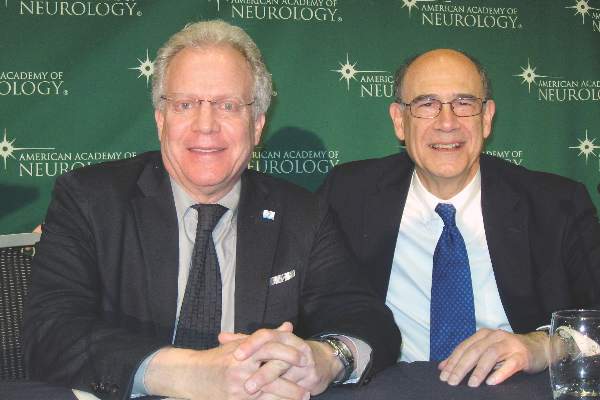
In a press briefing on the new guidelines at the annual meeting of the American Academy of Neurology, guidelines coauthor Dr. Mark Hallett noted that nothing really surprised the experienced 14-member committee that put the guidelines together. “The reason that we chose these four different diseases is because we already had the sense that they were going to change in the particular ways that they did. We didn’t know exactly, of course, what was going to happen, but we had a sense that there were sufficient data that it was worth looking at them.”
For blepharospasm, the totality of evidence suggests that onabotulinumtoxinA (onaBoNT-A; Botox) and incobotulinumtoxinA (incoBoNT-A; Xeomin) injections should be considered and are probably safe and effective (level B recommendation), while abobotulinumtoxinA (aboBoNT-A; Dysport) may be considered (level C) and is possibly effective. The evidence shows that incoBoNT-A and onaBoNT-A have equivalent efficacy and aboBoNT-A and onaBoNT-A are possibly equivalent. There was not enough evidence to determine the efficacy of rimabotulinumtoxinB for blepharospasm (rimaBoNT-B; Myobloc).
The rigorousness of clinical trials in evaluating the efficacy and safety of botulinum toxin has evolved since the Food and Drug Administration approved onaBoNT-A and incoBoNT-A to treat blepharospasm, but no new trials have been conducted to give it a higher level of recommendation despite their well-known magnitude of benefit, said Dr. Hallett, chief of the National Institute of Neurological Disorders and Stroke medical neurology branch and its human motor control section.
New evidence added to the already well-established data on the effectiveness of botulinum toxin for cervical dystonia suggest that onaBoNT-A and incoBoNT-A are probably safe and effective and should be considered. In addition, aboBoNT-A and rimaBoNT-B have already proven effectiveness and safety and should be offered. The lack of class I studies for onaBoNT-A and incoBoNT-A led to the lower level of recommendation for them despite an extensive clinical history of their use in cervical dystonia, the guideline committee wrote (Neurology. 2016 Apr 18. doi: 10.1212/WNL.0000000000002560).
In adults with upper-limb spasticity, all three serotype A formulations – onaBoNT-A, aboBoNT-A, and incoBoNT-A – are effective and safe in reducing symptoms and improving passive limb function. All three achieved level A evidence to recommend that they should be offered. One comparative trial showed enough evidence to say that onaBoNT-A is probably superior to tizanidine for reducing upper-extremity tone and should be considered before it. RimaBoNT-B has level B evidence to advise that it should be considered and is probably safe and effective. None of the formulations have enough data to determine their efficacy on active limb function.
Fewer trials have examined the safety and effectiveness of botulinum toxin formulations for reducing lower leg spasticity in adults. The guidelines panel found enough evidence to recommend that aboBoNT-A and onaBoNT-A are safe and effective and should be offered (level A). There were no trials with high enough level of quality to determine whether incoBoNT-A or rimaBoNT-B were effective for lower-leg spasticity. None of the four agents had enough evidence to support their ability to improve active function associated with lower-limb spasticity.
At the press briefing, guidelines first author Dr. David M. Simpson expressed hope that a more refined methodology for evaluating spasticity might be achieved in future trials of botulinum toxin to detect the potentially subtle effects the agents may have on certain patients who are more likely to achieve benefits in active limb function. Currently, trials use a standardized set of outcomes to try to detect differences in patients with wide-ranging severity of symptoms and types of injury that led to spasticity. Dr. Simpson is professor of neurology at Mount Sinai in New York, as well as director of the neuromuscular diseases division and director of the clinical neurophysiology laboratories.
Positive results for onaBoNT-A in two pivotal trials in chronic migraine that were published since the last guidelines give the formulation the only FDA-approved indication for a botulinum toxin in chronic migraine and earned it a level A recommendation from the guidelines committee. However, in the trials it had a relatively small magnitude of efficacy in reducing the number of headache days by 15% versus placebo. The guidelines also advise not using onaBoNT-A in episodic migraine based on three negative trials. No high-quality trials have evaluated any formulation to change the overall 2008 guidelines’ advice that botulinum toxin is probably ineffective for treating chronic tension-type headaches.
Familiarity with appropriate dosing and side effects may allow clinicians to use the products off-label for indications in the guidelines for which clinical trials were not available, Dr. Richard L. Barbano of the movement disorders division at the University of Rochester noted in an editorial about the guidelines (Neurol Clin Pract. 2016 Apr 18. doi: 10.1212/CPJ.0000000000000244). “Off-label use is common in clinical practice. Little data exist to indicate that any of the different formulations, with attention to appropriate dosing and side effects, would not be effective in treating these other conditions. There are also a number of other neurologic conditions not discussed in the guideline in which botulinum toxin has shown efficacy, such as hemifacial spasm and other focal dystonias. Lack of sufficient high-level evidence to support a level A or B guideline recommendation does not negate their potential utility and likewise, there is little evidence to recommend one formulation over another.”
“In some circumstances where the drugs are relatively equivalent, some people prefer to stick with one so they get used to it more, and they can have more of a sense of what the dosing is, given that the doses may be different with the compounds and have different side effects,” Dr. Hallett said in an interview, noting that availability and price also might enter into a clinician’s decision on what to do.
Dr. Barbano also said that cost and value are becoming more important, and neurologists should consider when botulinum toxin therapy should be chosen among existing alternative treatment options, particularly for chronic migraine.
The guidelines are endorsed by the American Association of Neuromuscular & Electrodiagnostic Medicine and the American Society of Plastic Surgeons.
Dr. Hallett reported serving as chair of the Neurotoxin Institute Advisory Council and has received research grants from Allergan and Merz Pharmaceuticals. Dr. Simpson reported receiving research grants from and served as a consultant for Allergan, Ipsen, Merz Pharmaceuticals, and Acorda Therapeutics. Five other coauthors of the guidelines disclosed relationships with manufacturers of botulinum toxin formulations. Dr. Barbano reported serving on a scientific advisory board for Allergan and receiving research support from Allergan, Vaccinex, and Biotie.
VANCOUVER – A new American Academy of Neurology practice guideline on the efficacy and safety evidence for botulinum toxin treatment of blepharospasm, cervical dystonia, spasticity, and headache has updated the last recommendations published in 2008, but leaves some relevant clinical concerns and off-label uses unaddressed.
The 2016 update, published April 18 in Neurology, adds new individual evidence for the use of the four branded formulations of the two commercially available botulinum toxin serotypes, A and B, for the aforementioned indications rather than lumping all recommendations for botulinum toxin together as in the 2008 guidelines. However, questions remain on the differences between the different products in clinical practice, especially since the formulations show little clinical difference in head-to-head comparisons for some of the indications, especially for the serotype A formulations.
In a press briefing on the new guidelines at the annual meeting of the American Academy of Neurology, guidelines coauthor Dr. Mark Hallett noted that nothing really surprised the experienced 14-member committee that put the guidelines together. “The reason that we chose these four different diseases is because we already had the sense that they were going to change in the particular ways that they did. We didn’t know exactly, of course, what was going to happen, but we had a sense that there were sufficient data that it was worth looking at them.”
For blepharospasm, the totality of evidence suggests that onabotulinumtoxinA (onaBoNT-A; Botox) and incobotulinumtoxinA (incoBoNT-A; Xeomin) injections should be considered and are probably safe and effective (level B recommendation), while abobotulinumtoxinA (aboBoNT-A; Dysport) may be considered (level C) and is possibly effective. The evidence shows that incoBoNT-A and onaBoNT-A have equivalent efficacy and aboBoNT-A and onaBoNT-A are possibly equivalent. There was not enough evidence to determine the efficacy of rimabotulinumtoxinB for blepharospasm (rimaBoNT-B; Myobloc).
The rigorousness of clinical trials in evaluating the efficacy and safety of botulinum toxin has evolved since the Food and Drug Administration approved onaBoNT-A and incoBoNT-A to treat blepharospasm, but no new trials have been conducted to give it a higher level of recommendation despite their well-known magnitude of benefit, said Dr. Hallett, chief of the National Institute of Neurological Disorders and Stroke medical neurology branch and its human motor control section.
New evidence added to the already well-established data on the effectiveness of botulinum toxin for cervical dystonia suggest that onaBoNT-A and incoBoNT-A are probably safe and effective and should be considered. In addition, aboBoNT-A and rimaBoNT-B have already proven effectiveness and safety and should be offered. The lack of class I studies for onaBoNT-A and incoBoNT-A led to the lower level of recommendation for them despite an extensive clinical history of their use in cervical dystonia, the guideline committee wrote (Neurology. 2016 Apr 18. doi: 10.1212/WNL.0000000000002560).
In adults with upper-limb spasticity, all three serotype A formulations – onaBoNT-A, aboBoNT-A, and incoBoNT-A – are effective and safe in reducing symptoms and improving passive limb function. All three achieved level A evidence to recommend that they should be offered. One comparative trial showed enough evidence to say that onaBoNT-A is probably superior to tizanidine for reducing upper-extremity tone and should be considered before it. RimaBoNT-B has level B evidence to advise that it should be considered and is probably safe and effective. None of the formulations have enough data to determine their efficacy on active limb function.
Fewer trials have examined the safety and effectiveness of botulinum toxin formulations for reducing lower leg spasticity in adults. The guidelines panel found enough evidence to recommend that aboBoNT-A and onaBoNT-A are safe and effective and should be offered (level A). There were no trials with high enough level of quality to determine whether incoBoNT-A or rimaBoNT-B were effective for lower-leg spasticity. None of the four agents had enough evidence to support their ability to improve active function associated with lower-limb spasticity.
At the press briefing, guidelines first author Dr. David M. Simpson expressed hope that a more refined methodology for evaluating spasticity might be achieved in future trials of botulinum toxin to detect the potentially subtle effects the agents may have on certain patients who are more likely to achieve benefits in active limb function. Currently, trials use a standardized set of outcomes to try to detect differences in patients with wide-ranging severity of symptoms and types of injury that led to spasticity. Dr. Simpson is professor of neurology at Mount Sinai in New York, as well as director of the neuromuscular diseases division and director of the clinical neurophysiology laboratories.
Positive results for onaBoNT-A in two pivotal trials in chronic migraine that were published since the last guidelines give the formulation the only FDA-approved indication for a botulinum toxin in chronic migraine and earned it a level A recommendation from the guidelines committee. However, in the trials it had a relatively small magnitude of efficacy in reducing the number of headache days by 15% versus placebo. The guidelines also advise not using onaBoNT-A in episodic migraine based on three negative trials. No high-quality trials have evaluated any formulation to change the overall 2008 guidelines’ advice that botulinum toxin is probably ineffective for treating chronic tension-type headaches.
Familiarity with appropriate dosing and side effects may allow clinicians to use the products off-label for indications in the guidelines for which clinical trials were not available, Dr. Richard L. Barbano of the movement disorders division at the University of Rochester noted in an editorial about the guidelines (Neurol Clin Pract. 2016 Apr 18. doi: 10.1212/CPJ.0000000000000244). “Off-label use is common in clinical practice. Little data exist to indicate that any of the different formulations, with attention to appropriate dosing and side effects, would not be effective in treating these other conditions. There are also a number of other neurologic conditions not discussed in the guideline in which botulinum toxin has shown efficacy, such as hemifacial spasm and other focal dystonias. Lack of sufficient high-level evidence to support a level A or B guideline recommendation does not negate their potential utility and likewise, there is little evidence to recommend one formulation over another.”
“In some circumstances where the drugs are relatively equivalent, some people prefer to stick with one so they get used to it more, and they can have more of a sense of what the dosing is, given that the doses may be different with the compounds and have different side effects,” Dr. Hallett said in an interview, noting that availability and price also might enter into a clinician’s decision on what to do.
Dr. Barbano also said that cost and value are becoming more important, and neurologists should consider when botulinum toxin therapy should be chosen among existing alternative treatment options, particularly for chronic migraine.
The guidelines are endorsed by the American Association of Neuromuscular & Electrodiagnostic Medicine and the American Society of Plastic Surgeons.
Dr. Hallett reported serving as chair of the Neurotoxin Institute Advisory Council and has received research grants from Allergan and Merz Pharmaceuticals. Dr. Simpson reported receiving research grants from and served as a consultant for Allergan, Ipsen, Merz Pharmaceuticals, and Acorda Therapeutics. Five other coauthors of the guidelines disclosed relationships with manufacturers of botulinum toxin formulations. Dr. Barbano reported serving on a scientific advisory board for Allergan and receiving research support from Allergan, Vaccinex, and Biotie.
VANCOUVER – A new American Academy of Neurology practice guideline on the efficacy and safety evidence for botulinum toxin treatment of blepharospasm, cervical dystonia, spasticity, and headache has updated the last recommendations published in 2008, but leaves some relevant clinical concerns and off-label uses unaddressed.
The 2016 update, published April 18 in Neurology, adds new individual evidence for the use of the four branded formulations of the two commercially available botulinum toxin serotypes, A and B, for the aforementioned indications rather than lumping all recommendations for botulinum toxin together as in the 2008 guidelines. However, questions remain on the differences between the different products in clinical practice, especially since the formulations show little clinical difference in head-to-head comparisons for some of the indications, especially for the serotype A formulations.
In a press briefing on the new guidelines at the annual meeting of the American Academy of Neurology, guidelines coauthor Dr. Mark Hallett noted that nothing really surprised the experienced 14-member committee that put the guidelines together. “The reason that we chose these four different diseases is because we already had the sense that they were going to change in the particular ways that they did. We didn’t know exactly, of course, what was going to happen, but we had a sense that there were sufficient data that it was worth looking at them.”
For blepharospasm, the totality of evidence suggests that onabotulinumtoxinA (onaBoNT-A; Botox) and incobotulinumtoxinA (incoBoNT-A; Xeomin) injections should be considered and are probably safe and effective (level B recommendation), while abobotulinumtoxinA (aboBoNT-A; Dysport) may be considered (level C) and is possibly effective. The evidence shows that incoBoNT-A and onaBoNT-A have equivalent efficacy and aboBoNT-A and onaBoNT-A are possibly equivalent. There was not enough evidence to determine the efficacy of rimabotulinumtoxinB for blepharospasm (rimaBoNT-B; Myobloc).
The rigorousness of clinical trials in evaluating the efficacy and safety of botulinum toxin has evolved since the Food and Drug Administration approved onaBoNT-A and incoBoNT-A to treat blepharospasm, but no new trials have been conducted to give it a higher level of recommendation despite their well-known magnitude of benefit, said Dr. Hallett, chief of the National Institute of Neurological Disorders and Stroke medical neurology branch and its human motor control section.
New evidence added to the already well-established data on the effectiveness of botulinum toxin for cervical dystonia suggest that onaBoNT-A and incoBoNT-A are probably safe and effective and should be considered. In addition, aboBoNT-A and rimaBoNT-B have already proven effectiveness and safety and should be offered. The lack of class I studies for onaBoNT-A and incoBoNT-A led to the lower level of recommendation for them despite an extensive clinical history of their use in cervical dystonia, the guideline committee wrote (Neurology. 2016 Apr 18. doi: 10.1212/WNL.0000000000002560).
In adults with upper-limb spasticity, all three serotype A formulations – onaBoNT-A, aboBoNT-A, and incoBoNT-A – are effective and safe in reducing symptoms and improving passive limb function. All three achieved level A evidence to recommend that they should be offered. One comparative trial showed enough evidence to say that onaBoNT-A is probably superior to tizanidine for reducing upper-extremity tone and should be considered before it. RimaBoNT-B has level B evidence to advise that it should be considered and is probably safe and effective. None of the formulations have enough data to determine their efficacy on active limb function.
Fewer trials have examined the safety and effectiveness of botulinum toxin formulations for reducing lower leg spasticity in adults. The guidelines panel found enough evidence to recommend that aboBoNT-A and onaBoNT-A are safe and effective and should be offered (level A). There were no trials with high enough level of quality to determine whether incoBoNT-A or rimaBoNT-B were effective for lower-leg spasticity. None of the four agents had enough evidence to support their ability to improve active function associated with lower-limb spasticity.
At the press briefing, guidelines first author Dr. David M. Simpson expressed hope that a more refined methodology for evaluating spasticity might be achieved in future trials of botulinum toxin to detect the potentially subtle effects the agents may have on certain patients who are more likely to achieve benefits in active limb function. Currently, trials use a standardized set of outcomes to try to detect differences in patients with wide-ranging severity of symptoms and types of injury that led to spasticity. Dr. Simpson is professor of neurology at Mount Sinai in New York, as well as director of the neuromuscular diseases division and director of the clinical neurophysiology laboratories.
Positive results for onaBoNT-A in two pivotal trials in chronic migraine that were published since the last guidelines give the formulation the only FDA-approved indication for a botulinum toxin in chronic migraine and earned it a level A recommendation from the guidelines committee. However, in the trials it had a relatively small magnitude of efficacy in reducing the number of headache days by 15% versus placebo. The guidelines also advise not using onaBoNT-A in episodic migraine based on three negative trials. No high-quality trials have evaluated any formulation to change the overall 2008 guidelines’ advice that botulinum toxin is probably ineffective for treating chronic tension-type headaches.
Familiarity with appropriate dosing and side effects may allow clinicians to use the products off-label for indications in the guidelines for which clinical trials were not available, Dr. Richard L. Barbano of the movement disorders division at the University of Rochester noted in an editorial about the guidelines (Neurol Clin Pract. 2016 Apr 18. doi: 10.1212/CPJ.0000000000000244). “Off-label use is common in clinical practice. Little data exist to indicate that any of the different formulations, with attention to appropriate dosing and side effects, would not be effective in treating these other conditions. There are also a number of other neurologic conditions not discussed in the guideline in which botulinum toxin has shown efficacy, such as hemifacial spasm and other focal dystonias. Lack of sufficient high-level evidence to support a level A or B guideline recommendation does not negate their potential utility and likewise, there is little evidence to recommend one formulation over another.”
“In some circumstances where the drugs are relatively equivalent, some people prefer to stick with one so they get used to it more, and they can have more of a sense of what the dosing is, given that the doses may be different with the compounds and have different side effects,” Dr. Hallett said in an interview, noting that availability and price also might enter into a clinician’s decision on what to do.
Dr. Barbano also said that cost and value are becoming more important, and neurologists should consider when botulinum toxin therapy should be chosen among existing alternative treatment options, particularly for chronic migraine.
The guidelines are endorsed by the American Association of Neuromuscular & Electrodiagnostic Medicine and the American Society of Plastic Surgeons.
Dr. Hallett reported serving as chair of the Neurotoxin Institute Advisory Council and has received research grants from Allergan and Merz Pharmaceuticals. Dr. Simpson reported receiving research grants from and served as a consultant for Allergan, Ipsen, Merz Pharmaceuticals, and Acorda Therapeutics. Five other coauthors of the guidelines disclosed relationships with manufacturers of botulinum toxin formulations. Dr. Barbano reported serving on a scientific advisory board for Allergan and receiving research support from Allergan, Vaccinex, and Biotie.
AT THE AAN 2016 ANNUAL MEETING
Patients suffer morbidity due to MS misdiagnosis
VANCOUVER – More than two-thirds of patients with definite or probable misdiagnosis of multiple sclerosis took unnecessary disease-modifying therapy and nearly one-third experienced unnecessary morbidity in a prospective pilot study.
The findings highlight a problem that has been noted before in the medical literature, but since many instances are case reports of unusual cases or were published about 20 or more years ago, they may not reflect the current spectrum of misdiagnosis, Dr. Andrew J. Solomon said at the annual meeting of the American Academy of Neurology.
During a 13-month period, neurologists at four U.S. academic multiple sclerosis centers reported that 51 (46%) of 110 misdiagnosed patients had “definite” misdiagnosis because an alternate diagnosis was identified after assessing clinical, laboratory, and neuroimaging data, while 59 had “probable” misdiagnoses.
Participating neurologists felt that the misdiagnoses were based in part on inappropriately attributing symptoms to demyelinating disease in 65% of cases. MS diagnostic criteria were not rigorously validated for use in patients with atypical presentations, suggesting that the misuse of the criteria could represent a misunderstanding of what constitutes a typical demyelinating attack, said Dr. Solomon of the department of neurological sciences at the University of Vermont, Burlington.
In 48% of cases, the participating neurologists said that objective evidence of a lesion was not used to corroborate historical symptoms.
Many instances also were seen in which the neurologists felt magnetic resonance imaging criteria were misinterpreted or misapplied. In 60%, the MS misdiagnosis relied too heavily on MRI abnormalities to meet the MS diagnostic criteria for dissemination in space when the patient had nonspecific neurologic symptoms, and in another 33% there was an incorrect determination of juxtacortical or periventricular lesion location to fulfill the diagnostic criteria for dissemination in space. Dr. Solomon said that the MRI criteria for MS were not developed to differentiate MS from other conditions, but instead to identify patients at high risk for MS after initial typical presentations of demyelination.
“Overreliance on MRI abnormalities in the setting of atypical symptoms and unverified prior symptoms may be a major cause of misdiagnosis,” he said.
Many earlier patient visits contained red flags that could have led to a correct diagnosis, according to the neurologists who participated in the study. There was evidence for this opportunity being missed in 79 (72%) patients.

“We don’t know how frequent this problem is in practice. I think it’s pretty frequent just based on my own clinical experience, but no one’s done a population-based study, as you can imagine that would be kind of difficult to do,” said Dr. Jonathan Carter, an MS specialist at the Mayo Clinic in Scottsdale, Ariz., who was part of the study.
Study patients were previously diagnosed with MS; none were allowed to have MS as one of several potential diagnoses. Patients were mostly female (85%) and had a mean age of 49 years. They were referred to the Mayo Clinic (55%), the University of Vermont (25%), Washington University (11%), and Oregon Health and Science University (9%). The high highest percentage of misdiagnoses were from physicians with an unknown level of specific training in neurology or (42%), followed by neurologists without MS fellowship training (34%), neurologists with MS fellowship training or a practice focus on MS (24%), and nonneurologists (3%).
It was no surprise to see MS fellowship–trained neurologists among those making misdiagnoses, Dr. Carter said in an interview. “The criteria are somewhat subjective and interpretation of test results are somewhat subjective, then it’s quite possible to have another MS specialist diagnose somebody and then have them come to a different center and have that diagnosis questioned. I think it happens probably less frequently with MS fellowship–trained physicians than with general neurologists, but it still happens.”
All but three patients were informed that their MS diagnosis was incorrect: one who had died and was determined on autopsy to have neuromyelitis optica spectrum disorder, one who had been informed already of a possible alternate diagnosis, and one who had an upcoming follow-up visit.
Many of the patients had a longstanding MS misdiagnosis. A total of 29% had been misdiagnosed for 3-9 years, and 33% for 10 or more years.
The patients received a variety of primary diagnoses following reevaluation at the centers. The most common, accounting for two-thirds of all diagnoses, were migraine alone or in combination with other diagnoses in 24 (22%), fibromyalgia in 16 (15%), nonspecific or nonlocalizing neurological symptoms with abnormal MRI in 13 (12%), conversion or psychogenic disorder in 12 (11%), and neuromyelitis optica spectrum disorder in 7 (6%). Twenty six additional diagnoses were made.
The most common primary diagnoses, except for neuromyelitis spectrum disorder, all share the lack a specific biomarker, Dr. Solomon noted. Most of them require clinical skills and critical thinking to make the diagnosis, he said.
Most (70%) patients had received immunomodulatory treatment for MS, including 36% with more than one disease-modifying therapy. The treatments included natalizumab (Tysabri) in 13%, dimethyl fumarate (Tecfidera) in 6%, and fingolimod (Gilenya) in 5% – all of which have known risk for progressive multifocal leukoencephalopathy – as well as mitoxantrone in two patients and cyclophosphamide in one. Overall, 29% of those who received immunomodulatory therapy used it for 3-9 years, and another 29% used it for 10 or more years.
Dr. Solomon acknowledged selection and referral bias as limitations to the study, as well as possibly incorrect alternate diagnoses. The disease duration and hindshight bias also may have allowed a correct diagnosis to come to light. The study could not provide information on the frequency of misdiagnosis but “provides rationale for such data in the future,” he said.
It’s hard to know how big of a problem the misdiagnosis of MS is in clinical practice. There are numerous reasons, including limitations in how it has been reported in the literature, a lack of knowledge of how many patients are evaluated for MS overall, lack of knowledge on whether it is widespread or confined to a small number of bad diagnosers, and the need for human interpretation of clinical, imaging, and laboratory evidence.
Revisions to MS diagnostic criteria over time have made it easier to diagnose the disease earlier with less clinical history but without any pathologic standard. Even though MRI is the best biomarker for MS, its specificity reaches only 87% under various criteria among experienced researchers. The full criteria also are not generally used in real-world practice.
Regardless of the extent of misdiagnosis, the limited extent of our ability to identify MS through exclusively objective methods means that we must adhere to diagnostic criteria; keep an open mind for alternative diagnoses; know MRI features that give greatest specificity; assess both brain and spine MRI; read MRIs ourselves; get help if needed; improve the education of neurologists, primary care physicians, and radiologists; make MS an affirmative diagnosis, not a default one; and develop better biomarkers in blood, cerebrospinal fluid, or MRI.
Dr. John Corboy is professor of neurology and codirector of the Rocky Mountain MS Center at the University of Colorado-Denver in Aurora. In the past 2 years he has served as a consultant to Novartis, Teva Neurosciences, and Biogen; been a primary investigator in trials for Novartis, Sun Pharma, and the National Multiple Sclerosis Society; and received research grants from the National Multiple Sclerosis Society, Diogenix, and the Patient-Centered Outcomes Research Institute. He made these comments as the discussant for the study presented by Dr. Solomon.
It’s hard to know how big of a problem the misdiagnosis of MS is in clinical practice. There are numerous reasons, including limitations in how it has been reported in the literature, a lack of knowledge of how many patients are evaluated for MS overall, lack of knowledge on whether it is widespread or confined to a small number of bad diagnosers, and the need for human interpretation of clinical, imaging, and laboratory evidence.
Revisions to MS diagnostic criteria over time have made it easier to diagnose the disease earlier with less clinical history but without any pathologic standard. Even though MRI is the best biomarker for MS, its specificity reaches only 87% under various criteria among experienced researchers. The full criteria also are not generally used in real-world practice.
Regardless of the extent of misdiagnosis, the limited extent of our ability to identify MS through exclusively objective methods means that we must adhere to diagnostic criteria; keep an open mind for alternative diagnoses; know MRI features that give greatest specificity; assess both brain and spine MRI; read MRIs ourselves; get help if needed; improve the education of neurologists, primary care physicians, and radiologists; make MS an affirmative diagnosis, not a default one; and develop better biomarkers in blood, cerebrospinal fluid, or MRI.
Dr. John Corboy is professor of neurology and codirector of the Rocky Mountain MS Center at the University of Colorado-Denver in Aurora. In the past 2 years he has served as a consultant to Novartis, Teva Neurosciences, and Biogen; been a primary investigator in trials for Novartis, Sun Pharma, and the National Multiple Sclerosis Society; and received research grants from the National Multiple Sclerosis Society, Diogenix, and the Patient-Centered Outcomes Research Institute. He made these comments as the discussant for the study presented by Dr. Solomon.
It’s hard to know how big of a problem the misdiagnosis of MS is in clinical practice. There are numerous reasons, including limitations in how it has been reported in the literature, a lack of knowledge of how many patients are evaluated for MS overall, lack of knowledge on whether it is widespread or confined to a small number of bad diagnosers, and the need for human interpretation of clinical, imaging, and laboratory evidence.
Revisions to MS diagnostic criteria over time have made it easier to diagnose the disease earlier with less clinical history but without any pathologic standard. Even though MRI is the best biomarker for MS, its specificity reaches only 87% under various criteria among experienced researchers. The full criteria also are not generally used in real-world practice.
Regardless of the extent of misdiagnosis, the limited extent of our ability to identify MS through exclusively objective methods means that we must adhere to diagnostic criteria; keep an open mind for alternative diagnoses; know MRI features that give greatest specificity; assess both brain and spine MRI; read MRIs ourselves; get help if needed; improve the education of neurologists, primary care physicians, and radiologists; make MS an affirmative diagnosis, not a default one; and develop better biomarkers in blood, cerebrospinal fluid, or MRI.
Dr. John Corboy is professor of neurology and codirector of the Rocky Mountain MS Center at the University of Colorado-Denver in Aurora. In the past 2 years he has served as a consultant to Novartis, Teva Neurosciences, and Biogen; been a primary investigator in trials for Novartis, Sun Pharma, and the National Multiple Sclerosis Society; and received research grants from the National Multiple Sclerosis Society, Diogenix, and the Patient-Centered Outcomes Research Institute. He made these comments as the discussant for the study presented by Dr. Solomon.
VANCOUVER – More than two-thirds of patients with definite or probable misdiagnosis of multiple sclerosis took unnecessary disease-modifying therapy and nearly one-third experienced unnecessary morbidity in a prospective pilot study.
The findings highlight a problem that has been noted before in the medical literature, but since many instances are case reports of unusual cases or were published about 20 or more years ago, they may not reflect the current spectrum of misdiagnosis, Dr. Andrew J. Solomon said at the annual meeting of the American Academy of Neurology.
During a 13-month period, neurologists at four U.S. academic multiple sclerosis centers reported that 51 (46%) of 110 misdiagnosed patients had “definite” misdiagnosis because an alternate diagnosis was identified after assessing clinical, laboratory, and neuroimaging data, while 59 had “probable” misdiagnoses.
Participating neurologists felt that the misdiagnoses were based in part on inappropriately attributing symptoms to demyelinating disease in 65% of cases. MS diagnostic criteria were not rigorously validated for use in patients with atypical presentations, suggesting that the misuse of the criteria could represent a misunderstanding of what constitutes a typical demyelinating attack, said Dr. Solomon of the department of neurological sciences at the University of Vermont, Burlington.
In 48% of cases, the participating neurologists said that objective evidence of a lesion was not used to corroborate historical symptoms.
Many instances also were seen in which the neurologists felt magnetic resonance imaging criteria were misinterpreted or misapplied. In 60%, the MS misdiagnosis relied too heavily on MRI abnormalities to meet the MS diagnostic criteria for dissemination in space when the patient had nonspecific neurologic symptoms, and in another 33% there was an incorrect determination of juxtacortical or periventricular lesion location to fulfill the diagnostic criteria for dissemination in space. Dr. Solomon said that the MRI criteria for MS were not developed to differentiate MS from other conditions, but instead to identify patients at high risk for MS after initial typical presentations of demyelination.
“Overreliance on MRI abnormalities in the setting of atypical symptoms and unverified prior symptoms may be a major cause of misdiagnosis,” he said.
Many earlier patient visits contained red flags that could have led to a correct diagnosis, according to the neurologists who participated in the study. There was evidence for this opportunity being missed in 79 (72%) patients.
“We don’t know how frequent this problem is in practice. I think it’s pretty frequent just based on my own clinical experience, but no one’s done a population-based study, as you can imagine that would be kind of difficult to do,” said Dr. Jonathan Carter, an MS specialist at the Mayo Clinic in Scottsdale, Ariz., who was part of the study.
Study patients were previously diagnosed with MS; none were allowed to have MS as one of several potential diagnoses. Patients were mostly female (85%) and had a mean age of 49 years. They were referred to the Mayo Clinic (55%), the University of Vermont (25%), Washington University (11%), and Oregon Health and Science University (9%). The high highest percentage of misdiagnoses were from physicians with an unknown level of specific training in neurology or (42%), followed by neurologists without MS fellowship training (34%), neurologists with MS fellowship training or a practice focus on MS (24%), and nonneurologists (3%).
It was no surprise to see MS fellowship–trained neurologists among those making misdiagnoses, Dr. Carter said in an interview. “The criteria are somewhat subjective and interpretation of test results are somewhat subjective, then it’s quite possible to have another MS specialist diagnose somebody and then have them come to a different center and have that diagnosis questioned. I think it happens probably less frequently with MS fellowship–trained physicians than with general neurologists, but it still happens.”
All but three patients were informed that their MS diagnosis was incorrect: one who had died and was determined on autopsy to have neuromyelitis optica spectrum disorder, one who had been informed already of a possible alternate diagnosis, and one who had an upcoming follow-up visit.
Many of the patients had a longstanding MS misdiagnosis. A total of 29% had been misdiagnosed for 3-9 years, and 33% for 10 or more years.
The patients received a variety of primary diagnoses following reevaluation at the centers. The most common, accounting for two-thirds of all diagnoses, were migraine alone or in combination with other diagnoses in 24 (22%), fibromyalgia in 16 (15%), nonspecific or nonlocalizing neurological symptoms with abnormal MRI in 13 (12%), conversion or psychogenic disorder in 12 (11%), and neuromyelitis optica spectrum disorder in 7 (6%). Twenty six additional diagnoses were made.
The most common primary diagnoses, except for neuromyelitis spectrum disorder, all share the lack a specific biomarker, Dr. Solomon noted. Most of them require clinical skills and critical thinking to make the diagnosis, he said.
Most (70%) patients had received immunomodulatory treatment for MS, including 36% with more than one disease-modifying therapy. The treatments included natalizumab (Tysabri) in 13%, dimethyl fumarate (Tecfidera) in 6%, and fingolimod (Gilenya) in 5% – all of which have known risk for progressive multifocal leukoencephalopathy – as well as mitoxantrone in two patients and cyclophosphamide in one. Overall, 29% of those who received immunomodulatory therapy used it for 3-9 years, and another 29% used it for 10 or more years.
Dr. Solomon acknowledged selection and referral bias as limitations to the study, as well as possibly incorrect alternate diagnoses. The disease duration and hindshight bias also may have allowed a correct diagnosis to come to light. The study could not provide information on the frequency of misdiagnosis but “provides rationale for such data in the future,” he said.
VANCOUVER – More than two-thirds of patients with definite or probable misdiagnosis of multiple sclerosis took unnecessary disease-modifying therapy and nearly one-third experienced unnecessary morbidity in a prospective pilot study.
The findings highlight a problem that has been noted before in the medical literature, but since many instances are case reports of unusual cases or were published about 20 or more years ago, they may not reflect the current spectrum of misdiagnosis, Dr. Andrew J. Solomon said at the annual meeting of the American Academy of Neurology.
During a 13-month period, neurologists at four U.S. academic multiple sclerosis centers reported that 51 (46%) of 110 misdiagnosed patients had “definite” misdiagnosis because an alternate diagnosis was identified after assessing clinical, laboratory, and neuroimaging data, while 59 had “probable” misdiagnoses.
Participating neurologists felt that the misdiagnoses were based in part on inappropriately attributing symptoms to demyelinating disease in 65% of cases. MS diagnostic criteria were not rigorously validated for use in patients with atypical presentations, suggesting that the misuse of the criteria could represent a misunderstanding of what constitutes a typical demyelinating attack, said Dr. Solomon of the department of neurological sciences at the University of Vermont, Burlington.
In 48% of cases, the participating neurologists said that objective evidence of a lesion was not used to corroborate historical symptoms.
Many instances also were seen in which the neurologists felt magnetic resonance imaging criteria were misinterpreted or misapplied. In 60%, the MS misdiagnosis relied too heavily on MRI abnormalities to meet the MS diagnostic criteria for dissemination in space when the patient had nonspecific neurologic symptoms, and in another 33% there was an incorrect determination of juxtacortical or periventricular lesion location to fulfill the diagnostic criteria for dissemination in space. Dr. Solomon said that the MRI criteria for MS were not developed to differentiate MS from other conditions, but instead to identify patients at high risk for MS after initial typical presentations of demyelination.
“Overreliance on MRI abnormalities in the setting of atypical symptoms and unverified prior symptoms may be a major cause of misdiagnosis,” he said.
Many earlier patient visits contained red flags that could have led to a correct diagnosis, according to the neurologists who participated in the study. There was evidence for this opportunity being missed in 79 (72%) patients.
“We don’t know how frequent this problem is in practice. I think it’s pretty frequent just based on my own clinical experience, but no one’s done a population-based study, as you can imagine that would be kind of difficult to do,” said Dr. Jonathan Carter, an MS specialist at the Mayo Clinic in Scottsdale, Ariz., who was part of the study.
Study patients were previously diagnosed with MS; none were allowed to have MS as one of several potential diagnoses. Patients were mostly female (85%) and had a mean age of 49 years. They were referred to the Mayo Clinic (55%), the University of Vermont (25%), Washington University (11%), and Oregon Health and Science University (9%). The high highest percentage of misdiagnoses were from physicians with an unknown level of specific training in neurology or (42%), followed by neurologists without MS fellowship training (34%), neurologists with MS fellowship training or a practice focus on MS (24%), and nonneurologists (3%).
It was no surprise to see MS fellowship–trained neurologists among those making misdiagnoses, Dr. Carter said in an interview. “The criteria are somewhat subjective and interpretation of test results are somewhat subjective, then it’s quite possible to have another MS specialist diagnose somebody and then have them come to a different center and have that diagnosis questioned. I think it happens probably less frequently with MS fellowship–trained physicians than with general neurologists, but it still happens.”
All but three patients were informed that their MS diagnosis was incorrect: one who had died and was determined on autopsy to have neuromyelitis optica spectrum disorder, one who had been informed already of a possible alternate diagnosis, and one who had an upcoming follow-up visit.
Many of the patients had a longstanding MS misdiagnosis. A total of 29% had been misdiagnosed for 3-9 years, and 33% for 10 or more years.
The patients received a variety of primary diagnoses following reevaluation at the centers. The most common, accounting for two-thirds of all diagnoses, were migraine alone or in combination with other diagnoses in 24 (22%), fibromyalgia in 16 (15%), nonspecific or nonlocalizing neurological symptoms with abnormal MRI in 13 (12%), conversion or psychogenic disorder in 12 (11%), and neuromyelitis optica spectrum disorder in 7 (6%). Twenty six additional diagnoses were made.
The most common primary diagnoses, except for neuromyelitis spectrum disorder, all share the lack a specific biomarker, Dr. Solomon noted. Most of them require clinical skills and critical thinking to make the diagnosis, he said.
Most (70%) patients had received immunomodulatory treatment for MS, including 36% with more than one disease-modifying therapy. The treatments included natalizumab (Tysabri) in 13%, dimethyl fumarate (Tecfidera) in 6%, and fingolimod (Gilenya) in 5% – all of which have known risk for progressive multifocal leukoencephalopathy – as well as mitoxantrone in two patients and cyclophosphamide in one. Overall, 29% of those who received immunomodulatory therapy used it for 3-9 years, and another 29% used it for 10 or more years.
Dr. Solomon acknowledged selection and referral bias as limitations to the study, as well as possibly incorrect alternate diagnoses. The disease duration and hindshight bias also may have allowed a correct diagnosis to come to light. The study could not provide information on the frequency of misdiagnosis but “provides rationale for such data in the future,” he said.
AT THE AAN 2016 ANNUAL MEETING
Key clinical point: Misapplication or misinterpretation of diagnostic criteria for multiple sclerosis can lead to misdiagnosis and potential morbidity as a result of inappropriate treatment.
Major finding: Most (70%) of the patients had received immunomodulatory treatment for MS, including 36% with more than one disease-modifying therapy.
Data source: A prospective pilot study of 110 patients misdiagnosed with MS who were referred to four U.S. academic medical centers.
Disclosures: The study was funded by the National Multiple Sclerosis Society. Half of the study’s investigators disclosed consulting, serving on data safety monitoring committees, receiving personal compensation from, or other activities for manufacturers of MS drugs. Dr. Carter reported serving on a data safety monitoring committee for Merck-Serono and receiving research support from Roche, Sanofi, and Genzyme through funding paid to the Mayo Clinic.

Rosacea linked to several autoimmune diseases in women
Rosacea in women is linked with an increased risk for a wide variety of autoimmune disorders including type 1 diabetes, celiac disease, multiple sclerosis, and rheumatoid arthritis, according to a large population-based case-control study.
The finding expands the association of rosacea and autoimmune diseases beyond the previously reported associations with type 1 diabetes and celiac disease, reported Dr. Alexander Egeberg of Herlev and Gentofte Hospital, University of Copenhagen, and colleagues (J Am Acad Dermatol. 2016;74:667-72.)
“Remember that the absolute risk is still low; having rosacea does not guarantee that patients will develop other autoimmune diseases, and vice versa,” Dr. Egeberg said in an interview. “The links may provide insight into the pathogenesis of these diseases, and it will be interesting to see if systemic treatment of rosacea also affects the autoimmune diseases and the other way around.”
Using Danish registered health records, the researchers found 6,759 patients with rosacea, and matched them by age and sex to 33,795 control subjects. About two-thirds of the patients were women.
Compared with their matched controls, people with rosacea were at least twice as likely to have type 1 diabetes, celiac disease, and rheumatoid arthritis (odds ratio 2.6 for type 1 diabetes, 2.0 for celiac disease, and 2.1 for rheumatoid arthritis) and 1.65 times as likely to have multiple sclerosis. The differences, with the exception of rheumatoid arthritis, were statistically significant only in women.
The researchers said the broader association with autoimmune comorbidities is “intriguing” and suggests the genetic component of rosacea could be stronger than previously assumed with autoimmune inflammatory pathways contributing to the disease course. Because distinct rosacea subtypes (erythematotelangiectatic, papulopustular, phymatous, and ocular) could be associated with specific comorbidities, future association studies should attempt to stratify for clinical subtypes of rosacea, they noted.
Rosacea in women is linked with an increased risk for a wide variety of autoimmune disorders including type 1 diabetes, celiac disease, multiple sclerosis, and rheumatoid arthritis, according to a large population-based case-control study.
The finding expands the association of rosacea and autoimmune diseases beyond the previously reported associations with type 1 diabetes and celiac disease, reported Dr. Alexander Egeberg of Herlev and Gentofte Hospital, University of Copenhagen, and colleagues (J Am Acad Dermatol. 2016;74:667-72.)
“Remember that the absolute risk is still low; having rosacea does not guarantee that patients will develop other autoimmune diseases, and vice versa,” Dr. Egeberg said in an interview. “The links may provide insight into the pathogenesis of these diseases, and it will be interesting to see if systemic treatment of rosacea also affects the autoimmune diseases and the other way around.”
Using Danish registered health records, the researchers found 6,759 patients with rosacea, and matched them by age and sex to 33,795 control subjects. About two-thirds of the patients were women.
Compared with their matched controls, people with rosacea were at least twice as likely to have type 1 diabetes, celiac disease, and rheumatoid arthritis (odds ratio 2.6 for type 1 diabetes, 2.0 for celiac disease, and 2.1 for rheumatoid arthritis) and 1.65 times as likely to have multiple sclerosis. The differences, with the exception of rheumatoid arthritis, were statistically significant only in women.
The researchers said the broader association with autoimmune comorbidities is “intriguing” and suggests the genetic component of rosacea could be stronger than previously assumed with autoimmune inflammatory pathways contributing to the disease course. Because distinct rosacea subtypes (erythematotelangiectatic, papulopustular, phymatous, and ocular) could be associated with specific comorbidities, future association studies should attempt to stratify for clinical subtypes of rosacea, they noted.
Rosacea in women is linked with an increased risk for a wide variety of autoimmune disorders including type 1 diabetes, celiac disease, multiple sclerosis, and rheumatoid arthritis, according to a large population-based case-control study.
The finding expands the association of rosacea and autoimmune diseases beyond the previously reported associations with type 1 diabetes and celiac disease, reported Dr. Alexander Egeberg of Herlev and Gentofte Hospital, University of Copenhagen, and colleagues (J Am Acad Dermatol. 2016;74:667-72.)
“Remember that the absolute risk is still low; having rosacea does not guarantee that patients will develop other autoimmune diseases, and vice versa,” Dr. Egeberg said in an interview. “The links may provide insight into the pathogenesis of these diseases, and it will be interesting to see if systemic treatment of rosacea also affects the autoimmune diseases and the other way around.”
Using Danish registered health records, the researchers found 6,759 patients with rosacea, and matched them by age and sex to 33,795 control subjects. About two-thirds of the patients were women.
Compared with their matched controls, people with rosacea were at least twice as likely to have type 1 diabetes, celiac disease, and rheumatoid arthritis (odds ratio 2.6 for type 1 diabetes, 2.0 for celiac disease, and 2.1 for rheumatoid arthritis) and 1.65 times as likely to have multiple sclerosis. The differences, with the exception of rheumatoid arthritis, were statistically significant only in women.
The researchers said the broader association with autoimmune comorbidities is “intriguing” and suggests the genetic component of rosacea could be stronger than previously assumed with autoimmune inflammatory pathways contributing to the disease course. Because distinct rosacea subtypes (erythematotelangiectatic, papulopustular, phymatous, and ocular) could be associated with specific comorbidities, future association studies should attempt to stratify for clinical subtypes of rosacea, they noted.
FROM JAAD
Key clinical point: Rosacea is linked with a broader spectrum of autoimmune diseases than previously recognized.
Major finding: Women with rosacea were more likely than were other women to have type 1 diabetes, celiac disease, multiple sclerosis, and rheumatoid arthritis.
Data source: A population-based case-control study of 6,759 patients with rosacea who were matched with 33,795 control subjects for age, sex, and calendar time.
Disclosures: Dr. Egeberg is employed by Pfizer. This research was performed independently through the authors’ academic university.
Rituximab bests fingolimod in MS patients switching from natalizumab
For patients with relapsing-remitting multiple sclerosis (RRMS) switching to other therapies due to positive JC virus serology, treatment with rituximab resulted in a lower rate of clinical relapse as compared with fingolimod in a retrospective outcomes study of registry data from three Swedish MS centers, according to a report published online March 31 in Annals of Neurology.
Although natalizumab (Tysabri) is approved for the treatment of highly active RRMS, its long-term use can increase the risk of developing progressive multifocal leukoencephalopathy. Because this is a serious and potentially lethal condition associated with opportunistic brain infection with the JC virus, those patients testing positive for JC virus antibodies may require a switch to an alternative treatment, such as fingolimod (Gilenya), or off-label use of rituximab (Rituxan). The efficacy, safety, and tolerability associated with switching to either of these alternative therapies were compared by Peter Alping of the department of clinical neuroscience, Karolinska Institutet, Stockholm, and his associates (Ann Neurol. 2016 Mar 31. doi: 10.1002/ana.24651).

Of the 256 patients included in the study, 142 (55%) were switched to fingolimod. The efficacy outcomes comparison showed a statistically significant difference in favor of rituximab, with which 2% of patients had a clinical relapse in the first 1.5 years of treatment after natalizumab cessation as opposed to 18% for fingolimod. This corresponded to an annual relapse rate of 0.02 and 0.16, respectively. Additionally, a review of patients’ contrast-enhancing lesions on MRI scans after at least 3 months of treatment indicated that disease progression was detected less frequently in patients switched to rituximab (1%) as opposed to those switched to fingolimod (16%).
The safety and tolerability data also indicated more favorable results for those patients switched to rituximab. For example, a significantly lower rate of adverse events was noted in the rituximab group (5%) when compared with the fingolimod group (21%). Similarly, a lower rate of treatment discontinuation was observed for those switched to rituximab (2%) when compared with those switched to fingolimod (28%).
The statistically significant differences found in the efficacy, safety, and tolerability data persisted even after adjusting for possible confounding factors including patient age, sex, disability status, time on natalizumab, washout time, follow-up time, and study center. Despite the differences noted in the safety findings, the authors said that both treatments seemed to be safe in general.
In most cases, natalizumab had been given 300 mg IV every 4 weeks. Fingolimod was given orally 0.5 mg once daily. Nearly all patients who received rituximab got a single IV infusion of 500 or 1,000 mg every 6 months, but in some cases the first infusion had been repeated after 2 weeks.
In the absence of formal randomized clinical trial data, the authors said that these findings support the use of rituximab over fingolimod in this particular population of MS patients.
This study was supported by the Swedish Medical Research council and the Stockholm County. First author Peter Alping declared no competing interests; several of his associates reported ties to numerous industry sources.
For patients with relapsing-remitting multiple sclerosis (RRMS) switching to other therapies due to positive JC virus serology, treatment with rituximab resulted in a lower rate of clinical relapse as compared with fingolimod in a retrospective outcomes study of registry data from three Swedish MS centers, according to a report published online March 31 in Annals of Neurology.
Although natalizumab (Tysabri) is approved for the treatment of highly active RRMS, its long-term use can increase the risk of developing progressive multifocal leukoencephalopathy. Because this is a serious and potentially lethal condition associated with opportunistic brain infection with the JC virus, those patients testing positive for JC virus antibodies may require a switch to an alternative treatment, such as fingolimod (Gilenya), or off-label use of rituximab (Rituxan). The efficacy, safety, and tolerability associated with switching to either of these alternative therapies were compared by Peter Alping of the department of clinical neuroscience, Karolinska Institutet, Stockholm, and his associates (Ann Neurol. 2016 Mar 31. doi: 10.1002/ana.24651).
Of the 256 patients included in the study, 142 (55%) were switched to fingolimod. The efficacy outcomes comparison showed a statistically significant difference in favor of rituximab, with which 2% of patients had a clinical relapse in the first 1.5 years of treatment after natalizumab cessation as opposed to 18% for fingolimod. This corresponded to an annual relapse rate of 0.02 and 0.16, respectively. Additionally, a review of patients’ contrast-enhancing lesions on MRI scans after at least 3 months of treatment indicated that disease progression was detected less frequently in patients switched to rituximab (1%) as opposed to those switched to fingolimod (16%).
The safety and tolerability data also indicated more favorable results for those patients switched to rituximab. For example, a significantly lower rate of adverse events was noted in the rituximab group (5%) when compared with the fingolimod group (21%). Similarly, a lower rate of treatment discontinuation was observed for those switched to rituximab (2%) when compared with those switched to fingolimod (28%).
The statistically significant differences found in the efficacy, safety, and tolerability data persisted even after adjusting for possible confounding factors including patient age, sex, disability status, time on natalizumab, washout time, follow-up time, and study center. Despite the differences noted in the safety findings, the authors said that both treatments seemed to be safe in general.
In most cases, natalizumab had been given 300 mg IV every 4 weeks. Fingolimod was given orally 0.5 mg once daily. Nearly all patients who received rituximab got a single IV infusion of 500 or 1,000 mg every 6 months, but in some cases the first infusion had been repeated after 2 weeks.
In the absence of formal randomized clinical trial data, the authors said that these findings support the use of rituximab over fingolimod in this particular population of MS patients.
This study was supported by the Swedish Medical Research council and the Stockholm County. First author Peter Alping declared no competing interests; several of his associates reported ties to numerous industry sources.
For patients with relapsing-remitting multiple sclerosis (RRMS) switching to other therapies due to positive JC virus serology, treatment with rituximab resulted in a lower rate of clinical relapse as compared with fingolimod in a retrospective outcomes study of registry data from three Swedish MS centers, according to a report published online March 31 in Annals of Neurology.
Although natalizumab (Tysabri) is approved for the treatment of highly active RRMS, its long-term use can increase the risk of developing progressive multifocal leukoencephalopathy. Because this is a serious and potentially lethal condition associated with opportunistic brain infection with the JC virus, those patients testing positive for JC virus antibodies may require a switch to an alternative treatment, such as fingolimod (Gilenya), or off-label use of rituximab (Rituxan). The efficacy, safety, and tolerability associated with switching to either of these alternative therapies were compared by Peter Alping of the department of clinical neuroscience, Karolinska Institutet, Stockholm, and his associates (Ann Neurol. 2016 Mar 31. doi: 10.1002/ana.24651).
Of the 256 patients included in the study, 142 (55%) were switched to fingolimod. The efficacy outcomes comparison showed a statistically significant difference in favor of rituximab, with which 2% of patients had a clinical relapse in the first 1.5 years of treatment after natalizumab cessation as opposed to 18% for fingolimod. This corresponded to an annual relapse rate of 0.02 and 0.16, respectively. Additionally, a review of patients’ contrast-enhancing lesions on MRI scans after at least 3 months of treatment indicated that disease progression was detected less frequently in patients switched to rituximab (1%) as opposed to those switched to fingolimod (16%).
The safety and tolerability data also indicated more favorable results for those patients switched to rituximab. For example, a significantly lower rate of adverse events was noted in the rituximab group (5%) when compared with the fingolimod group (21%). Similarly, a lower rate of treatment discontinuation was observed for those switched to rituximab (2%) when compared with those switched to fingolimod (28%).
The statistically significant differences found in the efficacy, safety, and tolerability data persisted even after adjusting for possible confounding factors including patient age, sex, disability status, time on natalizumab, washout time, follow-up time, and study center. Despite the differences noted in the safety findings, the authors said that both treatments seemed to be safe in general.
In most cases, natalizumab had been given 300 mg IV every 4 weeks. Fingolimod was given orally 0.5 mg once daily. Nearly all patients who received rituximab got a single IV infusion of 500 or 1,000 mg every 6 months, but in some cases the first infusion had been repeated after 2 weeks.
In the absence of formal randomized clinical trial data, the authors said that these findings support the use of rituximab over fingolimod in this particular population of MS patients.
This study was supported by the Swedish Medical Research council and the Stockholm County. First author Peter Alping declared no competing interests; several of his associates reported ties to numerous industry sources.
FROM ANNALS OF NEUROLOGY
Key clinical point: Patients with RRMS switching from natalizumab to rituximab due to JC virus antibody positivity achieved better efficacy outcomes than did those switched to fingolimod.
Major finding: A significantly higher percentage of study participants experienced clinical relapse when switched to fingolimod (18%) as opposed to rituximab (2%) within 1.5 years of natalizumab cessation.
Data source: A retrospective outcomes study of registry data from three Swedish MS centers involving 256 JC virus antibody–positive RRMS patients who had switched therapies.
Disclosures: This study was supported by the Swedish Medical Research council and the Stockholm County. First author Peter Alping declared no competing interests; several of his associates reported ties to numerous industry sources.

FDA: CT scans safe for patients with electronic medical devices
There’s no need to let fear of electronic interference between computed tomography and electronic medical devices preclude the ordering of such scans for patients with insulin pumps, cardiac implantable electronic devices, or neurostimulators, the Food and Drug Administration said in a written notification.
“The probability of an adverse event being caused by exposing these devices to CT irradiation is extremely low, and it is greatly outweighed by the clinical benefit of a medically indicated CT examination,” according to the new notification, which updates and replaces a preliminary health notification released on July 14, 2008.

The preliminary notification said there was a “possibility that the x-rays used during CT examinations may cause some implanted and external electronic medical devices to malfunction.” It also included recommendations to reduce the potential risk of such events from occurring and cited adverse events experienced by a few patients with medical devices who had undergone CT scanning, including unintended shocks from neurostimulators, malfunctions of insulin infusion pumps, and transient changes in pacemaker output pulse rate.
The new notification says there is an extremely low probability that a CT scanner directly irradiating the circuitry of certain implantable or wearable electronic medical devices can cause sufficient electronic interference to affect the function and operation of the medical device, and this probability is even lower when the radiation dose and the radiation dose rate are reduced. The FDA also notes that the interference is completely avoided when the medical device is outside of the primary x-ray beam of the CT scanner.
The update, which provides additional reports of adverse events by patients with electronic medical devices who had CT scans, states that the number of such events was small, compared with the number of patients with insulin pumps, cardiac implantable electronic devices, and neurostimulators who were scanned without adverse effects.
The FDA encourages health care providers and patients who suspect a problem with a medical imaging device to file a voluntary report through MedWatch, the FDA Safety Information and Adverse Event Reporting Program.
There’s no need to let fear of electronic interference between computed tomography and electronic medical devices preclude the ordering of such scans for patients with insulin pumps, cardiac implantable electronic devices, or neurostimulators, the Food and Drug Administration said in a written notification.
“The probability of an adverse event being caused by exposing these devices to CT irradiation is extremely low, and it is greatly outweighed by the clinical benefit of a medically indicated CT examination,” according to the new notification, which updates and replaces a preliminary health notification released on July 14, 2008.
The preliminary notification said there was a “possibility that the x-rays used during CT examinations may cause some implanted and external electronic medical devices to malfunction.” It also included recommendations to reduce the potential risk of such events from occurring and cited adverse events experienced by a few patients with medical devices who had undergone CT scanning, including unintended shocks from neurostimulators, malfunctions of insulin infusion pumps, and transient changes in pacemaker output pulse rate.
The new notification says there is an extremely low probability that a CT scanner directly irradiating the circuitry of certain implantable or wearable electronic medical devices can cause sufficient electronic interference to affect the function and operation of the medical device, and this probability is even lower when the radiation dose and the radiation dose rate are reduced. The FDA also notes that the interference is completely avoided when the medical device is outside of the primary x-ray beam of the CT scanner.
The update, which provides additional reports of adverse events by patients with electronic medical devices who had CT scans, states that the number of such events was small, compared with the number of patients with insulin pumps, cardiac implantable electronic devices, and neurostimulators who were scanned without adverse effects.
The FDA encourages health care providers and patients who suspect a problem with a medical imaging device to file a voluntary report through MedWatch, the FDA Safety Information and Adverse Event Reporting Program.
There’s no need to let fear of electronic interference between computed tomography and electronic medical devices preclude the ordering of such scans for patients with insulin pumps, cardiac implantable electronic devices, or neurostimulators, the Food and Drug Administration said in a written notification.
“The probability of an adverse event being caused by exposing these devices to CT irradiation is extremely low, and it is greatly outweighed by the clinical benefit of a medically indicated CT examination,” according to the new notification, which updates and replaces a preliminary health notification released on July 14, 2008.
The preliminary notification said there was a “possibility that the x-rays used during CT examinations may cause some implanted and external electronic medical devices to malfunction.” It also included recommendations to reduce the potential risk of such events from occurring and cited adverse events experienced by a few patients with medical devices who had undergone CT scanning, including unintended shocks from neurostimulators, malfunctions of insulin infusion pumps, and transient changes in pacemaker output pulse rate.
The new notification says there is an extremely low probability that a CT scanner directly irradiating the circuitry of certain implantable or wearable electronic medical devices can cause sufficient electronic interference to affect the function and operation of the medical device, and this probability is even lower when the radiation dose and the radiation dose rate are reduced. The FDA also notes that the interference is completely avoided when the medical device is outside of the primary x-ray beam of the CT scanner.
The update, which provides additional reports of adverse events by patients with electronic medical devices who had CT scans, states that the number of such events was small, compared with the number of patients with insulin pumps, cardiac implantable electronic devices, and neurostimulators who were scanned without adverse effects.
The FDA encourages health care providers and patients who suspect a problem with a medical imaging device to file a voluntary report through MedWatch, the FDA Safety Information and Adverse Event Reporting Program.

ORATORIO Subgroup Analysis Looks at Baseline Enhancement Activity’s Effect on Outcome
NEW ORLEANS—“Ocrelizumab is the first investigational treatment to reach primary and key secondary efficacy end points in a phase III primary progressive MS [PPMS] study,” reported Jerry S. Wolinsky, MD, Bartels Family Professor and Opal C. Rankin Professor in Neurology at the University of Texas Health Science Center at Houston. On behalf of his study collaborators, Dr. Wolinsky presented the results from a subgroup analysis of the ORATORIO study at the ACTRIMS 2016 Forum.

Consistent with other PPMS study populations, ORATORIO study patients included several individuals with T1 gadolinium-enhancing lesions at baseline. “The efficacy of ocrelizumab versus placebo in patients with and without gadolinium–positive lesions at baseline was consistent with what was seen in the overall study population,” Dr. Wolinsky concluded.
Ocrelizumab is a humanized monoclonal antibody that selectively targets and depletes CD20+ B cells. In ORATORIO, a randomized, double-blind, placebo-controlled phase III trial, ocrelizumab significantly reduced disease activity in patients with PPMS. Further, ORATORIO was the first major clinical trial in PPMS to achieve positive results. The main study results were reported in 2015 at the ECTRIMS meeting in Barcelona.
For the study reported at ACTRIMS, Dr. Wolinsky and his reseach colleagues sought to evaluate the efficacy of ocrelizumab in the ORATORIO patient subgroups with and without T1 gadolinium-enhancing lesions at baseline.
A total of 732 patients were randomized 2 to 1 to receive ocrelizumab (600 mg) or placebo as two 300-mg IV infusions 14 days apart every 24 weeks for at least 120 weeks and until a prespecified number of 12-week confirmed disability progression events occurred. Key eligibility criteria included age between 18 and 55, diagnosis of PPMS according to the 2005 revised McDonald criteria, Expanded Disability Status Scale (EDSS) score of 3 to 6.5, and documented history of elevated immunoglobulin index and/or presence of two or more oligoclonal bands in the CSF.
Although not powered for comparisons, prespecified subgroups included age (45 or younger vs older than 45), sex, BMI (less than 25 versus 25 or greater), weight (less than 75 kg vs 75 kg or more), region (US vs the rest of the world), treatment history, symptom duration, and disease activity (EDSS score of 5.5 or less vs more than 5 and presence or absence of T1 gadolinium-enhancing lesions) at baseline.
Efficacy of ocrelizumab on confirmed disability progression at 12 weeks or more and at 24 weeks or more, change in total T2 lesion volume at 120 weeks, and other secondary outcomes were evaluated in the subgroups with presence or absence of T1 gadolinium-enhancing lesions at baseline.
Compared with placebo, ocrelizumab significantly reduced the relative risk of 12-week confirmed disability progression by 24% (hazard ratio, 0.76) and 24-week confirmed disability progression by 25% (hazard ratio, 0.75). T1 gadolinium-enhancing lesions were present at baseline in 27.5% of ocrelizumab-treated patients versus 24.7% of placebo-treated patients. In patients with and without T1 gadolinium-enhancing lesions at baseline, respectively, ocrelizumab reduced the risk of 12-week confirmed disability progression by 35% (hazard ratio, 0.65) and 16% (hazard ratio, 0.84), the risk of 24-week confirmed disability progression by 33% (hazard ratio, 0.67) and 19% (hazard ratio, 0.81), and total T2 lesion volume by –3.8% versus +12.0% with placebo and by –3.1% versus +6.1% with placebo. Because of confidence intervals, not all of these end points analyses reached statistical significance.
“The study was in no way powered to approach this type of subgroup analysis. Rather, the analysis was an attempt to understand the data better,” said Dr. Wolinsky.
—Glenn S. Williams
NEW ORLEANS—“Ocrelizumab is the first investigational treatment to reach primary and key secondary efficacy end points in a phase III primary progressive MS [PPMS] study,” reported Jerry S. Wolinsky, MD, Bartels Family Professor and Opal C. Rankin Professor in Neurology at the University of Texas Health Science Center at Houston. On behalf of his study collaborators, Dr. Wolinsky presented the results from a subgroup analysis of the ORATORIO study at the ACTRIMS 2016 Forum.
Consistent with other PPMS study populations, ORATORIO study patients included several individuals with T1 gadolinium-enhancing lesions at baseline. “The efficacy of ocrelizumab versus placebo in patients with and without gadolinium–positive lesions at baseline was consistent with what was seen in the overall study population,” Dr. Wolinsky concluded.
Ocrelizumab is a humanized monoclonal antibody that selectively targets and depletes CD20+ B cells. In ORATORIO, a randomized, double-blind, placebo-controlled phase III trial, ocrelizumab significantly reduced disease activity in patients with PPMS. Further, ORATORIO was the first major clinical trial in PPMS to achieve positive results. The main study results were reported in 2015 at the ECTRIMS meeting in Barcelona.
For the study reported at ACTRIMS, Dr. Wolinsky and his reseach colleagues sought to evaluate the efficacy of ocrelizumab in the ORATORIO patient subgroups with and without T1 gadolinium-enhancing lesions at baseline.
A total of 732 patients were randomized 2 to 1 to receive ocrelizumab (600 mg) or placebo as two 300-mg IV infusions 14 days apart every 24 weeks for at least 120 weeks and until a prespecified number of 12-week confirmed disability progression events occurred. Key eligibility criteria included age between 18 and 55, diagnosis of PPMS according to the 2005 revised McDonald criteria, Expanded Disability Status Scale (EDSS) score of 3 to 6.5, and documented history of elevated immunoglobulin index and/or presence of two or more oligoclonal bands in the CSF.
Although not powered for comparisons, prespecified subgroups included age (45 or younger vs older than 45), sex, BMI (less than 25 versus 25 or greater), weight (less than 75 kg vs 75 kg or more), region (US vs the rest of the world), treatment history, symptom duration, and disease activity (EDSS score of 5.5 or less vs more than 5 and presence or absence of T1 gadolinium-enhancing lesions) at baseline.
Efficacy of ocrelizumab on confirmed disability progression at 12 weeks or more and at 24 weeks or more, change in total T2 lesion volume at 120 weeks, and other secondary outcomes were evaluated in the subgroups with presence or absence of T1 gadolinium-enhancing lesions at baseline.
Compared with placebo, ocrelizumab significantly reduced the relative risk of 12-week confirmed disability progression by 24% (hazard ratio, 0.76) and 24-week confirmed disability progression by 25% (hazard ratio, 0.75). T1 gadolinium-enhancing lesions were present at baseline in 27.5% of ocrelizumab-treated patients versus 24.7% of placebo-treated patients. In patients with and without T1 gadolinium-enhancing lesions at baseline, respectively, ocrelizumab reduced the risk of 12-week confirmed disability progression by 35% (hazard ratio, 0.65) and 16% (hazard ratio, 0.84), the risk of 24-week confirmed disability progression by 33% (hazard ratio, 0.67) and 19% (hazard ratio, 0.81), and total T2 lesion volume by –3.8% versus +12.0% with placebo and by –3.1% versus +6.1% with placebo. Because of confidence intervals, not all of these end points analyses reached statistical significance.
“The study was in no way powered to approach this type of subgroup analysis. Rather, the analysis was an attempt to understand the data better,” said Dr. Wolinsky.
—Glenn S. Williams
NEW ORLEANS—“Ocrelizumab is the first investigational treatment to reach primary and key secondary efficacy end points in a phase III primary progressive MS [PPMS] study,” reported Jerry S. Wolinsky, MD, Bartels Family Professor and Opal C. Rankin Professor in Neurology at the University of Texas Health Science Center at Houston. On behalf of his study collaborators, Dr. Wolinsky presented the results from a subgroup analysis of the ORATORIO study at the ACTRIMS 2016 Forum.
Consistent with other PPMS study populations, ORATORIO study patients included several individuals with T1 gadolinium-enhancing lesions at baseline. “The efficacy of ocrelizumab versus placebo in patients with and without gadolinium–positive lesions at baseline was consistent with what was seen in the overall study population,” Dr. Wolinsky concluded.
Ocrelizumab is a humanized monoclonal antibody that selectively targets and depletes CD20+ B cells. In ORATORIO, a randomized, double-blind, placebo-controlled phase III trial, ocrelizumab significantly reduced disease activity in patients with PPMS. Further, ORATORIO was the first major clinical trial in PPMS to achieve positive results. The main study results were reported in 2015 at the ECTRIMS meeting in Barcelona.
For the study reported at ACTRIMS, Dr. Wolinsky and his reseach colleagues sought to evaluate the efficacy of ocrelizumab in the ORATORIO patient subgroups with and without T1 gadolinium-enhancing lesions at baseline.
A total of 732 patients were randomized 2 to 1 to receive ocrelizumab (600 mg) or placebo as two 300-mg IV infusions 14 days apart every 24 weeks for at least 120 weeks and until a prespecified number of 12-week confirmed disability progression events occurred. Key eligibility criteria included age between 18 and 55, diagnosis of PPMS according to the 2005 revised McDonald criteria, Expanded Disability Status Scale (EDSS) score of 3 to 6.5, and documented history of elevated immunoglobulin index and/or presence of two or more oligoclonal bands in the CSF.
Although not powered for comparisons, prespecified subgroups included age (45 or younger vs older than 45), sex, BMI (less than 25 versus 25 or greater), weight (less than 75 kg vs 75 kg or more), region (US vs the rest of the world), treatment history, symptom duration, and disease activity (EDSS score of 5.5 or less vs more than 5 and presence or absence of T1 gadolinium-enhancing lesions) at baseline.
Efficacy of ocrelizumab on confirmed disability progression at 12 weeks or more and at 24 weeks or more, change in total T2 lesion volume at 120 weeks, and other secondary outcomes were evaluated in the subgroups with presence or absence of T1 gadolinium-enhancing lesions at baseline.
Compared with placebo, ocrelizumab significantly reduced the relative risk of 12-week confirmed disability progression by 24% (hazard ratio, 0.76) and 24-week confirmed disability progression by 25% (hazard ratio, 0.75). T1 gadolinium-enhancing lesions were present at baseline in 27.5% of ocrelizumab-treated patients versus 24.7% of placebo-treated patients. In patients with and without T1 gadolinium-enhancing lesions at baseline, respectively, ocrelizumab reduced the risk of 12-week confirmed disability progression by 35% (hazard ratio, 0.65) and 16% (hazard ratio, 0.84), the risk of 24-week confirmed disability progression by 33% (hazard ratio, 0.67) and 19% (hazard ratio, 0.81), and total T2 lesion volume by –3.8% versus +12.0% with placebo and by –3.1% versus +6.1% with placebo. Because of confidence intervals, not all of these end points analyses reached statistical significance.
“The study was in no way powered to approach this type of subgroup analysis. Rather, the analysis was an attempt to understand the data better,” said Dr. Wolinsky.
—Glenn S. Williams

High Coffee Consumption May Decrease Risk for MS
High coffee consumption decreases the odds of developing multiple sclerosis (MS), according to two case–control studies published online ahead of print March 3 in the Journal of Neurology, Neurosurgery & Psychiatry. Anna K. Hedström, MD, PhD, a postdoctoral researcher at the Karolinska Institute, Stockholm, and her associates conducted the studies.
The investigators analyzed coffee consumption among 1,620 adults with MS and 2,788 healthy controls in the Swedish Epidemiological Investigation of Multiple Sclerosis (EIMS). They also examined coffee consumption in 1,159 adults with MS and 1,172 healthy controls in the Kaiser Permanente Medical Care Plan, Northern California Region (KPNC).
In EIMS, the adjusted odds ratio (OR) for developing MS was 0.70 among participants who drank more than six cups of coffee (ie, greater than 900 mL) daily at the index year, which was defined as the year of the initial appearance of symptoms indicative of MS. The corresponding ORs for those who reported high coffee consumption at five or 10 years before the study were 0.72 and 0.71, respectively, but these results were not statistically significant.
In KPNC, those who consumed four or more cups of coffee (ie, more than 948 mL) daily were significantly less likely to develop MS than were those who never drank coffee (OR, 0.69). In addition, people who drank four or more cups of coffee daily at least five years prior to the index year had significantly reduced odds of MS (OR, 0.64).
A meta-analysis of the combined results of the two studies indicated a significant 29% reduction in the likelihood of developing MS among the people with the greatest coffee consumption (ie, greater than 900 mL daily in EIMS and greater than 948 mL in KPNC). The investigators adjusted all the analyses for many demographic and environmental risk factors for MS, including age, gender, residential area, ancestry, smoking habits, exposure to passive smoking, sun exposure habits, and BMI at age 20.
No evidence indicated any associations between increased amounts of tea or soda intake and MS.
“Further studies are required to establish if it is in fact caffeine, or if there is another molecule in coffee underlying the findings, to longitudinally assess the association between consumption of coffee and disease activity in MS, and to evaluate the mechanisms by which coffee may be acting, which could thus lead to new therapeutic targets,” the researchers concluded.
—Lori Laubach
Suggested Reading
Hedström AK, Mowry EM, Gianfrancesco MA, et al. High consumption of coffee is associated with decreased multiple sclerosis risk; results from two independent studies. J Neurol Neurosurg Psychiatry. 2016 March 3 [Epub ahead of print].
High coffee consumption decreases the odds of developing multiple sclerosis (MS), according to two case–control studies published online ahead of print March 3 in the Journal of Neurology, Neurosurgery & Psychiatry. Anna K. Hedström, MD, PhD, a postdoctoral researcher at the Karolinska Institute, Stockholm, and her associates conducted the studies.
The investigators analyzed coffee consumption among 1,620 adults with MS and 2,788 healthy controls in the Swedish Epidemiological Investigation of Multiple Sclerosis (EIMS). They also examined coffee consumption in 1,159 adults with MS and 1,172 healthy controls in the Kaiser Permanente Medical Care Plan, Northern California Region (KPNC).
In EIMS, the adjusted odds ratio (OR) for developing MS was 0.70 among participants who drank more than six cups of coffee (ie, greater than 900 mL) daily at the index year, which was defined as the year of the initial appearance of symptoms indicative of MS. The corresponding ORs for those who reported high coffee consumption at five or 10 years before the study were 0.72 and 0.71, respectively, but these results were not statistically significant.
In KPNC, those who consumed four or more cups of coffee (ie, more than 948 mL) daily were significantly less likely to develop MS than were those who never drank coffee (OR, 0.69). In addition, people who drank four or more cups of coffee daily at least five years prior to the index year had significantly reduced odds of MS (OR, 0.64).
A meta-analysis of the combined results of the two studies indicated a significant 29% reduction in the likelihood of developing MS among the people with the greatest coffee consumption (ie, greater than 900 mL daily in EIMS and greater than 948 mL in KPNC). The investigators adjusted all the analyses for many demographic and environmental risk factors for MS, including age, gender, residential area, ancestry, smoking habits, exposure to passive smoking, sun exposure habits, and BMI at age 20.
No evidence indicated any associations between increased amounts of tea or soda intake and MS.
“Further studies are required to establish if it is in fact caffeine, or if there is another molecule in coffee underlying the findings, to longitudinally assess the association between consumption of coffee and disease activity in MS, and to evaluate the mechanisms by which coffee may be acting, which could thus lead to new therapeutic targets,” the researchers concluded.
—Lori Laubach
High coffee consumption decreases the odds of developing multiple sclerosis (MS), according to two case–control studies published online ahead of print March 3 in the Journal of Neurology, Neurosurgery & Psychiatry. Anna K. Hedström, MD, PhD, a postdoctoral researcher at the Karolinska Institute, Stockholm, and her associates conducted the studies.
The investigators analyzed coffee consumption among 1,620 adults with MS and 2,788 healthy controls in the Swedish Epidemiological Investigation of Multiple Sclerosis (EIMS). They also examined coffee consumption in 1,159 adults with MS and 1,172 healthy controls in the Kaiser Permanente Medical Care Plan, Northern California Region (KPNC).
In EIMS, the adjusted odds ratio (OR) for developing MS was 0.70 among participants who drank more than six cups of coffee (ie, greater than 900 mL) daily at the index year, which was defined as the year of the initial appearance of symptoms indicative of MS. The corresponding ORs for those who reported high coffee consumption at five or 10 years before the study were 0.72 and 0.71, respectively, but these results were not statistically significant.
In KPNC, those who consumed four or more cups of coffee (ie, more than 948 mL) daily were significantly less likely to develop MS than were those who never drank coffee (OR, 0.69). In addition, people who drank four or more cups of coffee daily at least five years prior to the index year had significantly reduced odds of MS (OR, 0.64).
A meta-analysis of the combined results of the two studies indicated a significant 29% reduction in the likelihood of developing MS among the people with the greatest coffee consumption (ie, greater than 900 mL daily in EIMS and greater than 948 mL in KPNC). The investigators adjusted all the analyses for many demographic and environmental risk factors for MS, including age, gender, residential area, ancestry, smoking habits, exposure to passive smoking, sun exposure habits, and BMI at age 20.
No evidence indicated any associations between increased amounts of tea or soda intake and MS.
“Further studies are required to establish if it is in fact caffeine, or if there is another molecule in coffee underlying the findings, to longitudinally assess the association between consumption of coffee and disease activity in MS, and to evaluate the mechanisms by which coffee may be acting, which could thus lead to new therapeutic targets,” the researchers concluded.
—Lori Laubach
Suggested Reading
Hedström AK, Mowry EM, Gianfrancesco MA, et al. High consumption of coffee is associated with decreased multiple sclerosis risk; results from two independent studies. J Neurol Neurosurg Psychiatry. 2016 March 3 [Epub ahead of print].
Suggested Reading
Hedström AK, Mowry EM, Gianfrancesco MA, et al. High consumption of coffee is associated with decreased multiple sclerosis risk; results from two independent studies. J Neurol Neurosurg Psychiatry. 2016 March 3 [Epub ahead of print].