User login
Allergen of the year may be nearer than you think
MONTEREY, CALIF. – It’s only found in 2%-3% of allergy cases. So Because, a dermatologist told colleagues, it’s so common.

“If you’re allergic to it, it’s tough to stay away from it,” said Joseph F. Fowler Jr., MD, clinical professor of dermatology at the University of Louisville (Ky.) in a presentation about contact dermatitis at the annual Coastal Dermatology Symposium.
Indeed, the synthetic compound PG is found in skin care products and cosmetics, coated pills, topical medications such as corticosteroids, foods (including bread, food coloring, and such flavorings as vanilla extracts). “It’s in every topical acne product I know of,” and is even in brake fluid and so-called nontoxic antifreeze, he said. (Propylene glycol shouldn’t be confused with the poisonous toxin ethylene glycol, which also is found in antifreeze.)
Patients can be tested for allergy to PG, Dr. Fowler pointed out, but it’s important to understand that it can trigger an irritation reaction that can be mistaken for an allergic reaction.
Dr. Fowler offered the following tips related to contact dermatitis and allergens. Be aware that metals, topical antibiotics, fragrances, and preservatives are most likely to cause allergic contact dermatitis. According to 2016 figures on allergen prevalence from the North American Contact Dermatitis Group (NACDG), allergy to the metal nickel is the most common (16%); followed by neomycin (9%); fragrance mix I, a mixture of fragrances used in allergen testing (9%); bacitracin (8%); and myroxylon, also known as balsam of Peru, which is used for a variety of purposes in food, medicines, and fragrances (7%).
These are followed by the metal cobalt (6%); the preservatives quaternium 15 and formaldehyde (both 6%); para-phenylenediamine, also known as PPD, which is used in hair dye (5%); and the fragrance mix II (5%), another mix of fragrances used in allergen testing.
Dr. Fowler cautioned that nickel can trigger an intense body-wide allergic reaction in children with atopic dermatitis. “In this situation, it’s really good to be compulsive and tell parents to absolutely keep that person away from nickel as much as humanly possible,” he said.
Keep an eye out for allergens that aren’t on the NACDG list, which includes 70 items. According to Dr. Fowler, more than 20% of his patients were positive to allergens not on the NACDG list.
Contact dermatitis is as common in children as in adults and can even be more common in children. An Italian study published in 2012 found that 70% of children aged 1-15 years tested via patch test were allergic to at least one allergen, a number that’s similar in adults (Dermatitis. 2012 Nov-Dec;23[6]:275-80). There are wide disparities in reported levels of children who are allergic to nickel, cobalt, and myroxylon, Dr. Fowler said.
The T.R.U.E. Test patch test system has value, compared with standard patch tests, but beware of its limitations, he advised. T.R.U.E. is easy to use and requires no prep time, he said, but the number of allergens is limited. By contrast, his clinic mostly uses the Finn Chambers on Scanpor tape system, which can test for many more allergens and is cheaper if used at least 5-10 times a month.
He cautioned that T.R.U.E. could miss the cause of contact dermatitis as often as 39% of the time, as demonstrated in one study of children undergoing patch testing (Arch Dermatol. 2008 Oct;144[10]:1329-36). However, he said, the T.R.U.E test has value in detecting allergies to nickel, methylchloroisothiazolinone/methylisothiazolinone (MCI/MI), and neomycin (J Am Acad Dermatol. 2001 Dec;45[6]:836-9).
Consider patch testing in a child with eczema if the eczema is not in normal atopic areas, it spreads beyond normal areas, it doesn’t respond to usual treatments, or it begins later than 5 years of age.
And, Dr. Fowler added, it’s fine to perform patch testing on patients who are taking antihistamines, tumor necrosis factor–alpha inhibitors, NSAIDs, or methotrexate.
Dr. Fowler disclosed consulting for IntraDerm, serving on speakers bureaus for SmartPractice and Regeneron/Sanofi, and serving as an investigator for companies that include AbbVie, Allergan, Bayer, Dow, Galderma, Johnson & Johnson, Eli Lilly, Merck, Regeneron, SmartPractice, and Valeant (now Bausch).
The meeting was jointly presented by the University of Louisville and Global Academy for Medical Education. This publication and Global Academy for Medical Education are both owned by Frontline Medical Communications.
MONTEREY, CALIF. – It’s only found in 2%-3% of allergy cases. So Because, a dermatologist told colleagues, it’s so common.
“If you’re allergic to it, it’s tough to stay away from it,” said Joseph F. Fowler Jr., MD, clinical professor of dermatology at the University of Louisville (Ky.) in a presentation about contact dermatitis at the annual Coastal Dermatology Symposium.
Indeed, the synthetic compound PG is found in skin care products and cosmetics, coated pills, topical medications such as corticosteroids, foods (including bread, food coloring, and such flavorings as vanilla extracts). “It’s in every topical acne product I know of,” and is even in brake fluid and so-called nontoxic antifreeze, he said. (Propylene glycol shouldn’t be confused with the poisonous toxin ethylene glycol, which also is found in antifreeze.)
Patients can be tested for allergy to PG, Dr. Fowler pointed out, but it’s important to understand that it can trigger an irritation reaction that can be mistaken for an allergic reaction.
Dr. Fowler offered the following tips related to contact dermatitis and allergens. Be aware that metals, topical antibiotics, fragrances, and preservatives are most likely to cause allergic contact dermatitis. According to 2016 figures on allergen prevalence from the North American Contact Dermatitis Group (NACDG), allergy to the metal nickel is the most common (16%); followed by neomycin (9%); fragrance mix I, a mixture of fragrances used in allergen testing (9%); bacitracin (8%); and myroxylon, also known as balsam of Peru, which is used for a variety of purposes in food, medicines, and fragrances (7%).
These are followed by the metal cobalt (6%); the preservatives quaternium 15 and formaldehyde (both 6%); para-phenylenediamine, also known as PPD, which is used in hair dye (5%); and the fragrance mix II (5%), another mix of fragrances used in allergen testing.
Dr. Fowler cautioned that nickel can trigger an intense body-wide allergic reaction in children with atopic dermatitis. “In this situation, it’s really good to be compulsive and tell parents to absolutely keep that person away from nickel as much as humanly possible,” he said.
Keep an eye out for allergens that aren’t on the NACDG list, which includes 70 items. According to Dr. Fowler, more than 20% of his patients were positive to allergens not on the NACDG list.
Contact dermatitis is as common in children as in adults and can even be more common in children. An Italian study published in 2012 found that 70% of children aged 1-15 years tested via patch test were allergic to at least one allergen, a number that’s similar in adults (Dermatitis. 2012 Nov-Dec;23[6]:275-80). There are wide disparities in reported levels of children who are allergic to nickel, cobalt, and myroxylon, Dr. Fowler said.
The T.R.U.E. Test patch test system has value, compared with standard patch tests, but beware of its limitations, he advised. T.R.U.E. is easy to use and requires no prep time, he said, but the number of allergens is limited. By contrast, his clinic mostly uses the Finn Chambers on Scanpor tape system, which can test for many more allergens and is cheaper if used at least 5-10 times a month.
He cautioned that T.R.U.E. could miss the cause of contact dermatitis as often as 39% of the time, as demonstrated in one study of children undergoing patch testing (Arch Dermatol. 2008 Oct;144[10]:1329-36). However, he said, the T.R.U.E test has value in detecting allergies to nickel, methylchloroisothiazolinone/methylisothiazolinone (MCI/MI), and neomycin (J Am Acad Dermatol. 2001 Dec;45[6]:836-9).
Consider patch testing in a child with eczema if the eczema is not in normal atopic areas, it spreads beyond normal areas, it doesn’t respond to usual treatments, or it begins later than 5 years of age.
And, Dr. Fowler added, it’s fine to perform patch testing on patients who are taking antihistamines, tumor necrosis factor–alpha inhibitors, NSAIDs, or methotrexate.
Dr. Fowler disclosed consulting for IntraDerm, serving on speakers bureaus for SmartPractice and Regeneron/Sanofi, and serving as an investigator for companies that include AbbVie, Allergan, Bayer, Dow, Galderma, Johnson & Johnson, Eli Lilly, Merck, Regeneron, SmartPractice, and Valeant (now Bausch).
The meeting was jointly presented by the University of Louisville and Global Academy for Medical Education. This publication and Global Academy for Medical Education are both owned by Frontline Medical Communications.
MONTEREY, CALIF. – It’s only found in 2%-3% of allergy cases. So Because, a dermatologist told colleagues, it’s so common.
“If you’re allergic to it, it’s tough to stay away from it,” said Joseph F. Fowler Jr., MD, clinical professor of dermatology at the University of Louisville (Ky.) in a presentation about contact dermatitis at the annual Coastal Dermatology Symposium.
Indeed, the synthetic compound PG is found in skin care products and cosmetics, coated pills, topical medications such as corticosteroids, foods (including bread, food coloring, and such flavorings as vanilla extracts). “It’s in every topical acne product I know of,” and is even in brake fluid and so-called nontoxic antifreeze, he said. (Propylene glycol shouldn’t be confused with the poisonous toxin ethylene glycol, which also is found in antifreeze.)
Patients can be tested for allergy to PG, Dr. Fowler pointed out, but it’s important to understand that it can trigger an irritation reaction that can be mistaken for an allergic reaction.
Dr. Fowler offered the following tips related to contact dermatitis and allergens. Be aware that metals, topical antibiotics, fragrances, and preservatives are most likely to cause allergic contact dermatitis. According to 2016 figures on allergen prevalence from the North American Contact Dermatitis Group (NACDG), allergy to the metal nickel is the most common (16%); followed by neomycin (9%); fragrance mix I, a mixture of fragrances used in allergen testing (9%); bacitracin (8%); and myroxylon, also known as balsam of Peru, which is used for a variety of purposes in food, medicines, and fragrances (7%).
These are followed by the metal cobalt (6%); the preservatives quaternium 15 and formaldehyde (both 6%); para-phenylenediamine, also known as PPD, which is used in hair dye (5%); and the fragrance mix II (5%), another mix of fragrances used in allergen testing.
Dr. Fowler cautioned that nickel can trigger an intense body-wide allergic reaction in children with atopic dermatitis. “In this situation, it’s really good to be compulsive and tell parents to absolutely keep that person away from nickel as much as humanly possible,” he said.
Keep an eye out for allergens that aren’t on the NACDG list, which includes 70 items. According to Dr. Fowler, more than 20% of his patients were positive to allergens not on the NACDG list.
Contact dermatitis is as common in children as in adults and can even be more common in children. An Italian study published in 2012 found that 70% of children aged 1-15 years tested via patch test were allergic to at least one allergen, a number that’s similar in adults (Dermatitis. 2012 Nov-Dec;23[6]:275-80). There are wide disparities in reported levels of children who are allergic to nickel, cobalt, and myroxylon, Dr. Fowler said.
The T.R.U.E. Test patch test system has value, compared with standard patch tests, but beware of its limitations, he advised. T.R.U.E. is easy to use and requires no prep time, he said, but the number of allergens is limited. By contrast, his clinic mostly uses the Finn Chambers on Scanpor tape system, which can test for many more allergens and is cheaper if used at least 5-10 times a month.
He cautioned that T.R.U.E. could miss the cause of contact dermatitis as often as 39% of the time, as demonstrated in one study of children undergoing patch testing (Arch Dermatol. 2008 Oct;144[10]:1329-36). However, he said, the T.R.U.E test has value in detecting allergies to nickel, methylchloroisothiazolinone/methylisothiazolinone (MCI/MI), and neomycin (J Am Acad Dermatol. 2001 Dec;45[6]:836-9).
Consider patch testing in a child with eczema if the eczema is not in normal atopic areas, it spreads beyond normal areas, it doesn’t respond to usual treatments, or it begins later than 5 years of age.
And, Dr. Fowler added, it’s fine to perform patch testing on patients who are taking antihistamines, tumor necrosis factor–alpha inhibitors, NSAIDs, or methotrexate.
Dr. Fowler disclosed consulting for IntraDerm, serving on speakers bureaus for SmartPractice and Regeneron/Sanofi, and serving as an investigator for companies that include AbbVie, Allergan, Bayer, Dow, Galderma, Johnson & Johnson, Eli Lilly, Merck, Regeneron, SmartPractice, and Valeant (now Bausch).
The meeting was jointly presented by the University of Louisville and Global Academy for Medical Education. This publication and Global Academy for Medical Education are both owned by Frontline Medical Communications.
EXPERT ANALYSIS FROM THE COASTAL DERMATOLOGY SYMPOSIUM
Specialist offers pain medication pro tips for rheumatologists
LAS VEGAS – Be prepared to prescribe pain medications off label. Understand that some of these drugs are double- or even triple-action, although the three-in-ones aren’t necessarily the best option. And beware of prescribing both opioid painkillers and benzodiazepines over the long term.
Xavier Jimenez, MD, a psychiatrist and chronic pain specialist at the Cleveland Clinic, offered these held by Global Academy for Medical Education.
Here’s a closer look at his tips:
• “Avoid chronic opioid therapy for the most part because of the preponderance of negative effects,” Dr. Jimenez said. “You should also try as best as possible to avoid chronic benzodiazepine therapy, which hasn’t gotten as much media attention but has been linked to all sorts of negative outcomes.”
As he described it, a 2010 study (Pain Med. 2010 Jun;11[6]:805-14) revealed that “benzodiazepines predict opioid use better than pain itself. One thing you can do [to help patients] is start to remove the benzodiazepines.”
Are benzodiazepines even useful for rheumatic conditions? A 2012 Cochrane review of the use of diazepam and triazolam found that they “do not appear to be beneficial in improving pain over 24 hours or 1 week” (Cochrane Database Syst Rev. 2012 Jan 18;1:CD008922. doi: 10.1002/14651858.CD008922.pub2).
• When it comes to choosing medications for pain, “there isn’t really a good textbook algorithm. You’ll have to be creative,” he said. “There are a lot of off-label uses going on here. It’s the norm, not the exception.”
• Some painkillers can have antidepressant, anxiolytic (anti-anxiety) or analgesic effects, and a few like duloxetine (Cymbalta) have “double” or “triple action,” Dr. Jimenez said. Some doctors may be tempted to immediately go for something like duloxetine, but he questioned whether “it’s really that simple.”
“That’s done and is effective for a large proportion of these patients, but not everyone. You will have a lot of patients who’ve tried these and not benefited.”
Is Cymbalta appropriate for rheumatic disease? It may be, at least for chronic knee pain due to osteoarthritis: A 2013 review found that three studies supported its pain-relieving properties relative to placebo at about 4 weeks (Ther Adv Musculoskelet Dis. 2013 Dec;5[6]:291-304).
• Consider treating unresolved anxiety, which Dr. Jimenez said he sees more often in moderate and refractory chronic pain. “No one’s asking you to become psychiatrists,” he said, “but I imagine you are asked to act as psychiatrists.”
Researchers continue to explore connections between anxiety and rheumatic disease. A 2016 study of 56 patients with rheumatoid arthritis (RA) over 1 year found that “inflated [28-joint Disease Activity Score] despite well controlled inflammatory disease markers may indicate significant psychological morbidity and related non-inflammatory pain, rather than true disease activity” (BMC Musculoskelet Disord. 2016;17:155).
• Among the many painkiller options are: Gabapentin (“widely used, relatively safe”), pregabalin (keep an eye on kidney values) and topiramate/Topamax (“a pretty decent medication if you’ve got someone who’s not too depressed,” but watch out for the brain-dulling effect that’s spawned a nickname for the drug: “Dopamax”).
• Cannabinoids aren’t ready for prime time as a pain treatment. “Generally, the message here is ‘not yet,’ ” Dr. Jimenez said. “We don’t have enough compelling evidence to suggest cannabinoids are effective, uniformly or across rheumatic diseases. We know much more about the deficits than the benefits.”
What about rheumatic disease and cannabinoids specifically? A 2018 review of research said “preliminary clinical trials have explored the effects of cannabis on rheumatoid arthritis, osteoarthritis, and fibromyalgia; preliminary evidence has also found an association between the cannabinoid system and other rheumatic conditions, including systemic sclerosis and juvenile idiopathic arthritis.”
However, the report says, evidence so far is insufficient to recommend cannabis in rheumatic disease (Nat Rev Rheumatol. 2018;14:488-98).
For now, Dr. Jimenez advised: “Sit tight and wait.”
Dr. Jimenez reported no relevant disclosures. Global Academy for Medical Education and this news organization are owned by the same parent company.
LAS VEGAS – Be prepared to prescribe pain medications off label. Understand that some of these drugs are double- or even triple-action, although the three-in-ones aren’t necessarily the best option. And beware of prescribing both opioid painkillers and benzodiazepines over the long term.
Xavier Jimenez, MD, a psychiatrist and chronic pain specialist at the Cleveland Clinic, offered these held by Global Academy for Medical Education.
Here’s a closer look at his tips:
• “Avoid chronic opioid therapy for the most part because of the preponderance of negative effects,” Dr. Jimenez said. “You should also try as best as possible to avoid chronic benzodiazepine therapy, which hasn’t gotten as much media attention but has been linked to all sorts of negative outcomes.”
As he described it, a 2010 study (Pain Med. 2010 Jun;11[6]:805-14) revealed that “benzodiazepines predict opioid use better than pain itself. One thing you can do [to help patients] is start to remove the benzodiazepines.”
Are benzodiazepines even useful for rheumatic conditions? A 2012 Cochrane review of the use of diazepam and triazolam found that they “do not appear to be beneficial in improving pain over 24 hours or 1 week” (Cochrane Database Syst Rev. 2012 Jan 18;1:CD008922. doi: 10.1002/14651858.CD008922.pub2).
• When it comes to choosing medications for pain, “there isn’t really a good textbook algorithm. You’ll have to be creative,” he said. “There are a lot of off-label uses going on here. It’s the norm, not the exception.”
• Some painkillers can have antidepressant, anxiolytic (anti-anxiety) or analgesic effects, and a few like duloxetine (Cymbalta) have “double” or “triple action,” Dr. Jimenez said. Some doctors may be tempted to immediately go for something like duloxetine, but he questioned whether “it’s really that simple.”
“That’s done and is effective for a large proportion of these patients, but not everyone. You will have a lot of patients who’ve tried these and not benefited.”
Is Cymbalta appropriate for rheumatic disease? It may be, at least for chronic knee pain due to osteoarthritis: A 2013 review found that three studies supported its pain-relieving properties relative to placebo at about 4 weeks (Ther Adv Musculoskelet Dis. 2013 Dec;5[6]:291-304).
• Consider treating unresolved anxiety, which Dr. Jimenez said he sees more often in moderate and refractory chronic pain. “No one’s asking you to become psychiatrists,” he said, “but I imagine you are asked to act as psychiatrists.”
Researchers continue to explore connections between anxiety and rheumatic disease. A 2016 study of 56 patients with rheumatoid arthritis (RA) over 1 year found that “inflated [28-joint Disease Activity Score] despite well controlled inflammatory disease markers may indicate significant psychological morbidity and related non-inflammatory pain, rather than true disease activity” (BMC Musculoskelet Disord. 2016;17:155).
• Among the many painkiller options are: Gabapentin (“widely used, relatively safe”), pregabalin (keep an eye on kidney values) and topiramate/Topamax (“a pretty decent medication if you’ve got someone who’s not too depressed,” but watch out for the brain-dulling effect that’s spawned a nickname for the drug: “Dopamax”).
• Cannabinoids aren’t ready for prime time as a pain treatment. “Generally, the message here is ‘not yet,’ ” Dr. Jimenez said. “We don’t have enough compelling evidence to suggest cannabinoids are effective, uniformly or across rheumatic diseases. We know much more about the deficits than the benefits.”
What about rheumatic disease and cannabinoids specifically? A 2018 review of research said “preliminary clinical trials have explored the effects of cannabis on rheumatoid arthritis, osteoarthritis, and fibromyalgia; preliminary evidence has also found an association between the cannabinoid system and other rheumatic conditions, including systemic sclerosis and juvenile idiopathic arthritis.”
However, the report says, evidence so far is insufficient to recommend cannabis in rheumatic disease (Nat Rev Rheumatol. 2018;14:488-98).
For now, Dr. Jimenez advised: “Sit tight and wait.”
Dr. Jimenez reported no relevant disclosures. Global Academy for Medical Education and this news organization are owned by the same parent company.
LAS VEGAS – Be prepared to prescribe pain medications off label. Understand that some of these drugs are double- or even triple-action, although the three-in-ones aren’t necessarily the best option. And beware of prescribing both opioid painkillers and benzodiazepines over the long term.
Xavier Jimenez, MD, a psychiatrist and chronic pain specialist at the Cleveland Clinic, offered these held by Global Academy for Medical Education.
Here’s a closer look at his tips:
• “Avoid chronic opioid therapy for the most part because of the preponderance of negative effects,” Dr. Jimenez said. “You should also try as best as possible to avoid chronic benzodiazepine therapy, which hasn’t gotten as much media attention but has been linked to all sorts of negative outcomes.”
As he described it, a 2010 study (Pain Med. 2010 Jun;11[6]:805-14) revealed that “benzodiazepines predict opioid use better than pain itself. One thing you can do [to help patients] is start to remove the benzodiazepines.”
Are benzodiazepines even useful for rheumatic conditions? A 2012 Cochrane review of the use of diazepam and triazolam found that they “do not appear to be beneficial in improving pain over 24 hours or 1 week” (Cochrane Database Syst Rev. 2012 Jan 18;1:CD008922. doi: 10.1002/14651858.CD008922.pub2).
• When it comes to choosing medications for pain, “there isn’t really a good textbook algorithm. You’ll have to be creative,” he said. “There are a lot of off-label uses going on here. It’s the norm, not the exception.”
• Some painkillers can have antidepressant, anxiolytic (anti-anxiety) or analgesic effects, and a few like duloxetine (Cymbalta) have “double” or “triple action,” Dr. Jimenez said. Some doctors may be tempted to immediately go for something like duloxetine, but he questioned whether “it’s really that simple.”
“That’s done and is effective for a large proportion of these patients, but not everyone. You will have a lot of patients who’ve tried these and not benefited.”
Is Cymbalta appropriate for rheumatic disease? It may be, at least for chronic knee pain due to osteoarthritis: A 2013 review found that three studies supported its pain-relieving properties relative to placebo at about 4 weeks (Ther Adv Musculoskelet Dis. 2013 Dec;5[6]:291-304).
• Consider treating unresolved anxiety, which Dr. Jimenez said he sees more often in moderate and refractory chronic pain. “No one’s asking you to become psychiatrists,” he said, “but I imagine you are asked to act as psychiatrists.”
Researchers continue to explore connections between anxiety and rheumatic disease. A 2016 study of 56 patients with rheumatoid arthritis (RA) over 1 year found that “inflated [28-joint Disease Activity Score] despite well controlled inflammatory disease markers may indicate significant psychological morbidity and related non-inflammatory pain, rather than true disease activity” (BMC Musculoskelet Disord. 2016;17:155).
• Among the many painkiller options are: Gabapentin (“widely used, relatively safe”), pregabalin (keep an eye on kidney values) and topiramate/Topamax (“a pretty decent medication if you’ve got someone who’s not too depressed,” but watch out for the brain-dulling effect that’s spawned a nickname for the drug: “Dopamax”).
• Cannabinoids aren’t ready for prime time as a pain treatment. “Generally, the message here is ‘not yet,’ ” Dr. Jimenez said. “We don’t have enough compelling evidence to suggest cannabinoids are effective, uniformly or across rheumatic diseases. We know much more about the deficits than the benefits.”
What about rheumatic disease and cannabinoids specifically? A 2018 review of research said “preliminary clinical trials have explored the effects of cannabis on rheumatoid arthritis, osteoarthritis, and fibromyalgia; preliminary evidence has also found an association between the cannabinoid system and other rheumatic conditions, including systemic sclerosis and juvenile idiopathic arthritis.”
However, the report says, evidence so far is insufficient to recommend cannabis in rheumatic disease (Nat Rev Rheumatol. 2018;14:488-98).
For now, Dr. Jimenez advised: “Sit tight and wait.”
Dr. Jimenez reported no relevant disclosures. Global Academy for Medical Education and this news organization are owned by the same parent company.
REPORTING FROM THE ANNUAL PERSPECTIVES IN RHEUMATIC DISEASES
Patient outcome questionnaires take a beating in talk
LAS VEGAS – The purpose of patient-reported outcome data is to help physicians understand how patients are faring so they can make better clinical decisions. But commonly used assessments in rheumatoid arthritis aren’t doing their job, rheumatologist Clifton O. Bingham III, MD, said at the annual Perspectives in Rheumatic Diseases.

“We’re really missing the boat in terms of all these things that are important to our patients with rheumatoid arthritis,” said Dr. Bingham of Johns Hopkins Arthritis Center, Baltimore. For example, multiple instruments used in RA ignore important topics such as pain assessment, fatigue, and physical function, he explained at the conference, held by Global Academy for Medical Education.
There’s good news, however. “Can we come up with something that can overcome these barriers?” he asked. “Yes we can.”
First, Dr. Bingham described the weaknesses of patient questionnaires. “Just because an instrument has been used before, like the SF-36, doesn’t necessarily mean that it is measuring what it’s supposed to be measuring or that the information it gathers is important,” he said.
Even instruments that ask about issues important to RA patients can fail to produce a full picture. As Dr. Bingham noted, the Multidimensional Health Assessment Questionnaire (MD-HAQ) and Rheumatoid Arthritis Disease Activity Index (RADAI) instruments do ask about joint stiffness, but they’re only interested in whether patients felt stiff in the morning and how long the stiffness lasted.
In fact, Dr. Bingham said, a 2013 study found that 23% of 288 patients with RA reported having stiffness only in the morning; most had it all day and night or in the morning and evening (Young KO, et al. ACR 2013, Abstract 2273).
Dr. Bingham listed other problems with patient-reported outcome instruments, such as a question on the MD-HAQ about “fatigue or tiredness.” He said patients actually distinguish between the two: “Patients say they’re tired when they don’t get a good night’s sleep, but that’s not the same as fatigue from RA.”
Is there a better way? Dr. Bingham has explored this issue while serving on the executive committee of Outcome Measures in Rheumatology, an international group supported by drugmakers and other entities. (The funding is arms-length, and he is not compensated.)
Dr. Bingham supports the use of the recently developed Patient-Reported Outcome Measurement Information System (PROMIS), which was established by the National Institutes of Health.
“It lets us see how our patients are doing in their real lives and gives us information about their disease in terms of their activity,” Dr. Bingham said.
He pointed to the upcoming results of a survey of patients with RA that found a wide majority of patients believed many questions on the PROMIS-29 and PROMIS short form questionnaires – regarding pain interference, fatigue and physical function – to be sufficient. However, they did want to see more questions about physical function.
A survey of doctors also revealed that PROMIS results often led them to identify new symptoms or comorbidities, and they frequently took action as a result. In some cases, the results spurred adjustments to RA treatment or medication.
“These measures have the right stuff,” Dr. Bingham said.
He suggested exploring the use of PROMIS-29 in conjunction with other assessments as needed.
“You can administer the questionnaires on tablet computers,” said Dr. Bingham, who added that styluses with built-up handles can be useful for patients with RA when they respond to the questions.
“The information comes straight into your medical record,” he said, “and it can be shown to you and your patient at the same time.”
For more about PROMIS, visit healthmeasures.net.
Global Academy for Medical Education and this news organization are owned by the same parent company.
LAS VEGAS – The purpose of patient-reported outcome data is to help physicians understand how patients are faring so they can make better clinical decisions. But commonly used assessments in rheumatoid arthritis aren’t doing their job, rheumatologist Clifton O. Bingham III, MD, said at the annual Perspectives in Rheumatic Diseases.
“We’re really missing the boat in terms of all these things that are important to our patients with rheumatoid arthritis,” said Dr. Bingham of Johns Hopkins Arthritis Center, Baltimore. For example, multiple instruments used in RA ignore important topics such as pain assessment, fatigue, and physical function, he explained at the conference, held by Global Academy for Medical Education.
There’s good news, however. “Can we come up with something that can overcome these barriers?” he asked. “Yes we can.”
First, Dr. Bingham described the weaknesses of patient questionnaires. “Just because an instrument has been used before, like the SF-36, doesn’t necessarily mean that it is measuring what it’s supposed to be measuring or that the information it gathers is important,” he said.
Even instruments that ask about issues important to RA patients can fail to produce a full picture. As Dr. Bingham noted, the Multidimensional Health Assessment Questionnaire (MD-HAQ) and Rheumatoid Arthritis Disease Activity Index (RADAI) instruments do ask about joint stiffness, but they’re only interested in whether patients felt stiff in the morning and how long the stiffness lasted.
In fact, Dr. Bingham said, a 2013 study found that 23% of 288 patients with RA reported having stiffness only in the morning; most had it all day and night or in the morning and evening (Young KO, et al. ACR 2013, Abstract 2273).
Dr. Bingham listed other problems with patient-reported outcome instruments, such as a question on the MD-HAQ about “fatigue or tiredness.” He said patients actually distinguish between the two: “Patients say they’re tired when they don’t get a good night’s sleep, but that’s not the same as fatigue from RA.”
Is there a better way? Dr. Bingham has explored this issue while serving on the executive committee of Outcome Measures in Rheumatology, an international group supported by drugmakers and other entities. (The funding is arms-length, and he is not compensated.)
Dr. Bingham supports the use of the recently developed Patient-Reported Outcome Measurement Information System (PROMIS), which was established by the National Institutes of Health.
“It lets us see how our patients are doing in their real lives and gives us information about their disease in terms of their activity,” Dr. Bingham said.
He pointed to the upcoming results of a survey of patients with RA that found a wide majority of patients believed many questions on the PROMIS-29 and PROMIS short form questionnaires – regarding pain interference, fatigue and physical function – to be sufficient. However, they did want to see more questions about physical function.
A survey of doctors also revealed that PROMIS results often led them to identify new symptoms or comorbidities, and they frequently took action as a result. In some cases, the results spurred adjustments to RA treatment or medication.
“These measures have the right stuff,” Dr. Bingham said.
He suggested exploring the use of PROMIS-29 in conjunction with other assessments as needed.
“You can administer the questionnaires on tablet computers,” said Dr. Bingham, who added that styluses with built-up handles can be useful for patients with RA when they respond to the questions.
“The information comes straight into your medical record,” he said, “and it can be shown to you and your patient at the same time.”
For more about PROMIS, visit healthmeasures.net.
Global Academy for Medical Education and this news organization are owned by the same parent company.
LAS VEGAS – The purpose of patient-reported outcome data is to help physicians understand how patients are faring so they can make better clinical decisions. But commonly used assessments in rheumatoid arthritis aren’t doing their job, rheumatologist Clifton O. Bingham III, MD, said at the annual Perspectives in Rheumatic Diseases.
“We’re really missing the boat in terms of all these things that are important to our patients with rheumatoid arthritis,” said Dr. Bingham of Johns Hopkins Arthritis Center, Baltimore. For example, multiple instruments used in RA ignore important topics such as pain assessment, fatigue, and physical function, he explained at the conference, held by Global Academy for Medical Education.
There’s good news, however. “Can we come up with something that can overcome these barriers?” he asked. “Yes we can.”
First, Dr. Bingham described the weaknesses of patient questionnaires. “Just because an instrument has been used before, like the SF-36, doesn’t necessarily mean that it is measuring what it’s supposed to be measuring or that the information it gathers is important,” he said.
Even instruments that ask about issues important to RA patients can fail to produce a full picture. As Dr. Bingham noted, the Multidimensional Health Assessment Questionnaire (MD-HAQ) and Rheumatoid Arthritis Disease Activity Index (RADAI) instruments do ask about joint stiffness, but they’re only interested in whether patients felt stiff in the morning and how long the stiffness lasted.
In fact, Dr. Bingham said, a 2013 study found that 23% of 288 patients with RA reported having stiffness only in the morning; most had it all day and night or in the morning and evening (Young KO, et al. ACR 2013, Abstract 2273).
Dr. Bingham listed other problems with patient-reported outcome instruments, such as a question on the MD-HAQ about “fatigue or tiredness.” He said patients actually distinguish between the two: “Patients say they’re tired when they don’t get a good night’s sleep, but that’s not the same as fatigue from RA.”
Is there a better way? Dr. Bingham has explored this issue while serving on the executive committee of Outcome Measures in Rheumatology, an international group supported by drugmakers and other entities. (The funding is arms-length, and he is not compensated.)
Dr. Bingham supports the use of the recently developed Patient-Reported Outcome Measurement Information System (PROMIS), which was established by the National Institutes of Health.
“It lets us see how our patients are doing in their real lives and gives us information about their disease in terms of their activity,” Dr. Bingham said.
He pointed to the upcoming results of a survey of patients with RA that found a wide majority of patients believed many questions on the PROMIS-29 and PROMIS short form questionnaires – regarding pain interference, fatigue and physical function – to be sufficient. However, they did want to see more questions about physical function.
A survey of doctors also revealed that PROMIS results often led them to identify new symptoms or comorbidities, and they frequently took action as a result. In some cases, the results spurred adjustments to RA treatment or medication.
“These measures have the right stuff,” Dr. Bingham said.
He suggested exploring the use of PROMIS-29 in conjunction with other assessments as needed.
“You can administer the questionnaires on tablet computers,” said Dr. Bingham, who added that styluses with built-up handles can be useful for patients with RA when they respond to the questions.
“The information comes straight into your medical record,” he said, “and it can be shown to you and your patient at the same time.”
For more about PROMIS, visit healthmeasures.net.
Global Academy for Medical Education and this news organization are owned by the same parent company.
REPORTING FROM THE ANNUAL PERSPECTIVES ON RHEUMATIC DISEASES
New insight into celiac disease: What you should know
LAS VEGAS – Mayo Clinic gastroenterologist Joseph A. Murray, MD, has a message for rheumatologists: You might think you know celiac disease, which often mimics rheumatic disorders, but there’s a good chance you don’t.

For one, researchers have discovered only in the past few years that many people with celiac disease (CD) don’t spend their days on the toilet. “It’s really come into the fore in the past 5 years that it can present totally without any GI symptoms,” Dr. Murray said in an interview following his presentation at the annual Perspectives in Rheumatic Diseases held by Global Academy for Medical Education.
For another, he said, CD “is much more common than we thought,” affecting 1% of whites.
This is all relevant to rheumatologists, Dr. Murray said, because celiac disease can cause rheumatic symptoms and is more likely to affect patients with certain rheumatic conditions.
In the big picture, he said during his presentation, researchers now understand that most people with CD do not suffer from diarrhea, the classic symptom associated with the disorder. A 2014 Italian study of 770 patients with CD found that just one-third had diarrhea (BMC Gastroenterol. 2014;14:194).
Instead of GI symptoms – or in addition to them – CD can cause numerous symptoms that may land patients in a rheumatologist’s office. According to Dr. Murray, these include joint pain (often without joint destruction), peripheral neuropathy, general aches and pains, and chronic fatigue.
“You could have a patient presenting with nondestructive joint problems and general fatigue who has celiac disease as a cause,” he said.
Or patients could have both CD and a rheumatic condition. Patients with lupus and Sjögren’s syndrome, for example, are at higher risk of CD, Dr. Murray said.
In addition, he said, “I will often see overlap between celiac disease and rheumatic arthritis.”
What should you do if you suspect a patient has CD? Dr. Murray suggests referring the patient to a gastroenterologist, although he cautioned physicians to keep in mind that a patient with the condition may not be able to adequately absorb oral medications.
He said it’s crucial to not direct the patient to begin a gluten-free diet. The main way to test a patient for CD is through serology prior to a gluten-free diet, he said.
There’s another hitch regarding a gluten-free diet. As he explained in his presentation, it’s often difficult to convince someone who’s already gone on a gluten-free diet to go off it so they can be challenged with gluten for weeks. In these cases, he said, patients may be afraid of the return of symptoms.
As for treatment, Dr. Murray said “patients can be dramatically improved by a gluten-free diet,” although it’s often difficult for them to tolerate. “Often they’re unhappy,” he said in his presentation. “It’s not an easy diet.”
He noted that patients may go gluten free even if it’s not clear they have to. “If the diet is nutritionally adequate,” he said, “I don’t argue with success.”
Dr. Murray disclosed consulting for various drug makers, receiving royalties from Torax, and receiving grant/contracted research support from drug makers, the Broad Medical Research Program at Crohn’s & Colitis Foundation, and Oberkotter Foundation.
Global Academy for Medical Education and this news organization are owned by the same parent company.
LAS VEGAS – Mayo Clinic gastroenterologist Joseph A. Murray, MD, has a message for rheumatologists: You might think you know celiac disease, which often mimics rheumatic disorders, but there’s a good chance you don’t.
For one, researchers have discovered only in the past few years that many people with celiac disease (CD) don’t spend their days on the toilet. “It’s really come into the fore in the past 5 years that it can present totally without any GI symptoms,” Dr. Murray said in an interview following his presentation at the annual Perspectives in Rheumatic Diseases held by Global Academy for Medical Education.
For another, he said, CD “is much more common than we thought,” affecting 1% of whites.
This is all relevant to rheumatologists, Dr. Murray said, because celiac disease can cause rheumatic symptoms and is more likely to affect patients with certain rheumatic conditions.
In the big picture, he said during his presentation, researchers now understand that most people with CD do not suffer from diarrhea, the classic symptom associated with the disorder. A 2014 Italian study of 770 patients with CD found that just one-third had diarrhea (BMC Gastroenterol. 2014;14:194).
Instead of GI symptoms – or in addition to them – CD can cause numerous symptoms that may land patients in a rheumatologist’s office. According to Dr. Murray, these include joint pain (often without joint destruction), peripheral neuropathy, general aches and pains, and chronic fatigue.
“You could have a patient presenting with nondestructive joint problems and general fatigue who has celiac disease as a cause,” he said.
Or patients could have both CD and a rheumatic condition. Patients with lupus and Sjögren’s syndrome, for example, are at higher risk of CD, Dr. Murray said.
In addition, he said, “I will often see overlap between celiac disease and rheumatic arthritis.”
What should you do if you suspect a patient has CD? Dr. Murray suggests referring the patient to a gastroenterologist, although he cautioned physicians to keep in mind that a patient with the condition may not be able to adequately absorb oral medications.
He said it’s crucial to not direct the patient to begin a gluten-free diet. The main way to test a patient for CD is through serology prior to a gluten-free diet, he said.
There’s another hitch regarding a gluten-free diet. As he explained in his presentation, it’s often difficult to convince someone who’s already gone on a gluten-free diet to go off it so they can be challenged with gluten for weeks. In these cases, he said, patients may be afraid of the return of symptoms.
As for treatment, Dr. Murray said “patients can be dramatically improved by a gluten-free diet,” although it’s often difficult for them to tolerate. “Often they’re unhappy,” he said in his presentation. “It’s not an easy diet.”
He noted that patients may go gluten free even if it’s not clear they have to. “If the diet is nutritionally adequate,” he said, “I don’t argue with success.”
Dr. Murray disclosed consulting for various drug makers, receiving royalties from Torax, and receiving grant/contracted research support from drug makers, the Broad Medical Research Program at Crohn’s & Colitis Foundation, and Oberkotter Foundation.
Global Academy for Medical Education and this news organization are owned by the same parent company.
LAS VEGAS – Mayo Clinic gastroenterologist Joseph A. Murray, MD, has a message for rheumatologists: You might think you know celiac disease, which often mimics rheumatic disorders, but there’s a good chance you don’t.
For one, researchers have discovered only in the past few years that many people with celiac disease (CD) don’t spend their days on the toilet. “It’s really come into the fore in the past 5 years that it can present totally without any GI symptoms,” Dr. Murray said in an interview following his presentation at the annual Perspectives in Rheumatic Diseases held by Global Academy for Medical Education.
For another, he said, CD “is much more common than we thought,” affecting 1% of whites.
This is all relevant to rheumatologists, Dr. Murray said, because celiac disease can cause rheumatic symptoms and is more likely to affect patients with certain rheumatic conditions.
In the big picture, he said during his presentation, researchers now understand that most people with CD do not suffer from diarrhea, the classic symptom associated with the disorder. A 2014 Italian study of 770 patients with CD found that just one-third had diarrhea (BMC Gastroenterol. 2014;14:194).
Instead of GI symptoms – or in addition to them – CD can cause numerous symptoms that may land patients in a rheumatologist’s office. According to Dr. Murray, these include joint pain (often without joint destruction), peripheral neuropathy, general aches and pains, and chronic fatigue.
“You could have a patient presenting with nondestructive joint problems and general fatigue who has celiac disease as a cause,” he said.
Or patients could have both CD and a rheumatic condition. Patients with lupus and Sjögren’s syndrome, for example, are at higher risk of CD, Dr. Murray said.
In addition, he said, “I will often see overlap between celiac disease and rheumatic arthritis.”
What should you do if you suspect a patient has CD? Dr. Murray suggests referring the patient to a gastroenterologist, although he cautioned physicians to keep in mind that a patient with the condition may not be able to adequately absorb oral medications.
He said it’s crucial to not direct the patient to begin a gluten-free diet. The main way to test a patient for CD is through serology prior to a gluten-free diet, he said.
There’s another hitch regarding a gluten-free diet. As he explained in his presentation, it’s often difficult to convince someone who’s already gone on a gluten-free diet to go off it so they can be challenged with gluten for weeks. In these cases, he said, patients may be afraid of the return of symptoms.
As for treatment, Dr. Murray said “patients can be dramatically improved by a gluten-free diet,” although it’s often difficult for them to tolerate. “Often they’re unhappy,” he said in his presentation. “It’s not an easy diet.”
He noted that patients may go gluten free even if it’s not clear they have to. “If the diet is nutritionally adequate,” he said, “I don’t argue with success.”
Dr. Murray disclosed consulting for various drug makers, receiving royalties from Torax, and receiving grant/contracted research support from drug makers, the Broad Medical Research Program at Crohn’s & Colitis Foundation, and Oberkotter Foundation.
Global Academy for Medical Education and this news organization are owned by the same parent company.
REPORTING FROM THE ANNUAL PERSPECTIVES IN RHEUMATIC DISEASES

IgA vasculitis may be more common in adults than assumed
LAS VEGAS – IgA vasculitis has a reputation as an illness of childhood, but rheumatologist Alexandra Villa-Forte, MD, MPH, cautioned colleagues that it can strike adults, too, often in a much more severe form. And, she warned, it’s likely not as rare as physicians assume.
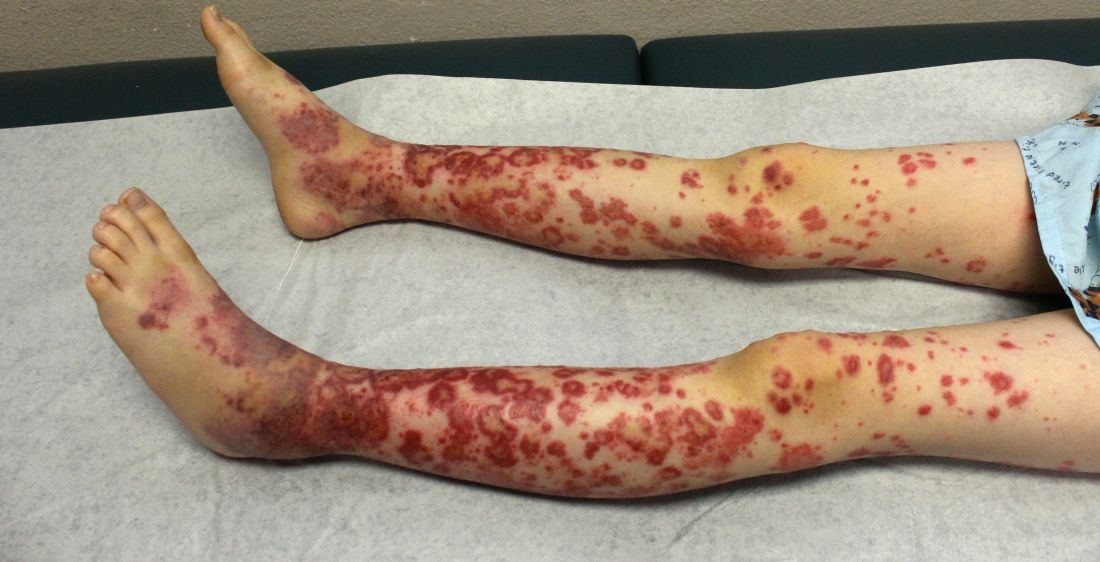
“I believe it’s more common in adults than reported. There’s a huge problem with establishing the right way to make the diagnosis in adults, which is why it is missed,” said Dr. Villa-Forte of the Cleveland Clinic, who spoke at the annual Perspectives in Rheumatic Diseases held by Global Academy for Medical Education.
But even if IgA vasculitis (IV) is diagnosed correctly in adults, there are many questions about how to move forward, she said. “Treatment in adults remains a problem since we don’t have data.”
IV is also known as Henoch-Schönlein purpura, or HSP, and “spring fever” because it often appears in children in the spring following an upper respiratory infection.
The condition causes vasculitis, the swelling of small blood vessels in organs such as the skin, joints, kidneys, and intestines. Leaking blood vessels can cause skin rashes known as purpura.
The estimated ranges of disease are high, with the annual incidence in children estimated at 3-26 per 100,000 and in adults at 0.1-1.8 per 100,000. Dr. Villa-Forte noted that the male-to-female ratio is 1.5, and she said the condition is less common in African Americans.
“In children, this is a disease that is frequently self-limited. Most of them don’t need treatment, and most of them do not relapse,” Dr. Villa-Forte said. “In adults, it’s more resistant to treatment, frequently chronic, and frequently relapsing over the years.”
There are other differences in IV between children and adults. “In children, there is a clear seasonal pattern of disease that is not seen in adults,” she said, and it’s linked to preceding infections.
“In adults, there are multiple causes, and most of the time they’re not identified,” she said.
As for diagnosis, she suggests looking at clinical presentation and whether tissue biopsy shows cutaneous leukocytoclastic vasculitis with IgA deposits. She cautioned that increased serum IgA is seen in about 50% of adult patients, making it an unreliable indicator.
Prognosis is much better for children than adults. According to a 2014 study, 80% of children completely recover, compared with 40% of adults. Persistent hematuria or proteinuria occurs in 30% of children and 60% of adults, respectively, while chronic renal failure occurs in 2% of children and 10% of adults (J Korean Med Sci. 2014 Feb;29[2]:198-203).
It’s possible that the latter number may be higher, with as many as 30% of adults developing chronic kidney disease (CKD), Dr. Villa-Forte said.
An estimated 97% of nephritis develops within the first 6 months of disease onset in adults, she said, “and in adults, the active renal disease can persist for over 20 years.”
Guidelines suggest that patients be monitored for CKD for 6 months after disease onset, but Dr. Villa-Forte said it’s better to monitor them for 12 months.
What about treatment? “The major challenge in adults is the real absence between correlation between initial presentation and long-term renal outcome,” she said. “That makes for a difficult choice in terms of treatment selection.”
Fever and cutaneous lesions above the waist may predict renal involvement, she said, although that isn’t confirmed, and increasing proteinuria is a probable factor predicting progression/complications.
According to Dr. Villa-Forte, the value of early treatment hasn’t been proved. Due to the risk of kidney problems, she said, “we don’t feel like we can just watch patients – that we need to do something. But there’s not good data supporting that.”
Various protocols involving steroids, early plasmapheresis, rituximab (Rituxan), and other drug regimens lack evidence, she said, although use of steroids in early nephritis may be beneficial in adults.
Dr. Villa-Forte had no relevant disclosures.
Global Academy for Medical Education and this news organization are owned by the same parent company.
LAS VEGAS – IgA vasculitis has a reputation as an illness of childhood, but rheumatologist Alexandra Villa-Forte, MD, MPH, cautioned colleagues that it can strike adults, too, often in a much more severe form. And, she warned, it’s likely not as rare as physicians assume.
“I believe it’s more common in adults than reported. There’s a huge problem with establishing the right way to make the diagnosis in adults, which is why it is missed,” said Dr. Villa-Forte of the Cleveland Clinic, who spoke at the annual Perspectives in Rheumatic Diseases held by Global Academy for Medical Education.
But even if IgA vasculitis (IV) is diagnosed correctly in adults, there are many questions about how to move forward, she said. “Treatment in adults remains a problem since we don’t have data.”
IV is also known as Henoch-Schönlein purpura, or HSP, and “spring fever” because it often appears in children in the spring following an upper respiratory infection.
The condition causes vasculitis, the swelling of small blood vessels in organs such as the skin, joints, kidneys, and intestines. Leaking blood vessels can cause skin rashes known as purpura.
The estimated ranges of disease are high, with the annual incidence in children estimated at 3-26 per 100,000 and in adults at 0.1-1.8 per 100,000. Dr. Villa-Forte noted that the male-to-female ratio is 1.5, and she said the condition is less common in African Americans.
“In children, this is a disease that is frequently self-limited. Most of them don’t need treatment, and most of them do not relapse,” Dr. Villa-Forte said. “In adults, it’s more resistant to treatment, frequently chronic, and frequently relapsing over the years.”
There are other differences in IV between children and adults. “In children, there is a clear seasonal pattern of disease that is not seen in adults,” she said, and it’s linked to preceding infections.
“In adults, there are multiple causes, and most of the time they’re not identified,” she said.
As for diagnosis, she suggests looking at clinical presentation and whether tissue biopsy shows cutaneous leukocytoclastic vasculitis with IgA deposits. She cautioned that increased serum IgA is seen in about 50% of adult patients, making it an unreliable indicator.
Prognosis is much better for children than adults. According to a 2014 study, 80% of children completely recover, compared with 40% of adults. Persistent hematuria or proteinuria occurs in 30% of children and 60% of adults, respectively, while chronic renal failure occurs in 2% of children and 10% of adults (J Korean Med Sci. 2014 Feb;29[2]:198-203).
It’s possible that the latter number may be higher, with as many as 30% of adults developing chronic kidney disease (CKD), Dr. Villa-Forte said.
An estimated 97% of nephritis develops within the first 6 months of disease onset in adults, she said, “and in adults, the active renal disease can persist for over 20 years.”
Guidelines suggest that patients be monitored for CKD for 6 months after disease onset, but Dr. Villa-Forte said it’s better to monitor them for 12 months.
What about treatment? “The major challenge in adults is the real absence between correlation between initial presentation and long-term renal outcome,” she said. “That makes for a difficult choice in terms of treatment selection.”
Fever and cutaneous lesions above the waist may predict renal involvement, she said, although that isn’t confirmed, and increasing proteinuria is a probable factor predicting progression/complications.
According to Dr. Villa-Forte, the value of early treatment hasn’t been proved. Due to the risk of kidney problems, she said, “we don’t feel like we can just watch patients – that we need to do something. But there’s not good data supporting that.”
Various protocols involving steroids, early plasmapheresis, rituximab (Rituxan), and other drug regimens lack evidence, she said, although use of steroids in early nephritis may be beneficial in adults.
Dr. Villa-Forte had no relevant disclosures.
Global Academy for Medical Education and this news organization are owned by the same parent company.
LAS VEGAS – IgA vasculitis has a reputation as an illness of childhood, but rheumatologist Alexandra Villa-Forte, MD, MPH, cautioned colleagues that it can strike adults, too, often in a much more severe form. And, she warned, it’s likely not as rare as physicians assume.
“I believe it’s more common in adults than reported. There’s a huge problem with establishing the right way to make the diagnosis in adults, which is why it is missed,” said Dr. Villa-Forte of the Cleveland Clinic, who spoke at the annual Perspectives in Rheumatic Diseases held by Global Academy for Medical Education.
But even if IgA vasculitis (IV) is diagnosed correctly in adults, there are many questions about how to move forward, she said. “Treatment in adults remains a problem since we don’t have data.”
IV is also known as Henoch-Schönlein purpura, or HSP, and “spring fever” because it often appears in children in the spring following an upper respiratory infection.
The condition causes vasculitis, the swelling of small blood vessels in organs such as the skin, joints, kidneys, and intestines. Leaking blood vessels can cause skin rashes known as purpura.
The estimated ranges of disease are high, with the annual incidence in children estimated at 3-26 per 100,000 and in adults at 0.1-1.8 per 100,000. Dr. Villa-Forte noted that the male-to-female ratio is 1.5, and she said the condition is less common in African Americans.
“In children, this is a disease that is frequently self-limited. Most of them don’t need treatment, and most of them do not relapse,” Dr. Villa-Forte said. “In adults, it’s more resistant to treatment, frequently chronic, and frequently relapsing over the years.”
There are other differences in IV between children and adults. “In children, there is a clear seasonal pattern of disease that is not seen in adults,” she said, and it’s linked to preceding infections.
“In adults, there are multiple causes, and most of the time they’re not identified,” she said.
As for diagnosis, she suggests looking at clinical presentation and whether tissue biopsy shows cutaneous leukocytoclastic vasculitis with IgA deposits. She cautioned that increased serum IgA is seen in about 50% of adult patients, making it an unreliable indicator.
Prognosis is much better for children than adults. According to a 2014 study, 80% of children completely recover, compared with 40% of adults. Persistent hematuria or proteinuria occurs in 30% of children and 60% of adults, respectively, while chronic renal failure occurs in 2% of children and 10% of adults (J Korean Med Sci. 2014 Feb;29[2]:198-203).
It’s possible that the latter number may be higher, with as many as 30% of adults developing chronic kidney disease (CKD), Dr. Villa-Forte said.
An estimated 97% of nephritis develops within the first 6 months of disease onset in adults, she said, “and in adults, the active renal disease can persist for over 20 years.”
Guidelines suggest that patients be monitored for CKD for 6 months after disease onset, but Dr. Villa-Forte said it’s better to monitor them for 12 months.
What about treatment? “The major challenge in adults is the real absence between correlation between initial presentation and long-term renal outcome,” she said. “That makes for a difficult choice in terms of treatment selection.”
Fever and cutaneous lesions above the waist may predict renal involvement, she said, although that isn’t confirmed, and increasing proteinuria is a probable factor predicting progression/complications.
According to Dr. Villa-Forte, the value of early treatment hasn’t been proved. Due to the risk of kidney problems, she said, “we don’t feel like we can just watch patients – that we need to do something. But there’s not good data supporting that.”
Various protocols involving steroids, early plasmapheresis, rituximab (Rituxan), and other drug regimens lack evidence, she said, although use of steroids in early nephritis may be beneficial in adults.
Dr. Villa-Forte had no relevant disclosures.
Global Academy for Medical Education and this news organization are owned by the same parent company.
REPORTING FROM THE ANNUAL PERSPECTIVES IN RHEUMATIC DISEASES
Coping with a rheumatology clinic’s ‘worst nightmare’
LAS VEGAS – Cleveland Clinic rheumatologist Alexandra Villa-Forte, MD, MPH, has a vivid way of describing the challenge of maintaining remission in granulomatosis with polyangiitis (GPA): She called it “the worst nightmare in the clinic” in a presentation at the annual Perspectives in Rheumatic Diseases.
Dr. Villa-Forte should know. She’s treated more than 700 patients with GPA, also known as Wegener’s granulomatosis, a rare disorder that causes necrotizing vasculitis of small arteries and veins. She advises close monitoring of patients in remission, caution regarding toxicity, pneumonia prophylaxis, and an understanding of the limitations of existing medications.
An estimated 3 in 100,000 people have GPA, which can be fatal if it’s not treated. “All patients with active GPA should receive prednisone with a second agent,” she said at the conference, held by Global Academy for Medical Education. “We know that increasing the prednisone or using it alone will not result in sustained remission at all.”
According to her, new concepts in therapeutic guidance suggest four criteria should determine the specific agents used: Involvement of critical organ systems, severity of clinical manifestations, rate of change (such as rapidly progressing kidney failure), and individual patient factors such as comorbidities.
Patients facing immediate risk to life or organ function should get higher doses of corticosteroids, a cytotoxic agent, and perhaps plasmapheresis, she said.
Induction therapy should last 3-6 months, followed by maintenance therapy that keeps the condition at bay, Dr. Villa-Forte said. But things do not always go according to plan.
“The main challenge that we encounter is that relapses still occur during treatment. The patient could be on appropriate treatment and appropriate doses and they still relapse,” she said. “The second challenge is that patients who come off treatment have a very high rate of relapse.”
Research suggests that up to 70% of patients off medication relapse by 18 months, and 15%-35% of patients on medication relapse by 12-18 months, Dr. Villa-Forte said.
“Every time a patient relapses, it means induction therapy and high doses of prednisone are started all over again,” she said. “Multiple relapses are associated with a very high rate of complications. That’s what we’re trying to avoid through successful maintenance therapy.”
Which agent is best for maintenance? Research has suggested that there’s little difference in relapse rates between methotrexate and azathioprine, while mycophenolate mofetil was linked to more relapses than was azathioprine. Other research has found that rituximab (Rituxan) is superior to azathioprine at sustaining remission and overall survival (N Engl J Med. 2014 Nov 6;371[19]:1771-80).
Questions about rituximab remain, Dr. Villa-Forte said: Can remission be sustained with fewer infusions? Would higher doses produce long-term benefit after therapy is halted without boosting toxicity?
Regardless of the drug used, relapses from remission are still frequent, suggesting the need to focus on special treatment for patients at higher risk for relapse, she said.
For now, she gave these tips about how to treat patients in remission:
• Reduce treatment toxicity (it’s “significant over time and not better with rituximab”) and focus on disease activity and complications.
• Take regular labs and get a fresh urine sediment analysis with every visit. In some cases, the urine analysis in patients who seem healthy will reveal hematuria, a sign of nephritis. Then, “you have to make a decision about changing the treatment just by looking at the urine.”
• Pay attention to the risk of thrombosis.
• Put patients on Pneumocystis carinii pneumonia prophylaxis even if they’re only on a bit of prednisone.
• Be aware of risk factors for relapse, including a history of at least one relapse and stopping therapy before 48 months.
Dr. Villa-Forte had no relevant disclosures.
Global Academy for Medical Education and this news organization are owned by the same parent company.
LAS VEGAS – Cleveland Clinic rheumatologist Alexandra Villa-Forte, MD, MPH, has a vivid way of describing the challenge of maintaining remission in granulomatosis with polyangiitis (GPA): She called it “the worst nightmare in the clinic” in a presentation at the annual Perspectives in Rheumatic Diseases.
Dr. Villa-Forte should know. She’s treated more than 700 patients with GPA, also known as Wegener’s granulomatosis, a rare disorder that causes necrotizing vasculitis of small arteries and veins. She advises close monitoring of patients in remission, caution regarding toxicity, pneumonia prophylaxis, and an understanding of the limitations of existing medications.
An estimated 3 in 100,000 people have GPA, which can be fatal if it’s not treated. “All patients with active GPA should receive prednisone with a second agent,” she said at the conference, held by Global Academy for Medical Education. “We know that increasing the prednisone or using it alone will not result in sustained remission at all.”
According to her, new concepts in therapeutic guidance suggest four criteria should determine the specific agents used: Involvement of critical organ systems, severity of clinical manifestations, rate of change (such as rapidly progressing kidney failure), and individual patient factors such as comorbidities.
Patients facing immediate risk to life or organ function should get higher doses of corticosteroids, a cytotoxic agent, and perhaps plasmapheresis, she said.
Induction therapy should last 3-6 months, followed by maintenance therapy that keeps the condition at bay, Dr. Villa-Forte said. But things do not always go according to plan.
“The main challenge that we encounter is that relapses still occur during treatment. The patient could be on appropriate treatment and appropriate doses and they still relapse,” she said. “The second challenge is that patients who come off treatment have a very high rate of relapse.”
Research suggests that up to 70% of patients off medication relapse by 18 months, and 15%-35% of patients on medication relapse by 12-18 months, Dr. Villa-Forte said.
“Every time a patient relapses, it means induction therapy and high doses of prednisone are started all over again,” she said. “Multiple relapses are associated with a very high rate of complications. That’s what we’re trying to avoid through successful maintenance therapy.”
Which agent is best for maintenance? Research has suggested that there’s little difference in relapse rates between methotrexate and azathioprine, while mycophenolate mofetil was linked to more relapses than was azathioprine. Other research has found that rituximab (Rituxan) is superior to azathioprine at sustaining remission and overall survival (N Engl J Med. 2014 Nov 6;371[19]:1771-80).
Questions about rituximab remain, Dr. Villa-Forte said: Can remission be sustained with fewer infusions? Would higher doses produce long-term benefit after therapy is halted without boosting toxicity?
Regardless of the drug used, relapses from remission are still frequent, suggesting the need to focus on special treatment for patients at higher risk for relapse, she said.
For now, she gave these tips about how to treat patients in remission:
• Reduce treatment toxicity (it’s “significant over time and not better with rituximab”) and focus on disease activity and complications.
• Take regular labs and get a fresh urine sediment analysis with every visit. In some cases, the urine analysis in patients who seem healthy will reveal hematuria, a sign of nephritis. Then, “you have to make a decision about changing the treatment just by looking at the urine.”
• Pay attention to the risk of thrombosis.
• Put patients on Pneumocystis carinii pneumonia prophylaxis even if they’re only on a bit of prednisone.
• Be aware of risk factors for relapse, including a history of at least one relapse and stopping therapy before 48 months.
Dr. Villa-Forte had no relevant disclosures.
Global Academy for Medical Education and this news organization are owned by the same parent company.
LAS VEGAS – Cleveland Clinic rheumatologist Alexandra Villa-Forte, MD, MPH, has a vivid way of describing the challenge of maintaining remission in granulomatosis with polyangiitis (GPA): She called it “the worst nightmare in the clinic” in a presentation at the annual Perspectives in Rheumatic Diseases.
Dr. Villa-Forte should know. She’s treated more than 700 patients with GPA, also known as Wegener’s granulomatosis, a rare disorder that causes necrotizing vasculitis of small arteries and veins. She advises close monitoring of patients in remission, caution regarding toxicity, pneumonia prophylaxis, and an understanding of the limitations of existing medications.
An estimated 3 in 100,000 people have GPA, which can be fatal if it’s not treated. “All patients with active GPA should receive prednisone with a second agent,” she said at the conference, held by Global Academy for Medical Education. “We know that increasing the prednisone or using it alone will not result in sustained remission at all.”
According to her, new concepts in therapeutic guidance suggest four criteria should determine the specific agents used: Involvement of critical organ systems, severity of clinical manifestations, rate of change (such as rapidly progressing kidney failure), and individual patient factors such as comorbidities.
Patients facing immediate risk to life or organ function should get higher doses of corticosteroids, a cytotoxic agent, and perhaps plasmapheresis, she said.
Induction therapy should last 3-6 months, followed by maintenance therapy that keeps the condition at bay, Dr. Villa-Forte said. But things do not always go according to plan.
“The main challenge that we encounter is that relapses still occur during treatment. The patient could be on appropriate treatment and appropriate doses and they still relapse,” she said. “The second challenge is that patients who come off treatment have a very high rate of relapse.”
Research suggests that up to 70% of patients off medication relapse by 18 months, and 15%-35% of patients on medication relapse by 12-18 months, Dr. Villa-Forte said.
“Every time a patient relapses, it means induction therapy and high doses of prednisone are started all over again,” she said. “Multiple relapses are associated with a very high rate of complications. That’s what we’re trying to avoid through successful maintenance therapy.”
Which agent is best for maintenance? Research has suggested that there’s little difference in relapse rates between methotrexate and azathioprine, while mycophenolate mofetil was linked to more relapses than was azathioprine. Other research has found that rituximab (Rituxan) is superior to azathioprine at sustaining remission and overall survival (N Engl J Med. 2014 Nov 6;371[19]:1771-80).
Questions about rituximab remain, Dr. Villa-Forte said: Can remission be sustained with fewer infusions? Would higher doses produce long-term benefit after therapy is halted without boosting toxicity?
Regardless of the drug used, relapses from remission are still frequent, suggesting the need to focus on special treatment for patients at higher risk for relapse, she said.
For now, she gave these tips about how to treat patients in remission:
• Reduce treatment toxicity (it’s “significant over time and not better with rituximab”) and focus on disease activity and complications.
• Take regular labs and get a fresh urine sediment analysis with every visit. In some cases, the urine analysis in patients who seem healthy will reveal hematuria, a sign of nephritis. Then, “you have to make a decision about changing the treatment just by looking at the urine.”
• Pay attention to the risk of thrombosis.
• Put patients on Pneumocystis carinii pneumonia prophylaxis even if they’re only on a bit of prednisone.
• Be aware of risk factors for relapse, including a history of at least one relapse and stopping therapy before 48 months.
Dr. Villa-Forte had no relevant disclosures.
Global Academy for Medical Education and this news organization are owned by the same parent company.
REPORTING FROM THE ANNUAL PERSPECTIVES IN RHEUMATIC DISEASES
Stop treating gout and start curing it, physician urges
LAS VEGAS – Brian F. Mandell, MD, PhD, of Cleveland Clinic, has a message about one of the most devastating conditions that rheumatologists see: Gout isn’t just a treatable disease. It’s a curable one.

Still, research shows time and time again that physicians manage gout “horrendously,” he told colleagues at the annual Perspectives in Rheumatic Diseases held by Global Academy for Medical Education. “The problem really lies with us,” he said. “We need to do a better job.”
At issue, he believes, is a failure to consider the basic workings of gout when making treatment decisions and advising patients. Lowering serum uric acid (SUA) via medication works, he said, but physicians too frequently don’t go far enough with this approach.
Gout appears to be on the rise in the United States, reflecting increases in related conditions such as obesity and diabetes. A study published this year found that the rate of new-onset gout more than doubled in Olmsted County, Minn., from 1989-1992 to 2009-2010, reaching an adjusted rate of 137/100,000 (J Rheumatol. 2018 Apr;45[4]:574-9).
According to Dr. Mandell, various mysteries regarding gout still need to be cleared up. For one, does resolution of gout also resolve conditions related to hyperuricemia, such as onset of hypertension, progressive chronic kidney disease, and nonalcoholic fatty liver along with higher all-cause mortality?
“We don’t know from interventional studies whether these are as reversible as the gouty arthritis,” he said.
It’s also unknown why so many hyperuricemic patients don’t get flares, with one study estimating that about 50% don’t get them over 15 years (Arthritis Rheumatol. 2017;69[Suppl 10]: Abstract 2843).
One fascinating theory, Dr. Mandell said, suggests “the microbiome is playing a huge [role] in the body’s response to deposits of crystals.”
Fortunately, he said, other mysteries about gout are being solved.
It’s now clear that lowering SUA below 6 mg/dL with medication will reduce flares, Dr. Mandell said. He pointed to a 2017 study of 314 patients with early gout that found 63% of patients who took febuxostat (Uloric) lowered their SUA below 6 mg/dL, compared with just 6% of the placebo group. The overall percentage of patients who had at least one gout flare over 2 years was 29% in the febuxostat group vs. 41% in the placebo group (Arthritis Rheumatol. 2017;69[12]:2386‐95).
It’s also clear that maintenance of lower SUA levels is crucial to prevent recurrence, Dr. Mandell said.
So why is management of hyperuricemia so poor? He ticked off various possible explanations: Maybe it’s the medications. Or perhaps patient compliance is low.
But the drugs are fine, he said, although he cautioned that too-rapid lowering of SUA levels can provoke attacks. He pointed to a 2014 study that suggests allopurinol can help nearly all patients get their SUA below 6 mg/dL, and in the study, the drug was “generally well tolerated” (Semin Arthritis Rheum. 2014 Aug;44[1]:25-30).
As for compliance, Dr. Mandell said, it can be boosted by patient education. The problem, he said, is that physicians are failing patients by not up-titrating allopurinol despite evidence that this approach works.
He added that hyperuricemia can be managed even in patients on diuretic therapy (Arthritis Res Ther. 2018;20:53).
What about patients who are intolerant to allopurinol or don’t fully respond to it on the SUA front? Dr. Mandell said he likes to try febuxostat, although he noted that it’s tremendously more expensive than allopurinol in the United States with a price that could be 10 times higher.
The nonscored design of febuxostat pills makes dose adjustment difficult in patients, he said, and there are concerns about heart-related and all-cause deaths.
Lesinurad (Zurampic) may be helpful for patients with hyperuricemia that doesn’t response to high doses of xanthine oxidase inhibitors (XOI) or if they’re intolerant to lower inadequate doses, he said. Avoid the drug in patients with chronic kidney disease, he cautioned, and be aware that it’s not approved as a monotherapy. Instead, it’s approved by the Food and Drug Administration for use with an XOI.
As for other gout issues, Dr. Mandell said pegloticase (Krystexxa) via infusion can help patients who don’t respond to an XOI but infusion reactions can occur (mainly in nonresponders), and it’s extremely expensive (about $20,000 per month).
He added that anti–IL-1 therapy is effective in hospitalized patients with gout and doesn’t exacerbate other conditions.
Dr. Mandell disclosed various links to drug makers that produce treatments for gout. He has served as clinical investigator for Horizon, has been a consultant to AstraZeneca, Ironwood, and Horizon, and has received honoraria (unrestricted grants) for continuing medical education activities from Takeda and Horizon. He also reported soliciting advertisements for a journal and educational grants for CME activities.
Global Academy for Medical Education and this news organization are owned by the same parent company.
LAS VEGAS – Brian F. Mandell, MD, PhD, of Cleveland Clinic, has a message about one of the most devastating conditions that rheumatologists see: Gout isn’t just a treatable disease. It’s a curable one.
Still, research shows time and time again that physicians manage gout “horrendously,” he told colleagues at the annual Perspectives in Rheumatic Diseases held by Global Academy for Medical Education. “The problem really lies with us,” he said. “We need to do a better job.”
At issue, he believes, is a failure to consider the basic workings of gout when making treatment decisions and advising patients. Lowering serum uric acid (SUA) via medication works, he said, but physicians too frequently don’t go far enough with this approach.
Gout appears to be on the rise in the United States, reflecting increases in related conditions such as obesity and diabetes. A study published this year found that the rate of new-onset gout more than doubled in Olmsted County, Minn., from 1989-1992 to 2009-2010, reaching an adjusted rate of 137/100,000 (J Rheumatol. 2018 Apr;45[4]:574-9).
According to Dr. Mandell, various mysteries regarding gout still need to be cleared up. For one, does resolution of gout also resolve conditions related to hyperuricemia, such as onset of hypertension, progressive chronic kidney disease, and nonalcoholic fatty liver along with higher all-cause mortality?
“We don’t know from interventional studies whether these are as reversible as the gouty arthritis,” he said.
It’s also unknown why so many hyperuricemic patients don’t get flares, with one study estimating that about 50% don’t get them over 15 years (Arthritis Rheumatol. 2017;69[Suppl 10]: Abstract 2843).
One fascinating theory, Dr. Mandell said, suggests “the microbiome is playing a huge [role] in the body’s response to deposits of crystals.”
Fortunately, he said, other mysteries about gout are being solved.
It’s now clear that lowering SUA below 6 mg/dL with medication will reduce flares, Dr. Mandell said. He pointed to a 2017 study of 314 patients with early gout that found 63% of patients who took febuxostat (Uloric) lowered their SUA below 6 mg/dL, compared with just 6% of the placebo group. The overall percentage of patients who had at least one gout flare over 2 years was 29% in the febuxostat group vs. 41% in the placebo group (Arthritis Rheumatol. 2017;69[12]:2386‐95).
It’s also clear that maintenance of lower SUA levels is crucial to prevent recurrence, Dr. Mandell said.
So why is management of hyperuricemia so poor? He ticked off various possible explanations: Maybe it’s the medications. Or perhaps patient compliance is low.
But the drugs are fine, he said, although he cautioned that too-rapid lowering of SUA levels can provoke attacks. He pointed to a 2014 study that suggests allopurinol can help nearly all patients get their SUA below 6 mg/dL, and in the study, the drug was “generally well tolerated” (Semin Arthritis Rheum. 2014 Aug;44[1]:25-30).
As for compliance, Dr. Mandell said, it can be boosted by patient education. The problem, he said, is that physicians are failing patients by not up-titrating allopurinol despite evidence that this approach works.
He added that hyperuricemia can be managed even in patients on diuretic therapy (Arthritis Res Ther. 2018;20:53).
What about patients who are intolerant to allopurinol or don’t fully respond to it on the SUA front? Dr. Mandell said he likes to try febuxostat, although he noted that it’s tremendously more expensive than allopurinol in the United States with a price that could be 10 times higher.
The nonscored design of febuxostat pills makes dose adjustment difficult in patients, he said, and there are concerns about heart-related and all-cause deaths.
Lesinurad (Zurampic) may be helpful for patients with hyperuricemia that doesn’t response to high doses of xanthine oxidase inhibitors (XOI) or if they’re intolerant to lower inadequate doses, he said. Avoid the drug in patients with chronic kidney disease, he cautioned, and be aware that it’s not approved as a monotherapy. Instead, it’s approved by the Food and Drug Administration for use with an XOI.
As for other gout issues, Dr. Mandell said pegloticase (Krystexxa) via infusion can help patients who don’t respond to an XOI but infusion reactions can occur (mainly in nonresponders), and it’s extremely expensive (about $20,000 per month).
He added that anti–IL-1 therapy is effective in hospitalized patients with gout and doesn’t exacerbate other conditions.
Dr. Mandell disclosed various links to drug makers that produce treatments for gout. He has served as clinical investigator for Horizon, has been a consultant to AstraZeneca, Ironwood, and Horizon, and has received honoraria (unrestricted grants) for continuing medical education activities from Takeda and Horizon. He also reported soliciting advertisements for a journal and educational grants for CME activities.
Global Academy for Medical Education and this news organization are owned by the same parent company.
LAS VEGAS – Brian F. Mandell, MD, PhD, of Cleveland Clinic, has a message about one of the most devastating conditions that rheumatologists see: Gout isn’t just a treatable disease. It’s a curable one.
Still, research shows time and time again that physicians manage gout “horrendously,” he told colleagues at the annual Perspectives in Rheumatic Diseases held by Global Academy for Medical Education. “The problem really lies with us,” he said. “We need to do a better job.”
At issue, he believes, is a failure to consider the basic workings of gout when making treatment decisions and advising patients. Lowering serum uric acid (SUA) via medication works, he said, but physicians too frequently don’t go far enough with this approach.
Gout appears to be on the rise in the United States, reflecting increases in related conditions such as obesity and diabetes. A study published this year found that the rate of new-onset gout more than doubled in Olmsted County, Minn., from 1989-1992 to 2009-2010, reaching an adjusted rate of 137/100,000 (J Rheumatol. 2018 Apr;45[4]:574-9).
According to Dr. Mandell, various mysteries regarding gout still need to be cleared up. For one, does resolution of gout also resolve conditions related to hyperuricemia, such as onset of hypertension, progressive chronic kidney disease, and nonalcoholic fatty liver along with higher all-cause mortality?
“We don’t know from interventional studies whether these are as reversible as the gouty arthritis,” he said.
It’s also unknown why so many hyperuricemic patients don’t get flares, with one study estimating that about 50% don’t get them over 15 years (Arthritis Rheumatol. 2017;69[Suppl 10]: Abstract 2843).
One fascinating theory, Dr. Mandell said, suggests “the microbiome is playing a huge [role] in the body’s response to deposits of crystals.”
Fortunately, he said, other mysteries about gout are being solved.
It’s now clear that lowering SUA below 6 mg/dL with medication will reduce flares, Dr. Mandell said. He pointed to a 2017 study of 314 patients with early gout that found 63% of patients who took febuxostat (Uloric) lowered their SUA below 6 mg/dL, compared with just 6% of the placebo group. The overall percentage of patients who had at least one gout flare over 2 years was 29% in the febuxostat group vs. 41% in the placebo group (Arthritis Rheumatol. 2017;69[12]:2386‐95).
It’s also clear that maintenance of lower SUA levels is crucial to prevent recurrence, Dr. Mandell said.
So why is management of hyperuricemia so poor? He ticked off various possible explanations: Maybe it’s the medications. Or perhaps patient compliance is low.
But the drugs are fine, he said, although he cautioned that too-rapid lowering of SUA levels can provoke attacks. He pointed to a 2014 study that suggests allopurinol can help nearly all patients get their SUA below 6 mg/dL, and in the study, the drug was “generally well tolerated” (Semin Arthritis Rheum. 2014 Aug;44[1]:25-30).
As for compliance, Dr. Mandell said, it can be boosted by patient education. The problem, he said, is that physicians are failing patients by not up-titrating allopurinol despite evidence that this approach works.
He added that hyperuricemia can be managed even in patients on diuretic therapy (Arthritis Res Ther. 2018;20:53).
What about patients who are intolerant to allopurinol or don’t fully respond to it on the SUA front? Dr. Mandell said he likes to try febuxostat, although he noted that it’s tremendously more expensive than allopurinol in the United States with a price that could be 10 times higher.
The nonscored design of febuxostat pills makes dose adjustment difficult in patients, he said, and there are concerns about heart-related and all-cause deaths.
Lesinurad (Zurampic) may be helpful for patients with hyperuricemia that doesn’t response to high doses of xanthine oxidase inhibitors (XOI) or if they’re intolerant to lower inadequate doses, he said. Avoid the drug in patients with chronic kidney disease, he cautioned, and be aware that it’s not approved as a monotherapy. Instead, it’s approved by the Food and Drug Administration for use with an XOI.
As for other gout issues, Dr. Mandell said pegloticase (Krystexxa) via infusion can help patients who don’t respond to an XOI but infusion reactions can occur (mainly in nonresponders), and it’s extremely expensive (about $20,000 per month).
He added that anti–IL-1 therapy is effective in hospitalized patients with gout and doesn’t exacerbate other conditions.
Dr. Mandell disclosed various links to drug makers that produce treatments for gout. He has served as clinical investigator for Horizon, has been a consultant to AstraZeneca, Ironwood, and Horizon, and has received honoraria (unrestricted grants) for continuing medical education activities from Takeda and Horizon. He also reported soliciting advertisements for a journal and educational grants for CME activities.
Global Academy for Medical Education and this news organization are owned by the same parent company.
REPORTING FROM THE ANNUAL PERSPECTIVES IN RHEUMATIC DISEASES
Piperacillin-tazobactam fails to outperform meropenem in bloodstream infections
A new study finds that piperacillin-tazobactam doesn’t improve mortality compared to meropenem in patients with ceftriaxone-resistant blood poisoning caused by E. coli or K. pneumoniae. The findings were so striking that the study was ended early.

Courtesy: JAMA
“These findings do not support use of piperacillin-tazobactam in this setting,” wrote the authors. The report was published Sept. 11 in JAMA (2018;320[10]:984-94.)
According to the Centers for Disease Control and Prevention, an estimated 1,700 deaths in the United States in 2011 were caused by gram-negative bacteria that produce extended-spectrum beta-lactamase enzymes.
While carbapenems such as meropenem (Merrem) are “regarded as the treatment of choice for serious infections,” the MERINO trial (NCT02176122) authors wrote, their rising use could lead to drug resistance.
One alternate option is to embrace beta-lactam/beta-lactamase inhibitors such as piperacillin-tazobactam (Zosyn), the researchers noted, but research has produced conflicting results.
Piperacillin-tazobactam is an injected penicillin antibiotic used to treat conditions such as severe pneumonia, complicated urinary tract infections and complicated skin and soft tissue infections.
For the new study, researchers led by Patrick N. A. Harris, MBBS, of the University of Queensland, randomly assigned 188 patients to intravenous piperacillin-tazobactam (4.5 g every 6 hours) and 191 patients to meropenem (1 g every 8 hours) for 4-14 days, depending on clinician’s preference. (12 other patients did not continue with the study after initial randomization due to factors such as errors).
All patients were adults and had at least one blood test showing they were positive for E. coli or K. pneumoniae. They all had to be nonsusceptible to ceftriaxone (Rocephin) but susceptible to piperacillin-tazobactam.
The study was ceased prior to enrollment because of the risk of harm. Interim findings suggested the study was unlikely to show higher effectiveness for piperacillin-tazobactam
The primary analysis included 379 patients (mean age 67 years, 48% were women), and the primary outcome analysis included 378 patients.
A total of 23 (12.3%) of 187 patients in the piperacillin-tazobactam group died by 30 days compared to 7 (3.7%) of 191 in the meropenem group (risk difference: 8.6%, P = .90 for noninferiority).
By day 4, 68% of the piperacillin-tazobactam group and 75% of the meropenem group achieved clinical and microbiological resolution.
Serious adverse effects other than death were rare, occurring in around 3% of the piperacillin-tazobactam group and nearly 2% of the meropenem group.
The researchers note various limitations, including the unblinded nature of the study and the fact that it’s not known if extended or continuous infusions of piperacillin-tazobactam would boost the drug’s effectiveness. They also note that delays resulted in some patients initially receiving treatment with one of the study’s two drugs before being randomized to the other.
The study authors caution that it’s not clear if newer beta-lactam/beta-lactamase inhibitors agents such as ceftolozane-tazobactam or ceftazidime-avibactam may be effective in this population.
The study was funded by the University of Queensland, Australian Society for Antimicrobials, International Society for Chemotherapy, and National University Hospital Singapore. Various organizations funded the researchers and the study’s whole-genome sequencing. The study authors report various disclosures, including funding from drugmakers such as Pfizer, maker of Zosyn (through its subsidiary Wyeth) and Merrem.
SOURCE: Harris PNA et al. JAMA 2018 Sep 11;320[10]:984-94. doi: 10.1001/jama.2018.12163.
There may be no greater present-day antibiotic resistance threat than the prospect of nonsusceptibility developing among patients with blood poisoning who receive carbapenems for infections caused by E. coli or K. pneumonia. New antibiotics are being developed and researchers are taking a second look at existing drugs.
The new study aims to shed light on the effectiveness of piperacillin-tazobactam in this population compared to carbapenems. Surprisingly, the researchers failed to show a mortality benefit for the drug vs. meropenem. What now? Future research could shed light on newer beta-lactam/beta-lactamase inhibitors, and studies may also offer insight into alternatives such as short-term antibiotic therapy. The upcoming availability of electronic decision support tools may be helpful, and it remains important to prevent infections in the first place.
This commentary was taken from an editorial by Mary K. Hayden, MD, and Sarah Y. Won, MD, MPH, of Rush University Medical Center (JAMA 2018 Sep 11;320[10]:979-81). Dr. Hayden reports research funding from Colorox and serving as an investigator on research products that received product support from Sage Corporation, Molnlycke, Clorox, OpGen and Medline.
There may be no greater present-day antibiotic resistance threat than the prospect of nonsusceptibility developing among patients with blood poisoning who receive carbapenems for infections caused by E. coli or K. pneumonia. New antibiotics are being developed and researchers are taking a second look at existing drugs.
The new study aims to shed light on the effectiveness of piperacillin-tazobactam in this population compared to carbapenems. Surprisingly, the researchers failed to show a mortality benefit for the drug vs. meropenem. What now? Future research could shed light on newer beta-lactam/beta-lactamase inhibitors, and studies may also offer insight into alternatives such as short-term antibiotic therapy. The upcoming availability of electronic decision support tools may be helpful, and it remains important to prevent infections in the first place.
This commentary was taken from an editorial by Mary K. Hayden, MD, and Sarah Y. Won, MD, MPH, of Rush University Medical Center (JAMA 2018 Sep 11;320[10]:979-81). Dr. Hayden reports research funding from Colorox and serving as an investigator on research products that received product support from Sage Corporation, Molnlycke, Clorox, OpGen and Medline.
There may be no greater present-day antibiotic resistance threat than the prospect of nonsusceptibility developing among patients with blood poisoning who receive carbapenems for infections caused by E. coli or K. pneumonia. New antibiotics are being developed and researchers are taking a second look at existing drugs.
The new study aims to shed light on the effectiveness of piperacillin-tazobactam in this population compared to carbapenems. Surprisingly, the researchers failed to show a mortality benefit for the drug vs. meropenem. What now? Future research could shed light on newer beta-lactam/beta-lactamase inhibitors, and studies may also offer insight into alternatives such as short-term antibiotic therapy. The upcoming availability of electronic decision support tools may be helpful, and it remains important to prevent infections in the first place.
This commentary was taken from an editorial by Mary K. Hayden, MD, and Sarah Y. Won, MD, MPH, of Rush University Medical Center (JAMA 2018 Sep 11;320[10]:979-81). Dr. Hayden reports research funding from Colorox and serving as an investigator on research products that received product support from Sage Corporation, Molnlycke, Clorox, OpGen and Medline.
A new study finds that piperacillin-tazobactam doesn’t improve mortality compared to meropenem in patients with ceftriaxone-resistant blood poisoning caused by E. coli or K. pneumoniae. The findings were so striking that the study was ended early.
Courtesy: JAMA
“These findings do not support use of piperacillin-tazobactam in this setting,” wrote the authors. The report was published Sept. 11 in JAMA (2018;320[10]:984-94.)
According to the Centers for Disease Control and Prevention, an estimated 1,700 deaths in the United States in 2011 were caused by gram-negative bacteria that produce extended-spectrum beta-lactamase enzymes.
While carbapenems such as meropenem (Merrem) are “regarded as the treatment of choice for serious infections,” the MERINO trial (NCT02176122) authors wrote, their rising use could lead to drug resistance.
One alternate option is to embrace beta-lactam/beta-lactamase inhibitors such as piperacillin-tazobactam (Zosyn), the researchers noted, but research has produced conflicting results.
Piperacillin-tazobactam is an injected penicillin antibiotic used to treat conditions such as severe pneumonia, complicated urinary tract infections and complicated skin and soft tissue infections.
For the new study, researchers led by Patrick N. A. Harris, MBBS, of the University of Queensland, randomly assigned 188 patients to intravenous piperacillin-tazobactam (4.5 g every 6 hours) and 191 patients to meropenem (1 g every 8 hours) for 4-14 days, depending on clinician’s preference. (12 other patients did not continue with the study after initial randomization due to factors such as errors).
All patients were adults and had at least one blood test showing they were positive for E. coli or K. pneumoniae. They all had to be nonsusceptible to ceftriaxone (Rocephin) but susceptible to piperacillin-tazobactam.
The study was ceased prior to enrollment because of the risk of harm. Interim findings suggested the study was unlikely to show higher effectiveness for piperacillin-tazobactam
The primary analysis included 379 patients (mean age 67 years, 48% were women), and the primary outcome analysis included 378 patients.
A total of 23 (12.3%) of 187 patients in the piperacillin-tazobactam group died by 30 days compared to 7 (3.7%) of 191 in the meropenem group (risk difference: 8.6%, P = .90 for noninferiority).
By day 4, 68% of the piperacillin-tazobactam group and 75% of the meropenem group achieved clinical and microbiological resolution.
Serious adverse effects other than death were rare, occurring in around 3% of the piperacillin-tazobactam group and nearly 2% of the meropenem group.
The researchers note various limitations, including the unblinded nature of the study and the fact that it’s not known if extended or continuous infusions of piperacillin-tazobactam would boost the drug’s effectiveness. They also note that delays resulted in some patients initially receiving treatment with one of the study’s two drugs before being randomized to the other.
The study authors caution that it’s not clear if newer beta-lactam/beta-lactamase inhibitors agents such as ceftolozane-tazobactam or ceftazidime-avibactam may be effective in this population.
The study was funded by the University of Queensland, Australian Society for Antimicrobials, International Society for Chemotherapy, and National University Hospital Singapore. Various organizations funded the researchers and the study’s whole-genome sequencing. The study authors report various disclosures, including funding from drugmakers such as Pfizer, maker of Zosyn (through its subsidiary Wyeth) and Merrem.
SOURCE: Harris PNA et al. JAMA 2018 Sep 11;320[10]:984-94. doi: 10.1001/jama.2018.12163.
A new study finds that piperacillin-tazobactam doesn’t improve mortality compared to meropenem in patients with ceftriaxone-resistant blood poisoning caused by E. coli or K. pneumoniae. The findings were so striking that the study was ended early.
Courtesy: JAMA
“These findings do not support use of piperacillin-tazobactam in this setting,” wrote the authors. The report was published Sept. 11 in JAMA (2018;320[10]:984-94.)
According to the Centers for Disease Control and Prevention, an estimated 1,700 deaths in the United States in 2011 were caused by gram-negative bacteria that produce extended-spectrum beta-lactamase enzymes.
While carbapenems such as meropenem (Merrem) are “regarded as the treatment of choice for serious infections,” the MERINO trial (NCT02176122) authors wrote, their rising use could lead to drug resistance.
One alternate option is to embrace beta-lactam/beta-lactamase inhibitors such as piperacillin-tazobactam (Zosyn), the researchers noted, but research has produced conflicting results.
Piperacillin-tazobactam is an injected penicillin antibiotic used to treat conditions such as severe pneumonia, complicated urinary tract infections and complicated skin and soft tissue infections.
For the new study, researchers led by Patrick N. A. Harris, MBBS, of the University of Queensland, randomly assigned 188 patients to intravenous piperacillin-tazobactam (4.5 g every 6 hours) and 191 patients to meropenem (1 g every 8 hours) for 4-14 days, depending on clinician’s preference. (12 other patients did not continue with the study after initial randomization due to factors such as errors).
All patients were adults and had at least one blood test showing they were positive for E. coli or K. pneumoniae. They all had to be nonsusceptible to ceftriaxone (Rocephin) but susceptible to piperacillin-tazobactam.
The study was ceased prior to enrollment because of the risk of harm. Interim findings suggested the study was unlikely to show higher effectiveness for piperacillin-tazobactam
The primary analysis included 379 patients (mean age 67 years, 48% were women), and the primary outcome analysis included 378 patients.
A total of 23 (12.3%) of 187 patients in the piperacillin-tazobactam group died by 30 days compared to 7 (3.7%) of 191 in the meropenem group (risk difference: 8.6%, P = .90 for noninferiority).
By day 4, 68% of the piperacillin-tazobactam group and 75% of the meropenem group achieved clinical and microbiological resolution.
Serious adverse effects other than death were rare, occurring in around 3% of the piperacillin-tazobactam group and nearly 2% of the meropenem group.
The researchers note various limitations, including the unblinded nature of the study and the fact that it’s not known if extended or continuous infusions of piperacillin-tazobactam would boost the drug’s effectiveness. They also note that delays resulted in some patients initially receiving treatment with one of the study’s two drugs before being randomized to the other.
The study authors caution that it’s not clear if newer beta-lactam/beta-lactamase inhibitors agents such as ceftolozane-tazobactam or ceftazidime-avibactam may be effective in this population.
The study was funded by the University of Queensland, Australian Society for Antimicrobials, International Society for Chemotherapy, and National University Hospital Singapore. Various organizations funded the researchers and the study’s whole-genome sequencing. The study authors report various disclosures, including funding from drugmakers such as Pfizer, maker of Zosyn (through its subsidiary Wyeth) and Merrem.
SOURCE: Harris PNA et al. JAMA 2018 Sep 11;320[10]:984-94. doi: 10.1001/jama.2018.12163.
FROM JAMA
Key clinical point: Piperacillin-tazobactam isn’t a superior alternative to meropenem in patients with ceftriaxone-resistant blood poisoning caused by E. coli or K. pneumoniae.
Major finding: By 30 days, 12% of patients in the piperacillin-tazobactam group died compared to 4% of the meropenem group.
Study details: Unblinded, randomized, noninferiority trial of 379 patients with bloodstream infection caused by ceftriaxone-nonsusceptible E. coli or K. pneumoniae who received piperacillin-tazobactam (n=188) or meropenem (n = 191).
Disclosures: The study was funded by the University of Queensland, Australian Society for Antimicrobials, International Society for Chemotherapy, and National University Hospital Singapore. Various organizations funded the researchers and the study’s whole-genome sequencing. The study authors report various disclosures.
Source: Harris PNA et al. JAMA 2018 Sep 11. doi: 10.1001/jama.2018.12163.

AD severity linked to S. aureus clonal complex types
A new study offers insight into the over time.
The research “suggests that different CC types might harbor different virulence factors and that the patient’s immune system needs to adjust to this,” concluded the authors of the study, published in the British Journal of Dermatology.
There is a strong association between disease severity and colonization with S. aureus in patients with AD, and as many as 90% are colonized with the microbe but, the authors pointed out, it’s not entirely clear how S. aureus affects the development of AD.
They added that there’s been little research into the possible effects of changes in S. aureus clonal types over time. Still, “new studies indicate that specific clonal types could be linked to specific host phenotypes, illustrating that host-microbe interactions might be important for colonization of AD skin,” they said.
The authors, led by Maja-Lisa Clausen, MD, of the department of dermatology at the University of Copenhagen, tracked 63 adult patients with AD at Denmark’s Bispebjerg Hospital from 2013-2015 to a 2016-2017 follow-up period. Their mean age was 36 years.
They analyzed bacterial swabs taken from the nose, lesional skin, and nonlesional skin. Of the 63 participants, 47 (75%) were colonized with S. aureus in at least one location when the study began, and 27 of those (57%) were still colonized at follow-up. Of the 16 patients not colonized at baseline, 7 patients (44%) had become colonized by follow-up.
Of the 27 patients who were colonized at both time points, 14 (52%) had no change in CC type.
Those who were colonized at follow-up in at least one of the three sites sampled had more severe disease, with a mean SCORAD – or disease severity score – of 37, compared with those who were not colonized at that time, with a mean SCORAD of 28 (P = .067).
There was a much bigger gap in mean SCORAD score between the 14 patients who had the same CC type at both baseline and follow-up (a mean score of 30), compared with the 11 patients with different CC types at follow-up (a mean score of 47), a statistically significant difference (P = .03). Mean severity scores went up in those who changed CC types and down in those whose CC types remained the same.
The findings “illustrate that colonization changes over time, and also probably reflect the relapsing course of this disease, as colonization likely occurs in relation to worsening of the eczema,” the study authors wrote. They cautioned that “other factors should be taken into considerations as these are known to influence AD severity, including change in treatment regimens, climate, or other disease.”
Novo Nordisk Foundation funded the study. No relevant disclosures were reported.
SOURCE: Clausen, ML et al. Br J Dermatol. 2018 Aug 2. doi: 10.1111/bjd.17033.
A new study offers insight into the over time.
The research “suggests that different CC types might harbor different virulence factors and that the patient’s immune system needs to adjust to this,” concluded the authors of the study, published in the British Journal of Dermatology.
There is a strong association between disease severity and colonization with S. aureus in patients with AD, and as many as 90% are colonized with the microbe but, the authors pointed out, it’s not entirely clear how S. aureus affects the development of AD.
They added that there’s been little research into the possible effects of changes in S. aureus clonal types over time. Still, “new studies indicate that specific clonal types could be linked to specific host phenotypes, illustrating that host-microbe interactions might be important for colonization of AD skin,” they said.
The authors, led by Maja-Lisa Clausen, MD, of the department of dermatology at the University of Copenhagen, tracked 63 adult patients with AD at Denmark’s Bispebjerg Hospital from 2013-2015 to a 2016-2017 follow-up period. Their mean age was 36 years.
They analyzed bacterial swabs taken from the nose, lesional skin, and nonlesional skin. Of the 63 participants, 47 (75%) were colonized with S. aureus in at least one location when the study began, and 27 of those (57%) were still colonized at follow-up. Of the 16 patients not colonized at baseline, 7 patients (44%) had become colonized by follow-up.
Of the 27 patients who were colonized at both time points, 14 (52%) had no change in CC type.
Those who were colonized at follow-up in at least one of the three sites sampled had more severe disease, with a mean SCORAD – or disease severity score – of 37, compared with those who were not colonized at that time, with a mean SCORAD of 28 (P = .067).
There was a much bigger gap in mean SCORAD score between the 14 patients who had the same CC type at both baseline and follow-up (a mean score of 30), compared with the 11 patients with different CC types at follow-up (a mean score of 47), a statistically significant difference (P = .03). Mean severity scores went up in those who changed CC types and down in those whose CC types remained the same.
The findings “illustrate that colonization changes over time, and also probably reflect the relapsing course of this disease, as colonization likely occurs in relation to worsening of the eczema,” the study authors wrote. They cautioned that “other factors should be taken into considerations as these are known to influence AD severity, including change in treatment regimens, climate, or other disease.”
Novo Nordisk Foundation funded the study. No relevant disclosures were reported.
SOURCE: Clausen, ML et al. Br J Dermatol. 2018 Aug 2. doi: 10.1111/bjd.17033.
A new study offers insight into the over time.
The research “suggests that different CC types might harbor different virulence factors and that the patient’s immune system needs to adjust to this,” concluded the authors of the study, published in the British Journal of Dermatology.
There is a strong association between disease severity and colonization with S. aureus in patients with AD, and as many as 90% are colonized with the microbe but, the authors pointed out, it’s not entirely clear how S. aureus affects the development of AD.
They added that there’s been little research into the possible effects of changes in S. aureus clonal types over time. Still, “new studies indicate that specific clonal types could be linked to specific host phenotypes, illustrating that host-microbe interactions might be important for colonization of AD skin,” they said.
The authors, led by Maja-Lisa Clausen, MD, of the department of dermatology at the University of Copenhagen, tracked 63 adult patients with AD at Denmark’s Bispebjerg Hospital from 2013-2015 to a 2016-2017 follow-up period. Their mean age was 36 years.
They analyzed bacterial swabs taken from the nose, lesional skin, and nonlesional skin. Of the 63 participants, 47 (75%) were colonized with S. aureus in at least one location when the study began, and 27 of those (57%) were still colonized at follow-up. Of the 16 patients not colonized at baseline, 7 patients (44%) had become colonized by follow-up.
Of the 27 patients who were colonized at both time points, 14 (52%) had no change in CC type.
Those who were colonized at follow-up in at least one of the three sites sampled had more severe disease, with a mean SCORAD – or disease severity score – of 37, compared with those who were not colonized at that time, with a mean SCORAD of 28 (P = .067).
There was a much bigger gap in mean SCORAD score between the 14 patients who had the same CC type at both baseline and follow-up (a mean score of 30), compared with the 11 patients with different CC types at follow-up (a mean score of 47), a statistically significant difference (P = .03). Mean severity scores went up in those who changed CC types and down in those whose CC types remained the same.
The findings “illustrate that colonization changes over time, and also probably reflect the relapsing course of this disease, as colonization likely occurs in relation to worsening of the eczema,” the study authors wrote. They cautioned that “other factors should be taken into considerations as these are known to influence AD severity, including change in treatment regimens, climate, or other disease.”
Novo Nordisk Foundation funded the study. No relevant disclosures were reported.
SOURCE: Clausen, ML et al. Br J Dermatol. 2018 Aug 2. doi: 10.1111/bjd.17033.
FROM BRITISH JOURNAL OF DERMATOLOGY
Key clinical point: Changes in skin colonization of Staphylococcus aureus clonal complex (CC) types in patients with atopic dermatitis (AD) over time may be related to relapses.
Major finding: Mean SCORAD among the 14 participants with the same CC type at baseline and follow-up was 30, vs. 47 in the 11 patients with different CC types at follow-up (P = .03).
Study details: The study of 63 adults with AD compared the association of disease severity and colonization with S. aureus, and changes in S. aureus clonal complex types over time.
Disclosures: Novo Nordisk Foundation funded the study. No relevant disclosures were reported.
Source: Clausen ML et al. Br J Dermatol. 2018 Aug 2. doi: 10.1111/bjd.17033.
Bone biopsy in suspected osteomyelitis: Culture and histology matter
Diabetic foot ulcers and infections can lead to osteomyelitis, a potentially devastating infection in the bone.

How much of a difference can osteomyelitis make to a patient’s prognosis? A 2014 commentary by Benjamin A. Lipsky, MD, a prominent expert in problems associated with diabetic patients’ feet who’s with the University of Washington, Seattle, hints at the potential toll: “Overall, about 20% of patients with a diabetic foot infection (and over 60% of those with severe infections) have underlying osteomyelitis, which dramatically increases the risk of lower-extremity amputation” (Diabetes Care. 2014 Mar;37[3]:593-5).
Diagnosis of osteomyelitis, which relies on a bone biopsy, is clearly important. But there’s a big gap in diagnostic findings depending on whether doctors request culture or histology results, according to a new study released at the 2018 scientific meeting of the American Diabetes Association (Diabetes. 2018 Jul. doi: 10.2337/db18-110-OR).

In an interview, lead author and podiatrist Peter A. Crisologo, DPM, of University of Texas Southwestern Medical Center, Dallas, explained the study findings and offered guidance for requesting bone biopsies in possible cases of osteomyelitis.
Q: What makes diagnosis and treatment of osteomyelitis unique?
A: In the foot, there’s not a lot of soft tissue between the outside world and your bone. If the wounds on the feet go deep enough, they can spread a bacterial infection to the bone. This changes how foot infections are treated.
If you have a skin infection, it requires 11-12 days of antibiotics. Things start ramping up once you start getting into the bone. You’re talking potential surgery and 6 weeks of antibiotics through IV treatments. This is why it’s really important that you get your diagnosis right.
A lot of people say “I’m going to do the safe thing” and treat a bone infection with an extended course of antibiotics.
That’s not necessarily safe. If you’re overdiagnosing – for example, you identify bacteria that’s just a contaminant – you could put a patient through 6 weeks of IV treatment along with the risks of a PICC (peripherally inserted central catheter ) line infection, complications from IV placement, and complications from the antibiotic.
Also, acute kidney injury develops in at least a third of the patients who undergo 6 weeks of antibiotics. That’s not to mention the cost of the visits and the labs you have to draw. But we don’t want to underdiagnose either. If osteomyelitis is underdiagnosed and then not treated, the infection can smolder and continue to progress and worsen.
Q: Your study looks at the bone biopsy. How does it fit into care of osteomyelitis in the diabetic foot?
A: A bone biopsy is the standard for diagnosis under the guidelines of the Infectious Diseases Society of America/International Working Group on the Diabetic Foot (Clin Infect Dis. 2012;54[12]:e132-73 ).
But beyond that, nobody says anything. Everyone has an operational definition of how a bone biopsy is interpreted, and there’s a need for a consensus on how a bone biopsy can be used to diagnose osteomyelitis.
You’ll get different percentages of your patients diagnosed with osteomyelitis. For example, someone may say the biopsy is only positive if the histology is positive, while another says the histology doesn’t matter if the culture is positive.
Q: Your study looks at histology and culture analyses. What do these reveal?
A: A traditional culture helps you identify the bacteria, as well as guide your treatment when it’s tested against antibiotics.
A traditional histology allows the pathologist to look under a microscope for signs of osteomyelitis: Do they see the right inflammatory cells, white cells, lymphocytes, combinations of cells? Does this look like an acute or chronic osteomyelitis?
Q: Why might it be wise to combine culture and histology analyses?
A: If you have bacteria that’s difficult to culture via traditional methods, it may be a bacteria that doesn’t grow well or easily. If you combine culture with histology, pathologists can look and say, “Your culture was negative but we see these other signs, so we feel this is osteomyelitis.”
Q: Your study examined 35 consecutive patients aged at least 21 years who had moderate or severe infections bone infections in the foot linked with type 1 diabetes (n = 4) or type 2 diabetes (n = 31).
The samples were analyzed via culture, histology, and culture/histology examinations. You also performed genetic sequencing (quantitative polymerase chain reaction targeting 16S rRNA). How does this test fit in to bone biopsies in the clinic?
A: That’s a newer method and not a standard of care treatment for the diabetic foot. This analysis looks at DNA that’s present, bypassing the analysis of difficult-to-grow bacteria.
Q: What did you discover?
A: In this study, histology had the lowest incidence of positively detecting osteomyelitis. (45.7%). The level increases when a culture is taken (68.6% vs. histology; P = .02).
Then it goes up when DNA is used because it’s catching everything (82.9%, P = .001 vs. histology and P = .31 vs. culture).
[The study also found that adding histology to culture or to genetic sequencing did not change positive findings.]
Q: Does the study suggest one approach is better than the others?
A: This paper doesn’t provide enough evidence to use one method over another. The main purpose was to raise the concern that diagnosis can change dramatically depending on how the gold standard of bone biopsy is interpreted.
Q: What were the pros and cons of the genetic sequencing approach?
A: When we use this approach, our positive diagnostic rate significantly increases. But there are also downsides. We don’t know whether the bacteria we see is alive or dead. We just know it was there. So are the patients truly positive? That’s a question we can’t answer.
Genetic sequencing also doesn’t tell us about susceptibilities to antibiotics.
Q: What is the take-home message here for physicians who may order bone biopsies?
A: The thing to do is request both traditional culture and traditional histology.
As far as DNA sequencing, that not something I’d recommend as a standard of care.
Q: Can you comment on cost and insurance coverage for these approaches?
A: As far as I know, genetic sequencing is not covered as it is not standard of care in the diabetic foot and is used mainly for research at this time.
Pathology and culture are standard of care when evaluating for osteomyelitis and should be a covered service. However, a patient should call their insurance company first prior to having the procedure done to see whether it is covered.
Q: What’s next for research in this area?
A: From here, the next step is bigger numbers: Increase the study size and look at this again. Also, we may be able to identify susceptibilities by identifying resistance within the DNA.
Dr. Crisologo and two other study authors report no relevant disclosures. One study author reported various disclosures including research support, consulting, and service on speakers' bureaus.
Diabetic foot ulcers and infections can lead to osteomyelitis, a potentially devastating infection in the bone.
How much of a difference can osteomyelitis make to a patient’s prognosis? A 2014 commentary by Benjamin A. Lipsky, MD, a prominent expert in problems associated with diabetic patients’ feet who’s with the University of Washington, Seattle, hints at the potential toll: “Overall, about 20% of patients with a diabetic foot infection (and over 60% of those with severe infections) have underlying osteomyelitis, which dramatically increases the risk of lower-extremity amputation” (Diabetes Care. 2014 Mar;37[3]:593-5).
Diagnosis of osteomyelitis, which relies on a bone biopsy, is clearly important. But there’s a big gap in diagnostic findings depending on whether doctors request culture or histology results, according to a new study released at the 2018 scientific meeting of the American Diabetes Association (Diabetes. 2018 Jul. doi: 10.2337/db18-110-OR).
In an interview, lead author and podiatrist Peter A. Crisologo, DPM, of University of Texas Southwestern Medical Center, Dallas, explained the study findings and offered guidance for requesting bone biopsies in possible cases of osteomyelitis.
Q: What makes diagnosis and treatment of osteomyelitis unique?
A: In the foot, there’s not a lot of soft tissue between the outside world and your bone. If the wounds on the feet go deep enough, they can spread a bacterial infection to the bone. This changes how foot infections are treated.
If you have a skin infection, it requires 11-12 days of antibiotics. Things start ramping up once you start getting into the bone. You’re talking potential surgery and 6 weeks of antibiotics through IV treatments. This is why it’s really important that you get your diagnosis right.
A lot of people say “I’m going to do the safe thing” and treat a bone infection with an extended course of antibiotics.
That’s not necessarily safe. If you’re overdiagnosing – for example, you identify bacteria that’s just a contaminant – you could put a patient through 6 weeks of IV treatment along with the risks of a PICC (peripherally inserted central catheter ) line infection, complications from IV placement, and complications from the antibiotic.
Also, acute kidney injury develops in at least a third of the patients who undergo 6 weeks of antibiotics. That’s not to mention the cost of the visits and the labs you have to draw. But we don’t want to underdiagnose either. If osteomyelitis is underdiagnosed and then not treated, the infection can smolder and continue to progress and worsen.
Q: Your study looks at the bone biopsy. How does it fit into care of osteomyelitis in the diabetic foot?
A: A bone biopsy is the standard for diagnosis under the guidelines of the Infectious Diseases Society of America/International Working Group on the Diabetic Foot (Clin Infect Dis. 2012;54[12]:e132-73 ).
But beyond that, nobody says anything. Everyone has an operational definition of how a bone biopsy is interpreted, and there’s a need for a consensus on how a bone biopsy can be used to diagnose osteomyelitis.
You’ll get different percentages of your patients diagnosed with osteomyelitis. For example, someone may say the biopsy is only positive if the histology is positive, while another says the histology doesn’t matter if the culture is positive.
Q: Your study looks at histology and culture analyses. What do these reveal?
A: A traditional culture helps you identify the bacteria, as well as guide your treatment when it’s tested against antibiotics.
A traditional histology allows the pathologist to look under a microscope for signs of osteomyelitis: Do they see the right inflammatory cells, white cells, lymphocytes, combinations of cells? Does this look like an acute or chronic osteomyelitis?
Q: Why might it be wise to combine culture and histology analyses?
A: If you have bacteria that’s difficult to culture via traditional methods, it may be a bacteria that doesn’t grow well or easily. If you combine culture with histology, pathologists can look and say, “Your culture was negative but we see these other signs, so we feel this is osteomyelitis.”
Q: Your study examined 35 consecutive patients aged at least 21 years who had moderate or severe infections bone infections in the foot linked with type 1 diabetes (n = 4) or type 2 diabetes (n = 31).
The samples were analyzed via culture, histology, and culture/histology examinations. You also performed genetic sequencing (quantitative polymerase chain reaction targeting 16S rRNA). How does this test fit in to bone biopsies in the clinic?
A: That’s a newer method and not a standard of care treatment for the diabetic foot. This analysis looks at DNA that’s present, bypassing the analysis of difficult-to-grow bacteria.
Q: What did you discover?
A: In this study, histology had the lowest incidence of positively detecting osteomyelitis. (45.7%). The level increases when a culture is taken (68.6% vs. histology; P = .02).
Then it goes up when DNA is used because it’s catching everything (82.9%, P = .001 vs. histology and P = .31 vs. culture).
[The study also found that adding histology to culture or to genetic sequencing did not change positive findings.]
Q: Does the study suggest one approach is better than the others?
A: This paper doesn’t provide enough evidence to use one method over another. The main purpose was to raise the concern that diagnosis can change dramatically depending on how the gold standard of bone biopsy is interpreted.
Q: What were the pros and cons of the genetic sequencing approach?
A: When we use this approach, our positive diagnostic rate significantly increases. But there are also downsides. We don’t know whether the bacteria we see is alive or dead. We just know it was there. So are the patients truly positive? That’s a question we can’t answer.
Genetic sequencing also doesn’t tell us about susceptibilities to antibiotics.
Q: What is the take-home message here for physicians who may order bone biopsies?
A: The thing to do is request both traditional culture and traditional histology.
As far as DNA sequencing, that not something I’d recommend as a standard of care.
Q: Can you comment on cost and insurance coverage for these approaches?
A: As far as I know, genetic sequencing is not covered as it is not standard of care in the diabetic foot and is used mainly for research at this time.
Pathology and culture are standard of care when evaluating for osteomyelitis and should be a covered service. However, a patient should call their insurance company first prior to having the procedure done to see whether it is covered.
Q: What’s next for research in this area?
A: From here, the next step is bigger numbers: Increase the study size and look at this again. Also, we may be able to identify susceptibilities by identifying resistance within the DNA.
Dr. Crisologo and two other study authors report no relevant disclosures. One study author reported various disclosures including research support, consulting, and service on speakers' bureaus.
Diabetic foot ulcers and infections can lead to osteomyelitis, a potentially devastating infection in the bone.
How much of a difference can osteomyelitis make to a patient’s prognosis? A 2014 commentary by Benjamin A. Lipsky, MD, a prominent expert in problems associated with diabetic patients’ feet who’s with the University of Washington, Seattle, hints at the potential toll: “Overall, about 20% of patients with a diabetic foot infection (and over 60% of those with severe infections) have underlying osteomyelitis, which dramatically increases the risk of lower-extremity amputation” (Diabetes Care. 2014 Mar;37[3]:593-5).
Diagnosis of osteomyelitis, which relies on a bone biopsy, is clearly important. But there’s a big gap in diagnostic findings depending on whether doctors request culture or histology results, according to a new study released at the 2018 scientific meeting of the American Diabetes Association (Diabetes. 2018 Jul. doi: 10.2337/db18-110-OR).
In an interview, lead author and podiatrist Peter A. Crisologo, DPM, of University of Texas Southwestern Medical Center, Dallas, explained the study findings and offered guidance for requesting bone biopsies in possible cases of osteomyelitis.
Q: What makes diagnosis and treatment of osteomyelitis unique?
A: In the foot, there’s not a lot of soft tissue between the outside world and your bone. If the wounds on the feet go deep enough, they can spread a bacterial infection to the bone. This changes how foot infections are treated.
If you have a skin infection, it requires 11-12 days of antibiotics. Things start ramping up once you start getting into the bone. You’re talking potential surgery and 6 weeks of antibiotics through IV treatments. This is why it’s really important that you get your diagnosis right.
A lot of people say “I’m going to do the safe thing” and treat a bone infection with an extended course of antibiotics.
That’s not necessarily safe. If you’re overdiagnosing – for example, you identify bacteria that’s just a contaminant – you could put a patient through 6 weeks of IV treatment along with the risks of a PICC (peripherally inserted central catheter ) line infection, complications from IV placement, and complications from the antibiotic.
Also, acute kidney injury develops in at least a third of the patients who undergo 6 weeks of antibiotics. That’s not to mention the cost of the visits and the labs you have to draw. But we don’t want to underdiagnose either. If osteomyelitis is underdiagnosed and then not treated, the infection can smolder and continue to progress and worsen.
Q: Your study looks at the bone biopsy. How does it fit into care of osteomyelitis in the diabetic foot?
A: A bone biopsy is the standard for diagnosis under the guidelines of the Infectious Diseases Society of America/International Working Group on the Diabetic Foot (Clin Infect Dis. 2012;54[12]:e132-73 ).
But beyond that, nobody says anything. Everyone has an operational definition of how a bone biopsy is interpreted, and there’s a need for a consensus on how a bone biopsy can be used to diagnose osteomyelitis.
You’ll get different percentages of your patients diagnosed with osteomyelitis. For example, someone may say the biopsy is only positive if the histology is positive, while another says the histology doesn’t matter if the culture is positive.
Q: Your study looks at histology and culture analyses. What do these reveal?
A: A traditional culture helps you identify the bacteria, as well as guide your treatment when it’s tested against antibiotics.
A traditional histology allows the pathologist to look under a microscope for signs of osteomyelitis: Do they see the right inflammatory cells, white cells, lymphocytes, combinations of cells? Does this look like an acute or chronic osteomyelitis?
Q: Why might it be wise to combine culture and histology analyses?
A: If you have bacteria that’s difficult to culture via traditional methods, it may be a bacteria that doesn’t grow well or easily. If you combine culture with histology, pathologists can look and say, “Your culture was negative but we see these other signs, so we feel this is osteomyelitis.”
Q: Your study examined 35 consecutive patients aged at least 21 years who had moderate or severe infections bone infections in the foot linked with type 1 diabetes (n = 4) or type 2 diabetes (n = 31).
The samples were analyzed via culture, histology, and culture/histology examinations. You also performed genetic sequencing (quantitative polymerase chain reaction targeting 16S rRNA). How does this test fit in to bone biopsies in the clinic?
A: That’s a newer method and not a standard of care treatment for the diabetic foot. This analysis looks at DNA that’s present, bypassing the analysis of difficult-to-grow bacteria.
Q: What did you discover?
A: In this study, histology had the lowest incidence of positively detecting osteomyelitis. (45.7%). The level increases when a culture is taken (68.6% vs. histology; P = .02).
Then it goes up when DNA is used because it’s catching everything (82.9%, P = .001 vs. histology and P = .31 vs. culture).
[The study also found that adding histology to culture or to genetic sequencing did not change positive findings.]
Q: Does the study suggest one approach is better than the others?
A: This paper doesn’t provide enough evidence to use one method over another. The main purpose was to raise the concern that diagnosis can change dramatically depending on how the gold standard of bone biopsy is interpreted.
Q: What were the pros and cons of the genetic sequencing approach?
A: When we use this approach, our positive diagnostic rate significantly increases. But there are also downsides. We don’t know whether the bacteria we see is alive or dead. We just know it was there. So are the patients truly positive? That’s a question we can’t answer.
Genetic sequencing also doesn’t tell us about susceptibilities to antibiotics.
Q: What is the take-home message here for physicians who may order bone biopsies?
A: The thing to do is request both traditional culture and traditional histology.
As far as DNA sequencing, that not something I’d recommend as a standard of care.
Q: Can you comment on cost and insurance coverage for these approaches?
A: As far as I know, genetic sequencing is not covered as it is not standard of care in the diabetic foot and is used mainly for research at this time.
Pathology and culture are standard of care when evaluating for osteomyelitis and should be a covered service. However, a patient should call their insurance company first prior to having the procedure done to see whether it is covered.
Q: What’s next for research in this area?
A: From here, the next step is bigger numbers: Increase the study size and look at this again. Also, we may be able to identify susceptibilities by identifying resistance within the DNA.
Dr. Crisologo and two other study authors report no relevant disclosures. One study author reported various disclosures including research support, consulting, and service on speakers' bureaus.
EXPERT ANALYSIS FROM ADA 2018