User login
Association of Hemoglobin A1c With Outcomes Following Urologic Oncology Procedures in Veterans
Diabetes mellitus (DM) is a well-known risk factor for postoperative complications, including infections and poor wound healing.1 Hemoglobin A1c (HbA1c) reflects a patient’s mean glucose level over the past 90 days. The American Diabetes Association recommends using HbA1c to monitor glycemic control.
Several meta-analyses and systematic reviews have demonstrated that elevated preoperative HbA1c levels are associated with higher rates of postoperative complications.2-5 An association between poor glycemic control and perioperative complications has been reported in cardiac, bariatric, abdominal, and orthopedic surgeries. In 1 prospective study, patients with HbA1c ≥ 7% had significantly higher incidences of postoperative infection and wound problems compared with patients with HbA1c 7%.6 In another study of 1775 patients with DM who underwent noncardiac surgery, patients with HbA1c > 8% had significantly longer hospital stays.7
The relationship between HbA1c and postoperative complications following urologic procedures, specifically oncologic surgeries, has not been as well researched. One study reported that uncontrolled preoperative DM was associated with complications following cystectomy.8 However, this study did not evaluate HbA1c levels as a marker. Another study reported an association between HbA1c and infection following penile prosthetic implants, with an HbA1c cutoff of 8.5% predicting increased risk of infection.9 Better understanding the association between HbA1c and postoperative complications following urologic oncology procedures may allow for better perioperative planning and improving clinical outcomes.
In this study, we examined the relationship between perioperative HbA1c levels and postoperative outcomes (complications, readmission, and death) in patients undergoing urologic oncology procedures (cystectomy, prostatectomy, and nephrectomy), while controlling for recognized clinical risk factors.
Methods
Data were compiled using the US Department of Veterans Affairs (VA) Corporate Data Warehouse (CDW) structured datasets within the VA Informatics and Computing Infrastructure (VINCI). The data in the VA CDW were aggregated from the VA electronic health record and curated for extraction and analysis.
The study examined veterans treated at any Veterans Health Administration facility from January 2000 to February 2024. Included patients had a diagnosis of prostate, bladder, or kidney cancer and ≥ 1 genitourinary surgery (cystectomy, prostatectomy, or nephrectomy) identified in the VA CDW using the ninth and 10th revisions of the International Classification of Diseases (ICD) codes. Demographic (age, sex, race, and ethnicity) and clinical data (body mass index, smoking status, and Charlson Comorbidity Index) were collected. HbA1c values at multiple time points within 90 days pre- and postsurgery were retrieved using Logical Observation Identifiers, Names, and Codes (LOINC), a widely used coding system for laboratory tests (Supplementary Table 1). Outcomes data were extracted including death date, hospital readmission, and different types of complications first diagnosed within 30 or 90 days postsurgery based on ICD diagnostic codes (Supplementary Table 2). Patients with missing HbA1c or DM data were excluded.
Statistical Analysis
The primary outcome variables included 30-day and 90-day complications, readmission, and death. The predictor variable was HbA1c level within 90 days of the procedure, which was categorized into 4 groups. The reference category was HbA1c < 5.7% and/or no history of DM. The next category fit the prediabetes (impaired glucose tolerance) definition, with HbA1c between 5.7% and 6.4%, and the last 2 categories were HbA1c values 6.5% to 8.9% and ≤ 9.0% to reflect uncontrolled DM. Associations between the different HbA1c level groupings and other variables are reported with χ2 tests. The final multivariable logistic regression models included several covariates including demographic data (age, sex, race, and ethnicity) and clinical data (body mass index, smoking status, and Charlson Comorbidity Index). Results are presented as odds ratios (ORs) and 95% CIs with a statistical significance threshold of P < .05. Statistical analyses were performed using Stata version 14.1.
Results
A total of 106,740 veterans who underwent cystectomy, prostatectomy, or nephrectomy from 2001 to 2023 were identified in VINCI. After excluding patients without demographic or clinical variables, 97,498 patients were included in our final cohort. The most common procedure was prostatectomy (n = 59,316). Most of the patients were male (99.1%) and White (67.3%) (Tables 1, 2, and 3).
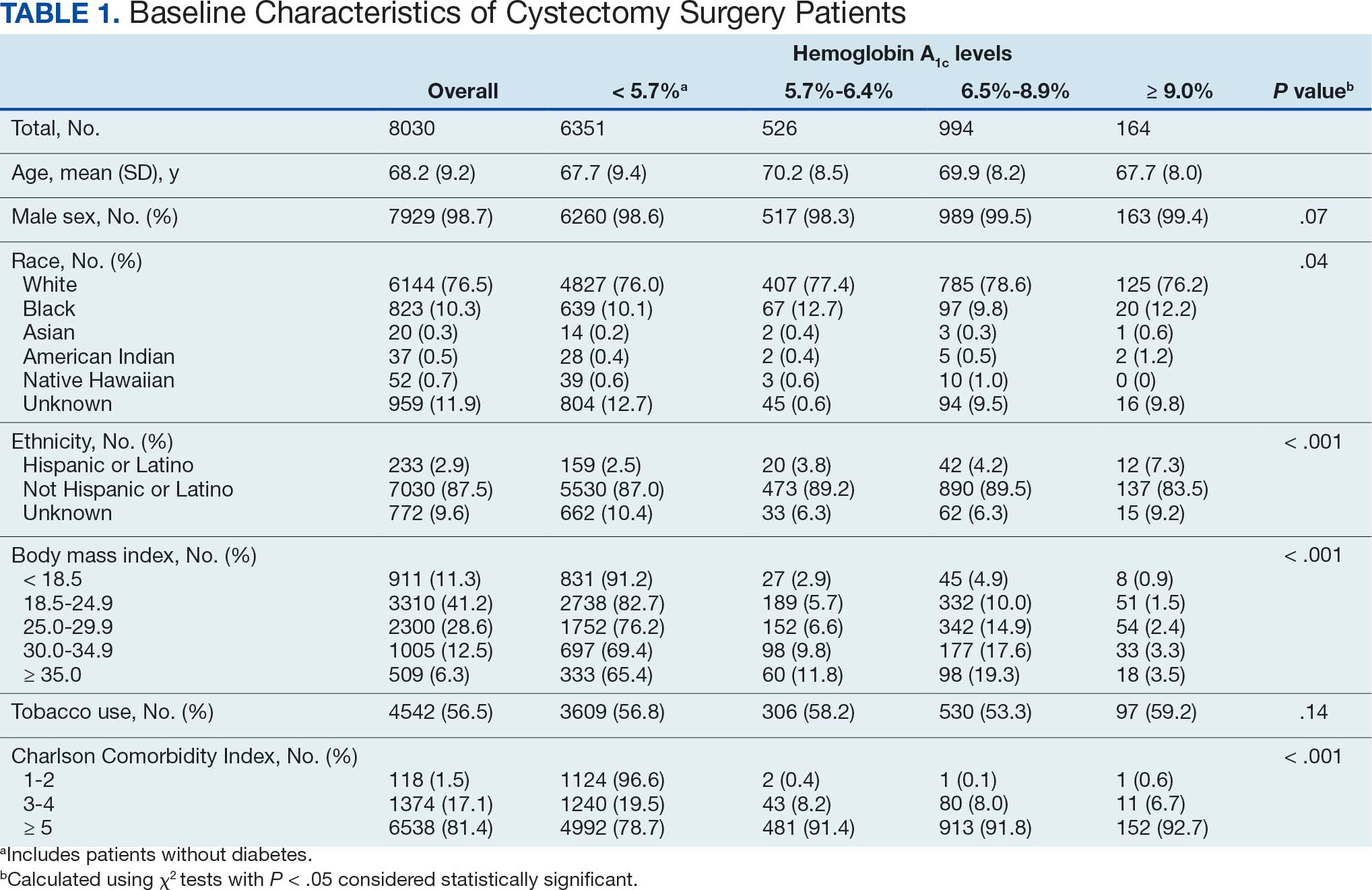
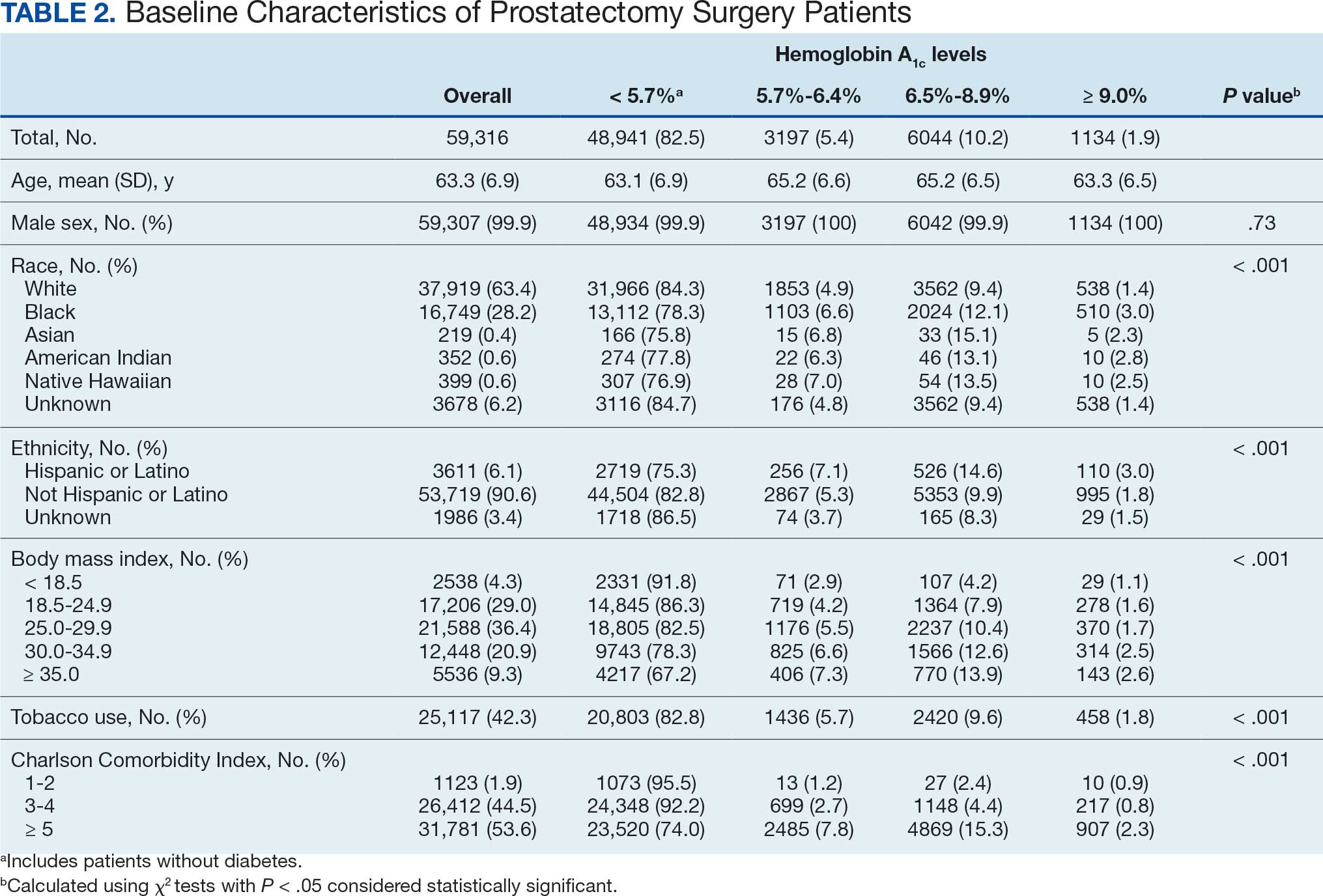
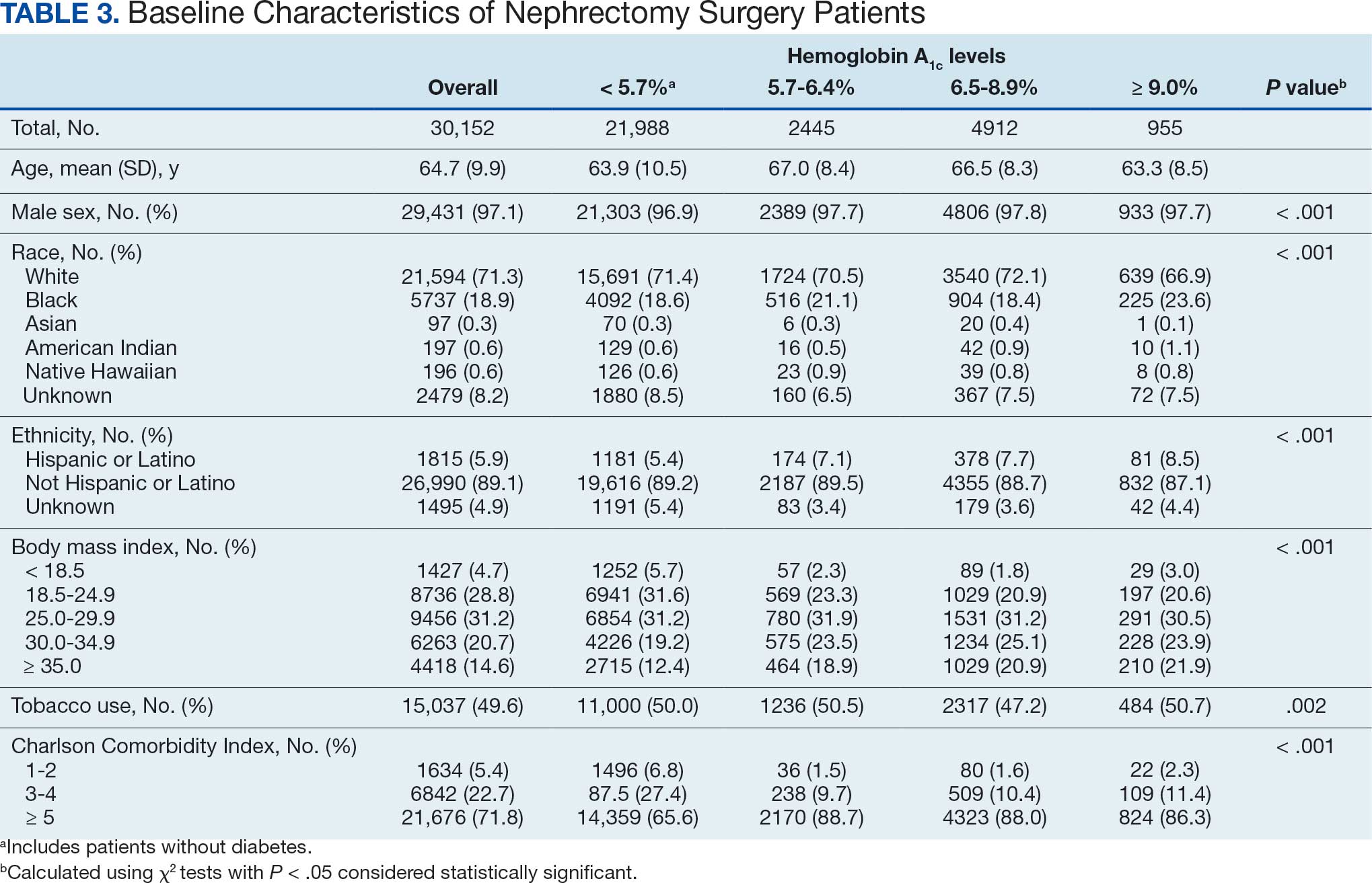
HbA1c values within 90 days of surgery were available in 42.2% of patients with a mean HbA1c value of 6.5% (Table 4). The prostatectomy group had the lowest proportion of patients with available HbA1c data (38.4%) but the highest proportion in the reference category (82.5%).
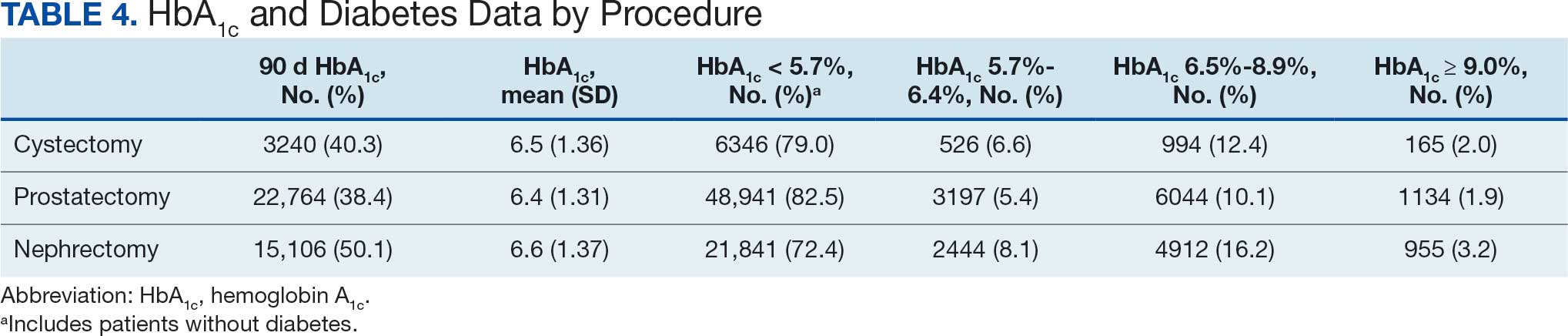
Multivariable logistic regression models incorporating categorical HbA1c values and other demographic and clinical variables were developed to predict all 30-day and 90-day outcomes (Tables 5 and 6). These multivariable models were developed for each procedure group.
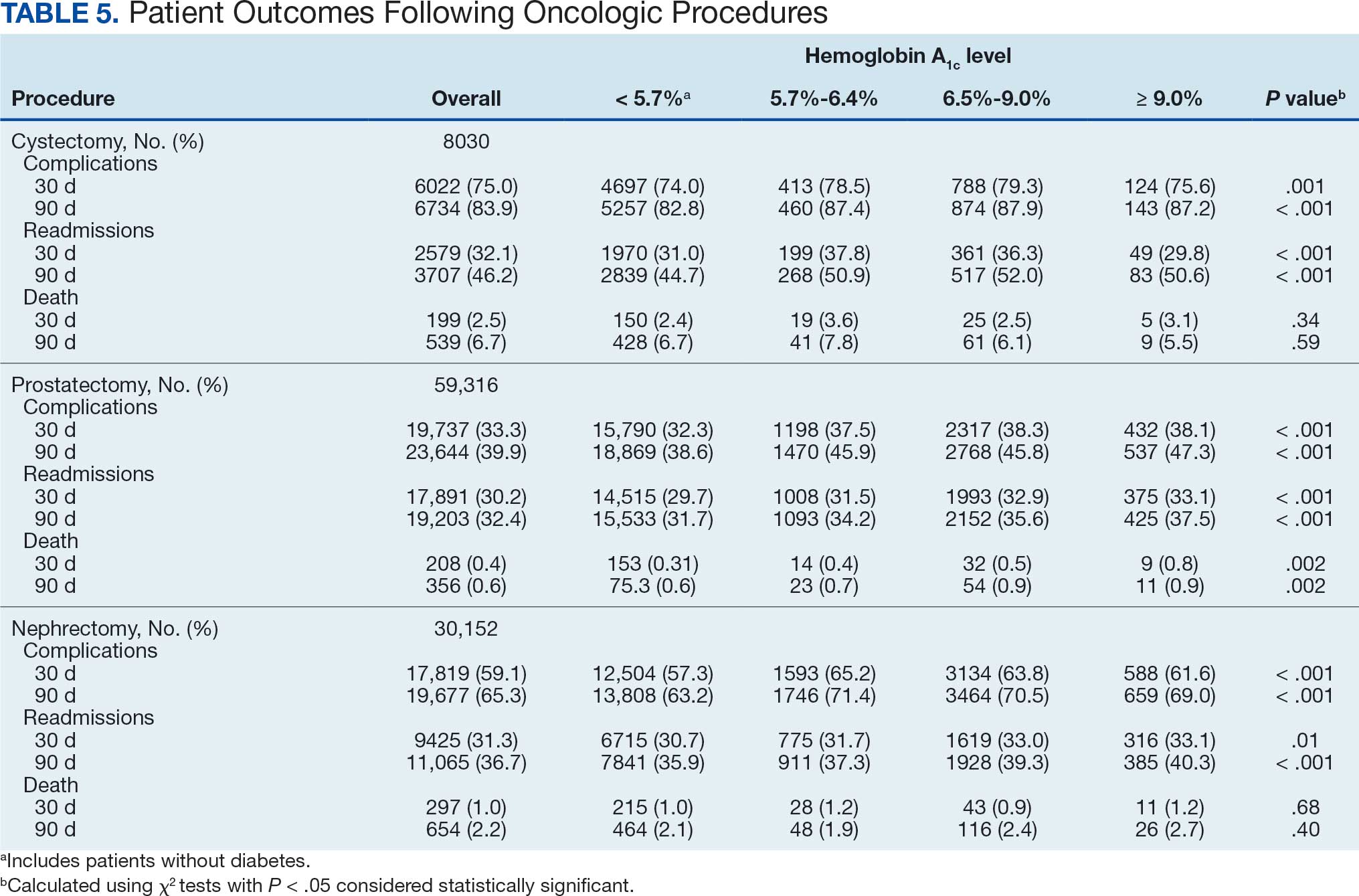
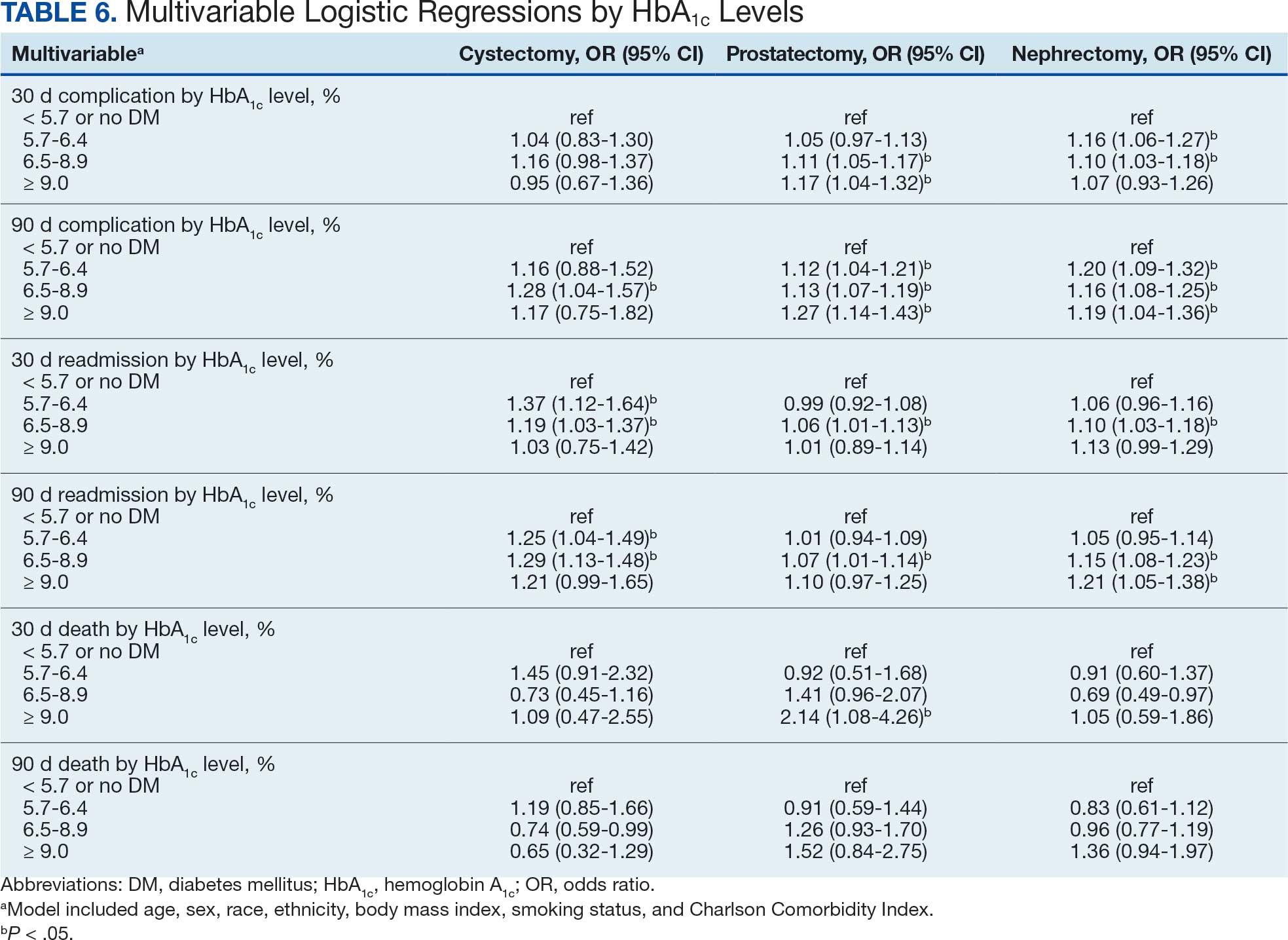
There was no significant association between HbA1c level and 30-day or 90-day complications or 30-day or 90-day deaths in the cystectomy group. Although the HbA1c 5.7% to 6.5% and 6.5% to 8.9% groups had significantly increased odds of 30-day and 90-day readmissions compared with the reference group, the association was not significant for the HbA1c > 9.0% group.
There were significant associations between higher HbA1c levels and 30-day and 90- day complications for patients who underwent prostatectomy. When compared with the reference group, the 90-day complications ORs increased progressively across each HbA1c group. The group with the highest odds of 90-day complications was the HbA1c ≥ 9.0% group (OR, 1.27; 95% CI, 1.14-1.43; P < .001). In the prostatectomy group, there was no significant trend between HbA1c and readmission rates. In patients who had undergone a prostatectomy, those with HbA1c ≥ 9.0% had significantly increased odds of 30-day mortality compared with the reference group (OR, 2.14; 95% CI, 1.08-4.26; P < .03). However, no significant association was observed between HbA1c and 90-day mortality.
For patients who underwent nephrectomy, the HbA1c 5.7% to 6.5% and HbA1c 6.5% to 9.0% groups had significantly increased odds of 30-day complications. All 3 HbA1c groups were significantly associated with 90-day complications following nephrectomy, with ORs ranging from 1.16 to 1.20 (OR, 1.20; 95% CI, 1.09-1.32 for HbA1c 5.7%-6.4%; OR, 1.16; 95% CI, 1.08- 1.25 for HbA1c 6.5%-8.9%; and OR, 1.19; 95% CI, 1.04-1.36; P = .04 for HbA1c ≥ 9.0%) of having complications within 90 days of surgery (OR, 1.19; 95% CI, 1.04-1.36; P = .04). Additionally, increasing HbA1c were associated with 90-day readmissions. At the highest level, HbA1c ≥ 9.0% was associated with 21% increased odds of readmission within 90 days of surgery (OR, 1.21; 95% CI, 1.05-1.38; P = .006). There was no association between HbA1c and mortality following nephrectomy surgery.
Discussion
Long-term impairment of glucose tolerance associated with DM is known to cause vascular, neurologic, and infectious complications. Several studies have demonstrated that elevated preoperative HbA1c levels are associated with increased postoperative complications across various surgical types. To our knowledge, this is the first study to examine the association between perioperative HbA1c and outcomes following cystectomy, prostatectomy, and nephrectomy. Using VINCI, we analyzed 106,740 veterans undergoing urologic oncology surgery and discovered that elevated perioperative HbA1c values were significantly associated with 30-day and 90-day complications following prostatectomy and nephrectomy. Additionally, we found a significant association between HbA1c ≥ 9.0% and 30-day death following prostatectomy. There was no significant association between HbA1c values and postoperative death following cystectomy or nephrectomy.
In our study, HbA1c values were categorized into < 5.7%, 5.7% to 6.4%, 6.5% to 8.9%, and ≥ 9.0%. We found significant associations with 30-day and 90-day complications following prostatectomy with the highest odds of 90-day complications in the HbA1c ≥ 9.0% group (OR, 1.27; 95% CI, 1.14-1.43; P < .001). We report similar findings for those undergoing nephrectomy. Those with HbA1c ≥ 9.0% were found to have 19% higher odds of 90-day complications compared with those in the reference group with HbA1c < 5.7% or no history of DM (OR, 1.19; 95% CI, 1.04-1.36; P = .043). Although HbA1c 6.5%-8.9% was significantly associated with 90-day complications following cystectomy (OR, 1.28; 95% CI, 1.04-1.57), no other significant associations were found between HbA1c categories and 30-day complications or death following cystectomy. It is unclear why a more consistent association does not exist across all HbA1c categories for this procedure, but this may be related to other unaccounted clinical factors influencing the outcomes.
The HbA1c ≥ 9.0% group had a significantly increased risk of 30-day death following prostatectomy in our study (OR, 2.14; 95% CI, 1.08-4.26; P = .03). However, we interpret these results with caution. The 30-day mortality after prostatectomy was low in the overall cohort (0.4%, 208 deaths) and in the HbA1c ≥ 9.0% group (0.8%, 9 deaths) and the 95% CI was wide. It will be important to verify this finding in additional cohorts.
Limitations
This was a retrospective study, which makes it difficult to control many variables that may have influenced postoperative outcomes. Additionally, the clinical characteristics and outcomes data rely on administratively coded data, which can be prone to error. Furthermore, while this was a large, national dataset, patients received care over a long period of time and at several different institutions, which may limit the generalizability of the findings to contemporary patient care. We also recognize that HbA1c values were not available in the perioperative period for all patients. We grouped those with missing HbA1c values into the reference category if they did not have a diagnostic code for DM. It is possible that some patients grouped into the reference category had undiagnosed DM or elevated HbA1c, which would theoretically lessen the magnitude of the findings in our multivariable analysis. Finally, despite our large cohort, 30-day and 90-day deaths were quite uncommon; larger datasets are needed to further investigate the association between perioperative HbA1c and mortality.
Conclusions
The results from this study suggest that elevated perioperative HbA1c is significantly associated with higher odds of 30-day and 90-day complications following prostatectomy and nephrectomy with the strongest associations noted for HbA1c ≥ 9.0%. Prospective investigation is warranted to determine whether reducing HbA1c values preoperatively would mitigate the risk of postoperative complications following urologic oncology surgeries.
- Sreedharan R, Khanna S, Shaw A. Perioperative glycemic management in adults presenting for elective cardiac and noncardiac surgery. Perioper Med (Lond). 2023;12:13. doi:10.1186/s13741-023-00302-6
- Dronge AS, Perkal MF, Kancir S, et al. Long-term glycemic control and postoperative infectious complications. Arch Surg. 2006;141:375-380. doi:10.1001/archsurg.141.4.375
- Yu A, Truong Q, Whitfield K, et al. Impact of preoperative haemoglobin A1c levels on postoperative outcomes in adults undergoing major noncardiac surgery: a systematic review. Diabet Med. 2024;41:e15380. doi:10.1111/dme.15380
- Schaschinger T, Niederegger T, Brandt J, et al. Preoperative hemoglobin A1C, glycemic status, and postoperative outcomes in general surgery. JAMA Surg. 2026;161:39-49. doi:10.1001/jamasurg.2025.4706
- Yong PH, Weinberg L, Torkamani N, et al. The presence of diabetes and higher HbA1c are independently associated with adverse outcomes after surgery. Diabetes Care. 2018;41:1172-1179. doi:10.2337/dc17-2304
- Chen P, Hallock KK, Mulvey CL, et al. The effect of elevated A1C on immediate postoperative complications: a prospective observational study. Clin Diabetes. 2018;36:128-132. doi:10.2337/cd17-0081
- Underwood P, Askari R, Hurwitz S, et al. Preoperative A1C and clinical outcomes in patients with diabetes undergoing major noncardiac surgical procedures. Diabetes Care. 2014;37:611-616. doi:10.2337/dc13-1929
- Faiena I, Dombrovskiy VY, Sultan RC, et al. Effect of uncontrolled diabetes on outcomes after cystectomy in patients with bladder cancer: a population-based study. Clin Genitourin Cancer. 2016;14:e509-e514. doi:10.1016/j.clgc.2016.02.004
- Habous M, Tal R, Tealab A, et al. Defining a glycated haemoglobin (HbA1c) level that predicts increased risk of penile implant infection. BJU Int. 2018;121:293-300. doi:10.1111/bju.14076
Diabetes mellitus (DM) is a well-known risk factor for postoperative complications, including infections and poor wound healing.1 Hemoglobin A1c (HbA1c) reflects a patient’s mean glucose level over the past 90 days. The American Diabetes Association recommends using HbA1c to monitor glycemic control.
Several meta-analyses and systematic reviews have demonstrated that elevated preoperative HbA1c levels are associated with higher rates of postoperative complications.2-5 An association between poor glycemic control and perioperative complications has been reported in cardiac, bariatric, abdominal, and orthopedic surgeries. In 1 prospective study, patients with HbA1c ≥ 7% had significantly higher incidences of postoperative infection and wound problems compared with patients with HbA1c 7%.6 In another study of 1775 patients with DM who underwent noncardiac surgery, patients with HbA1c > 8% had significantly longer hospital stays.7
The relationship between HbA1c and postoperative complications following urologic procedures, specifically oncologic surgeries, has not been as well researched. One study reported that uncontrolled preoperative DM was associated with complications following cystectomy.8 However, this study did not evaluate HbA1c levels as a marker. Another study reported an association between HbA1c and infection following penile prosthetic implants, with an HbA1c cutoff of 8.5% predicting increased risk of infection.9 Better understanding the association between HbA1c and postoperative complications following urologic oncology procedures may allow for better perioperative planning and improving clinical outcomes.
In this study, we examined the relationship between perioperative HbA1c levels and postoperative outcomes (complications, readmission, and death) in patients undergoing urologic oncology procedures (cystectomy, prostatectomy, and nephrectomy), while controlling for recognized clinical risk factors.
Methods
Data were compiled using the US Department of Veterans Affairs (VA) Corporate Data Warehouse (CDW) structured datasets within the VA Informatics and Computing Infrastructure (VINCI). The data in the VA CDW were aggregated from the VA electronic health record and curated for extraction and analysis.
The study examined veterans treated at any Veterans Health Administration facility from January 2000 to February 2024. Included patients had a diagnosis of prostate, bladder, or kidney cancer and ≥ 1 genitourinary surgery (cystectomy, prostatectomy, or nephrectomy) identified in the VA CDW using the ninth and 10th revisions of the International Classification of Diseases (ICD) codes. Demographic (age, sex, race, and ethnicity) and clinical data (body mass index, smoking status, and Charlson Comorbidity Index) were collected. HbA1c values at multiple time points within 90 days pre- and postsurgery were retrieved using Logical Observation Identifiers, Names, and Codes (LOINC), a widely used coding system for laboratory tests (Supplementary Table 1). Outcomes data were extracted including death date, hospital readmission, and different types of complications first diagnosed within 30 or 90 days postsurgery based on ICD diagnostic codes (Supplementary Table 2). Patients with missing HbA1c or DM data were excluded.
Statistical Analysis
The primary outcome variables included 30-day and 90-day complications, readmission, and death. The predictor variable was HbA1c level within 90 days of the procedure, which was categorized into 4 groups. The reference category was HbA1c < 5.7% and/or no history of DM. The next category fit the prediabetes (impaired glucose tolerance) definition, with HbA1c between 5.7% and 6.4%, and the last 2 categories were HbA1c values 6.5% to 8.9% and ≤ 9.0% to reflect uncontrolled DM. Associations between the different HbA1c level groupings and other variables are reported with χ2 tests. The final multivariable logistic regression models included several covariates including demographic data (age, sex, race, and ethnicity) and clinical data (body mass index, smoking status, and Charlson Comorbidity Index). Results are presented as odds ratios (ORs) and 95% CIs with a statistical significance threshold of P < .05. Statistical analyses were performed using Stata version 14.1.
Results
A total of 106,740 veterans who underwent cystectomy, prostatectomy, or nephrectomy from 2001 to 2023 were identified in VINCI. After excluding patients without demographic or clinical variables, 97,498 patients were included in our final cohort. The most common procedure was prostatectomy (n = 59,316). Most of the patients were male (99.1%) and White (67.3%) (Tables 1, 2, and 3).
HbA1c values within 90 days of surgery were available in 42.2% of patients with a mean HbA1c value of 6.5% (Table 4). The prostatectomy group had the lowest proportion of patients with available HbA1c data (38.4%) but the highest proportion in the reference category (82.5%).
Multivariable logistic regression models incorporating categorical HbA1c values and other demographic and clinical variables were developed to predict all 30-day and 90-day outcomes (Tables 5 and 6). These multivariable models were developed for each procedure group.
There was no significant association between HbA1c level and 30-day or 90-day complications or 30-day or 90-day deaths in the cystectomy group. Although the HbA1c 5.7% to 6.5% and 6.5% to 8.9% groups had significantly increased odds of 30-day and 90-day readmissions compared with the reference group, the association was not significant for the HbA1c > 9.0% group.
There were significant associations between higher HbA1c levels and 30-day and 90- day complications for patients who underwent prostatectomy. When compared with the reference group, the 90-day complications ORs increased progressively across each HbA1c group. The group with the highest odds of 90-day complications was the HbA1c ≥ 9.0% group (OR, 1.27; 95% CI, 1.14-1.43; P < .001). In the prostatectomy group, there was no significant trend between HbA1c and readmission rates. In patients who had undergone a prostatectomy, those with HbA1c ≥ 9.0% had significantly increased odds of 30-day mortality compared with the reference group (OR, 2.14; 95% CI, 1.08-4.26; P < .03). However, no significant association was observed between HbA1c and 90-day mortality.
For patients who underwent nephrectomy, the HbA1c 5.7% to 6.5% and HbA1c 6.5% to 9.0% groups had significantly increased odds of 30-day complications. All 3 HbA1c groups were significantly associated with 90-day complications following nephrectomy, with ORs ranging from 1.16 to 1.20 (OR, 1.20; 95% CI, 1.09-1.32 for HbA1c 5.7%-6.4%; OR, 1.16; 95% CI, 1.08- 1.25 for HbA1c 6.5%-8.9%; and OR, 1.19; 95% CI, 1.04-1.36; P = .04 for HbA1c ≥ 9.0%) of having complications within 90 days of surgery (OR, 1.19; 95% CI, 1.04-1.36; P = .04). Additionally, increasing HbA1c were associated with 90-day readmissions. At the highest level, HbA1c ≥ 9.0% was associated with 21% increased odds of readmission within 90 days of surgery (OR, 1.21; 95% CI, 1.05-1.38; P = .006). There was no association between HbA1c and mortality following nephrectomy surgery.
Discussion
Long-term impairment of glucose tolerance associated with DM is known to cause vascular, neurologic, and infectious complications. Several studies have demonstrated that elevated preoperative HbA1c levels are associated with increased postoperative complications across various surgical types. To our knowledge, this is the first study to examine the association between perioperative HbA1c and outcomes following cystectomy, prostatectomy, and nephrectomy. Using VINCI, we analyzed 106,740 veterans undergoing urologic oncology surgery and discovered that elevated perioperative HbA1c values were significantly associated with 30-day and 90-day complications following prostatectomy and nephrectomy. Additionally, we found a significant association between HbA1c ≥ 9.0% and 30-day death following prostatectomy. There was no significant association between HbA1c values and postoperative death following cystectomy or nephrectomy.
In our study, HbA1c values were categorized into < 5.7%, 5.7% to 6.4%, 6.5% to 8.9%, and ≥ 9.0%. We found significant associations with 30-day and 90-day complications following prostatectomy with the highest odds of 90-day complications in the HbA1c ≥ 9.0% group (OR, 1.27; 95% CI, 1.14-1.43; P < .001). We report similar findings for those undergoing nephrectomy. Those with HbA1c ≥ 9.0% were found to have 19% higher odds of 90-day complications compared with those in the reference group with HbA1c < 5.7% or no history of DM (OR, 1.19; 95% CI, 1.04-1.36; P = .043). Although HbA1c 6.5%-8.9% was significantly associated with 90-day complications following cystectomy (OR, 1.28; 95% CI, 1.04-1.57), no other significant associations were found between HbA1c categories and 30-day complications or death following cystectomy. It is unclear why a more consistent association does not exist across all HbA1c categories for this procedure, but this may be related to other unaccounted clinical factors influencing the outcomes.
The HbA1c ≥ 9.0% group had a significantly increased risk of 30-day death following prostatectomy in our study (OR, 2.14; 95% CI, 1.08-4.26; P = .03). However, we interpret these results with caution. The 30-day mortality after prostatectomy was low in the overall cohort (0.4%, 208 deaths) and in the HbA1c ≥ 9.0% group (0.8%, 9 deaths) and the 95% CI was wide. It will be important to verify this finding in additional cohorts.
Limitations
This was a retrospective study, which makes it difficult to control many variables that may have influenced postoperative outcomes. Additionally, the clinical characteristics and outcomes data rely on administratively coded data, which can be prone to error. Furthermore, while this was a large, national dataset, patients received care over a long period of time and at several different institutions, which may limit the generalizability of the findings to contemporary patient care. We also recognize that HbA1c values were not available in the perioperative period for all patients. We grouped those with missing HbA1c values into the reference category if they did not have a diagnostic code for DM. It is possible that some patients grouped into the reference category had undiagnosed DM or elevated HbA1c, which would theoretically lessen the magnitude of the findings in our multivariable analysis. Finally, despite our large cohort, 30-day and 90-day deaths were quite uncommon; larger datasets are needed to further investigate the association between perioperative HbA1c and mortality.
Conclusions
The results from this study suggest that elevated perioperative HbA1c is significantly associated with higher odds of 30-day and 90-day complications following prostatectomy and nephrectomy with the strongest associations noted for HbA1c ≥ 9.0%. Prospective investigation is warranted to determine whether reducing HbA1c values preoperatively would mitigate the risk of postoperative complications following urologic oncology surgeries.
Diabetes mellitus (DM) is a well-known risk factor for postoperative complications, including infections and poor wound healing.1 Hemoglobin A1c (HbA1c) reflects a patient’s mean glucose level over the past 90 days. The American Diabetes Association recommends using HbA1c to monitor glycemic control.
Several meta-analyses and systematic reviews have demonstrated that elevated preoperative HbA1c levels are associated with higher rates of postoperative complications.2-5 An association between poor glycemic control and perioperative complications has been reported in cardiac, bariatric, abdominal, and orthopedic surgeries. In 1 prospective study, patients with HbA1c ≥ 7% had significantly higher incidences of postoperative infection and wound problems compared with patients with HbA1c 7%.6 In another study of 1775 patients with DM who underwent noncardiac surgery, patients with HbA1c > 8% had significantly longer hospital stays.7
The relationship between HbA1c and postoperative complications following urologic procedures, specifically oncologic surgeries, has not been as well researched. One study reported that uncontrolled preoperative DM was associated with complications following cystectomy.8 However, this study did not evaluate HbA1c levels as a marker. Another study reported an association between HbA1c and infection following penile prosthetic implants, with an HbA1c cutoff of 8.5% predicting increased risk of infection.9 Better understanding the association between HbA1c and postoperative complications following urologic oncology procedures may allow for better perioperative planning and improving clinical outcomes.
In this study, we examined the relationship between perioperative HbA1c levels and postoperative outcomes (complications, readmission, and death) in patients undergoing urologic oncology procedures (cystectomy, prostatectomy, and nephrectomy), while controlling for recognized clinical risk factors.
Methods
Data were compiled using the US Department of Veterans Affairs (VA) Corporate Data Warehouse (CDW) structured datasets within the VA Informatics and Computing Infrastructure (VINCI). The data in the VA CDW were aggregated from the VA electronic health record and curated for extraction and analysis.
The study examined veterans treated at any Veterans Health Administration facility from January 2000 to February 2024. Included patients had a diagnosis of prostate, bladder, or kidney cancer and ≥ 1 genitourinary surgery (cystectomy, prostatectomy, or nephrectomy) identified in the VA CDW using the ninth and 10th revisions of the International Classification of Diseases (ICD) codes. Demographic (age, sex, race, and ethnicity) and clinical data (body mass index, smoking status, and Charlson Comorbidity Index) were collected. HbA1c values at multiple time points within 90 days pre- and postsurgery were retrieved using Logical Observation Identifiers, Names, and Codes (LOINC), a widely used coding system for laboratory tests (Supplementary Table 1). Outcomes data were extracted including death date, hospital readmission, and different types of complications first diagnosed within 30 or 90 days postsurgery based on ICD diagnostic codes (Supplementary Table 2). Patients with missing HbA1c or DM data were excluded.
Statistical Analysis
The primary outcome variables included 30-day and 90-day complications, readmission, and death. The predictor variable was HbA1c level within 90 days of the procedure, which was categorized into 4 groups. The reference category was HbA1c < 5.7% and/or no history of DM. The next category fit the prediabetes (impaired glucose tolerance) definition, with HbA1c between 5.7% and 6.4%, and the last 2 categories were HbA1c values 6.5% to 8.9% and ≤ 9.0% to reflect uncontrolled DM. Associations between the different HbA1c level groupings and other variables are reported with χ2 tests. The final multivariable logistic regression models included several covariates including demographic data (age, sex, race, and ethnicity) and clinical data (body mass index, smoking status, and Charlson Comorbidity Index). Results are presented as odds ratios (ORs) and 95% CIs with a statistical significance threshold of P < .05. Statistical analyses were performed using Stata version 14.1.
Results
A total of 106,740 veterans who underwent cystectomy, prostatectomy, or nephrectomy from 2001 to 2023 were identified in VINCI. After excluding patients without demographic or clinical variables, 97,498 patients were included in our final cohort. The most common procedure was prostatectomy (n = 59,316). Most of the patients were male (99.1%) and White (67.3%) (Tables 1, 2, and 3).
HbA1c values within 90 days of surgery were available in 42.2% of patients with a mean HbA1c value of 6.5% (Table 4). The prostatectomy group had the lowest proportion of patients with available HbA1c data (38.4%) but the highest proportion in the reference category (82.5%).
Multivariable logistic regression models incorporating categorical HbA1c values and other demographic and clinical variables were developed to predict all 30-day and 90-day outcomes (Tables 5 and 6). These multivariable models were developed for each procedure group.
There was no significant association between HbA1c level and 30-day or 90-day complications or 30-day or 90-day deaths in the cystectomy group. Although the HbA1c 5.7% to 6.5% and 6.5% to 8.9% groups had significantly increased odds of 30-day and 90-day readmissions compared with the reference group, the association was not significant for the HbA1c > 9.0% group.
There were significant associations between higher HbA1c levels and 30-day and 90- day complications for patients who underwent prostatectomy. When compared with the reference group, the 90-day complications ORs increased progressively across each HbA1c group. The group with the highest odds of 90-day complications was the HbA1c ≥ 9.0% group (OR, 1.27; 95% CI, 1.14-1.43; P < .001). In the prostatectomy group, there was no significant trend between HbA1c and readmission rates. In patients who had undergone a prostatectomy, those with HbA1c ≥ 9.0% had significantly increased odds of 30-day mortality compared with the reference group (OR, 2.14; 95% CI, 1.08-4.26; P < .03). However, no significant association was observed between HbA1c and 90-day mortality.
For patients who underwent nephrectomy, the HbA1c 5.7% to 6.5% and HbA1c 6.5% to 9.0% groups had significantly increased odds of 30-day complications. All 3 HbA1c groups were significantly associated with 90-day complications following nephrectomy, with ORs ranging from 1.16 to 1.20 (OR, 1.20; 95% CI, 1.09-1.32 for HbA1c 5.7%-6.4%; OR, 1.16; 95% CI, 1.08- 1.25 for HbA1c 6.5%-8.9%; and OR, 1.19; 95% CI, 1.04-1.36; P = .04 for HbA1c ≥ 9.0%) of having complications within 90 days of surgery (OR, 1.19; 95% CI, 1.04-1.36; P = .04). Additionally, increasing HbA1c were associated with 90-day readmissions. At the highest level, HbA1c ≥ 9.0% was associated with 21% increased odds of readmission within 90 days of surgery (OR, 1.21; 95% CI, 1.05-1.38; P = .006). There was no association between HbA1c and mortality following nephrectomy surgery.
Discussion
Long-term impairment of glucose tolerance associated with DM is known to cause vascular, neurologic, and infectious complications. Several studies have demonstrated that elevated preoperative HbA1c levels are associated with increased postoperative complications across various surgical types. To our knowledge, this is the first study to examine the association between perioperative HbA1c and outcomes following cystectomy, prostatectomy, and nephrectomy. Using VINCI, we analyzed 106,740 veterans undergoing urologic oncology surgery and discovered that elevated perioperative HbA1c values were significantly associated with 30-day and 90-day complications following prostatectomy and nephrectomy. Additionally, we found a significant association between HbA1c ≥ 9.0% and 30-day death following prostatectomy. There was no significant association between HbA1c values and postoperative death following cystectomy or nephrectomy.
In our study, HbA1c values were categorized into < 5.7%, 5.7% to 6.4%, 6.5% to 8.9%, and ≥ 9.0%. We found significant associations with 30-day and 90-day complications following prostatectomy with the highest odds of 90-day complications in the HbA1c ≥ 9.0% group (OR, 1.27; 95% CI, 1.14-1.43; P < .001). We report similar findings for those undergoing nephrectomy. Those with HbA1c ≥ 9.0% were found to have 19% higher odds of 90-day complications compared with those in the reference group with HbA1c < 5.7% or no history of DM (OR, 1.19; 95% CI, 1.04-1.36; P = .043). Although HbA1c 6.5%-8.9% was significantly associated with 90-day complications following cystectomy (OR, 1.28; 95% CI, 1.04-1.57), no other significant associations were found between HbA1c categories and 30-day complications or death following cystectomy. It is unclear why a more consistent association does not exist across all HbA1c categories for this procedure, but this may be related to other unaccounted clinical factors influencing the outcomes.
The HbA1c ≥ 9.0% group had a significantly increased risk of 30-day death following prostatectomy in our study (OR, 2.14; 95% CI, 1.08-4.26; P = .03). However, we interpret these results with caution. The 30-day mortality after prostatectomy was low in the overall cohort (0.4%, 208 deaths) and in the HbA1c ≥ 9.0% group (0.8%, 9 deaths) and the 95% CI was wide. It will be important to verify this finding in additional cohorts.
Limitations
This was a retrospective study, which makes it difficult to control many variables that may have influenced postoperative outcomes. Additionally, the clinical characteristics and outcomes data rely on administratively coded data, which can be prone to error. Furthermore, while this was a large, national dataset, patients received care over a long period of time and at several different institutions, which may limit the generalizability of the findings to contemporary patient care. We also recognize that HbA1c values were not available in the perioperative period for all patients. We grouped those with missing HbA1c values into the reference category if they did not have a diagnostic code for DM. It is possible that some patients grouped into the reference category had undiagnosed DM or elevated HbA1c, which would theoretically lessen the magnitude of the findings in our multivariable analysis. Finally, despite our large cohort, 30-day and 90-day deaths were quite uncommon; larger datasets are needed to further investigate the association between perioperative HbA1c and mortality.
Conclusions
The results from this study suggest that elevated perioperative HbA1c is significantly associated with higher odds of 30-day and 90-day complications following prostatectomy and nephrectomy with the strongest associations noted for HbA1c ≥ 9.0%. Prospective investigation is warranted to determine whether reducing HbA1c values preoperatively would mitigate the risk of postoperative complications following urologic oncology surgeries.
- Sreedharan R, Khanna S, Shaw A. Perioperative glycemic management in adults presenting for elective cardiac and noncardiac surgery. Perioper Med (Lond). 2023;12:13. doi:10.1186/s13741-023-00302-6
- Dronge AS, Perkal MF, Kancir S, et al. Long-term glycemic control and postoperative infectious complications. Arch Surg. 2006;141:375-380. doi:10.1001/archsurg.141.4.375
- Yu A, Truong Q, Whitfield K, et al. Impact of preoperative haemoglobin A1c levels on postoperative outcomes in adults undergoing major noncardiac surgery: a systematic review. Diabet Med. 2024;41:e15380. doi:10.1111/dme.15380
- Schaschinger T, Niederegger T, Brandt J, et al. Preoperative hemoglobin A1C, glycemic status, and postoperative outcomes in general surgery. JAMA Surg. 2026;161:39-49. doi:10.1001/jamasurg.2025.4706
- Yong PH, Weinberg L, Torkamani N, et al. The presence of diabetes and higher HbA1c are independently associated with adverse outcomes after surgery. Diabetes Care. 2018;41:1172-1179. doi:10.2337/dc17-2304
- Chen P, Hallock KK, Mulvey CL, et al. The effect of elevated A1C on immediate postoperative complications: a prospective observational study. Clin Diabetes. 2018;36:128-132. doi:10.2337/cd17-0081
- Underwood P, Askari R, Hurwitz S, et al. Preoperative A1C and clinical outcomes in patients with diabetes undergoing major noncardiac surgical procedures. Diabetes Care. 2014;37:611-616. doi:10.2337/dc13-1929
- Faiena I, Dombrovskiy VY, Sultan RC, et al. Effect of uncontrolled diabetes on outcomes after cystectomy in patients with bladder cancer: a population-based study. Clin Genitourin Cancer. 2016;14:e509-e514. doi:10.1016/j.clgc.2016.02.004
- Habous M, Tal R, Tealab A, et al. Defining a glycated haemoglobin (HbA1c) level that predicts increased risk of penile implant infection. BJU Int. 2018;121:293-300. doi:10.1111/bju.14076
- Sreedharan R, Khanna S, Shaw A. Perioperative glycemic management in adults presenting for elective cardiac and noncardiac surgery. Perioper Med (Lond). 2023;12:13. doi:10.1186/s13741-023-00302-6
- Dronge AS, Perkal MF, Kancir S, et al. Long-term glycemic control and postoperative infectious complications. Arch Surg. 2006;141:375-380. doi:10.1001/archsurg.141.4.375
- Yu A, Truong Q, Whitfield K, et al. Impact of preoperative haemoglobin A1c levels on postoperative outcomes in adults undergoing major noncardiac surgery: a systematic review. Diabet Med. 2024;41:e15380. doi:10.1111/dme.15380
- Schaschinger T, Niederegger T, Brandt J, et al. Preoperative hemoglobin A1C, glycemic status, and postoperative outcomes in general surgery. JAMA Surg. 2026;161:39-49. doi:10.1001/jamasurg.2025.4706
- Yong PH, Weinberg L, Torkamani N, et al. The presence of diabetes and higher HbA1c are independently associated with adverse outcomes after surgery. Diabetes Care. 2018;41:1172-1179. doi:10.2337/dc17-2304
- Chen P, Hallock KK, Mulvey CL, et al. The effect of elevated A1C on immediate postoperative complications: a prospective observational study. Clin Diabetes. 2018;36:128-132. doi:10.2337/cd17-0081
- Underwood P, Askari R, Hurwitz S, et al. Preoperative A1C and clinical outcomes in patients with diabetes undergoing major noncardiac surgical procedures. Diabetes Care. 2014;37:611-616. doi:10.2337/dc13-1929
- Faiena I, Dombrovskiy VY, Sultan RC, et al. Effect of uncontrolled diabetes on outcomes after cystectomy in patients with bladder cancer: a population-based study. Clin Genitourin Cancer. 2016;14:e509-e514. doi:10.1016/j.clgc.2016.02.004
- Habous M, Tal R, Tealab A, et al. Defining a glycated haemoglobin (HbA1c) level that predicts increased risk of penile implant infection. BJU Int. 2018;121:293-300. doi:10.1111/bju.14076
Association of Hemoglobin A1c With Outcomes Following Urologic Oncology Procedures in Veterans
Association of Hemoglobin A1c With Outcomes Following Urologic Oncology Procedures in Veterans