User login
BARCELONA – Patients with early-stage, “favorable” Hodgkin’s lymphoma can be safety and effectively treated with a reduced intensity chemoradiotherapy regimen, according to final results from the German Hodgkin Study Group Trial HD10.

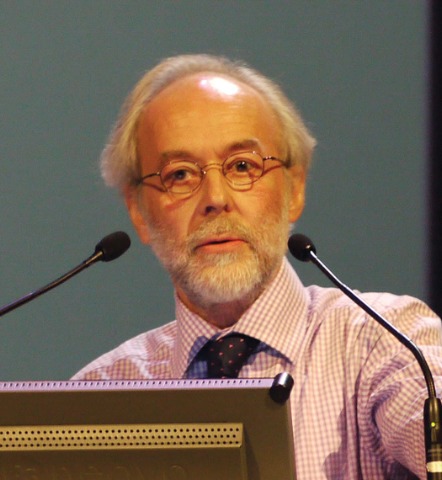
“The radiation dose can be reduced dramatically, by 33%, from 30 to 20 Gy, which of course is very good for our patients, and I hope it will be very good for [decreasing] late toxicities,” Dr. Hans Theodor Eich of the University of Cologne (Germany), said during an interview.
In addition, he noted that two cycles of the regimen, abbreviated as ABVD (doxorubicin [Adriamycin], bleomycin, vinblastine, and dacarbazine), proved to be just as effective as four cycles, but with significantly less acute toxicity observed in patients who were given the lower number of chemotherapy cycles.
Dr. Eich presented the final findings of the German Hodgkin Study Group (GHSG) Trial HD10 at the biennial meeting of the European Society for Therapeutic Radiology and Oncology (ESTRO 29). Data were also reported in the New England Journal of Medicine (2010;363:640-2).
During the trial, 1,370 patients with stage I/II Hodgkin’s lymphoma who had an overall favorable prognosis were randomized to treatment with two or four cycles of ABVD in combination with either 20 or 30 Gy of involved-field radiation therapy (IFRT). In total, 346 patients were treated with four cycles of ABVD followed by 30-Gy IFRT; 340 received four cycles of ABVD followed by 20-Gy IFRT; 341 had two cycles of ABVD, then 20 Gy IFRT; and 343 had two cycles of ABVD and then 20-Gy IFRT.
Dr. Eich reported that two cycles of ABVD plus IFRT was associated with a 5-year, progression-free survival rate of 91%. The regimen was found to be noninferior to four cycles of ABVD plus IFRT, with a –2.3% difference in progression-free survival between the two chemotherapy arms.

Chemotherapy, followed by 20 Gy of IFRT, was also associated with a 5-year, progression-free survival rate of 93%. The lower radiotherapy dose was noninferior to 30 Gy, with a between-arm difference of –0.6% in progression-free survival.
“We come from using very large fields of radiation with extended-field radiotherapy to involved-field radiotherapy,” Dr. Eich said. Previous research by his group has shown that IFRT is equally as effective as extended-field radiotherapy, he added, but with less acute toxicity (J. Clin. Oncol. 2003;21:3601-8).
In the current trial, the switch from using extended- to involved-field radiotherapy not only works, he said, but it also enables a much lower radiation dose to be delivered. By itself, this “is an achievement for radiation oncology.”
Patient characteristics and histopathology were similar among the groups. The median age was 36 years, 39% of patients were female, and the majority (62%) had stage IIA disease, with 30% having stage IA, 6% stage IIB, and 2% stage IB Hodgkin’s lymphoma. Most (74%) had a performance status of 0 or 1.
The effects of two vs. four cycles of ABVD could be assessed in 1,190 patients. Two cycles of the chemotherapy were associated with significantly less World Health Organization grade 3/4 toxicities than were four cycles (33% vs. 52% of patients; P less than .0001).
The effects of 20 vs. 30 Gy of IFRT could be assessed in 1,163 patients. Both doses of IFRT were associated with low rates of acute toxicity (3% and 9% for CTC grade 3/4 toxicity, respectively). At a median follow-up of 79 months, no significant reduction of late toxicities has been demonstrated, Dr. Eich said.
Overall survival also was virtually identical in the chemotherapy and radiotherapy comparisons.
“Chemotherapy followed by 30-Gy IFRT is an effective treatment for early-stage, favorable Hodgkin’s lymphoma, and 20-Gy IFRT is not inferior to 30-Gy IFRT as consolidation therapy after chemotherapy,” he said.
Taken together, “two cycles of ABVD with only 20-Gy IFRT is regarded as a new international standard for early-stage, favorable Hodgkin’s lymphoma,” Dr. Eich concluded.
As the official commentator on the trial at ESTRO 29, Dr. Theodore Girinsky of the Institut Gustave-Roussy in Villejuif, France, said that although the conclusions are very clear, there are were some caveats. “This was a very highly selected patient population, and this type of treatment cannot be applied to all patients,” he asserted.
However, Dr. Andrew McCann, a radiation oncologist at Auckland (New Zealand) Hospital, who was in the audience and was not involved the trial, said in an interview that he thought “this trial is clearly going to change practice.”
In this select group of patients with early Hodgkin’s disease, he said, it shows that “we can reduce the intensity of treatment,” with fewer cycles of chemotherapy and a lesser dose of radiation, and “still have a good outcome.”
Dr. McCann added, “We would hope that this would lead to less long-term side effects without reducing the efficacy of the treatment.”
The GHSG Trial HD10 was funded by Deutsche Krebshilfe and the Swiss Federal Government. Dr. Eich had no personal financial disclosures. Dr. Girinsky and Dr. McCann were not involved in the study.
This trial is clearly going to change practice and, in this select group of patients with early Hodgkin’s disease, shows that we can reduce the intensity of treatment – we can give fewer cycles of chemotherapy and we can give a lesser dose of radiation – and still have a good outcome. We would hope that this would lead to fewer long-term side effects without reducing the efficacy of the treatment.
Andrew McCann, M.B.B.S., is a radiation oncologist based at Auckland (New Zealand) Hospital.
This trial is clearly going to change practice and, in this select group of patients with early Hodgkin’s disease, shows that we can reduce the intensity of treatment – we can give fewer cycles of chemotherapy and we can give a lesser dose of radiation – and still have a good outcome. We would hope that this would lead to fewer long-term side effects without reducing the efficacy of the treatment.
Andrew McCann, M.B.B.S., is a radiation oncologist based at Auckland (New Zealand) Hospital.
This trial is clearly going to change practice and, in this select group of patients with early Hodgkin’s disease, shows that we can reduce the intensity of treatment – we can give fewer cycles of chemotherapy and we can give a lesser dose of radiation – and still have a good outcome. We would hope that this would lead to fewer long-term side effects without reducing the efficacy of the treatment.
Andrew McCann, M.B.B.S., is a radiation oncologist based at Auckland (New Zealand) Hospital.
BARCELONA – Patients with early-stage, “favorable” Hodgkin’s lymphoma can be safety and effectively treated with a reduced intensity chemoradiotherapy regimen, according to final results from the German Hodgkin Study Group Trial HD10.
“The radiation dose can be reduced dramatically, by 33%, from 30 to 20 Gy, which of course is very good for our patients, and I hope it will be very good for [decreasing] late toxicities,” Dr. Hans Theodor Eich of the University of Cologne (Germany), said during an interview.
In addition, he noted that two cycles of the regimen, abbreviated as ABVD (doxorubicin [Adriamycin], bleomycin, vinblastine, and dacarbazine), proved to be just as effective as four cycles, but with significantly less acute toxicity observed in patients who were given the lower number of chemotherapy cycles.
Dr. Eich presented the final findings of the German Hodgkin Study Group (GHSG) Trial HD10 at the biennial meeting of the European Society for Therapeutic Radiology and Oncology (ESTRO 29). Data were also reported in the New England Journal of Medicine (2010;363:640-2).
During the trial, 1,370 patients with stage I/II Hodgkin’s lymphoma who had an overall favorable prognosis were randomized to treatment with two or four cycles of ABVD in combination with either 20 or 30 Gy of involved-field radiation therapy (IFRT). In total, 346 patients were treated with four cycles of ABVD followed by 30-Gy IFRT; 340 received four cycles of ABVD followed by 20-Gy IFRT; 341 had two cycles of ABVD, then 20 Gy IFRT; and 343 had two cycles of ABVD and then 20-Gy IFRT.
Dr. Eich reported that two cycles of ABVD plus IFRT was associated with a 5-year, progression-free survival rate of 91%. The regimen was found to be noninferior to four cycles of ABVD plus IFRT, with a –2.3% difference in progression-free survival between the two chemotherapy arms.
Chemotherapy, followed by 20 Gy of IFRT, was also associated with a 5-year, progression-free survival rate of 93%. The lower radiotherapy dose was noninferior to 30 Gy, with a between-arm difference of –0.6% in progression-free survival.
“We come from using very large fields of radiation with extended-field radiotherapy to involved-field radiotherapy,” Dr. Eich said. Previous research by his group has shown that IFRT is equally as effective as extended-field radiotherapy, he added, but with less acute toxicity (J. Clin. Oncol. 2003;21:3601-8).
In the current trial, the switch from using extended- to involved-field radiotherapy not only works, he said, but it also enables a much lower radiation dose to be delivered. By itself, this “is an achievement for radiation oncology.”
Patient characteristics and histopathology were similar among the groups. The median age was 36 years, 39% of patients were female, and the majority (62%) had stage IIA disease, with 30% having stage IA, 6% stage IIB, and 2% stage IB Hodgkin’s lymphoma. Most (74%) had a performance status of 0 or 1.
The effects of two vs. four cycles of ABVD could be assessed in 1,190 patients. Two cycles of the chemotherapy were associated with significantly less World Health Organization grade 3/4 toxicities than were four cycles (33% vs. 52% of patients; P less than .0001).
The effects of 20 vs. 30 Gy of IFRT could be assessed in 1,163 patients. Both doses of IFRT were associated with low rates of acute toxicity (3% and 9% for CTC grade 3/4 toxicity, respectively). At a median follow-up of 79 months, no significant reduction of late toxicities has been demonstrated, Dr. Eich said.
Overall survival also was virtually identical in the chemotherapy and radiotherapy comparisons.
“Chemotherapy followed by 30-Gy IFRT is an effective treatment for early-stage, favorable Hodgkin’s lymphoma, and 20-Gy IFRT is not inferior to 30-Gy IFRT as consolidation therapy after chemotherapy,” he said.
Taken together, “two cycles of ABVD with only 20-Gy IFRT is regarded as a new international standard for early-stage, favorable Hodgkin’s lymphoma,” Dr. Eich concluded.
As the official commentator on the trial at ESTRO 29, Dr. Theodore Girinsky of the Institut Gustave-Roussy in Villejuif, France, said that although the conclusions are very clear, there are were some caveats. “This was a very highly selected patient population, and this type of treatment cannot be applied to all patients,” he asserted.
However, Dr. Andrew McCann, a radiation oncologist at Auckland (New Zealand) Hospital, who was in the audience and was not involved the trial, said in an interview that he thought “this trial is clearly going to change practice.”
In this select group of patients with early Hodgkin’s disease, he said, it shows that “we can reduce the intensity of treatment,” with fewer cycles of chemotherapy and a lesser dose of radiation, and “still have a good outcome.”
Dr. McCann added, “We would hope that this would lead to less long-term side effects without reducing the efficacy of the treatment.”
The GHSG Trial HD10 was funded by Deutsche Krebshilfe and the Swiss Federal Government. Dr. Eich had no personal financial disclosures. Dr. Girinsky and Dr. McCann were not involved in the study.
BARCELONA – Patients with early-stage, “favorable” Hodgkin’s lymphoma can be safety and effectively treated with a reduced intensity chemoradiotherapy regimen, according to final results from the German Hodgkin Study Group Trial HD10.
“The radiation dose can be reduced dramatically, by 33%, from 30 to 20 Gy, which of course is very good for our patients, and I hope it will be very good for [decreasing] late toxicities,” Dr. Hans Theodor Eich of the University of Cologne (Germany), said during an interview.
In addition, he noted that two cycles of the regimen, abbreviated as ABVD (doxorubicin [Adriamycin], bleomycin, vinblastine, and dacarbazine), proved to be just as effective as four cycles, but with significantly less acute toxicity observed in patients who were given the lower number of chemotherapy cycles.
Dr. Eich presented the final findings of the German Hodgkin Study Group (GHSG) Trial HD10 at the biennial meeting of the European Society for Therapeutic Radiology and Oncology (ESTRO 29). Data were also reported in the New England Journal of Medicine (2010;363:640-2).
During the trial, 1,370 patients with stage I/II Hodgkin’s lymphoma who had an overall favorable prognosis were randomized to treatment with two or four cycles of ABVD in combination with either 20 or 30 Gy of involved-field radiation therapy (IFRT). In total, 346 patients were treated with four cycles of ABVD followed by 30-Gy IFRT; 340 received four cycles of ABVD followed by 20-Gy IFRT; 341 had two cycles of ABVD, then 20 Gy IFRT; and 343 had two cycles of ABVD and then 20-Gy IFRT.
Dr. Eich reported that two cycles of ABVD plus IFRT was associated with a 5-year, progression-free survival rate of 91%. The regimen was found to be noninferior to four cycles of ABVD plus IFRT, with a –2.3% difference in progression-free survival between the two chemotherapy arms.
Chemotherapy, followed by 20 Gy of IFRT, was also associated with a 5-year, progression-free survival rate of 93%. The lower radiotherapy dose was noninferior to 30 Gy, with a between-arm difference of –0.6% in progression-free survival.
“We come from using very large fields of radiation with extended-field radiotherapy to involved-field radiotherapy,” Dr. Eich said. Previous research by his group has shown that IFRT is equally as effective as extended-field radiotherapy, he added, but with less acute toxicity (J. Clin. Oncol. 2003;21:3601-8).
In the current trial, the switch from using extended- to involved-field radiotherapy not only works, he said, but it also enables a much lower radiation dose to be delivered. By itself, this “is an achievement for radiation oncology.”
Patient characteristics and histopathology were similar among the groups. The median age was 36 years, 39% of patients were female, and the majority (62%) had stage IIA disease, with 30% having stage IA, 6% stage IIB, and 2% stage IB Hodgkin’s lymphoma. Most (74%) had a performance status of 0 or 1.
The effects of two vs. four cycles of ABVD could be assessed in 1,190 patients. Two cycles of the chemotherapy were associated with significantly less World Health Organization grade 3/4 toxicities than were four cycles (33% vs. 52% of patients; P less than .0001).
The effects of 20 vs. 30 Gy of IFRT could be assessed in 1,163 patients. Both doses of IFRT were associated with low rates of acute toxicity (3% and 9% for CTC grade 3/4 toxicity, respectively). At a median follow-up of 79 months, no significant reduction of late toxicities has been demonstrated, Dr. Eich said.
Overall survival also was virtually identical in the chemotherapy and radiotherapy comparisons.
“Chemotherapy followed by 30-Gy IFRT is an effective treatment for early-stage, favorable Hodgkin’s lymphoma, and 20-Gy IFRT is not inferior to 30-Gy IFRT as consolidation therapy after chemotherapy,” he said.
Taken together, “two cycles of ABVD with only 20-Gy IFRT is regarded as a new international standard for early-stage, favorable Hodgkin’s lymphoma,” Dr. Eich concluded.
As the official commentator on the trial at ESTRO 29, Dr. Theodore Girinsky of the Institut Gustave-Roussy in Villejuif, France, said that although the conclusions are very clear, there are were some caveats. “This was a very highly selected patient population, and this type of treatment cannot be applied to all patients,” he asserted.
However, Dr. Andrew McCann, a radiation oncologist at Auckland (New Zealand) Hospital, who was in the audience and was not involved the trial, said in an interview that he thought “this trial is clearly going to change practice.”
In this select group of patients with early Hodgkin’s disease, he said, it shows that “we can reduce the intensity of treatment,” with fewer cycles of chemotherapy and a lesser dose of radiation, and “still have a good outcome.”
Dr. McCann added, “We would hope that this would lead to less long-term side effects without reducing the efficacy of the treatment.”
The GHSG Trial HD10 was funded by Deutsche Krebshilfe and the Swiss Federal Government. Dr. Eich had no personal financial disclosures. Dr. Girinsky and Dr. McCann were not involved in the study.
Major Finding: Two cycles of doxorubicin, bleomycin, vinblastine, and dacarbazine (ABVD) followed by 20 Gy of involved-field radiation therapy (IFRT) produced progression-free survival rates greater than 90%.
Data Source: Final analysis of the German Hodgkin Study Group (GHSG) Trial HD10 of 1,370 patients with early (stage I/II) Hodgkin’s lymphoma treated with two or four cycles of ABVD then 20 or 30 Gy of IFRT.
Disclosures: Deutsche Krebshilfe and the Swiss Federal Government funded the study. Dr. Eich had no personal financial disclosures. Dr. McCann was not involved in the trial.