User login
Virtual visits may cut no-show rate for follow-up HF appointment
PHILADELPHIA – For patients transitioning to home after a heart failure hospitalization, substituting in-person visits with virtual, video-based visits is feasible, safe, and may reduce appointment no-show rates, results of a randomized study suggest.
Connecting patients with clinicians over secure video cut no-show rates at 7 days post-discharge by about one-third, with no difference in risk of readmission, emergency department visits, or death, compared with the traditional in-person follow-up visit, investigator Eiran Z. Gorodeski, MD, MPH, reported here at the annual scientific meeting of the Heart Failure Society of America.
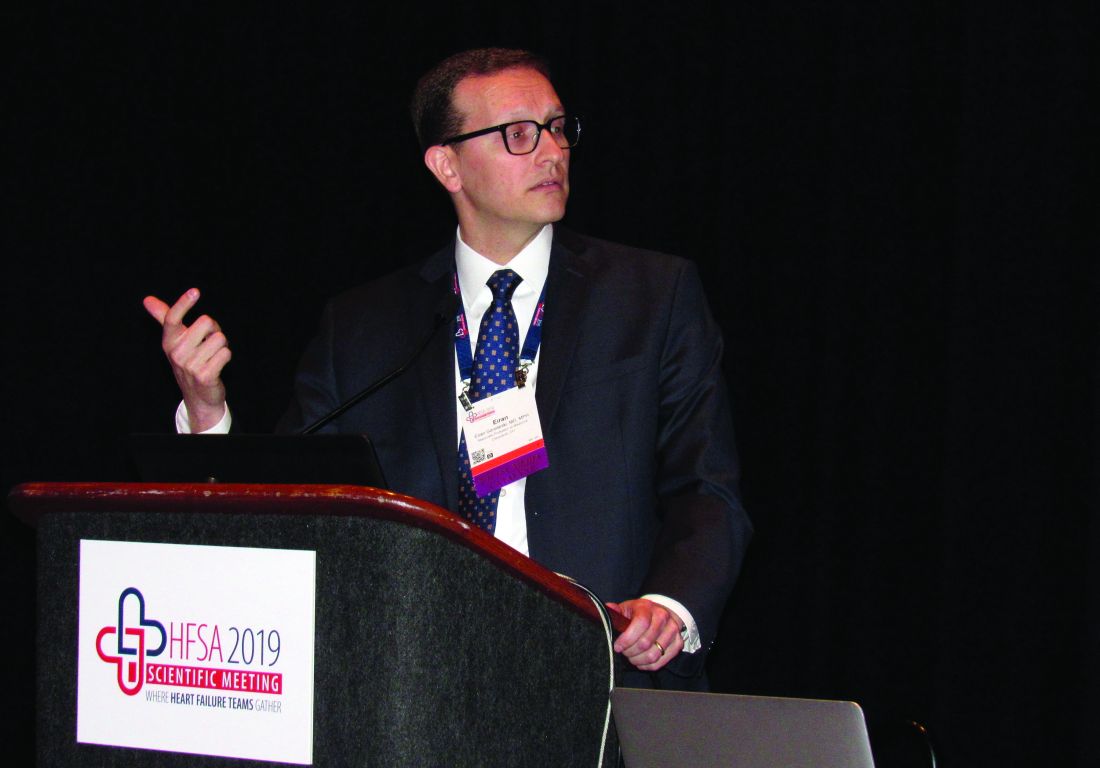
While the video meet-up doesn’t allow for a physical exam, it’s still possible to collect history of what happened since hospital discharge, assess breathing, and complete other aspects of the follow-up visit, according to Dr. Gorodeski, director of advanced heart failure section at the University Hospitals Cleveland Medical Center.
“The way we view use of virtual visits 7 days post-discharge is, in many ways, as a screening platform,” he said in a panel discussion. “If someone seems to be doing poorly, you can always invite them to come in, but most patients post discharge are not congested, and they’re doing quite well. Probably the more relevant issues are things like: Do they have their medications? Do they understand what their follow-up appointments are?”
During the virtual visit, patients are asked to hold their medication bottles up to the camera so the clinician can see what they are taking.
“Frequently, we are able to catch mistakes,” Dr. Gorodeski said. “Of note, most patients don’t bring their pill bottles to the clinic, so in some ways doing the virtual visit for that aspect was more valuable.”
Patients who opt for a virtual visit can do so from any smart phone, laptop, or desktop computer. Once logged in, they enter a virtual waiting room as the clinician receives a text notification to log in and begin the visit.
“It’s very efficient with time, and my questions were answered quickly,” said a patient in a short video Dr. Gorodeski played to illustrate the technology.
“I still feel the same connectivity with the patient,” a clinician in the video said.
There is currently no way to bill insurance companies for this type of visit, Dr. Gorodeski said when asked what initial barriers other institutions might have implementing a similar approach.
In the randomized, single-center clinical trial Dr. Gorodeski presented here at the HFSA meeting, called VIV-HF (Virtual Visits in Heart Failure Care Transitions), a total of 108 patients were randomized to the virtual visit (52 patients) or an in-person visit (56 patients).
The majority of patients (over 60%) had heart failure with reduced ejection fraction, according to the reported study results.
No-show rates were 50% for the in-person visit, and 34.6% for the virtual visit, for a relative risk reduction of 31%. However, this difference did not reach statistical significance, likely because the study was underpowered, according to Dr. Gorodeski.
“This strategy may reduce postdischarge appointment no-show rates, and this needs to be studied further in larger and appropriately powered clinical trials,” he said in presenting the results.
The 7-day postdischarge outpatient clinic visit is recommended in guidelines and viewed as a way to increase care engagement while reducing risk of poor outcomes, according to VIV-HF investigators.
Support for the study came from the Hunnell Fund. Dr. Gorodeski reported being a consultant and advisor to Abbott.
cardnews@mdedge
SOURCE: Gorodeski EZ, et al. HFSA 2019. Late-Breaking Clinical Trials session.
PHILADELPHIA – For patients transitioning to home after a heart failure hospitalization, substituting in-person visits with virtual, video-based visits is feasible, safe, and may reduce appointment no-show rates, results of a randomized study suggest.
Connecting patients with clinicians over secure video cut no-show rates at 7 days post-discharge by about one-third, with no difference in risk of readmission, emergency department visits, or death, compared with the traditional in-person follow-up visit, investigator Eiran Z. Gorodeski, MD, MPH, reported here at the annual scientific meeting of the Heart Failure Society of America.
While the video meet-up doesn’t allow for a physical exam, it’s still possible to collect history of what happened since hospital discharge, assess breathing, and complete other aspects of the follow-up visit, according to Dr. Gorodeski, director of advanced heart failure section at the University Hospitals Cleveland Medical Center.
“The way we view use of virtual visits 7 days post-discharge is, in many ways, as a screening platform,” he said in a panel discussion. “If someone seems to be doing poorly, you can always invite them to come in, but most patients post discharge are not congested, and they’re doing quite well. Probably the more relevant issues are things like: Do they have their medications? Do they understand what their follow-up appointments are?”
During the virtual visit, patients are asked to hold their medication bottles up to the camera so the clinician can see what they are taking.
“Frequently, we are able to catch mistakes,” Dr. Gorodeski said. “Of note, most patients don’t bring their pill bottles to the clinic, so in some ways doing the virtual visit for that aspect was more valuable.”
Patients who opt for a virtual visit can do so from any smart phone, laptop, or desktop computer. Once logged in, they enter a virtual waiting room as the clinician receives a text notification to log in and begin the visit.
“It’s very efficient with time, and my questions were answered quickly,” said a patient in a short video Dr. Gorodeski played to illustrate the technology.
“I still feel the same connectivity with the patient,” a clinician in the video said.
There is currently no way to bill insurance companies for this type of visit, Dr. Gorodeski said when asked what initial barriers other institutions might have implementing a similar approach.
In the randomized, single-center clinical trial Dr. Gorodeski presented here at the HFSA meeting, called VIV-HF (Virtual Visits in Heart Failure Care Transitions), a total of 108 patients were randomized to the virtual visit (52 patients) or an in-person visit (56 patients).
The majority of patients (over 60%) had heart failure with reduced ejection fraction, according to the reported study results.
No-show rates were 50% for the in-person visit, and 34.6% for the virtual visit, for a relative risk reduction of 31%. However, this difference did not reach statistical significance, likely because the study was underpowered, according to Dr. Gorodeski.
“This strategy may reduce postdischarge appointment no-show rates, and this needs to be studied further in larger and appropriately powered clinical trials,” he said in presenting the results.
The 7-day postdischarge outpatient clinic visit is recommended in guidelines and viewed as a way to increase care engagement while reducing risk of poor outcomes, according to VIV-HF investigators.
Support for the study came from the Hunnell Fund. Dr. Gorodeski reported being a consultant and advisor to Abbott.
cardnews@mdedge
SOURCE: Gorodeski EZ, et al. HFSA 2019. Late-Breaking Clinical Trials session.
PHILADELPHIA – For patients transitioning to home after a heart failure hospitalization, substituting in-person visits with virtual, video-based visits is feasible, safe, and may reduce appointment no-show rates, results of a randomized study suggest.
Connecting patients with clinicians over secure video cut no-show rates at 7 days post-discharge by about one-third, with no difference in risk of readmission, emergency department visits, or death, compared with the traditional in-person follow-up visit, investigator Eiran Z. Gorodeski, MD, MPH, reported here at the annual scientific meeting of the Heart Failure Society of America.
While the video meet-up doesn’t allow for a physical exam, it’s still possible to collect history of what happened since hospital discharge, assess breathing, and complete other aspects of the follow-up visit, according to Dr. Gorodeski, director of advanced heart failure section at the University Hospitals Cleveland Medical Center.
“The way we view use of virtual visits 7 days post-discharge is, in many ways, as a screening platform,” he said in a panel discussion. “If someone seems to be doing poorly, you can always invite them to come in, but most patients post discharge are not congested, and they’re doing quite well. Probably the more relevant issues are things like: Do they have their medications? Do they understand what their follow-up appointments are?”
During the virtual visit, patients are asked to hold their medication bottles up to the camera so the clinician can see what they are taking.
“Frequently, we are able to catch mistakes,” Dr. Gorodeski said. “Of note, most patients don’t bring their pill bottles to the clinic, so in some ways doing the virtual visit for that aspect was more valuable.”
Patients who opt for a virtual visit can do so from any smart phone, laptop, or desktop computer. Once logged in, they enter a virtual waiting room as the clinician receives a text notification to log in and begin the visit.
“It’s very efficient with time, and my questions were answered quickly,” said a patient in a short video Dr. Gorodeski played to illustrate the technology.
“I still feel the same connectivity with the patient,” a clinician in the video said.
There is currently no way to bill insurance companies for this type of visit, Dr. Gorodeski said when asked what initial barriers other institutions might have implementing a similar approach.
In the randomized, single-center clinical trial Dr. Gorodeski presented here at the HFSA meeting, called VIV-HF (Virtual Visits in Heart Failure Care Transitions), a total of 108 patients were randomized to the virtual visit (52 patients) or an in-person visit (56 patients).
The majority of patients (over 60%) had heart failure with reduced ejection fraction, according to the reported study results.
No-show rates were 50% for the in-person visit, and 34.6% for the virtual visit, for a relative risk reduction of 31%. However, this difference did not reach statistical significance, likely because the study was underpowered, according to Dr. Gorodeski.
“This strategy may reduce postdischarge appointment no-show rates, and this needs to be studied further in larger and appropriately powered clinical trials,” he said in presenting the results.
The 7-day postdischarge outpatient clinic visit is recommended in guidelines and viewed as a way to increase care engagement while reducing risk of poor outcomes, according to VIV-HF investigators.
Support for the study came from the Hunnell Fund. Dr. Gorodeski reported being a consultant and advisor to Abbott.
cardnews@mdedge
SOURCE: Gorodeski EZ, et al. HFSA 2019. Late-Breaking Clinical Trials session.
REPORTING FROM HFSA 2019
Patients frequently drive too soon after ICD implantation
PARIS – Fewer than half of commercial drivers who received implantable cardioverter-defibrillators (ICDs) recalled being told they should never drive professionally again, according to a recent Danish survey. Further, about a third of patients overall reported that they began driving soon after they received an ICD, during the period when guidelines recommend refraining from driving.

“These devices, they save lives – so what’s not to like?” lead investigator Jenny Bjerre, MD, asked at the annual congress of the European Society of Cardiology. “Well, if you are a patient qualifying for an ICD, you also automatically qualify for some driving restrictions.” These are put in place because of the concern for an arrhythmia causing a loss of consciousness behind the wheel, she said.
A European consensus statement calls for a 3-month driving moratorium when an ICD is implanted for secondary prevention or after an appropriate ICD shock, and a 4-week restriction when an ICD is placed for primary prevention. All these restrictions apply to personal driver’s licenses; anyone with an ICD is permanently restricted from commercial driving according to the consensus statement, said Dr. Bjerre, of the University Hospital, Copenhagen.
“As you can imagine, these restrictions are not that popular with the patients,” she said. She related the story of a patient, a taxi driver who had returned to a full range of physically taxing activities after his ICD implantation, but whose livelihood had been taken away from him.
Dr. Bjerre said she sought to understand the perspective of this patient, who said, “Sometimes I wish I hadn’t been resuscitated!” She saw that the loss of freedom and a meaningful occupation had profoundly affected the daily life of this patient, and she became curious about adherence to driving restrictions in patients with ICDs.
Using the nationwide Danish medical record database, Dr. Bjerre and her colleagues looked at a nationwide cohort of ICD patients to see they remembered hearing about restrictions on personal and commercial driving activities after ICD implantation. They also investigated adherence to restrictions, and sought to identify what factors were associated with nonadherence.
The questionnaire developed by Dr. Bjerre and her colleagues was made available to the ICD cohort both electronically and in a paper version. Questionnaires received were linked with a variety of nationwide registries through each participant’s unique national identification number, she explained. They obtained information about comorbidities, pharmacotherapies, and socioeconomic status. Not only did this linkage give more precise and complete data than would a questionnaire alone, but it also allowed the investigators to see how responders differed from nonresponders – important in questionnaire research, said Dr. Bjerre.
The investigators were able to locate and distribute questionnaires to a total of 3,913 living adults who had received first-time ICDs during the 3-year study period. In the end, even after excluding 31 responses for missing data, 2,741 responses were used for analysis – a response rate of over 70%.
The median age of respondents was 67, and 83% were male. About half – 46% – of respondents had an ICD implanted for primary prevention. Compared with those who did respond, said Dr. Bjerre, the nonresponders “were younger, sicker, more likely to be female, had lower socioeconomic status, and were less likely to be on guideline-directed therapy.”
Over 90% of respondents held a private driver’s license at the time of their ICD implantation, and just 7% were actively using a commercial license prior to implantation. Participants had a variety of commercial driving occupations, including driving trucks, buses, and taxis.
“Only 43% of primary prevention patients and 64% of secondary prevention patients stated that they had been informed about any driving restrictions,” said Dr. Bjerre. The figure was slightly better for patients after an ICD shock was delivered – 72% of these patients recalled hearing about driving restrictions.
“Among professional drivers – who are never supposed to drive again – only 45% said they had been informed about any professional driving restrictions,” she added.
What did patients report about their actual driving behaviors? Of patients receiving an ICD for primary prevention, 34% resumed driving within one week of ICD implantation. For those receiving an ICD for secondary prevention and those who had received an appropriate ICD shock, 43% and 30%, respectively, began driving before the recommended 3 months had elapsed.
The driving behavior of those with commercial licenses didn’t differ from the cohort as a whole: 35% of this group had resumed commercial driving.
In all the study’s subgroups, nonadherence to driving restrictions was more likely if the participant didn’t recall having been informed of the restrictions, with an odds ratio (OR) of 3.34 for nonadherence. However, noted Dr. Bjerre, at least 20% of patients in all subgroups who said they’d been told not to drive still resumed driving in contravention of restrictions. “So it seems that information can’t explain everything,” she said.
Additional predictors of nonadherence included male sex, with an OR of 1.53, being the only driver in the household (OR 1.29), and being at least 60 years old (OR, 1.20). Those receiving an ICD for secondary prevention had an OR of 2.20 for nonadherence, as well.
The study had a large cohort of real-life ICD patients and the response rate was high, said Dr. Bjerre. However, there was a risk of recall bias; additionally, nonresponders differed from responders, limiting full generalizability of the data. Finally, she observed that participants may have given the answers they thought were socially desirable.
“I want to get back to our friend the taxi driver,” who was adherent to restrictions, but who kept wanting to know what the actual chances were that he’d harm someone if he resumed driving. Realizing she couldn’t give him a very precise answer, Dr. Bjerre concluded, “I do think we owe it to our patients to provide more evidence on the absolute risk of traffic accidents in these patients.”
Dr. Bjerre reported that she had no conflicts of interest.
koakes@mdedge.com
PARIS – Fewer than half of commercial drivers who received implantable cardioverter-defibrillators (ICDs) recalled being told they should never drive professionally again, according to a recent Danish survey. Further, about a third of patients overall reported that they began driving soon after they received an ICD, during the period when guidelines recommend refraining from driving.
“These devices, they save lives – so what’s not to like?” lead investigator Jenny Bjerre, MD, asked at the annual congress of the European Society of Cardiology. “Well, if you are a patient qualifying for an ICD, you also automatically qualify for some driving restrictions.” These are put in place because of the concern for an arrhythmia causing a loss of consciousness behind the wheel, she said.
A European consensus statement calls for a 3-month driving moratorium when an ICD is implanted for secondary prevention or after an appropriate ICD shock, and a 4-week restriction when an ICD is placed for primary prevention. All these restrictions apply to personal driver’s licenses; anyone with an ICD is permanently restricted from commercial driving according to the consensus statement, said Dr. Bjerre, of the University Hospital, Copenhagen.
“As you can imagine, these restrictions are not that popular with the patients,” she said. She related the story of a patient, a taxi driver who had returned to a full range of physically taxing activities after his ICD implantation, but whose livelihood had been taken away from him.
Dr. Bjerre said she sought to understand the perspective of this patient, who said, “Sometimes I wish I hadn’t been resuscitated!” She saw that the loss of freedom and a meaningful occupation had profoundly affected the daily life of this patient, and she became curious about adherence to driving restrictions in patients with ICDs.
Using the nationwide Danish medical record database, Dr. Bjerre and her colleagues looked at a nationwide cohort of ICD patients to see they remembered hearing about restrictions on personal and commercial driving activities after ICD implantation. They also investigated adherence to restrictions, and sought to identify what factors were associated with nonadherence.
The questionnaire developed by Dr. Bjerre and her colleagues was made available to the ICD cohort both electronically and in a paper version. Questionnaires received were linked with a variety of nationwide registries through each participant’s unique national identification number, she explained. They obtained information about comorbidities, pharmacotherapies, and socioeconomic status. Not only did this linkage give more precise and complete data than would a questionnaire alone, but it also allowed the investigators to see how responders differed from nonresponders – important in questionnaire research, said Dr. Bjerre.
The investigators were able to locate and distribute questionnaires to a total of 3,913 living adults who had received first-time ICDs during the 3-year study period. In the end, even after excluding 31 responses for missing data, 2,741 responses were used for analysis – a response rate of over 70%.
The median age of respondents was 67, and 83% were male. About half – 46% – of respondents had an ICD implanted for primary prevention. Compared with those who did respond, said Dr. Bjerre, the nonresponders “were younger, sicker, more likely to be female, had lower socioeconomic status, and were less likely to be on guideline-directed therapy.”
Over 90% of respondents held a private driver’s license at the time of their ICD implantation, and just 7% were actively using a commercial license prior to implantation. Participants had a variety of commercial driving occupations, including driving trucks, buses, and taxis.
“Only 43% of primary prevention patients and 64% of secondary prevention patients stated that they had been informed about any driving restrictions,” said Dr. Bjerre. The figure was slightly better for patients after an ICD shock was delivered – 72% of these patients recalled hearing about driving restrictions.
“Among professional drivers – who are never supposed to drive again – only 45% said they had been informed about any professional driving restrictions,” she added.
What did patients report about their actual driving behaviors? Of patients receiving an ICD for primary prevention, 34% resumed driving within one week of ICD implantation. For those receiving an ICD for secondary prevention and those who had received an appropriate ICD shock, 43% and 30%, respectively, began driving before the recommended 3 months had elapsed.
The driving behavior of those with commercial licenses didn’t differ from the cohort as a whole: 35% of this group had resumed commercial driving.
In all the study’s subgroups, nonadherence to driving restrictions was more likely if the participant didn’t recall having been informed of the restrictions, with an odds ratio (OR) of 3.34 for nonadherence. However, noted Dr. Bjerre, at least 20% of patients in all subgroups who said they’d been told not to drive still resumed driving in contravention of restrictions. “So it seems that information can’t explain everything,” she said.
Additional predictors of nonadherence included male sex, with an OR of 1.53, being the only driver in the household (OR 1.29), and being at least 60 years old (OR, 1.20). Those receiving an ICD for secondary prevention had an OR of 2.20 for nonadherence, as well.
The study had a large cohort of real-life ICD patients and the response rate was high, said Dr. Bjerre. However, there was a risk of recall bias; additionally, nonresponders differed from responders, limiting full generalizability of the data. Finally, she observed that participants may have given the answers they thought were socially desirable.
“I want to get back to our friend the taxi driver,” who was adherent to restrictions, but who kept wanting to know what the actual chances were that he’d harm someone if he resumed driving. Realizing she couldn’t give him a very precise answer, Dr. Bjerre concluded, “I do think we owe it to our patients to provide more evidence on the absolute risk of traffic accidents in these patients.”
Dr. Bjerre reported that she had no conflicts of interest.
koakes@mdedge.com
PARIS – Fewer than half of commercial drivers who received implantable cardioverter-defibrillators (ICDs) recalled being told they should never drive professionally again, according to a recent Danish survey. Further, about a third of patients overall reported that they began driving soon after they received an ICD, during the period when guidelines recommend refraining from driving.
“These devices, they save lives – so what’s not to like?” lead investigator Jenny Bjerre, MD, asked at the annual congress of the European Society of Cardiology. “Well, if you are a patient qualifying for an ICD, you also automatically qualify for some driving restrictions.” These are put in place because of the concern for an arrhythmia causing a loss of consciousness behind the wheel, she said.
A European consensus statement calls for a 3-month driving moratorium when an ICD is implanted for secondary prevention or after an appropriate ICD shock, and a 4-week restriction when an ICD is placed for primary prevention. All these restrictions apply to personal driver’s licenses; anyone with an ICD is permanently restricted from commercial driving according to the consensus statement, said Dr. Bjerre, of the University Hospital, Copenhagen.
“As you can imagine, these restrictions are not that popular with the patients,” she said. She related the story of a patient, a taxi driver who had returned to a full range of physically taxing activities after his ICD implantation, but whose livelihood had been taken away from him.
Dr. Bjerre said she sought to understand the perspective of this patient, who said, “Sometimes I wish I hadn’t been resuscitated!” She saw that the loss of freedom and a meaningful occupation had profoundly affected the daily life of this patient, and she became curious about adherence to driving restrictions in patients with ICDs.
Using the nationwide Danish medical record database, Dr. Bjerre and her colleagues looked at a nationwide cohort of ICD patients to see they remembered hearing about restrictions on personal and commercial driving activities after ICD implantation. They also investigated adherence to restrictions, and sought to identify what factors were associated with nonadherence.
The questionnaire developed by Dr. Bjerre and her colleagues was made available to the ICD cohort both electronically and in a paper version. Questionnaires received were linked with a variety of nationwide registries through each participant’s unique national identification number, she explained. They obtained information about comorbidities, pharmacotherapies, and socioeconomic status. Not only did this linkage give more precise and complete data than would a questionnaire alone, but it also allowed the investigators to see how responders differed from nonresponders – important in questionnaire research, said Dr. Bjerre.
The investigators were able to locate and distribute questionnaires to a total of 3,913 living adults who had received first-time ICDs during the 3-year study period. In the end, even after excluding 31 responses for missing data, 2,741 responses were used for analysis – a response rate of over 70%.
The median age of respondents was 67, and 83% were male. About half – 46% – of respondents had an ICD implanted for primary prevention. Compared with those who did respond, said Dr. Bjerre, the nonresponders “were younger, sicker, more likely to be female, had lower socioeconomic status, and were less likely to be on guideline-directed therapy.”
Over 90% of respondents held a private driver’s license at the time of their ICD implantation, and just 7% were actively using a commercial license prior to implantation. Participants had a variety of commercial driving occupations, including driving trucks, buses, and taxis.
“Only 43% of primary prevention patients and 64% of secondary prevention patients stated that they had been informed about any driving restrictions,” said Dr. Bjerre. The figure was slightly better for patients after an ICD shock was delivered – 72% of these patients recalled hearing about driving restrictions.
“Among professional drivers – who are never supposed to drive again – only 45% said they had been informed about any professional driving restrictions,” she added.
What did patients report about their actual driving behaviors? Of patients receiving an ICD for primary prevention, 34% resumed driving within one week of ICD implantation. For those receiving an ICD for secondary prevention and those who had received an appropriate ICD shock, 43% and 30%, respectively, began driving before the recommended 3 months had elapsed.
The driving behavior of those with commercial licenses didn’t differ from the cohort as a whole: 35% of this group had resumed commercial driving.
In all the study’s subgroups, nonadherence to driving restrictions was more likely if the participant didn’t recall having been informed of the restrictions, with an odds ratio (OR) of 3.34 for nonadherence. However, noted Dr. Bjerre, at least 20% of patients in all subgroups who said they’d been told not to drive still resumed driving in contravention of restrictions. “So it seems that information can’t explain everything,” she said.
Additional predictors of nonadherence included male sex, with an OR of 1.53, being the only driver in the household (OR 1.29), and being at least 60 years old (OR, 1.20). Those receiving an ICD for secondary prevention had an OR of 2.20 for nonadherence, as well.
The study had a large cohort of real-life ICD patients and the response rate was high, said Dr. Bjerre. However, there was a risk of recall bias; additionally, nonresponders differed from responders, limiting full generalizability of the data. Finally, she observed that participants may have given the answers they thought were socially desirable.
“I want to get back to our friend the taxi driver,” who was adherent to restrictions, but who kept wanting to know what the actual chances were that he’d harm someone if he resumed driving. Realizing she couldn’t give him a very precise answer, Dr. Bjerre concluded, “I do think we owe it to our patients to provide more evidence on the absolute risk of traffic accidents in these patients.”
Dr. Bjerre reported that she had no conflicts of interest.
koakes@mdedge.com
REPORTING FROM ESC CONGRESS 2019
Is carpal tunnel syndrome the tip of the iceberg?
He takes the following medications: felodipine and atorvastatin. On exam, his blood pressure is 110/60 mm Hg, and his pulse is 90 beats per minute.

A cardiac examination found normal heart sounds with no murmurs.
A chest examination found dullness to percussion at both bases and rales.
A chest x-ray showed bilateral effusions and mild pulmonary edema.
The brain natriuretic peptide test found a level of 1,300 picograms/mL.
An ECG found increased ventricular wall thickness, an ejection fraction of 32%, and normal aortic and mitral valves.
What history would be the most helpful in making a diagnosis?
A. History of prostate cancer
B. History of carpal tunnel syndrome
C. History of playing professional football
D. History of hyperlipidemia
E. History of ulcerative colitis
The correct answer here would be B. history of carpal tunnel syndrome (CTS). This patient has clinical heart failure, without a history of clinical ischemic disease. The differential diagnosis for causes of heart failure is long, with the most common causes being chronic hypertension and ischemic heart disease. Other common causes include chronic untreated sleep apnea and valvular heart disease.
This patient really does not have clear reasons for having clinical heart failure. His cardiovascular risk factors have been well controlled, and no valvular disease was found on ECG.
Several recent reports have raised the importance of a history of CTS significantly increasing the likelihood of amyloidosis being the cause of underlying heart failure.
CTS is such a common clinical entity that it is easy to not appreciate its presence as a clue to possible amyloid cardiomyopathy. Fosbøl et al. reported that a diagnosis of CTS was associated with a higher incidence of heart failure (hazard ratio, 1.54; CI, 1.45-1.64).1 They found a highly increased risk of amyloid (HR, 12.2) in patients who had surgery for CTS.
Sperry et al. found that over 10% of patients who underwent carpal tunnel release stained for amyloid on biopsy specimens, and that concomitant cardiac evaluation identified patients with cardiac involvement.2
Pinney et al. found that 48% of patients with transthyretin amyloidosis had a history of CTS.3
In a retrospective study of patients with wild-type transthyretin amyloid (253), patients with hereditary transthyretin amyloid (136), and asymptomatic gene carriers (77), participants were screened for a history of spinal stenosis and CTS.4 Almost 60% of the patients with amyloid had a history of CTS, and 11% had a history of spinal stenosis. Patients with CTS and hereditary amyloid had thicker interventricular septums, higher left ventricular mass, and lower Karnovsky index than those without CTS.
The diagnosis of CTS, especially in those who need surgery for treatment or have bilateral disease, should make us consider the possibility of underlying amyloidosis.
Pearl: In patients who have heart failure and a history of CTS, amyloidosis should be considered as a cause.
Dr. Paauw is professor of medicine in the division of general internal medicine at the University of Washington, Seattle, and serves as third-year medical student clerkship director at that university. Contact Dr. Paauw at imnews@mdedge.com.
References
1. Fosbøl EL et al. J Am Coll Cardiol. 2019;74:15-23.
2. Sperry BW et al. J Am Coll Cardiol. 2018 Oct 23;72(17):2040-50.
3. Pinney JH et al. J Am Heart Assoc. 2013 Apr 22;2(2):e000098.
4. Aus dem Siepen F et al. Clin Res Cardiol. 2019 Apr 5. doi: 10.1007/s00392-019-01467-1.
He takes the following medications: felodipine and atorvastatin. On exam, his blood pressure is 110/60 mm Hg, and his pulse is 90 beats per minute.
A cardiac examination found normal heart sounds with no murmurs.
A chest examination found dullness to percussion at both bases and rales.
A chest x-ray showed bilateral effusions and mild pulmonary edema.
The brain natriuretic peptide test found a level of 1,300 picograms/mL.
An ECG found increased ventricular wall thickness, an ejection fraction of 32%, and normal aortic and mitral valves.
What history would be the most helpful in making a diagnosis?
A. History of prostate cancer
B. History of carpal tunnel syndrome
C. History of playing professional football
D. History of hyperlipidemia
E. History of ulcerative colitis
The correct answer here would be B. history of carpal tunnel syndrome (CTS). This patient has clinical heart failure, without a history of clinical ischemic disease. The differential diagnosis for causes of heart failure is long, with the most common causes being chronic hypertension and ischemic heart disease. Other common causes include chronic untreated sleep apnea and valvular heart disease.
This patient really does not have clear reasons for having clinical heart failure. His cardiovascular risk factors have been well controlled, and no valvular disease was found on ECG.
Several recent reports have raised the importance of a history of CTS significantly increasing the likelihood of amyloidosis being the cause of underlying heart failure.
CTS is such a common clinical entity that it is easy to not appreciate its presence as a clue to possible amyloid cardiomyopathy. Fosbøl et al. reported that a diagnosis of CTS was associated with a higher incidence of heart failure (hazard ratio, 1.54; CI, 1.45-1.64).1 They found a highly increased risk of amyloid (HR, 12.2) in patients who had surgery for CTS.
Sperry et al. found that over 10% of patients who underwent carpal tunnel release stained for amyloid on biopsy specimens, and that concomitant cardiac evaluation identified patients with cardiac involvement.2
Pinney et al. found that 48% of patients with transthyretin amyloidosis had a history of CTS.3
In a retrospective study of patients with wild-type transthyretin amyloid (253), patients with hereditary transthyretin amyloid (136), and asymptomatic gene carriers (77), participants were screened for a history of spinal stenosis and CTS.4 Almost 60% of the patients with amyloid had a history of CTS, and 11% had a history of spinal stenosis. Patients with CTS and hereditary amyloid had thicker interventricular septums, higher left ventricular mass, and lower Karnovsky index than those without CTS.
The diagnosis of CTS, especially in those who need surgery for treatment or have bilateral disease, should make us consider the possibility of underlying amyloidosis.
Pearl: In patients who have heart failure and a history of CTS, amyloidosis should be considered as a cause.
Dr. Paauw is professor of medicine in the division of general internal medicine at the University of Washington, Seattle, and serves as third-year medical student clerkship director at that university. Contact Dr. Paauw at imnews@mdedge.com.
References
1. Fosbøl EL et al. J Am Coll Cardiol. 2019;74:15-23.
2. Sperry BW et al. J Am Coll Cardiol. 2018 Oct 23;72(17):2040-50.
3. Pinney JH et al. J Am Heart Assoc. 2013 Apr 22;2(2):e000098.
4. Aus dem Siepen F et al. Clin Res Cardiol. 2019 Apr 5. doi: 10.1007/s00392-019-01467-1.
He takes the following medications: felodipine and atorvastatin. On exam, his blood pressure is 110/60 mm Hg, and his pulse is 90 beats per minute.
A cardiac examination found normal heart sounds with no murmurs.
A chest examination found dullness to percussion at both bases and rales.
A chest x-ray showed bilateral effusions and mild pulmonary edema.
The brain natriuretic peptide test found a level of 1,300 picograms/mL.
An ECG found increased ventricular wall thickness, an ejection fraction of 32%, and normal aortic and mitral valves.
What history would be the most helpful in making a diagnosis?
A. History of prostate cancer
B. History of carpal tunnel syndrome
C. History of playing professional football
D. History of hyperlipidemia
E. History of ulcerative colitis
The correct answer here would be B. history of carpal tunnel syndrome (CTS). This patient has clinical heart failure, without a history of clinical ischemic disease. The differential diagnosis for causes of heart failure is long, with the most common causes being chronic hypertension and ischemic heart disease. Other common causes include chronic untreated sleep apnea and valvular heart disease.
This patient really does not have clear reasons for having clinical heart failure. His cardiovascular risk factors have been well controlled, and no valvular disease was found on ECG.
Several recent reports have raised the importance of a history of CTS significantly increasing the likelihood of amyloidosis being the cause of underlying heart failure.
CTS is such a common clinical entity that it is easy to not appreciate its presence as a clue to possible amyloid cardiomyopathy. Fosbøl et al. reported that a diagnosis of CTS was associated with a higher incidence of heart failure (hazard ratio, 1.54; CI, 1.45-1.64).1 They found a highly increased risk of amyloid (HR, 12.2) in patients who had surgery for CTS.
Sperry et al. found that over 10% of patients who underwent carpal tunnel release stained for amyloid on biopsy specimens, and that concomitant cardiac evaluation identified patients with cardiac involvement.2
Pinney et al. found that 48% of patients with transthyretin amyloidosis had a history of CTS.3
In a retrospective study of patients with wild-type transthyretin amyloid (253), patients with hereditary transthyretin amyloid (136), and asymptomatic gene carriers (77), participants were screened for a history of spinal stenosis and CTS.4 Almost 60% of the patients with amyloid had a history of CTS, and 11% had a history of spinal stenosis. Patients with CTS and hereditary amyloid had thicker interventricular septums, higher left ventricular mass, and lower Karnovsky index than those without CTS.
The diagnosis of CTS, especially in those who need surgery for treatment or have bilateral disease, should make us consider the possibility of underlying amyloidosis.
Pearl: In patients who have heart failure and a history of CTS, amyloidosis should be considered as a cause.
Dr. Paauw is professor of medicine in the division of general internal medicine at the University of Washington, Seattle, and serves as third-year medical student clerkship director at that university. Contact Dr. Paauw at imnews@mdedge.com.
References
1. Fosbøl EL et al. J Am Coll Cardiol. 2019;74:15-23.
2. Sperry BW et al. J Am Coll Cardiol. 2018 Oct 23;72(17):2040-50.
3. Pinney JH et al. J Am Heart Assoc. 2013 Apr 22;2(2):e000098.
4. Aus dem Siepen F et al. Clin Res Cardiol. 2019 Apr 5. doi: 10.1007/s00392-019-01467-1.
Patiromer allows more CKD patients to continue on spironolactone
PHILADELPHIA – Among patients with chronic kidney disease with resistant hypertension, coadministration of patiromer enables more patients to stay on spironolactone, Bryan Williams, MD, of University College London, said at the scientific meeting of the Heart Failure Society of America.

Having the potassium-binding polymer on board allowed for more persistent use of spironolactone, both in the subgroup of patients with heart failure, and those without, he said in a late-breaking clinical trials session.
In the international, phase 2 AMBER (Spironolactone With Patiromer in the Treatment of Resistant Hypertension in Chronic Kidney Disease) trial, 295 patients with chronic kidney disease (estimated glomerular filtration rate from 25 to 45 mL/min per 1.73 m2) were randomly assigned to treatment with spironolactone either placebo (148) or patiromer (147).
, for a significant between-group difference of 19.5% (P less than .0001). In addition, blood pressure lowering was significantly greater in the patiromer (–11.7 mm Hg) than in the placebo (–10.8 mm Hg) group. Results of the AMBER trial were published concurrently with Dr. Williams’ presentation (Lancet 2019 Sep 15; doi: 10.1016/S0140-6736(19)32135-X).
While spironolactone is a “highly effective” drug, studies supporting guideline recommendations for its use in resistant hypertension have largely excluded patients with advanced chronic kidney disease because of increased risk of developing spironolactone-induced hyperkalemia, Dr. Williams told attendees. It remains unclear, however, whether coadministration of patiromer will improve long-term outcomes. Also, many placebo-treated patients in AMBER were able to continue on spironolactone without the help of patiromer, prompting one attendee to question whether there was a smarter way to target the drug, rather than treating all patients up front.
“I don’t think it’s going to be easy to say, ‘this patient’s going to respond, and this patient’s not going to respond,’ ” Dr. Williams said in response, “but at least we have an opportunity to try now in a group of patients who simply may be denied treatment because of a perception that it is difficult to use spironolactone in them.”
That perception is actually not unreasonable, he added, given that 66% of patients in the placebo group in AMBER developed hyperkalemia, suggesting that spironolactone is “not an easy drug to use” in chronic kidney disease patients.
John Teerlink, MD, of the San Francisco VA Medical Center, said the AMBER study is “another building block” in a series of developments of enabling therapies.
“I think it’s a great message for all of us to begin thinking about other therapies we can use to help modify our use of these potential life-saving therapies,” he said in a panel discussion of the results.
Patiromer’s impact on longer-term outcomes is the focus of DIAMOND, a phase 3, randomized, placebo controlled trial that is currently recruiting. DIAMOND will determine whether giving patiromer to patients who developed hyperkalemia on renin-angiotensin-aldosterone system (RAAS) inhibitors decreases cardiovascular deaths and hospitalizations, by virtue of enabling continued RAAS inhibitor use.
Funding for AMBER came from Relypsa, which markets patiromer (Veltassa). Dr. Williams reported consulting for Relypsa during the conduct of the study, along with disclosures outside the scope of the AMBER study (Daiichi Sankyo, Pfizer, Novartis, Servier, Boehringer Ingelheim, and Vascular Dynamics).
SOURCE: Williams B. HFSA 2019.
PHILADELPHIA – Among patients with chronic kidney disease with resistant hypertension, coadministration of patiromer enables more patients to stay on spironolactone, Bryan Williams, MD, of University College London, said at the scientific meeting of the Heart Failure Society of America.
Having the potassium-binding polymer on board allowed for more persistent use of spironolactone, both in the subgroup of patients with heart failure, and those without, he said in a late-breaking clinical trials session.
In the international, phase 2 AMBER (Spironolactone With Patiromer in the Treatment of Resistant Hypertension in Chronic Kidney Disease) trial, 295 patients with chronic kidney disease (estimated glomerular filtration rate from 25 to 45 mL/min per 1.73 m2) were randomly assigned to treatment with spironolactone either placebo (148) or patiromer (147).
, for a significant between-group difference of 19.5% (P less than .0001). In addition, blood pressure lowering was significantly greater in the patiromer (–11.7 mm Hg) than in the placebo (–10.8 mm Hg) group. Results of the AMBER trial were published concurrently with Dr. Williams’ presentation (Lancet 2019 Sep 15; doi: 10.1016/S0140-6736(19)32135-X).
While spironolactone is a “highly effective” drug, studies supporting guideline recommendations for its use in resistant hypertension have largely excluded patients with advanced chronic kidney disease because of increased risk of developing spironolactone-induced hyperkalemia, Dr. Williams told attendees. It remains unclear, however, whether coadministration of patiromer will improve long-term outcomes. Also, many placebo-treated patients in AMBER were able to continue on spironolactone without the help of patiromer, prompting one attendee to question whether there was a smarter way to target the drug, rather than treating all patients up front.
“I don’t think it’s going to be easy to say, ‘this patient’s going to respond, and this patient’s not going to respond,’ ” Dr. Williams said in response, “but at least we have an opportunity to try now in a group of patients who simply may be denied treatment because of a perception that it is difficult to use spironolactone in them.”
That perception is actually not unreasonable, he added, given that 66% of patients in the placebo group in AMBER developed hyperkalemia, suggesting that spironolactone is “not an easy drug to use” in chronic kidney disease patients.
John Teerlink, MD, of the San Francisco VA Medical Center, said the AMBER study is “another building block” in a series of developments of enabling therapies.
“I think it’s a great message for all of us to begin thinking about other therapies we can use to help modify our use of these potential life-saving therapies,” he said in a panel discussion of the results.
Patiromer’s impact on longer-term outcomes is the focus of DIAMOND, a phase 3, randomized, placebo controlled trial that is currently recruiting. DIAMOND will determine whether giving patiromer to patients who developed hyperkalemia on renin-angiotensin-aldosterone system (RAAS) inhibitors decreases cardiovascular deaths and hospitalizations, by virtue of enabling continued RAAS inhibitor use.
Funding for AMBER came from Relypsa, which markets patiromer (Veltassa). Dr. Williams reported consulting for Relypsa during the conduct of the study, along with disclosures outside the scope of the AMBER study (Daiichi Sankyo, Pfizer, Novartis, Servier, Boehringer Ingelheim, and Vascular Dynamics).
SOURCE: Williams B. HFSA 2019.
PHILADELPHIA – Among patients with chronic kidney disease with resistant hypertension, coadministration of patiromer enables more patients to stay on spironolactone, Bryan Williams, MD, of University College London, said at the scientific meeting of the Heart Failure Society of America.
Having the potassium-binding polymer on board allowed for more persistent use of spironolactone, both in the subgroup of patients with heart failure, and those without, he said in a late-breaking clinical trials session.
In the international, phase 2 AMBER (Spironolactone With Patiromer in the Treatment of Resistant Hypertension in Chronic Kidney Disease) trial, 295 patients with chronic kidney disease (estimated glomerular filtration rate from 25 to 45 mL/min per 1.73 m2) were randomly assigned to treatment with spironolactone either placebo (148) or patiromer (147).
, for a significant between-group difference of 19.5% (P less than .0001). In addition, blood pressure lowering was significantly greater in the patiromer (–11.7 mm Hg) than in the placebo (–10.8 mm Hg) group. Results of the AMBER trial were published concurrently with Dr. Williams’ presentation (Lancet 2019 Sep 15; doi: 10.1016/S0140-6736(19)32135-X).
While spironolactone is a “highly effective” drug, studies supporting guideline recommendations for its use in resistant hypertension have largely excluded patients with advanced chronic kidney disease because of increased risk of developing spironolactone-induced hyperkalemia, Dr. Williams told attendees. It remains unclear, however, whether coadministration of patiromer will improve long-term outcomes. Also, many placebo-treated patients in AMBER were able to continue on spironolactone without the help of patiromer, prompting one attendee to question whether there was a smarter way to target the drug, rather than treating all patients up front.
“I don’t think it’s going to be easy to say, ‘this patient’s going to respond, and this patient’s not going to respond,’ ” Dr. Williams said in response, “but at least we have an opportunity to try now in a group of patients who simply may be denied treatment because of a perception that it is difficult to use spironolactone in them.”
That perception is actually not unreasonable, he added, given that 66% of patients in the placebo group in AMBER developed hyperkalemia, suggesting that spironolactone is “not an easy drug to use” in chronic kidney disease patients.
John Teerlink, MD, of the San Francisco VA Medical Center, said the AMBER study is “another building block” in a series of developments of enabling therapies.
“I think it’s a great message for all of us to begin thinking about other therapies we can use to help modify our use of these potential life-saving therapies,” he said in a panel discussion of the results.
Patiromer’s impact on longer-term outcomes is the focus of DIAMOND, a phase 3, randomized, placebo controlled trial that is currently recruiting. DIAMOND will determine whether giving patiromer to patients who developed hyperkalemia on renin-angiotensin-aldosterone system (RAAS) inhibitors decreases cardiovascular deaths and hospitalizations, by virtue of enabling continued RAAS inhibitor use.
Funding for AMBER came from Relypsa, which markets patiromer (Veltassa). Dr. Williams reported consulting for Relypsa during the conduct of the study, along with disclosures outside the scope of the AMBER study (Daiichi Sankyo, Pfizer, Novartis, Servier, Boehringer Ingelheim, and Vascular Dynamics).
SOURCE: Williams B. HFSA 2019.
REPORTING FROM HFSA 2019
Dapagliflozin approved for reducing HF hospitalization in diabetes
The Food And Drug Administration has approved the sodium-glucose cotransporter 2 (SGLT2) inhibitor dapagliflozin (Farxiga) for reducing the risk of hospitalization for heart failure in adults with type 2 diabetes and established cardiovascular disease or multiple cardiovascular risk factors, according to a statement from AstraZeneca.
The approval was based on results from the DECLARE-TIMI 58 cardiovascular outcomes trial, which evaluated dapagliflozin in more than 17,000 patients with type 2 diabetes and cardiovascular risk factors or cardiovascular disease. They showed that dapagliflozin significantly reduced the risk of the primary composite endpoint of hospitalization for heart failure by 27%, compared with placebo (2.5% vs. 3.3%; HR, 0.73; 95% confidence interval, 0.61-0.88).
The drug is an oral, once-daily SGLT2 inhibitor initially approved as a monotherapy or combination therapy for glycemic control in adults with type 2 diabetes. It has additional benefits of weight loss and reduction in blood pressure in concert with diet and exercise in the same population.
“,” Ruud Dobber, PhD, executive vice president of the company’s biopharmaceuticals business unit, said in the statement. “This is promising news for the 30 million people living with type 2 diabetes in the U.S., as heart failure is one of the earliest cardiovascular complications for them, before heart attack or stroke. [Dapagliflozin] now offers the opportunity for physicians to act sooner and reduce the risk of hospitalization for heart failure.”
In September, the agency granted dapagliflozin a Fast Track designation to reduce the risk of cardiovascular death, or the worsening of heart failure in adults with heart failure with reduced ejection fraction or preserved ejection fraction, based on the phase 3 DAPA-HF and DELIVER trials. It also gave the drug Fast Track designation to delay the progression of renal failure and prevent CV and renal death in patients with chronic kidney disease based on the phase 3 DAPA-CKD trial, the statement noted.
The Food And Drug Administration has approved the sodium-glucose cotransporter 2 (SGLT2) inhibitor dapagliflozin (Farxiga) for reducing the risk of hospitalization for heart failure in adults with type 2 diabetes and established cardiovascular disease or multiple cardiovascular risk factors, according to a statement from AstraZeneca.
The approval was based on results from the DECLARE-TIMI 58 cardiovascular outcomes trial, which evaluated dapagliflozin in more than 17,000 patients with type 2 diabetes and cardiovascular risk factors or cardiovascular disease. They showed that dapagliflozin significantly reduced the risk of the primary composite endpoint of hospitalization for heart failure by 27%, compared with placebo (2.5% vs. 3.3%; HR, 0.73; 95% confidence interval, 0.61-0.88).
The drug is an oral, once-daily SGLT2 inhibitor initially approved as a monotherapy or combination therapy for glycemic control in adults with type 2 diabetes. It has additional benefits of weight loss and reduction in blood pressure in concert with diet and exercise in the same population.
“,” Ruud Dobber, PhD, executive vice president of the company’s biopharmaceuticals business unit, said in the statement. “This is promising news for the 30 million people living with type 2 diabetes in the U.S., as heart failure is one of the earliest cardiovascular complications for them, before heart attack or stroke. [Dapagliflozin] now offers the opportunity for physicians to act sooner and reduce the risk of hospitalization for heart failure.”
In September, the agency granted dapagliflozin a Fast Track designation to reduce the risk of cardiovascular death, or the worsening of heart failure in adults with heart failure with reduced ejection fraction or preserved ejection fraction, based on the phase 3 DAPA-HF and DELIVER trials. It also gave the drug Fast Track designation to delay the progression of renal failure and prevent CV and renal death in patients with chronic kidney disease based on the phase 3 DAPA-CKD trial, the statement noted.
The Food And Drug Administration has approved the sodium-glucose cotransporter 2 (SGLT2) inhibitor dapagliflozin (Farxiga) for reducing the risk of hospitalization for heart failure in adults with type 2 diabetes and established cardiovascular disease or multiple cardiovascular risk factors, according to a statement from AstraZeneca.
The approval was based on results from the DECLARE-TIMI 58 cardiovascular outcomes trial, which evaluated dapagliflozin in more than 17,000 patients with type 2 diabetes and cardiovascular risk factors or cardiovascular disease. They showed that dapagliflozin significantly reduced the risk of the primary composite endpoint of hospitalization for heart failure by 27%, compared with placebo (2.5% vs. 3.3%; HR, 0.73; 95% confidence interval, 0.61-0.88).
The drug is an oral, once-daily SGLT2 inhibitor initially approved as a monotherapy or combination therapy for glycemic control in adults with type 2 diabetes. It has additional benefits of weight loss and reduction in blood pressure in concert with diet and exercise in the same population.
“,” Ruud Dobber, PhD, executive vice president of the company’s biopharmaceuticals business unit, said in the statement. “This is promising news for the 30 million people living with type 2 diabetes in the U.S., as heart failure is one of the earliest cardiovascular complications for them, before heart attack or stroke. [Dapagliflozin] now offers the opportunity for physicians to act sooner and reduce the risk of hospitalization for heart failure.”
In September, the agency granted dapagliflozin a Fast Track designation to reduce the risk of cardiovascular death, or the worsening of heart failure in adults with heart failure with reduced ejection fraction or preserved ejection fraction, based on the phase 3 DAPA-HF and DELIVER trials. It also gave the drug Fast Track designation to delay the progression of renal failure and prevent CV and renal death in patients with chronic kidney disease based on the phase 3 DAPA-CKD trial, the statement noted.
GALACTIC: Early vasodilation strategy no help in acute heart failure
PARIS – A practical strategy of early and aggressive vasodilation and optimization of long-term medication for acute heart failure did not budge all-cause mortality or 180-day readmission rates, according to results of a pragmatic trial presented at the annual congress of the European Society of Cardiology.
“To our great disappointment, the curves were superimposable” between intervention and control arms in the GALACTIC (Goal-directed Afterload Reduction in Acute Congestive Cardiac Decompensation) trial, said lead investigator Christian Eugen Mueller, MD. “There was no signal of a benefit” for those receiving the targeted intervention: the adjusted hazard ratio was 1.07 for the composite primary endpoint of all-cause mortality or 6-month readmission for acute heart failure (P = 0.59).
GALACTIC, explained Dr. Mueller, was the largest investigator-initiated, randomized, controlled trial of pharmacologic therapy for acute heart failure (AHF).
“It is different in that it did not investigate a single drug, but a strategy of early, intensive, and sustained vasodilation. It is also unique in that it used individual doses of well-characterized, widely available, and mostly inexpensive drugs,” said Dr. Mueller, director of the Cardiovascular Research Institute at the University Hospital, Basel, Switzerland. “So this would have the beauty that, if it has a positive finding, you – in whatever country you come from – would be immediately able to apply it once you’re back home in your institution.”
The study attempted to address the gap between symptom amelioration and long-term outcomes when patients arrive in the ED with AHF. “Despite symptomatic improvement achieved from loop diuretics, mortality and morbidity remain unacceptably high,” said Dr. Mueller, with 40%-50% of AHF patients experiencing rehospitalization or death within 180 days of discharge.
Much remains unknown about the optimal treatment strategy for AHF. Aggressive vasodilation has been shown to improve outcomes in less-severe AHF, and intravenous nitrates are known to improve outcomes in AHF where severe pulmonary edema is present – “a phenotype representing only about 5% of patients,” noted Dr. Mueller. Still, “it is unknown whether aggressive vasodilation also improves outcomes in the much more common less-severe phenotype.”
Also, previous trials that ran intravenous vasodilators at a fixed dose for 48 hours did not improve AHF outcomes, so a one-size-fits-all strategy was not one the GALACTIC investigators sought to pursue.
In addition to a flexible regimen, “any strategy applied needs to take into consideration that the vast majority of patients with acute heart failure, after initial treatment in the ED, are then treated in a general cardiology ward,” added Dr. Mueller.
This meant that intravenous nitrate infusion was not part of the GALACTIC trial; rather, sublingual and transdermal nitrates were used, explained Dr. Mueller. “Transdermal application has the beauty that if you have an adverse effect – and hypotension is the most dangerous one – you can immediately remove the patch, and thereby avoid any further harm.”
The two-part strategy tested in GALACTIC involved reducing cardiac filling pressures by maintaining or increasing organ perfusion, while also increasing “long-term lifesaving therapy” targeting the renin-angiotensin-aldosterone system during hospitalization, with a goal to continue optimal treatment long term.
ACE inhibitors or angiotensin receptor blockers were added on the second day of hospitalization for the intervention group, said Dr. Mueller, and “in the ideal setting, up-titrated very aggressively from day to day.
“However, as you know, up-titration to target dose is sometimes wishful thinking in this frail population,” he said, so the GALACTIC trial protocol included a scheme to back dosing off for hypotension, hypokalemia, or worsening renal function. Systolic BP guided how aggressively vasodilation and ACE inhibitor/angiotensin receptor blocker therapy were escalated.
In the end, 382 patients randomized to the intervention arm received early, intensive, and sustained vasodilation, and the 399 patients in the control arm received standard-of-care treatment according to ESC guidelines. These figures omit two patients in the standard-of-care arm who withdrew consent, but follow-up was otherwise complete, said Dr. Mueller. Physicians treating patients in both study arms had discretion to use such other therapies as loop diuretics, beta-blockers, aldosterone antagonists, and cardiac devices.
Adult patients coming to the ED with acute dyspnea classified as New York Heart Association class III or IV were eligible if they had brain natriuretic peptide (BNP) levels of at least 500 ng/L, or N-terminal of the prohormone BNP (NT-proBNP) levels of at least 2,000 ng/L.
Overall, patients enrolled in GALACTIC were in their late 70s, and women made up 37% of the population.
The actual median BNP for enrollees was about 1,250 ng/L, and the median NT-proBNP was just under 6,000 ng/L. The median left ventricular ejection fraction was 37%. About a third of patients had diabetes, and 85% had hypertension. Over half had known chronic heart failure, about a third had prior history of MI, and half of patients had atrial fibrillation at baseline.
“Signs of congestion were present in all patients, and over 90% had rales on physical examination,” said Dr. Mueller.
Patients who were destined for the ICU, those who had systolic BP below 100 mm Hg or marked creatinine elevation, or who required cardiopulmonary resuscitation were excluded. Also excluded were patients with known structural defects such as severe valvular stenosis, congenital heart disease, or hypertrophic obstructive cardiomyopathy. GALACTIC also excluded patients with isolated right ventricular failure caused by pulmonary hypertension.
Prespecified subgroup analyses compared women with men, and those younger than 75 years with older participants. Women saw a significantly higher hazard ratio for readmission or death, indicating a potential harm from the intervention, said Dr. Mueller. An additional analysis stratified patients by left ventricular ejection fraction. Aside from the intervention’s negative effect on women participating in the trial, no other subgroups benefited or were harmed by an early vasodilation strategy.

Alexandre Mebazaa, MD, the designated discussant for the presentation, said that, although the GALACTIC trial was neutral, it represents “an important step forward in acute heart failure.
“Congratulations: First, because we know that in the critically ill condition it’s very difficult to do trials,” and the GALACTIC investigators succeeded in enrolling patients within the first 5 hours of presentation to EDs, noted Dr. Mebazaa, professor of anesthesiology and critical care medicine at the Paris Diderot School of Medicine.
He added that GALACTIC succeeded in continuing vasodilator use beyond the 48-hour mark. “For the first time, you had the courage to go a little bit further down, and we see that patients got the drug with vasodilator properties for 2 days or more.”
However, the long recruitment period for GALACTIC – first enrollment began in 2007 – meant that the study design reflected a thought process about AHF that doesn’t necessarily reflect current practice, noted Dr. Mebazaa. “The trial was designed many years ago, and at that time, we were still thinking that giving very aggressive treatment in the first hours could have an impact.
“Now, when we will be treating patients with vasodilators with acute heart failure – at least myself and my group – I would really wonder whether there is still evidence in the world to support the use of those agents.”
Dr. Mueller noted limitations of the GALACTIC trial, including the lack of generalizability to patients with systolic hypotension or severe renal dysfunction, since these populations were excluded. Also, “the open-label design, which was mandated by the aim to test a strategy, not a single drug, may have introduced a bias in the unblinded assessment of dyspnea” during inpatient stay.
The study was funded by several Swiss research institutions and had no industry support. Dr. Mueller reported no relevant conflicts of interest. Dr. Mebazaa reported financial relationships with Roche, Service, Novartis, AstraZeneca, S-Form Pharma, 4Teen$4, Adrenomed, and Sphingotec.
SOURCE: Mueller C. ESC 2019, Hot Line Session 3.
PARIS – A practical strategy of early and aggressive vasodilation and optimization of long-term medication for acute heart failure did not budge all-cause mortality or 180-day readmission rates, according to results of a pragmatic trial presented at the annual congress of the European Society of Cardiology.
“To our great disappointment, the curves were superimposable” between intervention and control arms in the GALACTIC (Goal-directed Afterload Reduction in Acute Congestive Cardiac Decompensation) trial, said lead investigator Christian Eugen Mueller, MD. “There was no signal of a benefit” for those receiving the targeted intervention: the adjusted hazard ratio was 1.07 for the composite primary endpoint of all-cause mortality or 6-month readmission for acute heart failure (P = 0.59).
GALACTIC, explained Dr. Mueller, was the largest investigator-initiated, randomized, controlled trial of pharmacologic therapy for acute heart failure (AHF).
“It is different in that it did not investigate a single drug, but a strategy of early, intensive, and sustained vasodilation. It is also unique in that it used individual doses of well-characterized, widely available, and mostly inexpensive drugs,” said Dr. Mueller, director of the Cardiovascular Research Institute at the University Hospital, Basel, Switzerland. “So this would have the beauty that, if it has a positive finding, you – in whatever country you come from – would be immediately able to apply it once you’re back home in your institution.”
The study attempted to address the gap between symptom amelioration and long-term outcomes when patients arrive in the ED with AHF. “Despite symptomatic improvement achieved from loop diuretics, mortality and morbidity remain unacceptably high,” said Dr. Mueller, with 40%-50% of AHF patients experiencing rehospitalization or death within 180 days of discharge.
Much remains unknown about the optimal treatment strategy for AHF. Aggressive vasodilation has been shown to improve outcomes in less-severe AHF, and intravenous nitrates are known to improve outcomes in AHF where severe pulmonary edema is present – “a phenotype representing only about 5% of patients,” noted Dr. Mueller. Still, “it is unknown whether aggressive vasodilation also improves outcomes in the much more common less-severe phenotype.”
Also, previous trials that ran intravenous vasodilators at a fixed dose for 48 hours did not improve AHF outcomes, so a one-size-fits-all strategy was not one the GALACTIC investigators sought to pursue.
In addition to a flexible regimen, “any strategy applied needs to take into consideration that the vast majority of patients with acute heart failure, after initial treatment in the ED, are then treated in a general cardiology ward,” added Dr. Mueller.
This meant that intravenous nitrate infusion was not part of the GALACTIC trial; rather, sublingual and transdermal nitrates were used, explained Dr. Mueller. “Transdermal application has the beauty that if you have an adverse effect – and hypotension is the most dangerous one – you can immediately remove the patch, and thereby avoid any further harm.”
The two-part strategy tested in GALACTIC involved reducing cardiac filling pressures by maintaining or increasing organ perfusion, while also increasing “long-term lifesaving therapy” targeting the renin-angiotensin-aldosterone system during hospitalization, with a goal to continue optimal treatment long term.
ACE inhibitors or angiotensin receptor blockers were added on the second day of hospitalization for the intervention group, said Dr. Mueller, and “in the ideal setting, up-titrated very aggressively from day to day.
“However, as you know, up-titration to target dose is sometimes wishful thinking in this frail population,” he said, so the GALACTIC trial protocol included a scheme to back dosing off for hypotension, hypokalemia, or worsening renal function. Systolic BP guided how aggressively vasodilation and ACE inhibitor/angiotensin receptor blocker therapy were escalated.
In the end, 382 patients randomized to the intervention arm received early, intensive, and sustained vasodilation, and the 399 patients in the control arm received standard-of-care treatment according to ESC guidelines. These figures omit two patients in the standard-of-care arm who withdrew consent, but follow-up was otherwise complete, said Dr. Mueller. Physicians treating patients in both study arms had discretion to use such other therapies as loop diuretics, beta-blockers, aldosterone antagonists, and cardiac devices.
Adult patients coming to the ED with acute dyspnea classified as New York Heart Association class III or IV were eligible if they had brain natriuretic peptide (BNP) levels of at least 500 ng/L, or N-terminal of the prohormone BNP (NT-proBNP) levels of at least 2,000 ng/L.
Overall, patients enrolled in GALACTIC were in their late 70s, and women made up 37% of the population.
The actual median BNP for enrollees was about 1,250 ng/L, and the median NT-proBNP was just under 6,000 ng/L. The median left ventricular ejection fraction was 37%. About a third of patients had diabetes, and 85% had hypertension. Over half had known chronic heart failure, about a third had prior history of MI, and half of patients had atrial fibrillation at baseline.
“Signs of congestion were present in all patients, and over 90% had rales on physical examination,” said Dr. Mueller.
Patients who were destined for the ICU, those who had systolic BP below 100 mm Hg or marked creatinine elevation, or who required cardiopulmonary resuscitation were excluded. Also excluded were patients with known structural defects such as severe valvular stenosis, congenital heart disease, or hypertrophic obstructive cardiomyopathy. GALACTIC also excluded patients with isolated right ventricular failure caused by pulmonary hypertension.
Prespecified subgroup analyses compared women with men, and those younger than 75 years with older participants. Women saw a significantly higher hazard ratio for readmission or death, indicating a potential harm from the intervention, said Dr. Mueller. An additional analysis stratified patients by left ventricular ejection fraction. Aside from the intervention’s negative effect on women participating in the trial, no other subgroups benefited or were harmed by an early vasodilation strategy.
Alexandre Mebazaa, MD, the designated discussant for the presentation, said that, although the GALACTIC trial was neutral, it represents “an important step forward in acute heart failure.
“Congratulations: First, because we know that in the critically ill condition it’s very difficult to do trials,” and the GALACTIC investigators succeeded in enrolling patients within the first 5 hours of presentation to EDs, noted Dr. Mebazaa, professor of anesthesiology and critical care medicine at the Paris Diderot School of Medicine.
He added that GALACTIC succeeded in continuing vasodilator use beyond the 48-hour mark. “For the first time, you had the courage to go a little bit further down, and we see that patients got the drug with vasodilator properties for 2 days or more.”
However, the long recruitment period for GALACTIC – first enrollment began in 2007 – meant that the study design reflected a thought process about AHF that doesn’t necessarily reflect current practice, noted Dr. Mebazaa. “The trial was designed many years ago, and at that time, we were still thinking that giving very aggressive treatment in the first hours could have an impact.
“Now, when we will be treating patients with vasodilators with acute heart failure – at least myself and my group – I would really wonder whether there is still evidence in the world to support the use of those agents.”
Dr. Mueller noted limitations of the GALACTIC trial, including the lack of generalizability to patients with systolic hypotension or severe renal dysfunction, since these populations were excluded. Also, “the open-label design, which was mandated by the aim to test a strategy, not a single drug, may have introduced a bias in the unblinded assessment of dyspnea” during inpatient stay.
The study was funded by several Swiss research institutions and had no industry support. Dr. Mueller reported no relevant conflicts of interest. Dr. Mebazaa reported financial relationships with Roche, Service, Novartis, AstraZeneca, S-Form Pharma, 4Teen$4, Adrenomed, and Sphingotec.
SOURCE: Mueller C. ESC 2019, Hot Line Session 3.
PARIS – A practical strategy of early and aggressive vasodilation and optimization of long-term medication for acute heart failure did not budge all-cause mortality or 180-day readmission rates, according to results of a pragmatic trial presented at the annual congress of the European Society of Cardiology.
“To our great disappointment, the curves were superimposable” between intervention and control arms in the GALACTIC (Goal-directed Afterload Reduction in Acute Congestive Cardiac Decompensation) trial, said lead investigator Christian Eugen Mueller, MD. “There was no signal of a benefit” for those receiving the targeted intervention: the adjusted hazard ratio was 1.07 for the composite primary endpoint of all-cause mortality or 6-month readmission for acute heart failure (P = 0.59).
GALACTIC, explained Dr. Mueller, was the largest investigator-initiated, randomized, controlled trial of pharmacologic therapy for acute heart failure (AHF).
“It is different in that it did not investigate a single drug, but a strategy of early, intensive, and sustained vasodilation. It is also unique in that it used individual doses of well-characterized, widely available, and mostly inexpensive drugs,” said Dr. Mueller, director of the Cardiovascular Research Institute at the University Hospital, Basel, Switzerland. “So this would have the beauty that, if it has a positive finding, you – in whatever country you come from – would be immediately able to apply it once you’re back home in your institution.”
The study attempted to address the gap between symptom amelioration and long-term outcomes when patients arrive in the ED with AHF. “Despite symptomatic improvement achieved from loop diuretics, mortality and morbidity remain unacceptably high,” said Dr. Mueller, with 40%-50% of AHF patients experiencing rehospitalization or death within 180 days of discharge.
Much remains unknown about the optimal treatment strategy for AHF. Aggressive vasodilation has been shown to improve outcomes in less-severe AHF, and intravenous nitrates are known to improve outcomes in AHF where severe pulmonary edema is present – “a phenotype representing only about 5% of patients,” noted Dr. Mueller. Still, “it is unknown whether aggressive vasodilation also improves outcomes in the much more common less-severe phenotype.”
Also, previous trials that ran intravenous vasodilators at a fixed dose for 48 hours did not improve AHF outcomes, so a one-size-fits-all strategy was not one the GALACTIC investigators sought to pursue.
In addition to a flexible regimen, “any strategy applied needs to take into consideration that the vast majority of patients with acute heart failure, after initial treatment in the ED, are then treated in a general cardiology ward,” added Dr. Mueller.
This meant that intravenous nitrate infusion was not part of the GALACTIC trial; rather, sublingual and transdermal nitrates were used, explained Dr. Mueller. “Transdermal application has the beauty that if you have an adverse effect – and hypotension is the most dangerous one – you can immediately remove the patch, and thereby avoid any further harm.”
The two-part strategy tested in GALACTIC involved reducing cardiac filling pressures by maintaining or increasing organ perfusion, while also increasing “long-term lifesaving therapy” targeting the renin-angiotensin-aldosterone system during hospitalization, with a goal to continue optimal treatment long term.
ACE inhibitors or angiotensin receptor blockers were added on the second day of hospitalization for the intervention group, said Dr. Mueller, and “in the ideal setting, up-titrated very aggressively from day to day.
“However, as you know, up-titration to target dose is sometimes wishful thinking in this frail population,” he said, so the GALACTIC trial protocol included a scheme to back dosing off for hypotension, hypokalemia, or worsening renal function. Systolic BP guided how aggressively vasodilation and ACE inhibitor/angiotensin receptor blocker therapy were escalated.
In the end, 382 patients randomized to the intervention arm received early, intensive, and sustained vasodilation, and the 399 patients in the control arm received standard-of-care treatment according to ESC guidelines. These figures omit two patients in the standard-of-care arm who withdrew consent, but follow-up was otherwise complete, said Dr. Mueller. Physicians treating patients in both study arms had discretion to use such other therapies as loop diuretics, beta-blockers, aldosterone antagonists, and cardiac devices.
Adult patients coming to the ED with acute dyspnea classified as New York Heart Association class III or IV were eligible if they had brain natriuretic peptide (BNP) levels of at least 500 ng/L, or N-terminal of the prohormone BNP (NT-proBNP) levels of at least 2,000 ng/L.
Overall, patients enrolled in GALACTIC were in their late 70s, and women made up 37% of the population.
The actual median BNP for enrollees was about 1,250 ng/L, and the median NT-proBNP was just under 6,000 ng/L. The median left ventricular ejection fraction was 37%. About a third of patients had diabetes, and 85% had hypertension. Over half had known chronic heart failure, about a third had prior history of MI, and half of patients had atrial fibrillation at baseline.
“Signs of congestion were present in all patients, and over 90% had rales on physical examination,” said Dr. Mueller.
Patients who were destined for the ICU, those who had systolic BP below 100 mm Hg or marked creatinine elevation, or who required cardiopulmonary resuscitation were excluded. Also excluded were patients with known structural defects such as severe valvular stenosis, congenital heart disease, or hypertrophic obstructive cardiomyopathy. GALACTIC also excluded patients with isolated right ventricular failure caused by pulmonary hypertension.
Prespecified subgroup analyses compared women with men, and those younger than 75 years with older participants. Women saw a significantly higher hazard ratio for readmission or death, indicating a potential harm from the intervention, said Dr. Mueller. An additional analysis stratified patients by left ventricular ejection fraction. Aside from the intervention’s negative effect on women participating in the trial, no other subgroups benefited or were harmed by an early vasodilation strategy.
Alexandre Mebazaa, MD, the designated discussant for the presentation, said that, although the GALACTIC trial was neutral, it represents “an important step forward in acute heart failure.
“Congratulations: First, because we know that in the critically ill condition it’s very difficult to do trials,” and the GALACTIC investigators succeeded in enrolling patients within the first 5 hours of presentation to EDs, noted Dr. Mebazaa, professor of anesthesiology and critical care medicine at the Paris Diderot School of Medicine.
He added that GALACTIC succeeded in continuing vasodilator use beyond the 48-hour mark. “For the first time, you had the courage to go a little bit further down, and we see that patients got the drug with vasodilator properties for 2 days or more.”
However, the long recruitment period for GALACTIC – first enrollment began in 2007 – meant that the study design reflected a thought process about AHF that doesn’t necessarily reflect current practice, noted Dr. Mebazaa. “The trial was designed many years ago, and at that time, we were still thinking that giving very aggressive treatment in the first hours could have an impact.
“Now, when we will be treating patients with vasodilators with acute heart failure – at least myself and my group – I would really wonder whether there is still evidence in the world to support the use of those agents.”
Dr. Mueller noted limitations of the GALACTIC trial, including the lack of generalizability to patients with systolic hypotension or severe renal dysfunction, since these populations were excluded. Also, “the open-label design, which was mandated by the aim to test a strategy, not a single drug, may have introduced a bias in the unblinded assessment of dyspnea” during inpatient stay.
The study was funded by several Swiss research institutions and had no industry support. Dr. Mueller reported no relevant conflicts of interest. Dr. Mebazaa reported financial relationships with Roche, Service, Novartis, AstraZeneca, S-Form Pharma, 4Teen$4, Adrenomed, and Sphingotec.
SOURCE: Mueller C. ESC 2019, Hot Line Session 3.
REPORTING FROM THE ESC CONGRESS 2019
TAVR, SAVR share same infective endocarditis risk
PARIS – The risk of infective endocarditis following transcatheter aortic valve replacement (TAVR) for the treatment of severe aortic stenosis proved to be the same as after surgical replacement in a French national propensity score–matched study.
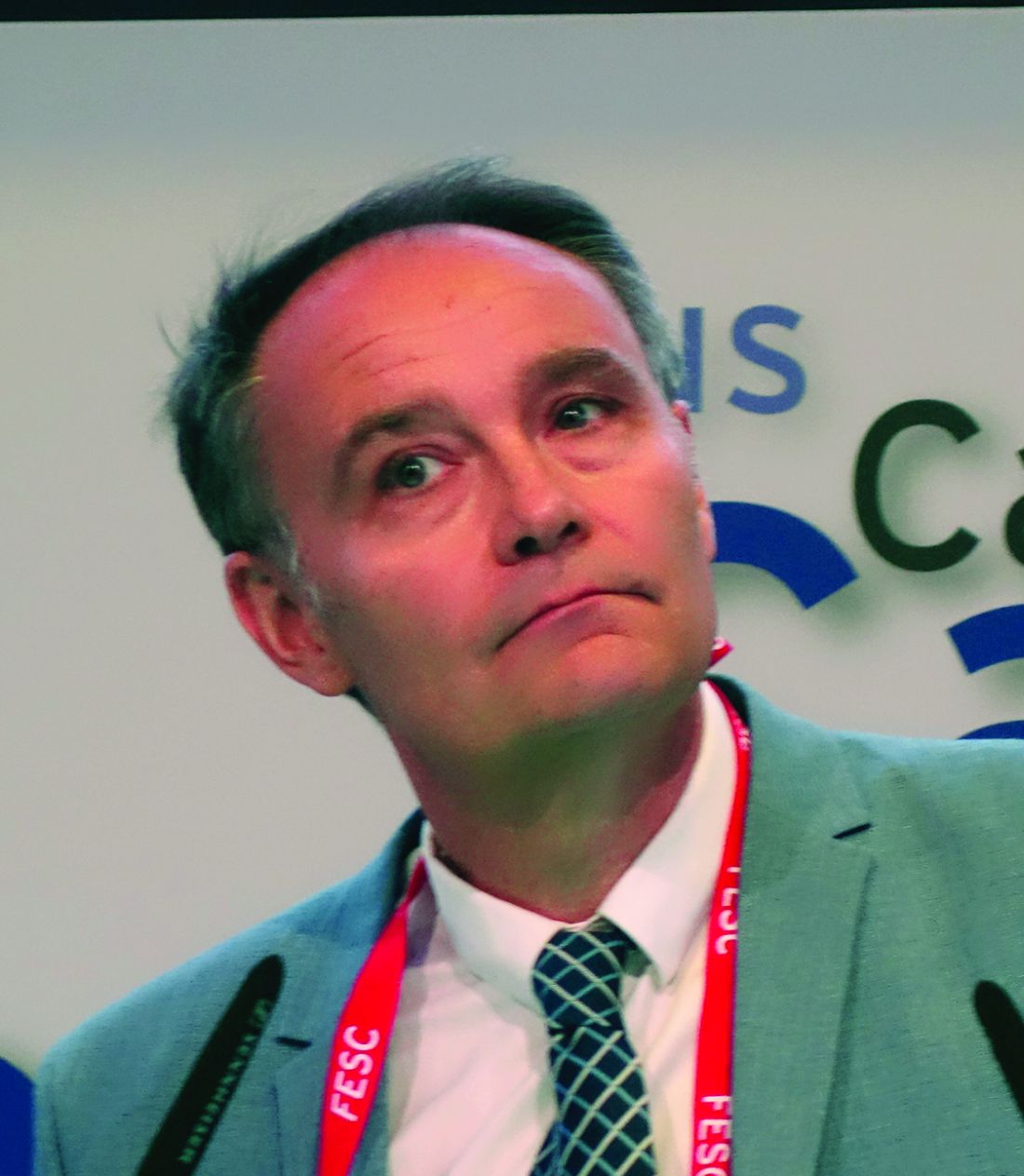
This finding from what is believed to be the largest-ever study of infective endocarditis following TAVR will come as a surprise to many physicians. It’s easy to mistakenly assume the risk of this feared complication is lower – and perhaps even negligible – in TAVR patients since the procedure doesn’t involve a significant surgical wound, it’s briefer, the hospital length of stay is shorter, and recovery time is markedly less than with surgical aortic valve replacement (SAVR).
Not so, Laurent Fauchier, MD, PhD, said in presenting the study findings at the annual congress of the European Society of Cardiology.
“Do not think there is a lower risk of infective endocarditis. Be aware, be careful, and provide appropriate antibiotic prophylaxis, just as surgeons do in SAVR. Don’t think, as I did, that with TAVR with no pacemaker implantation there is no risk of infective endocarditis. The TAVR valve is a device, it’s a prosthesis, and the risk is very similar to that of surgery,” advised Dr. Fauchier, a cardiologist at Francois Rabelais University in Tours, France.
He presented a study of all of the nearly 108,000 patients who underwent isolated TAVR or SAVR in France during 2010-2018. The data source was the French national administrative hospital discharge record system. Since the TAVR patients were overall markedly older and sicker than the SAVR patients, especially during the first years of the study, he and his coinvestigators performed propensity score matching using 30 variables, which enabled them to narrow the field of inquiry down to a carefully selected study population of 16,291 TAVR patients and an equal number of closely similar SAVR patients.
A total of 1,070 cases of infective endocarditis occurred during a mean follow-up of just over 2 years. The rate of hospital admission for this complication was 1.89% per year in the TAVR group and similar at 1.71% per year in the SAVR cohort.
Of note, all-cause mortality in TAVR patients who developed infective endocarditis was 1.32-fold greater than it was in SAVR patients with infective endocarditis, a statistically significant difference. The explanation for the increased mortality risk in the TAVR group probably has to do at least in part with an inability on the part of the investigators to fully capture and control for the TAVR group’s greater frailty, according to the cardiologist.
Risk factors for infective endocarditis shared in common by TAVR and SAVR patients included male gender, a higher Charlson Comorbidity Index score, and a greater frailty index. The main predictors unique to the TAVR patients were atrial fibrillation, anemia, and tricuspid regurgitation. And although pacemaker and defibrillator implantation were risk factors for infective endocarditis in the SAVR patients, it wasn’t predictive of increased risk in the TAVR population. Dr. Fauchier called this finding “quite reassuring” given that roughly 20% of the TAVR group received a pacemaker.
The causative microorganisms for infective endocarditis were essentially the same in the TAVR and SAVR groups, simplifying antimicrobial prophylaxis decision making.
Dr. Fauchier reported having no financial conflicts regarding the study, conducted free of commercial support. He serves as a consultant to and/or on speakers’ bureaus for Bayer, BMS Pfizer, Boehringer Ingelheim, Medtronic, and Novartis.
PARIS – The risk of infective endocarditis following transcatheter aortic valve replacement (TAVR) for the treatment of severe aortic stenosis proved to be the same as after surgical replacement in a French national propensity score–matched study.
This finding from what is believed to be the largest-ever study of infective endocarditis following TAVR will come as a surprise to many physicians. It’s easy to mistakenly assume the risk of this feared complication is lower – and perhaps even negligible – in TAVR patients since the procedure doesn’t involve a significant surgical wound, it’s briefer, the hospital length of stay is shorter, and recovery time is markedly less than with surgical aortic valve replacement (SAVR).
Not so, Laurent Fauchier, MD, PhD, said in presenting the study findings at the annual congress of the European Society of Cardiology.
“Do not think there is a lower risk of infective endocarditis. Be aware, be careful, and provide appropriate antibiotic prophylaxis, just as surgeons do in SAVR. Don’t think, as I did, that with TAVR with no pacemaker implantation there is no risk of infective endocarditis. The TAVR valve is a device, it’s a prosthesis, and the risk is very similar to that of surgery,” advised Dr. Fauchier, a cardiologist at Francois Rabelais University in Tours, France.
He presented a study of all of the nearly 108,000 patients who underwent isolated TAVR or SAVR in France during 2010-2018. The data source was the French national administrative hospital discharge record system. Since the TAVR patients were overall markedly older and sicker than the SAVR patients, especially during the first years of the study, he and his coinvestigators performed propensity score matching using 30 variables, which enabled them to narrow the field of inquiry down to a carefully selected study population of 16,291 TAVR patients and an equal number of closely similar SAVR patients.
A total of 1,070 cases of infective endocarditis occurred during a mean follow-up of just over 2 years. The rate of hospital admission for this complication was 1.89% per year in the TAVR group and similar at 1.71% per year in the SAVR cohort.
Of note, all-cause mortality in TAVR patients who developed infective endocarditis was 1.32-fold greater than it was in SAVR patients with infective endocarditis, a statistically significant difference. The explanation for the increased mortality risk in the TAVR group probably has to do at least in part with an inability on the part of the investigators to fully capture and control for the TAVR group’s greater frailty, according to the cardiologist.
Risk factors for infective endocarditis shared in common by TAVR and SAVR patients included male gender, a higher Charlson Comorbidity Index score, and a greater frailty index. The main predictors unique to the TAVR patients were atrial fibrillation, anemia, and tricuspid regurgitation. And although pacemaker and defibrillator implantation were risk factors for infective endocarditis in the SAVR patients, it wasn’t predictive of increased risk in the TAVR population. Dr. Fauchier called this finding “quite reassuring” given that roughly 20% of the TAVR group received a pacemaker.
The causative microorganisms for infective endocarditis were essentially the same in the TAVR and SAVR groups, simplifying antimicrobial prophylaxis decision making.
Dr. Fauchier reported having no financial conflicts regarding the study, conducted free of commercial support. He serves as a consultant to and/or on speakers’ bureaus for Bayer, BMS Pfizer, Boehringer Ingelheim, Medtronic, and Novartis.
PARIS – The risk of infective endocarditis following transcatheter aortic valve replacement (TAVR) for the treatment of severe aortic stenosis proved to be the same as after surgical replacement in a French national propensity score–matched study.
This finding from what is believed to be the largest-ever study of infective endocarditis following TAVR will come as a surprise to many physicians. It’s easy to mistakenly assume the risk of this feared complication is lower – and perhaps even negligible – in TAVR patients since the procedure doesn’t involve a significant surgical wound, it’s briefer, the hospital length of stay is shorter, and recovery time is markedly less than with surgical aortic valve replacement (SAVR).
Not so, Laurent Fauchier, MD, PhD, said in presenting the study findings at the annual congress of the European Society of Cardiology.
“Do not think there is a lower risk of infective endocarditis. Be aware, be careful, and provide appropriate antibiotic prophylaxis, just as surgeons do in SAVR. Don’t think, as I did, that with TAVR with no pacemaker implantation there is no risk of infective endocarditis. The TAVR valve is a device, it’s a prosthesis, and the risk is very similar to that of surgery,” advised Dr. Fauchier, a cardiologist at Francois Rabelais University in Tours, France.
He presented a study of all of the nearly 108,000 patients who underwent isolated TAVR or SAVR in France during 2010-2018. The data source was the French national administrative hospital discharge record system. Since the TAVR patients were overall markedly older and sicker than the SAVR patients, especially during the first years of the study, he and his coinvestigators performed propensity score matching using 30 variables, which enabled them to narrow the field of inquiry down to a carefully selected study population of 16,291 TAVR patients and an equal number of closely similar SAVR patients.
A total of 1,070 cases of infective endocarditis occurred during a mean follow-up of just over 2 years. The rate of hospital admission for this complication was 1.89% per year in the TAVR group and similar at 1.71% per year in the SAVR cohort.
Of note, all-cause mortality in TAVR patients who developed infective endocarditis was 1.32-fold greater than it was in SAVR patients with infective endocarditis, a statistically significant difference. The explanation for the increased mortality risk in the TAVR group probably has to do at least in part with an inability on the part of the investigators to fully capture and control for the TAVR group’s greater frailty, according to the cardiologist.
Risk factors for infective endocarditis shared in common by TAVR and SAVR patients included male gender, a higher Charlson Comorbidity Index score, and a greater frailty index. The main predictors unique to the TAVR patients were atrial fibrillation, anemia, and tricuspid regurgitation. And although pacemaker and defibrillator implantation were risk factors for infective endocarditis in the SAVR patients, it wasn’t predictive of increased risk in the TAVR population. Dr. Fauchier called this finding “quite reassuring” given that roughly 20% of the TAVR group received a pacemaker.
The causative microorganisms for infective endocarditis were essentially the same in the TAVR and SAVR groups, simplifying antimicrobial prophylaxis decision making.
Dr. Fauchier reported having no financial conflicts regarding the study, conducted free of commercial support. He serves as a consultant to and/or on speakers’ bureaus for Bayer, BMS Pfizer, Boehringer Ingelheim, Medtronic, and Novartis.
REPORTING FROM THE ESC CONGRESS 2019
Treatment guided by remote readings works when used as intended
PHILADELPHIA – A heart failure management strategy guided by home lung fluid measurements from the remote dielectric sensing (ReDS) system can significantly reduce recurrent hospitalizations, as long as the technology is used as intended.
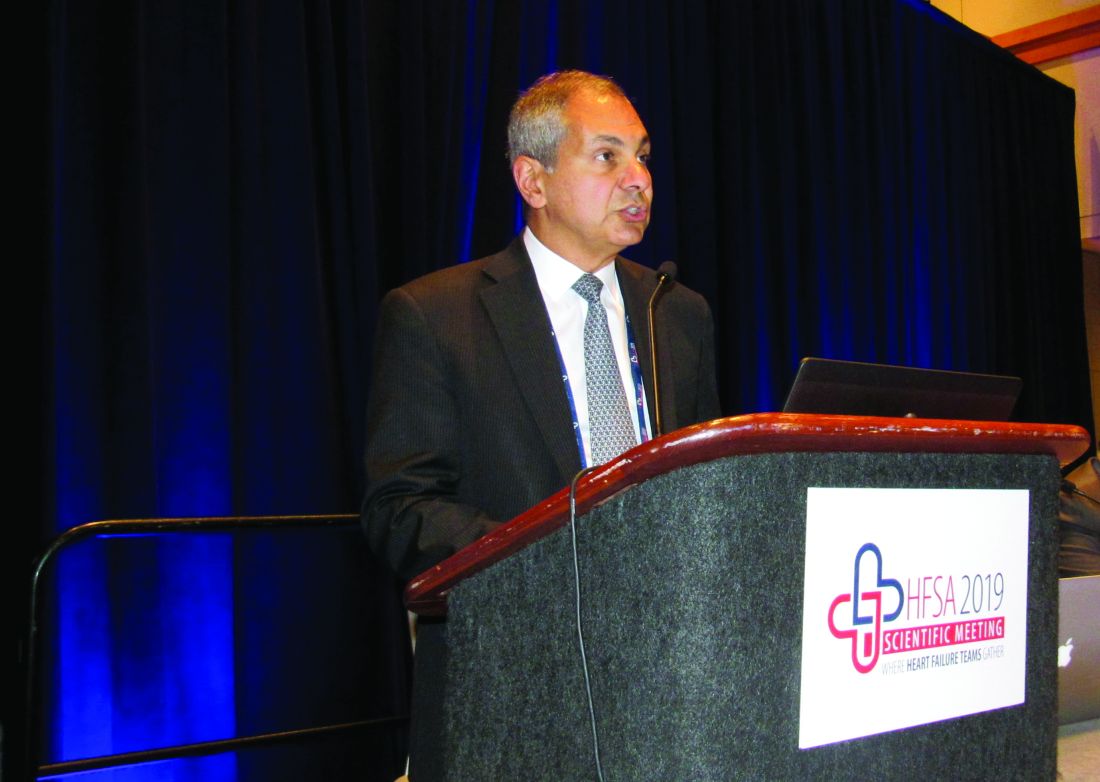
A ReDS-directed management strategy did not significantly reduce recurrent hospitalizations for acute decompensated heart failure (ADHF) in the traditional intent-to-treat analysis of the randomized, controlled SMILE trial, William T. Abraham, MD, of the Ohio State University, Columbus, said at the annual scientific meeting of the Heart Failure Society of America.
However, use of the Food and Drug Administration–cleared thoracic fluid status monitoring system to guide treatment changes did cut such hospitalizations by 58% in a modified intent-to-treat population that excluded patients who failed to take daily measurements at home and who didn’t receive modified treatment despite actionable readings, Dr. Abraham reported in an oral presentation.
“These observations may support an adherence-based approach to the utilization and reimbursement of ReDS-guided management in recently discharged ADHF patients,” he said.
The ReDS system consists of a device that, within about 90 seconds, provides a measurement of lung fluid via a focused electromagnetic radar beam that passes through the right lung, Dr. Abraham said. Clinicians access data from measurements patients initiate at home through a secure, cloud-based system, and then initiate changes to heart failure management as warranted based on a ReDS-specific treatment algorithm, Dr. Abraham said.
The postmarketing SMILE study of the ReDS system was stopped early because of an administrative decision by the sponsor, according to Dr. Abraham. However, 268 patients enrolled at 43 U.S. sites continued to the end of the study, with an average follow-up of about 6 months, while readmissions were collected and adjudicated by an independent clinical events committee.
A total of 135 patients were randomized to a ReDS-based management strategy, while 133 were randomized to standard of care, the investigator said.
Most of the medication changes made in response to ReDS measurements were increased diuretics because of high lung fluid volume measurements, or decreased diuretics in response to low measurements, though some changes in vasodilator medications were also made, Dr. Abraham said.
The ReDS-directed management approach yielded a “highly nonsignificant” 19% reduction in recurrent or cumulative heart failure readmissions (P = .36); by contrast, after removing nonadherent, noncompliant cases, there were 11 hospitalizations in 91 treatment patients, compared with 43 hospitalizations in 133 control patients, yielding a hazard ratio of 0.42 (95% CI, 0.22-0.82; P = .01).
“This comes back to the adage that, if you don’t use it, you can’t improve clinical outcomes,” he said, explaining that this study’s modified intent-to-treat population was defined by excluding patients who took no ReDS measurements for more than 20 consecutive days; or by clinicians who received at least eight notifications of out-of-range ReDS values yet didn’t implement the ReDS treatment algorithm.
There were no adverse events reported as being definitely related to the use of the device, and five adverse events reported as possibly related to the device, Dr. Abraham said.
SMILE was sponsored by Sensible Medical Innovations. Dr. Abraham reported disclosures (consultant/advisory board) related to Sensible Medical Innovations, Abbott, Boehringer Ingelheim, Victorious Medical, V-Wave Medical, and others.
PHILADELPHIA – A heart failure management strategy guided by home lung fluid measurements from the remote dielectric sensing (ReDS) system can significantly reduce recurrent hospitalizations, as long as the technology is used as intended.
A ReDS-directed management strategy did not significantly reduce recurrent hospitalizations for acute decompensated heart failure (ADHF) in the traditional intent-to-treat analysis of the randomized, controlled SMILE trial, William T. Abraham, MD, of the Ohio State University, Columbus, said at the annual scientific meeting of the Heart Failure Society of America.
However, use of the Food and Drug Administration–cleared thoracic fluid status monitoring system to guide treatment changes did cut such hospitalizations by 58% in a modified intent-to-treat population that excluded patients who failed to take daily measurements at home and who didn’t receive modified treatment despite actionable readings, Dr. Abraham reported in an oral presentation.
“These observations may support an adherence-based approach to the utilization and reimbursement of ReDS-guided management in recently discharged ADHF patients,” he said.
The ReDS system consists of a device that, within about 90 seconds, provides a measurement of lung fluid via a focused electromagnetic radar beam that passes through the right lung, Dr. Abraham said. Clinicians access data from measurements patients initiate at home through a secure, cloud-based system, and then initiate changes to heart failure management as warranted based on a ReDS-specific treatment algorithm, Dr. Abraham said.
The postmarketing SMILE study of the ReDS system was stopped early because of an administrative decision by the sponsor, according to Dr. Abraham. However, 268 patients enrolled at 43 U.S. sites continued to the end of the study, with an average follow-up of about 6 months, while readmissions were collected and adjudicated by an independent clinical events committee.
A total of 135 patients were randomized to a ReDS-based management strategy, while 133 were randomized to standard of care, the investigator said.
Most of the medication changes made in response to ReDS measurements were increased diuretics because of high lung fluid volume measurements, or decreased diuretics in response to low measurements, though some changes in vasodilator medications were also made, Dr. Abraham said.
The ReDS-directed management approach yielded a “highly nonsignificant” 19% reduction in recurrent or cumulative heart failure readmissions (P = .36); by contrast, after removing nonadherent, noncompliant cases, there were 11 hospitalizations in 91 treatment patients, compared with 43 hospitalizations in 133 control patients, yielding a hazard ratio of 0.42 (95% CI, 0.22-0.82; P = .01).
“This comes back to the adage that, if you don’t use it, you can’t improve clinical outcomes,” he said, explaining that this study’s modified intent-to-treat population was defined by excluding patients who took no ReDS measurements for more than 20 consecutive days; or by clinicians who received at least eight notifications of out-of-range ReDS values yet didn’t implement the ReDS treatment algorithm.
There were no adverse events reported as being definitely related to the use of the device, and five adverse events reported as possibly related to the device, Dr. Abraham said.
SMILE was sponsored by Sensible Medical Innovations. Dr. Abraham reported disclosures (consultant/advisory board) related to Sensible Medical Innovations, Abbott, Boehringer Ingelheim, Victorious Medical, V-Wave Medical, and others.
PHILADELPHIA – A heart failure management strategy guided by home lung fluid measurements from the remote dielectric sensing (ReDS) system can significantly reduce recurrent hospitalizations, as long as the technology is used as intended.
A ReDS-directed management strategy did not significantly reduce recurrent hospitalizations for acute decompensated heart failure (ADHF) in the traditional intent-to-treat analysis of the randomized, controlled SMILE trial, William T. Abraham, MD, of the Ohio State University, Columbus, said at the annual scientific meeting of the Heart Failure Society of America.
However, use of the Food and Drug Administration–cleared thoracic fluid status monitoring system to guide treatment changes did cut such hospitalizations by 58% in a modified intent-to-treat population that excluded patients who failed to take daily measurements at home and who didn’t receive modified treatment despite actionable readings, Dr. Abraham reported in an oral presentation.
“These observations may support an adherence-based approach to the utilization and reimbursement of ReDS-guided management in recently discharged ADHF patients,” he said.
The ReDS system consists of a device that, within about 90 seconds, provides a measurement of lung fluid via a focused electromagnetic radar beam that passes through the right lung, Dr. Abraham said. Clinicians access data from measurements patients initiate at home through a secure, cloud-based system, and then initiate changes to heart failure management as warranted based on a ReDS-specific treatment algorithm, Dr. Abraham said.
The postmarketing SMILE study of the ReDS system was stopped early because of an administrative decision by the sponsor, according to Dr. Abraham. However, 268 patients enrolled at 43 U.S. sites continued to the end of the study, with an average follow-up of about 6 months, while readmissions were collected and adjudicated by an independent clinical events committee.
A total of 135 patients were randomized to a ReDS-based management strategy, while 133 were randomized to standard of care, the investigator said.
Most of the medication changes made in response to ReDS measurements were increased diuretics because of high lung fluid volume measurements, or decreased diuretics in response to low measurements, though some changes in vasodilator medications were also made, Dr. Abraham said.
The ReDS-directed management approach yielded a “highly nonsignificant” 19% reduction in recurrent or cumulative heart failure readmissions (P = .36); by contrast, after removing nonadherent, noncompliant cases, there were 11 hospitalizations in 91 treatment patients, compared with 43 hospitalizations in 133 control patients, yielding a hazard ratio of 0.42 (95% CI, 0.22-0.82; P = .01).
“This comes back to the adage that, if you don’t use it, you can’t improve clinical outcomes,” he said, explaining that this study’s modified intent-to-treat population was defined by excluding patients who took no ReDS measurements for more than 20 consecutive days; or by clinicians who received at least eight notifications of out-of-range ReDS values yet didn’t implement the ReDS treatment algorithm.
There were no adverse events reported as being definitely related to the use of the device, and five adverse events reported as possibly related to the device, Dr. Abraham said.
SMILE was sponsored by Sensible Medical Innovations. Dr. Abraham reported disclosures (consultant/advisory board) related to Sensible Medical Innovations, Abbott, Boehringer Ingelheim, Victorious Medical, V-Wave Medical, and others.
REPORTING FROM HFSA 2019
FDA adds diabetic kidney disease, heart failure indications to canagliflozin
The Food and Drug Administration has approved canagliflozin (Invokana) for the treatment of diabetic kidney disease and for reduction of the risk of hospitalization for heart failure in patients with type 2 diabetes and diabetic kidney disease, which makes it the first drug indicated for diabetic kidney disease treatment in 20 years.

FDA approval, which was announced in a press release by Janssen, the drug’s manufacturer, is based on results from the phase 3 CREDENCE trial. In that study patients with type 2 diabetes and chronic diabetic kidney disease received either 100 mg canagliflozin or placebo. Patients who received canagliflozin experienced a 30% reduction in the risk of the primary composite endpoint, which included end-stage kidney disease, doubling of serum creatinine, and renal or cardiovascular death. The risk of secondary outcomes were also reduced in patients receiving canagliflozin, including a 39% reduction in the risk of hospitalization for heart failure.
The most common adverse events associated with canagliflozin, according to the label, are female genital mycotic infections, urinary tract infection, and increased urination. Serious adverse events associated with canagliflozin include ketoacidosis, kidney problems, serious urinary tract infections, hypoglycemia, necrotizing fasciitis, serious allergic reaction, and bone fractures.
“The real battle to turn the tide on kidney disease is in early detection and slowing its progression so that patients stay healthier and fewer patients reach kidney failure,” LaVerne A. Burton, president and CEO of the American Kidney Fund, said in the press release. “We are so grateful that advances in kidney disease research are producing treatment options that help to slow the progression of diabetic kidney disease and reduce the risk of hospitalization for heart failure.”
Find the full press release on the Janssen website.
The Food and Drug Administration has approved canagliflozin (Invokana) for the treatment of diabetic kidney disease and for reduction of the risk of hospitalization for heart failure in patients with type 2 diabetes and diabetic kidney disease, which makes it the first drug indicated for diabetic kidney disease treatment in 20 years.
FDA approval, which was announced in a press release by Janssen, the drug’s manufacturer, is based on results from the phase 3 CREDENCE trial. In that study patients with type 2 diabetes and chronic diabetic kidney disease received either 100 mg canagliflozin or placebo. Patients who received canagliflozin experienced a 30% reduction in the risk of the primary composite endpoint, which included end-stage kidney disease, doubling of serum creatinine, and renal or cardiovascular death. The risk of secondary outcomes were also reduced in patients receiving canagliflozin, including a 39% reduction in the risk of hospitalization for heart failure.
The most common adverse events associated with canagliflozin, according to the label, are female genital mycotic infections, urinary tract infection, and increased urination. Serious adverse events associated with canagliflozin include ketoacidosis, kidney problems, serious urinary tract infections, hypoglycemia, necrotizing fasciitis, serious allergic reaction, and bone fractures.
“The real battle to turn the tide on kidney disease is in early detection and slowing its progression so that patients stay healthier and fewer patients reach kidney failure,” LaVerne A. Burton, president and CEO of the American Kidney Fund, said in the press release. “We are so grateful that advances in kidney disease research are producing treatment options that help to slow the progression of diabetic kidney disease and reduce the risk of hospitalization for heart failure.”
Find the full press release on the Janssen website.
The Food and Drug Administration has approved canagliflozin (Invokana) for the treatment of diabetic kidney disease and for reduction of the risk of hospitalization for heart failure in patients with type 2 diabetes and diabetic kidney disease, which makes it the first drug indicated for diabetic kidney disease treatment in 20 years.
FDA approval, which was announced in a press release by Janssen, the drug’s manufacturer, is based on results from the phase 3 CREDENCE trial. In that study patients with type 2 diabetes and chronic diabetic kidney disease received either 100 mg canagliflozin or placebo. Patients who received canagliflozin experienced a 30% reduction in the risk of the primary composite endpoint, which included end-stage kidney disease, doubling of serum creatinine, and renal or cardiovascular death. The risk of secondary outcomes were also reduced in patients receiving canagliflozin, including a 39% reduction in the risk of hospitalization for heart failure.
The most common adverse events associated with canagliflozin, according to the label, are female genital mycotic infections, urinary tract infection, and increased urination. Serious adverse events associated with canagliflozin include ketoacidosis, kidney problems, serious urinary tract infections, hypoglycemia, necrotizing fasciitis, serious allergic reaction, and bone fractures.
“The real battle to turn the tide on kidney disease is in early detection and slowing its progression so that patients stay healthier and fewer patients reach kidney failure,” LaVerne A. Burton, president and CEO of the American Kidney Fund, said in the press release. “We are so grateful that advances in kidney disease research are producing treatment options that help to slow the progression of diabetic kidney disease and reduce the risk of hospitalization for heart failure.”
Find the full press release on the Janssen website.
Heart disease raises risk of severe cutaneous adverse reactions to allopurinol
Researchers have found that patients with heart disease have an increased risk of hospitalization for severe cutaneous adverse reactions to allopurinol, with factors like chronic kidney disease and high initial dosage adding to that risk.
“Physicians who prescribe allopurinol should look for these risk factors so that they may consider initiating lower-dosage allopurinol and other precautions, which may prevent this rare but serious adverse reaction,” Chio Yokose, MD, of Massachusetts General Hospital in Boston and coauthors wrote in the Canadian Medical Association Journal.
To further investigate known associations between heart disease and severe cutaneous adverse reactions to allopurinol – including Stevens-Johnson syndrome and toxic epidermal necrolysis – the researchers used an administrative database known as Population Data BC to conduct a cohort study of allopurinol initiators in British Columbia between 1997 and 2015. Individuals with a history of severe cutaneous adverse reactions before starting allopurinol were excluded.
Of the 130,325 allopurinol users identified, 109 were hospitalized for allopurinol-associated severe cutaneous adverse reactions within 3 months of starting the drug. One in 655 allopurinol users with heart disease were admitted to the hospital for allopurinol-associated severe cutaneous adverse reaction (risk ratio = 1.53 per 1,000; 95% confidence interval, 1.10-2.06), compared with 1 in 1,548 allopurinol users without heart disease (risk ratio = 0.65 per 1,000; 95% CI, 0.50-0.82).
After multivariable analysis, other significant associations with hospital admission included chronic kidney disease (relative risk, 1.88; 95% CI, 1.17-3.02) and an initial allopurinol dosage greater than 100 mg/day (RR, 2.78; 95% CI, 1.75-4.43). In addition, patients with heart disease, chronic kidney disease, and an initial dosage greater than 100 mg/day had an 11-fold higher risk of hospital admission (RR, 11.13; 95% CI, 4.66-26.58).
The authors acknowledged their study’s limitations, including potential misclassification of reactions and comorbidities that can stem from a reliance on ICD codes. However, they also noted that “any misclassification is expected to be nondifferential” and bias results toward the null accordingly.
The study was funded by the Canadian Institutes of Health Research. One author reported receiving a grant from the National Institutes of Health and research support from AstraZeneca, along with consulting fees from Takeda, Selecta Biosciences, and Horizon. No other conflicts of interest were reported.
SOURCE: Yokose C et al. CMAJ. 2019 Sep 30. doi: 10.1503/cmaj.190339.
Researchers have found that patients with heart disease have an increased risk of hospitalization for severe cutaneous adverse reactions to allopurinol, with factors like chronic kidney disease and high initial dosage adding to that risk.
“Physicians who prescribe allopurinol should look for these risk factors so that they may consider initiating lower-dosage allopurinol and other precautions, which may prevent this rare but serious adverse reaction,” Chio Yokose, MD, of Massachusetts General Hospital in Boston and coauthors wrote in the Canadian Medical Association Journal.
To further investigate known associations between heart disease and severe cutaneous adverse reactions to allopurinol – including Stevens-Johnson syndrome and toxic epidermal necrolysis – the researchers used an administrative database known as Population Data BC to conduct a cohort study of allopurinol initiators in British Columbia between 1997 and 2015. Individuals with a history of severe cutaneous adverse reactions before starting allopurinol were excluded.
Of the 130,325 allopurinol users identified, 109 were hospitalized for allopurinol-associated severe cutaneous adverse reactions within 3 months of starting the drug. One in 655 allopurinol users with heart disease were admitted to the hospital for allopurinol-associated severe cutaneous adverse reaction (risk ratio = 1.53 per 1,000; 95% confidence interval, 1.10-2.06), compared with 1 in 1,548 allopurinol users without heart disease (risk ratio = 0.65 per 1,000; 95% CI, 0.50-0.82).
After multivariable analysis, other significant associations with hospital admission included chronic kidney disease (relative risk, 1.88; 95% CI, 1.17-3.02) and an initial allopurinol dosage greater than 100 mg/day (RR, 2.78; 95% CI, 1.75-4.43). In addition, patients with heart disease, chronic kidney disease, and an initial dosage greater than 100 mg/day had an 11-fold higher risk of hospital admission (RR, 11.13; 95% CI, 4.66-26.58).
The authors acknowledged their study’s limitations, including potential misclassification of reactions and comorbidities that can stem from a reliance on ICD codes. However, they also noted that “any misclassification is expected to be nondifferential” and bias results toward the null accordingly.
The study was funded by the Canadian Institutes of Health Research. One author reported receiving a grant from the National Institutes of Health and research support from AstraZeneca, along with consulting fees from Takeda, Selecta Biosciences, and Horizon. No other conflicts of interest were reported.
SOURCE: Yokose C et al. CMAJ. 2019 Sep 30. doi: 10.1503/cmaj.190339.
Researchers have found that patients with heart disease have an increased risk of hospitalization for severe cutaneous adverse reactions to allopurinol, with factors like chronic kidney disease and high initial dosage adding to that risk.
“Physicians who prescribe allopurinol should look for these risk factors so that they may consider initiating lower-dosage allopurinol and other precautions, which may prevent this rare but serious adverse reaction,” Chio Yokose, MD, of Massachusetts General Hospital in Boston and coauthors wrote in the Canadian Medical Association Journal.
To further investigate known associations between heart disease and severe cutaneous adverse reactions to allopurinol – including Stevens-Johnson syndrome and toxic epidermal necrolysis – the researchers used an administrative database known as Population Data BC to conduct a cohort study of allopurinol initiators in British Columbia between 1997 and 2015. Individuals with a history of severe cutaneous adverse reactions before starting allopurinol were excluded.
Of the 130,325 allopurinol users identified, 109 were hospitalized for allopurinol-associated severe cutaneous adverse reactions within 3 months of starting the drug. One in 655 allopurinol users with heart disease were admitted to the hospital for allopurinol-associated severe cutaneous adverse reaction (risk ratio = 1.53 per 1,000; 95% confidence interval, 1.10-2.06), compared with 1 in 1,548 allopurinol users without heart disease (risk ratio = 0.65 per 1,000; 95% CI, 0.50-0.82).
After multivariable analysis, other significant associations with hospital admission included chronic kidney disease (relative risk, 1.88; 95% CI, 1.17-3.02) and an initial allopurinol dosage greater than 100 mg/day (RR, 2.78; 95% CI, 1.75-4.43). In addition, patients with heart disease, chronic kidney disease, and an initial dosage greater than 100 mg/day had an 11-fold higher risk of hospital admission (RR, 11.13; 95% CI, 4.66-26.58).
The authors acknowledged their study’s limitations, including potential misclassification of reactions and comorbidities that can stem from a reliance on ICD codes. However, they also noted that “any misclassification is expected to be nondifferential” and bias results toward the null accordingly.
The study was funded by the Canadian Institutes of Health Research. One author reported receiving a grant from the National Institutes of Health and research support from AstraZeneca, along with consulting fees from Takeda, Selecta Biosciences, and Horizon. No other conflicts of interest were reported.
SOURCE: Yokose C et al. CMAJ. 2019 Sep 30. doi: 10.1503/cmaj.190339.
FROM THE CANADIAN MEDICAL ASSOCIATION JOURNAL