User login
More Rapid Confirmation of an Autism Diagnosis Is Coming to Primary Care
TORONTO — , according to a series of studies presented at the Pediatric Academic Societies annual meeting.
Accelerated Diagnosis
In one study, 80% of the evaluations were conducted within 6 weeks of patient enrollment, according to Corinna Rea, MD, a clinician in the primary care center at Boston Children’s Hospital as well as an assistant professor at Harvard Medical School, Boston, Massachusetts.
This outcome was drawn from a pilot study with 179 children suspected of autism spectrum disorder (ASD) by clinicians in a pediatric clinic. All were under the age of 3 years. In the first step, families completed the Bayley-4 Social-Emotional and Adaptive Behavior Scale.
The next step was a virtual assessment by a trained clinician using the TELE-ADS-PEDs (TAP) tool developed by Vanderbilt University, Nashville, Tennessee. Patients and families participated from their homes. The diagnosis of ASD was made by a psychologist using the patient’s history and data provided by the two assessment tools.
Through this approach, the median time to diagnosis was 30 days, according to Dr. Rea. Relative to a median time of 168 days to diagnosis among patients considered likely to have ASD at Dr. Rea’s center in the year prior to this pilot study, the time was reduced significantly (P < .001).
All patients in the study were subsequently evaluated by traditional methods. One hundred percent of the ASD diagnoses were confirmed with traditional assessment.
On the basis of these data, the accelerated approach “seems efficient and quite accurate,” Dr. Rea reported. When family members were surveyed at the end of the pilot study, 60% were satisfied and 28% were moderately satisfied. Although 59% reported that they would have preferred an in-person assessment, approximately 90% agreed the child’s development was mostly or completely captured in the accelerated assessment.
Dr. Rea pointed out that the psychologists participating in this study offered the opinion that home-based assessments are in their experience better than in-person evaluations due to the more natural behavior of the child in their own environment. However, she said that the diagnostic approach in the pilot study is still being modified, and one of the goals is to make virtual assessment more acceptable to the families.
A Commercialized Diagnostic Approach
A similar approach has been commercialized by a firm called As You Are, according to Steven D. Hicks, MD, PhD, who is an associate professor of pediatrics at Pennsylvania State University College of Medicine, Hershey, Pennsylvania. Dr. Hicks is a principal in the enterprise, which is also assessing ASD virtually.
Trained pediatricians are evaluating patients with multiple tools in addition to TAP, including the Childhood Autism Rating Scale (CARS) and the Diagnostic and Statistical Manual (DSM-V) checklist for ASD. The company, which began offering this diagnostic service in 2022, now employs more than 30 pediatricians who participated in a 1-month training program.
At the 2024 PAS meeting, quality assurance data were presented on 215 (2.2%) of the 9632 children evaluated between February 2023 and March 2024. The diagnostic assessments of these randomly selected children were reviewed by one of three randomly assigned experts (a developmental pediatrician, a child psychologist, or a pediatrician with 7 years’ diagnostic experience) blinded to the initial scoring.
The diagnostic agreement was 94%, according to the data presented, providing a specificity of 90% and a sensitivity of 90% for ASD. The commercialized diagnostic approach is providing a diagnosis in a mean time of 29 days from initial contact, compared with delays that typically exceed 1 year for many children with suspected ASD, according to Dr. Hicks.
Additional Studies Aim at Streamlining Diagnosis
Two additional studies also evaluated strategies to streamline the diagnosis of ASD. Both were positive. In one, the accuracy and time to diagnosis among pediatricians trained in TAP and CARS were compared with those of ASD specialists in a dedicated autism clinic. Both were located at Nemours Children’s Health Center, Wilmington, Delaware.
In this study, presented by Meghan Harrison, DO, an attending pediatrician at Nemours Children’s Health, time to diagnosis among the 39 patients evaluated by pediatricians relative to the 349 patients evaluated at the dedicated ASD center (2.0 vs 5.1 months; P = .001) was significantly shorter. The age at diagnosis in the pediatrician-assessed population (27.5 vs 36.5 months; P < .001) was also significantly younger.
In another study, led by Ashely L. Early, MSW, a clinical social worker at the Medical University of South Carolina, Charleston, South Carolina, switching to a screening tool called the Rapid Interactive Screening Test for Autism in Toddlers (RITA-1) reduced the wait time to evaluation by approximately 5 months relative to previous practice with a more cumbersome screening method.
An ‘Urgent Need’ to Accelerate Diagnosis
In most places in the United States, children suspected of ASD are referred to specialists for confirmation of the diagnosis, which is needed to quality for ASD services, according to Katherine Zuckerman, MD, a professor of pediatrics the Oregon Health and Science University, Portland, Oregon. Dr. Zuckerman, who was moderator of the session in which all four of these abstracts were presented, explained that there is an urgent need to accelerate the time to diagnosis, which involves long delays for many if not most children with ASD. This is important because treatment and supportive services for ASD are almost always dependent on a diagnosis.
“There are tons of data to show that earlier access to ASD services has important patient benefits, including higher IQs,” she said. Other benefits she listed include a better quality of life for the child and the family.
“It can provide a huge reduction in family stress,” she added, suggesting that early interventions favorably modify the trajectory of the disability over time with accruing benefits.
“The lifetime costs of ASD exceed cancer and most other disease, so there are major implications for the cumulative cost of ASD management,” Dr. Zuckerman said. She suggested that the studies presented at the meeting reflect a likely evolution in who evaluates children for ASD and how quickly the evaluation is performed.
Dr. Rea, Dr. Harrison, Dr. Zuckerman, and Ms. Early reported no potential conflicts of interest. In addition to his executive role in As You Are, Dr. Hicks has financial relationships with Quadrant Biosciences and Spectrum Solutions.
TORONTO — , according to a series of studies presented at the Pediatric Academic Societies annual meeting.
Accelerated Diagnosis
In one study, 80% of the evaluations were conducted within 6 weeks of patient enrollment, according to Corinna Rea, MD, a clinician in the primary care center at Boston Children’s Hospital as well as an assistant professor at Harvard Medical School, Boston, Massachusetts.
This outcome was drawn from a pilot study with 179 children suspected of autism spectrum disorder (ASD) by clinicians in a pediatric clinic. All were under the age of 3 years. In the first step, families completed the Bayley-4 Social-Emotional and Adaptive Behavior Scale.
The next step was a virtual assessment by a trained clinician using the TELE-ADS-PEDs (TAP) tool developed by Vanderbilt University, Nashville, Tennessee. Patients and families participated from their homes. The diagnosis of ASD was made by a psychologist using the patient’s history and data provided by the two assessment tools.
Through this approach, the median time to diagnosis was 30 days, according to Dr. Rea. Relative to a median time of 168 days to diagnosis among patients considered likely to have ASD at Dr. Rea’s center in the year prior to this pilot study, the time was reduced significantly (P < .001).
All patients in the study were subsequently evaluated by traditional methods. One hundred percent of the ASD diagnoses were confirmed with traditional assessment.
On the basis of these data, the accelerated approach “seems efficient and quite accurate,” Dr. Rea reported. When family members were surveyed at the end of the pilot study, 60% were satisfied and 28% were moderately satisfied. Although 59% reported that they would have preferred an in-person assessment, approximately 90% agreed the child’s development was mostly or completely captured in the accelerated assessment.
Dr. Rea pointed out that the psychologists participating in this study offered the opinion that home-based assessments are in their experience better than in-person evaluations due to the more natural behavior of the child in their own environment. However, she said that the diagnostic approach in the pilot study is still being modified, and one of the goals is to make virtual assessment more acceptable to the families.
A Commercialized Diagnostic Approach
A similar approach has been commercialized by a firm called As You Are, according to Steven D. Hicks, MD, PhD, who is an associate professor of pediatrics at Pennsylvania State University College of Medicine, Hershey, Pennsylvania. Dr. Hicks is a principal in the enterprise, which is also assessing ASD virtually.
Trained pediatricians are evaluating patients with multiple tools in addition to TAP, including the Childhood Autism Rating Scale (CARS) and the Diagnostic and Statistical Manual (DSM-V) checklist for ASD. The company, which began offering this diagnostic service in 2022, now employs more than 30 pediatricians who participated in a 1-month training program.
At the 2024 PAS meeting, quality assurance data were presented on 215 (2.2%) of the 9632 children evaluated between February 2023 and March 2024. The diagnostic assessments of these randomly selected children were reviewed by one of three randomly assigned experts (a developmental pediatrician, a child psychologist, or a pediatrician with 7 years’ diagnostic experience) blinded to the initial scoring.
The diagnostic agreement was 94%, according to the data presented, providing a specificity of 90% and a sensitivity of 90% for ASD. The commercialized diagnostic approach is providing a diagnosis in a mean time of 29 days from initial contact, compared with delays that typically exceed 1 year for many children with suspected ASD, according to Dr. Hicks.
Additional Studies Aim at Streamlining Diagnosis
Two additional studies also evaluated strategies to streamline the diagnosis of ASD. Both were positive. In one, the accuracy and time to diagnosis among pediatricians trained in TAP and CARS were compared with those of ASD specialists in a dedicated autism clinic. Both were located at Nemours Children’s Health Center, Wilmington, Delaware.
In this study, presented by Meghan Harrison, DO, an attending pediatrician at Nemours Children’s Health, time to diagnosis among the 39 patients evaluated by pediatricians relative to the 349 patients evaluated at the dedicated ASD center (2.0 vs 5.1 months; P = .001) was significantly shorter. The age at diagnosis in the pediatrician-assessed population (27.5 vs 36.5 months; P < .001) was also significantly younger.
In another study, led by Ashely L. Early, MSW, a clinical social worker at the Medical University of South Carolina, Charleston, South Carolina, switching to a screening tool called the Rapid Interactive Screening Test for Autism in Toddlers (RITA-1) reduced the wait time to evaluation by approximately 5 months relative to previous practice with a more cumbersome screening method.
An ‘Urgent Need’ to Accelerate Diagnosis
In most places in the United States, children suspected of ASD are referred to specialists for confirmation of the diagnosis, which is needed to quality for ASD services, according to Katherine Zuckerman, MD, a professor of pediatrics the Oregon Health and Science University, Portland, Oregon. Dr. Zuckerman, who was moderator of the session in which all four of these abstracts were presented, explained that there is an urgent need to accelerate the time to diagnosis, which involves long delays for many if not most children with ASD. This is important because treatment and supportive services for ASD are almost always dependent on a diagnosis.
“There are tons of data to show that earlier access to ASD services has important patient benefits, including higher IQs,” she said. Other benefits she listed include a better quality of life for the child and the family.
“It can provide a huge reduction in family stress,” she added, suggesting that early interventions favorably modify the trajectory of the disability over time with accruing benefits.
“The lifetime costs of ASD exceed cancer and most other disease, so there are major implications for the cumulative cost of ASD management,” Dr. Zuckerman said. She suggested that the studies presented at the meeting reflect a likely evolution in who evaluates children for ASD and how quickly the evaluation is performed.
Dr. Rea, Dr. Harrison, Dr. Zuckerman, and Ms. Early reported no potential conflicts of interest. In addition to his executive role in As You Are, Dr. Hicks has financial relationships with Quadrant Biosciences and Spectrum Solutions.
TORONTO — , according to a series of studies presented at the Pediatric Academic Societies annual meeting.
Accelerated Diagnosis
In one study, 80% of the evaluations were conducted within 6 weeks of patient enrollment, according to Corinna Rea, MD, a clinician in the primary care center at Boston Children’s Hospital as well as an assistant professor at Harvard Medical School, Boston, Massachusetts.
This outcome was drawn from a pilot study with 179 children suspected of autism spectrum disorder (ASD) by clinicians in a pediatric clinic. All were under the age of 3 years. In the first step, families completed the Bayley-4 Social-Emotional and Adaptive Behavior Scale.
The next step was a virtual assessment by a trained clinician using the TELE-ADS-PEDs (TAP) tool developed by Vanderbilt University, Nashville, Tennessee. Patients and families participated from their homes. The diagnosis of ASD was made by a psychologist using the patient’s history and data provided by the two assessment tools.
Through this approach, the median time to diagnosis was 30 days, according to Dr. Rea. Relative to a median time of 168 days to diagnosis among patients considered likely to have ASD at Dr. Rea’s center in the year prior to this pilot study, the time was reduced significantly (P < .001).
All patients in the study were subsequently evaluated by traditional methods. One hundred percent of the ASD diagnoses were confirmed with traditional assessment.
On the basis of these data, the accelerated approach “seems efficient and quite accurate,” Dr. Rea reported. When family members were surveyed at the end of the pilot study, 60% were satisfied and 28% were moderately satisfied. Although 59% reported that they would have preferred an in-person assessment, approximately 90% agreed the child’s development was mostly or completely captured in the accelerated assessment.
Dr. Rea pointed out that the psychologists participating in this study offered the opinion that home-based assessments are in their experience better than in-person evaluations due to the more natural behavior of the child in their own environment. However, she said that the diagnostic approach in the pilot study is still being modified, and one of the goals is to make virtual assessment more acceptable to the families.
A Commercialized Diagnostic Approach
A similar approach has been commercialized by a firm called As You Are, according to Steven D. Hicks, MD, PhD, who is an associate professor of pediatrics at Pennsylvania State University College of Medicine, Hershey, Pennsylvania. Dr. Hicks is a principal in the enterprise, which is also assessing ASD virtually.
Trained pediatricians are evaluating patients with multiple tools in addition to TAP, including the Childhood Autism Rating Scale (CARS) and the Diagnostic and Statistical Manual (DSM-V) checklist for ASD. The company, which began offering this diagnostic service in 2022, now employs more than 30 pediatricians who participated in a 1-month training program.
At the 2024 PAS meeting, quality assurance data were presented on 215 (2.2%) of the 9632 children evaluated between February 2023 and March 2024. The diagnostic assessments of these randomly selected children were reviewed by one of three randomly assigned experts (a developmental pediatrician, a child psychologist, or a pediatrician with 7 years’ diagnostic experience) blinded to the initial scoring.
The diagnostic agreement was 94%, according to the data presented, providing a specificity of 90% and a sensitivity of 90% for ASD. The commercialized diagnostic approach is providing a diagnosis in a mean time of 29 days from initial contact, compared with delays that typically exceed 1 year for many children with suspected ASD, according to Dr. Hicks.
Additional Studies Aim at Streamlining Diagnosis
Two additional studies also evaluated strategies to streamline the diagnosis of ASD. Both were positive. In one, the accuracy and time to diagnosis among pediatricians trained in TAP and CARS were compared with those of ASD specialists in a dedicated autism clinic. Both were located at Nemours Children’s Health Center, Wilmington, Delaware.
In this study, presented by Meghan Harrison, DO, an attending pediatrician at Nemours Children’s Health, time to diagnosis among the 39 patients evaluated by pediatricians relative to the 349 patients evaluated at the dedicated ASD center (2.0 vs 5.1 months; P = .001) was significantly shorter. The age at diagnosis in the pediatrician-assessed population (27.5 vs 36.5 months; P < .001) was also significantly younger.
In another study, led by Ashely L. Early, MSW, a clinical social worker at the Medical University of South Carolina, Charleston, South Carolina, switching to a screening tool called the Rapid Interactive Screening Test for Autism in Toddlers (RITA-1) reduced the wait time to evaluation by approximately 5 months relative to previous practice with a more cumbersome screening method.
An ‘Urgent Need’ to Accelerate Diagnosis
In most places in the United States, children suspected of ASD are referred to specialists for confirmation of the diagnosis, which is needed to quality for ASD services, according to Katherine Zuckerman, MD, a professor of pediatrics the Oregon Health and Science University, Portland, Oregon. Dr. Zuckerman, who was moderator of the session in which all four of these abstracts were presented, explained that there is an urgent need to accelerate the time to diagnosis, which involves long delays for many if not most children with ASD. This is important because treatment and supportive services for ASD are almost always dependent on a diagnosis.
“There are tons of data to show that earlier access to ASD services has important patient benefits, including higher IQs,” she said. Other benefits she listed include a better quality of life for the child and the family.
“It can provide a huge reduction in family stress,” she added, suggesting that early interventions favorably modify the trajectory of the disability over time with accruing benefits.
“The lifetime costs of ASD exceed cancer and most other disease, so there are major implications for the cumulative cost of ASD management,” Dr. Zuckerman said. She suggested that the studies presented at the meeting reflect a likely evolution in who evaluates children for ASD and how quickly the evaluation is performed.
Dr. Rea, Dr. Harrison, Dr. Zuckerman, and Ms. Early reported no potential conflicts of interest. In addition to his executive role in As You Are, Dr. Hicks has financial relationships with Quadrant Biosciences and Spectrum Solutions.
FROM PAS 2024
Post-COVID Mental Health Risks Linger for Veterans
Not surprisingly, anxiety, depression, posttraumatic stress disorder, and other mental health issues became more prevalent during the COVID-19 pandemic—and after. Studies have found that neurologic and psychiatric sequelae may last up to 6 months following COVID-19 infection.
It appears that COVID-19 infection—even past the acute stage—could put hospitalized patients at risk of exacerbating existing mental health conditions or even developing new conditions. Researchers from Salem Veterans Affairs Health Care System conducted a retrospective observational study from January 1, 2020, through January 1, 2022, of 50,805 veterans hospitalized with COVID-19 and 50,805 patients hospitalized for other reasons.
The researchers found that veterans with COVID-19 group had significantly higher rates of psychiatry-related hospitalization at both 90 and 180 days, as well as a significant increase in the incidence of outpatient mental health visits at 180 days. They also noted a significantly higher risk of new-onset depression and new-onset dementia in the COVID-19 patients at 180 days compared with the non-COVID-19 cohort.
The exact mechanism of the impact of COVID-19 hospitalization on new or worsening depression has yet to be uncovered, the researchers say, but it is known to be complex and interrelated. They point to post-COVID-19 follow-up studies that have found that even mild and asymptomatic infection may lead to cognitive impairment, delirium, extreme fatigue, and clinically relevant mood symptoms. The residual effects of COVID-19 appear to span multiple organ systems.
The researchers also cite current hypotheses about the psychiatric sequelae of COVID-19 that suggest sustained neuroinflammatory processes disrupt the blood-brain barrier, leading to damaged neurons and glia in the brain. In a systematic review, roughly one-third of patients developed neurologic symptoms in the acute phase of the disease, with brain abnormalities “suggestive of COVID-19 etiology.” What’s more, multiple studies have found that anxiety and depression worsen the clinical course of chronic disease, indicating that this mechanism is bidirectional.
Future studies should, among other things include outcomes assessed by COVID-19 disease severity, as well as various psychiatric adverse effects, to enhance provider vigilance and promote closer monitoring.
Not surprisingly, anxiety, depression, posttraumatic stress disorder, and other mental health issues became more prevalent during the COVID-19 pandemic—and after. Studies have found that neurologic and psychiatric sequelae may last up to 6 months following COVID-19 infection.
It appears that COVID-19 infection—even past the acute stage—could put hospitalized patients at risk of exacerbating existing mental health conditions or even developing new conditions. Researchers from Salem Veterans Affairs Health Care System conducted a retrospective observational study from January 1, 2020, through January 1, 2022, of 50,805 veterans hospitalized with COVID-19 and 50,805 patients hospitalized for other reasons.
The researchers found that veterans with COVID-19 group had significantly higher rates of psychiatry-related hospitalization at both 90 and 180 days, as well as a significant increase in the incidence of outpatient mental health visits at 180 days. They also noted a significantly higher risk of new-onset depression and new-onset dementia in the COVID-19 patients at 180 days compared with the non-COVID-19 cohort.
The exact mechanism of the impact of COVID-19 hospitalization on new or worsening depression has yet to be uncovered, the researchers say, but it is known to be complex and interrelated. They point to post-COVID-19 follow-up studies that have found that even mild and asymptomatic infection may lead to cognitive impairment, delirium, extreme fatigue, and clinically relevant mood symptoms. The residual effects of COVID-19 appear to span multiple organ systems.
The researchers also cite current hypotheses about the psychiatric sequelae of COVID-19 that suggest sustained neuroinflammatory processes disrupt the blood-brain barrier, leading to damaged neurons and glia in the brain. In a systematic review, roughly one-third of patients developed neurologic symptoms in the acute phase of the disease, with brain abnormalities “suggestive of COVID-19 etiology.” What’s more, multiple studies have found that anxiety and depression worsen the clinical course of chronic disease, indicating that this mechanism is bidirectional.
Future studies should, among other things include outcomes assessed by COVID-19 disease severity, as well as various psychiatric adverse effects, to enhance provider vigilance and promote closer monitoring.
Not surprisingly, anxiety, depression, posttraumatic stress disorder, and other mental health issues became more prevalent during the COVID-19 pandemic—and after. Studies have found that neurologic and psychiatric sequelae may last up to 6 months following COVID-19 infection.
It appears that COVID-19 infection—even past the acute stage—could put hospitalized patients at risk of exacerbating existing mental health conditions or even developing new conditions. Researchers from Salem Veterans Affairs Health Care System conducted a retrospective observational study from January 1, 2020, through January 1, 2022, of 50,805 veterans hospitalized with COVID-19 and 50,805 patients hospitalized for other reasons.
The researchers found that veterans with COVID-19 group had significantly higher rates of psychiatry-related hospitalization at both 90 and 180 days, as well as a significant increase in the incidence of outpatient mental health visits at 180 days. They also noted a significantly higher risk of new-onset depression and new-onset dementia in the COVID-19 patients at 180 days compared with the non-COVID-19 cohort.
The exact mechanism of the impact of COVID-19 hospitalization on new or worsening depression has yet to be uncovered, the researchers say, but it is known to be complex and interrelated. They point to post-COVID-19 follow-up studies that have found that even mild and asymptomatic infection may lead to cognitive impairment, delirium, extreme fatigue, and clinically relevant mood symptoms. The residual effects of COVID-19 appear to span multiple organ systems.
The researchers also cite current hypotheses about the psychiatric sequelae of COVID-19 that suggest sustained neuroinflammatory processes disrupt the blood-brain barrier, leading to damaged neurons and glia in the brain. In a systematic review, roughly one-third of patients developed neurologic symptoms in the acute phase of the disease, with brain abnormalities “suggestive of COVID-19 etiology.” What’s more, multiple studies have found that anxiety and depression worsen the clinical course of chronic disease, indicating that this mechanism is bidirectional.
Future studies should, among other things include outcomes assessed by COVID-19 disease severity, as well as various psychiatric adverse effects, to enhance provider vigilance and promote closer monitoring.
High-Potency Cannabis Tied to Impaired Brain Development, Psychosis, Cannabis-Use Disorder
It’s becoming clear that (CUD).
That was the message delivered by Yasmin Hurd, PhD, director of the Addiction Institute at Mount Sinai in New York, during a press briefing at the American Psychiatric Association (APA) 2024 annual meeting.
“We’re actually in historic times in that we now have highly concentrated, highly potent cannabis products that are administered in various routes,” Dr. Hurd told reporters.
Tetrahydrocannabinol (THC) concentrations in cannabis products have increased over the years, from around 2%-4% to 15%-24% now, Dr. Hurd noted.
Dr. Hurd and colleagues wrote in a commentary on the developmental trajectory of CUD published simultaneously in the American Journal of Psychiatry.
Dramatic Increase in Teen Cannabis Use
A recent study from Oregon Health & Science University showed that adolescent cannabis abuse in the United States has increased dramatically, by about 245%, since 2000.
“Drug abuse is often driven by what is in front of you,” Nora Volkow, MD, director of the National Institute on Drug Abuse, noted in an interview.
“Right now, cannabis is widely available. So, guess what? Cannabis becomes the drug that people take. Nicotine is much harder to get. It is regulated to a much greater extent than cannabis, so fewer teenagers are consuming nicotine than are consuming cannabis,” Dr. Volkow said.
Cannabis exposure during neurodevelopment has the potential to alter the endocannabinoid system, which in turn, can affect the development of neural pathways that mediate reward; emotional regulation; and multiple cognitive domains including executive functioning and decision-making, learning, abstraction, and attention — all processes central to substance use disorder and other psychiatric disorders, Dr. Hurd said at the briefing.
Dr. Volkow said that cannabis use in adolescence and young adulthood is “very concerning because that’s also the age of risk for psychosis, particularly schizophrenia, with one study showing that use of cannabis in high doses can trigger psychotic episodes, particularly among young males.”
Dr. Hurd noted that not all young people who use cannabis develop CUD, “but a significant number do,” and large-scale studies have consistently reported two main factors associated with CUD risk.
The first is age, both for the onset and frequency of use at younger age. Those who start using cannabis before age 16 years are at the highest risk for CUD. The risk for CUD also increases significantly among youth who use cannabis at least weekly, with the highest prevalence among youth who use cannabis daily. One large study linked increased frequency of use with up to a 17-fold increased risk for CUD.
The second factor consistently associated with the risk for CUD is biologic sex, with CUD rates typically higher in male individuals.
Treatment Challenges
For young people who develop CUD, access to and uptake of treatment can be challenging.
“Given that the increased potency of cannabis and cannabinoid products is expected to increase CUD risk, it is disturbing that less than 10% of youth who meet the criteria for a substance use disorder, including CUD, receive treatment,” Dr. Hurd and colleagues point out in their commentary.
Another challenge is that treatment strategies for CUD are currently limited and consist mainly of motivational enhancement and cognitive-behavioral therapies.
“Clearly new treatment strategies are needed to address the mounting challenge of CUD risk in teens and young adults,” Dr. Hurd and colleagues wrote.
Summing up, Dr. Hurd told reporters, “We now know that most psychiatric disorders have a developmental origin, and the adolescent time period is a critical window for cannabis use disorder risk.”
Yet, on a positive note, the “plasticity of the developing brain that makes it vulnerable to cannabis use disorder and psychiatric comorbidities also provides an opportunity for prevention and early intervention to change that trajectory,” Dr. Hurd said.
The changing legal landscape of cannabis — the US Drug Enforcement Agency is moving forward with plans to move marijuana from a Schedule I to a Schedule III controlled substance under the Controlled Substance Act — makes addressing these risks all the timelier.
“As states vie to leverage tax dollars from the growing cannabis industry, a significant portion of such funds must be used for early intervention/prevention strategies to reduce the impact of cannabis on the developing brain,” Dr. Hurd and colleagues wrote.
This research was supported in part by the National Institute on Drug Abuse and the National Institutes of Health. Dr. Hurd and Dr. Volkow have no relevant disclosures.
A version of this article appeared on Medscape.com.
It’s becoming clear that (CUD).
That was the message delivered by Yasmin Hurd, PhD, director of the Addiction Institute at Mount Sinai in New York, during a press briefing at the American Psychiatric Association (APA) 2024 annual meeting.
“We’re actually in historic times in that we now have highly concentrated, highly potent cannabis products that are administered in various routes,” Dr. Hurd told reporters.
Tetrahydrocannabinol (THC) concentrations in cannabis products have increased over the years, from around 2%-4% to 15%-24% now, Dr. Hurd noted.
Dr. Hurd and colleagues wrote in a commentary on the developmental trajectory of CUD published simultaneously in the American Journal of Psychiatry.
Dramatic Increase in Teen Cannabis Use
A recent study from Oregon Health & Science University showed that adolescent cannabis abuse in the United States has increased dramatically, by about 245%, since 2000.
“Drug abuse is often driven by what is in front of you,” Nora Volkow, MD, director of the National Institute on Drug Abuse, noted in an interview.
“Right now, cannabis is widely available. So, guess what? Cannabis becomes the drug that people take. Nicotine is much harder to get. It is regulated to a much greater extent than cannabis, so fewer teenagers are consuming nicotine than are consuming cannabis,” Dr. Volkow said.
Cannabis exposure during neurodevelopment has the potential to alter the endocannabinoid system, which in turn, can affect the development of neural pathways that mediate reward; emotional regulation; and multiple cognitive domains including executive functioning and decision-making, learning, abstraction, and attention — all processes central to substance use disorder and other psychiatric disorders, Dr. Hurd said at the briefing.
Dr. Volkow said that cannabis use in adolescence and young adulthood is “very concerning because that’s also the age of risk for psychosis, particularly schizophrenia, with one study showing that use of cannabis in high doses can trigger psychotic episodes, particularly among young males.”
Dr. Hurd noted that not all young people who use cannabis develop CUD, “but a significant number do,” and large-scale studies have consistently reported two main factors associated with CUD risk.
The first is age, both for the onset and frequency of use at younger age. Those who start using cannabis before age 16 years are at the highest risk for CUD. The risk for CUD also increases significantly among youth who use cannabis at least weekly, with the highest prevalence among youth who use cannabis daily. One large study linked increased frequency of use with up to a 17-fold increased risk for CUD.
The second factor consistently associated with the risk for CUD is biologic sex, with CUD rates typically higher in male individuals.
Treatment Challenges
For young people who develop CUD, access to and uptake of treatment can be challenging.
“Given that the increased potency of cannabis and cannabinoid products is expected to increase CUD risk, it is disturbing that less than 10% of youth who meet the criteria for a substance use disorder, including CUD, receive treatment,” Dr. Hurd and colleagues point out in their commentary.
Another challenge is that treatment strategies for CUD are currently limited and consist mainly of motivational enhancement and cognitive-behavioral therapies.
“Clearly new treatment strategies are needed to address the mounting challenge of CUD risk in teens and young adults,” Dr. Hurd and colleagues wrote.
Summing up, Dr. Hurd told reporters, “We now know that most psychiatric disorders have a developmental origin, and the adolescent time period is a critical window for cannabis use disorder risk.”
Yet, on a positive note, the “plasticity of the developing brain that makes it vulnerable to cannabis use disorder and psychiatric comorbidities also provides an opportunity for prevention and early intervention to change that trajectory,” Dr. Hurd said.
The changing legal landscape of cannabis — the US Drug Enforcement Agency is moving forward with plans to move marijuana from a Schedule I to a Schedule III controlled substance under the Controlled Substance Act — makes addressing these risks all the timelier.
“As states vie to leverage tax dollars from the growing cannabis industry, a significant portion of such funds must be used for early intervention/prevention strategies to reduce the impact of cannabis on the developing brain,” Dr. Hurd and colleagues wrote.
This research was supported in part by the National Institute on Drug Abuse and the National Institutes of Health. Dr. Hurd and Dr. Volkow have no relevant disclosures.
A version of this article appeared on Medscape.com.
It’s becoming clear that (CUD).
That was the message delivered by Yasmin Hurd, PhD, director of the Addiction Institute at Mount Sinai in New York, during a press briefing at the American Psychiatric Association (APA) 2024 annual meeting.
“We’re actually in historic times in that we now have highly concentrated, highly potent cannabis products that are administered in various routes,” Dr. Hurd told reporters.
Tetrahydrocannabinol (THC) concentrations in cannabis products have increased over the years, from around 2%-4% to 15%-24% now, Dr. Hurd noted.
Dr. Hurd and colleagues wrote in a commentary on the developmental trajectory of CUD published simultaneously in the American Journal of Psychiatry.
Dramatic Increase in Teen Cannabis Use
A recent study from Oregon Health & Science University showed that adolescent cannabis abuse in the United States has increased dramatically, by about 245%, since 2000.
“Drug abuse is often driven by what is in front of you,” Nora Volkow, MD, director of the National Institute on Drug Abuse, noted in an interview.
“Right now, cannabis is widely available. So, guess what? Cannabis becomes the drug that people take. Nicotine is much harder to get. It is regulated to a much greater extent than cannabis, so fewer teenagers are consuming nicotine than are consuming cannabis,” Dr. Volkow said.
Cannabis exposure during neurodevelopment has the potential to alter the endocannabinoid system, which in turn, can affect the development of neural pathways that mediate reward; emotional regulation; and multiple cognitive domains including executive functioning and decision-making, learning, abstraction, and attention — all processes central to substance use disorder and other psychiatric disorders, Dr. Hurd said at the briefing.
Dr. Volkow said that cannabis use in adolescence and young adulthood is “very concerning because that’s also the age of risk for psychosis, particularly schizophrenia, with one study showing that use of cannabis in high doses can trigger psychotic episodes, particularly among young males.”
Dr. Hurd noted that not all young people who use cannabis develop CUD, “but a significant number do,” and large-scale studies have consistently reported two main factors associated with CUD risk.
The first is age, both for the onset and frequency of use at younger age. Those who start using cannabis before age 16 years are at the highest risk for CUD. The risk for CUD also increases significantly among youth who use cannabis at least weekly, with the highest prevalence among youth who use cannabis daily. One large study linked increased frequency of use with up to a 17-fold increased risk for CUD.
The second factor consistently associated with the risk for CUD is biologic sex, with CUD rates typically higher in male individuals.
Treatment Challenges
For young people who develop CUD, access to and uptake of treatment can be challenging.
“Given that the increased potency of cannabis and cannabinoid products is expected to increase CUD risk, it is disturbing that less than 10% of youth who meet the criteria for a substance use disorder, including CUD, receive treatment,” Dr. Hurd and colleagues point out in their commentary.
Another challenge is that treatment strategies for CUD are currently limited and consist mainly of motivational enhancement and cognitive-behavioral therapies.
“Clearly new treatment strategies are needed to address the mounting challenge of CUD risk in teens and young adults,” Dr. Hurd and colleagues wrote.
Summing up, Dr. Hurd told reporters, “We now know that most psychiatric disorders have a developmental origin, and the adolescent time period is a critical window for cannabis use disorder risk.”
Yet, on a positive note, the “plasticity of the developing brain that makes it vulnerable to cannabis use disorder and psychiatric comorbidities also provides an opportunity for prevention and early intervention to change that trajectory,” Dr. Hurd said.
The changing legal landscape of cannabis — the US Drug Enforcement Agency is moving forward with plans to move marijuana from a Schedule I to a Schedule III controlled substance under the Controlled Substance Act — makes addressing these risks all the timelier.
“As states vie to leverage tax dollars from the growing cannabis industry, a significant portion of such funds must be used for early intervention/prevention strategies to reduce the impact of cannabis on the developing brain,” Dr. Hurd and colleagues wrote.
This research was supported in part by the National Institute on Drug Abuse and the National Institutes of Health. Dr. Hurd and Dr. Volkow have no relevant disclosures.
A version of this article appeared on Medscape.com.
FROM APA 2024
Follow-Up for Pediatric Depression Doubles With New Quality Initiative
TORONTO — An ambitious effort at a busy pediatrics clinic to improve follow-up in children and adolescents with a positive depression screen improved this quality metric, and it produced a fundamental change in approach.
“It was a big culture shift,” reported Landon B. Krantz, MD, a clinical fellow in the Division of General and Community Pediatrics at Cincinnati Children’s Hospital in Ohio. From a baseline position of screening, risk identification, and then referral, “we are now taking ownership of the process.”
Based on the substantial risk posed by significant levels of depression, guidelines recommend follow-up for any patient 12 years or older who has a positive screen, according to Dr. Krantz. At his center, they found only 19% had a documented follow-up within 30 days, even though timely intervention is important.
“Nearly half of suicide events in adolescents occur within 30 days after a positive PHQ-9 [9-question Patient Health Questionnaire] is completed,” said Dr. Krantz when presenting his data at the Pediatric Academic Societies annual meeting.
The issue has gained more urgency because of the substantial increase over the past several years in children presenting with depression and suicidal thoughts, according to Dr. Krantz. He said many are characterizing the upsurge as a mental health crisis in the pediatric age group.
Improving Follow-Up
. The goal at the outset was to increase the proportion to 35%.
“We know that a lot of children would receive follow-up at centers outside of our system,” said Dr. Krantz, explaining why the goal was relatively modest. Based on the likelihood that many follow-up visits would not be captured, he expected the final data would represent an underestimate.
Depression at baseline was defined as a score of 10 or higher on the PHQ-9 or any positive answer to item 9 on this screening tool, which asks specifically about thoughts of self-harm.
To be counted, follow-up had to be a documented encounter, whether by phone call, in-person visit, or telehealth visit.
“We needed patients to be checked. We did not count a prescription refill as a true follow-up,” Dr. Krantz specified.
There were numerous strategies implemented to improve follow-up, not least of which was an educational program to reinforce the importance and value of follow-up that was disseminated to clinicians in all of the participating clinics. Medical assistants were instructed to schedule a follow-up appointment for all patients who tested positive before they left the office. A target of 3 weeks was a strategy of overcorrection when so many patients were missing the initial 30-day window by just a few days.
The approach also involved an enhanced collaboration with psychologists to which patients were referred. Asking for expedited appointments when appropriate ensured that those at highest risk were prioritized, although Dr. Krantz said that this step was planned carefully to avoid overwhelming the mental health team.
“We monitored this and made sure it was not increasing the burden for psychologists from a capacity standpoint,” he said.
Other steps, like a depression action plan, which Dr. Krantz compared to an asthma action plan, were also implemented to reduce the risk of losing symptomatic patients before the chance for an effective treatment.
When compared with the 19% 30-day follow-up rate in the preintervention sample of 589 children, the 43.8% 30-day follow-up rate achieved in the 764 patients identified after implementation beat the original goal.
The improvement in follow-up was relatively consistent across all six clinics, which Dr. Krantz believes reflected a broad and shared change in a sense of responsibility for confirming that symptoms of depression were being addressed. Patients were still referred for psychological help, but referral was no longer considered enough.
“Children with mental health issues are still our patients in primary care,” said Dr. Krantz, who considers this an important change in orientation.
While the goal was to schedule patients for a follow-up at the time of a positive depression screen, Dr. Krantz described one important accommodation.
“The screen for depression was being performed in most cases during well visits, so patients and their families were not expecting to be discussing this issue,” he said. The diagnosis might be a particular surprise to parents who were not aware of any symptoms. In this case, Dr. Krantz said patients and families were given time to process the information and were contacted after a week to discuss further workup.
It is also notable that about one third of patients met the criteria for depression by answering positively to the PHQ-9 item on self-harm when they did not meet the 10 or more threshold depression score overall. In other words, these patients would have been missed without this criterion.
In the participating Cincinnati pediatric clinics, about 12%-13% of adolescents met the criteria for depression, which Dr. Krantz said is consistent with reports in the literature. He said the range is about 6%-24%.
Although outcomes were not tracked, there is evidence that early intervention for depression yields better outcomes than delayed intervention, according to Dr. Krantz. Based on approximately 600 positive screens for depression per year at his pediatric clinics, he estimated that his data predict at least 25% more patients will receive timely follow-up.
Seeking Solutions to a Growing Problem
There are several studies documenting the growing problem of adolescent depression and suicide and, for this reason, the topic is attracting a lot of attention, according to Corinna Rea, MD, MPH, a pediatrician working in the primary care center at Boston Children’s Hospital in Massachusetts.
Dr. Rea was not involved with the study, but when asked to comment, she said: “The results of this study were encouraging because we know that getting patients to care quickly is probably important.” She also agreed that referring patients with depression for care might not be enough, noting that a lot of patients do not follow up on recommendations to pursue a consultation or treatment.
“I am now involved in a project with the American Academy of Pediatrics to address this issue,” Dr. Rae said. She thinks that more work in this area is needed and agreed with Dr. Krantz that pediatricians should verify that children with depression are getting help even when other specialists are providing the treatment.
Dr. Krantz and Dr. Rae report no potential conflicts of interest.
TORONTO — An ambitious effort at a busy pediatrics clinic to improve follow-up in children and adolescents with a positive depression screen improved this quality metric, and it produced a fundamental change in approach.
“It was a big culture shift,” reported Landon B. Krantz, MD, a clinical fellow in the Division of General and Community Pediatrics at Cincinnati Children’s Hospital in Ohio. From a baseline position of screening, risk identification, and then referral, “we are now taking ownership of the process.”
Based on the substantial risk posed by significant levels of depression, guidelines recommend follow-up for any patient 12 years or older who has a positive screen, according to Dr. Krantz. At his center, they found only 19% had a documented follow-up within 30 days, even though timely intervention is important.
“Nearly half of suicide events in adolescents occur within 30 days after a positive PHQ-9 [9-question Patient Health Questionnaire] is completed,” said Dr. Krantz when presenting his data at the Pediatric Academic Societies annual meeting.
The issue has gained more urgency because of the substantial increase over the past several years in children presenting with depression and suicidal thoughts, according to Dr. Krantz. He said many are characterizing the upsurge as a mental health crisis in the pediatric age group.
Improving Follow-Up
. The goal at the outset was to increase the proportion to 35%.
“We know that a lot of children would receive follow-up at centers outside of our system,” said Dr. Krantz, explaining why the goal was relatively modest. Based on the likelihood that many follow-up visits would not be captured, he expected the final data would represent an underestimate.
Depression at baseline was defined as a score of 10 or higher on the PHQ-9 or any positive answer to item 9 on this screening tool, which asks specifically about thoughts of self-harm.
To be counted, follow-up had to be a documented encounter, whether by phone call, in-person visit, or telehealth visit.
“We needed patients to be checked. We did not count a prescription refill as a true follow-up,” Dr. Krantz specified.
There were numerous strategies implemented to improve follow-up, not least of which was an educational program to reinforce the importance and value of follow-up that was disseminated to clinicians in all of the participating clinics. Medical assistants were instructed to schedule a follow-up appointment for all patients who tested positive before they left the office. A target of 3 weeks was a strategy of overcorrection when so many patients were missing the initial 30-day window by just a few days.
The approach also involved an enhanced collaboration with psychologists to which patients were referred. Asking for expedited appointments when appropriate ensured that those at highest risk were prioritized, although Dr. Krantz said that this step was planned carefully to avoid overwhelming the mental health team.
“We monitored this and made sure it was not increasing the burden for psychologists from a capacity standpoint,” he said.
Other steps, like a depression action plan, which Dr. Krantz compared to an asthma action plan, were also implemented to reduce the risk of losing symptomatic patients before the chance for an effective treatment.
When compared with the 19% 30-day follow-up rate in the preintervention sample of 589 children, the 43.8% 30-day follow-up rate achieved in the 764 patients identified after implementation beat the original goal.
The improvement in follow-up was relatively consistent across all six clinics, which Dr. Krantz believes reflected a broad and shared change in a sense of responsibility for confirming that symptoms of depression were being addressed. Patients were still referred for psychological help, but referral was no longer considered enough.
“Children with mental health issues are still our patients in primary care,” said Dr. Krantz, who considers this an important change in orientation.
While the goal was to schedule patients for a follow-up at the time of a positive depression screen, Dr. Krantz described one important accommodation.
“The screen for depression was being performed in most cases during well visits, so patients and their families were not expecting to be discussing this issue,” he said. The diagnosis might be a particular surprise to parents who were not aware of any symptoms. In this case, Dr. Krantz said patients and families were given time to process the information and were contacted after a week to discuss further workup.
It is also notable that about one third of patients met the criteria for depression by answering positively to the PHQ-9 item on self-harm when they did not meet the 10 or more threshold depression score overall. In other words, these patients would have been missed without this criterion.
In the participating Cincinnati pediatric clinics, about 12%-13% of adolescents met the criteria for depression, which Dr. Krantz said is consistent with reports in the literature. He said the range is about 6%-24%.
Although outcomes were not tracked, there is evidence that early intervention for depression yields better outcomes than delayed intervention, according to Dr. Krantz. Based on approximately 600 positive screens for depression per year at his pediatric clinics, he estimated that his data predict at least 25% more patients will receive timely follow-up.
Seeking Solutions to a Growing Problem
There are several studies documenting the growing problem of adolescent depression and suicide and, for this reason, the topic is attracting a lot of attention, according to Corinna Rea, MD, MPH, a pediatrician working in the primary care center at Boston Children’s Hospital in Massachusetts.
Dr. Rea was not involved with the study, but when asked to comment, she said: “The results of this study were encouraging because we know that getting patients to care quickly is probably important.” She also agreed that referring patients with depression for care might not be enough, noting that a lot of patients do not follow up on recommendations to pursue a consultation or treatment.
“I am now involved in a project with the American Academy of Pediatrics to address this issue,” Dr. Rae said. She thinks that more work in this area is needed and agreed with Dr. Krantz that pediatricians should verify that children with depression are getting help even when other specialists are providing the treatment.
Dr. Krantz and Dr. Rae report no potential conflicts of interest.
TORONTO — An ambitious effort at a busy pediatrics clinic to improve follow-up in children and adolescents with a positive depression screen improved this quality metric, and it produced a fundamental change in approach.
“It was a big culture shift,” reported Landon B. Krantz, MD, a clinical fellow in the Division of General and Community Pediatrics at Cincinnati Children’s Hospital in Ohio. From a baseline position of screening, risk identification, and then referral, “we are now taking ownership of the process.”
Based on the substantial risk posed by significant levels of depression, guidelines recommend follow-up for any patient 12 years or older who has a positive screen, according to Dr. Krantz. At his center, they found only 19% had a documented follow-up within 30 days, even though timely intervention is important.
“Nearly half of suicide events in adolescents occur within 30 days after a positive PHQ-9 [9-question Patient Health Questionnaire] is completed,” said Dr. Krantz when presenting his data at the Pediatric Academic Societies annual meeting.
The issue has gained more urgency because of the substantial increase over the past several years in children presenting with depression and suicidal thoughts, according to Dr. Krantz. He said many are characterizing the upsurge as a mental health crisis in the pediatric age group.
Improving Follow-Up
. The goal at the outset was to increase the proportion to 35%.
“We know that a lot of children would receive follow-up at centers outside of our system,” said Dr. Krantz, explaining why the goal was relatively modest. Based on the likelihood that many follow-up visits would not be captured, he expected the final data would represent an underestimate.
Depression at baseline was defined as a score of 10 or higher on the PHQ-9 or any positive answer to item 9 on this screening tool, which asks specifically about thoughts of self-harm.
To be counted, follow-up had to be a documented encounter, whether by phone call, in-person visit, or telehealth visit.
“We needed patients to be checked. We did not count a prescription refill as a true follow-up,” Dr. Krantz specified.
There were numerous strategies implemented to improve follow-up, not least of which was an educational program to reinforce the importance and value of follow-up that was disseminated to clinicians in all of the participating clinics. Medical assistants were instructed to schedule a follow-up appointment for all patients who tested positive before they left the office. A target of 3 weeks was a strategy of overcorrection when so many patients were missing the initial 30-day window by just a few days.
The approach also involved an enhanced collaboration with psychologists to which patients were referred. Asking for expedited appointments when appropriate ensured that those at highest risk were prioritized, although Dr. Krantz said that this step was planned carefully to avoid overwhelming the mental health team.
“We monitored this and made sure it was not increasing the burden for psychologists from a capacity standpoint,” he said.
Other steps, like a depression action plan, which Dr. Krantz compared to an asthma action plan, were also implemented to reduce the risk of losing symptomatic patients before the chance for an effective treatment.
When compared with the 19% 30-day follow-up rate in the preintervention sample of 589 children, the 43.8% 30-day follow-up rate achieved in the 764 patients identified after implementation beat the original goal.
The improvement in follow-up was relatively consistent across all six clinics, which Dr. Krantz believes reflected a broad and shared change in a sense of responsibility for confirming that symptoms of depression were being addressed. Patients were still referred for psychological help, but referral was no longer considered enough.
“Children with mental health issues are still our patients in primary care,” said Dr. Krantz, who considers this an important change in orientation.
While the goal was to schedule patients for a follow-up at the time of a positive depression screen, Dr. Krantz described one important accommodation.
“The screen for depression was being performed in most cases during well visits, so patients and their families were not expecting to be discussing this issue,” he said. The diagnosis might be a particular surprise to parents who were not aware of any symptoms. In this case, Dr. Krantz said patients and families were given time to process the information and were contacted after a week to discuss further workup.
It is also notable that about one third of patients met the criteria for depression by answering positively to the PHQ-9 item on self-harm when they did not meet the 10 or more threshold depression score overall. In other words, these patients would have been missed without this criterion.
In the participating Cincinnati pediatric clinics, about 12%-13% of adolescents met the criteria for depression, which Dr. Krantz said is consistent with reports in the literature. He said the range is about 6%-24%.
Although outcomes were not tracked, there is evidence that early intervention for depression yields better outcomes than delayed intervention, according to Dr. Krantz. Based on approximately 600 positive screens for depression per year at his pediatric clinics, he estimated that his data predict at least 25% more patients will receive timely follow-up.
Seeking Solutions to a Growing Problem
There are several studies documenting the growing problem of adolescent depression and suicide and, for this reason, the topic is attracting a lot of attention, according to Corinna Rea, MD, MPH, a pediatrician working in the primary care center at Boston Children’s Hospital in Massachusetts.
Dr. Rea was not involved with the study, but when asked to comment, she said: “The results of this study were encouraging because we know that getting patients to care quickly is probably important.” She also agreed that referring patients with depression for care might not be enough, noting that a lot of patients do not follow up on recommendations to pursue a consultation or treatment.
“I am now involved in a project with the American Academy of Pediatrics to address this issue,” Dr. Rae said. She thinks that more work in this area is needed and agreed with Dr. Krantz that pediatricians should verify that children with depression are getting help even when other specialists are providing the treatment.
Dr. Krantz and Dr. Rae report no potential conflicts of interest.
FROM PAS 2024
Customized Video Games Promising for ADHD, Depression, in Children
, results of a new review and meta-analysis suggested.
Although the video game–based or “gamified” digital mental health interventions (DMHIs) were associated with modest improvements in ADHD symptoms and depression, investigators found no significant benefit in the treatment of anxiety.
“The studies are showing these video games really do work, at least for ADHD and depression but maybe not for anxiety,” said Barry Bryant, MD, Department of Psychiatry and Behavioral Sciences, Johns Hopkins University School of Medicine, Baltimore.
“The results may assist clinicians as they make recommendations to patients and parents regarding the efficacy of using these video games to treat mental health conditions.”
The findings were presented at the American Psychiatric Association (APA) 2024 Annual Meeting.
A Major Problem
Childhood mental illness is a “big problem,” with about 20% of children facing some mental health challenge such as ADHD, anxiety, or depression, said Dr. Bryant. Unfortunately, these youngsters typically have to wait a while to see a provider, he added.
DMHIs may be an option to consider in the meantime to help meet the increasing demand for treatment, he said.
Gamified DMHIs are like other video games, in that players advance in levels on digital platforms and are rewarded for progress. But they’re created specifically to target certain mental health conditions.
An ADHD game, for example, might involve users completing activities that require an increasing degree of attention. Games focused on depression might incorporate mindfulness and meditation practices or cognitive behavioral elements.
Experts in child psychiatry are involved in developing such games along with professionals in business and video game technology, said Dr. Bryant.
But the question is: Do these games really work?
Effective for ADHD, Depression
Investigators reviewed nearly 30 randomized controlled trials of gamified DMHIs as a treatment for anxiety, depression, and/or ADHD in people younger than 18 years that were published from January 1, 1990, to April 7, 2023.
The trials tested a wide variety of gamified DMHIs that fit the inclusion criteria: A control condition, a digital game intervention, sufficient data to calculate effect size, and available in English.
A meta-analysis was performed to examine the therapeutic effects of the gamified DMHIs for ADHD, depression, and anxiety. For all studies, the active treatment was compared with the control condition using Hedges’ g to measure effect size and 95% CIs.
Dr. Bryant noted there was significant heterogeneity of therapeutic effects between the studies and their corresponding gamified interventions.
The study found gamified DMHIs had a modest therapeutic effect for treating ADHD (pooled g = 0.280; P = .005) and depression (pooled g = 0.279; P = .005) in children and adolescents.
But games targeting anxiety didn’t seem to have the same positive impact (pooled g = 0.074; P = .197).
The results suggest the games “show potential and promise” for certain mental health conditions and could offer a “bridge” to accessing more traditional therapies, Dr. Bryant said.
“Maybe this is something that can help these children until they can get to see a psychiatrist, or it could be part of a comprehensive treatment plan,” he said.
The goal is to “make something that kids want to play and engage with” especially if they’re reluctant to sit in a therapist’s office.
The results provide clinicians with information they can actually use in their practices, said Dr. Bryant, adding that his team hopes to get their study published.
Gaining Traction
Commenting on the research, James Sherer, MD, medical director, Addiction Psychiatry, Overlook Medical Center, Atlantic Health System, said the study shows the literature supports video games, and these games “are gaining traction” in the field.
He noted the app for one such game, EndeavorRx, was one of the first to be approved by the US Food and Drug Administration (FDA) to treat ADHD in young people aged 8-17 years.
EndeavorRx challenges players to chase mystic creatures, race through different worlds, and use “boosts” to problem-solve while building their own universe, according to the company website.
By being incentivized to engage in certain activities, “there’s a level of executive functioning that’s being exercised and the idea is to do that repetitively,” said Dr. Sherer.
Users and their parents report improved ADHD symptoms after playing the game. One of the studies included in the review found 73% of children who played EndeavorRx reported improvement in their attention.
The company says there have been no serious adverse events seen in any clinical trial of EndeavorRx.
Dr. Sherer noted that many child psychiatrists play some sort of video game with their young patients who may be on the autism spectrum or have a learning disability.
“That may be one of the few ways to communicate with and effectively bond with the patient,” he said.
Despite their reputation of being violent and associated with “toxic subcultures,” video games can do a lot of good and be “restorative” for patients of all ages, Dr. Sherer added.
No relevant conflicts of interest were disclosed.
A version of this article appeared on Medscape.com.
, results of a new review and meta-analysis suggested.
Although the video game–based or “gamified” digital mental health interventions (DMHIs) were associated with modest improvements in ADHD symptoms and depression, investigators found no significant benefit in the treatment of anxiety.
“The studies are showing these video games really do work, at least for ADHD and depression but maybe not for anxiety,” said Barry Bryant, MD, Department of Psychiatry and Behavioral Sciences, Johns Hopkins University School of Medicine, Baltimore.
“The results may assist clinicians as they make recommendations to patients and parents regarding the efficacy of using these video games to treat mental health conditions.”
The findings were presented at the American Psychiatric Association (APA) 2024 Annual Meeting.
A Major Problem
Childhood mental illness is a “big problem,” with about 20% of children facing some mental health challenge such as ADHD, anxiety, or depression, said Dr. Bryant. Unfortunately, these youngsters typically have to wait a while to see a provider, he added.
DMHIs may be an option to consider in the meantime to help meet the increasing demand for treatment, he said.
Gamified DMHIs are like other video games, in that players advance in levels on digital platforms and are rewarded for progress. But they’re created specifically to target certain mental health conditions.
An ADHD game, for example, might involve users completing activities that require an increasing degree of attention. Games focused on depression might incorporate mindfulness and meditation practices or cognitive behavioral elements.
Experts in child psychiatry are involved in developing such games along with professionals in business and video game technology, said Dr. Bryant.
But the question is: Do these games really work?
Effective for ADHD, Depression
Investigators reviewed nearly 30 randomized controlled trials of gamified DMHIs as a treatment for anxiety, depression, and/or ADHD in people younger than 18 years that were published from January 1, 1990, to April 7, 2023.
The trials tested a wide variety of gamified DMHIs that fit the inclusion criteria: A control condition, a digital game intervention, sufficient data to calculate effect size, and available in English.
A meta-analysis was performed to examine the therapeutic effects of the gamified DMHIs for ADHD, depression, and anxiety. For all studies, the active treatment was compared with the control condition using Hedges’ g to measure effect size and 95% CIs.
Dr. Bryant noted there was significant heterogeneity of therapeutic effects between the studies and their corresponding gamified interventions.
The study found gamified DMHIs had a modest therapeutic effect for treating ADHD (pooled g = 0.280; P = .005) and depression (pooled g = 0.279; P = .005) in children and adolescents.
But games targeting anxiety didn’t seem to have the same positive impact (pooled g = 0.074; P = .197).
The results suggest the games “show potential and promise” for certain mental health conditions and could offer a “bridge” to accessing more traditional therapies, Dr. Bryant said.
“Maybe this is something that can help these children until they can get to see a psychiatrist, or it could be part of a comprehensive treatment plan,” he said.
The goal is to “make something that kids want to play and engage with” especially if they’re reluctant to sit in a therapist’s office.
The results provide clinicians with information they can actually use in their practices, said Dr. Bryant, adding that his team hopes to get their study published.
Gaining Traction
Commenting on the research, James Sherer, MD, medical director, Addiction Psychiatry, Overlook Medical Center, Atlantic Health System, said the study shows the literature supports video games, and these games “are gaining traction” in the field.
He noted the app for one such game, EndeavorRx, was one of the first to be approved by the US Food and Drug Administration (FDA) to treat ADHD in young people aged 8-17 years.
EndeavorRx challenges players to chase mystic creatures, race through different worlds, and use “boosts” to problem-solve while building their own universe, according to the company website.
By being incentivized to engage in certain activities, “there’s a level of executive functioning that’s being exercised and the idea is to do that repetitively,” said Dr. Sherer.
Users and their parents report improved ADHD symptoms after playing the game. One of the studies included in the review found 73% of children who played EndeavorRx reported improvement in their attention.
The company says there have been no serious adverse events seen in any clinical trial of EndeavorRx.
Dr. Sherer noted that many child psychiatrists play some sort of video game with their young patients who may be on the autism spectrum or have a learning disability.
“That may be one of the few ways to communicate with and effectively bond with the patient,” he said.
Despite their reputation of being violent and associated with “toxic subcultures,” video games can do a lot of good and be “restorative” for patients of all ages, Dr. Sherer added.
No relevant conflicts of interest were disclosed.
A version of this article appeared on Medscape.com.
, results of a new review and meta-analysis suggested.
Although the video game–based or “gamified” digital mental health interventions (DMHIs) were associated with modest improvements in ADHD symptoms and depression, investigators found no significant benefit in the treatment of anxiety.
“The studies are showing these video games really do work, at least for ADHD and depression but maybe not for anxiety,” said Barry Bryant, MD, Department of Psychiatry and Behavioral Sciences, Johns Hopkins University School of Medicine, Baltimore.
“The results may assist clinicians as they make recommendations to patients and parents regarding the efficacy of using these video games to treat mental health conditions.”
The findings were presented at the American Psychiatric Association (APA) 2024 Annual Meeting.
A Major Problem
Childhood mental illness is a “big problem,” with about 20% of children facing some mental health challenge such as ADHD, anxiety, or depression, said Dr. Bryant. Unfortunately, these youngsters typically have to wait a while to see a provider, he added.
DMHIs may be an option to consider in the meantime to help meet the increasing demand for treatment, he said.
Gamified DMHIs are like other video games, in that players advance in levels on digital platforms and are rewarded for progress. But they’re created specifically to target certain mental health conditions.
An ADHD game, for example, might involve users completing activities that require an increasing degree of attention. Games focused on depression might incorporate mindfulness and meditation practices or cognitive behavioral elements.
Experts in child psychiatry are involved in developing such games along with professionals in business and video game technology, said Dr. Bryant.
But the question is: Do these games really work?
Effective for ADHD, Depression
Investigators reviewed nearly 30 randomized controlled trials of gamified DMHIs as a treatment for anxiety, depression, and/or ADHD in people younger than 18 years that were published from January 1, 1990, to April 7, 2023.
The trials tested a wide variety of gamified DMHIs that fit the inclusion criteria: A control condition, a digital game intervention, sufficient data to calculate effect size, and available in English.
A meta-analysis was performed to examine the therapeutic effects of the gamified DMHIs for ADHD, depression, and anxiety. For all studies, the active treatment was compared with the control condition using Hedges’ g to measure effect size and 95% CIs.
Dr. Bryant noted there was significant heterogeneity of therapeutic effects between the studies and their corresponding gamified interventions.
The study found gamified DMHIs had a modest therapeutic effect for treating ADHD (pooled g = 0.280; P = .005) and depression (pooled g = 0.279; P = .005) in children and adolescents.
But games targeting anxiety didn’t seem to have the same positive impact (pooled g = 0.074; P = .197).
The results suggest the games “show potential and promise” for certain mental health conditions and could offer a “bridge” to accessing more traditional therapies, Dr. Bryant said.
“Maybe this is something that can help these children until they can get to see a psychiatrist, or it could be part of a comprehensive treatment plan,” he said.
The goal is to “make something that kids want to play and engage with” especially if they’re reluctant to sit in a therapist’s office.
The results provide clinicians with information they can actually use in their practices, said Dr. Bryant, adding that his team hopes to get their study published.
Gaining Traction
Commenting on the research, James Sherer, MD, medical director, Addiction Psychiatry, Overlook Medical Center, Atlantic Health System, said the study shows the literature supports video games, and these games “are gaining traction” in the field.
He noted the app for one such game, EndeavorRx, was one of the first to be approved by the US Food and Drug Administration (FDA) to treat ADHD in young people aged 8-17 years.
EndeavorRx challenges players to chase mystic creatures, race through different worlds, and use “boosts” to problem-solve while building their own universe, according to the company website.
By being incentivized to engage in certain activities, “there’s a level of executive functioning that’s being exercised and the idea is to do that repetitively,” said Dr. Sherer.
Users and their parents report improved ADHD symptoms after playing the game. One of the studies included in the review found 73% of children who played EndeavorRx reported improvement in their attention.
The company says there have been no serious adverse events seen in any clinical trial of EndeavorRx.
Dr. Sherer noted that many child psychiatrists play some sort of video game with their young patients who may be on the autism spectrum or have a learning disability.
“That may be one of the few ways to communicate with and effectively bond with the patient,” he said.
Despite their reputation of being violent and associated with “toxic subcultures,” video games can do a lot of good and be “restorative” for patients of all ages, Dr. Sherer added.
No relevant conflicts of interest were disclosed.
A version of this article appeared on Medscape.com.
FROM APA 2024
Top Predictors of Substance Initiation in Youth Flagged
, new research suggests.
Aside from sociodemographic parameters, risk factors for substance use initiation include prenatal exposure to substances, peer use of alcohol and nicotine, and problematic school behavior, among other things, the study showed.
The results show certain modifiable risk factors may play a role in preventing youth from starting to use substances, said study author ReJoyce Green, PhD, research assistant professor, Department of Psychiatry and Behavioral Sciences, Medical University of South Carolina, Charleston.
“If we’re designing, say, a prevention program or an early intervention program, these are things that could make a difference, so let’s make sure we’re bringing them into the conversation.”
The findings were presented at the annual meeting of the American Psychiatric Association American Psychiatric Association (APA) and published online in The American Journal of Psychiatry.
Critical Risk Factors
Use of alcohol, tobacco, and cannabis often begins during adolescence. One recent survey showed that 23% of 13-year-olds reported using alcohol, 17% reported vaping nicotine, and 8% reported vaping cannabis. Other research links younger age at substance use initiation to a more rapid transition to substance use disorders and higher rates of psychiatric disorders.
Previous studies examining predictors of substance use initiation in the Adolescent Brain Cognitive Development (ABCD) Study dataset focused primarily on self-reported measures, but the current study also looked at models that include hormones and neurocognitive factors as well as neuroimaging.
This study included 6829, 9- and 10-year-olds from the ABCD Study who had never tried substances and were followed for 3 years.
A sophisticated statistical approach was used to examine 420 variables as predictors of substance use initiation. Initiation was defined as trying any nonprescribed substance by age 12 years. “That’s including a single sip of alcohol or puff of a cigarette,” said Dr. Green.
In addition to alcohol, nicotine, and cannabis, researchers looked at initiation of synthetic cannabinoids, cocaine, methamphetamine, and ketamine, among other substances.
Self-reported measures included demographic characteristics, self and peer involvement with substance use, parenting behaviors, mental and physical health, and culture and environmental factors.
The analytical approach used machine-learning algorithms to compare the ability of domains to identify the most critical risk factors. Magnitudes of coefficients were used to assess variable importance, with positive coefficients indicating greater likelihood of substance initiation and negative coefficients indicating lower likelihood of initiation.
By age 12 years, 14.4% of the children studied reported substance initiation. Alcohol was the substance most commonly initiated (365 individuals), followed by nicotine (94 individuals) and cannabis (40 individuals), with few or no children initiating other substances.
Both those who did and did not initiate substances were similarly aged, and most participants identified as White and non-Hispanic. But the substance-use group had a lower percentage of girls and higher percentage of White participants compared with the no-substance-use group.
The model with only self-reported data had similar accuracy in predicting substance use initiation (area under the curve [AUC], 0.67) as models that added resource-intensive measures such as neurocognitive tests and hormones (AUC, 0.67) and neuroimaging (AUC, 0.66).
Religious Predictors
The strongest predictors of substance use initiation were related to religion: Youths whose parents reported a religious preference for Mormonism were less likely to initiate substance use (coefficient, -0.87), whereas youths whose parents reported a religious preference for Judaism were more likely to initiate substance use (coefficient, 0.32).
The third top predictor was race: Black youths were less likely to initiate substance use (coefficient, -0.32). This was followed by youths whose parents reported a religious preference for Islam who were also less likely to initiate substance use (coefficient, -0.25).
The research examined over 15 different religious categories, “so we really tried to be expansive,” noted Dr. Green.
It’s unclear why some religions appeared to have a protective impact when it comes to substance use initiation whereas others have the opposite effect. Future research could perhaps identify which components of religiosity affect substance use initiation. If so, these aspects could be developed and incorporated into prevention and intervention programs, said Dr. Green.
Next on the list of most important predictors was being a part of a household with an income of $12,000-$15,999; these youths were less likely to initiate substance use (coefficient, 0.22).
Within the culture and environment domain, a history of detention or suspension was a top predictor of substance use initiation (coefficient, 0.20). Prenatal exposure to substance use was also a robust predictor in the physical health category (coefficient, 0.15).
Other predictors included: parents with less than a high school degree or GED (coefficient, -0.14), substance use availability (coefficient, 0.12), and age at baseline (coefficient, 0.12).
The study also showed that better cognitive functioning in selected domains (eg, cognitive control, attention, and language ability) is associated with a greater likelihood of substance use initiation.
Shaping Future Prevention
Applying these findings in clinical settings could help tailor prevention and early intervention efforts, said the authors. It might be prudent to allocate resources to collecting data related to self-, peer-, and familial-related factors, “which were more informative in predicting substance use initiation during late childhood and early adolescence in the present study,” they wrote.
Researchers will continue to track these children through to a 10-year follow-up, said Dr. Green. “I’m really curious to see if the factors we found when they were 12 and 13, such as those related to peers and family, still hold when they’re ages 17 and 18, because there’s going to be a huge amount of brain development that’s happening throughout this phase.”
The group that initiated substance use and the group that didn’t initiate substance use were not totally balanced, and sample sizes for some religious categories were small. Another study limitation was that the analytic approach didn’t account for multilevel data within the context of site and families.
Commenting on the findings, Kathleen Brady, MD, PhD, distinguished university professor and director, South Carolina Clinical and Translational Research Institute, Medical University of South Carolina, said that the study is “critical and complex.” This, she said, is especially true as cannabis has become more accessible and potent, and as the federal government reportedly considers reclassifying it from a Schedule I drug (which includes highly dangerous, addictive substances with no medical use) to a Schedule III drug (which can be prescribed as a medication).
“The part that is the most frightening to me is the long-lasting effects that can happen when young people start using high-potency marijuana at an early age,” said Dr. Brady. “So, any information that we can give to parents, to teachers, to the public, and to doctors is important.”
She’s looking forward to getting more “incredibly important” information on substance use initiation as the study progresses and the teens get older.
The study received support from the National Institute on Alcohol Abuse and Alcoholism and the National Institute on Drug Abuse.
A version of this article appeared on Medscape.com.
, new research suggests.
Aside from sociodemographic parameters, risk factors for substance use initiation include prenatal exposure to substances, peer use of alcohol and nicotine, and problematic school behavior, among other things, the study showed.
The results show certain modifiable risk factors may play a role in preventing youth from starting to use substances, said study author ReJoyce Green, PhD, research assistant professor, Department of Psychiatry and Behavioral Sciences, Medical University of South Carolina, Charleston.
“If we’re designing, say, a prevention program or an early intervention program, these are things that could make a difference, so let’s make sure we’re bringing them into the conversation.”
The findings were presented at the annual meeting of the American Psychiatric Association American Psychiatric Association (APA) and published online in The American Journal of Psychiatry.
Critical Risk Factors
Use of alcohol, tobacco, and cannabis often begins during adolescence. One recent survey showed that 23% of 13-year-olds reported using alcohol, 17% reported vaping nicotine, and 8% reported vaping cannabis. Other research links younger age at substance use initiation to a more rapid transition to substance use disorders and higher rates of psychiatric disorders.
Previous studies examining predictors of substance use initiation in the Adolescent Brain Cognitive Development (ABCD) Study dataset focused primarily on self-reported measures, but the current study also looked at models that include hormones and neurocognitive factors as well as neuroimaging.
This study included 6829, 9- and 10-year-olds from the ABCD Study who had never tried substances and were followed for 3 years.
A sophisticated statistical approach was used to examine 420 variables as predictors of substance use initiation. Initiation was defined as trying any nonprescribed substance by age 12 years. “That’s including a single sip of alcohol or puff of a cigarette,” said Dr. Green.
In addition to alcohol, nicotine, and cannabis, researchers looked at initiation of synthetic cannabinoids, cocaine, methamphetamine, and ketamine, among other substances.
Self-reported measures included demographic characteristics, self and peer involvement with substance use, parenting behaviors, mental and physical health, and culture and environmental factors.
The analytical approach used machine-learning algorithms to compare the ability of domains to identify the most critical risk factors. Magnitudes of coefficients were used to assess variable importance, with positive coefficients indicating greater likelihood of substance initiation and negative coefficients indicating lower likelihood of initiation.
By age 12 years, 14.4% of the children studied reported substance initiation. Alcohol was the substance most commonly initiated (365 individuals), followed by nicotine (94 individuals) and cannabis (40 individuals), with few or no children initiating other substances.
Both those who did and did not initiate substances were similarly aged, and most participants identified as White and non-Hispanic. But the substance-use group had a lower percentage of girls and higher percentage of White participants compared with the no-substance-use group.
The model with only self-reported data had similar accuracy in predicting substance use initiation (area under the curve [AUC], 0.67) as models that added resource-intensive measures such as neurocognitive tests and hormones (AUC, 0.67) and neuroimaging (AUC, 0.66).
Religious Predictors
The strongest predictors of substance use initiation were related to religion: Youths whose parents reported a religious preference for Mormonism were less likely to initiate substance use (coefficient, -0.87), whereas youths whose parents reported a religious preference for Judaism were more likely to initiate substance use (coefficient, 0.32).
The third top predictor was race: Black youths were less likely to initiate substance use (coefficient, -0.32). This was followed by youths whose parents reported a religious preference for Islam who were also less likely to initiate substance use (coefficient, -0.25).
The research examined over 15 different religious categories, “so we really tried to be expansive,” noted Dr. Green.
It’s unclear why some religions appeared to have a protective impact when it comes to substance use initiation whereas others have the opposite effect. Future research could perhaps identify which components of religiosity affect substance use initiation. If so, these aspects could be developed and incorporated into prevention and intervention programs, said Dr. Green.
Next on the list of most important predictors was being a part of a household with an income of $12,000-$15,999; these youths were less likely to initiate substance use (coefficient, 0.22).
Within the culture and environment domain, a history of detention or suspension was a top predictor of substance use initiation (coefficient, 0.20). Prenatal exposure to substance use was also a robust predictor in the physical health category (coefficient, 0.15).
Other predictors included: parents with less than a high school degree or GED (coefficient, -0.14), substance use availability (coefficient, 0.12), and age at baseline (coefficient, 0.12).
The study also showed that better cognitive functioning in selected domains (eg, cognitive control, attention, and language ability) is associated with a greater likelihood of substance use initiation.
Shaping Future Prevention
Applying these findings in clinical settings could help tailor prevention and early intervention efforts, said the authors. It might be prudent to allocate resources to collecting data related to self-, peer-, and familial-related factors, “which were more informative in predicting substance use initiation during late childhood and early adolescence in the present study,” they wrote.
Researchers will continue to track these children through to a 10-year follow-up, said Dr. Green. “I’m really curious to see if the factors we found when they were 12 and 13, such as those related to peers and family, still hold when they’re ages 17 and 18, because there’s going to be a huge amount of brain development that’s happening throughout this phase.”
The group that initiated substance use and the group that didn’t initiate substance use were not totally balanced, and sample sizes for some religious categories were small. Another study limitation was that the analytic approach didn’t account for multilevel data within the context of site and families.
Commenting on the findings, Kathleen Brady, MD, PhD, distinguished university professor and director, South Carolina Clinical and Translational Research Institute, Medical University of South Carolina, said that the study is “critical and complex.” This, she said, is especially true as cannabis has become more accessible and potent, and as the federal government reportedly considers reclassifying it from a Schedule I drug (which includes highly dangerous, addictive substances with no medical use) to a Schedule III drug (which can be prescribed as a medication).
“The part that is the most frightening to me is the long-lasting effects that can happen when young people start using high-potency marijuana at an early age,” said Dr. Brady. “So, any information that we can give to parents, to teachers, to the public, and to doctors is important.”
She’s looking forward to getting more “incredibly important” information on substance use initiation as the study progresses and the teens get older.
The study received support from the National Institute on Alcohol Abuse and Alcoholism and the National Institute on Drug Abuse.
A version of this article appeared on Medscape.com.
, new research suggests.
Aside from sociodemographic parameters, risk factors for substance use initiation include prenatal exposure to substances, peer use of alcohol and nicotine, and problematic school behavior, among other things, the study showed.
The results show certain modifiable risk factors may play a role in preventing youth from starting to use substances, said study author ReJoyce Green, PhD, research assistant professor, Department of Psychiatry and Behavioral Sciences, Medical University of South Carolina, Charleston.
“If we’re designing, say, a prevention program or an early intervention program, these are things that could make a difference, so let’s make sure we’re bringing them into the conversation.”
The findings were presented at the annual meeting of the American Psychiatric Association American Psychiatric Association (APA) and published online in The American Journal of Psychiatry.
Critical Risk Factors
Use of alcohol, tobacco, and cannabis often begins during adolescence. One recent survey showed that 23% of 13-year-olds reported using alcohol, 17% reported vaping nicotine, and 8% reported vaping cannabis. Other research links younger age at substance use initiation to a more rapid transition to substance use disorders and higher rates of psychiatric disorders.
Previous studies examining predictors of substance use initiation in the Adolescent Brain Cognitive Development (ABCD) Study dataset focused primarily on self-reported measures, but the current study also looked at models that include hormones and neurocognitive factors as well as neuroimaging.
This study included 6829, 9- and 10-year-olds from the ABCD Study who had never tried substances and were followed for 3 years.
A sophisticated statistical approach was used to examine 420 variables as predictors of substance use initiation. Initiation was defined as trying any nonprescribed substance by age 12 years. “That’s including a single sip of alcohol or puff of a cigarette,” said Dr. Green.
In addition to alcohol, nicotine, and cannabis, researchers looked at initiation of synthetic cannabinoids, cocaine, methamphetamine, and ketamine, among other substances.
Self-reported measures included demographic characteristics, self and peer involvement with substance use, parenting behaviors, mental and physical health, and culture and environmental factors.
The analytical approach used machine-learning algorithms to compare the ability of domains to identify the most critical risk factors. Magnitudes of coefficients were used to assess variable importance, with positive coefficients indicating greater likelihood of substance initiation and negative coefficients indicating lower likelihood of initiation.
By age 12 years, 14.4% of the children studied reported substance initiation. Alcohol was the substance most commonly initiated (365 individuals), followed by nicotine (94 individuals) and cannabis (40 individuals), with few or no children initiating other substances.
Both those who did and did not initiate substances were similarly aged, and most participants identified as White and non-Hispanic. But the substance-use group had a lower percentage of girls and higher percentage of White participants compared with the no-substance-use group.
The model with only self-reported data had similar accuracy in predicting substance use initiation (area under the curve [AUC], 0.67) as models that added resource-intensive measures such as neurocognitive tests and hormones (AUC, 0.67) and neuroimaging (AUC, 0.66).
Religious Predictors
The strongest predictors of substance use initiation were related to religion: Youths whose parents reported a religious preference for Mormonism were less likely to initiate substance use (coefficient, -0.87), whereas youths whose parents reported a religious preference for Judaism were more likely to initiate substance use (coefficient, 0.32).
The third top predictor was race: Black youths were less likely to initiate substance use (coefficient, -0.32). This was followed by youths whose parents reported a religious preference for Islam who were also less likely to initiate substance use (coefficient, -0.25).
The research examined over 15 different religious categories, “so we really tried to be expansive,” noted Dr. Green.
It’s unclear why some religions appeared to have a protective impact when it comes to substance use initiation whereas others have the opposite effect. Future research could perhaps identify which components of religiosity affect substance use initiation. If so, these aspects could be developed and incorporated into prevention and intervention programs, said Dr. Green.
Next on the list of most important predictors was being a part of a household with an income of $12,000-$15,999; these youths were less likely to initiate substance use (coefficient, 0.22).
Within the culture and environment domain, a history of detention or suspension was a top predictor of substance use initiation (coefficient, 0.20). Prenatal exposure to substance use was also a robust predictor in the physical health category (coefficient, 0.15).
Other predictors included: parents with less than a high school degree or GED (coefficient, -0.14), substance use availability (coefficient, 0.12), and age at baseline (coefficient, 0.12).
The study also showed that better cognitive functioning in selected domains (eg, cognitive control, attention, and language ability) is associated with a greater likelihood of substance use initiation.
Shaping Future Prevention
Applying these findings in clinical settings could help tailor prevention and early intervention efforts, said the authors. It might be prudent to allocate resources to collecting data related to self-, peer-, and familial-related factors, “which were more informative in predicting substance use initiation during late childhood and early adolescence in the present study,” they wrote.
Researchers will continue to track these children through to a 10-year follow-up, said Dr. Green. “I’m really curious to see if the factors we found when they were 12 and 13, such as those related to peers and family, still hold when they’re ages 17 and 18, because there’s going to be a huge amount of brain development that’s happening throughout this phase.”
The group that initiated substance use and the group that didn’t initiate substance use were not totally balanced, and sample sizes for some religious categories were small. Another study limitation was that the analytic approach didn’t account for multilevel data within the context of site and families.
Commenting on the findings, Kathleen Brady, MD, PhD, distinguished university professor and director, South Carolina Clinical and Translational Research Institute, Medical University of South Carolina, said that the study is “critical and complex.” This, she said, is especially true as cannabis has become more accessible and potent, and as the federal government reportedly considers reclassifying it from a Schedule I drug (which includes highly dangerous, addictive substances with no medical use) to a Schedule III drug (which can be prescribed as a medication).
“The part that is the most frightening to me is the long-lasting effects that can happen when young people start using high-potency marijuana at an early age,” said Dr. Brady. “So, any information that we can give to parents, to teachers, to the public, and to doctors is important.”
She’s looking forward to getting more “incredibly important” information on substance use initiation as the study progresses and the teens get older.
The study received support from the National Institute on Alcohol Abuse and Alcoholism and the National Institute on Drug Abuse.
A version of this article appeared on Medscape.com.
FROM APA 2024
The Importance of Family Therapy for Transgender Youth
Recent newspaper headlines have focused almost exclusively on gender-affirming medical interventions for transgender youth (eg, puberty blockers and gender-affirming hormones like estrogen and testosterone). It is true that these are important treatments that are consistently tied to improvements in mental health. However, an additional powerful predictor of good mental health outcomes for transgender youth is parental support and acceptance.
It is essential that clinicians consider this when creating treatment plans for transgender youth. Sadly, they are often afraid to share their own struggles, despite working through these being essential for their children’s thriving and well-being. I have a few key tips for combating this issue. My upcoming book Free to Be: Understanding Kids & Gender Identity provides much more context for parents and providers, but I will highlight a few big takeaways here.

Give Parents Their Own Space
Many parents have never encountered a transgender person in their life and have a lot of questions. At times, they may be “thinking out loud” and say things in passing that aren’t their final thoughts or opinions on a matter. This can, unfortunately, be damaging to their children. I often speak with adult transgender people whose parents said something they no longer believe (eg, “being trans is just a mental illness – you need therapy to fix it”), but these comments stick in the person’s mind and drive shame and self-esteem challenges later in life, sometimes for decades. Parents need to have a safe space, with a trained professional with expertise in gender, to work through their concerns and questions away from their children, so that when they talk to their kids about gender, they are presenting their fully formed thoughts.
Validate Parents’ Difficult Experiences
As pediatric providers, we are often focused on the difficult experiences of our transgender pediatric patients. However, their parents tend to be struggling as well, and that struggling predicts adverse mental health outcomes for their children.
The most common reaction a parent has upon learning their child is transgender is fear. It’s important to validate this fear (and other feelings that come out), so that parents know they can share with you what’s really going on in their minds.
There are some common themes we see for parents. Some are big fears: fear that their child will be victimized or fear that their child will later regret taking gender-affirming hormones and blame the parents for giving permission to take them. Parents often say they had a gendered vision for what their child’s future would be like, and their child coming out as transgender changes that (it can be helpful to gently remind parents that children almost never grow up exactly how we predict).
Some themes are more mundane but nonetheless distressing for parents, such as not wanting to throw away meaningful souvenirs from past vacations that have their child’s birth name on them. Clinicians can and should validate these thoughts and feelings, while also providing additional context and education. I often recommend the book Found in Transition by Pariah Hassouri, a pediatrician who goes through many of these common struggles after her daughter comes out as transgender.
Take a Three-Stage Approach When Adolescents Are Considering Gender-Affirming Medical Interventions
We recently outlined our process for conducting a biopsychosocial assessment for adolescents considering pubertal suppression for adolescent gender dysphoria in The Journal of the American Academy of Child & Adolescent Psychiatry, for those who want more detail on how to conduct these assessments. On the theme of supporting parents, I would highlight the value of taking a three-stage approach. In the first stage, a clinician meets with an adolescent alone to collect their gender history and discuss important considerations regarding the medical intervention. In stage two, the same information about the medical intervention is shared with parents, along with a summary of what the adolescent shared with the clinician (with the adolescent’s consent, of course). Often there will be some areas of disconnect. We make a list of these areas of disconnect that are addressed in stage three, in which the full family is brought together to get everyone on the same page and understanding each other’s perspectives.
Common disconnects include gender dysphoria seeming to “come out of nowhere” from the parents’ perspective, necessitating the young person to recount an early life experience in which they were harassed for expressing gender nonconformity, leading them to act stereotypically in line with their sex assigned at birth for years to avoid being “outed” and harassed more. Conversations around fertility preservation can be particularly complex. Young people and their parents also sometimes have different conceptualizations of gender identity and require a shared framework for talking about gender identity (which I offer in my forthcoming book). This list of family therapy topics can be diverse and highly dependent on the family. An additional resource for this phase of the family therapy is The Family Acceptance Project, which has created culturally tailored materials to help parents understand their sexual and gender minority children.
In summary, fostering healthy family functioning is essential for the care of transgender and gender diverse youth, and parents require support in addition to their children needing support. I encourage all gender providers to incorporate the vital element of family therapy into their practice.
Dr. Turban is director of the Gender Psychiatry Program at the University of California, San Francisco, where he is an assistant professor of child & adolescent psychiatry and affiliate faculty at the Philip R. Lee Institute for Health Policy Studies. He is on X @jack_turban.
Recent newspaper headlines have focused almost exclusively on gender-affirming medical interventions for transgender youth (eg, puberty blockers and gender-affirming hormones like estrogen and testosterone). It is true that these are important treatments that are consistently tied to improvements in mental health. However, an additional powerful predictor of good mental health outcomes for transgender youth is parental support and acceptance.
It is essential that clinicians consider this when creating treatment plans for transgender youth. Sadly, they are often afraid to share their own struggles, despite working through these being essential for their children’s thriving and well-being. I have a few key tips for combating this issue. My upcoming book Free to Be: Understanding Kids & Gender Identity provides much more context for parents and providers, but I will highlight a few big takeaways here.
Give Parents Their Own Space
Many parents have never encountered a transgender person in their life and have a lot of questions. At times, they may be “thinking out loud” and say things in passing that aren’t their final thoughts or opinions on a matter. This can, unfortunately, be damaging to their children. I often speak with adult transgender people whose parents said something they no longer believe (eg, “being trans is just a mental illness – you need therapy to fix it”), but these comments stick in the person’s mind and drive shame and self-esteem challenges later in life, sometimes for decades. Parents need to have a safe space, with a trained professional with expertise in gender, to work through their concerns and questions away from their children, so that when they talk to their kids about gender, they are presenting their fully formed thoughts.
Validate Parents’ Difficult Experiences
As pediatric providers, we are often focused on the difficult experiences of our transgender pediatric patients. However, their parents tend to be struggling as well, and that struggling predicts adverse mental health outcomes for their children.
The most common reaction a parent has upon learning their child is transgender is fear. It’s important to validate this fear (and other feelings that come out), so that parents know they can share with you what’s really going on in their minds.
There are some common themes we see for parents. Some are big fears: fear that their child will be victimized or fear that their child will later regret taking gender-affirming hormones and blame the parents for giving permission to take them. Parents often say they had a gendered vision for what their child’s future would be like, and their child coming out as transgender changes that (it can be helpful to gently remind parents that children almost never grow up exactly how we predict).
Some themes are more mundane but nonetheless distressing for parents, such as not wanting to throw away meaningful souvenirs from past vacations that have their child’s birth name on them. Clinicians can and should validate these thoughts and feelings, while also providing additional context and education. I often recommend the book Found in Transition by Pariah Hassouri, a pediatrician who goes through many of these common struggles after her daughter comes out as transgender.
Take a Three-Stage Approach When Adolescents Are Considering Gender-Affirming Medical Interventions
We recently outlined our process for conducting a biopsychosocial assessment for adolescents considering pubertal suppression for adolescent gender dysphoria in The Journal of the American Academy of Child & Adolescent Psychiatry, for those who want more detail on how to conduct these assessments. On the theme of supporting parents, I would highlight the value of taking a three-stage approach. In the first stage, a clinician meets with an adolescent alone to collect their gender history and discuss important considerations regarding the medical intervention. In stage two, the same information about the medical intervention is shared with parents, along with a summary of what the adolescent shared with the clinician (with the adolescent’s consent, of course). Often there will be some areas of disconnect. We make a list of these areas of disconnect that are addressed in stage three, in which the full family is brought together to get everyone on the same page and understanding each other’s perspectives.
Common disconnects include gender dysphoria seeming to “come out of nowhere” from the parents’ perspective, necessitating the young person to recount an early life experience in which they were harassed for expressing gender nonconformity, leading them to act stereotypically in line with their sex assigned at birth for years to avoid being “outed” and harassed more. Conversations around fertility preservation can be particularly complex. Young people and their parents also sometimes have different conceptualizations of gender identity and require a shared framework for talking about gender identity (which I offer in my forthcoming book). This list of family therapy topics can be diverse and highly dependent on the family. An additional resource for this phase of the family therapy is The Family Acceptance Project, which has created culturally tailored materials to help parents understand their sexual and gender minority children.
In summary, fostering healthy family functioning is essential for the care of transgender and gender diverse youth, and parents require support in addition to their children needing support. I encourage all gender providers to incorporate the vital element of family therapy into their practice.
Dr. Turban is director of the Gender Psychiatry Program at the University of California, San Francisco, where he is an assistant professor of child & adolescent psychiatry and affiliate faculty at the Philip R. Lee Institute for Health Policy Studies. He is on X @jack_turban.
Recent newspaper headlines have focused almost exclusively on gender-affirming medical interventions for transgender youth (eg, puberty blockers and gender-affirming hormones like estrogen and testosterone). It is true that these are important treatments that are consistently tied to improvements in mental health. However, an additional powerful predictor of good mental health outcomes for transgender youth is parental support and acceptance.
It is essential that clinicians consider this when creating treatment plans for transgender youth. Sadly, they are often afraid to share their own struggles, despite working through these being essential for their children’s thriving and well-being. I have a few key tips for combating this issue. My upcoming book Free to Be: Understanding Kids & Gender Identity provides much more context for parents and providers, but I will highlight a few big takeaways here.
Give Parents Their Own Space
Many parents have never encountered a transgender person in their life and have a lot of questions. At times, they may be “thinking out loud” and say things in passing that aren’t their final thoughts or opinions on a matter. This can, unfortunately, be damaging to their children. I often speak with adult transgender people whose parents said something they no longer believe (eg, “being trans is just a mental illness – you need therapy to fix it”), but these comments stick in the person’s mind and drive shame and self-esteem challenges later in life, sometimes for decades. Parents need to have a safe space, with a trained professional with expertise in gender, to work through their concerns and questions away from their children, so that when they talk to their kids about gender, they are presenting their fully formed thoughts.
Validate Parents’ Difficult Experiences
As pediatric providers, we are often focused on the difficult experiences of our transgender pediatric patients. However, their parents tend to be struggling as well, and that struggling predicts adverse mental health outcomes for their children.
The most common reaction a parent has upon learning their child is transgender is fear. It’s important to validate this fear (and other feelings that come out), so that parents know they can share with you what’s really going on in their minds.
There are some common themes we see for parents. Some are big fears: fear that their child will be victimized or fear that their child will later regret taking gender-affirming hormones and blame the parents for giving permission to take them. Parents often say they had a gendered vision for what their child’s future would be like, and their child coming out as transgender changes that (it can be helpful to gently remind parents that children almost never grow up exactly how we predict).
Some themes are more mundane but nonetheless distressing for parents, such as not wanting to throw away meaningful souvenirs from past vacations that have their child’s birth name on them. Clinicians can and should validate these thoughts and feelings, while also providing additional context and education. I often recommend the book Found in Transition by Pariah Hassouri, a pediatrician who goes through many of these common struggles after her daughter comes out as transgender.
Take a Three-Stage Approach When Adolescents Are Considering Gender-Affirming Medical Interventions
We recently outlined our process for conducting a biopsychosocial assessment for adolescents considering pubertal suppression for adolescent gender dysphoria in The Journal of the American Academy of Child & Adolescent Psychiatry, for those who want more detail on how to conduct these assessments. On the theme of supporting parents, I would highlight the value of taking a three-stage approach. In the first stage, a clinician meets with an adolescent alone to collect their gender history and discuss important considerations regarding the medical intervention. In stage two, the same information about the medical intervention is shared with parents, along with a summary of what the adolescent shared with the clinician (with the adolescent’s consent, of course). Often there will be some areas of disconnect. We make a list of these areas of disconnect that are addressed in stage three, in which the full family is brought together to get everyone on the same page and understanding each other’s perspectives.
Common disconnects include gender dysphoria seeming to “come out of nowhere” from the parents’ perspective, necessitating the young person to recount an early life experience in which they were harassed for expressing gender nonconformity, leading them to act stereotypically in line with their sex assigned at birth for years to avoid being “outed” and harassed more. Conversations around fertility preservation can be particularly complex. Young people and their parents also sometimes have different conceptualizations of gender identity and require a shared framework for talking about gender identity (which I offer in my forthcoming book). This list of family therapy topics can be diverse and highly dependent on the family. An additional resource for this phase of the family therapy is The Family Acceptance Project, which has created culturally tailored materials to help parents understand their sexual and gender minority children.
In summary, fostering healthy family functioning is essential for the care of transgender and gender diverse youth, and parents require support in addition to their children needing support. I encourage all gender providers to incorporate the vital element of family therapy into their practice.
Dr. Turban is director of the Gender Psychiatry Program at the University of California, San Francisco, where he is an assistant professor of child & adolescent psychiatry and affiliate faculty at the Philip R. Lee Institute for Health Policy Studies. He is on X @jack_turban.
Mental Health Worsens in Trans, Gender-Nonconforming Adults
TOPLINE:
Mental health distress increased disproportionately among transgender and gender-nonconforming US adults between 2014 and 2021 compared with their cisgender counterparts, a new study suggested. Investigators said the findings among an historically marginalized segment of society point to a need to address a growing inequality in mental health.
METHODOLOGY:
- Investigators drew on 2014-2021 US Behavioral Risk Factor Surveillance System (BRFSS) survey data, using logistic and ordinary least squares regression to document temporal trends in the transgender-cisgender disparity in self-reports of the number of poor mental health days in the past month and frequent mental distress.
- They included 43 states that implemented the optional sexual orientation and gender identity module in the BRFSS.
- Outcomes included the number of poor mental health days in the past month, as well as frequent mental distress (≥ 14 poor mental health days in the past month).
TAKEAWAY:
- Even in 2014, there was a discrepancy between cisgender and transgender and gender-nonconforming individuals in the reported mean of poor mental health days (3.68 vs 5.42).
- The size of this disparity, adjusted by differences in observable characteristics, increased by 2.75 days (95% CI, 0.58-4.91) over the study period.
- The inequality in mental health status between cisgender and transgender and nonconforming adults grew from 11.4% vs 18.9% in 2014, respectively, to 14.6% vs 32.9% in 2021, respectively.
IN PRACTICE:
“Our findings demonstrate sizable and worsening inequities in mental health across gender identity,” the authors wrote. “Mental health and primary care providers must be prepared to address the unique psychosocial needs of gender minority adults. Furthermore, our findings highlight the need for action to reduce these disparities.”
SOURCE:
Samuel Mann, PhD, of the RAND Corporation, was the corresponding author of the study. It was published online on April 10 in the American Journal of Public Health.
LIMITATIONS:
Measures of mental health were derived from self-reports. In addition, data from seven states were missing because these states did not include sexual orientation and gender identity in the BRFSS. And the BRFSS does not survey people who are unhoused, incarcerated, or in group living quarters.
DISCLOSURES:
No source of study funding was listed. The authors disclosed no relevant financial relationships.
A version of this article appeared on Medscape.com.
TOPLINE:
Mental health distress increased disproportionately among transgender and gender-nonconforming US adults between 2014 and 2021 compared with their cisgender counterparts, a new study suggested. Investigators said the findings among an historically marginalized segment of society point to a need to address a growing inequality in mental health.
METHODOLOGY:
- Investigators drew on 2014-2021 US Behavioral Risk Factor Surveillance System (BRFSS) survey data, using logistic and ordinary least squares regression to document temporal trends in the transgender-cisgender disparity in self-reports of the number of poor mental health days in the past month and frequent mental distress.
- They included 43 states that implemented the optional sexual orientation and gender identity module in the BRFSS.
- Outcomes included the number of poor mental health days in the past month, as well as frequent mental distress (≥ 14 poor mental health days in the past month).
TAKEAWAY:
- Even in 2014, there was a discrepancy between cisgender and transgender and gender-nonconforming individuals in the reported mean of poor mental health days (3.68 vs 5.42).
- The size of this disparity, adjusted by differences in observable characteristics, increased by 2.75 days (95% CI, 0.58-4.91) over the study period.
- The inequality in mental health status between cisgender and transgender and nonconforming adults grew from 11.4% vs 18.9% in 2014, respectively, to 14.6% vs 32.9% in 2021, respectively.
IN PRACTICE:
“Our findings demonstrate sizable and worsening inequities in mental health across gender identity,” the authors wrote. “Mental health and primary care providers must be prepared to address the unique psychosocial needs of gender minority adults. Furthermore, our findings highlight the need for action to reduce these disparities.”
SOURCE:
Samuel Mann, PhD, of the RAND Corporation, was the corresponding author of the study. It was published online on April 10 in the American Journal of Public Health.
LIMITATIONS:
Measures of mental health were derived from self-reports. In addition, data from seven states were missing because these states did not include sexual orientation and gender identity in the BRFSS. And the BRFSS does not survey people who are unhoused, incarcerated, or in group living quarters.
DISCLOSURES:
No source of study funding was listed. The authors disclosed no relevant financial relationships.
A version of this article appeared on Medscape.com.
TOPLINE:
Mental health distress increased disproportionately among transgender and gender-nonconforming US adults between 2014 and 2021 compared with their cisgender counterparts, a new study suggested. Investigators said the findings among an historically marginalized segment of society point to a need to address a growing inequality in mental health.
METHODOLOGY:
- Investigators drew on 2014-2021 US Behavioral Risk Factor Surveillance System (BRFSS) survey data, using logistic and ordinary least squares regression to document temporal trends in the transgender-cisgender disparity in self-reports of the number of poor mental health days in the past month and frequent mental distress.
- They included 43 states that implemented the optional sexual orientation and gender identity module in the BRFSS.
- Outcomes included the number of poor mental health days in the past month, as well as frequent mental distress (≥ 14 poor mental health days in the past month).
TAKEAWAY:
- Even in 2014, there was a discrepancy between cisgender and transgender and gender-nonconforming individuals in the reported mean of poor mental health days (3.68 vs 5.42).
- The size of this disparity, adjusted by differences in observable characteristics, increased by 2.75 days (95% CI, 0.58-4.91) over the study period.
- The inequality in mental health status between cisgender and transgender and nonconforming adults grew from 11.4% vs 18.9% in 2014, respectively, to 14.6% vs 32.9% in 2021, respectively.
IN PRACTICE:
“Our findings demonstrate sizable and worsening inequities in mental health across gender identity,” the authors wrote. “Mental health and primary care providers must be prepared to address the unique psychosocial needs of gender minority adults. Furthermore, our findings highlight the need for action to reduce these disparities.”
SOURCE:
Samuel Mann, PhD, of the RAND Corporation, was the corresponding author of the study. It was published online on April 10 in the American Journal of Public Health.
LIMITATIONS:
Measures of mental health were derived from self-reports. In addition, data from seven states were missing because these states did not include sexual orientation and gender identity in the BRFSS. And the BRFSS does not survey people who are unhoused, incarcerated, or in group living quarters.
DISCLOSURES:
No source of study funding was listed. The authors disclosed no relevant financial relationships.
A version of this article appeared on Medscape.com.
Whites Not the Predominant Victims of ‘Deaths of Despair’ Need to Address Inequality
Deaths of despair — defined as midlife deaths from suicide, drug overdose, and alcoholic liver disease — among African Americans surpassed the rate in White Americans in 2022, new research showed. In addition, the study also revealed that Native Americans had more than double the rate of both their Black and White counterparts that year.
These new findings, the investigators noted, counter a nearly 10-year-old narrative that was sparked by a seminal 2015 study. It showed that from 1999 to 2013 deaths of despair predominantly affected White individuals at a rate of 72.15 per 100,000 population — twice that of Black Americans.
The investigators of the 2015 study posited that such deaths in the group were linked to declining social and economic conditions and a perceived loss of status especially in White individuals without a college degree. However, the investigators noted that data for Native Americans were not included in the 2015 study or in the many follow-up analyses the research triggered.
The study was published online in JAMA Psychiatry.
Racial Differences
The current investigators assessed trends by race and ethnicity in deaths of despair in the years following the 2015 study when an increase in racial and ethnic inequality were reported for numerous causes of death.
The cross-sectional study used publicly available records from the US Centers for Disease Control and Prevention database WONDER to calculate midlife mortality in the United States from January 1999 to December 2022 to determine deaths from suicide, drug overdose, and alcoholic liver disease for White, Black, and Native American individuals aged 45-55 years. The data were then analyzed by race and ethnicity.
Results showed that deaths of despair in Black Americans (103.81 per 100,000) surpassed that of White Americans (102.63 per 100,000) in 2022. Furthermore, the rate in Black Americans tripled from 2013 to 2022 (from 36.24 to 103.81 per 100,000), with a sharp increase in such deaths from 2015 onward.
The rate for Native American and Alaska Native populations was the highest at 241.7 per 100,000 population in 2022.
It has been posited that the increase in rates of deaths of despair among White people is associated with declining social and economic conditions and a perceived loss of status, especially among White individuals without a college degree, the authors noted.
The initial seminal study became a focus of ongoing national discourse after results showed White individuals had the highest mortality rates from these causes at 72 per 100,000 people in 2013 — twice that of Black Americans.
They examined midlife mortality from suicide, drug overdose, and alcoholic liver disease between January 1999 and December 2022. The data were then analyzed by race and ethnicity.
The rate of midlife deaths from alcoholic liver disease among American Indian or Alaska Native individuals (109 per 100,000) was six times the rate of White individuals (18 per 100,000) in 2022.
Rates of midlife suicide deaths in 2022 remained elevated among Native American or Alaska Native (28 per 100,000) and White (25 per 100,000) individuals compared with Black individuals (9 per 100,000).
Increases in deaths of despair among Black and Native Americans are associated with differential access to safety resources in the context of an increasingly toxic illicit drug supply, increased rates of polysubstance use, worsening economic precarity, and stark disparities in access to mental health and substance use treatment programs, the investigators noted.
“The findings reinforce the notion that we need to invest in services that can address these issues, and ultimately, we need much more comprehensive access to low-barrier mental health care and substance use treatment in the US,” study investigator Joseph Friedman, PhD, of the David Geffen School of Medicine at UCLA, Los Angeles, California, said in a press release.
“We need to specifically make sure those treatments, services, and programs are implemented in a way that is accessible for communities of color and will actively work to address inequality,” Dr. Friedman added.
Potential study limitations include possible misclassification of race and ethnicity, which could underestimate observed inequalities, and the ecological design that precludes measuring causality of underlying factors, the researchers noted.
The investigators reported no relevant financial conflicts of interest.
A version of this article first appeared on Medscape.com.
Deaths of despair — defined as midlife deaths from suicide, drug overdose, and alcoholic liver disease — among African Americans surpassed the rate in White Americans in 2022, new research showed. In addition, the study also revealed that Native Americans had more than double the rate of both their Black and White counterparts that year.
These new findings, the investigators noted, counter a nearly 10-year-old narrative that was sparked by a seminal 2015 study. It showed that from 1999 to 2013 deaths of despair predominantly affected White individuals at a rate of 72.15 per 100,000 population — twice that of Black Americans.
The investigators of the 2015 study posited that such deaths in the group were linked to declining social and economic conditions and a perceived loss of status especially in White individuals without a college degree. However, the investigators noted that data for Native Americans were not included in the 2015 study or in the many follow-up analyses the research triggered.
The study was published online in JAMA Psychiatry.
Racial Differences
The current investigators assessed trends by race and ethnicity in deaths of despair in the years following the 2015 study when an increase in racial and ethnic inequality were reported for numerous causes of death.
The cross-sectional study used publicly available records from the US Centers for Disease Control and Prevention database WONDER to calculate midlife mortality in the United States from January 1999 to December 2022 to determine deaths from suicide, drug overdose, and alcoholic liver disease for White, Black, and Native American individuals aged 45-55 years. The data were then analyzed by race and ethnicity.
Results showed that deaths of despair in Black Americans (103.81 per 100,000) surpassed that of White Americans (102.63 per 100,000) in 2022. Furthermore, the rate in Black Americans tripled from 2013 to 2022 (from 36.24 to 103.81 per 100,000), with a sharp increase in such deaths from 2015 onward.
The rate for Native American and Alaska Native populations was the highest at 241.7 per 100,000 population in 2022.
It has been posited that the increase in rates of deaths of despair among White people is associated with declining social and economic conditions and a perceived loss of status, especially among White individuals without a college degree, the authors noted.
The initial seminal study became a focus of ongoing national discourse after results showed White individuals had the highest mortality rates from these causes at 72 per 100,000 people in 2013 — twice that of Black Americans.
They examined midlife mortality from suicide, drug overdose, and alcoholic liver disease between January 1999 and December 2022. The data were then analyzed by race and ethnicity.
The rate of midlife deaths from alcoholic liver disease among American Indian or Alaska Native individuals (109 per 100,000) was six times the rate of White individuals (18 per 100,000) in 2022.
Rates of midlife suicide deaths in 2022 remained elevated among Native American or Alaska Native (28 per 100,000) and White (25 per 100,000) individuals compared with Black individuals (9 per 100,000).
Increases in deaths of despair among Black and Native Americans are associated with differential access to safety resources in the context of an increasingly toxic illicit drug supply, increased rates of polysubstance use, worsening economic precarity, and stark disparities in access to mental health and substance use treatment programs, the investigators noted.
“The findings reinforce the notion that we need to invest in services that can address these issues, and ultimately, we need much more comprehensive access to low-barrier mental health care and substance use treatment in the US,” study investigator Joseph Friedman, PhD, of the David Geffen School of Medicine at UCLA, Los Angeles, California, said in a press release.
“We need to specifically make sure those treatments, services, and programs are implemented in a way that is accessible for communities of color and will actively work to address inequality,” Dr. Friedman added.
Potential study limitations include possible misclassification of race and ethnicity, which could underestimate observed inequalities, and the ecological design that precludes measuring causality of underlying factors, the researchers noted.
The investigators reported no relevant financial conflicts of interest.
A version of this article first appeared on Medscape.com.
Deaths of despair — defined as midlife deaths from suicide, drug overdose, and alcoholic liver disease — among African Americans surpassed the rate in White Americans in 2022, new research showed. In addition, the study also revealed that Native Americans had more than double the rate of both their Black and White counterparts that year.
These new findings, the investigators noted, counter a nearly 10-year-old narrative that was sparked by a seminal 2015 study. It showed that from 1999 to 2013 deaths of despair predominantly affected White individuals at a rate of 72.15 per 100,000 population — twice that of Black Americans.
The investigators of the 2015 study posited that such deaths in the group were linked to declining social and economic conditions and a perceived loss of status especially in White individuals without a college degree. However, the investigators noted that data for Native Americans were not included in the 2015 study or in the many follow-up analyses the research triggered.
The study was published online in JAMA Psychiatry.
Racial Differences
The current investigators assessed trends by race and ethnicity in deaths of despair in the years following the 2015 study when an increase in racial and ethnic inequality were reported for numerous causes of death.
The cross-sectional study used publicly available records from the US Centers for Disease Control and Prevention database WONDER to calculate midlife mortality in the United States from January 1999 to December 2022 to determine deaths from suicide, drug overdose, and alcoholic liver disease for White, Black, and Native American individuals aged 45-55 years. The data were then analyzed by race and ethnicity.
Results showed that deaths of despair in Black Americans (103.81 per 100,000) surpassed that of White Americans (102.63 per 100,000) in 2022. Furthermore, the rate in Black Americans tripled from 2013 to 2022 (from 36.24 to 103.81 per 100,000), with a sharp increase in such deaths from 2015 onward.
The rate for Native American and Alaska Native populations was the highest at 241.7 per 100,000 population in 2022.
It has been posited that the increase in rates of deaths of despair among White people is associated with declining social and economic conditions and a perceived loss of status, especially among White individuals without a college degree, the authors noted.
The initial seminal study became a focus of ongoing national discourse after results showed White individuals had the highest mortality rates from these causes at 72 per 100,000 people in 2013 — twice that of Black Americans.
They examined midlife mortality from suicide, drug overdose, and alcoholic liver disease between January 1999 and December 2022. The data were then analyzed by race and ethnicity.
The rate of midlife deaths from alcoholic liver disease among American Indian or Alaska Native individuals (109 per 100,000) was six times the rate of White individuals (18 per 100,000) in 2022.
Rates of midlife suicide deaths in 2022 remained elevated among Native American or Alaska Native (28 per 100,000) and White (25 per 100,000) individuals compared with Black individuals (9 per 100,000).
Increases in deaths of despair among Black and Native Americans are associated with differential access to safety resources in the context of an increasingly toxic illicit drug supply, increased rates of polysubstance use, worsening economic precarity, and stark disparities in access to mental health and substance use treatment programs, the investigators noted.
“The findings reinforce the notion that we need to invest in services that can address these issues, and ultimately, we need much more comprehensive access to low-barrier mental health care and substance use treatment in the US,” study investigator Joseph Friedman, PhD, of the David Geffen School of Medicine at UCLA, Los Angeles, California, said in a press release.
“We need to specifically make sure those treatments, services, and programs are implemented in a way that is accessible for communities of color and will actively work to address inequality,” Dr. Friedman added.
Potential study limitations include possible misclassification of race and ethnicity, which could underestimate observed inequalities, and the ecological design that precludes measuring causality of underlying factors, the researchers noted.
The investigators reported no relevant financial conflicts of interest.
A version of this article first appeared on Medscape.com.
Evaluation of a Stress, Coping, and Resourcefulness Program for VA Nurses During the COVID-19 Pandemic
Nurses are recognized among the most trusted professions in the United States.1 Since the time of Florence Nightingale, nurses have been challenged to provide care to patients and soldiers with complex needs, including acute and chronic physical illness, as well as mental health issues. Nurses have traditionally met those challenges with perseverance and creativity but have also experienced stress and burnout.
A shortage of nurses has been linked to many interrelated factors including the retirement of bedside caregivers and educators, diverse care settings, expanding roles for nurses, and nurse burnout.2-4 Therefore, there is a critical need to better understand of how nurses can be supported while they care for patients, cope with stress, and maintain positive personal and professional outcomes. The objective of this pilot project was to assess US Department of Veterans Affairs (VA) nurses’ levels of burnout and test an intervention to enhance resourcefulness skills during the COVID-19 pandemic.
Background
Stress has many definitions. Hans Selye described it as a biological response of the body to any demand.5,6 Occupational stress is a process that occurs in which work environment stressors result in the development of psychological, behavioral, or physiological effects that can contribute to health.6 Occupational stress has been observed as prevalent among nurses.6 In 1960, Menzies identified sources of stress among nurses that include complex decision-making within a dynamic environment.7 Since the mid-1980s, nurses’ stress at work has increased because of legal, accreditation, ethical issues, fiscal pressures, staffing shortages, and the increasing integration of technology associated with clinical care.8
Sustained stress can lead to emotional exhaustion or burnout, which has been associated with nursing turnover, lower patient satisfaction, and patient safety risk.2,9 An American Nurses Foundation survey reported that 51% of US nurses feel exhausted, 43% overwhelmed, and 36% anxious; 28% express willingness to leave the profession.2 Burnout has been described as a response to physical or emotional stress leading to exhaustion, self-doubt, cynicism, and ineffectiveness.10 Employees with burnout are more likely to leave their jobs, take sick leave, and suffer from depression and relationship problems, and it affects nearly half of all US nurses, especially among critical care, pediatric, and oncology specialities.10,11 It has been well documented that unmitigated stress can lead to burnout and contribute to nurses leaving bedside care and the health care profession.2,3 Several studies on nursing stress and burnout have focused on its prevalence and negative outcomes.4,7,9 However, few studies have addressed building resiliency and resourcefulness for nurses.10,12,13
A 2021 National Academy of Medicine report advocated a multilevel approach to managing burnout and building resiliency among nurses.14 Taylor further identified specific interventions, ranging from primary prevention to treatment.15 Primary prevention could include educating nurses on self-awareness, coping strategies, and communication skills. Screening for burnout and providing resources for support would be a secondary level of intervention. For nurses who experienced severe burnout symptoms and left the workplace, strategies are sorely needed to provide healing and a return-to-work plan.15 This may include adjusting nurse schedules and nursing roles (such as admitting/discharge nurse or resource nurse).
RESILIENCY AND RESOURCEFULNESS
Rushton and colleagues describe resiliency as the “ability to face adverse situations, remain focused, and continue to be optimistic for the future.”4 For nurses in complex health care systems, resiliency is associated with reduced turnover and symptoms of burnout and improved mental health. Humans are thought to have an innate resiliency potential that evolves over time and fluctuates depending on the context (eg, societal conditions, moral/ethical values, commitments).4 It is believed that resiliency can contribute to the development of new neuropathways that can be used to manage and cope with stress, prevent burnout, and improve quality of life. However, it appears these adaptations are individualized and contingent on situations, available resources, and changing priorities.16 Consequently, resiliency may be an essential tool for nurses to combat burnout in today’s complex health care systems.17
Although resilience and resourcefulness are conceptually related, each has distinctive features.18 Celinski frames resilience as transcendence and resourcefulness as transformation.19 Thus, while resilience suggests transcendence in terms of rising above, going beyond, exceeding, or excelling; resourcefulness reflects transformation, such as making changes in thoughts, feelings, behaviors, actions, or reactions. Resourcefulness has been conceptualized as an indicator of resilience.18
Resourcefulness comprises 2 dimensions, including the use of self-help strategies (personal resourcefulness) and seeking help from others (social resourcefulness), to self-regulate one’s thoughts, feelings, and behaviors to cope with high levels of stress, anxiety, or depression.18,20,21 Personal resourcefulness skills include the use of cognitive reframing, positive thinking, problem-solving, priority-setting, and planning ahead. Social resourcefulness involves actively seeking help from others. Formal sources of help include, but are not limited to, nursing and medical care practitioners and community organizations such as hospitals and clinics. Informal sources of help include family members, friends, peers, and coworkers.
During the COVID-19 pandemic, nurses were especially challenged to provide support for each other because of limited nursing staff and treatment options, increased complex patient assignments, shortages of supplies, and reduced support services. Many nurses, however, were able to find innovative, peer-supported strategies for coping.13 Nurses’ use of resourcefulness skills is believed to be indicative of their resilience. This pilot project aimed to identify and evaluate some of these strategies and resourcefulness skills.
INTERVENTION
This pilot study among VA Northeast Ohio Health Care System (VANEOHS) nurses was designed to assess nursing burnout and resourcefulness during the pandemic. Those who agreed to participate completed a baseline survey on burnout and resourcefulness. Participants agreed to review a training video on resourcefulness skills (eg, relying on and exchanging ideas with others, and reframing and using ‘positive self-talk’). They were encouraged to document their experience with familiar and new resourcefulness skills. Weekly reminders (eg, emails and phone messages) reminded and coached participants in their journey.
The study identified and implemented an existing Resourcefulness Training (RT) intervention, which was developed for informal family caregivers and found to be effective.22 We measured burnout and resourcefulness preintervention and postintervention.23 This survey and educational intervention were reviewed by the VANEOHS institutional review board and ruled exempt. The survey also gathered information on nurses' contact with individuals infected with COVID-19.
Despite the many staffing and resource challenges during the COVID-19 pandemic, a convenience sample of 12 nurses was recruited from nursing committees that continued to have scheduled meetings. These meetings allowed time to answer questions and provide information about the study. The majority of nurses queried declined to participate, citing no time, interest, or burnout. Participants completed a baseline survey, reviewed a 30-minute RT video, and tracked their experience for 28 days. Participants completed postintervention surveys 6 weeks after the video. Details of the survey and measures can be found in previous studies.20,21
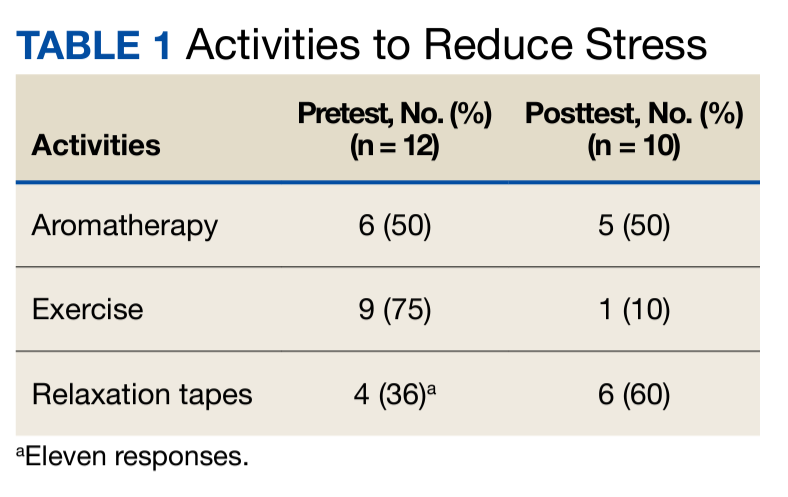
RT is an online cognitive-behavioral intervention that teaches and reinforces personal (self-help) and social (help-seeking) resourcefulness skills that have not yet been tested in nurses or other health care professionals.22,24 The training included social resourcefulness (eg, from family, friends, others, and professionals) and personal resourcefulness (eg, problem-solving, positive thinking, self-control, organization skills). Participants were encouraged to review the videos as often as they preferred during these 4 weeks.
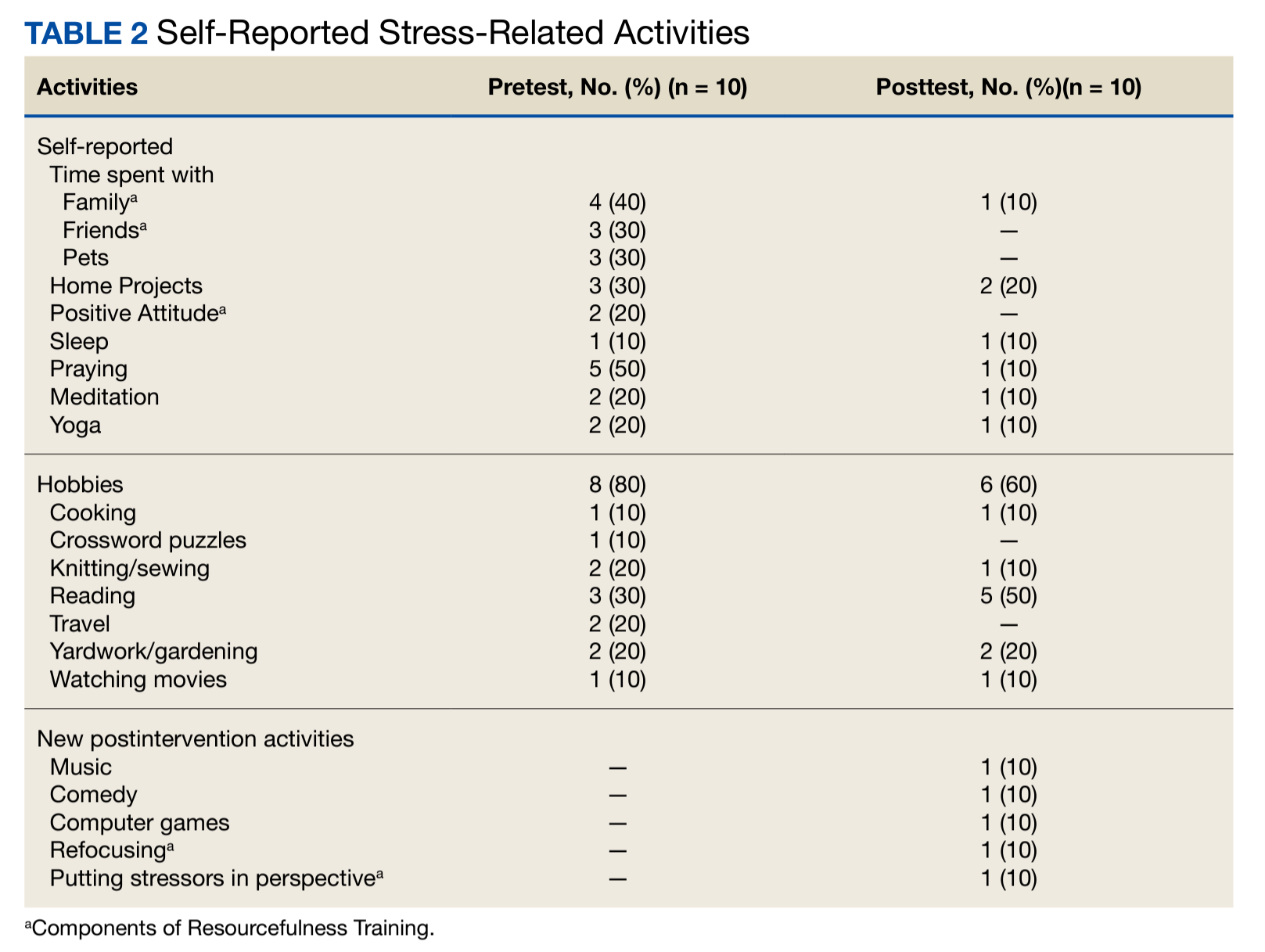
All 12 survey respondents were female and had received COVID-19 vaccinations according to the federal policy at the time of data collection. The number of patients cared for with COVID-19 infections varied widely (range, 1-1000). The baseline burnout score ranged from 1 (no burnout) to 3 (1 symptom of burnout, such as physical and emotional exhaustion), with a mean score of 2.2. In the follow-up survey, the mean score was 2.0. At baseline, participants reported a variety of activities to manage stress and burnout, including times with friends and family, engaging in hobbies, and prayer. Postintervention, some participants mentioned using skills learned from RT, including reframing the situation positively by refocusing and putting stressors in perspective (Table 1).
DISCUSSION
Recent American Nurses Association efforts to develop organizational and professional goals include the importance of nurses to recognize and manage stress to prevent burnout.25 The American Nurses Association Code of Ethics notes that nurses have the same duties to care for themselves as they do for others.25 Nurses have demonstrated the ability to adapt and remain resilient during stressful times. VA nurses are a resourceful group. Many used resourcefulness skills to manage stress and burnout even before the pandemic. For example, nurses identified using family/friends for support and validation, as well as prayer and meditation. Some of the new activities may have been influenced/inspired by RT, such as organizing schedules for problem-solving and distraction.
Relying on family and peers emerged as an essential resourcefulness skill. Support from peers—battle buddies—has been recognized as a key strategy among combat soldiers. A battle buddy is paired with a fellow soldier for support to keep each other informed about key instructions and information. This promotes cooperative problem-solving. Outcomes associated with battle buddies include increased morale and confidence, and decreased stress.25 Over time, it is hoped that these coaching/mentoring relationships will result in enhanced leadership skills. Battle buddy strategies are currently being adapted into health care environments.12,26 Such programs need to be further evaluated and information disseminated.
Findings from this pilot program support the use of interventions such as RT to decrease burnout among nurses. This study suggests that RT should be tested in a larger more representative sample to determine efficacy.
Limitations
This pilot study was limited by its small sample size, single facility, and female-only participants; the findings are not generalizable. Nurses were recruited from VA nursing committees and may not be representative of nurses in the general population. In addition, the RT intervention may require a longer time commitment to adequately determine efficacy. Another limitation was that personal or family exposure to COVID-19 was not measured, but may be a confounding variable. An additional limitation may have been the time interval. A baseline survey was completed prior to watching the teaching video. Daily logs were to be completed for 28 days. A post survey followed at 6 weeks. It is possible that there was insufficient time for the nurses to have the opportunity to use their resourcefulness skills within the short time frame of the study. While it supports the need for further studies, findings should be interpreted cautiously and not generalized. It may be premature based on these findings to conclude that the intervention will be effective for other populations. Further studies are needed to assess nurses’ preferences for healthy coping mechanisms, including RT.
Conclusions
As the nursing shortage continues, efforts to support diverse, innovative coping strategies remain a priority postpandemic. Nurses must be vigilant in appraising and managing their ability to cope and adapt to individual stress, while also being aware of the stress their colleagues are experiencing. Educational institutions, professional organizations, and health care facilities must strive to educate and support nurses to identify not only stress, but healthy coping mechanisms.
Acknowledgments
This work was supported by the US Department of Veterans Affairs Central Office rapid response COVID-19 funding initiative, the Veteran Affairs Northeast Ohio Health Care System, and Geriatric Research, Education, and Clinical Center (GRECC). The Resourcefulness Scale, Resourcefulness Skills Scale, and the Resourcefulness Training intervention are copyrighted and were used with permission of the copyright holder, Jaclene A. Zauszniewski, PhD, RN-BC.
1. Walker A. Nursing ranked as the most trusted profession for 22nd year in a row. January 23, 2024. Accessed January 31, 2024. https://nurse.org/articles/nursing-ranked-most-honest-profession
2. Mental health and wellness survey 1. American Nurses Foundation. August 2020. Accessed January 31, 2024. https://www.nursingworld.org/practice-policy/work-environment/health-safety/disaster-preparedness/coronavirus/what-you-need-to-know/mental-health-and-wellbeing-survey/
3. Healthy nurse, healthy nation. American Nurses Association. May 1, 2017. Accessed January 31, 2024. https://www.healthynursehealthynation.org/
4. Rushton CH, Batcheller J, Schroeder K, Donohue P. Burnout and resilience among nurses practicing in high-intensity settings. Am J Crit Care. 2015;24(5):412-420. doi:10.4037/ajcc2015291
5. Selye HA. History and general outline of the stress concept. Stress in Health and Disease. Butterworths; 1976:3-34.
6. Levy BS, Wegman DH, Baron SL, Sokas RK. Recognizing and preventing occupational and environmental disease and injury. Occupational and Environmental Health: Recognizing and Preventing Disease and Injury. 6th ed. Oxford University Press; 2011:59-77.
7. Menzies IEP. Nurses under stress. Int Nurs Rev. 1960;7:9-16.
8. Jennings BM. Turbulence. In: Hughes RG, ed. Advances in Patient Safety and Quality: An Evidence-Based Handbook for Nurses. 3rd ed. AHRQ Publication; 2007;2;193-202.
9. Aiken LH, Clarke SP, Sloane DM, Sochalski J, Silber JH. Hospital nurse staffing and patient mortality, nurse burnout, and job dissatisfaction. JAMA. 2002;288(16):1987-1993. doi:10.1001/jama.288.16.1987
10. Magtibay DL, Chesak SS, Coughlin K, Sood A. Decreasing stress and burnout in nurses: efficacy of blended learning with stress management and resilience training program. J Nurs Adm. 2017;47(7-8):391-395. doi:10.1097/NNA.0000000000000501
11. Halbesleben JR, Wakefield BJ, Wakefield DS, Cooper LB. Nurse burnout and patient safety outcomes: nurse safety perception versus reporting behavior. West J Nurs Res. 2008;30(5):560-577. doi:10.1177/0193945907311322
12. Sherman RO. Creating a Battle Buddy program. September 2, 2021. Accessed September 27, 2022. https://www.emergingrnleader.com/creating-a-battle-buddy-program
13. Godfrey KM, Scott SD. At the heart of the pandemic: nursing peer support. Nurse Leader. 2021:19(2),188-193. doi:10.1016/j.mnl.2020.09.006
14. Wakefield M, Williams DR, Le Menestrel S, and Flaubert JL, Editors; Committee on the future of nursing 2020 2030; National Academy of Medicine; National Academies of Sciences, Engineering, and Medicine Institute of Medicine 2008. Retooling for an Aging America: Building the Health Care Workforce. Washington, DC: The National Academies Press. doi:10.17226/12089
15. Taylor RA. Contemporary issues: resilience training alone is an incomplete intervention. Nurs Educ Today. 2019;78:10-13. doi:10.1016/j.nedt.2019.03.014
16. Hofmann SG, Gómez AF. Mindfulness-based interventions for anxiety and depression. Psychiatr Clin North Am. 2017;40(4):739-749. doi:10.1016/j.psc.2017.08.008
17. Rutter M. Resilience in the face of adversity. Protective factors and resistance to psychiatric disorder. Br J Psychiatry. 1985;147:598-611. doi:10.1192/bjp.147.6.598
18. Zauszniewski JA, Bekhet AK, Suresky MJ. Indicators of resilience in family members of persons with serious mental Illness. Psychiatr Clin North Am. 2015;38(1):131-146. doi:10.1016/j.psc.2014.11.009
19. Celinski MJ. Framing resilience as transcendence and resourcefulness as transformation. In: Celinski MJ, Gow KM, eds. Continuity Versus Creative Response to Challenge: The Primacy of Resilience and Resourcefulness in Life and Therapy. Nova Science Pub Inc; 2011:11-30.
20. Zauszniewski JA, Lai CY, Tithiphontumrong S. Development and testing of the Resourcefulness Scale for Older Adults. J Nurs Meas. 2006:14(1):57-68. doi:10.1891.jnum.14.1.57
21. Zauszniewski JA, Bekhet AK. Measuring use of resourcefulness skills: psychometric testing of a new scale. ISRN Nurs. 2011;2011:787363. doi:10.5402/2011/787363
22. Zauszniewski JA, Lekhak N, Burant CJ, Variath M, Morris DL. preliminary evidence for effectiveness of resourcefulness training for women dementia caregivers. J Fam Med. 2016:3(5):1069.
23. Dolan ED, Mohr D, Lempa M, et al. Using a single item to measure burnout in primary care staff: a psychometric evaluation. J Gen Intern Med. 2015;30(5):582-587. doi:10.1007/s11606-014-3112-6
24. Zauszniewski JA Resourcefulness. In: Fitzpatrick JJ, ed. Encyclopedia of Nursing Research. 4th ed. 2018:632-634.
25. Combating Stress. American Nurses Association. Accessed November 28, 2022. https://www.nursingworld.org/practice-policy/work-environment/health-safety/combating-stress/
26. Albott CS, Wozniak JR, McGlinch BP, Wall MH, Gold BS, Vinogradov S. Battle Buddies: Rapid deployment of a psychological resilience intervention for health care workers during the COVID-19 pandemic. Anesth Analg. 2020;131(1):43-54. doi:10.1213/ANE.0000000000004912
Nurses are recognized among the most trusted professions in the United States.1 Since the time of Florence Nightingale, nurses have been challenged to provide care to patients and soldiers with complex needs, including acute and chronic physical illness, as well as mental health issues. Nurses have traditionally met those challenges with perseverance and creativity but have also experienced stress and burnout.
A shortage of nurses has been linked to many interrelated factors including the retirement of bedside caregivers and educators, diverse care settings, expanding roles for nurses, and nurse burnout.2-4 Therefore, there is a critical need to better understand of how nurses can be supported while they care for patients, cope with stress, and maintain positive personal and professional outcomes. The objective of this pilot project was to assess US Department of Veterans Affairs (VA) nurses’ levels of burnout and test an intervention to enhance resourcefulness skills during the COVID-19 pandemic.
Background
Stress has many definitions. Hans Selye described it as a biological response of the body to any demand.5,6 Occupational stress is a process that occurs in which work environment stressors result in the development of psychological, behavioral, or physiological effects that can contribute to health.6 Occupational stress has been observed as prevalent among nurses.6 In 1960, Menzies identified sources of stress among nurses that include complex decision-making within a dynamic environment.7 Since the mid-1980s, nurses’ stress at work has increased because of legal, accreditation, ethical issues, fiscal pressures, staffing shortages, and the increasing integration of technology associated with clinical care.8
Sustained stress can lead to emotional exhaustion or burnout, which has been associated with nursing turnover, lower patient satisfaction, and patient safety risk.2,9 An American Nurses Foundation survey reported that 51% of US nurses feel exhausted, 43% overwhelmed, and 36% anxious; 28% express willingness to leave the profession.2 Burnout has been described as a response to physical or emotional stress leading to exhaustion, self-doubt, cynicism, and ineffectiveness.10 Employees with burnout are more likely to leave their jobs, take sick leave, and suffer from depression and relationship problems, and it affects nearly half of all US nurses, especially among critical care, pediatric, and oncology specialities.10,11 It has been well documented that unmitigated stress can lead to burnout and contribute to nurses leaving bedside care and the health care profession.2,3 Several studies on nursing stress and burnout have focused on its prevalence and negative outcomes.4,7,9 However, few studies have addressed building resiliency and resourcefulness for nurses.10,12,13
A 2021 National Academy of Medicine report advocated a multilevel approach to managing burnout and building resiliency among nurses.14 Taylor further identified specific interventions, ranging from primary prevention to treatment.15 Primary prevention could include educating nurses on self-awareness, coping strategies, and communication skills. Screening for burnout and providing resources for support would be a secondary level of intervention. For nurses who experienced severe burnout symptoms and left the workplace, strategies are sorely needed to provide healing and a return-to-work plan.15 This may include adjusting nurse schedules and nursing roles (such as admitting/discharge nurse or resource nurse).
RESILIENCY AND RESOURCEFULNESS
Rushton and colleagues describe resiliency as the “ability to face adverse situations, remain focused, and continue to be optimistic for the future.”4 For nurses in complex health care systems, resiliency is associated with reduced turnover and symptoms of burnout and improved mental health. Humans are thought to have an innate resiliency potential that evolves over time and fluctuates depending on the context (eg, societal conditions, moral/ethical values, commitments).4 It is believed that resiliency can contribute to the development of new neuropathways that can be used to manage and cope with stress, prevent burnout, and improve quality of life. However, it appears these adaptations are individualized and contingent on situations, available resources, and changing priorities.16 Consequently, resiliency may be an essential tool for nurses to combat burnout in today’s complex health care systems.17
Although resilience and resourcefulness are conceptually related, each has distinctive features.18 Celinski frames resilience as transcendence and resourcefulness as transformation.19 Thus, while resilience suggests transcendence in terms of rising above, going beyond, exceeding, or excelling; resourcefulness reflects transformation, such as making changes in thoughts, feelings, behaviors, actions, or reactions. Resourcefulness has been conceptualized as an indicator of resilience.18
Resourcefulness comprises 2 dimensions, including the use of self-help strategies (personal resourcefulness) and seeking help from others (social resourcefulness), to self-regulate one’s thoughts, feelings, and behaviors to cope with high levels of stress, anxiety, or depression.18,20,21 Personal resourcefulness skills include the use of cognitive reframing, positive thinking, problem-solving, priority-setting, and planning ahead. Social resourcefulness involves actively seeking help from others. Formal sources of help include, but are not limited to, nursing and medical care practitioners and community organizations such as hospitals and clinics. Informal sources of help include family members, friends, peers, and coworkers.
During the COVID-19 pandemic, nurses were especially challenged to provide support for each other because of limited nursing staff and treatment options, increased complex patient assignments, shortages of supplies, and reduced support services. Many nurses, however, were able to find innovative, peer-supported strategies for coping.13 Nurses’ use of resourcefulness skills is believed to be indicative of their resilience. This pilot project aimed to identify and evaluate some of these strategies and resourcefulness skills.
INTERVENTION
This pilot study among VA Northeast Ohio Health Care System (VANEOHS) nurses was designed to assess nursing burnout and resourcefulness during the pandemic. Those who agreed to participate completed a baseline survey on burnout and resourcefulness. Participants agreed to review a training video on resourcefulness skills (eg, relying on and exchanging ideas with others, and reframing and using ‘positive self-talk’). They were encouraged to document their experience with familiar and new resourcefulness skills. Weekly reminders (eg, emails and phone messages) reminded and coached participants in their journey.
The study identified and implemented an existing Resourcefulness Training (RT) intervention, which was developed for informal family caregivers and found to be effective.22 We measured burnout and resourcefulness preintervention and postintervention.23 This survey and educational intervention were reviewed by the VANEOHS institutional review board and ruled exempt. The survey also gathered information on nurses' contact with individuals infected with COVID-19.
Despite the many staffing and resource challenges during the COVID-19 pandemic, a convenience sample of 12 nurses was recruited from nursing committees that continued to have scheduled meetings. These meetings allowed time to answer questions and provide information about the study. The majority of nurses queried declined to participate, citing no time, interest, or burnout. Participants completed a baseline survey, reviewed a 30-minute RT video, and tracked their experience for 28 days. Participants completed postintervention surveys 6 weeks after the video. Details of the survey and measures can be found in previous studies.20,21
RT is an online cognitive-behavioral intervention that teaches and reinforces personal (self-help) and social (help-seeking) resourcefulness skills that have not yet been tested in nurses or other health care professionals.22,24 The training included social resourcefulness (eg, from family, friends, others, and professionals) and personal resourcefulness (eg, problem-solving, positive thinking, self-control, organization skills). Participants were encouraged to review the videos as often as they preferred during these 4 weeks.
All 12 survey respondents were female and had received COVID-19 vaccinations according to the federal policy at the time of data collection. The number of patients cared for with COVID-19 infections varied widely (range, 1-1000). The baseline burnout score ranged from 1 (no burnout) to 3 (1 symptom of burnout, such as physical and emotional exhaustion), with a mean score of 2.2. In the follow-up survey, the mean score was 2.0. At baseline, participants reported a variety of activities to manage stress and burnout, including times with friends and family, engaging in hobbies, and prayer. Postintervention, some participants mentioned using skills learned from RT, including reframing the situation positively by refocusing and putting stressors in perspective (Table 1).
DISCUSSION
Recent American Nurses Association efforts to develop organizational and professional goals include the importance of nurses to recognize and manage stress to prevent burnout.25 The American Nurses Association Code of Ethics notes that nurses have the same duties to care for themselves as they do for others.25 Nurses have demonstrated the ability to adapt and remain resilient during stressful times. VA nurses are a resourceful group. Many used resourcefulness skills to manage stress and burnout even before the pandemic. For example, nurses identified using family/friends for support and validation, as well as prayer and meditation. Some of the new activities may have been influenced/inspired by RT, such as organizing schedules for problem-solving and distraction.
Relying on family and peers emerged as an essential resourcefulness skill. Support from peers—battle buddies—has been recognized as a key strategy among combat soldiers. A battle buddy is paired with a fellow soldier for support to keep each other informed about key instructions and information. This promotes cooperative problem-solving. Outcomes associated with battle buddies include increased morale and confidence, and decreased stress.25 Over time, it is hoped that these coaching/mentoring relationships will result in enhanced leadership skills. Battle buddy strategies are currently being adapted into health care environments.12,26 Such programs need to be further evaluated and information disseminated.
Findings from this pilot program support the use of interventions such as RT to decrease burnout among nurses. This study suggests that RT should be tested in a larger more representative sample to determine efficacy.
Limitations
This pilot study was limited by its small sample size, single facility, and female-only participants; the findings are not generalizable. Nurses were recruited from VA nursing committees and may not be representative of nurses in the general population. In addition, the RT intervention may require a longer time commitment to adequately determine efficacy. Another limitation was that personal or family exposure to COVID-19 was not measured, but may be a confounding variable. An additional limitation may have been the time interval. A baseline survey was completed prior to watching the teaching video. Daily logs were to be completed for 28 days. A post survey followed at 6 weeks. It is possible that there was insufficient time for the nurses to have the opportunity to use their resourcefulness skills within the short time frame of the study. While it supports the need for further studies, findings should be interpreted cautiously and not generalized. It may be premature based on these findings to conclude that the intervention will be effective for other populations. Further studies are needed to assess nurses’ preferences for healthy coping mechanisms, including RT.
Conclusions
As the nursing shortage continues, efforts to support diverse, innovative coping strategies remain a priority postpandemic. Nurses must be vigilant in appraising and managing their ability to cope and adapt to individual stress, while also being aware of the stress their colleagues are experiencing. Educational institutions, professional organizations, and health care facilities must strive to educate and support nurses to identify not only stress, but healthy coping mechanisms.
Acknowledgments
This work was supported by the US Department of Veterans Affairs Central Office rapid response COVID-19 funding initiative, the Veteran Affairs Northeast Ohio Health Care System, and Geriatric Research, Education, and Clinical Center (GRECC). The Resourcefulness Scale, Resourcefulness Skills Scale, and the Resourcefulness Training intervention are copyrighted and were used with permission of the copyright holder, Jaclene A. Zauszniewski, PhD, RN-BC.
Nurses are recognized among the most trusted professions in the United States.1 Since the time of Florence Nightingale, nurses have been challenged to provide care to patients and soldiers with complex needs, including acute and chronic physical illness, as well as mental health issues. Nurses have traditionally met those challenges with perseverance and creativity but have also experienced stress and burnout.
A shortage of nurses has been linked to many interrelated factors including the retirement of bedside caregivers and educators, diverse care settings, expanding roles for nurses, and nurse burnout.2-4 Therefore, there is a critical need to better understand of how nurses can be supported while they care for patients, cope with stress, and maintain positive personal and professional outcomes. The objective of this pilot project was to assess US Department of Veterans Affairs (VA) nurses’ levels of burnout and test an intervention to enhance resourcefulness skills during the COVID-19 pandemic.
Background
Stress has many definitions. Hans Selye described it as a biological response of the body to any demand.5,6 Occupational stress is a process that occurs in which work environment stressors result in the development of psychological, behavioral, or physiological effects that can contribute to health.6 Occupational stress has been observed as prevalent among nurses.6 In 1960, Menzies identified sources of stress among nurses that include complex decision-making within a dynamic environment.7 Since the mid-1980s, nurses’ stress at work has increased because of legal, accreditation, ethical issues, fiscal pressures, staffing shortages, and the increasing integration of technology associated with clinical care.8
Sustained stress can lead to emotional exhaustion or burnout, which has been associated with nursing turnover, lower patient satisfaction, and patient safety risk.2,9 An American Nurses Foundation survey reported that 51% of US nurses feel exhausted, 43% overwhelmed, and 36% anxious; 28% express willingness to leave the profession.2 Burnout has been described as a response to physical or emotional stress leading to exhaustion, self-doubt, cynicism, and ineffectiveness.10 Employees with burnout are more likely to leave their jobs, take sick leave, and suffer from depression and relationship problems, and it affects nearly half of all US nurses, especially among critical care, pediatric, and oncology specialities.10,11 It has been well documented that unmitigated stress can lead to burnout and contribute to nurses leaving bedside care and the health care profession.2,3 Several studies on nursing stress and burnout have focused on its prevalence and negative outcomes.4,7,9 However, few studies have addressed building resiliency and resourcefulness for nurses.10,12,13
A 2021 National Academy of Medicine report advocated a multilevel approach to managing burnout and building resiliency among nurses.14 Taylor further identified specific interventions, ranging from primary prevention to treatment.15 Primary prevention could include educating nurses on self-awareness, coping strategies, and communication skills. Screening for burnout and providing resources for support would be a secondary level of intervention. For nurses who experienced severe burnout symptoms and left the workplace, strategies are sorely needed to provide healing and a return-to-work plan.15 This may include adjusting nurse schedules and nursing roles (such as admitting/discharge nurse or resource nurse).
RESILIENCY AND RESOURCEFULNESS
Rushton and colleagues describe resiliency as the “ability to face adverse situations, remain focused, and continue to be optimistic for the future.”4 For nurses in complex health care systems, resiliency is associated with reduced turnover and symptoms of burnout and improved mental health. Humans are thought to have an innate resiliency potential that evolves over time and fluctuates depending on the context (eg, societal conditions, moral/ethical values, commitments).4 It is believed that resiliency can contribute to the development of new neuropathways that can be used to manage and cope with stress, prevent burnout, and improve quality of life. However, it appears these adaptations are individualized and contingent on situations, available resources, and changing priorities.16 Consequently, resiliency may be an essential tool for nurses to combat burnout in today’s complex health care systems.17
Although resilience and resourcefulness are conceptually related, each has distinctive features.18 Celinski frames resilience as transcendence and resourcefulness as transformation.19 Thus, while resilience suggests transcendence in terms of rising above, going beyond, exceeding, or excelling; resourcefulness reflects transformation, such as making changes in thoughts, feelings, behaviors, actions, or reactions. Resourcefulness has been conceptualized as an indicator of resilience.18
Resourcefulness comprises 2 dimensions, including the use of self-help strategies (personal resourcefulness) and seeking help from others (social resourcefulness), to self-regulate one’s thoughts, feelings, and behaviors to cope with high levels of stress, anxiety, or depression.18,20,21 Personal resourcefulness skills include the use of cognitive reframing, positive thinking, problem-solving, priority-setting, and planning ahead. Social resourcefulness involves actively seeking help from others. Formal sources of help include, but are not limited to, nursing and medical care practitioners and community organizations such as hospitals and clinics. Informal sources of help include family members, friends, peers, and coworkers.
During the COVID-19 pandemic, nurses were especially challenged to provide support for each other because of limited nursing staff and treatment options, increased complex patient assignments, shortages of supplies, and reduced support services. Many nurses, however, were able to find innovative, peer-supported strategies for coping.13 Nurses’ use of resourcefulness skills is believed to be indicative of their resilience. This pilot project aimed to identify and evaluate some of these strategies and resourcefulness skills.
INTERVENTION
This pilot study among VA Northeast Ohio Health Care System (VANEOHS) nurses was designed to assess nursing burnout and resourcefulness during the pandemic. Those who agreed to participate completed a baseline survey on burnout and resourcefulness. Participants agreed to review a training video on resourcefulness skills (eg, relying on and exchanging ideas with others, and reframing and using ‘positive self-talk’). They were encouraged to document their experience with familiar and new resourcefulness skills. Weekly reminders (eg, emails and phone messages) reminded and coached participants in their journey.
The study identified and implemented an existing Resourcefulness Training (RT) intervention, which was developed for informal family caregivers and found to be effective.22 We measured burnout and resourcefulness preintervention and postintervention.23 This survey and educational intervention were reviewed by the VANEOHS institutional review board and ruled exempt. The survey also gathered information on nurses' contact with individuals infected with COVID-19.
Despite the many staffing and resource challenges during the COVID-19 pandemic, a convenience sample of 12 nurses was recruited from nursing committees that continued to have scheduled meetings. These meetings allowed time to answer questions and provide information about the study. The majority of nurses queried declined to participate, citing no time, interest, or burnout. Participants completed a baseline survey, reviewed a 30-minute RT video, and tracked their experience for 28 days. Participants completed postintervention surveys 6 weeks after the video. Details of the survey and measures can be found in previous studies.20,21
RT is an online cognitive-behavioral intervention that teaches and reinforces personal (self-help) and social (help-seeking) resourcefulness skills that have not yet been tested in nurses or other health care professionals.22,24 The training included social resourcefulness (eg, from family, friends, others, and professionals) and personal resourcefulness (eg, problem-solving, positive thinking, self-control, organization skills). Participants were encouraged to review the videos as often as they preferred during these 4 weeks.
All 12 survey respondents were female and had received COVID-19 vaccinations according to the federal policy at the time of data collection. The number of patients cared for with COVID-19 infections varied widely (range, 1-1000). The baseline burnout score ranged from 1 (no burnout) to 3 (1 symptom of burnout, such as physical and emotional exhaustion), with a mean score of 2.2. In the follow-up survey, the mean score was 2.0. At baseline, participants reported a variety of activities to manage stress and burnout, including times with friends and family, engaging in hobbies, and prayer. Postintervention, some participants mentioned using skills learned from RT, including reframing the situation positively by refocusing and putting stressors in perspective (Table 1).
DISCUSSION
Recent American Nurses Association efforts to develop organizational and professional goals include the importance of nurses to recognize and manage stress to prevent burnout.25 The American Nurses Association Code of Ethics notes that nurses have the same duties to care for themselves as they do for others.25 Nurses have demonstrated the ability to adapt and remain resilient during stressful times. VA nurses are a resourceful group. Many used resourcefulness skills to manage stress and burnout even before the pandemic. For example, nurses identified using family/friends for support and validation, as well as prayer and meditation. Some of the new activities may have been influenced/inspired by RT, such as organizing schedules for problem-solving and distraction.
Relying on family and peers emerged as an essential resourcefulness skill. Support from peers—battle buddies—has been recognized as a key strategy among combat soldiers. A battle buddy is paired with a fellow soldier for support to keep each other informed about key instructions and information. This promotes cooperative problem-solving. Outcomes associated with battle buddies include increased morale and confidence, and decreased stress.25 Over time, it is hoped that these coaching/mentoring relationships will result in enhanced leadership skills. Battle buddy strategies are currently being adapted into health care environments.12,26 Such programs need to be further evaluated and information disseminated.
Findings from this pilot program support the use of interventions such as RT to decrease burnout among nurses. This study suggests that RT should be tested in a larger more representative sample to determine efficacy.
Limitations
This pilot study was limited by its small sample size, single facility, and female-only participants; the findings are not generalizable. Nurses were recruited from VA nursing committees and may not be representative of nurses in the general population. In addition, the RT intervention may require a longer time commitment to adequately determine efficacy. Another limitation was that personal or family exposure to COVID-19 was not measured, but may be a confounding variable. An additional limitation may have been the time interval. A baseline survey was completed prior to watching the teaching video. Daily logs were to be completed for 28 days. A post survey followed at 6 weeks. It is possible that there was insufficient time for the nurses to have the opportunity to use their resourcefulness skills within the short time frame of the study. While it supports the need for further studies, findings should be interpreted cautiously and not generalized. It may be premature based on these findings to conclude that the intervention will be effective for other populations. Further studies are needed to assess nurses’ preferences for healthy coping mechanisms, including RT.
Conclusions
As the nursing shortage continues, efforts to support diverse, innovative coping strategies remain a priority postpandemic. Nurses must be vigilant in appraising and managing their ability to cope and adapt to individual stress, while also being aware of the stress their colleagues are experiencing. Educational institutions, professional organizations, and health care facilities must strive to educate and support nurses to identify not only stress, but healthy coping mechanisms.
Acknowledgments
This work was supported by the US Department of Veterans Affairs Central Office rapid response COVID-19 funding initiative, the Veteran Affairs Northeast Ohio Health Care System, and Geriatric Research, Education, and Clinical Center (GRECC). The Resourcefulness Scale, Resourcefulness Skills Scale, and the Resourcefulness Training intervention are copyrighted and were used with permission of the copyright holder, Jaclene A. Zauszniewski, PhD, RN-BC.
1. Walker A. Nursing ranked as the most trusted profession for 22nd year in a row. January 23, 2024. Accessed January 31, 2024. https://nurse.org/articles/nursing-ranked-most-honest-profession
2. Mental health and wellness survey 1. American Nurses Foundation. August 2020. Accessed January 31, 2024. https://www.nursingworld.org/practice-policy/work-environment/health-safety/disaster-preparedness/coronavirus/what-you-need-to-know/mental-health-and-wellbeing-survey/
3. Healthy nurse, healthy nation. American Nurses Association. May 1, 2017. Accessed January 31, 2024. https://www.healthynursehealthynation.org/
4. Rushton CH, Batcheller J, Schroeder K, Donohue P. Burnout and resilience among nurses practicing in high-intensity settings. Am J Crit Care. 2015;24(5):412-420. doi:10.4037/ajcc2015291
5. Selye HA. History and general outline of the stress concept. Stress in Health and Disease. Butterworths; 1976:3-34.
6. Levy BS, Wegman DH, Baron SL, Sokas RK. Recognizing and preventing occupational and environmental disease and injury. Occupational and Environmental Health: Recognizing and Preventing Disease and Injury. 6th ed. Oxford University Press; 2011:59-77.
7. Menzies IEP. Nurses under stress. Int Nurs Rev. 1960;7:9-16.
8. Jennings BM. Turbulence. In: Hughes RG, ed. Advances in Patient Safety and Quality: An Evidence-Based Handbook for Nurses. 3rd ed. AHRQ Publication; 2007;2;193-202.
9. Aiken LH, Clarke SP, Sloane DM, Sochalski J, Silber JH. Hospital nurse staffing and patient mortality, nurse burnout, and job dissatisfaction. JAMA. 2002;288(16):1987-1993. doi:10.1001/jama.288.16.1987
10. Magtibay DL, Chesak SS, Coughlin K, Sood A. Decreasing stress and burnout in nurses: efficacy of blended learning with stress management and resilience training program. J Nurs Adm. 2017;47(7-8):391-395. doi:10.1097/NNA.0000000000000501
11. Halbesleben JR, Wakefield BJ, Wakefield DS, Cooper LB. Nurse burnout and patient safety outcomes: nurse safety perception versus reporting behavior. West J Nurs Res. 2008;30(5):560-577. doi:10.1177/0193945907311322
12. Sherman RO. Creating a Battle Buddy program. September 2, 2021. Accessed September 27, 2022. https://www.emergingrnleader.com/creating-a-battle-buddy-program
13. Godfrey KM, Scott SD. At the heart of the pandemic: nursing peer support. Nurse Leader. 2021:19(2),188-193. doi:10.1016/j.mnl.2020.09.006
14. Wakefield M, Williams DR, Le Menestrel S, and Flaubert JL, Editors; Committee on the future of nursing 2020 2030; National Academy of Medicine; National Academies of Sciences, Engineering, and Medicine Institute of Medicine 2008. Retooling for an Aging America: Building the Health Care Workforce. Washington, DC: The National Academies Press. doi:10.17226/12089
15. Taylor RA. Contemporary issues: resilience training alone is an incomplete intervention. Nurs Educ Today. 2019;78:10-13. doi:10.1016/j.nedt.2019.03.014
16. Hofmann SG, Gómez AF. Mindfulness-based interventions for anxiety and depression. Psychiatr Clin North Am. 2017;40(4):739-749. doi:10.1016/j.psc.2017.08.008
17. Rutter M. Resilience in the face of adversity. Protective factors and resistance to psychiatric disorder. Br J Psychiatry. 1985;147:598-611. doi:10.1192/bjp.147.6.598
18. Zauszniewski JA, Bekhet AK, Suresky MJ. Indicators of resilience in family members of persons with serious mental Illness. Psychiatr Clin North Am. 2015;38(1):131-146. doi:10.1016/j.psc.2014.11.009
19. Celinski MJ. Framing resilience as transcendence and resourcefulness as transformation. In: Celinski MJ, Gow KM, eds. Continuity Versus Creative Response to Challenge: The Primacy of Resilience and Resourcefulness in Life and Therapy. Nova Science Pub Inc; 2011:11-30.
20. Zauszniewski JA, Lai CY, Tithiphontumrong S. Development and testing of the Resourcefulness Scale for Older Adults. J Nurs Meas. 2006:14(1):57-68. doi:10.1891.jnum.14.1.57
21. Zauszniewski JA, Bekhet AK. Measuring use of resourcefulness skills: psychometric testing of a new scale. ISRN Nurs. 2011;2011:787363. doi:10.5402/2011/787363
22. Zauszniewski JA, Lekhak N, Burant CJ, Variath M, Morris DL. preliminary evidence for effectiveness of resourcefulness training for women dementia caregivers. J Fam Med. 2016:3(5):1069.
23. Dolan ED, Mohr D, Lempa M, et al. Using a single item to measure burnout in primary care staff: a psychometric evaluation. J Gen Intern Med. 2015;30(5):582-587. doi:10.1007/s11606-014-3112-6
24. Zauszniewski JA Resourcefulness. In: Fitzpatrick JJ, ed. Encyclopedia of Nursing Research. 4th ed. 2018:632-634.
25. Combating Stress. American Nurses Association. Accessed November 28, 2022. https://www.nursingworld.org/practice-policy/work-environment/health-safety/combating-stress/
26. Albott CS, Wozniak JR, McGlinch BP, Wall MH, Gold BS, Vinogradov S. Battle Buddies: Rapid deployment of a psychological resilience intervention for health care workers during the COVID-19 pandemic. Anesth Analg. 2020;131(1):43-54. doi:10.1213/ANE.0000000000004912
1. Walker A. Nursing ranked as the most trusted profession for 22nd year in a row. January 23, 2024. Accessed January 31, 2024. https://nurse.org/articles/nursing-ranked-most-honest-profession
2. Mental health and wellness survey 1. American Nurses Foundation. August 2020. Accessed January 31, 2024. https://www.nursingworld.org/practice-policy/work-environment/health-safety/disaster-preparedness/coronavirus/what-you-need-to-know/mental-health-and-wellbeing-survey/
3. Healthy nurse, healthy nation. American Nurses Association. May 1, 2017. Accessed January 31, 2024. https://www.healthynursehealthynation.org/
4. Rushton CH, Batcheller J, Schroeder K, Donohue P. Burnout and resilience among nurses practicing in high-intensity settings. Am J Crit Care. 2015;24(5):412-420. doi:10.4037/ajcc2015291
5. Selye HA. History and general outline of the stress concept. Stress in Health and Disease. Butterworths; 1976:3-34.
6. Levy BS, Wegman DH, Baron SL, Sokas RK. Recognizing and preventing occupational and environmental disease and injury. Occupational and Environmental Health: Recognizing and Preventing Disease and Injury. 6th ed. Oxford University Press; 2011:59-77.
7. Menzies IEP. Nurses under stress. Int Nurs Rev. 1960;7:9-16.
8. Jennings BM. Turbulence. In: Hughes RG, ed. Advances in Patient Safety and Quality: An Evidence-Based Handbook for Nurses. 3rd ed. AHRQ Publication; 2007;2;193-202.
9. Aiken LH, Clarke SP, Sloane DM, Sochalski J, Silber JH. Hospital nurse staffing and patient mortality, nurse burnout, and job dissatisfaction. JAMA. 2002;288(16):1987-1993. doi:10.1001/jama.288.16.1987
10. Magtibay DL, Chesak SS, Coughlin K, Sood A. Decreasing stress and burnout in nurses: efficacy of blended learning with stress management and resilience training program. J Nurs Adm. 2017;47(7-8):391-395. doi:10.1097/NNA.0000000000000501
11. Halbesleben JR, Wakefield BJ, Wakefield DS, Cooper LB. Nurse burnout and patient safety outcomes: nurse safety perception versus reporting behavior. West J Nurs Res. 2008;30(5):560-577. doi:10.1177/0193945907311322
12. Sherman RO. Creating a Battle Buddy program. September 2, 2021. Accessed September 27, 2022. https://www.emergingrnleader.com/creating-a-battle-buddy-program
13. Godfrey KM, Scott SD. At the heart of the pandemic: nursing peer support. Nurse Leader. 2021:19(2),188-193. doi:10.1016/j.mnl.2020.09.006
14. Wakefield M, Williams DR, Le Menestrel S, and Flaubert JL, Editors; Committee on the future of nursing 2020 2030; National Academy of Medicine; National Academies of Sciences, Engineering, and Medicine Institute of Medicine 2008. Retooling for an Aging America: Building the Health Care Workforce. Washington, DC: The National Academies Press. doi:10.17226/12089
15. Taylor RA. Contemporary issues: resilience training alone is an incomplete intervention. Nurs Educ Today. 2019;78:10-13. doi:10.1016/j.nedt.2019.03.014
16. Hofmann SG, Gómez AF. Mindfulness-based interventions for anxiety and depression. Psychiatr Clin North Am. 2017;40(4):739-749. doi:10.1016/j.psc.2017.08.008
17. Rutter M. Resilience in the face of adversity. Protective factors and resistance to psychiatric disorder. Br J Psychiatry. 1985;147:598-611. doi:10.1192/bjp.147.6.598
18. Zauszniewski JA, Bekhet AK, Suresky MJ. Indicators of resilience in family members of persons with serious mental Illness. Psychiatr Clin North Am. 2015;38(1):131-146. doi:10.1016/j.psc.2014.11.009
19. Celinski MJ. Framing resilience as transcendence and resourcefulness as transformation. In: Celinski MJ, Gow KM, eds. Continuity Versus Creative Response to Challenge: The Primacy of Resilience and Resourcefulness in Life and Therapy. Nova Science Pub Inc; 2011:11-30.
20. Zauszniewski JA, Lai CY, Tithiphontumrong S. Development and testing of the Resourcefulness Scale for Older Adults. J Nurs Meas. 2006:14(1):57-68. doi:10.1891.jnum.14.1.57
21. Zauszniewski JA, Bekhet AK. Measuring use of resourcefulness skills: psychometric testing of a new scale. ISRN Nurs. 2011;2011:787363. doi:10.5402/2011/787363
22. Zauszniewski JA, Lekhak N, Burant CJ, Variath M, Morris DL. preliminary evidence for effectiveness of resourcefulness training for women dementia caregivers. J Fam Med. 2016:3(5):1069.
23. Dolan ED, Mohr D, Lempa M, et al. Using a single item to measure burnout in primary care staff: a psychometric evaluation. J Gen Intern Med. 2015;30(5):582-587. doi:10.1007/s11606-014-3112-6
24. Zauszniewski JA Resourcefulness. In: Fitzpatrick JJ, ed. Encyclopedia of Nursing Research. 4th ed. 2018:632-634.
25. Combating Stress. American Nurses Association. Accessed November 28, 2022. https://www.nursingworld.org/practice-policy/work-environment/health-safety/combating-stress/
26. Albott CS, Wozniak JR, McGlinch BP, Wall MH, Gold BS, Vinogradov S. Battle Buddies: Rapid deployment of a psychological resilience intervention for health care workers during the COVID-19 pandemic. Anesth Analg. 2020;131(1):43-54. doi:10.1213/ANE.0000000000004912