User login
Discharge Services
Discharge day management services (99238-99239) seem unlikely to cause confusion in the physician community; however, continued requests for documentation involving these CPT codes prove the opposite.
Here’s an example of how a billing error might be made for discharge day management services. A patient with diabetes mellitus, hypertension, and chronic kidney disease is stable for discharge. The patient is being transferred to a skilled nursing facility (SNF). Dr. Aardsma prepares the patient for hospital discharge, and Dr. Broxton admits the patient to the SNF later that day. Dr. Aardsma and Dr. Broxton are members of the same group practice, with the same specialty designation. Can both physicians report their services?
Key Elements
Consider the basic billing principles of discharge services: what, who, and when.
Hospital discharge day management codes are used to report the physician’s total duration of time spent preparing the patient for discharge. These codes include, as appropriate:
- Final examination of the patient;
- Discussion of the hospital stay, even if the time spent by the physician on that date is not continuous;
- Instructions for continuing care to all relevant caregivers; and
- Preparation of discharge records, prescriptions, and referral forms.1
Hospitalists should report one discharge code per hospitalization, but only when the service occurs after the initial date of admission: 99238, hospital discharge day management, 30 minutes or less; or 99239, hospital discharge day management, more than 30 minutes.1,2 Select one of the two codes, depending upon the cumulative discharge service time provided on the patient’s hospital unit/floor during a single calendar day. Do not count time for services performed outside of the patient’s unit or floor (i.e., calls to the receiving physician/facility made from the physician’s private office) or services performed after the patient physically leaves the hospital.
Physician documentation must refer to the discharge status, as well as other clinically relevant information. Don’t be misled into believing that the presence of a discharge summary alone satisfies documentation requirements. In addition to the discharge groundwork, hospitalists must physically see the patient on the day he or she reports discharge management. Discharge summaries are not always useful in noting the physician’s required face-to-face encounter with the patient. Simply state, “Patient seen and examined by me on discharge day.”
Alternatively, hospitalists can elect to include details of a discharge day exam. Although a final exam isn’t mandatory for billing 99238-99239, it is the best justification of a face-to-face encounter on discharge day. Documentation of the time is required when reporting 99239 (e.g., discharge time >30 minutes). Time isn’t typically included in a discharge summary, and upon post-payment payor review, a claim involving 99239 without documented time in the patient’s medical record might result in either a service reduction to the lower level of care (99238) or a request for payment refund.3 Physicians can document all necessary details in the formal summary or a progress note.
Transfers of Care
The admitting physician or group is responsible for performing discharge services unless a formal transfer of care occurs, such as the patient’s transfer from the ICU to the standard medical floor as the patient’s condition improves. Without this transfer of care, comanaging physicians should merely report subsequent hospital-care codes (99231-99233) for the final patient encounter. An example of this is surgical comanagement: If a surgeon is identified as the attending of record, they are responsible for postoperative management of the patient, including discharge services.4,5 Providers in a different group or specialty report 99231-99233 for their medically necessary care.
As with all other time-based services, only the billing provider’s time counts. Discharge-related services performed by residents, students, or ancillary staff (i.e., RNs) do not count toward the physician’s discharge service time. Report the date of the physician’s actual discharge visit even if the patient leaves the facility on a different calendar date—for example, if a patient leaves the next day due to availability of the receiving facility.
Pronouncement of Death
Physicians might not realize that they can report discharge day management codes for pronouncement of death.7 Only the hospitalist who performs the pronouncement is allowed to report this service on the date pronouncement occurred, even if the paperwork is delayed to a subsequent date. Completion of the death certificate alone is not sufficient for billing. Hospitalists must “examine” the patient, thus satisfying the “face to face” visit requirement.
Additional services (e.g., speaking with family members, speaking with healthcare providers, filling out the necessary documentation) count toward the cumulative discharge service time, if performed on the patient’s unit or floor. Document the cumulative time when reporting 99239.
Back to the Case
Typical billing and payment rules mandate the reporting of only one E/M service per specialty, per patient, per day. One of the few exceptions involves reporting a hospital discharge code (99238-99239) with initial nursing facility care (99304-99306). Either the same physician or different physicians from the same group and specialty can report the hospital discharge and the nursing facility admission on the same day. When the same physician or group discharges the patient from any other location (e.g., observation unit) on the same day, report only one service: either the observation discharge (99217) or the initial nursing facility care (99304-99306).
When the same physician or group discharges a patient from the hospital and admits the patient to a facility other than a nursing facility on the same day, report only one service: either the hospital discharge (99228-99239) or the admission care (e.g., long-term acute-care hospital: 99221-99223). TH
Carol Pohlig is a billing and coding expert with the University of Pennsylvania Medical Center, Philadelphia. She is also on the faculty of SHM’s inpatient coding course.
References
- Abraham M, Beebe M, Dalton J, Evans D, Glenn R. Current Procedural Terminology Professional Edition. Chicago: American Medical Association Press; 2010.
- Medicare Claims Processing Manual: Chapter 12, Section 30.6.9.1C. Centers for Medicare & Medicaid Services Web site. Available at: www.cms.hhs.gov/manuals/downloads/clm104c12.pdf. Accessed March 3, 2010.
- Highmark Medicare Services Provider Bulletins: Hospital Discharge Day Management Codes 99238 and 99239. Highmark Medicare Services Web site. Available at: www.highmarkmedicareservices.com/bulletins/partb/news02212008a.html. Accessed March 4, 2010.
- Medicare Claims Processing Manual: Chapter 12, Section 40.1A. Centers for Medicare & Medicaid Services Web site. Available at: www.cms.hhs.gov/manuals/downloads/clm104c12.pdf. Accessed March 5, 2010.
- Medicare Claims Processing Manual: Chapter 12, Section 40.3B. Centers for Medicare & Medicaid Services Web site, Available at: www.cms.hhs.gov/manuals/downloads/clm104c12.pdf. Accessed March 5, 2010.
- Medicare Claims Processing Manual: Chapter 12, Section 30.6.9.2E. Centers for Medicare & Medicaid Services Web site. Available at: www.cms.hhs.gov/manuals/downloads/clm104c12.pdf. Accessed March 5, 2010.
- Medicare Claims Processing Manual: Chapter 12, Section 30.6.9.1d. Centers for Medicare & Medicaid Services Web site. Available at: www.cms.hhs.gov/manuals/downloads/clm104c12.pdf. Accessed March 5, 2010.
- Reporting inpatient hospital evaluation and management (E/M) services that could be described by current procedural terminology (CPT) consultation codes. Cigna Government Services Web site. Available at: www.cignagovernmentservices.com/partb/pubs/news/2010/0210/cope11694.html. Accessed March 5, 2010.
Discharge day management services (99238-99239) seem unlikely to cause confusion in the physician community; however, continued requests for documentation involving these CPT codes prove the opposite.
Here’s an example of how a billing error might be made for discharge day management services. A patient with diabetes mellitus, hypertension, and chronic kidney disease is stable for discharge. The patient is being transferred to a skilled nursing facility (SNF). Dr. Aardsma prepares the patient for hospital discharge, and Dr. Broxton admits the patient to the SNF later that day. Dr. Aardsma and Dr. Broxton are members of the same group practice, with the same specialty designation. Can both physicians report their services?
Key Elements
Consider the basic billing principles of discharge services: what, who, and when.
Hospital discharge day management codes are used to report the physician’s total duration of time spent preparing the patient for discharge. These codes include, as appropriate:
- Final examination of the patient;
- Discussion of the hospital stay, even if the time spent by the physician on that date is not continuous;
- Instructions for continuing care to all relevant caregivers; and
- Preparation of discharge records, prescriptions, and referral forms.1
Hospitalists should report one discharge code per hospitalization, but only when the service occurs after the initial date of admission: 99238, hospital discharge day management, 30 minutes or less; or 99239, hospital discharge day management, more than 30 minutes.1,2 Select one of the two codes, depending upon the cumulative discharge service time provided on the patient’s hospital unit/floor during a single calendar day. Do not count time for services performed outside of the patient’s unit or floor (i.e., calls to the receiving physician/facility made from the physician’s private office) or services performed after the patient physically leaves the hospital.
Physician documentation must refer to the discharge status, as well as other clinically relevant information. Don’t be misled into believing that the presence of a discharge summary alone satisfies documentation requirements. In addition to the discharge groundwork, hospitalists must physically see the patient on the day he or she reports discharge management. Discharge summaries are not always useful in noting the physician’s required face-to-face encounter with the patient. Simply state, “Patient seen and examined by me on discharge day.”
Alternatively, hospitalists can elect to include details of a discharge day exam. Although a final exam isn’t mandatory for billing 99238-99239, it is the best justification of a face-to-face encounter on discharge day. Documentation of the time is required when reporting 99239 (e.g., discharge time >30 minutes). Time isn’t typically included in a discharge summary, and upon post-payment payor review, a claim involving 99239 without documented time in the patient’s medical record might result in either a service reduction to the lower level of care (99238) or a request for payment refund.3 Physicians can document all necessary details in the formal summary or a progress note.
Transfers of Care
The admitting physician or group is responsible for performing discharge services unless a formal transfer of care occurs, such as the patient’s transfer from the ICU to the standard medical floor as the patient’s condition improves. Without this transfer of care, comanaging physicians should merely report subsequent hospital-care codes (99231-99233) for the final patient encounter. An example of this is surgical comanagement: If a surgeon is identified as the attending of record, they are responsible for postoperative management of the patient, including discharge services.4,5 Providers in a different group or specialty report 99231-99233 for their medically necessary care.
As with all other time-based services, only the billing provider’s time counts. Discharge-related services performed by residents, students, or ancillary staff (i.e., RNs) do not count toward the physician’s discharge service time. Report the date of the physician’s actual discharge visit even if the patient leaves the facility on a different calendar date—for example, if a patient leaves the next day due to availability of the receiving facility.
Pronouncement of Death
Physicians might not realize that they can report discharge day management codes for pronouncement of death.7 Only the hospitalist who performs the pronouncement is allowed to report this service on the date pronouncement occurred, even if the paperwork is delayed to a subsequent date. Completion of the death certificate alone is not sufficient for billing. Hospitalists must “examine” the patient, thus satisfying the “face to face” visit requirement.
Additional services (e.g., speaking with family members, speaking with healthcare providers, filling out the necessary documentation) count toward the cumulative discharge service time, if performed on the patient’s unit or floor. Document the cumulative time when reporting 99239.
Back to the Case
Typical billing and payment rules mandate the reporting of only one E/M service per specialty, per patient, per day. One of the few exceptions involves reporting a hospital discharge code (99238-99239) with initial nursing facility care (99304-99306). Either the same physician or different physicians from the same group and specialty can report the hospital discharge and the nursing facility admission on the same day. When the same physician or group discharges the patient from any other location (e.g., observation unit) on the same day, report only one service: either the observation discharge (99217) or the initial nursing facility care (99304-99306).
When the same physician or group discharges a patient from the hospital and admits the patient to a facility other than a nursing facility on the same day, report only one service: either the hospital discharge (99228-99239) or the admission care (e.g., long-term acute-care hospital: 99221-99223). TH
Carol Pohlig is a billing and coding expert with the University of Pennsylvania Medical Center, Philadelphia. She is also on the faculty of SHM’s inpatient coding course.
References
- Abraham M, Beebe M, Dalton J, Evans D, Glenn R. Current Procedural Terminology Professional Edition. Chicago: American Medical Association Press; 2010.
- Medicare Claims Processing Manual: Chapter 12, Section 30.6.9.1C. Centers for Medicare & Medicaid Services Web site. Available at: www.cms.hhs.gov/manuals/downloads/clm104c12.pdf. Accessed March 3, 2010.
- Highmark Medicare Services Provider Bulletins: Hospital Discharge Day Management Codes 99238 and 99239. Highmark Medicare Services Web site. Available at: www.highmarkmedicareservices.com/bulletins/partb/news02212008a.html. Accessed March 4, 2010.
- Medicare Claims Processing Manual: Chapter 12, Section 40.1A. Centers for Medicare & Medicaid Services Web site. Available at: www.cms.hhs.gov/manuals/downloads/clm104c12.pdf. Accessed March 5, 2010.
- Medicare Claims Processing Manual: Chapter 12, Section 40.3B. Centers for Medicare & Medicaid Services Web site, Available at: www.cms.hhs.gov/manuals/downloads/clm104c12.pdf. Accessed March 5, 2010.
- Medicare Claims Processing Manual: Chapter 12, Section 30.6.9.2E. Centers for Medicare & Medicaid Services Web site. Available at: www.cms.hhs.gov/manuals/downloads/clm104c12.pdf. Accessed March 5, 2010.
- Medicare Claims Processing Manual: Chapter 12, Section 30.6.9.1d. Centers for Medicare & Medicaid Services Web site. Available at: www.cms.hhs.gov/manuals/downloads/clm104c12.pdf. Accessed March 5, 2010.
- Reporting inpatient hospital evaluation and management (E/M) services that could be described by current procedural terminology (CPT) consultation codes. Cigna Government Services Web site. Available at: www.cignagovernmentservices.com/partb/pubs/news/2010/0210/cope11694.html. Accessed March 5, 2010.
Discharge day management services (99238-99239) seem unlikely to cause confusion in the physician community; however, continued requests for documentation involving these CPT codes prove the opposite.
Here’s an example of how a billing error might be made for discharge day management services. A patient with diabetes mellitus, hypertension, and chronic kidney disease is stable for discharge. The patient is being transferred to a skilled nursing facility (SNF). Dr. Aardsma prepares the patient for hospital discharge, and Dr. Broxton admits the patient to the SNF later that day. Dr. Aardsma and Dr. Broxton are members of the same group practice, with the same specialty designation. Can both physicians report their services?
Key Elements
Consider the basic billing principles of discharge services: what, who, and when.
Hospital discharge day management codes are used to report the physician’s total duration of time spent preparing the patient for discharge. These codes include, as appropriate:
- Final examination of the patient;
- Discussion of the hospital stay, even if the time spent by the physician on that date is not continuous;
- Instructions for continuing care to all relevant caregivers; and
- Preparation of discharge records, prescriptions, and referral forms.1
Hospitalists should report one discharge code per hospitalization, but only when the service occurs after the initial date of admission: 99238, hospital discharge day management, 30 minutes or less; or 99239, hospital discharge day management, more than 30 minutes.1,2 Select one of the two codes, depending upon the cumulative discharge service time provided on the patient’s hospital unit/floor during a single calendar day. Do not count time for services performed outside of the patient’s unit or floor (i.e., calls to the receiving physician/facility made from the physician’s private office) or services performed after the patient physically leaves the hospital.
Physician documentation must refer to the discharge status, as well as other clinically relevant information. Don’t be misled into believing that the presence of a discharge summary alone satisfies documentation requirements. In addition to the discharge groundwork, hospitalists must physically see the patient on the day he or she reports discharge management. Discharge summaries are not always useful in noting the physician’s required face-to-face encounter with the patient. Simply state, “Patient seen and examined by me on discharge day.”
Alternatively, hospitalists can elect to include details of a discharge day exam. Although a final exam isn’t mandatory for billing 99238-99239, it is the best justification of a face-to-face encounter on discharge day. Documentation of the time is required when reporting 99239 (e.g., discharge time >30 minutes). Time isn’t typically included in a discharge summary, and upon post-payment payor review, a claim involving 99239 without documented time in the patient’s medical record might result in either a service reduction to the lower level of care (99238) or a request for payment refund.3 Physicians can document all necessary details in the formal summary or a progress note.
Transfers of Care
The admitting physician or group is responsible for performing discharge services unless a formal transfer of care occurs, such as the patient’s transfer from the ICU to the standard medical floor as the patient’s condition improves. Without this transfer of care, comanaging physicians should merely report subsequent hospital-care codes (99231-99233) for the final patient encounter. An example of this is surgical comanagement: If a surgeon is identified as the attending of record, they are responsible for postoperative management of the patient, including discharge services.4,5 Providers in a different group or specialty report 99231-99233 for their medically necessary care.
As with all other time-based services, only the billing provider’s time counts. Discharge-related services performed by residents, students, or ancillary staff (i.e., RNs) do not count toward the physician’s discharge service time. Report the date of the physician’s actual discharge visit even if the patient leaves the facility on a different calendar date—for example, if a patient leaves the next day due to availability of the receiving facility.
Pronouncement of Death
Physicians might not realize that they can report discharge day management codes for pronouncement of death.7 Only the hospitalist who performs the pronouncement is allowed to report this service on the date pronouncement occurred, even if the paperwork is delayed to a subsequent date. Completion of the death certificate alone is not sufficient for billing. Hospitalists must “examine” the patient, thus satisfying the “face to face” visit requirement.
Additional services (e.g., speaking with family members, speaking with healthcare providers, filling out the necessary documentation) count toward the cumulative discharge service time, if performed on the patient’s unit or floor. Document the cumulative time when reporting 99239.
Back to the Case
Typical billing and payment rules mandate the reporting of only one E/M service per specialty, per patient, per day. One of the few exceptions involves reporting a hospital discharge code (99238-99239) with initial nursing facility care (99304-99306). Either the same physician or different physicians from the same group and specialty can report the hospital discharge and the nursing facility admission on the same day. When the same physician or group discharges the patient from any other location (e.g., observation unit) on the same day, report only one service: either the observation discharge (99217) or the initial nursing facility care (99304-99306).
When the same physician or group discharges a patient from the hospital and admits the patient to a facility other than a nursing facility on the same day, report only one service: either the hospital discharge (99228-99239) or the admission care (e.g., long-term acute-care hospital: 99221-99223). TH
Carol Pohlig is a billing and coding expert with the University of Pennsylvania Medical Center, Philadelphia. She is also on the faculty of SHM’s inpatient coding course.
References
- Abraham M, Beebe M, Dalton J, Evans D, Glenn R. Current Procedural Terminology Professional Edition. Chicago: American Medical Association Press; 2010.
- Medicare Claims Processing Manual: Chapter 12, Section 30.6.9.1C. Centers for Medicare & Medicaid Services Web site. Available at: www.cms.hhs.gov/manuals/downloads/clm104c12.pdf. Accessed March 3, 2010.
- Highmark Medicare Services Provider Bulletins: Hospital Discharge Day Management Codes 99238 and 99239. Highmark Medicare Services Web site. Available at: www.highmarkmedicareservices.com/bulletins/partb/news02212008a.html. Accessed March 4, 2010.
- Medicare Claims Processing Manual: Chapter 12, Section 40.1A. Centers for Medicare & Medicaid Services Web site. Available at: www.cms.hhs.gov/manuals/downloads/clm104c12.pdf. Accessed March 5, 2010.
- Medicare Claims Processing Manual: Chapter 12, Section 40.3B. Centers for Medicare & Medicaid Services Web site, Available at: www.cms.hhs.gov/manuals/downloads/clm104c12.pdf. Accessed March 5, 2010.
- Medicare Claims Processing Manual: Chapter 12, Section 30.6.9.2E. Centers for Medicare & Medicaid Services Web site. Available at: www.cms.hhs.gov/manuals/downloads/clm104c12.pdf. Accessed March 5, 2010.
- Medicare Claims Processing Manual: Chapter 12, Section 30.6.9.1d. Centers for Medicare & Medicaid Services Web site. Available at: www.cms.hhs.gov/manuals/downloads/clm104c12.pdf. Accessed March 5, 2010.
- Reporting inpatient hospital evaluation and management (E/M) services that could be described by current procedural terminology (CPT) consultation codes. Cigna Government Services Web site. Available at: www.cignagovernmentservices.com/partb/pubs/news/2010/0210/cope11694.html. Accessed March 5, 2010.
The Humble Approach
Bijo Chacko, MD, FHM, says the varied resources available in the multispecialty medical group in which he practices help to ensure patients receive the best possible care. The structure at Preferred Health Partners in Brooklyn, N.Y., which offers primary and specialty medical services under one roof, requires hospitalists to collaborate frequently with primary-care physicians (PCPs).
That interaction breaks down barriers, fosters communication, promotes the exchange of ideas, and ultimately improves the transition of care from outpatient to inpatient and vice versa, Dr. Chacko says.
His affinity for that environment might explain his passion for the work done by SHM’s Young Physician Task Force, and why “resources” is the word he repeats most often when describing the value of the group’s efforts. Just as experienced hospitalists can learn by interacting with PCPs and other specialists, those who are new to HM can benefit from those who have established themselves in the profession and cleared the hurdles physicians encounter early in a career, he says.
“The advantage of youth is the inherent energy that comes with it,” says Dr. Chacko, hospitalist program medical director with Preferred Health Partners, medical director of the hospitalist program at Good Samaritan Hospital in Suffern, N.Y., and a member of Team Hospitalist. “You really need that energy in your daily work routine, especially early in a career. The disadvantage is, depending on your training, you may not have the experience or been exposed to resources required to take on some of the challenges you’ll face. Hence, expanding the number of resources available to early-career hospitalists—and encouraging them to utilize what is available to them—becomes pivotal.”
Question: Two years after residency, you made the transition to hospitalist program medical director. What advice would you give to an aspiring HM leader?
Answer: Coming out of medical school or residency, you’re not provided all the tools you need to be a successful leader. Some people may achieve those skills during their training or in their first job. But going through some of the unique courses provided by SHM, such as the Leadership Academy, has been invaluable. The information, as well as the connections you make with others throughout the country, really prepares you for a leadership role and some of the challenges you may not have been taught to face in medical school.
Q: What are some of the challenges you aren’t necessarily taught how to handle?
A: Leadership roles take on a complexity of their own. You’re dealing with communications issues; you’re dealing with conflict resolution. Those are unique areas that have to be approached delicately. And one of the fundamental aspects of being a good leader is to define a shared organizational vision and set of shared values for your group that should be supported and promoted.
Q: Can you describe the vision and values you set for your group?
A: Our vision is to be the hospitalist program of choice for patients and physicians in the region. But the key aspect is, we want to provide high-quality patient care with a touch of humility. A physician who demonstrates his or her empathetic side goes a long way in what we do. Research has shown hospitalists provide efficient care—outcomes on cost savings are good. But the other issue is the patient experience, and that’s where the humility factor comes into play.
Q: How do you teach the physicians in your group to be more humble?
A: One thing we emphasize with the team is to imagine themselves or a family member in the patient’s shoes when they are communicating with them. This hits home the importance of bedside manners, and it has to be revisited at times.
Q: Any other techniques?
A: Positive feedback always translates well. We use examples from patients who say they generally had a great experience. In many cases, it amounts to a patient saying, “The doctor was able to explain things to me in a simpler language than anyone has been able to do before, or even attempted to do.” That positive reinforcement resonates well with the doctors. We also share patient scenarios where there were opportunities for improvement.
Q: Considering the demands of your leadership roles at Preferred Health Partners and Good Samaritan Hospital, why is it still a priority for you to provide inpatient clinical care?
A: The old adage is, if you don’t use it, you lose it. Because clinical care is so broad and diverse, and because it is changing so rapidly, it behooves one to stay abreast of it. Also, when you are leading members of a group, I think it’s important to walk in the trenches with them.
Q: You joined SHM’s Young Physician Task Force and served as chairman for two years. What prompted you to participate?
A: When I joined, I had already begun my leadership role as medical director and I was an early-career hospitalist, so I felt it made sense for my professional growth. I wanted an opportunity to collaborate with leading young hospitalists in the country and help shape some of the programs the (group) was working on.
Q: What issues has the group addressed?
A: Initially, the task force was focused on getting information out to early-career hospitalists and providing resources they could utilize. It redefined its section of the SHM website (www.hospitalmedicine .org/youngphysician), which now serves as a portal with information about everything from careers in hospital medicine to how to approach residency. It also introduced the Resident’s Corner (a quarterly column in The Hospitalist, see p. 25), which caters to residents and helps them make a smooth transition to a possible career in hospital medicine. The group has developed programs for early-career hospitalists at the annual SHM meetings.
Q: What major issues are on the agenda now?
A: The group is working on developing a mentorship program for early-career hospitalists, which would be a really valuable resource. The group also is working on projects to reach medical students and residents. The goal is to get them more engaged, and help them realize the diversity and rewards that accompany a career in hospital medicine.
Q: What do you see as the benefit of the mentor program?
A: The beauty of hospital medicine is there is a lot of diversity. If you have an interest in academia, quality initiatives, or research, that’s available. If you have a leadership interest, that can definitely be attained. …
But when you have someone who has had some experience in hospital medicine and can share that experience, and you can get their insights and hear about the challenges they faced and how they faced them, it can make the transition much easier. This will provide young hospitalists with pearls of wisdom and information they may not have been able to access elsewhere.
Q: So it comes back to the idea that there’s still a lot to learn, even after medical school and residency.
A: That’s exactly right. The scope of questions that can be posed or issues that can be addressed is infinite. Beyond that, someone who has already walked that pathway can help establish the fact that hospital medicine should be looked upon as a career with many opportunities, as opposed to a transition point to an alternative career. TH
Mark Leiser is a freelance writer in New Jersey.
Bijo Chacko, MD, FHM, says the varied resources available in the multispecialty medical group in which he practices help to ensure patients receive the best possible care. The structure at Preferred Health Partners in Brooklyn, N.Y., which offers primary and specialty medical services under one roof, requires hospitalists to collaborate frequently with primary-care physicians (PCPs).
That interaction breaks down barriers, fosters communication, promotes the exchange of ideas, and ultimately improves the transition of care from outpatient to inpatient and vice versa, Dr. Chacko says.
His affinity for that environment might explain his passion for the work done by SHM’s Young Physician Task Force, and why “resources” is the word he repeats most often when describing the value of the group’s efforts. Just as experienced hospitalists can learn by interacting with PCPs and other specialists, those who are new to HM can benefit from those who have established themselves in the profession and cleared the hurdles physicians encounter early in a career, he says.
“The advantage of youth is the inherent energy that comes with it,” says Dr. Chacko, hospitalist program medical director with Preferred Health Partners, medical director of the hospitalist program at Good Samaritan Hospital in Suffern, N.Y., and a member of Team Hospitalist. “You really need that energy in your daily work routine, especially early in a career. The disadvantage is, depending on your training, you may not have the experience or been exposed to resources required to take on some of the challenges you’ll face. Hence, expanding the number of resources available to early-career hospitalists—and encouraging them to utilize what is available to them—becomes pivotal.”
Question: Two years after residency, you made the transition to hospitalist program medical director. What advice would you give to an aspiring HM leader?
Answer: Coming out of medical school or residency, you’re not provided all the tools you need to be a successful leader. Some people may achieve those skills during their training or in their first job. But going through some of the unique courses provided by SHM, such as the Leadership Academy, has been invaluable. The information, as well as the connections you make with others throughout the country, really prepares you for a leadership role and some of the challenges you may not have been taught to face in medical school.
Q: What are some of the challenges you aren’t necessarily taught how to handle?
A: Leadership roles take on a complexity of their own. You’re dealing with communications issues; you’re dealing with conflict resolution. Those are unique areas that have to be approached delicately. And one of the fundamental aspects of being a good leader is to define a shared organizational vision and set of shared values for your group that should be supported and promoted.
Q: Can you describe the vision and values you set for your group?
A: Our vision is to be the hospitalist program of choice for patients and physicians in the region. But the key aspect is, we want to provide high-quality patient care with a touch of humility. A physician who demonstrates his or her empathetic side goes a long way in what we do. Research has shown hospitalists provide efficient care—outcomes on cost savings are good. But the other issue is the patient experience, and that’s where the humility factor comes into play.
Q: How do you teach the physicians in your group to be more humble?
A: One thing we emphasize with the team is to imagine themselves or a family member in the patient’s shoes when they are communicating with them. This hits home the importance of bedside manners, and it has to be revisited at times.
Q: Any other techniques?
A: Positive feedback always translates well. We use examples from patients who say they generally had a great experience. In many cases, it amounts to a patient saying, “The doctor was able to explain things to me in a simpler language than anyone has been able to do before, or even attempted to do.” That positive reinforcement resonates well with the doctors. We also share patient scenarios where there were opportunities for improvement.
Q: Considering the demands of your leadership roles at Preferred Health Partners and Good Samaritan Hospital, why is it still a priority for you to provide inpatient clinical care?
A: The old adage is, if you don’t use it, you lose it. Because clinical care is so broad and diverse, and because it is changing so rapidly, it behooves one to stay abreast of it. Also, when you are leading members of a group, I think it’s important to walk in the trenches with them.
Q: You joined SHM’s Young Physician Task Force and served as chairman for two years. What prompted you to participate?
A: When I joined, I had already begun my leadership role as medical director and I was an early-career hospitalist, so I felt it made sense for my professional growth. I wanted an opportunity to collaborate with leading young hospitalists in the country and help shape some of the programs the (group) was working on.
Q: What issues has the group addressed?
A: Initially, the task force was focused on getting information out to early-career hospitalists and providing resources they could utilize. It redefined its section of the SHM website (www.hospitalmedicine .org/youngphysician), which now serves as a portal with information about everything from careers in hospital medicine to how to approach residency. It also introduced the Resident’s Corner (a quarterly column in The Hospitalist, see p. 25), which caters to residents and helps them make a smooth transition to a possible career in hospital medicine. The group has developed programs for early-career hospitalists at the annual SHM meetings.
Q: What major issues are on the agenda now?
A: The group is working on developing a mentorship program for early-career hospitalists, which would be a really valuable resource. The group also is working on projects to reach medical students and residents. The goal is to get them more engaged, and help them realize the diversity and rewards that accompany a career in hospital medicine.
Q: What do you see as the benefit of the mentor program?
A: The beauty of hospital medicine is there is a lot of diversity. If you have an interest in academia, quality initiatives, or research, that’s available. If you have a leadership interest, that can definitely be attained. …
But when you have someone who has had some experience in hospital medicine and can share that experience, and you can get their insights and hear about the challenges they faced and how they faced them, it can make the transition much easier. This will provide young hospitalists with pearls of wisdom and information they may not have been able to access elsewhere.
Q: So it comes back to the idea that there’s still a lot to learn, even after medical school and residency.
A: That’s exactly right. The scope of questions that can be posed or issues that can be addressed is infinite. Beyond that, someone who has already walked that pathway can help establish the fact that hospital medicine should be looked upon as a career with many opportunities, as opposed to a transition point to an alternative career. TH
Mark Leiser is a freelance writer in New Jersey.
Bijo Chacko, MD, FHM, says the varied resources available in the multispecialty medical group in which he practices help to ensure patients receive the best possible care. The structure at Preferred Health Partners in Brooklyn, N.Y., which offers primary and specialty medical services under one roof, requires hospitalists to collaborate frequently with primary-care physicians (PCPs).
That interaction breaks down barriers, fosters communication, promotes the exchange of ideas, and ultimately improves the transition of care from outpatient to inpatient and vice versa, Dr. Chacko says.
His affinity for that environment might explain his passion for the work done by SHM’s Young Physician Task Force, and why “resources” is the word he repeats most often when describing the value of the group’s efforts. Just as experienced hospitalists can learn by interacting with PCPs and other specialists, those who are new to HM can benefit from those who have established themselves in the profession and cleared the hurdles physicians encounter early in a career, he says.
“The advantage of youth is the inherent energy that comes with it,” says Dr. Chacko, hospitalist program medical director with Preferred Health Partners, medical director of the hospitalist program at Good Samaritan Hospital in Suffern, N.Y., and a member of Team Hospitalist. “You really need that energy in your daily work routine, especially early in a career. The disadvantage is, depending on your training, you may not have the experience or been exposed to resources required to take on some of the challenges you’ll face. Hence, expanding the number of resources available to early-career hospitalists—and encouraging them to utilize what is available to them—becomes pivotal.”
Question: Two years after residency, you made the transition to hospitalist program medical director. What advice would you give to an aspiring HM leader?
Answer: Coming out of medical school or residency, you’re not provided all the tools you need to be a successful leader. Some people may achieve those skills during their training or in their first job. But going through some of the unique courses provided by SHM, such as the Leadership Academy, has been invaluable. The information, as well as the connections you make with others throughout the country, really prepares you for a leadership role and some of the challenges you may not have been taught to face in medical school.
Q: What are some of the challenges you aren’t necessarily taught how to handle?
A: Leadership roles take on a complexity of their own. You’re dealing with communications issues; you’re dealing with conflict resolution. Those are unique areas that have to be approached delicately. And one of the fundamental aspects of being a good leader is to define a shared organizational vision and set of shared values for your group that should be supported and promoted.
Q: Can you describe the vision and values you set for your group?
A: Our vision is to be the hospitalist program of choice for patients and physicians in the region. But the key aspect is, we want to provide high-quality patient care with a touch of humility. A physician who demonstrates his or her empathetic side goes a long way in what we do. Research has shown hospitalists provide efficient care—outcomes on cost savings are good. But the other issue is the patient experience, and that’s where the humility factor comes into play.
Q: How do you teach the physicians in your group to be more humble?
A: One thing we emphasize with the team is to imagine themselves or a family member in the patient’s shoes when they are communicating with them. This hits home the importance of bedside manners, and it has to be revisited at times.
Q: Any other techniques?
A: Positive feedback always translates well. We use examples from patients who say they generally had a great experience. In many cases, it amounts to a patient saying, “The doctor was able to explain things to me in a simpler language than anyone has been able to do before, or even attempted to do.” That positive reinforcement resonates well with the doctors. We also share patient scenarios where there were opportunities for improvement.
Q: Considering the demands of your leadership roles at Preferred Health Partners and Good Samaritan Hospital, why is it still a priority for you to provide inpatient clinical care?
A: The old adage is, if you don’t use it, you lose it. Because clinical care is so broad and diverse, and because it is changing so rapidly, it behooves one to stay abreast of it. Also, when you are leading members of a group, I think it’s important to walk in the trenches with them.
Q: You joined SHM’s Young Physician Task Force and served as chairman for two years. What prompted you to participate?
A: When I joined, I had already begun my leadership role as medical director and I was an early-career hospitalist, so I felt it made sense for my professional growth. I wanted an opportunity to collaborate with leading young hospitalists in the country and help shape some of the programs the (group) was working on.
Q: What issues has the group addressed?
A: Initially, the task force was focused on getting information out to early-career hospitalists and providing resources they could utilize. It redefined its section of the SHM website (www.hospitalmedicine .org/youngphysician), which now serves as a portal with information about everything from careers in hospital medicine to how to approach residency. It also introduced the Resident’s Corner (a quarterly column in The Hospitalist, see p. 25), which caters to residents and helps them make a smooth transition to a possible career in hospital medicine. The group has developed programs for early-career hospitalists at the annual SHM meetings.
Q: What major issues are on the agenda now?
A: The group is working on developing a mentorship program for early-career hospitalists, which would be a really valuable resource. The group also is working on projects to reach medical students and residents. The goal is to get them more engaged, and help them realize the diversity and rewards that accompany a career in hospital medicine.
Q: What do you see as the benefit of the mentor program?
A: The beauty of hospital medicine is there is a lot of diversity. If you have an interest in academia, quality initiatives, or research, that’s available. If you have a leadership interest, that can definitely be attained. …
But when you have someone who has had some experience in hospital medicine and can share that experience, and you can get their insights and hear about the challenges they faced and how they faced them, it can make the transition much easier. This will provide young hospitalists with pearls of wisdom and information they may not have been able to access elsewhere.
Q: So it comes back to the idea that there’s still a lot to learn, even after medical school and residency.
A: That’s exactly right. The scope of questions that can be posed or issues that can be addressed is infinite. Beyond that, someone who has already walked that pathway can help establish the fact that hospital medicine should be looked upon as a career with many opportunities, as opposed to a transition point to an alternative career. TH
Mark Leiser is a freelance writer in New Jersey.
The Earlier, the Better

Most hospitals work hard to increase the portion of discharges that occur early in the workday and decrease the number that occur in the afternoon or evening. In every case, hospitalists have an important role in making this happen.
In my April 2009 column (“Top O’ the Morning,” p. 53), I wrote about why this is important to hospitals and which strategies hospitalists could adopt. But this is still such a big issue for hospitalists that I thought I would elaborate on a few of the really simple ideas. Your HM group could implement most of the following strategies beginning next week, and you wouldn’t need months of meetings with other hospital departments.
But before I get to the ideas, I want to mention a couple of other things. First, I can’t resist pointing out that giving hospitalists a financial incentive for writing the majority of discharge orders by a certain time in the morning has met with mixed results, despite the fact that some institutions believe this approach is valuable. In the absence of computerized physician order entry (CPOE), it can be really difficult to track exactly when the doctor wrote the discharge order. And, more importantly, a financial incentive might discourage a hospitalist from discharging a patient this afternoon, and they might instead wait to discharge tomorrow morning—adding to length of stay and defeating the goal of the incentive.
It turns out that a lot has been written about throughput; just do an Internet search and pair “throughput” with terms like “hospital,” “hospitalist,” “ED,” etc. Remarkably, I haven’t been able to dig up much material that specifically addresses early-morning discharges, which is an important component of throughput.
Let’s turn our attention to some specific recommendations for increasing morning discharges. Remember, I’ve selected these because they’re easy to implement and won’t require HM groups to negotiate with others at the hospital.
Write “Probable Discharge Tomorrow” Orders
Letting other staff know the anticipated discharge date via an order in the chart typically is more effective than writing the same information in the progress note section of the chart. Although a hospitalist should verbally communicate the anticipated discharge date with the patient’s nurse and discharge planner, it still is worthwhile to write an order, because it increases the chance all, or nearly all, staff (e.g., night nurses) will be aware of the plan and communicate the same message to the family.
Your group could establish a rule or financial incentive, such that all charts will be reviewed after discharge, and a certain portion (e.g., 85%) must have such an order written sometime prior to discharge. It doesn’t always need to be written on the day prior to discharge; instead, an order written on Monday could say “likely discharge on Wednesday or Thursday.” And, of course, there shouldn’t be a requirement that the patient actually be discharged on the day that was forecast.
Prepare the Day Prior
Typically, hospitalized-patient discharges are very time-consuming. Most discharges are complicated by last-minute medical or social loose ends that require attention. Routinely trying to uncover and address these on the evening prior to discharge will ensure that a larger percentage of patients will be discharged—and vacate their room—earlier the next day. Here is what this might look like:
On Tuesday, Dr. Guaraldi is wrapping up most work for the day. He stops by to see his patient, Mr. Schultz, to see if he is improving as expected. Indeed, Mr. Schultz is looking better and probably will be ready for discharge Wednesday morning. So, Dr. Guaraldi talks with Mr. Schultz and calls the patient’s daughter to answer any questions and concerns, ensuring no surprises by the Wednesday-morning discharge. When the daughter asks (as nearly all family members do) what time she should plan to pick up her dad, Dr. Guaraldi can suggest a time based on when he will be able to round in the morning. He also can arrange to have the discharge planning staff alerted if there are more complicated issues (e.g., arranging for professional transport home).
Dr. Guaraldi then dictates the discharge summary, addresses the discharge medicine reconciliation, and writes the prescriptions. In doing so, he might uncover some loose ends and might end up ordering a lab or imaging test to be done in the evening so the results will be available early Wednesday morning and won’t delay the routine discharge.
On Wednesday morning, Dr. Guaraldi rounds on Mr. Schultz early, finds the patient is improving as expected, and writes the discharge order. The whole visit takes only a few minutes, as most of the time-consuming work was completed the prior evening. In fact, because it is a relatively short visit, it is a lot easier for Dr. Guaraldi to arrange to round on Mr. Schultz early in the day (e.g., even on the way to see ICU patients), as the hospital’s chief medical officer is always asking him to do.
I hope this scenario doesn’t sound too difficult. (Another benefit of dictating discharge summaries the evening before discharge is that the typed document should be available the next morning, so the patient can have a copy to take with him at discharge.) Of course, it won’t apply to all patients, such as those patients whose discharges can’t be predicted.
Many hospitalists think arranging for discharge the evening before is impossible because “I’m just too spent at the end of a long day to stay late getting patients ready for discharge tomorrow!” But realize you won’t be doing any more work; you’re rearranging when you do the work. The time you spend arranging for discharge in advance will save you time and stress tomorrow. My own experience is that it is much easier to do all the discharge work the evening before than in the morning when I’m so busy and am being pulled in 10 different directions. Most morning discharge visits are relatively quick and painless, which is really valuable for increasing the efficiency and decreasing the stress of morning rounds.
The alert reader already has figured out there is a pretty big cost to doing the discharge work the evening before. Some patients won’t be able to discharge as planned (e.g., they have a fever overnight) and the preparations will have been in vain. My experience is that such “failed” discharges are reasonably common, but even when they occur, it is usually reasonable to use most of the original prescriptions and discharge summary, with an addendum as required. For example, Dr. Guaraldi could dictate an addendum stating:
“The patient originally was planned for discharge on Wednesday but had a temperature of 38.6 degrees Celsius the night before, so stayed in the hospital for two more days for … ”
Start Rounds Earlier
This strategy might be the most difficult for you and your HM group to arrange, but I propose it because you could do it without having to negotiate with a lot of other departments in the hospital. If your group currently has a day shift that starts at 8 a.m. with a team conference, you could instead start at 7 a.m. Your group could try to shorten the duration of the morning team conference, or eliminate it. Whether the need to get patients discharged early in the day is worth the complexity of rearranging your schedule will depend on the circumstances of your hospital and your group. TH
Dr. Nelson has been a practicing hospitalist since 1988 and is co-founder and past president of SHM. He is a principal in Nelson Flores Hospital Medicine Consultants, a national hospitalist practice management consulting firm (www.nelsonflores.com). He is also course co-director and faculty for SHM’s “Best Practices in Managing a Hospital Medicine Program” course. This column represents his views and is not intended to reflect an official position of SHM.
Most hospitals work hard to increase the portion of discharges that occur early in the workday and decrease the number that occur in the afternoon or evening. In every case, hospitalists have an important role in making this happen.
In my April 2009 column (“Top O’ the Morning,” p. 53), I wrote about why this is important to hospitals and which strategies hospitalists could adopt. But this is still such a big issue for hospitalists that I thought I would elaborate on a few of the really simple ideas. Your HM group could implement most of the following strategies beginning next week, and you wouldn’t need months of meetings with other hospital departments.
But before I get to the ideas, I want to mention a couple of other things. First, I can’t resist pointing out that giving hospitalists a financial incentive for writing the majority of discharge orders by a certain time in the morning has met with mixed results, despite the fact that some institutions believe this approach is valuable. In the absence of computerized physician order entry (CPOE), it can be really difficult to track exactly when the doctor wrote the discharge order. And, more importantly, a financial incentive might discourage a hospitalist from discharging a patient this afternoon, and they might instead wait to discharge tomorrow morning—adding to length of stay and defeating the goal of the incentive.
It turns out that a lot has been written about throughput; just do an Internet search and pair “throughput” with terms like “hospital,” “hospitalist,” “ED,” etc. Remarkably, I haven’t been able to dig up much material that specifically addresses early-morning discharges, which is an important component of throughput.
Let’s turn our attention to some specific recommendations for increasing morning discharges. Remember, I’ve selected these because they’re easy to implement and won’t require HM groups to negotiate with others at the hospital.
Write “Probable Discharge Tomorrow” Orders
Letting other staff know the anticipated discharge date via an order in the chart typically is more effective than writing the same information in the progress note section of the chart. Although a hospitalist should verbally communicate the anticipated discharge date with the patient’s nurse and discharge planner, it still is worthwhile to write an order, because it increases the chance all, or nearly all, staff (e.g., night nurses) will be aware of the plan and communicate the same message to the family.
Your group could establish a rule or financial incentive, such that all charts will be reviewed after discharge, and a certain portion (e.g., 85%) must have such an order written sometime prior to discharge. It doesn’t always need to be written on the day prior to discharge; instead, an order written on Monday could say “likely discharge on Wednesday or Thursday.” And, of course, there shouldn’t be a requirement that the patient actually be discharged on the day that was forecast.
Prepare the Day Prior
Typically, hospitalized-patient discharges are very time-consuming. Most discharges are complicated by last-minute medical or social loose ends that require attention. Routinely trying to uncover and address these on the evening prior to discharge will ensure that a larger percentage of patients will be discharged—and vacate their room—earlier the next day. Here is what this might look like:
On Tuesday, Dr. Guaraldi is wrapping up most work for the day. He stops by to see his patient, Mr. Schultz, to see if he is improving as expected. Indeed, Mr. Schultz is looking better and probably will be ready for discharge Wednesday morning. So, Dr. Guaraldi talks with Mr. Schultz and calls the patient’s daughter to answer any questions and concerns, ensuring no surprises by the Wednesday-morning discharge. When the daughter asks (as nearly all family members do) what time she should plan to pick up her dad, Dr. Guaraldi can suggest a time based on when he will be able to round in the morning. He also can arrange to have the discharge planning staff alerted if there are more complicated issues (e.g., arranging for professional transport home).
Dr. Guaraldi then dictates the discharge summary, addresses the discharge medicine reconciliation, and writes the prescriptions. In doing so, he might uncover some loose ends and might end up ordering a lab or imaging test to be done in the evening so the results will be available early Wednesday morning and won’t delay the routine discharge.
On Wednesday morning, Dr. Guaraldi rounds on Mr. Schultz early, finds the patient is improving as expected, and writes the discharge order. The whole visit takes only a few minutes, as most of the time-consuming work was completed the prior evening. In fact, because it is a relatively short visit, it is a lot easier for Dr. Guaraldi to arrange to round on Mr. Schultz early in the day (e.g., even on the way to see ICU patients), as the hospital’s chief medical officer is always asking him to do.
I hope this scenario doesn’t sound too difficult. (Another benefit of dictating discharge summaries the evening before discharge is that the typed document should be available the next morning, so the patient can have a copy to take with him at discharge.) Of course, it won’t apply to all patients, such as those patients whose discharges can’t be predicted.
Many hospitalists think arranging for discharge the evening before is impossible because “I’m just too spent at the end of a long day to stay late getting patients ready for discharge tomorrow!” But realize you won’t be doing any more work; you’re rearranging when you do the work. The time you spend arranging for discharge in advance will save you time and stress tomorrow. My own experience is that it is much easier to do all the discharge work the evening before than in the morning when I’m so busy and am being pulled in 10 different directions. Most morning discharge visits are relatively quick and painless, which is really valuable for increasing the efficiency and decreasing the stress of morning rounds.
The alert reader already has figured out there is a pretty big cost to doing the discharge work the evening before. Some patients won’t be able to discharge as planned (e.g., they have a fever overnight) and the preparations will have been in vain. My experience is that such “failed” discharges are reasonably common, but even when they occur, it is usually reasonable to use most of the original prescriptions and discharge summary, with an addendum as required. For example, Dr. Guaraldi could dictate an addendum stating:
“The patient originally was planned for discharge on Wednesday but had a temperature of 38.6 degrees Celsius the night before, so stayed in the hospital for two more days for … ”
Start Rounds Earlier
This strategy might be the most difficult for you and your HM group to arrange, but I propose it because you could do it without having to negotiate with a lot of other departments in the hospital. If your group currently has a day shift that starts at 8 a.m. with a team conference, you could instead start at 7 a.m. Your group could try to shorten the duration of the morning team conference, or eliminate it. Whether the need to get patients discharged early in the day is worth the complexity of rearranging your schedule will depend on the circumstances of your hospital and your group. TH
Dr. Nelson has been a practicing hospitalist since 1988 and is co-founder and past president of SHM. He is a principal in Nelson Flores Hospital Medicine Consultants, a national hospitalist practice management consulting firm (www.nelsonflores.com). He is also course co-director and faculty for SHM’s “Best Practices in Managing a Hospital Medicine Program” course. This column represents his views and is not intended to reflect an official position of SHM.
Most hospitals work hard to increase the portion of discharges that occur early in the workday and decrease the number that occur in the afternoon or evening. In every case, hospitalists have an important role in making this happen.
In my April 2009 column (“Top O’ the Morning,” p. 53), I wrote about why this is important to hospitals and which strategies hospitalists could adopt. But this is still such a big issue for hospitalists that I thought I would elaborate on a few of the really simple ideas. Your HM group could implement most of the following strategies beginning next week, and you wouldn’t need months of meetings with other hospital departments.
But before I get to the ideas, I want to mention a couple of other things. First, I can’t resist pointing out that giving hospitalists a financial incentive for writing the majority of discharge orders by a certain time in the morning has met with mixed results, despite the fact that some institutions believe this approach is valuable. In the absence of computerized physician order entry (CPOE), it can be really difficult to track exactly when the doctor wrote the discharge order. And, more importantly, a financial incentive might discourage a hospitalist from discharging a patient this afternoon, and they might instead wait to discharge tomorrow morning—adding to length of stay and defeating the goal of the incentive.
It turns out that a lot has been written about throughput; just do an Internet search and pair “throughput” with terms like “hospital,” “hospitalist,” “ED,” etc. Remarkably, I haven’t been able to dig up much material that specifically addresses early-morning discharges, which is an important component of throughput.
Let’s turn our attention to some specific recommendations for increasing morning discharges. Remember, I’ve selected these because they’re easy to implement and won’t require HM groups to negotiate with others at the hospital.
Write “Probable Discharge Tomorrow” Orders
Letting other staff know the anticipated discharge date via an order in the chart typically is more effective than writing the same information in the progress note section of the chart. Although a hospitalist should verbally communicate the anticipated discharge date with the patient’s nurse and discharge planner, it still is worthwhile to write an order, because it increases the chance all, or nearly all, staff (e.g., night nurses) will be aware of the plan and communicate the same message to the family.
Your group could establish a rule or financial incentive, such that all charts will be reviewed after discharge, and a certain portion (e.g., 85%) must have such an order written sometime prior to discharge. It doesn’t always need to be written on the day prior to discharge; instead, an order written on Monday could say “likely discharge on Wednesday or Thursday.” And, of course, there shouldn’t be a requirement that the patient actually be discharged on the day that was forecast.
Prepare the Day Prior
Typically, hospitalized-patient discharges are very time-consuming. Most discharges are complicated by last-minute medical or social loose ends that require attention. Routinely trying to uncover and address these on the evening prior to discharge will ensure that a larger percentage of patients will be discharged—and vacate their room—earlier the next day. Here is what this might look like:
On Tuesday, Dr. Guaraldi is wrapping up most work for the day. He stops by to see his patient, Mr. Schultz, to see if he is improving as expected. Indeed, Mr. Schultz is looking better and probably will be ready for discharge Wednesday morning. So, Dr. Guaraldi talks with Mr. Schultz and calls the patient’s daughter to answer any questions and concerns, ensuring no surprises by the Wednesday-morning discharge. When the daughter asks (as nearly all family members do) what time she should plan to pick up her dad, Dr. Guaraldi can suggest a time based on when he will be able to round in the morning. He also can arrange to have the discharge planning staff alerted if there are more complicated issues (e.g., arranging for professional transport home).
Dr. Guaraldi then dictates the discharge summary, addresses the discharge medicine reconciliation, and writes the prescriptions. In doing so, he might uncover some loose ends and might end up ordering a lab or imaging test to be done in the evening so the results will be available early Wednesday morning and won’t delay the routine discharge.
On Wednesday morning, Dr. Guaraldi rounds on Mr. Schultz early, finds the patient is improving as expected, and writes the discharge order. The whole visit takes only a few minutes, as most of the time-consuming work was completed the prior evening. In fact, because it is a relatively short visit, it is a lot easier for Dr. Guaraldi to arrange to round on Mr. Schultz early in the day (e.g., even on the way to see ICU patients), as the hospital’s chief medical officer is always asking him to do.
I hope this scenario doesn’t sound too difficult. (Another benefit of dictating discharge summaries the evening before discharge is that the typed document should be available the next morning, so the patient can have a copy to take with him at discharge.) Of course, it won’t apply to all patients, such as those patients whose discharges can’t be predicted.
Many hospitalists think arranging for discharge the evening before is impossible because “I’m just too spent at the end of a long day to stay late getting patients ready for discharge tomorrow!” But realize you won’t be doing any more work; you’re rearranging when you do the work. The time you spend arranging for discharge in advance will save you time and stress tomorrow. My own experience is that it is much easier to do all the discharge work the evening before than in the morning when I’m so busy and am being pulled in 10 different directions. Most morning discharge visits are relatively quick and painless, which is really valuable for increasing the efficiency and decreasing the stress of morning rounds.
The alert reader already has figured out there is a pretty big cost to doing the discharge work the evening before. Some patients won’t be able to discharge as planned (e.g., they have a fever overnight) and the preparations will have been in vain. My experience is that such “failed” discharges are reasonably common, but even when they occur, it is usually reasonable to use most of the original prescriptions and discharge summary, with an addendum as required. For example, Dr. Guaraldi could dictate an addendum stating:
“The patient originally was planned for discharge on Wednesday but had a temperature of 38.6 degrees Celsius the night before, so stayed in the hospital for two more days for … ”
Start Rounds Earlier
This strategy might be the most difficult for you and your HM group to arrange, but I propose it because you could do it without having to negotiate with a lot of other departments in the hospital. If your group currently has a day shift that starts at 8 a.m. with a team conference, you could instead start at 7 a.m. Your group could try to shorten the duration of the morning team conference, or eliminate it. Whether the need to get patients discharged early in the day is worth the complexity of rearranging your schedule will depend on the circumstances of your hospital and your group. TH
Dr. Nelson has been a practicing hospitalist since 1988 and is co-founder and past president of SHM. He is a principal in Nelson Flores Hospital Medicine Consultants, a national hospitalist practice management consulting firm (www.nelsonflores.com). He is also course co-director and faculty for SHM’s “Best Practices in Managing a Hospital Medicine Program” course. This column represents his views and is not intended to reflect an official position of SHM.
Practice Management Session
PHYSICIAN ASSISTANTS (PAs) and nurse practitioners can do almost anything a physician can do, and many have skill sets physicians lack, according to David Friar, MD, FHM, president of Hospitalists of Northwest Michigan based in Traverse City.
“As we go forward, with continued physician shortages and with the growing responsibilities of the hospitalist movement, we are going to need more and more people with different skill sets,” Dr. Friar said during his presentation at HM10. “I think one of those important areas is nonphysician providers.”

A quick survey of the 300 or so hospitalists at the session showed most HM groups employ NPPs, but less than a third of those thought they were “using NPPs well.” Dr. Friar, who has worked with NPs and PAs for 14 years, said he has found NPPs “to be an integral part of our practice. They have become indispensable to us in the way we provide services to our hospitals and patients.”
Still, many hospitalist groups waste NPP potential, Dr. Friar explained. He suggested HM groups evaluate their NPP roster and duties, and make necessary changes. “Make sure you treat them as if they are part of the team. That is very important,” he said. “NPPs can and should take care of patients throughout all stages of the hospital stay, from admission to discharge.”
When hiring NPPs, look for team players who are flexible and willing to learn. Make sure the NPP knows their limits and is comfortable asking for help. Target local training programs or other departments in the hospital as fertile ground for new hires. But, most importantly, know what you are getting when you hire an NPP.
“Don’t underestimate the cost of the inexperienced NPP in terms of training. If you think it’s two weeks or two months, you are fooling yourself,” Dr. Friar emphasized, adding an inexperienced NPP could take from six months to two years to reach full competency in hospitalist service. “Know the tradeoffs,” he said. “It might be more important for you to hire the more experienced—and more costly—NPP so you don’t have to spend two years to get them up to speed.” HM10
PHYSICIAN ASSISTANTS (PAs) and nurse practitioners can do almost anything a physician can do, and many have skill sets physicians lack, according to David Friar, MD, FHM, president of Hospitalists of Northwest Michigan based in Traverse City.
“As we go forward, with continued physician shortages and with the growing responsibilities of the hospitalist movement, we are going to need more and more people with different skill sets,” Dr. Friar said during his presentation at HM10. “I think one of those important areas is nonphysician providers.”
A quick survey of the 300 or so hospitalists at the session showed most HM groups employ NPPs, but less than a third of those thought they were “using NPPs well.” Dr. Friar, who has worked with NPs and PAs for 14 years, said he has found NPPs “to be an integral part of our practice. They have become indispensable to us in the way we provide services to our hospitals and patients.”
Still, many hospitalist groups waste NPP potential, Dr. Friar explained. He suggested HM groups evaluate their NPP roster and duties, and make necessary changes. “Make sure you treat them as if they are part of the team. That is very important,” he said. “NPPs can and should take care of patients throughout all stages of the hospital stay, from admission to discharge.”
When hiring NPPs, look for team players who are flexible and willing to learn. Make sure the NPP knows their limits and is comfortable asking for help. Target local training programs or other departments in the hospital as fertile ground for new hires. But, most importantly, know what you are getting when you hire an NPP.
“Don’t underestimate the cost of the inexperienced NPP in terms of training. If you think it’s two weeks or two months, you are fooling yourself,” Dr. Friar emphasized, adding an inexperienced NPP could take from six months to two years to reach full competency in hospitalist service. “Know the tradeoffs,” he said. “It might be more important for you to hire the more experienced—and more costly—NPP so you don’t have to spend two years to get them up to speed.” HM10
PHYSICIAN ASSISTANTS (PAs) and nurse practitioners can do almost anything a physician can do, and many have skill sets physicians lack, according to David Friar, MD, FHM, president of Hospitalists of Northwest Michigan based in Traverse City.
“As we go forward, with continued physician shortages and with the growing responsibilities of the hospitalist movement, we are going to need more and more people with different skill sets,” Dr. Friar said during his presentation at HM10. “I think one of those important areas is nonphysician providers.”
A quick survey of the 300 or so hospitalists at the session showed most HM groups employ NPPs, but less than a third of those thought they were “using NPPs well.” Dr. Friar, who has worked with NPs and PAs for 14 years, said he has found NPPs “to be an integral part of our practice. They have become indispensable to us in the way we provide services to our hospitals and patients.”
Still, many hospitalist groups waste NPP potential, Dr. Friar explained. He suggested HM groups evaluate their NPP roster and duties, and make necessary changes. “Make sure you treat them as if they are part of the team. That is very important,” he said. “NPPs can and should take care of patients throughout all stages of the hospital stay, from admission to discharge.”
When hiring NPPs, look for team players who are flexible and willing to learn. Make sure the NPP knows their limits and is comfortable asking for help. Target local training programs or other departments in the hospital as fertile ground for new hires. But, most importantly, know what you are getting when you hire an NPP.
“Don’t underestimate the cost of the inexperienced NPP in terms of training. If you think it’s two weeks or two months, you are fooling yourself,” Dr. Friar emphasized, adding an inexperienced NPP could take from six months to two years to reach full competency in hospitalist service. “Know the tradeoffs,” he said. “It might be more important for you to hire the more experienced—and more costly—NPP so you don’t have to spend two years to get them up to speed.” HM10
Practice Management Session
IN THEORY, unit-based de-ployment of hospitalists is a perfect answer to the struggles of navigating, say, a 16-patient census that includes seven units on four floors. But in the real world, it’s not.
“Just placing hospitalists on a unit and giving them patients isn’t the answer,” said Russell L. Holman, MD, SFHM, chief operating officer for Cogent Healthcare in Brentwood, Tenn., and past president of SHM. “Structure has to support a deliberate strategy. Think of what your strategic goals are. … Don’t just implement a new structure and let that be the end.”

—Russell L. Holman, MD, SFHM, chief operating officer, Cogent Healthcare, Brentwood, Tenn., past president of SHM
Dr. Holman led a panel, “The Case for Unit-Based Hospitalists: Benefits and Challenges,” in which HM experts agreed that tracking the efficacy of the setup is key to success.
Although the benefits are usually clear—less time spent traveling from floor to floor and more direct communication between physicians and nonphysician providers (NPPs)—the challenges can be numerous, including:
- Fairness. The first complaint of most HM groups switching to a unit-based approach is that it unfairly distributes patient loads, leading to daytime shifts for which one physician starts with a patient census of eight, while a colleague starts with 15.
- Interunit transfers. By creating defined geographic areas, a patient’s movement from one unit to another becomes another transition of care and brings with it those issues.
- Buy-in from other stakeholders. Physician assistants (PA), nursing staff, and others are affected by geographic alignment. Make sure to pitch quantifiable goals—increased productivity, increased touch time with patients, reduced staff turnover—when instituting the new approach.
Kevin O’Leary, MD, MS, associate chief of hospital medicine at Northwestern University’s Feinberg School of Medicine in Chicago, urges physicians to be practical, and not to expect the unit-based approach to be a panacea. “This is really the first step,” he said. HM10
IN THEORY, unit-based de-ployment of hospitalists is a perfect answer to the struggles of navigating, say, a 16-patient census that includes seven units on four floors. But in the real world, it’s not.
“Just placing hospitalists on a unit and giving them patients isn’t the answer,” said Russell L. Holman, MD, SFHM, chief operating officer for Cogent Healthcare in Brentwood, Tenn., and past president of SHM. “Structure has to support a deliberate strategy. Think of what your strategic goals are. … Don’t just implement a new structure and let that be the end.”
—Russell L. Holman, MD, SFHM, chief operating officer, Cogent Healthcare, Brentwood, Tenn., past president of SHM
Dr. Holman led a panel, “The Case for Unit-Based Hospitalists: Benefits and Challenges,” in which HM experts agreed that tracking the efficacy of the setup is key to success.
Although the benefits are usually clear—less time spent traveling from floor to floor and more direct communication between physicians and nonphysician providers (NPPs)—the challenges can be numerous, including:
- Fairness. The first complaint of most HM groups switching to a unit-based approach is that it unfairly distributes patient loads, leading to daytime shifts for which one physician starts with a patient census of eight, while a colleague starts with 15.
- Interunit transfers. By creating defined geographic areas, a patient’s movement from one unit to another becomes another transition of care and brings with it those issues.
- Buy-in from other stakeholders. Physician assistants (PA), nursing staff, and others are affected by geographic alignment. Make sure to pitch quantifiable goals—increased productivity, increased touch time with patients, reduced staff turnover—when instituting the new approach.
Kevin O’Leary, MD, MS, associate chief of hospital medicine at Northwestern University’s Feinberg School of Medicine in Chicago, urges physicians to be practical, and not to expect the unit-based approach to be a panacea. “This is really the first step,” he said. HM10
IN THEORY, unit-based de-ployment of hospitalists is a perfect answer to the struggles of navigating, say, a 16-patient census that includes seven units on four floors. But in the real world, it’s not.
“Just placing hospitalists on a unit and giving them patients isn’t the answer,” said Russell L. Holman, MD, SFHM, chief operating officer for Cogent Healthcare in Brentwood, Tenn., and past president of SHM. “Structure has to support a deliberate strategy. Think of what your strategic goals are. … Don’t just implement a new structure and let that be the end.”
—Russell L. Holman, MD, SFHM, chief operating officer, Cogent Healthcare, Brentwood, Tenn., past president of SHM
Dr. Holman led a panel, “The Case for Unit-Based Hospitalists: Benefits and Challenges,” in which HM experts agreed that tracking the efficacy of the setup is key to success.
Although the benefits are usually clear—less time spent traveling from floor to floor and more direct communication between physicians and nonphysician providers (NPPs)—the challenges can be numerous, including:
- Fairness. The first complaint of most HM groups switching to a unit-based approach is that it unfairly distributes patient loads, leading to daytime shifts for which one physician starts with a patient census of eight, while a colleague starts with 15.
- Interunit transfers. By creating defined geographic areas, a patient’s movement from one unit to another becomes another transition of care and brings with it those issues.
- Buy-in from other stakeholders. Physician assistants (PA), nursing staff, and others are affected by geographic alignment. Make sure to pitch quantifiable goals—increased productivity, increased touch time with patients, reduced staff turnover—when instituting the new approach.
Kevin O’Leary, MD, MS, associate chief of hospital medicine at Northwestern University’s Feinberg School of Medicine in Chicago, urges physicians to be practical, and not to expect the unit-based approach to be a panacea. “This is really the first step,” he said. HM10
Professional Advice
NATIONAL HARBOR, Md.—;Amie Dlouhy, RN, BSN, hospitalist program manager with Saint Mary’s Health Care in Grand Rapids, Mich., couldn’t scribble notes furiously enough during the practice-management pre-course at HM10. Dlouhy was promoted to her new position as an administrator some six weeks before the annual meeting at the Gaylord National Resort & Convention Center in early April.
So the first-time meeting attendee decided she would jot down as many tips as she could. She quickly realized the trip was worth it, as she learned that a departmental dashboard is a relatively simple way to gather key information in one place. She also likes the idea of drawing up a brochure that tells patients what they can expect from their hospitalists—and perhaps vice versa. And what new HM group leader doesn’t want advice on building a schedule that adds individualized wrinkles to the “seven-on, seven-off” structure?
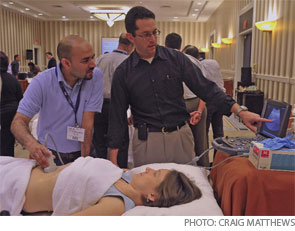
“It is a business and you need to treat it as if it’s a business,” Dlouhy said. “It’s an ongoing process, and you want to make sure you have a concrete foundation.”
The tidbits Dlouhy gleaned from her pre-course were among scores of nuggets discussed during eight of the accredited educational sessions. This year’s pre-courses boosted to a new high of 20 the number of Category 1 credits physicians could earn toward the American Medical Association’s (AMA) Physician Recognition Award. Last year, the total was 15.
Offering more classes—and more varied topics—worked pretty well, as this year’s slate of pre-courses was more popular than ever, according to SHM officials. At HM09 in Chicago, more than 800 attendees participated in six sessions. At HM10, the total attendance was roughly 10% higher.
A main driver of the growth was the addition of two new courses—“Essential Neurology for the Hospitalist” and “Early Career Hospitalist: Skills for Success.” Another was a packed room of hospitalists answering questions—some right, some wrong—and preparing for the new Focused Practice in Hospital Medicine (FPHM) via the American Board of Internal Medicine’s (ABIM) Maintenance of Certification (MOC). The learning session pre-course debuted last year, but the new HM pathway to board recertification helped push attendance higher this year.
“The nice thing about the audience-response system is that you can actually see that not everybody is always going straight to the right answer on all of the questions,” said Julius Yang, MD, PhD, a hospitalist at Beth Israel Deaconess Medical Center in Boston and the MOC course director. “It’s really serving as an important refresher of our medical knowledge base.”
Dr. Yang said the “mini-retreat” environment of an annual convention is the perfect place to focus on granular professional development. “Trying to do these types of MOCs when you’re working to keep current with all of your other duties, you don’t get as much out of it,” Dr. Yang said. “Here, you get it all.”
—Troy Ahlstrom, MD, FHM, Hospitalists of Northwest Michigan, Traverse City
He adds that those physicians who take the time and spend the money to travel for an educational session tend to be very focused on taking advantage of the program, not just showing up to be counted.
“All of these [questions] are very much directed at growing as a hospitalist,” Dr. Yang said. “It’s a different focus than the rest of the meeting. This is about every individual bringing something back to their institution.”
That’s what keeps bringing Troy Ahlstrom, MD, FHM, back. Dr. Ahlstrom, of Hos-pitalists of Northwest Michigan in Traverse City, has been to three annual meetings, and he said he tries to hit a pre-course every time. Last year, it was a session on how to more completely capture costs from billing and coding.
This year: “Comprehensive Critical Care in 2010: An Interactive Course.” The former appealed to him given that every HM group needs to capture as many of its charges as possible, and the latter because his group helps staff the critical-care units of three hospitals.
Several physicians noted that the critical-care pre-course was particularly appealing to attendees, as more hospitalists are handling those duties at their respective institutions. The format was popular, too, and was structured in the same way as the ABIM learning session, with course director David Schul-man, MD, MPH, chief of pulmonary and critical-care medicine at Emory University Hospital in Atlanta, leading a room full of hospitalists through a multiple-choice exam.

Dr. Ahlstrom and others noted that aside from the engagement in education that the daylong pre-courses offer, the sessions are set up with take-home guides, reference materials, and earnest pledges for mentoring from speakers and SHM staff.
“Most medical meetings have a scientific focus with a couple of practical aspects,” Dr. Ahlstrom said. “SHM’s meeting is very practical. It presents research, but it’s research you will use in your practice.”
Gerald Johnson, MD, a hospitalist at Texoma Medical Center in Denison, Texas, signed up for the “Best Practices in Managing a Hospital Medicine Program” pre-course during his first visit to an SHM meeting. A hospitalist for about four years, Dr. Johnson decided to take the pre-course at the urging of senior colleagues. He said the most helpful lessons he gleaned were about compensation plans, scheduling, and staffing.
“It’s not one person getting up there and presenting ‘This is how it needs to be done,’ ” Dr. Johnson said. “They present you with several ways. It really gives you something to adapt to your personal environment.”
Dr. Johnson, who gushed about “the gurus” of HM leading his session, also likes the fact that people with both a financial pedigree and a background in clinical work present the information. In fact, several attendees of the best-practices session noted that the attention to both medicine and management helps fill in the gaps between being a clinician and being a businessman.
“You’ve got to do both well,” Dr. Ahlstrom said. “You’ve got to take good care of patients. But in order to take good care of patients, you have to run a good business model, too.” HM10
Richard Quinn is a freelance writer based in New Jersey.
NATIONAL HARBOR, Md.—;Amie Dlouhy, RN, BSN, hospitalist program manager with Saint Mary’s Health Care in Grand Rapids, Mich., couldn’t scribble notes furiously enough during the practice-management pre-course at HM10. Dlouhy was promoted to her new position as an administrator some six weeks before the annual meeting at the Gaylord National Resort & Convention Center in early April.
So the first-time meeting attendee decided she would jot down as many tips as she could. She quickly realized the trip was worth it, as she learned that a departmental dashboard is a relatively simple way to gather key information in one place. She also likes the idea of drawing up a brochure that tells patients what they can expect from their hospitalists—and perhaps vice versa. And what new HM group leader doesn’t want advice on building a schedule that adds individualized wrinkles to the “seven-on, seven-off” structure?
“It is a business and you need to treat it as if it’s a business,” Dlouhy said. “It’s an ongoing process, and you want to make sure you have a concrete foundation.”
The tidbits Dlouhy gleaned from her pre-course were among scores of nuggets discussed during eight of the accredited educational sessions. This year’s pre-courses boosted to a new high of 20 the number of Category 1 credits physicians could earn toward the American Medical Association’s (AMA) Physician Recognition Award. Last year, the total was 15.
Offering more classes—and more varied topics—worked pretty well, as this year’s slate of pre-courses was more popular than ever, according to SHM officials. At HM09 in Chicago, more than 800 attendees participated in six sessions. At HM10, the total attendance was roughly 10% higher.
A main driver of the growth was the addition of two new courses—“Essential Neurology for the Hospitalist” and “Early Career Hospitalist: Skills for Success.” Another was a packed room of hospitalists answering questions—some right, some wrong—and preparing for the new Focused Practice in Hospital Medicine (FPHM) via the American Board of Internal Medicine’s (ABIM) Maintenance of Certification (MOC). The learning session pre-course debuted last year, but the new HM pathway to board recertification helped push attendance higher this year.
“The nice thing about the audience-response system is that you can actually see that not everybody is always going straight to the right answer on all of the questions,” said Julius Yang, MD, PhD, a hospitalist at Beth Israel Deaconess Medical Center in Boston and the MOC course director. “It’s really serving as an important refresher of our medical knowledge base.”
Dr. Yang said the “mini-retreat” environment of an annual convention is the perfect place to focus on granular professional development. “Trying to do these types of MOCs when you’re working to keep current with all of your other duties, you don’t get as much out of it,” Dr. Yang said. “Here, you get it all.”
—Troy Ahlstrom, MD, FHM, Hospitalists of Northwest Michigan, Traverse City
He adds that those physicians who take the time and spend the money to travel for an educational session tend to be very focused on taking advantage of the program, not just showing up to be counted.
“All of these [questions] are very much directed at growing as a hospitalist,” Dr. Yang said. “It’s a different focus than the rest of the meeting. This is about every individual bringing something back to their institution.”
That’s what keeps bringing Troy Ahlstrom, MD, FHM, back. Dr. Ahlstrom, of Hos-pitalists of Northwest Michigan in Traverse City, has been to three annual meetings, and he said he tries to hit a pre-course every time. Last year, it was a session on how to more completely capture costs from billing and coding.
This year: “Comprehensive Critical Care in 2010: An Interactive Course.” The former appealed to him given that every HM group needs to capture as many of its charges as possible, and the latter because his group helps staff the critical-care units of three hospitals.
Several physicians noted that the critical-care pre-course was particularly appealing to attendees, as more hospitalists are handling those duties at their respective institutions. The format was popular, too, and was structured in the same way as the ABIM learning session, with course director David Schul-man, MD, MPH, chief of pulmonary and critical-care medicine at Emory University Hospital in Atlanta, leading a room full of hospitalists through a multiple-choice exam.
Dr. Ahlstrom and others noted that aside from the engagement in education that the daylong pre-courses offer, the sessions are set up with take-home guides, reference materials, and earnest pledges for mentoring from speakers and SHM staff.
“Most medical meetings have a scientific focus with a couple of practical aspects,” Dr. Ahlstrom said. “SHM’s meeting is very practical. It presents research, but it’s research you will use in your practice.”
Gerald Johnson, MD, a hospitalist at Texoma Medical Center in Denison, Texas, signed up for the “Best Practices in Managing a Hospital Medicine Program” pre-course during his first visit to an SHM meeting. A hospitalist for about four years, Dr. Johnson decided to take the pre-course at the urging of senior colleagues. He said the most helpful lessons he gleaned were about compensation plans, scheduling, and staffing.
“It’s not one person getting up there and presenting ‘This is how it needs to be done,’ ” Dr. Johnson said. “They present you with several ways. It really gives you something to adapt to your personal environment.”
Dr. Johnson, who gushed about “the gurus” of HM leading his session, also likes the fact that people with both a financial pedigree and a background in clinical work present the information. In fact, several attendees of the best-practices session noted that the attention to both medicine and management helps fill in the gaps between being a clinician and being a businessman.
“You’ve got to do both well,” Dr. Ahlstrom said. “You’ve got to take good care of patients. But in order to take good care of patients, you have to run a good business model, too.” HM10
Richard Quinn is a freelance writer based in New Jersey.
NATIONAL HARBOR, Md.—;Amie Dlouhy, RN, BSN, hospitalist program manager with Saint Mary’s Health Care in Grand Rapids, Mich., couldn’t scribble notes furiously enough during the practice-management pre-course at HM10. Dlouhy was promoted to her new position as an administrator some six weeks before the annual meeting at the Gaylord National Resort & Convention Center in early April.
So the first-time meeting attendee decided she would jot down as many tips as she could. She quickly realized the trip was worth it, as she learned that a departmental dashboard is a relatively simple way to gather key information in one place. She also likes the idea of drawing up a brochure that tells patients what they can expect from their hospitalists—and perhaps vice versa. And what new HM group leader doesn’t want advice on building a schedule that adds individualized wrinkles to the “seven-on, seven-off” structure?
“It is a business and you need to treat it as if it’s a business,” Dlouhy said. “It’s an ongoing process, and you want to make sure you have a concrete foundation.”
The tidbits Dlouhy gleaned from her pre-course were among scores of nuggets discussed during eight of the accredited educational sessions. This year’s pre-courses boosted to a new high of 20 the number of Category 1 credits physicians could earn toward the American Medical Association’s (AMA) Physician Recognition Award. Last year, the total was 15.
Offering more classes—and more varied topics—worked pretty well, as this year’s slate of pre-courses was more popular than ever, according to SHM officials. At HM09 in Chicago, more than 800 attendees participated in six sessions. At HM10, the total attendance was roughly 10% higher.
A main driver of the growth was the addition of two new courses—“Essential Neurology for the Hospitalist” and “Early Career Hospitalist: Skills for Success.” Another was a packed room of hospitalists answering questions—some right, some wrong—and preparing for the new Focused Practice in Hospital Medicine (FPHM) via the American Board of Internal Medicine’s (ABIM) Maintenance of Certification (MOC). The learning session pre-course debuted last year, but the new HM pathway to board recertification helped push attendance higher this year.
“The nice thing about the audience-response system is that you can actually see that not everybody is always going straight to the right answer on all of the questions,” said Julius Yang, MD, PhD, a hospitalist at Beth Israel Deaconess Medical Center in Boston and the MOC course director. “It’s really serving as an important refresher of our medical knowledge base.”
Dr. Yang said the “mini-retreat” environment of an annual convention is the perfect place to focus on granular professional development. “Trying to do these types of MOCs when you’re working to keep current with all of your other duties, you don’t get as much out of it,” Dr. Yang said. “Here, you get it all.”
—Troy Ahlstrom, MD, FHM, Hospitalists of Northwest Michigan, Traverse City
He adds that those physicians who take the time and spend the money to travel for an educational session tend to be very focused on taking advantage of the program, not just showing up to be counted.
“All of these [questions] are very much directed at growing as a hospitalist,” Dr. Yang said. “It’s a different focus than the rest of the meeting. This is about every individual bringing something back to their institution.”
That’s what keeps bringing Troy Ahlstrom, MD, FHM, back. Dr. Ahlstrom, of Hos-pitalists of Northwest Michigan in Traverse City, has been to three annual meetings, and he said he tries to hit a pre-course every time. Last year, it was a session on how to more completely capture costs from billing and coding.
This year: “Comprehensive Critical Care in 2010: An Interactive Course.” The former appealed to him given that every HM group needs to capture as many of its charges as possible, and the latter because his group helps staff the critical-care units of three hospitals.
Several physicians noted that the critical-care pre-course was particularly appealing to attendees, as more hospitalists are handling those duties at their respective institutions. The format was popular, too, and was structured in the same way as the ABIM learning session, with course director David Schul-man, MD, MPH, chief of pulmonary and critical-care medicine at Emory University Hospital in Atlanta, leading a room full of hospitalists through a multiple-choice exam.
Dr. Ahlstrom and others noted that aside from the engagement in education that the daylong pre-courses offer, the sessions are set up with take-home guides, reference materials, and earnest pledges for mentoring from speakers and SHM staff.
“Most medical meetings have a scientific focus with a couple of practical aspects,” Dr. Ahlstrom said. “SHM’s meeting is very practical. It presents research, but it’s research you will use in your practice.”
Gerald Johnson, MD, a hospitalist at Texoma Medical Center in Denison, Texas, signed up for the “Best Practices in Managing a Hospital Medicine Program” pre-course during his first visit to an SHM meeting. A hospitalist for about four years, Dr. Johnson decided to take the pre-course at the urging of senior colleagues. He said the most helpful lessons he gleaned were about compensation plans, scheduling, and staffing.
“It’s not one person getting up there and presenting ‘This is how it needs to be done,’ ” Dr. Johnson said. “They present you with several ways. It really gives you something to adapt to your personal environment.”
Dr. Johnson, who gushed about “the gurus” of HM leading his session, also likes the fact that people with both a financial pedigree and a background in clinical work present the information. In fact, several attendees of the best-practices session noted that the attention to both medicine and management helps fill in the gaps between being a clinician and being a businessman.
“You’ve got to do both well,” Dr. Ahlstrom said. “You’ve got to take good care of patients. But in order to take good care of patients, you have to run a good business model, too.” HM10
Richard Quinn is a freelance writer based in New Jersey.
Ureter was severed, reattached, obstructed… and more
Ureter was severed, reattached, obstructed
A WOMAN IN HER 60S underwent surgery to remove a large abdominal mass. The ObGyn resected a 7-cm portion of her ureter thinking it was a blood vessel. Realizing his mistake during the surgery, he contacted a urologist, who reattached the ureter. Later the patient was rehospitalized when she suffered a ureteral obstruction.
PATIENT’S CLAIM The ObGyn was negligent for failing to identify and protect the ureter, and to properly assess the area before resecting the mass. Also, ureteral obstructions were likely to reoccur.
PHYSICIAN’S DEFENSE The abdominal mass grossly distorted the patient’s anatomy so that the ureter was in front of the mass, which was an unusual presentation. Also, the injury is a known risk of this procedure.
VERDICT Michigan defense verdict.
Did retained cervical cup cause all her pain?
A 40-YEAR-OLD WOMAN was discharged the day after her ObGyn performed laparoscopic supracervical hysterectomy. Two months later, a KOH cervical cup was found in her vagina when she presented at the emergency room for hip pain. It was removed the next day.
PATIENT’S CLAIM The ObGyn failed to remove the cervical cup before her discharge after the original procedure. It compressed her S1 and S2 nerves as well as the pudendal nerve, causing constant pelvic pain. Its presence also changed her gait, resulting in pain and sciatica. Her primary care physician examined her six times following the surgery, but never performed a pelvic exam. It was negligent to leave the device inside her and to fail to find it in the weeks before it was removed.
PHYSICIAN’S DEFENSE The ObGyn admitted negligence for not removing the device at the end of the original procedure. He denied negligence in her follow-up care. Also, her pain was unrelated to the device.
VERDICT $63,500 California verdict against the ObGyn was reduced to no recovery due to a set-off by a confidential settlement with the hospital. The patient had sued the ObGyn, the hospital and its parent company, the device manufacturer, the primary care physician, and the assisting surgeon. The hospital settled before trial, and except for the ObGyn, cases against the other defendants were dismissed.
Sickle-cell mother ends up paralyzed
AFTER DELIVERY OF HER CHILD, a 22-year-old woman with sickle cell trait suffered a precipitous drop in blood pressure. When she was given phenylephrine, her blood pressure rose, and then dropped quickly to as low as 94/17. For nearly half an hour, nothing was done. When she was discharged from recovery, she was unable to move her legs. She remains paraplegic.
PATIENT’S CLAIM The paralysis was most likely caused by a drop in blood flow and proper perfusion in the area of the artery of Adam-kiewicz, resulting in a sludging and subsequent paralysis.
PHYSICIAN’S DEFENSE Not reported.
VERDICT Confidential District of Columbia settlement. During discovery, it was learned that a nurse, A, added a note at a later time saying that she had received approval to transfer the patient from another nurse, B, who had received approval from the anesthesiologist. Both nurse B and the anesthesiologist denied this claim, and the hospital filed a third-party claim against nurse A and her employer.
Fetal remains not kept for Muslim burial
A WOMAN EXPERIENCED PROBLEMS with her pregnancy at 17 to 18 weeks and went to the hospital. She was treated by a midwife, but suffered a miscarriage. The father viewed the remains and requested that they be returned to him so he and his wife could bury their child according to their Muslim beliefs. He returned to pick up the fetus, but the hospital no longer had the remains. The parents were unable to have a funeral.
PLAINTIFF’S CLAIM The hospital was negligent for failing to retain the remains as requested. As a result, the father suffered major depressive disorder and posttraumatic stress disorder.
HOSPITAL’S DEFENSE The plaintiff suffered no damage.
VERDICT $110,000 North Carolina verdict against the hospital.
These cases were selected by the editors of OBG Management from Medical Malpractice Verdicts, Settlements & Experts, with permission of the editor, Lewis Laska (www.verdictslaska.com). The information available to the editors about the cases presented here is sometimes incomplete. Moreover, the cases may or may not have merit. Nevertheless, these cases represent the types of clinical situations that typically result in litigation and are meant to illustrate nationwide variation in jury verdicts and awards.
Ureter was severed, reattached, obstructed
A WOMAN IN HER 60S underwent surgery to remove a large abdominal mass. The ObGyn resected a 7-cm portion of her ureter thinking it was a blood vessel. Realizing his mistake during the surgery, he contacted a urologist, who reattached the ureter. Later the patient was rehospitalized when she suffered a ureteral obstruction.
PATIENT’S CLAIM The ObGyn was negligent for failing to identify and protect the ureter, and to properly assess the area before resecting the mass. Also, ureteral obstructions were likely to reoccur.
PHYSICIAN’S DEFENSE The abdominal mass grossly distorted the patient’s anatomy so that the ureter was in front of the mass, which was an unusual presentation. Also, the injury is a known risk of this procedure.
VERDICT Michigan defense verdict.
Did retained cervical cup cause all her pain?
A 40-YEAR-OLD WOMAN was discharged the day after her ObGyn performed laparoscopic supracervical hysterectomy. Two months later, a KOH cervical cup was found in her vagina when she presented at the emergency room for hip pain. It was removed the next day.
PATIENT’S CLAIM The ObGyn failed to remove the cervical cup before her discharge after the original procedure. It compressed her S1 and S2 nerves as well as the pudendal nerve, causing constant pelvic pain. Its presence also changed her gait, resulting in pain and sciatica. Her primary care physician examined her six times following the surgery, but never performed a pelvic exam. It was negligent to leave the device inside her and to fail to find it in the weeks before it was removed.
PHYSICIAN’S DEFENSE The ObGyn admitted negligence for not removing the device at the end of the original procedure. He denied negligence in her follow-up care. Also, her pain was unrelated to the device.
VERDICT $63,500 California verdict against the ObGyn was reduced to no recovery due to a set-off by a confidential settlement with the hospital. The patient had sued the ObGyn, the hospital and its parent company, the device manufacturer, the primary care physician, and the assisting surgeon. The hospital settled before trial, and except for the ObGyn, cases against the other defendants were dismissed.
Sickle-cell mother ends up paralyzed
AFTER DELIVERY OF HER CHILD, a 22-year-old woman with sickle cell trait suffered a precipitous drop in blood pressure. When she was given phenylephrine, her blood pressure rose, and then dropped quickly to as low as 94/17. For nearly half an hour, nothing was done. When she was discharged from recovery, she was unable to move her legs. She remains paraplegic.
PATIENT’S CLAIM The paralysis was most likely caused by a drop in blood flow and proper perfusion in the area of the artery of Adam-kiewicz, resulting in a sludging and subsequent paralysis.
PHYSICIAN’S DEFENSE Not reported.
VERDICT Confidential District of Columbia settlement. During discovery, it was learned that a nurse, A, added a note at a later time saying that she had received approval to transfer the patient from another nurse, B, who had received approval from the anesthesiologist. Both nurse B and the anesthesiologist denied this claim, and the hospital filed a third-party claim against nurse A and her employer.
Fetal remains not kept for Muslim burial
A WOMAN EXPERIENCED PROBLEMS with her pregnancy at 17 to 18 weeks and went to the hospital. She was treated by a midwife, but suffered a miscarriage. The father viewed the remains and requested that they be returned to him so he and his wife could bury their child according to their Muslim beliefs. He returned to pick up the fetus, but the hospital no longer had the remains. The parents were unable to have a funeral.
PLAINTIFF’S CLAIM The hospital was negligent for failing to retain the remains as requested. As a result, the father suffered major depressive disorder and posttraumatic stress disorder.
HOSPITAL’S DEFENSE The plaintiff suffered no damage.
VERDICT $110,000 North Carolina verdict against the hospital.
Ureter was severed, reattached, obstructed
A WOMAN IN HER 60S underwent surgery to remove a large abdominal mass. The ObGyn resected a 7-cm portion of her ureter thinking it was a blood vessel. Realizing his mistake during the surgery, he contacted a urologist, who reattached the ureter. Later the patient was rehospitalized when she suffered a ureteral obstruction.
PATIENT’S CLAIM The ObGyn was negligent for failing to identify and protect the ureter, and to properly assess the area before resecting the mass. Also, ureteral obstructions were likely to reoccur.
PHYSICIAN’S DEFENSE The abdominal mass grossly distorted the patient’s anatomy so that the ureter was in front of the mass, which was an unusual presentation. Also, the injury is a known risk of this procedure.
VERDICT Michigan defense verdict.
Did retained cervical cup cause all her pain?
A 40-YEAR-OLD WOMAN was discharged the day after her ObGyn performed laparoscopic supracervical hysterectomy. Two months later, a KOH cervical cup was found in her vagina when she presented at the emergency room for hip pain. It was removed the next day.
PATIENT’S CLAIM The ObGyn failed to remove the cervical cup before her discharge after the original procedure. It compressed her S1 and S2 nerves as well as the pudendal nerve, causing constant pelvic pain. Its presence also changed her gait, resulting in pain and sciatica. Her primary care physician examined her six times following the surgery, but never performed a pelvic exam. It was negligent to leave the device inside her and to fail to find it in the weeks before it was removed.
PHYSICIAN’S DEFENSE The ObGyn admitted negligence for not removing the device at the end of the original procedure. He denied negligence in her follow-up care. Also, her pain was unrelated to the device.
VERDICT $63,500 California verdict against the ObGyn was reduced to no recovery due to a set-off by a confidential settlement with the hospital. The patient had sued the ObGyn, the hospital and its parent company, the device manufacturer, the primary care physician, and the assisting surgeon. The hospital settled before trial, and except for the ObGyn, cases against the other defendants were dismissed.
Sickle-cell mother ends up paralyzed
AFTER DELIVERY OF HER CHILD, a 22-year-old woman with sickle cell trait suffered a precipitous drop in blood pressure. When she was given phenylephrine, her blood pressure rose, and then dropped quickly to as low as 94/17. For nearly half an hour, nothing was done. When she was discharged from recovery, she was unable to move her legs. She remains paraplegic.
PATIENT’S CLAIM The paralysis was most likely caused by a drop in blood flow and proper perfusion in the area of the artery of Adam-kiewicz, resulting in a sludging and subsequent paralysis.
PHYSICIAN’S DEFENSE Not reported.
VERDICT Confidential District of Columbia settlement. During discovery, it was learned that a nurse, A, added a note at a later time saying that she had received approval to transfer the patient from another nurse, B, who had received approval from the anesthesiologist. Both nurse B and the anesthesiologist denied this claim, and the hospital filed a third-party claim against nurse A and her employer.
Fetal remains not kept for Muslim burial
A WOMAN EXPERIENCED PROBLEMS with her pregnancy at 17 to 18 weeks and went to the hospital. She was treated by a midwife, but suffered a miscarriage. The father viewed the remains and requested that they be returned to him so he and his wife could bury their child according to their Muslim beliefs. He returned to pick up the fetus, but the hospital no longer had the remains. The parents were unable to have a funeral.
PLAINTIFF’S CLAIM The hospital was negligent for failing to retain the remains as requested. As a result, the father suffered major depressive disorder and posttraumatic stress disorder.
HOSPITAL’S DEFENSE The plaintiff suffered no damage.
VERDICT $110,000 North Carolina verdict against the hospital.
These cases were selected by the editors of OBG Management from Medical Malpractice Verdicts, Settlements & Experts, with permission of the editor, Lewis Laska (www.verdictslaska.com). The information available to the editors about the cases presented here is sometimes incomplete. Moreover, the cases may or may not have merit. Nevertheless, these cases represent the types of clinical situations that typically result in litigation and are meant to illustrate nationwide variation in jury verdicts and awards.
These cases were selected by the editors of OBG Management from Medical Malpractice Verdicts, Settlements & Experts, with permission of the editor, Lewis Laska (www.verdictslaska.com). The information available to the editors about the cases presented here is sometimes incomplete. Moreover, the cases may or may not have merit. Nevertheless, these cases represent the types of clinical situations that typically result in litigation and are meant to illustrate nationwide variation in jury verdicts and awards.
State of the Specialty: 12 ObGyns describe critical challenges to their work
We are at the threshold of a new era in American medicine. Federal health legislation will catalyze changes that will reconfigure how we provide care to our patients. At such a critical juncture, we thought it was important to explore the professional and personal challenges of our colleagues, a few of which are offered here. The perspectives of our fellow ObGyns are illuminating and inspiring. They reflect the high quality of physicians in our field, and their deep commitment to providing the best care for their patients.
We are the few, the proud, the ObGyns!—Robert L. Barbieri, MD
CHALLENGE 1: Maintaining the privilege of private practice

Barbara S. Levy, MD
Dr. Levy practices gynecology in a solo private practice in Federal Way, Wash, where she also serves as Medical Director of the Women’s Health Center for Franciscan Health System. She serves on the OBG Management Board of Editors.
Of the many challenges ObGyns face today, the “monopolization” of medicine may be the most pervasive. In Federal Way, Washington, where I practice, the local hospital system has acquired many of the private primary care practices in town, including many of those that regularly recommended my practice to their patients. Once they become part of the hospital system, these practices are encouraged to refer patients to ObGyns in that system.
Many older physicians are throwing in the towel and selling their practices to the hospital system, and many younger physicians, just entering the workforce, would prefer not to have to run a business, and so they go to work for a hospital.
Although I still see a full slate of patients in my solo private practice, I have noticed that people aren’t booking appointments as far in advance as they used to, and the number of patients sent to me by other practitioners has declined. In response, I’ve beefed up my Web site for marketing purposes, and I do my best to keep it up to date and to ensure that it is well listed in the search engines. I also work with my patients to increase word-of-mouth recommendations, and I work with vendors of slings and other products I regularly utilize in my practice to encourage them to support public education symposia and materials that market my practice.
As patient volume declines, it obviously becomes more difficult for a gynecologist to maintain competence in surgical procedures. If this trend continues over the long term, I wonder whether GYN generalists are going to be able to maintain competence in every aspect of the job—or are subspecialists going to be the only ones who have enough experience to perform surgery safely and effectively? It would be a shame if general ObGyn care lost the surgical component.
Here’s to preservation of the private practice!
Dr. Levy reports no financial relationships relevant to this article.
CHALLENGE 2: Adhering to revised guidelines

Raksha Joshi, MD
Dr. Joshi is Chief Medical Officer and Medical Director of Monmouth Family Health Center in Long Branch, NJ. She serves on the OBG Management Virtual Board of Editors.
Physicians and patients have followed mammography and Pap testing guidelines comfortably for a number of years—that is, until the US Preventive Services Task Force (USPSTF) revamped mammography screening guidelines in November 2009. The USPSTF now recommends biennial mammography rather than annual screening for women 50 to 74 years old, no mammography for women younger than 50 years (unless it is indicated), and the elimination of self breast examination from the list of recommendations.1
Shortly after the USPSTF made its revisions, ACOG announced changes to Pap screening guidelines, moving the age for the first Pap test to 21 years (rather than 18 years or 3 years after sexual debut), followed by biennial screening. ACOG also recommended that women 30 years and older who have had three consecutive negative Pap tests switch to screening every 3 years.2
What I tell my patients
I continue to teach self breast examination and encourage women to “know their breasts.” Many of my patients have noticed changes that merited a workup and sometimes led to discovery of a malignancy—even before the age of 40.
I also make it a point to discuss the possible “harms” of screening mammography with my patients. So far, every one of them has been happy to undergo additional testing—including biopsy—for the reassurance of knowing that they do not have cancer.
My great fear? That insurers will use the USPSTF recommendations to deny screening mammography—even though, so far, they have asserted that they will not do so. Who among us has not seen at least one case of early—and, therefore, curable—breast cancer detected by an annual mammogram when the previous year’s test was perfectly normal?
Will women fall through the cracks?
The new Pap testing guidelines are easier to accept because we are learning more about HPV, the causative agent of cervical cancer. Nevertheless, I worry that many women will fall through the cracks as we extend the Pap testing interval to 2 and 3 years and that we will become static in the battle against this almost completely preventable cancer. And because the ObGyn is the only physician many women of reproductive age see with any regularity, screening for diabetes, hypertension, and other chronic conditions often falls to us. These conditions may all go undetected if the woman does not come to see us for a Pap test. Cancer of the cervix may not kill her, but a stroke or myocardial infarction certainly can!
Guidelines are just that—guidance. I am mindful of the new recommendations, but I tailor my advice to the risk profile of the individual and remain cognizant of the prevalence of diseases in the population I serve.
Dr. Joshi reports no financial relationships relevant to this article.
CHALLENGE 3: Responding to atypical glandular cells

Larry C. Kilgore, MD
Dr. Kilgore is Gynecologic Oncologist at the University of Tennessee Medical Center in Knoxville, Tenn. He serves on the OBG Management Board of Editors.
From my vantage point as a gynecologic oncologist, one of the most pressing issues facing gynecologists and primary care providers who screen patients for cervical cancer is ensuring proper management of women whose Pap smears reveal the presence of atypical glandular cells (AGC). In more than 30% of cases involving AGC, a serious condition is present. Although squamous cancer precursors are the most common finding, other possibilities include:
- adenocarcinoma in situ or adenocarcinoma of the cervix
- hyperplasia or adenocarcinoma of the endometrium
- adnexal malignancy, including ovarian and tubal carcinoma.
The general application of liquid-based Pap testing has not led to proper identification or adequate protection of women against glandular malignancy of the reproductive tract. At a time when the proportion and absolute number of patients who have glandular malignancy of the cervix are on the rise, the clinician is challenged to appreciate the gravity of these findings and follow management guidelines closely.
Regrettably, many practitioners do not adhere to the latest guidelines on AGC, last updated in 2006. According to these guidelines, the clinician is obligated to:
- perform colposcopy on each patient who has a test result classified as AGC
- obtain an endocervical curettage, regardless of the patient’s age
- test for HPV at the time of evaluation
- obtain an endometrial biopsy in women who are older than 35 years or who have unexplained uterine bleeding.
It is not appropriate to repeat the Pap test or otherwise delay thorough evaluation.
In addition to proper management, the gynecologist should educate other primary care health professionals who perform cervical cancer screening about the importance of following AGC guidelines. Proper respect for this important clinical issue is imperative.

Dr. Kilgore reports no financial relationships relevant to this article.
CHALLENGE 4: Meeting the specialty’s research needs
Anita L. Nelson, MD
Dr. Nelson is Professor of Obstetrics and Gynecology at Harbor–UCLA Medical Center in Torrance, Calif. She serves on the OBG Management Virtual Board of Editors.
Research in women’s health has grown tremendously since the late 1980s, when the Government Accountability Office (GAO) issued several reports revealing that women were being deliberately excluded from clinical trials. Despite a greater emphasis on women’s health since then, research is sorely needed in many areas.
Consider unwanted pregnancy as a disease that, every year, kills and mutilates millions of women worldwide and orphans untold numbers of children. We need new, inexpensive, reliable, convenient methods of birth control that are rapidly reversible and that do not require extensive training to implement. One option might be an intracervical contraceptive device. In addition, choices in injectable contraception should be expanded, and studies are needed to understand (and control) unscheduled spotting and bleeding.
Research is also necessary to find better ways to motivate couples to control fertility, and to plan and prepare for pregnancy. For women who have infertility, we need better, less expensive techniques that can be shared with low-resource regions.
Other areas ripe for research:
- Obstetrics. Given that preterm labor is one of the greatest challenges in the United States, it is amazing to realize that we do not yet understand what factors control the onset of labor. In addition, extended research on the pathophysiology of preeclampsia and eclampsia is needed to develop effective treatments and reduce the serious complications caused by these processes.
- Oncology. Ongoing efforts to identify new markers to detect gynecologic cancers at a very early stage need to be amplified. Simple interventions to prevent those cancers in high-risk women should also be studied. For example, obese postmenopausal women have a high risk of endometrial cancer; clinical trials of prophylactic progestin therapies are vital.
- Application of the Human Genome Project. The information that we glean about individual risk should be translated into targeted approaches to promote health and to tailor therapies to the individual patient.
Dr. Nelson reports that she receives grant or research support from Bayer HealthCare, Medicines 360, Pfizer, and Teva. She serves as a speaker for Bayer, Merck, Pfizer, and Teva, and as a consultant or advisor for Bayer, Pfizer, Ortho-McNeil, and Teva.
CHALLENGE 5: Providing targeted care to adolescents

Daniel M. Avery, MD
Dr. Avery is Associate Professor and Chair in the Department of Obstetrics and Gynecology at the University of Alabama School of Medicine in Tuscaloosa, Ala. He serves on the OBG Management Virtual Board of Editors.
Among the challenges of providing quality ObGyn care to adolescents are 1) preventing, identifying, and treating sexually transmitted infection (STI) and 2) screening for cervical cancer. The Centers for Disease Control and Prevention estimates that there are approximately 19 million new cases of STI each year in the United States—almost half of them in people 15 to 24 years old.3 Chlamydia and gonorrhea are the two most prevalent STIs.3 In my practice, where roughly 20% of my patients are adolescent, chlamydia is a major concern. I test patients annually for this STI.
As for Pap testing, what we tell adolescents next year may be different from what we tell them this year. Guidelines have changed regularly enough that ObGyns must make an effort to stay on the cutting edge. For example, late last year the recommended age for the initial Pap test moved to 21 years, regardless of the patient’s age at sexual debut.2
We have also learned to manage Pap tests less aggressively in adolescents. We perform fewer colposcopies, biopsies, and loop electrosurgical excision procedures (LEEP) than ever before because data indicate that many cervical changes spontaneously regress in these patients; moreover, unnecessary treatment can lead to incompetent, fibrotic, and scarred cervixes. The risk of invasive cervical cancer in women younger than 20 years is 1 in 40,000.
Nevertheless, our medical school referral practice has seen two women younger than 20 years who had invasive cervical cancer. One year after I vaccinated a 16-year-old virgin against HPV, she became sexually active and got pregnant. Her initial Pap test— during prenatal care—showed low-grade squamous intraepithelial lesions, and her postpartum Pap test was classified as atypical squamous cells of undetermined significance; a postpartum HPV test was negative for high-risk strains. This patient did not see me again for 1 year, at which time a repeat Pap smear showed atypical squamous cells with a high risk of neoplasia. Colposcopically directed biopsies were suspicious for invasive cervical cancer, which was confirmed by LEEP. The patient underwent a radical hysterectomy with pelvic and peri-aortic lymph node dissection when she was only 19 years old.
In my practice, I emphasize education, vaccination against HPV, chlamydia detection and prevention, abstinence, and barrier contraception.
I am candid with adolescent patients about the risks they face and I view education as paramount to their health and well-being.
Dr. Avery reports no financial relationships relevant to this article.
CHALLENGE 6: Dealing with the insurance beast

Ed Cohen, MD
Dr. Cohen practices obstetrics and gynecology in Los Altos, Calif. He serves on the OBG Management Virtual Board of Editors.
The letter from the insurance company began promisingly enough:
- The approved services listed above are medically necessary.
Then it turned ugly:
- However, prior authorization was not obtained in a timely manner. Benefits will be reduced by $500.
This particular letter was dated Feb. 17, 2010, but it is not the first—or even the latest—unfriendly communiqué one of my patients has received from an insurer. Over the 30 years that I have practiced ObGyn, hundreds of tearful patients have asked for my help in resolving insurance-related issues. It has been my experience that the insurers rarely relent and do the right thing—even after appeal. They only tighten the thumbscrews.
In counseling patients, I try to help them understand that insurance companies are in business only to make money. No matter how welcoming and sincere their commercial enticements may appear, they are not on the side of the patient.
If insurers were acting in good faith and on the patient’s behalf, would they erect so many obstacles?
I invite any insurer to adequately and honestly explain why it makes any difference whether they are notified of a procedure on Tuesday instead of Wednesday. If the services are approved and covered and deemed to be necessary, why should reimbursement be reduced?
This is the main problem I’ve had with insurers, whose employees receive substantial “incentive pay” as long as the company remains profitable. Their real incentive should be to serve their customers, the insured. Instead, they make every effort to pay out less and put the difference in their own pockets.
Earlier this year, Rep. Henry Waxman (D-Calif) “blasted WellPoint Inc. executives for publicly stating that the country’s economic turmoil and rising health care costs was the reason its Anthem Blue Cross subsidiary intended to move forward with a massive rate increase in California, when the company’s own documents say otherwise.”4 WellPoint had only recently announced an eightfold increase in profit for the last 3 months of 2009.5
You don’t need a PhD in economics to understand the motivation for that rate hike.
Dr. Cohen reports no financial relationships relevant to this article.
CHALLENGE 7: More about the beast: Coping with shrinking reimbursement

George T. Matsuda, MD
Dr. Matsuda practices obstetrics and gynecology in Pasadena, Calif. He serves on the OBG Management Virtual Board of Editors.
I’ve been in practice since 1992 and, like much of the rest of the ObGyn workforce, face many challenges. One of the biggest is providing quality care in an environment of shrinking reimbursement.
Insurance companies are increasingly difficult to deal with. Claim denials and delays in processing payment are frequent. Medicare is threatening a 21% cut in payments. Higher patient deductibles make collecting payments more difficult. On top of these issues, many people have lost jobs and medical coverage. Others struggle financially and cope by delaying routine medical care. The result is fewer office visits by established patients.
Overhead expenses continue to skyrocket. Good medical coverage for the staff has become a major expense. And the move into electronic health records has added another layer of expense and training we had not anticipated.
How do I manage? For one, I see more patients for less reimbursement.
I also work longer hours to complete chart documentation and make follow-up calls to patients. And I moonlight at the local hospital 2 days each month.
I realize I could also add cash procedures or new products or services to generate new income, but I have not yet done so.
To ensure that each patient gets my full attention, I try to make efficient use of time. I make eye contact and speak directly. I allow the patient to ask questions and do my best to give clear answers. My greatest struggle is keeping on schedule and reducing wait times.
My most important strategy? I remind myself daily why I became an ObGyn: to make a difference in the lives of my patients by providing quality care.
Dr. Matsuda reports no financial relationships relevant to this article.
CHALLENGE 8: The threat of litigation that hangs over us always

Paul Copit, MD
Dr. Copit practiced ObGyn for many years in Philadelphia before relocating to Palm Desert, Calif. He serves on the OBG Management Virtual Board of Editors.
When I was younger, in early practice, I felt genuinely sorry for patients who developed a complication related to childbirth or surgery. I still do, of course. But with the ever-escalating volume of lawsuits against physicians, hospitals, and other entities that provide medical care, I started feeling sorry for myself, too. I began to view any complication that arose as a personal legal threat and became preoccupied with the measures I had to employ to lower the risk of my being sued.
Many areas of the United States, such as Philadelphia, are inundated with lawyers, making for a lucrative legal industry that has a constant need for new cases. There was— and still is—a political climate and social culture that foster the perception that someone must be held responsible whenever an unfortunate event occurs. And whoever that someone turns out to be is expected to compensate the “victim.”
I think there’s a better way to handle these negative outcomes. If society deems that everyone who experiences such an outcome should be compensated, then everyone should participate, and taxpayers should shoulder the burden. The tort system is unwieldy, uncertain, and time-consuming. When it comes to compensation, lawyers are the big winners. Most of the dollars involved in insurance premiums go to support the legal system, not to help needy patients.
Under the scenario I propose, for example, a special board would award the money needed for the care of an infant born with cerebral palsy (which is caused by an intrapartum event in no more than 10% of cases, by the way), regardless of the clinical circumstances. No dollars would go to lawyers or legal system.
This approach would provide certainty, be vastly less expensive, and lessen or eliminate the need to practice defensive medicine.
Dr. Copit reports no financial relationships relevant to this article.
CHALLENGE 9: Creating a bias-free FDA

James A. Simon, MD, CCD, NCMP
Dr. Simon is Clinical Professor of Obstetrics and Gynecology at George Washington University and Medical Director of Women’s Health & Research Consultants in Washington, DC. He serves on the OBG Management Board of Editors.
Most OBG Management readers likely believe your most pressing issues are business-related (i.e., the exorbitant cost of professional liability insurance, which was only given lip service [money to study the problem] in the new health plan). Or maybe you are thinking about poor reimbursement, often less than the Medicare allowable. (As I write this, Medicare is subject to a 21.3% cut.) Or perhaps you think your biggest challenge is the rising cost of office space, equipment, supplies, etc.
Well, I’d like to draw your attention to a more insidious and potentially harmful problem: the FDA. You might expect me to simply repeat the conclusions of a recent GAO report, which advised the FDA to improve performance, recruit better employees, modernize IT, maintain pace with scientific advances, and revise the approval process for medical devices. Or you might think that I am merely going to criticize the agency for its over-emphasis on safety to the near exclusion of new drug approvals. (Only 25 new molecular entities were approved in 2009, of which six were biologics and none were drugs in women’s health.)
Instead, has it ever occurred to you that, by virtue of its very existence, the FDA has a direct conflict of interest, even as it hides behind a façade of “safety at all costs”? Given that the US government, through Medicare and Medicaid, spends more than $800 billion each year, making it the largest purchaser of health care in the United States, doesn’t the FDA have a direct conflict of interest in regulating the approval of new therapies? Won’t there be political pressure to stick with generics already on the market, just to save money?
You don’t believe that the FDA bends to political pressure, you say? Remember that during the Bush administration (“W”), then junior Senator Hillary Clinton called the federal government—including the FDA—an “evidence-free zone”? Clinton’s committee held up Dr. Lester Crawford’s nomination to lead the FDA until he called for a vote (thumbs up or down) on the over-the-counter sale of Plan B. “What we are witnessing is the FDA being run not on the basis of science, but on ideology,” Clinton reportedly said.
So here and now, I call for abolishment of the FDA in its current form and creation of a true public-private partnership with robust firewalls on both the public and private sides. Get the FDA out of the US government! The agency has a direct conflict of interest in regulating drugs and devices that will be paid for by the largest health-care insurance company, the US government! Failure to eliminate this conflict will leave us in the situation we have right now, and under such circumstances, can the FDA function as a truly objective advocate for the public good?
Would you allow the fox to guard the hen house?
Dr. Simon reports grant or research support from BioSante, Boehringer Ingelheim, FemmePharma, GlaxoSmithKline, Nanma/Tripharma/Trinity, Novartis, Proctor and Gamble, QuatRx Pharmaceuticals, and Teva Pharmaceutical Industries Ltd. He has served as a consultant or advisor to Allergan, Alliance for Better Bone Health, Amgen, Ascend Therapeutics, Azur Pharma, Bayer, BioSante, Boehringer Ingelheim, Concert Pharmaceuticals, Corcept Therapeutics, Depomed, Fabre-Kramer, GlaxoSmithKline, Graceway Pharmaceuticals, KV Pharmaceutical, Lipocine, Meditrina Pharmaceuticals, Merck, Merrion Pharmaceuticals, Nanma/Tripharma/Trinity, NDA Partners, Novo Nordisk, Novogyne, Pear Tree Pharmaceuticals, QuatRx Pharmaceuticals, Roche, Schering-Plough, Sciele, Solvay, Teva Pharmaceutical Industries Ltd, Ther-Rx, Warner Chilcott, and Wyeth. He has also served as a speaker for Amgen, Ascend Therapeutics, Bayer, Boehringer Ingelheim, GlaxoSmithKline, KV Pharmaceutical, Merck, Novartis, Novogyne, Sciele, Teva Pharmaceutical Industries, Ther-Rx, Warner Chilcott, and Wyeth.
CHALLENGE 10: The quest for a healthy work-life balance

Serena H. Chen, MD
Dr. Chen is Director of the Division of Reproductive Endocrinology, Department of Obstetrics and Gynecology, at St. Barnabas Medical Center in Livingston, NJ. She serves on the OBG Management Virtual Board of Editors.
As a reproductive endocrinologist in a busy IVF practice with too much weekend call, 50 employees, and research and teaching obligations, I see work-life balance as an important goal. In addition to my work, I am the mother of two teenage boys who have too much homework and too many activities; I am also the wife of a man who has an overly long commute.
I have been searching for work-life balance for most of my professional career.
People often ask me, “How do you do it?” They mean, of course, how do you maintain calm among throngs of stressed-out women on excessive doses of hormones; give lectures; write papers; go to meetings; run the practice (billing, collections, hiring, firing etc.); make sure that the 13-year-old and the 15-year-old do all their homework and get to activities on time with the requisite baked goods in hand (why is there such a frequent demand for baked goods?); see your husband often enough that he remembers your name; make time for friends; and so on. I usually just smile and say, “Well, I am never bored!”
Perhaps the trick is to find balance in the moments between the chaos—a moment in which you share a belly laugh with your husband or hang out with the kids on the couch or connect with a patient on a personal level about something other than her diagnosis or treatment.
Perhaps we should stop struggling to find something that might not exist. Perhaps it is enough to enjoy the search for balance, to revel in the energy and chaos now and understand that work-life balance will eventually materialize and is perhaps not three words but one: retirement.
Dr. Chen reports no financial relationships relevant to this article.
CHALLENGE 11: Caring for the indigent

Takeko Takeshige, DO
Dr. Takeshige is Physician in Charge of Ambulatory Care in the Department of Obstetrics and Gynecology at Lincoln Medical and Mental Health Center in Bronx, New York, and Assistant Professor of Clinical Obstetrics and Gynecology at Weill Medical College of Cornell University in New York City. She serves on the OBG Management Virtual Board of Editors.
Serving patients in the inner city is a big challenge, even with full implementation of electronic health records. I practice in a hospital where the majority of patients are immigrants, many of them undocumented and with limited education. Compliance with medical care is a major issue. Pregnant patients often seek prenatal care late—or show up in labor without any care. It is extremely difficult to initiate evaluation and treatment of these patients, particularly in cases involving intrauterine fetal demise, preeclampsia, uncontrolled diabetes, abruptio placenta, or drug overdose, when the well-being of both mother and baby is compromised. The same holds true for women who have significant gynecologic pathology but wait as long as possible before seeking care.
Despite our best efforts and thorough medical evaluation, follow-up of these patients is difficult. They often give us inaccurate contact information. Some reside in shelters, and others relocate frequently. Explaining the importance of follow-up care to these patients is sometimes complicated by their limited language ability or education.
To meet these challenges, our hospital has:
- assigned a prenatal care coordinator to follow up patients referred for poor compliance or complicated obstetric care
- initiated classes as a means of educating patients about their medical condition and plan of care
- taken a proactive approach to gynecologic care, conducting the work-up, planning treatment, and counseling the patient in regard to medical and surgical management at the same visit
- provided on-site social services
- performed laboratory testing and imaging studies on the day of the visit to improve compliance
- updated contact information at every visit.
Our specialty faces many challenges ahead. Therefore, it is imperative that we recognize our practical needs and implement new ideas to meet these challenges. Ultimately, an optimal patient outcome depends on the patient as well as the medical team.
Dr. Takeshige reports no financial relationships relevant to this article.
CHALLENGE 12: And last, managing high-risk pregnancy

Marwan Saleh, MD
Dr. Saleh is Senior ObGyn Resident at Crouse and SUNY Upstate University Hospital in Syracuse, NY. He serves on the OBG Management Virtual Board of Editors.
High-risk pregnancy is an increasingly common challenge in obstetric practice, with approximately 5% to 10% of all pregnancies in the United States falling into this category.6 In referral centers, that figure can be much higher. For example, at Crouse Hospital in Syracuse, New York, where I practice, 18.3% of deliveries in 2009 were considered high-risk, and the total number of new high-risk patients seen for a consultation at the out-patient regional perinatal center in Syracuse rose from 2,047 in 2005 to 2,963 in 2009—an increase of 44.7%!
The rising prevalence of high-risk pregnancy is of concern because perinatal mortality is twice as high in these gestations as in normal pregnancy.7 With proper care, however, 90% to 95% of high-risk pregnancies produce healthy, viable infants.6
Among the variables contributing to the rise in high-risk pregnancy are advanced maternal age, morbid obesity, and an increasing prevalence of chronic maternal conditions such as heart disease, hypertension, and diabetes.
Timely identification of a high-risk pregnancy ensures that women who need medical care receive it in a specialized center. Ideally, a patient’s level of risk should be determined before pregnancy and assessed at each antenatal visit. Once a high level of risk is identified, appropriate treatment or surveillance, or both, should be initiated as soon as possible to improve maternal and fetal outcomes, and a specialist in maternal-fetal medicine should be involved in care.
Management is challenging and must be individualized, based on the patient’s overall health and particular risks. Not infrequently, inpatient management is required, and ethical challenges may be involved, such as a conflict between maternal and fetal health. Therefore, extensive counseling is vital to help the patient cope with any anxiety or depression, or both, that arises.8
In rare cases, a woman with a complex medical condition such as severe heart failure may consult an ObGyn about her desire to conceive. When that happens, the provider’s role consists only of counseling; the final decision about whether to proceed with childbearing lies with the patient. The same is true for women who have a lethal congenital abnormality.
In generalist practice, we can help reduce the rate of high-risk pregnancy by counseling our patients to lose weight, exercise, eat sensibly, and pay attention to other lifestyle factors under their control. We should also encourage them to plan their pregnancy and seek early and regular prenatal care. Only a few women may actually follow our advice—but that’s a few less high-risk pregnancies to worry about.
Dr. Saleh reports no financial relationships relevant to this article.
1. Screening for breast cancer: US Preventive Services Task Force recommendation statement. Ann Intern Med. 2009;151(10):716-726.
2. First cervical cancer screening delayed until age 21. Less frequent Pap tests recommended [press release]. Washington, DC: American College of Obstetricians and Gynecologists; November 20, 2009. http://www.acog.org/from_home/publications/press_releases/nr11-20-09.cfm. Accessed April 9, 2010.
3. Centers for Disease Control and Prevention. Sexually transmitted diseases in the United States, 2008. http://www.cdc.gov/std/stats08/trends.htm. Accessed April 9, 2010.
4. Leopold J. Documents reveal Anthem Blue Cross manipulated data to justify massive rate hike. Truthout.org Web site. February 24, 2010. http://www.truthout.org/documents-reveal-anthem-blue-crosss-california-rate-hike-purely-profit-driven57159. Accessed April 7, 2010.
5. Helfand D. Anthem Blue Cross dramatically raising rates for Californians with individual health policies. Los Angeles Times. February 4, 2010. http://articles.latimes.com/2010/feb/04/business/la-fi-insure-anthem5-2010feb05. Accessed April 6, 2010.
6. Dangal G. High-risk pregnancy. Internet J Gynecol Obstet. 2007;7(1).-http://www.ispub.com/ostia/index.php?xmlFilePath=journals/ijgo/vol7n1/risk.xml. Accessed April 9, 2010.
7. Zareen N, Naqvi S, Majid N, Fatima H. Perinatal outcome in high-risk pregnancies. J Coll Physicians Surg Pak. 2009;19(7):432-435.
8. Doret M, Gaucherand P. Detecting high-risk pregnancy. Rev Prat. 2009;59(10):1405-1422.
We are at the threshold of a new era in American medicine. Federal health legislation will catalyze changes that will reconfigure how we provide care to our patients. At such a critical juncture, we thought it was important to explore the professional and personal challenges of our colleagues, a few of which are offered here. The perspectives of our fellow ObGyns are illuminating and inspiring. They reflect the high quality of physicians in our field, and their deep commitment to providing the best care for their patients.
We are the few, the proud, the ObGyns!—Robert L. Barbieri, MD
CHALLENGE 1: Maintaining the privilege of private practice
Barbara S. Levy, MD
Dr. Levy practices gynecology in a solo private practice in Federal Way, Wash, where she also serves as Medical Director of the Women’s Health Center for Franciscan Health System. She serves on the OBG Management Board of Editors.
Of the many challenges ObGyns face today, the “monopolization” of medicine may be the most pervasive. In Federal Way, Washington, where I practice, the local hospital system has acquired many of the private primary care practices in town, including many of those that regularly recommended my practice to their patients. Once they become part of the hospital system, these practices are encouraged to refer patients to ObGyns in that system.
Many older physicians are throwing in the towel and selling their practices to the hospital system, and many younger physicians, just entering the workforce, would prefer not to have to run a business, and so they go to work for a hospital.
Although I still see a full slate of patients in my solo private practice, I have noticed that people aren’t booking appointments as far in advance as they used to, and the number of patients sent to me by other practitioners has declined. In response, I’ve beefed up my Web site for marketing purposes, and I do my best to keep it up to date and to ensure that it is well listed in the search engines. I also work with my patients to increase word-of-mouth recommendations, and I work with vendors of slings and other products I regularly utilize in my practice to encourage them to support public education symposia and materials that market my practice.
As patient volume declines, it obviously becomes more difficult for a gynecologist to maintain competence in surgical procedures. If this trend continues over the long term, I wonder whether GYN generalists are going to be able to maintain competence in every aspect of the job—or are subspecialists going to be the only ones who have enough experience to perform surgery safely and effectively? It would be a shame if general ObGyn care lost the surgical component.
Here’s to preservation of the private practice!
Dr. Levy reports no financial relationships relevant to this article.
CHALLENGE 2: Adhering to revised guidelines
Raksha Joshi, MD
Dr. Joshi is Chief Medical Officer and Medical Director of Monmouth Family Health Center in Long Branch, NJ. She serves on the OBG Management Virtual Board of Editors.
Physicians and patients have followed mammography and Pap testing guidelines comfortably for a number of years—that is, until the US Preventive Services Task Force (USPSTF) revamped mammography screening guidelines in November 2009. The USPSTF now recommends biennial mammography rather than annual screening for women 50 to 74 years old, no mammography for women younger than 50 years (unless it is indicated), and the elimination of self breast examination from the list of recommendations.1
Shortly after the USPSTF made its revisions, ACOG announced changes to Pap screening guidelines, moving the age for the first Pap test to 21 years (rather than 18 years or 3 years after sexual debut), followed by biennial screening. ACOG also recommended that women 30 years and older who have had three consecutive negative Pap tests switch to screening every 3 years.2
What I tell my patients
I continue to teach self breast examination and encourage women to “know their breasts.” Many of my patients have noticed changes that merited a workup and sometimes led to discovery of a malignancy—even before the age of 40.
I also make it a point to discuss the possible “harms” of screening mammography with my patients. So far, every one of them has been happy to undergo additional testing—including biopsy—for the reassurance of knowing that they do not have cancer.
My great fear? That insurers will use the USPSTF recommendations to deny screening mammography—even though, so far, they have asserted that they will not do so. Who among us has not seen at least one case of early—and, therefore, curable—breast cancer detected by an annual mammogram when the previous year’s test was perfectly normal?
Will women fall through the cracks?
The new Pap testing guidelines are easier to accept because we are learning more about HPV, the causative agent of cervical cancer. Nevertheless, I worry that many women will fall through the cracks as we extend the Pap testing interval to 2 and 3 years and that we will become static in the battle against this almost completely preventable cancer. And because the ObGyn is the only physician many women of reproductive age see with any regularity, screening for diabetes, hypertension, and other chronic conditions often falls to us. These conditions may all go undetected if the woman does not come to see us for a Pap test. Cancer of the cervix may not kill her, but a stroke or myocardial infarction certainly can!
Guidelines are just that—guidance. I am mindful of the new recommendations, but I tailor my advice to the risk profile of the individual and remain cognizant of the prevalence of diseases in the population I serve.
Dr. Joshi reports no financial relationships relevant to this article.
CHALLENGE 3: Responding to atypical glandular cells
Larry C. Kilgore, MD
Dr. Kilgore is Gynecologic Oncologist at the University of Tennessee Medical Center in Knoxville, Tenn. He serves on the OBG Management Board of Editors.
From my vantage point as a gynecologic oncologist, one of the most pressing issues facing gynecologists and primary care providers who screen patients for cervical cancer is ensuring proper management of women whose Pap smears reveal the presence of atypical glandular cells (AGC). In more than 30% of cases involving AGC, a serious condition is present. Although squamous cancer precursors are the most common finding, other possibilities include:
- adenocarcinoma in situ or adenocarcinoma of the cervix
- hyperplasia or adenocarcinoma of the endometrium
- adnexal malignancy, including ovarian and tubal carcinoma.
The general application of liquid-based Pap testing has not led to proper identification or adequate protection of women against glandular malignancy of the reproductive tract. At a time when the proportion and absolute number of patients who have glandular malignancy of the cervix are on the rise, the clinician is challenged to appreciate the gravity of these findings and follow management guidelines closely.
Regrettably, many practitioners do not adhere to the latest guidelines on AGC, last updated in 2006. According to these guidelines, the clinician is obligated to:
- perform colposcopy on each patient who has a test result classified as AGC
- obtain an endocervical curettage, regardless of the patient’s age
- test for HPV at the time of evaluation
- obtain an endometrial biopsy in women who are older than 35 years or who have unexplained uterine bleeding.
It is not appropriate to repeat the Pap test or otherwise delay thorough evaluation.
In addition to proper management, the gynecologist should educate other primary care health professionals who perform cervical cancer screening about the importance of following AGC guidelines. Proper respect for this important clinical issue is imperative.
Dr. Kilgore reports no financial relationships relevant to this article.
CHALLENGE 4: Meeting the specialty’s research needs
Anita L. Nelson, MD
Dr. Nelson is Professor of Obstetrics and Gynecology at Harbor–UCLA Medical Center in Torrance, Calif. She serves on the OBG Management Virtual Board of Editors.
Research in women’s health has grown tremendously since the late 1980s, when the Government Accountability Office (GAO) issued several reports revealing that women were being deliberately excluded from clinical trials. Despite a greater emphasis on women’s health since then, research is sorely needed in many areas.
Consider unwanted pregnancy as a disease that, every year, kills and mutilates millions of women worldwide and orphans untold numbers of children. We need new, inexpensive, reliable, convenient methods of birth control that are rapidly reversible and that do not require extensive training to implement. One option might be an intracervical contraceptive device. In addition, choices in injectable contraception should be expanded, and studies are needed to understand (and control) unscheduled spotting and bleeding.
Research is also necessary to find better ways to motivate couples to control fertility, and to plan and prepare for pregnancy. For women who have infertility, we need better, less expensive techniques that can be shared with low-resource regions.
Other areas ripe for research:
- Obstetrics. Given that preterm labor is one of the greatest challenges in the United States, it is amazing to realize that we do not yet understand what factors control the onset of labor. In addition, extended research on the pathophysiology of preeclampsia and eclampsia is needed to develop effective treatments and reduce the serious complications caused by these processes.
- Oncology. Ongoing efforts to identify new markers to detect gynecologic cancers at a very early stage need to be amplified. Simple interventions to prevent those cancers in high-risk women should also be studied. For example, obese postmenopausal women have a high risk of endometrial cancer; clinical trials of prophylactic progestin therapies are vital.
- Application of the Human Genome Project. The information that we glean about individual risk should be translated into targeted approaches to promote health and to tailor therapies to the individual patient.
Dr. Nelson reports that she receives grant or research support from Bayer HealthCare, Medicines 360, Pfizer, and Teva. She serves as a speaker for Bayer, Merck, Pfizer, and Teva, and as a consultant or advisor for Bayer, Pfizer, Ortho-McNeil, and Teva.
CHALLENGE 5: Providing targeted care to adolescents
Daniel M. Avery, MD
Dr. Avery is Associate Professor and Chair in the Department of Obstetrics and Gynecology at the University of Alabama School of Medicine in Tuscaloosa, Ala. He serves on the OBG Management Virtual Board of Editors.
Among the challenges of providing quality ObGyn care to adolescents are 1) preventing, identifying, and treating sexually transmitted infection (STI) and 2) screening for cervical cancer. The Centers for Disease Control and Prevention estimates that there are approximately 19 million new cases of STI each year in the United States—almost half of them in people 15 to 24 years old.3 Chlamydia and gonorrhea are the two most prevalent STIs.3 In my practice, where roughly 20% of my patients are adolescent, chlamydia is a major concern. I test patients annually for this STI.
As for Pap testing, what we tell adolescents next year may be different from what we tell them this year. Guidelines have changed regularly enough that ObGyns must make an effort to stay on the cutting edge. For example, late last year the recommended age for the initial Pap test moved to 21 years, regardless of the patient’s age at sexual debut.2
We have also learned to manage Pap tests less aggressively in adolescents. We perform fewer colposcopies, biopsies, and loop electrosurgical excision procedures (LEEP) than ever before because data indicate that many cervical changes spontaneously regress in these patients; moreover, unnecessary treatment can lead to incompetent, fibrotic, and scarred cervixes. The risk of invasive cervical cancer in women younger than 20 years is 1 in 40,000.
Nevertheless, our medical school referral practice has seen two women younger than 20 years who had invasive cervical cancer. One year after I vaccinated a 16-year-old virgin against HPV, she became sexually active and got pregnant. Her initial Pap test— during prenatal care—showed low-grade squamous intraepithelial lesions, and her postpartum Pap test was classified as atypical squamous cells of undetermined significance; a postpartum HPV test was negative for high-risk strains. This patient did not see me again for 1 year, at which time a repeat Pap smear showed atypical squamous cells with a high risk of neoplasia. Colposcopically directed biopsies were suspicious for invasive cervical cancer, which was confirmed by LEEP. The patient underwent a radical hysterectomy with pelvic and peri-aortic lymph node dissection when she was only 19 years old.
In my practice, I emphasize education, vaccination against HPV, chlamydia detection and prevention, abstinence, and barrier contraception.
I am candid with adolescent patients about the risks they face and I view education as paramount to their health and well-being.
Dr. Avery reports no financial relationships relevant to this article.
CHALLENGE 6: Dealing with the insurance beast
Ed Cohen, MD
Dr. Cohen practices obstetrics and gynecology in Los Altos, Calif. He serves on the OBG Management Virtual Board of Editors.
The letter from the insurance company began promisingly enough:
- The approved services listed above are medically necessary.
Then it turned ugly:
- However, prior authorization was not obtained in a timely manner. Benefits will be reduced by $500.
This particular letter was dated Feb. 17, 2010, but it is not the first—or even the latest—unfriendly communiqué one of my patients has received from an insurer. Over the 30 years that I have practiced ObGyn, hundreds of tearful patients have asked for my help in resolving insurance-related issues. It has been my experience that the insurers rarely relent and do the right thing—even after appeal. They only tighten the thumbscrews.
In counseling patients, I try to help them understand that insurance companies are in business only to make money. No matter how welcoming and sincere their commercial enticements may appear, they are not on the side of the patient.
If insurers were acting in good faith and on the patient’s behalf, would they erect so many obstacles?
I invite any insurer to adequately and honestly explain why it makes any difference whether they are notified of a procedure on Tuesday instead of Wednesday. If the services are approved and covered and deemed to be necessary, why should reimbursement be reduced?
This is the main problem I’ve had with insurers, whose employees receive substantial “incentive pay” as long as the company remains profitable. Their real incentive should be to serve their customers, the insured. Instead, they make every effort to pay out less and put the difference in their own pockets.
Earlier this year, Rep. Henry Waxman (D-Calif) “blasted WellPoint Inc. executives for publicly stating that the country’s economic turmoil and rising health care costs was the reason its Anthem Blue Cross subsidiary intended to move forward with a massive rate increase in California, when the company’s own documents say otherwise.”4 WellPoint had only recently announced an eightfold increase in profit for the last 3 months of 2009.5
You don’t need a PhD in economics to understand the motivation for that rate hike.
Dr. Cohen reports no financial relationships relevant to this article.
CHALLENGE 7: More about the beast: Coping with shrinking reimbursement
George T. Matsuda, MD
Dr. Matsuda practices obstetrics and gynecology in Pasadena, Calif. He serves on the OBG Management Virtual Board of Editors.
I’ve been in practice since 1992 and, like much of the rest of the ObGyn workforce, face many challenges. One of the biggest is providing quality care in an environment of shrinking reimbursement.
Insurance companies are increasingly difficult to deal with. Claim denials and delays in processing payment are frequent. Medicare is threatening a 21% cut in payments. Higher patient deductibles make collecting payments more difficult. On top of these issues, many people have lost jobs and medical coverage. Others struggle financially and cope by delaying routine medical care. The result is fewer office visits by established patients.
Overhead expenses continue to skyrocket. Good medical coverage for the staff has become a major expense. And the move into electronic health records has added another layer of expense and training we had not anticipated.
How do I manage? For one, I see more patients for less reimbursement.
I also work longer hours to complete chart documentation and make follow-up calls to patients. And I moonlight at the local hospital 2 days each month.
I realize I could also add cash procedures or new products or services to generate new income, but I have not yet done so.
To ensure that each patient gets my full attention, I try to make efficient use of time. I make eye contact and speak directly. I allow the patient to ask questions and do my best to give clear answers. My greatest struggle is keeping on schedule and reducing wait times.
My most important strategy? I remind myself daily why I became an ObGyn: to make a difference in the lives of my patients by providing quality care.
Dr. Matsuda reports no financial relationships relevant to this article.
CHALLENGE 8: The threat of litigation that hangs over us always
Paul Copit, MD
Dr. Copit practiced ObGyn for many years in Philadelphia before relocating to Palm Desert, Calif. He serves on the OBG Management Virtual Board of Editors.
When I was younger, in early practice, I felt genuinely sorry for patients who developed a complication related to childbirth or surgery. I still do, of course. But with the ever-escalating volume of lawsuits against physicians, hospitals, and other entities that provide medical care, I started feeling sorry for myself, too. I began to view any complication that arose as a personal legal threat and became preoccupied with the measures I had to employ to lower the risk of my being sued.
Many areas of the United States, such as Philadelphia, are inundated with lawyers, making for a lucrative legal industry that has a constant need for new cases. There was— and still is—a political climate and social culture that foster the perception that someone must be held responsible whenever an unfortunate event occurs. And whoever that someone turns out to be is expected to compensate the “victim.”
I think there’s a better way to handle these negative outcomes. If society deems that everyone who experiences such an outcome should be compensated, then everyone should participate, and taxpayers should shoulder the burden. The tort system is unwieldy, uncertain, and time-consuming. When it comes to compensation, lawyers are the big winners. Most of the dollars involved in insurance premiums go to support the legal system, not to help needy patients.
Under the scenario I propose, for example, a special board would award the money needed for the care of an infant born with cerebral palsy (which is caused by an intrapartum event in no more than 10% of cases, by the way), regardless of the clinical circumstances. No dollars would go to lawyers or legal system.
This approach would provide certainty, be vastly less expensive, and lessen or eliminate the need to practice defensive medicine.
Dr. Copit reports no financial relationships relevant to this article.
CHALLENGE 9: Creating a bias-free FDA
James A. Simon, MD, CCD, NCMP
Dr. Simon is Clinical Professor of Obstetrics and Gynecology at George Washington University and Medical Director of Women’s Health & Research Consultants in Washington, DC. He serves on the OBG Management Board of Editors.
Most OBG Management readers likely believe your most pressing issues are business-related (i.e., the exorbitant cost of professional liability insurance, which was only given lip service [money to study the problem] in the new health plan). Or maybe you are thinking about poor reimbursement, often less than the Medicare allowable. (As I write this, Medicare is subject to a 21.3% cut.) Or perhaps you think your biggest challenge is the rising cost of office space, equipment, supplies, etc.
Well, I’d like to draw your attention to a more insidious and potentially harmful problem: the FDA. You might expect me to simply repeat the conclusions of a recent GAO report, which advised the FDA to improve performance, recruit better employees, modernize IT, maintain pace with scientific advances, and revise the approval process for medical devices. Or you might think that I am merely going to criticize the agency for its over-emphasis on safety to the near exclusion of new drug approvals. (Only 25 new molecular entities were approved in 2009, of which six were biologics and none were drugs in women’s health.)
Instead, has it ever occurred to you that, by virtue of its very existence, the FDA has a direct conflict of interest, even as it hides behind a façade of “safety at all costs”? Given that the US government, through Medicare and Medicaid, spends more than $800 billion each year, making it the largest purchaser of health care in the United States, doesn’t the FDA have a direct conflict of interest in regulating the approval of new therapies? Won’t there be political pressure to stick with generics already on the market, just to save money?
You don’t believe that the FDA bends to political pressure, you say? Remember that during the Bush administration (“W”), then junior Senator Hillary Clinton called the federal government—including the FDA—an “evidence-free zone”? Clinton’s committee held up Dr. Lester Crawford’s nomination to lead the FDA until he called for a vote (thumbs up or down) on the over-the-counter sale of Plan B. “What we are witnessing is the FDA being run not on the basis of science, but on ideology,” Clinton reportedly said.
So here and now, I call for abolishment of the FDA in its current form and creation of a true public-private partnership with robust firewalls on both the public and private sides. Get the FDA out of the US government! The agency has a direct conflict of interest in regulating drugs and devices that will be paid for by the largest health-care insurance company, the US government! Failure to eliminate this conflict will leave us in the situation we have right now, and under such circumstances, can the FDA function as a truly objective advocate for the public good?
Would you allow the fox to guard the hen house?
Dr. Simon reports grant or research support from BioSante, Boehringer Ingelheim, FemmePharma, GlaxoSmithKline, Nanma/Tripharma/Trinity, Novartis, Proctor and Gamble, QuatRx Pharmaceuticals, and Teva Pharmaceutical Industries Ltd. He has served as a consultant or advisor to Allergan, Alliance for Better Bone Health, Amgen, Ascend Therapeutics, Azur Pharma, Bayer, BioSante, Boehringer Ingelheim, Concert Pharmaceuticals, Corcept Therapeutics, Depomed, Fabre-Kramer, GlaxoSmithKline, Graceway Pharmaceuticals, KV Pharmaceutical, Lipocine, Meditrina Pharmaceuticals, Merck, Merrion Pharmaceuticals, Nanma/Tripharma/Trinity, NDA Partners, Novo Nordisk, Novogyne, Pear Tree Pharmaceuticals, QuatRx Pharmaceuticals, Roche, Schering-Plough, Sciele, Solvay, Teva Pharmaceutical Industries Ltd, Ther-Rx, Warner Chilcott, and Wyeth. He has also served as a speaker for Amgen, Ascend Therapeutics, Bayer, Boehringer Ingelheim, GlaxoSmithKline, KV Pharmaceutical, Merck, Novartis, Novogyne, Sciele, Teva Pharmaceutical Industries, Ther-Rx, Warner Chilcott, and Wyeth.
CHALLENGE 10: The quest for a healthy work-life balance
Serena H. Chen, MD
Dr. Chen is Director of the Division of Reproductive Endocrinology, Department of Obstetrics and Gynecology, at St. Barnabas Medical Center in Livingston, NJ. She serves on the OBG Management Virtual Board of Editors.
As a reproductive endocrinologist in a busy IVF practice with too much weekend call, 50 employees, and research and teaching obligations, I see work-life balance as an important goal. In addition to my work, I am the mother of two teenage boys who have too much homework and too many activities; I am also the wife of a man who has an overly long commute.
I have been searching for work-life balance for most of my professional career.
People often ask me, “How do you do it?” They mean, of course, how do you maintain calm among throngs of stressed-out women on excessive doses of hormones; give lectures; write papers; go to meetings; run the practice (billing, collections, hiring, firing etc.); make sure that the 13-year-old and the 15-year-old do all their homework and get to activities on time with the requisite baked goods in hand (why is there such a frequent demand for baked goods?); see your husband often enough that he remembers your name; make time for friends; and so on. I usually just smile and say, “Well, I am never bored!”
Perhaps the trick is to find balance in the moments between the chaos—a moment in which you share a belly laugh with your husband or hang out with the kids on the couch or connect with a patient on a personal level about something other than her diagnosis or treatment.
Perhaps we should stop struggling to find something that might not exist. Perhaps it is enough to enjoy the search for balance, to revel in the energy and chaos now and understand that work-life balance will eventually materialize and is perhaps not three words but one: retirement.
Dr. Chen reports no financial relationships relevant to this article.
CHALLENGE 11: Caring for the indigent
Takeko Takeshige, DO
Dr. Takeshige is Physician in Charge of Ambulatory Care in the Department of Obstetrics and Gynecology at Lincoln Medical and Mental Health Center in Bronx, New York, and Assistant Professor of Clinical Obstetrics and Gynecology at Weill Medical College of Cornell University in New York City. She serves on the OBG Management Virtual Board of Editors.
Serving patients in the inner city is a big challenge, even with full implementation of electronic health records. I practice in a hospital where the majority of patients are immigrants, many of them undocumented and with limited education. Compliance with medical care is a major issue. Pregnant patients often seek prenatal care late—or show up in labor without any care. It is extremely difficult to initiate evaluation and treatment of these patients, particularly in cases involving intrauterine fetal demise, preeclampsia, uncontrolled diabetes, abruptio placenta, or drug overdose, when the well-being of both mother and baby is compromised. The same holds true for women who have significant gynecologic pathology but wait as long as possible before seeking care.
Despite our best efforts and thorough medical evaluation, follow-up of these patients is difficult. They often give us inaccurate contact information. Some reside in shelters, and others relocate frequently. Explaining the importance of follow-up care to these patients is sometimes complicated by their limited language ability or education.
To meet these challenges, our hospital has:
- assigned a prenatal care coordinator to follow up patients referred for poor compliance or complicated obstetric care
- initiated classes as a means of educating patients about their medical condition and plan of care
- taken a proactive approach to gynecologic care, conducting the work-up, planning treatment, and counseling the patient in regard to medical and surgical management at the same visit
- provided on-site social services
- performed laboratory testing and imaging studies on the day of the visit to improve compliance
- updated contact information at every visit.
Our specialty faces many challenges ahead. Therefore, it is imperative that we recognize our practical needs and implement new ideas to meet these challenges. Ultimately, an optimal patient outcome depends on the patient as well as the medical team.
Dr. Takeshige reports no financial relationships relevant to this article.
CHALLENGE 12: And last, managing high-risk pregnancy
Marwan Saleh, MD
Dr. Saleh is Senior ObGyn Resident at Crouse and SUNY Upstate University Hospital in Syracuse, NY. He serves on the OBG Management Virtual Board of Editors.
High-risk pregnancy is an increasingly common challenge in obstetric practice, with approximately 5% to 10% of all pregnancies in the United States falling into this category.6 In referral centers, that figure can be much higher. For example, at Crouse Hospital in Syracuse, New York, where I practice, 18.3% of deliveries in 2009 were considered high-risk, and the total number of new high-risk patients seen for a consultation at the out-patient regional perinatal center in Syracuse rose from 2,047 in 2005 to 2,963 in 2009—an increase of 44.7%!
The rising prevalence of high-risk pregnancy is of concern because perinatal mortality is twice as high in these gestations as in normal pregnancy.7 With proper care, however, 90% to 95% of high-risk pregnancies produce healthy, viable infants.6
Among the variables contributing to the rise in high-risk pregnancy are advanced maternal age, morbid obesity, and an increasing prevalence of chronic maternal conditions such as heart disease, hypertension, and diabetes.
Timely identification of a high-risk pregnancy ensures that women who need medical care receive it in a specialized center. Ideally, a patient’s level of risk should be determined before pregnancy and assessed at each antenatal visit. Once a high level of risk is identified, appropriate treatment or surveillance, or both, should be initiated as soon as possible to improve maternal and fetal outcomes, and a specialist in maternal-fetal medicine should be involved in care.
Management is challenging and must be individualized, based on the patient’s overall health and particular risks. Not infrequently, inpatient management is required, and ethical challenges may be involved, such as a conflict between maternal and fetal health. Therefore, extensive counseling is vital to help the patient cope with any anxiety or depression, or both, that arises.8
In rare cases, a woman with a complex medical condition such as severe heart failure may consult an ObGyn about her desire to conceive. When that happens, the provider’s role consists only of counseling; the final decision about whether to proceed with childbearing lies with the patient. The same is true for women who have a lethal congenital abnormality.
In generalist practice, we can help reduce the rate of high-risk pregnancy by counseling our patients to lose weight, exercise, eat sensibly, and pay attention to other lifestyle factors under their control. We should also encourage them to plan their pregnancy and seek early and regular prenatal care. Only a few women may actually follow our advice—but that’s a few less high-risk pregnancies to worry about.
Dr. Saleh reports no financial relationships relevant to this article.
We are at the threshold of a new era in American medicine. Federal health legislation will catalyze changes that will reconfigure how we provide care to our patients. At such a critical juncture, we thought it was important to explore the professional and personal challenges of our colleagues, a few of which are offered here. The perspectives of our fellow ObGyns are illuminating and inspiring. They reflect the high quality of physicians in our field, and their deep commitment to providing the best care for their patients.
We are the few, the proud, the ObGyns!—Robert L. Barbieri, MD
CHALLENGE 1: Maintaining the privilege of private practice
Barbara S. Levy, MD
Dr. Levy practices gynecology in a solo private practice in Federal Way, Wash, where she also serves as Medical Director of the Women’s Health Center for Franciscan Health System. She serves on the OBG Management Board of Editors.
Of the many challenges ObGyns face today, the “monopolization” of medicine may be the most pervasive. In Federal Way, Washington, where I practice, the local hospital system has acquired many of the private primary care practices in town, including many of those that regularly recommended my practice to their patients. Once they become part of the hospital system, these practices are encouraged to refer patients to ObGyns in that system.
Many older physicians are throwing in the towel and selling their practices to the hospital system, and many younger physicians, just entering the workforce, would prefer not to have to run a business, and so they go to work for a hospital.
Although I still see a full slate of patients in my solo private practice, I have noticed that people aren’t booking appointments as far in advance as they used to, and the number of patients sent to me by other practitioners has declined. In response, I’ve beefed up my Web site for marketing purposes, and I do my best to keep it up to date and to ensure that it is well listed in the search engines. I also work with my patients to increase word-of-mouth recommendations, and I work with vendors of slings and other products I regularly utilize in my practice to encourage them to support public education symposia and materials that market my practice.
As patient volume declines, it obviously becomes more difficult for a gynecologist to maintain competence in surgical procedures. If this trend continues over the long term, I wonder whether GYN generalists are going to be able to maintain competence in every aspect of the job—or are subspecialists going to be the only ones who have enough experience to perform surgery safely and effectively? It would be a shame if general ObGyn care lost the surgical component.
Here’s to preservation of the private practice!
Dr. Levy reports no financial relationships relevant to this article.
CHALLENGE 2: Adhering to revised guidelines
Raksha Joshi, MD
Dr. Joshi is Chief Medical Officer and Medical Director of Monmouth Family Health Center in Long Branch, NJ. She serves on the OBG Management Virtual Board of Editors.
Physicians and patients have followed mammography and Pap testing guidelines comfortably for a number of years—that is, until the US Preventive Services Task Force (USPSTF) revamped mammography screening guidelines in November 2009. The USPSTF now recommends biennial mammography rather than annual screening for women 50 to 74 years old, no mammography for women younger than 50 years (unless it is indicated), and the elimination of self breast examination from the list of recommendations.1
Shortly after the USPSTF made its revisions, ACOG announced changes to Pap screening guidelines, moving the age for the first Pap test to 21 years (rather than 18 years or 3 years after sexual debut), followed by biennial screening. ACOG also recommended that women 30 years and older who have had three consecutive negative Pap tests switch to screening every 3 years.2
What I tell my patients
I continue to teach self breast examination and encourage women to “know their breasts.” Many of my patients have noticed changes that merited a workup and sometimes led to discovery of a malignancy—even before the age of 40.
I also make it a point to discuss the possible “harms” of screening mammography with my patients. So far, every one of them has been happy to undergo additional testing—including biopsy—for the reassurance of knowing that they do not have cancer.
My great fear? That insurers will use the USPSTF recommendations to deny screening mammography—even though, so far, they have asserted that they will not do so. Who among us has not seen at least one case of early—and, therefore, curable—breast cancer detected by an annual mammogram when the previous year’s test was perfectly normal?
Will women fall through the cracks?
The new Pap testing guidelines are easier to accept because we are learning more about HPV, the causative agent of cervical cancer. Nevertheless, I worry that many women will fall through the cracks as we extend the Pap testing interval to 2 and 3 years and that we will become static in the battle against this almost completely preventable cancer. And because the ObGyn is the only physician many women of reproductive age see with any regularity, screening for diabetes, hypertension, and other chronic conditions often falls to us. These conditions may all go undetected if the woman does not come to see us for a Pap test. Cancer of the cervix may not kill her, but a stroke or myocardial infarction certainly can!
Guidelines are just that—guidance. I am mindful of the new recommendations, but I tailor my advice to the risk profile of the individual and remain cognizant of the prevalence of diseases in the population I serve.
Dr. Joshi reports no financial relationships relevant to this article.
CHALLENGE 3: Responding to atypical glandular cells
Larry C. Kilgore, MD
Dr. Kilgore is Gynecologic Oncologist at the University of Tennessee Medical Center in Knoxville, Tenn. He serves on the OBG Management Board of Editors.
From my vantage point as a gynecologic oncologist, one of the most pressing issues facing gynecologists and primary care providers who screen patients for cervical cancer is ensuring proper management of women whose Pap smears reveal the presence of atypical glandular cells (AGC). In more than 30% of cases involving AGC, a serious condition is present. Although squamous cancer precursors are the most common finding, other possibilities include:
- adenocarcinoma in situ or adenocarcinoma of the cervix
- hyperplasia or adenocarcinoma of the endometrium
- adnexal malignancy, including ovarian and tubal carcinoma.
The general application of liquid-based Pap testing has not led to proper identification or adequate protection of women against glandular malignancy of the reproductive tract. At a time when the proportion and absolute number of patients who have glandular malignancy of the cervix are on the rise, the clinician is challenged to appreciate the gravity of these findings and follow management guidelines closely.
Regrettably, many practitioners do not adhere to the latest guidelines on AGC, last updated in 2006. According to these guidelines, the clinician is obligated to:
- perform colposcopy on each patient who has a test result classified as AGC
- obtain an endocervical curettage, regardless of the patient’s age
- test for HPV at the time of evaluation
- obtain an endometrial biopsy in women who are older than 35 years or who have unexplained uterine bleeding.
It is not appropriate to repeat the Pap test or otherwise delay thorough evaluation.
In addition to proper management, the gynecologist should educate other primary care health professionals who perform cervical cancer screening about the importance of following AGC guidelines. Proper respect for this important clinical issue is imperative.
Dr. Kilgore reports no financial relationships relevant to this article.
CHALLENGE 4: Meeting the specialty’s research needs
Anita L. Nelson, MD
Dr. Nelson is Professor of Obstetrics and Gynecology at Harbor–UCLA Medical Center in Torrance, Calif. She serves on the OBG Management Virtual Board of Editors.
Research in women’s health has grown tremendously since the late 1980s, when the Government Accountability Office (GAO) issued several reports revealing that women were being deliberately excluded from clinical trials. Despite a greater emphasis on women’s health since then, research is sorely needed in many areas.
Consider unwanted pregnancy as a disease that, every year, kills and mutilates millions of women worldwide and orphans untold numbers of children. We need new, inexpensive, reliable, convenient methods of birth control that are rapidly reversible and that do not require extensive training to implement. One option might be an intracervical contraceptive device. In addition, choices in injectable contraception should be expanded, and studies are needed to understand (and control) unscheduled spotting and bleeding.
Research is also necessary to find better ways to motivate couples to control fertility, and to plan and prepare for pregnancy. For women who have infertility, we need better, less expensive techniques that can be shared with low-resource regions.
Other areas ripe for research:
- Obstetrics. Given that preterm labor is one of the greatest challenges in the United States, it is amazing to realize that we do not yet understand what factors control the onset of labor. In addition, extended research on the pathophysiology of preeclampsia and eclampsia is needed to develop effective treatments and reduce the serious complications caused by these processes.
- Oncology. Ongoing efforts to identify new markers to detect gynecologic cancers at a very early stage need to be amplified. Simple interventions to prevent those cancers in high-risk women should also be studied. For example, obese postmenopausal women have a high risk of endometrial cancer; clinical trials of prophylactic progestin therapies are vital.
- Application of the Human Genome Project. The information that we glean about individual risk should be translated into targeted approaches to promote health and to tailor therapies to the individual patient.
Dr. Nelson reports that she receives grant or research support from Bayer HealthCare, Medicines 360, Pfizer, and Teva. She serves as a speaker for Bayer, Merck, Pfizer, and Teva, and as a consultant or advisor for Bayer, Pfizer, Ortho-McNeil, and Teva.
CHALLENGE 5: Providing targeted care to adolescents
Daniel M. Avery, MD
Dr. Avery is Associate Professor and Chair in the Department of Obstetrics and Gynecology at the University of Alabama School of Medicine in Tuscaloosa, Ala. He serves on the OBG Management Virtual Board of Editors.
Among the challenges of providing quality ObGyn care to adolescents are 1) preventing, identifying, and treating sexually transmitted infection (STI) and 2) screening for cervical cancer. The Centers for Disease Control and Prevention estimates that there are approximately 19 million new cases of STI each year in the United States—almost half of them in people 15 to 24 years old.3 Chlamydia and gonorrhea are the two most prevalent STIs.3 In my practice, where roughly 20% of my patients are adolescent, chlamydia is a major concern. I test patients annually for this STI.
As for Pap testing, what we tell adolescents next year may be different from what we tell them this year. Guidelines have changed regularly enough that ObGyns must make an effort to stay on the cutting edge. For example, late last year the recommended age for the initial Pap test moved to 21 years, regardless of the patient’s age at sexual debut.2
We have also learned to manage Pap tests less aggressively in adolescents. We perform fewer colposcopies, biopsies, and loop electrosurgical excision procedures (LEEP) than ever before because data indicate that many cervical changes spontaneously regress in these patients; moreover, unnecessary treatment can lead to incompetent, fibrotic, and scarred cervixes. The risk of invasive cervical cancer in women younger than 20 years is 1 in 40,000.
Nevertheless, our medical school referral practice has seen two women younger than 20 years who had invasive cervical cancer. One year after I vaccinated a 16-year-old virgin against HPV, she became sexually active and got pregnant. Her initial Pap test— during prenatal care—showed low-grade squamous intraepithelial lesions, and her postpartum Pap test was classified as atypical squamous cells of undetermined significance; a postpartum HPV test was negative for high-risk strains. This patient did not see me again for 1 year, at which time a repeat Pap smear showed atypical squamous cells with a high risk of neoplasia. Colposcopically directed biopsies were suspicious for invasive cervical cancer, which was confirmed by LEEP. The patient underwent a radical hysterectomy with pelvic and peri-aortic lymph node dissection when she was only 19 years old.
In my practice, I emphasize education, vaccination against HPV, chlamydia detection and prevention, abstinence, and barrier contraception.
I am candid with adolescent patients about the risks they face and I view education as paramount to their health and well-being.
Dr. Avery reports no financial relationships relevant to this article.
CHALLENGE 6: Dealing with the insurance beast
Ed Cohen, MD
Dr. Cohen practices obstetrics and gynecology in Los Altos, Calif. He serves on the OBG Management Virtual Board of Editors.
The letter from the insurance company began promisingly enough:
- The approved services listed above are medically necessary.
Then it turned ugly:
- However, prior authorization was not obtained in a timely manner. Benefits will be reduced by $500.
This particular letter was dated Feb. 17, 2010, but it is not the first—or even the latest—unfriendly communiqué one of my patients has received from an insurer. Over the 30 years that I have practiced ObGyn, hundreds of tearful patients have asked for my help in resolving insurance-related issues. It has been my experience that the insurers rarely relent and do the right thing—even after appeal. They only tighten the thumbscrews.
In counseling patients, I try to help them understand that insurance companies are in business only to make money. No matter how welcoming and sincere their commercial enticements may appear, they are not on the side of the patient.
If insurers were acting in good faith and on the patient’s behalf, would they erect so many obstacles?
I invite any insurer to adequately and honestly explain why it makes any difference whether they are notified of a procedure on Tuesday instead of Wednesday. If the services are approved and covered and deemed to be necessary, why should reimbursement be reduced?
This is the main problem I’ve had with insurers, whose employees receive substantial “incentive pay” as long as the company remains profitable. Their real incentive should be to serve their customers, the insured. Instead, they make every effort to pay out less and put the difference in their own pockets.
Earlier this year, Rep. Henry Waxman (D-Calif) “blasted WellPoint Inc. executives for publicly stating that the country’s economic turmoil and rising health care costs was the reason its Anthem Blue Cross subsidiary intended to move forward with a massive rate increase in California, when the company’s own documents say otherwise.”4 WellPoint had only recently announced an eightfold increase in profit for the last 3 months of 2009.5
You don’t need a PhD in economics to understand the motivation for that rate hike.
Dr. Cohen reports no financial relationships relevant to this article.
CHALLENGE 7: More about the beast: Coping with shrinking reimbursement
George T. Matsuda, MD
Dr. Matsuda practices obstetrics and gynecology in Pasadena, Calif. He serves on the OBG Management Virtual Board of Editors.
I’ve been in practice since 1992 and, like much of the rest of the ObGyn workforce, face many challenges. One of the biggest is providing quality care in an environment of shrinking reimbursement.
Insurance companies are increasingly difficult to deal with. Claim denials and delays in processing payment are frequent. Medicare is threatening a 21% cut in payments. Higher patient deductibles make collecting payments more difficult. On top of these issues, many people have lost jobs and medical coverage. Others struggle financially and cope by delaying routine medical care. The result is fewer office visits by established patients.
Overhead expenses continue to skyrocket. Good medical coverage for the staff has become a major expense. And the move into electronic health records has added another layer of expense and training we had not anticipated.
How do I manage? For one, I see more patients for less reimbursement.
I also work longer hours to complete chart documentation and make follow-up calls to patients. And I moonlight at the local hospital 2 days each month.
I realize I could also add cash procedures or new products or services to generate new income, but I have not yet done so.
To ensure that each patient gets my full attention, I try to make efficient use of time. I make eye contact and speak directly. I allow the patient to ask questions and do my best to give clear answers. My greatest struggle is keeping on schedule and reducing wait times.
My most important strategy? I remind myself daily why I became an ObGyn: to make a difference in the lives of my patients by providing quality care.
Dr. Matsuda reports no financial relationships relevant to this article.
CHALLENGE 8: The threat of litigation that hangs over us always
Paul Copit, MD
Dr. Copit practiced ObGyn for many years in Philadelphia before relocating to Palm Desert, Calif. He serves on the OBG Management Virtual Board of Editors.
When I was younger, in early practice, I felt genuinely sorry for patients who developed a complication related to childbirth or surgery. I still do, of course. But with the ever-escalating volume of lawsuits against physicians, hospitals, and other entities that provide medical care, I started feeling sorry for myself, too. I began to view any complication that arose as a personal legal threat and became preoccupied with the measures I had to employ to lower the risk of my being sued.
Many areas of the United States, such as Philadelphia, are inundated with lawyers, making for a lucrative legal industry that has a constant need for new cases. There was— and still is—a political climate and social culture that foster the perception that someone must be held responsible whenever an unfortunate event occurs. And whoever that someone turns out to be is expected to compensate the “victim.”
I think there’s a better way to handle these negative outcomes. If society deems that everyone who experiences such an outcome should be compensated, then everyone should participate, and taxpayers should shoulder the burden. The tort system is unwieldy, uncertain, and time-consuming. When it comes to compensation, lawyers are the big winners. Most of the dollars involved in insurance premiums go to support the legal system, not to help needy patients.
Under the scenario I propose, for example, a special board would award the money needed for the care of an infant born with cerebral palsy (which is caused by an intrapartum event in no more than 10% of cases, by the way), regardless of the clinical circumstances. No dollars would go to lawyers or legal system.
This approach would provide certainty, be vastly less expensive, and lessen or eliminate the need to practice defensive medicine.
Dr. Copit reports no financial relationships relevant to this article.
CHALLENGE 9: Creating a bias-free FDA
James A. Simon, MD, CCD, NCMP
Dr. Simon is Clinical Professor of Obstetrics and Gynecology at George Washington University and Medical Director of Women’s Health & Research Consultants in Washington, DC. He serves on the OBG Management Board of Editors.
Most OBG Management readers likely believe your most pressing issues are business-related (i.e., the exorbitant cost of professional liability insurance, which was only given lip service [money to study the problem] in the new health plan). Or maybe you are thinking about poor reimbursement, often less than the Medicare allowable. (As I write this, Medicare is subject to a 21.3% cut.) Or perhaps you think your biggest challenge is the rising cost of office space, equipment, supplies, etc.
Well, I’d like to draw your attention to a more insidious and potentially harmful problem: the FDA. You might expect me to simply repeat the conclusions of a recent GAO report, which advised the FDA to improve performance, recruit better employees, modernize IT, maintain pace with scientific advances, and revise the approval process for medical devices. Or you might think that I am merely going to criticize the agency for its over-emphasis on safety to the near exclusion of new drug approvals. (Only 25 new molecular entities were approved in 2009, of which six were biologics and none were drugs in women’s health.)
Instead, has it ever occurred to you that, by virtue of its very existence, the FDA has a direct conflict of interest, even as it hides behind a façade of “safety at all costs”? Given that the US government, through Medicare and Medicaid, spends more than $800 billion each year, making it the largest purchaser of health care in the United States, doesn’t the FDA have a direct conflict of interest in regulating the approval of new therapies? Won’t there be political pressure to stick with generics already on the market, just to save money?
You don’t believe that the FDA bends to political pressure, you say? Remember that during the Bush administration (“W”), then junior Senator Hillary Clinton called the federal government—including the FDA—an “evidence-free zone”? Clinton’s committee held up Dr. Lester Crawford’s nomination to lead the FDA until he called for a vote (thumbs up or down) on the over-the-counter sale of Plan B. “What we are witnessing is the FDA being run not on the basis of science, but on ideology,” Clinton reportedly said.
So here and now, I call for abolishment of the FDA in its current form and creation of a true public-private partnership with robust firewalls on both the public and private sides. Get the FDA out of the US government! The agency has a direct conflict of interest in regulating drugs and devices that will be paid for by the largest health-care insurance company, the US government! Failure to eliminate this conflict will leave us in the situation we have right now, and under such circumstances, can the FDA function as a truly objective advocate for the public good?
Would you allow the fox to guard the hen house?
Dr. Simon reports grant or research support from BioSante, Boehringer Ingelheim, FemmePharma, GlaxoSmithKline, Nanma/Tripharma/Trinity, Novartis, Proctor and Gamble, QuatRx Pharmaceuticals, and Teva Pharmaceutical Industries Ltd. He has served as a consultant or advisor to Allergan, Alliance for Better Bone Health, Amgen, Ascend Therapeutics, Azur Pharma, Bayer, BioSante, Boehringer Ingelheim, Concert Pharmaceuticals, Corcept Therapeutics, Depomed, Fabre-Kramer, GlaxoSmithKline, Graceway Pharmaceuticals, KV Pharmaceutical, Lipocine, Meditrina Pharmaceuticals, Merck, Merrion Pharmaceuticals, Nanma/Tripharma/Trinity, NDA Partners, Novo Nordisk, Novogyne, Pear Tree Pharmaceuticals, QuatRx Pharmaceuticals, Roche, Schering-Plough, Sciele, Solvay, Teva Pharmaceutical Industries Ltd, Ther-Rx, Warner Chilcott, and Wyeth. He has also served as a speaker for Amgen, Ascend Therapeutics, Bayer, Boehringer Ingelheim, GlaxoSmithKline, KV Pharmaceutical, Merck, Novartis, Novogyne, Sciele, Teva Pharmaceutical Industries, Ther-Rx, Warner Chilcott, and Wyeth.
CHALLENGE 10: The quest for a healthy work-life balance
Serena H. Chen, MD
Dr. Chen is Director of the Division of Reproductive Endocrinology, Department of Obstetrics and Gynecology, at St. Barnabas Medical Center in Livingston, NJ. She serves on the OBG Management Virtual Board of Editors.
As a reproductive endocrinologist in a busy IVF practice with too much weekend call, 50 employees, and research and teaching obligations, I see work-life balance as an important goal. In addition to my work, I am the mother of two teenage boys who have too much homework and too many activities; I am also the wife of a man who has an overly long commute.
I have been searching for work-life balance for most of my professional career.
People often ask me, “How do you do it?” They mean, of course, how do you maintain calm among throngs of stressed-out women on excessive doses of hormones; give lectures; write papers; go to meetings; run the practice (billing, collections, hiring, firing etc.); make sure that the 13-year-old and the 15-year-old do all their homework and get to activities on time with the requisite baked goods in hand (why is there such a frequent demand for baked goods?); see your husband often enough that he remembers your name; make time for friends; and so on. I usually just smile and say, “Well, I am never bored!”
Perhaps the trick is to find balance in the moments between the chaos—a moment in which you share a belly laugh with your husband or hang out with the kids on the couch or connect with a patient on a personal level about something other than her diagnosis or treatment.
Perhaps we should stop struggling to find something that might not exist. Perhaps it is enough to enjoy the search for balance, to revel in the energy and chaos now and understand that work-life balance will eventually materialize and is perhaps not three words but one: retirement.
Dr. Chen reports no financial relationships relevant to this article.
CHALLENGE 11: Caring for the indigent
Takeko Takeshige, DO
Dr. Takeshige is Physician in Charge of Ambulatory Care in the Department of Obstetrics and Gynecology at Lincoln Medical and Mental Health Center in Bronx, New York, and Assistant Professor of Clinical Obstetrics and Gynecology at Weill Medical College of Cornell University in New York City. She serves on the OBG Management Virtual Board of Editors.
Serving patients in the inner city is a big challenge, even with full implementation of electronic health records. I practice in a hospital where the majority of patients are immigrants, many of them undocumented and with limited education. Compliance with medical care is a major issue. Pregnant patients often seek prenatal care late—or show up in labor without any care. It is extremely difficult to initiate evaluation and treatment of these patients, particularly in cases involving intrauterine fetal demise, preeclampsia, uncontrolled diabetes, abruptio placenta, or drug overdose, when the well-being of both mother and baby is compromised. The same holds true for women who have significant gynecologic pathology but wait as long as possible before seeking care.
Despite our best efforts and thorough medical evaluation, follow-up of these patients is difficult. They often give us inaccurate contact information. Some reside in shelters, and others relocate frequently. Explaining the importance of follow-up care to these patients is sometimes complicated by their limited language ability or education.
To meet these challenges, our hospital has:
- assigned a prenatal care coordinator to follow up patients referred for poor compliance or complicated obstetric care
- initiated classes as a means of educating patients about their medical condition and plan of care
- taken a proactive approach to gynecologic care, conducting the work-up, planning treatment, and counseling the patient in regard to medical and surgical management at the same visit
- provided on-site social services
- performed laboratory testing and imaging studies on the day of the visit to improve compliance
- updated contact information at every visit.
Our specialty faces many challenges ahead. Therefore, it is imperative that we recognize our practical needs and implement new ideas to meet these challenges. Ultimately, an optimal patient outcome depends on the patient as well as the medical team.
Dr. Takeshige reports no financial relationships relevant to this article.
CHALLENGE 12: And last, managing high-risk pregnancy
Marwan Saleh, MD
Dr. Saleh is Senior ObGyn Resident at Crouse and SUNY Upstate University Hospital in Syracuse, NY. He serves on the OBG Management Virtual Board of Editors.
High-risk pregnancy is an increasingly common challenge in obstetric practice, with approximately 5% to 10% of all pregnancies in the United States falling into this category.6 In referral centers, that figure can be much higher. For example, at Crouse Hospital in Syracuse, New York, where I practice, 18.3% of deliveries in 2009 were considered high-risk, and the total number of new high-risk patients seen for a consultation at the out-patient regional perinatal center in Syracuse rose from 2,047 in 2005 to 2,963 in 2009—an increase of 44.7%!
The rising prevalence of high-risk pregnancy is of concern because perinatal mortality is twice as high in these gestations as in normal pregnancy.7 With proper care, however, 90% to 95% of high-risk pregnancies produce healthy, viable infants.6
Among the variables contributing to the rise in high-risk pregnancy are advanced maternal age, morbid obesity, and an increasing prevalence of chronic maternal conditions such as heart disease, hypertension, and diabetes.
Timely identification of a high-risk pregnancy ensures that women who need medical care receive it in a specialized center. Ideally, a patient’s level of risk should be determined before pregnancy and assessed at each antenatal visit. Once a high level of risk is identified, appropriate treatment or surveillance, or both, should be initiated as soon as possible to improve maternal and fetal outcomes, and a specialist in maternal-fetal medicine should be involved in care.
Management is challenging and must be individualized, based on the patient’s overall health and particular risks. Not infrequently, inpatient management is required, and ethical challenges may be involved, such as a conflict between maternal and fetal health. Therefore, extensive counseling is vital to help the patient cope with any anxiety or depression, or both, that arises.8
In rare cases, a woman with a complex medical condition such as severe heart failure may consult an ObGyn about her desire to conceive. When that happens, the provider’s role consists only of counseling; the final decision about whether to proceed with childbearing lies with the patient. The same is true for women who have a lethal congenital abnormality.
In generalist practice, we can help reduce the rate of high-risk pregnancy by counseling our patients to lose weight, exercise, eat sensibly, and pay attention to other lifestyle factors under their control. We should also encourage them to plan their pregnancy and seek early and regular prenatal care. Only a few women may actually follow our advice—but that’s a few less high-risk pregnancies to worry about.
Dr. Saleh reports no financial relationships relevant to this article.
1. Screening for breast cancer: US Preventive Services Task Force recommendation statement. Ann Intern Med. 2009;151(10):716-726.
2. First cervical cancer screening delayed until age 21. Less frequent Pap tests recommended [press release]. Washington, DC: American College of Obstetricians and Gynecologists; November 20, 2009. http://www.acog.org/from_home/publications/press_releases/nr11-20-09.cfm. Accessed April 9, 2010.
3. Centers for Disease Control and Prevention. Sexually transmitted diseases in the United States, 2008. http://www.cdc.gov/std/stats08/trends.htm. Accessed April 9, 2010.
4. Leopold J. Documents reveal Anthem Blue Cross manipulated data to justify massive rate hike. Truthout.org Web site. February 24, 2010. http://www.truthout.org/documents-reveal-anthem-blue-crosss-california-rate-hike-purely-profit-driven57159. Accessed April 7, 2010.
5. Helfand D. Anthem Blue Cross dramatically raising rates for Californians with individual health policies. Los Angeles Times. February 4, 2010. http://articles.latimes.com/2010/feb/04/business/la-fi-insure-anthem5-2010feb05. Accessed April 6, 2010.
6. Dangal G. High-risk pregnancy. Internet J Gynecol Obstet. 2007;7(1).-http://www.ispub.com/ostia/index.php?xmlFilePath=journals/ijgo/vol7n1/risk.xml. Accessed April 9, 2010.
7. Zareen N, Naqvi S, Majid N, Fatima H. Perinatal outcome in high-risk pregnancies. J Coll Physicians Surg Pak. 2009;19(7):432-435.
8. Doret M, Gaucherand P. Detecting high-risk pregnancy. Rev Prat. 2009;59(10):1405-1422.
1. Screening for breast cancer: US Preventive Services Task Force recommendation statement. Ann Intern Med. 2009;151(10):716-726.
2. First cervical cancer screening delayed until age 21. Less frequent Pap tests recommended [press release]. Washington, DC: American College of Obstetricians and Gynecologists; November 20, 2009. http://www.acog.org/from_home/publications/press_releases/nr11-20-09.cfm. Accessed April 9, 2010.
3. Centers for Disease Control and Prevention. Sexually transmitted diseases in the United States, 2008. http://www.cdc.gov/std/stats08/trends.htm. Accessed April 9, 2010.
4. Leopold J. Documents reveal Anthem Blue Cross manipulated data to justify massive rate hike. Truthout.org Web site. February 24, 2010. http://www.truthout.org/documents-reveal-anthem-blue-crosss-california-rate-hike-purely-profit-driven57159. Accessed April 7, 2010.
5. Helfand D. Anthem Blue Cross dramatically raising rates for Californians with individual health policies. Los Angeles Times. February 4, 2010. http://articles.latimes.com/2010/feb/04/business/la-fi-insure-anthem5-2010feb05. Accessed April 6, 2010.
6. Dangal G. High-risk pregnancy. Internet J Gynecol Obstet. 2007;7(1).-http://www.ispub.com/ostia/index.php?xmlFilePath=journals/ijgo/vol7n1/risk.xml. Accessed April 9, 2010.
7. Zareen N, Naqvi S, Majid N, Fatima H. Perinatal outcome in high-risk pregnancies. J Coll Physicians Surg Pak. 2009;19(7):432-435.
8. Doret M, Gaucherand P. Detecting high-risk pregnancy. Rev Prat. 2009;59(10):1405-1422.
Tips to Save Your Practice Money Now
Physician office overhead costs are up; reimbursements and collections are down. But don't despair.
There are ways to save money and tilt your balance sheet in the direction of a healthy bottom line. Here are some cost-saving tips:
▸ Maximize tax-free benefits for you and your partner(s). Don't forget to deduct payments for malpractice, major medical, disability, life, and liability insurance. Personal expense account charges are deductible as well, including the cost of attending CME meetings; dues and subscriptions; and as much as $45,000 a year for retirement spending.
▸ Stretch your office services by hiring midlevel providers. Salaries for nurse practitioners and physician assistants can quickly reach the “break even” point and can begin to increase the profits of the practice once these practitioners perform 10–13 visits a day.
▸ Reevaluate your ratio of front office to clinical personnel. A good ratio is 1 physician to 3.5 clinical staff. Better is 1:3.4 if your office has a lab and 1:3.2 if your office has no lab. A ratio that's too low is 1:2.8 or 1:2.3.
▸ Charge patients for simple but time-consuming tasks. Consider charging a fee for filling out forms for camp, for one.
▸ Save on purchasing supplies. Become part of a physician buying group (PBG) for office supplies, medical supplies, and lab supplies, and especially vaccines. Such groups have the potential for saving a practice 10%-25% on “big ticket” items, and thousands of dollars a year on vaccines.
▸ Renegotiate your rent. Commercial real estate? They're hurting right now. Any physician or group whose lease is expiring within 2 years should renegotiate now. Some landlords are offering 3–6 months of free rent in exchange for a renewal of an office space lease. Another option, especially in light of the current, dismal commercial real estate market, is to consider buying your own building while prices are low.
▸ Stretch the use of your office space. Could you accommodate another provider and expand your business hours from early morning to late evening, with physicians staggering their hours? Could you sublease space during off-hours to a lactation consultant; a physical, occupational, or speech therapist; or a registered dietitian who could provide nutrition counseling and diabetes education?
▸ Target missed appointments. Automated dialing systems can make reminder calls and reduce expensive no-shows if this is a problem in your practice.
▸ Consider participating in clinical trials. It's a lot of work, but adding research to a medical practice can be rewarding and intellectually invigorating, as well as profitable, infusing up to $100,000 a year into a practice's bottom line. The concept works only as long as a dedicated physician wants to take on the role of principal investigator and at least one office staff member can devote the bulk of his or her time to coordinating the trial(s).
Physician office overhead costs are up; reimbursements and collections are down. But don't despair.
There are ways to save money and tilt your balance sheet in the direction of a healthy bottom line. Here are some cost-saving tips:
▸ Maximize tax-free benefits for you and your partner(s). Don't forget to deduct payments for malpractice, major medical, disability, life, and liability insurance. Personal expense account charges are deductible as well, including the cost of attending CME meetings; dues and subscriptions; and as much as $45,000 a year for retirement spending.
▸ Stretch your office services by hiring midlevel providers. Salaries for nurse practitioners and physician assistants can quickly reach the “break even” point and can begin to increase the profits of the practice once these practitioners perform 10–13 visits a day.
▸ Reevaluate your ratio of front office to clinical personnel. A good ratio is 1 physician to 3.5 clinical staff. Better is 1:3.4 if your office has a lab and 1:3.2 if your office has no lab. A ratio that's too low is 1:2.8 or 1:2.3.
▸ Charge patients for simple but time-consuming tasks. Consider charging a fee for filling out forms for camp, for one.
▸ Save on purchasing supplies. Become part of a physician buying group (PBG) for office supplies, medical supplies, and lab supplies, and especially vaccines. Such groups have the potential for saving a practice 10%-25% on “big ticket” items, and thousands of dollars a year on vaccines.
▸ Renegotiate your rent. Commercial real estate? They're hurting right now. Any physician or group whose lease is expiring within 2 years should renegotiate now. Some landlords are offering 3–6 months of free rent in exchange for a renewal of an office space lease. Another option, especially in light of the current, dismal commercial real estate market, is to consider buying your own building while prices are low.
▸ Stretch the use of your office space. Could you accommodate another provider and expand your business hours from early morning to late evening, with physicians staggering their hours? Could you sublease space during off-hours to a lactation consultant; a physical, occupational, or speech therapist; or a registered dietitian who could provide nutrition counseling and diabetes education?
▸ Target missed appointments. Automated dialing systems can make reminder calls and reduce expensive no-shows if this is a problem in your practice.
▸ Consider participating in clinical trials. It's a lot of work, but adding research to a medical practice can be rewarding and intellectually invigorating, as well as profitable, infusing up to $100,000 a year into a practice's bottom line. The concept works only as long as a dedicated physician wants to take on the role of principal investigator and at least one office staff member can devote the bulk of his or her time to coordinating the trial(s).
Physician office overhead costs are up; reimbursements and collections are down. But don't despair.
There are ways to save money and tilt your balance sheet in the direction of a healthy bottom line. Here are some cost-saving tips:
▸ Maximize tax-free benefits for you and your partner(s). Don't forget to deduct payments for malpractice, major medical, disability, life, and liability insurance. Personal expense account charges are deductible as well, including the cost of attending CME meetings; dues and subscriptions; and as much as $45,000 a year for retirement spending.
▸ Stretch your office services by hiring midlevel providers. Salaries for nurse practitioners and physician assistants can quickly reach the “break even” point and can begin to increase the profits of the practice once these practitioners perform 10–13 visits a day.
▸ Reevaluate your ratio of front office to clinical personnel. A good ratio is 1 physician to 3.5 clinical staff. Better is 1:3.4 if your office has a lab and 1:3.2 if your office has no lab. A ratio that's too low is 1:2.8 or 1:2.3.
▸ Charge patients for simple but time-consuming tasks. Consider charging a fee for filling out forms for camp, for one.
▸ Save on purchasing supplies. Become part of a physician buying group (PBG) for office supplies, medical supplies, and lab supplies, and especially vaccines. Such groups have the potential for saving a practice 10%-25% on “big ticket” items, and thousands of dollars a year on vaccines.
▸ Renegotiate your rent. Commercial real estate? They're hurting right now. Any physician or group whose lease is expiring within 2 years should renegotiate now. Some landlords are offering 3–6 months of free rent in exchange for a renewal of an office space lease. Another option, especially in light of the current, dismal commercial real estate market, is to consider buying your own building while prices are low.
▸ Stretch the use of your office space. Could you accommodate another provider and expand your business hours from early morning to late evening, with physicians staggering their hours? Could you sublease space during off-hours to a lactation consultant; a physical, occupational, or speech therapist; or a registered dietitian who could provide nutrition counseling and diabetes education?
▸ Target missed appointments. Automated dialing systems can make reminder calls and reduce expensive no-shows if this is a problem in your practice.
▸ Consider participating in clinical trials. It's a lot of work, but adding research to a medical practice can be rewarding and intellectually invigorating, as well as profitable, infusing up to $100,000 a year into a practice's bottom line. The concept works only as long as a dedicated physician wants to take on the role of principal investigator and at least one office staff member can devote the bulk of his or her time to coordinating the trial(s).
Now is the Time to Hire New Employees
If you have plans to enlarge your office staff anytime soon, consider doing it sooner, rather than later.
On March 18, President Obama signed the Hiring Incentives to Restore Employment (HIRE) Act into law. Known popularly as the "Jobs Bill," its intended purpose is to get the unemployed back to work by encouraging the hiring of employees now, rather than in the future.
The new law exempts private-sector employers from their 6.2% share of the Social Security payroll tax for the remainder of 2010 on all new hires who had been unemployed for the previous 60 days or more.
This is a hiring incentive that, for once, works to your advantage, as well as that of your new employees. For one thing, the tax benefit is immediate; it helps your cash flow instantly, because there are no refunds - the tax is simply not collected in the first place. For another, if you keep your new employees on payroll for at least 52 weeks, you, as the employer, can take an additional tax credit of up to $1,000 for each new employee, on your own 2011 tax return. (More precisely, the credit is the lesser of either $1,000 or 6.2% of the wages paid to the worker during the 52 consecutive-week period; that means it will be $1,000 for any employee paid more than about $16,130 over that period.)
There is no limit to the number of employees you can hire, no maximum or minimum salary you need to pay, and no cap on the total dollar amount of tax that may be forgiven; your office saves 6.2% whether your new employee is a $30,000 medical assistant, a $100,000 physician assistant, or a $250,000 physician.
Part-time employees also are eligible; there is no minimum number of hours that new employees must work. However, the salary you pay a part-time employee in the second 26 weeks of that first year must total at least 80% of his or her pay over the first 26 weeks.
The objective of the new law is to create new jobs, not to hire the unemployed at the expense of those who have jobs already. So if you are thinking about laying off your entire staff and hiring a completely new crew solely for the purpose of taking the payroll exemption, forget about it. A new hire who replaces another employee who performed the same job is not eligible for the benefit, unless the prior employee left voluntarily or was fired for cause.
Congress anticipated and proactively plugged some other obvious loopholes; you cannot get the exemption by firing employees for 60 days and then hiring them back, for example. And you cannot claim the new tax breaks by hiring family members or by employing domestic workers in your home.
The law also forbids double dipping: If you have employees who are eligible for the Work Opportunity Tax Credit (WOTC), you must select one benefit or the other for 2010, not both.
The law requires each eligible worker to certify by signed affidavit that he or she has not been employed for more than 40 hours during the preceding 60-day period, that no one was fired without cause to create the job being taken, and that the employer is not a relative or family member.
You should explain to these new hires that they will not be paying into Social Security in 2010, but their eventual Social Security benefits will not be decreased because of it.
If you have already hired employees this year who you now realize qualify for the tax holiday, and you have already paid their first quarter's taxes, fear not: The amount by which the payroll tax would have been reduced during the first quarter can be applied against your second-quarter tax bill. And most of the first quarter is excluded anyway; employees hired after the date the bill was introduced (Feb. 3, 2010) are eligible, but only wages paid after the date of the law's enactment (March 18) receive the exemption.
The law generally covers only private-sector employment, although it does include nonprofit organizations. Public sector jobs are generally not eligible. However, employment by a public higher education institution, such as a university medical center, would qualify.
Remember, the incentive only applies to wages paid to eligible new employees for the remainder of this year; the idea is to decrease unemployment now. So the sooner you hire, the longer your payroll tax holiday will last.
The IRS will be watching, so be sure to check with your lawyer and accountant, and get all your documentation straight.
If you have plans to enlarge your office staff anytime soon, consider doing it sooner, rather than later.
On March 18, President Obama signed the Hiring Incentives to Restore Employment (HIRE) Act into law. Known popularly as the "Jobs Bill," its intended purpose is to get the unemployed back to work by encouraging the hiring of employees now, rather than in the future.
The new law exempts private-sector employers from their 6.2% share of the Social Security payroll tax for the remainder of 2010 on all new hires who had been unemployed for the previous 60 days or more.
This is a hiring incentive that, for once, works to your advantage, as well as that of your new employees. For one thing, the tax benefit is immediate; it helps your cash flow instantly, because there are no refunds - the tax is simply not collected in the first place. For another, if you keep your new employees on payroll for at least 52 weeks, you, as the employer, can take an additional tax credit of up to $1,000 for each new employee, on your own 2011 tax return. (More precisely, the credit is the lesser of either $1,000 or 6.2% of the wages paid to the worker during the 52 consecutive-week period; that means it will be $1,000 for any employee paid more than about $16,130 over that period.)
There is no limit to the number of employees you can hire, no maximum or minimum salary you need to pay, and no cap on the total dollar amount of tax that may be forgiven; your office saves 6.2% whether your new employee is a $30,000 medical assistant, a $100,000 physician assistant, or a $250,000 physician.
Part-time employees also are eligible; there is no minimum number of hours that new employees must work. However, the salary you pay a part-time employee in the second 26 weeks of that first year must total at least 80% of his or her pay over the first 26 weeks.
The objective of the new law is to create new jobs, not to hire the unemployed at the expense of those who have jobs already. So if you are thinking about laying off your entire staff and hiring a completely new crew solely for the purpose of taking the payroll exemption, forget about it. A new hire who replaces another employee who performed the same job is not eligible for the benefit, unless the prior employee left voluntarily or was fired for cause.
Congress anticipated and proactively plugged some other obvious loopholes; you cannot get the exemption by firing employees for 60 days and then hiring them back, for example. And you cannot claim the new tax breaks by hiring family members or by employing domestic workers in your home.
The law also forbids double dipping: If you have employees who are eligible for the Work Opportunity Tax Credit (WOTC), you must select one benefit or the other for 2010, not both.
The law requires each eligible worker to certify by signed affidavit that he or she has not been employed for more than 40 hours during the preceding 60-day period, that no one was fired without cause to create the job being taken, and that the employer is not a relative or family member.
You should explain to these new hires that they will not be paying into Social Security in 2010, but their eventual Social Security benefits will not be decreased because of it.
If you have already hired employees this year who you now realize qualify for the tax holiday, and you have already paid their first quarter's taxes, fear not: The amount by which the payroll tax would have been reduced during the first quarter can be applied against your second-quarter tax bill. And most of the first quarter is excluded anyway; employees hired after the date the bill was introduced (Feb. 3, 2010) are eligible, but only wages paid after the date of the law's enactment (March 18) receive the exemption.
The law generally covers only private-sector employment, although it does include nonprofit organizations. Public sector jobs are generally not eligible. However, employment by a public higher education institution, such as a university medical center, would qualify.
Remember, the incentive only applies to wages paid to eligible new employees for the remainder of this year; the idea is to decrease unemployment now. So the sooner you hire, the longer your payroll tax holiday will last.
The IRS will be watching, so be sure to check with your lawyer and accountant, and get all your documentation straight.
If you have plans to enlarge your office staff anytime soon, consider doing it sooner, rather than later.
On March 18, President Obama signed the Hiring Incentives to Restore Employment (HIRE) Act into law. Known popularly as the "Jobs Bill," its intended purpose is to get the unemployed back to work by encouraging the hiring of employees now, rather than in the future.
The new law exempts private-sector employers from their 6.2% share of the Social Security payroll tax for the remainder of 2010 on all new hires who had been unemployed for the previous 60 days or more.
This is a hiring incentive that, for once, works to your advantage, as well as that of your new employees. For one thing, the tax benefit is immediate; it helps your cash flow instantly, because there are no refunds - the tax is simply not collected in the first place. For another, if you keep your new employees on payroll for at least 52 weeks, you, as the employer, can take an additional tax credit of up to $1,000 for each new employee, on your own 2011 tax return. (More precisely, the credit is the lesser of either $1,000 or 6.2% of the wages paid to the worker during the 52 consecutive-week period; that means it will be $1,000 for any employee paid more than about $16,130 over that period.)
There is no limit to the number of employees you can hire, no maximum or minimum salary you need to pay, and no cap on the total dollar amount of tax that may be forgiven; your office saves 6.2% whether your new employee is a $30,000 medical assistant, a $100,000 physician assistant, or a $250,000 physician.
Part-time employees also are eligible; there is no minimum number of hours that new employees must work. However, the salary you pay a part-time employee in the second 26 weeks of that first year must total at least 80% of his or her pay over the first 26 weeks.
The objective of the new law is to create new jobs, not to hire the unemployed at the expense of those who have jobs already. So if you are thinking about laying off your entire staff and hiring a completely new crew solely for the purpose of taking the payroll exemption, forget about it. A new hire who replaces another employee who performed the same job is not eligible for the benefit, unless the prior employee left voluntarily or was fired for cause.
Congress anticipated and proactively plugged some other obvious loopholes; you cannot get the exemption by firing employees for 60 days and then hiring them back, for example. And you cannot claim the new tax breaks by hiring family members or by employing domestic workers in your home.
The law also forbids double dipping: If you have employees who are eligible for the Work Opportunity Tax Credit (WOTC), you must select one benefit or the other for 2010, not both.
The law requires each eligible worker to certify by signed affidavit that he or she has not been employed for more than 40 hours during the preceding 60-day period, that no one was fired without cause to create the job being taken, and that the employer is not a relative or family member.
You should explain to these new hires that they will not be paying into Social Security in 2010, but their eventual Social Security benefits will not be decreased because of it.
If you have already hired employees this year who you now realize qualify for the tax holiday, and you have already paid their first quarter's taxes, fear not: The amount by which the payroll tax would have been reduced during the first quarter can be applied against your second-quarter tax bill. And most of the first quarter is excluded anyway; employees hired after the date the bill was introduced (Feb. 3, 2010) are eligible, but only wages paid after the date of the law's enactment (March 18) receive the exemption.
The law generally covers only private-sector employment, although it does include nonprofit organizations. Public sector jobs are generally not eligible. However, employment by a public higher education institution, such as a university medical center, would qualify.
Remember, the incentive only applies to wages paid to eligible new employees for the remainder of this year; the idea is to decrease unemployment now. So the sooner you hire, the longer your payroll tax holiday will last.
The IRS will be watching, so be sure to check with your lawyer and accountant, and get all your documentation straight.