User login
PsA Fast Facts: Treatments

View the complete 2018 American College of Rheumatology and National Psoriasis Foundation Guideline for the Treatment of Psoriatic Arthritis here.
View the complete 2018 American College of Rheumatology and National Psoriasis Foundation Guideline for the Treatment of Psoriatic Arthritis here.
View the complete 2018 American College of Rheumatology and National Psoriasis Foundation Guideline for the Treatment of Psoriatic Arthritis here.

Hadlima approved as fourth adalimumab biosimilar in U.S.
The Food and Drug Administration has approved the Humira biosimilar Hadlima (adalimumab-bwwd), making it the fourth adalimumab biosimilar approved in the United States, the agency announced.

Hadlima is approved for seven of the reference product’s indications, which include rheumatoid arthritis, polyarticular juvenile idiopathic arthritis, plaque psoriasis, psoriatic arthritis, ankylosing spondylitis, adult Crohn’s disease, and ulcerative colitis.
The product will launch in the United States on June 30, 2023. Other FDA-approved adalimumab biosimilars – Amjevita (adalimunab-atto), Cyltezo (adalimumab-adbm), Hyrimoz (adalimumab-adaz) – similarly will not reach the U.S. market until 2023.
Hadlima is developed by Samsung Bioepis and commercialized by Merck Sharp & Dohme Corp., a subsidiary of Merck & Co.
*This article was updated on July 24, 2019.
The Food and Drug Administration has approved the Humira biosimilar Hadlima (adalimumab-bwwd), making it the fourth adalimumab biosimilar approved in the United States, the agency announced.
Hadlima is approved for seven of the reference product’s indications, which include rheumatoid arthritis, polyarticular juvenile idiopathic arthritis, plaque psoriasis, psoriatic arthritis, ankylosing spondylitis, adult Crohn’s disease, and ulcerative colitis.
The product will launch in the United States on June 30, 2023. Other FDA-approved adalimumab biosimilars – Amjevita (adalimunab-atto), Cyltezo (adalimumab-adbm), Hyrimoz (adalimumab-adaz) – similarly will not reach the U.S. market until 2023.
Hadlima is developed by Samsung Bioepis and commercialized by Merck Sharp & Dohme Corp., a subsidiary of Merck & Co.
*This article was updated on July 24, 2019.
The Food and Drug Administration has approved the Humira biosimilar Hadlima (adalimumab-bwwd), making it the fourth adalimumab biosimilar approved in the United States, the agency announced.
Hadlima is approved for seven of the reference product’s indications, which include rheumatoid arthritis, polyarticular juvenile idiopathic arthritis, plaque psoriasis, psoriatic arthritis, ankylosing spondylitis, adult Crohn’s disease, and ulcerative colitis.
The product will launch in the United States on June 30, 2023. Other FDA-approved adalimumab biosimilars – Amjevita (adalimunab-atto), Cyltezo (adalimumab-adbm), Hyrimoz (adalimumab-adaz) – similarly will not reach the U.S. market until 2023.
Hadlima is developed by Samsung Bioepis and commercialized by Merck Sharp & Dohme Corp., a subsidiary of Merck & Co.
*This article was updated on July 24, 2019.
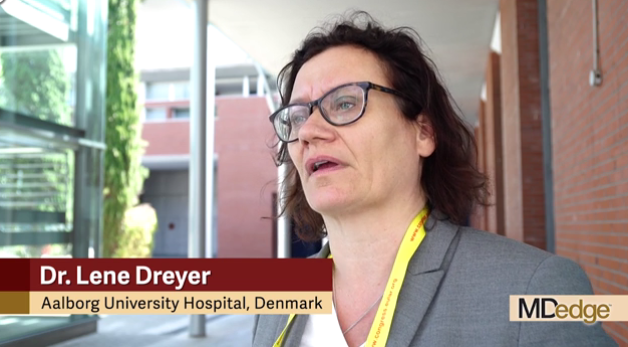
Dr. Lene Dreyer discusses psoriatic arthritis and cancer risk

Do patients with psoriatic arthritis face greater cancer risks? Lene Dreyer, MD, clinical professor at Aalborg (Denmark) University Hospital, talks about the mostly reassuring findings from a cancer registry analysis in four Nordic countries.
Do patients with psoriatic arthritis face greater cancer risks? Lene Dreyer, MD, clinical professor at Aalborg (Denmark) University Hospital, talks about the mostly reassuring findings from a cancer registry analysis in four Nordic countries.
Do patients with psoriatic arthritis face greater cancer risks? Lene Dreyer, MD, clinical professor at Aalborg (Denmark) University Hospital, talks about the mostly reassuring findings from a cancer registry analysis in four Nordic countries.
Secukinumab reduced joint pain of psoriatic arthritis in early data from phase 3b trial
MADRID – Secukinumab was superior to placebo for the primary endpoint of 20% improvement in Assessment of SpondyloArthritis international Society criteria (ASAS20), based on the initial 12-week data from the ongoing phase 3b MAXIMISE trial, the first randomized, controlled trial to evaluate a biologic therapy for the treatment of the axial manifestations of psoriatic arthritis (PsA).
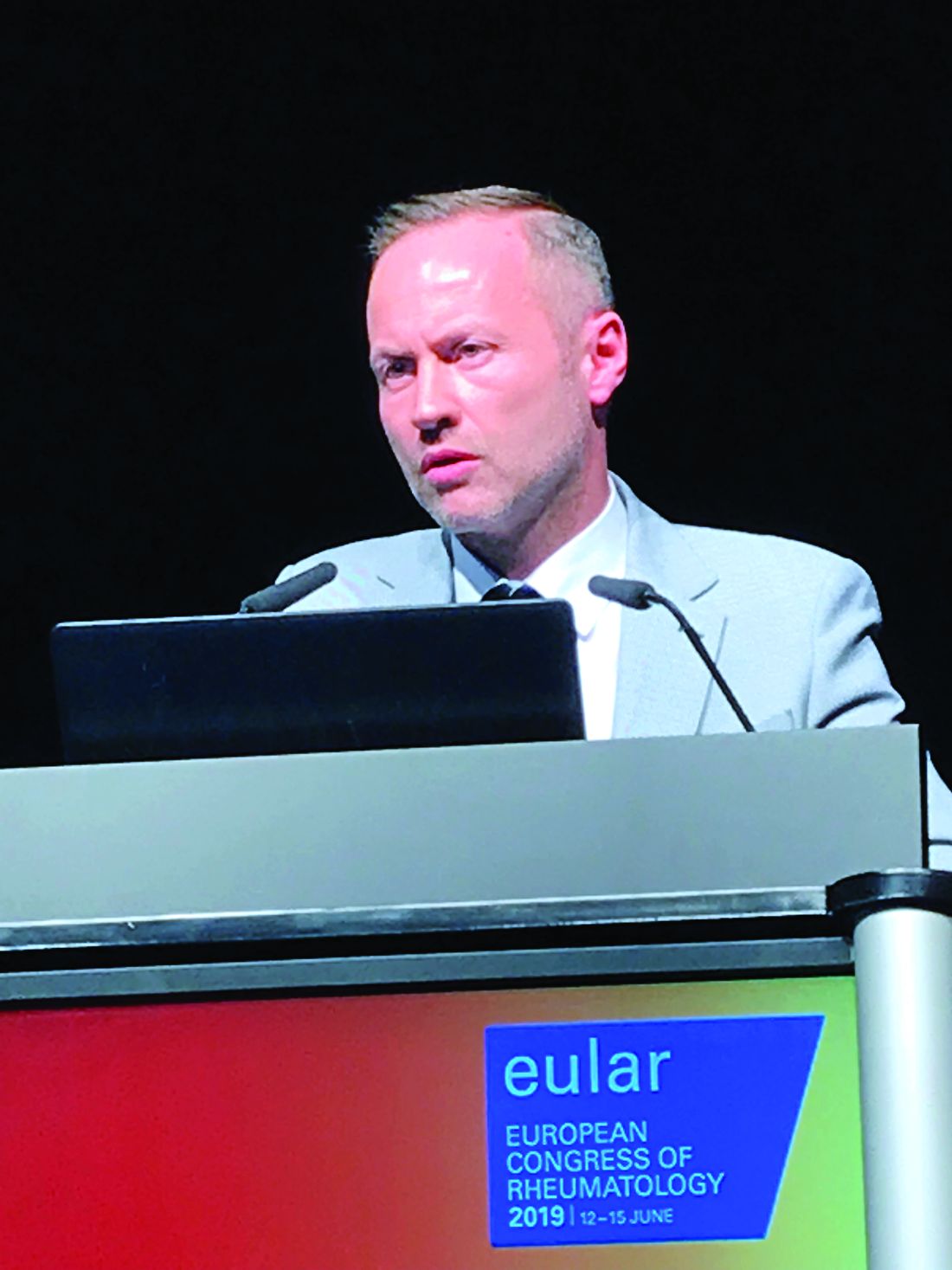
“There was rapid and significant clinical improvement as measured with ASAS20 with both of the study doses of secukinumab,” an anti–interleukin-17 monoclonal antibody, reported Xenofon Baraliakos, MD, of Rheumazentrum Ruhrgebliet, Ruhr-University Bochum in Herne, Germany.
At the European Congress of Rheumatology, Dr. Baraliakos said that the 1-year data will be complete before the end of 2019.
In this primary analysis, 498 patients with established PsA were randomized to 150 mg secukinumab, 300 mg secukinumab, or placebo. For enrollment, all patients were required to have substantial axial pain and a Bath Ankylosing Spondylitis Disease Activity Index (BASDAI) score greater than 4 despite treatment with at least two NSAIDs.
For the first 4 weeks of the trial, patients received their assigned therapies weekly by subcutaneous administration. Treatment thereafter was every 4 weeks.
Almost all patients had active psoriasis and axial symptoms of at least several years duration. The median patient age was 46 years. Approximately one-third were HLA B27 positive.
At baseline, the median back pain score on a visual analog scale of 100 was 73, and the median BASDAI score was greater than 7.0. More than 90% of patients reported back pain worsening with rest.
The proportion of patients achieving ASAS20 at 12 weeks was 63.1% in the group assigned to 300 mg secukinumab, 66.3% in those assigned 150 mg, and 31.1% for those assigned placebo (P less than .0001 for either active therapy versus placebo).
Analyses conducted with multiple imputations and comparing those who were and were not taking methotrexate produced almost the same relative advantage for secukinumab. ASAS20 responses in patients using concomitant methotrexate were 65.1% with 300 mg secukinumab, 67.3% with 150 mg secukinumab, and 33.9% with placebo. Corresponding values in the no-methotrexate group were 60.5%, 64.4%, and 27.1%, respectively.
“There was a good response from either dose of secukinumab no matter what analysis was employed,” reported Dr. Baraliakos, citing an odds ratio of 3.81 for reaching the primary endpoint with secukinumab versus placebo. There were no significant differences in efficacy between the doses of secukinumab.
There was “not much to say about safety,” according to Dr. Baraliakos, as no significant differences in any adverse events were observed between study arms. However, he did caution that longer-term exposure is needed for a more complete analysis of tolerability and safety.
Most patients with PsA are thought to eventually develop axial involvement, which has a major adverse affect on quality of life, according to Dr. Baraliakos. He considers this primary 12-week analysis encouraging, but said the 1-year data will provide more information about whether this therapy should be considered routinely in PsA patients with persistent axial symptoms.
Axial imaging was conducted at study entry even though it was not a criterion for enrollment. Dr. Baraliakos reported that the impact of secukinumab on objective imaging measures of disease activity, if any, is forthcoming.
Imaging data might be needed to establish benefit objectively, judging from a criticism of the study design that arose during discussion after the data were presented. Specifically, it was pointed out that improvement in ASAS20 and BASDAI could occur as a result of improvement in peripheral symptoms, such as enthesitis. The lack of axial-specific outcomes was called a potential weakness of this study.
Dr. Baraliakos countered that BASDAI evaluations did include axial-specific questions, but also confirmed that spine-specific outcomes are included among outcomes to be presented with longer-term analyses.
“These data will come,” said Dr. Baraliakos, referring to imaging as well as other outcomes that will provide more information on the impact of secukinumab in treating the axial involvement of PsA.
Dr. Baraliakos reported multiple financial relationships with pharmaceutical companies, including Novartis, which sponsored this trial.
SOURCE: Ann Rheum Dis. Jun 2019;78(Suppl2):195-6. Abstract OPO235. doi: 10.1136/annrheumdis-2019-eular.2932.
MADRID – Secukinumab was superior to placebo for the primary endpoint of 20% improvement in Assessment of SpondyloArthritis international Society criteria (ASAS20), based on the initial 12-week data from the ongoing phase 3b MAXIMISE trial, the first randomized, controlled trial to evaluate a biologic therapy for the treatment of the axial manifestations of psoriatic arthritis (PsA).
“There was rapid and significant clinical improvement as measured with ASAS20 with both of the study doses of secukinumab,” an anti–interleukin-17 monoclonal antibody, reported Xenofon Baraliakos, MD, of Rheumazentrum Ruhrgebliet, Ruhr-University Bochum in Herne, Germany.
At the European Congress of Rheumatology, Dr. Baraliakos said that the 1-year data will be complete before the end of 2019.
In this primary analysis, 498 patients with established PsA were randomized to 150 mg secukinumab, 300 mg secukinumab, or placebo. For enrollment, all patients were required to have substantial axial pain and a Bath Ankylosing Spondylitis Disease Activity Index (BASDAI) score greater than 4 despite treatment with at least two NSAIDs.
For the first 4 weeks of the trial, patients received their assigned therapies weekly by subcutaneous administration. Treatment thereafter was every 4 weeks.
Almost all patients had active psoriasis and axial symptoms of at least several years duration. The median patient age was 46 years. Approximately one-third were HLA B27 positive.
At baseline, the median back pain score on a visual analog scale of 100 was 73, and the median BASDAI score was greater than 7.0. More than 90% of patients reported back pain worsening with rest.
The proportion of patients achieving ASAS20 at 12 weeks was 63.1% in the group assigned to 300 mg secukinumab, 66.3% in those assigned 150 mg, and 31.1% for those assigned placebo (P less than .0001 for either active therapy versus placebo).
Analyses conducted with multiple imputations and comparing those who were and were not taking methotrexate produced almost the same relative advantage for secukinumab. ASAS20 responses in patients using concomitant methotrexate were 65.1% with 300 mg secukinumab, 67.3% with 150 mg secukinumab, and 33.9% with placebo. Corresponding values in the no-methotrexate group were 60.5%, 64.4%, and 27.1%, respectively.
“There was a good response from either dose of secukinumab no matter what analysis was employed,” reported Dr. Baraliakos, citing an odds ratio of 3.81 for reaching the primary endpoint with secukinumab versus placebo. There were no significant differences in efficacy between the doses of secukinumab.
There was “not much to say about safety,” according to Dr. Baraliakos, as no significant differences in any adverse events were observed between study arms. However, he did caution that longer-term exposure is needed for a more complete analysis of tolerability and safety.
Most patients with PsA are thought to eventually develop axial involvement, which has a major adverse affect on quality of life, according to Dr. Baraliakos. He considers this primary 12-week analysis encouraging, but said the 1-year data will provide more information about whether this therapy should be considered routinely in PsA patients with persistent axial symptoms.
Axial imaging was conducted at study entry even though it was not a criterion for enrollment. Dr. Baraliakos reported that the impact of secukinumab on objective imaging measures of disease activity, if any, is forthcoming.
Imaging data might be needed to establish benefit objectively, judging from a criticism of the study design that arose during discussion after the data were presented. Specifically, it was pointed out that improvement in ASAS20 and BASDAI could occur as a result of improvement in peripheral symptoms, such as enthesitis. The lack of axial-specific outcomes was called a potential weakness of this study.
Dr. Baraliakos countered that BASDAI evaluations did include axial-specific questions, but also confirmed that spine-specific outcomes are included among outcomes to be presented with longer-term analyses.
“These data will come,” said Dr. Baraliakos, referring to imaging as well as other outcomes that will provide more information on the impact of secukinumab in treating the axial involvement of PsA.
Dr. Baraliakos reported multiple financial relationships with pharmaceutical companies, including Novartis, which sponsored this trial.
SOURCE: Ann Rheum Dis. Jun 2019;78(Suppl2):195-6. Abstract OPO235. doi: 10.1136/annrheumdis-2019-eular.2932.
MADRID – Secukinumab was superior to placebo for the primary endpoint of 20% improvement in Assessment of SpondyloArthritis international Society criteria (ASAS20), based on the initial 12-week data from the ongoing phase 3b MAXIMISE trial, the first randomized, controlled trial to evaluate a biologic therapy for the treatment of the axial manifestations of psoriatic arthritis (PsA).
“There was rapid and significant clinical improvement as measured with ASAS20 with both of the study doses of secukinumab,” an anti–interleukin-17 monoclonal antibody, reported Xenofon Baraliakos, MD, of Rheumazentrum Ruhrgebliet, Ruhr-University Bochum in Herne, Germany.
At the European Congress of Rheumatology, Dr. Baraliakos said that the 1-year data will be complete before the end of 2019.
In this primary analysis, 498 patients with established PsA were randomized to 150 mg secukinumab, 300 mg secukinumab, or placebo. For enrollment, all patients were required to have substantial axial pain and a Bath Ankylosing Spondylitis Disease Activity Index (BASDAI) score greater than 4 despite treatment with at least two NSAIDs.
For the first 4 weeks of the trial, patients received their assigned therapies weekly by subcutaneous administration. Treatment thereafter was every 4 weeks.
Almost all patients had active psoriasis and axial symptoms of at least several years duration. The median patient age was 46 years. Approximately one-third were HLA B27 positive.
At baseline, the median back pain score on a visual analog scale of 100 was 73, and the median BASDAI score was greater than 7.0. More than 90% of patients reported back pain worsening with rest.
The proportion of patients achieving ASAS20 at 12 weeks was 63.1% in the group assigned to 300 mg secukinumab, 66.3% in those assigned 150 mg, and 31.1% for those assigned placebo (P less than .0001 for either active therapy versus placebo).
Analyses conducted with multiple imputations and comparing those who were and were not taking methotrexate produced almost the same relative advantage for secukinumab. ASAS20 responses in patients using concomitant methotrexate were 65.1% with 300 mg secukinumab, 67.3% with 150 mg secukinumab, and 33.9% with placebo. Corresponding values in the no-methotrexate group were 60.5%, 64.4%, and 27.1%, respectively.
“There was a good response from either dose of secukinumab no matter what analysis was employed,” reported Dr. Baraliakos, citing an odds ratio of 3.81 for reaching the primary endpoint with secukinumab versus placebo. There were no significant differences in efficacy between the doses of secukinumab.
There was “not much to say about safety,” according to Dr. Baraliakos, as no significant differences in any adverse events were observed between study arms. However, he did caution that longer-term exposure is needed for a more complete analysis of tolerability and safety.
Most patients with PsA are thought to eventually develop axial involvement, which has a major adverse affect on quality of life, according to Dr. Baraliakos. He considers this primary 12-week analysis encouraging, but said the 1-year data will provide more information about whether this therapy should be considered routinely in PsA patients with persistent axial symptoms.
Axial imaging was conducted at study entry even though it was not a criterion for enrollment. Dr. Baraliakos reported that the impact of secukinumab on objective imaging measures of disease activity, if any, is forthcoming.
Imaging data might be needed to establish benefit objectively, judging from a criticism of the study design that arose during discussion after the data were presented. Specifically, it was pointed out that improvement in ASAS20 and BASDAI could occur as a result of improvement in peripheral symptoms, such as enthesitis. The lack of axial-specific outcomes was called a potential weakness of this study.
Dr. Baraliakos countered that BASDAI evaluations did include axial-specific questions, but also confirmed that spine-specific outcomes are included among outcomes to be presented with longer-term analyses.
“These data will come,” said Dr. Baraliakos, referring to imaging as well as other outcomes that will provide more information on the impact of secukinumab in treating the axial involvement of PsA.
Dr. Baraliakos reported multiple financial relationships with pharmaceutical companies, including Novartis, which sponsored this trial.
SOURCE: Ann Rheum Dis. Jun 2019;78(Suppl2):195-6. Abstract OPO235. doi: 10.1136/annrheumdis-2019-eular.2932.
REPORTING FROM EULAR 2019 CONGRESS
VIDEO: PsA Fast Facts: Psoriatic arthritis types


Tildrakizumab shows positive effects in active psoriatic arthritis
MADRID – Tildrakizumab, a high-affinity anti–interleukin-23p19 monoclonal antibody, significantly improved joint and skin manifestations in patients with psoriatic arthritis in an ongoing phase 2b study.

“By week 24, all four doses of tildrakizumab were significantly more efficacious than placebo,” Philip J. Mease, MD, director of the division of rheumatology clinical research at Swedish Medical Center, Seattle, reported at the European Congress of Rheumatology. This included patient-rated pain, he observed.
Furthermore, “there was a clear separation between tildrakizumab and placebo as early as 8 weeks” for the trial’s primary endpoint, a 20% response rate on American College of Rheumatology criteria (ACR20) at 24 weeks.
The study (NCT02980692), which is projected to complete next year, was conducted to demonstrate the safety and efficacy of tildrakizumab in patients with active psoriatic arthritis. Tildrakizumab is already approved for the treatment of moderate to severe plaque psoriasis in multiple countries, Dr. Mease pointed out. Indeed, the drug – which is marketed as Ilumya in the United States and as Ilumetri in the Europe Union – was approved by the Food and Drug Administration in March last year based on the positive results of the phase 3 reSURFACE clinical trials program (Drugs. 2018;78[8]:845-9).
In presenting interim findings from the study, Dr. Mease observed that “it looked like shortening the dosing interval from Q12 to Q4 weeks for the 200-mg dose did not result in a measurable difference in skin or joint responses.”
The trial included 391 of 500 adult patients who were screened and then randomized to one of four tildrakizumab dosing groups or placebo; there were 78 patients treated with tildrakizumab 200 mg once every 4 weeks (Q4W) and 79 who were treated with tildrakizumab 200 mg once every 12 weeks (Q12W). A further 77 patients were treated with a 100 mg tildrakizumab dose Q12W, 78 patients with a 20 mg tildrakizumab dose Q12W, and 79 patients were treated with a placebo Q4W.
The mean age of patients included in the study was around 48 years. A total of 55% were female, and more than 96% were white. Across the groups, patients had a median of 7-8 tender joints and about 14-19 swollen joints, and 53%-70% had at least 3% psoriasis body surface area involvement.
The primary endpoint of ACR20 at 24 weeks was met by 79.5%, 77.2%, 71.4%, and 73.1% of patients in the tildrakizumab 200-mg Q4W, 200-mg Q12W, 100-mg Q12W, and 20-mg Q12W groups, and by 50.6% of the placebo-treated patients. “So even the very low dose had an effect,” Dr. Mease observed, also acknowledging the “very high placebo response.”
An ACR50 response was achieved by a respective 53.6%, 50.6%, 45.5%, 39.7%, 19.7%, and 24.1% of patients. ACR70 response rates were also “proportionately lower” than the ACR20 responses at around 25%-29% for the tildrakizumab groups and 16% for placebo.
“The skin scores were as expected quite high,” Dr. Mease said. The Psoriasis Area and Severity Index (PASI) 75 response rate was 79.6% in the tildrakizumab 200-mg Q12W group, 64.2% in the 200-mg Q4W group, 55.6% in the 100-mg Q12W group, 46.3% in the 20-mg Q12W group, and just 16.7% in the placebo group. The respective percentages of patients achieving a PASI 90 response rate were 50%, 47.2%, 38.9%, 36.6%, and 7.1%.
Patient pain assessment showed a clear reduction with tildrakizumab versus placebo treatment. “We see statistical separation between all of the tildrakizumab arms and placebo,” Dr. Mease said. “A greater than 50% response in pain is considered major clinical improvement, and that was achieved by all of the tildrakizumab arms.”
As for enthesitis, the mean change in Leeds Enthesitis Scores from baseline to week 24 were greater with all tildrakizumab doses than with placebo, although a high placebo response was again apparent.
“In general, the safety profile was very good for this agent,” Dr. Mease said. Any treatment-emergent adverse event (TEAE) occurred in 156 of 317 (49%) tildrakizumab-treated patients and in 34 of 70 (49%) placebo-treated patients. The rates of any severe TEAE were 2.2% for the tildrakizumab arms and 2.5% for placebo. Any TEAE related to treatment occurred in a respective 11.2% and 12.7%, but there were no discontinuations because of adverse events, nor were there any major cardiac adverse events, cases of malignancy, or deaths caused by TEAEs. There was a single serious infection, a case of tonsillitis, which occurred with tildrakizumab treatment.
In response to a question after his presentation, Dr. Measure noted: “In the psoriasis trials with this agent, even a single dose yielded a fairly meaningful PASI 75 responses out for extremely long periods of time, 6–12 months. So, it looks like the Q12 dosing is going to be reasonable and convenient for patients”. He also agreed with a comment that the more frequent dosing seemed to be linked to inferior responses in the skin.
The study was sponsored by Sun Pharmaceutical Industries. Dr. Mease has received research grants, consulting fees, and/or speaker fees from 15 pharmaceutical companies, including Sun Pharmaceutical Industries.
SOURCE: Mease PJ et al. Ann Rheum Dis. Jun 2019;78(Suppl 2):77-9. Abstract LB0002, doi: 10.1136/annrheumdis-2019-eular.8669
MADRID – Tildrakizumab, a high-affinity anti–interleukin-23p19 monoclonal antibody, significantly improved joint and skin manifestations in patients with psoriatic arthritis in an ongoing phase 2b study.
“By week 24, all four doses of tildrakizumab were significantly more efficacious than placebo,” Philip J. Mease, MD, director of the division of rheumatology clinical research at Swedish Medical Center, Seattle, reported at the European Congress of Rheumatology. This included patient-rated pain, he observed.
Furthermore, “there was a clear separation between tildrakizumab and placebo as early as 8 weeks” for the trial’s primary endpoint, a 20% response rate on American College of Rheumatology criteria (ACR20) at 24 weeks.
The study (NCT02980692), which is projected to complete next year, was conducted to demonstrate the safety and efficacy of tildrakizumab in patients with active psoriatic arthritis. Tildrakizumab is already approved for the treatment of moderate to severe plaque psoriasis in multiple countries, Dr. Mease pointed out. Indeed, the drug – which is marketed as Ilumya in the United States and as Ilumetri in the Europe Union – was approved by the Food and Drug Administration in March last year based on the positive results of the phase 3 reSURFACE clinical trials program (Drugs. 2018;78[8]:845-9).
In presenting interim findings from the study, Dr. Mease observed that “it looked like shortening the dosing interval from Q12 to Q4 weeks for the 200-mg dose did not result in a measurable difference in skin or joint responses.”
The trial included 391 of 500 adult patients who were screened and then randomized to one of four tildrakizumab dosing groups or placebo; there were 78 patients treated with tildrakizumab 200 mg once every 4 weeks (Q4W) and 79 who were treated with tildrakizumab 200 mg once every 12 weeks (Q12W). A further 77 patients were treated with a 100 mg tildrakizumab dose Q12W, 78 patients with a 20 mg tildrakizumab dose Q12W, and 79 patients were treated with a placebo Q4W.
The mean age of patients included in the study was around 48 years. A total of 55% were female, and more than 96% were white. Across the groups, patients had a median of 7-8 tender joints and about 14-19 swollen joints, and 53%-70% had at least 3% psoriasis body surface area involvement.
The primary endpoint of ACR20 at 24 weeks was met by 79.5%, 77.2%, 71.4%, and 73.1% of patients in the tildrakizumab 200-mg Q4W, 200-mg Q12W, 100-mg Q12W, and 20-mg Q12W groups, and by 50.6% of the placebo-treated patients. “So even the very low dose had an effect,” Dr. Mease observed, also acknowledging the “very high placebo response.”
An ACR50 response was achieved by a respective 53.6%, 50.6%, 45.5%, 39.7%, 19.7%, and 24.1% of patients. ACR70 response rates were also “proportionately lower” than the ACR20 responses at around 25%-29% for the tildrakizumab groups and 16% for placebo.
“The skin scores were as expected quite high,” Dr. Mease said. The Psoriasis Area and Severity Index (PASI) 75 response rate was 79.6% in the tildrakizumab 200-mg Q12W group, 64.2% in the 200-mg Q4W group, 55.6% in the 100-mg Q12W group, 46.3% in the 20-mg Q12W group, and just 16.7% in the placebo group. The respective percentages of patients achieving a PASI 90 response rate were 50%, 47.2%, 38.9%, 36.6%, and 7.1%.
Patient pain assessment showed a clear reduction with tildrakizumab versus placebo treatment. “We see statistical separation between all of the tildrakizumab arms and placebo,” Dr. Mease said. “A greater than 50% response in pain is considered major clinical improvement, and that was achieved by all of the tildrakizumab arms.”
As for enthesitis, the mean change in Leeds Enthesitis Scores from baseline to week 24 were greater with all tildrakizumab doses than with placebo, although a high placebo response was again apparent.
“In general, the safety profile was very good for this agent,” Dr. Mease said. Any treatment-emergent adverse event (TEAE) occurred in 156 of 317 (49%) tildrakizumab-treated patients and in 34 of 70 (49%) placebo-treated patients. The rates of any severe TEAE were 2.2% for the tildrakizumab arms and 2.5% for placebo. Any TEAE related to treatment occurred in a respective 11.2% and 12.7%, but there were no discontinuations because of adverse events, nor were there any major cardiac adverse events, cases of malignancy, or deaths caused by TEAEs. There was a single serious infection, a case of tonsillitis, which occurred with tildrakizumab treatment.
In response to a question after his presentation, Dr. Measure noted: “In the psoriasis trials with this agent, even a single dose yielded a fairly meaningful PASI 75 responses out for extremely long periods of time, 6–12 months. So, it looks like the Q12 dosing is going to be reasonable and convenient for patients”. He also agreed with a comment that the more frequent dosing seemed to be linked to inferior responses in the skin.
The study was sponsored by Sun Pharmaceutical Industries. Dr. Mease has received research grants, consulting fees, and/or speaker fees from 15 pharmaceutical companies, including Sun Pharmaceutical Industries.
SOURCE: Mease PJ et al. Ann Rheum Dis. Jun 2019;78(Suppl 2):77-9. Abstract LB0002, doi: 10.1136/annrheumdis-2019-eular.8669
MADRID – Tildrakizumab, a high-affinity anti–interleukin-23p19 monoclonal antibody, significantly improved joint and skin manifestations in patients with psoriatic arthritis in an ongoing phase 2b study.
“By week 24, all four doses of tildrakizumab were significantly more efficacious than placebo,” Philip J. Mease, MD, director of the division of rheumatology clinical research at Swedish Medical Center, Seattle, reported at the European Congress of Rheumatology. This included patient-rated pain, he observed.
Furthermore, “there was a clear separation between tildrakizumab and placebo as early as 8 weeks” for the trial’s primary endpoint, a 20% response rate on American College of Rheumatology criteria (ACR20) at 24 weeks.
The study (NCT02980692), which is projected to complete next year, was conducted to demonstrate the safety and efficacy of tildrakizumab in patients with active psoriatic arthritis. Tildrakizumab is already approved for the treatment of moderate to severe plaque psoriasis in multiple countries, Dr. Mease pointed out. Indeed, the drug – which is marketed as Ilumya in the United States and as Ilumetri in the Europe Union – was approved by the Food and Drug Administration in March last year based on the positive results of the phase 3 reSURFACE clinical trials program (Drugs. 2018;78[8]:845-9).
In presenting interim findings from the study, Dr. Mease observed that “it looked like shortening the dosing interval from Q12 to Q4 weeks for the 200-mg dose did not result in a measurable difference in skin or joint responses.”
The trial included 391 of 500 adult patients who were screened and then randomized to one of four tildrakizumab dosing groups or placebo; there were 78 patients treated with tildrakizumab 200 mg once every 4 weeks (Q4W) and 79 who were treated with tildrakizumab 200 mg once every 12 weeks (Q12W). A further 77 patients were treated with a 100 mg tildrakizumab dose Q12W, 78 patients with a 20 mg tildrakizumab dose Q12W, and 79 patients were treated with a placebo Q4W.
The mean age of patients included in the study was around 48 years. A total of 55% were female, and more than 96% were white. Across the groups, patients had a median of 7-8 tender joints and about 14-19 swollen joints, and 53%-70% had at least 3% psoriasis body surface area involvement.
The primary endpoint of ACR20 at 24 weeks was met by 79.5%, 77.2%, 71.4%, and 73.1% of patients in the tildrakizumab 200-mg Q4W, 200-mg Q12W, 100-mg Q12W, and 20-mg Q12W groups, and by 50.6% of the placebo-treated patients. “So even the very low dose had an effect,” Dr. Mease observed, also acknowledging the “very high placebo response.”
An ACR50 response was achieved by a respective 53.6%, 50.6%, 45.5%, 39.7%, 19.7%, and 24.1% of patients. ACR70 response rates were also “proportionately lower” than the ACR20 responses at around 25%-29% for the tildrakizumab groups and 16% for placebo.
“The skin scores were as expected quite high,” Dr. Mease said. The Psoriasis Area and Severity Index (PASI) 75 response rate was 79.6% in the tildrakizumab 200-mg Q12W group, 64.2% in the 200-mg Q4W group, 55.6% in the 100-mg Q12W group, 46.3% in the 20-mg Q12W group, and just 16.7% in the placebo group. The respective percentages of patients achieving a PASI 90 response rate were 50%, 47.2%, 38.9%, 36.6%, and 7.1%.
Patient pain assessment showed a clear reduction with tildrakizumab versus placebo treatment. “We see statistical separation between all of the tildrakizumab arms and placebo,” Dr. Mease said. “A greater than 50% response in pain is considered major clinical improvement, and that was achieved by all of the tildrakizumab arms.”
As for enthesitis, the mean change in Leeds Enthesitis Scores from baseline to week 24 were greater with all tildrakizumab doses than with placebo, although a high placebo response was again apparent.
“In general, the safety profile was very good for this agent,” Dr. Mease said. Any treatment-emergent adverse event (TEAE) occurred in 156 of 317 (49%) tildrakizumab-treated patients and in 34 of 70 (49%) placebo-treated patients. The rates of any severe TEAE were 2.2% for the tildrakizumab arms and 2.5% for placebo. Any TEAE related to treatment occurred in a respective 11.2% and 12.7%, but there were no discontinuations because of adverse events, nor were there any major cardiac adverse events, cases of malignancy, or deaths caused by TEAEs. There was a single serious infection, a case of tonsillitis, which occurred with tildrakizumab treatment.
In response to a question after his presentation, Dr. Measure noted: “In the psoriasis trials with this agent, even a single dose yielded a fairly meaningful PASI 75 responses out for extremely long periods of time, 6–12 months. So, it looks like the Q12 dosing is going to be reasonable and convenient for patients”. He also agreed with a comment that the more frequent dosing seemed to be linked to inferior responses in the skin.
The study was sponsored by Sun Pharmaceutical Industries. Dr. Mease has received research grants, consulting fees, and/or speaker fees from 15 pharmaceutical companies, including Sun Pharmaceutical Industries.
SOURCE: Mease PJ et al. Ann Rheum Dis. Jun 2019;78(Suppl 2):77-9. Abstract LB0002, doi: 10.1136/annrheumdis-2019-eular.8669
REPORTING FROM EULAR 2019 CONGRESS
Key clinical point: Tildrakizumab (Ilumya) significantly improved joint and skin manifestations in patients with psoriatic arthritis.
Major finding: At 24 weeks, more than 70% of patients treated with tildrakizumab versus 50% of those given placebo achieved an American College of Rheumatology (ACR) 20 response.
Study details: Randomized, double-blind, placebo-controlled, multiple-dose, phase 2b study to demonstrate the safety and efficacy of tildrakizumab in patients with active psoriatic arthritis.
Disclosures: The study was sponsored by Sun Pharmaceutical Industries. Dr. Mease has received research grants, consulting fees, speaker fees, or all, from AbbVie, Amgen, Bristol-Myers Squibb, Celgene, Galapagos, Genentech, Gilead, Janssen, Leo, Eli Lilly, Merck, Novartis, Pfizer, UCB, and Sun Pharmaceutical Industries.
Source: Mease PJ et al. Ann Rheum Dis. Jun 2019;78(Suppl 2):77-9. Abstract LB0002, doi: 10.1136/annrheumdis-2019-eular.8669
Dr. Alexis Ogdie discusses the latest research in psoriatic arthritis
What's new with potential treatment options such as tildrakizumab? Given the roles obesity and metabolic disease play in psoriatic arthritis, how does weight loss affect treatment response? Alexis Ogdie, MD, director of the psoriatic arthritis clinic at the University of Pennsylvania in Philadelphia, talks about the latest developments in psoriatic arthritis research.
What's new with potential treatment options such as tildrakizumab? Given the roles obesity and metabolic disease play in psoriatic arthritis, how does weight loss affect treatment response? Alexis Ogdie, MD, director of the psoriatic arthritis clinic at the University of Pennsylvania in Philadelphia, talks about the latest developments in psoriatic arthritis research.
What's new with potential treatment options such as tildrakizumab? Given the roles obesity and metabolic disease play in psoriatic arthritis, how does weight loss affect treatment response? Alexis Ogdie, MD, director of the psoriatic arthritis clinic at the University of Pennsylvania in Philadelphia, talks about the latest developments in psoriatic arthritis research.

Ixekizumab boosts quality of life in genital psoriasis
MILAN – , according to data presented at the World Congress of Dermatology.
After 12 weeks of ixekizumab administration, nearly half of patients who received ixekizumab in the randomized, double-blind, placebo-controlled trial achieved a Dermatology Life Quality Index (DLQI) score of 0 or 1, compared with fewer than 5% of those receiving placebo. At the end of one year, 46.7% of the original ixekizumab group and 50.8% of those who transitioned to ixekizumab from placebo via an open-label extension arm achieved a DLQI of 0 or 1. A DLQI score of 0 or 1 on a 30-point scale indicated that psoriasis had no effect on health-related quality of life.
Among patients with plaque psoriasis, genital involvement is common – present in over 60% at some point during the disease course, Lyn Guenther, MD, of Guenther Dermatology Research Centre, London, Ont., and her colleagues wrote in the poster accompanying the presentation. Sexual health and overall quality of life can be negatively affected by genital psoriasis, they added.
In the study, adult patients were included if they had chronic plaque psoriasis present in genital and nongenital areas. For overall psoriasis and genital involvement, the Static Physician’s Global Assessment (sPGA) was 3 or greater, and total body surface area involvement was at least 1%. Also, patients had to have failed or been intolerant to at least one topical therapy for genital psoriasis.
Patients were excluded if they had genital pustules or vesicles, significant uncontrolled medical or psychiatric comorbidities, recent infection, or prior interleukin-17 antagonist treatment.
In all, patients received ixekizumab 160 mg (75 patients) or placebo (74) subcutaneously every 2 weeks during the initial 12-week study period. For the open-label extension arm, 74 patients in the active arm and 65 patients in the placebo arm went on to receive 80 mg of ixekizumab every 4 weeks, with a step-up option to every other week dosing depending on clinical response.
Patients were given the Short Form Health Survey (SF-36) at baseline and at week 12 and week 52; investigators recorded the mean change for baseline for both the physical and mental component.
Participants also completed the DLQI, which was administered nine times over the 52-week study period.
From baseline, SF-36 scores climbed in both the physical and mental domains for those on ixekizumab, wrote Dr. Guenther and her coinvestigators, with “improvements in all SF-36 domains” for those on ixekizumab at 12 weeks, which continued through week 52. For patients who transitioned to ixekizumab from placebo, “improvements in all SF-36 domains were achieved at week 52,” they wrote.
The mean change from baseline on the SF-36 for the ixekizumab population was 3.5 on the physical domain and 4.8 on the mental component. For the placebo-ixekizumab group, scores improved by a mean 4.5 on the physical domain and 4.9 on the mental domain. Those who stayed on ixekizumab saw some decline in SF-36 scores, with a physical component improvement of 2.5 and mental component improvement of 3.6 at 52 weeks.
Ixekizumab (Taltz), a monoclonal antibody targeting interleukin-17A, is approved for moderate to severe plaque psoriasis, and active psoriatic arthritis..
“Ixekizumab provided clinically meaningful and persistent improvements in HRQoL in patients with moderate to severe genital psoriasis,” wrote Dr. Guenther and her colleagues.
Dr. Guenther and two coauthors reported receiving remuneration from several pharmaceutical companies, including Eli Lilly, which funded the study. Four coauthors are employees and shareholders of Eli Lilly.
MILAN – , according to data presented at the World Congress of Dermatology.
After 12 weeks of ixekizumab administration, nearly half of patients who received ixekizumab in the randomized, double-blind, placebo-controlled trial achieved a Dermatology Life Quality Index (DLQI) score of 0 or 1, compared with fewer than 5% of those receiving placebo. At the end of one year, 46.7% of the original ixekizumab group and 50.8% of those who transitioned to ixekizumab from placebo via an open-label extension arm achieved a DLQI of 0 or 1. A DLQI score of 0 or 1 on a 30-point scale indicated that psoriasis had no effect on health-related quality of life.
Among patients with plaque psoriasis, genital involvement is common – present in over 60% at some point during the disease course, Lyn Guenther, MD, of Guenther Dermatology Research Centre, London, Ont., and her colleagues wrote in the poster accompanying the presentation. Sexual health and overall quality of life can be negatively affected by genital psoriasis, they added.
In the study, adult patients were included if they had chronic plaque psoriasis present in genital and nongenital areas. For overall psoriasis and genital involvement, the Static Physician’s Global Assessment (sPGA) was 3 or greater, and total body surface area involvement was at least 1%. Also, patients had to have failed or been intolerant to at least one topical therapy for genital psoriasis.
Patients were excluded if they had genital pustules or vesicles, significant uncontrolled medical or psychiatric comorbidities, recent infection, or prior interleukin-17 antagonist treatment.
In all, patients received ixekizumab 160 mg (75 patients) or placebo (74) subcutaneously every 2 weeks during the initial 12-week study period. For the open-label extension arm, 74 patients in the active arm and 65 patients in the placebo arm went on to receive 80 mg of ixekizumab every 4 weeks, with a step-up option to every other week dosing depending on clinical response.
Patients were given the Short Form Health Survey (SF-36) at baseline and at week 12 and week 52; investigators recorded the mean change for baseline for both the physical and mental component.
Participants also completed the DLQI, which was administered nine times over the 52-week study period.
From baseline, SF-36 scores climbed in both the physical and mental domains for those on ixekizumab, wrote Dr. Guenther and her coinvestigators, with “improvements in all SF-36 domains” for those on ixekizumab at 12 weeks, which continued through week 52. For patients who transitioned to ixekizumab from placebo, “improvements in all SF-36 domains were achieved at week 52,” they wrote.
The mean change from baseline on the SF-36 for the ixekizumab population was 3.5 on the physical domain and 4.8 on the mental component. For the placebo-ixekizumab group, scores improved by a mean 4.5 on the physical domain and 4.9 on the mental domain. Those who stayed on ixekizumab saw some decline in SF-36 scores, with a physical component improvement of 2.5 and mental component improvement of 3.6 at 52 weeks.
Ixekizumab (Taltz), a monoclonal antibody targeting interleukin-17A, is approved for moderate to severe plaque psoriasis, and active psoriatic arthritis..
“Ixekizumab provided clinically meaningful and persistent improvements in HRQoL in patients with moderate to severe genital psoriasis,” wrote Dr. Guenther and her colleagues.
Dr. Guenther and two coauthors reported receiving remuneration from several pharmaceutical companies, including Eli Lilly, which funded the study. Four coauthors are employees and shareholders of Eli Lilly.
MILAN – , according to data presented at the World Congress of Dermatology.
After 12 weeks of ixekizumab administration, nearly half of patients who received ixekizumab in the randomized, double-blind, placebo-controlled trial achieved a Dermatology Life Quality Index (DLQI) score of 0 or 1, compared with fewer than 5% of those receiving placebo. At the end of one year, 46.7% of the original ixekizumab group and 50.8% of those who transitioned to ixekizumab from placebo via an open-label extension arm achieved a DLQI of 0 or 1. A DLQI score of 0 or 1 on a 30-point scale indicated that psoriasis had no effect on health-related quality of life.
Among patients with plaque psoriasis, genital involvement is common – present in over 60% at some point during the disease course, Lyn Guenther, MD, of Guenther Dermatology Research Centre, London, Ont., and her colleagues wrote in the poster accompanying the presentation. Sexual health and overall quality of life can be negatively affected by genital psoriasis, they added.
In the study, adult patients were included if they had chronic plaque psoriasis present in genital and nongenital areas. For overall psoriasis and genital involvement, the Static Physician’s Global Assessment (sPGA) was 3 or greater, and total body surface area involvement was at least 1%. Also, patients had to have failed or been intolerant to at least one topical therapy for genital psoriasis.
Patients were excluded if they had genital pustules or vesicles, significant uncontrolled medical or psychiatric comorbidities, recent infection, or prior interleukin-17 antagonist treatment.
In all, patients received ixekizumab 160 mg (75 patients) or placebo (74) subcutaneously every 2 weeks during the initial 12-week study period. For the open-label extension arm, 74 patients in the active arm and 65 patients in the placebo arm went on to receive 80 mg of ixekizumab every 4 weeks, with a step-up option to every other week dosing depending on clinical response.
Patients were given the Short Form Health Survey (SF-36) at baseline and at week 12 and week 52; investigators recorded the mean change for baseline for both the physical and mental component.
Participants also completed the DLQI, which was administered nine times over the 52-week study period.
From baseline, SF-36 scores climbed in both the physical and mental domains for those on ixekizumab, wrote Dr. Guenther and her coinvestigators, with “improvements in all SF-36 domains” for those on ixekizumab at 12 weeks, which continued through week 52. For patients who transitioned to ixekizumab from placebo, “improvements in all SF-36 domains were achieved at week 52,” they wrote.
The mean change from baseline on the SF-36 for the ixekizumab population was 3.5 on the physical domain and 4.8 on the mental component. For the placebo-ixekizumab group, scores improved by a mean 4.5 on the physical domain and 4.9 on the mental domain. Those who stayed on ixekizumab saw some decline in SF-36 scores, with a physical component improvement of 2.5 and mental component improvement of 3.6 at 52 weeks.
Ixekizumab (Taltz), a monoclonal antibody targeting interleukin-17A, is approved for moderate to severe plaque psoriasis, and active psoriatic arthritis..
“Ixekizumab provided clinically meaningful and persistent improvements in HRQoL in patients with moderate to severe genital psoriasis,” wrote Dr. Guenther and her colleagues.
Dr. Guenther and two coauthors reported receiving remuneration from several pharmaceutical companies, including Eli Lilly, which funded the study. Four coauthors are employees and shareholders of Eli Lilly.
REPORTING FROM WCD2019
Flu vaccine succeeds in TNF inhibitor users
MADRID – Influenza vaccination is similarly effective for individuals taking a tumor necrosis factor (TNF) inhibitor and healthy controls, but the number needed to vaccinate to prevent one case of influenza for patients taking a TNF inhibitor is much lower, according to data from a study presented at the European Congress of Rheumatology.
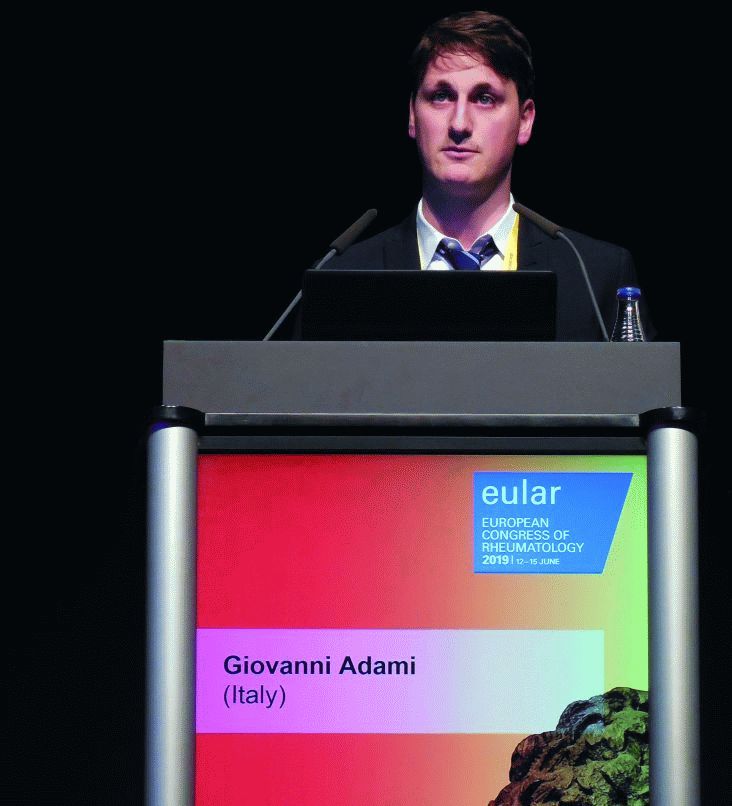
The number needed to vaccinate (NNV) to prevent one case of influenza among healthy control patients was 71, compared with an NNV of 10 for patients taking the TNF inhibitor adalimumab (Humira), reported Giovanni Adami, MD, and colleagues at the University of Verona (Italy).
While TNF inhibitors “are known to increase the risk of infection by suppressing the activity of the immune system,” it has not been clear whether the response to vaccination is impaired in patients treated with a TNF inhibitor, Dr. Adami said.
Dr. Adami and colleagues reviewed data from 15,132 adult patients exposed to adalimumab in global rheumatoid arthritis clinical trials and 71,221 healthy controls from clinical trials of influenza vaccines. Overall, the rate of influenza infection was similarly reduced with vaccination in both groups. The rate in healthy individuals went from 2.3% for those unvaccinated to 0.9% for those vaccinated; for TNF inhibitor–treated patients, the rate was 14.4% for those unvaccinated versus 4.5% for those vaccinated.
“It is not surprising that the number needed to vaccinate is dramatically lower in patients treated with immunosuppressors, compared to healthy individuals,” Dr. Adami noted. “As a matter of fact, patients treated with such drugs are at higher risk of infections, namely they have a greater absolute risk of influenza. Nevertheless, [it] is quite surprising that the relative risk reduction is similar between TNF inhibitor–treated patients and healthy controls, meaning that the vaccination is efficacious in both the cohorts.”
The researchers also calculated the cost to prevent one case of influenza, using a cost of approximately 16.5 euro per vaccine. (Dr. Adami also cited an average U.S. cost of about $40/vaccine). Using this method, they estimated a cost for vaccination of 1,174 euro (roughly $1,340) to prevent one influenza infection in the general population, and a cost of about 165 euro (roughly $188) to vaccinate enough people treated with a TNF inhibitor to prevent one infection.
Dr. Adami advised clinicians to remember the low NNV for TNF inhibitor–treated patients with regard to influenza vaccination. “A direct disclosure of the NNV for these patients might help adherence to vaccinations,” he said.
Next steps for research should include extending the real-world effectiveness analysis to other medications and other diseases, such as zoster vaccination in patients treated with Janus kinase inhibitors, Dr. Adami said.
Dr. Adami had no financial conflicts to disclose. Several coauthors disclosed relationships with companies including Abiogen Pharma, Grünenthal, Amgen, Janssen-Cilag, Mundipharma, and Pfizer.
Mitchel L. Zoler contributed to this report.
SOURCE: Adami G et al. Ann Rheum Dis. Jun 2019;78(Suppl 2):192-3. Abstract OP0230, doi: 10.1136/annrheumdis-2019-eular.3088
MADRID – Influenza vaccination is similarly effective for individuals taking a tumor necrosis factor (TNF) inhibitor and healthy controls, but the number needed to vaccinate to prevent one case of influenza for patients taking a TNF inhibitor is much lower, according to data from a study presented at the European Congress of Rheumatology.
The number needed to vaccinate (NNV) to prevent one case of influenza among healthy control patients was 71, compared with an NNV of 10 for patients taking the TNF inhibitor adalimumab (Humira), reported Giovanni Adami, MD, and colleagues at the University of Verona (Italy).
While TNF inhibitors “are known to increase the risk of infection by suppressing the activity of the immune system,” it has not been clear whether the response to vaccination is impaired in patients treated with a TNF inhibitor, Dr. Adami said.
Dr. Adami and colleagues reviewed data from 15,132 adult patients exposed to adalimumab in global rheumatoid arthritis clinical trials and 71,221 healthy controls from clinical trials of influenza vaccines. Overall, the rate of influenza infection was similarly reduced with vaccination in both groups. The rate in healthy individuals went from 2.3% for those unvaccinated to 0.9% for those vaccinated; for TNF inhibitor–treated patients, the rate was 14.4% for those unvaccinated versus 4.5% for those vaccinated.
“It is not surprising that the number needed to vaccinate is dramatically lower in patients treated with immunosuppressors, compared to healthy individuals,” Dr. Adami noted. “As a matter of fact, patients treated with such drugs are at higher risk of infections, namely they have a greater absolute risk of influenza. Nevertheless, [it] is quite surprising that the relative risk reduction is similar between TNF inhibitor–treated patients and healthy controls, meaning that the vaccination is efficacious in both the cohorts.”
The researchers also calculated the cost to prevent one case of influenza, using a cost of approximately 16.5 euro per vaccine. (Dr. Adami also cited an average U.S. cost of about $40/vaccine). Using this method, they estimated a cost for vaccination of 1,174 euro (roughly $1,340) to prevent one influenza infection in the general population, and a cost of about 165 euro (roughly $188) to vaccinate enough people treated with a TNF inhibitor to prevent one infection.
Dr. Adami advised clinicians to remember the low NNV for TNF inhibitor–treated patients with regard to influenza vaccination. “A direct disclosure of the NNV for these patients might help adherence to vaccinations,” he said.
Next steps for research should include extending the real-world effectiveness analysis to other medications and other diseases, such as zoster vaccination in patients treated with Janus kinase inhibitors, Dr. Adami said.
Dr. Adami had no financial conflicts to disclose. Several coauthors disclosed relationships with companies including Abiogen Pharma, Grünenthal, Amgen, Janssen-Cilag, Mundipharma, and Pfizer.
Mitchel L. Zoler contributed to this report.
SOURCE: Adami G et al. Ann Rheum Dis. Jun 2019;78(Suppl 2):192-3. Abstract OP0230, doi: 10.1136/annrheumdis-2019-eular.3088
MADRID – Influenza vaccination is similarly effective for individuals taking a tumor necrosis factor (TNF) inhibitor and healthy controls, but the number needed to vaccinate to prevent one case of influenza for patients taking a TNF inhibitor is much lower, according to data from a study presented at the European Congress of Rheumatology.
The number needed to vaccinate (NNV) to prevent one case of influenza among healthy control patients was 71, compared with an NNV of 10 for patients taking the TNF inhibitor adalimumab (Humira), reported Giovanni Adami, MD, and colleagues at the University of Verona (Italy).
While TNF inhibitors “are known to increase the risk of infection by suppressing the activity of the immune system,” it has not been clear whether the response to vaccination is impaired in patients treated with a TNF inhibitor, Dr. Adami said.
Dr. Adami and colleagues reviewed data from 15,132 adult patients exposed to adalimumab in global rheumatoid arthritis clinical trials and 71,221 healthy controls from clinical trials of influenza vaccines. Overall, the rate of influenza infection was similarly reduced with vaccination in both groups. The rate in healthy individuals went from 2.3% for those unvaccinated to 0.9% for those vaccinated; for TNF inhibitor–treated patients, the rate was 14.4% for those unvaccinated versus 4.5% for those vaccinated.
“It is not surprising that the number needed to vaccinate is dramatically lower in patients treated with immunosuppressors, compared to healthy individuals,” Dr. Adami noted. “As a matter of fact, patients treated with such drugs are at higher risk of infections, namely they have a greater absolute risk of influenza. Nevertheless, [it] is quite surprising that the relative risk reduction is similar between TNF inhibitor–treated patients and healthy controls, meaning that the vaccination is efficacious in both the cohorts.”
The researchers also calculated the cost to prevent one case of influenza, using a cost of approximately 16.5 euro per vaccine. (Dr. Adami also cited an average U.S. cost of about $40/vaccine). Using this method, they estimated a cost for vaccination of 1,174 euro (roughly $1,340) to prevent one influenza infection in the general population, and a cost of about 165 euro (roughly $188) to vaccinate enough people treated with a TNF inhibitor to prevent one infection.
Dr. Adami advised clinicians to remember the low NNV for TNF inhibitor–treated patients with regard to influenza vaccination. “A direct disclosure of the NNV for these patients might help adherence to vaccinations,” he said.
Next steps for research should include extending the real-world effectiveness analysis to other medications and other diseases, such as zoster vaccination in patients treated with Janus kinase inhibitors, Dr. Adami said.
Dr. Adami had no financial conflicts to disclose. Several coauthors disclosed relationships with companies including Abiogen Pharma, Grünenthal, Amgen, Janssen-Cilag, Mundipharma, and Pfizer.
Mitchel L. Zoler contributed to this report.
SOURCE: Adami G et al. Ann Rheum Dis. Jun 2019;78(Suppl 2):192-3. Abstract OP0230, doi: 10.1136/annrheumdis-2019-eular.3088
REPORTING FROM EULAR 2019 CONGRESS
Unacceptable pain despite inflammation control commonly occurs in PsA patients
MADRID – A considerable number of patients with psoriatic arthritis starting their first biologic treatment report unacceptable pain throughout the first year of treatment, even when their inflammation is controlled, according to Swedish researchers.
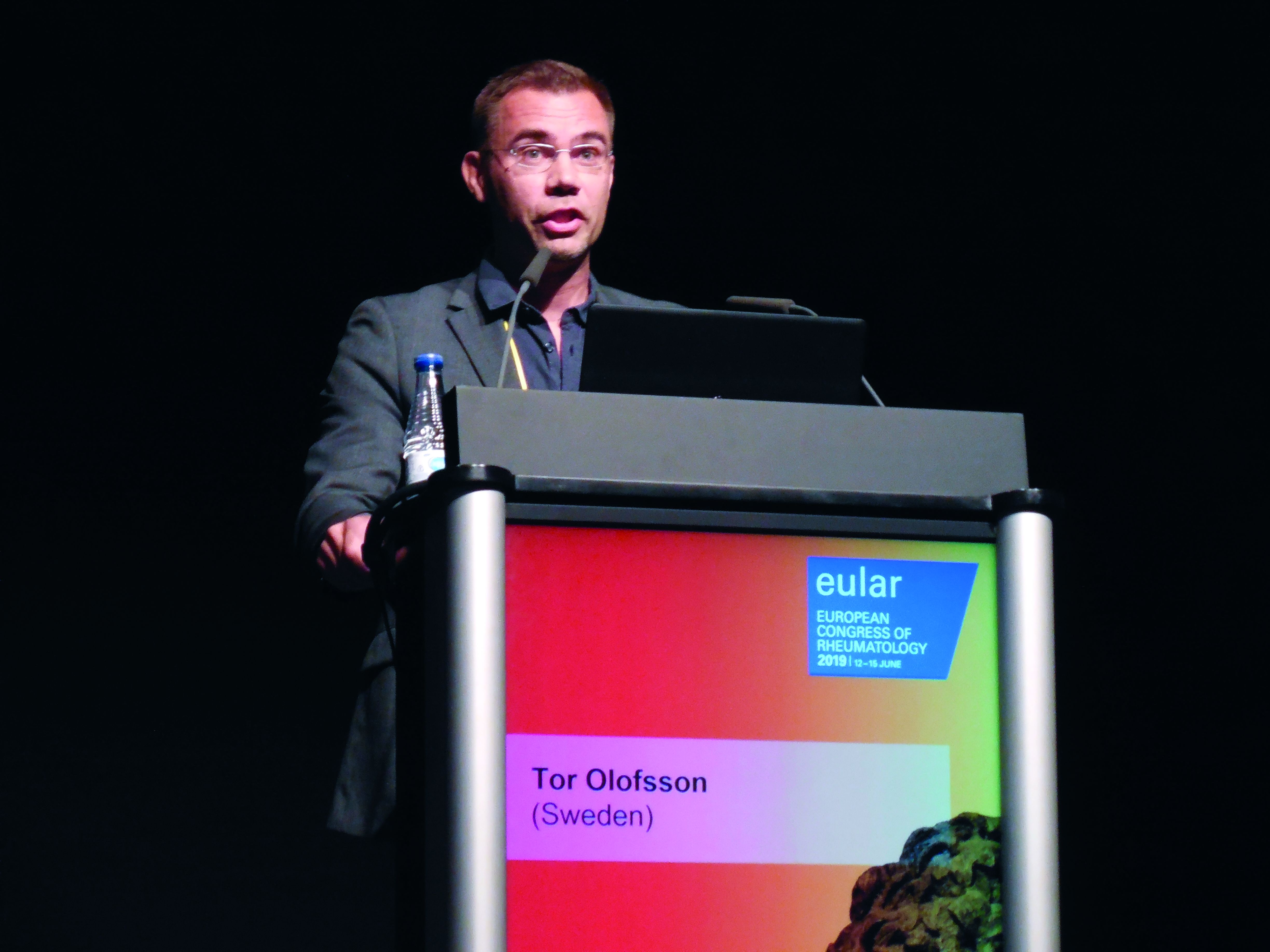
“Despite this often efficient therapy, 40% of patients still had unacceptable pain after 1 year, and pain with features indicative of a noninflammatory mechanism accounted for more than 60% of this pain load,” senior study author Tor Olofsson, MD, a rheumatologist and doctoral student at Lund (Sweden) University, said in an interview in advance of his presentation at the European Congress of Rheumatology.
“Within rheumatology, today we are generally very good at treating inflammation in many of the arthritides, but we have a lot of patients with persistent pain despite being well treated for their inflammation,” Dr. Olofsson said. “In psoriatic arthritis patients, this remaining pain seems to be even more frequent than in rheumatoid arthritis with the capturing instruments we use here.”
Dr. Olofsson and his colleagues studied prospectively collected records from 352 psoriatic arthritis patients (48% women) participating in the South Swedish Arthritis Group register who started a first anti–tumor necrosis factor (anti-TNF) therapy during 2004-2010. Participants had a mean age of 47 years and a mean disease duration of 10 years. At the start of anti-TNF therapy, 63% of patients were taking methotrexate, and 68% were taking any conventional disease-modifying antirheumatic drug (DMARD).
Based on the Patient Acceptable Symptom State, unacceptable pain was defined as greater than 40 mm on a 0-100 mm Visual Analog Scale (VAS). Inflammation control was captured through C-reactive protein level less than 10 mg/L in combination with one or no swollen joints. Assessments were performed at baseline, 1.5, 3, 6, and 12 months after the start of the first anti-TNF agent. Analyses were also conducted in relation to European League Against Rheumatism (EULAR)–defined treatment response after 3 months (good, moderate, or no response).
At the start of anti-TNF therapy, 85% of patients reported unacceptable pain, which declined to 43% after 3 months and then remained stable, reaching 39% at 12 months. The fraction of patients who had unacceptable pain despite inflammation control was largely unchanged over the study period (24% at treatment start, 27% at 3 months, and 26% at 12 months). Unacceptable pain at 3 months was strongly related to EULAR 3-month response (24% of good responders vs. 79% of nonresponders; P less than .001). This relationship was less pronounced among patients with unacceptable pain despite inflammation control (19% of good responders vs. 37% of nonresponders; P = .016). Among EULAR good responders, unacceptable pain despite inflammation control constituted 81% of all unacceptable pain at 3 months.
Dr. Olofsson said he was surprised by the high levels of pain despite inflammation control reported by these patients. A similar study he and others conducted in rheumatoid arthritis patients a year ago, soon to be published, found that only 12% had unacceptable pain despite inflammation control 1 year after start of a first anti-TNF agent, “so captured by the same instruments, it looks like this problem might be even bigger among patients with psoriatic arthritis.”
There is a possibility that psoriatic arthritis patients may have ongoing pain from low-grade inflammation, he said, but another hypothesis is that many psoriatic arthritis patients develop a more generalized pain condition in line with fibromyalgia. It could be that, if inflammation isn’t treated quickly enough in the beginning of the disease, it could sensitize the central pain system, he said, and it may not be reversible after it has developed.
Alternative treatment strategies are often needed in affected patients, Dr. Olofsson added. This could include regular painkillers or medicines used for more generalized, noninflammatory pain states, such as amitriptyline or duloxetine, as well as nonpharmacologic treatment options.
“The bottom line here is that, if patients are treated aggressively early enough, we might be able to prevent development of this sensitization process,” Dr. Olofsson said. “If we can also do predictive studies to describe which patients have a higher risk of developing this, then maybe we can be even more focused in the initial management before they become centrally sensitized.”
Dr. Olofsson had no financial conflicts to disclose. Two of his coauthors reported relationships with AbbVie, Eli Lilly, Celgene, Novartis, UCB, and Sandoz.
Mitchel L. Zoler contributed to this report.
SOURCE: Roseman C et al. Ann Rheum Dis. 2019 Jun;78(Suppl 2):129-30. Abstract OP0112, doi: 10.1136/annrheumdis-2019-eular.1839.
MADRID – A considerable number of patients with psoriatic arthritis starting their first biologic treatment report unacceptable pain throughout the first year of treatment, even when their inflammation is controlled, according to Swedish researchers.
“Despite this often efficient therapy, 40% of patients still had unacceptable pain after 1 year, and pain with features indicative of a noninflammatory mechanism accounted for more than 60% of this pain load,” senior study author Tor Olofsson, MD, a rheumatologist and doctoral student at Lund (Sweden) University, said in an interview in advance of his presentation at the European Congress of Rheumatology.
“Within rheumatology, today we are generally very good at treating inflammation in many of the arthritides, but we have a lot of patients with persistent pain despite being well treated for their inflammation,” Dr. Olofsson said. “In psoriatic arthritis patients, this remaining pain seems to be even more frequent than in rheumatoid arthritis with the capturing instruments we use here.”
Dr. Olofsson and his colleagues studied prospectively collected records from 352 psoriatic arthritis patients (48% women) participating in the South Swedish Arthritis Group register who started a first anti–tumor necrosis factor (anti-TNF) therapy during 2004-2010. Participants had a mean age of 47 years and a mean disease duration of 10 years. At the start of anti-TNF therapy, 63% of patients were taking methotrexate, and 68% were taking any conventional disease-modifying antirheumatic drug (DMARD).
Based on the Patient Acceptable Symptom State, unacceptable pain was defined as greater than 40 mm on a 0-100 mm Visual Analog Scale (VAS). Inflammation control was captured through C-reactive protein level less than 10 mg/L in combination with one or no swollen joints. Assessments were performed at baseline, 1.5, 3, 6, and 12 months after the start of the first anti-TNF agent. Analyses were also conducted in relation to European League Against Rheumatism (EULAR)–defined treatment response after 3 months (good, moderate, or no response).
At the start of anti-TNF therapy, 85% of patients reported unacceptable pain, which declined to 43% after 3 months and then remained stable, reaching 39% at 12 months. The fraction of patients who had unacceptable pain despite inflammation control was largely unchanged over the study period (24% at treatment start, 27% at 3 months, and 26% at 12 months). Unacceptable pain at 3 months was strongly related to EULAR 3-month response (24% of good responders vs. 79% of nonresponders; P less than .001). This relationship was less pronounced among patients with unacceptable pain despite inflammation control (19% of good responders vs. 37% of nonresponders; P = .016). Among EULAR good responders, unacceptable pain despite inflammation control constituted 81% of all unacceptable pain at 3 months.
Dr. Olofsson said he was surprised by the high levels of pain despite inflammation control reported by these patients. A similar study he and others conducted in rheumatoid arthritis patients a year ago, soon to be published, found that only 12% had unacceptable pain despite inflammation control 1 year after start of a first anti-TNF agent, “so captured by the same instruments, it looks like this problem might be even bigger among patients with psoriatic arthritis.”
There is a possibility that psoriatic arthritis patients may have ongoing pain from low-grade inflammation, he said, but another hypothesis is that many psoriatic arthritis patients develop a more generalized pain condition in line with fibromyalgia. It could be that, if inflammation isn’t treated quickly enough in the beginning of the disease, it could sensitize the central pain system, he said, and it may not be reversible after it has developed.
Alternative treatment strategies are often needed in affected patients, Dr. Olofsson added. This could include regular painkillers or medicines used for more generalized, noninflammatory pain states, such as amitriptyline or duloxetine, as well as nonpharmacologic treatment options.
“The bottom line here is that, if patients are treated aggressively early enough, we might be able to prevent development of this sensitization process,” Dr. Olofsson said. “If we can also do predictive studies to describe which patients have a higher risk of developing this, then maybe we can be even more focused in the initial management before they become centrally sensitized.”
Dr. Olofsson had no financial conflicts to disclose. Two of his coauthors reported relationships with AbbVie, Eli Lilly, Celgene, Novartis, UCB, and Sandoz.
Mitchel L. Zoler contributed to this report.
SOURCE: Roseman C et al. Ann Rheum Dis. 2019 Jun;78(Suppl 2):129-30. Abstract OP0112, doi: 10.1136/annrheumdis-2019-eular.1839.
MADRID – A considerable number of patients with psoriatic arthritis starting their first biologic treatment report unacceptable pain throughout the first year of treatment, even when their inflammation is controlled, according to Swedish researchers.
“Despite this often efficient therapy, 40% of patients still had unacceptable pain after 1 year, and pain with features indicative of a noninflammatory mechanism accounted for more than 60% of this pain load,” senior study author Tor Olofsson, MD, a rheumatologist and doctoral student at Lund (Sweden) University, said in an interview in advance of his presentation at the European Congress of Rheumatology.
“Within rheumatology, today we are generally very good at treating inflammation in many of the arthritides, but we have a lot of patients with persistent pain despite being well treated for their inflammation,” Dr. Olofsson said. “In psoriatic arthritis patients, this remaining pain seems to be even more frequent than in rheumatoid arthritis with the capturing instruments we use here.”
Dr. Olofsson and his colleagues studied prospectively collected records from 352 psoriatic arthritis patients (48% women) participating in the South Swedish Arthritis Group register who started a first anti–tumor necrosis factor (anti-TNF) therapy during 2004-2010. Participants had a mean age of 47 years and a mean disease duration of 10 years. At the start of anti-TNF therapy, 63% of patients were taking methotrexate, and 68% were taking any conventional disease-modifying antirheumatic drug (DMARD).
Based on the Patient Acceptable Symptom State, unacceptable pain was defined as greater than 40 mm on a 0-100 mm Visual Analog Scale (VAS). Inflammation control was captured through C-reactive protein level less than 10 mg/L in combination with one or no swollen joints. Assessments were performed at baseline, 1.5, 3, 6, and 12 months after the start of the first anti-TNF agent. Analyses were also conducted in relation to European League Against Rheumatism (EULAR)–defined treatment response after 3 months (good, moderate, or no response).
At the start of anti-TNF therapy, 85% of patients reported unacceptable pain, which declined to 43% after 3 months and then remained stable, reaching 39% at 12 months. The fraction of patients who had unacceptable pain despite inflammation control was largely unchanged over the study period (24% at treatment start, 27% at 3 months, and 26% at 12 months). Unacceptable pain at 3 months was strongly related to EULAR 3-month response (24% of good responders vs. 79% of nonresponders; P less than .001). This relationship was less pronounced among patients with unacceptable pain despite inflammation control (19% of good responders vs. 37% of nonresponders; P = .016). Among EULAR good responders, unacceptable pain despite inflammation control constituted 81% of all unacceptable pain at 3 months.
Dr. Olofsson said he was surprised by the high levels of pain despite inflammation control reported by these patients. A similar study he and others conducted in rheumatoid arthritis patients a year ago, soon to be published, found that only 12% had unacceptable pain despite inflammation control 1 year after start of a first anti-TNF agent, “so captured by the same instruments, it looks like this problem might be even bigger among patients with psoriatic arthritis.”
There is a possibility that psoriatic arthritis patients may have ongoing pain from low-grade inflammation, he said, but another hypothesis is that many psoriatic arthritis patients develop a more generalized pain condition in line with fibromyalgia. It could be that, if inflammation isn’t treated quickly enough in the beginning of the disease, it could sensitize the central pain system, he said, and it may not be reversible after it has developed.
Alternative treatment strategies are often needed in affected patients, Dr. Olofsson added. This could include regular painkillers or medicines used for more generalized, noninflammatory pain states, such as amitriptyline or duloxetine, as well as nonpharmacologic treatment options.
“The bottom line here is that, if patients are treated aggressively early enough, we might be able to prevent development of this sensitization process,” Dr. Olofsson said. “If we can also do predictive studies to describe which patients have a higher risk of developing this, then maybe we can be even more focused in the initial management before they become centrally sensitized.”
Dr. Olofsson had no financial conflicts to disclose. Two of his coauthors reported relationships with AbbVie, Eli Lilly, Celgene, Novartis, UCB, and Sandoz.
Mitchel L. Zoler contributed to this report.
SOURCE: Roseman C et al. Ann Rheum Dis. 2019 Jun;78(Suppl 2):129-30. Abstract OP0112, doi: 10.1136/annrheumdis-2019-eular.1839.
REPORTING FROM EULAR 2019 CONGRESS