User login
Adolescent obesity linked with midlife cancer risk
Obesity during adolescence is associated with increased midlife cancer risk, according to findings from a large population-based cohort of Israeli teens examined between 1967 and 2010.
The association, which was stronger in individuals in the later period of the cohort than in those in the earlier years, suggests that the burden of obesity-related cancers might increase over time, given the increasing prevalence of adolescent obesity, wrote Ariel Furer, MD, of Israel Defense Forces Medical Corps, Ramat Gan, and colleagues. Their report is in The Lancet.
Obesity is a known causal factor for several types of cancer, but most studies have looked at middle-age or older individuals and had relatively short follow-up, and period effects are rarely assessed, the investigators said, noting that “the attributable burden of obesity-related cancer was previously calculated with an unverified assumption that the association remained unchanged over time.
“In contrast to this paucity of knowledge, the prevalence of youth obesity – particularly severe obesity – has increased worldwide, which parallels the rise in youth cancer incidence,” they wrote.
To address this paucity of data, the researchers reviewed medical and sociodemographic data for adolescents who were assessed at age 17 years for medical eligibility for mandatory military service, and linked that information with data from the National Cancer Registry to create a unified file. The primary study outcome was any cancer diagnosis between Jan. 1, 1967, and Dec. 31, 2012, and a secondary endpoint was all-cause mortality through Dec. 31, 2017, among those who developed cancer.
Among nearly 2.3 million participating adolescents who were evaluated for associations between body mass index at age 17 years and later cancer incidence, 1,370,020 were men with more than 29.5 million person-years of follow-up, and 928,110 were women with more than 18 million person-years of follow-up. The numbers of incident cancer cases in the men and women were 26,353 and 29,488, and the mean ages at diagnosis were 43.2 and 40.0 years, respectively, the investigators reported (Lancet. 2020 Feb 3. doi: 10.1016/S2213-8587(20)30019-X).
Adolescent obesity in men was significantly associated with midlife cancer incidence (hazard ratio, 1.26), but in women, no association was seen due to the previously reported inverse associations between obesity and cervical and breast cancers, they said.
However, when those cancers were excluded for women, the adjusted hazard ratio was similar to that for men (HR, 1.27).
Cancer incidence in both men and women increased gradually across BMI percentiles, and for both sexes, overweight BMI was associated with an increased cancer risk after 10 years of follow-up (HR, 1.14 for men, 1.22 for women after exclusion of cervical and breast cancer). Therefore, in some cases the increased cancer risk in those who were overweight as teens was evident before age 30 years, the authors noted.
Further, BMI was positively associated with greater mortality risk. For men, 5-year survival rates were 75.2% in those with adolescent BMI in the 5th-49th percentile, compared with 72.2% in those with BMI in the obesity range (95th percentile or greater), and the corresponding rates in women were 89.3% and 83.1% (HR, 1.33 and 1.89, respectively).
Of note, the investigators identified a period effect. That is, after stratification by enrollment period/cancer recording period (1967-1981/1982-1996 vs. 1982-1996/1997-2011), a stronger association was noted in individuals who entered the study during the later period, compared with those who entered in the early period (HR, 1.36 vs. 1.13; adjusted HR, 1.11 vs. 1.07 per 5 kg/m2). Possible mechanisms for this finding include environmental and nutritional factors, increased use of medical services, and changes in early cancer screening techniques, but further study is needed to verify the trend and “refine the exact nature of carcinogenic elements, compared with earlier periods,” they said.
Also of note, some cancers that were not associated with BMI in the early period, including stomach cancer, non-Hodgkin lymphoma, thyroid cancer, and colorectal and oral cavity cancers, became significantly associated with BMI in the late period.
“The projected population attributable risk percentage, using 2017 prevalence data of high BMI, was 5.1% for any cancer in men and 5.7% for cancers other than breast and cervical in women,” the researchers wrote, noting that this “is probably an underestimation, given the accentuation of the BMI-cancer association and the rapid increase in adolescent obesity prevalence within the past decade in Israel and worldwide.”
In an accompanying editorial, the journal editors noted that the findings by Dr. Furer and colleagues highlight the need to tackle obesity early in life and the need for obesity prevention strategies to reduce cancer incidence and mortality for those cancers that can be prevented by lifestyle modifications. They added, however, that care would be needed to avoid stigmatizing those with obesity, as obesity itself is a “multifactorial condition driven by social injustice and health inequalities” that most often affect those who are least able to implement lifestyle change (Lancet. 2020 Feb 3. doi: 10.106/S2213-8587(20)30031-0).
They also emphasized that the links between obesity and cancer, like those between obesity and other diseases such as diabetes, underscore the fact that noncommunicable diseases do not exist in isolation, and that tackling them requires bold action, a consolidated approach, and elimination of the environmental and social factors driving the epidemic.
The study was limited by a number of factors, including the lack of data on lifestyle factors, underrepresentation of some ethnicities, and lack of data on BMI and medical comorbidities at the time of cancer diagnosis. However, strengths of the study include the systematic data collection, narrow range of age at study entry, strict control of coexisting conditions, and high statistical power, which strengthen the generalizability of the results, the investigators said, concluding, therefore, that “[c]urrent trends of rising BMI among adolescents could constitute an important intervention target for cancer prevention.”
The authors reported having no disclosures.
SOURCE: Furer A et al. Lancet Diabetes Endocrinol. 2020 Feb 3. doi: 10.1016/S2213-8587(20)30019-X.
Obesity during adolescence is associated with increased midlife cancer risk, according to findings from a large population-based cohort of Israeli teens examined between 1967 and 2010.
The association, which was stronger in individuals in the later period of the cohort than in those in the earlier years, suggests that the burden of obesity-related cancers might increase over time, given the increasing prevalence of adolescent obesity, wrote Ariel Furer, MD, of Israel Defense Forces Medical Corps, Ramat Gan, and colleagues. Their report is in The Lancet.
Obesity is a known causal factor for several types of cancer, but most studies have looked at middle-age or older individuals and had relatively short follow-up, and period effects are rarely assessed, the investigators said, noting that “the attributable burden of obesity-related cancer was previously calculated with an unverified assumption that the association remained unchanged over time.
“In contrast to this paucity of knowledge, the prevalence of youth obesity – particularly severe obesity – has increased worldwide, which parallels the rise in youth cancer incidence,” they wrote.
To address this paucity of data, the researchers reviewed medical and sociodemographic data for adolescents who were assessed at age 17 years for medical eligibility for mandatory military service, and linked that information with data from the National Cancer Registry to create a unified file. The primary study outcome was any cancer diagnosis between Jan. 1, 1967, and Dec. 31, 2012, and a secondary endpoint was all-cause mortality through Dec. 31, 2017, among those who developed cancer.
Among nearly 2.3 million participating adolescents who were evaluated for associations between body mass index at age 17 years and later cancer incidence, 1,370,020 were men with more than 29.5 million person-years of follow-up, and 928,110 were women with more than 18 million person-years of follow-up. The numbers of incident cancer cases in the men and women were 26,353 and 29,488, and the mean ages at diagnosis were 43.2 and 40.0 years, respectively, the investigators reported (Lancet. 2020 Feb 3. doi: 10.1016/S2213-8587(20)30019-X).
Adolescent obesity in men was significantly associated with midlife cancer incidence (hazard ratio, 1.26), but in women, no association was seen due to the previously reported inverse associations between obesity and cervical and breast cancers, they said.
However, when those cancers were excluded for women, the adjusted hazard ratio was similar to that for men (HR, 1.27).
Cancer incidence in both men and women increased gradually across BMI percentiles, and for both sexes, overweight BMI was associated with an increased cancer risk after 10 years of follow-up (HR, 1.14 for men, 1.22 for women after exclusion of cervical and breast cancer). Therefore, in some cases the increased cancer risk in those who were overweight as teens was evident before age 30 years, the authors noted.
Further, BMI was positively associated with greater mortality risk. For men, 5-year survival rates were 75.2% in those with adolescent BMI in the 5th-49th percentile, compared with 72.2% in those with BMI in the obesity range (95th percentile or greater), and the corresponding rates in women were 89.3% and 83.1% (HR, 1.33 and 1.89, respectively).
Of note, the investigators identified a period effect. That is, after stratification by enrollment period/cancer recording period (1967-1981/1982-1996 vs. 1982-1996/1997-2011), a stronger association was noted in individuals who entered the study during the later period, compared with those who entered in the early period (HR, 1.36 vs. 1.13; adjusted HR, 1.11 vs. 1.07 per 5 kg/m2). Possible mechanisms for this finding include environmental and nutritional factors, increased use of medical services, and changes in early cancer screening techniques, but further study is needed to verify the trend and “refine the exact nature of carcinogenic elements, compared with earlier periods,” they said.
Also of note, some cancers that were not associated with BMI in the early period, including stomach cancer, non-Hodgkin lymphoma, thyroid cancer, and colorectal and oral cavity cancers, became significantly associated with BMI in the late period.
“The projected population attributable risk percentage, using 2017 prevalence data of high BMI, was 5.1% for any cancer in men and 5.7% for cancers other than breast and cervical in women,” the researchers wrote, noting that this “is probably an underestimation, given the accentuation of the BMI-cancer association and the rapid increase in adolescent obesity prevalence within the past decade in Israel and worldwide.”
In an accompanying editorial, the journal editors noted that the findings by Dr. Furer and colleagues highlight the need to tackle obesity early in life and the need for obesity prevention strategies to reduce cancer incidence and mortality for those cancers that can be prevented by lifestyle modifications. They added, however, that care would be needed to avoid stigmatizing those with obesity, as obesity itself is a “multifactorial condition driven by social injustice and health inequalities” that most often affect those who are least able to implement lifestyle change (Lancet. 2020 Feb 3. doi: 10.106/S2213-8587(20)30031-0).
They also emphasized that the links between obesity and cancer, like those between obesity and other diseases such as diabetes, underscore the fact that noncommunicable diseases do not exist in isolation, and that tackling them requires bold action, a consolidated approach, and elimination of the environmental and social factors driving the epidemic.
The study was limited by a number of factors, including the lack of data on lifestyle factors, underrepresentation of some ethnicities, and lack of data on BMI and medical comorbidities at the time of cancer diagnosis. However, strengths of the study include the systematic data collection, narrow range of age at study entry, strict control of coexisting conditions, and high statistical power, which strengthen the generalizability of the results, the investigators said, concluding, therefore, that “[c]urrent trends of rising BMI among adolescents could constitute an important intervention target for cancer prevention.”
The authors reported having no disclosures.
SOURCE: Furer A et al. Lancet Diabetes Endocrinol. 2020 Feb 3. doi: 10.1016/S2213-8587(20)30019-X.
Obesity during adolescence is associated with increased midlife cancer risk, according to findings from a large population-based cohort of Israeli teens examined between 1967 and 2010.
The association, which was stronger in individuals in the later period of the cohort than in those in the earlier years, suggests that the burden of obesity-related cancers might increase over time, given the increasing prevalence of adolescent obesity, wrote Ariel Furer, MD, of Israel Defense Forces Medical Corps, Ramat Gan, and colleagues. Their report is in The Lancet.
Obesity is a known causal factor for several types of cancer, but most studies have looked at middle-age or older individuals and had relatively short follow-up, and period effects are rarely assessed, the investigators said, noting that “the attributable burden of obesity-related cancer was previously calculated with an unverified assumption that the association remained unchanged over time.
“In contrast to this paucity of knowledge, the prevalence of youth obesity – particularly severe obesity – has increased worldwide, which parallels the rise in youth cancer incidence,” they wrote.
To address this paucity of data, the researchers reviewed medical and sociodemographic data for adolescents who were assessed at age 17 years for medical eligibility for mandatory military service, and linked that information with data from the National Cancer Registry to create a unified file. The primary study outcome was any cancer diagnosis between Jan. 1, 1967, and Dec. 31, 2012, and a secondary endpoint was all-cause mortality through Dec. 31, 2017, among those who developed cancer.
Among nearly 2.3 million participating adolescents who were evaluated for associations between body mass index at age 17 years and later cancer incidence, 1,370,020 were men with more than 29.5 million person-years of follow-up, and 928,110 were women with more than 18 million person-years of follow-up. The numbers of incident cancer cases in the men and women were 26,353 and 29,488, and the mean ages at diagnosis were 43.2 and 40.0 years, respectively, the investigators reported (Lancet. 2020 Feb 3. doi: 10.1016/S2213-8587(20)30019-X).
Adolescent obesity in men was significantly associated with midlife cancer incidence (hazard ratio, 1.26), but in women, no association was seen due to the previously reported inverse associations between obesity and cervical and breast cancers, they said.
However, when those cancers were excluded for women, the adjusted hazard ratio was similar to that for men (HR, 1.27).
Cancer incidence in both men and women increased gradually across BMI percentiles, and for both sexes, overweight BMI was associated with an increased cancer risk after 10 years of follow-up (HR, 1.14 for men, 1.22 for women after exclusion of cervical and breast cancer). Therefore, in some cases the increased cancer risk in those who were overweight as teens was evident before age 30 years, the authors noted.
Further, BMI was positively associated with greater mortality risk. For men, 5-year survival rates were 75.2% in those with adolescent BMI in the 5th-49th percentile, compared with 72.2% in those with BMI in the obesity range (95th percentile or greater), and the corresponding rates in women were 89.3% and 83.1% (HR, 1.33 and 1.89, respectively).
Of note, the investigators identified a period effect. That is, after stratification by enrollment period/cancer recording period (1967-1981/1982-1996 vs. 1982-1996/1997-2011), a stronger association was noted in individuals who entered the study during the later period, compared with those who entered in the early period (HR, 1.36 vs. 1.13; adjusted HR, 1.11 vs. 1.07 per 5 kg/m2). Possible mechanisms for this finding include environmental and nutritional factors, increased use of medical services, and changes in early cancer screening techniques, but further study is needed to verify the trend and “refine the exact nature of carcinogenic elements, compared with earlier periods,” they said.
Also of note, some cancers that were not associated with BMI in the early period, including stomach cancer, non-Hodgkin lymphoma, thyroid cancer, and colorectal and oral cavity cancers, became significantly associated with BMI in the late period.
“The projected population attributable risk percentage, using 2017 prevalence data of high BMI, was 5.1% for any cancer in men and 5.7% for cancers other than breast and cervical in women,” the researchers wrote, noting that this “is probably an underestimation, given the accentuation of the BMI-cancer association and the rapid increase in adolescent obesity prevalence within the past decade in Israel and worldwide.”
In an accompanying editorial, the journal editors noted that the findings by Dr. Furer and colleagues highlight the need to tackle obesity early in life and the need for obesity prevention strategies to reduce cancer incidence and mortality for those cancers that can be prevented by lifestyle modifications. They added, however, that care would be needed to avoid stigmatizing those with obesity, as obesity itself is a “multifactorial condition driven by social injustice and health inequalities” that most often affect those who are least able to implement lifestyle change (Lancet. 2020 Feb 3. doi: 10.106/S2213-8587(20)30031-0).
They also emphasized that the links between obesity and cancer, like those between obesity and other diseases such as diabetes, underscore the fact that noncommunicable diseases do not exist in isolation, and that tackling them requires bold action, a consolidated approach, and elimination of the environmental and social factors driving the epidemic.
The study was limited by a number of factors, including the lack of data on lifestyle factors, underrepresentation of some ethnicities, and lack of data on BMI and medical comorbidities at the time of cancer diagnosis. However, strengths of the study include the systematic data collection, narrow range of age at study entry, strict control of coexisting conditions, and high statistical power, which strengthen the generalizability of the results, the investigators said, concluding, therefore, that “[c]urrent trends of rising BMI among adolescents could constitute an important intervention target for cancer prevention.”
The authors reported having no disclosures.
SOURCE: Furer A et al. Lancet Diabetes Endocrinol. 2020 Feb 3. doi: 10.1016/S2213-8587(20)30019-X.
FROM THE LANCET
2020 dermMentors™ Resident of Distinction Award™
The dermMentors™ Resident of Distinction Award™ recognizes top residents in dermatology. DermMentors.org and the dermMentors™ Resident of Distinction Award™ are sponsored by Beiersdorf Inc and administered by DermEd, Inc. The 2020 dermMentors™ Residents of Distinction™ presented new scientific research during the general sessions of the 19th Annual Caribbean Dermatology Symposium on January 25, 2020.
Overall Grand Prize
Topical Imiquimod in Combination With Brachytherapy for Unresectable Cutaneous Melanoma Metastases
Jennifer E. Yeh, MD, PhD, Department of Dermatology, Brigham and Women’s Hospital, Boston, Massachusetts; Marilyn T. Wan, MBChB, Department of Dermatology, Brigham and Women’s Hospital, Boston, Massachusetts; Allireza Alloo, MD, Department of Dermatology, Northwell Health, Lake Success, New York; Nageatte Ibrahim, MD, Dana-Farber Cancer Institute, Melanoma Program, Boston, Massachusetts; Phillip M. Devlin, MD, Dana-Farber Cancer Institute, Melanoma Program, Boston, Massachusetts; Patrick A. Ott, MD, PhD, Dana-Farber Cancer Institute, Melanoma Program, Boston, Massachusetts; Jennifer Y. Lin MD, Department of Dermatology, Brigham and Women’s Hospital, Boston, Massachusetts, and Dana-Farber Cancer Institute, Melanoma Program, Boston, Massachusetts
Disclosures: None.
Background

Case Presentation
Three patients with scalp melanoma initially treated with wide local excision and found to have negative sentinel lymph node biopsy presented with scalp lesions adjacent to the initial melanoma consistent with in-transit metastases. Given the presence of multiple metastatic lesions including 1 patient with numerous cutaneous metastases on reconstructed skin, each patient was treated with brachytherapy (5 fractions of 600 cGy over 2 to 3 weeks), followed by imiquimod cream 5% for 12 weeks. One patient’s excision showed residual melanoma as close as 1.4 mm to the nearest margin. All 3 patients achieved complete response and have been disease free for more than 2 years. Adverse effects were limited to pruritus and low-grade dermatitis. Of note, 2 patients later developed distant metastases that subsequently resolved with systemic immunotherapy.
Conclusions
While surgical excision is the first-line treatment of single, discrete cutaneous metastases, it may not be practical in patients with multiple foci of disease distributed over large areas, as seen in the 3 patients presented here who achieved complete resolution of their cutaneous metastatic burden with concurrent topical imiquimod and brachytherapy. Brachytherapy may be especially beneficial for cutaneous metastases on complex surfaces such as the scalp, reducing excessive brain irradiation by using moldable applicators that allow precise targeting. Moreover, one of the cases presented here suggests that brachytherapy may have utility for close-margin excisions. Although further investigations using larger patient cohorts are needed to determine the reproducibility of our findings, concomitant use of topical imiquimod and brachytherapy may represent a promising strategy for control of cutaneous melanoma metastases.
Up next: Burden of Common Skin Diseases in the Caribbean
Burden of Common Skin Diseases in the Caribbean and Potential Correlation With Socioeconomics
Rachel Giesey, DO, Case Western Reserve University, Cleveland, Ohio, and University Hospitals Cleveland Medical Center, Cleveland, Ohio
Disclosures: None.
There is a significant burden of dermatoses on a global scale, including the Caribbean, exemplified by disproportionately high corresponding disability adjusted life years (DALYs). Promising steps are being taken in the Caribbean, such as the World Bank Group’s ongoing financial support for Caribbean Community (CARICOM) countries, which has reached nearly $2 billion with a focus on strengthening resilience and financial protection against disasters. Despite this, additional research is needed to help guide dermatologists interested in reducing global health disparities in this region to create more impactful and sustainable interventions.
Objective
This observational study aims to measure the burden of common skin diseases in the Caribbean and the potential relationship with a country’s socioeconomic status.
Methods
For this study, we selected Global Burden of Disease Study (GBD) data sets analyzing the most recent DALYs of the most common dermatoses in 2017 among 18 Caribbean countries, along with the Caribbean as a region, and the United States for comparison. Three categories of dermatoses were analyzed by country: neoplastic, infectious, and inflammatory. Each country was assigned a ranking from 1 (highest DALYs) to 20 (lowest DALYs) for each disease. The principal country-level economic factor used to measure socioeconomic status was gross domestic product (GDP) per capita in 2017 from the International Monetary Fund and the World Bank. Statistical analysis of correlations between country wealth and disease was performed using a 2-tailed linear regression. Level of significance was set at P<.05.
Results
Countries were ordered by column from left (least wealthy) to right (most wealthy). To generate a heat table, the countries were ranked by DALYs (ranging from 1 [highest disease burden] to 20 [lowest burden]) for each skin disease. There was a statistically significant inverse relationship between country wealth and cutaneous neoplasms (melanoma, nonmelanoma skin cancers, and lip/oral cancers), as well as some inflammatory dermatoses (contact dermatitis, psoriasis, and pruritus). In contrast, there was a statistically significant positive correlation between country wealth and dermatology-related infectious diseases (scabies, viral skin infections, syphilis, human immunodeficiency virus/AIDS, and tuberculosis) and some other inflammatory dermatoses (urticaria, asthma, and atopic dermatitis).
Conclusion
Dermatologists interested in a particular disease may elect to focus time and resources in a Caribbean country with the highest respective DALYs, or dermatologists interested in traveling to a particular country may find the most impactful and sustainable interventions by focusing on the dermatoses with highest DALYs in that country. The relationship between GDP and health expenditure on dermatologic disease is complex, and the influence of income levels on this causal relationship is unclear. Further work is necessary to more consistently assess the impact of income on common dermatoses in low- and middle-income countries across the globe.
Up next: Doxycycline for LPP and FFA
The Use of Doxycycline in Lichen Planopilaris and Frontal Fibrosing Alopecia: A Retrospective Study of 138 Patients at a Tertiary Referral Clinic
Janice Tiao, MD; Lynne J. Goldberg, MD, Department of Dermatology, Boston University Medical Center, Boston, Massachusetts
Disclosures: None.

Lichen planopilaris (LPP) and frontal fibrosing alopecia (FFA) are lymphocyte-mediated primary cicatricial alopecias.1 They are rare, and limited evidence exists on treatment options.1,2 The best data supports hydroxychloroquine as the first-line systemic therapeutic agent,1,3 though expert opinion cites doxycycline as an acceptable first-line alternative and small series support its potential efficacy.4-6 The purpose of this study is to describe the use of doxycycline in patients with LPP and FFA at a single tertiary referral clinic.
Methods
After obtaining institutional review board approval, the authors reviewed the medical records of 138 patients with LPP and FFA who presented to the outpatient specialty hair clinic at Boston University Medical Center from 2015-2017.
Results
Of 138 subjects, 1 was excluded because there was no electronic medical record on file. Thirty-one subjects had a diagnosis of LPP, 103 had a diagnosis of FFA, and 3 were diagnosed with both LPP and FFA. Of the 31 LPP-only subjects, 16 had been prescribed doxycycline for their condition. Of these subjects, 9 (56.3%) reported or were observed to improve or stabilize, 2 (12.5%) did not improve, and 5 (31.3%) had unclear response or were lost to follow-up. Of the 106 subjects with FFA, 40 had been prescribed doxycycline for their condition. Of these 40 subjects, 17 (42.5%) were felt to improve or stabilize, 7 (17.5%) did not improve, and 15 (37.5%) had unclear response or were lost to follow-up. The average duration of use was 8 months. Of note, 14 of 56 (25%) subjects who took doxycycline discontinued the medication secondary to side effects, most commonly gastrointestinal.
Conclusion
Although a number of subjects did not tolerate the medication, the data confirm that doxycycline may be helpful in the treatment of LPP and FFA.
References
- Bolduc C, Sperling LC, Shapiro J. Primary cicatricial alopecia. J Am Acad Dermatol. 2016;75:1081-1099.
- Ochoa BE, King LE, Price VH. Lichen planopilaris: annual incidence in four hair referral centers in the United States. J Am Acad Dermatol. 2008;58:352-353.
- Errichetti E, Figini M, Croatto M, et al. Therapeutic management of classic lichen planopilaris: a systematic review. Clin Cosmet Investig Dermatol. 2018;11:91-102.
- Spencer LA, Hawryluk EB, English JC. Lichen planopilaris: Retrospective study and stepwise therapeutic approach. Arch Dermatol. 2009;45:333-334.
- Lyakhovitsky A, Amichai B, Sizopoulou C, et al. A case series of 46 patients with lichen planopilaris: demographics, clinical evaluation, and treatment experience. J Dermatolog Treat. 2015;26:275-279.
- Samrao A, Chew A-I, Price V. Frontal fibrosing alopecia: a clinical review of 36 patients. Br J Dermatol. 2010;163:1296-1300.
Up next: Counterfeits and Medical Spas
Counterfeits and Medical Spas in Dermatology: A Call for Patient Safety
Jordan V. Wang, MD, MBE, MBA, Thomas Jefferson University, Philadelphia, Pennsylvania
Disclosures: None.

Counterfeit medical devices and injectables have recently garnered interest. These unregulated products are typically imported into the United States, marketed to practitioners, and then purchased at significantly reduced prices, either knowingly or unknowingly. The savings are generally passed on to patients as bargain prices. However, unlike their original counterparts, these counterfeits have neither been tested nor verified using certified quality control measures. Without clearance by the US Food and Drug Administration (FDA) for patient use, there can be no assurances of safety, efficacy, and reliability. Penalties by the FDA’s Office of Criminal Investigations can be steep. Shedding more light on the current state of counterfeit medical devices in dermatology can help to increase awareness and lead to improved patient safety. Our recent survey of aesthetic practitioners demonstrated that counterfeit medical devices and injectables are frequently encountered in dermatology, especially in the United States. For example, 37.4% and 41.1% of respondents have encountered counterfeit medical devices and injectables, respectively. About half of respondents were solicited to purchase them, and they were also witnessed for sale at conferences in both the United States and abroad. Some respondents admitted to purchasing them, both knowingly and unknowingly. The vast majority believed them to be endangering patient safety, have experienced related adverse events, and wanted stricter rules and regulations.
Medical Spas
Medical spas have experienced a recent rise in popularity by consumers. They can offer various aesthetic procedures, including neurotoxins, fillers, and lasers and light devices. Oftentimes their prices are marketed as lower than those directly from physician-based practices. Rules and regulations, especially concerning their oversight and credentialing processes, vary from state to state. Unfortunately, many patients have experienced various complications from medical spas. Shedding more light on the current state of medical spas and their complications in dermatology can help to increase awareness and lead to improved patient safety. Our recent survey of aesthetic practitioners demonstrated that patients who have experienced complications from medical spas are frequently encountered. For example, of all cosmetic complications encountered in the past 2 years, the majority reported that the percentage of complications seen in their practice attributable to medical spas ranged from 61% to 100%. The most commonly cited complications from medical spas were burns, discoloration, and misuse of product, while the most commonly cited treatments resulting in complications were fillers, intense pulsed light, and laser hair removal. For safety and outcomes, medical spas were rated as inferior to physician-based practices. Practitioners believed medical spas to be endangering patients, desired stricter rules and regulations, and requested more support from medical societies.
Up next: Online Reviews of Minimally and Noninvasive Cosmetic Procedures
Lessons From Unfavorable Online Reviews of Minimally and Noninvasive Cosmetic Procedures
Jacqueline D. Watchmaker, MD, Boston University School of Medicine, Boston, Massachusetts
Disclosures: None.

The frequency of minimally and noninvasive cosmetic procedures performed in the United States is increasing; however, there have been few studies looking at patient-reported subjective outcomes of these procedures. Our study gathered data from RealSelf.com (Seattle, Washington), an online patient-driven review website, to determine the most common reasons patients are dissatisfied with cosmetic treatments.
Methods
Between June 2019 and July 2019, the authors extracted patient-reported outcome data from RealSelf.com for the following treatments: Coolsculpting, Ultherapy, Kybella injections, miraDry, Thermage, Cellfina, Emsculpt, and thread-lifts. On the RealSelf website, patients are able to rate their aesthetic procedure as “worth it”, “not sure” or “not worth it”; only data from “not worth it” reviews were extracted for this study. In total, there were 1359 reviews. Reviews from outside the United States were excluded. If a patient listed 2 reasons for dissatisfaction (eg, complication and ineffective treatment) both reasons were recorded. Specific complications and postoperative time frame of review, when listed, were recorded.
Results
In total, 1204 reviews were included in the analysis. The most frequent reason for patient dissatisfaction was ineffectiveness for Coolsculpting (n=427, 82.9%), Ultherapy (n=120, 67.8%), Kybella (n=55, 75.3%), miraDry (n=40, 85.1%), Thermage (n=81, 61.4%), Cellfina (n=18, 78.3%), and Emsculpt (n=5, 100%), with complications listed as the second most common reason for discontent. For thread-lifts, however, the most common reason for a “not worth it” rating was a complication (n=43, 70.5%) followed by perceived ineffectiveness (n=36, 59%). Severe pain during and/or after the procedure was the most common patient-reported complication for Coolsculpting (n=62, 37.3%) and thread-lifts (n=10, 23.3%). Perceived fat loss was the most common side effect for Ultherapy (n=32, 38.6%) and Thermage (n=26, 40%), with swelling, numbness, new-onset “lumps,” and flatter buttock muscles as the most common patient-reported complications for Kybella (n=9, 40.9%), miraDry (n=6, 27.3%), Cellfina (n=6, 46.2%), and Emsculpt (n=1, 100%).
Discussion
Our study shows that perceived ineffectiveness and complications were the most common reasons for dissatisfaction of the minimally and noninvasive cosmetic procedures analyzed. Knowing the most common patient-reported complaints of a given procedure can help physicians counsel and educate patients prior to a procedure. Many of the patient-reported complications found in this study are known and unfortunate true potential complications; it is important to note, however, that many dissatisfied patients listed an expected side effect such as pain, bruising, or swelling, rather than a true complication as their reason for discontent. More thorough preprocedure education may help patients differentiate between a true complication and a transient and expected side effect that in turn may improve patient satisfaction. In the modern era of social media and online reviews, a positive patient perspective on an aesthetic treatment is increasingly important. Patient dissatisfaction due to true complications and ineffective treatment cannot be completely prevented; however, by learning from the negative patient-reported outcomes as detailed in this study, physicians can work toward improving the patient experience.
The dermMentors™ Resident of Distinction Award™ recognizes top residents in dermatology. DermMentors.org and the dermMentors™ Resident of Distinction Award™ are sponsored by Beiersdorf Inc and administered by DermEd, Inc. The 2020 dermMentors™ Residents of Distinction™ presented new scientific research during the general sessions of the 19th Annual Caribbean Dermatology Symposium on January 25, 2020.
Overall Grand Prize
Topical Imiquimod in Combination With Brachytherapy for Unresectable Cutaneous Melanoma Metastases
Jennifer E. Yeh, MD, PhD, Department of Dermatology, Brigham and Women’s Hospital, Boston, Massachusetts; Marilyn T. Wan, MBChB, Department of Dermatology, Brigham and Women’s Hospital, Boston, Massachusetts; Allireza Alloo, MD, Department of Dermatology, Northwell Health, Lake Success, New York; Nageatte Ibrahim, MD, Dana-Farber Cancer Institute, Melanoma Program, Boston, Massachusetts; Phillip M. Devlin, MD, Dana-Farber Cancer Institute, Melanoma Program, Boston, Massachusetts; Patrick A. Ott, MD, PhD, Dana-Farber Cancer Institute, Melanoma Program, Boston, Massachusetts; Jennifer Y. Lin MD, Department of Dermatology, Brigham and Women’s Hospital, Boston, Massachusetts, and Dana-Farber Cancer Institute, Melanoma Program, Boston, Massachusetts
Disclosures: None.
Background
Case Presentation
Three patients with scalp melanoma initially treated with wide local excision and found to have negative sentinel lymph node biopsy presented with scalp lesions adjacent to the initial melanoma consistent with in-transit metastases. Given the presence of multiple metastatic lesions including 1 patient with numerous cutaneous metastases on reconstructed skin, each patient was treated with brachytherapy (5 fractions of 600 cGy over 2 to 3 weeks), followed by imiquimod cream 5% for 12 weeks. One patient’s excision showed residual melanoma as close as 1.4 mm to the nearest margin. All 3 patients achieved complete response and have been disease free for more than 2 years. Adverse effects were limited to pruritus and low-grade dermatitis. Of note, 2 patients later developed distant metastases that subsequently resolved with systemic immunotherapy.
Conclusions
While surgical excision is the first-line treatment of single, discrete cutaneous metastases, it may not be practical in patients with multiple foci of disease distributed over large areas, as seen in the 3 patients presented here who achieved complete resolution of their cutaneous metastatic burden with concurrent topical imiquimod and brachytherapy. Brachytherapy may be especially beneficial for cutaneous metastases on complex surfaces such as the scalp, reducing excessive brain irradiation by using moldable applicators that allow precise targeting. Moreover, one of the cases presented here suggests that brachytherapy may have utility for close-margin excisions. Although further investigations using larger patient cohorts are needed to determine the reproducibility of our findings, concomitant use of topical imiquimod and brachytherapy may represent a promising strategy for control of cutaneous melanoma metastases.
Up next: Burden of Common Skin Diseases in the Caribbean
Burden of Common Skin Diseases in the Caribbean and Potential Correlation With Socioeconomics
Rachel Giesey, DO, Case Western Reserve University, Cleveland, Ohio, and University Hospitals Cleveland Medical Center, Cleveland, Ohio
Disclosures: None.
There is a significant burden of dermatoses on a global scale, including the Caribbean, exemplified by disproportionately high corresponding disability adjusted life years (DALYs). Promising steps are being taken in the Caribbean, such as the World Bank Group’s ongoing financial support for Caribbean Community (CARICOM) countries, which has reached nearly $2 billion with a focus on strengthening resilience and financial protection against disasters. Despite this, additional research is needed to help guide dermatologists interested in reducing global health disparities in this region to create more impactful and sustainable interventions.
Objective
This observational study aims to measure the burden of common skin diseases in the Caribbean and the potential relationship with a country’s socioeconomic status.
Methods
For this study, we selected Global Burden of Disease Study (GBD) data sets analyzing the most recent DALYs of the most common dermatoses in 2017 among 18 Caribbean countries, along with the Caribbean as a region, and the United States for comparison. Three categories of dermatoses were analyzed by country: neoplastic, infectious, and inflammatory. Each country was assigned a ranking from 1 (highest DALYs) to 20 (lowest DALYs) for each disease. The principal country-level economic factor used to measure socioeconomic status was gross domestic product (GDP) per capita in 2017 from the International Monetary Fund and the World Bank. Statistical analysis of correlations between country wealth and disease was performed using a 2-tailed linear regression. Level of significance was set at P<.05.
Results
Countries were ordered by column from left (least wealthy) to right (most wealthy). To generate a heat table, the countries were ranked by DALYs (ranging from 1 [highest disease burden] to 20 [lowest burden]) for each skin disease. There was a statistically significant inverse relationship between country wealth and cutaneous neoplasms (melanoma, nonmelanoma skin cancers, and lip/oral cancers), as well as some inflammatory dermatoses (contact dermatitis, psoriasis, and pruritus). In contrast, there was a statistically significant positive correlation between country wealth and dermatology-related infectious diseases (scabies, viral skin infections, syphilis, human immunodeficiency virus/AIDS, and tuberculosis) and some other inflammatory dermatoses (urticaria, asthma, and atopic dermatitis).
Conclusion
Dermatologists interested in a particular disease may elect to focus time and resources in a Caribbean country with the highest respective DALYs, or dermatologists interested in traveling to a particular country may find the most impactful and sustainable interventions by focusing on the dermatoses with highest DALYs in that country. The relationship between GDP and health expenditure on dermatologic disease is complex, and the influence of income levels on this causal relationship is unclear. Further work is necessary to more consistently assess the impact of income on common dermatoses in low- and middle-income countries across the globe.
Up next: Doxycycline for LPP and FFA
The Use of Doxycycline in Lichen Planopilaris and Frontal Fibrosing Alopecia: A Retrospective Study of 138 Patients at a Tertiary Referral Clinic
Janice Tiao, MD; Lynne J. Goldberg, MD, Department of Dermatology, Boston University Medical Center, Boston, Massachusetts
Disclosures: None.
Lichen planopilaris (LPP) and frontal fibrosing alopecia (FFA) are lymphocyte-mediated primary cicatricial alopecias.1 They are rare, and limited evidence exists on treatment options.1,2 The best data supports hydroxychloroquine as the first-line systemic therapeutic agent,1,3 though expert opinion cites doxycycline as an acceptable first-line alternative and small series support its potential efficacy.4-6 The purpose of this study is to describe the use of doxycycline in patients with LPP and FFA at a single tertiary referral clinic.
Methods
After obtaining institutional review board approval, the authors reviewed the medical records of 138 patients with LPP and FFA who presented to the outpatient specialty hair clinic at Boston University Medical Center from 2015-2017.
Results
Of 138 subjects, 1 was excluded because there was no electronic medical record on file. Thirty-one subjects had a diagnosis of LPP, 103 had a diagnosis of FFA, and 3 were diagnosed with both LPP and FFA. Of the 31 LPP-only subjects, 16 had been prescribed doxycycline for their condition. Of these subjects, 9 (56.3%) reported or were observed to improve or stabilize, 2 (12.5%) did not improve, and 5 (31.3%) had unclear response or were lost to follow-up. Of the 106 subjects with FFA, 40 had been prescribed doxycycline for their condition. Of these 40 subjects, 17 (42.5%) were felt to improve or stabilize, 7 (17.5%) did not improve, and 15 (37.5%) had unclear response or were lost to follow-up. The average duration of use was 8 months. Of note, 14 of 56 (25%) subjects who took doxycycline discontinued the medication secondary to side effects, most commonly gastrointestinal.
Conclusion
Although a number of subjects did not tolerate the medication, the data confirm that doxycycline may be helpful in the treatment of LPP and FFA.
References
- Bolduc C, Sperling LC, Shapiro J. Primary cicatricial alopecia. J Am Acad Dermatol. 2016;75:1081-1099.
- Ochoa BE, King LE, Price VH. Lichen planopilaris: annual incidence in four hair referral centers in the United States. J Am Acad Dermatol. 2008;58:352-353.
- Errichetti E, Figini M, Croatto M, et al. Therapeutic management of classic lichen planopilaris: a systematic review. Clin Cosmet Investig Dermatol. 2018;11:91-102.
- Spencer LA, Hawryluk EB, English JC. Lichen planopilaris: Retrospective study and stepwise therapeutic approach. Arch Dermatol. 2009;45:333-334.
- Lyakhovitsky A, Amichai B, Sizopoulou C, et al. A case series of 46 patients with lichen planopilaris: demographics, clinical evaluation, and treatment experience. J Dermatolog Treat. 2015;26:275-279.
- Samrao A, Chew A-I, Price V. Frontal fibrosing alopecia: a clinical review of 36 patients. Br J Dermatol. 2010;163:1296-1300.
Up next: Counterfeits and Medical Spas
Counterfeits and Medical Spas in Dermatology: A Call for Patient Safety
Jordan V. Wang, MD, MBE, MBA, Thomas Jefferson University, Philadelphia, Pennsylvania
Disclosures: None.
Counterfeit medical devices and injectables have recently garnered interest. These unregulated products are typically imported into the United States, marketed to practitioners, and then purchased at significantly reduced prices, either knowingly or unknowingly. The savings are generally passed on to patients as bargain prices. However, unlike their original counterparts, these counterfeits have neither been tested nor verified using certified quality control measures. Without clearance by the US Food and Drug Administration (FDA) for patient use, there can be no assurances of safety, efficacy, and reliability. Penalties by the FDA’s Office of Criminal Investigations can be steep. Shedding more light on the current state of counterfeit medical devices in dermatology can help to increase awareness and lead to improved patient safety. Our recent survey of aesthetic practitioners demonstrated that counterfeit medical devices and injectables are frequently encountered in dermatology, especially in the United States. For example, 37.4% and 41.1% of respondents have encountered counterfeit medical devices and injectables, respectively. About half of respondents were solicited to purchase them, and they were also witnessed for sale at conferences in both the United States and abroad. Some respondents admitted to purchasing them, both knowingly and unknowingly. The vast majority believed them to be endangering patient safety, have experienced related adverse events, and wanted stricter rules and regulations.
Medical Spas
Medical spas have experienced a recent rise in popularity by consumers. They can offer various aesthetic procedures, including neurotoxins, fillers, and lasers and light devices. Oftentimes their prices are marketed as lower than those directly from physician-based practices. Rules and regulations, especially concerning their oversight and credentialing processes, vary from state to state. Unfortunately, many patients have experienced various complications from medical spas. Shedding more light on the current state of medical spas and their complications in dermatology can help to increase awareness and lead to improved patient safety. Our recent survey of aesthetic practitioners demonstrated that patients who have experienced complications from medical spas are frequently encountered. For example, of all cosmetic complications encountered in the past 2 years, the majority reported that the percentage of complications seen in their practice attributable to medical spas ranged from 61% to 100%. The most commonly cited complications from medical spas were burns, discoloration, and misuse of product, while the most commonly cited treatments resulting in complications were fillers, intense pulsed light, and laser hair removal. For safety and outcomes, medical spas were rated as inferior to physician-based practices. Practitioners believed medical spas to be endangering patients, desired stricter rules and regulations, and requested more support from medical societies.
Up next: Online Reviews of Minimally and Noninvasive Cosmetic Procedures
Lessons From Unfavorable Online Reviews of Minimally and Noninvasive Cosmetic Procedures
Jacqueline D. Watchmaker, MD, Boston University School of Medicine, Boston, Massachusetts
Disclosures: None.
The frequency of minimally and noninvasive cosmetic procedures performed in the United States is increasing; however, there have been few studies looking at patient-reported subjective outcomes of these procedures. Our study gathered data from RealSelf.com (Seattle, Washington), an online patient-driven review website, to determine the most common reasons patients are dissatisfied with cosmetic treatments.
Methods
Between June 2019 and July 2019, the authors extracted patient-reported outcome data from RealSelf.com for the following treatments: Coolsculpting, Ultherapy, Kybella injections, miraDry, Thermage, Cellfina, Emsculpt, and thread-lifts. On the RealSelf website, patients are able to rate their aesthetic procedure as “worth it”, “not sure” or “not worth it”; only data from “not worth it” reviews were extracted for this study. In total, there were 1359 reviews. Reviews from outside the United States were excluded. If a patient listed 2 reasons for dissatisfaction (eg, complication and ineffective treatment) both reasons were recorded. Specific complications and postoperative time frame of review, when listed, were recorded.
Results
In total, 1204 reviews were included in the analysis. The most frequent reason for patient dissatisfaction was ineffectiveness for Coolsculpting (n=427, 82.9%), Ultherapy (n=120, 67.8%), Kybella (n=55, 75.3%), miraDry (n=40, 85.1%), Thermage (n=81, 61.4%), Cellfina (n=18, 78.3%), and Emsculpt (n=5, 100%), with complications listed as the second most common reason for discontent. For thread-lifts, however, the most common reason for a “not worth it” rating was a complication (n=43, 70.5%) followed by perceived ineffectiveness (n=36, 59%). Severe pain during and/or after the procedure was the most common patient-reported complication for Coolsculpting (n=62, 37.3%) and thread-lifts (n=10, 23.3%). Perceived fat loss was the most common side effect for Ultherapy (n=32, 38.6%) and Thermage (n=26, 40%), with swelling, numbness, new-onset “lumps,” and flatter buttock muscles as the most common patient-reported complications for Kybella (n=9, 40.9%), miraDry (n=6, 27.3%), Cellfina (n=6, 46.2%), and Emsculpt (n=1, 100%).
Discussion
Our study shows that perceived ineffectiveness and complications were the most common reasons for dissatisfaction of the minimally and noninvasive cosmetic procedures analyzed. Knowing the most common patient-reported complaints of a given procedure can help physicians counsel and educate patients prior to a procedure. Many of the patient-reported complications found in this study are known and unfortunate true potential complications; it is important to note, however, that many dissatisfied patients listed an expected side effect such as pain, bruising, or swelling, rather than a true complication as their reason for discontent. More thorough preprocedure education may help patients differentiate between a true complication and a transient and expected side effect that in turn may improve patient satisfaction. In the modern era of social media and online reviews, a positive patient perspective on an aesthetic treatment is increasingly important. Patient dissatisfaction due to true complications and ineffective treatment cannot be completely prevented; however, by learning from the negative patient-reported outcomes as detailed in this study, physicians can work toward improving the patient experience.
The dermMentors™ Resident of Distinction Award™ recognizes top residents in dermatology. DermMentors.org and the dermMentors™ Resident of Distinction Award™ are sponsored by Beiersdorf Inc and administered by DermEd, Inc. The 2020 dermMentors™ Residents of Distinction™ presented new scientific research during the general sessions of the 19th Annual Caribbean Dermatology Symposium on January 25, 2020.
Overall Grand Prize
Topical Imiquimod in Combination With Brachytherapy for Unresectable Cutaneous Melanoma Metastases
Jennifer E. Yeh, MD, PhD, Department of Dermatology, Brigham and Women’s Hospital, Boston, Massachusetts; Marilyn T. Wan, MBChB, Department of Dermatology, Brigham and Women’s Hospital, Boston, Massachusetts; Allireza Alloo, MD, Department of Dermatology, Northwell Health, Lake Success, New York; Nageatte Ibrahim, MD, Dana-Farber Cancer Institute, Melanoma Program, Boston, Massachusetts; Phillip M. Devlin, MD, Dana-Farber Cancer Institute, Melanoma Program, Boston, Massachusetts; Patrick A. Ott, MD, PhD, Dana-Farber Cancer Institute, Melanoma Program, Boston, Massachusetts; Jennifer Y. Lin MD, Department of Dermatology, Brigham and Women’s Hospital, Boston, Massachusetts, and Dana-Farber Cancer Institute, Melanoma Program, Boston, Massachusetts
Disclosures: None.
Background
Case Presentation
Three patients with scalp melanoma initially treated with wide local excision and found to have negative sentinel lymph node biopsy presented with scalp lesions adjacent to the initial melanoma consistent with in-transit metastases. Given the presence of multiple metastatic lesions including 1 patient with numerous cutaneous metastases on reconstructed skin, each patient was treated with brachytherapy (5 fractions of 600 cGy over 2 to 3 weeks), followed by imiquimod cream 5% for 12 weeks. One patient’s excision showed residual melanoma as close as 1.4 mm to the nearest margin. All 3 patients achieved complete response and have been disease free for more than 2 years. Adverse effects were limited to pruritus and low-grade dermatitis. Of note, 2 patients later developed distant metastases that subsequently resolved with systemic immunotherapy.
Conclusions
While surgical excision is the first-line treatment of single, discrete cutaneous metastases, it may not be practical in patients with multiple foci of disease distributed over large areas, as seen in the 3 patients presented here who achieved complete resolution of their cutaneous metastatic burden with concurrent topical imiquimod and brachytherapy. Brachytherapy may be especially beneficial for cutaneous metastases on complex surfaces such as the scalp, reducing excessive brain irradiation by using moldable applicators that allow precise targeting. Moreover, one of the cases presented here suggests that brachytherapy may have utility for close-margin excisions. Although further investigations using larger patient cohorts are needed to determine the reproducibility of our findings, concomitant use of topical imiquimod and brachytherapy may represent a promising strategy for control of cutaneous melanoma metastases.
Up next: Burden of Common Skin Diseases in the Caribbean
Burden of Common Skin Diseases in the Caribbean and Potential Correlation With Socioeconomics
Rachel Giesey, DO, Case Western Reserve University, Cleveland, Ohio, and University Hospitals Cleveland Medical Center, Cleveland, Ohio
Disclosures: None.
There is a significant burden of dermatoses on a global scale, including the Caribbean, exemplified by disproportionately high corresponding disability adjusted life years (DALYs). Promising steps are being taken in the Caribbean, such as the World Bank Group’s ongoing financial support for Caribbean Community (CARICOM) countries, which has reached nearly $2 billion with a focus on strengthening resilience and financial protection against disasters. Despite this, additional research is needed to help guide dermatologists interested in reducing global health disparities in this region to create more impactful and sustainable interventions.
Objective
This observational study aims to measure the burden of common skin diseases in the Caribbean and the potential relationship with a country’s socioeconomic status.
Methods
For this study, we selected Global Burden of Disease Study (GBD) data sets analyzing the most recent DALYs of the most common dermatoses in 2017 among 18 Caribbean countries, along with the Caribbean as a region, and the United States for comparison. Three categories of dermatoses were analyzed by country: neoplastic, infectious, and inflammatory. Each country was assigned a ranking from 1 (highest DALYs) to 20 (lowest DALYs) for each disease. The principal country-level economic factor used to measure socioeconomic status was gross domestic product (GDP) per capita in 2017 from the International Monetary Fund and the World Bank. Statistical analysis of correlations between country wealth and disease was performed using a 2-tailed linear regression. Level of significance was set at P<.05.
Results
Countries were ordered by column from left (least wealthy) to right (most wealthy). To generate a heat table, the countries were ranked by DALYs (ranging from 1 [highest disease burden] to 20 [lowest burden]) for each skin disease. There was a statistically significant inverse relationship between country wealth and cutaneous neoplasms (melanoma, nonmelanoma skin cancers, and lip/oral cancers), as well as some inflammatory dermatoses (contact dermatitis, psoriasis, and pruritus). In contrast, there was a statistically significant positive correlation between country wealth and dermatology-related infectious diseases (scabies, viral skin infections, syphilis, human immunodeficiency virus/AIDS, and tuberculosis) and some other inflammatory dermatoses (urticaria, asthma, and atopic dermatitis).
Conclusion
Dermatologists interested in a particular disease may elect to focus time and resources in a Caribbean country with the highest respective DALYs, or dermatologists interested in traveling to a particular country may find the most impactful and sustainable interventions by focusing on the dermatoses with highest DALYs in that country. The relationship between GDP and health expenditure on dermatologic disease is complex, and the influence of income levels on this causal relationship is unclear. Further work is necessary to more consistently assess the impact of income on common dermatoses in low- and middle-income countries across the globe.
Up next: Doxycycline for LPP and FFA
The Use of Doxycycline in Lichen Planopilaris and Frontal Fibrosing Alopecia: A Retrospective Study of 138 Patients at a Tertiary Referral Clinic
Janice Tiao, MD; Lynne J. Goldberg, MD, Department of Dermatology, Boston University Medical Center, Boston, Massachusetts
Disclosures: None.
Lichen planopilaris (LPP) and frontal fibrosing alopecia (FFA) are lymphocyte-mediated primary cicatricial alopecias.1 They are rare, and limited evidence exists on treatment options.1,2 The best data supports hydroxychloroquine as the first-line systemic therapeutic agent,1,3 though expert opinion cites doxycycline as an acceptable first-line alternative and small series support its potential efficacy.4-6 The purpose of this study is to describe the use of doxycycline in patients with LPP and FFA at a single tertiary referral clinic.
Methods
After obtaining institutional review board approval, the authors reviewed the medical records of 138 patients with LPP and FFA who presented to the outpatient specialty hair clinic at Boston University Medical Center from 2015-2017.
Results
Of 138 subjects, 1 was excluded because there was no electronic medical record on file. Thirty-one subjects had a diagnosis of LPP, 103 had a diagnosis of FFA, and 3 were diagnosed with both LPP and FFA. Of the 31 LPP-only subjects, 16 had been prescribed doxycycline for their condition. Of these subjects, 9 (56.3%) reported or were observed to improve or stabilize, 2 (12.5%) did not improve, and 5 (31.3%) had unclear response or were lost to follow-up. Of the 106 subjects with FFA, 40 had been prescribed doxycycline for their condition. Of these 40 subjects, 17 (42.5%) were felt to improve or stabilize, 7 (17.5%) did not improve, and 15 (37.5%) had unclear response or were lost to follow-up. The average duration of use was 8 months. Of note, 14 of 56 (25%) subjects who took doxycycline discontinued the medication secondary to side effects, most commonly gastrointestinal.
Conclusion
Although a number of subjects did not tolerate the medication, the data confirm that doxycycline may be helpful in the treatment of LPP and FFA.
References
- Bolduc C, Sperling LC, Shapiro J. Primary cicatricial alopecia. J Am Acad Dermatol. 2016;75:1081-1099.
- Ochoa BE, King LE, Price VH. Lichen planopilaris: annual incidence in four hair referral centers in the United States. J Am Acad Dermatol. 2008;58:352-353.
- Errichetti E, Figini M, Croatto M, et al. Therapeutic management of classic lichen planopilaris: a systematic review. Clin Cosmet Investig Dermatol. 2018;11:91-102.
- Spencer LA, Hawryluk EB, English JC. Lichen planopilaris: Retrospective study and stepwise therapeutic approach. Arch Dermatol. 2009;45:333-334.
- Lyakhovitsky A, Amichai B, Sizopoulou C, et al. A case series of 46 patients with lichen planopilaris: demographics, clinical evaluation, and treatment experience. J Dermatolog Treat. 2015;26:275-279.
- Samrao A, Chew A-I, Price V. Frontal fibrosing alopecia: a clinical review of 36 patients. Br J Dermatol. 2010;163:1296-1300.
Up next: Counterfeits and Medical Spas
Counterfeits and Medical Spas in Dermatology: A Call for Patient Safety
Jordan V. Wang, MD, MBE, MBA, Thomas Jefferson University, Philadelphia, Pennsylvania
Disclosures: None.
Counterfeit medical devices and injectables have recently garnered interest. These unregulated products are typically imported into the United States, marketed to practitioners, and then purchased at significantly reduced prices, either knowingly or unknowingly. The savings are generally passed on to patients as bargain prices. However, unlike their original counterparts, these counterfeits have neither been tested nor verified using certified quality control measures. Without clearance by the US Food and Drug Administration (FDA) for patient use, there can be no assurances of safety, efficacy, and reliability. Penalties by the FDA’s Office of Criminal Investigations can be steep. Shedding more light on the current state of counterfeit medical devices in dermatology can help to increase awareness and lead to improved patient safety. Our recent survey of aesthetic practitioners demonstrated that counterfeit medical devices and injectables are frequently encountered in dermatology, especially in the United States. For example, 37.4% and 41.1% of respondents have encountered counterfeit medical devices and injectables, respectively. About half of respondents were solicited to purchase them, and they were also witnessed for sale at conferences in both the United States and abroad. Some respondents admitted to purchasing them, both knowingly and unknowingly. The vast majority believed them to be endangering patient safety, have experienced related adverse events, and wanted stricter rules and regulations.
Medical Spas
Medical spas have experienced a recent rise in popularity by consumers. They can offer various aesthetic procedures, including neurotoxins, fillers, and lasers and light devices. Oftentimes their prices are marketed as lower than those directly from physician-based practices. Rules and regulations, especially concerning their oversight and credentialing processes, vary from state to state. Unfortunately, many patients have experienced various complications from medical spas. Shedding more light on the current state of medical spas and their complications in dermatology can help to increase awareness and lead to improved patient safety. Our recent survey of aesthetic practitioners demonstrated that patients who have experienced complications from medical spas are frequently encountered. For example, of all cosmetic complications encountered in the past 2 years, the majority reported that the percentage of complications seen in their practice attributable to medical spas ranged from 61% to 100%. The most commonly cited complications from medical spas were burns, discoloration, and misuse of product, while the most commonly cited treatments resulting in complications were fillers, intense pulsed light, and laser hair removal. For safety and outcomes, medical spas were rated as inferior to physician-based practices. Practitioners believed medical spas to be endangering patients, desired stricter rules and regulations, and requested more support from medical societies.
Up next: Online Reviews of Minimally and Noninvasive Cosmetic Procedures
Lessons From Unfavorable Online Reviews of Minimally and Noninvasive Cosmetic Procedures
Jacqueline D. Watchmaker, MD, Boston University School of Medicine, Boston, Massachusetts
Disclosures: None.
The frequency of minimally and noninvasive cosmetic procedures performed in the United States is increasing; however, there have been few studies looking at patient-reported subjective outcomes of these procedures. Our study gathered data from RealSelf.com (Seattle, Washington), an online patient-driven review website, to determine the most common reasons patients are dissatisfied with cosmetic treatments.
Methods
Between June 2019 and July 2019, the authors extracted patient-reported outcome data from RealSelf.com for the following treatments: Coolsculpting, Ultherapy, Kybella injections, miraDry, Thermage, Cellfina, Emsculpt, and thread-lifts. On the RealSelf website, patients are able to rate their aesthetic procedure as “worth it”, “not sure” or “not worth it”; only data from “not worth it” reviews were extracted for this study. In total, there were 1359 reviews. Reviews from outside the United States were excluded. If a patient listed 2 reasons for dissatisfaction (eg, complication and ineffective treatment) both reasons were recorded. Specific complications and postoperative time frame of review, when listed, were recorded.
Results
In total, 1204 reviews were included in the analysis. The most frequent reason for patient dissatisfaction was ineffectiveness for Coolsculpting (n=427, 82.9%), Ultherapy (n=120, 67.8%), Kybella (n=55, 75.3%), miraDry (n=40, 85.1%), Thermage (n=81, 61.4%), Cellfina (n=18, 78.3%), and Emsculpt (n=5, 100%), with complications listed as the second most common reason for discontent. For thread-lifts, however, the most common reason for a “not worth it” rating was a complication (n=43, 70.5%) followed by perceived ineffectiveness (n=36, 59%). Severe pain during and/or after the procedure was the most common patient-reported complication for Coolsculpting (n=62, 37.3%) and thread-lifts (n=10, 23.3%). Perceived fat loss was the most common side effect for Ultherapy (n=32, 38.6%) and Thermage (n=26, 40%), with swelling, numbness, new-onset “lumps,” and flatter buttock muscles as the most common patient-reported complications for Kybella (n=9, 40.9%), miraDry (n=6, 27.3%), Cellfina (n=6, 46.2%), and Emsculpt (n=1, 100%).
Discussion
Our study shows that perceived ineffectiveness and complications were the most common reasons for dissatisfaction of the minimally and noninvasive cosmetic procedures analyzed. Knowing the most common patient-reported complaints of a given procedure can help physicians counsel and educate patients prior to a procedure. Many of the patient-reported complications found in this study are known and unfortunate true potential complications; it is important to note, however, that many dissatisfied patients listed an expected side effect such as pain, bruising, or swelling, rather than a true complication as their reason for discontent. More thorough preprocedure education may help patients differentiate between a true complication and a transient and expected side effect that in turn may improve patient satisfaction. In the modern era of social media and online reviews, a positive patient perspective on an aesthetic treatment is increasingly important. Patient dissatisfaction due to true complications and ineffective treatment cannot be completely prevented; however, by learning from the negative patient-reported outcomes as detailed in this study, physicians can work toward improving the patient experience.
Patient counseling about what to expect with noninvasive skin tightening is key
LAHAINA, HAWAII – It’s important to counsel patients about the degree of improvement to expect with noninvasive skin tightening procedures, Nazanin Saedi, MD, said at the Hawaii Dermatology Seminar provided by Global Academy for Medical Education/Skin Disease Education Foundation.
Many and we really need to educate our patients about what we can do so that they have realistic expectations,” said Dr. Saedi, director of laser surgery and cosmetic dermatology at Sidney Kimmel Medical College, Philadelphia.
Treatment with these devices improve skin laxity, and some improve skin texture as well, she said. These devices are not an option for patients who want to have several inches of excess skin removed.
“You have to tell patients that this isn’t a replacement for a face-lift or a mini face-lift,” but patients can expect to see mild and modest improvement, and they’ll continue to see improvement for 3-6 months.
Patient selection is also important. Patients with mild to moderate laxity who do not want to undergo surgery and anesthesia are good candidates, as opposed to those who are older and have thin, sagging skin, Dr. Saedi said, noting that there still is no standard method of defining laxity.
She referred to a recent study illustrating the importance of counseling patients about what to expect. Of the 83 patients in a practice who had undergone microfocused ultrasound treatments and responded to an anonymous survey about the results of treatment, almost 80% reported at least mild improvement (14.5% said the improvement was significant, almost 28% said it was moderate, 37.3% said it was mild, and 20.5% said there was no improvement).
However, although about half (53.1%) reported being satisfied with their results, almost 45% said that the results did not meet their expectations (Lasers Surg Med. 2019;51[6]:495-9).
In an interview at the meeting, Dr. Saedi commented on these results and the importance of counseling.
Listen to the interview by clicking the play button at the end of this story.
During the presentation, Dr. Saedi, who is also codirector of cutaneous surgery in the department of dermatology and cutaneous biology at Sidney Kimmel Medical College, reviewed different technologies used for noninvasive skin tightening, including ablative and fractional laser resurfacing, radiofrequency, and microfocused ultrasound with visualization.
She disclosed serving on the advisory board and/or as a consultant for Aerolase, Alastin, Alma, Cartessa Aesthetics, Cynosure, and Vivo Capital, and that she has equipment from these companies, except for Vivo Capital and Alastin.
SDEF/Global Academy for Medical Education and this news organization are owned by the same parent company.
To listen to the interview, click the play button below.
LAHAINA, HAWAII – It’s important to counsel patients about the degree of improvement to expect with noninvasive skin tightening procedures, Nazanin Saedi, MD, said at the Hawaii Dermatology Seminar provided by Global Academy for Medical Education/Skin Disease Education Foundation.
Many and we really need to educate our patients about what we can do so that they have realistic expectations,” said Dr. Saedi, director of laser surgery and cosmetic dermatology at Sidney Kimmel Medical College, Philadelphia.
Treatment with these devices improve skin laxity, and some improve skin texture as well, she said. These devices are not an option for patients who want to have several inches of excess skin removed.
“You have to tell patients that this isn’t a replacement for a face-lift or a mini face-lift,” but patients can expect to see mild and modest improvement, and they’ll continue to see improvement for 3-6 months.
Patient selection is also important. Patients with mild to moderate laxity who do not want to undergo surgery and anesthesia are good candidates, as opposed to those who are older and have thin, sagging skin, Dr. Saedi said, noting that there still is no standard method of defining laxity.
She referred to a recent study illustrating the importance of counseling patients about what to expect. Of the 83 patients in a practice who had undergone microfocused ultrasound treatments and responded to an anonymous survey about the results of treatment, almost 80% reported at least mild improvement (14.5% said the improvement was significant, almost 28% said it was moderate, 37.3% said it was mild, and 20.5% said there was no improvement).
However, although about half (53.1%) reported being satisfied with their results, almost 45% said that the results did not meet their expectations (Lasers Surg Med. 2019;51[6]:495-9).
In an interview at the meeting, Dr. Saedi commented on these results and the importance of counseling.
Listen to the interview by clicking the play button at the end of this story.
During the presentation, Dr. Saedi, who is also codirector of cutaneous surgery in the department of dermatology and cutaneous biology at Sidney Kimmel Medical College, reviewed different technologies used for noninvasive skin tightening, including ablative and fractional laser resurfacing, radiofrequency, and microfocused ultrasound with visualization.
She disclosed serving on the advisory board and/or as a consultant for Aerolase, Alastin, Alma, Cartessa Aesthetics, Cynosure, and Vivo Capital, and that she has equipment from these companies, except for Vivo Capital and Alastin.
SDEF/Global Academy for Medical Education and this news organization are owned by the same parent company.
To listen to the interview, click the play button below.
LAHAINA, HAWAII – It’s important to counsel patients about the degree of improvement to expect with noninvasive skin tightening procedures, Nazanin Saedi, MD, said at the Hawaii Dermatology Seminar provided by Global Academy for Medical Education/Skin Disease Education Foundation.
Many and we really need to educate our patients about what we can do so that they have realistic expectations,” said Dr. Saedi, director of laser surgery and cosmetic dermatology at Sidney Kimmel Medical College, Philadelphia.
Treatment with these devices improve skin laxity, and some improve skin texture as well, she said. These devices are not an option for patients who want to have several inches of excess skin removed.
“You have to tell patients that this isn’t a replacement for a face-lift or a mini face-lift,” but patients can expect to see mild and modest improvement, and they’ll continue to see improvement for 3-6 months.
Patient selection is also important. Patients with mild to moderate laxity who do not want to undergo surgery and anesthesia are good candidates, as opposed to those who are older and have thin, sagging skin, Dr. Saedi said, noting that there still is no standard method of defining laxity.
She referred to a recent study illustrating the importance of counseling patients about what to expect. Of the 83 patients in a practice who had undergone microfocused ultrasound treatments and responded to an anonymous survey about the results of treatment, almost 80% reported at least mild improvement (14.5% said the improvement was significant, almost 28% said it was moderate, 37.3% said it was mild, and 20.5% said there was no improvement).
However, although about half (53.1%) reported being satisfied with their results, almost 45% said that the results did not meet their expectations (Lasers Surg Med. 2019;51[6]:495-9).
In an interview at the meeting, Dr. Saedi commented on these results and the importance of counseling.
Listen to the interview by clicking the play button at the end of this story.
During the presentation, Dr. Saedi, who is also codirector of cutaneous surgery in the department of dermatology and cutaneous biology at Sidney Kimmel Medical College, reviewed different technologies used for noninvasive skin tightening, including ablative and fractional laser resurfacing, radiofrequency, and microfocused ultrasound with visualization.
She disclosed serving on the advisory board and/or as a consultant for Aerolase, Alastin, Alma, Cartessa Aesthetics, Cynosure, and Vivo Capital, and that she has equipment from these companies, except for Vivo Capital and Alastin.
SDEF/Global Academy for Medical Education and this news organization are owned by the same parent company.
To listen to the interview, click the play button below.
REPORTING FROM SDEF HAWAII DERMATOLOGY SEMINAR
SBRT may boost efficacy of immunotherapy in renal cell carcinoma
SAN FRANCISCO – (RCC), results of the RADVAX RCC trial suggest.

More than half of patients (56%) who received SBRT plus nivolumab and ipilimumab achieved a response in nonirradiated lesions, but the prespecified threshold for efficacy was not met (70%). Still, the combination was active and well tolerated, and it warrants further investigation, according to Hans J. Hammers, MD, PhD, of the University of Texas, Dallas.
Dr. Hammers presented results from the RADVAX RCC trial at the 2020 Genitourinary Cancers Symposium sponsored by the American Society for Clinical Oncology, ASTRO, and the Society of Urologic Oncology.
Study details
The phase 2 trial enrolled 25 patients with metastatic clear-cell RCC. They had at least two metastatic sites, one of which was measurable for response. Forty percent had received at least one prior line of systemic therapy, and 30% had tumors positive for programmed death–ligand 1 expression. Almost a third had not undergone nephrectomy and therefore still had their primary tumor.
Patients received SBRT (50 Gy in five fractions) at one or two sites while also receiving nivolumab and ipilimumab. SBRT was given right after the first of four nivolumab-ipilimumab treatments and was delivered to lesions in the lung (56% of patients), lymph nodes (20%), bone or soft tissue (12%), and kidney (12%). Patients went on to receive maintenance nivolumab monotherapy.
At a median follow-up of 24 months, 56% of patients achieved a response in nonirradiated lesions. All were partial responses.
The 56% response rate fell short of the trial’s predefined efficacy endpoint of 70%. However, “we felt that an increase to around 60% [with the addition of SBRT] would probably be a reasonable signal for this small signal-finding study,” Dr. Hammers said, noting that this would be in line with the increase seen with intratumoral injections of immune stimulators.
“I would say we are not that far off if the numbers are real,” he added. “That certainly needs to be confirmed and expanded. And I’m sure we can make it more intelligent by choosing which tumors we go after because, right now, we are doing it completely blindly.”
The lack of any complete responses is likely explained, in part, by the large share of patients still having their primary tumor, Dr. Hammers said.
The median duration of response was not reached. The median progression-free survival was 8.21 months, and the median overall survival was not reached.
Thirty-six percent of patients experienced grade 3-4 adverse events, all gastrointestinal. Of the two patients (8%) experiencing grade 2 radiation pneumonitis, one was a case of radiation recall. Some patients needed high-dose corticosteroids (40%) and additional immune suppression (28%) for side effect management.
Should SBRT move forward in RCC?
“We feel that the combination of SBRT with dual immune checkpoint inhibition is feasible and associated with an acceptable safety profile,” Dr. Hammers said. “We do see an encouraging antitumor activity that we believe warrants further investigation.”
A proposed RADVAX II trial would assess programmed death–ligand 1 expression across tumor sites using PET. “We would then direct the radiation to the cold [noninflamed] tumors to derive potentially the maximum benefit in the sense of in situ vaccination,” Dr. Hammers explained.

Invited discussant Thomas Powles, MD, PhD, of the Barts Cancer Institute in London, questioned whether SBRT plus immunotherapy should move forward in RCC patients. He noted that the abscopal effect was first described in the 1950s, but evidence of its clinical efficacy remains limited and inconsistent.
“We are in an era where we are keen to believe that this [phenomenon] exists,” Dr. Powles said. “But just because we can do SBRT in our hospitals doesn’t mean we should be doing it without robust data. The robustness of this data in renal cancer is not there at the moment.”
The 56% response rate seen in the RADVAX RCC trial was somewhat better than the 42% response rate seen in the CheckMate 214 trial with nivolumab and ipilimumab alone among patients with metastatic RCC treated in the first-line setting (Lancet Oncol. 2019;20:1370-85), Dr. Powles noted, while acknowledging the limitations of a cross-trial comparison.
“[However,] there were no complete responses, and this is therefore not a home run, in my opinion,” he said. “Progression-free survival was modest. Clearly, tolerability was okay.”
“In this work, the null hypothesis has not been rejected,” he added. “That’s an English way of saying it didn’t work very well. The question I put to you is, if [SBRT and immunotherapy] were a drug combination, would we be taking it further in randomized trials? And I suspect the answer to that is probably no.”
This trial was funded by KidneyCAN. Dr. Hammers and Dr. Powles disclosed relationships with Bristol-Myers Squibb, which markets nivolumab and ipilimumab, as well as other companies.
SOURCE: Hammers HJ et al. GUCS 2020, Abstract 614.
SAN FRANCISCO – (RCC), results of the RADVAX RCC trial suggest.
More than half of patients (56%) who received SBRT plus nivolumab and ipilimumab achieved a response in nonirradiated lesions, but the prespecified threshold for efficacy was not met (70%). Still, the combination was active and well tolerated, and it warrants further investigation, according to Hans J. Hammers, MD, PhD, of the University of Texas, Dallas.
Dr. Hammers presented results from the RADVAX RCC trial at the 2020 Genitourinary Cancers Symposium sponsored by the American Society for Clinical Oncology, ASTRO, and the Society of Urologic Oncology.
Study details
The phase 2 trial enrolled 25 patients with metastatic clear-cell RCC. They had at least two metastatic sites, one of which was measurable for response. Forty percent had received at least one prior line of systemic therapy, and 30% had tumors positive for programmed death–ligand 1 expression. Almost a third had not undergone nephrectomy and therefore still had their primary tumor.
Patients received SBRT (50 Gy in five fractions) at one or two sites while also receiving nivolumab and ipilimumab. SBRT was given right after the first of four nivolumab-ipilimumab treatments and was delivered to lesions in the lung (56% of patients), lymph nodes (20%), bone or soft tissue (12%), and kidney (12%). Patients went on to receive maintenance nivolumab monotherapy.
At a median follow-up of 24 months, 56% of patients achieved a response in nonirradiated lesions. All were partial responses.
The 56% response rate fell short of the trial’s predefined efficacy endpoint of 70%. However, “we felt that an increase to around 60% [with the addition of SBRT] would probably be a reasonable signal for this small signal-finding study,” Dr. Hammers said, noting that this would be in line with the increase seen with intratumoral injections of immune stimulators.
“I would say we are not that far off if the numbers are real,” he added. “That certainly needs to be confirmed and expanded. And I’m sure we can make it more intelligent by choosing which tumors we go after because, right now, we are doing it completely blindly.”
The lack of any complete responses is likely explained, in part, by the large share of patients still having their primary tumor, Dr. Hammers said.
The median duration of response was not reached. The median progression-free survival was 8.21 months, and the median overall survival was not reached.
Thirty-six percent of patients experienced grade 3-4 adverse events, all gastrointestinal. Of the two patients (8%) experiencing grade 2 radiation pneumonitis, one was a case of radiation recall. Some patients needed high-dose corticosteroids (40%) and additional immune suppression (28%) for side effect management.
Should SBRT move forward in RCC?
“We feel that the combination of SBRT with dual immune checkpoint inhibition is feasible and associated with an acceptable safety profile,” Dr. Hammers said. “We do see an encouraging antitumor activity that we believe warrants further investigation.”
A proposed RADVAX II trial would assess programmed death–ligand 1 expression across tumor sites using PET. “We would then direct the radiation to the cold [noninflamed] tumors to derive potentially the maximum benefit in the sense of in situ vaccination,” Dr. Hammers explained.
Invited discussant Thomas Powles, MD, PhD, of the Barts Cancer Institute in London, questioned whether SBRT plus immunotherapy should move forward in RCC patients. He noted that the abscopal effect was first described in the 1950s, but evidence of its clinical efficacy remains limited and inconsistent.
“We are in an era where we are keen to believe that this [phenomenon] exists,” Dr. Powles said. “But just because we can do SBRT in our hospitals doesn’t mean we should be doing it without robust data. The robustness of this data in renal cancer is not there at the moment.”
The 56% response rate seen in the RADVAX RCC trial was somewhat better than the 42% response rate seen in the CheckMate 214 trial with nivolumab and ipilimumab alone among patients with metastatic RCC treated in the first-line setting (Lancet Oncol. 2019;20:1370-85), Dr. Powles noted, while acknowledging the limitations of a cross-trial comparison.
“[However,] there were no complete responses, and this is therefore not a home run, in my opinion,” he said. “Progression-free survival was modest. Clearly, tolerability was okay.”
“In this work, the null hypothesis has not been rejected,” he added. “That’s an English way of saying it didn’t work very well. The question I put to you is, if [SBRT and immunotherapy] were a drug combination, would we be taking it further in randomized trials? And I suspect the answer to that is probably no.”
This trial was funded by KidneyCAN. Dr. Hammers and Dr. Powles disclosed relationships with Bristol-Myers Squibb, which markets nivolumab and ipilimumab, as well as other companies.
SOURCE: Hammers HJ et al. GUCS 2020, Abstract 614.
SAN FRANCISCO – (RCC), results of the RADVAX RCC trial suggest.
More than half of patients (56%) who received SBRT plus nivolumab and ipilimumab achieved a response in nonirradiated lesions, but the prespecified threshold for efficacy was not met (70%). Still, the combination was active and well tolerated, and it warrants further investigation, according to Hans J. Hammers, MD, PhD, of the University of Texas, Dallas.
Dr. Hammers presented results from the RADVAX RCC trial at the 2020 Genitourinary Cancers Symposium sponsored by the American Society for Clinical Oncology, ASTRO, and the Society of Urologic Oncology.
Study details
The phase 2 trial enrolled 25 patients with metastatic clear-cell RCC. They had at least two metastatic sites, one of which was measurable for response. Forty percent had received at least one prior line of systemic therapy, and 30% had tumors positive for programmed death–ligand 1 expression. Almost a third had not undergone nephrectomy and therefore still had their primary tumor.
Patients received SBRT (50 Gy in five fractions) at one or two sites while also receiving nivolumab and ipilimumab. SBRT was given right after the first of four nivolumab-ipilimumab treatments and was delivered to lesions in the lung (56% of patients), lymph nodes (20%), bone or soft tissue (12%), and kidney (12%). Patients went on to receive maintenance nivolumab monotherapy.
At a median follow-up of 24 months, 56% of patients achieved a response in nonirradiated lesions. All were partial responses.
The 56% response rate fell short of the trial’s predefined efficacy endpoint of 70%. However, “we felt that an increase to around 60% [with the addition of SBRT] would probably be a reasonable signal for this small signal-finding study,” Dr. Hammers said, noting that this would be in line with the increase seen with intratumoral injections of immune stimulators.
“I would say we are not that far off if the numbers are real,” he added. “That certainly needs to be confirmed and expanded. And I’m sure we can make it more intelligent by choosing which tumors we go after because, right now, we are doing it completely blindly.”
The lack of any complete responses is likely explained, in part, by the large share of patients still having their primary tumor, Dr. Hammers said.
The median duration of response was not reached. The median progression-free survival was 8.21 months, and the median overall survival was not reached.
Thirty-six percent of patients experienced grade 3-4 adverse events, all gastrointestinal. Of the two patients (8%) experiencing grade 2 radiation pneumonitis, one was a case of radiation recall. Some patients needed high-dose corticosteroids (40%) and additional immune suppression (28%) for side effect management.
Should SBRT move forward in RCC?
“We feel that the combination of SBRT with dual immune checkpoint inhibition is feasible and associated with an acceptable safety profile,” Dr. Hammers said. “We do see an encouraging antitumor activity that we believe warrants further investigation.”
A proposed RADVAX II trial would assess programmed death–ligand 1 expression across tumor sites using PET. “We would then direct the radiation to the cold [noninflamed] tumors to derive potentially the maximum benefit in the sense of in situ vaccination,” Dr. Hammers explained.
Invited discussant Thomas Powles, MD, PhD, of the Barts Cancer Institute in London, questioned whether SBRT plus immunotherapy should move forward in RCC patients. He noted that the abscopal effect was first described in the 1950s, but evidence of its clinical efficacy remains limited and inconsistent.
“We are in an era where we are keen to believe that this [phenomenon] exists,” Dr. Powles said. “But just because we can do SBRT in our hospitals doesn’t mean we should be doing it without robust data. The robustness of this data in renal cancer is not there at the moment.”
The 56% response rate seen in the RADVAX RCC trial was somewhat better than the 42% response rate seen in the CheckMate 214 trial with nivolumab and ipilimumab alone among patients with metastatic RCC treated in the first-line setting (Lancet Oncol. 2019;20:1370-85), Dr. Powles noted, while acknowledging the limitations of a cross-trial comparison.
“[However,] there were no complete responses, and this is therefore not a home run, in my opinion,” he said. “Progression-free survival was modest. Clearly, tolerability was okay.”
“In this work, the null hypothesis has not been rejected,” he added. “That’s an English way of saying it didn’t work very well. The question I put to you is, if [SBRT and immunotherapy] were a drug combination, would we be taking it further in randomized trials? And I suspect the answer to that is probably no.”
This trial was funded by KidneyCAN. Dr. Hammers and Dr. Powles disclosed relationships with Bristol-Myers Squibb, which markets nivolumab and ipilimumab, as well as other companies.
SOURCE: Hammers HJ et al. GUCS 2020, Abstract 614.
REPORTING FROM GUCS 2020

As costs for neurologic drugs rise, adherence to therapy drops
For their study, published online Feb. 19 in Neurology, Brian C. Callaghan, MD, of the University of Michigan, Ann Arbor, and colleagues looked at claims records from a large national private insurer to identify new cases of dementia, Parkinson’s disease, and neuropathy between 2001 and 2016, along with pharmacy records following diagnoses.
The researchers identified more than 52,000 patients with neuropathy on gabapentinoids and another 5,000 treated with serotonin-norepinephrine reuptake inhibitors for the same. They also identified some 20,000 patients with dementia taking cholinesterase inhibitors, and 3,000 with Parkinson’s disease taking dopamine agonists. Dr. Callaghan and colleagues compared patient adherence over 6 months for pairs of drugs in the same class with similar or equal efficacy, but with different costs to the patient.
Such cost differences can be stark: The researchers noted that the average 2016 out-of-pocket cost for 30 days of pregabalin, a drug used in the treatment of peripheral neuropathy, was $65.70, compared with $8.40 for gabapentin. With two common dementia drugs the difference was even more pronounced: $79.30 for rivastigmine compared with $3.10 for donepezil, both cholinesterase inhibitors with similar efficacy and tolerability.
Dr. Callaghan and colleagues found that such cost differences bore significantly on patient adherence. An increase of $50 in patient costs was seen decreasing adherence by 9% for neuropathy patients on gabapentinoids (adjusted incidence rate ratio [IRR] 0.91, 0.89-0.93) and by 12% for dementia patients on cholinesterase inhibitors (adjusted IRR 0.88, 0.86-0.91, P less than .05 for both). Similar price-linked decreases were seen for neuropathy patients on SNRIs and Parkinson’s patients on dopamine agonists, but the differences did not reach statistical significance.
Black, Asian, and Hispanic patients saw greater drops in adherence than did white patients associated with the same out-of-pocket cost differences, leading the researchers to note that special care should be taken in prescribing decisions for these populations.
“When choosing among medications with differential [out-of-pocket] costs, prescribing the medication with lower [out-of-pocket] expense will likely improve medication adherence while reducing overall costs,” Dr. Callaghan and colleagues wrote in their analysis. “For example, prescribing gabapentin or venlafaxine to patients with newly diagnosed neuropathy is likely to lead to higher adherence compared with pregabalin or duloxetine, and therefore, there is a higher likelihood of relief from neuropathic pain.” The researchers noted that while combination pills and extended-release formulations may be marketed as a way to increase adherence, the higher out-of-pocket costs of such medicines could offset any adherence benefit.
Dr. Callaghan and his colleagues described as strengths of their study its large sample and statistical approach that “allowed us to best estimate the causal relationship between [out-of-pocket] costs and medication adherence by limiting selection bias, residual confounding, and the confounding inherent to medication choice.” Nonadherence – patients who never filled a prescription after diagnosis – was not captured in the study.
The American Academy of Neurology funded the study. Two of its authors reported financial conflicts of interest in the form of compensation from pharmaceutical or device companies. Its lead author, Dr. Callaghan, reported funding for a device maker and performing medical legal consultations.
SOURCE: Reynolds EL et al. Neurology. 2020 Feb 19. doi/10.1212/WNL.0000000000009039.
For their study, published online Feb. 19 in Neurology, Brian C. Callaghan, MD, of the University of Michigan, Ann Arbor, and colleagues looked at claims records from a large national private insurer to identify new cases of dementia, Parkinson’s disease, and neuropathy between 2001 and 2016, along with pharmacy records following diagnoses.
The researchers identified more than 52,000 patients with neuropathy on gabapentinoids and another 5,000 treated with serotonin-norepinephrine reuptake inhibitors for the same. They also identified some 20,000 patients with dementia taking cholinesterase inhibitors, and 3,000 with Parkinson’s disease taking dopamine agonists. Dr. Callaghan and colleagues compared patient adherence over 6 months for pairs of drugs in the same class with similar or equal efficacy, but with different costs to the patient.
Such cost differences can be stark: The researchers noted that the average 2016 out-of-pocket cost for 30 days of pregabalin, a drug used in the treatment of peripheral neuropathy, was $65.70, compared with $8.40 for gabapentin. With two common dementia drugs the difference was even more pronounced: $79.30 for rivastigmine compared with $3.10 for donepezil, both cholinesterase inhibitors with similar efficacy and tolerability.
Dr. Callaghan and colleagues found that such cost differences bore significantly on patient adherence. An increase of $50 in patient costs was seen decreasing adherence by 9% for neuropathy patients on gabapentinoids (adjusted incidence rate ratio [IRR] 0.91, 0.89-0.93) and by 12% for dementia patients on cholinesterase inhibitors (adjusted IRR 0.88, 0.86-0.91, P less than .05 for both). Similar price-linked decreases were seen for neuropathy patients on SNRIs and Parkinson’s patients on dopamine agonists, but the differences did not reach statistical significance.
Black, Asian, and Hispanic patients saw greater drops in adherence than did white patients associated with the same out-of-pocket cost differences, leading the researchers to note that special care should be taken in prescribing decisions for these populations.
“When choosing among medications with differential [out-of-pocket] costs, prescribing the medication with lower [out-of-pocket] expense will likely improve medication adherence while reducing overall costs,” Dr. Callaghan and colleagues wrote in their analysis. “For example, prescribing gabapentin or venlafaxine to patients with newly diagnosed neuropathy is likely to lead to higher adherence compared with pregabalin or duloxetine, and therefore, there is a higher likelihood of relief from neuropathic pain.” The researchers noted that while combination pills and extended-release formulations may be marketed as a way to increase adherence, the higher out-of-pocket costs of such medicines could offset any adherence benefit.
Dr. Callaghan and his colleagues described as strengths of their study its large sample and statistical approach that “allowed us to best estimate the causal relationship between [out-of-pocket] costs and medication adherence by limiting selection bias, residual confounding, and the confounding inherent to medication choice.” Nonadherence – patients who never filled a prescription after diagnosis – was not captured in the study.
The American Academy of Neurology funded the study. Two of its authors reported financial conflicts of interest in the form of compensation from pharmaceutical or device companies. Its lead author, Dr. Callaghan, reported funding for a device maker and performing medical legal consultations.
SOURCE: Reynolds EL et al. Neurology. 2020 Feb 19. doi/10.1212/WNL.0000000000009039.
For their study, published online Feb. 19 in Neurology, Brian C. Callaghan, MD, of the University of Michigan, Ann Arbor, and colleagues looked at claims records from a large national private insurer to identify new cases of dementia, Parkinson’s disease, and neuropathy between 2001 and 2016, along with pharmacy records following diagnoses.
The researchers identified more than 52,000 patients with neuropathy on gabapentinoids and another 5,000 treated with serotonin-norepinephrine reuptake inhibitors for the same. They also identified some 20,000 patients with dementia taking cholinesterase inhibitors, and 3,000 with Parkinson’s disease taking dopamine agonists. Dr. Callaghan and colleagues compared patient adherence over 6 months for pairs of drugs in the same class with similar or equal efficacy, but with different costs to the patient.
Such cost differences can be stark: The researchers noted that the average 2016 out-of-pocket cost for 30 days of pregabalin, a drug used in the treatment of peripheral neuropathy, was $65.70, compared with $8.40 for gabapentin. With two common dementia drugs the difference was even more pronounced: $79.30 for rivastigmine compared with $3.10 for donepezil, both cholinesterase inhibitors with similar efficacy and tolerability.
Dr. Callaghan and colleagues found that such cost differences bore significantly on patient adherence. An increase of $50 in patient costs was seen decreasing adherence by 9% for neuropathy patients on gabapentinoids (adjusted incidence rate ratio [IRR] 0.91, 0.89-0.93) and by 12% for dementia patients on cholinesterase inhibitors (adjusted IRR 0.88, 0.86-0.91, P less than .05 for both). Similar price-linked decreases were seen for neuropathy patients on SNRIs and Parkinson’s patients on dopamine agonists, but the differences did not reach statistical significance.
Black, Asian, and Hispanic patients saw greater drops in adherence than did white patients associated with the same out-of-pocket cost differences, leading the researchers to note that special care should be taken in prescribing decisions for these populations.
“When choosing among medications with differential [out-of-pocket] costs, prescribing the medication with lower [out-of-pocket] expense will likely improve medication adherence while reducing overall costs,” Dr. Callaghan and colleagues wrote in their analysis. “For example, prescribing gabapentin or venlafaxine to patients with newly diagnosed neuropathy is likely to lead to higher adherence compared with pregabalin or duloxetine, and therefore, there is a higher likelihood of relief from neuropathic pain.” The researchers noted that while combination pills and extended-release formulations may be marketed as a way to increase adherence, the higher out-of-pocket costs of such medicines could offset any adherence benefit.
Dr. Callaghan and his colleagues described as strengths of their study its large sample and statistical approach that “allowed us to best estimate the causal relationship between [out-of-pocket] costs and medication adherence by limiting selection bias, residual confounding, and the confounding inherent to medication choice.” Nonadherence – patients who never filled a prescription after diagnosis – was not captured in the study.
The American Academy of Neurology funded the study. Two of its authors reported financial conflicts of interest in the form of compensation from pharmaceutical or device companies. Its lead author, Dr. Callaghan, reported funding for a device maker and performing medical legal consultations.
SOURCE: Reynolds EL et al. Neurology. 2020 Feb 19. doi/10.1212/WNL.0000000000009039.
FROM NEUROLOGY
Early cognitive screening is key for schizophrenia spectrum disorder
, compared with a group of controls, results from a novel study show.
“Based on these findings, we recommend that neurocognitive assessment should be performed as early as possible after illness onset,” researchers led by Lars Helldin, MD, PhD, of the department of psychiatry at NU Health-Care Hospital, Region Västra Götaland, Sweden, wrote in a study published in Schizophrenia Research: Cognition (2020 Jun doi: 10.1016/j.scog.2020.100172). “Early identification of cognitive risk factors for poor real-life functional outcome is necessary in order to alert the clinical and rehabilitation services about patients in need of extra care.”
For the study, 291 men and women suffering from schizophrenia spectrum disorder (SSD) and 302 controls underwent assessment with a series of comprehensive neurocognitive tests, including the Global Assessment of Functioning (GAF), the Positive and Negative Syndrome Scale (PANSS), the Specific Level of Functioning Scale (SLOF), the Rey Auditory Verbal Learning Test (RAVLT), and the Wisconsin Card Sorting Test (WCST). The researchers found that the neurocognitive function of the SSD patients was significantly lower than that of the healthy controls on all assessments, with very large effect sizes. “There was considerable diversity within each group, as subgroups of patients scored higher than the control mean and subgroups of controls scored lower than the patient mean, particularly on tests of working memory, verbal learning and memory, and executive function,” wrote Dr. Helldin and associates.
As for the WSCT score, the cognitively intact group had a significantly lower PANSS negative symptom level (P less than .01), a lower PANSS general pathology level (P less than .05), and a lower PANSS total symptom level (P less than .01). As for the WAIS Vocabulary score, the patient group with a higher score than the controls had a significantly lower PANSS negative symptom level (P less than .05).
“Here, we have linked neurocognitive heterogeneity to functional outcome differences, and suggest that personalized treatment with emphasis on practical daily skills may be of great significance especially for those with large baseline cognitive deficits,” the researchers concluded. “Such efforts are imperative not only in order to reduce personal suffering and increase quality of life for the patients, but also to reduce the enormous society level economic costs of functional deficits.”
The study was funded by the Regional Health Authority, VG Region, Sweden. The authors reported having no financial disclosures.
, compared with a group of controls, results from a novel study show.
“Based on these findings, we recommend that neurocognitive assessment should be performed as early as possible after illness onset,” researchers led by Lars Helldin, MD, PhD, of the department of psychiatry at NU Health-Care Hospital, Region Västra Götaland, Sweden, wrote in a study published in Schizophrenia Research: Cognition (2020 Jun doi: 10.1016/j.scog.2020.100172). “Early identification of cognitive risk factors for poor real-life functional outcome is necessary in order to alert the clinical and rehabilitation services about patients in need of extra care.”
For the study, 291 men and women suffering from schizophrenia spectrum disorder (SSD) and 302 controls underwent assessment with a series of comprehensive neurocognitive tests, including the Global Assessment of Functioning (GAF), the Positive and Negative Syndrome Scale (PANSS), the Specific Level of Functioning Scale (SLOF), the Rey Auditory Verbal Learning Test (RAVLT), and the Wisconsin Card Sorting Test (WCST). The researchers found that the neurocognitive function of the SSD patients was significantly lower than that of the healthy controls on all assessments, with very large effect sizes. “There was considerable diversity within each group, as subgroups of patients scored higher than the control mean and subgroups of controls scored lower than the patient mean, particularly on tests of working memory, verbal learning and memory, and executive function,” wrote Dr. Helldin and associates.
As for the WSCT score, the cognitively intact group had a significantly lower PANSS negative symptom level (P less than .01), a lower PANSS general pathology level (P less than .05), and a lower PANSS total symptom level (P less than .01). As for the WAIS Vocabulary score, the patient group with a higher score than the controls had a significantly lower PANSS negative symptom level (P less than .05).
“Here, we have linked neurocognitive heterogeneity to functional outcome differences, and suggest that personalized treatment with emphasis on practical daily skills may be of great significance especially for those with large baseline cognitive deficits,” the researchers concluded. “Such efforts are imperative not only in order to reduce personal suffering and increase quality of life for the patients, but also to reduce the enormous society level economic costs of functional deficits.”
The study was funded by the Regional Health Authority, VG Region, Sweden. The authors reported having no financial disclosures.
, compared with a group of controls, results from a novel study show.
“Based on these findings, we recommend that neurocognitive assessment should be performed as early as possible after illness onset,” researchers led by Lars Helldin, MD, PhD, of the department of psychiatry at NU Health-Care Hospital, Region Västra Götaland, Sweden, wrote in a study published in Schizophrenia Research: Cognition (2020 Jun doi: 10.1016/j.scog.2020.100172). “Early identification of cognitive risk factors for poor real-life functional outcome is necessary in order to alert the clinical and rehabilitation services about patients in need of extra care.”
For the study, 291 men and women suffering from schizophrenia spectrum disorder (SSD) and 302 controls underwent assessment with a series of comprehensive neurocognitive tests, including the Global Assessment of Functioning (GAF), the Positive and Negative Syndrome Scale (PANSS), the Specific Level of Functioning Scale (SLOF), the Rey Auditory Verbal Learning Test (RAVLT), and the Wisconsin Card Sorting Test (WCST). The researchers found that the neurocognitive function of the SSD patients was significantly lower than that of the healthy controls on all assessments, with very large effect sizes. “There was considerable diversity within each group, as subgroups of patients scored higher than the control mean and subgroups of controls scored lower than the patient mean, particularly on tests of working memory, verbal learning and memory, and executive function,” wrote Dr. Helldin and associates.
As for the WSCT score, the cognitively intact group had a significantly lower PANSS negative symptom level (P less than .01), a lower PANSS general pathology level (P less than .05), and a lower PANSS total symptom level (P less than .01). As for the WAIS Vocabulary score, the patient group with a higher score than the controls had a significantly lower PANSS negative symptom level (P less than .05).
“Here, we have linked neurocognitive heterogeneity to functional outcome differences, and suggest that personalized treatment with emphasis on practical daily skills may be of great significance especially for those with large baseline cognitive deficits,” the researchers concluded. “Such efforts are imperative not only in order to reduce personal suffering and increase quality of life for the patients, but also to reduce the enormous society level economic costs of functional deficits.”
The study was funded by the Regional Health Authority, VG Region, Sweden. The authors reported having no financial disclosures.
FROM SCHIZOPHRENIA RESEARCH: COGNITION
Work happiness about average for ob.gyns.
Ob.gyns. are in the middle of the pack when it comes to physician happiness both in and outside the office, according to Medscape’s 2020 Lifestyle, Happiness, and Burnout Report.
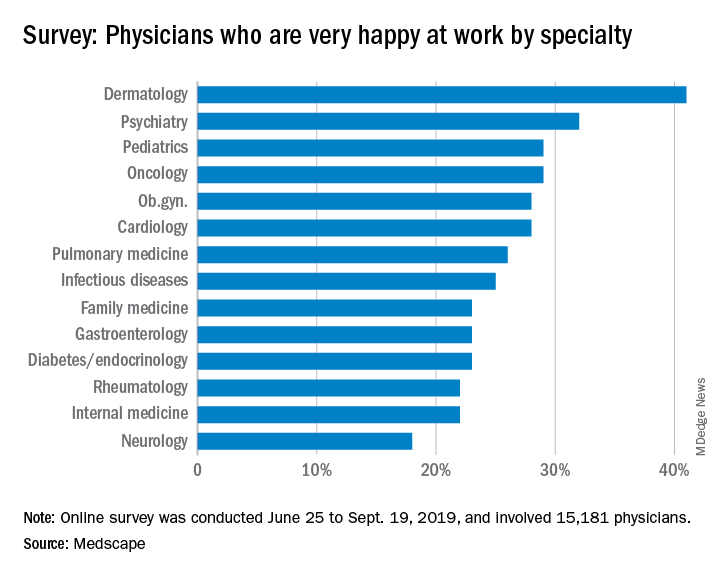
About 28% of ob.gyns. reported that they were very happy at work, and 54% said that they were very happy outside of work, according to the Medscape report. Dermatologists were most likely to be happy at work at 41%, and rheumatologists were most likely to be happy outside of work at 60%.
The rate of burnout was higher in ob.gyns. than in physicians overall at 46% versus 41%; notably, 19% of all ob.gyns. reported being both burned out and depressed. The most commonly reported reasons for burnout were too many bureaucratic tasks (57%), increased time devoted to EHRs (36%), and insufficient compensation/reimbursement (35%).
The most common ways ob.gyns. dealt with burnout was by isolating themselves from others (50%), exercising (49%), and talking with friends/family (44%). About 48% of ob.gyns. took 3-4 weeks of vacation, slightly more than the 44% average for all physicians; 32% took less than 3 weeks’ vacation.
About 15% of ob.gyns. have contemplated suicide, and 1% have attempted suicide; 80% have never contemplated suicide. Only 21% reported that they were currently seeking or planning to seek professional help for symptoms of burnout and/or depression, with 63% saying they would not consider and had not utilized professional help in the past.
The Medscape survey was conducted from June 25 to Sept. 19, 2019, and involved 15,181 physicians.
This report definitely calls attention for improving both individual and organizational wellness. Historically, facing the challenges in medicine is something that we’ve come to expect as students and trainees. This normalized expectation – in addition to limited organizational support and potential lack of guaranteed privacy with regard to mental health concerns – explains the limited motivation to seek help. We knew about the long hours, bureaucracy, and pay inequity when we signed on. The main difference now is the greater emphasis on the value of addressing these issues on a greater scale.

Physicians who are well can have a greater capacity to be productive. It benefits organizations substantially when they employ physicians who are happy and continue to find meaning in their work.
This issue clearly is not unique to ob.gyns. It’s also hard to miss the irony of advocating for patient wellness without prioritizing our own. There’s a greater discrepancy with regard to burnout and gender because of the “second shift” that women tend to take on at home.
Catherine Cansino, MD, MPH, is associate clinical professor of obstetrics and gynecology at the University of California, Davis. She is a member of the Ob.Gyn. News editorial advisory board.
This report definitely calls attention for improving both individual and organizational wellness. Historically, facing the challenges in medicine is something that we’ve come to expect as students and trainees. This normalized expectation – in addition to limited organizational support and potential lack of guaranteed privacy with regard to mental health concerns – explains the limited motivation to seek help. We knew about the long hours, bureaucracy, and pay inequity when we signed on. The main difference now is the greater emphasis on the value of addressing these issues on a greater scale.
Physicians who are well can have a greater capacity to be productive. It benefits organizations substantially when they employ physicians who are happy and continue to find meaning in their work.
This issue clearly is not unique to ob.gyns. It’s also hard to miss the irony of advocating for patient wellness without prioritizing our own. There’s a greater discrepancy with regard to burnout and gender because of the “second shift” that women tend to take on at home.
Catherine Cansino, MD, MPH, is associate clinical professor of obstetrics and gynecology at the University of California, Davis. She is a member of the Ob.Gyn. News editorial advisory board.
This report definitely calls attention for improving both individual and organizational wellness. Historically, facing the challenges in medicine is something that we’ve come to expect as students and trainees. This normalized expectation – in addition to limited organizational support and potential lack of guaranteed privacy with regard to mental health concerns – explains the limited motivation to seek help. We knew about the long hours, bureaucracy, and pay inequity when we signed on. The main difference now is the greater emphasis on the value of addressing these issues on a greater scale.
Physicians who are well can have a greater capacity to be productive. It benefits organizations substantially when they employ physicians who are happy and continue to find meaning in their work.
This issue clearly is not unique to ob.gyns. It’s also hard to miss the irony of advocating for patient wellness without prioritizing our own. There’s a greater discrepancy with regard to burnout and gender because of the “second shift” that women tend to take on at home.
Catherine Cansino, MD, MPH, is associate clinical professor of obstetrics and gynecology at the University of California, Davis. She is a member of the Ob.Gyn. News editorial advisory board.
Ob.gyns. are in the middle of the pack when it comes to physician happiness both in and outside the office, according to Medscape’s 2020 Lifestyle, Happiness, and Burnout Report.
About 28% of ob.gyns. reported that they were very happy at work, and 54% said that they were very happy outside of work, according to the Medscape report. Dermatologists were most likely to be happy at work at 41%, and rheumatologists were most likely to be happy outside of work at 60%.
The rate of burnout was higher in ob.gyns. than in physicians overall at 46% versus 41%; notably, 19% of all ob.gyns. reported being both burned out and depressed. The most commonly reported reasons for burnout were too many bureaucratic tasks (57%), increased time devoted to EHRs (36%), and insufficient compensation/reimbursement (35%).
The most common ways ob.gyns. dealt with burnout was by isolating themselves from others (50%), exercising (49%), and talking with friends/family (44%). About 48% of ob.gyns. took 3-4 weeks of vacation, slightly more than the 44% average for all physicians; 32% took less than 3 weeks’ vacation.
About 15% of ob.gyns. have contemplated suicide, and 1% have attempted suicide; 80% have never contemplated suicide. Only 21% reported that they were currently seeking or planning to seek professional help for symptoms of burnout and/or depression, with 63% saying they would not consider and had not utilized professional help in the past.
The Medscape survey was conducted from June 25 to Sept. 19, 2019, and involved 15,181 physicians.
Ob.gyns. are in the middle of the pack when it comes to physician happiness both in and outside the office, according to Medscape’s 2020 Lifestyle, Happiness, and Burnout Report.
About 28% of ob.gyns. reported that they were very happy at work, and 54% said that they were very happy outside of work, according to the Medscape report. Dermatologists were most likely to be happy at work at 41%, and rheumatologists were most likely to be happy outside of work at 60%.
The rate of burnout was higher in ob.gyns. than in physicians overall at 46% versus 41%; notably, 19% of all ob.gyns. reported being both burned out and depressed. The most commonly reported reasons for burnout were too many bureaucratic tasks (57%), increased time devoted to EHRs (36%), and insufficient compensation/reimbursement (35%).
The most common ways ob.gyns. dealt with burnout was by isolating themselves from others (50%), exercising (49%), and talking with friends/family (44%). About 48% of ob.gyns. took 3-4 weeks of vacation, slightly more than the 44% average for all physicians; 32% took less than 3 weeks’ vacation.
About 15% of ob.gyns. have contemplated suicide, and 1% have attempted suicide; 80% have never contemplated suicide. Only 21% reported that they were currently seeking or planning to seek professional help for symptoms of burnout and/or depression, with 63% saying they would not consider and had not utilized professional help in the past.
The Medscape survey was conducted from June 25 to Sept. 19, 2019, and involved 15,181 physicians.
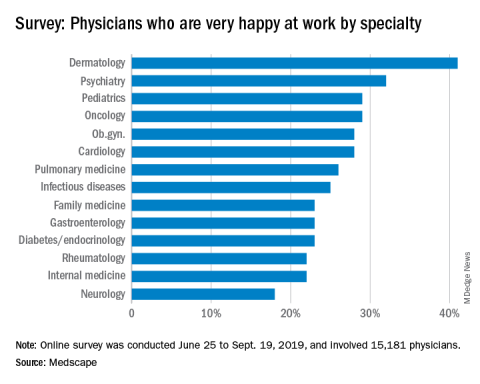
Reassurance on general anesthesia in young kids
LAHAINA, HAWAII – Two recent large, well-conducted, and persuasive Jessica Sprague, MD, said at the SDEF Hawaii Dermatology Seminar provided by the Global Academy for Medical Education/Skin Disease Education Foundation.

“These two studies can be cited in conversation with parents and are very reassuring for a single episode of general anesthesia,” observed Dr. Sprague, a dermatologist at Rady Children’s Hospital and the University of California, both in San Diego.
“As a take home, I think we can feel pretty confident that single exposure to short-duration general anesthesia does not have any adverse neurocognitive effects,” she added.
In 2016, the Food and Drug Administration issued a drug safety communication that general anesthesia lasting for more than 3 hours in children aged less than 3 years, or repeated shorter-duration general anesthesia, may affect the development of children’s brains. This edict caused considerable turmoil among both physicians and parents. The warning was based upon animal studies suggesting adverse effects, including abnormal axon formation and other structural changes, impaired learning and memory, and heightened emotional reactivity to threats. Preliminary human cohort studies generated conflicting results, but were tough to interpret because of potential confounding issues, most prominently the distinct possibility that the very reason the child was undergoing general anesthesia might inherently predispose to neurodevelopmental problems, the dermatologist explained.
Enter the GAS trial, a multinational, assessor-blinded study in which 722 generally healthy infants undergoing hernia repair at 28 centers in the United States and six other countries were randomized to general anesthesia for a median of 54 minutes or awake regional anesthesia. Assessment via a detailed neuropsychological test battery and parent questionnaires at age 2 and 5 years showed no between-group differences at all. Of note, the GAS trial was funded by the FDA, the National Institutes of Health, and similar national health care agencies in the other participating countries (Lancet. 2019 Feb 16;393[10172]:664-77).
The other major recent research contribution was a province-wide Ontario study led by investigators at the Hospital for Sick Children in Toronto. This retrospective study included 2,346 sibling pairs aged 4-5 years in which one child in each pair received general anesthesia as a preschooler. All participants underwent testing using the comprehensive Early Development Instrument. Reassuringly, no between-group differences were found in any of the five domains assessed by the testing: language and cognitive development, physical health and well-being, emotional health and maturity, social knowledge and competence, and communication skills and general knowledge (JAMA Pediatr. 2019 Jan 1;173[1]:29-36).
These two studies address a pressing issue, since 10% of children in the United States and other developed countries receive general anesthesia within their first 3 years of life. Common indications in dermatology include excisional surgery, laser therapy for extensive port wine birthmarks, and diagnostic MRIs.
Dr. Sprague advised that, based upon the new data, “you definitely do not want to delay necessary imaging studies or surgeries, but MRIs can often be done without general anesthesia in infants less than 2 months old. If you have an infant who needs an MRI for something like PHACE syndrome [posterior fossa brain malformations, hemangioma, arterial lesions, cardiac abnormalities, and eye abnormalities], if you can get them in before 2 months of age sometimes you can avoid the general anesthesia if you wrap them tight enough. But once they get over 2 months ,there’s too much wiggle and it’s pretty impossible.”
Her other suggestions:
- Consider delaying nonurgent surgeries and imaging until at least age 6 months and ideally 3 years. “Parents will eventually want surgery to be done for a benign-appearing congenital nevus on the cheek, but it doesn’t necessarily need to be done before 6 months. The same with a residual hemangioma. I would recommend doing it before they go to kindergarten and before they get a sort of sense of what their self looks like, but you have some time between ages 3 and 5 to do that,” Dr. Sprague said.
- Seek out an anesthesiologist who has extensive experience with infants and young children, as is common at a dedicated children’s hospital. “If you live somewhere where the anesthesiologists are primarily seeing adult patients, they’re just not as good,” according to the pediatric dermatologist.
- Definitely consider a topical anesthesia strategy in infants who require multiple procedures, because there remains some unresolved concern about the potential neurodevelopmental impact of multiple bouts of general anesthesia.
Dr. Sprague reported having no financial conflicts regarding her presentation.
The SDEF/Global Academy for Medical Education and this news organization are owned by the same parent company.
LAHAINA, HAWAII – Two recent large, well-conducted, and persuasive Jessica Sprague, MD, said at the SDEF Hawaii Dermatology Seminar provided by the Global Academy for Medical Education/Skin Disease Education Foundation.
“These two studies can be cited in conversation with parents and are very reassuring for a single episode of general anesthesia,” observed Dr. Sprague, a dermatologist at Rady Children’s Hospital and the University of California, both in San Diego.
“As a take home, I think we can feel pretty confident that single exposure to short-duration general anesthesia does not have any adverse neurocognitive effects,” she added.
In 2016, the Food and Drug Administration issued a drug safety communication that general anesthesia lasting for more than 3 hours in children aged less than 3 years, or repeated shorter-duration general anesthesia, may affect the development of children’s brains. This edict caused considerable turmoil among both physicians and parents. The warning was based upon animal studies suggesting adverse effects, including abnormal axon formation and other structural changes, impaired learning and memory, and heightened emotional reactivity to threats. Preliminary human cohort studies generated conflicting results, but were tough to interpret because of potential confounding issues, most prominently the distinct possibility that the very reason the child was undergoing general anesthesia might inherently predispose to neurodevelopmental problems, the dermatologist explained.
Enter the GAS trial, a multinational, assessor-blinded study in which 722 generally healthy infants undergoing hernia repair at 28 centers in the United States and six other countries were randomized to general anesthesia for a median of 54 minutes or awake regional anesthesia. Assessment via a detailed neuropsychological test battery and parent questionnaires at age 2 and 5 years showed no between-group differences at all. Of note, the GAS trial was funded by the FDA, the National Institutes of Health, and similar national health care agencies in the other participating countries (Lancet. 2019 Feb 16;393[10172]:664-77).
The other major recent research contribution was a province-wide Ontario study led by investigators at the Hospital for Sick Children in Toronto. This retrospective study included 2,346 sibling pairs aged 4-5 years in which one child in each pair received general anesthesia as a preschooler. All participants underwent testing using the comprehensive Early Development Instrument. Reassuringly, no between-group differences were found in any of the five domains assessed by the testing: language and cognitive development, physical health and well-being, emotional health and maturity, social knowledge and competence, and communication skills and general knowledge (JAMA Pediatr. 2019 Jan 1;173[1]:29-36).
These two studies address a pressing issue, since 10% of children in the United States and other developed countries receive general anesthesia within their first 3 years of life. Common indications in dermatology include excisional surgery, laser therapy for extensive port wine birthmarks, and diagnostic MRIs.
Dr. Sprague advised that, based upon the new data, “you definitely do not want to delay necessary imaging studies or surgeries, but MRIs can often be done without general anesthesia in infants less than 2 months old. If you have an infant who needs an MRI for something like PHACE syndrome [posterior fossa brain malformations, hemangioma, arterial lesions, cardiac abnormalities, and eye abnormalities], if you can get them in before 2 months of age sometimes you can avoid the general anesthesia if you wrap them tight enough. But once they get over 2 months ,there’s too much wiggle and it’s pretty impossible.”
Her other suggestions:
- Consider delaying nonurgent surgeries and imaging until at least age 6 months and ideally 3 years. “Parents will eventually want surgery to be done for a benign-appearing congenital nevus on the cheek, but it doesn’t necessarily need to be done before 6 months. The same with a residual hemangioma. I would recommend doing it before they go to kindergarten and before they get a sort of sense of what their self looks like, but you have some time between ages 3 and 5 to do that,” Dr. Sprague said.
- Seek out an anesthesiologist who has extensive experience with infants and young children, as is common at a dedicated children’s hospital. “If you live somewhere where the anesthesiologists are primarily seeing adult patients, they’re just not as good,” according to the pediatric dermatologist.
- Definitely consider a topical anesthesia strategy in infants who require multiple procedures, because there remains some unresolved concern about the potential neurodevelopmental impact of multiple bouts of general anesthesia.
Dr. Sprague reported having no financial conflicts regarding her presentation.
The SDEF/Global Academy for Medical Education and this news organization are owned by the same parent company.
LAHAINA, HAWAII – Two recent large, well-conducted, and persuasive Jessica Sprague, MD, said at the SDEF Hawaii Dermatology Seminar provided by the Global Academy for Medical Education/Skin Disease Education Foundation.
“These two studies can be cited in conversation with parents and are very reassuring for a single episode of general anesthesia,” observed Dr. Sprague, a dermatologist at Rady Children’s Hospital and the University of California, both in San Diego.
“As a take home, I think we can feel pretty confident that single exposure to short-duration general anesthesia does not have any adverse neurocognitive effects,” she added.
In 2016, the Food and Drug Administration issued a drug safety communication that general anesthesia lasting for more than 3 hours in children aged less than 3 years, or repeated shorter-duration general anesthesia, may affect the development of children’s brains. This edict caused considerable turmoil among both physicians and parents. The warning was based upon animal studies suggesting adverse effects, including abnormal axon formation and other structural changes, impaired learning and memory, and heightened emotional reactivity to threats. Preliminary human cohort studies generated conflicting results, but were tough to interpret because of potential confounding issues, most prominently the distinct possibility that the very reason the child was undergoing general anesthesia might inherently predispose to neurodevelopmental problems, the dermatologist explained.
Enter the GAS trial, a multinational, assessor-blinded study in which 722 generally healthy infants undergoing hernia repair at 28 centers in the United States and six other countries were randomized to general anesthesia for a median of 54 minutes or awake regional anesthesia. Assessment via a detailed neuropsychological test battery and parent questionnaires at age 2 and 5 years showed no between-group differences at all. Of note, the GAS trial was funded by the FDA, the National Institutes of Health, and similar national health care agencies in the other participating countries (Lancet. 2019 Feb 16;393[10172]:664-77).
The other major recent research contribution was a province-wide Ontario study led by investigators at the Hospital for Sick Children in Toronto. This retrospective study included 2,346 sibling pairs aged 4-5 years in which one child in each pair received general anesthesia as a preschooler. All participants underwent testing using the comprehensive Early Development Instrument. Reassuringly, no between-group differences were found in any of the five domains assessed by the testing: language and cognitive development, physical health and well-being, emotional health and maturity, social knowledge and competence, and communication skills and general knowledge (JAMA Pediatr. 2019 Jan 1;173[1]:29-36).
These two studies address a pressing issue, since 10% of children in the United States and other developed countries receive general anesthesia within their first 3 years of life. Common indications in dermatology include excisional surgery, laser therapy for extensive port wine birthmarks, and diagnostic MRIs.
Dr. Sprague advised that, based upon the new data, “you definitely do not want to delay necessary imaging studies or surgeries, but MRIs can often be done without general anesthesia in infants less than 2 months old. If you have an infant who needs an MRI for something like PHACE syndrome [posterior fossa brain malformations, hemangioma, arterial lesions, cardiac abnormalities, and eye abnormalities], if you can get them in before 2 months of age sometimes you can avoid the general anesthesia if you wrap them tight enough. But once they get over 2 months ,there’s too much wiggle and it’s pretty impossible.”
Her other suggestions:
- Consider delaying nonurgent surgeries and imaging until at least age 6 months and ideally 3 years. “Parents will eventually want surgery to be done for a benign-appearing congenital nevus on the cheek, but it doesn’t necessarily need to be done before 6 months. The same with a residual hemangioma. I would recommend doing it before they go to kindergarten and before they get a sort of sense of what their self looks like, but you have some time between ages 3 and 5 to do that,” Dr. Sprague said.
- Seek out an anesthesiologist who has extensive experience with infants and young children, as is common at a dedicated children’s hospital. “If you live somewhere where the anesthesiologists are primarily seeing adult patients, they’re just not as good,” according to the pediatric dermatologist.
- Definitely consider a topical anesthesia strategy in infants who require multiple procedures, because there remains some unresolved concern about the potential neurodevelopmental impact of multiple bouts of general anesthesia.
Dr. Sprague reported having no financial conflicts regarding her presentation.
The SDEF/Global Academy for Medical Education and this news organization are owned by the same parent company.
EXPERT ANALYSIS FROM SDEF HAWAII DERMATOLOGY SEMINAR

ARCADIA: Predicting risk of atrial cardiopathy poststroke
LOS ANGELES – Older age, female sex, black race, relative anemia, and a history of cardiovascular disease are associated with greater risk for atrial cardiopathy among people who experienced an embolic stroke of undetermined source (ESUS), new evidence suggests.
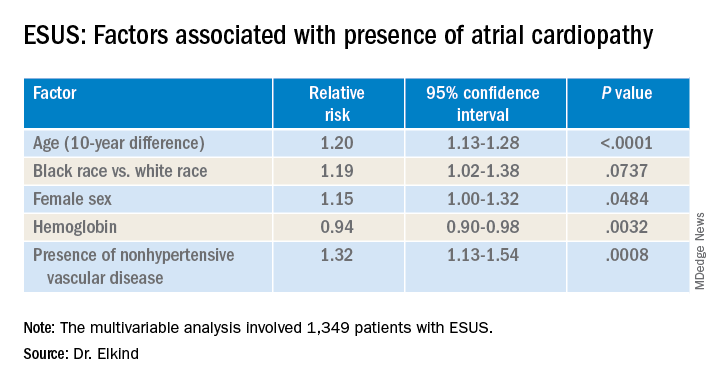
Atrial cardiopathy is a suspected cause of ESUS independent of atrial fibrillation. However, clinical predictors to help physicians identify which ESUS patients are at increased risk remain unknown.
The risk for atrial cardiopathy was 34% higher for women versus men with ESUS in this analysis. In addition, black participants had a 29% increased risk, compared with others, and each 10 years of age increased risk for atrial cardiopathy by 30% in an univariable analysis.
“Modest effects of these associations suggest that all ESUS patients, regardless of underlying demographic and risk factors, may have atrial cardiopathy,” principal investigator Mitchell S.V. Elkind, MD, of Columbia University, New York, said when presenting results at the 2020 International Stroke Conference, sponsored by the American Heart Association.
For this reason, he added, all people with ESUS should be considered for recruitment into the ongoing ARCADIA (AtRial Cardiopathy and Antithrombotic Drugs In Prevention After Cryptogenic Stroke) trial, of which he is one of the principal investigators.
ESUS is a heterogeneous condition, and some patients may be responsive to anticoagulants and some might not, Elkind said. This observation “led us to consider alternative ways for ischemic disease to lead to stroke. We would hypothesize that the underlying atrium can be a risk for stroke by itself.”
Not yet available is the primary efficacy outcome of the multicenter, randomized ARCADIA trial comparing apixaban with aspirin in reducing risk for recurrent stroke of any type. However, Dr. Elkind and colleagues have recruited 1,505 patients to date, enough to analyze factors that predict risk for recurrent stroke among people with evidence of atrial cardiopathy.
All ARCADIA participants are 45 years of age or older and have no history of atrial fibrillation. Atrial cardiopathy was defined by presence of at least one of three biomarkers: N-terminal pro-brain natriuretic peptide (NT-proBNP), P wave terminal force velocity, or evidence of a left atrial diameter of 3 cm/m2 or larger on echocardiography.
Of the 1,349 ARCADIA participants eligible for the current analysis, approximately one-third met one or more of these criteria for atrial cardiopathy.
Those with atrial cardiopathy were “more likely to be black and be women, and tended to have shorter time from stroke to screening,” Dr. Elkind said. In addition, heart failure, hypertension, and peripheral artery disease were more common in those with atrial cardiopathy. This group also was more likely to have an elevation in creatinine and lower hemoglobin and hematocrit levels.
“Heart disease, ischemic heart disease and non-hypertensive vascular disease were significant risk factors” for recurrent stroke in the study, Dr. Elkind added.
Elkind said that, surprisingly, there was no independent association between the time to measurement of NT-proBNP and risk, suggesting that this biomarker “does not rise simply in response to stroke, but reflects a stable condition.”
The multicenter ARCADIA trial is recruiting additional participants at 142 sites now, Dr. Elkind said, “and we are still looking for more sites.”
Which comes first?
“He is looking at what the predictors are for cardiopathy in these patients, which is fascinating for all of us,” session moderator Michelle Christina Johansen, MD, assistant professor of neurology at Johns Hopkins University, Baltimore, said in an interview when asked to comment.
There is always the conundrum of what came first — the chicken or the egg, Johansen said. Do these patients have stroke that then somehow led to a state that predisposes them to have atrial cardiopathy? Or, rather, was it an atrial cardiopathy state independent of atrial fibrillation that then led to stroke?
“That is why looking at predictors in this population is of such interest,” she said. The study could help identify a subgroup of patients at higher risk for atrial cardiopathy and guide clinical decision-making when patients present with ESUS.
“One of the things I found interesting was that he found that atrial cardiopathy patients were older [a mean 69 years]. This was amazing, because ESUS patients in general tend to be younger,” Dr. Johansen said.
“And there is about a 4-5% risk of recurrence with these patients. So. it was interesting that prior stroke or [transient ischemic attack] was not associated.”*
The National Institute of Neurological Disorders and Stroke, the BMS-Pfizer Alliance, and Roche provide funding for ARCADIA. Dr. Elkind and Dr. Johansen disclosed no relevant financial relationships.
SOURCE: Elkind M et al. ISC 2020, Abstract 26.
This article first appeared on Medscape.com.
*Correction, 4/28/20: An earlier version of this article misstated the risk of recurrence.
LOS ANGELES – Older age, female sex, black race, relative anemia, and a history of cardiovascular disease are associated with greater risk for atrial cardiopathy among people who experienced an embolic stroke of undetermined source (ESUS), new evidence suggests.
Atrial cardiopathy is a suspected cause of ESUS independent of atrial fibrillation. However, clinical predictors to help physicians identify which ESUS patients are at increased risk remain unknown.
The risk for atrial cardiopathy was 34% higher for women versus men with ESUS in this analysis. In addition, black participants had a 29% increased risk, compared with others, and each 10 years of age increased risk for atrial cardiopathy by 30% in an univariable analysis.
“Modest effects of these associations suggest that all ESUS patients, regardless of underlying demographic and risk factors, may have atrial cardiopathy,” principal investigator Mitchell S.V. Elkind, MD, of Columbia University, New York, said when presenting results at the 2020 International Stroke Conference, sponsored by the American Heart Association.
For this reason, he added, all people with ESUS should be considered for recruitment into the ongoing ARCADIA (AtRial Cardiopathy and Antithrombotic Drugs In Prevention After Cryptogenic Stroke) trial, of which he is one of the principal investigators.
ESUS is a heterogeneous condition, and some patients may be responsive to anticoagulants and some might not, Elkind said. This observation “led us to consider alternative ways for ischemic disease to lead to stroke. We would hypothesize that the underlying atrium can be a risk for stroke by itself.”
Not yet available is the primary efficacy outcome of the multicenter, randomized ARCADIA trial comparing apixaban with aspirin in reducing risk for recurrent stroke of any type. However, Dr. Elkind and colleagues have recruited 1,505 patients to date, enough to analyze factors that predict risk for recurrent stroke among people with evidence of atrial cardiopathy.
All ARCADIA participants are 45 years of age or older and have no history of atrial fibrillation. Atrial cardiopathy was defined by presence of at least one of three biomarkers: N-terminal pro-brain natriuretic peptide (NT-proBNP), P wave terminal force velocity, or evidence of a left atrial diameter of 3 cm/m2 or larger on echocardiography.
Of the 1,349 ARCADIA participants eligible for the current analysis, approximately one-third met one or more of these criteria for atrial cardiopathy.
Those with atrial cardiopathy were “more likely to be black and be women, and tended to have shorter time from stroke to screening,” Dr. Elkind said. In addition, heart failure, hypertension, and peripheral artery disease were more common in those with atrial cardiopathy. This group also was more likely to have an elevation in creatinine and lower hemoglobin and hematocrit levels.
“Heart disease, ischemic heart disease and non-hypertensive vascular disease were significant risk factors” for recurrent stroke in the study, Dr. Elkind added.
Elkind said that, surprisingly, there was no independent association between the time to measurement of NT-proBNP and risk, suggesting that this biomarker “does not rise simply in response to stroke, but reflects a stable condition.”
The multicenter ARCADIA trial is recruiting additional participants at 142 sites now, Dr. Elkind said, “and we are still looking for more sites.”
Which comes first?
“He is looking at what the predictors are for cardiopathy in these patients, which is fascinating for all of us,” session moderator Michelle Christina Johansen, MD, assistant professor of neurology at Johns Hopkins University, Baltimore, said in an interview when asked to comment.
There is always the conundrum of what came first — the chicken or the egg, Johansen said. Do these patients have stroke that then somehow led to a state that predisposes them to have atrial cardiopathy? Or, rather, was it an atrial cardiopathy state independent of atrial fibrillation that then led to stroke?
“That is why looking at predictors in this population is of such interest,” she said. The study could help identify a subgroup of patients at higher risk for atrial cardiopathy and guide clinical decision-making when patients present with ESUS.
“One of the things I found interesting was that he found that atrial cardiopathy patients were older [a mean 69 years]. This was amazing, because ESUS patients in general tend to be younger,” Dr. Johansen said.
“And there is about a 4-5% risk of recurrence with these patients. So. it was interesting that prior stroke or [transient ischemic attack] was not associated.”*
The National Institute of Neurological Disorders and Stroke, the BMS-Pfizer Alliance, and Roche provide funding for ARCADIA. Dr. Elkind and Dr. Johansen disclosed no relevant financial relationships.
SOURCE: Elkind M et al. ISC 2020, Abstract 26.
This article first appeared on Medscape.com.
*Correction, 4/28/20: An earlier version of this article misstated the risk of recurrence.
LOS ANGELES – Older age, female sex, black race, relative anemia, and a history of cardiovascular disease are associated with greater risk for atrial cardiopathy among people who experienced an embolic stroke of undetermined source (ESUS), new evidence suggests.
Atrial cardiopathy is a suspected cause of ESUS independent of atrial fibrillation. However, clinical predictors to help physicians identify which ESUS patients are at increased risk remain unknown.
The risk for atrial cardiopathy was 34% higher for women versus men with ESUS in this analysis. In addition, black participants had a 29% increased risk, compared with others, and each 10 years of age increased risk for atrial cardiopathy by 30% in an univariable analysis.
“Modest effects of these associations suggest that all ESUS patients, regardless of underlying demographic and risk factors, may have atrial cardiopathy,” principal investigator Mitchell S.V. Elkind, MD, of Columbia University, New York, said when presenting results at the 2020 International Stroke Conference, sponsored by the American Heart Association.
For this reason, he added, all people with ESUS should be considered for recruitment into the ongoing ARCADIA (AtRial Cardiopathy and Antithrombotic Drugs In Prevention After Cryptogenic Stroke) trial, of which he is one of the principal investigators.
ESUS is a heterogeneous condition, and some patients may be responsive to anticoagulants and some might not, Elkind said. This observation “led us to consider alternative ways for ischemic disease to lead to stroke. We would hypothesize that the underlying atrium can be a risk for stroke by itself.”
Not yet available is the primary efficacy outcome of the multicenter, randomized ARCADIA trial comparing apixaban with aspirin in reducing risk for recurrent stroke of any type. However, Dr. Elkind and colleagues have recruited 1,505 patients to date, enough to analyze factors that predict risk for recurrent stroke among people with evidence of atrial cardiopathy.
All ARCADIA participants are 45 years of age or older and have no history of atrial fibrillation. Atrial cardiopathy was defined by presence of at least one of three biomarkers: N-terminal pro-brain natriuretic peptide (NT-proBNP), P wave terminal force velocity, or evidence of a left atrial diameter of 3 cm/m2 or larger on echocardiography.
Of the 1,349 ARCADIA participants eligible for the current analysis, approximately one-third met one or more of these criteria for atrial cardiopathy.
Those with atrial cardiopathy were “more likely to be black and be women, and tended to have shorter time from stroke to screening,” Dr. Elkind said. In addition, heart failure, hypertension, and peripheral artery disease were more common in those with atrial cardiopathy. This group also was more likely to have an elevation in creatinine and lower hemoglobin and hematocrit levels.
“Heart disease, ischemic heart disease and non-hypertensive vascular disease were significant risk factors” for recurrent stroke in the study, Dr. Elkind added.
Elkind said that, surprisingly, there was no independent association between the time to measurement of NT-proBNP and risk, suggesting that this biomarker “does not rise simply in response to stroke, but reflects a stable condition.”
The multicenter ARCADIA trial is recruiting additional participants at 142 sites now, Dr. Elkind said, “and we are still looking for more sites.”
Which comes first?
“He is looking at what the predictors are for cardiopathy in these patients, which is fascinating for all of us,” session moderator Michelle Christina Johansen, MD, assistant professor of neurology at Johns Hopkins University, Baltimore, said in an interview when asked to comment.
There is always the conundrum of what came first — the chicken or the egg, Johansen said. Do these patients have stroke that then somehow led to a state that predisposes them to have atrial cardiopathy? Or, rather, was it an atrial cardiopathy state independent of atrial fibrillation that then led to stroke?
“That is why looking at predictors in this population is of such interest,” she said. The study could help identify a subgroup of patients at higher risk for atrial cardiopathy and guide clinical decision-making when patients present with ESUS.
“One of the things I found interesting was that he found that atrial cardiopathy patients were older [a mean 69 years]. This was amazing, because ESUS patients in general tend to be younger,” Dr. Johansen said.
“And there is about a 4-5% risk of recurrence with these patients. So. it was interesting that prior stroke or [transient ischemic attack] was not associated.”*
The National Institute of Neurological Disorders and Stroke, the BMS-Pfizer Alliance, and Roche provide funding for ARCADIA. Dr. Elkind and Dr. Johansen disclosed no relevant financial relationships.
SOURCE: Elkind M et al. ISC 2020, Abstract 26.
This article first appeared on Medscape.com.
*Correction, 4/28/20: An earlier version of this article misstated the risk of recurrence.
REPORTING FROM ISC 2020
CUTIS Celebrates 55 Years
When the first issue of Cutis was published in February 1965:
- Alopecia was featured on the cover
- Eugene F. Traub, MD, was Chief Editor, and John T. McCarthy, MD, was Assistant Chief Editor
- The cost of a year's subscription was $10
- The editorial objective was to bring readers "in simple and concise form the latest in diagnosis, prognosis and treatment" with articles "dealing with common dermatoses or those rarer diseases of great interest"
- From the Consultant's Corner answered the question: Is diet actually important in the treatment of acne vulgaris?
To our loyal readers, contributors, and Editorial Board members, thank you for continuing to turn to Cutis for the latest in diagnosis, prognosis, and treatment.
To our new readers, we hope you find our articles in simple and concise form relevant to your practice.
To our resident readers, you are entering one of the most rewarding specialties in medicine—dermatology.
Access past issues of Cutis online.
When the first issue of Cutis was published in February 1965:
- Alopecia was featured on the cover
- Eugene F. Traub, MD, was Chief Editor, and John T. McCarthy, MD, was Assistant Chief Editor
- The cost of a year's subscription was $10
- The editorial objective was to bring readers "in simple and concise form the latest in diagnosis, prognosis and treatment" with articles "dealing with common dermatoses or those rarer diseases of great interest"
- From the Consultant's Corner answered the question: Is diet actually important in the treatment of acne vulgaris?
To our loyal readers, contributors, and Editorial Board members, thank you for continuing to turn to Cutis for the latest in diagnosis, prognosis, and treatment.
To our new readers, we hope you find our articles in simple and concise form relevant to your practice.
To our resident readers, you are entering one of the most rewarding specialties in medicine—dermatology.
Access past issues of Cutis online.
When the first issue of Cutis was published in February 1965:
- Alopecia was featured on the cover
- Eugene F. Traub, MD, was Chief Editor, and John T. McCarthy, MD, was Assistant Chief Editor
- The cost of a year's subscription was $10
- The editorial objective was to bring readers "in simple and concise form the latest in diagnosis, prognosis and treatment" with articles "dealing with common dermatoses or those rarer diseases of great interest"
- From the Consultant's Corner answered the question: Is diet actually important in the treatment of acne vulgaris?
To our loyal readers, contributors, and Editorial Board members, thank you for continuing to turn to Cutis for the latest in diagnosis, prognosis, and treatment.
To our new readers, we hope you find our articles in simple and concise form relevant to your practice.
To our resident readers, you are entering one of the most rewarding specialties in medicine—dermatology.
Access past issues of Cutis online.