User login
Some relevant financial conflicts go undisclosed in ACR guidelines
Over one-third of undisclosed industry payments made to physician-authors of American College of Rheumatology clinical practice guidelines were relevant to guideline recommendations, according to a recent review in Arthritis & Rheumatology.

Since 2014, 56 of 89 total physician-authors across five ACR clinical practice guidelines have been paid a total of $9,728,751 from industry sources. Nineteen of 89 authors received $1,961,362 in industry payments that were directly relevant to a guideline’s recommendations, and $699,561 of these payments (35.7%) were undisclosed, according to Cole Wayant, of the Oklahoma State University Center for Health Sciences, Tulsa, and colleagues.
The ACR’s Policy and Procedure Manual for Clinical Practice Guidelines, last updated in January 2015, allows up to 49% of authors in a clinical practice guideline to have financial conflicts of interest, including intellectual conflicts of interest, and requires them to report those relationships. When the ACR creates a call for letters of interest for a guideline, it includes a list of companies and organizations that could be affected by the guideline topic. To be considered conflict free, an author must not have ties to these companies and organizations for 1 year before the deadline on the letter of interest and 1 year after a guideline is published. This policy extends to members of an ACR guideline development group, literature review team, and voting panel. Under these guidelines, an author who has any relationship with a company is considered conflicted, which counts toward this total.
Mr. Wayant and colleagues performed a cross-sectional study of five ACR guidelines published since August 2014 on axial spondyloarthritis (27 authors), glucocorticoid-induced osteoporosis (21 authors), RA (26 authors), perioperative management of antirheumatic medication (31 authors), and polymyalgia rheumatica (46 authors). Using the Open Payments Database, the researchers searched for any general (speaking fees, consulting fees, education, honoraria, travel, food, or beverage payments) research, associated research, and ownership (stocks or dividends) relationships reported by guideline authors in the 12 months before a guideline was published. The guidelines on axial spondyloarthritis, glucocorticoid-induced osteoporosis, and RA contained specific recommendations for classes of medications or branded drugs, and conflicts from authors in those guidelines were assessed to determine relevancy of those payments.
Of the 56 physician-authors who received at least one payment (62.9%), the median payment was $522. However, 51 authors reported receiving more than $1,000, 42 authors reported more than $10,000, 20 authors reported more than $100,000, and 2 authors reported more than $1 million. Overall, 14 of 56 authors (25.0%) reported having no financial conflicts of interest, but did in fact receive some payment, and $4,189,090 of the $9,728,751 (43.1%) was not reported. The researchers said that the 19 authors with directly relevant payments were members of the voting panel (11 authors), literature review team (6 authors), and core leadership team (3 authors).
Physician-authors of clinical practice guidelines receiving payments from industry is not an issue specific to rheumatology. In an interview, Mr. Wayant said that authors of clinical guidelines across many different medical specialties often work closely with industry and hold “numerous conflicts of interest.”
“If professional societies are meant to be the public face of specialty providers, one would expect the guideline authors to resemble all society members,” Mr. Wayant said. “However, we routinely find that authors of professional society guidelines have large financial conflicts of interest that exceed the national average, indicating that the views and opinions of guideline authors may not reflect the opinion of most providers.”
These financial relationships between industry and physician authors have been shown to affect research results. A Cochrane Review published in 2017 evaluating industry sponsorship and research outcomes found that studies sponsored by industry were more likely to have favorable efficacy results and conclusions, compared with studies not sponsored by industry sources (Cochrane Database Syst Rev. 2017 Feb 16;2:MR000033). As medical societies continue to become more involved with clinical practice guidelines, recommendations from physician-authors with financial ties to industry can present a conflict of interest. Recommendations in clinical practice guidelines often affect reimbursement of a drug from insurance, and an author can vote for a drug recommendation in a guideline that may not match patient values and preferences, noted Mr. Wayant.
“These authors are fundamentally different from the average rheumatologist that stays up to date with the medical literature, in terms of financial ties to industry,” he said. “Removing the influence of for-profit companies from guideline development cannot harm the rigor of the guideline recommendations, since many medical professionals without conflicts are experts in evidence-based medicine and study appraisal.”
Being financially linked to industry does not automatically make one the most qualified candidate for deciding which therapies are best for patients, Mr. Wayant explained, and guidelines should reflect the values of patients and the medical profession, rather than industry.
“Given the importance of guidelines, [we] encourage the ACR and all professional societies to do everything possible to be above reproach and seek out authors who do not have financial conflicts to write the guidelines,” he said.
The authors reported having no funding source for the study. One author reported serving on an advisory board for Janssen involving infliximab and golimumab, for Sanofi Genzyme involving sarilumab, and receiving payment for a survey from Comsort. The other authors reported having no conflicts of interest.
SOURCE: Wayant C et al. Arthritis Rheumatol. 2020 Feb 10. doi: 10.1002/art.41224.
Over one-third of undisclosed industry payments made to physician-authors of American College of Rheumatology clinical practice guidelines were relevant to guideline recommendations, according to a recent review in Arthritis & Rheumatology.
Since 2014, 56 of 89 total physician-authors across five ACR clinical practice guidelines have been paid a total of $9,728,751 from industry sources. Nineteen of 89 authors received $1,961,362 in industry payments that were directly relevant to a guideline’s recommendations, and $699,561 of these payments (35.7%) were undisclosed, according to Cole Wayant, of the Oklahoma State University Center for Health Sciences, Tulsa, and colleagues.
The ACR’s Policy and Procedure Manual for Clinical Practice Guidelines, last updated in January 2015, allows up to 49% of authors in a clinical practice guideline to have financial conflicts of interest, including intellectual conflicts of interest, and requires them to report those relationships. When the ACR creates a call for letters of interest for a guideline, it includes a list of companies and organizations that could be affected by the guideline topic. To be considered conflict free, an author must not have ties to these companies and organizations for 1 year before the deadline on the letter of interest and 1 year after a guideline is published. This policy extends to members of an ACR guideline development group, literature review team, and voting panel. Under these guidelines, an author who has any relationship with a company is considered conflicted, which counts toward this total.
Mr. Wayant and colleagues performed a cross-sectional study of five ACR guidelines published since August 2014 on axial spondyloarthritis (27 authors), glucocorticoid-induced osteoporosis (21 authors), RA (26 authors), perioperative management of antirheumatic medication (31 authors), and polymyalgia rheumatica (46 authors). Using the Open Payments Database, the researchers searched for any general (speaking fees, consulting fees, education, honoraria, travel, food, or beverage payments) research, associated research, and ownership (stocks or dividends) relationships reported by guideline authors in the 12 months before a guideline was published. The guidelines on axial spondyloarthritis, glucocorticoid-induced osteoporosis, and RA contained specific recommendations for classes of medications or branded drugs, and conflicts from authors in those guidelines were assessed to determine relevancy of those payments.
Of the 56 physician-authors who received at least one payment (62.9%), the median payment was $522. However, 51 authors reported receiving more than $1,000, 42 authors reported more than $10,000, 20 authors reported more than $100,000, and 2 authors reported more than $1 million. Overall, 14 of 56 authors (25.0%) reported having no financial conflicts of interest, but did in fact receive some payment, and $4,189,090 of the $9,728,751 (43.1%) was not reported. The researchers said that the 19 authors with directly relevant payments were members of the voting panel (11 authors), literature review team (6 authors), and core leadership team (3 authors).
Physician-authors of clinical practice guidelines receiving payments from industry is not an issue specific to rheumatology. In an interview, Mr. Wayant said that authors of clinical guidelines across many different medical specialties often work closely with industry and hold “numerous conflicts of interest.”
“If professional societies are meant to be the public face of specialty providers, one would expect the guideline authors to resemble all society members,” Mr. Wayant said. “However, we routinely find that authors of professional society guidelines have large financial conflicts of interest that exceed the national average, indicating that the views and opinions of guideline authors may not reflect the opinion of most providers.”
These financial relationships between industry and physician authors have been shown to affect research results. A Cochrane Review published in 2017 evaluating industry sponsorship and research outcomes found that studies sponsored by industry were more likely to have favorable efficacy results and conclusions, compared with studies not sponsored by industry sources (Cochrane Database Syst Rev. 2017 Feb 16;2:MR000033). As medical societies continue to become more involved with clinical practice guidelines, recommendations from physician-authors with financial ties to industry can present a conflict of interest. Recommendations in clinical practice guidelines often affect reimbursement of a drug from insurance, and an author can vote for a drug recommendation in a guideline that may not match patient values and preferences, noted Mr. Wayant.
“These authors are fundamentally different from the average rheumatologist that stays up to date with the medical literature, in terms of financial ties to industry,” he said. “Removing the influence of for-profit companies from guideline development cannot harm the rigor of the guideline recommendations, since many medical professionals without conflicts are experts in evidence-based medicine and study appraisal.”
Being financially linked to industry does not automatically make one the most qualified candidate for deciding which therapies are best for patients, Mr. Wayant explained, and guidelines should reflect the values of patients and the medical profession, rather than industry.
“Given the importance of guidelines, [we] encourage the ACR and all professional societies to do everything possible to be above reproach and seek out authors who do not have financial conflicts to write the guidelines,” he said.
The authors reported having no funding source for the study. One author reported serving on an advisory board for Janssen involving infliximab and golimumab, for Sanofi Genzyme involving sarilumab, and receiving payment for a survey from Comsort. The other authors reported having no conflicts of interest.
SOURCE: Wayant C et al. Arthritis Rheumatol. 2020 Feb 10. doi: 10.1002/art.41224.
Over one-third of undisclosed industry payments made to physician-authors of American College of Rheumatology clinical practice guidelines were relevant to guideline recommendations, according to a recent review in Arthritis & Rheumatology.
Since 2014, 56 of 89 total physician-authors across five ACR clinical practice guidelines have been paid a total of $9,728,751 from industry sources. Nineteen of 89 authors received $1,961,362 in industry payments that were directly relevant to a guideline’s recommendations, and $699,561 of these payments (35.7%) were undisclosed, according to Cole Wayant, of the Oklahoma State University Center for Health Sciences, Tulsa, and colleagues.
The ACR’s Policy and Procedure Manual for Clinical Practice Guidelines, last updated in January 2015, allows up to 49% of authors in a clinical practice guideline to have financial conflicts of interest, including intellectual conflicts of interest, and requires them to report those relationships. When the ACR creates a call for letters of interest for a guideline, it includes a list of companies and organizations that could be affected by the guideline topic. To be considered conflict free, an author must not have ties to these companies and organizations for 1 year before the deadline on the letter of interest and 1 year after a guideline is published. This policy extends to members of an ACR guideline development group, literature review team, and voting panel. Under these guidelines, an author who has any relationship with a company is considered conflicted, which counts toward this total.
Mr. Wayant and colleagues performed a cross-sectional study of five ACR guidelines published since August 2014 on axial spondyloarthritis (27 authors), glucocorticoid-induced osteoporosis (21 authors), RA (26 authors), perioperative management of antirheumatic medication (31 authors), and polymyalgia rheumatica (46 authors). Using the Open Payments Database, the researchers searched for any general (speaking fees, consulting fees, education, honoraria, travel, food, or beverage payments) research, associated research, and ownership (stocks or dividends) relationships reported by guideline authors in the 12 months before a guideline was published. The guidelines on axial spondyloarthritis, glucocorticoid-induced osteoporosis, and RA contained specific recommendations for classes of medications or branded drugs, and conflicts from authors in those guidelines were assessed to determine relevancy of those payments.
Of the 56 physician-authors who received at least one payment (62.9%), the median payment was $522. However, 51 authors reported receiving more than $1,000, 42 authors reported more than $10,000, 20 authors reported more than $100,000, and 2 authors reported more than $1 million. Overall, 14 of 56 authors (25.0%) reported having no financial conflicts of interest, but did in fact receive some payment, and $4,189,090 of the $9,728,751 (43.1%) was not reported. The researchers said that the 19 authors with directly relevant payments were members of the voting panel (11 authors), literature review team (6 authors), and core leadership team (3 authors).
Physician-authors of clinical practice guidelines receiving payments from industry is not an issue specific to rheumatology. In an interview, Mr. Wayant said that authors of clinical guidelines across many different medical specialties often work closely with industry and hold “numerous conflicts of interest.”
“If professional societies are meant to be the public face of specialty providers, one would expect the guideline authors to resemble all society members,” Mr. Wayant said. “However, we routinely find that authors of professional society guidelines have large financial conflicts of interest that exceed the national average, indicating that the views and opinions of guideline authors may not reflect the opinion of most providers.”
These financial relationships between industry and physician authors have been shown to affect research results. A Cochrane Review published in 2017 evaluating industry sponsorship and research outcomes found that studies sponsored by industry were more likely to have favorable efficacy results and conclusions, compared with studies not sponsored by industry sources (Cochrane Database Syst Rev. 2017 Feb 16;2:MR000033). As medical societies continue to become more involved with clinical practice guidelines, recommendations from physician-authors with financial ties to industry can present a conflict of interest. Recommendations in clinical practice guidelines often affect reimbursement of a drug from insurance, and an author can vote for a drug recommendation in a guideline that may not match patient values and preferences, noted Mr. Wayant.
“These authors are fundamentally different from the average rheumatologist that stays up to date with the medical literature, in terms of financial ties to industry,” he said. “Removing the influence of for-profit companies from guideline development cannot harm the rigor of the guideline recommendations, since many medical professionals without conflicts are experts in evidence-based medicine and study appraisal.”
Being financially linked to industry does not automatically make one the most qualified candidate for deciding which therapies are best for patients, Mr. Wayant explained, and guidelines should reflect the values of patients and the medical profession, rather than industry.
“Given the importance of guidelines, [we] encourage the ACR and all professional societies to do everything possible to be above reproach and seek out authors who do not have financial conflicts to write the guidelines,” he said.
The authors reported having no funding source for the study. One author reported serving on an advisory board for Janssen involving infliximab and golimumab, for Sanofi Genzyme involving sarilumab, and receiving payment for a survey from Comsort. The other authors reported having no conflicts of interest.
SOURCE: Wayant C et al. Arthritis Rheumatol. 2020 Feb 10. doi: 10.1002/art.41224.
FROM ARTHRITIS & RHEUMATOLOGY

Less than a quarter of endocrinologists happy at work
according to Medscape’s Endocrinologist Lifestyle, Happiness, and Burnout Report 2020.
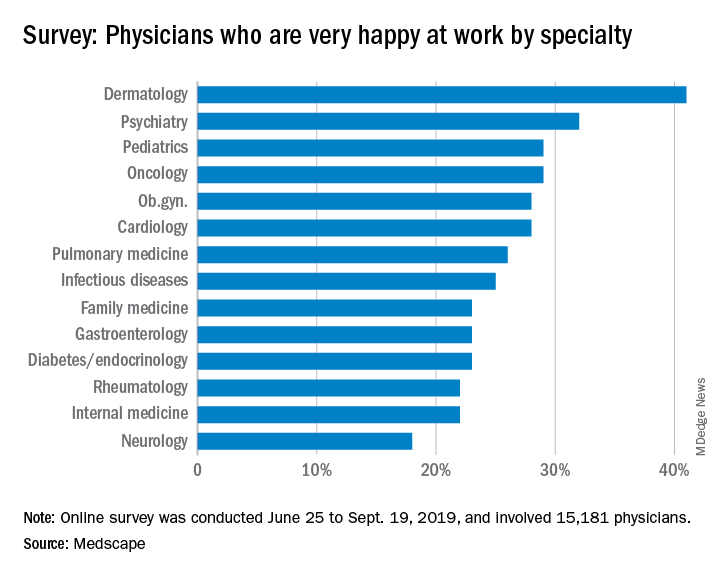
The report, which surveyed more than 15,000 physicians from various specialties, found that 31% of endocrinologists are burned out, 2% are depressed, and 16% are both depressed and burned out. Among them, 71% report having too many bureaucratic tasks as the biggest contributor, followed by insufficient reimbursement/compensation at 46% and increasing computerization of tasks (including EHR) at 34%.
The top way endocrinologists cope is by talking with family and close friends (42%), with almost equal amounts coping by either eating junk food or exercising (39% and 37%, respectively). Regarding professional help, 60% said they would not and have not previously sought professional help, while 12% said they were currently seeking professional help. Although 40% said they would engage a workplace program, 31% said they would not.
Among the reasons they gave for not seeking professional help, 45% felt they were too busy, 40% didn’t think their symptoms were severe enough, and 36% said they could handle it without help from professionals.
A slideshow of the full report can be found on Medscape.com.
according to Medscape’s Endocrinologist Lifestyle, Happiness, and Burnout Report 2020.
The report, which surveyed more than 15,000 physicians from various specialties, found that 31% of endocrinologists are burned out, 2% are depressed, and 16% are both depressed and burned out. Among them, 71% report having too many bureaucratic tasks as the biggest contributor, followed by insufficient reimbursement/compensation at 46% and increasing computerization of tasks (including EHR) at 34%.
The top way endocrinologists cope is by talking with family and close friends (42%), with almost equal amounts coping by either eating junk food or exercising (39% and 37%, respectively). Regarding professional help, 60% said they would not and have not previously sought professional help, while 12% said they were currently seeking professional help. Although 40% said they would engage a workplace program, 31% said they would not.
Among the reasons they gave for not seeking professional help, 45% felt they were too busy, 40% didn’t think their symptoms were severe enough, and 36% said they could handle it without help from professionals.
A slideshow of the full report can be found on Medscape.com.
according to Medscape’s Endocrinologist Lifestyle, Happiness, and Burnout Report 2020.
The report, which surveyed more than 15,000 physicians from various specialties, found that 31% of endocrinologists are burned out, 2% are depressed, and 16% are both depressed and burned out. Among them, 71% report having too many bureaucratic tasks as the biggest contributor, followed by insufficient reimbursement/compensation at 46% and increasing computerization of tasks (including EHR) at 34%.
The top way endocrinologists cope is by talking with family and close friends (42%), with almost equal amounts coping by either eating junk food or exercising (39% and 37%, respectively). Regarding professional help, 60% said they would not and have not previously sought professional help, while 12% said they were currently seeking professional help. Although 40% said they would engage a workplace program, 31% said they would not.
Among the reasons they gave for not seeking professional help, 45% felt they were too busy, 40% didn’t think their symptoms were severe enough, and 36% said they could handle it without help from professionals.
A slideshow of the full report can be found on Medscape.com.
Sharpest spikes in pediatric diabetes seen in Asian, Pacific Islander youth
according to a review of almost 70,000 children in the SEARCH for Diabetes in Youth Study, an ongoing, population-based surveillance project of individuals younger than 20 years.
“For both type 1 and type 2 diabetes, the rates of increase were generally higher among racial/ethnic minority populations than those among whites,” wrote the investigators, led by Jasmin Divers, PhD, of the division of health services research, department of foundations of medicine, at New York University. “These findings highlight the need for continued surveillance for diabetes among youths to monitor overall and group-specific trends, identify factors driving these trends, and inform health care planning.”
SEARCH identified 14,638 cases of pediatric type 1 diabetes and 3,916 cases of type 2 diabetes from 2002 to 2015. The study draws participants from all 64 counties in Colorado, plus selected Indian reservations in Arizona and New Mexico under the direction of Colorado; all 46 counties in South Carolina; 8 in Ohio; 5 in Washington; and Kaiser Permanente Southern California health plan enrollees in 7 counties.
The investigators found steeper increases in age- and sex-adjusted incidence of type 1 diabetes from 2002 to 2015 among black youth (2.7% per year), Hispanic youth (4%), and Asian and Pacific Islander youth (4.4%), than among their white counterparts (0.7%). Incidence among Asians and Pacific Islanders did not change significantly during 2002-2010, but increased steeply during 2011-2015 (8.5% per year) for unknown reasons.
“In parallel with increased obesity prevalence in U.S. youths, the incidence of type 2 diabetes among adolescents has increased at a higher rate than that of type 1 diabetes, especially among racial-/ethnic-minority youths,” the authors noted.
The number of new cases of type 2 diagnosed in children younger than 10 years were too few to report on (181 total cases during 2002-2015), so the incidence analysis was limited to children who were aged 10-19 years at diagnosis. The steepest annual percentage changes were among Asians and Pacific Islander youth (7.7% per year), followed by Hispanic (6.5%), black (6.0%), and American Indian (3.7%) youth.
“Although the SEARCH population is similar demographically to the U.S. youth population, it is not designed to be nationally representative,” which is one of the limitations of the study, the investigators wrote.
The authors reported having no conflicts of interest.
SOURCE: Divers J et al. MMWR Morb Mortal Wkly Rep. 2020;69:161-5.
according to a review of almost 70,000 children in the SEARCH for Diabetes in Youth Study, an ongoing, population-based surveillance project of individuals younger than 20 years.
“For both type 1 and type 2 diabetes, the rates of increase were generally higher among racial/ethnic minority populations than those among whites,” wrote the investigators, led by Jasmin Divers, PhD, of the division of health services research, department of foundations of medicine, at New York University. “These findings highlight the need for continued surveillance for diabetes among youths to monitor overall and group-specific trends, identify factors driving these trends, and inform health care planning.”
SEARCH identified 14,638 cases of pediatric type 1 diabetes and 3,916 cases of type 2 diabetes from 2002 to 2015. The study draws participants from all 64 counties in Colorado, plus selected Indian reservations in Arizona and New Mexico under the direction of Colorado; all 46 counties in South Carolina; 8 in Ohio; 5 in Washington; and Kaiser Permanente Southern California health plan enrollees in 7 counties.
The investigators found steeper increases in age- and sex-adjusted incidence of type 1 diabetes from 2002 to 2015 among black youth (2.7% per year), Hispanic youth (4%), and Asian and Pacific Islander youth (4.4%), than among their white counterparts (0.7%). Incidence among Asians and Pacific Islanders did not change significantly during 2002-2010, but increased steeply during 2011-2015 (8.5% per year) for unknown reasons.
“In parallel with increased obesity prevalence in U.S. youths, the incidence of type 2 diabetes among adolescents has increased at a higher rate than that of type 1 diabetes, especially among racial-/ethnic-minority youths,” the authors noted.
The number of new cases of type 2 diagnosed in children younger than 10 years were too few to report on (181 total cases during 2002-2015), so the incidence analysis was limited to children who were aged 10-19 years at diagnosis. The steepest annual percentage changes were among Asians and Pacific Islander youth (7.7% per year), followed by Hispanic (6.5%), black (6.0%), and American Indian (3.7%) youth.
“Although the SEARCH population is similar demographically to the U.S. youth population, it is not designed to be nationally representative,” which is one of the limitations of the study, the investigators wrote.
The authors reported having no conflicts of interest.
SOURCE: Divers J et al. MMWR Morb Mortal Wkly Rep. 2020;69:161-5.
according to a review of almost 70,000 children in the SEARCH for Diabetes in Youth Study, an ongoing, population-based surveillance project of individuals younger than 20 years.
“For both type 1 and type 2 diabetes, the rates of increase were generally higher among racial/ethnic minority populations than those among whites,” wrote the investigators, led by Jasmin Divers, PhD, of the division of health services research, department of foundations of medicine, at New York University. “These findings highlight the need for continued surveillance for diabetes among youths to monitor overall and group-specific trends, identify factors driving these trends, and inform health care planning.”
SEARCH identified 14,638 cases of pediatric type 1 diabetes and 3,916 cases of type 2 diabetes from 2002 to 2015. The study draws participants from all 64 counties in Colorado, plus selected Indian reservations in Arizona and New Mexico under the direction of Colorado; all 46 counties in South Carolina; 8 in Ohio; 5 in Washington; and Kaiser Permanente Southern California health plan enrollees in 7 counties.
The investigators found steeper increases in age- and sex-adjusted incidence of type 1 diabetes from 2002 to 2015 among black youth (2.7% per year), Hispanic youth (4%), and Asian and Pacific Islander youth (4.4%), than among their white counterparts (0.7%). Incidence among Asians and Pacific Islanders did not change significantly during 2002-2010, but increased steeply during 2011-2015 (8.5% per year) for unknown reasons.
“In parallel with increased obesity prevalence in U.S. youths, the incidence of type 2 diabetes among adolescents has increased at a higher rate than that of type 1 diabetes, especially among racial-/ethnic-minority youths,” the authors noted.
The number of new cases of type 2 diagnosed in children younger than 10 years were too few to report on (181 total cases during 2002-2015), so the incidence analysis was limited to children who were aged 10-19 years at diagnosis. The steepest annual percentage changes were among Asians and Pacific Islander youth (7.7% per year), followed by Hispanic (6.5%), black (6.0%), and American Indian (3.7%) youth.
“Although the SEARCH population is similar demographically to the U.S. youth population, it is not designed to be nationally representative,” which is one of the limitations of the study, the investigators wrote.
The authors reported having no conflicts of interest.
SOURCE: Divers J et al. MMWR Morb Mortal Wkly Rep. 2020;69:161-5.
FROM THE MORBIDITY AND MORTALITY WEEKLY REPORT
Subtype appears to predict docetaxel benefit in prostate cancer
SAN FRANCISCO – (ADT), according to a correlative analysis of the CHAARTED trial.

Researchers found that adding docetaxel to ADT reduced the risk of death by 55% among men with luminal B subtype tumors, which corresponded to about 22 more months of life on average. In contrast, there was no significant reduction in risk of death among men with the basal subtype.
Anis Hamid, MD, of the Dana-Farber Cancer Institute in Boston, presented these results at the 2020 Genitourinary Cancers Symposium, sponsored by the American Society for Clinical Oncology, ASTRO, and the Society of Urologic Oncology.
The phase 3, randomized CHAARTED trial included 790 men with newly diagnosed, metastatic, hormone-sensitive prostate cancer. Previously reported results showed a survival benefit of adding six cycles of docetaxel to ADT (N Engl J Med. 2015;373:737-46), with long-term durability driven by benefit in men with high-volume disease (J Clin Oncol. 2018;36:1080-7).
These findings, along with those from similar chemotherapy trials, changed the treatment paradigm for metastatic hormone-sensitive disease, Dr. Hamid noted. Androgen receptor signaling inhibitors and prostate radiation have since entered this treatment space as well.
“There is a critical need to identify and better understand patients who do and do not benefit from upfront chemotherapy or potent hormonal therapy in order to guide optimal therapy selection,” Dr. Hamid said. “It is hypothesized that understanding the underlying biology will provide critical insights.”
Study details
Dr. Hamid and colleagues analyzed primary biopsies obtained at the time of metastatic diagnosis, before ADT exposure, in 160 patients treated on the CHAARTED trial. The researchers performed whole-transcriptome profiling and classification using the PAM50 gene set.
Tumors were classified as basal subtype in 52.1% of patients, as luminal B subtype in 46.1%, and as luminal A subtype in 1.8%.
Among patients given ADT alone, those with luminal B subtype tended to have poorer overall survival than those with basal subtype (hazard ratio, 1.75; P = .052). Among patients who received ADT plus docetaxel, there was no significant difference in overall survival according to subtype (HR, 0.92; P = .14).
The addition of docetaxel to ADT significantly prolonged median overall survival among men with luminal B subtype (52.1 months vs. 29.8 months; HR, 0.45; P = .007) but not among men with basal subtype (49.2 months vs. 47.1 months; HR, 0.85; P = .60). Findings were similar in an analysis restricted to patients with high-volume disease, according to Dr. Hamid.
“Luminal B tumors are associated with a poorer prognosis on ADT alone but significantly benefit from the addition of docetaxel chemotherapy upfront,” he said. “Conversely, basal subtype predicts for a lack of survival benefit with docetaxel.”
Dr. Hamid and colleagues also found that adding docetaxel significantly prolonged median time to castration-resistant prostate cancer, regardless of whether the subtype was luminal B (16.9 months vs. 8.0 months; HR, 0.43; P = .001) or basal (17.7 months vs. 6.4 months; HR, 0.51; P = .013).
Dr. Hamid acknowledged that prediction of treatment response is likely to be more complex than this research suggests and additionally influenced by as-yet-unidentified biomarkers.
“I await more biological information from CHAARTED but also independent metastatic cohorts,” he said. “I don’t think it’s likely there will be just one particular very discrete story like we have presented today. The effect size that we saw in the luminal B tumors, for example, with respect to the benefit of docetaxel, wasn’t subtle. It was big, and I am ever keen to know what is driving that.”
Clinical implications
“The landscape of treatments for metastatic hormone-sensitive prostate cancer is very complicated, and there are many, many good options and probably more than one best answer for each patient,” said invited discussant Dana E. Rathkopf, MD, of the Memorial Sloan Kettering Cancer Center in New York.
Historically, the luminal B subtype has been associated with a good response to ADT but also with a high proliferation rate and fairly poor prognosis. “So maybe the luminal B response to ADT was good, but it wasn’t good enough, given the underlying biology of this poor prognostic subtype,” Dr. Rathkopf said.
She added that the efficacy of ADT alone may have been worse than expected in the luminal B group, making the addition of docetaxel appear more favorable, as overall survival with ADT plus docetaxel was similar between these subtypes, at about 50 months.
“But still, it looks like the addition of docetaxel added benefit to these luminal B cells regardless of whether they did better or worse than was expected on the ADT,” Dr. Rathkopf said. Taken together, the findings identify luminal B subtype as a predictive biomarker of response to docetaxel in men with metastatic hormone-sensitive prostate cancer, she added.
“Can this help select patients who should and should not receive docetaxel? I think we would all agree that further validation is needed before we move this into clinical practice,” Dr. Rathkopf said. “It’s not that easy, and there are probably additional tests and additional molecular factors that we need to incorporate into these types of models.”
“As a clinician, if I see a patient tomorrow with newly diagnosed metastatic hormone-sensitive prostate cancer who is basal subtype on PAM50, I certainly wouldn’t withhold docetaxel,” Dr. Hamid said. “Withholding a proven life-prolonging therapy needs to meet a very high bar of biomarker discovery and validation independently for us to confidently translate that to the clinics.”
This research was funded by Decipher Biosciences and the National Institutes of Health. The CHAARTED trial was funded by the ECOG-ACRIN Cancer Research Group in collaboration with the National Cancer Institute.
Dr. Hamid disclosed relationships with Bayer and Merck Sharp and Dohme. Dr. Rathkopf disclosed relationships with AstraZeneca, Genentech/Roche, Janssen, Celgene, Ferring, Medivation, Millennium, Novartis, Taiho Pharmaceutical, Takeda, and TRACON Pharma.
SOURCE: Hamid A et al. GUCS 2020. Abstract 162.
SAN FRANCISCO – (ADT), according to a correlative analysis of the CHAARTED trial.
Researchers found that adding docetaxel to ADT reduced the risk of death by 55% among men with luminal B subtype tumors, which corresponded to about 22 more months of life on average. In contrast, there was no significant reduction in risk of death among men with the basal subtype.
Anis Hamid, MD, of the Dana-Farber Cancer Institute in Boston, presented these results at the 2020 Genitourinary Cancers Symposium, sponsored by the American Society for Clinical Oncology, ASTRO, and the Society of Urologic Oncology.
The phase 3, randomized CHAARTED trial included 790 men with newly diagnosed, metastatic, hormone-sensitive prostate cancer. Previously reported results showed a survival benefit of adding six cycles of docetaxel to ADT (N Engl J Med. 2015;373:737-46), with long-term durability driven by benefit in men with high-volume disease (J Clin Oncol. 2018;36:1080-7).
These findings, along with those from similar chemotherapy trials, changed the treatment paradigm for metastatic hormone-sensitive disease, Dr. Hamid noted. Androgen receptor signaling inhibitors and prostate radiation have since entered this treatment space as well.
“There is a critical need to identify and better understand patients who do and do not benefit from upfront chemotherapy or potent hormonal therapy in order to guide optimal therapy selection,” Dr. Hamid said. “It is hypothesized that understanding the underlying biology will provide critical insights.”
Study details
Dr. Hamid and colleagues analyzed primary biopsies obtained at the time of metastatic diagnosis, before ADT exposure, in 160 patients treated on the CHAARTED trial. The researchers performed whole-transcriptome profiling and classification using the PAM50 gene set.
Tumors were classified as basal subtype in 52.1% of patients, as luminal B subtype in 46.1%, and as luminal A subtype in 1.8%.
Among patients given ADT alone, those with luminal B subtype tended to have poorer overall survival than those with basal subtype (hazard ratio, 1.75; P = .052). Among patients who received ADT plus docetaxel, there was no significant difference in overall survival according to subtype (HR, 0.92; P = .14).
The addition of docetaxel to ADT significantly prolonged median overall survival among men with luminal B subtype (52.1 months vs. 29.8 months; HR, 0.45; P = .007) but not among men with basal subtype (49.2 months vs. 47.1 months; HR, 0.85; P = .60). Findings were similar in an analysis restricted to patients with high-volume disease, according to Dr. Hamid.
“Luminal B tumors are associated with a poorer prognosis on ADT alone but significantly benefit from the addition of docetaxel chemotherapy upfront,” he said. “Conversely, basal subtype predicts for a lack of survival benefit with docetaxel.”
Dr. Hamid and colleagues also found that adding docetaxel significantly prolonged median time to castration-resistant prostate cancer, regardless of whether the subtype was luminal B (16.9 months vs. 8.0 months; HR, 0.43; P = .001) or basal (17.7 months vs. 6.4 months; HR, 0.51; P = .013).
Dr. Hamid acknowledged that prediction of treatment response is likely to be more complex than this research suggests and additionally influenced by as-yet-unidentified biomarkers.
“I await more biological information from CHAARTED but also independent metastatic cohorts,” he said. “I don’t think it’s likely there will be just one particular very discrete story like we have presented today. The effect size that we saw in the luminal B tumors, for example, with respect to the benefit of docetaxel, wasn’t subtle. It was big, and I am ever keen to know what is driving that.”
Clinical implications
“The landscape of treatments for metastatic hormone-sensitive prostate cancer is very complicated, and there are many, many good options and probably more than one best answer for each patient,” said invited discussant Dana E. Rathkopf, MD, of the Memorial Sloan Kettering Cancer Center in New York.
Historically, the luminal B subtype has been associated with a good response to ADT but also with a high proliferation rate and fairly poor prognosis. “So maybe the luminal B response to ADT was good, but it wasn’t good enough, given the underlying biology of this poor prognostic subtype,” Dr. Rathkopf said.
She added that the efficacy of ADT alone may have been worse than expected in the luminal B group, making the addition of docetaxel appear more favorable, as overall survival with ADT plus docetaxel was similar between these subtypes, at about 50 months.
“But still, it looks like the addition of docetaxel added benefit to these luminal B cells regardless of whether they did better or worse than was expected on the ADT,” Dr. Rathkopf said. Taken together, the findings identify luminal B subtype as a predictive biomarker of response to docetaxel in men with metastatic hormone-sensitive prostate cancer, she added.
“Can this help select patients who should and should not receive docetaxel? I think we would all agree that further validation is needed before we move this into clinical practice,” Dr. Rathkopf said. “It’s not that easy, and there are probably additional tests and additional molecular factors that we need to incorporate into these types of models.”
“As a clinician, if I see a patient tomorrow with newly diagnosed metastatic hormone-sensitive prostate cancer who is basal subtype on PAM50, I certainly wouldn’t withhold docetaxel,” Dr. Hamid said. “Withholding a proven life-prolonging therapy needs to meet a very high bar of biomarker discovery and validation independently for us to confidently translate that to the clinics.”
This research was funded by Decipher Biosciences and the National Institutes of Health. The CHAARTED trial was funded by the ECOG-ACRIN Cancer Research Group in collaboration with the National Cancer Institute.
Dr. Hamid disclosed relationships with Bayer and Merck Sharp and Dohme. Dr. Rathkopf disclosed relationships with AstraZeneca, Genentech/Roche, Janssen, Celgene, Ferring, Medivation, Millennium, Novartis, Taiho Pharmaceutical, Takeda, and TRACON Pharma.
SOURCE: Hamid A et al. GUCS 2020. Abstract 162.
SAN FRANCISCO – (ADT), according to a correlative analysis of the CHAARTED trial.
Researchers found that adding docetaxel to ADT reduced the risk of death by 55% among men with luminal B subtype tumors, which corresponded to about 22 more months of life on average. In contrast, there was no significant reduction in risk of death among men with the basal subtype.
Anis Hamid, MD, of the Dana-Farber Cancer Institute in Boston, presented these results at the 2020 Genitourinary Cancers Symposium, sponsored by the American Society for Clinical Oncology, ASTRO, and the Society of Urologic Oncology.
The phase 3, randomized CHAARTED trial included 790 men with newly diagnosed, metastatic, hormone-sensitive prostate cancer. Previously reported results showed a survival benefit of adding six cycles of docetaxel to ADT (N Engl J Med. 2015;373:737-46), with long-term durability driven by benefit in men with high-volume disease (J Clin Oncol. 2018;36:1080-7).
These findings, along with those from similar chemotherapy trials, changed the treatment paradigm for metastatic hormone-sensitive disease, Dr. Hamid noted. Androgen receptor signaling inhibitors and prostate radiation have since entered this treatment space as well.
“There is a critical need to identify and better understand patients who do and do not benefit from upfront chemotherapy or potent hormonal therapy in order to guide optimal therapy selection,” Dr. Hamid said. “It is hypothesized that understanding the underlying biology will provide critical insights.”
Study details
Dr. Hamid and colleagues analyzed primary biopsies obtained at the time of metastatic diagnosis, before ADT exposure, in 160 patients treated on the CHAARTED trial. The researchers performed whole-transcriptome profiling and classification using the PAM50 gene set.
Tumors were classified as basal subtype in 52.1% of patients, as luminal B subtype in 46.1%, and as luminal A subtype in 1.8%.
Among patients given ADT alone, those with luminal B subtype tended to have poorer overall survival than those with basal subtype (hazard ratio, 1.75; P = .052). Among patients who received ADT plus docetaxel, there was no significant difference in overall survival according to subtype (HR, 0.92; P = .14).
The addition of docetaxel to ADT significantly prolonged median overall survival among men with luminal B subtype (52.1 months vs. 29.8 months; HR, 0.45; P = .007) but not among men with basal subtype (49.2 months vs. 47.1 months; HR, 0.85; P = .60). Findings were similar in an analysis restricted to patients with high-volume disease, according to Dr. Hamid.
“Luminal B tumors are associated with a poorer prognosis on ADT alone but significantly benefit from the addition of docetaxel chemotherapy upfront,” he said. “Conversely, basal subtype predicts for a lack of survival benefit with docetaxel.”
Dr. Hamid and colleagues also found that adding docetaxel significantly prolonged median time to castration-resistant prostate cancer, regardless of whether the subtype was luminal B (16.9 months vs. 8.0 months; HR, 0.43; P = .001) or basal (17.7 months vs. 6.4 months; HR, 0.51; P = .013).
Dr. Hamid acknowledged that prediction of treatment response is likely to be more complex than this research suggests and additionally influenced by as-yet-unidentified biomarkers.
“I await more biological information from CHAARTED but also independent metastatic cohorts,” he said. “I don’t think it’s likely there will be just one particular very discrete story like we have presented today. The effect size that we saw in the luminal B tumors, for example, with respect to the benefit of docetaxel, wasn’t subtle. It was big, and I am ever keen to know what is driving that.”
Clinical implications
“The landscape of treatments for metastatic hormone-sensitive prostate cancer is very complicated, and there are many, many good options and probably more than one best answer for each patient,” said invited discussant Dana E. Rathkopf, MD, of the Memorial Sloan Kettering Cancer Center in New York.
Historically, the luminal B subtype has been associated with a good response to ADT but also with a high proliferation rate and fairly poor prognosis. “So maybe the luminal B response to ADT was good, but it wasn’t good enough, given the underlying biology of this poor prognostic subtype,” Dr. Rathkopf said.
She added that the efficacy of ADT alone may have been worse than expected in the luminal B group, making the addition of docetaxel appear more favorable, as overall survival with ADT plus docetaxel was similar between these subtypes, at about 50 months.
“But still, it looks like the addition of docetaxel added benefit to these luminal B cells regardless of whether they did better or worse than was expected on the ADT,” Dr. Rathkopf said. Taken together, the findings identify luminal B subtype as a predictive biomarker of response to docetaxel in men with metastatic hormone-sensitive prostate cancer, she added.
“Can this help select patients who should and should not receive docetaxel? I think we would all agree that further validation is needed before we move this into clinical practice,” Dr. Rathkopf said. “It’s not that easy, and there are probably additional tests and additional molecular factors that we need to incorporate into these types of models.”
“As a clinician, if I see a patient tomorrow with newly diagnosed metastatic hormone-sensitive prostate cancer who is basal subtype on PAM50, I certainly wouldn’t withhold docetaxel,” Dr. Hamid said. “Withholding a proven life-prolonging therapy needs to meet a very high bar of biomarker discovery and validation independently for us to confidently translate that to the clinics.”
This research was funded by Decipher Biosciences and the National Institutes of Health. The CHAARTED trial was funded by the ECOG-ACRIN Cancer Research Group in collaboration with the National Cancer Institute.
Dr. Hamid disclosed relationships with Bayer and Merck Sharp and Dohme. Dr. Rathkopf disclosed relationships with AstraZeneca, Genentech/Roche, Janssen, Celgene, Ferring, Medivation, Millennium, Novartis, Taiho Pharmaceutical, Takeda, and TRACON Pharma.
SOURCE: Hamid A et al. GUCS 2020. Abstract 162.
REPORTING FROM GUCS 2020

50 years of growth: More dermatologists, more demand
A dive into the dermatology data pool reveals a great deal of change in the 50 years that Dermatology News and Skin & Allergy News have been covering the specialty.
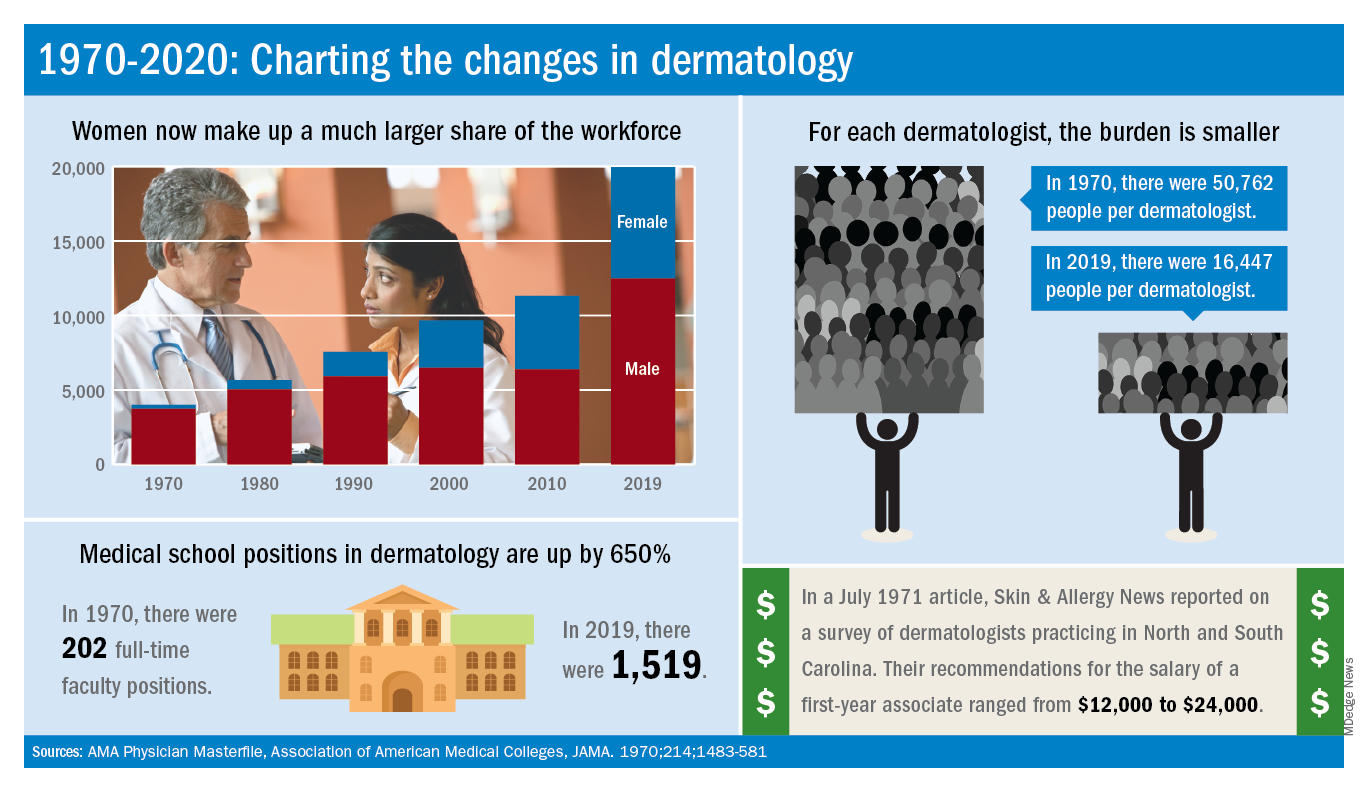
For one thing, there are a lot more dermatologists now. The American Academy of Dermatology puts its 2020 membership at a somewhat lower 18,898, noting that not all dermatologists are AAD members.
Much of that 50-year increase comes from the larger proportion of women entering the specialty. In 1970, only 7% of dermatologists were women, but by 2019 they represented over 37% of the dermatology workforce, according to the AMA numbers. The AAD, however, reports more women than the AMA (8,940 vs. 7,482), so the proportion of female academy members in 2020 is about 47%.
The population of dermatologists has increased faster than the general population since 1970, leading to a rising density of providers. A report from 1973 put the national figure at 1.7 dermatologists per 100,000 population in 1970, and two more recent studies in JAMA Dermatology reported density levels of 3.65 per 100,000 in 2013 and 3.36 per 100,000 in 2016.
In that 1973 report, the authors said that there was “no evidence to suggest that there will not be sufficient dermatologists in the future, if training centers are maintained and adequately financed,” noting that “the current rate of filling of dermatologic residency positions should not diminish and may continue to increase.”
In 2017, the conclusion was quite different: “Dermatologists alone have been unable to meet increasing patient demand for dermatologic services. The number of dermatology residency training positions has been relatively stagnant, suggesting that the current supply of dermatologists in training will be insufficient to fully meet growing future demand.”
The current state of strong demand for dermatologists does come with some benefits. In a 2019 survey by physician recruitment firm Merritt Hawkins, dermatologists had the 6th-highest starting salary at $420,000 a year. An article in the July 1971 issue of Skin & Allergy News offered a somewhat different perspective on compensation for first-year dermatologists: Recommendations offered by those already in practice ranged from $12,000 to $24,000.
Those first-year physicians are coming from residencies that, not too surprisingly, are now producing more new dermatologists than they did in 1970, although perhaps not as many more as might be expected.
There were an estimated 250 individuals completing dermatology residencies annually in 1976 (J Am Acad Dermatol. 1981;4[3]:344-5), which suggests a total of approximately 750 active residents at a time when there were about 5,000 practicing dermatologists in the country.
For the 2018-2019 academic year, there were 1,439 active residents in U.S. training programs, according to the Association of American Medical Colleges, so there were twice the number of residents but four times as many dermatologists in practice, compared with 1976.
The next link in the dermatology supply chain would be the medical schools, and there the numbers of full-time faculty have more than kept up. For the 1969-1970 academic year, there were 202 full-time positions in dermatology (JAMA. 1970;214:1483-581). By 2019, the number had risen to 1,519, according to the Association of American Medical Colleges.
A dive into the dermatology data pool reveals a great deal of change in the 50 years that Dermatology News and Skin & Allergy News have been covering the specialty.
For one thing, there are a lot more dermatologists now. The American Academy of Dermatology puts its 2020 membership at a somewhat lower 18,898, noting that not all dermatologists are AAD members.
Much of that 50-year increase comes from the larger proportion of women entering the specialty. In 1970, only 7% of dermatologists were women, but by 2019 they represented over 37% of the dermatology workforce, according to the AMA numbers. The AAD, however, reports more women than the AMA (8,940 vs. 7,482), so the proportion of female academy members in 2020 is about 47%.
The population of dermatologists has increased faster than the general population since 1970, leading to a rising density of providers. A report from 1973 put the national figure at 1.7 dermatologists per 100,000 population in 1970, and two more recent studies in JAMA Dermatology reported density levels of 3.65 per 100,000 in 2013 and 3.36 per 100,000 in 2016.
In that 1973 report, the authors said that there was “no evidence to suggest that there will not be sufficient dermatologists in the future, if training centers are maintained and adequately financed,” noting that “the current rate of filling of dermatologic residency positions should not diminish and may continue to increase.”
In 2017, the conclusion was quite different: “Dermatologists alone have been unable to meet increasing patient demand for dermatologic services. The number of dermatology residency training positions has been relatively stagnant, suggesting that the current supply of dermatologists in training will be insufficient to fully meet growing future demand.”
The current state of strong demand for dermatologists does come with some benefits. In a 2019 survey by physician recruitment firm Merritt Hawkins, dermatologists had the 6th-highest starting salary at $420,000 a year. An article in the July 1971 issue of Skin & Allergy News offered a somewhat different perspective on compensation for first-year dermatologists: Recommendations offered by those already in practice ranged from $12,000 to $24,000.
Those first-year physicians are coming from residencies that, not too surprisingly, are now producing more new dermatologists than they did in 1970, although perhaps not as many more as might be expected.
There were an estimated 250 individuals completing dermatology residencies annually in 1976 (J Am Acad Dermatol. 1981;4[3]:344-5), which suggests a total of approximately 750 active residents at a time when there were about 5,000 practicing dermatologists in the country.
For the 2018-2019 academic year, there were 1,439 active residents in U.S. training programs, according to the Association of American Medical Colleges, so there were twice the number of residents but four times as many dermatologists in practice, compared with 1976.
The next link in the dermatology supply chain would be the medical schools, and there the numbers of full-time faculty have more than kept up. For the 1969-1970 academic year, there were 202 full-time positions in dermatology (JAMA. 1970;214:1483-581). By 2019, the number had risen to 1,519, according to the Association of American Medical Colleges.
A dive into the dermatology data pool reveals a great deal of change in the 50 years that Dermatology News and Skin & Allergy News have been covering the specialty.
For one thing, there are a lot more dermatologists now. The American Academy of Dermatology puts its 2020 membership at a somewhat lower 18,898, noting that not all dermatologists are AAD members.
Much of that 50-year increase comes from the larger proportion of women entering the specialty. In 1970, only 7% of dermatologists were women, but by 2019 they represented over 37% of the dermatology workforce, according to the AMA numbers. The AAD, however, reports more women than the AMA (8,940 vs. 7,482), so the proportion of female academy members in 2020 is about 47%.
The population of dermatologists has increased faster than the general population since 1970, leading to a rising density of providers. A report from 1973 put the national figure at 1.7 dermatologists per 100,000 population in 1970, and two more recent studies in JAMA Dermatology reported density levels of 3.65 per 100,000 in 2013 and 3.36 per 100,000 in 2016.
In that 1973 report, the authors said that there was “no evidence to suggest that there will not be sufficient dermatologists in the future, if training centers are maintained and adequately financed,” noting that “the current rate of filling of dermatologic residency positions should not diminish and may continue to increase.”
In 2017, the conclusion was quite different: “Dermatologists alone have been unable to meet increasing patient demand for dermatologic services. The number of dermatology residency training positions has been relatively stagnant, suggesting that the current supply of dermatologists in training will be insufficient to fully meet growing future demand.”
The current state of strong demand for dermatologists does come with some benefits. In a 2019 survey by physician recruitment firm Merritt Hawkins, dermatologists had the 6th-highest starting salary at $420,000 a year. An article in the July 1971 issue of Skin & Allergy News offered a somewhat different perspective on compensation for first-year dermatologists: Recommendations offered by those already in practice ranged from $12,000 to $24,000.
Those first-year physicians are coming from residencies that, not too surprisingly, are now producing more new dermatologists than they did in 1970, although perhaps not as many more as might be expected.
There were an estimated 250 individuals completing dermatology residencies annually in 1976 (J Am Acad Dermatol. 1981;4[3]:344-5), which suggests a total of approximately 750 active residents at a time when there were about 5,000 practicing dermatologists in the country.
For the 2018-2019 academic year, there were 1,439 active residents in U.S. training programs, according to the Association of American Medical Colleges, so there were twice the number of residents but four times as many dermatologists in practice, compared with 1976.
The next link in the dermatology supply chain would be the medical schools, and there the numbers of full-time faculty have more than kept up. For the 1969-1970 academic year, there were 202 full-time positions in dermatology (JAMA. 1970;214:1483-581). By 2019, the number had risen to 1,519, according to the Association of American Medical Colleges.

Flu increases activity but not its severity

The CDC’s latest report shows that 6.8% of outpatients visiting health care providers had influenza-like illness during the week ending Feb. 8. That’s up from the previous week’s 6.6%, but that rise of 0.2 percentage points is smaller than the 0.6-point rises that occurred each of the 2 weeks before, and that could mean that activity is slowing.
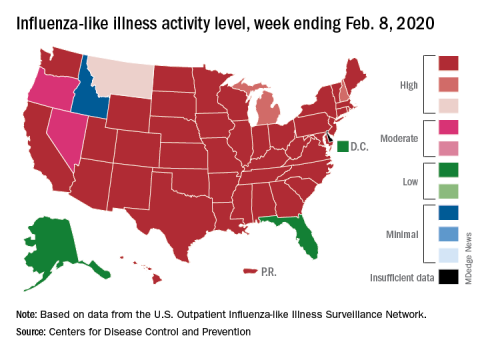
That slowing, however, is not noticeable from this week’s map, which puts 41 states (there were 35 last week) and Puerto Rico in the red at the highest level of activity on the CDC’s 1-10 scale and another three states in the “high” range with levels of 8 or 9, the CDC’s influenza division reported.
That leaves Nevada and Oregon at level 7; Alaska, Florida, and the District of Columbia at level 5; Idaho at level 3, and Delaware with insufficient data (it was at level 5 last week), the CDC said.
The 2019-2020 season’s high activity, fortunately, has not translated into high severity, as overall hospitalization and mortality rates continue to remain at fairly typical levels. Hospitalization rates are elevated among children and young adults, however, and pediatric deaths are now up to 92, the CDC said, which is high for this point in the season.
The CDC’s latest report shows that 6.8% of outpatients visiting health care providers had influenza-like illness during the week ending Feb. 8. That’s up from the previous week’s 6.6%, but that rise of 0.2 percentage points is smaller than the 0.6-point rises that occurred each of the 2 weeks before, and that could mean that activity is slowing.
That slowing, however, is not noticeable from this week’s map, which puts 41 states (there were 35 last week) and Puerto Rico in the red at the highest level of activity on the CDC’s 1-10 scale and another three states in the “high” range with levels of 8 or 9, the CDC’s influenza division reported.
That leaves Nevada and Oregon at level 7; Alaska, Florida, and the District of Columbia at level 5; Idaho at level 3, and Delaware with insufficient data (it was at level 5 last week), the CDC said.
The 2019-2020 season’s high activity, fortunately, has not translated into high severity, as overall hospitalization and mortality rates continue to remain at fairly typical levels. Hospitalization rates are elevated among children and young adults, however, and pediatric deaths are now up to 92, the CDC said, which is high for this point in the season.
The CDC’s latest report shows that 6.8% of outpatients visiting health care providers had influenza-like illness during the week ending Feb. 8. That’s up from the previous week’s 6.6%, but that rise of 0.2 percentage points is smaller than the 0.6-point rises that occurred each of the 2 weeks before, and that could mean that activity is slowing.
That slowing, however, is not noticeable from this week’s map, which puts 41 states (there were 35 last week) and Puerto Rico in the red at the highest level of activity on the CDC’s 1-10 scale and another three states in the “high” range with levels of 8 or 9, the CDC’s influenza division reported.
That leaves Nevada and Oregon at level 7; Alaska, Florida, and the District of Columbia at level 5; Idaho at level 3, and Delaware with insufficient data (it was at level 5 last week), the CDC said.
The 2019-2020 season’s high activity, fortunately, has not translated into high severity, as overall hospitalization and mortality rates continue to remain at fairly typical levels. Hospitalization rates are elevated among children and young adults, however, and pediatric deaths are now up to 92, the CDC said, which is high for this point in the season.
Relapsing MS: Ozanimod Tops Fingolimod in Benefit-Risk Profile
Key clinical point: Ozanimod has a superior benefit-risk profile compared with fingolimod for the treatment of relapsing multiple sclerosis (RMS).
Major finding: Compared with fingolimod, ozanimod was associated with lower rates of conduction abnormalities (risk difference, −3.5%) and first-degree atrioventricular block (risk difference, −3.0%), lower risk of extended first-dose cardiac monitoring, and lower risk of adverse events over 1-2 years of follow-up. Efficacy outcomes were comparable.
Study details: Using a matching-adjusted indirect comparison, the first-dose cardiac monitoring outcomes and 1- and 2-year safety and efficacy outcomes were compared for ozanimod and fingolimod in patients with RMS.
Disclosures: The study received research support from Celgene, a wholly-owned subsidiary of Bristol-Myers Squibb. Five authors are employees of Bristol-Myers Squibb. Four authors are employees of Analysis Group, Inc., who have received consulting fees from Bristol-Myers Squibb.
Citation: Swallow E et al. J Comp Eff Res. 2020 Jan 17. doi: 10.2217/cer-2019-0169.
Key clinical point: Ozanimod has a superior benefit-risk profile compared with fingolimod for the treatment of relapsing multiple sclerosis (RMS).
Major finding: Compared with fingolimod, ozanimod was associated with lower rates of conduction abnormalities (risk difference, −3.5%) and first-degree atrioventricular block (risk difference, −3.0%), lower risk of extended first-dose cardiac monitoring, and lower risk of adverse events over 1-2 years of follow-up. Efficacy outcomes were comparable.
Study details: Using a matching-adjusted indirect comparison, the first-dose cardiac monitoring outcomes and 1- and 2-year safety and efficacy outcomes were compared for ozanimod and fingolimod in patients with RMS.
Disclosures: The study received research support from Celgene, a wholly-owned subsidiary of Bristol-Myers Squibb. Five authors are employees of Bristol-Myers Squibb. Four authors are employees of Analysis Group, Inc., who have received consulting fees from Bristol-Myers Squibb.
Citation: Swallow E et al. J Comp Eff Res. 2020 Jan 17. doi: 10.2217/cer-2019-0169.
Key clinical point: Ozanimod has a superior benefit-risk profile compared with fingolimod for the treatment of relapsing multiple sclerosis (RMS).
Major finding: Compared with fingolimod, ozanimod was associated with lower rates of conduction abnormalities (risk difference, −3.5%) and first-degree atrioventricular block (risk difference, −3.0%), lower risk of extended first-dose cardiac monitoring, and lower risk of adverse events over 1-2 years of follow-up. Efficacy outcomes were comparable.
Study details: Using a matching-adjusted indirect comparison, the first-dose cardiac monitoring outcomes and 1- and 2-year safety and efficacy outcomes were compared for ozanimod and fingolimod in patients with RMS.
Disclosures: The study received research support from Celgene, a wholly-owned subsidiary of Bristol-Myers Squibb. Five authors are employees of Bristol-Myers Squibb. Four authors are employees of Analysis Group, Inc., who have received consulting fees from Bristol-Myers Squibb.
Citation: Swallow E et al. J Comp Eff Res. 2020 Jan 17. doi: 10.2217/cer-2019-0169.
Polypharmacy is Associated With Adverse Health Outcomes in Patients With MS
Key clinical point: Polypharmacy is common in patients with multiple sclerosis (MS) and is negatively associated with health outcomes.
Major finding: The rates of polypharmacy among patients with MS ranged from 14.9% to 59% across the studies that were reviewed. Polypharmacy was significantly associated with increased hospitalization rates, cognitive deficits, fatigue, higher relapse rates, and a lower quality of life, particularly among elderly patients.
Study details: The data come from a qualitative systematic review of 7 studies.
Disclosures: Niklas Frahm has received travel funds for research meetings from Novartis. Michael Hecker received speaking fees and travel funds from Bayer HealthCare, Biogen, Merck Serono, Novartis, and Teva. Uwe Klaus Zettl received research support and lecture fees or travel funds from Almirall, Alexion, Bayer HealthCare, Biogen, Merck Serono, Novartis, Roche, Sanofi, and Teva.
Citation: Frahm N et al. Expert Opin Drug Saf. 2020 Jan 27. doi: 10.1080/14740338.2020.1720646.
Key clinical point: Polypharmacy is common in patients with multiple sclerosis (MS) and is negatively associated with health outcomes.
Major finding: The rates of polypharmacy among patients with MS ranged from 14.9% to 59% across the studies that were reviewed. Polypharmacy was significantly associated with increased hospitalization rates, cognitive deficits, fatigue, higher relapse rates, and a lower quality of life, particularly among elderly patients.
Study details: The data come from a qualitative systematic review of 7 studies.
Disclosures: Niklas Frahm has received travel funds for research meetings from Novartis. Michael Hecker received speaking fees and travel funds from Bayer HealthCare, Biogen, Merck Serono, Novartis, and Teva. Uwe Klaus Zettl received research support and lecture fees or travel funds from Almirall, Alexion, Bayer HealthCare, Biogen, Merck Serono, Novartis, Roche, Sanofi, and Teva.
Citation: Frahm N et al. Expert Opin Drug Saf. 2020 Jan 27. doi: 10.1080/14740338.2020.1720646.
Key clinical point: Polypharmacy is common in patients with multiple sclerosis (MS) and is negatively associated with health outcomes.
Major finding: The rates of polypharmacy among patients with MS ranged from 14.9% to 59% across the studies that were reviewed. Polypharmacy was significantly associated with increased hospitalization rates, cognitive deficits, fatigue, higher relapse rates, and a lower quality of life, particularly among elderly patients.
Study details: The data come from a qualitative systematic review of 7 studies.
Disclosures: Niklas Frahm has received travel funds for research meetings from Novartis. Michael Hecker received speaking fees and travel funds from Bayer HealthCare, Biogen, Merck Serono, Novartis, and Teva. Uwe Klaus Zettl received research support and lecture fees or travel funds from Almirall, Alexion, Bayer HealthCare, Biogen, Merck Serono, Novartis, Roche, Sanofi, and Teva.
Citation: Frahm N et al. Expert Opin Drug Saf. 2020 Jan 27. doi: 10.1080/14740338.2020.1720646.
Air Pollution is a Risk Factor for MS
Key clinical point: Air pollution may be a potential etiological factor in the development of multiple sclerosis (MS).
Major finding: The age-standardized prevalence of MS was found to be 97.4 per 100,000 persons in the polluted city and 47.2 per 100,000 persons in the rural and clean city.
Study details: A cross-sectional, population-based, epidemiologic study compared the prevalence of MS among 2 cities in Turkey: Eregli city, which has an iron-and-steel factory with known air pollution, and Devrek city, which is a rural and clean city.
Disclosures: The authors declared no conflicts of interest.
Citation: Börü UT et al. Acta Neurol Scand. 2020 Jan 18. doi: 10.1111/ane.13223.
Key clinical point: Air pollution may be a potential etiological factor in the development of multiple sclerosis (MS).
Major finding: The age-standardized prevalence of MS was found to be 97.4 per 100,000 persons in the polluted city and 47.2 per 100,000 persons in the rural and clean city.
Study details: A cross-sectional, population-based, epidemiologic study compared the prevalence of MS among 2 cities in Turkey: Eregli city, which has an iron-and-steel factory with known air pollution, and Devrek city, which is a rural and clean city.
Disclosures: The authors declared no conflicts of interest.
Citation: Börü UT et al. Acta Neurol Scand. 2020 Jan 18. doi: 10.1111/ane.13223.
Key clinical point: Air pollution may be a potential etiological factor in the development of multiple sclerosis (MS).
Major finding: The age-standardized prevalence of MS was found to be 97.4 per 100,000 persons in the polluted city and 47.2 per 100,000 persons in the rural and clean city.
Study details: A cross-sectional, population-based, epidemiologic study compared the prevalence of MS among 2 cities in Turkey: Eregli city, which has an iron-and-steel factory with known air pollution, and Devrek city, which is a rural and clean city.
Disclosures: The authors declared no conflicts of interest.
Citation: Börü UT et al. Acta Neurol Scand. 2020 Jan 18. doi: 10.1111/ane.13223.
High Prevalence of Alexithymia in Patients With Relapse-Remitting MS
Key clinical point: Patients with relapse-remitting multiple sclerosis (RRMS) have a high prevalence of alexithymia.
Major finding: Alexithymia was observed in about 29.55% of patients and borderline alexithymia was observed in 31.15% of patients; alexithymia positively correlated with anxiety and depression in patients with RRMS (P less than .01).
Study details: The data come from a cross-sectional study that included 106 consecutively assessed adult patients with RRMS (74 female and 32 male patients).
Disclosures: The authors declared no conflicts of interest.
Citation: Stojanov J et al. J Postgrad Med. 2020 Jan 13. doi: 10.4103/jpgm.JPGM_499_19.
Key clinical point: Patients with relapse-remitting multiple sclerosis (RRMS) have a high prevalence of alexithymia.
Major finding: Alexithymia was observed in about 29.55% of patients and borderline alexithymia was observed in 31.15% of patients; alexithymia positively correlated with anxiety and depression in patients with RRMS (P less than .01).
Study details: The data come from a cross-sectional study that included 106 consecutively assessed adult patients with RRMS (74 female and 32 male patients).
Disclosures: The authors declared no conflicts of interest.
Citation: Stojanov J et al. J Postgrad Med. 2020 Jan 13. doi: 10.4103/jpgm.JPGM_499_19.
Key clinical point: Patients with relapse-remitting multiple sclerosis (RRMS) have a high prevalence of alexithymia.
Major finding: Alexithymia was observed in about 29.55% of patients and borderline alexithymia was observed in 31.15% of patients; alexithymia positively correlated with anxiety and depression in patients with RRMS (P less than .01).
Study details: The data come from a cross-sectional study that included 106 consecutively assessed adult patients with RRMS (74 female and 32 male patients).
Disclosures: The authors declared no conflicts of interest.
Citation: Stojanov J et al. J Postgrad Med. 2020 Jan 13. doi: 10.4103/jpgm.JPGM_499_19.