User login
Vitamin D3 supplementation beat placebo in atopic dermatitis trial
PORTLAND – Short-term daily oral supplementation with 5000 IU of vitamin D3 was safe and significantly outperformed placebo for lessening the signs and symptoms of atopic dermatitis (AD), according to the results of a randomized, double-blind trial of 65 patients with moderate to severe disease.
At week 12, average improvements on the Scoring Atopic Dermatitis (SCORAD) index (standard deviation, 11.1 points) were 21.2 points in the vitamin D3 group and 13.9 points (standard deviation, 12.3 points) in the placebo group (P = .02), Karen Sanchez-Armendariz, MD, reported at the annual meeting of the Society for Investigative Dermatology. “Vitamin D3 should be considered a valuable adjuvant in the treatment of AD, especially in patients with relapses,” she said.
Past studies have reported an inverse relationship between 25(OH)D (vitamin D) serum levels and the severity of AD, noted Dr. Sanchez-Armendariz, who is with the National Autonomous University of Mexico in Mexico City. This finding makes sense, as vitamin D3 induces the topical production of antimicrobial peptides, which have direct antimicrobial activity and induce a host response characterized by cytokine release, chemotaxis, inflammation, angiogenesis, and re-epithelialization, she added.
Consequently, 25(OH)D deficiency has been posited as a culprit in the pathophysiology of AD. However, scientific and endocrine societies have published differing recommendations about safe and optimal doses for vitamin D3 supplementation, while experts have noted that 5000 IU per day is needed to achieve an increase of 10 ng 25(OH)D per mL serum (J Am Board Fam Med. 2014 Jul-Aug;27[4]:495-509).
For the study, therefore, Dr. Sanchez-Armendariz and her associates evaluated this dose as adjuvant therapy in patients with moderate to severe AD despite topical hydrocortisone aceponate, soap substitute, and emollient. Patients continued this usual care and received either a cellulose capsule placebo or 5000 IU oral vitamin D3 per day. Based on previously recommended cutoff values, the researchers considered serum 25(OH)D levels sufficient if they exceeded 30 ng per mL, insufficient if they were between 20 and 30 ng per mL, and deficient if they were less than 20 ng per mL (J Bone Miner Res. 2011 Mar;26[3]:455-7).
At baseline, the placebo and intervention groups resembled each other in terms of baseline levels of 25(OH)D, calcium, and phosphorus, pruritus, and scores on SCORAD and the six-area Total Body Severity Assessment. A total of 59% of patients had insufficient serum 25(OH)D, and 39% were deficient.
Patients in both groups improved on the Total Body Severity Assessment, but the extent of improvement did not statistically differ between groups, Dr. Sanchez-Armendariz reported. Supplementation did significantly increase serum 25(OH)D levels, which at week 12 averaged 58.3 ng per mL (SD, 18.5 ng per mL), compared with 22.2 (SD, 7.6 ng per mL) with placebo (P less than .001).
Interestingly, at week 12, all patients in the vitamin D3 group achieved serum 25(OH)D levels of at least 30 ng per mL, as did 41% of patients in the placebo arm. Patients in both groups who achieved this “sufficient” serum 25(OH)D level averaged a nearly 21-point improvement on the SCORAD (SD, 11.1 points), compared with 7.5 points (SD, 9.9 points) among patients who remained deficient, and 17.4 points (SD, 12.7 points) among patients who remained insufficient (P = .004 for difference among groups; P = .02 for difference between sufficient and insufficient groups).
An analysis of variance confirmed this finding, showing that, regardless of treatment group, patients whose final serum 25(OH)D level was at least 20 ng per mL scored an average of 20 points on the SCORAD, compared with 38 points for patients whose 25(OH)D level remained below 20 ng per mL. Patients whose final 25(OH)D level exceeded 20 ng per mL had fivefold greater odds of having a SCORAD below 25 than did patients with lower serum 25(OH)D levels (odds ratio, 5.1; 95% confidence interval, 1.2-22.6; P = .03).
The investigators identified no adverse effects of vitamin D3 supplementation, Dr. Sanchez-Armendariz said. “Attaining 25(OH)D levels above 20 ng per mL in addition to baseline therapy reduced the SCORAD of patients with moderate to severe atopic dermatitis,” she added. Clinicians should consider vitamin D3 deficiency and supplementation in patients with relapsing or refractory AD, she emphasized.
Dr. Sanchez-Armendariz reported no external funding sources and no conflicts of interest.
PORTLAND – Short-term daily oral supplementation with 5000 IU of vitamin D3 was safe and significantly outperformed placebo for lessening the signs and symptoms of atopic dermatitis (AD), according to the results of a randomized, double-blind trial of 65 patients with moderate to severe disease.
At week 12, average improvements on the Scoring Atopic Dermatitis (SCORAD) index (standard deviation, 11.1 points) were 21.2 points in the vitamin D3 group and 13.9 points (standard deviation, 12.3 points) in the placebo group (P = .02), Karen Sanchez-Armendariz, MD, reported at the annual meeting of the Society for Investigative Dermatology. “Vitamin D3 should be considered a valuable adjuvant in the treatment of AD, especially in patients with relapses,” she said.
Past studies have reported an inverse relationship between 25(OH)D (vitamin D) serum levels and the severity of AD, noted Dr. Sanchez-Armendariz, who is with the National Autonomous University of Mexico in Mexico City. This finding makes sense, as vitamin D3 induces the topical production of antimicrobial peptides, which have direct antimicrobial activity and induce a host response characterized by cytokine release, chemotaxis, inflammation, angiogenesis, and re-epithelialization, she added.
Consequently, 25(OH)D deficiency has been posited as a culprit in the pathophysiology of AD. However, scientific and endocrine societies have published differing recommendations about safe and optimal doses for vitamin D3 supplementation, while experts have noted that 5000 IU per day is needed to achieve an increase of 10 ng 25(OH)D per mL serum (J Am Board Fam Med. 2014 Jul-Aug;27[4]:495-509).
For the study, therefore, Dr. Sanchez-Armendariz and her associates evaluated this dose as adjuvant therapy in patients with moderate to severe AD despite topical hydrocortisone aceponate, soap substitute, and emollient. Patients continued this usual care and received either a cellulose capsule placebo or 5000 IU oral vitamin D3 per day. Based on previously recommended cutoff values, the researchers considered serum 25(OH)D levels sufficient if they exceeded 30 ng per mL, insufficient if they were between 20 and 30 ng per mL, and deficient if they were less than 20 ng per mL (J Bone Miner Res. 2011 Mar;26[3]:455-7).
At baseline, the placebo and intervention groups resembled each other in terms of baseline levels of 25(OH)D, calcium, and phosphorus, pruritus, and scores on SCORAD and the six-area Total Body Severity Assessment. A total of 59% of patients had insufficient serum 25(OH)D, and 39% were deficient.
Patients in both groups improved on the Total Body Severity Assessment, but the extent of improvement did not statistically differ between groups, Dr. Sanchez-Armendariz reported. Supplementation did significantly increase serum 25(OH)D levels, which at week 12 averaged 58.3 ng per mL (SD, 18.5 ng per mL), compared with 22.2 (SD, 7.6 ng per mL) with placebo (P less than .001).
Interestingly, at week 12, all patients in the vitamin D3 group achieved serum 25(OH)D levels of at least 30 ng per mL, as did 41% of patients in the placebo arm. Patients in both groups who achieved this “sufficient” serum 25(OH)D level averaged a nearly 21-point improvement on the SCORAD (SD, 11.1 points), compared with 7.5 points (SD, 9.9 points) among patients who remained deficient, and 17.4 points (SD, 12.7 points) among patients who remained insufficient (P = .004 for difference among groups; P = .02 for difference between sufficient and insufficient groups).
An analysis of variance confirmed this finding, showing that, regardless of treatment group, patients whose final serum 25(OH)D level was at least 20 ng per mL scored an average of 20 points on the SCORAD, compared with 38 points for patients whose 25(OH)D level remained below 20 ng per mL. Patients whose final 25(OH)D level exceeded 20 ng per mL had fivefold greater odds of having a SCORAD below 25 than did patients with lower serum 25(OH)D levels (odds ratio, 5.1; 95% confidence interval, 1.2-22.6; P = .03).
The investigators identified no adverse effects of vitamin D3 supplementation, Dr. Sanchez-Armendariz said. “Attaining 25(OH)D levels above 20 ng per mL in addition to baseline therapy reduced the SCORAD of patients with moderate to severe atopic dermatitis,” she added. Clinicians should consider vitamin D3 deficiency and supplementation in patients with relapsing or refractory AD, she emphasized.
Dr. Sanchez-Armendariz reported no external funding sources and no conflicts of interest.
PORTLAND – Short-term daily oral supplementation with 5000 IU of vitamin D3 was safe and significantly outperformed placebo for lessening the signs and symptoms of atopic dermatitis (AD), according to the results of a randomized, double-blind trial of 65 patients with moderate to severe disease.
At week 12, average improvements on the Scoring Atopic Dermatitis (SCORAD) index (standard deviation, 11.1 points) were 21.2 points in the vitamin D3 group and 13.9 points (standard deviation, 12.3 points) in the placebo group (P = .02), Karen Sanchez-Armendariz, MD, reported at the annual meeting of the Society for Investigative Dermatology. “Vitamin D3 should be considered a valuable adjuvant in the treatment of AD, especially in patients with relapses,” she said.
Past studies have reported an inverse relationship between 25(OH)D (vitamin D) serum levels and the severity of AD, noted Dr. Sanchez-Armendariz, who is with the National Autonomous University of Mexico in Mexico City. This finding makes sense, as vitamin D3 induces the topical production of antimicrobial peptides, which have direct antimicrobial activity and induce a host response characterized by cytokine release, chemotaxis, inflammation, angiogenesis, and re-epithelialization, she added.
Consequently, 25(OH)D deficiency has been posited as a culprit in the pathophysiology of AD. However, scientific and endocrine societies have published differing recommendations about safe and optimal doses for vitamin D3 supplementation, while experts have noted that 5000 IU per day is needed to achieve an increase of 10 ng 25(OH)D per mL serum (J Am Board Fam Med. 2014 Jul-Aug;27[4]:495-509).
For the study, therefore, Dr. Sanchez-Armendariz and her associates evaluated this dose as adjuvant therapy in patients with moderate to severe AD despite topical hydrocortisone aceponate, soap substitute, and emollient. Patients continued this usual care and received either a cellulose capsule placebo or 5000 IU oral vitamin D3 per day. Based on previously recommended cutoff values, the researchers considered serum 25(OH)D levels sufficient if they exceeded 30 ng per mL, insufficient if they were between 20 and 30 ng per mL, and deficient if they were less than 20 ng per mL (J Bone Miner Res. 2011 Mar;26[3]:455-7).
At baseline, the placebo and intervention groups resembled each other in terms of baseline levels of 25(OH)D, calcium, and phosphorus, pruritus, and scores on SCORAD and the six-area Total Body Severity Assessment. A total of 59% of patients had insufficient serum 25(OH)D, and 39% were deficient.
Patients in both groups improved on the Total Body Severity Assessment, but the extent of improvement did not statistically differ between groups, Dr. Sanchez-Armendariz reported. Supplementation did significantly increase serum 25(OH)D levels, which at week 12 averaged 58.3 ng per mL (SD, 18.5 ng per mL), compared with 22.2 (SD, 7.6 ng per mL) with placebo (P less than .001).
Interestingly, at week 12, all patients in the vitamin D3 group achieved serum 25(OH)D levels of at least 30 ng per mL, as did 41% of patients in the placebo arm. Patients in both groups who achieved this “sufficient” serum 25(OH)D level averaged a nearly 21-point improvement on the SCORAD (SD, 11.1 points), compared with 7.5 points (SD, 9.9 points) among patients who remained deficient, and 17.4 points (SD, 12.7 points) among patients who remained insufficient (P = .004 for difference among groups; P = .02 for difference between sufficient and insufficient groups).
An analysis of variance confirmed this finding, showing that, regardless of treatment group, patients whose final serum 25(OH)D level was at least 20 ng per mL scored an average of 20 points on the SCORAD, compared with 38 points for patients whose 25(OH)D level remained below 20 ng per mL. Patients whose final 25(OH)D level exceeded 20 ng per mL had fivefold greater odds of having a SCORAD below 25 than did patients with lower serum 25(OH)D levels (odds ratio, 5.1; 95% confidence interval, 1.2-22.6; P = .03).
The investigators identified no adverse effects of vitamin D3 supplementation, Dr. Sanchez-Armendariz said. “Attaining 25(OH)D levels above 20 ng per mL in addition to baseline therapy reduced the SCORAD of patients with moderate to severe atopic dermatitis,” she added. Clinicians should consider vitamin D3 deficiency and supplementation in patients with relapsing or refractory AD, she emphasized.
Dr. Sanchez-Armendariz reported no external funding sources and no conflicts of interest.
Key clinical point:
Major finding: At week 12, average improvements on the SCORAD index were 21.2 points with vitamin D3 and 13.9 points (SD, 12.3 points) with placebo (P = .02).
Data source: A double-blind, placebo-controlled, randomized trial of 65 patients with moderate to severe atopic dermatitis despite usual therapy with topical steroids, soap substitute, and topical emollient.
Disclosures: Dr. Sanchez-Armendariz did not acknowledge external funding sources. She reported having no conflicts of interest.
EC expands approval for daratumumab in MM
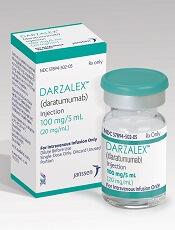
The European Commission (EC) has expanded the approved use of the anti-CD38 antibody daratumumab (Darzalex®).
Daratumumab is now approved for use in combination with lenalidomide and dexamethasone or bortezomib and dexamethasone for the treatment of adults with multiple myeloma (MM) who have received at least 1 prior therapy.
The EC previously granted conditional approval for daratumumab as monotherapy for the treatment of adults with relapsed or refractory MM whose prior treatment included a proteasome inhibitor and an immunomodulatory agent and who demonstrated disease progression on their last therapy.
Now, the EC has granted daratumumab full approval for this indication. The conditional approval was contingent upon Janssen, the company developing daratumumab, providing additional data from the phase 3 POLLUX and CASTOR trials.
As these data have been provided, the EC said the specific obligations associated with the conditional approval have been fulfilled, allowing the switch from conditional to full approval.
The EC’s decision to grant daratumumab approval in combination with lenalidomide and dexamethasone or bortezomib and dexamethasone was also based on data from the POLLUX and CASTOR trials.
In the POLLUX trial, researchers compared treatment with lenalidomide and dexamethasone to treatment with daratumumab, lenalidomide, and dexamethasone in patients with relapsed or refractory MM.
Patients who received daratumumab in combination had a significantly higher response rate and longer progression-free survival than patients who received the 2-drug combination.
However, treatment with daratumumab was associated with infusion-related reactions and a higher incidence of neutropenia.
Results from this trial were published in NEJM in October 2016.
In the CASTOR trial, researchers compared treatment with bortezomib and dexamethasone to treatment with daratumumab, bortezomib, and dexamethasone in patients with previously treated MM.
Patients who received the 3-drug combination had a higher response rate, longer progression-free survival, and a higher incidence of grade 3/4 adverse events than those who received the 2-drug combination.
Results from this trial were published in NEJM in August 2016. 
The European Commission (EC) has expanded the approved use of the anti-CD38 antibody daratumumab (Darzalex®).
Daratumumab is now approved for use in combination with lenalidomide and dexamethasone or bortezomib and dexamethasone for the treatment of adults with multiple myeloma (MM) who have received at least 1 prior therapy.
The EC previously granted conditional approval for daratumumab as monotherapy for the treatment of adults with relapsed or refractory MM whose prior treatment included a proteasome inhibitor and an immunomodulatory agent and who demonstrated disease progression on their last therapy.
Now, the EC has granted daratumumab full approval for this indication. The conditional approval was contingent upon Janssen, the company developing daratumumab, providing additional data from the phase 3 POLLUX and CASTOR trials.
As these data have been provided, the EC said the specific obligations associated with the conditional approval have been fulfilled, allowing the switch from conditional to full approval.
The EC’s decision to grant daratumumab approval in combination with lenalidomide and dexamethasone or bortezomib and dexamethasone was also based on data from the POLLUX and CASTOR trials.
In the POLLUX trial, researchers compared treatment with lenalidomide and dexamethasone to treatment with daratumumab, lenalidomide, and dexamethasone in patients with relapsed or refractory MM.
Patients who received daratumumab in combination had a significantly higher response rate and longer progression-free survival than patients who received the 2-drug combination.
However, treatment with daratumumab was associated with infusion-related reactions and a higher incidence of neutropenia.
Results from this trial were published in NEJM in October 2016.
In the CASTOR trial, researchers compared treatment with bortezomib and dexamethasone to treatment with daratumumab, bortezomib, and dexamethasone in patients with previously treated MM.
Patients who received the 3-drug combination had a higher response rate, longer progression-free survival, and a higher incidence of grade 3/4 adverse events than those who received the 2-drug combination.
Results from this trial were published in NEJM in August 2016.
The European Commission (EC) has expanded the approved use of the anti-CD38 antibody daratumumab (Darzalex®).
Daratumumab is now approved for use in combination with lenalidomide and dexamethasone or bortezomib and dexamethasone for the treatment of adults with multiple myeloma (MM) who have received at least 1 prior therapy.
The EC previously granted conditional approval for daratumumab as monotherapy for the treatment of adults with relapsed or refractory MM whose prior treatment included a proteasome inhibitor and an immunomodulatory agent and who demonstrated disease progression on their last therapy.
Now, the EC has granted daratumumab full approval for this indication. The conditional approval was contingent upon Janssen, the company developing daratumumab, providing additional data from the phase 3 POLLUX and CASTOR trials.
As these data have been provided, the EC said the specific obligations associated with the conditional approval have been fulfilled, allowing the switch from conditional to full approval.
The EC’s decision to grant daratumumab approval in combination with lenalidomide and dexamethasone or bortezomib and dexamethasone was also based on data from the POLLUX and CASTOR trials.
In the POLLUX trial, researchers compared treatment with lenalidomide and dexamethasone to treatment with daratumumab, lenalidomide, and dexamethasone in patients with relapsed or refractory MM.
Patients who received daratumumab in combination had a significantly higher response rate and longer progression-free survival than patients who received the 2-drug combination.
However, treatment with daratumumab was associated with infusion-related reactions and a higher incidence of neutropenia.
Results from this trial were published in NEJM in October 2016.
In the CASTOR trial, researchers compared treatment with bortezomib and dexamethasone to treatment with daratumumab, bortezomib, and dexamethasone in patients with previously treated MM.
Patients who received the 3-drug combination had a higher response rate, longer progression-free survival, and a higher incidence of grade 3/4 adverse events than those who received the 2-drug combination.
Results from this trial were published in NEJM in August 2016.
Cannabidiol cuts drop seizure frequency in Lennox-Gastaut syndrome
BOSTON – Cannabidiol add-on treatment significantly reduces the frequency of drop seizures in patients with Lennox-Gastaut syndrome, according to findings from the randomized, double-blind, placebo-controlled GWPCARE4 and GWPCARE3 trials.
In GWPCARE4 – the first controlled trial of cannabidiol in Lennox-Gastaut syndrome (LGS) – 171 patients were randomized to receive either placebo or cannabidiol oral solution at a dose of 20 mg/kg per day for 14 weeks, including 2 weeks of titration and 12 weeks of maintenance therapy. The drop seizure frequency decreased by a median of 44% in the cannabidiol group vs. 22% in the placebo group. The difference between the groups was statistically significant and was apparent within the first 4 weeks of the maintenance period, Jacqueline French, MD, director of translational research and clinical trials in epilepsy at New York University Langone Medical Center reported at the annual meeting of the American Academy of Neurology.
Study participants had a mean age of 15 years, and 34% were aged 18 years or older. The median drop seizure frequency was 74 per month at baseline.
“That is a very high seizure burden,” Dr. French said, noting that the median total drop and non-drop seizure frequency was in the mid to high 100s. “So you can see that these children were very afflicted by seizures.”
Interestingly, there was a “very substantial drop” in non-drop seizures, as well, she said.
“And that’s really hard to demonstrate, so that’s impressive to me, at least,” she added.
Patients had taken a median of six antiepileptic drugs (AEDs) in their past and were taking a median of three AEDs in addition to the cannabidiol throughout the study period.
Adverse events were common, occurring in 86% of cannabidiol patients and 69% of placebo patients. The most common were diarrhea, somnolence, pyrexia, decreased appetite, and vomiting, but most were mild or moderate. Treatment-related serious adverse events were reported in nine cannabidiol patients and one placebo patient. All patients who completed the trial entered an open-label extension study, Dr. French said.
GWPCARE4 was followed by GWPCARE3, which compared both 20 mg/kg per day and 10 mg/kg per day doses of cannabidiol with placebo.
In that study, 225 patients with a mean age of 16 years (30% were aged 18 years or older) were randomized, and the median drop in seizure frequency was 42% with 20 mg/kg of cannabidiol and 37% with 10 mg/kg of cannabidiol versus 17% with placebo, Anup D. Patel, MD, reported at the meeting.
Approximately 40% and 36% of patients in the 20 mg/kg and 10 mg/kg groups, respectively, achieved the secondary outcome of a 50% or greater drop in seizure frequency, compared with 15% of placebo patients.
“Overall, 5 patients in the 20 mg/kg per day arm, 3 in the 10 [mg/kg per day arm], and 1 in the placebo arm achieved drop seizure freedom during the maintenance period of our study,” said Dr. Patel, a pediatric neurologist at Nationwide Children’s Hospital, Columbus, Ohio.
The median monthly drop seizure frequency at baseline was 80-87 in the three groups, and patients had previously failed a median of six to seven AEDs. They took a median of three AEDs during the study.
Adverse events occurred in 94% of patients in the 20-mg/kg cannabidiol group, 84% of those in the 10-mg/kg group, and 72% of placebo patients, and most were mild or moderate. The most common were somnolence and decreased appetite.
Treatment-related serious adverse events were reported in 5, 2, and 0 patients in the groups, respectively. Some elevations in transaminases were seen (in 11 patients in the 20-mg/kg dose group, and 2 in the 10-mg/kg dose group), but no patients met criteria for drug-induced liver injury with concurrent elevated bilirubin, and all cases resolved, Dr. Patel said.
Similar findings were noted in GWPCARE4, and both Dr. Patel and Dr. French noted that most patients with elevated transaminases were also taking valproic acid.
No deaths occurred in either GWPCARE4 or GWPCARE3.
“We feel both doses... produce significantly greater reductions in drop seizures as compared to placebo,” Dr. Patel said.
In an interview, he noted that the two cannabidiol doses were not compared directly to determine if the differences in response rates and adverse events were statistically significant, but said that the rates appeared comparable, and that the adverse event rates were high in all of the groups, reflecting a very sick patient population.
Of the 212 patients who completed GWPCARE3, 99% entered an open-label extension study.
Eligible patients in both trials were children and adults aged 2-55 years with a clinical diagnosis of LGS, at least two drop seizures (including tonic, atonic, and tonic-clonic seizures) each week at baseline, and documented failures on at least one AED.
Patients and caregivers in both trials were more likely to report improvement in overall condition among treated vs. placebo patients, as measured using the Subject/Caregiver Global Impression of Change scale.
The findings provide class 1 evidence that cannabidiol as add-on therapy in LGS is efficacious for reducing seizure frequency, and is generally well tolerated, Dr. French and Dr. Patel said.
Dr. French noted that enthusiasm for the trials was high, with many study sites reporting waiting lists for patient enrollment.
Some of the authors in each study have consulted for, conducted studies funded by, or received honoraria from GW Pharmaceuticals, which funded the GWPCARE4 and GWPCARE3 trials and manufacturers the oral cannabidiol solution. Several authors in each study were employees of GW Pharmaceuticals.
sworcester@frontlinemedcom.com
BOSTON – Cannabidiol add-on treatment significantly reduces the frequency of drop seizures in patients with Lennox-Gastaut syndrome, according to findings from the randomized, double-blind, placebo-controlled GWPCARE4 and GWPCARE3 trials.
In GWPCARE4 – the first controlled trial of cannabidiol in Lennox-Gastaut syndrome (LGS) – 171 patients were randomized to receive either placebo or cannabidiol oral solution at a dose of 20 mg/kg per day for 14 weeks, including 2 weeks of titration and 12 weeks of maintenance therapy. The drop seizure frequency decreased by a median of 44% in the cannabidiol group vs. 22% in the placebo group. The difference between the groups was statistically significant and was apparent within the first 4 weeks of the maintenance period, Jacqueline French, MD, director of translational research and clinical trials in epilepsy at New York University Langone Medical Center reported at the annual meeting of the American Academy of Neurology.
Study participants had a mean age of 15 years, and 34% were aged 18 years or older. The median drop seizure frequency was 74 per month at baseline.
“That is a very high seizure burden,” Dr. French said, noting that the median total drop and non-drop seizure frequency was in the mid to high 100s. “So you can see that these children were very afflicted by seizures.”
Interestingly, there was a “very substantial drop” in non-drop seizures, as well, she said.
“And that’s really hard to demonstrate, so that’s impressive to me, at least,” she added.
Patients had taken a median of six antiepileptic drugs (AEDs) in their past and were taking a median of three AEDs in addition to the cannabidiol throughout the study period.
Adverse events were common, occurring in 86% of cannabidiol patients and 69% of placebo patients. The most common were diarrhea, somnolence, pyrexia, decreased appetite, and vomiting, but most were mild or moderate. Treatment-related serious adverse events were reported in nine cannabidiol patients and one placebo patient. All patients who completed the trial entered an open-label extension study, Dr. French said.
GWPCARE4 was followed by GWPCARE3, which compared both 20 mg/kg per day and 10 mg/kg per day doses of cannabidiol with placebo.
In that study, 225 patients with a mean age of 16 years (30% were aged 18 years or older) were randomized, and the median drop in seizure frequency was 42% with 20 mg/kg of cannabidiol and 37% with 10 mg/kg of cannabidiol versus 17% with placebo, Anup D. Patel, MD, reported at the meeting.
Approximately 40% and 36% of patients in the 20 mg/kg and 10 mg/kg groups, respectively, achieved the secondary outcome of a 50% or greater drop in seizure frequency, compared with 15% of placebo patients.
“Overall, 5 patients in the 20 mg/kg per day arm, 3 in the 10 [mg/kg per day arm], and 1 in the placebo arm achieved drop seizure freedom during the maintenance period of our study,” said Dr. Patel, a pediatric neurologist at Nationwide Children’s Hospital, Columbus, Ohio.
The median monthly drop seizure frequency at baseline was 80-87 in the three groups, and patients had previously failed a median of six to seven AEDs. They took a median of three AEDs during the study.
Adverse events occurred in 94% of patients in the 20-mg/kg cannabidiol group, 84% of those in the 10-mg/kg group, and 72% of placebo patients, and most were mild or moderate. The most common were somnolence and decreased appetite.
Treatment-related serious adverse events were reported in 5, 2, and 0 patients in the groups, respectively. Some elevations in transaminases were seen (in 11 patients in the 20-mg/kg dose group, and 2 in the 10-mg/kg dose group), but no patients met criteria for drug-induced liver injury with concurrent elevated bilirubin, and all cases resolved, Dr. Patel said.
Similar findings were noted in GWPCARE4, and both Dr. Patel and Dr. French noted that most patients with elevated transaminases were also taking valproic acid.
No deaths occurred in either GWPCARE4 or GWPCARE3.
“We feel both doses... produce significantly greater reductions in drop seizures as compared to placebo,” Dr. Patel said.
In an interview, he noted that the two cannabidiol doses were not compared directly to determine if the differences in response rates and adverse events were statistically significant, but said that the rates appeared comparable, and that the adverse event rates were high in all of the groups, reflecting a very sick patient population.
Of the 212 patients who completed GWPCARE3, 99% entered an open-label extension study.
Eligible patients in both trials were children and adults aged 2-55 years with a clinical diagnosis of LGS, at least two drop seizures (including tonic, atonic, and tonic-clonic seizures) each week at baseline, and documented failures on at least one AED.
Patients and caregivers in both trials were more likely to report improvement in overall condition among treated vs. placebo patients, as measured using the Subject/Caregiver Global Impression of Change scale.
The findings provide class 1 evidence that cannabidiol as add-on therapy in LGS is efficacious for reducing seizure frequency, and is generally well tolerated, Dr. French and Dr. Patel said.
Dr. French noted that enthusiasm for the trials was high, with many study sites reporting waiting lists for patient enrollment.
Some of the authors in each study have consulted for, conducted studies funded by, or received honoraria from GW Pharmaceuticals, which funded the GWPCARE4 and GWPCARE3 trials and manufacturers the oral cannabidiol solution. Several authors in each study were employees of GW Pharmaceuticals.
sworcester@frontlinemedcom.com
BOSTON – Cannabidiol add-on treatment significantly reduces the frequency of drop seizures in patients with Lennox-Gastaut syndrome, according to findings from the randomized, double-blind, placebo-controlled GWPCARE4 and GWPCARE3 trials.
In GWPCARE4 – the first controlled trial of cannabidiol in Lennox-Gastaut syndrome (LGS) – 171 patients were randomized to receive either placebo or cannabidiol oral solution at a dose of 20 mg/kg per day for 14 weeks, including 2 weeks of titration and 12 weeks of maintenance therapy. The drop seizure frequency decreased by a median of 44% in the cannabidiol group vs. 22% in the placebo group. The difference between the groups was statistically significant and was apparent within the first 4 weeks of the maintenance period, Jacqueline French, MD, director of translational research and clinical trials in epilepsy at New York University Langone Medical Center reported at the annual meeting of the American Academy of Neurology.
Study participants had a mean age of 15 years, and 34% were aged 18 years or older. The median drop seizure frequency was 74 per month at baseline.
“That is a very high seizure burden,” Dr. French said, noting that the median total drop and non-drop seizure frequency was in the mid to high 100s. “So you can see that these children were very afflicted by seizures.”
Interestingly, there was a “very substantial drop” in non-drop seizures, as well, she said.
“And that’s really hard to demonstrate, so that’s impressive to me, at least,” she added.
Patients had taken a median of six antiepileptic drugs (AEDs) in their past and were taking a median of three AEDs in addition to the cannabidiol throughout the study period.
Adverse events were common, occurring in 86% of cannabidiol patients and 69% of placebo patients. The most common were diarrhea, somnolence, pyrexia, decreased appetite, and vomiting, but most were mild or moderate. Treatment-related serious adverse events were reported in nine cannabidiol patients and one placebo patient. All patients who completed the trial entered an open-label extension study, Dr. French said.
GWPCARE4 was followed by GWPCARE3, which compared both 20 mg/kg per day and 10 mg/kg per day doses of cannabidiol with placebo.
In that study, 225 patients with a mean age of 16 years (30% were aged 18 years or older) were randomized, and the median drop in seizure frequency was 42% with 20 mg/kg of cannabidiol and 37% with 10 mg/kg of cannabidiol versus 17% with placebo, Anup D. Patel, MD, reported at the meeting.
Approximately 40% and 36% of patients in the 20 mg/kg and 10 mg/kg groups, respectively, achieved the secondary outcome of a 50% or greater drop in seizure frequency, compared with 15% of placebo patients.
“Overall, 5 patients in the 20 mg/kg per day arm, 3 in the 10 [mg/kg per day arm], and 1 in the placebo arm achieved drop seizure freedom during the maintenance period of our study,” said Dr. Patel, a pediatric neurologist at Nationwide Children’s Hospital, Columbus, Ohio.
The median monthly drop seizure frequency at baseline was 80-87 in the three groups, and patients had previously failed a median of six to seven AEDs. They took a median of three AEDs during the study.
Adverse events occurred in 94% of patients in the 20-mg/kg cannabidiol group, 84% of those in the 10-mg/kg group, and 72% of placebo patients, and most were mild or moderate. The most common were somnolence and decreased appetite.
Treatment-related serious adverse events were reported in 5, 2, and 0 patients in the groups, respectively. Some elevations in transaminases were seen (in 11 patients in the 20-mg/kg dose group, and 2 in the 10-mg/kg dose group), but no patients met criteria for drug-induced liver injury with concurrent elevated bilirubin, and all cases resolved, Dr. Patel said.
Similar findings were noted in GWPCARE4, and both Dr. Patel and Dr. French noted that most patients with elevated transaminases were also taking valproic acid.
No deaths occurred in either GWPCARE4 or GWPCARE3.
“We feel both doses... produce significantly greater reductions in drop seizures as compared to placebo,” Dr. Patel said.
In an interview, he noted that the two cannabidiol doses were not compared directly to determine if the differences in response rates and adverse events were statistically significant, but said that the rates appeared comparable, and that the adverse event rates were high in all of the groups, reflecting a very sick patient population.
Of the 212 patients who completed GWPCARE3, 99% entered an open-label extension study.
Eligible patients in both trials were children and adults aged 2-55 years with a clinical diagnosis of LGS, at least two drop seizures (including tonic, atonic, and tonic-clonic seizures) each week at baseline, and documented failures on at least one AED.
Patients and caregivers in both trials were more likely to report improvement in overall condition among treated vs. placebo patients, as measured using the Subject/Caregiver Global Impression of Change scale.
The findings provide class 1 evidence that cannabidiol as add-on therapy in LGS is efficacious for reducing seizure frequency, and is generally well tolerated, Dr. French and Dr. Patel said.
Dr. French noted that enthusiasm for the trials was high, with many study sites reporting waiting lists for patient enrollment.
Some of the authors in each study have consulted for, conducted studies funded by, or received honoraria from GW Pharmaceuticals, which funded the GWPCARE4 and GWPCARE3 trials and manufacturers the oral cannabidiol solution. Several authors in each study were employees of GW Pharmaceuticals.
sworcester@frontlinemedcom.com
Key clinical point:
Major finding: The drop seizure frequency decreased by a median of 42%-44% in the 20 mg/kg per day cannabidiol groups vs. 17%-22% in the placebo groups.
Data source: The randomized, placebo-controlled GWPCARE4 and GWPCARE3 trials, including 171 and 225 patients, respectively.
Disclosures: Some of the authors in each study have consulted for, conducted studies funded by, or received honoraria from GW Pharmaceuticals, which funded the GWPCARE4 and GWPCARE3 trials and manufactures the oral cannabidiol solution. Several authors in each study were employees of GW Pharmaceuticals.
FDA approves brigatinib for second-line advanced ALK-positive NSCLC
The Food and Drug Administration has granted accelerated approval to brigatinib for the treatment of patients with metastatic anaplastic lymphoma kinase (ALK)–positive non–small cell lung cancer (NSCLC) who have progressed on or are intolerant to crizotinib.
Approval was based on a meaningful and durable overall response rate in a two-arm, open-label, multicenter trial of 222 patients with locally advanced or metastatic ALK-positive NSCLC who had progressed on crizotinib. Patients were randomized to brigatinib orally either 90 mg once daily (112 patients) or 180 mg once daily following a 7-day lead-in at 90 mg once daily (110 patients).
The median duration of response was 13.8 months in both arms.
The most common adverse reactions in 219 patients who received at least one dose were nausea, diarrhea, fatigue, cough, and headache. The most common serious adverse reactions were pneumonia and interstitial lung disease/pneumonitis. The rate of fatal adverse reactions was 3.7%; they were pneumonia in two patients and sudden death, dyspnea, respiratory failure, pulmonary embolism, bacterial meningitis, and urosepsis in one patient each. Visual disturbances also occurred in patients receiving brigatinib. The FDA cautions that patients receiving brigatinib should be monitored for new or worsening respiratory symptoms; hypertension; bradycardia; visual symptoms; and elevations in amylase, lipase, blood glucose, and creatine phosphokinase.
The recommended dosing of brigatinib, marketed as Alunbrig by Takeda Pharmaceutical, is 90 mg orally once daily for the first 7 days then, if tolerated, increase to 180 mg orally once daily.
Full prescribing information is available here.
The Food and Drug Administration has granted accelerated approval to brigatinib for the treatment of patients with metastatic anaplastic lymphoma kinase (ALK)–positive non–small cell lung cancer (NSCLC) who have progressed on or are intolerant to crizotinib.
Approval was based on a meaningful and durable overall response rate in a two-arm, open-label, multicenter trial of 222 patients with locally advanced or metastatic ALK-positive NSCLC who had progressed on crizotinib. Patients were randomized to brigatinib orally either 90 mg once daily (112 patients) or 180 mg once daily following a 7-day lead-in at 90 mg once daily (110 patients).
The median duration of response was 13.8 months in both arms.
The most common adverse reactions in 219 patients who received at least one dose were nausea, diarrhea, fatigue, cough, and headache. The most common serious adverse reactions were pneumonia and interstitial lung disease/pneumonitis. The rate of fatal adverse reactions was 3.7%; they were pneumonia in two patients and sudden death, dyspnea, respiratory failure, pulmonary embolism, bacterial meningitis, and urosepsis in one patient each. Visual disturbances also occurred in patients receiving brigatinib. The FDA cautions that patients receiving brigatinib should be monitored for new or worsening respiratory symptoms; hypertension; bradycardia; visual symptoms; and elevations in amylase, lipase, blood glucose, and creatine phosphokinase.
The recommended dosing of brigatinib, marketed as Alunbrig by Takeda Pharmaceutical, is 90 mg orally once daily for the first 7 days then, if tolerated, increase to 180 mg orally once daily.
Full prescribing information is available here.
The Food and Drug Administration has granted accelerated approval to brigatinib for the treatment of patients with metastatic anaplastic lymphoma kinase (ALK)–positive non–small cell lung cancer (NSCLC) who have progressed on or are intolerant to crizotinib.
Approval was based on a meaningful and durable overall response rate in a two-arm, open-label, multicenter trial of 222 patients with locally advanced or metastatic ALK-positive NSCLC who had progressed on crizotinib. Patients were randomized to brigatinib orally either 90 mg once daily (112 patients) or 180 mg once daily following a 7-day lead-in at 90 mg once daily (110 patients).
The median duration of response was 13.8 months in both arms.
The most common adverse reactions in 219 patients who received at least one dose were nausea, diarrhea, fatigue, cough, and headache. The most common serious adverse reactions were pneumonia and interstitial lung disease/pneumonitis. The rate of fatal adverse reactions was 3.7%; they were pneumonia in two patients and sudden death, dyspnea, respiratory failure, pulmonary embolism, bacterial meningitis, and urosepsis in one patient each. Visual disturbances also occurred in patients receiving brigatinib. The FDA cautions that patients receiving brigatinib should be monitored for new or worsening respiratory symptoms; hypertension; bradycardia; visual symptoms; and elevations in amylase, lipase, blood glucose, and creatine phosphokinase.
The recommended dosing of brigatinib, marketed as Alunbrig by Takeda Pharmaceutical, is 90 mg orally once daily for the first 7 days then, if tolerated, increase to 180 mg orally once daily.
Full prescribing information is available here.

Increased Length of Stay for Invasive Monitoring Does Not Reduce Hospital’s Bottom Line
Length of stay (LOS) may not be the best metric to use when trying to determine the cost effectiveness of invasive monitoring with subdural grid implantation or stereoelectroencephalography, suggests a recent analysis of 76 patients over a 2 year period. Researchers found that as LOS increased a hospital’s profit and contribution margins also increased, while patients maintained a low rate of complications. Investigators concluded that increased LOS does not necessarily result in lower financial gain for institutions.
Chan AY, Kharrat S. Lundeen K, et al. Length of stay for patients undergoing invasive electrode monitoring with stereoelectroencephalography and subdural grids correlates positively with increased institutional profitability [published online April 20, 2017]. Epilespia. doi:10.1111/epi.13737
Length of stay (LOS) may not be the best metric to use when trying to determine the cost effectiveness of invasive monitoring with subdural grid implantation or stereoelectroencephalography, suggests a recent analysis of 76 patients over a 2 year period. Researchers found that as LOS increased a hospital’s profit and contribution margins also increased, while patients maintained a low rate of complications. Investigators concluded that increased LOS does not necessarily result in lower financial gain for institutions.
Chan AY, Kharrat S. Lundeen K, et al. Length of stay for patients undergoing invasive electrode monitoring with stereoelectroencephalography and subdural grids correlates positively with increased institutional profitability [published online April 20, 2017]. Epilespia. doi:10.1111/epi.13737
Length of stay (LOS) may not be the best metric to use when trying to determine the cost effectiveness of invasive monitoring with subdural grid implantation or stereoelectroencephalography, suggests a recent analysis of 76 patients over a 2 year period. Researchers found that as LOS increased a hospital’s profit and contribution margins also increased, while patients maintained a low rate of complications. Investigators concluded that increased LOS does not necessarily result in lower financial gain for institutions.
Chan AY, Kharrat S. Lundeen K, et al. Length of stay for patients undergoing invasive electrode monitoring with stereoelectroencephalography and subdural grids correlates positively with increased institutional profitability [published online April 20, 2017]. Epilespia. doi:10.1111/epi.13737
Uniform Approach Needed for Death Certification in SUDEP
Death certificates fail to consistently report sudden unexplained death in epilepsy (SUDEP), making it difficult for researchers to study the phenomenon, according to a recent survey sent to medical examiners (MEs). Among 847 responses on 11 case vignettes, MEs did not use the ICD-10 seizure code in 3% to 62% of cases, depending on the specific vignette. Several factors may be responsible for the shortfall, including the complicated nature of SUDEP and uncertain circumstances involved in any individual death.
Atherton DS, Davis GG, Wright C, Devinsky O, Hesdorffer D. A Survey of medical examiner death certification of vignettes on death in epilepsy: gaps in identifying SUDEP [published online April 21, 2017]. Epilepsy Res. doi: http://dx.doi.org/10.1016/j.eplepsyres.2017.04.013.
Death certificates fail to consistently report sudden unexplained death in epilepsy (SUDEP), making it difficult for researchers to study the phenomenon, according to a recent survey sent to medical examiners (MEs). Among 847 responses on 11 case vignettes, MEs did not use the ICD-10 seizure code in 3% to 62% of cases, depending on the specific vignette. Several factors may be responsible for the shortfall, including the complicated nature of SUDEP and uncertain circumstances involved in any individual death.
Atherton DS, Davis GG, Wright C, Devinsky O, Hesdorffer D. A Survey of medical examiner death certification of vignettes on death in epilepsy: gaps in identifying SUDEP [published online April 21, 2017]. Epilepsy Res. doi: http://dx.doi.org/10.1016/j.eplepsyres.2017.04.013.
Death certificates fail to consistently report sudden unexplained death in epilepsy (SUDEP), making it difficult for researchers to study the phenomenon, according to a recent survey sent to medical examiners (MEs). Among 847 responses on 11 case vignettes, MEs did not use the ICD-10 seizure code in 3% to 62% of cases, depending on the specific vignette. Several factors may be responsible for the shortfall, including the complicated nature of SUDEP and uncertain circumstances involved in any individual death.
Atherton DS, Davis GG, Wright C, Devinsky O, Hesdorffer D. A Survey of medical examiner death certification of vignettes on death in epilepsy: gaps in identifying SUDEP [published online April 21, 2017]. Epilepsy Res. doi: http://dx.doi.org/10.1016/j.eplepsyres.2017.04.013.
Mesial Temporal Lobe Epilepsy Responds Well to Neurostimulation
Brain-responsive neurostimulation may be an effective treatment option for patients with mesial temporal lobe epilepsy, according to a recent study of 111 subjects. When following up for an average of 6.1 years on patients who had the procedure, researchers found it reduced seizures by a median average of 70%. Twenty-nine percent of patients had at least 1 seizure free period that lasted at least 6 months and 15% had at least 1 seizure free period lasting at least 1 year.
Geller EB, Skarpaas TL, Gross RE, et al. Brain-responsive neurostimulation in patients with medically intractable mesial temporal lobe epilepsy [published online April 11, 2017]. Epilepsia. doi: 10.1111/epi.13740
Brain-responsive neurostimulation may be an effective treatment option for patients with mesial temporal lobe epilepsy, according to a recent study of 111 subjects. When following up for an average of 6.1 years on patients who had the procedure, researchers found it reduced seizures by a median average of 70%. Twenty-nine percent of patients had at least 1 seizure free period that lasted at least 6 months and 15% had at least 1 seizure free period lasting at least 1 year.
Geller EB, Skarpaas TL, Gross RE, et al. Brain-responsive neurostimulation in patients with medically intractable mesial temporal lobe epilepsy [published online April 11, 2017]. Epilepsia. doi: 10.1111/epi.13740
Brain-responsive neurostimulation may be an effective treatment option for patients with mesial temporal lobe epilepsy, according to a recent study of 111 subjects. When following up for an average of 6.1 years on patients who had the procedure, researchers found it reduced seizures by a median average of 70%. Twenty-nine percent of patients had at least 1 seizure free period that lasted at least 6 months and 15% had at least 1 seizure free period lasting at least 1 year.
Geller EB, Skarpaas TL, Gross RE, et al. Brain-responsive neurostimulation in patients with medically intractable mesial temporal lobe epilepsy [published online April 11, 2017]. Epilepsia. doi: 10.1111/epi.13740
HM17 special interest forums
The Society of Hospital Medicine presents a variety of special interest forums during its annual meeting. The small-group sessions take place Tuesday, May 2, 4:30–5:25 p.m. in designated meeting rooms (as of April 12, 2017).
Academic and Research – Palm B
Joanna Bonsall, Vineet Chopra
The Academic and Research forum brings together faculty and researchers to discuss topics of interest to the academic hospital medicine community, such as mentorship, research support, and professional development. Join this collaborative offering of the academic and research committees.
Advocacy & Public Policy – Surf D
Joshua Lenchus, Ron Greeno
During this forum with SHM’s Advocacy leaders and staff, you will learn about the direction of SHM’s Advocacy & Public Policy work and how you can help. Discussion will focus on SHM’s new Advocacy & Public Policy Section, its role, and how you can participate and share your own ideas.
Canadian Hospitalists – Reef A
Serge Soolsma
This forum provides a unique setting for Canadian-based hospitalists to gather as an organized group, network, and discuss the issues with which they are faced.
Care of Vulnerable Populations – Oceanside E
Jack Chase, Gabriel Ortiz
SHM’s Caring for Vulnerable Populations Section aims to increase awareness and improve quality of care for vulnerable and underserved patient populations in the hospital setting. The principles and skills needed to care effectively for vulnerable patients span practitioners across all health systems, though they particularly apply to hospitalists practicing in safety-net and resource-limited settings.
Community-Based Hospitalists – Mandalay Bay I
Steve Behnke, Jason Robertson
Join us and share successful clinical practices, quality care, professional sustainability, and other “hot” topics of interest to the community-based hospitalist.
Global Health and Human Rights Section – Oceanside F
Phuoc Le
SHM’s Global Health and Human Rights Section has been established to build interest and engagement in global health and human rights work among hospitalists in order to share expertise. In this section, we also plan to build long-term collaborations in the U.S. and abroad.
Hospitalists Trained in Family Medicine – Breakers D
David Goldstein
Participants will network and discuss training, achievement of recognition, access in the job market, and national trends related to hospitalists trained in family medicine.
Information Technology – Palm F
Rupesh Prasad
This forum is an opportunity for attendees to provide SHM and the SHM IT Committee with input on what would be most beneficial to them regarding implementing, managing, and participating in health/hospital IT initiatives.
International Hospital Medicine – Palm H
Efren Manjarrez, Felipe Lucena
Do you practice hospital medicine outside of North America? Join us to share issues and ideas.
Leadership in Hospital Medicine – Mandalay Bay J
Eric Howell, Rob Zipper
Want to be a better leader? A better coach and mentor? Do you want to drive quality improvement at your hospital? Investing in the development of ourselves and our teams is what we are all here to do. This forum will review, discuss, and shape the resources and programmatic offerings that are needed to promote leadership skill development at all levels. We will also review SHMs existing programs, including Leadership Academies, the Leadership Certificate Program, e-Learning, and HMX: Leadership Alumni Forum.
Med-Peds Hospitalists – Breakers I
Leonard Feldman, Heather Toth, Carrie Herzke
Explore the role of Med-Peds physicians in hospitalist medicine. Discussion items may include personal experiences, how to create more Med-Peds jobs, and how to succeed as a Med-Peds hospitalist.
Multi-Site HMG Leaders – Palm C
Tom Frederickson, Leslie Flores
This forum is for physician and administrative leaders who are responsible for managing multiple hospitalist practice sites within the same health system. The number of people with this role has increased significantly in the last few years and comes with challenges that are different from those faced by the lead hospitalist at a single site.
Nurse Practitioner/Physician Assistant – Palm D
Tracy Cardin, Emilie Thornhill
Share your opinions and concerns. Network with your peers and learn about the work of the SHM Committee on Hospitalist Nurse Practitioners/Physician Assistants.
Oncology Hospitalists – Reef D
Maria Campagna, Barbara Egan, Charlotta Weaver
Explore the role of hospitalists on oncology services. Discussion items may include personal experiences and how to succeed as an oncology hospitalist.
Palliative Care – Breakers J
Rab Razzak, Jeff Greenwald, Wendy Anderson
Convene with other hospitalists charged with providing some level of palliative care at their institutions. Participants should come prepared to discuss and share their own experiences, including their current role in providing palliative care, institutional barriers, and gaps in training.
Patient Experience – Lagoon K
Mark Rudolph
Join the PX forum to exchange ideas about the how hospitalists can enhance patients’ care experiences while also improving professional satisfaction. Learn about the work of SHM’s Patient Experience committee and opportunities for getting involved in SHM’s patient experience initiatives.
Pediatric Hospitalists – Lagoon J
Kris Rehm, Sandy Gage
Network, share, and discuss topics and issues of particular interest to pediatric hospitalists. Topics will include an update on SHM’s pediatric activities, updates on potential paths to specialty certification, and relationships between SHM, AAP, APA, PRIS, and the Joint Council on Pediatric Hospital Medicine.
Point-of-Care Ultrasound (POCUS) – Palm A
Benji Mathews, Gordon Johnson
This forum will discuss opportunities to collaborate and standardize processes for POCUS certification, including what resources already exist. In addition, discussion will revolve around privileging at your own institution, gaining skills, and the challenges and successes of procedural teams in the hospital.
Post-Acute Care Providers – Lagoon D
Speaker, TBA
Join other hospitalists who practice in or are interested in learning more about working in or becoming more involved in the post-acute care arena, including SNFs, LTACs, and rehab facilities.
Practice Administrators – Surf AB
Heather Fordyce
Practice administrators are important members of the hospitalist team, providing key management and organizational skills. Voice your unique perspectives and hear from your peers.
Quality Improvement – Breakers C
Mangla Gulati
Hospitalists are at the center of the national quality and patient safety movement and are increasingly responsible for performance at their institutions. Connect with SHM’s QI and patient safety community and engage with leaders, peers, and collaborators to share ideas and inform SHM’s QI efforts. Discussion during the forum will focus on what hospitalists need to know to become involved with QI at SHM or locally. Hear about SHM’s plans for future QI initiatives, and share your own ideas.
Rural Hospitalists – Lagoon E
Brad Eshbaugh, Ken Simone
HM groups in rural areas face some unique problems, from recruitment, night call, and staffing to communicating with geographically dispersed primary care physicians. Rural hospitalists may also face clinical challenges because of limited technological resources and/or limited access to specialists. Share your issues and concerns and see how others have solved similar problems.
Veterans Affairs Hospitalists – Palm E
Kathlyn Fletcher, Peter Kaboli
Network and discuss issues unique to VA hospitalists.
Women in Hospital Medicine – Lagoon L
Melissa Mattison
Discuss issues relevant to women in hospital medicine and strategies for success/coping. Discussion items may include career satisfaction, occupational stresses, opportunities for change, promotion of leadership, and identification of resources
The Society of Hospital Medicine presents a variety of special interest forums during its annual meeting. The small-group sessions take place Tuesday, May 2, 4:30–5:25 p.m. in designated meeting rooms (as of April 12, 2017).
Academic and Research – Palm B
Joanna Bonsall, Vineet Chopra
The Academic and Research forum brings together faculty and researchers to discuss topics of interest to the academic hospital medicine community, such as mentorship, research support, and professional development. Join this collaborative offering of the academic and research committees.
Advocacy & Public Policy – Surf D
Joshua Lenchus, Ron Greeno
During this forum with SHM’s Advocacy leaders and staff, you will learn about the direction of SHM’s Advocacy & Public Policy work and how you can help. Discussion will focus on SHM’s new Advocacy & Public Policy Section, its role, and how you can participate and share your own ideas.
Canadian Hospitalists – Reef A
Serge Soolsma
This forum provides a unique setting for Canadian-based hospitalists to gather as an organized group, network, and discuss the issues with which they are faced.
Care of Vulnerable Populations – Oceanside E
Jack Chase, Gabriel Ortiz
SHM’s Caring for Vulnerable Populations Section aims to increase awareness and improve quality of care for vulnerable and underserved patient populations in the hospital setting. The principles and skills needed to care effectively for vulnerable patients span practitioners across all health systems, though they particularly apply to hospitalists practicing in safety-net and resource-limited settings.
Community-Based Hospitalists – Mandalay Bay I
Steve Behnke, Jason Robertson
Join us and share successful clinical practices, quality care, professional sustainability, and other “hot” topics of interest to the community-based hospitalist.
Global Health and Human Rights Section – Oceanside F
Phuoc Le
SHM’s Global Health and Human Rights Section has been established to build interest and engagement in global health and human rights work among hospitalists in order to share expertise. In this section, we also plan to build long-term collaborations in the U.S. and abroad.
Hospitalists Trained in Family Medicine – Breakers D
David Goldstein
Participants will network and discuss training, achievement of recognition, access in the job market, and national trends related to hospitalists trained in family medicine.
Information Technology – Palm F
Rupesh Prasad
This forum is an opportunity for attendees to provide SHM and the SHM IT Committee with input on what would be most beneficial to them regarding implementing, managing, and participating in health/hospital IT initiatives.
International Hospital Medicine – Palm H
Efren Manjarrez, Felipe Lucena
Do you practice hospital medicine outside of North America? Join us to share issues and ideas.
Leadership in Hospital Medicine – Mandalay Bay J
Eric Howell, Rob Zipper
Want to be a better leader? A better coach and mentor? Do you want to drive quality improvement at your hospital? Investing in the development of ourselves and our teams is what we are all here to do. This forum will review, discuss, and shape the resources and programmatic offerings that are needed to promote leadership skill development at all levels. We will also review SHMs existing programs, including Leadership Academies, the Leadership Certificate Program, e-Learning, and HMX: Leadership Alumni Forum.
Med-Peds Hospitalists – Breakers I
Leonard Feldman, Heather Toth, Carrie Herzke
Explore the role of Med-Peds physicians in hospitalist medicine. Discussion items may include personal experiences, how to create more Med-Peds jobs, and how to succeed as a Med-Peds hospitalist.
Multi-Site HMG Leaders – Palm C
Tom Frederickson, Leslie Flores
This forum is for physician and administrative leaders who are responsible for managing multiple hospitalist practice sites within the same health system. The number of people with this role has increased significantly in the last few years and comes with challenges that are different from those faced by the lead hospitalist at a single site.
Nurse Practitioner/Physician Assistant – Palm D
Tracy Cardin, Emilie Thornhill
Share your opinions and concerns. Network with your peers and learn about the work of the SHM Committee on Hospitalist Nurse Practitioners/Physician Assistants.
Oncology Hospitalists – Reef D
Maria Campagna, Barbara Egan, Charlotta Weaver
Explore the role of hospitalists on oncology services. Discussion items may include personal experiences and how to succeed as an oncology hospitalist.
Palliative Care – Breakers J
Rab Razzak, Jeff Greenwald, Wendy Anderson
Convene with other hospitalists charged with providing some level of palliative care at their institutions. Participants should come prepared to discuss and share their own experiences, including their current role in providing palliative care, institutional barriers, and gaps in training.
Patient Experience – Lagoon K
Mark Rudolph
Join the PX forum to exchange ideas about the how hospitalists can enhance patients’ care experiences while also improving professional satisfaction. Learn about the work of SHM’s Patient Experience committee and opportunities for getting involved in SHM’s patient experience initiatives.
Pediatric Hospitalists – Lagoon J
Kris Rehm, Sandy Gage
Network, share, and discuss topics and issues of particular interest to pediatric hospitalists. Topics will include an update on SHM’s pediatric activities, updates on potential paths to specialty certification, and relationships between SHM, AAP, APA, PRIS, and the Joint Council on Pediatric Hospital Medicine.
Point-of-Care Ultrasound (POCUS) – Palm A
Benji Mathews, Gordon Johnson
This forum will discuss opportunities to collaborate and standardize processes for POCUS certification, including what resources already exist. In addition, discussion will revolve around privileging at your own institution, gaining skills, and the challenges and successes of procedural teams in the hospital.
Post-Acute Care Providers – Lagoon D
Speaker, TBA
Join other hospitalists who practice in or are interested in learning more about working in or becoming more involved in the post-acute care arena, including SNFs, LTACs, and rehab facilities.
Practice Administrators – Surf AB
Heather Fordyce
Practice administrators are important members of the hospitalist team, providing key management and organizational skills. Voice your unique perspectives and hear from your peers.
Quality Improvement – Breakers C
Mangla Gulati
Hospitalists are at the center of the national quality and patient safety movement and are increasingly responsible for performance at their institutions. Connect with SHM’s QI and patient safety community and engage with leaders, peers, and collaborators to share ideas and inform SHM’s QI efforts. Discussion during the forum will focus on what hospitalists need to know to become involved with QI at SHM or locally. Hear about SHM’s plans for future QI initiatives, and share your own ideas.
Rural Hospitalists – Lagoon E
Brad Eshbaugh, Ken Simone
HM groups in rural areas face some unique problems, from recruitment, night call, and staffing to communicating with geographically dispersed primary care physicians. Rural hospitalists may also face clinical challenges because of limited technological resources and/or limited access to specialists. Share your issues and concerns and see how others have solved similar problems.
Veterans Affairs Hospitalists – Palm E
Kathlyn Fletcher, Peter Kaboli
Network and discuss issues unique to VA hospitalists.
Women in Hospital Medicine – Lagoon L
Melissa Mattison
Discuss issues relevant to women in hospital medicine and strategies for success/coping. Discussion items may include career satisfaction, occupational stresses, opportunities for change, promotion of leadership, and identification of resources
The Society of Hospital Medicine presents a variety of special interest forums during its annual meeting. The small-group sessions take place Tuesday, May 2, 4:30–5:25 p.m. in designated meeting rooms (as of April 12, 2017).
Academic and Research – Palm B
Joanna Bonsall, Vineet Chopra
The Academic and Research forum brings together faculty and researchers to discuss topics of interest to the academic hospital medicine community, such as mentorship, research support, and professional development. Join this collaborative offering of the academic and research committees.
Advocacy & Public Policy – Surf D
Joshua Lenchus, Ron Greeno
During this forum with SHM’s Advocacy leaders and staff, you will learn about the direction of SHM’s Advocacy & Public Policy work and how you can help. Discussion will focus on SHM’s new Advocacy & Public Policy Section, its role, and how you can participate and share your own ideas.
Canadian Hospitalists – Reef A
Serge Soolsma
This forum provides a unique setting for Canadian-based hospitalists to gather as an organized group, network, and discuss the issues with which they are faced.
Care of Vulnerable Populations – Oceanside E
Jack Chase, Gabriel Ortiz
SHM’s Caring for Vulnerable Populations Section aims to increase awareness and improve quality of care for vulnerable and underserved patient populations in the hospital setting. The principles and skills needed to care effectively for vulnerable patients span practitioners across all health systems, though they particularly apply to hospitalists practicing in safety-net and resource-limited settings.
Community-Based Hospitalists – Mandalay Bay I
Steve Behnke, Jason Robertson
Join us and share successful clinical practices, quality care, professional sustainability, and other “hot” topics of interest to the community-based hospitalist.
Global Health and Human Rights Section – Oceanside F
Phuoc Le
SHM’s Global Health and Human Rights Section has been established to build interest and engagement in global health and human rights work among hospitalists in order to share expertise. In this section, we also plan to build long-term collaborations in the U.S. and abroad.
Hospitalists Trained in Family Medicine – Breakers D
David Goldstein
Participants will network and discuss training, achievement of recognition, access in the job market, and national trends related to hospitalists trained in family medicine.
Information Technology – Palm F
Rupesh Prasad
This forum is an opportunity for attendees to provide SHM and the SHM IT Committee with input on what would be most beneficial to them regarding implementing, managing, and participating in health/hospital IT initiatives.
International Hospital Medicine – Palm H
Efren Manjarrez, Felipe Lucena
Do you practice hospital medicine outside of North America? Join us to share issues and ideas.
Leadership in Hospital Medicine – Mandalay Bay J
Eric Howell, Rob Zipper
Want to be a better leader? A better coach and mentor? Do you want to drive quality improvement at your hospital? Investing in the development of ourselves and our teams is what we are all here to do. This forum will review, discuss, and shape the resources and programmatic offerings that are needed to promote leadership skill development at all levels. We will also review SHMs existing programs, including Leadership Academies, the Leadership Certificate Program, e-Learning, and HMX: Leadership Alumni Forum.
Med-Peds Hospitalists – Breakers I
Leonard Feldman, Heather Toth, Carrie Herzke
Explore the role of Med-Peds physicians in hospitalist medicine. Discussion items may include personal experiences, how to create more Med-Peds jobs, and how to succeed as a Med-Peds hospitalist.
Multi-Site HMG Leaders – Palm C
Tom Frederickson, Leslie Flores
This forum is for physician and administrative leaders who are responsible for managing multiple hospitalist practice sites within the same health system. The number of people with this role has increased significantly in the last few years and comes with challenges that are different from those faced by the lead hospitalist at a single site.
Nurse Practitioner/Physician Assistant – Palm D
Tracy Cardin, Emilie Thornhill
Share your opinions and concerns. Network with your peers and learn about the work of the SHM Committee on Hospitalist Nurse Practitioners/Physician Assistants.
Oncology Hospitalists – Reef D
Maria Campagna, Barbara Egan, Charlotta Weaver
Explore the role of hospitalists on oncology services. Discussion items may include personal experiences and how to succeed as an oncology hospitalist.
Palliative Care – Breakers J
Rab Razzak, Jeff Greenwald, Wendy Anderson
Convene with other hospitalists charged with providing some level of palliative care at their institutions. Participants should come prepared to discuss and share their own experiences, including their current role in providing palliative care, institutional barriers, and gaps in training.
Patient Experience – Lagoon K
Mark Rudolph
Join the PX forum to exchange ideas about the how hospitalists can enhance patients’ care experiences while also improving professional satisfaction. Learn about the work of SHM’s Patient Experience committee and opportunities for getting involved in SHM’s patient experience initiatives.
Pediatric Hospitalists – Lagoon J
Kris Rehm, Sandy Gage
Network, share, and discuss topics and issues of particular interest to pediatric hospitalists. Topics will include an update on SHM’s pediatric activities, updates on potential paths to specialty certification, and relationships between SHM, AAP, APA, PRIS, and the Joint Council on Pediatric Hospital Medicine.
Point-of-Care Ultrasound (POCUS) – Palm A
Benji Mathews, Gordon Johnson
This forum will discuss opportunities to collaborate and standardize processes for POCUS certification, including what resources already exist. In addition, discussion will revolve around privileging at your own institution, gaining skills, and the challenges and successes of procedural teams in the hospital.
Post-Acute Care Providers – Lagoon D
Speaker, TBA
Join other hospitalists who practice in or are interested in learning more about working in or becoming more involved in the post-acute care arena, including SNFs, LTACs, and rehab facilities.
Practice Administrators – Surf AB
Heather Fordyce
Practice administrators are important members of the hospitalist team, providing key management and organizational skills. Voice your unique perspectives and hear from your peers.
Quality Improvement – Breakers C
Mangla Gulati
Hospitalists are at the center of the national quality and patient safety movement and are increasingly responsible for performance at their institutions. Connect with SHM’s QI and patient safety community and engage with leaders, peers, and collaborators to share ideas and inform SHM’s QI efforts. Discussion during the forum will focus on what hospitalists need to know to become involved with QI at SHM or locally. Hear about SHM’s plans for future QI initiatives, and share your own ideas.
Rural Hospitalists – Lagoon E
Brad Eshbaugh, Ken Simone
HM groups in rural areas face some unique problems, from recruitment, night call, and staffing to communicating with geographically dispersed primary care physicians. Rural hospitalists may also face clinical challenges because of limited technological resources and/or limited access to specialists. Share your issues and concerns and see how others have solved similar problems.
Veterans Affairs Hospitalists – Palm E
Kathlyn Fletcher, Peter Kaboli
Network and discuss issues unique to VA hospitalists.
Women in Hospital Medicine – Lagoon L
Melissa Mattison
Discuss issues relevant to women in hospital medicine and strategies for success/coping. Discussion items may include career satisfaction, occupational stresses, opportunities for change, promotion of leadership, and identification of resources
Learn how to lead the battle against unnecessary testing
The steps that hospitalists can take to effect change in their home institutions will be the focus of Tuesday morning’s session at 10:35–11:15 a.m., “Overcoming a Culture Overrun with Overuse.”
“Overuse is one of the [biggest] issues that we’re facing right now in health care,” said presenter Christopher Moriates, MD, assistant dean for health care value at the University of Texas at Austin. “The estimates are that about a third of what we do in health care is unnecessary. If you look at areas like lab testing in hospitals, it might be even more than that.”

“We must also address our medical culture that, through many different mechanisms, reinforces overuse,” he added. “The way we’re trained, the way we think about addressing problems in the hospital, the way that hospitals are set up and organized – all of these things contribute to us ordering more tests or doing more things.”
The session will discuss culture change as a general concept and introduce a framework for understanding and targeting culture change. The presentation also will demonstrate how culture contributes to overuse and low-value care, describe specific interventions that support culture change, and define opportunities to ensure the delivery of high-value care to patients.
One initiative to be discussed is Caring Wisely, which Dr. Moriates helped implement in 2012 at the University of California, San Francisco. The program takes the ideals of Choosing Wisely and, by crowdsourcing among front-line hospital staff, looks for ways to cut health care waste.
“We will highlight specific examples for how hospitalists can lead programs and work with others to decrease overuse, even within other departments,” Dr. Moriates said. “For example, we will discuss a successful resident-led program to decrease phlebotomy rates in the hospital, which can be replicated by other medical center or resident groups.”
Hospitalists at any level, in any setting, can help contribute to culture change, either by mimicking programs like Caring Wisely or by implementing simple changes in the way we speak to patients and each other.
“Every time we make decisions and we have conversations with patients, trainees, or consultants, we have the ability to either contribute to or take away from that culture of overuse,” Dr. Moriates said. “We’ll also discuss how hospitalists can lead efforts to organize multidisciplinary teams around decreasing common areas of overuse.”
On all levels, hospitalists have an important role to play. “We should all recognize that we lead from where we stand, no matter what our position or title may be,” Dr. Moriates said.
Overcoming a Culture Overrun with Overuse
Tuesday, 10:35 a.m.-11:15 a.m.
The steps that hospitalists can take to effect change in their home institutions will be the focus of Tuesday morning’s session at 10:35–11:15 a.m., “Overcoming a Culture Overrun with Overuse.”
“Overuse is one of the [biggest] issues that we’re facing right now in health care,” said presenter Christopher Moriates, MD, assistant dean for health care value at the University of Texas at Austin. “The estimates are that about a third of what we do in health care is unnecessary. If you look at areas like lab testing in hospitals, it might be even more than that.”
“We must also address our medical culture that, through many different mechanisms, reinforces overuse,” he added. “The way we’re trained, the way we think about addressing problems in the hospital, the way that hospitals are set up and organized – all of these things contribute to us ordering more tests or doing more things.”
The session will discuss culture change as a general concept and introduce a framework for understanding and targeting culture change. The presentation also will demonstrate how culture contributes to overuse and low-value care, describe specific interventions that support culture change, and define opportunities to ensure the delivery of high-value care to patients.
One initiative to be discussed is Caring Wisely, which Dr. Moriates helped implement in 2012 at the University of California, San Francisco. The program takes the ideals of Choosing Wisely and, by crowdsourcing among front-line hospital staff, looks for ways to cut health care waste.
“We will highlight specific examples for how hospitalists can lead programs and work with others to decrease overuse, even within other departments,” Dr. Moriates said. “For example, we will discuss a successful resident-led program to decrease phlebotomy rates in the hospital, which can be replicated by other medical center or resident groups.”
Hospitalists at any level, in any setting, can help contribute to culture change, either by mimicking programs like Caring Wisely or by implementing simple changes in the way we speak to patients and each other.
“Every time we make decisions and we have conversations with patients, trainees, or consultants, we have the ability to either contribute to or take away from that culture of overuse,” Dr. Moriates said. “We’ll also discuss how hospitalists can lead efforts to organize multidisciplinary teams around decreasing common areas of overuse.”
On all levels, hospitalists have an important role to play. “We should all recognize that we lead from where we stand, no matter what our position or title may be,” Dr. Moriates said.
Overcoming a Culture Overrun with Overuse
Tuesday, 10:35 a.m.-11:15 a.m.
The steps that hospitalists can take to effect change in their home institutions will be the focus of Tuesday morning’s session at 10:35–11:15 a.m., “Overcoming a Culture Overrun with Overuse.”
“Overuse is one of the [biggest] issues that we’re facing right now in health care,” said presenter Christopher Moriates, MD, assistant dean for health care value at the University of Texas at Austin. “The estimates are that about a third of what we do in health care is unnecessary. If you look at areas like lab testing in hospitals, it might be even more than that.”
“We must also address our medical culture that, through many different mechanisms, reinforces overuse,” he added. “The way we’re trained, the way we think about addressing problems in the hospital, the way that hospitals are set up and organized – all of these things contribute to us ordering more tests or doing more things.”
The session will discuss culture change as a general concept and introduce a framework for understanding and targeting culture change. The presentation also will demonstrate how culture contributes to overuse and low-value care, describe specific interventions that support culture change, and define opportunities to ensure the delivery of high-value care to patients.
One initiative to be discussed is Caring Wisely, which Dr. Moriates helped implement in 2012 at the University of California, San Francisco. The program takes the ideals of Choosing Wisely and, by crowdsourcing among front-line hospital staff, looks for ways to cut health care waste.
“We will highlight specific examples for how hospitalists can lead programs and work with others to decrease overuse, even within other departments,” Dr. Moriates said. “For example, we will discuss a successful resident-led program to decrease phlebotomy rates in the hospital, which can be replicated by other medical center or resident groups.”
Hospitalists at any level, in any setting, can help contribute to culture change, either by mimicking programs like Caring Wisely or by implementing simple changes in the way we speak to patients and each other.
“Every time we make decisions and we have conversations with patients, trainees, or consultants, we have the ability to either contribute to or take away from that culture of overuse,” Dr. Moriates said. “We’ll also discuss how hospitalists can lead efforts to organize multidisciplinary teams around decreasing common areas of overuse.”
On all levels, hospitalists have an important role to play. “We should all recognize that we lead from where we stand, no matter what our position or title may be,” Dr. Moriates said.
Overcoming a Culture Overrun with Overuse
Tuesday, 10:35 a.m.-11:15 a.m.

Improving compliance with cosmeceutical-prescription combinations
As clinicians who have been in practice for even a relatively short period of time know, patient compliance is an integral aspect of achieving optimal patient outcomes. However, studies show that patient compliance with treatment of many dermatologic disorders, including acne and psoriasis, is often poor.1,2
In 2007, Feldman showed that patients are more likely to use their products in the days before and the days after their dermatologist visit.3 He suggested that more frequent office visits would boost compliance. I have found that this is true and I recommend seeing patients every 4 weeks when implementing a new treatment regimen. I have also found that combining prescription medications with the proper corresponding skin care products helps decrease side effects and speed results when patients apply the products correctly.

To increase the chance of patients using the products correctly, they should be educated about how and when to use the products. I cannot overemphasize the importance of this, as illustrated by the following story of a patient who came in with facial redness and irritation. Upon questioning, I learned that she was using her facial cleanser but was not washing it off and left it on all day. She said, “No one told me to wash it off!” While washing a cleanser off may seem obvious, cultural, gender, ethnic, and geographical differences can lead to misunderstandings.
The problem with patient education is that it takes time. It is best if education is provided by staff, but keeping them trained and up to date is also difficult. Most dermatologists only have 3-5 minutes per patient so streamlining the process of designing a treatment plan and educating the patient and recruiting your staff to help is crucial. Before I discuss how to streamline the process, let’s first look at our goals for patients.
To achieve good patient outcomes, the patient needs to:
- Understand what medications and products to use.
- Understand when and how to use the products.
- Understand the order in which to use the products (step 1, step 2, etc.).
- Purchase the products (from you or elsewhere).
- Tell you if they do not purchase the products, for whatever reason (insurance will not cover, too expensive, could not find them, etc.).
- Use the products consistently.
- Inform you if they do not use the products (too busy, did not have them on a trip, etc.).
- Report any side effects so you can adjust the therapy accordingly.
You can see why it is so difficult to get patients to be compliant. Many factors – such as time, memory, education level, understanding, motivation, cost, convenience, and insurance coverage – can get in the way of these important components. Giving patients a printed regimen with instructions, selling the products in your practice, and providing some sort of interaction to keep patients engaged is key. In my June 2015 Dermatology News column, I discussed why you should consider selling products in your practice. In the future, I will discuss ways to engage your patients, but for now, let’s focus on how to quickly and effectively provide your patients with printed regimens and patient instructions without increasing office visit times.
Streamlining the Process of Generating a Skin Care Regimen That Includes Prescription Medications
Identify patients’ phenotypes
Divide patients into phenotypes based on skin care needs to save yourself time with the recommendation process.
Many doctors do this with a disease-based approach, such as acne, rosacea, eczema, psoriasis, etc. I prefer to classify my patients according to 16 Baumann Skin Types based on four parameters: hydration status, propensity for inflammation; presence or absence of uneven pigmentation; and presence of lifestyle habits, such as sun exposure, that increase an individual’s risk of skin aging.4,5,6 To quickly diagnose the patient as a particular Baumann Skin Type, I use a tablet-based validated questionnaire called the Baumann Skin Type Indicator (BSTI).7 This questionnaire is self-administered by the patient in the waiting room and serves several purposes that facilitate my practice:
- To collect historical and current data.
- To diagnose skin type.
- To ask specifically about skin allergies.
- To learn preferences such as tinted vs. nontinted, or chemical vs. physical sunscreen.
- To inquire about what issues the patient wants to discuss, such as thinning eyelashes, hair loss, dry body skin, toenail fungus, warts, eczema, and other topics that might not come up during the appointment.
- To learn and document habits that affect the skin, such as tanning bed exposure, sun exposure, and smoking.
- To stimulate the patient to think about how daily actions such as sunscreen use and sun exposure affect their skin health.
Whether you choose to use my questionnaire or one of your own, using a validated method that can be initiated by staff in the waiting room saves time in the exam room.
Include prescription medications in the skin care regimen
Often, we think of skin care regimens and prescription medications as two different entities. In actuality, these should be combined.
For example, when treating acne, every item the patient uses plays a role. For example, if they are washing the face with Ivory soap and then applying benzoyl peroxide and a retinoid they will experience dryness and irritation. Then they will buy a moisturizer that might cause acne. (It is very hard for them to know which moisturizers and sunscreens will not worsen acne). By providing them with the exact names of cleansers, moisturizers, and sunscreens to use, they will be better able to tolerate their prescription acne medications.
The same is true with psoriasis, eczema, seborrheic dermatitis, contact dermatitis, and most of the other ailments that dermatologists treat. You must also tell them the order to use them in. For example, I always have patients apply the retinoid over the noncomedogenic moisturizer for the first few weeks to help them adjust to the retinoid. Later, once they have passed the high-risk period of retinoid dermatitis, I move the retinoid to under the moisturizer.
Psoriasis treatment (topical) is another good example. If they are going to use a surfactant-laden soap on their skin, they will impair their barrier and absorb more of the topically applied drug. Conversely, if they use a barrier repair moisturizer, they will absorb less. Telling the patients exactly which body cleansers and moisturizers to use with topical psoriasis medications will help standardize the response. For this reason, giving patients printed regimens is not limited to treatment of acne, rosacea, and photoaging, but rather should be done for patients with all skin issues and phenotypes.
Have informational material for each phenotype at your fingertips
You can have a plan for each patient phenotype that is designed ahead of time. You will save yourself hours of time if you have preprinted instructions sheets made for each of these phenotypes. You can use Touch MD, The Canfield Visia Camera Patient Portal, your EMR, or other systems to organize this material and deliver it to patients.
I personally use the Skin Type Solutions Software System (STSFranchise.com) that I developed and patented to house and export my patient instructions. Using a standardized methodology to provide educational information through video, preprinted sheets, emails, and other methods allows you to educate your patients at their pace and in the media with which they are most comfortable. To have this flexibility, the educational information must be developed prior to the patient visit. Categorizing the education information by phenotype makes this possible.
What the informational material should contain
Educational information should include important information about the phenotype, the do’s and don’ts for the phenotype, an exact skin care regimen containing clear steps that include product names including brand names, prescription medications, the order in which the products should be applied, and clear instructions on how to use the products.
The patient should be informed about what to do if anticipated adverse events occur, such as redness and peeling from retinoids or dryness from benzoyl peroxide. The same is true about injectable biologic medications for psoriasis. The patients need information on where to inject the product, how often, how to clean the skin beforehand, and what to put on the skin after the injections. It is always important with any skin issue for the patient to know when to contact the office. The American Academy of Dermatology and other organizations offer educational brochures for patients, but they cannot be customized. Patients prefer a customized approach to educational material. They don’t want to read information that does not apply to them. I have found that dividing patients into 16 distinct Baumann Skin Types helps target the right information to the corresponding skin phenotypes.
Summary
Patients need education and guidance to be compliant and improve their outcomes. Your staff needs to be a part of the education process, but taking the time to train your staff and educate your patients is always an issue. Developing a standardized methodology will help overcome these hurdles and solve this problem. The methodology should provide directed education and clear communication with written instructions delivered in the media of the patient’s choice. Doing this will yield better compliance and outcomes.
If you have any questions, suggestions or ideas of how to solve these issues, please share them with me at DrB@skintypesolutions.com.
Dr. Baumann is a private practice dermatologist, researcher, author, and entrepreneur who practices in Miami. She founded the Cosmetic Dermatology Center at the University of Miami in 1997. Dr. Baumann wrote two textbooks: “Cosmetic Dermatology: Principles and Practice” (New York: McGraw-Hill, 2002), and “Cosmeceuticals and Cosmetic Ingredients,” (New York: McGraw-Hill, 2014), and a New York Times Best Sellers book for consumers, “The Skin Type Solution” (New York: Bantam Dell, 2006). Dr. Baumann has received funding for advisory boards and/or clinical research trials from Allergan, Evolus, Galderma, and Revance. She is the founder and CEO of Skin Type Solutions Franchise Systems LLC.
References
1. JAMA Dermatol. 2015 Jun;151(6):623-6.
2. J Am Acad Dermatol. 2004 Aug;51(2):212-6.
3. J Am Acad Dermatol. 2007 Jul;57(1):81-3.
4. Dermatol Clin. 2008 Jul;26(3):359-73.
5. Baumann L. Cosmetics and skin care in dermatology. In: Wolff K, ed. Fitzpatrick’s Dermatology in General Medicine, 7th ed. New York, NY: McGraw-Hill; 2008:2357-2364.
6. Baumann L. The Baumann skin typing system. In: Farage MA, Miller KW, Maibach HI, eds. Textbook of Aging Skin. Berling, Germany: Springer-Verlag; 2010:929-944.
7. Journal of Cosmetics, Dermatological Sciences and Applications. 2016;6(1):34-40.
As clinicians who have been in practice for even a relatively short period of time know, patient compliance is an integral aspect of achieving optimal patient outcomes. However, studies show that patient compliance with treatment of many dermatologic disorders, including acne and psoriasis, is often poor.1,2
In 2007, Feldman showed that patients are more likely to use their products in the days before and the days after their dermatologist visit.3 He suggested that more frequent office visits would boost compliance. I have found that this is true and I recommend seeing patients every 4 weeks when implementing a new treatment regimen. I have also found that combining prescription medications with the proper corresponding skin care products helps decrease side effects and speed results when patients apply the products correctly.
To increase the chance of patients using the products correctly, they should be educated about how and when to use the products. I cannot overemphasize the importance of this, as illustrated by the following story of a patient who came in with facial redness and irritation. Upon questioning, I learned that she was using her facial cleanser but was not washing it off and left it on all day. She said, “No one told me to wash it off!” While washing a cleanser off may seem obvious, cultural, gender, ethnic, and geographical differences can lead to misunderstandings.
The problem with patient education is that it takes time. It is best if education is provided by staff, but keeping them trained and up to date is also difficult. Most dermatologists only have 3-5 minutes per patient so streamlining the process of designing a treatment plan and educating the patient and recruiting your staff to help is crucial. Before I discuss how to streamline the process, let’s first look at our goals for patients.
To achieve good patient outcomes, the patient needs to:
- Understand what medications and products to use.
- Understand when and how to use the products.
- Understand the order in which to use the products (step 1, step 2, etc.).
- Purchase the products (from you or elsewhere).
- Tell you if they do not purchase the products, for whatever reason (insurance will not cover, too expensive, could not find them, etc.).
- Use the products consistently.
- Inform you if they do not use the products (too busy, did not have them on a trip, etc.).
- Report any side effects so you can adjust the therapy accordingly.
You can see why it is so difficult to get patients to be compliant. Many factors – such as time, memory, education level, understanding, motivation, cost, convenience, and insurance coverage – can get in the way of these important components. Giving patients a printed regimen with instructions, selling the products in your practice, and providing some sort of interaction to keep patients engaged is key. In my June 2015 Dermatology News column, I discussed why you should consider selling products in your practice. In the future, I will discuss ways to engage your patients, but for now, let’s focus on how to quickly and effectively provide your patients with printed regimens and patient instructions without increasing office visit times.
Streamlining the Process of Generating a Skin Care Regimen That Includes Prescription Medications
Identify patients’ phenotypes
Divide patients into phenotypes based on skin care needs to save yourself time with the recommendation process.
Many doctors do this with a disease-based approach, such as acne, rosacea, eczema, psoriasis, etc. I prefer to classify my patients according to 16 Baumann Skin Types based on four parameters: hydration status, propensity for inflammation; presence or absence of uneven pigmentation; and presence of lifestyle habits, such as sun exposure, that increase an individual’s risk of skin aging.4,5,6 To quickly diagnose the patient as a particular Baumann Skin Type, I use a tablet-based validated questionnaire called the Baumann Skin Type Indicator (BSTI).7 This questionnaire is self-administered by the patient in the waiting room and serves several purposes that facilitate my practice:
- To collect historical and current data.
- To diagnose skin type.
- To ask specifically about skin allergies.
- To learn preferences such as tinted vs. nontinted, or chemical vs. physical sunscreen.
- To inquire about what issues the patient wants to discuss, such as thinning eyelashes, hair loss, dry body skin, toenail fungus, warts, eczema, and other topics that might not come up during the appointment.
- To learn and document habits that affect the skin, such as tanning bed exposure, sun exposure, and smoking.
- To stimulate the patient to think about how daily actions such as sunscreen use and sun exposure affect their skin health.
Whether you choose to use my questionnaire or one of your own, using a validated method that can be initiated by staff in the waiting room saves time in the exam room.
Include prescription medications in the skin care regimen
Often, we think of skin care regimens and prescription medications as two different entities. In actuality, these should be combined.
For example, when treating acne, every item the patient uses plays a role. For example, if they are washing the face with Ivory soap and then applying benzoyl peroxide and a retinoid they will experience dryness and irritation. Then they will buy a moisturizer that might cause acne. (It is very hard for them to know which moisturizers and sunscreens will not worsen acne). By providing them with the exact names of cleansers, moisturizers, and sunscreens to use, they will be better able to tolerate their prescription acne medications.
The same is true with psoriasis, eczema, seborrheic dermatitis, contact dermatitis, and most of the other ailments that dermatologists treat. You must also tell them the order to use them in. For example, I always have patients apply the retinoid over the noncomedogenic moisturizer for the first few weeks to help them adjust to the retinoid. Later, once they have passed the high-risk period of retinoid dermatitis, I move the retinoid to under the moisturizer.
Psoriasis treatment (topical) is another good example. If they are going to use a surfactant-laden soap on their skin, they will impair their barrier and absorb more of the topically applied drug. Conversely, if they use a barrier repair moisturizer, they will absorb less. Telling the patients exactly which body cleansers and moisturizers to use with topical psoriasis medications will help standardize the response. For this reason, giving patients printed regimens is not limited to treatment of acne, rosacea, and photoaging, but rather should be done for patients with all skin issues and phenotypes.
Have informational material for each phenotype at your fingertips
You can have a plan for each patient phenotype that is designed ahead of time. You will save yourself hours of time if you have preprinted instructions sheets made for each of these phenotypes. You can use Touch MD, The Canfield Visia Camera Patient Portal, your EMR, or other systems to organize this material and deliver it to patients.
I personally use the Skin Type Solutions Software System (STSFranchise.com) that I developed and patented to house and export my patient instructions. Using a standardized methodology to provide educational information through video, preprinted sheets, emails, and other methods allows you to educate your patients at their pace and in the media with which they are most comfortable. To have this flexibility, the educational information must be developed prior to the patient visit. Categorizing the education information by phenotype makes this possible.
What the informational material should contain
Educational information should include important information about the phenotype, the do’s and don’ts for the phenotype, an exact skin care regimen containing clear steps that include product names including brand names, prescription medications, the order in which the products should be applied, and clear instructions on how to use the products.
The patient should be informed about what to do if anticipated adverse events occur, such as redness and peeling from retinoids or dryness from benzoyl peroxide. The same is true about injectable biologic medications for psoriasis. The patients need information on where to inject the product, how often, how to clean the skin beforehand, and what to put on the skin after the injections. It is always important with any skin issue for the patient to know when to contact the office. The American Academy of Dermatology and other organizations offer educational brochures for patients, but they cannot be customized. Patients prefer a customized approach to educational material. They don’t want to read information that does not apply to them. I have found that dividing patients into 16 distinct Baumann Skin Types helps target the right information to the corresponding skin phenotypes.
Summary
Patients need education and guidance to be compliant and improve their outcomes. Your staff needs to be a part of the education process, but taking the time to train your staff and educate your patients is always an issue. Developing a standardized methodology will help overcome these hurdles and solve this problem. The methodology should provide directed education and clear communication with written instructions delivered in the media of the patient’s choice. Doing this will yield better compliance and outcomes.
If you have any questions, suggestions or ideas of how to solve these issues, please share them with me at DrB@skintypesolutions.com.
Dr. Baumann is a private practice dermatologist, researcher, author, and entrepreneur who practices in Miami. She founded the Cosmetic Dermatology Center at the University of Miami in 1997. Dr. Baumann wrote two textbooks: “Cosmetic Dermatology: Principles and Practice” (New York: McGraw-Hill, 2002), and “Cosmeceuticals and Cosmetic Ingredients,” (New York: McGraw-Hill, 2014), and a New York Times Best Sellers book for consumers, “The Skin Type Solution” (New York: Bantam Dell, 2006). Dr. Baumann has received funding for advisory boards and/or clinical research trials from Allergan, Evolus, Galderma, and Revance. She is the founder and CEO of Skin Type Solutions Franchise Systems LLC.
References
1. JAMA Dermatol. 2015 Jun;151(6):623-6.
2. J Am Acad Dermatol. 2004 Aug;51(2):212-6.
3. J Am Acad Dermatol. 2007 Jul;57(1):81-3.
4. Dermatol Clin. 2008 Jul;26(3):359-73.
5. Baumann L. Cosmetics and skin care in dermatology. In: Wolff K, ed. Fitzpatrick’s Dermatology in General Medicine, 7th ed. New York, NY: McGraw-Hill; 2008:2357-2364.
6. Baumann L. The Baumann skin typing system. In: Farage MA, Miller KW, Maibach HI, eds. Textbook of Aging Skin. Berling, Germany: Springer-Verlag; 2010:929-944.
7. Journal of Cosmetics, Dermatological Sciences and Applications. 2016;6(1):34-40.
As clinicians who have been in practice for even a relatively short period of time know, patient compliance is an integral aspect of achieving optimal patient outcomes. However, studies show that patient compliance with treatment of many dermatologic disorders, including acne and psoriasis, is often poor.1,2
In 2007, Feldman showed that patients are more likely to use their products in the days before and the days after their dermatologist visit.3 He suggested that more frequent office visits would boost compliance. I have found that this is true and I recommend seeing patients every 4 weeks when implementing a new treatment regimen. I have also found that combining prescription medications with the proper corresponding skin care products helps decrease side effects and speed results when patients apply the products correctly.
To increase the chance of patients using the products correctly, they should be educated about how and when to use the products. I cannot overemphasize the importance of this, as illustrated by the following story of a patient who came in with facial redness and irritation. Upon questioning, I learned that she was using her facial cleanser but was not washing it off and left it on all day. She said, “No one told me to wash it off!” While washing a cleanser off may seem obvious, cultural, gender, ethnic, and geographical differences can lead to misunderstandings.
The problem with patient education is that it takes time. It is best if education is provided by staff, but keeping them trained and up to date is also difficult. Most dermatologists only have 3-5 minutes per patient so streamlining the process of designing a treatment plan and educating the patient and recruiting your staff to help is crucial. Before I discuss how to streamline the process, let’s first look at our goals for patients.
To achieve good patient outcomes, the patient needs to:
- Understand what medications and products to use.
- Understand when and how to use the products.
- Understand the order in which to use the products (step 1, step 2, etc.).
- Purchase the products (from you or elsewhere).
- Tell you if they do not purchase the products, for whatever reason (insurance will not cover, too expensive, could not find them, etc.).
- Use the products consistently.
- Inform you if they do not use the products (too busy, did not have them on a trip, etc.).
- Report any side effects so you can adjust the therapy accordingly.
You can see why it is so difficult to get patients to be compliant. Many factors – such as time, memory, education level, understanding, motivation, cost, convenience, and insurance coverage – can get in the way of these important components. Giving patients a printed regimen with instructions, selling the products in your practice, and providing some sort of interaction to keep patients engaged is key. In my June 2015 Dermatology News column, I discussed why you should consider selling products in your practice. In the future, I will discuss ways to engage your patients, but for now, let’s focus on how to quickly and effectively provide your patients with printed regimens and patient instructions without increasing office visit times.
Streamlining the Process of Generating a Skin Care Regimen That Includes Prescription Medications
Identify patients’ phenotypes
Divide patients into phenotypes based on skin care needs to save yourself time with the recommendation process.
Many doctors do this with a disease-based approach, such as acne, rosacea, eczema, psoriasis, etc. I prefer to classify my patients according to 16 Baumann Skin Types based on four parameters: hydration status, propensity for inflammation; presence or absence of uneven pigmentation; and presence of lifestyle habits, such as sun exposure, that increase an individual’s risk of skin aging.4,5,6 To quickly diagnose the patient as a particular Baumann Skin Type, I use a tablet-based validated questionnaire called the Baumann Skin Type Indicator (BSTI).7 This questionnaire is self-administered by the patient in the waiting room and serves several purposes that facilitate my practice:
- To collect historical and current data.
- To diagnose skin type.
- To ask specifically about skin allergies.
- To learn preferences such as tinted vs. nontinted, or chemical vs. physical sunscreen.
- To inquire about what issues the patient wants to discuss, such as thinning eyelashes, hair loss, dry body skin, toenail fungus, warts, eczema, and other topics that might not come up during the appointment.
- To learn and document habits that affect the skin, such as tanning bed exposure, sun exposure, and smoking.
- To stimulate the patient to think about how daily actions such as sunscreen use and sun exposure affect their skin health.
Whether you choose to use my questionnaire or one of your own, using a validated method that can be initiated by staff in the waiting room saves time in the exam room.
Include prescription medications in the skin care regimen
Often, we think of skin care regimens and prescription medications as two different entities. In actuality, these should be combined.
For example, when treating acne, every item the patient uses plays a role. For example, if they are washing the face with Ivory soap and then applying benzoyl peroxide and a retinoid they will experience dryness and irritation. Then they will buy a moisturizer that might cause acne. (It is very hard for them to know which moisturizers and sunscreens will not worsen acne). By providing them with the exact names of cleansers, moisturizers, and sunscreens to use, they will be better able to tolerate their prescription acne medications.
The same is true with psoriasis, eczema, seborrheic dermatitis, contact dermatitis, and most of the other ailments that dermatologists treat. You must also tell them the order to use them in. For example, I always have patients apply the retinoid over the noncomedogenic moisturizer for the first few weeks to help them adjust to the retinoid. Later, once they have passed the high-risk period of retinoid dermatitis, I move the retinoid to under the moisturizer.
Psoriasis treatment (topical) is another good example. If they are going to use a surfactant-laden soap on their skin, they will impair their barrier and absorb more of the topically applied drug. Conversely, if they use a barrier repair moisturizer, they will absorb less. Telling the patients exactly which body cleansers and moisturizers to use with topical psoriasis medications will help standardize the response. For this reason, giving patients printed regimens is not limited to treatment of acne, rosacea, and photoaging, but rather should be done for patients with all skin issues and phenotypes.
Have informational material for each phenotype at your fingertips
You can have a plan for each patient phenotype that is designed ahead of time. You will save yourself hours of time if you have preprinted instructions sheets made for each of these phenotypes. You can use Touch MD, The Canfield Visia Camera Patient Portal, your EMR, or other systems to organize this material and deliver it to patients.
I personally use the Skin Type Solutions Software System (STSFranchise.com) that I developed and patented to house and export my patient instructions. Using a standardized methodology to provide educational information through video, preprinted sheets, emails, and other methods allows you to educate your patients at their pace and in the media with which they are most comfortable. To have this flexibility, the educational information must be developed prior to the patient visit. Categorizing the education information by phenotype makes this possible.
What the informational material should contain
Educational information should include important information about the phenotype, the do’s and don’ts for the phenotype, an exact skin care regimen containing clear steps that include product names including brand names, prescription medications, the order in which the products should be applied, and clear instructions on how to use the products.
The patient should be informed about what to do if anticipated adverse events occur, such as redness and peeling from retinoids or dryness from benzoyl peroxide. The same is true about injectable biologic medications for psoriasis. The patients need information on where to inject the product, how often, how to clean the skin beforehand, and what to put on the skin after the injections. It is always important with any skin issue for the patient to know when to contact the office. The American Academy of Dermatology and other organizations offer educational brochures for patients, but they cannot be customized. Patients prefer a customized approach to educational material. They don’t want to read information that does not apply to them. I have found that dividing patients into 16 distinct Baumann Skin Types helps target the right information to the corresponding skin phenotypes.
Summary
Patients need education and guidance to be compliant and improve their outcomes. Your staff needs to be a part of the education process, but taking the time to train your staff and educate your patients is always an issue. Developing a standardized methodology will help overcome these hurdles and solve this problem. The methodology should provide directed education and clear communication with written instructions delivered in the media of the patient’s choice. Doing this will yield better compliance and outcomes.
If you have any questions, suggestions or ideas of how to solve these issues, please share them with me at DrB@skintypesolutions.com.
Dr. Baumann is a private practice dermatologist, researcher, author, and entrepreneur who practices in Miami. She founded the Cosmetic Dermatology Center at the University of Miami in 1997. Dr. Baumann wrote two textbooks: “Cosmetic Dermatology: Principles and Practice” (New York: McGraw-Hill, 2002), and “Cosmeceuticals and Cosmetic Ingredients,” (New York: McGraw-Hill, 2014), and a New York Times Best Sellers book for consumers, “The Skin Type Solution” (New York: Bantam Dell, 2006). Dr. Baumann has received funding for advisory boards and/or clinical research trials from Allergan, Evolus, Galderma, and Revance. She is the founder and CEO of Skin Type Solutions Franchise Systems LLC.
References
1. JAMA Dermatol. 2015 Jun;151(6):623-6.
2. J Am Acad Dermatol. 2004 Aug;51(2):212-6.
3. J Am Acad Dermatol. 2007 Jul;57(1):81-3.
4. Dermatol Clin. 2008 Jul;26(3):359-73.
5. Baumann L. Cosmetics and skin care in dermatology. In: Wolff K, ed. Fitzpatrick’s Dermatology in General Medicine, 7th ed. New York, NY: McGraw-Hill; 2008:2357-2364.
6. Baumann L. The Baumann skin typing system. In: Farage MA, Miller KW, Maibach HI, eds. Textbook of Aging Skin. Berling, Germany: Springer-Verlag; 2010:929-944.
7. Journal of Cosmetics, Dermatological Sciences and Applications. 2016;6(1):34-40.