User login
SARS epidemiology provides clues to potential treatment for COVID-19
A team of researchers has discovered important commonalities between SARS-CoV-2 and SARS-CoV infection that could lead to a potential targets for antiviral intervention.
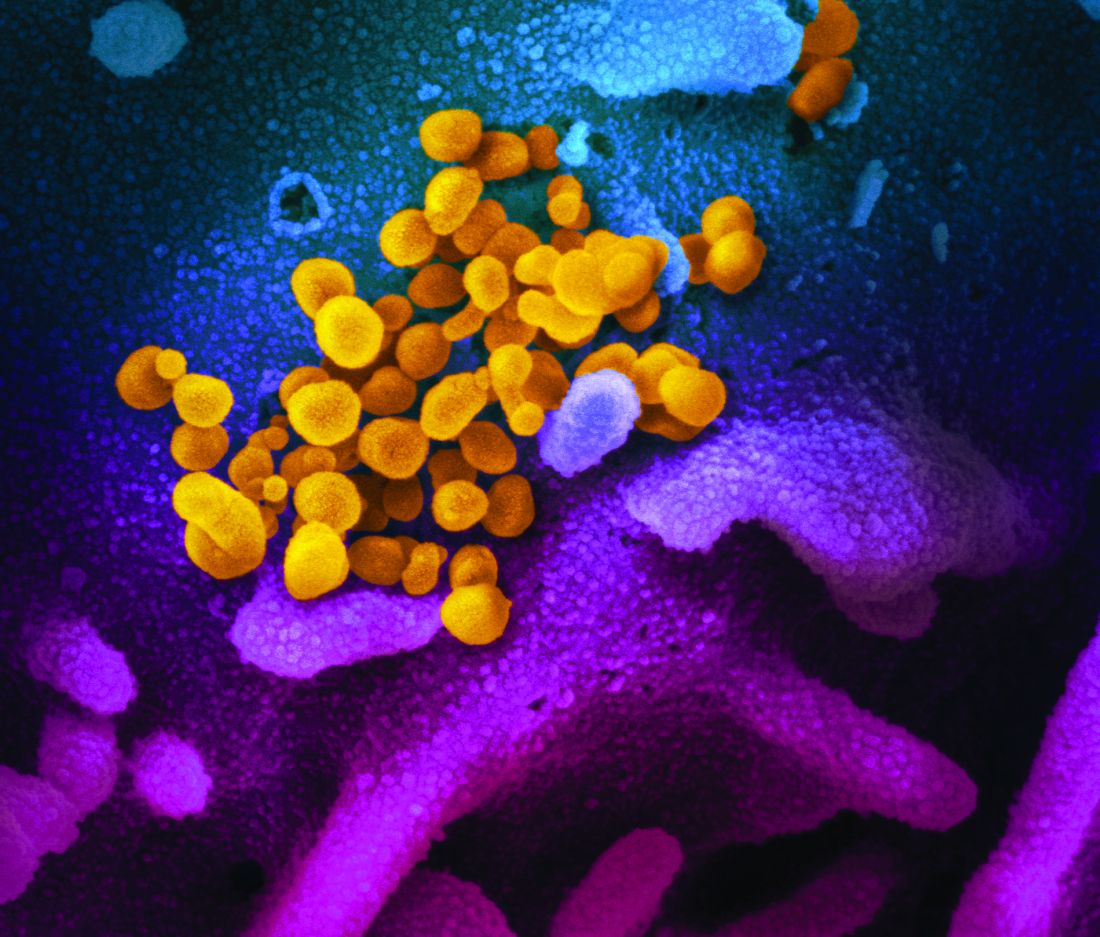
Markus Hoffmann, of the Leibniz Institute for Primate Research, Göttingen, Germany, and a team of investigators also found that antibody responses raised against SARS-S during infection or vaccination might offer some level of protection against SARS-CoV-2 infection. Their findings were published in Cell.
In order for coronaviruses to enter a cell, they must first bind their viral spike (S) proteins to cellular receptors and depend on S protein priming by host cell proteases. The study found that the SARS-CoV-2, causal agent for COVID-19, uses the same SARS-CoV receptor, ACE2, for entry and uses the serine protease TMPRSS2 for S protein priming as the original SARS-CoV-1 (SARS). Importantly, the researchers also found that the cellular serine protease TMPRSS2 primes SARS-CoV-2-S for entry and that a serine protease inhibitor blocks SARS-CoV-2 infection of lung cells, providing opportunities for potential therapeutic intervention.
The researchers performed a sequence analysis that showed SARS-CoV-2 clusters with SARS-CoV–related viruses from bats, of which some – but not all – can use ACE2 for host cell entry. Further analysis of the receptor binding motif known to make contact with ACE2 showed that most amino acid residues essential for ACE2 binding by SARS-S were conserved in SARS-2-S but were absent from S proteins of those SARS-related coronaviruses previously found not to use ACE2.
In addition, the researchers found that SARS-CoV-2–infected BHK-21 cells transfected to express ACE2 with high efficiency, but not the parental BHK-21 cells indicating that SARS-CoV-2-S, like the original SARS virus S protein, uses ACE2 for cellular entry.
Using cultured cells, the researchers found that the protease inhibitor, camostat mesylate, inhibited SARS-S and SARS-2-S entry into primary human lung cells, demonstrating that SARS-CoV-2 can use TMPRSS2 for S protein priming and that camostat mesylate can block SARS-CoV-2 infection of lung cells. Camostat mesylate has been used as a therapy for some forms of cancer and other viral infections.
In addition to their research on the protease inhibitor, the researchers also found that sera from convalescent SARS patients cross-neutralized SARS-2-S–driven entry. They found that four sera obtained from three convalescent SARS patients inhibited SARS-S entry into cell lines in a concentration dependent fashion.
“We demonstrate that SARS-CoV-2 uses the SARS55 CoV receptor, ACE2, for entry and the serine protease TMPRSS2 for S protein priming. A TMPRSS2 inhibitor approved for clinical use blocked entry and might constitute a treatment option. Finally, we show that the sera from convalescent SARS patients cross-neutralized SARS-2-S–driven entry,” the authors concluded.
The study was supported by BMBF (RAPID Consortium) and German Research Foundation (DFG). The authors reported that they had no conflicts.
SOURCE: Hoffmann M et al. Cell 2020. doi: 10.1016/j.cell.2020.02.052.
A team of researchers has discovered important commonalities between SARS-CoV-2 and SARS-CoV infection that could lead to a potential targets for antiviral intervention.
Markus Hoffmann, of the Leibniz Institute for Primate Research, Göttingen, Germany, and a team of investigators also found that antibody responses raised against SARS-S during infection or vaccination might offer some level of protection against SARS-CoV-2 infection. Their findings were published in Cell.
In order for coronaviruses to enter a cell, they must first bind their viral spike (S) proteins to cellular receptors and depend on S protein priming by host cell proteases. The study found that the SARS-CoV-2, causal agent for COVID-19, uses the same SARS-CoV receptor, ACE2, for entry and uses the serine protease TMPRSS2 for S protein priming as the original SARS-CoV-1 (SARS). Importantly, the researchers also found that the cellular serine protease TMPRSS2 primes SARS-CoV-2-S for entry and that a serine protease inhibitor blocks SARS-CoV-2 infection of lung cells, providing opportunities for potential therapeutic intervention.
The researchers performed a sequence analysis that showed SARS-CoV-2 clusters with SARS-CoV–related viruses from bats, of which some – but not all – can use ACE2 for host cell entry. Further analysis of the receptor binding motif known to make contact with ACE2 showed that most amino acid residues essential for ACE2 binding by SARS-S were conserved in SARS-2-S but were absent from S proteins of those SARS-related coronaviruses previously found not to use ACE2.
In addition, the researchers found that SARS-CoV-2–infected BHK-21 cells transfected to express ACE2 with high efficiency, but not the parental BHK-21 cells indicating that SARS-CoV-2-S, like the original SARS virus S protein, uses ACE2 for cellular entry.
Using cultured cells, the researchers found that the protease inhibitor, camostat mesylate, inhibited SARS-S and SARS-2-S entry into primary human lung cells, demonstrating that SARS-CoV-2 can use TMPRSS2 for S protein priming and that camostat mesylate can block SARS-CoV-2 infection of lung cells. Camostat mesylate has been used as a therapy for some forms of cancer and other viral infections.
In addition to their research on the protease inhibitor, the researchers also found that sera from convalescent SARS patients cross-neutralized SARS-2-S–driven entry. They found that four sera obtained from three convalescent SARS patients inhibited SARS-S entry into cell lines in a concentration dependent fashion.
“We demonstrate that SARS-CoV-2 uses the SARS55 CoV receptor, ACE2, for entry and the serine protease TMPRSS2 for S protein priming. A TMPRSS2 inhibitor approved for clinical use blocked entry and might constitute a treatment option. Finally, we show that the sera from convalescent SARS patients cross-neutralized SARS-2-S–driven entry,” the authors concluded.
The study was supported by BMBF (RAPID Consortium) and German Research Foundation (DFG). The authors reported that they had no conflicts.
SOURCE: Hoffmann M et al. Cell 2020. doi: 10.1016/j.cell.2020.02.052.
A team of researchers has discovered important commonalities between SARS-CoV-2 and SARS-CoV infection that could lead to a potential targets for antiviral intervention.
Markus Hoffmann, of the Leibniz Institute for Primate Research, Göttingen, Germany, and a team of investigators also found that antibody responses raised against SARS-S during infection or vaccination might offer some level of protection against SARS-CoV-2 infection. Their findings were published in Cell.
In order for coronaviruses to enter a cell, they must first bind their viral spike (S) proteins to cellular receptors and depend on S protein priming by host cell proteases. The study found that the SARS-CoV-2, causal agent for COVID-19, uses the same SARS-CoV receptor, ACE2, for entry and uses the serine protease TMPRSS2 for S protein priming as the original SARS-CoV-1 (SARS). Importantly, the researchers also found that the cellular serine protease TMPRSS2 primes SARS-CoV-2-S for entry and that a serine protease inhibitor blocks SARS-CoV-2 infection of lung cells, providing opportunities for potential therapeutic intervention.
The researchers performed a sequence analysis that showed SARS-CoV-2 clusters with SARS-CoV–related viruses from bats, of which some – but not all – can use ACE2 for host cell entry. Further analysis of the receptor binding motif known to make contact with ACE2 showed that most amino acid residues essential for ACE2 binding by SARS-S were conserved in SARS-2-S but were absent from S proteins of those SARS-related coronaviruses previously found not to use ACE2.
In addition, the researchers found that SARS-CoV-2–infected BHK-21 cells transfected to express ACE2 with high efficiency, but not the parental BHK-21 cells indicating that SARS-CoV-2-S, like the original SARS virus S protein, uses ACE2 for cellular entry.
Using cultured cells, the researchers found that the protease inhibitor, camostat mesylate, inhibited SARS-S and SARS-2-S entry into primary human lung cells, demonstrating that SARS-CoV-2 can use TMPRSS2 for S protein priming and that camostat mesylate can block SARS-CoV-2 infection of lung cells. Camostat mesylate has been used as a therapy for some forms of cancer and other viral infections.
In addition to their research on the protease inhibitor, the researchers also found that sera from convalescent SARS patients cross-neutralized SARS-2-S–driven entry. They found that four sera obtained from three convalescent SARS patients inhibited SARS-S entry into cell lines in a concentration dependent fashion.
“We demonstrate that SARS-CoV-2 uses the SARS55 CoV receptor, ACE2, for entry and the serine protease TMPRSS2 for S protein priming. A TMPRSS2 inhibitor approved for clinical use blocked entry and might constitute a treatment option. Finally, we show that the sera from convalescent SARS patients cross-neutralized SARS-2-S–driven entry,” the authors concluded.
The study was supported by BMBF (RAPID Consortium) and German Research Foundation (DFG). The authors reported that they had no conflicts.
SOURCE: Hoffmann M et al. Cell 2020. doi: 10.1016/j.cell.2020.02.052.
FROM CELL

Gender pronouns in EMR preferred by many gender nonconforming teens
Most transgender and gender nonconforming youth would like their preferred name and pronouns be recorded throughout their EMRs, but very few are ever asked for that identity information outside of gender specialty clinic settings, according to a recent research letter in JAMA Pediatrics.

The findings are not surprising, said Cora Breuner, MD, a professor of pediatrics in adolescent medicine at Seattle Children’s Hospital in Washington, because “we know that use of gender-affirming language when accessing health care is extremely important to transgender youth.”
“Use of gender-affirming language in the health care system is associated with improved mental health outcomes in this population,” Dr Breuner said in an interview.
But the authors of the study noted that EMRs often lack the functions needed to provide gender-affirming care.
“To better support this vulnerable group of youths, health systems and EMRs should allow for EMR-wide name and pronoun documentation, even when a patient has not legally changed their name,” Gina M. Sequeira, MD, of UPMC Children’s Hospital of Pittsburgh and associates wrote.
Although many providers have begun routinely asking patients for both their gender identity and their sex assigned at birth, these questions leave out a patient’s preferred name and pronouns – crucial components of respectful and affirming care, the authors explained.
At a specialty gender clinic, the authors surveyed 204 transgender youths, aged 12-26 years, regarding how their name and pronouns are recorded in their EMR files. Just over half the respondents were under age 18 years (56%), and most were white (86%). Most were transmasculine (59%), with 21% transfeminine and 20% nonbinary.
Most respondents (69%) went by a name other than their legal one, yet only 9% said they were frequently or always asked in clinical settings outside specialty gender centers whether they wanted their preferred name and pronouns noted in the EMR.
A majority (79%), however, said they wanted their name and pronouns noted throughout their EMR. The youths’ preferences varied according to their gender identity and how many people were aware of their gender identity, but not by age, race/ethnicity, or perceived amount of parental support.
Only two-thirds (67%) of 42 transfeminine patients wished their EMR to include their preferred name, compared with most (85%) of 121 transmasculine patients and nearly all (92%) of 37 nonbinary respondents (P = .007). Pronouns preferences were similar: All but one nonbinary respondent wanted their pronouns in the EMR, compared with 84% of transmasculine and 64% of transfeminine respondents (P=.0003).
“It may be that transfeminine patients have more pressure to ‘stay’ their assigned gender,” Dr Breuner said regarding these findings. “ ‘Outness’ may be challenging, and thus they remain in their traditional gender norms, but further research on this theory is warranted.”
Among those who were “out to everyone,” most (88%) wanted their preferred name and pronouns recorded in the EMR, and the proportion was similar for those “out to most.” But only 65% of those “out to few or no one” preferred their name and pronouns be noted in the EMR, a similar proportion for those “out to some.”
Of 7 youths who did not wish to include their name and pronouns throughout their EMR, all but one said they didn’t think it was necessary because they believed they already “passed” well enough as their gender. Just one person said they did not want name and pronouns recorded for confidentiality reasons.
However, confidentiality is still an important consideration particularly for minors, the authors and Dr. Breuner pointed out.
“It is essential to discuss confidentiality with the youth as parents may have access to the medical records younger than 18 years of age,” Dr. Breuner said.
The authors noted the study’s limitation in using a convenience sample but they and Dr. Breuner said that the findings still demonstrate transgender youths’ desire for EMRs to include their name and pronouns.
The research was funded by grants from the National Institutes of Health. The authors had no industry disclosures.
SOURCE: Sequeira GM et al. JAMA Pediatrics. 2020 Feb 23. doi: 10.1001/jamapediatrics.2019.6071.
Most transgender and gender nonconforming youth would like their preferred name and pronouns be recorded throughout their EMRs, but very few are ever asked for that identity information outside of gender specialty clinic settings, according to a recent research letter in JAMA Pediatrics.
The findings are not surprising, said Cora Breuner, MD, a professor of pediatrics in adolescent medicine at Seattle Children’s Hospital in Washington, because “we know that use of gender-affirming language when accessing health care is extremely important to transgender youth.”
“Use of gender-affirming language in the health care system is associated with improved mental health outcomes in this population,” Dr Breuner said in an interview.
But the authors of the study noted that EMRs often lack the functions needed to provide gender-affirming care.
“To better support this vulnerable group of youths, health systems and EMRs should allow for EMR-wide name and pronoun documentation, even when a patient has not legally changed their name,” Gina M. Sequeira, MD, of UPMC Children’s Hospital of Pittsburgh and associates wrote.
Although many providers have begun routinely asking patients for both their gender identity and their sex assigned at birth, these questions leave out a patient’s preferred name and pronouns – crucial components of respectful and affirming care, the authors explained.
At a specialty gender clinic, the authors surveyed 204 transgender youths, aged 12-26 years, regarding how their name and pronouns are recorded in their EMR files. Just over half the respondents were under age 18 years (56%), and most were white (86%). Most were transmasculine (59%), with 21% transfeminine and 20% nonbinary.
Most respondents (69%) went by a name other than their legal one, yet only 9% said they were frequently or always asked in clinical settings outside specialty gender centers whether they wanted their preferred name and pronouns noted in the EMR.
A majority (79%), however, said they wanted their name and pronouns noted throughout their EMR. The youths’ preferences varied according to their gender identity and how many people were aware of their gender identity, but not by age, race/ethnicity, or perceived amount of parental support.
Only two-thirds (67%) of 42 transfeminine patients wished their EMR to include their preferred name, compared with most (85%) of 121 transmasculine patients and nearly all (92%) of 37 nonbinary respondents (P = .007). Pronouns preferences were similar: All but one nonbinary respondent wanted their pronouns in the EMR, compared with 84% of transmasculine and 64% of transfeminine respondents (P=.0003).
“It may be that transfeminine patients have more pressure to ‘stay’ their assigned gender,” Dr Breuner said regarding these findings. “ ‘Outness’ may be challenging, and thus they remain in their traditional gender norms, but further research on this theory is warranted.”
Among those who were “out to everyone,” most (88%) wanted their preferred name and pronouns recorded in the EMR, and the proportion was similar for those “out to most.” But only 65% of those “out to few or no one” preferred their name and pronouns be noted in the EMR, a similar proportion for those “out to some.”
Of 7 youths who did not wish to include their name and pronouns throughout their EMR, all but one said they didn’t think it was necessary because they believed they already “passed” well enough as their gender. Just one person said they did not want name and pronouns recorded for confidentiality reasons.
However, confidentiality is still an important consideration particularly for minors, the authors and Dr. Breuner pointed out.
“It is essential to discuss confidentiality with the youth as parents may have access to the medical records younger than 18 years of age,” Dr. Breuner said.
The authors noted the study’s limitation in using a convenience sample but they and Dr. Breuner said that the findings still demonstrate transgender youths’ desire for EMRs to include their name and pronouns.
The research was funded by grants from the National Institutes of Health. The authors had no industry disclosures.
SOURCE: Sequeira GM et al. JAMA Pediatrics. 2020 Feb 23. doi: 10.1001/jamapediatrics.2019.6071.
Most transgender and gender nonconforming youth would like their preferred name and pronouns be recorded throughout their EMRs, but very few are ever asked for that identity information outside of gender specialty clinic settings, according to a recent research letter in JAMA Pediatrics.
The findings are not surprising, said Cora Breuner, MD, a professor of pediatrics in adolescent medicine at Seattle Children’s Hospital in Washington, because “we know that use of gender-affirming language when accessing health care is extremely important to transgender youth.”
“Use of gender-affirming language in the health care system is associated with improved mental health outcomes in this population,” Dr Breuner said in an interview.
But the authors of the study noted that EMRs often lack the functions needed to provide gender-affirming care.
“To better support this vulnerable group of youths, health systems and EMRs should allow for EMR-wide name and pronoun documentation, even when a patient has not legally changed their name,” Gina M. Sequeira, MD, of UPMC Children’s Hospital of Pittsburgh and associates wrote.
Although many providers have begun routinely asking patients for both their gender identity and their sex assigned at birth, these questions leave out a patient’s preferred name and pronouns – crucial components of respectful and affirming care, the authors explained.
At a specialty gender clinic, the authors surveyed 204 transgender youths, aged 12-26 years, regarding how their name and pronouns are recorded in their EMR files. Just over half the respondents were under age 18 years (56%), and most were white (86%). Most were transmasculine (59%), with 21% transfeminine and 20% nonbinary.
Most respondents (69%) went by a name other than their legal one, yet only 9% said they were frequently or always asked in clinical settings outside specialty gender centers whether they wanted their preferred name and pronouns noted in the EMR.
A majority (79%), however, said they wanted their name and pronouns noted throughout their EMR. The youths’ preferences varied according to their gender identity and how many people were aware of their gender identity, but not by age, race/ethnicity, or perceived amount of parental support.
Only two-thirds (67%) of 42 transfeminine patients wished their EMR to include their preferred name, compared with most (85%) of 121 transmasculine patients and nearly all (92%) of 37 nonbinary respondents (P = .007). Pronouns preferences were similar: All but one nonbinary respondent wanted their pronouns in the EMR, compared with 84% of transmasculine and 64% of transfeminine respondents (P=.0003).
“It may be that transfeminine patients have more pressure to ‘stay’ their assigned gender,” Dr Breuner said regarding these findings. “ ‘Outness’ may be challenging, and thus they remain in their traditional gender norms, but further research on this theory is warranted.”
Among those who were “out to everyone,” most (88%) wanted their preferred name and pronouns recorded in the EMR, and the proportion was similar for those “out to most.” But only 65% of those “out to few or no one” preferred their name and pronouns be noted in the EMR, a similar proportion for those “out to some.”
Of 7 youths who did not wish to include their name and pronouns throughout their EMR, all but one said they didn’t think it was necessary because they believed they already “passed” well enough as their gender. Just one person said they did not want name and pronouns recorded for confidentiality reasons.
However, confidentiality is still an important consideration particularly for minors, the authors and Dr. Breuner pointed out.
“It is essential to discuss confidentiality with the youth as parents may have access to the medical records younger than 18 years of age,” Dr. Breuner said.
The authors noted the study’s limitation in using a convenience sample but they and Dr. Breuner said that the findings still demonstrate transgender youths’ desire for EMRs to include their name and pronouns.
The research was funded by grants from the National Institutes of Health. The authors had no industry disclosures.
SOURCE: Sequeira GM et al. JAMA Pediatrics. 2020 Feb 23. doi: 10.1001/jamapediatrics.2019.6071.
FROM JAMA PEDIATRICS

More pediatricians employ developmental screening tools
Pediatricians’ reported use of developmental screening tools increased significantly to 63% from 2002 to 2016, based on survey data from more than 1,000 pediatricians at three time points.

“In 2001, an AAP [American Academy of Pediatrics] policy statement called for pediatricians to screen all children for developmental disorders during routine well-child visits,” Paul H. Lipkin, MD, of the Kennedy Krieger Institute, Baltimore, and colleagues wrote in Pediatrics. “However, only 23% of pediatricians in 2002 reported using a standardized developmental screening tool, citing lack of time, staff, and reimbursement as barriers.”
To determine trends in pediatricians’ use of recommended screening tools, the researchers reviewed data from the American Academy of Pediatrics Periodic Surveys in 2002, 2009, and 2016 that included 562, 532, and 469 respondents, respectively.
The percentage of pediatricians who reported using screening tools increased from 21% in 2002 to 63% in 2016 (P less than .001). In addition, The screening tool with the greatest increase in use was the Ages and Stages Questionnaire (ASQ), reportedly used by 48% of pediatricians in 2016, up from 9% in 2002 (P less than .001).
Most reported barriers to screening, including time constraints, inadequate reimbursement, lack of staff to perform screenings, belief that screening is not an appropriate role for pediatricians, and lack of confidence in the screening effectiveness, declined over the study period. However, the percentage of pediatricians who reported lack of available treatment options as a barrier to screening increased from 9% in 2002 to 21% in 2016, the researchers noted.
The average ages of the survey respondents at the 2002, 2009, and 2016 time points were 44, 47, and 49 years, respectively, and the majority (44%, 45%, and 49%) worked in suburban practice areas.
The study findings were limited by several factors, including the use of self-reports, the potential bias of pediatricians to overestimate some of their developmental practices, and potential over- or underreporting if autism spectrum disorder screening was mistakenly included, Dr. Lipkin and associates noted. The results suggest that use of standardized screening has increased, but more attention is needed to improve screening and referrals.
Potential improvements include adding screening tests and referrals to EHRs, and improving communication between medical practices and community-based intervention, therapy, and education programs, they concluded.
The study findings can be seen as encouraging, but one-third of pediatricians still reported not using formal screening instruments, commonly citing lack of time and suboptimal reimbursement, Mei Elansary, MD, and Michael Silverstein, MD, both of Boston University, said in an accompanying editorial.
However, “Although time and financial barriers are real, it is also likely that some of the residual gaps in guideline-concordant practice reflect variability among pediatricians in their perception of the clinical relevance of certain developmental problems that require formal instruments to identify and in the availability and effectiveness of services targeted to children with these less severe developmental issues,” they said. The path for screening children with developmental risk factors but not obviously severe delays may not be straightforward, and many pediatricians rely on their clinical judgment, they emphasized.
“As important as developing strategies to achieve more widespread developmental screening, therefore, is developing a greater understanding of the root causes of practice variation and determining the range of viable clinical practices that lead to better developmental outcomes,” Dr. Elansary and Dr. Silverstein concluded.
The study was supported by the American Academy of Pediatrics, the Department of Health & Human Services, the Health Resources and Services Administration, and the Department of Education Office of Special Education Programs. The researchers had no financial conflicts to disclose.
Editorialist Dr. Silverstein disclosed an award from the Eunice Kennedy Shriver National Institute of Child Health and Human Development; the editorial was funded by the National Institutes of Health. Dr. Silverstein is a member of the U.S. Preventive Services Task Force. Dr. Elansary had no relevant financial disclosures.
pdnews@mdedge.com
SOURCES: Lipkin PH et al. Pediatrics. 2020 Mar 2. doi: 10.1542/peds.2019-0851; Elansary M, Silverstein M. Pediatrics. 2020 Mar 2. doi: 10.1542/peds.2020-0164.
Pediatricians’ reported use of developmental screening tools increased significantly to 63% from 2002 to 2016, based on survey data from more than 1,000 pediatricians at three time points.
“In 2001, an AAP [American Academy of Pediatrics] policy statement called for pediatricians to screen all children for developmental disorders during routine well-child visits,” Paul H. Lipkin, MD, of the Kennedy Krieger Institute, Baltimore, and colleagues wrote in Pediatrics. “However, only 23% of pediatricians in 2002 reported using a standardized developmental screening tool, citing lack of time, staff, and reimbursement as barriers.”
To determine trends in pediatricians’ use of recommended screening tools, the researchers reviewed data from the American Academy of Pediatrics Periodic Surveys in 2002, 2009, and 2016 that included 562, 532, and 469 respondents, respectively.
The percentage of pediatricians who reported using screening tools increased from 21% in 2002 to 63% in 2016 (P less than .001). In addition, The screening tool with the greatest increase in use was the Ages and Stages Questionnaire (ASQ), reportedly used by 48% of pediatricians in 2016, up from 9% in 2002 (P less than .001).
Most reported barriers to screening, including time constraints, inadequate reimbursement, lack of staff to perform screenings, belief that screening is not an appropriate role for pediatricians, and lack of confidence in the screening effectiveness, declined over the study period. However, the percentage of pediatricians who reported lack of available treatment options as a barrier to screening increased from 9% in 2002 to 21% in 2016, the researchers noted.
The average ages of the survey respondents at the 2002, 2009, and 2016 time points were 44, 47, and 49 years, respectively, and the majority (44%, 45%, and 49%) worked in suburban practice areas.
The study findings were limited by several factors, including the use of self-reports, the potential bias of pediatricians to overestimate some of their developmental practices, and potential over- or underreporting if autism spectrum disorder screening was mistakenly included, Dr. Lipkin and associates noted. The results suggest that use of standardized screening has increased, but more attention is needed to improve screening and referrals.
Potential improvements include adding screening tests and referrals to EHRs, and improving communication between medical practices and community-based intervention, therapy, and education programs, they concluded.
The study findings can be seen as encouraging, but one-third of pediatricians still reported not using formal screening instruments, commonly citing lack of time and suboptimal reimbursement, Mei Elansary, MD, and Michael Silverstein, MD, both of Boston University, said in an accompanying editorial.
However, “Although time and financial barriers are real, it is also likely that some of the residual gaps in guideline-concordant practice reflect variability among pediatricians in their perception of the clinical relevance of certain developmental problems that require formal instruments to identify and in the availability and effectiveness of services targeted to children with these less severe developmental issues,” they said. The path for screening children with developmental risk factors but not obviously severe delays may not be straightforward, and many pediatricians rely on their clinical judgment, they emphasized.
“As important as developing strategies to achieve more widespread developmental screening, therefore, is developing a greater understanding of the root causes of practice variation and determining the range of viable clinical practices that lead to better developmental outcomes,” Dr. Elansary and Dr. Silverstein concluded.
The study was supported by the American Academy of Pediatrics, the Department of Health & Human Services, the Health Resources and Services Administration, and the Department of Education Office of Special Education Programs. The researchers had no financial conflicts to disclose.
Editorialist Dr. Silverstein disclosed an award from the Eunice Kennedy Shriver National Institute of Child Health and Human Development; the editorial was funded by the National Institutes of Health. Dr. Silverstein is a member of the U.S. Preventive Services Task Force. Dr. Elansary had no relevant financial disclosures.
pdnews@mdedge.com
SOURCES: Lipkin PH et al. Pediatrics. 2020 Mar 2. doi: 10.1542/peds.2019-0851; Elansary M, Silverstein M. Pediatrics. 2020 Mar 2. doi: 10.1542/peds.2020-0164.
Pediatricians’ reported use of developmental screening tools increased significantly to 63% from 2002 to 2016, based on survey data from more than 1,000 pediatricians at three time points.
“In 2001, an AAP [American Academy of Pediatrics] policy statement called for pediatricians to screen all children for developmental disorders during routine well-child visits,” Paul H. Lipkin, MD, of the Kennedy Krieger Institute, Baltimore, and colleagues wrote in Pediatrics. “However, only 23% of pediatricians in 2002 reported using a standardized developmental screening tool, citing lack of time, staff, and reimbursement as barriers.”
To determine trends in pediatricians’ use of recommended screening tools, the researchers reviewed data from the American Academy of Pediatrics Periodic Surveys in 2002, 2009, and 2016 that included 562, 532, and 469 respondents, respectively.
The percentage of pediatricians who reported using screening tools increased from 21% in 2002 to 63% in 2016 (P less than .001). In addition, The screening tool with the greatest increase in use was the Ages and Stages Questionnaire (ASQ), reportedly used by 48% of pediatricians in 2016, up from 9% in 2002 (P less than .001).
Most reported barriers to screening, including time constraints, inadequate reimbursement, lack of staff to perform screenings, belief that screening is not an appropriate role for pediatricians, and lack of confidence in the screening effectiveness, declined over the study period. However, the percentage of pediatricians who reported lack of available treatment options as a barrier to screening increased from 9% in 2002 to 21% in 2016, the researchers noted.
The average ages of the survey respondents at the 2002, 2009, and 2016 time points were 44, 47, and 49 years, respectively, and the majority (44%, 45%, and 49%) worked in suburban practice areas.
The study findings were limited by several factors, including the use of self-reports, the potential bias of pediatricians to overestimate some of their developmental practices, and potential over- or underreporting if autism spectrum disorder screening was mistakenly included, Dr. Lipkin and associates noted. The results suggest that use of standardized screening has increased, but more attention is needed to improve screening and referrals.
Potential improvements include adding screening tests and referrals to EHRs, and improving communication between medical practices and community-based intervention, therapy, and education programs, they concluded.
The study findings can be seen as encouraging, but one-third of pediatricians still reported not using formal screening instruments, commonly citing lack of time and suboptimal reimbursement, Mei Elansary, MD, and Michael Silverstein, MD, both of Boston University, said in an accompanying editorial.
However, “Although time and financial barriers are real, it is also likely that some of the residual gaps in guideline-concordant practice reflect variability among pediatricians in their perception of the clinical relevance of certain developmental problems that require formal instruments to identify and in the availability and effectiveness of services targeted to children with these less severe developmental issues,” they said. The path for screening children with developmental risk factors but not obviously severe delays may not be straightforward, and many pediatricians rely on their clinical judgment, they emphasized.
“As important as developing strategies to achieve more widespread developmental screening, therefore, is developing a greater understanding of the root causes of practice variation and determining the range of viable clinical practices that lead to better developmental outcomes,” Dr. Elansary and Dr. Silverstein concluded.
The study was supported by the American Academy of Pediatrics, the Department of Health & Human Services, the Health Resources and Services Administration, and the Department of Education Office of Special Education Programs. The researchers had no financial conflicts to disclose.
Editorialist Dr. Silverstein disclosed an award from the Eunice Kennedy Shriver National Institute of Child Health and Human Development; the editorial was funded by the National Institutes of Health. Dr. Silverstein is a member of the U.S. Preventive Services Task Force. Dr. Elansary had no relevant financial disclosures.
pdnews@mdedge.com
SOURCES: Lipkin PH et al. Pediatrics. 2020 Mar 2. doi: 10.1542/peds.2019-0851; Elansary M, Silverstein M. Pediatrics. 2020 Mar 2. doi: 10.1542/peds.2020-0164.
FROM PEDIATRICS

Hospitalist profile: Charu Puri, MD
Charu Puri, MD, FHM, is a hospitalist and medical informaticist at Sutter East Bay Medical Group in Oakland, Calif. She also serves as medical director for onboarding, mentoring, and physician development.

Dr. Puri has been a member of the Society of Hospital Medicine since 2009, and attended the Society’s Leadership Academy, where she was inspired to create a mentorship program at her own institution. She is a member of the San Francisco Bay chapter of SHM and serves on the Performance Measurement and Reporting Committee.
At what point in your education/training did you decide to practice hospital medicine? What about hospital medicine appealed to you?
It was early on in my residency that it became clear to me that I wanted to pursue the hospitalist track. It was a natural fit, and I gravitated toward the hospitalist side of medicine. What appealed to me most was that we had the opportunity and privilege to provide care to patients in their most vulnerable state and experience the effects of that care in real time. I found that very gratifying.
There is also a sense of community and camaraderie that comes with working in a hospital setting. Everyone is working together, trying to help patients. The collegiality and the relationships that develop are very rewarding. I have been fortunate enough to have built strong friendships with the hospitalists in my group as well as colleagues from other disciplines in medicine that work in the hospital.
What is your current role at Sutter Health?
Alta Bates Summit Medical Center is part of the larger Sutter Health system. I have an administrative role with my medical group in addition to the clinical work I do at the medical center, although first and foremost I identify myself as a hospitalist. About 5 years ago I took on a role in clinical informatics, when our hospital implemented an EHR. Since then I have been working as an inpatient physician informaticist. Most recently I took on a new role as medical director for onboarding, mentoring, and physician development in my medical group.
How do you balance the different duties of your various roles?
I am full time in my administration role, between my informatics role and my onboarding role. I technically don’t have to do clinical shifts if I don’t want to, but it’s important to me to continue clinical practice and maintain my skills and connection to the hospital and colleagues. I do about four clinical shifts a month, and plan to continue doing that. In our group you must do 14 shifts a month to be considered full time, so what I do could be considered about one-third of that.
What are your favorite areas of clinical practice and/or research?
I haven’t had a lot of research experience. My residency program was a community-based program, and my current setting is a community hospital. I haven’t been involved much in the academic side of hospital medicine. As far as clinical practices goes, I think it’s the diversity of hospital medicine that appeals to me. You really get to be a jack of all trades, and experience all the different disciplines of medicine. I like the variety.
Both my informatics and onboarding roles came out of a need that I identified, and just began doing the work before there was an official role. When we implemented our EHR, it was essential to get our doctors organized to make sure they were ready to take care of patients that first day of go live. By the time our hospital went live on the EHR, I had a good understanding of how it worked, and so I was able to create a miniature curriculum for our physicians – templates, order sets, workflows, etc. – to help ensure everything went smoothly. A few months after we implemented the EHR, I was officially offered a physician informaticist role.
The onboarding role came about in an interesting way. I was participating in the leadership course offered by SHM and was lucky enough to be in the pilot for the Capstone course. That leadership course is focused around mentoring and sponsorship, and one of the faculty members was Nancy Spector, MD, the associate dean of faculty development at Drexel University, Philadelphia. She talked a lot about mentoring, and I was inspired to set up a mentoring program for our hospitalists. Dr. Spector graciously agreed to mentor me as I worked on my Capstone project, which was to create a mentoring program in a community-based hospitalist group. As I continued to work on the project, coincidentally our medical group decided to redesign our new physician onboarding process. Because I was already involved in the onboarding and training related to our EHR, I became very involved with our medical group's onboarding redesign.
My group's CEO decided to create a new directorship role for onboarding and mentoring, which I recently interviewed for and was offered about two months ago.
I think setting up systems to support our doctors is the common threat between the informatics and the onboarding roles. I want to implement systems that support our doctors, help them succeed, and hopefully make their jobs a little easier.
What are the most challenging aspects of practicing hospital medicine? What are the most rewarding?
We practice in a very urban environment, with many low-income patients who have limited resources and access to health care. That can be very challenging. You always wonder if these patients have all the support they need after leaving the hospital. Sometimes I feel that I am just putting a band-aid on the medical problem, so to speak, but not solving the underlying issue. But it can be very rewarding during those times when the hospital and the broader community can bring our resources together to create interventions to help at-risk patients. It doesn’t happen as frequently as we would like, but when it does happen it feels good.
Another challenging aspect is related to perception. There are a lot of consultants in the hospital who view hospitalists as "house staff." That can be very frustrating, and it’s important to steer the conversations away from that perspective, and really try to establish ourselves as colleagues and peers.
How will hospital medicine change in the next decade or 2?
It’s a relatively young field, and we’re still figuring it out. I really don’t know how hospital medicine is going to change, but I do know that the field will continue to evolve, given the way U.S. health care is rapidly changing.
Do you have any advice for students and residents interested in hospital medicine?
It’s a fun way to practice medicine and I would encourage students to go into hospital medicine. It’s great for work/life balance. The advice I would give is that it is very important to get involved early in your career. Get involved in medical group or hospital committees. Stay away from the “shift mentality” – that I’m going to work my shifts and leave. That can lead to early burnout, which is a real concern in our field now. Early engagement is essential, so you can help lead these conversations at your hospital.
Charu Puri, MD, FHM, is a hospitalist and medical informaticist at Sutter East Bay Medical Group in Oakland, Calif. She also serves as medical director for onboarding, mentoring, and physician development.
Dr. Puri has been a member of the Society of Hospital Medicine since 2009, and attended the Society’s Leadership Academy, where she was inspired to create a mentorship program at her own institution. She is a member of the San Francisco Bay chapter of SHM and serves on the Performance Measurement and Reporting Committee.
At what point in your education/training did you decide to practice hospital medicine? What about hospital medicine appealed to you?
It was early on in my residency that it became clear to me that I wanted to pursue the hospitalist track. It was a natural fit, and I gravitated toward the hospitalist side of medicine. What appealed to me most was that we had the opportunity and privilege to provide care to patients in their most vulnerable state and experience the effects of that care in real time. I found that very gratifying.
There is also a sense of community and camaraderie that comes with working in a hospital setting. Everyone is working together, trying to help patients. The collegiality and the relationships that develop are very rewarding. I have been fortunate enough to have built strong friendships with the hospitalists in my group as well as colleagues from other disciplines in medicine that work in the hospital.
What is your current role at Sutter Health?
Alta Bates Summit Medical Center is part of the larger Sutter Health system. I have an administrative role with my medical group in addition to the clinical work I do at the medical center, although first and foremost I identify myself as a hospitalist. About 5 years ago I took on a role in clinical informatics, when our hospital implemented an EHR. Since then I have been working as an inpatient physician informaticist. Most recently I took on a new role as medical director for onboarding, mentoring, and physician development in my medical group.
How do you balance the different duties of your various roles?
I am full time in my administration role, between my informatics role and my onboarding role. I technically don’t have to do clinical shifts if I don’t want to, but it’s important to me to continue clinical practice and maintain my skills and connection to the hospital and colleagues. I do about four clinical shifts a month, and plan to continue doing that. In our group you must do 14 shifts a month to be considered full time, so what I do could be considered about one-third of that.
What are your favorite areas of clinical practice and/or research?
I haven’t had a lot of research experience. My residency program was a community-based program, and my current setting is a community hospital. I haven’t been involved much in the academic side of hospital medicine. As far as clinical practices goes, I think it’s the diversity of hospital medicine that appeals to me. You really get to be a jack of all trades, and experience all the different disciplines of medicine. I like the variety.
Both my informatics and onboarding roles came out of a need that I identified, and just began doing the work before there was an official role. When we implemented our EHR, it was essential to get our doctors organized to make sure they were ready to take care of patients that first day of go live. By the time our hospital went live on the EHR, I had a good understanding of how it worked, and so I was able to create a miniature curriculum for our physicians – templates, order sets, workflows, etc. – to help ensure everything went smoothly. A few months after we implemented the EHR, I was officially offered a physician informaticist role.
The onboarding role came about in an interesting way. I was participating in the leadership course offered by SHM and was lucky enough to be in the pilot for the Capstone course. That leadership course is focused around mentoring and sponsorship, and one of the faculty members was Nancy Spector, MD, the associate dean of faculty development at Drexel University, Philadelphia. She talked a lot about mentoring, and I was inspired to set up a mentoring program for our hospitalists. Dr. Spector graciously agreed to mentor me as I worked on my Capstone project, which was to create a mentoring program in a community-based hospitalist group. As I continued to work on the project, coincidentally our medical group decided to redesign our new physician onboarding process. Because I was already involved in the onboarding and training related to our EHR, I became very involved with our medical group's onboarding redesign.
My group's CEO decided to create a new directorship role for onboarding and mentoring, which I recently interviewed for and was offered about two months ago.
I think setting up systems to support our doctors is the common threat between the informatics and the onboarding roles. I want to implement systems that support our doctors, help them succeed, and hopefully make their jobs a little easier.
What are the most challenging aspects of practicing hospital medicine? What are the most rewarding?
We practice in a very urban environment, with many low-income patients who have limited resources and access to health care. That can be very challenging. You always wonder if these patients have all the support they need after leaving the hospital. Sometimes I feel that I am just putting a band-aid on the medical problem, so to speak, but not solving the underlying issue. But it can be very rewarding during those times when the hospital and the broader community can bring our resources together to create interventions to help at-risk patients. It doesn’t happen as frequently as we would like, but when it does happen it feels good.
Another challenging aspect is related to perception. There are a lot of consultants in the hospital who view hospitalists as "house staff." That can be very frustrating, and it’s important to steer the conversations away from that perspective, and really try to establish ourselves as colleagues and peers.
How will hospital medicine change in the next decade or 2?
It’s a relatively young field, and we’re still figuring it out. I really don’t know how hospital medicine is going to change, but I do know that the field will continue to evolve, given the way U.S. health care is rapidly changing.
Do you have any advice for students and residents interested in hospital medicine?
It’s a fun way to practice medicine and I would encourage students to go into hospital medicine. It’s great for work/life balance. The advice I would give is that it is very important to get involved early in your career. Get involved in medical group or hospital committees. Stay away from the “shift mentality” – that I’m going to work my shifts and leave. That can lead to early burnout, which is a real concern in our field now. Early engagement is essential, so you can help lead these conversations at your hospital.
Charu Puri, MD, FHM, is a hospitalist and medical informaticist at Sutter East Bay Medical Group in Oakland, Calif. She also serves as medical director for onboarding, mentoring, and physician development.
Dr. Puri has been a member of the Society of Hospital Medicine since 2009, and attended the Society’s Leadership Academy, where she was inspired to create a mentorship program at her own institution. She is a member of the San Francisco Bay chapter of SHM and serves on the Performance Measurement and Reporting Committee.
At what point in your education/training did you decide to practice hospital medicine? What about hospital medicine appealed to you?
It was early on in my residency that it became clear to me that I wanted to pursue the hospitalist track. It was a natural fit, and I gravitated toward the hospitalist side of medicine. What appealed to me most was that we had the opportunity and privilege to provide care to patients in their most vulnerable state and experience the effects of that care in real time. I found that very gratifying.
There is also a sense of community and camaraderie that comes with working in a hospital setting. Everyone is working together, trying to help patients. The collegiality and the relationships that develop are very rewarding. I have been fortunate enough to have built strong friendships with the hospitalists in my group as well as colleagues from other disciplines in medicine that work in the hospital.
What is your current role at Sutter Health?
Alta Bates Summit Medical Center is part of the larger Sutter Health system. I have an administrative role with my medical group in addition to the clinical work I do at the medical center, although first and foremost I identify myself as a hospitalist. About 5 years ago I took on a role in clinical informatics, when our hospital implemented an EHR. Since then I have been working as an inpatient physician informaticist. Most recently I took on a new role as medical director for onboarding, mentoring, and physician development in my medical group.
How do you balance the different duties of your various roles?
I am full time in my administration role, between my informatics role and my onboarding role. I technically don’t have to do clinical shifts if I don’t want to, but it’s important to me to continue clinical practice and maintain my skills and connection to the hospital and colleagues. I do about four clinical shifts a month, and plan to continue doing that. In our group you must do 14 shifts a month to be considered full time, so what I do could be considered about one-third of that.
What are your favorite areas of clinical practice and/or research?
I haven’t had a lot of research experience. My residency program was a community-based program, and my current setting is a community hospital. I haven’t been involved much in the academic side of hospital medicine. As far as clinical practices goes, I think it’s the diversity of hospital medicine that appeals to me. You really get to be a jack of all trades, and experience all the different disciplines of medicine. I like the variety.
Both my informatics and onboarding roles came out of a need that I identified, and just began doing the work before there was an official role. When we implemented our EHR, it was essential to get our doctors organized to make sure they were ready to take care of patients that first day of go live. By the time our hospital went live on the EHR, I had a good understanding of how it worked, and so I was able to create a miniature curriculum for our physicians – templates, order sets, workflows, etc. – to help ensure everything went smoothly. A few months after we implemented the EHR, I was officially offered a physician informaticist role.
The onboarding role came about in an interesting way. I was participating in the leadership course offered by SHM and was lucky enough to be in the pilot for the Capstone course. That leadership course is focused around mentoring and sponsorship, and one of the faculty members was Nancy Spector, MD, the associate dean of faculty development at Drexel University, Philadelphia. She talked a lot about mentoring, and I was inspired to set up a mentoring program for our hospitalists. Dr. Spector graciously agreed to mentor me as I worked on my Capstone project, which was to create a mentoring program in a community-based hospitalist group. As I continued to work on the project, coincidentally our medical group decided to redesign our new physician onboarding process. Because I was already involved in the onboarding and training related to our EHR, I became very involved with our medical group's onboarding redesign.
My group's CEO decided to create a new directorship role for onboarding and mentoring, which I recently interviewed for and was offered about two months ago.
I think setting up systems to support our doctors is the common threat between the informatics and the onboarding roles. I want to implement systems that support our doctors, help them succeed, and hopefully make their jobs a little easier.
What are the most challenging aspects of practicing hospital medicine? What are the most rewarding?
We practice in a very urban environment, with many low-income patients who have limited resources and access to health care. That can be very challenging. You always wonder if these patients have all the support they need after leaving the hospital. Sometimes I feel that I am just putting a band-aid on the medical problem, so to speak, but not solving the underlying issue. But it can be very rewarding during those times when the hospital and the broader community can bring our resources together to create interventions to help at-risk patients. It doesn’t happen as frequently as we would like, but when it does happen it feels good.
Another challenging aspect is related to perception. There are a lot of consultants in the hospital who view hospitalists as "house staff." That can be very frustrating, and it’s important to steer the conversations away from that perspective, and really try to establish ourselves as colleagues and peers.
How will hospital medicine change in the next decade or 2?
It’s a relatively young field, and we’re still figuring it out. I really don’t know how hospital medicine is going to change, but I do know that the field will continue to evolve, given the way U.S. health care is rapidly changing.
Do you have any advice for students and residents interested in hospital medicine?
It’s a fun way to practice medicine and I would encourage students to go into hospital medicine. It’s great for work/life balance. The advice I would give is that it is very important to get involved early in your career. Get involved in medical group or hospital committees. Stay away from the “shift mentality” – that I’m going to work my shifts and leave. That can lead to early burnout, which is a real concern in our field now. Early engagement is essential, so you can help lead these conversations at your hospital.

Intensive AT/RT regimen sets new efficacy benchmark
Intensive postoperative chemotherapy and focal radiation may improve event-free survival (EFS) among patients with atypical teratoid/rhabdoid tumors (AT/RT), results of the phase 3 ACNS0333 trial suggest.
Compared with historical therapies, the treatment protocol reduced the risk of EFS events by 57%, reported lead author Alyssa T. Reddy, MD, of the University of California San Francisco Benioff Children’s Hospital, and colleagues, who also noted that this is the first AT/RT-specific cooperative group trial.
“Case series and retrospective data suggested high-dose chemotherapy with peripheral blood stem cell (PBSC) rescue, early radiation therapy, and methotrexate had activity against AT/RT,” the investigators wrote in the Journal of Clinical Oncology.
Based on these findings, the investigators designed the ACNS0333 treatment protocol. Following surgery, all patients received two cycles of induction with methotrexate, vincristine, etoposide, cyclophosphamide, and cisplatin. They then underwent PBSC harvest.
Next, patients were divided into two groups based on age, disease location, and extent. Conformal radiotherapy was given between induction and consolidation to patients who were at least 6 months of age with tumor localized to the infratentorial brain or at least 12 months of age with tumor localized to the supratentorial brain. For younger patients or those with metastatic disease, radiotherapy was administered after consolidation was complete. Consolidation consisted of three cycles of thiotepa and carboplatin with PBSC support.
In addition to efficacy and safety analyses, molecular testing was performed on frozen tumor tissue and blood. This enabled a retrospective exploratory analysis of methylation profiles, which were used to subtype disease into three molecular classes: 2A/TYR, 2B/MYC, or 1/SHH-NOTCH.
Patient characteristics and results
The evaluable cohort included 65 patients, most of whom (83%) were younger than 36 months of age at baseline. About half of patients (51%) had infratentorial tumors, slightly fewer (40%) had supratentorial tumors, and 7.5% had a contiguous tumor in both locations. About one-third of patients (37%) had metastatic disease, and almost two-thirds (62%) had residual disease after surgery.
The median follow-up was 4.7 years. At 4 years, patients had an EFS rate of 35%. For patients aged 36 months or older, the 4-year EFS rate was higher still, at 48%.
These EFS rates compared favorably with the 6.4% EFS rate observed in a historical cohort of patients from the CCG-9921 trial (J Clin Oncol. 2005 Oct 20;23[30]:7621-31) and the POG-9233/4 trial (Neuro Oncol. 2014 Mar;16[3]:457-65). Overall, there was a 57% reduction in risk of EFS events in the ACNS0333 cohort compared with the historical controls (hazard ratio, 0.43; P less than .0005).
The 4-year overall survival rate was 43% for the entire ACNS0333 cohort and 57% for patients aged 36 months or older. Looking at molecular subtypes, patients with 1/SHH-NOTCH tumors had the best 4-year overall survival rate, at 56%, compared with 41% for 2A/TYR and 27% for 2B/MYC.
Adverse events were predominantly hematologic or infectious events reported during the induction and consolidation phases. Grade 4 or higher adverse events that occurred in at least 5% of patients were hypokalemia, hypotension, hypoxia, sepsis, ALT increase, and decreases in lymphocyte, neutrophil, platelet, and white blood cell counts.
Eight deaths were reported, four of which were associated with treatment. Causes of treatment-related death were sepsis after prolonged myelosuppression, respiratory failure from pulmonary fibrosis, and central nervous system necrosis (n = 2). One patient with central nervous system necrosis had viral encephalitis and sepsis at the time of death.
“ACNS0333 has shown that intensive multimodal therapy significantly improves survival for patients with AT/RT,” the investigators concluded. “However, further intensification using cytotoxic agents is likely not feasible. There are increasing data suggesting that AT/RT may be a good candidate for pathway-specific targeted therapies.”
The study was funded by the Children’s Oncology Group, the National Institutes of Health, the St. Baldrick’s Foundation, the Canadian Cancer Society, and the Children’s of Alabama Kaul Pediatric Research Institute. The investigators disclosed relationships with Novartis, AstraZeneca, and Merck Sharp & Dohme.
SOURCE: Reddy AT et al. J Clin Oncol. 2020 Feb 27. doi: 10.1200/JCO.19.01776.
Intensive postoperative chemotherapy and focal radiation may improve event-free survival (EFS) among patients with atypical teratoid/rhabdoid tumors (AT/RT), results of the phase 3 ACNS0333 trial suggest.
Compared with historical therapies, the treatment protocol reduced the risk of EFS events by 57%, reported lead author Alyssa T. Reddy, MD, of the University of California San Francisco Benioff Children’s Hospital, and colleagues, who also noted that this is the first AT/RT-specific cooperative group trial.
“Case series and retrospective data suggested high-dose chemotherapy with peripheral blood stem cell (PBSC) rescue, early radiation therapy, and methotrexate had activity against AT/RT,” the investigators wrote in the Journal of Clinical Oncology.
Based on these findings, the investigators designed the ACNS0333 treatment protocol. Following surgery, all patients received two cycles of induction with methotrexate, vincristine, etoposide, cyclophosphamide, and cisplatin. They then underwent PBSC harvest.
Next, patients were divided into two groups based on age, disease location, and extent. Conformal radiotherapy was given between induction and consolidation to patients who were at least 6 months of age with tumor localized to the infratentorial brain or at least 12 months of age with tumor localized to the supratentorial brain. For younger patients or those with metastatic disease, radiotherapy was administered after consolidation was complete. Consolidation consisted of three cycles of thiotepa and carboplatin with PBSC support.
In addition to efficacy and safety analyses, molecular testing was performed on frozen tumor tissue and blood. This enabled a retrospective exploratory analysis of methylation profiles, which were used to subtype disease into three molecular classes: 2A/TYR, 2B/MYC, or 1/SHH-NOTCH.
Patient characteristics and results
The evaluable cohort included 65 patients, most of whom (83%) were younger than 36 months of age at baseline. About half of patients (51%) had infratentorial tumors, slightly fewer (40%) had supratentorial tumors, and 7.5% had a contiguous tumor in both locations. About one-third of patients (37%) had metastatic disease, and almost two-thirds (62%) had residual disease after surgery.
The median follow-up was 4.7 years. At 4 years, patients had an EFS rate of 35%. For patients aged 36 months or older, the 4-year EFS rate was higher still, at 48%.
These EFS rates compared favorably with the 6.4% EFS rate observed in a historical cohort of patients from the CCG-9921 trial (J Clin Oncol. 2005 Oct 20;23[30]:7621-31) and the POG-9233/4 trial (Neuro Oncol. 2014 Mar;16[3]:457-65). Overall, there was a 57% reduction in risk of EFS events in the ACNS0333 cohort compared with the historical controls (hazard ratio, 0.43; P less than .0005).
The 4-year overall survival rate was 43% for the entire ACNS0333 cohort and 57% for patients aged 36 months or older. Looking at molecular subtypes, patients with 1/SHH-NOTCH tumors had the best 4-year overall survival rate, at 56%, compared with 41% for 2A/TYR and 27% for 2B/MYC.
Adverse events were predominantly hematologic or infectious events reported during the induction and consolidation phases. Grade 4 or higher adverse events that occurred in at least 5% of patients were hypokalemia, hypotension, hypoxia, sepsis, ALT increase, and decreases in lymphocyte, neutrophil, platelet, and white blood cell counts.
Eight deaths were reported, four of which were associated with treatment. Causes of treatment-related death were sepsis after prolonged myelosuppression, respiratory failure from pulmonary fibrosis, and central nervous system necrosis (n = 2). One patient with central nervous system necrosis had viral encephalitis and sepsis at the time of death.
“ACNS0333 has shown that intensive multimodal therapy significantly improves survival for patients with AT/RT,” the investigators concluded. “However, further intensification using cytotoxic agents is likely not feasible. There are increasing data suggesting that AT/RT may be a good candidate for pathway-specific targeted therapies.”
The study was funded by the Children’s Oncology Group, the National Institutes of Health, the St. Baldrick’s Foundation, the Canadian Cancer Society, and the Children’s of Alabama Kaul Pediatric Research Institute. The investigators disclosed relationships with Novartis, AstraZeneca, and Merck Sharp & Dohme.
SOURCE: Reddy AT et al. J Clin Oncol. 2020 Feb 27. doi: 10.1200/JCO.19.01776.
Intensive postoperative chemotherapy and focal radiation may improve event-free survival (EFS) among patients with atypical teratoid/rhabdoid tumors (AT/RT), results of the phase 3 ACNS0333 trial suggest.
Compared with historical therapies, the treatment protocol reduced the risk of EFS events by 57%, reported lead author Alyssa T. Reddy, MD, of the University of California San Francisco Benioff Children’s Hospital, and colleagues, who also noted that this is the first AT/RT-specific cooperative group trial.
“Case series and retrospective data suggested high-dose chemotherapy with peripheral blood stem cell (PBSC) rescue, early radiation therapy, and methotrexate had activity against AT/RT,” the investigators wrote in the Journal of Clinical Oncology.
Based on these findings, the investigators designed the ACNS0333 treatment protocol. Following surgery, all patients received two cycles of induction with methotrexate, vincristine, etoposide, cyclophosphamide, and cisplatin. They then underwent PBSC harvest.
Next, patients were divided into two groups based on age, disease location, and extent. Conformal radiotherapy was given between induction and consolidation to patients who were at least 6 months of age with tumor localized to the infratentorial brain or at least 12 months of age with tumor localized to the supratentorial brain. For younger patients or those with metastatic disease, radiotherapy was administered after consolidation was complete. Consolidation consisted of three cycles of thiotepa and carboplatin with PBSC support.
In addition to efficacy and safety analyses, molecular testing was performed on frozen tumor tissue and blood. This enabled a retrospective exploratory analysis of methylation profiles, which were used to subtype disease into three molecular classes: 2A/TYR, 2B/MYC, or 1/SHH-NOTCH.
Patient characteristics and results
The evaluable cohort included 65 patients, most of whom (83%) were younger than 36 months of age at baseline. About half of patients (51%) had infratentorial tumors, slightly fewer (40%) had supratentorial tumors, and 7.5% had a contiguous tumor in both locations. About one-third of patients (37%) had metastatic disease, and almost two-thirds (62%) had residual disease after surgery.
The median follow-up was 4.7 years. At 4 years, patients had an EFS rate of 35%. For patients aged 36 months or older, the 4-year EFS rate was higher still, at 48%.
These EFS rates compared favorably with the 6.4% EFS rate observed in a historical cohort of patients from the CCG-9921 trial (J Clin Oncol. 2005 Oct 20;23[30]:7621-31) and the POG-9233/4 trial (Neuro Oncol. 2014 Mar;16[3]:457-65). Overall, there was a 57% reduction in risk of EFS events in the ACNS0333 cohort compared with the historical controls (hazard ratio, 0.43; P less than .0005).
The 4-year overall survival rate was 43% for the entire ACNS0333 cohort and 57% for patients aged 36 months or older. Looking at molecular subtypes, patients with 1/SHH-NOTCH tumors had the best 4-year overall survival rate, at 56%, compared with 41% for 2A/TYR and 27% for 2B/MYC.
Adverse events were predominantly hematologic or infectious events reported during the induction and consolidation phases. Grade 4 or higher adverse events that occurred in at least 5% of patients were hypokalemia, hypotension, hypoxia, sepsis, ALT increase, and decreases in lymphocyte, neutrophil, platelet, and white blood cell counts.
Eight deaths were reported, four of which were associated with treatment. Causes of treatment-related death were sepsis after prolonged myelosuppression, respiratory failure from pulmonary fibrosis, and central nervous system necrosis (n = 2). One patient with central nervous system necrosis had viral encephalitis and sepsis at the time of death.
“ACNS0333 has shown that intensive multimodal therapy significantly improves survival for patients with AT/RT,” the investigators concluded. “However, further intensification using cytotoxic agents is likely not feasible. There are increasing data suggesting that AT/RT may be a good candidate for pathway-specific targeted therapies.”
The study was funded by the Children’s Oncology Group, the National Institutes of Health, the St. Baldrick’s Foundation, the Canadian Cancer Society, and the Children’s of Alabama Kaul Pediatric Research Institute. The investigators disclosed relationships with Novartis, AstraZeneca, and Merck Sharp & Dohme.
SOURCE: Reddy AT et al. J Clin Oncol. 2020 Feb 27. doi: 10.1200/JCO.19.01776.
FROM THE JOURNAL OF CLINICAL ONCOLOGY
Complexity of suicidal ideation, behavior points to need for new treatments
LAS VEGAS – More than 10 years ago, Gerard Sanacora, PhD, MD, came across a study in the medical literature that stopped him in his tracks.
For the study, Austrian neurologist Eberhard A. Deisenhammer, MD, and colleagues sought to determine the length of the period between consideration and accomplishment of a suicide attempt (J Clin Psychiatry. 2009;70[1]:19-24). To do so, they interviewed 82 patients who were referred to a psychiatric university hospital after a suicide attempt. Nearly half of the patients (48%) reported that the period between the first current thought of suicide and the actual attempt had lasted 10 minutes or less.
“When you’re talking about treating suicide behavior, there are so many components: the impulsivity component, the resilience component – all these things that can’t be measured with a simple outcome measure,” Dr. Sanacora said at an annual psychopharmacology update held by the Nevada Psychiatric Association. “That’s one of the real challenges. It requires us to take a good look at how we’re treating these patients in general.”
It also underscores the need for new treatments that target suicidal ideation and behavior.
“There is increasing evidence that ketamine and esketamine can produce effects that could be used in the treatment of mood disorder patients with suicidal ideation or behavior,” said Dr. Sanacora, professor of psychiatry at Yale University, New Haven, Conn. “However, there are many challenges to performing the studies that are required to more definitively demonstrate rapid and sustained improvement in suicide risks.”
The global 12-month prevalence of nonfatal suicide attempts is about 0.3% to 0.4%, and the lifetime prevalence is 3%, “which is pretty shocking,” he said. In the United States, there are more than 30 suicide attempts for each suicide death. At the same time, a World Health Organization community survey conducted in 21 countries found that the 12-month prevalence of suicidal ideation was about 2%, and that the lifetime prevalence was 9%. “These are large numbers that we’re talking about internationally,” said Dr. Sanacora, who also directs the Yale Depression Research Program. In 2013, suicidal ideation constituted nearly 1% of all adult ED visits in the United States, with conservative costs of $2.2 billion. “Every step along the process takes a large toll on the health care system and society, from the top level of completed suicide to suicidal ideation,” he said.
According to 2016 data from the Centers for Disease Control and Prevention, nearly 10 million people in the United States have seriously considered suicide, about 2.5 million made a plan, about 1 million attempted suicide, and about 40,000 completed suicide. “We have to think about what we’re treating,” Dr. Sanacora said. “Are we treating the suicidal ideation, or are we trying to prevent completed suicides?”
A prior history of attempted suicide is the strongest single predictive factor of a completed suicide. “In fact, the risk of dying by suicide is approximately 100 times than that of the general population within 1 year of an index attempt,” he said. Another major risk factor is having a previous psychiatric hospitalization. In fact, up to 41% of those who completed suicide had been psychiatric inpatients within the previous year, and as many as 9% of suicides occurred within 1 day of discharge from psychiatric inpatient care. Other identified risk factors include marital status, belonging to a sexual minority, occupation, military service, general medical comorbidities, diagnosis of personality disorder, chronic pain, traumatic brain injury, childhood abuse, location of residence, access to firearms, and family history of suicide. Protective factors include having a strong social support network, being a parent, and religiosity. “These are things that typically aren’t part of a treatment, but they can be woven into a treatment plan in some way,” he said.
Other identified risk symptoms include feelings of worthlessness and hopelessness, the combination of depression and anxiety, and psychosis, regardless of the specific diagnosis.
Medical stabilization constitutes the first step in the standard treatment approach to suicidal ideation and behavior. “You want to make sure the person is hospitalized and take care of any injuries that may have been sustained in the suicide attempt,” Dr. Sanacora said. The next step is reducing the immediate risks. “For the most part, that’s making sure the individual is in a safe setting commensurate with the level of risk,” he said. “You want to remove any other risks that could be around them. Then, you want to assure that an appropriate level of follow-up is provided on stepdown to lower levels of care. That year after hospitalization puts you at incredible risk, so we want to make sure we’re not just treating something in the acute phase and then not having longer-term follow-up for it.”
Existing treatments that have some evidence to help with the treatment of suicidal ideation and behavior include the use of antidepressants, lithium, and clozapine, but these agents are far from fast-acting for a patient in crisis. “In addition, a lot of docs are hesitant to give lithium because it has the potential of overdose itself,” Dr. Sanacora said. With clozapine, he continued, “there is some level of confounding by indication because, when you’re giving clozapine, it’s usually a more reliable patient, one who is not at risk of self-harm.”
The STAR*D (Sequenced Treatment Alternatives to Relieve Depression) trial demonstrated that, for the patients who do not respond to the first two levels of treatment with citalopram, their chances of having a remission by getting a third or fourth level of treatment is reduced to below 15% (Am J Psychiatry. 2006;163[1]:28-40).
“This suggests that, with our current armamentarium, we are limited,” said Dr. Sanacora, who is also codirector of the Yale New Haven Hospital Interventional Psychiatry Service. In the STAR*D trial, the time to response to citalopram was 6 weeks in 50% of patients. “So, when somebody is going through a crisis and is at imminent risk for suicide, and you tell them, ‘You’ll be 50% better in 6 weeks,’ that’s hard to swallow,” he said.
Recent studies of ketamine and esketamine have demonstrated a rapid onset of effect in patients with major depressive disorder, but whether they alter suicidal ideation and behavior remains unclear. “If you are wanting to improve suicidal ideation and behavior, what outcome measure are you using to do this?” Dr. Sanacora asked. “It may seem simple, but it’s not. To do a clinical trial, you would need large sample sizes to look at behavior as an outcome. In fact, even retrospective studies on this topic don’t have enough events to give you statistical meaning.” This leaves clinicians to consider scales that have been used for examining suicidal ideation and behavior over the years, including the MINI suicidality module, the SAD PERSONS scale, and the Suicide Intent Scale. “However, while they could have some value to be used clinically, these scales really don’t have great value as outcome measures,” Dr. Sanacora said.
There also have been attempts to develop scales that capture changes in suicidal ideation and behavior over time, including the C-SSRS (Columbia-Suicide Severity Rating Scale) and the Sheehan Suicidality Tracking Scale. “The sad thing is, none of these measures have been proven to be very useful clinically,” he said. “They may have some level of sensitivity and specificity, but their actual predictive value is not great. So using these clinically is somewhat difficult.”
In 2018, Dr. Sanacora and his colleagues published results from a systematic review and individual participant data meta-analysis examining the effects of a single dose of ketamine on suicidal ideation (Am J Psychiatry. 2018;175[2]:150-8). The analysis included 167 participants with suicidal ideation at baseline. “Within 24 hours there was a very clear decrease in suicidal ideation in terms of clinician-reported scale,” he said. “Over 50% of patients reported having minimal or no ideation after treatment. That was maintained for 7 days.” Effect sizes were moderate to large at all time points post dose.
In the largest meta-analysis of its kind to date, researchers reviewed 15 independent trials of ketamine for suicide ideation in 572 adults with psychiatric disorders, all with a single dose of drug with varying routes and dosages (Aust N Z J Psychiatry. 2020;54[1]:29-45). The researchers in that study concluded that ketamine “may have a role in acute treatment for suicidality. However, there is clearly a need for clinical measures to ensure persistence of any benefits.”
Esketamine, which was approved in March 2019 for major depressive disorder, also shows promise in patients with suicidal ideation and behavior. In a double-blind, multicenter, proof-of-concept study, researchers randomized 68 participants to receive esketamine (84 mg) or placebo twice weekly for 4 weeks, in addition to comprehensive standard-of-care treatment (Am J Psychiatry. 2018;175[7]:620-30). The primary efficacy endpoint was change in score from baseline to 4 hours after initial dose on the MADRS (Montgomery-Asberg Depression Rating Scale). “There was a nice effect in the antidepressant response, compared with placebo. It hit the primary endpoint at 4 hours. The patients got treated twice a week for 4 weeks. People got better quickly and stayed well moving on.” The researchers also found that the rate of remission at day 25 was 60% in the esketamine group, compared with 42% in the placebo group. “The take-home message is that, even without the esketamine, the remission rate was 42% at day 25. That means if you’re giving people really good care, meaning that you’re seeing them twice a week and they’re inpatient until they’re able to go outpatient, people can do pretty well with that level of care.”
Meanwhile, In a proof-of-concept trial, 18 depressed subjects with acute suicidal ideation who presented to the emergency department and required hospitalization were randomized to either IV ketamine 0.2 mg/kg or to saline placebo (Depress Anxiety. 2019 Nov 16. doi: 10.1002/da.22975). Ninety minutes after infusion, 88% of patients in the ketamine group had achieved remission of suicidal ideation, compared with 33% in the placebo group (P less than .05). No serious adverse events were noted.
“There is a clear need for new treatments targeting suicidal ideation and behavior,” Dr. Sanacora concluded. “Any plan to institute a rapid-acting treatment for individuals with imminent risk of suicidal behavior must be placed in the context of a larger comprehensive treatment plan. Getting somebody to feel better in the short run is great, but you really have to think about the whole treatment plan.”
Dr. Sanacora reported having received grants and research support from numerous pharmaceutical companies. He also holds an ownership interest in Biohaven Pharmaceuticals.
LAS VEGAS – More than 10 years ago, Gerard Sanacora, PhD, MD, came across a study in the medical literature that stopped him in his tracks.
For the study, Austrian neurologist Eberhard A. Deisenhammer, MD, and colleagues sought to determine the length of the period between consideration and accomplishment of a suicide attempt (J Clin Psychiatry. 2009;70[1]:19-24). To do so, they interviewed 82 patients who were referred to a psychiatric university hospital after a suicide attempt. Nearly half of the patients (48%) reported that the period between the first current thought of suicide and the actual attempt had lasted 10 minutes or less.
“When you’re talking about treating suicide behavior, there are so many components: the impulsivity component, the resilience component – all these things that can’t be measured with a simple outcome measure,” Dr. Sanacora said at an annual psychopharmacology update held by the Nevada Psychiatric Association. “That’s one of the real challenges. It requires us to take a good look at how we’re treating these patients in general.”
It also underscores the need for new treatments that target suicidal ideation and behavior.
“There is increasing evidence that ketamine and esketamine can produce effects that could be used in the treatment of mood disorder patients with suicidal ideation or behavior,” said Dr. Sanacora, professor of psychiatry at Yale University, New Haven, Conn. “However, there are many challenges to performing the studies that are required to more definitively demonstrate rapid and sustained improvement in suicide risks.”
The global 12-month prevalence of nonfatal suicide attempts is about 0.3% to 0.4%, and the lifetime prevalence is 3%, “which is pretty shocking,” he said. In the United States, there are more than 30 suicide attempts for each suicide death. At the same time, a World Health Organization community survey conducted in 21 countries found that the 12-month prevalence of suicidal ideation was about 2%, and that the lifetime prevalence was 9%. “These are large numbers that we’re talking about internationally,” said Dr. Sanacora, who also directs the Yale Depression Research Program. In 2013, suicidal ideation constituted nearly 1% of all adult ED visits in the United States, with conservative costs of $2.2 billion. “Every step along the process takes a large toll on the health care system and society, from the top level of completed suicide to suicidal ideation,” he said.
According to 2016 data from the Centers for Disease Control and Prevention, nearly 10 million people in the United States have seriously considered suicide, about 2.5 million made a plan, about 1 million attempted suicide, and about 40,000 completed suicide. “We have to think about what we’re treating,” Dr. Sanacora said. “Are we treating the suicidal ideation, or are we trying to prevent completed suicides?”
A prior history of attempted suicide is the strongest single predictive factor of a completed suicide. “In fact, the risk of dying by suicide is approximately 100 times than that of the general population within 1 year of an index attempt,” he said. Another major risk factor is having a previous psychiatric hospitalization. In fact, up to 41% of those who completed suicide had been psychiatric inpatients within the previous year, and as many as 9% of suicides occurred within 1 day of discharge from psychiatric inpatient care. Other identified risk factors include marital status, belonging to a sexual minority, occupation, military service, general medical comorbidities, diagnosis of personality disorder, chronic pain, traumatic brain injury, childhood abuse, location of residence, access to firearms, and family history of suicide. Protective factors include having a strong social support network, being a parent, and religiosity. “These are things that typically aren’t part of a treatment, but they can be woven into a treatment plan in some way,” he said.
Other identified risk symptoms include feelings of worthlessness and hopelessness, the combination of depression and anxiety, and psychosis, regardless of the specific diagnosis.
Medical stabilization constitutes the first step in the standard treatment approach to suicidal ideation and behavior. “You want to make sure the person is hospitalized and take care of any injuries that may have been sustained in the suicide attempt,” Dr. Sanacora said. The next step is reducing the immediate risks. “For the most part, that’s making sure the individual is in a safe setting commensurate with the level of risk,” he said. “You want to remove any other risks that could be around them. Then, you want to assure that an appropriate level of follow-up is provided on stepdown to lower levels of care. That year after hospitalization puts you at incredible risk, so we want to make sure we’re not just treating something in the acute phase and then not having longer-term follow-up for it.”
Existing treatments that have some evidence to help with the treatment of suicidal ideation and behavior include the use of antidepressants, lithium, and clozapine, but these agents are far from fast-acting for a patient in crisis. “In addition, a lot of docs are hesitant to give lithium because it has the potential of overdose itself,” Dr. Sanacora said. With clozapine, he continued, “there is some level of confounding by indication because, when you’re giving clozapine, it’s usually a more reliable patient, one who is not at risk of self-harm.”
The STAR*D (Sequenced Treatment Alternatives to Relieve Depression) trial demonstrated that, for the patients who do not respond to the first two levels of treatment with citalopram, their chances of having a remission by getting a third or fourth level of treatment is reduced to below 15% (Am J Psychiatry. 2006;163[1]:28-40).
“This suggests that, with our current armamentarium, we are limited,” said Dr. Sanacora, who is also codirector of the Yale New Haven Hospital Interventional Psychiatry Service. In the STAR*D trial, the time to response to citalopram was 6 weeks in 50% of patients. “So, when somebody is going through a crisis and is at imminent risk for suicide, and you tell them, ‘You’ll be 50% better in 6 weeks,’ that’s hard to swallow,” he said.
Recent studies of ketamine and esketamine have demonstrated a rapid onset of effect in patients with major depressive disorder, but whether they alter suicidal ideation and behavior remains unclear. “If you are wanting to improve suicidal ideation and behavior, what outcome measure are you using to do this?” Dr. Sanacora asked. “It may seem simple, but it’s not. To do a clinical trial, you would need large sample sizes to look at behavior as an outcome. In fact, even retrospective studies on this topic don’t have enough events to give you statistical meaning.” This leaves clinicians to consider scales that have been used for examining suicidal ideation and behavior over the years, including the MINI suicidality module, the SAD PERSONS scale, and the Suicide Intent Scale. “However, while they could have some value to be used clinically, these scales really don’t have great value as outcome measures,” Dr. Sanacora said.
There also have been attempts to develop scales that capture changes in suicidal ideation and behavior over time, including the C-SSRS (Columbia-Suicide Severity Rating Scale) and the Sheehan Suicidality Tracking Scale. “The sad thing is, none of these measures have been proven to be very useful clinically,” he said. “They may have some level of sensitivity and specificity, but their actual predictive value is not great. So using these clinically is somewhat difficult.”
In 2018, Dr. Sanacora and his colleagues published results from a systematic review and individual participant data meta-analysis examining the effects of a single dose of ketamine on suicidal ideation (Am J Psychiatry. 2018;175[2]:150-8). The analysis included 167 participants with suicidal ideation at baseline. “Within 24 hours there was a very clear decrease in suicidal ideation in terms of clinician-reported scale,” he said. “Over 50% of patients reported having minimal or no ideation after treatment. That was maintained for 7 days.” Effect sizes were moderate to large at all time points post dose.
In the largest meta-analysis of its kind to date, researchers reviewed 15 independent trials of ketamine for suicide ideation in 572 adults with psychiatric disorders, all with a single dose of drug with varying routes and dosages (Aust N Z J Psychiatry. 2020;54[1]:29-45). The researchers in that study concluded that ketamine “may have a role in acute treatment for suicidality. However, there is clearly a need for clinical measures to ensure persistence of any benefits.”
Esketamine, which was approved in March 2019 for major depressive disorder, also shows promise in patients with suicidal ideation and behavior. In a double-blind, multicenter, proof-of-concept study, researchers randomized 68 participants to receive esketamine (84 mg) or placebo twice weekly for 4 weeks, in addition to comprehensive standard-of-care treatment (Am J Psychiatry. 2018;175[7]:620-30). The primary efficacy endpoint was change in score from baseline to 4 hours after initial dose on the MADRS (Montgomery-Asberg Depression Rating Scale). “There was a nice effect in the antidepressant response, compared with placebo. It hit the primary endpoint at 4 hours. The patients got treated twice a week for 4 weeks. People got better quickly and stayed well moving on.” The researchers also found that the rate of remission at day 25 was 60% in the esketamine group, compared with 42% in the placebo group. “The take-home message is that, even without the esketamine, the remission rate was 42% at day 25. That means if you’re giving people really good care, meaning that you’re seeing them twice a week and they’re inpatient until they’re able to go outpatient, people can do pretty well with that level of care.”
Meanwhile, In a proof-of-concept trial, 18 depressed subjects with acute suicidal ideation who presented to the emergency department and required hospitalization were randomized to either IV ketamine 0.2 mg/kg or to saline placebo (Depress Anxiety. 2019 Nov 16. doi: 10.1002/da.22975). Ninety minutes after infusion, 88% of patients in the ketamine group had achieved remission of suicidal ideation, compared with 33% in the placebo group (P less than .05). No serious adverse events were noted.
“There is a clear need for new treatments targeting suicidal ideation and behavior,” Dr. Sanacora concluded. “Any plan to institute a rapid-acting treatment for individuals with imminent risk of suicidal behavior must be placed in the context of a larger comprehensive treatment plan. Getting somebody to feel better in the short run is great, but you really have to think about the whole treatment plan.”
Dr. Sanacora reported having received grants and research support from numerous pharmaceutical companies. He also holds an ownership interest in Biohaven Pharmaceuticals.
LAS VEGAS – More than 10 years ago, Gerard Sanacora, PhD, MD, came across a study in the medical literature that stopped him in his tracks.
For the study, Austrian neurologist Eberhard A. Deisenhammer, MD, and colleagues sought to determine the length of the period between consideration and accomplishment of a suicide attempt (J Clin Psychiatry. 2009;70[1]:19-24). To do so, they interviewed 82 patients who were referred to a psychiatric university hospital after a suicide attempt. Nearly half of the patients (48%) reported that the period between the first current thought of suicide and the actual attempt had lasted 10 minutes or less.
“When you’re talking about treating suicide behavior, there are so many components: the impulsivity component, the resilience component – all these things that can’t be measured with a simple outcome measure,” Dr. Sanacora said at an annual psychopharmacology update held by the Nevada Psychiatric Association. “That’s one of the real challenges. It requires us to take a good look at how we’re treating these patients in general.”
It also underscores the need for new treatments that target suicidal ideation and behavior.
“There is increasing evidence that ketamine and esketamine can produce effects that could be used in the treatment of mood disorder patients with suicidal ideation or behavior,” said Dr. Sanacora, professor of psychiatry at Yale University, New Haven, Conn. “However, there are many challenges to performing the studies that are required to more definitively demonstrate rapid and sustained improvement in suicide risks.”
The global 12-month prevalence of nonfatal suicide attempts is about 0.3% to 0.4%, and the lifetime prevalence is 3%, “which is pretty shocking,” he said. In the United States, there are more than 30 suicide attempts for each suicide death. At the same time, a World Health Organization community survey conducted in 21 countries found that the 12-month prevalence of suicidal ideation was about 2%, and that the lifetime prevalence was 9%. “These are large numbers that we’re talking about internationally,” said Dr. Sanacora, who also directs the Yale Depression Research Program. In 2013, suicidal ideation constituted nearly 1% of all adult ED visits in the United States, with conservative costs of $2.2 billion. “Every step along the process takes a large toll on the health care system and society, from the top level of completed suicide to suicidal ideation,” he said.
According to 2016 data from the Centers for Disease Control and Prevention, nearly 10 million people in the United States have seriously considered suicide, about 2.5 million made a plan, about 1 million attempted suicide, and about 40,000 completed suicide. “We have to think about what we’re treating,” Dr. Sanacora said. “Are we treating the suicidal ideation, or are we trying to prevent completed suicides?”
A prior history of attempted suicide is the strongest single predictive factor of a completed suicide. “In fact, the risk of dying by suicide is approximately 100 times than that of the general population within 1 year of an index attempt,” he said. Another major risk factor is having a previous psychiatric hospitalization. In fact, up to 41% of those who completed suicide had been psychiatric inpatients within the previous year, and as many as 9% of suicides occurred within 1 day of discharge from psychiatric inpatient care. Other identified risk factors include marital status, belonging to a sexual minority, occupation, military service, general medical comorbidities, diagnosis of personality disorder, chronic pain, traumatic brain injury, childhood abuse, location of residence, access to firearms, and family history of suicide. Protective factors include having a strong social support network, being a parent, and religiosity. “These are things that typically aren’t part of a treatment, but they can be woven into a treatment plan in some way,” he said.
Other identified risk symptoms include feelings of worthlessness and hopelessness, the combination of depression and anxiety, and psychosis, regardless of the specific diagnosis.
Medical stabilization constitutes the first step in the standard treatment approach to suicidal ideation and behavior. “You want to make sure the person is hospitalized and take care of any injuries that may have been sustained in the suicide attempt,” Dr. Sanacora said. The next step is reducing the immediate risks. “For the most part, that’s making sure the individual is in a safe setting commensurate with the level of risk,” he said. “You want to remove any other risks that could be around them. Then, you want to assure that an appropriate level of follow-up is provided on stepdown to lower levels of care. That year after hospitalization puts you at incredible risk, so we want to make sure we’re not just treating something in the acute phase and then not having longer-term follow-up for it.”
Existing treatments that have some evidence to help with the treatment of suicidal ideation and behavior include the use of antidepressants, lithium, and clozapine, but these agents are far from fast-acting for a patient in crisis. “In addition, a lot of docs are hesitant to give lithium because it has the potential of overdose itself,” Dr. Sanacora said. With clozapine, he continued, “there is some level of confounding by indication because, when you’re giving clozapine, it’s usually a more reliable patient, one who is not at risk of self-harm.”
The STAR*D (Sequenced Treatment Alternatives to Relieve Depression) trial demonstrated that, for the patients who do not respond to the first two levels of treatment with citalopram, their chances of having a remission by getting a third or fourth level of treatment is reduced to below 15% (Am J Psychiatry. 2006;163[1]:28-40).
“This suggests that, with our current armamentarium, we are limited,” said Dr. Sanacora, who is also codirector of the Yale New Haven Hospital Interventional Psychiatry Service. In the STAR*D trial, the time to response to citalopram was 6 weeks in 50% of patients. “So, when somebody is going through a crisis and is at imminent risk for suicide, and you tell them, ‘You’ll be 50% better in 6 weeks,’ that’s hard to swallow,” he said.
Recent studies of ketamine and esketamine have demonstrated a rapid onset of effect in patients with major depressive disorder, but whether they alter suicidal ideation and behavior remains unclear. “If you are wanting to improve suicidal ideation and behavior, what outcome measure are you using to do this?” Dr. Sanacora asked. “It may seem simple, but it’s not. To do a clinical trial, you would need large sample sizes to look at behavior as an outcome. In fact, even retrospective studies on this topic don’t have enough events to give you statistical meaning.” This leaves clinicians to consider scales that have been used for examining suicidal ideation and behavior over the years, including the MINI suicidality module, the SAD PERSONS scale, and the Suicide Intent Scale. “However, while they could have some value to be used clinically, these scales really don’t have great value as outcome measures,” Dr. Sanacora said.
There also have been attempts to develop scales that capture changes in suicidal ideation and behavior over time, including the C-SSRS (Columbia-Suicide Severity Rating Scale) and the Sheehan Suicidality Tracking Scale. “The sad thing is, none of these measures have been proven to be very useful clinically,” he said. “They may have some level of sensitivity and specificity, but their actual predictive value is not great. So using these clinically is somewhat difficult.”
In 2018, Dr. Sanacora and his colleagues published results from a systematic review and individual participant data meta-analysis examining the effects of a single dose of ketamine on suicidal ideation (Am J Psychiatry. 2018;175[2]:150-8). The analysis included 167 participants with suicidal ideation at baseline. “Within 24 hours there was a very clear decrease in suicidal ideation in terms of clinician-reported scale,” he said. “Over 50% of patients reported having minimal or no ideation after treatment. That was maintained for 7 days.” Effect sizes were moderate to large at all time points post dose.
In the largest meta-analysis of its kind to date, researchers reviewed 15 independent trials of ketamine for suicide ideation in 572 adults with psychiatric disorders, all with a single dose of drug with varying routes and dosages (Aust N Z J Psychiatry. 2020;54[1]:29-45). The researchers in that study concluded that ketamine “may have a role in acute treatment for suicidality. However, there is clearly a need for clinical measures to ensure persistence of any benefits.”
Esketamine, which was approved in March 2019 for major depressive disorder, also shows promise in patients with suicidal ideation and behavior. In a double-blind, multicenter, proof-of-concept study, researchers randomized 68 participants to receive esketamine (84 mg) or placebo twice weekly for 4 weeks, in addition to comprehensive standard-of-care treatment (Am J Psychiatry. 2018;175[7]:620-30). The primary efficacy endpoint was change in score from baseline to 4 hours after initial dose on the MADRS (Montgomery-Asberg Depression Rating Scale). “There was a nice effect in the antidepressant response, compared with placebo. It hit the primary endpoint at 4 hours. The patients got treated twice a week for 4 weeks. People got better quickly and stayed well moving on.” The researchers also found that the rate of remission at day 25 was 60% in the esketamine group, compared with 42% in the placebo group. “The take-home message is that, even without the esketamine, the remission rate was 42% at day 25. That means if you’re giving people really good care, meaning that you’re seeing them twice a week and they’re inpatient until they’re able to go outpatient, people can do pretty well with that level of care.”
Meanwhile, In a proof-of-concept trial, 18 depressed subjects with acute suicidal ideation who presented to the emergency department and required hospitalization were randomized to either IV ketamine 0.2 mg/kg or to saline placebo (Depress Anxiety. 2019 Nov 16. doi: 10.1002/da.22975). Ninety minutes after infusion, 88% of patients in the ketamine group had achieved remission of suicidal ideation, compared with 33% in the placebo group (P less than .05). No serious adverse events were noted.
“There is a clear need for new treatments targeting suicidal ideation and behavior,” Dr. Sanacora concluded. “Any plan to institute a rapid-acting treatment for individuals with imminent risk of suicidal behavior must be placed in the context of a larger comprehensive treatment plan. Getting somebody to feel better in the short run is great, but you really have to think about the whole treatment plan.”
Dr. Sanacora reported having received grants and research support from numerous pharmaceutical companies. He also holds an ownership interest in Biohaven Pharmaceuticals.
EXPERT ANALYSIS FROM NPA 2020
Infection control protects hospital staff from COVID-19, study shows
Hospital-related infections have been widely reported during the ongoing coronavirus outbreak, with healthcare professionals bearing a disproportionate risk. However, a proactive response in Hong Kong’s public hospital system appears to have bucked this trend and successfully protected both patients and staff from SARS-CoV-2, according to a study published online today in Infection Control & Hospital Epidemiology.
During the first 42 days of the outbreak, the 43 hospitals in the network tested 1275 suspected cases and treated 42 patients with confirmed COVID-19, the disease caused by SARS-CoV-2 infection. Yet, there were no nosocomial infections or infections among healthcare personnel, report Vincent C.C. Cheng, MD, FRCPath, the hospital’s infection control officer, and colleagues.
Cheng and colleagues note that 11 out of 413 healthcare workers who treat patients with confirmed infections had unprotected exposure and were in quarantine for 14 days, but none became ill.
In comparison, they note, the 2003 SARS outbreak saw almost 60% of nosocomial cases occurring in healthcare workers.
Proactive bundle
The Hong Kong success story may be due to a stepped-up proactive bundle of measures that included enhanced laboratory surveillance, early airborne infection isolation, and rapid-turnaround molecular diagnostics. Other strategies included staff forums and one-on-one discussions about infection control, employee training in protective equipment use, hand-hygiene compliance enforcement, and contact tracing for workers with unprotected exposure.
In addition, surgical masks were provided for all healthcare workers, patients, and visitors to clinical areas, a practice previously associated with reduced in-hospital transmission during influenza outbreaks, the authors note.
Hospitals also mandated use of personal protective equipment (PPE) for aerosol-generating procedures (AGPs), such as endotracheal intubation, open suctioning, and high-flow oxygen use, as AGPs had been linked to nosocomial transmission to healthcare workers during the 2003 SARS outbreak.
The infection control measures, which were part of a preparedness plan developed after the SARS outbreak, were initiated on December 31, when the first reports of a cluster of infections came from Wuhan, China.
As the outbreak evolved, the Hong Kong hospitals quickly widened the epidemiologic criteria for screening, from initially including only those who had been to a wet market in Wuhan within 14 days of symptom onset, to eventually including anyone who had been to Hubei province, been in a medical facility in mainland China, or in contact with a known case.
All suspected cases were sent to an airborne-infection isolation room (AIIR) or a ward with at least a meter of space between patients.
“Appropriate hospital infection control measures could prevent nosocomial transmission of SARS-CoV-2,” the authors write. “Vigilance in hand hygiene practice, wearing of surgical mask in the hospital, and appropriate use of PPE in patient care, especially [when] performing AGPs, are the key infection control measures to prevent nosocomial transmission of SARS-CoV-2 even before the availability of effective antiviral agents and vaccine.”
Asked for his perspective on the report, Aaron E. Glatt, MD, chairman of the department of medicine and chief of infectious diseases at Mount Sinai South Nassau in Oceanside, New York, said that apart from the widespread issuing of surgical masks to workers, patients, and visitors, the measures taken in Hong Kong are not different from standard infection-control practices in American hospitals. Glatt, who is also a hospital epidemiologist, said it was unclear how much impact the masks would have.
“Although the infection control was impressive, I don’t see any evidence of a difference in care,” he told Medscape Medical News.
Could zero infection transmission be achieved in the more far-flung and variable settings of hospitals across the United States? “The ability to get zero transmission is only possible if people adhere to the strictest infection-control guidelines,” Glatt said. “That is clearly the goal, and it will take time to see if our existing strict guidelines are sufficient to maintain zero or close to zero contamination and transmission rates in our hospitals.”
Rather than looking to change US practices, he stressed adherence to widely established tenets of care. “It’s critically important to keep paying close attention to the basics, to the simple blocking and tackling, and to identify which patients are at risk, and therefore, when workers need protective equipment,” he said.
“Follow the recommended standards,” continued Glatt, who is also a spokesperson for the Infectious Diseases Society of America and did not participate in this study.
In a finding from an ancillary pilot experiment, the Hong Kong researchers found exhaled air from a patient with a moderate coronavirus load showed no evidence of the virus, whether the patient was breathing normally or heavily, speaking, or coughing. And spot tests around the room detected the virus in just one location.
“We may not be able to make a definite conclusion based on the analysis of a single patient,” the authors write. “However, it may help to reassure our staff that the exhaled air may be rapidly diluted inside the AIIR with 12 air changes per hour, or probably the SARS-CoV-2 may not be predominantly transmitted by [the] airborne route.”
However, a recent Singapore study showed widespread environmental contamination by SARS-CoV-2 through respiratory droplets and fecal shedding, underlining the need for strict adherence to environmental and hand hygiene. Post-cleaning samples tested negative, suggesting that standard decontamination practices are effective.
This work was partly supported by the Consultancy Service for Enhancing Laboratory Surveillance of Emerging Infectious Diseases of the Department of Health, Hong Kong Special Administrative Region; and the Collaborative Innovation Center for Diagnosis and Treatment of Infectious Diseases, Ministry of Education of China. The authors and Glatt have disclosed no relevant financial relationships.
This article first appeared on Medscape.com.
Hospital-related infections have been widely reported during the ongoing coronavirus outbreak, with healthcare professionals bearing a disproportionate risk. However, a proactive response in Hong Kong’s public hospital system appears to have bucked this trend and successfully protected both patients and staff from SARS-CoV-2, according to a study published online today in Infection Control & Hospital Epidemiology.
During the first 42 days of the outbreak, the 43 hospitals in the network tested 1275 suspected cases and treated 42 patients with confirmed COVID-19, the disease caused by SARS-CoV-2 infection. Yet, there were no nosocomial infections or infections among healthcare personnel, report Vincent C.C. Cheng, MD, FRCPath, the hospital’s infection control officer, and colleagues.
Cheng and colleagues note that 11 out of 413 healthcare workers who treat patients with confirmed infections had unprotected exposure and were in quarantine for 14 days, but none became ill.
In comparison, they note, the 2003 SARS outbreak saw almost 60% of nosocomial cases occurring in healthcare workers.
Proactive bundle
The Hong Kong success story may be due to a stepped-up proactive bundle of measures that included enhanced laboratory surveillance, early airborne infection isolation, and rapid-turnaround molecular diagnostics. Other strategies included staff forums and one-on-one discussions about infection control, employee training in protective equipment use, hand-hygiene compliance enforcement, and contact tracing for workers with unprotected exposure.
In addition, surgical masks were provided for all healthcare workers, patients, and visitors to clinical areas, a practice previously associated with reduced in-hospital transmission during influenza outbreaks, the authors note.
Hospitals also mandated use of personal protective equipment (PPE) for aerosol-generating procedures (AGPs), such as endotracheal intubation, open suctioning, and high-flow oxygen use, as AGPs had been linked to nosocomial transmission to healthcare workers during the 2003 SARS outbreak.
The infection control measures, which were part of a preparedness plan developed after the SARS outbreak, were initiated on December 31, when the first reports of a cluster of infections came from Wuhan, China.
As the outbreak evolved, the Hong Kong hospitals quickly widened the epidemiologic criteria for screening, from initially including only those who had been to a wet market in Wuhan within 14 days of symptom onset, to eventually including anyone who had been to Hubei province, been in a medical facility in mainland China, or in contact with a known case.
All suspected cases were sent to an airborne-infection isolation room (AIIR) or a ward with at least a meter of space between patients.
“Appropriate hospital infection control measures could prevent nosocomial transmission of SARS-CoV-2,” the authors write. “Vigilance in hand hygiene practice, wearing of surgical mask in the hospital, and appropriate use of PPE in patient care, especially [when] performing AGPs, are the key infection control measures to prevent nosocomial transmission of SARS-CoV-2 even before the availability of effective antiviral agents and vaccine.”
Asked for his perspective on the report, Aaron E. Glatt, MD, chairman of the department of medicine and chief of infectious diseases at Mount Sinai South Nassau in Oceanside, New York, said that apart from the widespread issuing of surgical masks to workers, patients, and visitors, the measures taken in Hong Kong are not different from standard infection-control practices in American hospitals. Glatt, who is also a hospital epidemiologist, said it was unclear how much impact the masks would have.
“Although the infection control was impressive, I don’t see any evidence of a difference in care,” he told Medscape Medical News.
Could zero infection transmission be achieved in the more far-flung and variable settings of hospitals across the United States? “The ability to get zero transmission is only possible if people adhere to the strictest infection-control guidelines,” Glatt said. “That is clearly the goal, and it will take time to see if our existing strict guidelines are sufficient to maintain zero or close to zero contamination and transmission rates in our hospitals.”
Rather than looking to change US practices, he stressed adherence to widely established tenets of care. “It’s critically important to keep paying close attention to the basics, to the simple blocking and tackling, and to identify which patients are at risk, and therefore, when workers need protective equipment,” he said.
“Follow the recommended standards,” continued Glatt, who is also a spokesperson for the Infectious Diseases Society of America and did not participate in this study.
In a finding from an ancillary pilot experiment, the Hong Kong researchers found exhaled air from a patient with a moderate coronavirus load showed no evidence of the virus, whether the patient was breathing normally or heavily, speaking, or coughing. And spot tests around the room detected the virus in just one location.
“We may not be able to make a definite conclusion based on the analysis of a single patient,” the authors write. “However, it may help to reassure our staff that the exhaled air may be rapidly diluted inside the AIIR with 12 air changes per hour, or probably the SARS-CoV-2 may not be predominantly transmitted by [the] airborne route.”
However, a recent Singapore study showed widespread environmental contamination by SARS-CoV-2 through respiratory droplets and fecal shedding, underlining the need for strict adherence to environmental and hand hygiene. Post-cleaning samples tested negative, suggesting that standard decontamination practices are effective.
This work was partly supported by the Consultancy Service for Enhancing Laboratory Surveillance of Emerging Infectious Diseases of the Department of Health, Hong Kong Special Administrative Region; and the Collaborative Innovation Center for Diagnosis and Treatment of Infectious Diseases, Ministry of Education of China. The authors and Glatt have disclosed no relevant financial relationships.
This article first appeared on Medscape.com.
Hospital-related infections have been widely reported during the ongoing coronavirus outbreak, with healthcare professionals bearing a disproportionate risk. However, a proactive response in Hong Kong’s public hospital system appears to have bucked this trend and successfully protected both patients and staff from SARS-CoV-2, according to a study published online today in Infection Control & Hospital Epidemiology.
During the first 42 days of the outbreak, the 43 hospitals in the network tested 1275 suspected cases and treated 42 patients with confirmed COVID-19, the disease caused by SARS-CoV-2 infection. Yet, there were no nosocomial infections or infections among healthcare personnel, report Vincent C.C. Cheng, MD, FRCPath, the hospital’s infection control officer, and colleagues.
Cheng and colleagues note that 11 out of 413 healthcare workers who treat patients with confirmed infections had unprotected exposure and were in quarantine for 14 days, but none became ill.
In comparison, they note, the 2003 SARS outbreak saw almost 60% of nosocomial cases occurring in healthcare workers.
Proactive bundle
The Hong Kong success story may be due to a stepped-up proactive bundle of measures that included enhanced laboratory surveillance, early airborne infection isolation, and rapid-turnaround molecular diagnostics. Other strategies included staff forums and one-on-one discussions about infection control, employee training in protective equipment use, hand-hygiene compliance enforcement, and contact tracing for workers with unprotected exposure.
In addition, surgical masks were provided for all healthcare workers, patients, and visitors to clinical areas, a practice previously associated with reduced in-hospital transmission during influenza outbreaks, the authors note.
Hospitals also mandated use of personal protective equipment (PPE) for aerosol-generating procedures (AGPs), such as endotracheal intubation, open suctioning, and high-flow oxygen use, as AGPs had been linked to nosocomial transmission to healthcare workers during the 2003 SARS outbreak.
The infection control measures, which were part of a preparedness plan developed after the SARS outbreak, were initiated on December 31, when the first reports of a cluster of infections came from Wuhan, China.
As the outbreak evolved, the Hong Kong hospitals quickly widened the epidemiologic criteria for screening, from initially including only those who had been to a wet market in Wuhan within 14 days of symptom onset, to eventually including anyone who had been to Hubei province, been in a medical facility in mainland China, or in contact with a known case.
All suspected cases were sent to an airborne-infection isolation room (AIIR) or a ward with at least a meter of space between patients.
“Appropriate hospital infection control measures could prevent nosocomial transmission of SARS-CoV-2,” the authors write. “Vigilance in hand hygiene practice, wearing of surgical mask in the hospital, and appropriate use of PPE in patient care, especially [when] performing AGPs, are the key infection control measures to prevent nosocomial transmission of SARS-CoV-2 even before the availability of effective antiviral agents and vaccine.”
Asked for his perspective on the report, Aaron E. Glatt, MD, chairman of the department of medicine and chief of infectious diseases at Mount Sinai South Nassau in Oceanside, New York, said that apart from the widespread issuing of surgical masks to workers, patients, and visitors, the measures taken in Hong Kong are not different from standard infection-control practices in American hospitals. Glatt, who is also a hospital epidemiologist, said it was unclear how much impact the masks would have.
“Although the infection control was impressive, I don’t see any evidence of a difference in care,” he told Medscape Medical News.
Could zero infection transmission be achieved in the more far-flung and variable settings of hospitals across the United States? “The ability to get zero transmission is only possible if people adhere to the strictest infection-control guidelines,” Glatt said. “That is clearly the goal, and it will take time to see if our existing strict guidelines are sufficient to maintain zero or close to zero contamination and transmission rates in our hospitals.”
Rather than looking to change US practices, he stressed adherence to widely established tenets of care. “It’s critically important to keep paying close attention to the basics, to the simple blocking and tackling, and to identify which patients are at risk, and therefore, when workers need protective equipment,” he said.
“Follow the recommended standards,” continued Glatt, who is also a spokesperson for the Infectious Diseases Society of America and did not participate in this study.
In a finding from an ancillary pilot experiment, the Hong Kong researchers found exhaled air from a patient with a moderate coronavirus load showed no evidence of the virus, whether the patient was breathing normally or heavily, speaking, or coughing. And spot tests around the room detected the virus in just one location.
“We may not be able to make a definite conclusion based on the analysis of a single patient,” the authors write. “However, it may help to reassure our staff that the exhaled air may be rapidly diluted inside the AIIR with 12 air changes per hour, or probably the SARS-CoV-2 may not be predominantly transmitted by [the] airborne route.”
However, a recent Singapore study showed widespread environmental contamination by SARS-CoV-2 through respiratory droplets and fecal shedding, underlining the need for strict adherence to environmental and hand hygiene. Post-cleaning samples tested negative, suggesting that standard decontamination practices are effective.
This work was partly supported by the Consultancy Service for Enhancing Laboratory Surveillance of Emerging Infectious Diseases of the Department of Health, Hong Kong Special Administrative Region; and the Collaborative Innovation Center for Diagnosis and Treatment of Infectious Diseases, Ministry of Education of China. The authors and Glatt have disclosed no relevant financial relationships.
This article first appeared on Medscape.com.
What are the most prescribed medications for type 2 diabetes?
new research shows.
The findings, from U.S.-based administrative claims data, were published online in Diabetes Care by Chintan V. Dave, PharmD, PhD, and colleagues.
Among patients initiating oral sodium-glucose cotransporter 2 inhibitors (SGLT2 inhibitors) over the 5-year period, empagliflozin (Jardiance, Boehringer Ingelheim/Lilly) became the most commonly prescribed glucose-lowering drug, primarily driven by an increasing proportion of patients with diabetes who had a diagnosis of myocardial infarction, stroke, or heart failure (collectively called cardiovascular disease-heart failure [CVD-HF]).
And within the subcutaneous injectable glucagonlike peptide–1 receptor (GLP-1) agonist class, initiations of dulaglutide (Trulicity, Lilly) surpassed liraglutide in 2013-2018, although patients starting liraglutide (Victoza, Novo Nordisk) were more likely to have a CVD-HF diagnosis.
“This study shows that by preferring empagliflozin, prescribers have largely reacted in accordance with the available evidence and drug labels, while other factors such as lower price, frequency of administration [dulaglutide is given weekly and liraglutide is given daily], or prior authorizations may have led prescribers to select dulaglutide over liraglutide,” Dr. Dave, of the Division of Pharmacoepidemiology and Pharmacoeconomics, Brigham and Women’s Hospital, Harvard Medical School, Boston, Massachusetts, and colleagues wrote.
Internists and endocrinologists were the most frequent prescribers of both drug classes, but cardiologists rarely prescribed them, even for patients with established CVD-HF. “As patients with co-occurring diabetes and CVD are likely to see their cardiologist, these encounters may provide an additional opportunity to optimize their treatment,” the authors emphasized.
SGLT2 inhibitors and label changes
Over the study period, the proportion of patients who had CVD-HF and who received SGLT2 inhibitors rose by 3.4 percentage points, from 8.8% to 12.2% (P trend < .001).
The proportion of overall prescriptions for SGLT2 inhibitors written by endocrinologists dropped by 12.0%, although the absolute number of SGLT2-inhibitor prescriptions written by endocrinologists increased (P < .001).
The proportion written by internists did not change (P = .58), whereas it increased slightly among cardiologists but still barely exceeded 1% (P < .001). The findings were similar for the subgroup of patients with CVD-HF who initiated SGLT2 inhibitors.
By individual agents, canagliflozin (Invokana, Janssen) prescriptions dropped by 75.1 percentage points over the study period, from 100% in 2013 to just 24.9% by 2018 (P < .001), whereas empagliflozin initiation rose by 51.7 percentage points, from 13.9% to 65.6% of all SGLT2 inhibitor initiations (P < .001).
Among those initiating empagliflozin, the proportion with CVD-HF rose by 5.3 percentage points, from 8.8% to 14.1% (P < .001), mostly after the additional indication for reducing CV events and death was added to the U.S. label in December 2016.
In contrast, there were no significant changes in the proportions of those with CVD-HF who initiated canagliflozin (P = 065), dapagliflozin (P = .87), or other medications (P = .060).
“Changes in the drug label for canagliflozin (boxed warning for amputation) and empagliflozin (for reduction in CV events and death) in 2016 likely contributed to a rapid change in prescribing preference for empagliflozin,” Dr. Dave and colleagues wrote.
GLP-1 agonists and frequency
Among the patients starting GLP-1 agonists, the proportion with CVD-HF increased by 3.9 percentage points, from 10.5% to 14.4% (P < .001) during the study period.
Prescriptions by endocrinologists declined as a proportion, but rose in absolute numbers (P < .001), and remained consistent for internists (> 55%; P = .12).
Prescribing of GLP-1 agonists by cardiologists remained low (< 0.5%) and was not higher for individuals with CVD-HF.
By individual GLP-1 agonist, liraglutide initiation declined by 32.1 percentage points, from 72.4% to 40.3% of GLP-1 agonist initiations (P < .001), whereas dulaglutide initiation rose by 43.8 percentage points, from 5.0% to 48.8% (P < .001). Again, these trends were similar in the subgroup of patients with CVD-HF.
The proportion of patients with CVD-HF in liraglutide initiators increased by 5.1 percentage points, from 10.5% to 15.6% (P = .018), and in exenatide initiators by 2.1 percentage points, from 10.3% to 13.8% (P = .77).
“Due to the reduced frequency of administration and possible formulary preferences, dulaglutide initiations surpassed liraglutide, the only GLP-1 agonist with evidence of CV benefit at the time,” Dr. Dave and colleagues noted.
Dulaglutide has just been granted an additional approval by the Food and Drug Administration for reducing the risk of major adverse cardiovascular events in adults with type 2 diabetes with and without established CVD or multiple CV risk factors. That makes it the first and only type 2 diabetes medicine approved to reduce the risk of CV events for both primary and secondary prevention populations.
The study was funded by the Division of Pharmacoepidemiology and Pharmacoeconomics, Department of Medicine, Brigham and Women’s Hospital, Harvard Medical School, Boston. Dr. Dave has reported receiving support from the New Jersey Alliance for Clinical and Translational Science.
This article first appeared on Medscape.com.
new research shows.
The findings, from U.S.-based administrative claims data, were published online in Diabetes Care by Chintan V. Dave, PharmD, PhD, and colleagues.
Among patients initiating oral sodium-glucose cotransporter 2 inhibitors (SGLT2 inhibitors) over the 5-year period, empagliflozin (Jardiance, Boehringer Ingelheim/Lilly) became the most commonly prescribed glucose-lowering drug, primarily driven by an increasing proportion of patients with diabetes who had a diagnosis of myocardial infarction, stroke, or heart failure (collectively called cardiovascular disease-heart failure [CVD-HF]).
And within the subcutaneous injectable glucagonlike peptide–1 receptor (GLP-1) agonist class, initiations of dulaglutide (Trulicity, Lilly) surpassed liraglutide in 2013-2018, although patients starting liraglutide (Victoza, Novo Nordisk) were more likely to have a CVD-HF diagnosis.
“This study shows that by preferring empagliflozin, prescribers have largely reacted in accordance with the available evidence and drug labels, while other factors such as lower price, frequency of administration [dulaglutide is given weekly and liraglutide is given daily], or prior authorizations may have led prescribers to select dulaglutide over liraglutide,” Dr. Dave, of the Division of Pharmacoepidemiology and Pharmacoeconomics, Brigham and Women’s Hospital, Harvard Medical School, Boston, Massachusetts, and colleagues wrote.
Internists and endocrinologists were the most frequent prescribers of both drug classes, but cardiologists rarely prescribed them, even for patients with established CVD-HF. “As patients with co-occurring diabetes and CVD are likely to see their cardiologist, these encounters may provide an additional opportunity to optimize their treatment,” the authors emphasized.
SGLT2 inhibitors and label changes
Over the study period, the proportion of patients who had CVD-HF and who received SGLT2 inhibitors rose by 3.4 percentage points, from 8.8% to 12.2% (P trend < .001).
The proportion of overall prescriptions for SGLT2 inhibitors written by endocrinologists dropped by 12.0%, although the absolute number of SGLT2-inhibitor prescriptions written by endocrinologists increased (P < .001).
The proportion written by internists did not change (P = .58), whereas it increased slightly among cardiologists but still barely exceeded 1% (P < .001). The findings were similar for the subgroup of patients with CVD-HF who initiated SGLT2 inhibitors.
By individual agents, canagliflozin (Invokana, Janssen) prescriptions dropped by 75.1 percentage points over the study period, from 100% in 2013 to just 24.9% by 2018 (P < .001), whereas empagliflozin initiation rose by 51.7 percentage points, from 13.9% to 65.6% of all SGLT2 inhibitor initiations (P < .001).
Among those initiating empagliflozin, the proportion with CVD-HF rose by 5.3 percentage points, from 8.8% to 14.1% (P < .001), mostly after the additional indication for reducing CV events and death was added to the U.S. label in December 2016.
In contrast, there were no significant changes in the proportions of those with CVD-HF who initiated canagliflozin (P = 065), dapagliflozin (P = .87), or other medications (P = .060).
“Changes in the drug label for canagliflozin (boxed warning for amputation) and empagliflozin (for reduction in CV events and death) in 2016 likely contributed to a rapid change in prescribing preference for empagliflozin,” Dr. Dave and colleagues wrote.
GLP-1 agonists and frequency
Among the patients starting GLP-1 agonists, the proportion with CVD-HF increased by 3.9 percentage points, from 10.5% to 14.4% (P < .001) during the study period.
Prescriptions by endocrinologists declined as a proportion, but rose in absolute numbers (P < .001), and remained consistent for internists (> 55%; P = .12).
Prescribing of GLP-1 agonists by cardiologists remained low (< 0.5%) and was not higher for individuals with CVD-HF.
By individual GLP-1 agonist, liraglutide initiation declined by 32.1 percentage points, from 72.4% to 40.3% of GLP-1 agonist initiations (P < .001), whereas dulaglutide initiation rose by 43.8 percentage points, from 5.0% to 48.8% (P < .001). Again, these trends were similar in the subgroup of patients with CVD-HF.
The proportion of patients with CVD-HF in liraglutide initiators increased by 5.1 percentage points, from 10.5% to 15.6% (P = .018), and in exenatide initiators by 2.1 percentage points, from 10.3% to 13.8% (P = .77).
“Due to the reduced frequency of administration and possible formulary preferences, dulaglutide initiations surpassed liraglutide, the only GLP-1 agonist with evidence of CV benefit at the time,” Dr. Dave and colleagues noted.
Dulaglutide has just been granted an additional approval by the Food and Drug Administration for reducing the risk of major adverse cardiovascular events in adults with type 2 diabetes with and without established CVD or multiple CV risk factors. That makes it the first and only type 2 diabetes medicine approved to reduce the risk of CV events for both primary and secondary prevention populations.
The study was funded by the Division of Pharmacoepidemiology and Pharmacoeconomics, Department of Medicine, Brigham and Women’s Hospital, Harvard Medical School, Boston. Dr. Dave has reported receiving support from the New Jersey Alliance for Clinical and Translational Science.
This article first appeared on Medscape.com.
new research shows.
The findings, from U.S.-based administrative claims data, were published online in Diabetes Care by Chintan V. Dave, PharmD, PhD, and colleagues.
Among patients initiating oral sodium-glucose cotransporter 2 inhibitors (SGLT2 inhibitors) over the 5-year period, empagliflozin (Jardiance, Boehringer Ingelheim/Lilly) became the most commonly prescribed glucose-lowering drug, primarily driven by an increasing proportion of patients with diabetes who had a diagnosis of myocardial infarction, stroke, or heart failure (collectively called cardiovascular disease-heart failure [CVD-HF]).
And within the subcutaneous injectable glucagonlike peptide–1 receptor (GLP-1) agonist class, initiations of dulaglutide (Trulicity, Lilly) surpassed liraglutide in 2013-2018, although patients starting liraglutide (Victoza, Novo Nordisk) were more likely to have a CVD-HF diagnosis.
“This study shows that by preferring empagliflozin, prescribers have largely reacted in accordance with the available evidence and drug labels, while other factors such as lower price, frequency of administration [dulaglutide is given weekly and liraglutide is given daily], or prior authorizations may have led prescribers to select dulaglutide over liraglutide,” Dr. Dave, of the Division of Pharmacoepidemiology and Pharmacoeconomics, Brigham and Women’s Hospital, Harvard Medical School, Boston, Massachusetts, and colleagues wrote.
Internists and endocrinologists were the most frequent prescribers of both drug classes, but cardiologists rarely prescribed them, even for patients with established CVD-HF. “As patients with co-occurring diabetes and CVD are likely to see their cardiologist, these encounters may provide an additional opportunity to optimize their treatment,” the authors emphasized.
SGLT2 inhibitors and label changes
Over the study period, the proportion of patients who had CVD-HF and who received SGLT2 inhibitors rose by 3.4 percentage points, from 8.8% to 12.2% (P trend < .001).
The proportion of overall prescriptions for SGLT2 inhibitors written by endocrinologists dropped by 12.0%, although the absolute number of SGLT2-inhibitor prescriptions written by endocrinologists increased (P < .001).
The proportion written by internists did not change (P = .58), whereas it increased slightly among cardiologists but still barely exceeded 1% (P < .001). The findings were similar for the subgroup of patients with CVD-HF who initiated SGLT2 inhibitors.
By individual agents, canagliflozin (Invokana, Janssen) prescriptions dropped by 75.1 percentage points over the study period, from 100% in 2013 to just 24.9% by 2018 (P < .001), whereas empagliflozin initiation rose by 51.7 percentage points, from 13.9% to 65.6% of all SGLT2 inhibitor initiations (P < .001).
Among those initiating empagliflozin, the proportion with CVD-HF rose by 5.3 percentage points, from 8.8% to 14.1% (P < .001), mostly after the additional indication for reducing CV events and death was added to the U.S. label in December 2016.
In contrast, there were no significant changes in the proportions of those with CVD-HF who initiated canagliflozin (P = 065), dapagliflozin (P = .87), or other medications (P = .060).
“Changes in the drug label for canagliflozin (boxed warning for amputation) and empagliflozin (for reduction in CV events and death) in 2016 likely contributed to a rapid change in prescribing preference for empagliflozin,” Dr. Dave and colleagues wrote.
GLP-1 agonists and frequency
Among the patients starting GLP-1 agonists, the proportion with CVD-HF increased by 3.9 percentage points, from 10.5% to 14.4% (P < .001) during the study period.
Prescriptions by endocrinologists declined as a proportion, but rose in absolute numbers (P < .001), and remained consistent for internists (> 55%; P = .12).
Prescribing of GLP-1 agonists by cardiologists remained low (< 0.5%) and was not higher for individuals with CVD-HF.
By individual GLP-1 agonist, liraglutide initiation declined by 32.1 percentage points, from 72.4% to 40.3% of GLP-1 agonist initiations (P < .001), whereas dulaglutide initiation rose by 43.8 percentage points, from 5.0% to 48.8% (P < .001). Again, these trends were similar in the subgroup of patients with CVD-HF.
The proportion of patients with CVD-HF in liraglutide initiators increased by 5.1 percentage points, from 10.5% to 15.6% (P = .018), and in exenatide initiators by 2.1 percentage points, from 10.3% to 13.8% (P = .77).
“Due to the reduced frequency of administration and possible formulary preferences, dulaglutide initiations surpassed liraglutide, the only GLP-1 agonist with evidence of CV benefit at the time,” Dr. Dave and colleagues noted.
Dulaglutide has just been granted an additional approval by the Food and Drug Administration for reducing the risk of major adverse cardiovascular events in adults with type 2 diabetes with and without established CVD or multiple CV risk factors. That makes it the first and only type 2 diabetes medicine approved to reduce the risk of CV events for both primary and secondary prevention populations.
The study was funded by the Division of Pharmacoepidemiology and Pharmacoeconomics, Department of Medicine, Brigham and Women’s Hospital, Harvard Medical School, Boston. Dr. Dave has reported receiving support from the New Jersey Alliance for Clinical and Translational Science.
This article first appeared on Medscape.com.
CMS issues guidance on containing spread of coronavirus
The first guidance document, “Guidance for Infection Control and Prevention Concerning Coronavirus Disease (COVID-19): FAQs and Considerations for Patient Triage, Placement and Hospital Discharge,” issued March 4, provides some basic guidance, including identifying which patients are at risk, how facilities should screen for COVID-19, how facilities should monitor or restrict health care facility staff, and other recommendations for infection prevention and control.
“Hospitals should identify visitors and patients at risk for having COVID-19 infection before or immediately upon arrival to the healthcare facility,” the guidance document notes. “For patients, implement respiratory hygiene and cough etiquette (i.e., placing a face mask over the patient’s nose and mouth if that has not already been done) and isolate the patient in an examination room with the door closed. If the patient cannot be immediately moved to an examination room, ensure they are not allowed to wait among other patients seeking care.”
The document offers further information regarding the care of patients and provides numerous links to existing guidance from the Centers for Disease Control and Prevention.
The second document, “Guidance for Infection Control and Prevention of Coronavirus Disease 2019 (COVID-19) in Nursing Homes,” issued the same day, provides information on how to limit and monitor visitors as well as monitor and restrict health staff. It details when to transfer residents with suspected or confirmed coronavirus infection, and when a nursing home should accept a resident diagnosed with COVID-19.
Facilities “should contact their local health department if they have questions or suspect a resident of a nursing home has COVID-19,” the document states. “Per CDC, prompt detection, triage and isolation of potentially infectious patients are essential to prevent unnecessary exposure among patients, healthcare personnel, and visitors at the facility.”
The CMS also announced that it is suspending all nonemergency survey activity.
“CMS is suspending nonemergency inspections across the country, allowing inspectors to turn their focus on the most serious health and safety threats like infectious diseases and abuse,” the agency stated in a March 4 memo. “This shift in approach will also allow inspectors to focus on addressing the spread of ... COVID-19. CMS is issuing this memorandum to State Survey Agencies to provide important guidelines for the inspection process in situations in which a COVID-19 is suspected.”

In a statement, CMS Administrator Seema Verma said these actions “represent a call to action across the health care system. All health care providers must immediately review their procedures to ensure compliance with CMS’ infection control requirements, as well as the guidelines from the Centers for Disease Control and Prevention.”
The first guidance document, “Guidance for Infection Control and Prevention Concerning Coronavirus Disease (COVID-19): FAQs and Considerations for Patient Triage, Placement and Hospital Discharge,” issued March 4, provides some basic guidance, including identifying which patients are at risk, how facilities should screen for COVID-19, how facilities should monitor or restrict health care facility staff, and other recommendations for infection prevention and control.
“Hospitals should identify visitors and patients at risk for having COVID-19 infection before or immediately upon arrival to the healthcare facility,” the guidance document notes. “For patients, implement respiratory hygiene and cough etiquette (i.e., placing a face mask over the patient’s nose and mouth if that has not already been done) and isolate the patient in an examination room with the door closed. If the patient cannot be immediately moved to an examination room, ensure they are not allowed to wait among other patients seeking care.”
The document offers further information regarding the care of patients and provides numerous links to existing guidance from the Centers for Disease Control and Prevention.
The second document, “Guidance for Infection Control and Prevention of Coronavirus Disease 2019 (COVID-19) in Nursing Homes,” issued the same day, provides information on how to limit and monitor visitors as well as monitor and restrict health staff. It details when to transfer residents with suspected or confirmed coronavirus infection, and when a nursing home should accept a resident diagnosed with COVID-19.
Facilities “should contact their local health department if they have questions or suspect a resident of a nursing home has COVID-19,” the document states. “Per CDC, prompt detection, triage and isolation of potentially infectious patients are essential to prevent unnecessary exposure among patients, healthcare personnel, and visitors at the facility.”
The CMS also announced that it is suspending all nonemergency survey activity.
“CMS is suspending nonemergency inspections across the country, allowing inspectors to turn their focus on the most serious health and safety threats like infectious diseases and abuse,” the agency stated in a March 4 memo. “This shift in approach will also allow inspectors to focus on addressing the spread of ... COVID-19. CMS is issuing this memorandum to State Survey Agencies to provide important guidelines for the inspection process in situations in which a COVID-19 is suspected.”
In a statement, CMS Administrator Seema Verma said these actions “represent a call to action across the health care system. All health care providers must immediately review their procedures to ensure compliance with CMS’ infection control requirements, as well as the guidelines from the Centers for Disease Control and Prevention.”
The first guidance document, “Guidance for Infection Control and Prevention Concerning Coronavirus Disease (COVID-19): FAQs and Considerations for Patient Triage, Placement and Hospital Discharge,” issued March 4, provides some basic guidance, including identifying which patients are at risk, how facilities should screen for COVID-19, how facilities should monitor or restrict health care facility staff, and other recommendations for infection prevention and control.
“Hospitals should identify visitors and patients at risk for having COVID-19 infection before or immediately upon arrival to the healthcare facility,” the guidance document notes. “For patients, implement respiratory hygiene and cough etiquette (i.e., placing a face mask over the patient’s nose and mouth if that has not already been done) and isolate the patient in an examination room with the door closed. If the patient cannot be immediately moved to an examination room, ensure they are not allowed to wait among other patients seeking care.”
The document offers further information regarding the care of patients and provides numerous links to existing guidance from the Centers for Disease Control and Prevention.
The second document, “Guidance for Infection Control and Prevention of Coronavirus Disease 2019 (COVID-19) in Nursing Homes,” issued the same day, provides information on how to limit and monitor visitors as well as monitor and restrict health staff. It details when to transfer residents with suspected or confirmed coronavirus infection, and when a nursing home should accept a resident diagnosed with COVID-19.
Facilities “should contact their local health department if they have questions or suspect a resident of a nursing home has COVID-19,” the document states. “Per CDC, prompt detection, triage and isolation of potentially infectious patients are essential to prevent unnecessary exposure among patients, healthcare personnel, and visitors at the facility.”
The CMS also announced that it is suspending all nonemergency survey activity.
“CMS is suspending nonemergency inspections across the country, allowing inspectors to turn their focus on the most serious health and safety threats like infectious diseases and abuse,” the agency stated in a March 4 memo. “This shift in approach will also allow inspectors to focus on addressing the spread of ... COVID-19. CMS is issuing this memorandum to State Survey Agencies to provide important guidelines for the inspection process in situations in which a COVID-19 is suspected.”
In a statement, CMS Administrator Seema Verma said these actions “represent a call to action across the health care system. All health care providers must immediately review their procedures to ensure compliance with CMS’ infection control requirements, as well as the guidelines from the Centers for Disease Control and Prevention.”