User login
PAD procedure overuse: A field in peril or ‘a few bad apples’?
On May 24, the news outlet ProPublica published a scathing investigation of Jeffery Dormu, DO, said to have performed hundreds of “medically unnecessary and invasive vascular procedures” in his Laurel, Md. office, putting patients’ limbs and lives at risk.
On July 15, The New York Times published a broader-based investigation of several vascular specialists said to have performed “risky” procedures on patients with peripheral artery disease (PAD) who subsequently had to have amputations, or died. The focus was mainly on Michigan-based interventional cardiologist Jihad Mustapha, MD.
This follows a 2019 analysis of Medicare claims data that identified outlier physicians with a high early intervention rate for patients newly diagnosed with claudication. According to the American Heart Association statistics, PAD affects approximately 8.5 million U.S. adults age 40 and older (some claim that’s an underestimate); most cases don’t require invasive treatment.
Responding to the Times’ revelations, Joseph L. Mills, MD, president of the Society for Vascular Surgery, wrote on the society’s website: “The overwhelming majority of vascular surgeons, and a vast majority of other specialists that receive some training and play a role in the care of vascular patients, including those trained in vascular medicine, interventional cardiology, and interventional radiology are providing high-quality, evidence-based care with safety and the best patient outcomes in mind.
“This is a complex issue that requires the examination not only of the events detailed in this story ... but of the underlying health care economic, legal and regulatory policies that created fertile soil for this behavior to germinate and take root.”
‘A few bad apples’
“I think it’s a case of a few bad apples,” Sunil V. Rao, MD, director of interventional cardiology at NYU Langone Health, New York, said in an interview. “In general, I think physicians who take care of patients with vascular issues are trying to do the right thing. I think all of us who take care of patients with vascular disease see patients who are very, very complex, and there are going to be some procedures that have complications.
“Without knowing the clinical details, it’s hard to know whether the procedures described in the articles were overuse or unnecessary, or exactly what led to the amputations,” he said. “All we know is that these physicians are outliers in terms of the number of procedures they were billing for.
“But although correlation is not causation, it certainly is cause for concern because you would expect that the use of procedures for specific indications would fall within a certain range,” he added.
Lifestyle changes first
PAD is often asymptomatic or mild, making it difficult to diagnose. Revascularization procedures usually are reserved for the 5%-8% of patients at risk for chronic limb-threatening ischemia (CLTI) or those in whom the cornerstones of PAD treatment – lifestyle changes and, if needed, medication – fail.
Revascularization options include balloon angioplasty or stent placement; atherectomy to remove plaques from the artery; or bypass surgery if a long portion of a leg artery is completely blocked. All carry a risk of long-term adverse outcomes, but the rates are highest for atherectomy.
Lifestyle changes include regular exercise, following a healthy diet, quitting smoking, and controlling diabetes and high blood pressure. When PAD continues or progresses despite these modifications, medications such as antiplatelet agents, antihypertensives, and/or lipid-lowering drugs may be prescribed.
‘Medically unnecessary’
According to the latest American Heart Association/American College of Cardiology guideline on managing patients with lower-extremity PAD, patients should be selected for revascularization based on symptom severity.
Factors to consider include a significant disability as assessed by the patient, and adequacy of response to medical and structured exercise therapy.
There’s the rub regarding the clinicians investigated in the Times and ProPublica. Many patients, apparently, were not encouraged to make lifestyle changes, nor did they receive medication. Instead, they were advised from the get-go to undergo invasive procedures, and often multiple times. Underuse of prevention and lifestyle counseling n the management of PAD has long been a concern.
Furthermore, in at least some cases, patients without any symptoms were encouraged to be screened for blockages that were then treated invasively, according to the Times.
Dr. Dormu, as highlighted in ProPublica, positioned his practice as “life and limb saving.” Yet, in investigative findings that led to a suspension of Dr. Dormu’s license to practice medicine in Maryland, peer reviewers expressed concern regarding his repeated use of invasive and medically unnecessary procedures, exposing patients to “potential risks such as bleeding, infection, blood vessel injuries which could acutely or chronically worsen the patient’s circulation, and limb loss.”
The peer reviewers concurred that Dr. Dormu failed to use conservative management techniques to address the patients’ vascular complaints before resorting to invasive procedures.
Dr. Mustapha is described in the Times as a “high-volume” atherectomy provider. From 2017 to 2021, about half of Medicare’s atherectomy payments – $1.4 billion – went to 200 high-volume providers, with Dr. Mustapha near the top of the list.
Some of Dr. Mustapha’s patients underwent multiple procedures said to help prevent leg amputation, but their legs were amputated anyway, possibly because of the multiple atherectomies, according to the Times.
Judith Lin, MD, MBA, who treated some of Dr. Mustapha’s former patients, was among those who complained about his practice to Michigan’s licensing board. Some of the patients she treated needed amputations; others needed to have leftover wires extracted from their legs.
In 2020, the board investigated Dr. Lin’s complaint and referred it to Michigan’s attorney general, who brought a disciplinary action against Dr. Mustapha. An expert hired by the state to review eight patient cases concluded that Dr. Mustapha’s practice “was characterized by overtreatment and poor documentation.” In some cases, the expert wrote, “unnecessary procedures hastened amputations.”
The statement issued by Dr. Mills, the president of SVS, noted that the society’s practice guideline proposes a threshold of at least 2 years of likely durability for an intervention performed for claudication.
“The growing frequency of multiple, repeated procedures [is] emblematic of poor patient selection and inadequate durability of the chosen procedure, leading to a vicious cycle of repetitive interventions that is not only costly, but also dangerous,” he wrote.
Financial incentives to blame?
In 2008, Medicare created incentives for physicians to perform vascular procedures in offices rather than hospitals, in an effort to reduce medical costs, according to both investigative articles. But the effort backfired.
Before the changes, an office provider inserting a stent could make about $1,700 from Medicare; deploying a balloon could bring in roughly $3,800. By 2011, the payments rose to about $6,400 and $4,800, respectively.
Office-based atherectomies soared when, in 2011, the Centers for Medicare & Medicaid Services started reimbursing $13,500 per procedure, as opposed to roughly $11,450 in a hospital. Atherectomies increased by 60% from 2011 to 2014, and Medicare’s overall costs for peripheral vascular treatments climbed by nearly half a billion dollars.
“The government is really to blame for setting these tremendously high reimbursement values without looking into whether these procedures are helping people or are just worthless procedures or, in fact, are hurting people,” Dipankar Mukherjee, MD, a vascular surgeon and chief of vascular surgery at Inova Fairfax (Va.) Hospital, said in ProPublica.
The result, noted Dr. Rao, is that “there can be perverse or nefarious incentives for doing these procedures. People are incentivized by reimbursement to do something that really falls in the area of clinical judgment and guidelines.”
Major incentives also come from device manufacturers, who often reward physicians who do the most vascular procedures with payments for consulting and other services, according to the Times. In addition, these companies lend money to help physicians or their clinics to finance the purchase of equipment used to perform the procedures.
“Vascular medicine now is the frontier of the Wild West,” Marty Makary, MD, MPH, a professor of surgery and health care quality researcher at Johns Hopkins University, Baltimore, told ProPublica. “People are flying blind walking into the clinics of these doctors with egregious practice patterns, and we know that their pattern is indefensible.”
Recognizing that the situation posed a threat to patients and also damaged the credibility of his specialty, Kim J. Hodgson, MD, a former SVS president, told attendees at the 2021 annual meeting of the SVS, “Somebody has to address what should never have been allowed to get to this level of threat to us and our patients in the first place. We can play whack-a-mole every time the bad actors surface until the cows come home, but that leaves a trail of harmed patients and wasted resources.”
Dr. Hodgson described atherectomy as “a procedure that many believe provides no demonstrable value whatsoever to the patient” and challenged those who disagree to prove it.
Multidisciplinary teams needed
Other experts believe there are times that revascularization procedures, including atherectomy, are appropriate. However, the majority of patients with PAD do not require a procedure, Soo Hyun (Esther) Kim, MD, MPH, director of the Center for Women’s Cardiovascular Health at Atrium Health Sanger Heart and Vascular Institute in Charlotte, N.C., said in an interview. In fact, “many patients do not even know they have leg artery blockages.”
Invasive procedures may well be appropriate for patients with severe PAD, especially those with CLTI, and disparities may be keeping those who truly need such interventions – or for whom they may be at least considered – from accessing them. If PAD is not diagnosed and treated in a timely way, Dr. Kim said, those individuals “do indeed lose their limbs.”
Multidisciplinary teams can help, Dr. Kim said. “Specialists from multiple different training backgrounds [can] take good care of patients with PAD,” she said. This is important when access to a particular type of specialist is limited, and because patients with PAD often have complex medical problems that can benefit from a team approach.
Transcatheter aortic valve replacement heart teams and complex coronary disease heart teams are two examples, Dr. Kim noted. “When a high-stakes procedure is being considered, the patient’s case is reviewed by multiple stakeholders to ensure appropriateness of the procedure and collaboratively evaluate risk.”
Dr. Rao also emphasized a team approach. “PAD does not belong to a single specialty,” he said. The revelations from the Times, ProPublica, and other sources “point to the fact that we all – cardiologists, vascular surgeons, interventional radiologists – should start thinking about how best to police ourselves and also account for the variation in clinical judgment.”
Use of a multidisciplinary team is a “guideline-recommended approach” for coronary artery revascularization, he said, “I think the same should apply for PAD.”
PAD is a sign of systemic atherosclerosis, Dr. Kim noted. “The treatment of PAD includes addressing leg pain and wounds with procedures, but the interventions that will keep people alive are the medications we use to prevent heart attack and stroke. Patients with PAD need to understand that treatment is much more than opening up a blockage in the leg.”
Dr. Rao and Dr. Kim disclosed no relevant conflicts of interest.
A version of this article first appeared on Medscape.com.
On May 24, the news outlet ProPublica published a scathing investigation of Jeffery Dormu, DO, said to have performed hundreds of “medically unnecessary and invasive vascular procedures” in his Laurel, Md. office, putting patients’ limbs and lives at risk.
On July 15, The New York Times published a broader-based investigation of several vascular specialists said to have performed “risky” procedures on patients with peripheral artery disease (PAD) who subsequently had to have amputations, or died. The focus was mainly on Michigan-based interventional cardiologist Jihad Mustapha, MD.
This follows a 2019 analysis of Medicare claims data that identified outlier physicians with a high early intervention rate for patients newly diagnosed with claudication. According to the American Heart Association statistics, PAD affects approximately 8.5 million U.S. adults age 40 and older (some claim that’s an underestimate); most cases don’t require invasive treatment.
Responding to the Times’ revelations, Joseph L. Mills, MD, president of the Society for Vascular Surgery, wrote on the society’s website: “The overwhelming majority of vascular surgeons, and a vast majority of other specialists that receive some training and play a role in the care of vascular patients, including those trained in vascular medicine, interventional cardiology, and interventional radiology are providing high-quality, evidence-based care with safety and the best patient outcomes in mind.
“This is a complex issue that requires the examination not only of the events detailed in this story ... but of the underlying health care economic, legal and regulatory policies that created fertile soil for this behavior to germinate and take root.”
‘A few bad apples’
“I think it’s a case of a few bad apples,” Sunil V. Rao, MD, director of interventional cardiology at NYU Langone Health, New York, said in an interview. “In general, I think physicians who take care of patients with vascular issues are trying to do the right thing. I think all of us who take care of patients with vascular disease see patients who are very, very complex, and there are going to be some procedures that have complications.
“Without knowing the clinical details, it’s hard to know whether the procedures described in the articles were overuse or unnecessary, or exactly what led to the amputations,” he said. “All we know is that these physicians are outliers in terms of the number of procedures they were billing for.
“But although correlation is not causation, it certainly is cause for concern because you would expect that the use of procedures for specific indications would fall within a certain range,” he added.
Lifestyle changes first
PAD is often asymptomatic or mild, making it difficult to diagnose. Revascularization procedures usually are reserved for the 5%-8% of patients at risk for chronic limb-threatening ischemia (CLTI) or those in whom the cornerstones of PAD treatment – lifestyle changes and, if needed, medication – fail.
Revascularization options include balloon angioplasty or stent placement; atherectomy to remove plaques from the artery; or bypass surgery if a long portion of a leg artery is completely blocked. All carry a risk of long-term adverse outcomes, but the rates are highest for atherectomy.
Lifestyle changes include regular exercise, following a healthy diet, quitting smoking, and controlling diabetes and high blood pressure. When PAD continues or progresses despite these modifications, medications such as antiplatelet agents, antihypertensives, and/or lipid-lowering drugs may be prescribed.
‘Medically unnecessary’
According to the latest American Heart Association/American College of Cardiology guideline on managing patients with lower-extremity PAD, patients should be selected for revascularization based on symptom severity.
Factors to consider include a significant disability as assessed by the patient, and adequacy of response to medical and structured exercise therapy.
There’s the rub regarding the clinicians investigated in the Times and ProPublica. Many patients, apparently, were not encouraged to make lifestyle changes, nor did they receive medication. Instead, they were advised from the get-go to undergo invasive procedures, and often multiple times. Underuse of prevention and lifestyle counseling n the management of PAD has long been a concern.
Furthermore, in at least some cases, patients without any symptoms were encouraged to be screened for blockages that were then treated invasively, according to the Times.
Dr. Dormu, as highlighted in ProPublica, positioned his practice as “life and limb saving.” Yet, in investigative findings that led to a suspension of Dr. Dormu’s license to practice medicine in Maryland, peer reviewers expressed concern regarding his repeated use of invasive and medically unnecessary procedures, exposing patients to “potential risks such as bleeding, infection, blood vessel injuries which could acutely or chronically worsen the patient’s circulation, and limb loss.”
The peer reviewers concurred that Dr. Dormu failed to use conservative management techniques to address the patients’ vascular complaints before resorting to invasive procedures.
Dr. Mustapha is described in the Times as a “high-volume” atherectomy provider. From 2017 to 2021, about half of Medicare’s atherectomy payments – $1.4 billion – went to 200 high-volume providers, with Dr. Mustapha near the top of the list.
Some of Dr. Mustapha’s patients underwent multiple procedures said to help prevent leg amputation, but their legs were amputated anyway, possibly because of the multiple atherectomies, according to the Times.
Judith Lin, MD, MBA, who treated some of Dr. Mustapha’s former patients, was among those who complained about his practice to Michigan’s licensing board. Some of the patients she treated needed amputations; others needed to have leftover wires extracted from their legs.
In 2020, the board investigated Dr. Lin’s complaint and referred it to Michigan’s attorney general, who brought a disciplinary action against Dr. Mustapha. An expert hired by the state to review eight patient cases concluded that Dr. Mustapha’s practice “was characterized by overtreatment and poor documentation.” In some cases, the expert wrote, “unnecessary procedures hastened amputations.”
The statement issued by Dr. Mills, the president of SVS, noted that the society’s practice guideline proposes a threshold of at least 2 years of likely durability for an intervention performed for claudication.
“The growing frequency of multiple, repeated procedures [is] emblematic of poor patient selection and inadequate durability of the chosen procedure, leading to a vicious cycle of repetitive interventions that is not only costly, but also dangerous,” he wrote.
Financial incentives to blame?
In 2008, Medicare created incentives for physicians to perform vascular procedures in offices rather than hospitals, in an effort to reduce medical costs, according to both investigative articles. But the effort backfired.
Before the changes, an office provider inserting a stent could make about $1,700 from Medicare; deploying a balloon could bring in roughly $3,800. By 2011, the payments rose to about $6,400 and $4,800, respectively.
Office-based atherectomies soared when, in 2011, the Centers for Medicare & Medicaid Services started reimbursing $13,500 per procedure, as opposed to roughly $11,450 in a hospital. Atherectomies increased by 60% from 2011 to 2014, and Medicare’s overall costs for peripheral vascular treatments climbed by nearly half a billion dollars.
“The government is really to blame for setting these tremendously high reimbursement values without looking into whether these procedures are helping people or are just worthless procedures or, in fact, are hurting people,” Dipankar Mukherjee, MD, a vascular surgeon and chief of vascular surgery at Inova Fairfax (Va.) Hospital, said in ProPublica.
The result, noted Dr. Rao, is that “there can be perverse or nefarious incentives for doing these procedures. People are incentivized by reimbursement to do something that really falls in the area of clinical judgment and guidelines.”
Major incentives also come from device manufacturers, who often reward physicians who do the most vascular procedures with payments for consulting and other services, according to the Times. In addition, these companies lend money to help physicians or their clinics to finance the purchase of equipment used to perform the procedures.
“Vascular medicine now is the frontier of the Wild West,” Marty Makary, MD, MPH, a professor of surgery and health care quality researcher at Johns Hopkins University, Baltimore, told ProPublica. “People are flying blind walking into the clinics of these doctors with egregious practice patterns, and we know that their pattern is indefensible.”
Recognizing that the situation posed a threat to patients and also damaged the credibility of his specialty, Kim J. Hodgson, MD, a former SVS president, told attendees at the 2021 annual meeting of the SVS, “Somebody has to address what should never have been allowed to get to this level of threat to us and our patients in the first place. We can play whack-a-mole every time the bad actors surface until the cows come home, but that leaves a trail of harmed patients and wasted resources.”
Dr. Hodgson described atherectomy as “a procedure that many believe provides no demonstrable value whatsoever to the patient” and challenged those who disagree to prove it.
Multidisciplinary teams needed
Other experts believe there are times that revascularization procedures, including atherectomy, are appropriate. However, the majority of patients with PAD do not require a procedure, Soo Hyun (Esther) Kim, MD, MPH, director of the Center for Women’s Cardiovascular Health at Atrium Health Sanger Heart and Vascular Institute in Charlotte, N.C., said in an interview. In fact, “many patients do not even know they have leg artery blockages.”
Invasive procedures may well be appropriate for patients with severe PAD, especially those with CLTI, and disparities may be keeping those who truly need such interventions – or for whom they may be at least considered – from accessing them. If PAD is not diagnosed and treated in a timely way, Dr. Kim said, those individuals “do indeed lose their limbs.”
Multidisciplinary teams can help, Dr. Kim said. “Specialists from multiple different training backgrounds [can] take good care of patients with PAD,” she said. This is important when access to a particular type of specialist is limited, and because patients with PAD often have complex medical problems that can benefit from a team approach.
Transcatheter aortic valve replacement heart teams and complex coronary disease heart teams are two examples, Dr. Kim noted. “When a high-stakes procedure is being considered, the patient’s case is reviewed by multiple stakeholders to ensure appropriateness of the procedure and collaboratively evaluate risk.”
Dr. Rao also emphasized a team approach. “PAD does not belong to a single specialty,” he said. The revelations from the Times, ProPublica, and other sources “point to the fact that we all – cardiologists, vascular surgeons, interventional radiologists – should start thinking about how best to police ourselves and also account for the variation in clinical judgment.”
Use of a multidisciplinary team is a “guideline-recommended approach” for coronary artery revascularization, he said, “I think the same should apply for PAD.”
PAD is a sign of systemic atherosclerosis, Dr. Kim noted. “The treatment of PAD includes addressing leg pain and wounds with procedures, but the interventions that will keep people alive are the medications we use to prevent heart attack and stroke. Patients with PAD need to understand that treatment is much more than opening up a blockage in the leg.”
Dr. Rao and Dr. Kim disclosed no relevant conflicts of interest.
A version of this article first appeared on Medscape.com.
On May 24, the news outlet ProPublica published a scathing investigation of Jeffery Dormu, DO, said to have performed hundreds of “medically unnecessary and invasive vascular procedures” in his Laurel, Md. office, putting patients’ limbs and lives at risk.
On July 15, The New York Times published a broader-based investigation of several vascular specialists said to have performed “risky” procedures on patients with peripheral artery disease (PAD) who subsequently had to have amputations, or died. The focus was mainly on Michigan-based interventional cardiologist Jihad Mustapha, MD.
This follows a 2019 analysis of Medicare claims data that identified outlier physicians with a high early intervention rate for patients newly diagnosed with claudication. According to the American Heart Association statistics, PAD affects approximately 8.5 million U.S. adults age 40 and older (some claim that’s an underestimate); most cases don’t require invasive treatment.
Responding to the Times’ revelations, Joseph L. Mills, MD, president of the Society for Vascular Surgery, wrote on the society’s website: “The overwhelming majority of vascular surgeons, and a vast majority of other specialists that receive some training and play a role in the care of vascular patients, including those trained in vascular medicine, interventional cardiology, and interventional radiology are providing high-quality, evidence-based care with safety and the best patient outcomes in mind.
“This is a complex issue that requires the examination not only of the events detailed in this story ... but of the underlying health care economic, legal and regulatory policies that created fertile soil for this behavior to germinate and take root.”
‘A few bad apples’
“I think it’s a case of a few bad apples,” Sunil V. Rao, MD, director of interventional cardiology at NYU Langone Health, New York, said in an interview. “In general, I think physicians who take care of patients with vascular issues are trying to do the right thing. I think all of us who take care of patients with vascular disease see patients who are very, very complex, and there are going to be some procedures that have complications.
“Without knowing the clinical details, it’s hard to know whether the procedures described in the articles were overuse or unnecessary, or exactly what led to the amputations,” he said. “All we know is that these physicians are outliers in terms of the number of procedures they were billing for.
“But although correlation is not causation, it certainly is cause for concern because you would expect that the use of procedures for specific indications would fall within a certain range,” he added.
Lifestyle changes first
PAD is often asymptomatic or mild, making it difficult to diagnose. Revascularization procedures usually are reserved for the 5%-8% of patients at risk for chronic limb-threatening ischemia (CLTI) or those in whom the cornerstones of PAD treatment – lifestyle changes and, if needed, medication – fail.
Revascularization options include balloon angioplasty or stent placement; atherectomy to remove plaques from the artery; or bypass surgery if a long portion of a leg artery is completely blocked. All carry a risk of long-term adverse outcomes, but the rates are highest for atherectomy.
Lifestyle changes include regular exercise, following a healthy diet, quitting smoking, and controlling diabetes and high blood pressure. When PAD continues or progresses despite these modifications, medications such as antiplatelet agents, antihypertensives, and/or lipid-lowering drugs may be prescribed.
‘Medically unnecessary’
According to the latest American Heart Association/American College of Cardiology guideline on managing patients with lower-extremity PAD, patients should be selected for revascularization based on symptom severity.
Factors to consider include a significant disability as assessed by the patient, and adequacy of response to medical and structured exercise therapy.
There’s the rub regarding the clinicians investigated in the Times and ProPublica. Many patients, apparently, were not encouraged to make lifestyle changes, nor did they receive medication. Instead, they were advised from the get-go to undergo invasive procedures, and often multiple times. Underuse of prevention and lifestyle counseling n the management of PAD has long been a concern.
Furthermore, in at least some cases, patients without any symptoms were encouraged to be screened for blockages that were then treated invasively, according to the Times.
Dr. Dormu, as highlighted in ProPublica, positioned his practice as “life and limb saving.” Yet, in investigative findings that led to a suspension of Dr. Dormu’s license to practice medicine in Maryland, peer reviewers expressed concern regarding his repeated use of invasive and medically unnecessary procedures, exposing patients to “potential risks such as bleeding, infection, blood vessel injuries which could acutely or chronically worsen the patient’s circulation, and limb loss.”
The peer reviewers concurred that Dr. Dormu failed to use conservative management techniques to address the patients’ vascular complaints before resorting to invasive procedures.
Dr. Mustapha is described in the Times as a “high-volume” atherectomy provider. From 2017 to 2021, about half of Medicare’s atherectomy payments – $1.4 billion – went to 200 high-volume providers, with Dr. Mustapha near the top of the list.
Some of Dr. Mustapha’s patients underwent multiple procedures said to help prevent leg amputation, but their legs were amputated anyway, possibly because of the multiple atherectomies, according to the Times.
Judith Lin, MD, MBA, who treated some of Dr. Mustapha’s former patients, was among those who complained about his practice to Michigan’s licensing board. Some of the patients she treated needed amputations; others needed to have leftover wires extracted from their legs.
In 2020, the board investigated Dr. Lin’s complaint and referred it to Michigan’s attorney general, who brought a disciplinary action against Dr. Mustapha. An expert hired by the state to review eight patient cases concluded that Dr. Mustapha’s practice “was characterized by overtreatment and poor documentation.” In some cases, the expert wrote, “unnecessary procedures hastened amputations.”
The statement issued by Dr. Mills, the president of SVS, noted that the society’s practice guideline proposes a threshold of at least 2 years of likely durability for an intervention performed for claudication.
“The growing frequency of multiple, repeated procedures [is] emblematic of poor patient selection and inadequate durability of the chosen procedure, leading to a vicious cycle of repetitive interventions that is not only costly, but also dangerous,” he wrote.
Financial incentives to blame?
In 2008, Medicare created incentives for physicians to perform vascular procedures in offices rather than hospitals, in an effort to reduce medical costs, according to both investigative articles. But the effort backfired.
Before the changes, an office provider inserting a stent could make about $1,700 from Medicare; deploying a balloon could bring in roughly $3,800. By 2011, the payments rose to about $6,400 and $4,800, respectively.
Office-based atherectomies soared when, in 2011, the Centers for Medicare & Medicaid Services started reimbursing $13,500 per procedure, as opposed to roughly $11,450 in a hospital. Atherectomies increased by 60% from 2011 to 2014, and Medicare’s overall costs for peripheral vascular treatments climbed by nearly half a billion dollars.
“The government is really to blame for setting these tremendously high reimbursement values without looking into whether these procedures are helping people or are just worthless procedures or, in fact, are hurting people,” Dipankar Mukherjee, MD, a vascular surgeon and chief of vascular surgery at Inova Fairfax (Va.) Hospital, said in ProPublica.
The result, noted Dr. Rao, is that “there can be perverse or nefarious incentives for doing these procedures. People are incentivized by reimbursement to do something that really falls in the area of clinical judgment and guidelines.”
Major incentives also come from device manufacturers, who often reward physicians who do the most vascular procedures with payments for consulting and other services, according to the Times. In addition, these companies lend money to help physicians or their clinics to finance the purchase of equipment used to perform the procedures.
“Vascular medicine now is the frontier of the Wild West,” Marty Makary, MD, MPH, a professor of surgery and health care quality researcher at Johns Hopkins University, Baltimore, told ProPublica. “People are flying blind walking into the clinics of these doctors with egregious practice patterns, and we know that their pattern is indefensible.”
Recognizing that the situation posed a threat to patients and also damaged the credibility of his specialty, Kim J. Hodgson, MD, a former SVS president, told attendees at the 2021 annual meeting of the SVS, “Somebody has to address what should never have been allowed to get to this level of threat to us and our patients in the first place. We can play whack-a-mole every time the bad actors surface until the cows come home, but that leaves a trail of harmed patients and wasted resources.”
Dr. Hodgson described atherectomy as “a procedure that many believe provides no demonstrable value whatsoever to the patient” and challenged those who disagree to prove it.
Multidisciplinary teams needed
Other experts believe there are times that revascularization procedures, including atherectomy, are appropriate. However, the majority of patients with PAD do not require a procedure, Soo Hyun (Esther) Kim, MD, MPH, director of the Center for Women’s Cardiovascular Health at Atrium Health Sanger Heart and Vascular Institute in Charlotte, N.C., said in an interview. In fact, “many patients do not even know they have leg artery blockages.”
Invasive procedures may well be appropriate for patients with severe PAD, especially those with CLTI, and disparities may be keeping those who truly need such interventions – or for whom they may be at least considered – from accessing them. If PAD is not diagnosed and treated in a timely way, Dr. Kim said, those individuals “do indeed lose their limbs.”
Multidisciplinary teams can help, Dr. Kim said. “Specialists from multiple different training backgrounds [can] take good care of patients with PAD,” she said. This is important when access to a particular type of specialist is limited, and because patients with PAD often have complex medical problems that can benefit from a team approach.
Transcatheter aortic valve replacement heart teams and complex coronary disease heart teams are two examples, Dr. Kim noted. “When a high-stakes procedure is being considered, the patient’s case is reviewed by multiple stakeholders to ensure appropriateness of the procedure and collaboratively evaluate risk.”
Dr. Rao also emphasized a team approach. “PAD does not belong to a single specialty,” he said. The revelations from the Times, ProPublica, and other sources “point to the fact that we all – cardiologists, vascular surgeons, interventional radiologists – should start thinking about how best to police ourselves and also account for the variation in clinical judgment.”
Use of a multidisciplinary team is a “guideline-recommended approach” for coronary artery revascularization, he said, “I think the same should apply for PAD.”
PAD is a sign of systemic atherosclerosis, Dr. Kim noted. “The treatment of PAD includes addressing leg pain and wounds with procedures, but the interventions that will keep people alive are the medications we use to prevent heart attack and stroke. Patients with PAD need to understand that treatment is much more than opening up a blockage in the leg.”
Dr. Rao and Dr. Kim disclosed no relevant conflicts of interest.
A version of this article first appeared on Medscape.com.
Higher step counts tied to fewer symptoms in HF
Daily step counts between 1,000 and 5,000 were significantly associated with symptoms and physical limitations, as reflected in Kansas City Cardiomyopathy Questionnaire (KCCQ) total symptom (TS) and physical limitation (PL) scores.
Participants whose step counts increased by 2,000 steps per day demonstrated a 5.2-point increase in their KCCQ-TS scores and a 5.33-point increase in their KCCQ-PL scores, with higher scores reflecting improvement.
However, declines in step counts were not associated with significant declines in KCCQ-PL scores.
The findings are not yet ready to be implemented into practice, first author Jessica R. Golbus, MD, of the University of Michigan, Ann Arbor, said in an interview. However, she said, they “suggest that clinicians should interpret improvements in step counts as indicative of improving health status, though they should not necessarily be as concerned with reductions in step count.
“I would certainly, however, still encourage clinicians to discuss decrementing physical activity levels with their patients, though an intervention may not necessarily be warranted,” she added.
The study was published online in JACC: Heart Failure.
Nonlinear relationship
The investigators analyzed data from the Canagliflozin: Impact on Health Status, Quality of Life and Functional Status in Heart Failure (CHIEF-HF) trial, a randomized, controlled trial that enrolled participants with heart failure who had a smartphone.
Participants were given a Fitbit Versa 2 and completed serial KCCQs via the smartphone app.
The researchers assessed the relationship between daily step count and KCCQ-TS and KCCQ-PL scores at baseline, as well as changes in the scores between 2 and 12 weeks.
The study included 425 patients. The mean age was 63.5 years, 44.5% were women, and 83.3% were White; 40.9% had reduced ejection fraction, 59.1% had preserved ejection fraction, and 27.5% had type 2 diabetes.
At 2 weeks, the mean KCCQ-TS score was 62.7, and the mean KCCQ-PL score was 55.7.
KCCQ-TS scores increased by 2.5 points on average, and KCCQ-PL scores by 4 points through 12 weeks.
When categorized by 25-point ranges, the step count increased with increasing scores for both KCCQ-TS and KCCQ-PL. Those with KCCQ-TS scores of 0-24 averaged 2,437.6 steps daily, and those with scores of 75-100 averaged 4,870.9 steps daily.
Similarly, participants with KCCQ-PL scores of 0-24 averaged 2301.5 steps daily, and those with scores of 75-100 averaged 5,351.9. The relationship remained significant after adjustment.
There were nonlinear relationships between activity and KCCQ scores: Daily step counts below 5,000 steps were associated with KCCQ scores, but there was little association with counts above 5,000 steps.
Compared with participants who walked 2,000 steps per day, those who walked 1,000 had KCCQ-TS scores that were 3.11 points lower; participants who walked 3,000 had KCCQ-TS scores that were 2.89 points higher.
Similarly, participants who walked 1,000 steps per day had KCCQ-PL scores that were 5.36 points lower than those who walked 2,000 steps, and those who walked 3,000 steps had KCCQ-PL scores that were 4.97 points higher.
After adjustment, change in daily step counts was significantly associated with a change in KCCQ-PL scores from baseline through 12 weeks; for example, participants whose step counts increased by 2,000 steps per day experienced a 5.33 increase in their KCCQ-PL scores relative to participants whose step counts did not change.
‘New kid on the block’
Frederick Ho, PhD, a lecturer in public health at the University of Glasgow (Scotland), who is a volunteer spokesperson for the American Heart Association, called the study “promising.”
“The study follow-up is relatively short, so it is not known whether the association is valid longer term,” he said in an interview. “It is also possible that patients with more severe symptoms became physically less active, and at the same time had worse outcomes.
“A study with longer follow-up among patients from a broader background would provide confidence on the generalizability of the findings,” said Dr. Ho, who led a recent study that showed accelerometer-measured physical activity was associated with a lower risk of heart failure. “It’d also be interesting to validate the findings using different types of wearable devices.”
Previous studies have shown that wrist-worn wearables might overestimate light-intensity activities, compared with hip-worn devices, he noted. “I’d imagine that the findings would be slightly different due to different types of devices, but the overall premise should remain.”
In a related editorial, Mitchell Psotka, MD, PhD, writes that Dr. Golbus and colleagues “have thankfully moved our understanding of actigraphy forward, although it is still the new kid on the block and will require substantial further testing and validation before widespread reliable clinical and research use.”
Terminology and reporting features need to be standardized, and preferred methods of implementation need to be established, including how to wear the devices, he suggests.
Further research is needed to validate that “accelerometers and their digitally processed movement ‘counts’ actually measure activity and that this measured activity has clinical relevance.”
The study did not receive commercial funding. Dr. Golbus, Dr. Ho, and Dr. Psotka report no relevant relationships.
A version of this article first appeared on Medscape.com.
Daily step counts between 1,000 and 5,000 were significantly associated with symptoms and physical limitations, as reflected in Kansas City Cardiomyopathy Questionnaire (KCCQ) total symptom (TS) and physical limitation (PL) scores.
Participants whose step counts increased by 2,000 steps per day demonstrated a 5.2-point increase in their KCCQ-TS scores and a 5.33-point increase in their KCCQ-PL scores, with higher scores reflecting improvement.
However, declines in step counts were not associated with significant declines in KCCQ-PL scores.
The findings are not yet ready to be implemented into practice, first author Jessica R. Golbus, MD, of the University of Michigan, Ann Arbor, said in an interview. However, she said, they “suggest that clinicians should interpret improvements in step counts as indicative of improving health status, though they should not necessarily be as concerned with reductions in step count.
“I would certainly, however, still encourage clinicians to discuss decrementing physical activity levels with their patients, though an intervention may not necessarily be warranted,” she added.
The study was published online in JACC: Heart Failure.
Nonlinear relationship
The investigators analyzed data from the Canagliflozin: Impact on Health Status, Quality of Life and Functional Status in Heart Failure (CHIEF-HF) trial, a randomized, controlled trial that enrolled participants with heart failure who had a smartphone.
Participants were given a Fitbit Versa 2 and completed serial KCCQs via the smartphone app.
The researchers assessed the relationship between daily step count and KCCQ-TS and KCCQ-PL scores at baseline, as well as changes in the scores between 2 and 12 weeks.
The study included 425 patients. The mean age was 63.5 years, 44.5% were women, and 83.3% were White; 40.9% had reduced ejection fraction, 59.1% had preserved ejection fraction, and 27.5% had type 2 diabetes.
At 2 weeks, the mean KCCQ-TS score was 62.7, and the mean KCCQ-PL score was 55.7.
KCCQ-TS scores increased by 2.5 points on average, and KCCQ-PL scores by 4 points through 12 weeks.
When categorized by 25-point ranges, the step count increased with increasing scores for both KCCQ-TS and KCCQ-PL. Those with KCCQ-TS scores of 0-24 averaged 2,437.6 steps daily, and those with scores of 75-100 averaged 4,870.9 steps daily.
Similarly, participants with KCCQ-PL scores of 0-24 averaged 2301.5 steps daily, and those with scores of 75-100 averaged 5,351.9. The relationship remained significant after adjustment.
There were nonlinear relationships between activity and KCCQ scores: Daily step counts below 5,000 steps were associated with KCCQ scores, but there was little association with counts above 5,000 steps.
Compared with participants who walked 2,000 steps per day, those who walked 1,000 had KCCQ-TS scores that were 3.11 points lower; participants who walked 3,000 had KCCQ-TS scores that were 2.89 points higher.
Similarly, participants who walked 1,000 steps per day had KCCQ-PL scores that were 5.36 points lower than those who walked 2,000 steps, and those who walked 3,000 steps had KCCQ-PL scores that were 4.97 points higher.
After adjustment, change in daily step counts was significantly associated with a change in KCCQ-PL scores from baseline through 12 weeks; for example, participants whose step counts increased by 2,000 steps per day experienced a 5.33 increase in their KCCQ-PL scores relative to participants whose step counts did not change.
‘New kid on the block’
Frederick Ho, PhD, a lecturer in public health at the University of Glasgow (Scotland), who is a volunteer spokesperson for the American Heart Association, called the study “promising.”
“The study follow-up is relatively short, so it is not known whether the association is valid longer term,” he said in an interview. “It is also possible that patients with more severe symptoms became physically less active, and at the same time had worse outcomes.
“A study with longer follow-up among patients from a broader background would provide confidence on the generalizability of the findings,” said Dr. Ho, who led a recent study that showed accelerometer-measured physical activity was associated with a lower risk of heart failure. “It’d also be interesting to validate the findings using different types of wearable devices.”
Previous studies have shown that wrist-worn wearables might overestimate light-intensity activities, compared with hip-worn devices, he noted. “I’d imagine that the findings would be slightly different due to different types of devices, but the overall premise should remain.”
In a related editorial, Mitchell Psotka, MD, PhD, writes that Dr. Golbus and colleagues “have thankfully moved our understanding of actigraphy forward, although it is still the new kid on the block and will require substantial further testing and validation before widespread reliable clinical and research use.”
Terminology and reporting features need to be standardized, and preferred methods of implementation need to be established, including how to wear the devices, he suggests.
Further research is needed to validate that “accelerometers and their digitally processed movement ‘counts’ actually measure activity and that this measured activity has clinical relevance.”
The study did not receive commercial funding. Dr. Golbus, Dr. Ho, and Dr. Psotka report no relevant relationships.
A version of this article first appeared on Medscape.com.
Daily step counts between 1,000 and 5,000 were significantly associated with symptoms and physical limitations, as reflected in Kansas City Cardiomyopathy Questionnaire (KCCQ) total symptom (TS) and physical limitation (PL) scores.
Participants whose step counts increased by 2,000 steps per day demonstrated a 5.2-point increase in their KCCQ-TS scores and a 5.33-point increase in their KCCQ-PL scores, with higher scores reflecting improvement.
However, declines in step counts were not associated with significant declines in KCCQ-PL scores.
The findings are not yet ready to be implemented into practice, first author Jessica R. Golbus, MD, of the University of Michigan, Ann Arbor, said in an interview. However, she said, they “suggest that clinicians should interpret improvements in step counts as indicative of improving health status, though they should not necessarily be as concerned with reductions in step count.
“I would certainly, however, still encourage clinicians to discuss decrementing physical activity levels with their patients, though an intervention may not necessarily be warranted,” she added.
The study was published online in JACC: Heart Failure.
Nonlinear relationship
The investigators analyzed data from the Canagliflozin: Impact on Health Status, Quality of Life and Functional Status in Heart Failure (CHIEF-HF) trial, a randomized, controlled trial that enrolled participants with heart failure who had a smartphone.
Participants were given a Fitbit Versa 2 and completed serial KCCQs via the smartphone app.
The researchers assessed the relationship between daily step count and KCCQ-TS and KCCQ-PL scores at baseline, as well as changes in the scores between 2 and 12 weeks.
The study included 425 patients. The mean age was 63.5 years, 44.5% were women, and 83.3% were White; 40.9% had reduced ejection fraction, 59.1% had preserved ejection fraction, and 27.5% had type 2 diabetes.
At 2 weeks, the mean KCCQ-TS score was 62.7, and the mean KCCQ-PL score was 55.7.
KCCQ-TS scores increased by 2.5 points on average, and KCCQ-PL scores by 4 points through 12 weeks.
When categorized by 25-point ranges, the step count increased with increasing scores for both KCCQ-TS and KCCQ-PL. Those with KCCQ-TS scores of 0-24 averaged 2,437.6 steps daily, and those with scores of 75-100 averaged 4,870.9 steps daily.
Similarly, participants with KCCQ-PL scores of 0-24 averaged 2301.5 steps daily, and those with scores of 75-100 averaged 5,351.9. The relationship remained significant after adjustment.
There were nonlinear relationships between activity and KCCQ scores: Daily step counts below 5,000 steps were associated with KCCQ scores, but there was little association with counts above 5,000 steps.
Compared with participants who walked 2,000 steps per day, those who walked 1,000 had KCCQ-TS scores that were 3.11 points lower; participants who walked 3,000 had KCCQ-TS scores that were 2.89 points higher.
Similarly, participants who walked 1,000 steps per day had KCCQ-PL scores that were 5.36 points lower than those who walked 2,000 steps, and those who walked 3,000 steps had KCCQ-PL scores that were 4.97 points higher.
After adjustment, change in daily step counts was significantly associated with a change in KCCQ-PL scores from baseline through 12 weeks; for example, participants whose step counts increased by 2,000 steps per day experienced a 5.33 increase in their KCCQ-PL scores relative to participants whose step counts did not change.
‘New kid on the block’
Frederick Ho, PhD, a lecturer in public health at the University of Glasgow (Scotland), who is a volunteer spokesperson for the American Heart Association, called the study “promising.”
“The study follow-up is relatively short, so it is not known whether the association is valid longer term,” he said in an interview. “It is also possible that patients with more severe symptoms became physically less active, and at the same time had worse outcomes.
“A study with longer follow-up among patients from a broader background would provide confidence on the generalizability of the findings,” said Dr. Ho, who led a recent study that showed accelerometer-measured physical activity was associated with a lower risk of heart failure. “It’d also be interesting to validate the findings using different types of wearable devices.”
Previous studies have shown that wrist-worn wearables might overestimate light-intensity activities, compared with hip-worn devices, he noted. “I’d imagine that the findings would be slightly different due to different types of devices, but the overall premise should remain.”
In a related editorial, Mitchell Psotka, MD, PhD, writes that Dr. Golbus and colleagues “have thankfully moved our understanding of actigraphy forward, although it is still the new kid on the block and will require substantial further testing and validation before widespread reliable clinical and research use.”
Terminology and reporting features need to be standardized, and preferred methods of implementation need to be established, including how to wear the devices, he suggests.
Further research is needed to validate that “accelerometers and their digitally processed movement ‘counts’ actually measure activity and that this measured activity has clinical relevance.”
The study did not receive commercial funding. Dr. Golbus, Dr. Ho, and Dr. Psotka report no relevant relationships.
A version of this article first appeared on Medscape.com.
FROM JACC: HEART FAILURE

Anticoagulants for cancer-related VTE: What works best?
TOPLINE:
with VTE in comparison with low-molecular-weight heparin (LMWH), according to a recent analysis of U.S. claims data.
METHODOLOGY:
- This retrospective cohort study of electronic records claims data from OptumLabs included adults with an active primary cancer and acute VTE.
- Patients had filled an anticoagulation prescription within 30 days of VTE onset and were categorized on the basis of the anticoagulant prescribed: DOAC, LMWH, or warfarin.
- Patients were followed until the end of treatment. VTE recurrence and all-cause mortality were the main efficacy endpoints, and major bleeding episodes and bleeding sites were the main safety endpoints.
- Overall, 5,100 patients were included (mean age, 66.3 years); a majority (69.8%) were White, 15.7% were Black, and 7.6% were Hispanic. The patients had a range of cancer types, including lung, colorectal, gynecologic, and urologic.
- Nearly half of patients (49.3%) filled prescriptions for DOACs, 29.2% for LMWH, and 28.6% for warfarin.
TAKEAWAY:
- Compared with DOACs, LMWH and warfarin were associated with an increased risk of VTE recurrence (hazard ratio, 1.47 and 1.46, respectively).
- LMWH use was associated with an increased risk of major bleeding (HR, 2.27) and all-cause mortality (HR, 1.61), compared with DOAC use; mortality rates did not differ significantly between warfarin and DOACs (HR, 1.19; 95% confidence interval, 0.85-1.68).
- Patients who received LMWH were at increased risk of hospitalization for major bleeding, GI bleeding, and intracranial bleeding, compared with those who received DOACs (HR, 2.27, 1.72, 2.72, respectively).
- The risks of hospitalization for major bleeding, GI bleeding, and intracranial bleeding among patients who received warfarin and DOACs were similar (HR, 1.12, 1.03, 1.04, respectively).
IN PRACTICE:
Consistent with recent trials, “these data reinforce the general efficacy and safety of DOACs in this patient population” and reveal an association between DOACs and reduced all-cause mortality, the study authors wrote. These data may “help facilitate shared decision-marking and inform clinical guidelines for the treatment of such patients.”
SOURCE:
The study, led by Irbaz Bin Riaz, MD, PhD, of Mayo Clinic, Phoenix, Ariz., was published online in JAMA Network Open on July 24.
LIMITATIONS:
The study is limited by the potential for information bias in the database, the use of ICD codes to identify VTE patients, and the lack of radiologic evidence for VTE, as well as the lack of assessment for clinically relevant nonmajor bleeding.
The use of U.S. claims data limits the applicability of the results to other populations, including the uninsured.
DISCLOSURES:
No funding was declared. The authors have disclosed no relevant financial relationships.
A version of this article first appeared on Medscape.com.
TOPLINE:
with VTE in comparison with low-molecular-weight heparin (LMWH), according to a recent analysis of U.S. claims data.
METHODOLOGY:
- This retrospective cohort study of electronic records claims data from OptumLabs included adults with an active primary cancer and acute VTE.
- Patients had filled an anticoagulation prescription within 30 days of VTE onset and were categorized on the basis of the anticoagulant prescribed: DOAC, LMWH, or warfarin.
- Patients were followed until the end of treatment. VTE recurrence and all-cause mortality were the main efficacy endpoints, and major bleeding episodes and bleeding sites were the main safety endpoints.
- Overall, 5,100 patients were included (mean age, 66.3 years); a majority (69.8%) were White, 15.7% were Black, and 7.6% were Hispanic. The patients had a range of cancer types, including lung, colorectal, gynecologic, and urologic.
- Nearly half of patients (49.3%) filled prescriptions for DOACs, 29.2% for LMWH, and 28.6% for warfarin.
TAKEAWAY:
- Compared with DOACs, LMWH and warfarin were associated with an increased risk of VTE recurrence (hazard ratio, 1.47 and 1.46, respectively).
- LMWH use was associated with an increased risk of major bleeding (HR, 2.27) and all-cause mortality (HR, 1.61), compared with DOAC use; mortality rates did not differ significantly between warfarin and DOACs (HR, 1.19; 95% confidence interval, 0.85-1.68).
- Patients who received LMWH were at increased risk of hospitalization for major bleeding, GI bleeding, and intracranial bleeding, compared with those who received DOACs (HR, 2.27, 1.72, 2.72, respectively).
- The risks of hospitalization for major bleeding, GI bleeding, and intracranial bleeding among patients who received warfarin and DOACs were similar (HR, 1.12, 1.03, 1.04, respectively).
IN PRACTICE:
Consistent with recent trials, “these data reinforce the general efficacy and safety of DOACs in this patient population” and reveal an association between DOACs and reduced all-cause mortality, the study authors wrote. These data may “help facilitate shared decision-marking and inform clinical guidelines for the treatment of such patients.”
SOURCE:
The study, led by Irbaz Bin Riaz, MD, PhD, of Mayo Clinic, Phoenix, Ariz., was published online in JAMA Network Open on July 24.
LIMITATIONS:
The study is limited by the potential for information bias in the database, the use of ICD codes to identify VTE patients, and the lack of radiologic evidence for VTE, as well as the lack of assessment for clinically relevant nonmajor bleeding.
The use of U.S. claims data limits the applicability of the results to other populations, including the uninsured.
DISCLOSURES:
No funding was declared. The authors have disclosed no relevant financial relationships.
A version of this article first appeared on Medscape.com.
TOPLINE:
with VTE in comparison with low-molecular-weight heparin (LMWH), according to a recent analysis of U.S. claims data.
METHODOLOGY:
- This retrospective cohort study of electronic records claims data from OptumLabs included adults with an active primary cancer and acute VTE.
- Patients had filled an anticoagulation prescription within 30 days of VTE onset and were categorized on the basis of the anticoagulant prescribed: DOAC, LMWH, or warfarin.
- Patients were followed until the end of treatment. VTE recurrence and all-cause mortality were the main efficacy endpoints, and major bleeding episodes and bleeding sites were the main safety endpoints.
- Overall, 5,100 patients were included (mean age, 66.3 years); a majority (69.8%) were White, 15.7% were Black, and 7.6% were Hispanic. The patients had a range of cancer types, including lung, colorectal, gynecologic, and urologic.
- Nearly half of patients (49.3%) filled prescriptions for DOACs, 29.2% for LMWH, and 28.6% for warfarin.
TAKEAWAY:
- Compared with DOACs, LMWH and warfarin were associated with an increased risk of VTE recurrence (hazard ratio, 1.47 and 1.46, respectively).
- LMWH use was associated with an increased risk of major bleeding (HR, 2.27) and all-cause mortality (HR, 1.61), compared with DOAC use; mortality rates did not differ significantly between warfarin and DOACs (HR, 1.19; 95% confidence interval, 0.85-1.68).
- Patients who received LMWH were at increased risk of hospitalization for major bleeding, GI bleeding, and intracranial bleeding, compared with those who received DOACs (HR, 2.27, 1.72, 2.72, respectively).
- The risks of hospitalization for major bleeding, GI bleeding, and intracranial bleeding among patients who received warfarin and DOACs were similar (HR, 1.12, 1.03, 1.04, respectively).
IN PRACTICE:
Consistent with recent trials, “these data reinforce the general efficacy and safety of DOACs in this patient population” and reveal an association between DOACs and reduced all-cause mortality, the study authors wrote. These data may “help facilitate shared decision-marking and inform clinical guidelines for the treatment of such patients.”
SOURCE:
The study, led by Irbaz Bin Riaz, MD, PhD, of Mayo Clinic, Phoenix, Ariz., was published online in JAMA Network Open on July 24.
LIMITATIONS:
The study is limited by the potential for information bias in the database, the use of ICD codes to identify VTE patients, and the lack of radiologic evidence for VTE, as well as the lack of assessment for clinically relevant nonmajor bleeding.
The use of U.S. claims data limits the applicability of the results to other populations, including the uninsured.
DISCLOSURES:
No funding was declared. The authors have disclosed no relevant financial relationships.
A version of this article first appeared on Medscape.com.
FROM JAMA ONCOLOGY
Can ChatGPT help clinicians manage GERD?
managing gastroesophageal reflux disease (GERD), investigators have found.
The researchers say the tool’s conversational format could improve clinical efficiency and reduce the volume of patient messages and calls, potentially diminishing clinician burnout.
However, inconsistencies and content errors observed require a certain level of clinical oversight, caution the researchers, led by Jacqueline Henson, MD, with the division of gastroenterology, Duke University, Durham, N.C.
The study was published online in the American Journal of Gastroenterology.
Putting ChatGPT to the GERD test
Affecting nearly 30% of U.S. adults, GERD is a common and increasingly complex condition to manage. AI technologies like ChatGPT (Open AI/Microsoft) have demonstrated an increasing role in medicine, although the ability of ChatGPT to provide guidance for GERD management is uncertain.
Dr. Henson and colleagues assessed ChatGPT’s ability to provide accurate and specific responses to questions regarding GERD care.
They generated 23 GERD management prompts based on published clinical guidelines and expert consensus recommendations. Five questions were about diagnosis, eleven on treatment, and seven on both diagnosis and treatment.
Each prompt was submitted to ChatGPT 3.5 (version 3/14/2023) three times on separate occasions without feedback to assess the consistency of the answer. Responses were rated by three board-certified gastroenterologists for appropriateness and specificity.
ChatGPT returned appropriate responses to 63 of 69 (91.3%) queries, with 29% considered completely appropriate and 62.3% mostly appropriate.
However, responses to the same prompt were often inconsistent, with 16 of 23 (70%) prompts yielding varying appropriateness, including three (13%) with both inappropriate and appropriate responses.
Prompts regarding treatment received the highest proportion of completely appropriate responses (39.4%), while prompts for diagnosis and management had the highest proportion of mostly inappropriate responses (14.3%).
For example, the chatbot failed to recommend consideration of Roux-en-Y gastric bypass for ongoing GERD symptoms with pathologic acid exposure in the setting of obesity, and some potential risks associated with proton pump inhibitor therapy were stated as fact.
However, the majority (78.3%) of responses contained at least some specific guidance, especially for prompts assessing diagnosis (93.3%). In all responses, ChatGPT suggested contacting a health care professional for further advice.
Eight patients from a range of educational backgrounds who provided feedback on the responses generally felt that the ChatGPT responses were both understandable and useful.
Overall, ChatGPT “provided largely appropriate and at least some specific guidance for GERD management, highlighting the potential for this technology to serve as a source of information for patients, as well as an aid for clinicians,” Dr. Henson and colleagues write.
However, “the presence of inappropriate responses with inconsistencies to the same prompt largely preclude its application within health care in its present state, at least for GERD,” they add.
The study had no commercial funding. Dr. Henson has served as a consultant for Medtronic.
A version of this article first appeared on Medscape.com.
managing gastroesophageal reflux disease (GERD), investigators have found.
The researchers say the tool’s conversational format could improve clinical efficiency and reduce the volume of patient messages and calls, potentially diminishing clinician burnout.
However, inconsistencies and content errors observed require a certain level of clinical oversight, caution the researchers, led by Jacqueline Henson, MD, with the division of gastroenterology, Duke University, Durham, N.C.
The study was published online in the American Journal of Gastroenterology.
Putting ChatGPT to the GERD test
Affecting nearly 30% of U.S. adults, GERD is a common and increasingly complex condition to manage. AI technologies like ChatGPT (Open AI/Microsoft) have demonstrated an increasing role in medicine, although the ability of ChatGPT to provide guidance for GERD management is uncertain.
Dr. Henson and colleagues assessed ChatGPT’s ability to provide accurate and specific responses to questions regarding GERD care.
They generated 23 GERD management prompts based on published clinical guidelines and expert consensus recommendations. Five questions were about diagnosis, eleven on treatment, and seven on both diagnosis and treatment.
Each prompt was submitted to ChatGPT 3.5 (version 3/14/2023) three times on separate occasions without feedback to assess the consistency of the answer. Responses were rated by three board-certified gastroenterologists for appropriateness and specificity.
ChatGPT returned appropriate responses to 63 of 69 (91.3%) queries, with 29% considered completely appropriate and 62.3% mostly appropriate.
However, responses to the same prompt were often inconsistent, with 16 of 23 (70%) prompts yielding varying appropriateness, including three (13%) with both inappropriate and appropriate responses.
Prompts regarding treatment received the highest proportion of completely appropriate responses (39.4%), while prompts for diagnosis and management had the highest proportion of mostly inappropriate responses (14.3%).
For example, the chatbot failed to recommend consideration of Roux-en-Y gastric bypass for ongoing GERD symptoms with pathologic acid exposure in the setting of obesity, and some potential risks associated with proton pump inhibitor therapy were stated as fact.
However, the majority (78.3%) of responses contained at least some specific guidance, especially for prompts assessing diagnosis (93.3%). In all responses, ChatGPT suggested contacting a health care professional for further advice.
Eight patients from a range of educational backgrounds who provided feedback on the responses generally felt that the ChatGPT responses were both understandable and useful.
Overall, ChatGPT “provided largely appropriate and at least some specific guidance for GERD management, highlighting the potential for this technology to serve as a source of information for patients, as well as an aid for clinicians,” Dr. Henson and colleagues write.
However, “the presence of inappropriate responses with inconsistencies to the same prompt largely preclude its application within health care in its present state, at least for GERD,” they add.
The study had no commercial funding. Dr. Henson has served as a consultant for Medtronic.
A version of this article first appeared on Medscape.com.
managing gastroesophageal reflux disease (GERD), investigators have found.
The researchers say the tool’s conversational format could improve clinical efficiency and reduce the volume of patient messages and calls, potentially diminishing clinician burnout.
However, inconsistencies and content errors observed require a certain level of clinical oversight, caution the researchers, led by Jacqueline Henson, MD, with the division of gastroenterology, Duke University, Durham, N.C.
The study was published online in the American Journal of Gastroenterology.
Putting ChatGPT to the GERD test
Affecting nearly 30% of U.S. adults, GERD is a common and increasingly complex condition to manage. AI technologies like ChatGPT (Open AI/Microsoft) have demonstrated an increasing role in medicine, although the ability of ChatGPT to provide guidance for GERD management is uncertain.
Dr. Henson and colleagues assessed ChatGPT’s ability to provide accurate and specific responses to questions regarding GERD care.
They generated 23 GERD management prompts based on published clinical guidelines and expert consensus recommendations. Five questions were about diagnosis, eleven on treatment, and seven on both diagnosis and treatment.
Each prompt was submitted to ChatGPT 3.5 (version 3/14/2023) three times on separate occasions without feedback to assess the consistency of the answer. Responses were rated by three board-certified gastroenterologists for appropriateness and specificity.
ChatGPT returned appropriate responses to 63 of 69 (91.3%) queries, with 29% considered completely appropriate and 62.3% mostly appropriate.
However, responses to the same prompt were often inconsistent, with 16 of 23 (70%) prompts yielding varying appropriateness, including three (13%) with both inappropriate and appropriate responses.
Prompts regarding treatment received the highest proportion of completely appropriate responses (39.4%), while prompts for diagnosis and management had the highest proportion of mostly inappropriate responses (14.3%).
For example, the chatbot failed to recommend consideration of Roux-en-Y gastric bypass for ongoing GERD symptoms with pathologic acid exposure in the setting of obesity, and some potential risks associated with proton pump inhibitor therapy were stated as fact.
However, the majority (78.3%) of responses contained at least some specific guidance, especially for prompts assessing diagnosis (93.3%). In all responses, ChatGPT suggested contacting a health care professional for further advice.
Eight patients from a range of educational backgrounds who provided feedback on the responses generally felt that the ChatGPT responses were both understandable and useful.
Overall, ChatGPT “provided largely appropriate and at least some specific guidance for GERD management, highlighting the potential for this technology to serve as a source of information for patients, as well as an aid for clinicians,” Dr. Henson and colleagues write.
However, “the presence of inappropriate responses with inconsistencies to the same prompt largely preclude its application within health care in its present state, at least for GERD,” they add.
The study had no commercial funding. Dr. Henson has served as a consultant for Medtronic.
A version of this article first appeared on Medscape.com.
A Review of Evidence and Safety for First-Line JAKi Use in PsA


Janus kinase inhibitors (JAKi) are a novel class of oral, targeted small-molecule inhibitors that are increasingly used to treat several different autoimmune conditions. In terms of rheumatologic indications, the FDA first approved tofacitinib (TOF) for use in moderate to severe rheumatoid arthritis (RA) unresponsive to methotrexate therapy. Eleven years later, the indications for JAKi use have expanded to include ulcerative colitis, ankylosing spondylitis, and psoriatic arthritis (PsA), among other diseases. As with any new therapeutic mechanism, there are questions as to how JAKi should be incorporated into the treatment paradigm of PsA. In this article, we briefly review the efficacy and safety data of these agents and discuss our approach to their use in PsA.
Two JAKi are currently FDA approved for the treatment of PsA: tofacitinib (TOF) and upadacitinib (UPA). Other JAKi, such as filgotinib and peficitinib, are only approved outside the United States and will not be discussed here.
TOF was originally studied in skin psoriasis (PsO) before 2 pivotal studies demonstrated efficacy in PsA. TOF or adalimumab (ADA) were compared with placebo in patients who had failed conventional synthetic disease-modifying antirheumatic drugs (DMARD).1 ACR20 response was superior with TOF 5 mg twice daily (BID) (50%) and 10 mg BID (61%) vs placebo (33%), and it was comparable to ADA (52%), which was used in this study as an active comparator. The overall rate of adverse events was similar with both doses of TOF when compared with ADA; however, patients taking TOF had numerically more cases of cancer, serious infection, and herpes zoster.
Another study evaluated TOF compared with placebo in patients with PsA who had an inadequate response to tumor necrosis factor inhibitor (TNFi) therapy.2 The study showed an ACR20 response of 50% in patients taking TOF 5 mg BID and 47% in patients taking 10 mg BID, compared with 24% in those taking placebo. Patients who received the 10 mg TOF dose continuously had higher rates of adverse events compared to TOF 5 mg, placebo, and patients who crossed over from placebo to TOF at either dose. In the TOF groups, there were cases of serious infection and herpes zoster, as well as 2 patients with major adverse cardiovascular events (MACE). Following review of these data, the FDA approved only the 5 mg BID dose, and later an 11-mg daily extended-release formulation that was pharmacokinetically similar.
The efficacy for UPA in PsA was shown in 2 pivotal phase 3 trials. SELECT-PsA1 compared UPA at 2 doses, 15 mg and 30 mg daily, vs placebo and vs ADA in patients with biologic DMARD (bDMARD)-naïve PsA.3 This trial demonstrated superiority of UPA in the ACR20 response at both doses (71% and 79%, respectively) compared with placebo (36%). The 15-mg dose of UPA was comparable to ADA (65%), while the 30-mg dose achieved superiority compared to ADA. Secondary outcomes including skin activity, patient-reported symptoms, and inhibition of radiographic progression were also superior in UPA compared with placebo and similar or greater with UPA compared with ADA, depending on the specific outcome.4 SELECT-PsA2 compared UPA 15 mg, 30 mg, and placebo in patients with prior incomplete response or intolerance to a bDMARD.5 At week 12 of the study, patients taking UPA 15 mg and 30 mg had an ACR20 response of 57% and 64%, respectively, compared with placebo (24%). At week 24, minimal disease activity was achieved by 25% of patients taking UPA 15 mg and 29% of patients taking UPA 30 mg, which was superior to placebo (3%).
Both studies found a significant increase in infections, including serious infections, at the 30-mg UPA dose compared with the placebo and adalimumab groups. Cytopenia and elevated creatine kinase (CK) level also occurred more frequently in the UPA 30-mg group. Rates of cancer were low overall and comparable between the patients treated with UPA and ADA. Given the higher incidence of adverse events with the 30-mg dose and the relatively similar efficacy, the sponsor elected to submit only the lower dose to the FDA for approval.
In the last few years, concerns for safety with JAKi use grew after the publication of data from the ORAL SURVEILLANCE trial, an FDA-mandated, post-approval safety study of TOF in RA. In this trial, patients with active RA over 50 years of age and with at least 1 additional cardiovascular risk factor were randomized to TOF at 1 of 2 doses, 5 mg or 10 mg BID, or a TNFi.6 This trial was designed as a noninferiority study, and TOF did not meet the noninferiority threshold compared to TNFi, with hazard ratios of 1.33 and 1.48 for MACE and malignancy, respectively. The results of this trial prompted the FDA to add a black box warning to the label for all JAKi, pointing out the risk of malignancy and MACE, as well as infection, mortality, and thrombosis.
In the ORAL SURVEILLANCE trial, the increased risk of MACE and malignancy was primarily seen in the study patients with high risk for a cardiovascular event. To address the question of whether a similar risk profile exists when using JAKi to treat PsA, or whether this is a disease-specific process related to RA, a post hoc analysis of 3 PsA trials and 7 PsO trials of patients treated with TOF was conducted.7 The analysis found that patients with a history of atherosclerotic cardiovascular disease (ASCVD) or metabolic syndrome, or patients at high risk for ASCVD (score > 20%) had increased incidence rates of MACE compared with those with low risk scores for ASCVD. Interestingly, as in RA, increased incidence rates of malignancy were seen in patients with preexisting or at high risk for ASCVD.
While the FDA recommends JAKi use in patients who have failed or are inappropriate for treatment with a TNFi, we would consider the use of JAKi for first-line therapy in PsA on an individual basis. One advantage of JAKi is their efficacy across multiple PsA domains, including peripheral arthritis, axial disease, enthesitis, dactylitis, and skin disease (although the approved dose of TOF was not statistically effective for PsO in the pivotal trials). Based on this efficacy, we believe that patients with overlapping, multifaceted disease may benefit the most from these medications. Patient risk factors and comorbidities are a prominent consideration in our use of JAKi to ensure safety, as the risk for MACE and malignancy is informed partly by baseline cardiovascular status. In younger patients without cardiovascular risk factors, JAKi may be a strong candidate for first-line therapy, particularly in patients averse to subcutaneous or intravenous therapy. We do counsel all patients on the increased risk of infection, and we do recommend inactivated herpes zoster vaccination in previously unvaccinated patients planning to start JAKi therapy.
On the horizon are the development of novel, oral agents targeting tyrosine kinase 2 (TYK2), which is a member of the JAK family of signaling proteins. In fact, the TYK2 inhibitor deucravacitinib was approved by the FDA in 2022 for the treatment of PsO. TYK2 inhibitors appear to have the advantage of a more selective mechanism of action, with fewer off-target effects. There were fewer adverse events in the deucravacitinib trials, which led to its prompt PsO authorization, and the FDA approval for the drug did not include the same black box warning that appears in the label for other JAKi.8 A phase 2 study showed early promise for the efficacy and safety of deucravacitinib in PsA.9 Further investigation will be needed to better understand the role of deucravacitinib and other TYK2 inhibitors being developed for the treatment of PsA. In the meantime, JAKi continue to be a prominent consideration for first-line PsA therapy in a carefully selected patient population.
Mease P, Hall S, FitzGerald O, et al. Tofacitinib or adalimumab versus placebo for psoriatic arthritis. N Engl J Med. 2017;377(16):1537-1550.
Gladman D, Rigby W, Azevedo VF, et al. Tofacitinib for psoriatic arthritis in patients with an inadequate response to TNF inhibitors. N Engl J Med. 2017;377(16):1525-1536.
McInnes IB, Anderson JK, Magrey M, et al. Trial of upadacitinib and adalimumab for psoriatic arthritis. N Engl J Med. 2021;384(13):1227-1239.
McInnes IB, Kato K, Magrey M, et al. Efficacy and safety of upadacitinib in patients with psoriatic arthritis: 2-year results from the phase 3 SELECT-PsA 1 study. Rheumatol Ther. 2023;10(1):275-292.
Mease PJ, Lertratanakul A, Anderson JK, et al. Upadacitinib for psoriatic arthritis refractory to biologics: SELECT-PsA 2. Ann Rheum Dis. 2021;80(3):312-320.
Ytterberg SR, Bhatt DL, Mikuls TR, et al. Cardiovascular and cancer risk with tofacitinib in rheumatoid arthritis. N Engl J Med. 2022;386(4):316-326.
Kristensen LE, Strober B, Poddubnyy D, et al. Association between baseline cardiovascular risk and incidence rates of major adverse cardiovascular events and malignancies in patients with psoriatic arthritis and psoriasis receiving tofacitinib. Ther Adv Musculoskelet Dis. 2023;15:1759720X221149965.
Dolgin E. TYK2-blocking agent showcases power of atypical kinase. Nat Biotechnol. 2022;40(12):1701-1704.
Mease PJ, Deodhar AA, van der Heijde D, et al. Efficacy and safety of selective TYK2 inhibitor, deucravacitinib, in a phase II trial in psoriatic arthritis. Ann Rheum Dis. 2022;81(6):815-822.
Janus kinase inhibitors (JAKi) are a novel class of oral, targeted small-molecule inhibitors that are increasingly used to treat several different autoimmune conditions. In terms of rheumatologic indications, the FDA first approved tofacitinib (TOF) for use in moderate to severe rheumatoid arthritis (RA) unresponsive to methotrexate therapy. Eleven years later, the indications for JAKi use have expanded to include ulcerative colitis, ankylosing spondylitis, and psoriatic arthritis (PsA), among other diseases. As with any new therapeutic mechanism, there are questions as to how JAKi should be incorporated into the treatment paradigm of PsA. In this article, we briefly review the efficacy and safety data of these agents and discuss our approach to their use in PsA.
Two JAKi are currently FDA approved for the treatment of PsA: tofacitinib (TOF) and upadacitinib (UPA). Other JAKi, such as filgotinib and peficitinib, are only approved outside the United States and will not be discussed here.
TOF was originally studied in skin psoriasis (PsO) before 2 pivotal studies demonstrated efficacy in PsA. TOF or adalimumab (ADA) were compared with placebo in patients who had failed conventional synthetic disease-modifying antirheumatic drugs (DMARD).1 ACR20 response was superior with TOF 5 mg twice daily (BID) (50%) and 10 mg BID (61%) vs placebo (33%), and it was comparable to ADA (52%), which was used in this study as an active comparator. The overall rate of adverse events was similar with both doses of TOF when compared with ADA; however, patients taking TOF had numerically more cases of cancer, serious infection, and herpes zoster.
Another study evaluated TOF compared with placebo in patients with PsA who had an inadequate response to tumor necrosis factor inhibitor (TNFi) therapy.2 The study showed an ACR20 response of 50% in patients taking TOF 5 mg BID and 47% in patients taking 10 mg BID, compared with 24% in those taking placebo. Patients who received the 10 mg TOF dose continuously had higher rates of adverse events compared to TOF 5 mg, placebo, and patients who crossed over from placebo to TOF at either dose. In the TOF groups, there were cases of serious infection and herpes zoster, as well as 2 patients with major adverse cardiovascular events (MACE). Following review of these data, the FDA approved only the 5 mg BID dose, and later an 11-mg daily extended-release formulation that was pharmacokinetically similar.
The efficacy for UPA in PsA was shown in 2 pivotal phase 3 trials. SELECT-PsA1 compared UPA at 2 doses, 15 mg and 30 mg daily, vs placebo and vs ADA in patients with biologic DMARD (bDMARD)-naïve PsA.3 This trial demonstrated superiority of UPA in the ACR20 response at both doses (71% and 79%, respectively) compared with placebo (36%). The 15-mg dose of UPA was comparable to ADA (65%), while the 30-mg dose achieved superiority compared to ADA. Secondary outcomes including skin activity, patient-reported symptoms, and inhibition of radiographic progression were also superior in UPA compared with placebo and similar or greater with UPA compared with ADA, depending on the specific outcome.4 SELECT-PsA2 compared UPA 15 mg, 30 mg, and placebo in patients with prior incomplete response or intolerance to a bDMARD.5 At week 12 of the study, patients taking UPA 15 mg and 30 mg had an ACR20 response of 57% and 64%, respectively, compared with placebo (24%). At week 24, minimal disease activity was achieved by 25% of patients taking UPA 15 mg and 29% of patients taking UPA 30 mg, which was superior to placebo (3%).
Both studies found a significant increase in infections, including serious infections, at the 30-mg UPA dose compared with the placebo and adalimumab groups. Cytopenia and elevated creatine kinase (CK) level also occurred more frequently in the UPA 30-mg group. Rates of cancer were low overall and comparable between the patients treated with UPA and ADA. Given the higher incidence of adverse events with the 30-mg dose and the relatively similar efficacy, the sponsor elected to submit only the lower dose to the FDA for approval.
In the last few years, concerns for safety with JAKi use grew after the publication of data from the ORAL SURVEILLANCE trial, an FDA-mandated, post-approval safety study of TOF in RA. In this trial, patients with active RA over 50 years of age and with at least 1 additional cardiovascular risk factor were randomized to TOF at 1 of 2 doses, 5 mg or 10 mg BID, or a TNFi.6 This trial was designed as a noninferiority study, and TOF did not meet the noninferiority threshold compared to TNFi, with hazard ratios of 1.33 and 1.48 for MACE and malignancy, respectively. The results of this trial prompted the FDA to add a black box warning to the label for all JAKi, pointing out the risk of malignancy and MACE, as well as infection, mortality, and thrombosis.
In the ORAL SURVEILLANCE trial, the increased risk of MACE and malignancy was primarily seen in the study patients with high risk for a cardiovascular event. To address the question of whether a similar risk profile exists when using JAKi to treat PsA, or whether this is a disease-specific process related to RA, a post hoc analysis of 3 PsA trials and 7 PsO trials of patients treated with TOF was conducted.7 The analysis found that patients with a history of atherosclerotic cardiovascular disease (ASCVD) or metabolic syndrome, or patients at high risk for ASCVD (score > 20%) had increased incidence rates of MACE compared with those with low risk scores for ASCVD. Interestingly, as in RA, increased incidence rates of malignancy were seen in patients with preexisting or at high risk for ASCVD.
While the FDA recommends JAKi use in patients who have failed or are inappropriate for treatment with a TNFi, we would consider the use of JAKi for first-line therapy in PsA on an individual basis. One advantage of JAKi is their efficacy across multiple PsA domains, including peripheral arthritis, axial disease, enthesitis, dactylitis, and skin disease (although the approved dose of TOF was not statistically effective for PsO in the pivotal trials). Based on this efficacy, we believe that patients with overlapping, multifaceted disease may benefit the most from these medications. Patient risk factors and comorbidities are a prominent consideration in our use of JAKi to ensure safety, as the risk for MACE and malignancy is informed partly by baseline cardiovascular status. In younger patients without cardiovascular risk factors, JAKi may be a strong candidate for first-line therapy, particularly in patients averse to subcutaneous or intravenous therapy. We do counsel all patients on the increased risk of infection, and we do recommend inactivated herpes zoster vaccination in previously unvaccinated patients planning to start JAKi therapy.
On the horizon are the development of novel, oral agents targeting tyrosine kinase 2 (TYK2), which is a member of the JAK family of signaling proteins. In fact, the TYK2 inhibitor deucravacitinib was approved by the FDA in 2022 for the treatment of PsO. TYK2 inhibitors appear to have the advantage of a more selective mechanism of action, with fewer off-target effects. There were fewer adverse events in the deucravacitinib trials, which led to its prompt PsO authorization, and the FDA approval for the drug did not include the same black box warning that appears in the label for other JAKi.8 A phase 2 study showed early promise for the efficacy and safety of deucravacitinib in PsA.9 Further investigation will be needed to better understand the role of deucravacitinib and other TYK2 inhibitors being developed for the treatment of PsA. In the meantime, JAKi continue to be a prominent consideration for first-line PsA therapy in a carefully selected patient population.
Janus kinase inhibitors (JAKi) are a novel class of oral, targeted small-molecule inhibitors that are increasingly used to treat several different autoimmune conditions. In terms of rheumatologic indications, the FDA first approved tofacitinib (TOF) for use in moderate to severe rheumatoid arthritis (RA) unresponsive to methotrexate therapy. Eleven years later, the indications for JAKi use have expanded to include ulcerative colitis, ankylosing spondylitis, and psoriatic arthritis (PsA), among other diseases. As with any new therapeutic mechanism, there are questions as to how JAKi should be incorporated into the treatment paradigm of PsA. In this article, we briefly review the efficacy and safety data of these agents and discuss our approach to their use in PsA.
Two JAKi are currently FDA approved for the treatment of PsA: tofacitinib (TOF) and upadacitinib (UPA). Other JAKi, such as filgotinib and peficitinib, are only approved outside the United States and will not be discussed here.
TOF was originally studied in skin psoriasis (PsO) before 2 pivotal studies demonstrated efficacy in PsA. TOF or adalimumab (ADA) were compared with placebo in patients who had failed conventional synthetic disease-modifying antirheumatic drugs (DMARD).1 ACR20 response was superior with TOF 5 mg twice daily (BID) (50%) and 10 mg BID (61%) vs placebo (33%), and it was comparable to ADA (52%), which was used in this study as an active comparator. The overall rate of adverse events was similar with both doses of TOF when compared with ADA; however, patients taking TOF had numerically more cases of cancer, serious infection, and herpes zoster.
Another study evaluated TOF compared with placebo in patients with PsA who had an inadequate response to tumor necrosis factor inhibitor (TNFi) therapy.2 The study showed an ACR20 response of 50% in patients taking TOF 5 mg BID and 47% in patients taking 10 mg BID, compared with 24% in those taking placebo. Patients who received the 10 mg TOF dose continuously had higher rates of adverse events compared to TOF 5 mg, placebo, and patients who crossed over from placebo to TOF at either dose. In the TOF groups, there were cases of serious infection and herpes zoster, as well as 2 patients with major adverse cardiovascular events (MACE). Following review of these data, the FDA approved only the 5 mg BID dose, and later an 11-mg daily extended-release formulation that was pharmacokinetically similar.
The efficacy for UPA in PsA was shown in 2 pivotal phase 3 trials. SELECT-PsA1 compared UPA at 2 doses, 15 mg and 30 mg daily, vs placebo and vs ADA in patients with biologic DMARD (bDMARD)-naïve PsA.3 This trial demonstrated superiority of UPA in the ACR20 response at both doses (71% and 79%, respectively) compared with placebo (36%). The 15-mg dose of UPA was comparable to ADA (65%), while the 30-mg dose achieved superiority compared to ADA. Secondary outcomes including skin activity, patient-reported symptoms, and inhibition of radiographic progression were also superior in UPA compared with placebo and similar or greater with UPA compared with ADA, depending on the specific outcome.4 SELECT-PsA2 compared UPA 15 mg, 30 mg, and placebo in patients with prior incomplete response or intolerance to a bDMARD.5 At week 12 of the study, patients taking UPA 15 mg and 30 mg had an ACR20 response of 57% and 64%, respectively, compared with placebo (24%). At week 24, minimal disease activity was achieved by 25% of patients taking UPA 15 mg and 29% of patients taking UPA 30 mg, which was superior to placebo (3%).
Both studies found a significant increase in infections, including serious infections, at the 30-mg UPA dose compared with the placebo and adalimumab groups. Cytopenia and elevated creatine kinase (CK) level also occurred more frequently in the UPA 30-mg group. Rates of cancer were low overall and comparable between the patients treated with UPA and ADA. Given the higher incidence of adverse events with the 30-mg dose and the relatively similar efficacy, the sponsor elected to submit only the lower dose to the FDA for approval.
In the last few years, concerns for safety with JAKi use grew after the publication of data from the ORAL SURVEILLANCE trial, an FDA-mandated, post-approval safety study of TOF in RA. In this trial, patients with active RA over 50 years of age and with at least 1 additional cardiovascular risk factor were randomized to TOF at 1 of 2 doses, 5 mg or 10 mg BID, or a TNFi.6 This trial was designed as a noninferiority study, and TOF did not meet the noninferiority threshold compared to TNFi, with hazard ratios of 1.33 and 1.48 for MACE and malignancy, respectively. The results of this trial prompted the FDA to add a black box warning to the label for all JAKi, pointing out the risk of malignancy and MACE, as well as infection, mortality, and thrombosis.
In the ORAL SURVEILLANCE trial, the increased risk of MACE and malignancy was primarily seen in the study patients with high risk for a cardiovascular event. To address the question of whether a similar risk profile exists when using JAKi to treat PsA, or whether this is a disease-specific process related to RA, a post hoc analysis of 3 PsA trials and 7 PsO trials of patients treated with TOF was conducted.7 The analysis found that patients with a history of atherosclerotic cardiovascular disease (ASCVD) or metabolic syndrome, or patients at high risk for ASCVD (score > 20%) had increased incidence rates of MACE compared with those with low risk scores for ASCVD. Interestingly, as in RA, increased incidence rates of malignancy were seen in patients with preexisting or at high risk for ASCVD.
While the FDA recommends JAKi use in patients who have failed or are inappropriate for treatment with a TNFi, we would consider the use of JAKi for first-line therapy in PsA on an individual basis. One advantage of JAKi is their efficacy across multiple PsA domains, including peripheral arthritis, axial disease, enthesitis, dactylitis, and skin disease (although the approved dose of TOF was not statistically effective for PsO in the pivotal trials). Based on this efficacy, we believe that patients with overlapping, multifaceted disease may benefit the most from these medications. Patient risk factors and comorbidities are a prominent consideration in our use of JAKi to ensure safety, as the risk for MACE and malignancy is informed partly by baseline cardiovascular status. In younger patients without cardiovascular risk factors, JAKi may be a strong candidate for first-line therapy, particularly in patients averse to subcutaneous or intravenous therapy. We do counsel all patients on the increased risk of infection, and we do recommend inactivated herpes zoster vaccination in previously unvaccinated patients planning to start JAKi therapy.
On the horizon are the development of novel, oral agents targeting tyrosine kinase 2 (TYK2), which is a member of the JAK family of signaling proteins. In fact, the TYK2 inhibitor deucravacitinib was approved by the FDA in 2022 for the treatment of PsO. TYK2 inhibitors appear to have the advantage of a more selective mechanism of action, with fewer off-target effects. There were fewer adverse events in the deucravacitinib trials, which led to its prompt PsO authorization, and the FDA approval for the drug did not include the same black box warning that appears in the label for other JAKi.8 A phase 2 study showed early promise for the efficacy and safety of deucravacitinib in PsA.9 Further investigation will be needed to better understand the role of deucravacitinib and other TYK2 inhibitors being developed for the treatment of PsA. In the meantime, JAKi continue to be a prominent consideration for first-line PsA therapy in a carefully selected patient population.
Mease P, Hall S, FitzGerald O, et al. Tofacitinib or adalimumab versus placebo for psoriatic arthritis. N Engl J Med. 2017;377(16):1537-1550.
Gladman D, Rigby W, Azevedo VF, et al. Tofacitinib for psoriatic arthritis in patients with an inadequate response to TNF inhibitors. N Engl J Med. 2017;377(16):1525-1536.
McInnes IB, Anderson JK, Magrey M, et al. Trial of upadacitinib and adalimumab for psoriatic arthritis. N Engl J Med. 2021;384(13):1227-1239.
McInnes IB, Kato K, Magrey M, et al. Efficacy and safety of upadacitinib in patients with psoriatic arthritis: 2-year results from the phase 3 SELECT-PsA 1 study. Rheumatol Ther. 2023;10(1):275-292.
Mease PJ, Lertratanakul A, Anderson JK, et al. Upadacitinib for psoriatic arthritis refractory to biologics: SELECT-PsA 2. Ann Rheum Dis. 2021;80(3):312-320.
Ytterberg SR, Bhatt DL, Mikuls TR, et al. Cardiovascular and cancer risk with tofacitinib in rheumatoid arthritis. N Engl J Med. 2022;386(4):316-326.
Kristensen LE, Strober B, Poddubnyy D, et al. Association between baseline cardiovascular risk and incidence rates of major adverse cardiovascular events and malignancies in patients with psoriatic arthritis and psoriasis receiving tofacitinib. Ther Adv Musculoskelet Dis. 2023;15:1759720X221149965.
Dolgin E. TYK2-blocking agent showcases power of atypical kinase. Nat Biotechnol. 2022;40(12):1701-1704.
Mease PJ, Deodhar AA, van der Heijde D, et al. Efficacy and safety of selective TYK2 inhibitor, deucravacitinib, in a phase II trial in psoriatic arthritis. Ann Rheum Dis. 2022;81(6):815-822.
Mease P, Hall S, FitzGerald O, et al. Tofacitinib or adalimumab versus placebo for psoriatic arthritis. N Engl J Med. 2017;377(16):1537-1550.
Gladman D, Rigby W, Azevedo VF, et al. Tofacitinib for psoriatic arthritis in patients with an inadequate response to TNF inhibitors. N Engl J Med. 2017;377(16):1525-1536.
McInnes IB, Anderson JK, Magrey M, et al. Trial of upadacitinib and adalimumab for psoriatic arthritis. N Engl J Med. 2021;384(13):1227-1239.
McInnes IB, Kato K, Magrey M, et al. Efficacy and safety of upadacitinib in patients with psoriatic arthritis: 2-year results from the phase 3 SELECT-PsA 1 study. Rheumatol Ther. 2023;10(1):275-292.
Mease PJ, Lertratanakul A, Anderson JK, et al. Upadacitinib for psoriatic arthritis refractory to biologics: SELECT-PsA 2. Ann Rheum Dis. 2021;80(3):312-320.
Ytterberg SR, Bhatt DL, Mikuls TR, et al. Cardiovascular and cancer risk with tofacitinib in rheumatoid arthritis. N Engl J Med. 2022;386(4):316-326.
Kristensen LE, Strober B, Poddubnyy D, et al. Association between baseline cardiovascular risk and incidence rates of major adverse cardiovascular events and malignancies in patients with psoriatic arthritis and psoriasis receiving tofacitinib. Ther Adv Musculoskelet Dis. 2023;15:1759720X221149965.
Dolgin E. TYK2-blocking agent showcases power of atypical kinase. Nat Biotechnol. 2022;40(12):1701-1704.
Mease PJ, Deodhar AA, van der Heijde D, et al. Efficacy and safety of selective TYK2 inhibitor, deucravacitinib, in a phase II trial in psoriatic arthritis. Ann Rheum Dis. 2022;81(6):815-822.
Commentary: Comparing DMARD Therapies in RA, August 2023
With several new biologic (b) disease-modifying antirheumatic drugs (DMARD) and targeted synthetic (ts) DMARD now available for the treatment of rheumatoid arthritis (RA), information regarding their comparative effectiveness would be of interest. Relatively few head-to-head trials have been published, however. Though "real-world" studies have been published to provide some information about comparative effectiveness, Deakin and colleagues used a target trial emulation framework to apply clinical trial methods to real-world data. Using the Australian OPAL registry of bDMARD/tsDMARD-naive patients, they developed a randomized controlled trial protocol of tofacitinib vs adalimumab using an intention-to-treat analysis. Under this framework, there was small reduction of disease activity with tofacitinib vs adalimumab at 3 months and no difference at 9 months. While this framework is conceptually interesting, it may be more meaningful used in side-by-side comparison to a real-world analysis of the same data to evaluate pitfalls and biases in both; otherwise, its utility as a stand-alone analysis of observational data is not fully clear.
Østergaard and colleagues also performed a head-to-head study of several different therapies to address the question of optimal treatment strategies for patients with early RA. Patients with moderate to severe disease activity were randomly assigned to treatment with methotrexate combined with (1) oral glucocorticoid or sulfasalazine, hydroxychloroquine, and intra-articular steroid injections, (2) certolizumab, (3) abatacept, or (4) tocilizumab. Disease activity and radiographic changes were evaluated at 48 weeks. In this study of over 800 patients, treatment with abatacept or certolizumab was associated with improved Clinical Disease Activity Index (CDAI) remission rates compared with the active conventional therapy (group 1), but tocilizumab was not. The overall differences between bDMARD treatment groups were small and thus may not reflect significant differences in effectiveness. Instead, this study challenges the notion of initiating conventional synthetic DMARD (csDMARD) therapy in patients with early RA and stepping up to bDMARD, as initial bDMARD therapy may be of benefit in patients with more active early RA.
Alongside the question of the effectiveness of bMARD and tsDMARD in real-world settings, the appropriate role for long-term low-dose prednisone in the treatment of RA remains unknown. A recent study by Güler-Yüksel and colleagues examined the effects of 5 mg prednisolone daily in addition to standard therapy in patients over 65 years of age with active RA. Due to the potential complications of weight gain and glucose intolerance with long-term glucocorticoids, in addition to low-bone-density issues, their use has generally not been viewed favorably. In this multicenter trial, 449 patients were randomly assigned to receive prednisolone vs placebo in addition to their usual medications over 2 years. Notably, patients in the prednisolone group had an average of 0.9 kg weight gain compared with placebo with 0.4 kg weight loss over 2 years. By the end of 2 years, 29% of patients in the prednisolone group had a weight gain of > 2 kg compared with 18% of patients in the placebo group. Only 57 patients in all underwent body composition analysis, and, interestingly, those in the prednisolone group had small increases in lean body mass compared with fat mass, though these patients were not necessarily representative. The authors suggest, though the study does not prove, that low-dose prednisolone can be protective against sarcopenia, which is associated with older age and "rheumatoid cachexia." The study also did not examine the interaction of glucocorticoid use with diet and exercise. While it is reassuring that patients in this study did not experience major weight gain, it does not appear to be a generalizable finding at this point.
With several new biologic (b) disease-modifying antirheumatic drugs (DMARD) and targeted synthetic (ts) DMARD now available for the treatment of rheumatoid arthritis (RA), information regarding their comparative effectiveness would be of interest. Relatively few head-to-head trials have been published, however. Though "real-world" studies have been published to provide some information about comparative effectiveness, Deakin and colleagues used a target trial emulation framework to apply clinical trial methods to real-world data. Using the Australian OPAL registry of bDMARD/tsDMARD-naive patients, they developed a randomized controlled trial protocol of tofacitinib vs adalimumab using an intention-to-treat analysis. Under this framework, there was small reduction of disease activity with tofacitinib vs adalimumab at 3 months and no difference at 9 months. While this framework is conceptually interesting, it may be more meaningful used in side-by-side comparison to a real-world analysis of the same data to evaluate pitfalls and biases in both; otherwise, its utility as a stand-alone analysis of observational data is not fully clear.
Østergaard and colleagues also performed a head-to-head study of several different therapies to address the question of optimal treatment strategies for patients with early RA. Patients with moderate to severe disease activity were randomly assigned to treatment with methotrexate combined with (1) oral glucocorticoid or sulfasalazine, hydroxychloroquine, and intra-articular steroid injections, (2) certolizumab, (3) abatacept, or (4) tocilizumab. Disease activity and radiographic changes were evaluated at 48 weeks. In this study of over 800 patients, treatment with abatacept or certolizumab was associated with improved Clinical Disease Activity Index (CDAI) remission rates compared with the active conventional therapy (group 1), but tocilizumab was not. The overall differences between bDMARD treatment groups were small and thus may not reflect significant differences in effectiveness. Instead, this study challenges the notion of initiating conventional synthetic DMARD (csDMARD) therapy in patients with early RA and stepping up to bDMARD, as initial bDMARD therapy may be of benefit in patients with more active early RA.
Alongside the question of the effectiveness of bMARD and tsDMARD in real-world settings, the appropriate role for long-term low-dose prednisone in the treatment of RA remains unknown. A recent study by Güler-Yüksel and colleagues examined the effects of 5 mg prednisolone daily in addition to standard therapy in patients over 65 years of age with active RA. Due to the potential complications of weight gain and glucose intolerance with long-term glucocorticoids, in addition to low-bone-density issues, their use has generally not been viewed favorably. In this multicenter trial, 449 patients were randomly assigned to receive prednisolone vs placebo in addition to their usual medications over 2 years. Notably, patients in the prednisolone group had an average of 0.9 kg weight gain compared with placebo with 0.4 kg weight loss over 2 years. By the end of 2 years, 29% of patients in the prednisolone group had a weight gain of > 2 kg compared with 18% of patients in the placebo group. Only 57 patients in all underwent body composition analysis, and, interestingly, those in the prednisolone group had small increases in lean body mass compared with fat mass, though these patients were not necessarily representative. The authors suggest, though the study does not prove, that low-dose prednisolone can be protective against sarcopenia, which is associated with older age and "rheumatoid cachexia." The study also did not examine the interaction of glucocorticoid use with diet and exercise. While it is reassuring that patients in this study did not experience major weight gain, it does not appear to be a generalizable finding at this point.
With several new biologic (b) disease-modifying antirheumatic drugs (DMARD) and targeted synthetic (ts) DMARD now available for the treatment of rheumatoid arthritis (RA), information regarding their comparative effectiveness would be of interest. Relatively few head-to-head trials have been published, however. Though "real-world" studies have been published to provide some information about comparative effectiveness, Deakin and colleagues used a target trial emulation framework to apply clinical trial methods to real-world data. Using the Australian OPAL registry of bDMARD/tsDMARD-naive patients, they developed a randomized controlled trial protocol of tofacitinib vs adalimumab using an intention-to-treat analysis. Under this framework, there was small reduction of disease activity with tofacitinib vs adalimumab at 3 months and no difference at 9 months. While this framework is conceptually interesting, it may be more meaningful used in side-by-side comparison to a real-world analysis of the same data to evaluate pitfalls and biases in both; otherwise, its utility as a stand-alone analysis of observational data is not fully clear.
Østergaard and colleagues also performed a head-to-head study of several different therapies to address the question of optimal treatment strategies for patients with early RA. Patients with moderate to severe disease activity were randomly assigned to treatment with methotrexate combined with (1) oral glucocorticoid or sulfasalazine, hydroxychloroquine, and intra-articular steroid injections, (2) certolizumab, (3) abatacept, or (4) tocilizumab. Disease activity and radiographic changes were evaluated at 48 weeks. In this study of over 800 patients, treatment with abatacept or certolizumab was associated with improved Clinical Disease Activity Index (CDAI) remission rates compared with the active conventional therapy (group 1), but tocilizumab was not. The overall differences between bDMARD treatment groups were small and thus may not reflect significant differences in effectiveness. Instead, this study challenges the notion of initiating conventional synthetic DMARD (csDMARD) therapy in patients with early RA and stepping up to bDMARD, as initial bDMARD therapy may be of benefit in patients with more active early RA.
Alongside the question of the effectiveness of bMARD and tsDMARD in real-world settings, the appropriate role for long-term low-dose prednisone in the treatment of RA remains unknown. A recent study by Güler-Yüksel and colleagues examined the effects of 5 mg prednisolone daily in addition to standard therapy in patients over 65 years of age with active RA. Due to the potential complications of weight gain and glucose intolerance with long-term glucocorticoids, in addition to low-bone-density issues, their use has generally not been viewed favorably. In this multicenter trial, 449 patients were randomly assigned to receive prednisolone vs placebo in addition to their usual medications over 2 years. Notably, patients in the prednisolone group had an average of 0.9 kg weight gain compared with placebo with 0.4 kg weight loss over 2 years. By the end of 2 years, 29% of patients in the prednisolone group had a weight gain of > 2 kg compared with 18% of patients in the placebo group. Only 57 patients in all underwent body composition analysis, and, interestingly, those in the prednisolone group had small increases in lean body mass compared with fat mass, though these patients were not necessarily representative. The authors suggest, though the study does not prove, that low-dose prednisolone can be protective against sarcopenia, which is associated with older age and "rheumatoid cachexia." The study also did not examine the interaction of glucocorticoid use with diet and exercise. While it is reassuring that patients in this study did not experience major weight gain, it does not appear to be a generalizable finding at this point.
Benefits of bariatric surgery persist for 12 years
SAN DIEGO – and a baseline body mass index (BMI) of at least 27 kg/m2, according to new study results.
The findings are from ARMMS-T2D, a prospective, controlled trial with the largest cohort and longest follow-up of bariatric surgery reported to date. The results reinforce the potential role of surgery “as an option to improve diabetes-related outcomes, including people with a BMI of less than 35 kg/m2,” said Anita P. Courcoulas, MD, at the recent annual scientific sessions of the American Diabetes Association.
People who underwent bariatric surgery (gastric band, sleeve gastrectomy, or Roux-en-Y gastric bypass) had an average 1.6–percentage point drop in hemoglobin A1c from baseline 7 years after surgery and an average 1.4–percentage point reduction from baseline after 12 years. Average decreases from baseline were 0.2 and 0.3 percentage points at these time points, respectively, among controls who underwent lifestyle and medical interventions only. Between-group differences were significant at both the 7-year (primary endpoint) and 12-year time points in the intention-to-treat analysis, reported Dr. Courcoulas, a professor of surgery at the University of Pittsburgh.
Average weight loss from baseline to 7 and 12 years was 19.9% and 19.3%, respectively, in the surgery group and 8.3% and 10.8%, respectively, among controls, which was significantly different between groups at both time points (a secondary endpoint).
Dr. Courcoulas highlighted that the 10.8% average weight loss after 12 years among controls included crossovers, with 25% of patients progressing from their initial intervention of lifestyle and medical management to undergoing bariatric surgery during follow-up. Among the controls who never underwent surgery (per-protocol analysis), the 12-year average weight loss from baseline was 7.3%.
High-dose incretin-hormone therapy missing
A major limitation of ARMMS-T2D (Alliance of Randomized Trials of Medicine vs. Metabolic Surgery in Type 2 Diabetes) is that it prospectively followed a combined cohort from four independently run controlled U.S. trials that all began more than a decade ago, before the contemporary era of medical weight loss management that’s been revolutionized by incretin-hormone receptor agonists such as semaglutide (Ozempic/Wegovy, Novo Nordisk) and tirzepatide (Mounjaro, Lilly).
New randomized, controlled trials “are needed” that compare metabolic bariatric surgery with medical and lifestyle management that includes “high-dose incretin-hormone therapy,” commented Robert H. Eckel, MD, designated discussant for ARMMS-T2D at the session.
The results also showed notable rates of two adverse events associated with bariatric surgery: a 14% incidence of bone fractures, compared with a rate of 5% among controls, and a 12% incidence of anemia after surgery, compared with a rate of 3% among controls.
The control group also had a significantly higher 3% incidence of new need for hemodialysis, compared with no incident dialysis cases among the surgery patients.
“The fracture difference [after bariatric surgery] needs more careful follow-up,” commented Dr. Eckel, an endocrinologist and emeritus professor at the University of Colorado at Denver, Aurora.
ARMMS-T2D included data from 262 people with overweight or obesity and type 2 diabetes randomized in any of four U.S. studies that compared the outcomes of 166 patients who underwent bariatric surgery with 96 patients who served as controls and had lifestyle and medical interventions for weight loss and glycemic control. Seven-year follow-up included 82 (85%) of the initial 96 control patients and 136 (82%) of the initial 166 surgery patients. After 12 years, 31 of the controls (32%) and 83 surgery patients (50%) remained for the A1c analysis.
A quartet of studies joined together
The ARMMS-T2D prospective analysis resulted from an early partnership by the organizers of the four independent randomized studies that compared bariatric surgery with lifestyle and medical intervention in people with type 2 diabetes and overweight or obesity: STAMPEDE, which included 150 people at the Cleveland Clinic starting in 2007; SLIMM-T2D, which included 88 people at Brigham and Women’s Hospital and the Joslin Diabetes Center in Boston starting in 2010; TRIABETES, which included 69 people at the University of Pittsburgh starting in 2009; and CROSSROADS, which included 43 people at the University of Washington, Seattle, starting in 2011.
Further secondary findings from the ARMMS-T2D analyses showed that 38% of the surgery patients and 17% of controls had an A1c < 6.5% after 7 years.
At 7 years, type 2 diabetes remission, defined as those with an A1c < 6.5% who were not taking any antidiabetes medications, was reached in 18% of surgery patients and 6% of controls. At 12 years, 13% of the surgery patients and none of the controls met this metric, Dr. Courcoulas said.
The duration of diabetes a person had before undergoing bariatric surgery “may be an important factor” as to whether patients undergo remission, suggested Dr. Eckel. He noted that longer duration type 2 diabetes usually results in increased glucose intolerance and makes remission less likely
Roux-en-Y gastric bypass appeared to have the best rates of patients achieving both lower A1c levels and more weight loss, followed by sleeve gastrectomy and gastric banding, which had the worst performance. But Dr. Courcoulas cautioned that the study was underpowered to reliably compare individual surgical procedures.
In terms of those with an A1c < 7.0%, surgery patients maintained a steady prevalence rate of about 55% during the first 5 years of follow-up, roughly twice the rate of controls, at 28% during all years of follow-up starting at year 5.
About 37% of enrolled patients had a BMI < 35 kg/m2, and the A1c-lowering benefit and weight loss in this subgroup were consistent with the overall findings, which supports consideration of bariatric surgery for people with type 2 diabetes and a BMI < 35 kg/m2, Dr. Courcoulas said.
She also highlighted that bariatric surgery was linked with significant reductions in triglyceride levels and increased high-density lipoprotein cholesterol levels, compared with controls. However, 22% of surgery patients experienced abdominal pain, compared with 10% of controls, and 7% experienced dysphagia, compared with no cases among the controls.
ARMMS-T2D received no commercial funding. Dr. Courcoulas had no disclosures. Dr. Eckel has been a consultant to numerous companies but said he had no relevant disclosures.
A version of this article first appeared on Medscape.com.
SAN DIEGO – and a baseline body mass index (BMI) of at least 27 kg/m2, according to new study results.
The findings are from ARMMS-T2D, a prospective, controlled trial with the largest cohort and longest follow-up of bariatric surgery reported to date. The results reinforce the potential role of surgery “as an option to improve diabetes-related outcomes, including people with a BMI of less than 35 kg/m2,” said Anita P. Courcoulas, MD, at the recent annual scientific sessions of the American Diabetes Association.
People who underwent bariatric surgery (gastric band, sleeve gastrectomy, or Roux-en-Y gastric bypass) had an average 1.6–percentage point drop in hemoglobin A1c from baseline 7 years after surgery and an average 1.4–percentage point reduction from baseline after 12 years. Average decreases from baseline were 0.2 and 0.3 percentage points at these time points, respectively, among controls who underwent lifestyle and medical interventions only. Between-group differences were significant at both the 7-year (primary endpoint) and 12-year time points in the intention-to-treat analysis, reported Dr. Courcoulas, a professor of surgery at the University of Pittsburgh.
Average weight loss from baseline to 7 and 12 years was 19.9% and 19.3%, respectively, in the surgery group and 8.3% and 10.8%, respectively, among controls, which was significantly different between groups at both time points (a secondary endpoint).
Dr. Courcoulas highlighted that the 10.8% average weight loss after 12 years among controls included crossovers, with 25% of patients progressing from their initial intervention of lifestyle and medical management to undergoing bariatric surgery during follow-up. Among the controls who never underwent surgery (per-protocol analysis), the 12-year average weight loss from baseline was 7.3%.
High-dose incretin-hormone therapy missing
A major limitation of ARMMS-T2D (Alliance of Randomized Trials of Medicine vs. Metabolic Surgery in Type 2 Diabetes) is that it prospectively followed a combined cohort from four independently run controlled U.S. trials that all began more than a decade ago, before the contemporary era of medical weight loss management that’s been revolutionized by incretin-hormone receptor agonists such as semaglutide (Ozempic/Wegovy, Novo Nordisk) and tirzepatide (Mounjaro, Lilly).
New randomized, controlled trials “are needed” that compare metabolic bariatric surgery with medical and lifestyle management that includes “high-dose incretin-hormone therapy,” commented Robert H. Eckel, MD, designated discussant for ARMMS-T2D at the session.
The results also showed notable rates of two adverse events associated with bariatric surgery: a 14% incidence of bone fractures, compared with a rate of 5% among controls, and a 12% incidence of anemia after surgery, compared with a rate of 3% among controls.
The control group also had a significantly higher 3% incidence of new need for hemodialysis, compared with no incident dialysis cases among the surgery patients.
“The fracture difference [after bariatric surgery] needs more careful follow-up,” commented Dr. Eckel, an endocrinologist and emeritus professor at the University of Colorado at Denver, Aurora.
ARMMS-T2D included data from 262 people with overweight or obesity and type 2 diabetes randomized in any of four U.S. studies that compared the outcomes of 166 patients who underwent bariatric surgery with 96 patients who served as controls and had lifestyle and medical interventions for weight loss and glycemic control. Seven-year follow-up included 82 (85%) of the initial 96 control patients and 136 (82%) of the initial 166 surgery patients. After 12 years, 31 of the controls (32%) and 83 surgery patients (50%) remained for the A1c analysis.
A quartet of studies joined together
The ARMMS-T2D prospective analysis resulted from an early partnership by the organizers of the four independent randomized studies that compared bariatric surgery with lifestyle and medical intervention in people with type 2 diabetes and overweight or obesity: STAMPEDE, which included 150 people at the Cleveland Clinic starting in 2007; SLIMM-T2D, which included 88 people at Brigham and Women’s Hospital and the Joslin Diabetes Center in Boston starting in 2010; TRIABETES, which included 69 people at the University of Pittsburgh starting in 2009; and CROSSROADS, which included 43 people at the University of Washington, Seattle, starting in 2011.
Further secondary findings from the ARMMS-T2D analyses showed that 38% of the surgery patients and 17% of controls had an A1c < 6.5% after 7 years.
At 7 years, type 2 diabetes remission, defined as those with an A1c < 6.5% who were not taking any antidiabetes medications, was reached in 18% of surgery patients and 6% of controls. At 12 years, 13% of the surgery patients and none of the controls met this metric, Dr. Courcoulas said.
The duration of diabetes a person had before undergoing bariatric surgery “may be an important factor” as to whether patients undergo remission, suggested Dr. Eckel. He noted that longer duration type 2 diabetes usually results in increased glucose intolerance and makes remission less likely
Roux-en-Y gastric bypass appeared to have the best rates of patients achieving both lower A1c levels and more weight loss, followed by sleeve gastrectomy and gastric banding, which had the worst performance. But Dr. Courcoulas cautioned that the study was underpowered to reliably compare individual surgical procedures.
In terms of those with an A1c < 7.0%, surgery patients maintained a steady prevalence rate of about 55% during the first 5 years of follow-up, roughly twice the rate of controls, at 28% during all years of follow-up starting at year 5.
About 37% of enrolled patients had a BMI < 35 kg/m2, and the A1c-lowering benefit and weight loss in this subgroup were consistent with the overall findings, which supports consideration of bariatric surgery for people with type 2 diabetes and a BMI < 35 kg/m2, Dr. Courcoulas said.
She also highlighted that bariatric surgery was linked with significant reductions in triglyceride levels and increased high-density lipoprotein cholesterol levels, compared with controls. However, 22% of surgery patients experienced abdominal pain, compared with 10% of controls, and 7% experienced dysphagia, compared with no cases among the controls.
ARMMS-T2D received no commercial funding. Dr. Courcoulas had no disclosures. Dr. Eckel has been a consultant to numerous companies but said he had no relevant disclosures.
A version of this article first appeared on Medscape.com.
SAN DIEGO – and a baseline body mass index (BMI) of at least 27 kg/m2, according to new study results.
The findings are from ARMMS-T2D, a prospective, controlled trial with the largest cohort and longest follow-up of bariatric surgery reported to date. The results reinforce the potential role of surgery “as an option to improve diabetes-related outcomes, including people with a BMI of less than 35 kg/m2,” said Anita P. Courcoulas, MD, at the recent annual scientific sessions of the American Diabetes Association.
People who underwent bariatric surgery (gastric band, sleeve gastrectomy, or Roux-en-Y gastric bypass) had an average 1.6–percentage point drop in hemoglobin A1c from baseline 7 years after surgery and an average 1.4–percentage point reduction from baseline after 12 years. Average decreases from baseline were 0.2 and 0.3 percentage points at these time points, respectively, among controls who underwent lifestyle and medical interventions only. Between-group differences were significant at both the 7-year (primary endpoint) and 12-year time points in the intention-to-treat analysis, reported Dr. Courcoulas, a professor of surgery at the University of Pittsburgh.
Average weight loss from baseline to 7 and 12 years was 19.9% and 19.3%, respectively, in the surgery group and 8.3% and 10.8%, respectively, among controls, which was significantly different between groups at both time points (a secondary endpoint).
Dr. Courcoulas highlighted that the 10.8% average weight loss after 12 years among controls included crossovers, with 25% of patients progressing from their initial intervention of lifestyle and medical management to undergoing bariatric surgery during follow-up. Among the controls who never underwent surgery (per-protocol analysis), the 12-year average weight loss from baseline was 7.3%.
High-dose incretin-hormone therapy missing
A major limitation of ARMMS-T2D (Alliance of Randomized Trials of Medicine vs. Metabolic Surgery in Type 2 Diabetes) is that it prospectively followed a combined cohort from four independently run controlled U.S. trials that all began more than a decade ago, before the contemporary era of medical weight loss management that’s been revolutionized by incretin-hormone receptor agonists such as semaglutide (Ozempic/Wegovy, Novo Nordisk) and tirzepatide (Mounjaro, Lilly).
New randomized, controlled trials “are needed” that compare metabolic bariatric surgery with medical and lifestyle management that includes “high-dose incretin-hormone therapy,” commented Robert H. Eckel, MD, designated discussant for ARMMS-T2D at the session.
The results also showed notable rates of two adverse events associated with bariatric surgery: a 14% incidence of bone fractures, compared with a rate of 5% among controls, and a 12% incidence of anemia after surgery, compared with a rate of 3% among controls.
The control group also had a significantly higher 3% incidence of new need for hemodialysis, compared with no incident dialysis cases among the surgery patients.
“The fracture difference [after bariatric surgery] needs more careful follow-up,” commented Dr. Eckel, an endocrinologist and emeritus professor at the University of Colorado at Denver, Aurora.
ARMMS-T2D included data from 262 people with overweight or obesity and type 2 diabetes randomized in any of four U.S. studies that compared the outcomes of 166 patients who underwent bariatric surgery with 96 patients who served as controls and had lifestyle and medical interventions for weight loss and glycemic control. Seven-year follow-up included 82 (85%) of the initial 96 control patients and 136 (82%) of the initial 166 surgery patients. After 12 years, 31 of the controls (32%) and 83 surgery patients (50%) remained for the A1c analysis.
A quartet of studies joined together
The ARMMS-T2D prospective analysis resulted from an early partnership by the organizers of the four independent randomized studies that compared bariatric surgery with lifestyle and medical intervention in people with type 2 diabetes and overweight or obesity: STAMPEDE, which included 150 people at the Cleveland Clinic starting in 2007; SLIMM-T2D, which included 88 people at Brigham and Women’s Hospital and the Joslin Diabetes Center in Boston starting in 2010; TRIABETES, which included 69 people at the University of Pittsburgh starting in 2009; and CROSSROADS, which included 43 people at the University of Washington, Seattle, starting in 2011.
Further secondary findings from the ARMMS-T2D analyses showed that 38% of the surgery patients and 17% of controls had an A1c < 6.5% after 7 years.
At 7 years, type 2 diabetes remission, defined as those with an A1c < 6.5% who were not taking any antidiabetes medications, was reached in 18% of surgery patients and 6% of controls. At 12 years, 13% of the surgery patients and none of the controls met this metric, Dr. Courcoulas said.
The duration of diabetes a person had before undergoing bariatric surgery “may be an important factor” as to whether patients undergo remission, suggested Dr. Eckel. He noted that longer duration type 2 diabetes usually results in increased glucose intolerance and makes remission less likely
Roux-en-Y gastric bypass appeared to have the best rates of patients achieving both lower A1c levels and more weight loss, followed by sleeve gastrectomy and gastric banding, which had the worst performance. But Dr. Courcoulas cautioned that the study was underpowered to reliably compare individual surgical procedures.
In terms of those with an A1c < 7.0%, surgery patients maintained a steady prevalence rate of about 55% during the first 5 years of follow-up, roughly twice the rate of controls, at 28% during all years of follow-up starting at year 5.
About 37% of enrolled patients had a BMI < 35 kg/m2, and the A1c-lowering benefit and weight loss in this subgroup were consistent with the overall findings, which supports consideration of bariatric surgery for people with type 2 diabetes and a BMI < 35 kg/m2, Dr. Courcoulas said.
She also highlighted that bariatric surgery was linked with significant reductions in triglyceride levels and increased high-density lipoprotein cholesterol levels, compared with controls. However, 22% of surgery patients experienced abdominal pain, compared with 10% of controls, and 7% experienced dysphagia, compared with no cases among the controls.
ARMMS-T2D received no commercial funding. Dr. Courcoulas had no disclosures. Dr. Eckel has been a consultant to numerous companies but said he had no relevant disclosures.
A version of this article first appeared on Medscape.com.
AT ADA 2023
Could risk stratifying methotrexate users lead to less frequent testing?
A new model can predict which patients are more likely to experience side effects from long-term methotrexate (MTX) use, research suggests. Patients with a lower risk profile may benefit from less frequent testing, the authors hypothesize.
Most recommendations advise that patients initiating MTX therapy should get blood testing every 2-4 weeks to monitor for full blood count, liver function, urea electrolytes, and creatinine. After 6 months taking MTX, monitoring can be tapered to every 3 months. But Abhishek Abhishek, MD, PhD, professor of rheumatology and honorary consultant rheumatologist at Nottingham (England) University Hospitals NHS Trust and colleagues argue that abnormal results after the initial 6 months of treatment are “infrequent,” and patients may benefit from fewer tests throughout the year.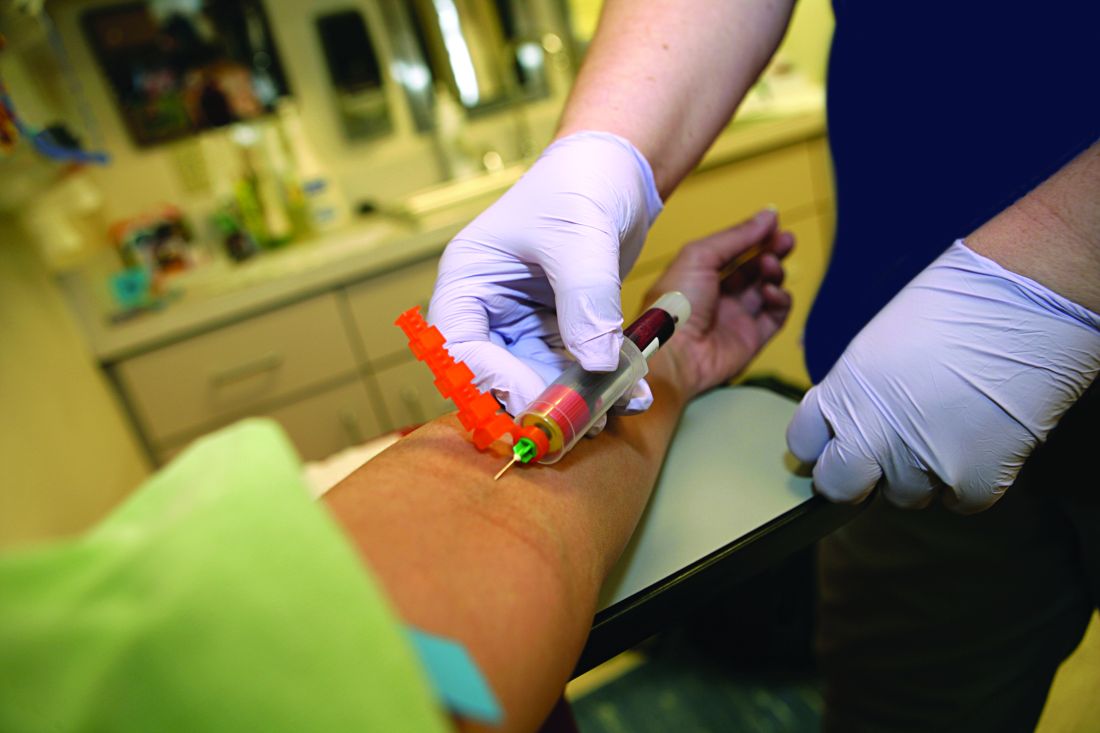
“Unnecessary blood tests waste patients’ time and health care resources, including the time of general practitioners and phlebotomists,” Dr. Abhishek and associates write. “It would be beneficial to predict the risk of clinically significant abnormal blood test results during long-term methotrexate treatment to inform the frequency of testing for individuals.”
Stratifying risk
In the study, published in the BMJ, researchers used the UK’s Clinical Practice Research Datalink (CPRD) to identify the electronic medical records of over 37,000 adult patients with an immune-mediated inflammatory disease who were prescribed MTX during 2007-2019. All included patients were prescribed MTX for at least 6 months. The main outcome was discontinuation of methotrexate because of abnormal blood test results. Around 62% of patients had rheumatoid arthritis and 22% had psoriasis or psoriatic arthritis.

Using these anonymized data, the group developed a risk stratification model using 11 clinical predictors. “The factors that went in the model are simple things that most patients can self-report or doctors can get from their patient’s medical records,” Dr. Abhishek told this news organization, including methotrexate dose, age, sex, and comorbidities. Dr. Abhishek emphasized that the model should be used only in patients who have continued taking MTX for at least 6 months and have already undergone more frequent initial testing.
The strongest individual predictors were diabetes (hazard ratio, 1.25), chronic kidney disease stage 3 (HR, 2.01), and previous cytopenia or raised liver enzyme levels during the first 6 months of MTX therapy (HR, 2.97). However, Dr. Abhishek emphasized that the individual factors were less important, noting that the model sums the risks to predict outcomes more accurately. Most patients (68.4%) were sorted into the low-risk cohort, with a less than 10% estimated risk of discontinuing MTX over the next 5 years. About one-fifth (20.9%) were categorized as moderate risk (10%-20% estimated risk over 5 years), and 10.7% were high risk, with a greater than 20% estimated risk of discontinuing the drug over 5 years.
The authors argue that low-risk patients could receive less frequent testing – perhaps every 6 months or annually, while moderate-risk patients would continue to be tested every 3 months. High-risk patients could potentially be tested with even greater frequently.
More research needed
The research involved “incredibly sophisticated statistical analysis,” said Daniel E. Furst, MD, professor emeritus of medicine at the University of California, Los Angeles, who was not involved with the study. However, the data do not yet support altering blood testing frequency based on this model.

“The hypothesis that not all patients have to be examined so frequently is a very reasonable hypothesis,” Dr. Furst said in an interview, and additional research is needed to corroborate it. The model also needs to be validated in patient populations outside of the United Kingdom, he added.
Dr. Abhishek agreed that validating the model in other patient populations is an important next step. “When we develop a tool [using] a one-nation data set, we want other researchers to then validate it in other countries’ data sets to make sure there is nothing odd about patients in the U.K. that makes the tool work well here but not in [the] U.S., Europe, or Asia, for example,” he said. Doing so should be relatively easy, he said, as the model is publicly available, and the information required is routinely collected during clinic visits.
To understand if less frequent testing might be appropriate for some patients, researchers would need to look at data registries like the Brigham and Women’s Hospital Rheumatoid Arthritis Sequential Study (BRASS) registry or CorEvitas registries “where the testing is done in a very regular way over the long haul,” Dr. Furst said. Analyzing these datasets, researchers could determine the testing intervals that would be most efficient for low- and high-risk patients.
A word of caution
While less frequent testing for long-term MTX therapy could likely have benefits, there is still some risk involved, cautioned Prabha Ranganathan, MD, professor of medicine at Washington University in St. Louis.
“Although most methotrexate toxicity occurs within the first 6 months of starting treatment, rare idiosyncratic toxicity can occur that does not correlate with the dose, duration, or method of how methotrexate is administered,” she wrote in an accompanying editorial. “Most rheumatologists can identify a handful of patients who receive methotrexate in their practice who develop sudden leukopenia or thrombocytopenia or transaminitis that is severe enough to warrant drug discontinuation.” While tools like this prediction model can be useful, clinicians need to consider each patient individually and use shared decision-making when monitoring for MTX toxicity, she advised.
“As in most of areas of medicine, the one-size-fits-all approach does not work for methotrexate users,” she noted.
This study was funded by the U.K. National Institute for Health and Care Research and Health Technology Assessment. Dr. Abhishek has received institutional research grants from AstraZeneca and Oxford Immunotech and personal fees from UpToDate, Springer, Cadila Pharmaceuticals, NGM Bio, Limbic, and Inflazome. Dr. Furst and Dr. Ranganathan report no relevant financial relationships.
A version of this article first appeared on Medscape.com.
A new model can predict which patients are more likely to experience side effects from long-term methotrexate (MTX) use, research suggests. Patients with a lower risk profile may benefit from less frequent testing, the authors hypothesize.
Most recommendations advise that patients initiating MTX therapy should get blood testing every 2-4 weeks to monitor for full blood count, liver function, urea electrolytes, and creatinine. After 6 months taking MTX, monitoring can be tapered to every 3 months. But Abhishek Abhishek, MD, PhD, professor of rheumatology and honorary consultant rheumatologist at Nottingham (England) University Hospitals NHS Trust and colleagues argue that abnormal results after the initial 6 months of treatment are “infrequent,” and patients may benefit from fewer tests throughout the year.
“Unnecessary blood tests waste patients’ time and health care resources, including the time of general practitioners and phlebotomists,” Dr. Abhishek and associates write. “It would be beneficial to predict the risk of clinically significant abnormal blood test results during long-term methotrexate treatment to inform the frequency of testing for individuals.”
Stratifying risk
In the study, published in the BMJ, researchers used the UK’s Clinical Practice Research Datalink (CPRD) to identify the electronic medical records of over 37,000 adult patients with an immune-mediated inflammatory disease who were prescribed MTX during 2007-2019. All included patients were prescribed MTX for at least 6 months. The main outcome was discontinuation of methotrexate because of abnormal blood test results. Around 62% of patients had rheumatoid arthritis and 22% had psoriasis or psoriatic arthritis.
Using these anonymized data, the group developed a risk stratification model using 11 clinical predictors. “The factors that went in the model are simple things that most patients can self-report or doctors can get from their patient’s medical records,” Dr. Abhishek told this news organization, including methotrexate dose, age, sex, and comorbidities. Dr. Abhishek emphasized that the model should be used only in patients who have continued taking MTX for at least 6 months and have already undergone more frequent initial testing.
The strongest individual predictors were diabetes (hazard ratio, 1.25), chronic kidney disease stage 3 (HR, 2.01), and previous cytopenia or raised liver enzyme levels during the first 6 months of MTX therapy (HR, 2.97). However, Dr. Abhishek emphasized that the individual factors were less important, noting that the model sums the risks to predict outcomes more accurately. Most patients (68.4%) were sorted into the low-risk cohort, with a less than 10% estimated risk of discontinuing MTX over the next 5 years. About one-fifth (20.9%) were categorized as moderate risk (10%-20% estimated risk over 5 years), and 10.7% were high risk, with a greater than 20% estimated risk of discontinuing the drug over 5 years.
The authors argue that low-risk patients could receive less frequent testing – perhaps every 6 months or annually, while moderate-risk patients would continue to be tested every 3 months. High-risk patients could potentially be tested with even greater frequently.
More research needed
The research involved “incredibly sophisticated statistical analysis,” said Daniel E. Furst, MD, professor emeritus of medicine at the University of California, Los Angeles, who was not involved with the study. However, the data do not yet support altering blood testing frequency based on this model.
“The hypothesis that not all patients have to be examined so frequently is a very reasonable hypothesis,” Dr. Furst said in an interview, and additional research is needed to corroborate it. The model also needs to be validated in patient populations outside of the United Kingdom, he added.
Dr. Abhishek agreed that validating the model in other patient populations is an important next step. “When we develop a tool [using] a one-nation data set, we want other researchers to then validate it in other countries’ data sets to make sure there is nothing odd about patients in the U.K. that makes the tool work well here but not in [the] U.S., Europe, or Asia, for example,” he said. Doing so should be relatively easy, he said, as the model is publicly available, and the information required is routinely collected during clinic visits.
To understand if less frequent testing might be appropriate for some patients, researchers would need to look at data registries like the Brigham and Women’s Hospital Rheumatoid Arthritis Sequential Study (BRASS) registry or CorEvitas registries “where the testing is done in a very regular way over the long haul,” Dr. Furst said. Analyzing these datasets, researchers could determine the testing intervals that would be most efficient for low- and high-risk patients.
A word of caution
While less frequent testing for long-term MTX therapy could likely have benefits, there is still some risk involved, cautioned Prabha Ranganathan, MD, professor of medicine at Washington University in St. Louis.
“Although most methotrexate toxicity occurs within the first 6 months of starting treatment, rare idiosyncratic toxicity can occur that does not correlate with the dose, duration, or method of how methotrexate is administered,” she wrote in an accompanying editorial. “Most rheumatologists can identify a handful of patients who receive methotrexate in their practice who develop sudden leukopenia or thrombocytopenia or transaminitis that is severe enough to warrant drug discontinuation.” While tools like this prediction model can be useful, clinicians need to consider each patient individually and use shared decision-making when monitoring for MTX toxicity, she advised.
“As in most of areas of medicine, the one-size-fits-all approach does not work for methotrexate users,” she noted.
This study was funded by the U.K. National Institute for Health and Care Research and Health Technology Assessment. Dr. Abhishek has received institutional research grants from AstraZeneca and Oxford Immunotech and personal fees from UpToDate, Springer, Cadila Pharmaceuticals, NGM Bio, Limbic, and Inflazome. Dr. Furst and Dr. Ranganathan report no relevant financial relationships.
A version of this article first appeared on Medscape.com.
A new model can predict which patients are more likely to experience side effects from long-term methotrexate (MTX) use, research suggests. Patients with a lower risk profile may benefit from less frequent testing, the authors hypothesize.
Most recommendations advise that patients initiating MTX therapy should get blood testing every 2-4 weeks to monitor for full blood count, liver function, urea electrolytes, and creatinine. After 6 months taking MTX, monitoring can be tapered to every 3 months. But Abhishek Abhishek, MD, PhD, professor of rheumatology and honorary consultant rheumatologist at Nottingham (England) University Hospitals NHS Trust and colleagues argue that abnormal results after the initial 6 months of treatment are “infrequent,” and patients may benefit from fewer tests throughout the year.
“Unnecessary blood tests waste patients’ time and health care resources, including the time of general practitioners and phlebotomists,” Dr. Abhishek and associates write. “It would be beneficial to predict the risk of clinically significant abnormal blood test results during long-term methotrexate treatment to inform the frequency of testing for individuals.”
Stratifying risk
In the study, published in the BMJ, researchers used the UK’s Clinical Practice Research Datalink (CPRD) to identify the electronic medical records of over 37,000 adult patients with an immune-mediated inflammatory disease who were prescribed MTX during 2007-2019. All included patients were prescribed MTX for at least 6 months. The main outcome was discontinuation of methotrexate because of abnormal blood test results. Around 62% of patients had rheumatoid arthritis and 22% had psoriasis or psoriatic arthritis.
Using these anonymized data, the group developed a risk stratification model using 11 clinical predictors. “The factors that went in the model are simple things that most patients can self-report or doctors can get from their patient’s medical records,” Dr. Abhishek told this news organization, including methotrexate dose, age, sex, and comorbidities. Dr. Abhishek emphasized that the model should be used only in patients who have continued taking MTX for at least 6 months and have already undergone more frequent initial testing.
The strongest individual predictors were diabetes (hazard ratio, 1.25), chronic kidney disease stage 3 (HR, 2.01), and previous cytopenia or raised liver enzyme levels during the first 6 months of MTX therapy (HR, 2.97). However, Dr. Abhishek emphasized that the individual factors were less important, noting that the model sums the risks to predict outcomes more accurately. Most patients (68.4%) were sorted into the low-risk cohort, with a less than 10% estimated risk of discontinuing MTX over the next 5 years. About one-fifth (20.9%) were categorized as moderate risk (10%-20% estimated risk over 5 years), and 10.7% were high risk, with a greater than 20% estimated risk of discontinuing the drug over 5 years.
The authors argue that low-risk patients could receive less frequent testing – perhaps every 6 months or annually, while moderate-risk patients would continue to be tested every 3 months. High-risk patients could potentially be tested with even greater frequently.
More research needed
The research involved “incredibly sophisticated statistical analysis,” said Daniel E. Furst, MD, professor emeritus of medicine at the University of California, Los Angeles, who was not involved with the study. However, the data do not yet support altering blood testing frequency based on this model.
“The hypothesis that not all patients have to be examined so frequently is a very reasonable hypothesis,” Dr. Furst said in an interview, and additional research is needed to corroborate it. The model also needs to be validated in patient populations outside of the United Kingdom, he added.
Dr. Abhishek agreed that validating the model in other patient populations is an important next step. “When we develop a tool [using] a one-nation data set, we want other researchers to then validate it in other countries’ data sets to make sure there is nothing odd about patients in the U.K. that makes the tool work well here but not in [the] U.S., Europe, or Asia, for example,” he said. Doing so should be relatively easy, he said, as the model is publicly available, and the information required is routinely collected during clinic visits.
To understand if less frequent testing might be appropriate for some patients, researchers would need to look at data registries like the Brigham and Women’s Hospital Rheumatoid Arthritis Sequential Study (BRASS) registry or CorEvitas registries “where the testing is done in a very regular way over the long haul,” Dr. Furst said. Analyzing these datasets, researchers could determine the testing intervals that would be most efficient for low- and high-risk patients.
A word of caution
While less frequent testing for long-term MTX therapy could likely have benefits, there is still some risk involved, cautioned Prabha Ranganathan, MD, professor of medicine at Washington University in St. Louis.
“Although most methotrexate toxicity occurs within the first 6 months of starting treatment, rare idiosyncratic toxicity can occur that does not correlate with the dose, duration, or method of how methotrexate is administered,” she wrote in an accompanying editorial. “Most rheumatologists can identify a handful of patients who receive methotrexate in their practice who develop sudden leukopenia or thrombocytopenia or transaminitis that is severe enough to warrant drug discontinuation.” While tools like this prediction model can be useful, clinicians need to consider each patient individually and use shared decision-making when monitoring for MTX toxicity, she advised.
“As in most of areas of medicine, the one-size-fits-all approach does not work for methotrexate users,” she noted.
This study was funded by the U.K. National Institute for Health and Care Research and Health Technology Assessment. Dr. Abhishek has received institutional research grants from AstraZeneca and Oxford Immunotech and personal fees from UpToDate, Springer, Cadila Pharmaceuticals, NGM Bio, Limbic, and Inflazome. Dr. Furst and Dr. Ranganathan report no relevant financial relationships.
A version of this article first appeared on Medscape.com.
FROM THE BMJ
Concussion may not affect IQ in children
data suggest.
In a multicenter study of almost 900 children with concussion or orthopedic injury, differences between groups in full-scale IQ (Cohen’s d = 0.13) and matrix reasoning scores (d = 0.16) were small.
“We draw the inference that IQ scores are unchanged, in the sense that they’re not different from [those of] kids with other types of injuries that don’t involve the brain,” said study author Keith Owen Yeates, PhD, Ronald and Irene Ward Chair in Pediatric Brain Injury and a professor of psychology at the University of Calgary (Alta.).
The study was published in Pediatrics.
A representative sample
The investigators analyzed data from two prospective cohort studies of children who were treated for concussion or mild orthopedic injury at two hospitals in the United States and five in Canada. Participants were aged 8-17 years and were recruited within 24 hours of the index event. Patients in the United States completed IQ and performance validity testing at 3-18 days after injury. Patients in Canada did so at 3 months after injury. The study used the short-form IQ test. The investigators included 866 children in their analysis.
Using linear modeling, Bayesian analysis, and multigroup factor analysis, the researchers found “very small group differences” in full-scale IQ scores between the two groups. Mean IQ was 104.95 for the concussion group and 106.08 for the orthopedic-injury group. Matrix reasoning scores were 52.28 and 53.81 for the concussion and orthopedic-injury groups, respectively.
Vocabulary scores did not differ between the two groups (53.25 for the concussion group and 53.27 for the orthopedic-injury group).
The study population is “pretty representative” from a demographic perspective, although it was predominantly White, said Dr. Yeates. “On the other hand, we did look at socioeconomic status, and that didn’t seem to alter the findings at all.”
The sample size is one of the study’s strengths, said Dr. Yeates. “Having 866 kids is far larger, I think, than just about any other study out there.” Drawing from seven children’s hospitals in North America is another strength. “Previous studies, in addition to having smaller samples, were from a single site and often recruited from a clinic population, not a representative group for a general population of kids with concussion.”
The findings must be interpreted precisely, however. “We don’t have actual preinjury data, so the more precise way of describing the findings is to say they’re not different from kids who are very similar to them demographically, have the same risk factors for injuries, and had a similar experience of a traumatic injury,” said Dr. Yeates. “The IQ scores for both groups are smack dab in the average range.”
Overall, the results are encouraging. “There’s been a lot of bad news in the media and in the science about concussion that worries patients, so it’s nice to be able to provide a little bit of balance,” said Dr. Yeates. “The message I give parents is that most kids recover within 2-4 weeks, and we’re much better now at predicting who’s going to [recover] and who isn’t, and that helps, too, so that we can focus our intervention on kids who are most at risk.”
Some children will have persisting symptoms, but evidence-based treatments are lacking. “I think that’ll be a really important direction for the future,” said Dr. Yeates.
Graduated return
Commenting on the findings, Michael Esser, MD, a pediatric neurologist at Alberta Children’s Hospital, Calgary, and an associate professor in pediatrics at the University of Calgary, said that they can help allay parents’ concerns about concussions. “It can also be of help for clinicians who want to have evidence to reassure families and promote a graduated return to activities. In particular, the study would support the philosophy of a graduated return to school or work, after a brief period of rest, following concussion.” Dr. Esser did not participate in the study.
The research is also noteworthy because it acknowledges that the differences in the design and methodology used in prior studies may explain the apparent disagreement over how concussion may influence cognitive function.
“This is an important message,” said Dr. Esser. “Families struggle with determining the merit of a lot of information due to the myriad of social media comments about concussion and the risk for cognitive impairment. Therefore, it is important that conclusions with a significant implication are evaluated with a variety of approaches.”
The study received funding from the National Institutes of Health and the Canadian Institutes for Health Research. Dr. Yeates disclosed relationships with the American Psychological Association, Guilford Press, and Cambridge University Press. He has received grant funding from the Canadian Institutes of Health Research, the National Institutes of Health, Brain Canada Foundation, and the National Football League Scientific Advisory Board. He also has relationships with the National Institute for Child Health and Human Development, National Institute of Neurologic Disorders and Stroke, National Pediatric Rehabilitation Resource Center, Center for Pediatric Rehabilitation, and Virginia Tech University. Dr. Esser had no relevant relationships to disclose.
A version of this article appeared on Medscape.com.
data suggest.
In a multicenter study of almost 900 children with concussion or orthopedic injury, differences between groups in full-scale IQ (Cohen’s d = 0.13) and matrix reasoning scores (d = 0.16) were small.
“We draw the inference that IQ scores are unchanged, in the sense that they’re not different from [those of] kids with other types of injuries that don’t involve the brain,” said study author Keith Owen Yeates, PhD, Ronald and Irene Ward Chair in Pediatric Brain Injury and a professor of psychology at the University of Calgary (Alta.).
The study was published in Pediatrics.
A representative sample
The investigators analyzed data from two prospective cohort studies of children who were treated for concussion or mild orthopedic injury at two hospitals in the United States and five in Canada. Participants were aged 8-17 years and were recruited within 24 hours of the index event. Patients in the United States completed IQ and performance validity testing at 3-18 days after injury. Patients in Canada did so at 3 months after injury. The study used the short-form IQ test. The investigators included 866 children in their analysis.
Using linear modeling, Bayesian analysis, and multigroup factor analysis, the researchers found “very small group differences” in full-scale IQ scores between the two groups. Mean IQ was 104.95 for the concussion group and 106.08 for the orthopedic-injury group. Matrix reasoning scores were 52.28 and 53.81 for the concussion and orthopedic-injury groups, respectively.
Vocabulary scores did not differ between the two groups (53.25 for the concussion group and 53.27 for the orthopedic-injury group).
The study population is “pretty representative” from a demographic perspective, although it was predominantly White, said Dr. Yeates. “On the other hand, we did look at socioeconomic status, and that didn’t seem to alter the findings at all.”
The sample size is one of the study’s strengths, said Dr. Yeates. “Having 866 kids is far larger, I think, than just about any other study out there.” Drawing from seven children’s hospitals in North America is another strength. “Previous studies, in addition to having smaller samples, were from a single site and often recruited from a clinic population, not a representative group for a general population of kids with concussion.”
The findings must be interpreted precisely, however. “We don’t have actual preinjury data, so the more precise way of describing the findings is to say they’re not different from kids who are very similar to them demographically, have the same risk factors for injuries, and had a similar experience of a traumatic injury,” said Dr. Yeates. “The IQ scores for both groups are smack dab in the average range.”
Overall, the results are encouraging. “There’s been a lot of bad news in the media and in the science about concussion that worries patients, so it’s nice to be able to provide a little bit of balance,” said Dr. Yeates. “The message I give parents is that most kids recover within 2-4 weeks, and we’re much better now at predicting who’s going to [recover] and who isn’t, and that helps, too, so that we can focus our intervention on kids who are most at risk.”
Some children will have persisting symptoms, but evidence-based treatments are lacking. “I think that’ll be a really important direction for the future,” said Dr. Yeates.
Graduated return
Commenting on the findings, Michael Esser, MD, a pediatric neurologist at Alberta Children’s Hospital, Calgary, and an associate professor in pediatrics at the University of Calgary, said that they can help allay parents’ concerns about concussions. “It can also be of help for clinicians who want to have evidence to reassure families and promote a graduated return to activities. In particular, the study would support the philosophy of a graduated return to school or work, after a brief period of rest, following concussion.” Dr. Esser did not participate in the study.
The research is also noteworthy because it acknowledges that the differences in the design and methodology used in prior studies may explain the apparent disagreement over how concussion may influence cognitive function.
“This is an important message,” said Dr. Esser. “Families struggle with determining the merit of a lot of information due to the myriad of social media comments about concussion and the risk for cognitive impairment. Therefore, it is important that conclusions with a significant implication are evaluated with a variety of approaches.”
The study received funding from the National Institutes of Health and the Canadian Institutes for Health Research. Dr. Yeates disclosed relationships with the American Psychological Association, Guilford Press, and Cambridge University Press. He has received grant funding from the Canadian Institutes of Health Research, the National Institutes of Health, Brain Canada Foundation, and the National Football League Scientific Advisory Board. He also has relationships with the National Institute for Child Health and Human Development, National Institute of Neurologic Disorders and Stroke, National Pediatric Rehabilitation Resource Center, Center for Pediatric Rehabilitation, and Virginia Tech University. Dr. Esser had no relevant relationships to disclose.
A version of this article appeared on Medscape.com.
data suggest.
In a multicenter study of almost 900 children with concussion or orthopedic injury, differences between groups in full-scale IQ (Cohen’s d = 0.13) and matrix reasoning scores (d = 0.16) were small.
“We draw the inference that IQ scores are unchanged, in the sense that they’re not different from [those of] kids with other types of injuries that don’t involve the brain,” said study author Keith Owen Yeates, PhD, Ronald and Irene Ward Chair in Pediatric Brain Injury and a professor of psychology at the University of Calgary (Alta.).
The study was published in Pediatrics.
A representative sample
The investigators analyzed data from two prospective cohort studies of children who were treated for concussion or mild orthopedic injury at two hospitals in the United States and five in Canada. Participants were aged 8-17 years and were recruited within 24 hours of the index event. Patients in the United States completed IQ and performance validity testing at 3-18 days after injury. Patients in Canada did so at 3 months after injury. The study used the short-form IQ test. The investigators included 866 children in their analysis.
Using linear modeling, Bayesian analysis, and multigroup factor analysis, the researchers found “very small group differences” in full-scale IQ scores between the two groups. Mean IQ was 104.95 for the concussion group and 106.08 for the orthopedic-injury group. Matrix reasoning scores were 52.28 and 53.81 for the concussion and orthopedic-injury groups, respectively.
Vocabulary scores did not differ between the two groups (53.25 for the concussion group and 53.27 for the orthopedic-injury group).
The study population is “pretty representative” from a demographic perspective, although it was predominantly White, said Dr. Yeates. “On the other hand, we did look at socioeconomic status, and that didn’t seem to alter the findings at all.”
The sample size is one of the study’s strengths, said Dr. Yeates. “Having 866 kids is far larger, I think, than just about any other study out there.” Drawing from seven children’s hospitals in North America is another strength. “Previous studies, in addition to having smaller samples, were from a single site and often recruited from a clinic population, not a representative group for a general population of kids with concussion.”
The findings must be interpreted precisely, however. “We don’t have actual preinjury data, so the more precise way of describing the findings is to say they’re not different from kids who are very similar to them demographically, have the same risk factors for injuries, and had a similar experience of a traumatic injury,” said Dr. Yeates. “The IQ scores for both groups are smack dab in the average range.”
Overall, the results are encouraging. “There’s been a lot of bad news in the media and in the science about concussion that worries patients, so it’s nice to be able to provide a little bit of balance,” said Dr. Yeates. “The message I give parents is that most kids recover within 2-4 weeks, and we’re much better now at predicting who’s going to [recover] and who isn’t, and that helps, too, so that we can focus our intervention on kids who are most at risk.”
Some children will have persisting symptoms, but evidence-based treatments are lacking. “I think that’ll be a really important direction for the future,” said Dr. Yeates.
Graduated return
Commenting on the findings, Michael Esser, MD, a pediatric neurologist at Alberta Children’s Hospital, Calgary, and an associate professor in pediatrics at the University of Calgary, said that they can help allay parents’ concerns about concussions. “It can also be of help for clinicians who want to have evidence to reassure families and promote a graduated return to activities. In particular, the study would support the philosophy of a graduated return to school or work, after a brief period of rest, following concussion.” Dr. Esser did not participate in the study.
The research is also noteworthy because it acknowledges that the differences in the design and methodology used in prior studies may explain the apparent disagreement over how concussion may influence cognitive function.
“This is an important message,” said Dr. Esser. “Families struggle with determining the merit of a lot of information due to the myriad of social media comments about concussion and the risk for cognitive impairment. Therefore, it is important that conclusions with a significant implication are evaluated with a variety of approaches.”
The study received funding from the National Institutes of Health and the Canadian Institutes for Health Research. Dr. Yeates disclosed relationships with the American Psychological Association, Guilford Press, and Cambridge University Press. He has received grant funding from the Canadian Institutes of Health Research, the National Institutes of Health, Brain Canada Foundation, and the National Football League Scientific Advisory Board. He also has relationships with the National Institute for Child Health and Human Development, National Institute of Neurologic Disorders and Stroke, National Pediatric Rehabilitation Resource Center, Center for Pediatric Rehabilitation, and Virginia Tech University. Dr. Esser had no relevant relationships to disclose.
A version of this article appeared on Medscape.com.
FROM PEDIATRICS
Why genetic testing may be our best shot at progress in Parkinson’s disease
In 2017, Sanofi Genzyme launched a phase 2 clinical trial of a drug designed to target a specific genetic mutation in some patients with Parkinson’s disease. Researchers hoped the drug would slow or even stop disease progression.
Like many before it, the trial yielded disappointing results and the company shut it down in 2021. It was the latest in a string of unsuccessful clinical trials testing disease-modifying Parkinson’s disease drugs.
Although it failed, the Sanofi Genzyme study was different: It was the first to enroll patients with Parkinson’s disease who had a specific genotype and marked the earliest days of precision medicine and gene-specific drug development for the disease.
Once thought to play only a small role in a small number of patients with Parkinson’s disease,
“We’re about to enter this era of precision medicine for Parkinson’s disease, which makes genetic testing important,” said James Beck, PhD, senior vice president and chief scientific officer for the Parkinson’s Foundation.
“A number of companies have clinical trials or are in preparation for clinical trials to test some specific therapies that would depend upon people having a specific genetic mutation,” he said.
Today, at least four clinical trials of drugs that target specific Parkinson’s disease-related gene variants on LRRK2 and GBA are under way, and more are in the pipeline. Whether these drugs will be effective at modifying the course of the disease remains to be seen. First, the trials must enroll enough patients. And therein lies the challenge: Genetic testing isn’t part of routine Parkinson’s disease care and isn’t covered by most insurance policies. Most patients don’t know their genotype.
It’s a significant roadblock to the future of a precision medicine approach that is based on a patient’s individual genotype, which some experts argue offers the best shot at slowing disease progression.
“To enroll in clinical trials for precision drugs people with Parkinson’s disease have to be aware of their genetic status,” said Roy N. Alcalay, MD, chief of the movement disorders division at Tel Aviv Medical Center in Israel and part-time associate professor at Columbia University in New York. “How can a person with Parkinson’s and a LRRK2 mutation join a precision medicine trial for LRRK2 if she does not know she is a LRRK2 carrier?”
Free genetic testing
Previous studies have shown that some genetic variants increase the risk for Parkinson’s disease after exposure to environmental factors such as pesticides. Research has also shown that a patient’s genotype can predict survival time and that certain medications may prove more effective at slowing disease progression in patients with specific genotypes. All of this points to a significant role for genetics in a disorder that is rapidly increasing.
This makes expanding patient access to genetic testing even more important, Dr. Alcalay said, noting that it’s equally important that patients are informed of their genotype, something that doesn’t usually happen in blinded clinical trials.
To that end, Dr. Alcalay hopes a national genetics study he is leading will address access and need-to-know issues. PD GENEration, a project launched in 2019 by the Parkinson’s Foundation, offers patients free genetic testing for seven clinically relevant Parkinson’s disease-related genes.
Testing is done at home or in a nearby clinic and the results are shared with patients during a free genetic counseling session and with site investigators. Patient samples are stored in a genetic data bank that is open to researchers around the world.
“We surveyed clinical trialists in the Parkinson’s disease field prior to initiation of PD GENEration and estimated that over 90% of people with Parkinson’s disease prior to the effort were not aware of their genetic status,” Dr. Alcalay said.
“I think precision medicine in Parkinson’s disease will not happen without PD GENEration or similar efforts.”
‘Overwhelming’ patient interest
Participants in the study are screened for variants in seven genes known to be involved in Parkinson’s disease risk: GBA, LRRK2, PRKN, PINK1, SNCA, PARK7, and VPS35.
In less than 3 years, the study has already produced what is thought to be the largest genetic data bank of sequenced sets of Parkinson’s disease-risk genes made accessible to patients. Since the end of 2020, the first year of patient enrollment, the number of participants has increased from 676 to 10,515 and the number of participating clinical sites rose from 12 to 101.
The foundation has spent nearly $20 million on the project so far and plans to spend another $10 million to reach a goal of 15,000 patients. The study, which is funded by private donors, is so successful that the foundation has had to scale back enrollment.
“When we were at a peak, we had over 700 participants enrolling each month,” Dr. Beck said. Beginning in April, the program capped new sign-ups to 200 patients per month and created a waiting list for future enrollment. The waiting list is hundreds of patients long.
“The participants’ response to enroll in PD GENEration demonstrates there is an overwhelming interest by people with Parkinson’s disease to learn more about their genetic risk factors,” Dr. Alcalay said.
A research driver
Nearly 60% of participants enrolled so far are male and close to 80% are White. The average age is 69 years and 44% were diagnosed in the past 5 years. Close to 75% had never participated in a clinical trial.
Nearly 13% have tested positive for mutations on at least one of the seven target genes. Previous studies had suggested genetics were involved in only about 10% of cases.
The majority of those with positive results had early-onset Parkinson’s disease, high-risk ancestry, or a first-degree relative with the disease. However, 9% of people who tested positive weren’t in any of those categories.
Genetic information collected by the project is shared with the Global Parkinson’s Genetics Program (GP2), a resource program of the Aligning Science Across Parkinson’s initiative that is focused on the disease’s genetic architecture. Researchers around the world have access to GP2 data to study known gene variants and identify new ones.
PD GENEration participants can choose to be notified if they are carriers of gene variants discovered in the future.
“All DNA samples shared by participants are undergoing research-grade testing,” Dr. Beck said. “Not only do we want to be able to inform people with Parkinson’s disease about their genetic status, but we also want to be able to use this precious resource to further drive research into the genetics of Parkinson’s disease.”
Early success
Patient recruitment has long been one of the biggest challenges to any clinical trial’s success. Research suggests that 90% of all clinical trials fail to reach recruitment milestones in their allotted time frame and two-thirds of multicenter trials fold because too few patients sign up. Data from the Parkinson’s Foundation show that only about 1% of all patients with Parkinson’s disease participate in clinical trials.
Increasing those numbers is the primary goal of PD GENEration, Dr. Beck said. And there’s evidence it’s already paying off.
Earlier this year, one of the program’s participating clinical sites, Intermountain Health, in Salt Lake City, Utah, joined a phase 2 clinical trial of an experimental drug that targets a mutation on the GBA1 gene.
“One of the reasons we were able to participate was when we got the call about joining, we were able to say that we had patients with that specific gene mutation, and we could only say that because the patients had been genotyped through PD GENEration,” said Kathleen E. McKee, MD, director of movement disorders, associate medical director of neurosciences research, and PD GENEration principal investigator at Intermountain Health.
Since 2021, Dr. McKee has enrolled hundreds of patients in the foundation’s gene study and hopes to enroll even more. Few patients turn down the opportunity to participate, she added. Knowing their genotype has proven empowering for her patients, most of whom could not afford genetic testing on their own.
“Previously I would tell patients this is not going to change your immediate management,” Dr. McKee said. “Now I tell my patients that these trials are out there, it may actually change how I treat you and what I recommend.”
A version of this article appeared on Medscape.com.
In 2017, Sanofi Genzyme launched a phase 2 clinical trial of a drug designed to target a specific genetic mutation in some patients with Parkinson’s disease. Researchers hoped the drug would slow or even stop disease progression.
Like many before it, the trial yielded disappointing results and the company shut it down in 2021. It was the latest in a string of unsuccessful clinical trials testing disease-modifying Parkinson’s disease drugs.
Although it failed, the Sanofi Genzyme study was different: It was the first to enroll patients with Parkinson’s disease who had a specific genotype and marked the earliest days of precision medicine and gene-specific drug development for the disease.
Once thought to play only a small role in a small number of patients with Parkinson’s disease,
“We’re about to enter this era of precision medicine for Parkinson’s disease, which makes genetic testing important,” said James Beck, PhD, senior vice president and chief scientific officer for the Parkinson’s Foundation.
“A number of companies have clinical trials or are in preparation for clinical trials to test some specific therapies that would depend upon people having a specific genetic mutation,” he said.
Today, at least four clinical trials of drugs that target specific Parkinson’s disease-related gene variants on LRRK2 and GBA are under way, and more are in the pipeline. Whether these drugs will be effective at modifying the course of the disease remains to be seen. First, the trials must enroll enough patients. And therein lies the challenge: Genetic testing isn’t part of routine Parkinson’s disease care and isn’t covered by most insurance policies. Most patients don’t know their genotype.
It’s a significant roadblock to the future of a precision medicine approach that is based on a patient’s individual genotype, which some experts argue offers the best shot at slowing disease progression.
“To enroll in clinical trials for precision drugs people with Parkinson’s disease have to be aware of their genetic status,” said Roy N. Alcalay, MD, chief of the movement disorders division at Tel Aviv Medical Center in Israel and part-time associate professor at Columbia University in New York. “How can a person with Parkinson’s and a LRRK2 mutation join a precision medicine trial for LRRK2 if she does not know she is a LRRK2 carrier?”
Free genetic testing
Previous studies have shown that some genetic variants increase the risk for Parkinson’s disease after exposure to environmental factors such as pesticides. Research has also shown that a patient’s genotype can predict survival time and that certain medications may prove more effective at slowing disease progression in patients with specific genotypes. All of this points to a significant role for genetics in a disorder that is rapidly increasing.
This makes expanding patient access to genetic testing even more important, Dr. Alcalay said, noting that it’s equally important that patients are informed of their genotype, something that doesn’t usually happen in blinded clinical trials.
To that end, Dr. Alcalay hopes a national genetics study he is leading will address access and need-to-know issues. PD GENEration, a project launched in 2019 by the Parkinson’s Foundation, offers patients free genetic testing for seven clinically relevant Parkinson’s disease-related genes.
Testing is done at home or in a nearby clinic and the results are shared with patients during a free genetic counseling session and with site investigators. Patient samples are stored in a genetic data bank that is open to researchers around the world.
“We surveyed clinical trialists in the Parkinson’s disease field prior to initiation of PD GENEration and estimated that over 90% of people with Parkinson’s disease prior to the effort were not aware of their genetic status,” Dr. Alcalay said.
“I think precision medicine in Parkinson’s disease will not happen without PD GENEration or similar efforts.”
‘Overwhelming’ patient interest
Participants in the study are screened for variants in seven genes known to be involved in Parkinson’s disease risk: GBA, LRRK2, PRKN, PINK1, SNCA, PARK7, and VPS35.
In less than 3 years, the study has already produced what is thought to be the largest genetic data bank of sequenced sets of Parkinson’s disease-risk genes made accessible to patients. Since the end of 2020, the first year of patient enrollment, the number of participants has increased from 676 to 10,515 and the number of participating clinical sites rose from 12 to 101.
The foundation has spent nearly $20 million on the project so far and plans to spend another $10 million to reach a goal of 15,000 patients. The study, which is funded by private donors, is so successful that the foundation has had to scale back enrollment.
“When we were at a peak, we had over 700 participants enrolling each month,” Dr. Beck said. Beginning in April, the program capped new sign-ups to 200 patients per month and created a waiting list for future enrollment. The waiting list is hundreds of patients long.
“The participants’ response to enroll in PD GENEration demonstrates there is an overwhelming interest by people with Parkinson’s disease to learn more about their genetic risk factors,” Dr. Alcalay said.
A research driver
Nearly 60% of participants enrolled so far are male and close to 80% are White. The average age is 69 years and 44% were diagnosed in the past 5 years. Close to 75% had never participated in a clinical trial.
Nearly 13% have tested positive for mutations on at least one of the seven target genes. Previous studies had suggested genetics were involved in only about 10% of cases.
The majority of those with positive results had early-onset Parkinson’s disease, high-risk ancestry, or a first-degree relative with the disease. However, 9% of people who tested positive weren’t in any of those categories.
Genetic information collected by the project is shared with the Global Parkinson’s Genetics Program (GP2), a resource program of the Aligning Science Across Parkinson’s initiative that is focused on the disease’s genetic architecture. Researchers around the world have access to GP2 data to study known gene variants and identify new ones.
PD GENEration participants can choose to be notified if they are carriers of gene variants discovered in the future.
“All DNA samples shared by participants are undergoing research-grade testing,” Dr. Beck said. “Not only do we want to be able to inform people with Parkinson’s disease about their genetic status, but we also want to be able to use this precious resource to further drive research into the genetics of Parkinson’s disease.”
Early success
Patient recruitment has long been one of the biggest challenges to any clinical trial’s success. Research suggests that 90% of all clinical trials fail to reach recruitment milestones in their allotted time frame and two-thirds of multicenter trials fold because too few patients sign up. Data from the Parkinson’s Foundation show that only about 1% of all patients with Parkinson’s disease participate in clinical trials.
Increasing those numbers is the primary goal of PD GENEration, Dr. Beck said. And there’s evidence it’s already paying off.
Earlier this year, one of the program’s participating clinical sites, Intermountain Health, in Salt Lake City, Utah, joined a phase 2 clinical trial of an experimental drug that targets a mutation on the GBA1 gene.
“One of the reasons we were able to participate was when we got the call about joining, we were able to say that we had patients with that specific gene mutation, and we could only say that because the patients had been genotyped through PD GENEration,” said Kathleen E. McKee, MD, director of movement disorders, associate medical director of neurosciences research, and PD GENEration principal investigator at Intermountain Health.
Since 2021, Dr. McKee has enrolled hundreds of patients in the foundation’s gene study and hopes to enroll even more. Few patients turn down the opportunity to participate, she added. Knowing their genotype has proven empowering for her patients, most of whom could not afford genetic testing on their own.
“Previously I would tell patients this is not going to change your immediate management,” Dr. McKee said. “Now I tell my patients that these trials are out there, it may actually change how I treat you and what I recommend.”
A version of this article appeared on Medscape.com.
In 2017, Sanofi Genzyme launched a phase 2 clinical trial of a drug designed to target a specific genetic mutation in some patients with Parkinson’s disease. Researchers hoped the drug would slow or even stop disease progression.
Like many before it, the trial yielded disappointing results and the company shut it down in 2021. It was the latest in a string of unsuccessful clinical trials testing disease-modifying Parkinson’s disease drugs.
Although it failed, the Sanofi Genzyme study was different: It was the first to enroll patients with Parkinson’s disease who had a specific genotype and marked the earliest days of precision medicine and gene-specific drug development for the disease.
Once thought to play only a small role in a small number of patients with Parkinson’s disease,
“We’re about to enter this era of precision medicine for Parkinson’s disease, which makes genetic testing important,” said James Beck, PhD, senior vice president and chief scientific officer for the Parkinson’s Foundation.
“A number of companies have clinical trials or are in preparation for clinical trials to test some specific therapies that would depend upon people having a specific genetic mutation,” he said.
Today, at least four clinical trials of drugs that target specific Parkinson’s disease-related gene variants on LRRK2 and GBA are under way, and more are in the pipeline. Whether these drugs will be effective at modifying the course of the disease remains to be seen. First, the trials must enroll enough patients. And therein lies the challenge: Genetic testing isn’t part of routine Parkinson’s disease care and isn’t covered by most insurance policies. Most patients don’t know their genotype.
It’s a significant roadblock to the future of a precision medicine approach that is based on a patient’s individual genotype, which some experts argue offers the best shot at slowing disease progression.
“To enroll in clinical trials for precision drugs people with Parkinson’s disease have to be aware of their genetic status,” said Roy N. Alcalay, MD, chief of the movement disorders division at Tel Aviv Medical Center in Israel and part-time associate professor at Columbia University in New York. “How can a person with Parkinson’s and a LRRK2 mutation join a precision medicine trial for LRRK2 if she does not know she is a LRRK2 carrier?”
Free genetic testing
Previous studies have shown that some genetic variants increase the risk for Parkinson’s disease after exposure to environmental factors such as pesticides. Research has also shown that a patient’s genotype can predict survival time and that certain medications may prove more effective at slowing disease progression in patients with specific genotypes. All of this points to a significant role for genetics in a disorder that is rapidly increasing.
This makes expanding patient access to genetic testing even more important, Dr. Alcalay said, noting that it’s equally important that patients are informed of their genotype, something that doesn’t usually happen in blinded clinical trials.
To that end, Dr. Alcalay hopes a national genetics study he is leading will address access and need-to-know issues. PD GENEration, a project launched in 2019 by the Parkinson’s Foundation, offers patients free genetic testing for seven clinically relevant Parkinson’s disease-related genes.
Testing is done at home or in a nearby clinic and the results are shared with patients during a free genetic counseling session and with site investigators. Patient samples are stored in a genetic data bank that is open to researchers around the world.
“We surveyed clinical trialists in the Parkinson’s disease field prior to initiation of PD GENEration and estimated that over 90% of people with Parkinson’s disease prior to the effort were not aware of their genetic status,” Dr. Alcalay said.
“I think precision medicine in Parkinson’s disease will not happen without PD GENEration or similar efforts.”
‘Overwhelming’ patient interest
Participants in the study are screened for variants in seven genes known to be involved in Parkinson’s disease risk: GBA, LRRK2, PRKN, PINK1, SNCA, PARK7, and VPS35.
In less than 3 years, the study has already produced what is thought to be the largest genetic data bank of sequenced sets of Parkinson’s disease-risk genes made accessible to patients. Since the end of 2020, the first year of patient enrollment, the number of participants has increased from 676 to 10,515 and the number of participating clinical sites rose from 12 to 101.
The foundation has spent nearly $20 million on the project so far and plans to spend another $10 million to reach a goal of 15,000 patients. The study, which is funded by private donors, is so successful that the foundation has had to scale back enrollment.
“When we were at a peak, we had over 700 participants enrolling each month,” Dr. Beck said. Beginning in April, the program capped new sign-ups to 200 patients per month and created a waiting list for future enrollment. The waiting list is hundreds of patients long.
“The participants’ response to enroll in PD GENEration demonstrates there is an overwhelming interest by people with Parkinson’s disease to learn more about their genetic risk factors,” Dr. Alcalay said.
A research driver
Nearly 60% of participants enrolled so far are male and close to 80% are White. The average age is 69 years and 44% were diagnosed in the past 5 years. Close to 75% had never participated in a clinical trial.
Nearly 13% have tested positive for mutations on at least one of the seven target genes. Previous studies had suggested genetics were involved in only about 10% of cases.
The majority of those with positive results had early-onset Parkinson’s disease, high-risk ancestry, or a first-degree relative with the disease. However, 9% of people who tested positive weren’t in any of those categories.
Genetic information collected by the project is shared with the Global Parkinson’s Genetics Program (GP2), a resource program of the Aligning Science Across Parkinson’s initiative that is focused on the disease’s genetic architecture. Researchers around the world have access to GP2 data to study known gene variants and identify new ones.
PD GENEration participants can choose to be notified if they are carriers of gene variants discovered in the future.
“All DNA samples shared by participants are undergoing research-grade testing,” Dr. Beck said. “Not only do we want to be able to inform people with Parkinson’s disease about their genetic status, but we also want to be able to use this precious resource to further drive research into the genetics of Parkinson’s disease.”
Early success
Patient recruitment has long been one of the biggest challenges to any clinical trial’s success. Research suggests that 90% of all clinical trials fail to reach recruitment milestones in their allotted time frame and two-thirds of multicenter trials fold because too few patients sign up. Data from the Parkinson’s Foundation show that only about 1% of all patients with Parkinson’s disease participate in clinical trials.
Increasing those numbers is the primary goal of PD GENEration, Dr. Beck said. And there’s evidence it’s already paying off.
Earlier this year, one of the program’s participating clinical sites, Intermountain Health, in Salt Lake City, Utah, joined a phase 2 clinical trial of an experimental drug that targets a mutation on the GBA1 gene.
“One of the reasons we were able to participate was when we got the call about joining, we were able to say that we had patients with that specific gene mutation, and we could only say that because the patients had been genotyped through PD GENEration,” said Kathleen E. McKee, MD, director of movement disorders, associate medical director of neurosciences research, and PD GENEration principal investigator at Intermountain Health.
Since 2021, Dr. McKee has enrolled hundreds of patients in the foundation’s gene study and hopes to enroll even more. Few patients turn down the opportunity to participate, she added. Knowing their genotype has proven empowering for her patients, most of whom could not afford genetic testing on their own.
“Previously I would tell patients this is not going to change your immediate management,” Dr. McKee said. “Now I tell my patients that these trials are out there, it may actually change how I treat you and what I recommend.”
A version of this article appeared on Medscape.com.