User login
Ghost Fat: The Unseen Consequences of Weight Loss
Many people who lose weight, whether through diet and lifestyle changes, medication, or bariatric surgery, recognize their body has changed. While they also experience improvements in quality of life and psychosocial areas, that’s not true for everyone. Some patients don’t “see” they’ve lost weight — a phenomenon referred to as “phantom fat,” “ghost fat,” or “vestigial body image.”
“Most people are happy with their appearance, or at least their body shape, after weight loss — although some are unhappy with the loose, sagging skin that can follow weight loss and seek plastic surgery to remedy that,” David B. Sarwer, PhD, director of the Center for Obesity Research and Education and professor of social and behavioral sciences, Temple University College of Public Health, Philadelphia, told this news organization. “There’s a subset of people who remain dissatisfied with their body image, including their shape.”
This body dissatisfaction of people who lose weight may be long-standing, predating the weight loss, or may be new because weight loss has catalyzed a host of previously unaddressed psychosocial issues. Some may show up at assessments on treatment onset, while others may be detected by monitoring changes during or after weight loss. “Mental health counseling after bariatric surgery is greatly underutilized,” Dr. Sarwer observed.
Ghost Fat
Research has corroborated the lingering self-perception of being “obese” vs “ex-obese.” In one study, patients who had undergone bariatric surgery reported being unable to see the difference in their size and shape 18-30 months following their procedure, despite substantial weight loss.
Some research suggests that rapid weight loss (eg, through bariatric surgery) is more likely to generate the perception of “phantom fat,” but additional research is needed to investigate whether the mode and speed of weight loss affect subsequent body image.
Being habituated to one’s former appearance may play a role, Dr. Sarwer suggested. “We see this not only with weight loss but with other body-altering procedures. It takes the brain time to catch up to the new appearance. In rhinoplasty, for example, it may take patients a while before they become accustomed to looking at their new face in the mirror after decades of looking at a more prominent nose.”
Years of Social Stigma
It may also take time for people to overcome years of enduring the stigma of obesity.
There are “pervasive” negative attitudes implying that individuals who are overweight and/or obese are “lazy, weak-willed, lacking in self-discipline and willpower” — a problem compounded by social media and media in general, which present unrealistic, glorified body images and disparaging messages about those with weight problems.
“Body image is a construct, rather than what you see in the mirror,” Sheethal Reddy, PhD, a psychologist at the Emory Bariatric Center, Emory University Hospital Midtown, Atlanta, told this news organization. “It’s the mental construct of our physical selves.”
According to Dr. Reddy, body image develops “within a broader societal context and is influenced by the person’s ethnic, racial, and cultural heritage.”
Adolescents are particularly vulnerable to body dissatisfaction. This is compounded in those with obesity, who often experience weight-based victimization and internalized weight-based stigma, compared with adolescents with lower weights. Weight stigma often takes the form of teasing and bullying.
“Appearance-related bullying and teasing during childhood and adolescence can reverberate into adulthood and persist throughout the lifespan,” Dr. Sarwer said. “When we see these patients and ask if they’ve ever been teased or bullied, not only do many say yes but it takes them back to those moments, to that origin story, and they remember someone saying something mean, cruel, and hurtful.”
Stigmatizing experiences can affect subjective body image, even after the weight has been lost and the person’s body is objectively thinner. Research comparing individuals who were overweight and lost weight to individuals who are currently overweight and haven’t lost weight and individuals who were never overweight suggests that “vestigial” body disparagement may persist following weight loss — especially in those with early-onset obesity.
The Role of Genetics
Genetics may contribute to people’s self-perception and body dissatisfaction, both before and after weight loss. A study of 827 community-based adolescents examined the association between polygenic risk scores (PRS) for body mass index (BMI) and type 2 diabetes and symptoms of body dissatisfaction and depression.
“Given the significant genetic role in BMI, we wanted to explore whether genetic risk for BMI might also predict body dissatisfaction,” lead author Krista Ekberg, MS, a doctoral candidate in clinical psychology, Rosalind Franklin University of Medicine and Science, North Chicago, Illinois, told this news organization.
Genetic influences on BMI, as measured by PRS, were significantly associated with both phenotypic BMI and body dissatisfaction. “The association between PRS and body dissatisfaction was largely explained by BMI, suggesting that BMI itself accounts for much of the link between genetic risk and body dissatisfaction.”
Psychiatric History and Trauma
Adverse experiences, particularly sexual or physical abuse, may also account for body dissatisfaction after weight loss. “When some people with a history of this type of abuse lose a large amount of weight — typically after bariatric surgery — they often go through a period of emotional turbulence,” Dr. Sarwer said.
Childhood maltreatment can also be associated with body image disturbances in adulthood, according to a meta-analysis of 12 studies, encompassing 15,481 participants. Sexual abuse is “surprisingly common” among patients with obesity, according to Dr. Sarwer. A chart review of 131 patients revealed that 60% of those who reported a history of rape or sexual molestation were ≥ 50 pounds overweight vs only 28% of age- and sex-matched controls without a history of abuse. Other studies have corroborated these findings.
Excess weight can serve an “adaptive function,” Dr. Sarwer noted. It can be a self-protective mechanism that “insulates” them from sexual advances by potential romantic partners or abusers. Some may find that, after weight loss, repressed memories of a sexual assault surface as a result of the newer, more “attractive” appearance. Feeling vulnerable in their thinner bodies, they may need to regard themselves as overweight to maintain that feeling of “protection.” Weight loss may also trigger memories, flashbacks, or nightmares, as people return to a weight at which they were abused.
Dissociation is another mechanism linking trauma with post–weight loss body dysmorphia, Supatra Tovar, PsyD, RD, a clinical psychologist and registered dietitian with a practice in California, told this news organization. Dissociation from the body is often a coping mechanism for dealing with an overwhelming traumatic experience.
Individuals with a history of depression, anxiety, or posttraumatic stress disorder have higher levels of body dysmorphia, both before and after weight loss. One study found that patients undergoing bariatric surgery who had some type of psychopathology and other psychological risk factors were significantly more likely to report body image concerns 3 months after the surgery. Body image concerns were also more common in patients with preoperative depression, current psychotropic medication use, and a history of outpatient therapy or psychotropic medication use.
“Depression, anxiety, and trauma play a role in how you see yourself and how you carry yourself,” Dr. Reddy said. “This is wrapped up in any type of psychopathology. Being depressed is like looking at yourself through a cloud. It’s the opposite of ‘rose-colored glasses’ and instead, looking at yourself through a negative lens.”
Diagnosis and Interventions
Some helpful tools to assess the presence and extent of weight dissatisfaction and body dysmorphia include the Eating Disorder Inventory — Body Dissatisfaction Subscale and the Body Shape Questionnaire. It’s also important to take into account “the extent to which people are invested in their appearance psychologically,” Dr. Sarwer advised. The AO subscale of the Multidimensional Body-Self Relations Questionnaire generally assesses this. The Body Image Quality of Life Inventory assesses how and to what extent the perceived body image affects the person’s quality of life.
Experts recommend cognitive behavioral therapy (CBT) as an evidence-based intervention for body image issues, including those following weight loss.
“There’s an extensive CBT body image therapy program specifically tailored to the needs of overweight and obese individuals,” Dr. Sarwer said. “We don’t ignore historical variables that may have contributed to the problem, like early bullying, but we encourage people to think about what’s going on in their day-to-day life today. We drill down not only into the maladaptive behaviors but also the cognition and beliefs that may be erroneous but underlie these behaviors.”
The aim of CBT is to “modify irrational and dysfunctional thoughts, emotions, and behaviors through techniques such as self-monitoring, cognitive structuring, psychoeducation, desensitization, and exposure and response prevention.” The program laid out in Cash’s body image workbook includes eight steps. (Figure).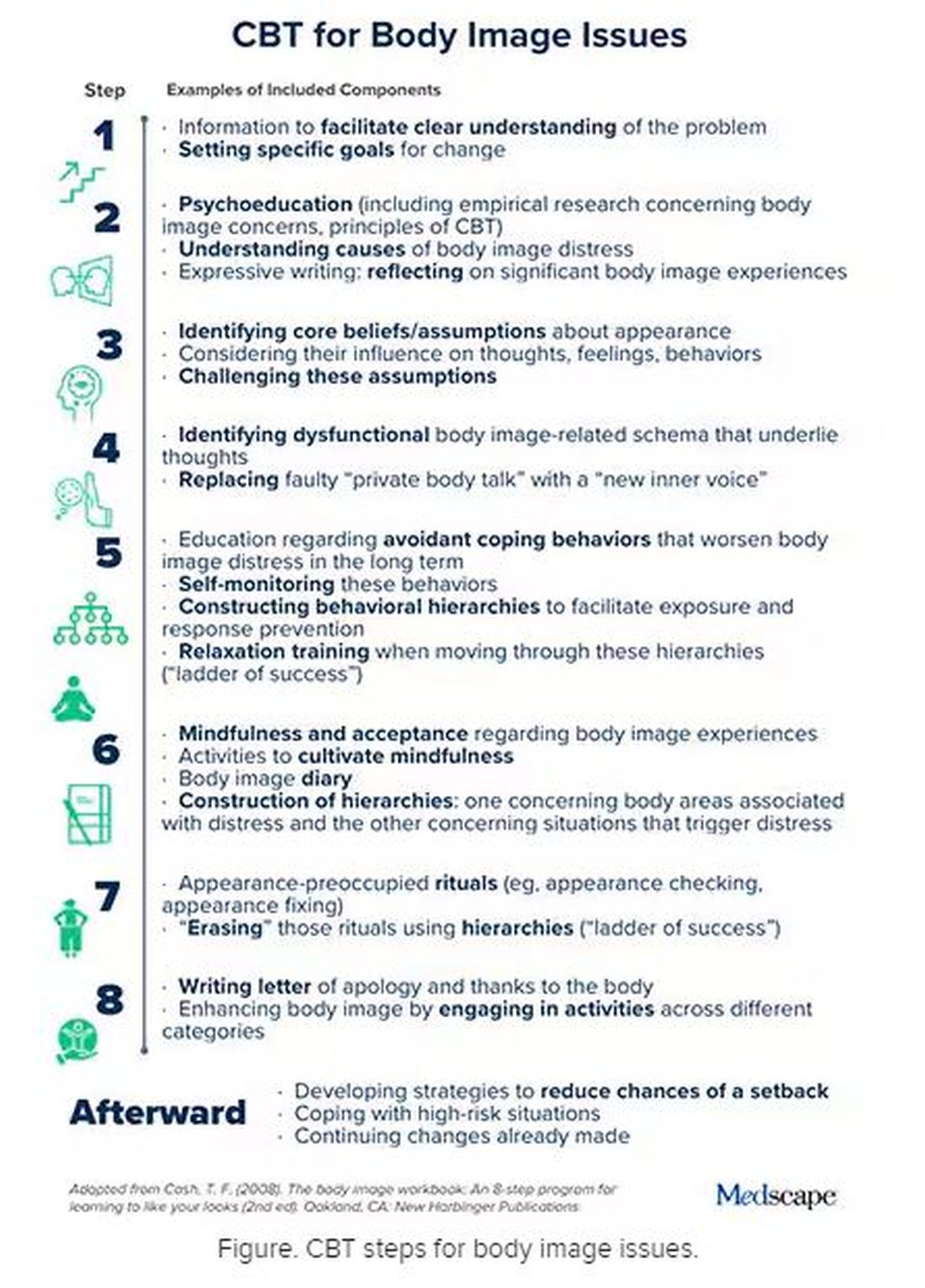
Weight Loss Doesn’t Automatically Equate With Happiness
Another realistic expectation runs counter to a common misperception that becoming thin will automatically translate into becoming happier. That’s not always the case, according to Dr. Tovar.
“If you haven’t worked deeply on addressing self-compassion and understanding that who you are at the core has nothing to do with your physical appearance, you can have an empty feeling once you’ve reached this point,” she said. “You still don’t know who you are and what you’re contributing to the world [because] you’ve been so focused on losing weight.”
Weight loss can also “unmask” questions about self-worth, even when receiving compliments about one’s “improved” appearance. “Praise and compliments after weight loss can be a double-edged sword,” Dr. Tovar observed. “You might think, ‘I wasn’t accepted or praised when I was overweight. The only way to be acceptable or validated is by losing weight, so I have to continue losing weight.’ ” This fuels fear of regaining the weight and can lead to continuing to see oneself as overweight, perhaps as a way to stay motivated to continue with weight loss. “Feeling that one’s value depends on remaining thin hampers body satisfaction,” she said.
Dr. Tovar, author of the book Deprogram Diet Culture: Rethink Your Relationship with Food, Heal Your Mind, and Live a Diet-Free Life, encourages people to shift the emphasis from weight loss to a holistic focus on self-worth and to explore obstacles to those feelings both before and after weight loss.
Endocrinologists and other medical professionals can help by not engaging in “weight and body shaming,” Dr. Tovar said.
She recommends physicians “encourage patients to tune in to their own bodies, helping them become more aware of how different foods affect their physical and emotional well-being.”
Set realistic expectations through “open, nonjudgmental conversations about the complexities of metabolism, weight, and health.”
Dr. Tovar advises rather than focusing on weight loss as the primary goal, physicians should focus on health markers such as blood glucose, energy levels, mental well-being, and physical fitness.
Prioritize “listening over lecturing.” Begin with empathy, asking questions such as “How do you feel about your health right now? What changes have you noticed in your body lately?” Doing this “creates space for the patient to express their concerns without feeling judged or shamed.”
Refer patients to a mental health professional when a patient exhibits signs of disordered eating or poor body image or when emotional factors are playing a significant role in the relationship with food and weight. “If a patient is caught in a cycle of dieting and weight gain, struggles with binge eating, or displays symptoms of depression or anxiety related to body, then psychological help is crucial.”
Ultimately, the goal of treatment “should be to provide a safe, supportive environment where patients can heal — not just physically but also emotionally and mentally,” Dr. Tovar added.
Dr. Tovar, Ms. Ekberg, and Dr. Reddy reported no relevant financial relationships. Dr. Sarwer received grant funding from the National Institute of Dental and Craniofacial Research and National Institute of Diabetes and Digestive and Kidney Diseases. He has consulting relationships with Novo Nordisk and Twenty30 Health. He is an associate editor for Obesity Surgery and editor in chief of Obesity Science & Practice.
A version of this article first appeared on Medscape.com.
Many people who lose weight, whether through diet and lifestyle changes, medication, or bariatric surgery, recognize their body has changed. While they also experience improvements in quality of life and psychosocial areas, that’s not true for everyone. Some patients don’t “see” they’ve lost weight — a phenomenon referred to as “phantom fat,” “ghost fat,” or “vestigial body image.”
“Most people are happy with their appearance, or at least their body shape, after weight loss — although some are unhappy with the loose, sagging skin that can follow weight loss and seek plastic surgery to remedy that,” David B. Sarwer, PhD, director of the Center for Obesity Research and Education and professor of social and behavioral sciences, Temple University College of Public Health, Philadelphia, told this news organization. “There’s a subset of people who remain dissatisfied with their body image, including their shape.”
This body dissatisfaction of people who lose weight may be long-standing, predating the weight loss, or may be new because weight loss has catalyzed a host of previously unaddressed psychosocial issues. Some may show up at assessments on treatment onset, while others may be detected by monitoring changes during or after weight loss. “Mental health counseling after bariatric surgery is greatly underutilized,” Dr. Sarwer observed.
Ghost Fat
Research has corroborated the lingering self-perception of being “obese” vs “ex-obese.” In one study, patients who had undergone bariatric surgery reported being unable to see the difference in their size and shape 18-30 months following their procedure, despite substantial weight loss.
Some research suggests that rapid weight loss (eg, through bariatric surgery) is more likely to generate the perception of “phantom fat,” but additional research is needed to investigate whether the mode and speed of weight loss affect subsequent body image.
Being habituated to one’s former appearance may play a role, Dr. Sarwer suggested. “We see this not only with weight loss but with other body-altering procedures. It takes the brain time to catch up to the new appearance. In rhinoplasty, for example, it may take patients a while before they become accustomed to looking at their new face in the mirror after decades of looking at a more prominent nose.”
Years of Social Stigma
It may also take time for people to overcome years of enduring the stigma of obesity.
There are “pervasive” negative attitudes implying that individuals who are overweight and/or obese are “lazy, weak-willed, lacking in self-discipline and willpower” — a problem compounded by social media and media in general, which present unrealistic, glorified body images and disparaging messages about those with weight problems.
“Body image is a construct, rather than what you see in the mirror,” Sheethal Reddy, PhD, a psychologist at the Emory Bariatric Center, Emory University Hospital Midtown, Atlanta, told this news organization. “It’s the mental construct of our physical selves.”
According to Dr. Reddy, body image develops “within a broader societal context and is influenced by the person’s ethnic, racial, and cultural heritage.”
Adolescents are particularly vulnerable to body dissatisfaction. This is compounded in those with obesity, who often experience weight-based victimization and internalized weight-based stigma, compared with adolescents with lower weights. Weight stigma often takes the form of teasing and bullying.
“Appearance-related bullying and teasing during childhood and adolescence can reverberate into adulthood and persist throughout the lifespan,” Dr. Sarwer said. “When we see these patients and ask if they’ve ever been teased or bullied, not only do many say yes but it takes them back to those moments, to that origin story, and they remember someone saying something mean, cruel, and hurtful.”
Stigmatizing experiences can affect subjective body image, even after the weight has been lost and the person’s body is objectively thinner. Research comparing individuals who were overweight and lost weight to individuals who are currently overweight and haven’t lost weight and individuals who were never overweight suggests that “vestigial” body disparagement may persist following weight loss — especially in those with early-onset obesity.
The Role of Genetics
Genetics may contribute to people’s self-perception and body dissatisfaction, both before and after weight loss. A study of 827 community-based adolescents examined the association between polygenic risk scores (PRS) for body mass index (BMI) and type 2 diabetes and symptoms of body dissatisfaction and depression.
“Given the significant genetic role in BMI, we wanted to explore whether genetic risk for BMI might also predict body dissatisfaction,” lead author Krista Ekberg, MS, a doctoral candidate in clinical psychology, Rosalind Franklin University of Medicine and Science, North Chicago, Illinois, told this news organization.
Genetic influences on BMI, as measured by PRS, were significantly associated with both phenotypic BMI and body dissatisfaction. “The association between PRS and body dissatisfaction was largely explained by BMI, suggesting that BMI itself accounts for much of the link between genetic risk and body dissatisfaction.”
Psychiatric History and Trauma
Adverse experiences, particularly sexual or physical abuse, may also account for body dissatisfaction after weight loss. “When some people with a history of this type of abuse lose a large amount of weight — typically after bariatric surgery — they often go through a period of emotional turbulence,” Dr. Sarwer said.
Childhood maltreatment can also be associated with body image disturbances in adulthood, according to a meta-analysis of 12 studies, encompassing 15,481 participants. Sexual abuse is “surprisingly common” among patients with obesity, according to Dr. Sarwer. A chart review of 131 patients revealed that 60% of those who reported a history of rape or sexual molestation were ≥ 50 pounds overweight vs only 28% of age- and sex-matched controls without a history of abuse. Other studies have corroborated these findings.
Excess weight can serve an “adaptive function,” Dr. Sarwer noted. It can be a self-protective mechanism that “insulates” them from sexual advances by potential romantic partners or abusers. Some may find that, after weight loss, repressed memories of a sexual assault surface as a result of the newer, more “attractive” appearance. Feeling vulnerable in their thinner bodies, they may need to regard themselves as overweight to maintain that feeling of “protection.” Weight loss may also trigger memories, flashbacks, or nightmares, as people return to a weight at which they were abused.
Dissociation is another mechanism linking trauma with post–weight loss body dysmorphia, Supatra Tovar, PsyD, RD, a clinical psychologist and registered dietitian with a practice in California, told this news organization. Dissociation from the body is often a coping mechanism for dealing with an overwhelming traumatic experience.
Individuals with a history of depression, anxiety, or posttraumatic stress disorder have higher levels of body dysmorphia, both before and after weight loss. One study found that patients undergoing bariatric surgery who had some type of psychopathology and other psychological risk factors were significantly more likely to report body image concerns 3 months after the surgery. Body image concerns were also more common in patients with preoperative depression, current psychotropic medication use, and a history of outpatient therapy or psychotropic medication use.
“Depression, anxiety, and trauma play a role in how you see yourself and how you carry yourself,” Dr. Reddy said. “This is wrapped up in any type of psychopathology. Being depressed is like looking at yourself through a cloud. It’s the opposite of ‘rose-colored glasses’ and instead, looking at yourself through a negative lens.”
Diagnosis and Interventions
Some helpful tools to assess the presence and extent of weight dissatisfaction and body dysmorphia include the Eating Disorder Inventory — Body Dissatisfaction Subscale and the Body Shape Questionnaire. It’s also important to take into account “the extent to which people are invested in their appearance psychologically,” Dr. Sarwer advised. The AO subscale of the Multidimensional Body-Self Relations Questionnaire generally assesses this. The Body Image Quality of Life Inventory assesses how and to what extent the perceived body image affects the person’s quality of life.
Experts recommend cognitive behavioral therapy (CBT) as an evidence-based intervention for body image issues, including those following weight loss.
“There’s an extensive CBT body image therapy program specifically tailored to the needs of overweight and obese individuals,” Dr. Sarwer said. “We don’t ignore historical variables that may have contributed to the problem, like early bullying, but we encourage people to think about what’s going on in their day-to-day life today. We drill down not only into the maladaptive behaviors but also the cognition and beliefs that may be erroneous but underlie these behaviors.”
The aim of CBT is to “modify irrational and dysfunctional thoughts, emotions, and behaviors through techniques such as self-monitoring, cognitive structuring, psychoeducation, desensitization, and exposure and response prevention.” The program laid out in Cash’s body image workbook includes eight steps. (Figure).
Weight Loss Doesn’t Automatically Equate With Happiness
Another realistic expectation runs counter to a common misperception that becoming thin will automatically translate into becoming happier. That’s not always the case, according to Dr. Tovar.
“If you haven’t worked deeply on addressing self-compassion and understanding that who you are at the core has nothing to do with your physical appearance, you can have an empty feeling once you’ve reached this point,” she said. “You still don’t know who you are and what you’re contributing to the world [because] you’ve been so focused on losing weight.”
Weight loss can also “unmask” questions about self-worth, even when receiving compliments about one’s “improved” appearance. “Praise and compliments after weight loss can be a double-edged sword,” Dr. Tovar observed. “You might think, ‘I wasn’t accepted or praised when I was overweight. The only way to be acceptable or validated is by losing weight, so I have to continue losing weight.’ ” This fuels fear of regaining the weight and can lead to continuing to see oneself as overweight, perhaps as a way to stay motivated to continue with weight loss. “Feeling that one’s value depends on remaining thin hampers body satisfaction,” she said.
Dr. Tovar, author of the book Deprogram Diet Culture: Rethink Your Relationship with Food, Heal Your Mind, and Live a Diet-Free Life, encourages people to shift the emphasis from weight loss to a holistic focus on self-worth and to explore obstacles to those feelings both before and after weight loss.
Endocrinologists and other medical professionals can help by not engaging in “weight and body shaming,” Dr. Tovar said.
She recommends physicians “encourage patients to tune in to their own bodies, helping them become more aware of how different foods affect their physical and emotional well-being.”
Set realistic expectations through “open, nonjudgmental conversations about the complexities of metabolism, weight, and health.”
Dr. Tovar advises rather than focusing on weight loss as the primary goal, physicians should focus on health markers such as blood glucose, energy levels, mental well-being, and physical fitness.
Prioritize “listening over lecturing.” Begin with empathy, asking questions such as “How do you feel about your health right now? What changes have you noticed in your body lately?” Doing this “creates space for the patient to express their concerns without feeling judged or shamed.”
Refer patients to a mental health professional when a patient exhibits signs of disordered eating or poor body image or when emotional factors are playing a significant role in the relationship with food and weight. “If a patient is caught in a cycle of dieting and weight gain, struggles with binge eating, or displays symptoms of depression or anxiety related to body, then psychological help is crucial.”
Ultimately, the goal of treatment “should be to provide a safe, supportive environment where patients can heal — not just physically but also emotionally and mentally,” Dr. Tovar added.
Dr. Tovar, Ms. Ekberg, and Dr. Reddy reported no relevant financial relationships. Dr. Sarwer received grant funding from the National Institute of Dental and Craniofacial Research and National Institute of Diabetes and Digestive and Kidney Diseases. He has consulting relationships with Novo Nordisk and Twenty30 Health. He is an associate editor for Obesity Surgery and editor in chief of Obesity Science & Practice.
A version of this article first appeared on Medscape.com.
Many people who lose weight, whether through diet and lifestyle changes, medication, or bariatric surgery, recognize their body has changed. While they also experience improvements in quality of life and psychosocial areas, that’s not true for everyone. Some patients don’t “see” they’ve lost weight — a phenomenon referred to as “phantom fat,” “ghost fat,” or “vestigial body image.”
“Most people are happy with their appearance, or at least their body shape, after weight loss — although some are unhappy with the loose, sagging skin that can follow weight loss and seek plastic surgery to remedy that,” David B. Sarwer, PhD, director of the Center for Obesity Research and Education and professor of social and behavioral sciences, Temple University College of Public Health, Philadelphia, told this news organization. “There’s a subset of people who remain dissatisfied with their body image, including their shape.”
This body dissatisfaction of people who lose weight may be long-standing, predating the weight loss, or may be new because weight loss has catalyzed a host of previously unaddressed psychosocial issues. Some may show up at assessments on treatment onset, while others may be detected by monitoring changes during or after weight loss. “Mental health counseling after bariatric surgery is greatly underutilized,” Dr. Sarwer observed.
Ghost Fat
Research has corroborated the lingering self-perception of being “obese” vs “ex-obese.” In one study, patients who had undergone bariatric surgery reported being unable to see the difference in their size and shape 18-30 months following their procedure, despite substantial weight loss.
Some research suggests that rapid weight loss (eg, through bariatric surgery) is more likely to generate the perception of “phantom fat,” but additional research is needed to investigate whether the mode and speed of weight loss affect subsequent body image.
Being habituated to one’s former appearance may play a role, Dr. Sarwer suggested. “We see this not only with weight loss but with other body-altering procedures. It takes the brain time to catch up to the new appearance. In rhinoplasty, for example, it may take patients a while before they become accustomed to looking at their new face in the mirror after decades of looking at a more prominent nose.”
Years of Social Stigma
It may also take time for people to overcome years of enduring the stigma of obesity.
There are “pervasive” negative attitudes implying that individuals who are overweight and/or obese are “lazy, weak-willed, lacking in self-discipline and willpower” — a problem compounded by social media and media in general, which present unrealistic, glorified body images and disparaging messages about those with weight problems.
“Body image is a construct, rather than what you see in the mirror,” Sheethal Reddy, PhD, a psychologist at the Emory Bariatric Center, Emory University Hospital Midtown, Atlanta, told this news organization. “It’s the mental construct of our physical selves.”
According to Dr. Reddy, body image develops “within a broader societal context and is influenced by the person’s ethnic, racial, and cultural heritage.”
Adolescents are particularly vulnerable to body dissatisfaction. This is compounded in those with obesity, who often experience weight-based victimization and internalized weight-based stigma, compared with adolescents with lower weights. Weight stigma often takes the form of teasing and bullying.
“Appearance-related bullying and teasing during childhood and adolescence can reverberate into adulthood and persist throughout the lifespan,” Dr. Sarwer said. “When we see these patients and ask if they’ve ever been teased or bullied, not only do many say yes but it takes them back to those moments, to that origin story, and they remember someone saying something mean, cruel, and hurtful.”
Stigmatizing experiences can affect subjective body image, even after the weight has been lost and the person’s body is objectively thinner. Research comparing individuals who were overweight and lost weight to individuals who are currently overweight and haven’t lost weight and individuals who were never overweight suggests that “vestigial” body disparagement may persist following weight loss — especially in those with early-onset obesity.
The Role of Genetics
Genetics may contribute to people’s self-perception and body dissatisfaction, both before and after weight loss. A study of 827 community-based adolescents examined the association between polygenic risk scores (PRS) for body mass index (BMI) and type 2 diabetes and symptoms of body dissatisfaction and depression.
“Given the significant genetic role in BMI, we wanted to explore whether genetic risk for BMI might also predict body dissatisfaction,” lead author Krista Ekberg, MS, a doctoral candidate in clinical psychology, Rosalind Franklin University of Medicine and Science, North Chicago, Illinois, told this news organization.
Genetic influences on BMI, as measured by PRS, were significantly associated with both phenotypic BMI and body dissatisfaction. “The association between PRS and body dissatisfaction was largely explained by BMI, suggesting that BMI itself accounts for much of the link between genetic risk and body dissatisfaction.”
Psychiatric History and Trauma
Adverse experiences, particularly sexual or physical abuse, may also account for body dissatisfaction after weight loss. “When some people with a history of this type of abuse lose a large amount of weight — typically after bariatric surgery — they often go through a period of emotional turbulence,” Dr. Sarwer said.
Childhood maltreatment can also be associated with body image disturbances in adulthood, according to a meta-analysis of 12 studies, encompassing 15,481 participants. Sexual abuse is “surprisingly common” among patients with obesity, according to Dr. Sarwer. A chart review of 131 patients revealed that 60% of those who reported a history of rape or sexual molestation were ≥ 50 pounds overweight vs only 28% of age- and sex-matched controls without a history of abuse. Other studies have corroborated these findings.
Excess weight can serve an “adaptive function,” Dr. Sarwer noted. It can be a self-protective mechanism that “insulates” them from sexual advances by potential romantic partners or abusers. Some may find that, after weight loss, repressed memories of a sexual assault surface as a result of the newer, more “attractive” appearance. Feeling vulnerable in their thinner bodies, they may need to regard themselves as overweight to maintain that feeling of “protection.” Weight loss may also trigger memories, flashbacks, or nightmares, as people return to a weight at which they were abused.
Dissociation is another mechanism linking trauma with post–weight loss body dysmorphia, Supatra Tovar, PsyD, RD, a clinical psychologist and registered dietitian with a practice in California, told this news organization. Dissociation from the body is often a coping mechanism for dealing with an overwhelming traumatic experience.
Individuals with a history of depression, anxiety, or posttraumatic stress disorder have higher levels of body dysmorphia, both before and after weight loss. One study found that patients undergoing bariatric surgery who had some type of psychopathology and other psychological risk factors were significantly more likely to report body image concerns 3 months after the surgery. Body image concerns were also more common in patients with preoperative depression, current psychotropic medication use, and a history of outpatient therapy or psychotropic medication use.
“Depression, anxiety, and trauma play a role in how you see yourself and how you carry yourself,” Dr. Reddy said. “This is wrapped up in any type of psychopathology. Being depressed is like looking at yourself through a cloud. It’s the opposite of ‘rose-colored glasses’ and instead, looking at yourself through a negative lens.”
Diagnosis and Interventions
Some helpful tools to assess the presence and extent of weight dissatisfaction and body dysmorphia include the Eating Disorder Inventory — Body Dissatisfaction Subscale and the Body Shape Questionnaire. It’s also important to take into account “the extent to which people are invested in their appearance psychologically,” Dr. Sarwer advised. The AO subscale of the Multidimensional Body-Self Relations Questionnaire generally assesses this. The Body Image Quality of Life Inventory assesses how and to what extent the perceived body image affects the person’s quality of life.
Experts recommend cognitive behavioral therapy (CBT) as an evidence-based intervention for body image issues, including those following weight loss.
“There’s an extensive CBT body image therapy program specifically tailored to the needs of overweight and obese individuals,” Dr. Sarwer said. “We don’t ignore historical variables that may have contributed to the problem, like early bullying, but we encourage people to think about what’s going on in their day-to-day life today. We drill down not only into the maladaptive behaviors but also the cognition and beliefs that may be erroneous but underlie these behaviors.”
The aim of CBT is to “modify irrational and dysfunctional thoughts, emotions, and behaviors through techniques such as self-monitoring, cognitive structuring, psychoeducation, desensitization, and exposure and response prevention.” The program laid out in Cash’s body image workbook includes eight steps. (Figure).
Weight Loss Doesn’t Automatically Equate With Happiness
Another realistic expectation runs counter to a common misperception that becoming thin will automatically translate into becoming happier. That’s not always the case, according to Dr. Tovar.
“If you haven’t worked deeply on addressing self-compassion and understanding that who you are at the core has nothing to do with your physical appearance, you can have an empty feeling once you’ve reached this point,” she said. “You still don’t know who you are and what you’re contributing to the world [because] you’ve been so focused on losing weight.”
Weight loss can also “unmask” questions about self-worth, even when receiving compliments about one’s “improved” appearance. “Praise and compliments after weight loss can be a double-edged sword,” Dr. Tovar observed. “You might think, ‘I wasn’t accepted or praised when I was overweight. The only way to be acceptable or validated is by losing weight, so I have to continue losing weight.’ ” This fuels fear of regaining the weight and can lead to continuing to see oneself as overweight, perhaps as a way to stay motivated to continue with weight loss. “Feeling that one’s value depends on remaining thin hampers body satisfaction,” she said.
Dr. Tovar, author of the book Deprogram Diet Culture: Rethink Your Relationship with Food, Heal Your Mind, and Live a Diet-Free Life, encourages people to shift the emphasis from weight loss to a holistic focus on self-worth and to explore obstacles to those feelings both before and after weight loss.
Endocrinologists and other medical professionals can help by not engaging in “weight and body shaming,” Dr. Tovar said.
She recommends physicians “encourage patients to tune in to their own bodies, helping them become more aware of how different foods affect their physical and emotional well-being.”
Set realistic expectations through “open, nonjudgmental conversations about the complexities of metabolism, weight, and health.”
Dr. Tovar advises rather than focusing on weight loss as the primary goal, physicians should focus on health markers such as blood glucose, energy levels, mental well-being, and physical fitness.
Prioritize “listening over lecturing.” Begin with empathy, asking questions such as “How do you feel about your health right now? What changes have you noticed in your body lately?” Doing this “creates space for the patient to express their concerns without feeling judged or shamed.”
Refer patients to a mental health professional when a patient exhibits signs of disordered eating or poor body image or when emotional factors are playing a significant role in the relationship with food and weight. “If a patient is caught in a cycle of dieting and weight gain, struggles with binge eating, or displays symptoms of depression or anxiety related to body, then psychological help is crucial.”
Ultimately, the goal of treatment “should be to provide a safe, supportive environment where patients can heal — not just physically but also emotionally and mentally,” Dr. Tovar added.
Dr. Tovar, Ms. Ekberg, and Dr. Reddy reported no relevant financial relationships. Dr. Sarwer received grant funding from the National Institute of Dental and Craniofacial Research and National Institute of Diabetes and Digestive and Kidney Diseases. He has consulting relationships with Novo Nordisk and Twenty30 Health. He is an associate editor for Obesity Surgery and editor in chief of Obesity Science & Practice.
A version of this article first appeared on Medscape.com.
Nonalcoholic Beer and Underage Drinking
Several months ago in a letter about healthcare providers and the decision to use alcohol and other mind-altering substances on the job, I waxed enthusiastically about the new wave of no alcohol (NA) and zero (00) alcohol beers that have come on the market. In the last 2 years our local grocery store’s cooler space for nonalcoholic beer has grown from less than 24 inches to something approaching the height of the average sixth grader.
In a bold act of chivalry at the beginning of the pandemic I accepted the mantle of designated grocery shopper and over the last 3 years have become uncommonly proud of my ability to bring home the groceries efficiently and cost effectively, without catching COVID in the process. I have developed a sixth sense of choosing which human checker/bagger combination is fastest or whether the self-checkout is the way to go.

For obvious reasons the human checkers don’t ask for my ID when I am buying adult beverages. However, the self-check register freezes up instantly when I scan my 12-pack of Run Wild nonalcoholic. This necessitates a search for the MIA store person assigned to patrol the self-check corral, ever on the lookout for shoplifters, underage drinkers, and other generally shifty looking characters.
When I find one of the grocery store detectives (who is likely to have been a former patient), I say: “You know, this doesn’t have any alcohol in it.” They invariably reply with a shrug. “I know. But, the rules are the rules.” Occasionally, they may add: “It doesn’t make sense, does it?”
At first blush checking IDs for a nonalcoholic beverage may sound dumb, certainly to someone who is just a few years on either side of the legal drinking age. Why are we trying to protect some crazy teenager from the futility of getting high on a six-pack of something that at worst will make him spend most of the next couple of hours peeing?
But, there is concern in some corners that nonalcoholic drinks pose a significant threat to teenagers. Two PhDs at Stanford University have recently published a paper in which they worry that the dramatic rise in US sales of nonalcoholic drinks from 15% to 30% since 2018 may be socializing “users of alcohol drinking experiences by exposing them to the taste, look, and even brands of alcoholic beverages”.
Is there evidence to support their concern? I could only find one brief report in the Japanese literature that states that among young people “who experienced the nonalcoholic beverage intake, interest in or motivation for drinking alcoholic beverages, and/or smoking is higher than [among] those who did not.” The study didn’t appear to clearly separate the exposure in a family setting from the actual intake.
Beer is an acquired taste. If someone offered you your first taste of beer after a hot-weather set of tennis most of you would reject it and ask for water or lemonade. I can recall my first taste of beer. For some reason my father thought at age 11 or 12 I might like to try some from his glass. I’m not sure of his motivation, but he tried the same thing with oysters. I didn’t drink beer again until I was 16, motivated at that time by a group dynamic. The oyster trial, however, backfired on him and from then on he had to share his coveted dozen with me. Alcohol, unless heavily disguised by a mixer, is also not a taste that most young people find appealing.
It is unlikely that the average thrill-seeking teenager is going to ask his older-appearing buddy with a fake ID to buy him some nonalcoholic beer. Nor would he go to the effort or risk of acquiring his own fake ID just to see how it tastes. It just doesn’t compute, especially to a self-check corral patroller.
I guess one could envision a scenario in which a teenager wanting to fit in with the fast crowd would ask a trusted adult (or clueless parent) to buy him some nonalcoholic beer to bring to a party. He is running a serious risk of being laughed at by his friends if they find he’s drinking the fake stuff. It also seems unlikely that a parent would buy nonalcoholic beer to introduce his teenager to the taste of beer.
So,
Although it runs counter to my usual commitment to evidence-based decisions, making it difficult for adolescents to buy nonalcoholic beverages feels like the right think to do. As long as alcoholic and nonalcoholic beverages share the same display space and are packaged in nearly identical containers, there is ample opportunity for confusion. Recent evidence suggesting that even small amounts of alcohol increases some health risks should strengthen our resolve to minimize that confusion.
Dr. Wilkoff practiced primary care pediatrics in Brunswick, Maine, for nearly 40 years. He has authored several books on behavioral pediatrics, including “How to Say No to Your Toddler.” Other than a Littman stethoscope he accepted as a first-year medical student in 1966, Dr. Wilkoff reports having nothing to disclose. Email him at pdnews@mdedge.com.
Several months ago in a letter about healthcare providers and the decision to use alcohol and other mind-altering substances on the job, I waxed enthusiastically about the new wave of no alcohol (NA) and zero (00) alcohol beers that have come on the market. In the last 2 years our local grocery store’s cooler space for nonalcoholic beer has grown from less than 24 inches to something approaching the height of the average sixth grader.
In a bold act of chivalry at the beginning of the pandemic I accepted the mantle of designated grocery shopper and over the last 3 years have become uncommonly proud of my ability to bring home the groceries efficiently and cost effectively, without catching COVID in the process. I have developed a sixth sense of choosing which human checker/bagger combination is fastest or whether the self-checkout is the way to go.
For obvious reasons the human checkers don’t ask for my ID when I am buying adult beverages. However, the self-check register freezes up instantly when I scan my 12-pack of Run Wild nonalcoholic. This necessitates a search for the MIA store person assigned to patrol the self-check corral, ever on the lookout for shoplifters, underage drinkers, and other generally shifty looking characters.
When I find one of the grocery store detectives (who is likely to have been a former patient), I say: “You know, this doesn’t have any alcohol in it.” They invariably reply with a shrug. “I know. But, the rules are the rules.” Occasionally, they may add: “It doesn’t make sense, does it?”
At first blush checking IDs for a nonalcoholic beverage may sound dumb, certainly to someone who is just a few years on either side of the legal drinking age. Why are we trying to protect some crazy teenager from the futility of getting high on a six-pack of something that at worst will make him spend most of the next couple of hours peeing?
But, there is concern in some corners that nonalcoholic drinks pose a significant threat to teenagers. Two PhDs at Stanford University have recently published a paper in which they worry that the dramatic rise in US sales of nonalcoholic drinks from 15% to 30% since 2018 may be socializing “users of alcohol drinking experiences by exposing them to the taste, look, and even brands of alcoholic beverages”.
Is there evidence to support their concern? I could only find one brief report in the Japanese literature that states that among young people “who experienced the nonalcoholic beverage intake, interest in or motivation for drinking alcoholic beverages, and/or smoking is higher than [among] those who did not.” The study didn’t appear to clearly separate the exposure in a family setting from the actual intake.
Beer is an acquired taste. If someone offered you your first taste of beer after a hot-weather set of tennis most of you would reject it and ask for water or lemonade. I can recall my first taste of beer. For some reason my father thought at age 11 or 12 I might like to try some from his glass. I’m not sure of his motivation, but he tried the same thing with oysters. I didn’t drink beer again until I was 16, motivated at that time by a group dynamic. The oyster trial, however, backfired on him and from then on he had to share his coveted dozen with me. Alcohol, unless heavily disguised by a mixer, is also not a taste that most young people find appealing.
It is unlikely that the average thrill-seeking teenager is going to ask his older-appearing buddy with a fake ID to buy him some nonalcoholic beer. Nor would he go to the effort or risk of acquiring his own fake ID just to see how it tastes. It just doesn’t compute, especially to a self-check corral patroller.
I guess one could envision a scenario in which a teenager wanting to fit in with the fast crowd would ask a trusted adult (or clueless parent) to buy him some nonalcoholic beer to bring to a party. He is running a serious risk of being laughed at by his friends if they find he’s drinking the fake stuff. It also seems unlikely that a parent would buy nonalcoholic beer to introduce his teenager to the taste of beer.
So,
Although it runs counter to my usual commitment to evidence-based decisions, making it difficult for adolescents to buy nonalcoholic beverages feels like the right think to do. As long as alcoholic and nonalcoholic beverages share the same display space and are packaged in nearly identical containers, there is ample opportunity for confusion. Recent evidence suggesting that even small amounts of alcohol increases some health risks should strengthen our resolve to minimize that confusion.
Dr. Wilkoff practiced primary care pediatrics in Brunswick, Maine, for nearly 40 years. He has authored several books on behavioral pediatrics, including “How to Say No to Your Toddler.” Other than a Littman stethoscope he accepted as a first-year medical student in 1966, Dr. Wilkoff reports having nothing to disclose. Email him at pdnews@mdedge.com.
Several months ago in a letter about healthcare providers and the decision to use alcohol and other mind-altering substances on the job, I waxed enthusiastically about the new wave of no alcohol (NA) and zero (00) alcohol beers that have come on the market. In the last 2 years our local grocery store’s cooler space for nonalcoholic beer has grown from less than 24 inches to something approaching the height of the average sixth grader.
In a bold act of chivalry at the beginning of the pandemic I accepted the mantle of designated grocery shopper and over the last 3 years have become uncommonly proud of my ability to bring home the groceries efficiently and cost effectively, without catching COVID in the process. I have developed a sixth sense of choosing which human checker/bagger combination is fastest or whether the self-checkout is the way to go.
For obvious reasons the human checkers don’t ask for my ID when I am buying adult beverages. However, the self-check register freezes up instantly when I scan my 12-pack of Run Wild nonalcoholic. This necessitates a search for the MIA store person assigned to patrol the self-check corral, ever on the lookout for shoplifters, underage drinkers, and other generally shifty looking characters.
When I find one of the grocery store detectives (who is likely to have been a former patient), I say: “You know, this doesn’t have any alcohol in it.” They invariably reply with a shrug. “I know. But, the rules are the rules.” Occasionally, they may add: “It doesn’t make sense, does it?”
At first blush checking IDs for a nonalcoholic beverage may sound dumb, certainly to someone who is just a few years on either side of the legal drinking age. Why are we trying to protect some crazy teenager from the futility of getting high on a six-pack of something that at worst will make him spend most of the next couple of hours peeing?
But, there is concern in some corners that nonalcoholic drinks pose a significant threat to teenagers. Two PhDs at Stanford University have recently published a paper in which they worry that the dramatic rise in US sales of nonalcoholic drinks from 15% to 30% since 2018 may be socializing “users of alcohol drinking experiences by exposing them to the taste, look, and even brands of alcoholic beverages”.
Is there evidence to support their concern? I could only find one brief report in the Japanese literature that states that among young people “who experienced the nonalcoholic beverage intake, interest in or motivation for drinking alcoholic beverages, and/or smoking is higher than [among] those who did not.” The study didn’t appear to clearly separate the exposure in a family setting from the actual intake.
Beer is an acquired taste. If someone offered you your first taste of beer after a hot-weather set of tennis most of you would reject it and ask for water or lemonade. I can recall my first taste of beer. For some reason my father thought at age 11 or 12 I might like to try some from his glass. I’m not sure of his motivation, but he tried the same thing with oysters. I didn’t drink beer again until I was 16, motivated at that time by a group dynamic. The oyster trial, however, backfired on him and from then on he had to share his coveted dozen with me. Alcohol, unless heavily disguised by a mixer, is also not a taste that most young people find appealing.
It is unlikely that the average thrill-seeking teenager is going to ask his older-appearing buddy with a fake ID to buy him some nonalcoholic beer. Nor would he go to the effort or risk of acquiring his own fake ID just to see how it tastes. It just doesn’t compute, especially to a self-check corral patroller.
I guess one could envision a scenario in which a teenager wanting to fit in with the fast crowd would ask a trusted adult (or clueless parent) to buy him some nonalcoholic beer to bring to a party. He is running a serious risk of being laughed at by his friends if they find he’s drinking the fake stuff. It also seems unlikely that a parent would buy nonalcoholic beer to introduce his teenager to the taste of beer.
So,
Although it runs counter to my usual commitment to evidence-based decisions, making it difficult for adolescents to buy nonalcoholic beverages feels like the right think to do. As long as alcoholic and nonalcoholic beverages share the same display space and are packaged in nearly identical containers, there is ample opportunity for confusion. Recent evidence suggesting that even small amounts of alcohol increases some health risks should strengthen our resolve to minimize that confusion.
Dr. Wilkoff practiced primary care pediatrics in Brunswick, Maine, for nearly 40 years. He has authored several books on behavioral pediatrics, including “How to Say No to Your Toddler.” Other than a Littman stethoscope he accepted as a first-year medical student in 1966, Dr. Wilkoff reports having nothing to disclose. Email him at pdnews@mdedge.com.
Higher Daily Buprenorphine Doses Help Manage OUD: AMA Recommends Policy Change
Higher daily buprenorphine doses may help patients better manage opioid use disorder (OUD), data from a National Institutes of Health (NIH) study suggested.
The new data highlight that the dose size currently recommended by the US Food and Drug Administration (FDA) and insurance caps on doses are outdated and harmful in the age of fentanyl overdoses, according to the American Medical Association (AMA) and physicians who have studied the issue.
Findings of the study, led by Sarah Axeen, PhD, with the Schaeffer Center for Health Policy & Economics, University of Southern California, Los Angeles, were published in JAMA Network Open.
The researchers reviewed insurance claims data from more than 35,000 people diagnosed with OUD who started on buprenorphine treatment between 2016 and 2021. They found that 12.5% had an emergency department (ED) or inpatient visit related to behavioral health within the study period.
They analyzed whether a patient’s buprenorphine dose was linked with the length of time between treatment start and an ED or inpatient visit.
Higher Doses, Better Outcomes
The FDA’s recommended target dose for buprenorphine is 16 mg/d. Dr. Axeen’s team found that those taking higher daily doses (> 16 to 24 mg) took 20% longer to have an ED or inpatient visit related to behavioral health within the first year after receiving treatment than those who took > 8 to 16 mg/d.
“Those taking daily doses of more than 24 mg of buprenorphine went 50% longer before having a subsequent emergency or inpatient healthcare visit related to behavioral health within the first year after receiving treatment, compared to those receiving > 8 to 16 mg a day,” the researchers said in a press release.
AMA Says the Findings Should Change Policies
Bobby Mukkamala, MD, president-elect of the AMA and Chair of the AMA Substance Use and Pain Care Task Force, said the association welcomed the study findings and urged policymakers and insurance providers to act on them with updated policies.
“The findings support AMA policy calling for flexibility in buprenorphine dosing, allowing patients to receive doses exceeding FDA-approved limits when clinically recommended by their prescriber,” he said in a statement. “Policymakers must take note of these findings and the growing body of evidence that further affirm buprenorphine as a safe, effective, and lifesaving tool in the fight against the illicit fentanyl overdose epidemic. It is also critically important for health insurance companies, Medicaid, and Medicare to remove dosage caps for buprenorphine.”
‘Tangible Economic Impact’
Lucinda Grande, MD, a family physician and addiction specialist with Pioneer Family Practice in Lacey, Washington, said in an interview that she was happy to see this study because “it is the first buprenorphine dose study that addresses an outcome with a tangible economic impact that would affect the bottom line of payers and healthcare systems” and may capture the attention of policymakers in changing what she says are outdated recommendations.
“This study is also unusual because it looked specifically at the dose range above 24 mg. Even though that top tier included only a tiny proportion (1.8%) of patients, it was the group that had the greatest long-term benefit from buprenorphine,” Dr. Grande said, adding that other studies have not included that high a dose.
Dr. Grande, who published on a related topic in 2023, noted that Medicaid patients were excluded from the current study, and they make up a substantial portion of those using buprenorphine for OUD. Had they been included, she said, she suspects the evidence would have been even stronger in favor of higher doses.
Physicians can prescribe higher doses off-label, but buprenorphine is expensive, and some insurers have caps based on the FDA recommendations. Dr. Grande says she rarely prescribes > 32 mg/d, and the patients who need the higher doses often have chronic pain. “In Washington State,” she said, “we have had the luxury of prescribing up to 32 mg daily to Medicaid patients for years. I have had a lot of opportunity to work in that dose rage for people who really need it, and I can really see a difference.”
As fentanyl has grown into the primary illicit opioid, she says, the FDA recommendations for buprenorphine have become progressively weaker.
“Fentanyl is 50 times more potent than heroin, the opioid prevalent when the FDA guidelines were written,” she said. “It’s like a popgun that you’re using against a cannon.”
This manuscript was prepared with support from the National Institute on Drug Abuse. Dr. Axeen reported no relevant financial disclosures. Coauthor Jessica S. Merlin, MD, reported grants from Cambia Health Foundation outside the submitted work. Adam J. Gordon, MD, reported grants from NIH and the Veterans Affairs (institution) during the conduct of the study; he reported service as editor-in-chief with the Association for Multidisciplinary Education and Research in Substance use and Addiction. Bradley D. Stein, MD, reported grants from the NIH during the conduct of the study. Dr. Mukkamala and Dr. Grande reported no relevant financial relationships.
A version of this article first appeared on Medscape.com.
Higher daily buprenorphine doses may help patients better manage opioid use disorder (OUD), data from a National Institutes of Health (NIH) study suggested.
The new data highlight that the dose size currently recommended by the US Food and Drug Administration (FDA) and insurance caps on doses are outdated and harmful in the age of fentanyl overdoses, according to the American Medical Association (AMA) and physicians who have studied the issue.
Findings of the study, led by Sarah Axeen, PhD, with the Schaeffer Center for Health Policy & Economics, University of Southern California, Los Angeles, were published in JAMA Network Open.
The researchers reviewed insurance claims data from more than 35,000 people diagnosed with OUD who started on buprenorphine treatment between 2016 and 2021. They found that 12.5% had an emergency department (ED) or inpatient visit related to behavioral health within the study period.
They analyzed whether a patient’s buprenorphine dose was linked with the length of time between treatment start and an ED or inpatient visit.
Higher Doses, Better Outcomes
The FDA’s recommended target dose for buprenorphine is 16 mg/d. Dr. Axeen’s team found that those taking higher daily doses (> 16 to 24 mg) took 20% longer to have an ED or inpatient visit related to behavioral health within the first year after receiving treatment than those who took > 8 to 16 mg/d.
“Those taking daily doses of more than 24 mg of buprenorphine went 50% longer before having a subsequent emergency or inpatient healthcare visit related to behavioral health within the first year after receiving treatment, compared to those receiving > 8 to 16 mg a day,” the researchers said in a press release.
AMA Says the Findings Should Change Policies
Bobby Mukkamala, MD, president-elect of the AMA and Chair of the AMA Substance Use and Pain Care Task Force, said the association welcomed the study findings and urged policymakers and insurance providers to act on them with updated policies.
“The findings support AMA policy calling for flexibility in buprenorphine dosing, allowing patients to receive doses exceeding FDA-approved limits when clinically recommended by their prescriber,” he said in a statement. “Policymakers must take note of these findings and the growing body of evidence that further affirm buprenorphine as a safe, effective, and lifesaving tool in the fight against the illicit fentanyl overdose epidemic. It is also critically important for health insurance companies, Medicaid, and Medicare to remove dosage caps for buprenorphine.”
‘Tangible Economic Impact’
Lucinda Grande, MD, a family physician and addiction specialist with Pioneer Family Practice in Lacey, Washington, said in an interview that she was happy to see this study because “it is the first buprenorphine dose study that addresses an outcome with a tangible economic impact that would affect the bottom line of payers and healthcare systems” and may capture the attention of policymakers in changing what she says are outdated recommendations.
“This study is also unusual because it looked specifically at the dose range above 24 mg. Even though that top tier included only a tiny proportion (1.8%) of patients, it was the group that had the greatest long-term benefit from buprenorphine,” Dr. Grande said, adding that other studies have not included that high a dose.
Dr. Grande, who published on a related topic in 2023, noted that Medicaid patients were excluded from the current study, and they make up a substantial portion of those using buprenorphine for OUD. Had they been included, she said, she suspects the evidence would have been even stronger in favor of higher doses.
Physicians can prescribe higher doses off-label, but buprenorphine is expensive, and some insurers have caps based on the FDA recommendations. Dr. Grande says she rarely prescribes > 32 mg/d, and the patients who need the higher doses often have chronic pain. “In Washington State,” she said, “we have had the luxury of prescribing up to 32 mg daily to Medicaid patients for years. I have had a lot of opportunity to work in that dose rage for people who really need it, and I can really see a difference.”
As fentanyl has grown into the primary illicit opioid, she says, the FDA recommendations for buprenorphine have become progressively weaker.
“Fentanyl is 50 times more potent than heroin, the opioid prevalent when the FDA guidelines were written,” she said. “It’s like a popgun that you’re using against a cannon.”
This manuscript was prepared with support from the National Institute on Drug Abuse. Dr. Axeen reported no relevant financial disclosures. Coauthor Jessica S. Merlin, MD, reported grants from Cambia Health Foundation outside the submitted work. Adam J. Gordon, MD, reported grants from NIH and the Veterans Affairs (institution) during the conduct of the study; he reported service as editor-in-chief with the Association for Multidisciplinary Education and Research in Substance use and Addiction. Bradley D. Stein, MD, reported grants from the NIH during the conduct of the study. Dr. Mukkamala and Dr. Grande reported no relevant financial relationships.
A version of this article first appeared on Medscape.com.
Higher daily buprenorphine doses may help patients better manage opioid use disorder (OUD), data from a National Institutes of Health (NIH) study suggested.
The new data highlight that the dose size currently recommended by the US Food and Drug Administration (FDA) and insurance caps on doses are outdated and harmful in the age of fentanyl overdoses, according to the American Medical Association (AMA) and physicians who have studied the issue.
Findings of the study, led by Sarah Axeen, PhD, with the Schaeffer Center for Health Policy & Economics, University of Southern California, Los Angeles, were published in JAMA Network Open.
The researchers reviewed insurance claims data from more than 35,000 people diagnosed with OUD who started on buprenorphine treatment between 2016 and 2021. They found that 12.5% had an emergency department (ED) or inpatient visit related to behavioral health within the study period.
They analyzed whether a patient’s buprenorphine dose was linked with the length of time between treatment start and an ED or inpatient visit.
Higher Doses, Better Outcomes
The FDA’s recommended target dose for buprenorphine is 16 mg/d. Dr. Axeen’s team found that those taking higher daily doses (> 16 to 24 mg) took 20% longer to have an ED or inpatient visit related to behavioral health within the first year after receiving treatment than those who took > 8 to 16 mg/d.
“Those taking daily doses of more than 24 mg of buprenorphine went 50% longer before having a subsequent emergency or inpatient healthcare visit related to behavioral health within the first year after receiving treatment, compared to those receiving > 8 to 16 mg a day,” the researchers said in a press release.
AMA Says the Findings Should Change Policies
Bobby Mukkamala, MD, president-elect of the AMA and Chair of the AMA Substance Use and Pain Care Task Force, said the association welcomed the study findings and urged policymakers and insurance providers to act on them with updated policies.
“The findings support AMA policy calling for flexibility in buprenorphine dosing, allowing patients to receive doses exceeding FDA-approved limits when clinically recommended by their prescriber,” he said in a statement. “Policymakers must take note of these findings and the growing body of evidence that further affirm buprenorphine as a safe, effective, and lifesaving tool in the fight against the illicit fentanyl overdose epidemic. It is also critically important for health insurance companies, Medicaid, and Medicare to remove dosage caps for buprenorphine.”
‘Tangible Economic Impact’
Lucinda Grande, MD, a family physician and addiction specialist with Pioneer Family Practice in Lacey, Washington, said in an interview that she was happy to see this study because “it is the first buprenorphine dose study that addresses an outcome with a tangible economic impact that would affect the bottom line of payers and healthcare systems” and may capture the attention of policymakers in changing what she says are outdated recommendations.
“This study is also unusual because it looked specifically at the dose range above 24 mg. Even though that top tier included only a tiny proportion (1.8%) of patients, it was the group that had the greatest long-term benefit from buprenorphine,” Dr. Grande said, adding that other studies have not included that high a dose.
Dr. Grande, who published on a related topic in 2023, noted that Medicaid patients were excluded from the current study, and they make up a substantial portion of those using buprenorphine for OUD. Had they been included, she said, she suspects the evidence would have been even stronger in favor of higher doses.
Physicians can prescribe higher doses off-label, but buprenorphine is expensive, and some insurers have caps based on the FDA recommendations. Dr. Grande says she rarely prescribes > 32 mg/d, and the patients who need the higher doses often have chronic pain. “In Washington State,” she said, “we have had the luxury of prescribing up to 32 mg daily to Medicaid patients for years. I have had a lot of opportunity to work in that dose rage for people who really need it, and I can really see a difference.”
As fentanyl has grown into the primary illicit opioid, she says, the FDA recommendations for buprenorphine have become progressively weaker.
“Fentanyl is 50 times more potent than heroin, the opioid prevalent when the FDA guidelines were written,” she said. “It’s like a popgun that you’re using against a cannon.”
This manuscript was prepared with support from the National Institute on Drug Abuse. Dr. Axeen reported no relevant financial disclosures. Coauthor Jessica S. Merlin, MD, reported grants from Cambia Health Foundation outside the submitted work. Adam J. Gordon, MD, reported grants from NIH and the Veterans Affairs (institution) during the conduct of the study; he reported service as editor-in-chief with the Association for Multidisciplinary Education and Research in Substance use and Addiction. Bradley D. Stein, MD, reported grants from the NIH during the conduct of the study. Dr. Mukkamala and Dr. Grande reported no relevant financial relationships.
A version of this article first appeared on Medscape.com.
Which Medication Is Best? VA Genetic Tests May Have the Answer
The US Department of Veterans Affairs (VA) now has a permanent pharmacogenomics service that provides genetic tests to give clinicians insight into the best medication options for their patients.
The tests, which have no extra cost, are available to all veterans, said pharmacist Jill S. Bates, PharmD, MS, executive director of the VA National Pharmacogenomics Program, who spoke in an interview and a presentation at the annual meeting of the Association of VA Hematology/Oncology.
Genetic testing is “a tool that can help optimize care that we provide for veterans,” she said. “Pharmacogenomics is additional information to help the clinician make a decision. We know that most veterans—greater than 90%—carry a variant in a pharmacogenomics gene that is actionable.”
The genetic tests can provide insight into the optimal medication for multiple conditions such as mental illness, gastrointestinal disorders, cancer, pain, and heart disease. According to a 2019 analysis of over 6 years of data, more than half of the VA patient population used medications whose efficacy may have been affected by detectable genetic variants.
For instance, Bates said tests can let clinicians know whether patients are susceptible to statin-associated muscle adverse effects if they take simvastatin, the cholesterol medication. An estimated 25.6% of the VA population has this variant.
Elsewhere on the cardiac front, an estimated 58.3% of the VA population has a genetic variant that increases sensitivity to the blood thinner warfarin.
Testing could help psychiatrists determine whether certain medications should not be prescribed—or should be prescribed at lower doses—in patients who’ve had adverse reactions to antidepressants, Bates said.
In cancer, Bates said, genetic testing can identify patients who have a genetic variant that boosts toxicity from fluoropyrimidine chemotherapy treatments, which include capecitabine, floxuridine, and fluorouracil. Meanwhile, an estimated 0.9% will have no reaction or limited reaction to capecitabine and fluorouracil, and 4.8% will have hypersensitivity to carbamazepine and oxcarbazepine.
Tests can also identify a genetic variant that can lead to poor metabolism of the chemotherapy drug irinotecan, which is used to treat colon cancer. “In those patients, you’d want to reduce the dose by 20%,” Bates said. In other cases, alternate drugs may be the best strategy to address genetic variations.
Prior to 2019, clinicians had to order pharmacogenomic tests outside of the VA system, according to Bates. That year, a donation from Sanford Health brought VA pharmacogenomics to 40 pilot sites. Since then, more than 88,000 tests have been performed.
The VA has now made its pharmacogenomic program permanent, Bates said. As of early September, testing was available at 139 VA sites and is coming soon to 4 more. It’s not available at another 23 sites that are scattered across the country.
A tool in the VA electronic health record now reminds clinicians about the availability of genetic testing and allows them to order tests. However, testing isn’t available for patients who have had liver transplants or certain bone marrow transplants.
The VA is working on developing decision-making tools to help clinicians determine when the tests are appropriate, Bates said. It typically takes 2 to 3 weeks to get results, she said, adding that external laboratories provide results. “We eventually would like to bring in all pharmacogenomics testing to be conducted within the VA enterprise.”
Bates reported that she had no disclosures.
The US Department of Veterans Affairs (VA) now has a permanent pharmacogenomics service that provides genetic tests to give clinicians insight into the best medication options for their patients.
The tests, which have no extra cost, are available to all veterans, said pharmacist Jill S. Bates, PharmD, MS, executive director of the VA National Pharmacogenomics Program, who spoke in an interview and a presentation at the annual meeting of the Association of VA Hematology/Oncology.
Genetic testing is “a tool that can help optimize care that we provide for veterans,” she said. “Pharmacogenomics is additional information to help the clinician make a decision. We know that most veterans—greater than 90%—carry a variant in a pharmacogenomics gene that is actionable.”
The genetic tests can provide insight into the optimal medication for multiple conditions such as mental illness, gastrointestinal disorders, cancer, pain, and heart disease. According to a 2019 analysis of over 6 years of data, more than half of the VA patient population used medications whose efficacy may have been affected by detectable genetic variants.
For instance, Bates said tests can let clinicians know whether patients are susceptible to statin-associated muscle adverse effects if they take simvastatin, the cholesterol medication. An estimated 25.6% of the VA population has this variant.
Elsewhere on the cardiac front, an estimated 58.3% of the VA population has a genetic variant that increases sensitivity to the blood thinner warfarin.
Testing could help psychiatrists determine whether certain medications should not be prescribed—or should be prescribed at lower doses—in patients who’ve had adverse reactions to antidepressants, Bates said.
In cancer, Bates said, genetic testing can identify patients who have a genetic variant that boosts toxicity from fluoropyrimidine chemotherapy treatments, which include capecitabine, floxuridine, and fluorouracil. Meanwhile, an estimated 0.9% will have no reaction or limited reaction to capecitabine and fluorouracil, and 4.8% will have hypersensitivity to carbamazepine and oxcarbazepine.
Tests can also identify a genetic variant that can lead to poor metabolism of the chemotherapy drug irinotecan, which is used to treat colon cancer. “In those patients, you’d want to reduce the dose by 20%,” Bates said. In other cases, alternate drugs may be the best strategy to address genetic variations.
Prior to 2019, clinicians had to order pharmacogenomic tests outside of the VA system, according to Bates. That year, a donation from Sanford Health brought VA pharmacogenomics to 40 pilot sites. Since then, more than 88,000 tests have been performed.
The VA has now made its pharmacogenomic program permanent, Bates said. As of early September, testing was available at 139 VA sites and is coming soon to 4 more. It’s not available at another 23 sites that are scattered across the country.
A tool in the VA electronic health record now reminds clinicians about the availability of genetic testing and allows them to order tests. However, testing isn’t available for patients who have had liver transplants or certain bone marrow transplants.
The VA is working on developing decision-making tools to help clinicians determine when the tests are appropriate, Bates said. It typically takes 2 to 3 weeks to get results, she said, adding that external laboratories provide results. “We eventually would like to bring in all pharmacogenomics testing to be conducted within the VA enterprise.”
Bates reported that she had no disclosures.
The US Department of Veterans Affairs (VA) now has a permanent pharmacogenomics service that provides genetic tests to give clinicians insight into the best medication options for their patients.
The tests, which have no extra cost, are available to all veterans, said pharmacist Jill S. Bates, PharmD, MS, executive director of the VA National Pharmacogenomics Program, who spoke in an interview and a presentation at the annual meeting of the Association of VA Hematology/Oncology.
Genetic testing is “a tool that can help optimize care that we provide for veterans,” she said. “Pharmacogenomics is additional information to help the clinician make a decision. We know that most veterans—greater than 90%—carry a variant in a pharmacogenomics gene that is actionable.”
The genetic tests can provide insight into the optimal medication for multiple conditions such as mental illness, gastrointestinal disorders, cancer, pain, and heart disease. According to a 2019 analysis of over 6 years of data, more than half of the VA patient population used medications whose efficacy may have been affected by detectable genetic variants.
For instance, Bates said tests can let clinicians know whether patients are susceptible to statin-associated muscle adverse effects if they take simvastatin, the cholesterol medication. An estimated 25.6% of the VA population has this variant.
Elsewhere on the cardiac front, an estimated 58.3% of the VA population has a genetic variant that increases sensitivity to the blood thinner warfarin.
Testing could help psychiatrists determine whether certain medications should not be prescribed—or should be prescribed at lower doses—in patients who’ve had adverse reactions to antidepressants, Bates said.
In cancer, Bates said, genetic testing can identify patients who have a genetic variant that boosts toxicity from fluoropyrimidine chemotherapy treatments, which include capecitabine, floxuridine, and fluorouracil. Meanwhile, an estimated 0.9% will have no reaction or limited reaction to capecitabine and fluorouracil, and 4.8% will have hypersensitivity to carbamazepine and oxcarbazepine.
Tests can also identify a genetic variant that can lead to poor metabolism of the chemotherapy drug irinotecan, which is used to treat colon cancer. “In those patients, you’d want to reduce the dose by 20%,” Bates said. In other cases, alternate drugs may be the best strategy to address genetic variations.
Prior to 2019, clinicians had to order pharmacogenomic tests outside of the VA system, according to Bates. That year, a donation from Sanford Health brought VA pharmacogenomics to 40 pilot sites. Since then, more than 88,000 tests have been performed.
The VA has now made its pharmacogenomic program permanent, Bates said. As of early September, testing was available at 139 VA sites and is coming soon to 4 more. It’s not available at another 23 sites that are scattered across the country.
A tool in the VA electronic health record now reminds clinicians about the availability of genetic testing and allows them to order tests. However, testing isn’t available for patients who have had liver transplants or certain bone marrow transplants.
The VA is working on developing decision-making tools to help clinicians determine when the tests are appropriate, Bates said. It typically takes 2 to 3 weeks to get results, she said, adding that external laboratories provide results. “We eventually would like to bring in all pharmacogenomics testing to be conducted within the VA enterprise.”
Bates reported that she had no disclosures.
Heightened Amygdala Activity Tied to Postpartum Depression
MILAN, ITALY — Pregnant women with heightened amygdala activity have a reduced capacity to regulate emotions and report more symptoms of depression than those with lower activity in this brain region, a new imaging study suggested.
If validated, these findings could pave the way for identifying women at higher risk for postpartum depression, said lead researcher Franziska Weinmar, MSc, from the University of Tübingen in Germany.
The study was presented at the 37th European College of Neuropsychopharmacology Congress.
Differences in Brain Activity
During pregnancy and the peripartum period, rising hormone levels create a “psychoneuroendocrinological window of vulnerability” for mental health in which 80% of women can develop transitory “baby blues,” and about one in seven develop more serious postpartum depression, Ms. Weinmar told this news organization.
The study included 47 women — 15 pregnant women and 32 nonpregnant controls. The nonpregnant women had normal menstrual cycles; 16 were in the early follicular phase with low estradiol levels (231.7 pmol/L), and 16 had high estradiol levels (516.6 pmol/L) after administration of estradiol.
To examine brain activity, participants were asked to view negative emotional images while undergoing functional MRI. They were then asked to use cognitive reappraisal to regulate their emotional response to the images.
The findings showed that both pregnant and nonpregnant women were equally successful at emotional regulation, but this process involved different brain activity in pregnant vs their nonpregnant counterpart.
All women had increased left middle frontal gyrus activity when regulating their emotions, but there was a difference in the amygdala between the pregnancy group and controls, Ms. Weinmar noted.
This suggests that pregnant women may have to exert more neural effort in emotional regulation, she said. “And pregnant women with higher amygdala activity were less able to regulate their emotions successfully compared to those with less amygdala activity.”
Linear regression analyses were performed to assess the relation of brain activity during down-regulation, regulation success, and self-reported depression scores, and this showed that higher amygdala activity was also associated with higher depression scores.
“We need to be cautious in interpreting this,” said Ms. Weinmar. “This is a small sample, and we are the first to undertake this work.”
Nonetheless, she said that if the findings are confirmed by larger studies, pregnant women could be assessed “in the waiting room” using existing questionnaires that evaluate emotional regulation.
If a woman has difficulties with emotion regulation, “there are adaptive strategies, like cognitive reappraisal that a counseling psychotherapist can help with,” said Ms. Weinmar.
“I could also imagine group sessions, for example, or online courses,” she said, adding that obstetricians could also be trained to identify these women.
Commenting on the findings in a press release, Susana Carmona, PhD, from Gregorio Marañón Hospital in Madrid, Spain, said research like this is crucial for gaining insight into one of the most intense physiological processes a human can undergo: pregnancy. It’s remarkable how much remains unknown.
“Recently, the FDA [Food and Drug Administration] approved the first treatment for postpartum depression. However, we still have a long way to go in characterizing what happens in the brain during pregnancy, identifying biomarkers that can indicate the risk of developing perinatal mental disorders, and designing strategies to prevent mother and infant suffering during the delicate and critical peripartum period,” Dr. Carmona added.
The study was supported by the Center for Integrative Neuroscience in Tübingen, Germany, and the International Research Training Group “Women’s Mental Health Across the Reproductive Years” (IRTG 2804). Ms. Weinmar and Dr. Carmona reported no relevant disclosures.
A version of this article appeared on Medscape.com.
MILAN, ITALY — Pregnant women with heightened amygdala activity have a reduced capacity to regulate emotions and report more symptoms of depression than those with lower activity in this brain region, a new imaging study suggested.
If validated, these findings could pave the way for identifying women at higher risk for postpartum depression, said lead researcher Franziska Weinmar, MSc, from the University of Tübingen in Germany.
The study was presented at the 37th European College of Neuropsychopharmacology Congress.
Differences in Brain Activity
During pregnancy and the peripartum period, rising hormone levels create a “psychoneuroendocrinological window of vulnerability” for mental health in which 80% of women can develop transitory “baby blues,” and about one in seven develop more serious postpartum depression, Ms. Weinmar told this news organization.
The study included 47 women — 15 pregnant women and 32 nonpregnant controls. The nonpregnant women had normal menstrual cycles; 16 were in the early follicular phase with low estradiol levels (231.7 pmol/L), and 16 had high estradiol levels (516.6 pmol/L) after administration of estradiol.
To examine brain activity, participants were asked to view negative emotional images while undergoing functional MRI. They were then asked to use cognitive reappraisal to regulate their emotional response to the images.
The findings showed that both pregnant and nonpregnant women were equally successful at emotional regulation, but this process involved different brain activity in pregnant vs their nonpregnant counterpart.
All women had increased left middle frontal gyrus activity when regulating their emotions, but there was a difference in the amygdala between the pregnancy group and controls, Ms. Weinmar noted.
This suggests that pregnant women may have to exert more neural effort in emotional regulation, she said. “And pregnant women with higher amygdala activity were less able to regulate their emotions successfully compared to those with less amygdala activity.”
Linear regression analyses were performed to assess the relation of brain activity during down-regulation, regulation success, and self-reported depression scores, and this showed that higher amygdala activity was also associated with higher depression scores.
“We need to be cautious in interpreting this,” said Ms. Weinmar. “This is a small sample, and we are the first to undertake this work.”
Nonetheless, she said that if the findings are confirmed by larger studies, pregnant women could be assessed “in the waiting room” using existing questionnaires that evaluate emotional regulation.
If a woman has difficulties with emotion regulation, “there are adaptive strategies, like cognitive reappraisal that a counseling psychotherapist can help with,” said Ms. Weinmar.
“I could also imagine group sessions, for example, or online courses,” she said, adding that obstetricians could also be trained to identify these women.
Commenting on the findings in a press release, Susana Carmona, PhD, from Gregorio Marañón Hospital in Madrid, Spain, said research like this is crucial for gaining insight into one of the most intense physiological processes a human can undergo: pregnancy. It’s remarkable how much remains unknown.
“Recently, the FDA [Food and Drug Administration] approved the first treatment for postpartum depression. However, we still have a long way to go in characterizing what happens in the brain during pregnancy, identifying biomarkers that can indicate the risk of developing perinatal mental disorders, and designing strategies to prevent mother and infant suffering during the delicate and critical peripartum period,” Dr. Carmona added.
The study was supported by the Center for Integrative Neuroscience in Tübingen, Germany, and the International Research Training Group “Women’s Mental Health Across the Reproductive Years” (IRTG 2804). Ms. Weinmar and Dr. Carmona reported no relevant disclosures.
A version of this article appeared on Medscape.com.
MILAN, ITALY — Pregnant women with heightened amygdala activity have a reduced capacity to regulate emotions and report more symptoms of depression than those with lower activity in this brain region, a new imaging study suggested.
If validated, these findings could pave the way for identifying women at higher risk for postpartum depression, said lead researcher Franziska Weinmar, MSc, from the University of Tübingen in Germany.
The study was presented at the 37th European College of Neuropsychopharmacology Congress.
Differences in Brain Activity
During pregnancy and the peripartum period, rising hormone levels create a “psychoneuroendocrinological window of vulnerability” for mental health in which 80% of women can develop transitory “baby blues,” and about one in seven develop more serious postpartum depression, Ms. Weinmar told this news organization.
The study included 47 women — 15 pregnant women and 32 nonpregnant controls. The nonpregnant women had normal menstrual cycles; 16 were in the early follicular phase with low estradiol levels (231.7 pmol/L), and 16 had high estradiol levels (516.6 pmol/L) after administration of estradiol.
To examine brain activity, participants were asked to view negative emotional images while undergoing functional MRI. They were then asked to use cognitive reappraisal to regulate their emotional response to the images.
The findings showed that both pregnant and nonpregnant women were equally successful at emotional regulation, but this process involved different brain activity in pregnant vs their nonpregnant counterpart.
All women had increased left middle frontal gyrus activity when regulating their emotions, but there was a difference in the amygdala between the pregnancy group and controls, Ms. Weinmar noted.
This suggests that pregnant women may have to exert more neural effort in emotional regulation, she said. “And pregnant women with higher amygdala activity were less able to regulate their emotions successfully compared to those with less amygdala activity.”
Linear regression analyses were performed to assess the relation of brain activity during down-regulation, regulation success, and self-reported depression scores, and this showed that higher amygdala activity was also associated with higher depression scores.
“We need to be cautious in interpreting this,” said Ms. Weinmar. “This is a small sample, and we are the first to undertake this work.”
Nonetheless, she said that if the findings are confirmed by larger studies, pregnant women could be assessed “in the waiting room” using existing questionnaires that evaluate emotional regulation.
If a woman has difficulties with emotion regulation, “there are adaptive strategies, like cognitive reappraisal that a counseling psychotherapist can help with,” said Ms. Weinmar.
“I could also imagine group sessions, for example, or online courses,” she said, adding that obstetricians could also be trained to identify these women.
Commenting on the findings in a press release, Susana Carmona, PhD, from Gregorio Marañón Hospital in Madrid, Spain, said research like this is crucial for gaining insight into one of the most intense physiological processes a human can undergo: pregnancy. It’s remarkable how much remains unknown.
“Recently, the FDA [Food and Drug Administration] approved the first treatment for postpartum depression. However, we still have a long way to go in characterizing what happens in the brain during pregnancy, identifying biomarkers that can indicate the risk of developing perinatal mental disorders, and designing strategies to prevent mother and infant suffering during the delicate and critical peripartum period,” Dr. Carmona added.
The study was supported by the Center for Integrative Neuroscience in Tübingen, Germany, and the International Research Training Group “Women’s Mental Health Across the Reproductive Years” (IRTG 2804). Ms. Weinmar and Dr. Carmona reported no relevant disclosures.
A version of this article appeared on Medscape.com.
FROM ECNP 2024
Childhood-Onset Atopic Dermatitis Adds Burden in Adulthood
AMSTERDAM — There is a mountain of evidence that atopic dermatitis (AD) exerts a large negative impact on quality of life, but a unique study with
These data, drawn from the ambitious Scars of Life (SOL) project, “suggest that childhood AD persisting into adulthood is its own phenotype,” reported Jonathan I. Silverberg, MD, PhD, director of clinical research, Department of Dermatology, George Washington University, Washington, DC.

One reasonable message from these data is that the failure to achieve adequate control of AD in children, whether by a late start of systemic agents or other reasons, results in a greater lifetime burden of disease when the burden beyond physical symptoms is measured, according to Dr. Silverberg.
More Than 30,000 From Five Continents Participated
In the SOL project, which was designed to analyze how the age of AD onset affects the severity of symptoms and quality of life, completed questionnaires were collected from 30,801 individuals in 27 countries on five continents. The questions, which elicited data to measure the burden of AD, were developed in association with several professional and patient associations with an interest in AD, including the National Eczema Association.
The SOL project has produced an enormous amount of data in four distinct groups, but Dr. Silverberg, speaking in a late-breaking news session at the annual congress of the European Academy of Dermatology and Venereology, focused on a comparison between the 2875 participants who had AD in childhood that has persisted into adulthood and the 7383 adults with adult-onset AD. Data from the other two subsets in SOL — AD in childhood but not in adulthood and no AD in either phase of life — are expected to fuel an extended series of publications.
In the two groups, baseline characteristics were similar with about 60% reporting moderate to severe symptoms and a median age of about 37 years. The proportion of women was 61% in both groups.
Using the PUSH-D questionnaire, which Dr. Silverberg described as a validated tool for gauging a sense of stigmatization, the greater burden of AD was remarkably consistent for those with childhood-onset AD vs adult-onset AD. With higher scores representing a greater sense of stigmatization, the differences in the overall score (23.0 vs 18.1; P < .0001) were highly significant as was every other domain evaluated.
For all five social behavior domains, such as avoiding contact in public and wariness of approaching people spontaneously, having AD onset in childhood persisting into adulthood produced significantly higher scores than having AD onset in adulthood, with no exceptions (P < .001 for all).
AD From Childhood Consistently Results in Worse Outcomes
Providing examples for some of the other 12 domains, Dr. Silverberg maintained that feelings of shame and psychological discomfort were always greater in adults with AD persistent since childhood vs AD starting in adulthood. The P values for these outcomes, such as experiencing bias at work or reporting a sense that others avoided them, were typically highly significant (P < .001).
Compared with those whose AD started in adulthood, “adults with atopic eczema that started during childhood have significantly more difficulties in their life, including occupational relationships, daily life, personal life, and partner or family relationships,” Dr. Silverberg reported.
He said that the data were controlled for multiple confounders, particularly greater severity of AD. He acknowledged that childhood onset might be considered a surrogate for more severe disease, but the data were controlled for this possibility.
Despite the fact that there are “thousands of studies across all age groups showing the burden of AD,” Dr. Silverberg considers these data to be unique by emphasizing the burden of chronicity rather than the impact of AD in any single moment in time.
For those with chronic AD from childhood, “the effect is not just on physical health but a deep negative influence on psychological and social aspects of life,” Dr. Silverberg said, suggesting that the independent effects of chronicity might be worth studying across other dermatologic diseases.
“Regulatory agencies focus on what you can do in that moment of time, losing the bigger picture of how patients are affected chronically,” he said, adding that this is an area of clinical research that should be further explored.
What the data further suggest “is that the earlier we intervene, the more likely patients will do better long term,” he said.
Data Provide Evidence of Systemic Therapy in Kids
For Gudrun Ratzinger, MD, of the Department of Dermatology and Venerology at the Medical University of Innsbruck in Austria, these are valuable data.
“When I prescribe systemic therapies to children, I often get resistance from the healthcare system and even other colleagues,” said Dr. Ratzinger, who was asked to comment on the results. “We are at a teaching hospital, but I often find that when patients return to their home physician, the systemic therapies are stopped.”
In her own practice, she believes the most effective therapies should be introduced in children and adults when complete control is not achieved on first-line drugs. “These data are very helpful for me in explaining to others the importance of effective treatment of atopic dermatitis in children,” she said.
Dr. Silverberg reported financial relationships with more than 40 pharmaceutical companies, including those that make drugs for AD. Dr. Ratzinger reported financial relationships with AbbVie, Almirall, Boehringer Ingelheim, Eli Lilly, Janssen, Leo Pharma, Novartis, Pelpharma, Pfizer, and UCB.
A version of this article first appeared on Medscape.com.
AMSTERDAM — There is a mountain of evidence that atopic dermatitis (AD) exerts a large negative impact on quality of life, but a unique study with
These data, drawn from the ambitious Scars of Life (SOL) project, “suggest that childhood AD persisting into adulthood is its own phenotype,” reported Jonathan I. Silverberg, MD, PhD, director of clinical research, Department of Dermatology, George Washington University, Washington, DC.
One reasonable message from these data is that the failure to achieve adequate control of AD in children, whether by a late start of systemic agents or other reasons, results in a greater lifetime burden of disease when the burden beyond physical symptoms is measured, according to Dr. Silverberg.
More Than 30,000 From Five Continents Participated
In the SOL project, which was designed to analyze how the age of AD onset affects the severity of symptoms and quality of life, completed questionnaires were collected from 30,801 individuals in 27 countries on five continents. The questions, which elicited data to measure the burden of AD, were developed in association with several professional and patient associations with an interest in AD, including the National Eczema Association.
The SOL project has produced an enormous amount of data in four distinct groups, but Dr. Silverberg, speaking in a late-breaking news session at the annual congress of the European Academy of Dermatology and Venereology, focused on a comparison between the 2875 participants who had AD in childhood that has persisted into adulthood and the 7383 adults with adult-onset AD. Data from the other two subsets in SOL — AD in childhood but not in adulthood and no AD in either phase of life — are expected to fuel an extended series of publications.
In the two groups, baseline characteristics were similar with about 60% reporting moderate to severe symptoms and a median age of about 37 years. The proportion of women was 61% in both groups.
Using the PUSH-D questionnaire, which Dr. Silverberg described as a validated tool for gauging a sense of stigmatization, the greater burden of AD was remarkably consistent for those with childhood-onset AD vs adult-onset AD. With higher scores representing a greater sense of stigmatization, the differences in the overall score (23.0 vs 18.1; P < .0001) were highly significant as was every other domain evaluated.
For all five social behavior domains, such as avoiding contact in public and wariness of approaching people spontaneously, having AD onset in childhood persisting into adulthood produced significantly higher scores than having AD onset in adulthood, with no exceptions (P < .001 for all).
AD From Childhood Consistently Results in Worse Outcomes
Providing examples for some of the other 12 domains, Dr. Silverberg maintained that feelings of shame and psychological discomfort were always greater in adults with AD persistent since childhood vs AD starting in adulthood. The P values for these outcomes, such as experiencing bias at work or reporting a sense that others avoided them, were typically highly significant (P < .001).
Compared with those whose AD started in adulthood, “adults with atopic eczema that started during childhood have significantly more difficulties in their life, including occupational relationships, daily life, personal life, and partner or family relationships,” Dr. Silverberg reported.
He said that the data were controlled for multiple confounders, particularly greater severity of AD. He acknowledged that childhood onset might be considered a surrogate for more severe disease, but the data were controlled for this possibility.
Despite the fact that there are “thousands of studies across all age groups showing the burden of AD,” Dr. Silverberg considers these data to be unique by emphasizing the burden of chronicity rather than the impact of AD in any single moment in time.
For those with chronic AD from childhood, “the effect is not just on physical health but a deep negative influence on psychological and social aspects of life,” Dr. Silverberg said, suggesting that the independent effects of chronicity might be worth studying across other dermatologic diseases.
“Regulatory agencies focus on what you can do in that moment of time, losing the bigger picture of how patients are affected chronically,” he said, adding that this is an area of clinical research that should be further explored.
What the data further suggest “is that the earlier we intervene, the more likely patients will do better long term,” he said.
Data Provide Evidence of Systemic Therapy in Kids
For Gudrun Ratzinger, MD, of the Department of Dermatology and Venerology at the Medical University of Innsbruck in Austria, these are valuable data.
“When I prescribe systemic therapies to children, I often get resistance from the healthcare system and even other colleagues,” said Dr. Ratzinger, who was asked to comment on the results. “We are at a teaching hospital, but I often find that when patients return to their home physician, the systemic therapies are stopped.”
In her own practice, she believes the most effective therapies should be introduced in children and adults when complete control is not achieved on first-line drugs. “These data are very helpful for me in explaining to others the importance of effective treatment of atopic dermatitis in children,” she said.
Dr. Silverberg reported financial relationships with more than 40 pharmaceutical companies, including those that make drugs for AD. Dr. Ratzinger reported financial relationships with AbbVie, Almirall, Boehringer Ingelheim, Eli Lilly, Janssen, Leo Pharma, Novartis, Pelpharma, Pfizer, and UCB.
A version of this article first appeared on Medscape.com.
AMSTERDAM — There is a mountain of evidence that atopic dermatitis (AD) exerts a large negative impact on quality of life, but a unique study with
These data, drawn from the ambitious Scars of Life (SOL) project, “suggest that childhood AD persisting into adulthood is its own phenotype,” reported Jonathan I. Silverberg, MD, PhD, director of clinical research, Department of Dermatology, George Washington University, Washington, DC.
One reasonable message from these data is that the failure to achieve adequate control of AD in children, whether by a late start of systemic agents or other reasons, results in a greater lifetime burden of disease when the burden beyond physical symptoms is measured, according to Dr. Silverberg.
More Than 30,000 From Five Continents Participated
In the SOL project, which was designed to analyze how the age of AD onset affects the severity of symptoms and quality of life, completed questionnaires were collected from 30,801 individuals in 27 countries on five continents. The questions, which elicited data to measure the burden of AD, were developed in association with several professional and patient associations with an interest in AD, including the National Eczema Association.
The SOL project has produced an enormous amount of data in four distinct groups, but Dr. Silverberg, speaking in a late-breaking news session at the annual congress of the European Academy of Dermatology and Venereology, focused on a comparison between the 2875 participants who had AD in childhood that has persisted into adulthood and the 7383 adults with adult-onset AD. Data from the other two subsets in SOL — AD in childhood but not in adulthood and no AD in either phase of life — are expected to fuel an extended series of publications.
In the two groups, baseline characteristics were similar with about 60% reporting moderate to severe symptoms and a median age of about 37 years. The proportion of women was 61% in both groups.
Using the PUSH-D questionnaire, which Dr. Silverberg described as a validated tool for gauging a sense of stigmatization, the greater burden of AD was remarkably consistent for those with childhood-onset AD vs adult-onset AD. With higher scores representing a greater sense of stigmatization, the differences in the overall score (23.0 vs 18.1; P < .0001) were highly significant as was every other domain evaluated.
For all five social behavior domains, such as avoiding contact in public and wariness of approaching people spontaneously, having AD onset in childhood persisting into adulthood produced significantly higher scores than having AD onset in adulthood, with no exceptions (P < .001 for all).
AD From Childhood Consistently Results in Worse Outcomes
Providing examples for some of the other 12 domains, Dr. Silverberg maintained that feelings of shame and psychological discomfort were always greater in adults with AD persistent since childhood vs AD starting in adulthood. The P values for these outcomes, such as experiencing bias at work or reporting a sense that others avoided them, were typically highly significant (P < .001).
Compared with those whose AD started in adulthood, “adults with atopic eczema that started during childhood have significantly more difficulties in their life, including occupational relationships, daily life, personal life, and partner or family relationships,” Dr. Silverberg reported.
He said that the data were controlled for multiple confounders, particularly greater severity of AD. He acknowledged that childhood onset might be considered a surrogate for more severe disease, but the data were controlled for this possibility.
Despite the fact that there are “thousands of studies across all age groups showing the burden of AD,” Dr. Silverberg considers these data to be unique by emphasizing the burden of chronicity rather than the impact of AD in any single moment in time.
For those with chronic AD from childhood, “the effect is not just on physical health but a deep negative influence on psychological and social aspects of life,” Dr. Silverberg said, suggesting that the independent effects of chronicity might be worth studying across other dermatologic diseases.
“Regulatory agencies focus on what you can do in that moment of time, losing the bigger picture of how patients are affected chronically,” he said, adding that this is an area of clinical research that should be further explored.
What the data further suggest “is that the earlier we intervene, the more likely patients will do better long term,” he said.
Data Provide Evidence of Systemic Therapy in Kids
For Gudrun Ratzinger, MD, of the Department of Dermatology and Venerology at the Medical University of Innsbruck in Austria, these are valuable data.
“When I prescribe systemic therapies to children, I often get resistance from the healthcare system and even other colleagues,” said Dr. Ratzinger, who was asked to comment on the results. “We are at a teaching hospital, but I often find that when patients return to their home physician, the systemic therapies are stopped.”
In her own practice, she believes the most effective therapies should be introduced in children and adults when complete control is not achieved on first-line drugs. “These data are very helpful for me in explaining to others the importance of effective treatment of atopic dermatitis in children,” she said.
Dr. Silverberg reported financial relationships with more than 40 pharmaceutical companies, including those that make drugs for AD. Dr. Ratzinger reported financial relationships with AbbVie, Almirall, Boehringer Ingelheim, Eli Lilly, Janssen, Leo Pharma, Novartis, Pelpharma, Pfizer, and UCB.
A version of this article first appeared on Medscape.com.
FROM EADV 2024
Expert Calls for Research into GLP-1s for Mental Illness
MILAN — Recent research allaying concerns about suicidality linked to glucagon-like peptide 1 (GLP-1) receptor agonists, along with evidence of these agents’ potential psychiatric and cognitive benefits, has prompted the lead investigator of a major analysis to urge researchers to explore the potential of these drugs for mental illness.
“So far, we’ve been talking about the safety from a neuropsychiatric perspective in diabetes, but there is also the safety and benefit in people with mental disorders,” Riccardo De Giorgi, MD, PhD, from the Department of Psychiatry, University of Oxford in England, said in an interview.
The results of the meta-analysis were previously reported by this news organization and reviewed by Dr. De Giorgi at the 37th European College of Neuropsychopharmacology (ECNP) Congress. Dr. De Giorgi broached
Noting that GLP-1s are not approved for psychiatric disorders, Dr. De Giorgi said it can’t be assumed that the “metabolic or maybe even more general mechanisms that are being modified with these medications in diabetes or even in obesity are the same for people with psychiatric disorders. We’re talking about very different things. From a clinical perspective, you could do real harm,” he told this news organization.
Yet Dr. De Giorgi emphasized the importance of exploring the potential benefits of these medications in psychiatry.
“From a research perspective ... I am very worried about missing an opportunity here. This happened with rimonabant, a cannabis medication that was used for weight loss back in 2012 and was withdrawn quite dramatically in Europe immediately after licensing because it increased suicide risk. Since then, nobody has been touching the cannabinoid system, and that’s a shame because in psychiatry, we don’t have that much we can work on. So we don’t want to miss an opportunity with the GLP-1 system — that’s why we need to be cautious and look at safety first,” he said.
Signal of Efficacy?
Dr. De Giorgi’s research suggested several potential neurobiological effects of GLP-1 inhibition in diabetes research.
“There was a bit of a signal specifically for the big three dementias — vascular, Lewy Body, and frontotemporal — although there was not enough power,” he reported. “We also saw a reduced risk in nicotine misuse, especially amongst other substance use disorders ... and finally a more tentative association for reduced depression.”
He noted that GLP-1s for psychiatric illness likely have limitations and may not cure mental disorders but could help specific subsets of patients. Rather than aiming for large-scale studies, the focus should be on small, incremental studies to advance the research.
Asked by the session chair, John Cryan, PhD, from University College Cork in Ireland, and chair of the ECNP Scientific Committee whether improvement in patients’ mood could be attributed to weight loss, Dr. De Giorgi replied no.
“We now have quite a lot of studies that show that if there is an effect or association it is seen quite a bit earlier than any weight loss. Remember, weight loss takes quite a lot of time, and at quite high doses, but more provocatively, even if that’s the case, does it matter? We as psychiatrists do worry that we need to disentangle these things, but they don’t do that in cardiology, for example. If they see a benefit in mortality they don’t really care if it’s specifically an effect on heart failure or ischemic disease,” said Dr. De Giorgi.
Regardless of their neuropsychiatric potential, the cardiometabolic benefits of GLP-1 inhibitors are sorely needed in the psychiatric population, noted two experts in a recent JAMA Psychiatry viewpoint article.
Sri Mahavir Agarwal, MD, PhD, and Margaret Hahn, MD, PhD, from the University of Toronto and the Schizophrenia Division at the Centre for Addiction and Mental Health, in Toronto, Ontario, Canada, pointed out that “individuals with severe mental illness (SMI) have exceedingly high rates of metabolic comorbidity; three of four are overweight or obese, whereas the prevalence of type 2 diabetes (T2D) is several-fold higher than in the general population. Consequently, individuals with SMI die 15-20 years earlier from cardiovascular disease (CVD) than do those in the general population with CVD,” they noted.
“The arrival of semaglutide has infused significant enthusiasm in the field of mental health research. The proximal effects of weight and related CV comorbidities are significant in themselves. It is plausible that semaglutide could act through neurogenesis or secondary benefits of improving metabolic health on other important outcomes, such as cognitive health and quality of life, thereby filling an unmet need in the treatment of SMI,” Dr. Agarwal and Dr. Hahn added.
An Exciting Opportunity
Current research investigating GLP-1s in psychiatry and neurology is increasingly focused on neuroinflammation, said Dr. De Giorgi.
Research shows significant evidence that certain medications may help reduce dysfunctional inflammatory processes linked to various cognitive and psychiatric disorders, he added.
Many patients with established psychiatric conditions also have physical health issues, which contribute to increased mortality risk, said Dr. De Giorgi. It’s crucial to understand that, if these treatments improve mortality outcomes for psychiatric patients, the specific mechanisms involved are secondary to the results. Psychiatrists must be equipped to prescribe, manage, and initiate these therapies.
“While trials involving psychosis patients are ongoing, we are making progress and should seize this opportunity” said Dr. De Giorgi.
Dr. Cryan agreed: “I think we’ll get there. What these drugs have shown is that you can, through a single mechanism, have multitude effects related to brain-body interactions, and why not focus that on mood and anxiety and cognitive performance? It’s exciting no matter what. We now need to do longitudinal, cross-sectional, placebo-controlled trials in specific patient populations.”
This study received funding from the National Institute for Health and Care Research Oxford Health Biomedical Research Centre and Medical Research Council. Dr. De Giorgi’s coauthors reported receiving funding for other work from Novo Nordisk, Five Lives, Cognetivity Ltd., Cognex, P1vital, Lundbeck, Servier, UCB, Zogenix, Johnson & Johnson, and Syndesi. Dr. Cryan reported no relevant disclosures.
A version of this article appeared on Medscape.com.
MILAN — Recent research allaying concerns about suicidality linked to glucagon-like peptide 1 (GLP-1) receptor agonists, along with evidence of these agents’ potential psychiatric and cognitive benefits, has prompted the lead investigator of a major analysis to urge researchers to explore the potential of these drugs for mental illness.
“So far, we’ve been talking about the safety from a neuropsychiatric perspective in diabetes, but there is also the safety and benefit in people with mental disorders,” Riccardo De Giorgi, MD, PhD, from the Department of Psychiatry, University of Oxford in England, said in an interview.
The results of the meta-analysis were previously reported by this news organization and reviewed by Dr. De Giorgi at the 37th European College of Neuropsychopharmacology (ECNP) Congress. Dr. De Giorgi broached
Noting that GLP-1s are not approved for psychiatric disorders, Dr. De Giorgi said it can’t be assumed that the “metabolic or maybe even more general mechanisms that are being modified with these medications in diabetes or even in obesity are the same for people with psychiatric disorders. We’re talking about very different things. From a clinical perspective, you could do real harm,” he told this news organization.
Yet Dr. De Giorgi emphasized the importance of exploring the potential benefits of these medications in psychiatry.
“From a research perspective ... I am very worried about missing an opportunity here. This happened with rimonabant, a cannabis medication that was used for weight loss back in 2012 and was withdrawn quite dramatically in Europe immediately after licensing because it increased suicide risk. Since then, nobody has been touching the cannabinoid system, and that’s a shame because in psychiatry, we don’t have that much we can work on. So we don’t want to miss an opportunity with the GLP-1 system — that’s why we need to be cautious and look at safety first,” he said.
Signal of Efficacy?
Dr. De Giorgi’s research suggested several potential neurobiological effects of GLP-1 inhibition in diabetes research.
“There was a bit of a signal specifically for the big three dementias — vascular, Lewy Body, and frontotemporal — although there was not enough power,” he reported. “We also saw a reduced risk in nicotine misuse, especially amongst other substance use disorders ... and finally a more tentative association for reduced depression.”
He noted that GLP-1s for psychiatric illness likely have limitations and may not cure mental disorders but could help specific subsets of patients. Rather than aiming for large-scale studies, the focus should be on small, incremental studies to advance the research.
Asked by the session chair, John Cryan, PhD, from University College Cork in Ireland, and chair of the ECNP Scientific Committee whether improvement in patients’ mood could be attributed to weight loss, Dr. De Giorgi replied no.
“We now have quite a lot of studies that show that if there is an effect or association it is seen quite a bit earlier than any weight loss. Remember, weight loss takes quite a lot of time, and at quite high doses, but more provocatively, even if that’s the case, does it matter? We as psychiatrists do worry that we need to disentangle these things, but they don’t do that in cardiology, for example. If they see a benefit in mortality they don’t really care if it’s specifically an effect on heart failure or ischemic disease,” said Dr. De Giorgi.
Regardless of their neuropsychiatric potential, the cardiometabolic benefits of GLP-1 inhibitors are sorely needed in the psychiatric population, noted two experts in a recent JAMA Psychiatry viewpoint article.
Sri Mahavir Agarwal, MD, PhD, and Margaret Hahn, MD, PhD, from the University of Toronto and the Schizophrenia Division at the Centre for Addiction and Mental Health, in Toronto, Ontario, Canada, pointed out that “individuals with severe mental illness (SMI) have exceedingly high rates of metabolic comorbidity; three of four are overweight or obese, whereas the prevalence of type 2 diabetes (T2D) is several-fold higher than in the general population. Consequently, individuals with SMI die 15-20 years earlier from cardiovascular disease (CVD) than do those in the general population with CVD,” they noted.
“The arrival of semaglutide has infused significant enthusiasm in the field of mental health research. The proximal effects of weight and related CV comorbidities are significant in themselves. It is plausible that semaglutide could act through neurogenesis or secondary benefits of improving metabolic health on other important outcomes, such as cognitive health and quality of life, thereby filling an unmet need in the treatment of SMI,” Dr. Agarwal and Dr. Hahn added.
An Exciting Opportunity
Current research investigating GLP-1s in psychiatry and neurology is increasingly focused on neuroinflammation, said Dr. De Giorgi.
Research shows significant evidence that certain medications may help reduce dysfunctional inflammatory processes linked to various cognitive and psychiatric disorders, he added.
Many patients with established psychiatric conditions also have physical health issues, which contribute to increased mortality risk, said Dr. De Giorgi. It’s crucial to understand that, if these treatments improve mortality outcomes for psychiatric patients, the specific mechanisms involved are secondary to the results. Psychiatrists must be equipped to prescribe, manage, and initiate these therapies.
“While trials involving psychosis patients are ongoing, we are making progress and should seize this opportunity” said Dr. De Giorgi.
Dr. Cryan agreed: “I think we’ll get there. What these drugs have shown is that you can, through a single mechanism, have multitude effects related to brain-body interactions, and why not focus that on mood and anxiety and cognitive performance? It’s exciting no matter what. We now need to do longitudinal, cross-sectional, placebo-controlled trials in specific patient populations.”
This study received funding from the National Institute for Health and Care Research Oxford Health Biomedical Research Centre and Medical Research Council. Dr. De Giorgi’s coauthors reported receiving funding for other work from Novo Nordisk, Five Lives, Cognetivity Ltd., Cognex, P1vital, Lundbeck, Servier, UCB, Zogenix, Johnson & Johnson, and Syndesi. Dr. Cryan reported no relevant disclosures.
A version of this article appeared on Medscape.com.
MILAN — Recent research allaying concerns about suicidality linked to glucagon-like peptide 1 (GLP-1) receptor agonists, along with evidence of these agents’ potential psychiatric and cognitive benefits, has prompted the lead investigator of a major analysis to urge researchers to explore the potential of these drugs for mental illness.
“So far, we’ve been talking about the safety from a neuropsychiatric perspective in diabetes, but there is also the safety and benefit in people with mental disorders,” Riccardo De Giorgi, MD, PhD, from the Department of Psychiatry, University of Oxford in England, said in an interview.
The results of the meta-analysis were previously reported by this news organization and reviewed by Dr. De Giorgi at the 37th European College of Neuropsychopharmacology (ECNP) Congress. Dr. De Giorgi broached
Noting that GLP-1s are not approved for psychiatric disorders, Dr. De Giorgi said it can’t be assumed that the “metabolic or maybe even more general mechanisms that are being modified with these medications in diabetes or even in obesity are the same for people with psychiatric disorders. We’re talking about very different things. From a clinical perspective, you could do real harm,” he told this news organization.
Yet Dr. De Giorgi emphasized the importance of exploring the potential benefits of these medications in psychiatry.
“From a research perspective ... I am very worried about missing an opportunity here. This happened with rimonabant, a cannabis medication that was used for weight loss back in 2012 and was withdrawn quite dramatically in Europe immediately after licensing because it increased suicide risk. Since then, nobody has been touching the cannabinoid system, and that’s a shame because in psychiatry, we don’t have that much we can work on. So we don’t want to miss an opportunity with the GLP-1 system — that’s why we need to be cautious and look at safety first,” he said.
Signal of Efficacy?
Dr. De Giorgi’s research suggested several potential neurobiological effects of GLP-1 inhibition in diabetes research.
“There was a bit of a signal specifically for the big three dementias — vascular, Lewy Body, and frontotemporal — although there was not enough power,” he reported. “We also saw a reduced risk in nicotine misuse, especially amongst other substance use disorders ... and finally a more tentative association for reduced depression.”
He noted that GLP-1s for psychiatric illness likely have limitations and may not cure mental disorders but could help specific subsets of patients. Rather than aiming for large-scale studies, the focus should be on small, incremental studies to advance the research.
Asked by the session chair, John Cryan, PhD, from University College Cork in Ireland, and chair of the ECNP Scientific Committee whether improvement in patients’ mood could be attributed to weight loss, Dr. De Giorgi replied no.
“We now have quite a lot of studies that show that if there is an effect or association it is seen quite a bit earlier than any weight loss. Remember, weight loss takes quite a lot of time, and at quite high doses, but more provocatively, even if that’s the case, does it matter? We as psychiatrists do worry that we need to disentangle these things, but they don’t do that in cardiology, for example. If they see a benefit in mortality they don’t really care if it’s specifically an effect on heart failure or ischemic disease,” said Dr. De Giorgi.
Regardless of their neuropsychiatric potential, the cardiometabolic benefits of GLP-1 inhibitors are sorely needed in the psychiatric population, noted two experts in a recent JAMA Psychiatry viewpoint article.
Sri Mahavir Agarwal, MD, PhD, and Margaret Hahn, MD, PhD, from the University of Toronto and the Schizophrenia Division at the Centre for Addiction and Mental Health, in Toronto, Ontario, Canada, pointed out that “individuals with severe mental illness (SMI) have exceedingly high rates of metabolic comorbidity; three of four are overweight or obese, whereas the prevalence of type 2 diabetes (T2D) is several-fold higher than in the general population. Consequently, individuals with SMI die 15-20 years earlier from cardiovascular disease (CVD) than do those in the general population with CVD,” they noted.
“The arrival of semaglutide has infused significant enthusiasm in the field of mental health research. The proximal effects of weight and related CV comorbidities are significant in themselves. It is plausible that semaglutide could act through neurogenesis or secondary benefits of improving metabolic health on other important outcomes, such as cognitive health and quality of life, thereby filling an unmet need in the treatment of SMI,” Dr. Agarwal and Dr. Hahn added.
An Exciting Opportunity
Current research investigating GLP-1s in psychiatry and neurology is increasingly focused on neuroinflammation, said Dr. De Giorgi.
Research shows significant evidence that certain medications may help reduce dysfunctional inflammatory processes linked to various cognitive and psychiatric disorders, he added.
Many patients with established psychiatric conditions also have physical health issues, which contribute to increased mortality risk, said Dr. De Giorgi. It’s crucial to understand that, if these treatments improve mortality outcomes for psychiatric patients, the specific mechanisms involved are secondary to the results. Psychiatrists must be equipped to prescribe, manage, and initiate these therapies.
“While trials involving psychosis patients are ongoing, we are making progress and should seize this opportunity” said Dr. De Giorgi.
Dr. Cryan agreed: “I think we’ll get there. What these drugs have shown is that you can, through a single mechanism, have multitude effects related to brain-body interactions, and why not focus that on mood and anxiety and cognitive performance? It’s exciting no matter what. We now need to do longitudinal, cross-sectional, placebo-controlled trials in specific patient populations.”
This study received funding from the National Institute for Health and Care Research Oxford Health Biomedical Research Centre and Medical Research Council. Dr. De Giorgi’s coauthors reported receiving funding for other work from Novo Nordisk, Five Lives, Cognetivity Ltd., Cognex, P1vital, Lundbeck, Servier, UCB, Zogenix, Johnson & Johnson, and Syndesi. Dr. Cryan reported no relevant disclosures.
A version of this article appeared on Medscape.com.
FROM ECNP CONGRESS 2024
Treatment-Resistant Depression Linked to Increased Mortality
TOPLINE:
Treatment-resistant major depression (TRD) is associated with a 17% higher risk for all-cause mortality than non-TRD major depressive disorder (MDD), a new study shows. The increased mortality risk was driven largely by suicide and accidental overdose, which were nearly twice as high among people whose depression didn’t improve after two treatments.
METHODOLOGY:
- Data on 176,942 individuals diagnosed with MDD and treated with an antidepressant (median age at diagnosis, 40 years; 63% women) were obtained from Finnish nationwide registers.
- About 11% of the participants had TRD, defined as having more than two adequate treatment trials of at least 28 days, each within 2 years from the index antidepressant prescription.
- The outcomes were all-cause and cause-specific mortality, with demographic characteristics, psychiatric comorbidities, and treatment history included as covariates.
- The median follow-up period was 8.9 years.
TAKEAWAY:
- Median time to TRD was 8 months, and 959 and 7662 deaths were observed in the TRD and non-TRD groups, respectively.
- All-cause mortality was 17% higher among patients with TRD than among those with non-TRD (adjusted hazard ratio [aHR], 1.17; 95% CI, 1.09-1.25) because of higher mortality to external causes.
- Mortalities because of suicides (aHR, 1.90; 95% CI, 1.64-2.20) and accidental poisonings (aHR, 1.81; 95% CI, 1.48-2.22) were almost double in the TRD group, compared with the non-TRD group.
- No significant difference in mortality due to natural causes was observed between the TRD and non-TRD groups.
IN PRACTICE:
“The markedly increased mortality due to suicides and accidental overdoses suggests that persons with TRD may experience higher-intensity symptoms and more severe suicidal ideation than persons with non-TRD major depression,” the study authors wrote.
SOURCE:
The study was led by Tapio T. Gustafsson, University of Eastern Finland, Niuvanniemi Hospital, Kuopio, Finland. It was published online on September 11, 2024, in The Journal of Affective Disorders.
LIMITATIONS:
The definition of TRD lacked consensus. The study used routine data to define TRD, which may not have captured all relevant clinical nuances. Additionally, the reasons for medication changes were unavailable.
DISCLOSURES:
This study was funded by Johnson & Johnson Innovative Medicine and Niuvanniemi Hospital, with support from the Finnish Ministry of Social Affairs and Health. Several authors disclosed financial relationships with various pharmaceutical companies, and two are employees of Johnson & Johnson Innovative Medicine.
This article was created using several editorial tools, including AI, as part of the process. Human editors reviewed this content before publication. A version of this article appeared on Medscape.com.
TOPLINE:
Treatment-resistant major depression (TRD) is associated with a 17% higher risk for all-cause mortality than non-TRD major depressive disorder (MDD), a new study shows. The increased mortality risk was driven largely by suicide and accidental overdose, which were nearly twice as high among people whose depression didn’t improve after two treatments.
METHODOLOGY:
- Data on 176,942 individuals diagnosed with MDD and treated with an antidepressant (median age at diagnosis, 40 years; 63% women) were obtained from Finnish nationwide registers.
- About 11% of the participants had TRD, defined as having more than two adequate treatment trials of at least 28 days, each within 2 years from the index antidepressant prescription.
- The outcomes were all-cause and cause-specific mortality, with demographic characteristics, psychiatric comorbidities, and treatment history included as covariates.
- The median follow-up period was 8.9 years.
TAKEAWAY:
- Median time to TRD was 8 months, and 959 and 7662 deaths were observed in the TRD and non-TRD groups, respectively.
- All-cause mortality was 17% higher among patients with TRD than among those with non-TRD (adjusted hazard ratio [aHR], 1.17; 95% CI, 1.09-1.25) because of higher mortality to external causes.
- Mortalities because of suicides (aHR, 1.90; 95% CI, 1.64-2.20) and accidental poisonings (aHR, 1.81; 95% CI, 1.48-2.22) were almost double in the TRD group, compared with the non-TRD group.
- No significant difference in mortality due to natural causes was observed between the TRD and non-TRD groups.
IN PRACTICE:
“The markedly increased mortality due to suicides and accidental overdoses suggests that persons with TRD may experience higher-intensity symptoms and more severe suicidal ideation than persons with non-TRD major depression,” the study authors wrote.
SOURCE:
The study was led by Tapio T. Gustafsson, University of Eastern Finland, Niuvanniemi Hospital, Kuopio, Finland. It was published online on September 11, 2024, in The Journal of Affective Disorders.
LIMITATIONS:
The definition of TRD lacked consensus. The study used routine data to define TRD, which may not have captured all relevant clinical nuances. Additionally, the reasons for medication changes were unavailable.
DISCLOSURES:
This study was funded by Johnson & Johnson Innovative Medicine and Niuvanniemi Hospital, with support from the Finnish Ministry of Social Affairs and Health. Several authors disclosed financial relationships with various pharmaceutical companies, and two are employees of Johnson & Johnson Innovative Medicine.
This article was created using several editorial tools, including AI, as part of the process. Human editors reviewed this content before publication. A version of this article appeared on Medscape.com.
TOPLINE:
Treatment-resistant major depression (TRD) is associated with a 17% higher risk for all-cause mortality than non-TRD major depressive disorder (MDD), a new study shows. The increased mortality risk was driven largely by suicide and accidental overdose, which were nearly twice as high among people whose depression didn’t improve after two treatments.
METHODOLOGY:
- Data on 176,942 individuals diagnosed with MDD and treated with an antidepressant (median age at diagnosis, 40 years; 63% women) were obtained from Finnish nationwide registers.
- About 11% of the participants had TRD, defined as having more than two adequate treatment trials of at least 28 days, each within 2 years from the index antidepressant prescription.
- The outcomes were all-cause and cause-specific mortality, with demographic characteristics, psychiatric comorbidities, and treatment history included as covariates.
- The median follow-up period was 8.9 years.
TAKEAWAY:
- Median time to TRD was 8 months, and 959 and 7662 deaths were observed in the TRD and non-TRD groups, respectively.
- All-cause mortality was 17% higher among patients with TRD than among those with non-TRD (adjusted hazard ratio [aHR], 1.17; 95% CI, 1.09-1.25) because of higher mortality to external causes.
- Mortalities because of suicides (aHR, 1.90; 95% CI, 1.64-2.20) and accidental poisonings (aHR, 1.81; 95% CI, 1.48-2.22) were almost double in the TRD group, compared with the non-TRD group.
- No significant difference in mortality due to natural causes was observed between the TRD and non-TRD groups.
IN PRACTICE:
“The markedly increased mortality due to suicides and accidental overdoses suggests that persons with TRD may experience higher-intensity symptoms and more severe suicidal ideation than persons with non-TRD major depression,” the study authors wrote.
SOURCE:
The study was led by Tapio T. Gustafsson, University of Eastern Finland, Niuvanniemi Hospital, Kuopio, Finland. It was published online on September 11, 2024, in The Journal of Affective Disorders.
LIMITATIONS:
The definition of TRD lacked consensus. The study used routine data to define TRD, which may not have captured all relevant clinical nuances. Additionally, the reasons for medication changes were unavailable.
DISCLOSURES:
This study was funded by Johnson & Johnson Innovative Medicine and Niuvanniemi Hospital, with support from the Finnish Ministry of Social Affairs and Health. Several authors disclosed financial relationships with various pharmaceutical companies, and two are employees of Johnson & Johnson Innovative Medicine.
This article was created using several editorial tools, including AI, as part of the process. Human editors reviewed this content before publication. A version of this article appeared on Medscape.com.
Considering Eating Disorder Potential When Prescribing Weight Loss Drugs to Teens
Now, with the rising popularity of medications like Ozempic for weight loss, she fears she will care for more teens with eating disorders who are seeking glucagon-like peptide 1 (GLP-1) agonists or who have developed a disorder while taking them.
“We haven’t seen patients yet, but I’m sure they are on their way,” said Dr. Dennis, a clinical assistant professor in the Department of Psychiatry at the University of Illinois College of Medicine in Chicago. She is also the cofounder and chief medical officer of SunCloud Health, an outpatient eating disorder treatment center in Illinois.
Dr. Dennis’ concerns reflect a growing unease among eating disorder specialists as obesity medications gain traction for adolescent use. A recent study published in JAMA Pediatrics showed nearly 80% of teens in treatment for obesity reported symptoms of disordered eating at the outset of an intervention. These included signs of binge eating and loss of control.
The randomized clinical trial, conducted from 2018 to 2023, examined 141 adolescents with obesity undergoing interventions like low-energy diets or intermittent energy restriction. Almost half scored as having risk for an undiagnosed eating disorder, as defined by the Eating Disorder Examination Questionnaire (EDE-Q).
At the end of the intervention, many teens continued to have symptoms of disordered eating, while a smaller group was newly scored as having a risk for an eating disorder.
Weight Loss and Eating Disorders: A Balancing Act
The findings illuminate a significant challenge for pediatricians and primary care clinicians: Balancing effective weight management with the risk of exacerbating or triggering eating disorders, said Hiba Jebeile, PhD, a research dietitian at The Children’s Hospital at Westmead in Australia, and the study’s lead author. Adding weight loss medication on top of the equation can further complicate care.
“It is helpful for obesity and eating disorder services to work together, with clear referral pathways, to manage these adolescents,” Dr. Jebeile said.
The US Food and Drug Administration approved semaglutide for weight loss in adolescents aged 12-17 years in December 2020. One study found that the number of adolescents prescribed GLP-1 receptor agonists (GLP-1 RAs) for type 2 diabetes and weight management rose from 8722 to 60,567 between 2020 and 2023 — a nearly sevenfold increase.
“The number of adolescents taking these medications is going up because they work,” said Suzanne Cuda, MD, medical director of Alamo City Healthy Kids and Families, a medical weight management clinic in San Antonio. The medications have been shown to treat type 2 diabetes, lower blood pressure, and reduce the risk for cardiovascular diseases.
“The younger you are, the better the outcome,” Dr. Cuda said.
How GLP-1 agonists may affect adolescents in the long run is not yet clear. Existing studies on GLP-1 medications in patients with eating disorders have shown mixed results. Some studies indicate that the drugs decrease binge episodes for those with binge eating disorder or bulimia nervosa. However, these studies had small sample sizes and measured only short-term effects, leaving long-term outcomes and risks unknown.
Traditional treatments for eating disorders emphasize regular eating patterns, body acceptance, addressing weight stigma, and improving attunement to hunger and fullness cues — approaches that may conflict with the effects of GLP-1 agonists. These drugs suppress appetite, alter metabolic signals, and may unintentionally reinforce weight loss as a primary goal, creating a potential disconnect between the aims of recovery from eating disorders and the biologic effects of the medication, experts said.
Dr. Cuda said she has cared for adolescents with diagnosed eating disorders in her practice who are seeking GLP-1 agonists. She said she first works with patients to treat the underlying disorder before prescribing medication.
“One of the concerns is the extreme reductions in calories that could be induced by GLP-1 RA in children and adolescents,” she said. Unlike adults, adolescents use caloric energy not just for physical activity but also for growing and developing, she said.
“They can’t catch up on that growth and development,” she added.
Advice for Screening and Monitoring
The National Eating Disorders Association raised concerns about the potential misuse of these medications and their potential to exacerbate eating disorder behaviors in people who are already at a higher risk of developing one of the conditions, including those with existing mental health disorders, stress, who have already dieted, and who have experienced weight-centric bullying.
Clinicians should be on the lookout for patients seeking GLP-1s who present with symptoms of an eating disorder that may be less apparent, such as picky eating, insomnia or difficulty sleeping, or, for girls, irregular menstrual periods, Dr. Dennis said. These patients may be more likely to go undiagnosed or misdiagnosed. Research also suggests that people of color are less likely to be diagnosed or receive specialty care for eating disorders.
Discussions between patients and clinicians about obesity treatment prior to prescribing provide a crucial opportunity to screen and monitor for disordered eating, which Dr. Dennis said does not universally occur currently.
Dr. Dennis recommended initial assessments using validated screening tools like the EDE-Q and the Center for Epidemiologic Studies Depression Scale Revised, 10-Item Version.
Ongoing monitoring throughout treatment is essential, with initial monthly check-ins that include dietary counseling to detect subtle changes in eating behaviors or attitudes toward food and body image, Dr. Cuda said.
The Obesity Medicine Association (OMA) has stressed the importance of a collaborative approach involving connections with mental health professionals specializing in eating disorders and dietitians.
“If you have a chance to send them to an obesity medicine specialist, you should do that,” said Dr. Cuda, who coauthored the OMA statement. “It’s impractical to expect a primary care physician to do everything: Screen for dietary disorders, do a full dietary counseling, follow up on their activity.”
For patients showing signs of disordered eating, clinicians should avoid recommending restrictive dietary approaches, like cutting out food groups such as carbohydrates or a restricted calorie goal. Instead, they can suggest focusing on healthier lifestyle habits and referring to a psychotherapist, the experts said. Clinicians also should be prepared to adjust or pause GLP-1 agonists if disordered eating disorder symptoms worsen.
“I think a weight-agnostic approach where the focus of care is not weight loss but increase in health protective behaviors and nutritional intake is safest for all kids, especially those with eating disorders or eating disorder risk factors,” Dr. Dennis said.
Various authors of the eating disorder study reported receiving grants, advisory board fees, and speaker fees from entities including the National Health and Medical Research Council of Australia, Eli Lilly, Novo Nordisk, Nu-Mega Ingredients, and the National Institutes of Health, among others.
A version of this article appeared on Medscape.com.
Now, with the rising popularity of medications like Ozempic for weight loss, she fears she will care for more teens with eating disorders who are seeking glucagon-like peptide 1 (GLP-1) agonists or who have developed a disorder while taking them.
“We haven’t seen patients yet, but I’m sure they are on their way,” said Dr. Dennis, a clinical assistant professor in the Department of Psychiatry at the University of Illinois College of Medicine in Chicago. She is also the cofounder and chief medical officer of SunCloud Health, an outpatient eating disorder treatment center in Illinois.
Dr. Dennis’ concerns reflect a growing unease among eating disorder specialists as obesity medications gain traction for adolescent use. A recent study published in JAMA Pediatrics showed nearly 80% of teens in treatment for obesity reported symptoms of disordered eating at the outset of an intervention. These included signs of binge eating and loss of control.
The randomized clinical trial, conducted from 2018 to 2023, examined 141 adolescents with obesity undergoing interventions like low-energy diets or intermittent energy restriction. Almost half scored as having risk for an undiagnosed eating disorder, as defined by the Eating Disorder Examination Questionnaire (EDE-Q).
At the end of the intervention, many teens continued to have symptoms of disordered eating, while a smaller group was newly scored as having a risk for an eating disorder.
Weight Loss and Eating Disorders: A Balancing Act
The findings illuminate a significant challenge for pediatricians and primary care clinicians: Balancing effective weight management with the risk of exacerbating or triggering eating disorders, said Hiba Jebeile, PhD, a research dietitian at The Children’s Hospital at Westmead in Australia, and the study’s lead author. Adding weight loss medication on top of the equation can further complicate care.
“It is helpful for obesity and eating disorder services to work together, with clear referral pathways, to manage these adolescents,” Dr. Jebeile said.
The US Food and Drug Administration approved semaglutide for weight loss in adolescents aged 12-17 years in December 2020. One study found that the number of adolescents prescribed GLP-1 receptor agonists (GLP-1 RAs) for type 2 diabetes and weight management rose from 8722 to 60,567 between 2020 and 2023 — a nearly sevenfold increase.
“The number of adolescents taking these medications is going up because they work,” said Suzanne Cuda, MD, medical director of Alamo City Healthy Kids and Families, a medical weight management clinic in San Antonio. The medications have been shown to treat type 2 diabetes, lower blood pressure, and reduce the risk for cardiovascular diseases.
“The younger you are, the better the outcome,” Dr. Cuda said.
How GLP-1 agonists may affect adolescents in the long run is not yet clear. Existing studies on GLP-1 medications in patients with eating disorders have shown mixed results. Some studies indicate that the drugs decrease binge episodes for those with binge eating disorder or bulimia nervosa. However, these studies had small sample sizes and measured only short-term effects, leaving long-term outcomes and risks unknown.
Traditional treatments for eating disorders emphasize regular eating patterns, body acceptance, addressing weight stigma, and improving attunement to hunger and fullness cues — approaches that may conflict with the effects of GLP-1 agonists. These drugs suppress appetite, alter metabolic signals, and may unintentionally reinforce weight loss as a primary goal, creating a potential disconnect between the aims of recovery from eating disorders and the biologic effects of the medication, experts said.
Dr. Cuda said she has cared for adolescents with diagnosed eating disorders in her practice who are seeking GLP-1 agonists. She said she first works with patients to treat the underlying disorder before prescribing medication.
“One of the concerns is the extreme reductions in calories that could be induced by GLP-1 RA in children and adolescents,” she said. Unlike adults, adolescents use caloric energy not just for physical activity but also for growing and developing, she said.
“They can’t catch up on that growth and development,” she added.
Advice for Screening and Monitoring
The National Eating Disorders Association raised concerns about the potential misuse of these medications and their potential to exacerbate eating disorder behaviors in people who are already at a higher risk of developing one of the conditions, including those with existing mental health disorders, stress, who have already dieted, and who have experienced weight-centric bullying.
Clinicians should be on the lookout for patients seeking GLP-1s who present with symptoms of an eating disorder that may be less apparent, such as picky eating, insomnia or difficulty sleeping, or, for girls, irregular menstrual periods, Dr. Dennis said. These patients may be more likely to go undiagnosed or misdiagnosed. Research also suggests that people of color are less likely to be diagnosed or receive specialty care for eating disorders.
Discussions between patients and clinicians about obesity treatment prior to prescribing provide a crucial opportunity to screen and monitor for disordered eating, which Dr. Dennis said does not universally occur currently.
Dr. Dennis recommended initial assessments using validated screening tools like the EDE-Q and the Center for Epidemiologic Studies Depression Scale Revised, 10-Item Version.
Ongoing monitoring throughout treatment is essential, with initial monthly check-ins that include dietary counseling to detect subtle changes in eating behaviors or attitudes toward food and body image, Dr. Cuda said.
The Obesity Medicine Association (OMA) has stressed the importance of a collaborative approach involving connections with mental health professionals specializing in eating disorders and dietitians.
“If you have a chance to send them to an obesity medicine specialist, you should do that,” said Dr. Cuda, who coauthored the OMA statement. “It’s impractical to expect a primary care physician to do everything: Screen for dietary disorders, do a full dietary counseling, follow up on their activity.”
For patients showing signs of disordered eating, clinicians should avoid recommending restrictive dietary approaches, like cutting out food groups such as carbohydrates or a restricted calorie goal. Instead, they can suggest focusing on healthier lifestyle habits and referring to a psychotherapist, the experts said. Clinicians also should be prepared to adjust or pause GLP-1 agonists if disordered eating disorder symptoms worsen.
“I think a weight-agnostic approach where the focus of care is not weight loss but increase in health protective behaviors and nutritional intake is safest for all kids, especially those with eating disorders or eating disorder risk factors,” Dr. Dennis said.
Various authors of the eating disorder study reported receiving grants, advisory board fees, and speaker fees from entities including the National Health and Medical Research Council of Australia, Eli Lilly, Novo Nordisk, Nu-Mega Ingredients, and the National Institutes of Health, among others.
A version of this article appeared on Medscape.com.
Now, with the rising popularity of medications like Ozempic for weight loss, she fears she will care for more teens with eating disorders who are seeking glucagon-like peptide 1 (GLP-1) agonists or who have developed a disorder while taking them.
“We haven’t seen patients yet, but I’m sure they are on their way,” said Dr. Dennis, a clinical assistant professor in the Department of Psychiatry at the University of Illinois College of Medicine in Chicago. She is also the cofounder and chief medical officer of SunCloud Health, an outpatient eating disorder treatment center in Illinois.
Dr. Dennis’ concerns reflect a growing unease among eating disorder specialists as obesity medications gain traction for adolescent use. A recent study published in JAMA Pediatrics showed nearly 80% of teens in treatment for obesity reported symptoms of disordered eating at the outset of an intervention. These included signs of binge eating and loss of control.
The randomized clinical trial, conducted from 2018 to 2023, examined 141 adolescents with obesity undergoing interventions like low-energy diets or intermittent energy restriction. Almost half scored as having risk for an undiagnosed eating disorder, as defined by the Eating Disorder Examination Questionnaire (EDE-Q).
At the end of the intervention, many teens continued to have symptoms of disordered eating, while a smaller group was newly scored as having a risk for an eating disorder.
Weight Loss and Eating Disorders: A Balancing Act
The findings illuminate a significant challenge for pediatricians and primary care clinicians: Balancing effective weight management with the risk of exacerbating or triggering eating disorders, said Hiba Jebeile, PhD, a research dietitian at The Children’s Hospital at Westmead in Australia, and the study’s lead author. Adding weight loss medication on top of the equation can further complicate care.
“It is helpful for obesity and eating disorder services to work together, with clear referral pathways, to manage these adolescents,” Dr. Jebeile said.
The US Food and Drug Administration approved semaglutide for weight loss in adolescents aged 12-17 years in December 2020. One study found that the number of adolescents prescribed GLP-1 receptor agonists (GLP-1 RAs) for type 2 diabetes and weight management rose from 8722 to 60,567 between 2020 and 2023 — a nearly sevenfold increase.
“The number of adolescents taking these medications is going up because they work,” said Suzanne Cuda, MD, medical director of Alamo City Healthy Kids and Families, a medical weight management clinic in San Antonio. The medications have been shown to treat type 2 diabetes, lower blood pressure, and reduce the risk for cardiovascular diseases.
“The younger you are, the better the outcome,” Dr. Cuda said.
How GLP-1 agonists may affect adolescents in the long run is not yet clear. Existing studies on GLP-1 medications in patients with eating disorders have shown mixed results. Some studies indicate that the drugs decrease binge episodes for those with binge eating disorder or bulimia nervosa. However, these studies had small sample sizes and measured only short-term effects, leaving long-term outcomes and risks unknown.
Traditional treatments for eating disorders emphasize regular eating patterns, body acceptance, addressing weight stigma, and improving attunement to hunger and fullness cues — approaches that may conflict with the effects of GLP-1 agonists. These drugs suppress appetite, alter metabolic signals, and may unintentionally reinforce weight loss as a primary goal, creating a potential disconnect between the aims of recovery from eating disorders and the biologic effects of the medication, experts said.
Dr. Cuda said she has cared for adolescents with diagnosed eating disorders in her practice who are seeking GLP-1 agonists. She said she first works with patients to treat the underlying disorder before prescribing medication.
“One of the concerns is the extreme reductions in calories that could be induced by GLP-1 RA in children and adolescents,” she said. Unlike adults, adolescents use caloric energy not just for physical activity but also for growing and developing, she said.
“They can’t catch up on that growth and development,” she added.
Advice for Screening and Monitoring
The National Eating Disorders Association raised concerns about the potential misuse of these medications and their potential to exacerbate eating disorder behaviors in people who are already at a higher risk of developing one of the conditions, including those with existing mental health disorders, stress, who have already dieted, and who have experienced weight-centric bullying.
Clinicians should be on the lookout for patients seeking GLP-1s who present with symptoms of an eating disorder that may be less apparent, such as picky eating, insomnia or difficulty sleeping, or, for girls, irregular menstrual periods, Dr. Dennis said. These patients may be more likely to go undiagnosed or misdiagnosed. Research also suggests that people of color are less likely to be diagnosed or receive specialty care for eating disorders.
Discussions between patients and clinicians about obesity treatment prior to prescribing provide a crucial opportunity to screen and monitor for disordered eating, which Dr. Dennis said does not universally occur currently.
Dr. Dennis recommended initial assessments using validated screening tools like the EDE-Q and the Center for Epidemiologic Studies Depression Scale Revised, 10-Item Version.
Ongoing monitoring throughout treatment is essential, with initial monthly check-ins that include dietary counseling to detect subtle changes in eating behaviors or attitudes toward food and body image, Dr. Cuda said.
The Obesity Medicine Association (OMA) has stressed the importance of a collaborative approach involving connections with mental health professionals specializing in eating disorders and dietitians.
“If you have a chance to send them to an obesity medicine specialist, you should do that,” said Dr. Cuda, who coauthored the OMA statement. “It’s impractical to expect a primary care physician to do everything: Screen for dietary disorders, do a full dietary counseling, follow up on their activity.”
For patients showing signs of disordered eating, clinicians should avoid recommending restrictive dietary approaches, like cutting out food groups such as carbohydrates or a restricted calorie goal. Instead, they can suggest focusing on healthier lifestyle habits and referring to a psychotherapist, the experts said. Clinicians also should be prepared to adjust or pause GLP-1 agonists if disordered eating disorder symptoms worsen.
“I think a weight-agnostic approach where the focus of care is not weight loss but increase in health protective behaviors and nutritional intake is safest for all kids, especially those with eating disorders or eating disorder risk factors,” Dr. Dennis said.
Various authors of the eating disorder study reported receiving grants, advisory board fees, and speaker fees from entities including the National Health and Medical Research Council of Australia, Eli Lilly, Novo Nordisk, Nu-Mega Ingredients, and the National Institutes of Health, among others.
A version of this article appeared on Medscape.com.
FROM JAMA PEDIATRICS
Hidden in Plain Sight: The Growing Epidemic of Ultraprocessed Food Addiction
Yet, even as this evidence mounted, these food items have become increasingly prominent in diets globally.
Now, recent studies are unlocking why cutting back on ultraprocessed foods can be so challenging. In their ability to fuel intense cravings, loss of control, and even withdrawal symptoms, ultraprocessed foods appear as capable of triggering addiction as traditional culprits like tobacco and alcohol.
This has driven efforts to better understand the addictive nature of these foods and identify strategies for combating it.
The Key Role of the Food Industry
Some foods are more likely to trigger addictions than others. For instance, in our studies, participants frequently mention chocolate, pizza, French fries, potato chips, and soda as some of the most addictive foods. What these foods all share is an ability to deliver high doses of refined carbohydrates, fat, or salt at levels exceeding those found in natural foods (eg, fruits, vegetables, beans).
Furthermore, ultraprocessed foods are industrially mass-produced in a process that relies on the heavy use of flavor enhancers and additives, as well as preservatives and packaging that make them shelf-stable. This has flooded our food supply with cheap, accessible, hyperrewarding foods that our brains are not well equipped to resist.
To add to these already substantial effects, the food industry often employs strategies reminiscent of Big Tobacco. They engineer foods to hit our “bliss points,” maximizing craving and fostering brand loyalty from a young age. This product engineering, coupled with aggressive marketing, makes these foods both attractive and seemingly ubiquitous.
How Many People Are Affected?
Addiction to ultraprocessed food is more common than you might think. According to the Yale Food Addiction Scale — a tool that uses the same criteria for diagnosing substance use disorders to assess ultraprocessed food addiction (UPFA) — about 14% of adults and 12% of children show clinically significant signs of addiction to such foods. This is quite similar to addiction rates among adults for legal substances like alcohol and tobacco.
Research has shown that behaviors and brain mechanisms contributing to addictive disorders, such as cravings and impulsivity, also apply to UPFA.
Many more people outside of those who meet the criteria for UPFA are influenced by their addictive properties. Picture a teenager craving a sugary drink after school, a child needing the morning cereal fix, or adults reaching for candy and fast food; these scenarios illustrate how addictive ultraprocessed foods permeate our daily lives.
From a public health standpoint, this comes at a significant cost. Even experiencing one or two symptoms of UPFA, such as intense cravings or a feeling of loss of control over intake, can lead to consuming too many calories, sugar, fat, and sodium in a way that puts health at risk.
Clinical Implications
Numerous studies have found that individuals who exhibit UPFA have more severe mental and physical health challenges. For example, UPFA is associated with higher rates of diet-related diseases (like type 2 diabetes), greater overall mental health issues, and generally poorer outcomes in weight loss treatments.
Despite the growing understanding of UPFA’s relevance in clinical settings, research is still limited on how to best treat, manage, or prevent it. Most of the existing work has focused on investigating whether UPFA is indeed a real condition, with efforts to create clinical guidelines only just beginning.
Of note, UPFA isn’t officially recognized as a diagnosis — yet. If it were, it could spark much more research into how to handle it clinically.
There is some debate about whether we really need this new diagnosis, given that eating disorders are already recognized. However, the statistics tell a different story: Around 14% of people might have UPFA compared with about 1% for binge-type eating disorders. This suggests that many individuals with problematic eating habits are currently flying under the radar with our existing diagnostic categories.
What’s even more concerning is that these individuals often suffer significant problems and exhibit distinct brain differences, even if they do not neatly fit into an existing eating disorder diagnosis. Officially recognizing UPFA could open up new avenues for support and lead to better treatments aimed at reducing compulsive eating patterns.
Treatment Options
Treatment options for UPFA are still being explored. Initial evidence suggests that medications used for treating substance addiction, such as naltrexone and bupropion, might help with highly processed food addiction as well. Newer drugs, like glucagon-like peptide-1 receptor agonists, which appear to curb food cravings and manage addictive behaviors, also look promising.
Psychosocial approaches can also be used to address UPFA. Strategies include:
- Helping individuals become more aware of their triggers for addictive patterns of intake. This often involves identifying certain types of food (eg, potato chips, candy), specific places or times of day (eg, sitting on the couch at night while watching TV), and particular emotional states (eg, anger, loneliness, boredom, sadness). Increasing awareness of personal triggers can help people minimize their exposure to these and develop coping strategies when they do arise.
- Many people use ultraprocessed foods to cope with challenging emotions. Helping individuals develop healthier strategies to regulate their emotions can be key. This may include seeking out social support, journaling, going for a walk, or practicing mindfulness.
- UPFA can be associated with erratic and inconsistent eating patterns. Stabilizing eating habits by consuming regular meals composed of more minimally processed foods (eg, vegetables, fruits, high-quality protein, beans) can help heal the body and reduce vulnerability to ultraprocessed food triggers.
- Many people with UPFA have other existing mental health conditions, including mood disorders, anxiety, substance use disorders, or trauma-related disorders. Addressing these co-occurring mental health conditions can help reduce reliance on ultraprocessed foods.
Public-policy interventions may also help safeguard vulnerable populations from developing UPFA. For instance, support exists for policies to protect children from cigarette marketing and to put clear addiction warning labels on cigarette packages. A similar approach could be applied to reduce the harms associated with ultraprocessed foods, particularly for children.
Combating this growing problem requires treating ultraprocessed foods like other addictive substances. By identifying the threat posed by these common food items, we can not only help patients with UPFA, but also potentially stave off the development of several diet-related conditions.
Dr. Gearhardt, professor of psychology, University of Michigan, Ann Arbor, has disclosed no relevant financial relationships.
A version of this article appeared on Medscape.com.
Yet, even as this evidence mounted, these food items have become increasingly prominent in diets globally.
Now, recent studies are unlocking why cutting back on ultraprocessed foods can be so challenging. In their ability to fuel intense cravings, loss of control, and even withdrawal symptoms, ultraprocessed foods appear as capable of triggering addiction as traditional culprits like tobacco and alcohol.
This has driven efforts to better understand the addictive nature of these foods and identify strategies for combating it.
The Key Role of the Food Industry
Some foods are more likely to trigger addictions than others. For instance, in our studies, participants frequently mention chocolate, pizza, French fries, potato chips, and soda as some of the most addictive foods. What these foods all share is an ability to deliver high doses of refined carbohydrates, fat, or salt at levels exceeding those found in natural foods (eg, fruits, vegetables, beans).
Furthermore, ultraprocessed foods are industrially mass-produced in a process that relies on the heavy use of flavor enhancers and additives, as well as preservatives and packaging that make them shelf-stable. This has flooded our food supply with cheap, accessible, hyperrewarding foods that our brains are not well equipped to resist.
To add to these already substantial effects, the food industry often employs strategies reminiscent of Big Tobacco. They engineer foods to hit our “bliss points,” maximizing craving and fostering brand loyalty from a young age. This product engineering, coupled with aggressive marketing, makes these foods both attractive and seemingly ubiquitous.
How Many People Are Affected?
Addiction to ultraprocessed food is more common than you might think. According to the Yale Food Addiction Scale — a tool that uses the same criteria for diagnosing substance use disorders to assess ultraprocessed food addiction (UPFA) — about 14% of adults and 12% of children show clinically significant signs of addiction to such foods. This is quite similar to addiction rates among adults for legal substances like alcohol and tobacco.
Research has shown that behaviors and brain mechanisms contributing to addictive disorders, such as cravings and impulsivity, also apply to UPFA.
Many more people outside of those who meet the criteria for UPFA are influenced by their addictive properties. Picture a teenager craving a sugary drink after school, a child needing the morning cereal fix, or adults reaching for candy and fast food; these scenarios illustrate how addictive ultraprocessed foods permeate our daily lives.
From a public health standpoint, this comes at a significant cost. Even experiencing one or two symptoms of UPFA, such as intense cravings or a feeling of loss of control over intake, can lead to consuming too many calories, sugar, fat, and sodium in a way that puts health at risk.
Clinical Implications
Numerous studies have found that individuals who exhibit UPFA have more severe mental and physical health challenges. For example, UPFA is associated with higher rates of diet-related diseases (like type 2 diabetes), greater overall mental health issues, and generally poorer outcomes in weight loss treatments.
Despite the growing understanding of UPFA’s relevance in clinical settings, research is still limited on how to best treat, manage, or prevent it. Most of the existing work has focused on investigating whether UPFA is indeed a real condition, with efforts to create clinical guidelines only just beginning.
Of note, UPFA isn’t officially recognized as a diagnosis — yet. If it were, it could spark much more research into how to handle it clinically.
There is some debate about whether we really need this new diagnosis, given that eating disorders are already recognized. However, the statistics tell a different story: Around 14% of people might have UPFA compared with about 1% for binge-type eating disorders. This suggests that many individuals with problematic eating habits are currently flying under the radar with our existing diagnostic categories.
What’s even more concerning is that these individuals often suffer significant problems and exhibit distinct brain differences, even if they do not neatly fit into an existing eating disorder diagnosis. Officially recognizing UPFA could open up new avenues for support and lead to better treatments aimed at reducing compulsive eating patterns.
Treatment Options
Treatment options for UPFA are still being explored. Initial evidence suggests that medications used for treating substance addiction, such as naltrexone and bupropion, might help with highly processed food addiction as well. Newer drugs, like glucagon-like peptide-1 receptor agonists, which appear to curb food cravings and manage addictive behaviors, also look promising.
Psychosocial approaches can also be used to address UPFA. Strategies include:
- Helping individuals become more aware of their triggers for addictive patterns of intake. This often involves identifying certain types of food (eg, potato chips, candy), specific places or times of day (eg, sitting on the couch at night while watching TV), and particular emotional states (eg, anger, loneliness, boredom, sadness). Increasing awareness of personal triggers can help people minimize their exposure to these and develop coping strategies when they do arise.
- Many people use ultraprocessed foods to cope with challenging emotions. Helping individuals develop healthier strategies to regulate their emotions can be key. This may include seeking out social support, journaling, going for a walk, or practicing mindfulness.
- UPFA can be associated with erratic and inconsistent eating patterns. Stabilizing eating habits by consuming regular meals composed of more minimally processed foods (eg, vegetables, fruits, high-quality protein, beans) can help heal the body and reduce vulnerability to ultraprocessed food triggers.
- Many people with UPFA have other existing mental health conditions, including mood disorders, anxiety, substance use disorders, or trauma-related disorders. Addressing these co-occurring mental health conditions can help reduce reliance on ultraprocessed foods.
Public-policy interventions may also help safeguard vulnerable populations from developing UPFA. For instance, support exists for policies to protect children from cigarette marketing and to put clear addiction warning labels on cigarette packages. A similar approach could be applied to reduce the harms associated with ultraprocessed foods, particularly for children.
Combating this growing problem requires treating ultraprocessed foods like other addictive substances. By identifying the threat posed by these common food items, we can not only help patients with UPFA, but also potentially stave off the development of several diet-related conditions.
Dr. Gearhardt, professor of psychology, University of Michigan, Ann Arbor, has disclosed no relevant financial relationships.
A version of this article appeared on Medscape.com.
Yet, even as this evidence mounted, these food items have become increasingly prominent in diets globally.
Now, recent studies are unlocking why cutting back on ultraprocessed foods can be so challenging. In their ability to fuel intense cravings, loss of control, and even withdrawal symptoms, ultraprocessed foods appear as capable of triggering addiction as traditional culprits like tobacco and alcohol.
This has driven efforts to better understand the addictive nature of these foods and identify strategies for combating it.
The Key Role of the Food Industry
Some foods are more likely to trigger addictions than others. For instance, in our studies, participants frequently mention chocolate, pizza, French fries, potato chips, and soda as some of the most addictive foods. What these foods all share is an ability to deliver high doses of refined carbohydrates, fat, or salt at levels exceeding those found in natural foods (eg, fruits, vegetables, beans).
Furthermore, ultraprocessed foods are industrially mass-produced in a process that relies on the heavy use of flavor enhancers and additives, as well as preservatives and packaging that make them shelf-stable. This has flooded our food supply with cheap, accessible, hyperrewarding foods that our brains are not well equipped to resist.
To add to these already substantial effects, the food industry often employs strategies reminiscent of Big Tobacco. They engineer foods to hit our “bliss points,” maximizing craving and fostering brand loyalty from a young age. This product engineering, coupled with aggressive marketing, makes these foods both attractive and seemingly ubiquitous.
How Many People Are Affected?
Addiction to ultraprocessed food is more common than you might think. According to the Yale Food Addiction Scale — a tool that uses the same criteria for diagnosing substance use disorders to assess ultraprocessed food addiction (UPFA) — about 14% of adults and 12% of children show clinically significant signs of addiction to such foods. This is quite similar to addiction rates among adults for legal substances like alcohol and tobacco.
Research has shown that behaviors and brain mechanisms contributing to addictive disorders, such as cravings and impulsivity, also apply to UPFA.
Many more people outside of those who meet the criteria for UPFA are influenced by their addictive properties. Picture a teenager craving a sugary drink after school, a child needing the morning cereal fix, or adults reaching for candy and fast food; these scenarios illustrate how addictive ultraprocessed foods permeate our daily lives.
From a public health standpoint, this comes at a significant cost. Even experiencing one or two symptoms of UPFA, such as intense cravings or a feeling of loss of control over intake, can lead to consuming too many calories, sugar, fat, and sodium in a way that puts health at risk.
Clinical Implications
Numerous studies have found that individuals who exhibit UPFA have more severe mental and physical health challenges. For example, UPFA is associated with higher rates of diet-related diseases (like type 2 diabetes), greater overall mental health issues, and generally poorer outcomes in weight loss treatments.
Despite the growing understanding of UPFA’s relevance in clinical settings, research is still limited on how to best treat, manage, or prevent it. Most of the existing work has focused on investigating whether UPFA is indeed a real condition, with efforts to create clinical guidelines only just beginning.
Of note, UPFA isn’t officially recognized as a diagnosis — yet. If it were, it could spark much more research into how to handle it clinically.
There is some debate about whether we really need this new diagnosis, given that eating disorders are already recognized. However, the statistics tell a different story: Around 14% of people might have UPFA compared with about 1% for binge-type eating disorders. This suggests that many individuals with problematic eating habits are currently flying under the radar with our existing diagnostic categories.
What’s even more concerning is that these individuals often suffer significant problems and exhibit distinct brain differences, even if they do not neatly fit into an existing eating disorder diagnosis. Officially recognizing UPFA could open up new avenues for support and lead to better treatments aimed at reducing compulsive eating patterns.
Treatment Options
Treatment options for UPFA are still being explored. Initial evidence suggests that medications used for treating substance addiction, such as naltrexone and bupropion, might help with highly processed food addiction as well. Newer drugs, like glucagon-like peptide-1 receptor agonists, which appear to curb food cravings and manage addictive behaviors, also look promising.
Psychosocial approaches can also be used to address UPFA. Strategies include:
- Helping individuals become more aware of their triggers for addictive patterns of intake. This often involves identifying certain types of food (eg, potato chips, candy), specific places or times of day (eg, sitting on the couch at night while watching TV), and particular emotional states (eg, anger, loneliness, boredom, sadness). Increasing awareness of personal triggers can help people minimize their exposure to these and develop coping strategies when they do arise.
- Many people use ultraprocessed foods to cope with challenging emotions. Helping individuals develop healthier strategies to regulate their emotions can be key. This may include seeking out social support, journaling, going for a walk, or practicing mindfulness.
- UPFA can be associated with erratic and inconsistent eating patterns. Stabilizing eating habits by consuming regular meals composed of more minimally processed foods (eg, vegetables, fruits, high-quality protein, beans) can help heal the body and reduce vulnerability to ultraprocessed food triggers.
- Many people with UPFA have other existing mental health conditions, including mood disorders, anxiety, substance use disorders, or trauma-related disorders. Addressing these co-occurring mental health conditions can help reduce reliance on ultraprocessed foods.
Public-policy interventions may also help safeguard vulnerable populations from developing UPFA. For instance, support exists for policies to protect children from cigarette marketing and to put clear addiction warning labels on cigarette packages. A similar approach could be applied to reduce the harms associated with ultraprocessed foods, particularly for children.
Combating this growing problem requires treating ultraprocessed foods like other addictive substances. By identifying the threat posed by these common food items, we can not only help patients with UPFA, but also potentially stave off the development of several diet-related conditions.
Dr. Gearhardt, professor of psychology, University of Michigan, Ann Arbor, has disclosed no relevant financial relationships.
A version of this article appeared on Medscape.com.