User login
Bringing you the latest news, research and reviews, exclusive interviews, podcasts, quizzes, and more.
div[contains(@class, 'header__large-screen')]
div[contains(@class, 'read-next-article')]
div[contains(@class, 'main-prefix')]
div[contains(@class, 'nav-primary')]
nav[contains(@class, 'nav-primary')]
section[contains(@class, 'footer-nav-section-wrapper')]
footer[@id='footer']
section[contains(@class, 'nav-hidden')]
div[contains(@class, 'ce-card-content')]
nav[contains(@class, 'nav-ce-stack')]
div[contains(@class, 'view-medstat-quiz-listing-panes')]
div[contains(@class, 'pane-article-sidebar-latest-news')]
Time for mental stress testing in ANOCA?
, new results show.
Further analysis in the small study suggested that mental stress–induced myocardial ischemia (MSIMI) was not statistically related to coronary microvascular dysfunction (CMD).
“Since the findings do not support a correlation between MSIMI and CMD, which has been a widely accepted mechanistic explanation of ANOCA, routine mental stress testing in patients with ANOCA seems necessary,” researchers led by Qingshan Geng, MD, PhD, of Shenzhen People’s Hospital, Guangdong, China, conclude in a report published online in the Journal of the American College of Cardiology.
Dr. Geng said in an interview that the use of virtual reality devices to administer mental stress tests “ensures standardized experimental procedures, with each participant receiving an objectively equivalent level of stress load.
“The immersive experience provided by VR lowers the environmental requirements for the test,” he noted. “Furthermore, the application of VR reduces the workload of personnel responsible for inducing mental stress, simplifying the experimental process.”
The team also developed a mobile app that enables remote monitoring of participants’ visual experiences during PET/CT scans and facilitates communication, he added.
Mental stress testing and meds?
Both ANOCA and MSIMI in patients with coronary artery disease disproportionately affect women and are associated with poor cardiovascular prognosis, the researchers write.
“However, the role of MSIMI and the exact influence of mental stress in ANOCA have not previously been studied,” they point out.
For this investigation, 84 women with ANOCA and 42 age-matched controls underwent three mental stress challenges delivered via VR.
Tests included mental arithmetic, making a public speech describing a recent emotionally upsetting event, and a task-modified Stroop test, in which participants were asked to say the color in which the word appears, not the color that the word names. For example, if the word “yellow” appears in blue type, blue would be the correct answer.
An adenosine stress test was given 5-8 minutes after the mental stress challenges started, and cardiac PET/CT was used to examine myocardial blood flow and perfusion.
The investigators report that women with ANOCA had a much higher rate of MSIMI (42.9%), compared with control participants (one patient; 2.4%). They also had a higher proportion of coronary microvascular dysfunction (CMD; 24.6% vs. 8.6%), but the occurrence of MSIMI and CMD was not related, the authors note.
Consistent with previous studies, “we observed that CMD is more prevalent in ANOCA women than the age-matched healthy individuals. MSIMI rate, however, was notably higher than the rate of CMD in our female ANOCA population,” they write. “The lack of a significant association between MSIMI and CMD indicates the mechanisms of MSIMI cannot be well explained by the adenosine-induced CMD.”
Dr. Geng suggested that ANOCA patients may benefit from treatment with escitalopram.
“Compelling evidence” from the REMIT randomized, placebo-controlled trial validates the efficacy of the drug as an MSIMI treatment, he said.
Sample size too small?
Asked for comment on the findings, Viola Vaccarino, MD, PhD, Wilton Looney Distinguished Professor of Cardiovascular Research at Emory University’s Rollins School of Public Health and a professor in the university’s School of Medicine, Atlanta, said she disagreed with several aspects of this study and the investigators’ conclusions.
Although the study suggests that MSIMI is prevalent among women with ANOCA, “the sample size was too small to make any definite conclusions,” she said in an interview.
“In fact,” she said, “I do not agree with the authors’ conclusions that MSIMI and CMD were not related, based on the data presented, even though the P value was not significant.”
In addition, more research is needed before screening can be recommended, she said. “The effectiveness of this testing modality in this population should be demonstrated first.”
Furthermore, she added, “an established treatment for MSIMI has yet to be tested in large, controlled trials, which limits the potential clinical benefit that may result from this [screening] test.”
For now, to ameliorate potential MSIMI in women with ANOCA, Dr. Vaccarino recommends behavioral modalities or stress-reduction management techniques, including biofeedback, meditation, breathing exercises, and “just plain regular physical activity,” rather than the use of psychotropic medications.
Dr. Vaccarino’s team has a study underway that builds on earlier work involving more than 900 participants, which showed that MSIMI was significantly associated with an increased risk of cardiovascular death or nonfatal myocardial infarction (hazard ratio, 2.5).
The ongoing study, which investigates the link between emotional stress and heart disease in men and women, should be completed in about 3 years, she said.
Microvascular disease or spasm?
Leslie Cho, MD, chair of the American College of Cardiology’s Cardiovascular Disease in Women Committee, director of the Cleveland Clinic’s Women’s Cardiovascular Center, and professor of medicine at Cleveland Clinic Lerner School of Medicine and Case Western Reserve Medical School, commented on the mental stress–heart connection and mental stress testing for this article.
A “very big flaw” of the JACC study, she said, is that although PET testing can detect microvascular disease, it cannot detect microvascular spasm.
PET can show the coronary flow reserve, “which is a nice way to assess microvascular dysfunction,” she acknowledged, “but it really can’t tell microvascular spasm, because adenosine works in a different pathway than acetylcholine – and I think it’s important for people to have the right diagnosis.
“We do physiologic testing to distinguish the two conditions,” she noted. “We do the gold standard, which is the cath lab.”
“The problem with women with chest pain for years is that they get a stress test, they get a cath, and everything’s normal. Then they get blown off as anxious or whatever.”
Clinicians should conduct the gold standard workup – provocative physiologic testing – for these women who continue to have chest pain when results of other tests are negative, she said. “The test used to be very cumbersome, but today, we have systems that make it super easy to use and to distinguish microvascular disease and microvascular spasm.”
Importantly, she added, physiologic testing should be performed when women are off therapy – something that doesn’t always happen in the clinic.
Regarding treatment, she added, “if you’re having emotional stress, the answer is not another medicine. The answer is cognitive-behavioral therapy or another behavioral intervention to overcome anxiety.”
Tune in and advocate
What can clinicians do for women with ANOCA after testing reveals no significant coronary artery disease or microvascular spasms?
“Very often, it’s a matter of the doctor listening and responding to the patient,” Johanna Contreras, MD, a cardiologist at Mount Sinai Hospital, New York, said in an intereview.
In her practice, Dr. Contreras sees highly stressed women on a daily basis. Many of her patients are women from diverse racial/ethnic groups, often of lower socioeconomic status, who are heads of households, work more than one job, and experience other major stressors.
“My message to clinicians is: don’t give up on a woman just because you looked at the arteries and couldn’t find anything specific. If she keeps coming back with the same symptom, it’s important to address it,” she said. “Maybe it isn’t the symptom. Maybe she needs to talk about her situation, about the physiological and psychosocial factors contributing to the symptom that a test alone won’t reveal.”
Regarding cardiovascular spasms that are identified through physiologic testing, she said, “I don’t know that medications such as SSRIs [selective serotonin reuptake inhibitors] are going to change anything. But many things can be changed by listening or helping the patient to stop and think about her mental health.”
Following up with a referral to a therapist can help, she said; “Take away the mental health stigma by telling the patient that the referral is simply to help her cope.”
Dr. Contreras urges clinicians to be advocates for such patients. If an insurance company says it will cover only three therapy sessions, “tell them that three appointments are not enough” to address multiple issues.
“If we invest money in helping patients identify and cope with these issues, we are likely to get better long-term outcomes, rather than having that woman come into the emergency department with chest pain over and over and doing 20,000 tests that are going to show exactly the same thing,” Dr. Contreras concluded.
Dr. Geng’s study was supported by the High-Level Hospital Construction Project of Guangdong Provincial People’s Hospital, by a grant from Guangdong Provincial Bureau of Traditional Chinese Medicine, and by a grant from Guangdong Medical Science and Technology Research Foundation. The authors, Dr. Vaccarino, Dr. Contreras, and Dr. Cho report no relevant financial relationships.
A version of this article originally appeared on Medscape.com.
, new results show.
Further analysis in the small study suggested that mental stress–induced myocardial ischemia (MSIMI) was not statistically related to coronary microvascular dysfunction (CMD).
“Since the findings do not support a correlation between MSIMI and CMD, which has been a widely accepted mechanistic explanation of ANOCA, routine mental stress testing in patients with ANOCA seems necessary,” researchers led by Qingshan Geng, MD, PhD, of Shenzhen People’s Hospital, Guangdong, China, conclude in a report published online in the Journal of the American College of Cardiology.
Dr. Geng said in an interview that the use of virtual reality devices to administer mental stress tests “ensures standardized experimental procedures, with each participant receiving an objectively equivalent level of stress load.
“The immersive experience provided by VR lowers the environmental requirements for the test,” he noted. “Furthermore, the application of VR reduces the workload of personnel responsible for inducing mental stress, simplifying the experimental process.”
The team also developed a mobile app that enables remote monitoring of participants’ visual experiences during PET/CT scans and facilitates communication, he added.
Mental stress testing and meds?
Both ANOCA and MSIMI in patients with coronary artery disease disproportionately affect women and are associated with poor cardiovascular prognosis, the researchers write.
“However, the role of MSIMI and the exact influence of mental stress in ANOCA have not previously been studied,” they point out.
For this investigation, 84 women with ANOCA and 42 age-matched controls underwent three mental stress challenges delivered via VR.
Tests included mental arithmetic, making a public speech describing a recent emotionally upsetting event, and a task-modified Stroop test, in which participants were asked to say the color in which the word appears, not the color that the word names. For example, if the word “yellow” appears in blue type, blue would be the correct answer.
An adenosine stress test was given 5-8 minutes after the mental stress challenges started, and cardiac PET/CT was used to examine myocardial blood flow and perfusion.
The investigators report that women with ANOCA had a much higher rate of MSIMI (42.9%), compared with control participants (one patient; 2.4%). They also had a higher proportion of coronary microvascular dysfunction (CMD; 24.6% vs. 8.6%), but the occurrence of MSIMI and CMD was not related, the authors note.
Consistent with previous studies, “we observed that CMD is more prevalent in ANOCA women than the age-matched healthy individuals. MSIMI rate, however, was notably higher than the rate of CMD in our female ANOCA population,” they write. “The lack of a significant association between MSIMI and CMD indicates the mechanisms of MSIMI cannot be well explained by the adenosine-induced CMD.”
Dr. Geng suggested that ANOCA patients may benefit from treatment with escitalopram.
“Compelling evidence” from the REMIT randomized, placebo-controlled trial validates the efficacy of the drug as an MSIMI treatment, he said.
Sample size too small?
Asked for comment on the findings, Viola Vaccarino, MD, PhD, Wilton Looney Distinguished Professor of Cardiovascular Research at Emory University’s Rollins School of Public Health and a professor in the university’s School of Medicine, Atlanta, said she disagreed with several aspects of this study and the investigators’ conclusions.
Although the study suggests that MSIMI is prevalent among women with ANOCA, “the sample size was too small to make any definite conclusions,” she said in an interview.
“In fact,” she said, “I do not agree with the authors’ conclusions that MSIMI and CMD were not related, based on the data presented, even though the P value was not significant.”
In addition, more research is needed before screening can be recommended, she said. “The effectiveness of this testing modality in this population should be demonstrated first.”
Furthermore, she added, “an established treatment for MSIMI has yet to be tested in large, controlled trials, which limits the potential clinical benefit that may result from this [screening] test.”
For now, to ameliorate potential MSIMI in women with ANOCA, Dr. Vaccarino recommends behavioral modalities or stress-reduction management techniques, including biofeedback, meditation, breathing exercises, and “just plain regular physical activity,” rather than the use of psychotropic medications.
Dr. Vaccarino’s team has a study underway that builds on earlier work involving more than 900 participants, which showed that MSIMI was significantly associated with an increased risk of cardiovascular death or nonfatal myocardial infarction (hazard ratio, 2.5).
The ongoing study, which investigates the link between emotional stress and heart disease in men and women, should be completed in about 3 years, she said.
Microvascular disease or spasm?
Leslie Cho, MD, chair of the American College of Cardiology’s Cardiovascular Disease in Women Committee, director of the Cleveland Clinic’s Women’s Cardiovascular Center, and professor of medicine at Cleveland Clinic Lerner School of Medicine and Case Western Reserve Medical School, commented on the mental stress–heart connection and mental stress testing for this article.
A “very big flaw” of the JACC study, she said, is that although PET testing can detect microvascular disease, it cannot detect microvascular spasm.
PET can show the coronary flow reserve, “which is a nice way to assess microvascular dysfunction,” she acknowledged, “but it really can’t tell microvascular spasm, because adenosine works in a different pathway than acetylcholine – and I think it’s important for people to have the right diagnosis.
“We do physiologic testing to distinguish the two conditions,” she noted. “We do the gold standard, which is the cath lab.”
“The problem with women with chest pain for years is that they get a stress test, they get a cath, and everything’s normal. Then they get blown off as anxious or whatever.”
Clinicians should conduct the gold standard workup – provocative physiologic testing – for these women who continue to have chest pain when results of other tests are negative, she said. “The test used to be very cumbersome, but today, we have systems that make it super easy to use and to distinguish microvascular disease and microvascular spasm.”
Importantly, she added, physiologic testing should be performed when women are off therapy – something that doesn’t always happen in the clinic.
Regarding treatment, she added, “if you’re having emotional stress, the answer is not another medicine. The answer is cognitive-behavioral therapy or another behavioral intervention to overcome anxiety.”
Tune in and advocate
What can clinicians do for women with ANOCA after testing reveals no significant coronary artery disease or microvascular spasms?
“Very often, it’s a matter of the doctor listening and responding to the patient,” Johanna Contreras, MD, a cardiologist at Mount Sinai Hospital, New York, said in an intereview.
In her practice, Dr. Contreras sees highly stressed women on a daily basis. Many of her patients are women from diverse racial/ethnic groups, often of lower socioeconomic status, who are heads of households, work more than one job, and experience other major stressors.
“My message to clinicians is: don’t give up on a woman just because you looked at the arteries and couldn’t find anything specific. If she keeps coming back with the same symptom, it’s important to address it,” she said. “Maybe it isn’t the symptom. Maybe she needs to talk about her situation, about the physiological and psychosocial factors contributing to the symptom that a test alone won’t reveal.”
Regarding cardiovascular spasms that are identified through physiologic testing, she said, “I don’t know that medications such as SSRIs [selective serotonin reuptake inhibitors] are going to change anything. But many things can be changed by listening or helping the patient to stop and think about her mental health.”
Following up with a referral to a therapist can help, she said; “Take away the mental health stigma by telling the patient that the referral is simply to help her cope.”
Dr. Contreras urges clinicians to be advocates for such patients. If an insurance company says it will cover only three therapy sessions, “tell them that three appointments are not enough” to address multiple issues.
“If we invest money in helping patients identify and cope with these issues, we are likely to get better long-term outcomes, rather than having that woman come into the emergency department with chest pain over and over and doing 20,000 tests that are going to show exactly the same thing,” Dr. Contreras concluded.
Dr. Geng’s study was supported by the High-Level Hospital Construction Project of Guangdong Provincial People’s Hospital, by a grant from Guangdong Provincial Bureau of Traditional Chinese Medicine, and by a grant from Guangdong Medical Science and Technology Research Foundation. The authors, Dr. Vaccarino, Dr. Contreras, and Dr. Cho report no relevant financial relationships.
A version of this article originally appeared on Medscape.com.
, new results show.
Further analysis in the small study suggested that mental stress–induced myocardial ischemia (MSIMI) was not statistically related to coronary microvascular dysfunction (CMD).
“Since the findings do not support a correlation between MSIMI and CMD, which has been a widely accepted mechanistic explanation of ANOCA, routine mental stress testing in patients with ANOCA seems necessary,” researchers led by Qingshan Geng, MD, PhD, of Shenzhen People’s Hospital, Guangdong, China, conclude in a report published online in the Journal of the American College of Cardiology.
Dr. Geng said in an interview that the use of virtual reality devices to administer mental stress tests “ensures standardized experimental procedures, with each participant receiving an objectively equivalent level of stress load.
“The immersive experience provided by VR lowers the environmental requirements for the test,” he noted. “Furthermore, the application of VR reduces the workload of personnel responsible for inducing mental stress, simplifying the experimental process.”
The team also developed a mobile app that enables remote monitoring of participants’ visual experiences during PET/CT scans and facilitates communication, he added.
Mental stress testing and meds?
Both ANOCA and MSIMI in patients with coronary artery disease disproportionately affect women and are associated with poor cardiovascular prognosis, the researchers write.
“However, the role of MSIMI and the exact influence of mental stress in ANOCA have not previously been studied,” they point out.
For this investigation, 84 women with ANOCA and 42 age-matched controls underwent three mental stress challenges delivered via VR.
Tests included mental arithmetic, making a public speech describing a recent emotionally upsetting event, and a task-modified Stroop test, in which participants were asked to say the color in which the word appears, not the color that the word names. For example, if the word “yellow” appears in blue type, blue would be the correct answer.
An adenosine stress test was given 5-8 minutes after the mental stress challenges started, and cardiac PET/CT was used to examine myocardial blood flow and perfusion.
The investigators report that women with ANOCA had a much higher rate of MSIMI (42.9%), compared with control participants (one patient; 2.4%). They also had a higher proportion of coronary microvascular dysfunction (CMD; 24.6% vs. 8.6%), but the occurrence of MSIMI and CMD was not related, the authors note.
Consistent with previous studies, “we observed that CMD is more prevalent in ANOCA women than the age-matched healthy individuals. MSIMI rate, however, was notably higher than the rate of CMD in our female ANOCA population,” they write. “The lack of a significant association between MSIMI and CMD indicates the mechanisms of MSIMI cannot be well explained by the adenosine-induced CMD.”
Dr. Geng suggested that ANOCA patients may benefit from treatment with escitalopram.
“Compelling evidence” from the REMIT randomized, placebo-controlled trial validates the efficacy of the drug as an MSIMI treatment, he said.
Sample size too small?
Asked for comment on the findings, Viola Vaccarino, MD, PhD, Wilton Looney Distinguished Professor of Cardiovascular Research at Emory University’s Rollins School of Public Health and a professor in the university’s School of Medicine, Atlanta, said she disagreed with several aspects of this study and the investigators’ conclusions.
Although the study suggests that MSIMI is prevalent among women with ANOCA, “the sample size was too small to make any definite conclusions,” she said in an interview.
“In fact,” she said, “I do not agree with the authors’ conclusions that MSIMI and CMD were not related, based on the data presented, even though the P value was not significant.”
In addition, more research is needed before screening can be recommended, she said. “The effectiveness of this testing modality in this population should be demonstrated first.”
Furthermore, she added, “an established treatment for MSIMI has yet to be tested in large, controlled trials, which limits the potential clinical benefit that may result from this [screening] test.”
For now, to ameliorate potential MSIMI in women with ANOCA, Dr. Vaccarino recommends behavioral modalities or stress-reduction management techniques, including biofeedback, meditation, breathing exercises, and “just plain regular physical activity,” rather than the use of psychotropic medications.
Dr. Vaccarino’s team has a study underway that builds on earlier work involving more than 900 participants, which showed that MSIMI was significantly associated with an increased risk of cardiovascular death or nonfatal myocardial infarction (hazard ratio, 2.5).
The ongoing study, which investigates the link between emotional stress and heart disease in men and women, should be completed in about 3 years, she said.
Microvascular disease or spasm?
Leslie Cho, MD, chair of the American College of Cardiology’s Cardiovascular Disease in Women Committee, director of the Cleveland Clinic’s Women’s Cardiovascular Center, and professor of medicine at Cleveland Clinic Lerner School of Medicine and Case Western Reserve Medical School, commented on the mental stress–heart connection and mental stress testing for this article.
A “very big flaw” of the JACC study, she said, is that although PET testing can detect microvascular disease, it cannot detect microvascular spasm.
PET can show the coronary flow reserve, “which is a nice way to assess microvascular dysfunction,” she acknowledged, “but it really can’t tell microvascular spasm, because adenosine works in a different pathway than acetylcholine – and I think it’s important for people to have the right diagnosis.
“We do physiologic testing to distinguish the two conditions,” she noted. “We do the gold standard, which is the cath lab.”
“The problem with women with chest pain for years is that they get a stress test, they get a cath, and everything’s normal. Then they get blown off as anxious or whatever.”
Clinicians should conduct the gold standard workup – provocative physiologic testing – for these women who continue to have chest pain when results of other tests are negative, she said. “The test used to be very cumbersome, but today, we have systems that make it super easy to use and to distinguish microvascular disease and microvascular spasm.”
Importantly, she added, physiologic testing should be performed when women are off therapy – something that doesn’t always happen in the clinic.
Regarding treatment, she added, “if you’re having emotional stress, the answer is not another medicine. The answer is cognitive-behavioral therapy or another behavioral intervention to overcome anxiety.”
Tune in and advocate
What can clinicians do for women with ANOCA after testing reveals no significant coronary artery disease or microvascular spasms?
“Very often, it’s a matter of the doctor listening and responding to the patient,” Johanna Contreras, MD, a cardiologist at Mount Sinai Hospital, New York, said in an intereview.
In her practice, Dr. Contreras sees highly stressed women on a daily basis. Many of her patients are women from diverse racial/ethnic groups, often of lower socioeconomic status, who are heads of households, work more than one job, and experience other major stressors.
“My message to clinicians is: don’t give up on a woman just because you looked at the arteries and couldn’t find anything specific. If she keeps coming back with the same symptom, it’s important to address it,” she said. “Maybe it isn’t the symptom. Maybe she needs to talk about her situation, about the physiological and psychosocial factors contributing to the symptom that a test alone won’t reveal.”
Regarding cardiovascular spasms that are identified through physiologic testing, she said, “I don’t know that medications such as SSRIs [selective serotonin reuptake inhibitors] are going to change anything. But many things can be changed by listening or helping the patient to stop and think about her mental health.”
Following up with a referral to a therapist can help, she said; “Take away the mental health stigma by telling the patient that the referral is simply to help her cope.”
Dr. Contreras urges clinicians to be advocates for such patients. If an insurance company says it will cover only three therapy sessions, “tell them that three appointments are not enough” to address multiple issues.
“If we invest money in helping patients identify and cope with these issues, we are likely to get better long-term outcomes, rather than having that woman come into the emergency department with chest pain over and over and doing 20,000 tests that are going to show exactly the same thing,” Dr. Contreras concluded.
Dr. Geng’s study was supported by the High-Level Hospital Construction Project of Guangdong Provincial People’s Hospital, by a grant from Guangdong Provincial Bureau of Traditional Chinese Medicine, and by a grant from Guangdong Medical Science and Technology Research Foundation. The authors, Dr. Vaccarino, Dr. Contreras, and Dr. Cho report no relevant financial relationships.
A version of this article originally appeared on Medscape.com.
OASIS and PIONEER PLUS support high-dose oral semaglutide
according to the results of two new phase 3 clinical trials.
The two trials, OASIS in patients with overweight or obesity without diabetes and PIONEER PLUS in patients with inadequately controlled type 2 diabetes, were presented at the annual scientific sessions of the American Diabetes Association and simultaneously published in The Lancet.

Filip K. Knop, MD, PhD, University of Copenhagen, presented highlights of the OASIS-1 results, and Vanita R. Aroda, MD, Brigham and Women’s Hospital and Harvard University, Boston, presented key findings of PIONEER PLUS, during a press briefing prior to the ADA session.
OASIS-1 showed that “oral semaglutide 50 mg may represent an effective option for the treatment of obesity, particularly in patients who prefer oral administration,” Dr. Knop summarized.
And “the PIONEER PLUS trial showed superior glycemic control and body-weight loss and improvement in cardiometabolic risk factors, with higher doses of once-daily oral semaglutide (25 mg and 50 mg) compared with the currently [highest] approved 14-mg dose,” said Dr. Aroda.
Session chair Marion Pragnell, PhD, vice president of research & science at ADA, said in an interview there is a need for multiple treatment options, as different patients respond differently to individual drugs. The oral dose of semaglutide has to be higher than that approved for subcutaneous injection (as Ozempic or Wegovy) because of bioavailability, but small-molecule research is advancing such that in future lower doses of oral drugs may have the same effect as the current lower subcutaneous doses of the drug.
The oral version of semaglutide (Rybelsus) was approved in the United States for type 2 diabetes in doses of 7 mg or 14 mg per day in 2019; it has not been approved for use in obesity.
Dr. Knop remarked that, in his clinical practice, about 25% of patients with type 2 diabetes prefer daily oral semaglutide and the rest prefer weekly injected semaglutide.
“Having an oral formulation of semaglutide in addition to the subcutaneous, or injectable, formula available will allow people who struggle to lose weight with diet and physical activity alone to take this effective medication in a way that best suits them,” he added.
Participants in OASIS and PIONEER PLUS were instructed to take the once-daily study drug tablet in the morning, in the fasting state, with up to half a glass of water (120 mL) at least 30 minutes before intake of any other food, beverage, or oral medication.
OASIS: 50-mg daily pill in adults with overweight or obesity
OASIS is, to their knowledge, “the first trial to assess the bodyweight-lowering effect of an oral GLP-1 agonist (semaglutide 50 mg taken once per day) in adults with overweight or obesity, without type 2 diabetes,” Dr. Knop and colleagues wrote.
The 50-mg dose induced clinically meaningful reductions in bodyweight, with accompanying improvements in cardiometabolic risk factors, consistent with results reported for subcutaneous semaglutide 2.4 mg once weekly (Wegovy) in a similar population.
As an adjunct to diet and physical activity, oral semaglutide 50 mg led to a mean bodyweight reduction of 15.1%, compared with 2.4% in the placebo group, and greater percentages of participants reaching bodyweight reduction targets of at least 5%, 10%, 15%, and 20%.
Body-weight reductions were accompanied by significant improvements in cardiometabolic risk factors, compared with placebo.
“These results indicate that oral semaglutide 50 mg could provide an effective, future option for people with overweight or obesity who would benefit from a GLP-1 receptor agonist,” they concluded.
PIONEER PLUS: Inadequately controlled type 2 diabetes
Reporting the PIONEER PLUS data, Dr. Aroda and colleagues said: “For people with inadequately controlled type 2 diabetes on a stable dose of one to three oral glucose-lowering drugs, higher doses (25 mg and 50 mg) of once-daily oral semaglutide provided more effective glycemic control and greater bodyweight loss than 14 mg semaglutide, without additional safety concerns.”
PIONEER PLUS is the first study to indicate that these bigger doses of semaglutide might provide a highly effective oral option to improve both glycemic control and weight loss in type 2 diabetes.
“This trial provides compelling evidence that the availability of a wider range of doses of oral semaglutide will allow for individualized dosing to the desired effect, and the ability to intensify treatment as needed,” said Dr. Aroda. “We are hopeful that these results encourage earlier effective management of type 2 diabetes and allow for broader management in the primary care setting.”
In an accompanying editorial Christina H. Sherrill, PharmD, and Andrew Y. Hwang, PharmD, write: “This expansion in dosing titration might provide clinicians with more opportunities to obtain the maximum efficacy of this oral GLP-1 agonist.”
But additional investigations “to establish whether the superior glycemic reduction seen at these higher doses translates into cardiovascular risk reduction” are needed, said Dr. Sherrill, of High Point (N.C.) University, and Dr. Hwang, of Massachusetts College of Pharmacy and Health Sciences University, Boston.
Such investigations “would further elucidate the place in therapy of high-dose oral semaglutide,” they concluded.
Dr. Aroda and colleagues agreed: “Future real-world studies will be needed to investigate the clinical impact of the availability of higher doses of oral semaglutide.”
The trials were funded by Novo Nordisk.
A version of this article originally appeared on Medscape.com.
according to the results of two new phase 3 clinical trials.
The two trials, OASIS in patients with overweight or obesity without diabetes and PIONEER PLUS in patients with inadequately controlled type 2 diabetes, were presented at the annual scientific sessions of the American Diabetes Association and simultaneously published in The Lancet.
Filip K. Knop, MD, PhD, University of Copenhagen, presented highlights of the OASIS-1 results, and Vanita R. Aroda, MD, Brigham and Women’s Hospital and Harvard University, Boston, presented key findings of PIONEER PLUS, during a press briefing prior to the ADA session.
OASIS-1 showed that “oral semaglutide 50 mg may represent an effective option for the treatment of obesity, particularly in patients who prefer oral administration,” Dr. Knop summarized.
And “the PIONEER PLUS trial showed superior glycemic control and body-weight loss and improvement in cardiometabolic risk factors, with higher doses of once-daily oral semaglutide (25 mg and 50 mg) compared with the currently [highest] approved 14-mg dose,” said Dr. Aroda.
Session chair Marion Pragnell, PhD, vice president of research & science at ADA, said in an interview there is a need for multiple treatment options, as different patients respond differently to individual drugs. The oral dose of semaglutide has to be higher than that approved for subcutaneous injection (as Ozempic or Wegovy) because of bioavailability, but small-molecule research is advancing such that in future lower doses of oral drugs may have the same effect as the current lower subcutaneous doses of the drug.
The oral version of semaglutide (Rybelsus) was approved in the United States for type 2 diabetes in doses of 7 mg or 14 mg per day in 2019; it has not been approved for use in obesity.
Dr. Knop remarked that, in his clinical practice, about 25% of patients with type 2 diabetes prefer daily oral semaglutide and the rest prefer weekly injected semaglutide.
“Having an oral formulation of semaglutide in addition to the subcutaneous, or injectable, formula available will allow people who struggle to lose weight with diet and physical activity alone to take this effective medication in a way that best suits them,” he added.
Participants in OASIS and PIONEER PLUS were instructed to take the once-daily study drug tablet in the morning, in the fasting state, with up to half a glass of water (120 mL) at least 30 minutes before intake of any other food, beverage, or oral medication.
OASIS: 50-mg daily pill in adults with overweight or obesity
OASIS is, to their knowledge, “the first trial to assess the bodyweight-lowering effect of an oral GLP-1 agonist (semaglutide 50 mg taken once per day) in adults with overweight or obesity, without type 2 diabetes,” Dr. Knop and colleagues wrote.
The 50-mg dose induced clinically meaningful reductions in bodyweight, with accompanying improvements in cardiometabolic risk factors, consistent with results reported for subcutaneous semaglutide 2.4 mg once weekly (Wegovy) in a similar population.
As an adjunct to diet and physical activity, oral semaglutide 50 mg led to a mean bodyweight reduction of 15.1%, compared with 2.4% in the placebo group, and greater percentages of participants reaching bodyweight reduction targets of at least 5%, 10%, 15%, and 20%.
Body-weight reductions were accompanied by significant improvements in cardiometabolic risk factors, compared with placebo.
“These results indicate that oral semaglutide 50 mg could provide an effective, future option for people with overweight or obesity who would benefit from a GLP-1 receptor agonist,” they concluded.
PIONEER PLUS: Inadequately controlled type 2 diabetes
Reporting the PIONEER PLUS data, Dr. Aroda and colleagues said: “For people with inadequately controlled type 2 diabetes on a stable dose of one to three oral glucose-lowering drugs, higher doses (25 mg and 50 mg) of once-daily oral semaglutide provided more effective glycemic control and greater bodyweight loss than 14 mg semaglutide, without additional safety concerns.”
PIONEER PLUS is the first study to indicate that these bigger doses of semaglutide might provide a highly effective oral option to improve both glycemic control and weight loss in type 2 diabetes.
“This trial provides compelling evidence that the availability of a wider range of doses of oral semaglutide will allow for individualized dosing to the desired effect, and the ability to intensify treatment as needed,” said Dr. Aroda. “We are hopeful that these results encourage earlier effective management of type 2 diabetes and allow for broader management in the primary care setting.”
In an accompanying editorial Christina H. Sherrill, PharmD, and Andrew Y. Hwang, PharmD, write: “This expansion in dosing titration might provide clinicians with more opportunities to obtain the maximum efficacy of this oral GLP-1 agonist.”
But additional investigations “to establish whether the superior glycemic reduction seen at these higher doses translates into cardiovascular risk reduction” are needed, said Dr. Sherrill, of High Point (N.C.) University, and Dr. Hwang, of Massachusetts College of Pharmacy and Health Sciences University, Boston.
Such investigations “would further elucidate the place in therapy of high-dose oral semaglutide,” they concluded.
Dr. Aroda and colleagues agreed: “Future real-world studies will be needed to investigate the clinical impact of the availability of higher doses of oral semaglutide.”
The trials were funded by Novo Nordisk.
A version of this article originally appeared on Medscape.com.
according to the results of two new phase 3 clinical trials.
The two trials, OASIS in patients with overweight or obesity without diabetes and PIONEER PLUS in patients with inadequately controlled type 2 diabetes, were presented at the annual scientific sessions of the American Diabetes Association and simultaneously published in The Lancet.
Filip K. Knop, MD, PhD, University of Copenhagen, presented highlights of the OASIS-1 results, and Vanita R. Aroda, MD, Brigham and Women’s Hospital and Harvard University, Boston, presented key findings of PIONEER PLUS, during a press briefing prior to the ADA session.
OASIS-1 showed that “oral semaglutide 50 mg may represent an effective option for the treatment of obesity, particularly in patients who prefer oral administration,” Dr. Knop summarized.
And “the PIONEER PLUS trial showed superior glycemic control and body-weight loss and improvement in cardiometabolic risk factors, with higher doses of once-daily oral semaglutide (25 mg and 50 mg) compared with the currently [highest] approved 14-mg dose,” said Dr. Aroda.
Session chair Marion Pragnell, PhD, vice president of research & science at ADA, said in an interview there is a need for multiple treatment options, as different patients respond differently to individual drugs. The oral dose of semaglutide has to be higher than that approved for subcutaneous injection (as Ozempic or Wegovy) because of bioavailability, but small-molecule research is advancing such that in future lower doses of oral drugs may have the same effect as the current lower subcutaneous doses of the drug.
The oral version of semaglutide (Rybelsus) was approved in the United States for type 2 diabetes in doses of 7 mg or 14 mg per day in 2019; it has not been approved for use in obesity.
Dr. Knop remarked that, in his clinical practice, about 25% of patients with type 2 diabetes prefer daily oral semaglutide and the rest prefer weekly injected semaglutide.
“Having an oral formulation of semaglutide in addition to the subcutaneous, or injectable, formula available will allow people who struggle to lose weight with diet and physical activity alone to take this effective medication in a way that best suits them,” he added.
Participants in OASIS and PIONEER PLUS were instructed to take the once-daily study drug tablet in the morning, in the fasting state, with up to half a glass of water (120 mL) at least 30 minutes before intake of any other food, beverage, or oral medication.
OASIS: 50-mg daily pill in adults with overweight or obesity
OASIS is, to their knowledge, “the first trial to assess the bodyweight-lowering effect of an oral GLP-1 agonist (semaglutide 50 mg taken once per day) in adults with overweight or obesity, without type 2 diabetes,” Dr. Knop and colleagues wrote.
The 50-mg dose induced clinically meaningful reductions in bodyweight, with accompanying improvements in cardiometabolic risk factors, consistent with results reported for subcutaneous semaglutide 2.4 mg once weekly (Wegovy) in a similar population.
As an adjunct to diet and physical activity, oral semaglutide 50 mg led to a mean bodyweight reduction of 15.1%, compared with 2.4% in the placebo group, and greater percentages of participants reaching bodyweight reduction targets of at least 5%, 10%, 15%, and 20%.
Body-weight reductions were accompanied by significant improvements in cardiometabolic risk factors, compared with placebo.
“These results indicate that oral semaglutide 50 mg could provide an effective, future option for people with overweight or obesity who would benefit from a GLP-1 receptor agonist,” they concluded.
PIONEER PLUS: Inadequately controlled type 2 diabetes
Reporting the PIONEER PLUS data, Dr. Aroda and colleagues said: “For people with inadequately controlled type 2 diabetes on a stable dose of one to three oral glucose-lowering drugs, higher doses (25 mg and 50 mg) of once-daily oral semaglutide provided more effective glycemic control and greater bodyweight loss than 14 mg semaglutide, without additional safety concerns.”
PIONEER PLUS is the first study to indicate that these bigger doses of semaglutide might provide a highly effective oral option to improve both glycemic control and weight loss in type 2 diabetes.
“This trial provides compelling evidence that the availability of a wider range of doses of oral semaglutide will allow for individualized dosing to the desired effect, and the ability to intensify treatment as needed,” said Dr. Aroda. “We are hopeful that these results encourage earlier effective management of type 2 diabetes and allow for broader management in the primary care setting.”
In an accompanying editorial Christina H. Sherrill, PharmD, and Andrew Y. Hwang, PharmD, write: “This expansion in dosing titration might provide clinicians with more opportunities to obtain the maximum efficacy of this oral GLP-1 agonist.”
But additional investigations “to establish whether the superior glycemic reduction seen at these higher doses translates into cardiovascular risk reduction” are needed, said Dr. Sherrill, of High Point (N.C.) University, and Dr. Hwang, of Massachusetts College of Pharmacy and Health Sciences University, Boston.
Such investigations “would further elucidate the place in therapy of high-dose oral semaglutide,” they concluded.
Dr. Aroda and colleagues agreed: “Future real-world studies will be needed to investigate the clinical impact of the availability of higher doses of oral semaglutide.”
The trials were funded by Novo Nordisk.
A version of this article originally appeared on Medscape.com.
FROM ADA 2023
Women with atrial fibrillation more likely to develop dementia
New data suggest a significantly stronger link in women compared with men between atrial fibrillation (AF) and mild cognitive impairment (MCI) and dementia.
“Our findings imply that women with AF may be at higher risk for MCI and dementia with potentially more rapid disease progression from normal cognition to MCI or dementia than women without AF or men with and without AF,” wrote authors of a new study led by Kathryn A. Wood, PhD, RN, Neil Hodgson Woodruff School of Nursing at Emory University in Atlanta.
The findings were published online in Alzheimer’s & Dementia.
Researchers used the National Alzheimer’s Coordinating Center data with 43,630 patients and analyzed sex differences between men and women with AF and their performance on neuropsychological tests and cognitive disease progression.
Higher odds of dementia, MCI in women
According to the paper, AF is associated with higher odds of dementia (odds ratio [OR], 3.00; 95% confidence interval [CI], 1.22-7.37) in women and MCI in women (OR, 3.43; 95% CI, 1.55-7.55) compared with men.
Women with AF and normal cognition at baseline had a higher risk of disease progression (hazard ratio [HR], 1.26; 95% CI, 1.06-1.50) from normal to MCI and from MCI to vascular dementia (HR, 3.27; 95% CI, 1.89-5.65) than that of men with AF or men and women without AF.
AF is a major public health problem linked with stroke and heart failure, and is an independent risk factor of increased mortality. It is associated with higher risk of cognitive impairment and dementia independent of stroke history.
Cognitive screening for AF patients
The authors wrote that cognitive screening, especially in women, should be part of yearly cardiology visits for patients with AF to help identify early those at highest risk for cognitive disease.
T. Jared Bunch, MD, professor of medicine in the division of cardiovascular medicine at University of Utah in Salt Lake City, said in an interview, “We have learned that how we treat atrial fibrillation can influence risk.”
First, he said, outcomes, including brain health, are better when rhythm control approaches are used within the first year of diagnosis.
“Restoring a normal heart rhythm improves brain perfusion and cognitive function. Next, aggressive rhythm control – such as catheter ablation – is associated with much lower long-term risks of dementia in the [patients]. Finally, early and effective use of anticoagulation in patients with atrial fibrillation lowers risk of stroke, dementia, and cognitive decline.”
Several factors unknown
Dr. Bunch said there are some unknowns in the study, such as how long patients were in atrial fibrillation.
He said one way to address the inequities is to refer women earlier as women are often referred later in disease to specialty care, which can have consequences.
He said it is not known how many people underwent early and effective rhythm control.
“Women also are less likely to receive catheter ablation, a cardioversion, or be placed on antiarrhythmic drugs,” said Dr. Bunch, who was not part of the study. “These also represent potential opportunities to improve outcomes by treating the rhythm in a similar and aggressive manner in both men and women.”
Also unknown is how many people were on effective oral anticoagulation, Dr. Bunch noted.
The study importantly highlights a significant problem surrounding the care of women with AF, he said, but there are strategies to improve outcomes.
In addition to earlier screening and referral for women, providers should recognize that men and women may present differently with different AF symptoms. He added that physicians should offer catheter ablation, the most effective treatment, equally to men and women who are candidates.
In all people, he said, it’s important “to start anticoagulation very early in the disease to lower the risk of micro- and macrothrombotic events that lead to poor brain health and function.”
The study authors and Dr. Bunch declared no relevant financial relationships.
New data suggest a significantly stronger link in women compared with men between atrial fibrillation (AF) and mild cognitive impairment (MCI) and dementia.
“Our findings imply that women with AF may be at higher risk for MCI and dementia with potentially more rapid disease progression from normal cognition to MCI or dementia than women without AF or men with and without AF,” wrote authors of a new study led by Kathryn A. Wood, PhD, RN, Neil Hodgson Woodruff School of Nursing at Emory University in Atlanta.
The findings were published online in Alzheimer’s & Dementia.
Researchers used the National Alzheimer’s Coordinating Center data with 43,630 patients and analyzed sex differences between men and women with AF and their performance on neuropsychological tests and cognitive disease progression.
Higher odds of dementia, MCI in women
According to the paper, AF is associated with higher odds of dementia (odds ratio [OR], 3.00; 95% confidence interval [CI], 1.22-7.37) in women and MCI in women (OR, 3.43; 95% CI, 1.55-7.55) compared with men.
Women with AF and normal cognition at baseline had a higher risk of disease progression (hazard ratio [HR], 1.26; 95% CI, 1.06-1.50) from normal to MCI and from MCI to vascular dementia (HR, 3.27; 95% CI, 1.89-5.65) than that of men with AF or men and women without AF.
AF is a major public health problem linked with stroke and heart failure, and is an independent risk factor of increased mortality. It is associated with higher risk of cognitive impairment and dementia independent of stroke history.
Cognitive screening for AF patients
The authors wrote that cognitive screening, especially in women, should be part of yearly cardiology visits for patients with AF to help identify early those at highest risk for cognitive disease.
T. Jared Bunch, MD, professor of medicine in the division of cardiovascular medicine at University of Utah in Salt Lake City, said in an interview, “We have learned that how we treat atrial fibrillation can influence risk.”
First, he said, outcomes, including brain health, are better when rhythm control approaches are used within the first year of diagnosis.
“Restoring a normal heart rhythm improves brain perfusion and cognitive function. Next, aggressive rhythm control – such as catheter ablation – is associated with much lower long-term risks of dementia in the [patients]. Finally, early and effective use of anticoagulation in patients with atrial fibrillation lowers risk of stroke, dementia, and cognitive decline.”
Several factors unknown
Dr. Bunch said there are some unknowns in the study, such as how long patients were in atrial fibrillation.
He said one way to address the inequities is to refer women earlier as women are often referred later in disease to specialty care, which can have consequences.
He said it is not known how many people underwent early and effective rhythm control.
“Women also are less likely to receive catheter ablation, a cardioversion, or be placed on antiarrhythmic drugs,” said Dr. Bunch, who was not part of the study. “These also represent potential opportunities to improve outcomes by treating the rhythm in a similar and aggressive manner in both men and women.”
Also unknown is how many people were on effective oral anticoagulation, Dr. Bunch noted.
The study importantly highlights a significant problem surrounding the care of women with AF, he said, but there are strategies to improve outcomes.
In addition to earlier screening and referral for women, providers should recognize that men and women may present differently with different AF symptoms. He added that physicians should offer catheter ablation, the most effective treatment, equally to men and women who are candidates.
In all people, he said, it’s important “to start anticoagulation very early in the disease to lower the risk of micro- and macrothrombotic events that lead to poor brain health and function.”
The study authors and Dr. Bunch declared no relevant financial relationships.
New data suggest a significantly stronger link in women compared with men between atrial fibrillation (AF) and mild cognitive impairment (MCI) and dementia.
“Our findings imply that women with AF may be at higher risk for MCI and dementia with potentially more rapid disease progression from normal cognition to MCI or dementia than women without AF or men with and without AF,” wrote authors of a new study led by Kathryn A. Wood, PhD, RN, Neil Hodgson Woodruff School of Nursing at Emory University in Atlanta.
The findings were published online in Alzheimer’s & Dementia.
Researchers used the National Alzheimer’s Coordinating Center data with 43,630 patients and analyzed sex differences between men and women with AF and their performance on neuropsychological tests and cognitive disease progression.
Higher odds of dementia, MCI in women
According to the paper, AF is associated with higher odds of dementia (odds ratio [OR], 3.00; 95% confidence interval [CI], 1.22-7.37) in women and MCI in women (OR, 3.43; 95% CI, 1.55-7.55) compared with men.
Women with AF and normal cognition at baseline had a higher risk of disease progression (hazard ratio [HR], 1.26; 95% CI, 1.06-1.50) from normal to MCI and from MCI to vascular dementia (HR, 3.27; 95% CI, 1.89-5.65) than that of men with AF or men and women without AF.
AF is a major public health problem linked with stroke and heart failure, and is an independent risk factor of increased mortality. It is associated with higher risk of cognitive impairment and dementia independent of stroke history.
Cognitive screening for AF patients
The authors wrote that cognitive screening, especially in women, should be part of yearly cardiology visits for patients with AF to help identify early those at highest risk for cognitive disease.
T. Jared Bunch, MD, professor of medicine in the division of cardiovascular medicine at University of Utah in Salt Lake City, said in an interview, “We have learned that how we treat atrial fibrillation can influence risk.”
First, he said, outcomes, including brain health, are better when rhythm control approaches are used within the first year of diagnosis.
“Restoring a normal heart rhythm improves brain perfusion and cognitive function. Next, aggressive rhythm control – such as catheter ablation – is associated with much lower long-term risks of dementia in the [patients]. Finally, early and effective use of anticoagulation in patients with atrial fibrillation lowers risk of stroke, dementia, and cognitive decline.”
Several factors unknown
Dr. Bunch said there are some unknowns in the study, such as how long patients were in atrial fibrillation.
He said one way to address the inequities is to refer women earlier as women are often referred later in disease to specialty care, which can have consequences.
He said it is not known how many people underwent early and effective rhythm control.
“Women also are less likely to receive catheter ablation, a cardioversion, or be placed on antiarrhythmic drugs,” said Dr. Bunch, who was not part of the study. “These also represent potential opportunities to improve outcomes by treating the rhythm in a similar and aggressive manner in both men and women.”
Also unknown is how many people were on effective oral anticoagulation, Dr. Bunch noted.
The study importantly highlights a significant problem surrounding the care of women with AF, he said, but there are strategies to improve outcomes.
In addition to earlier screening and referral for women, providers should recognize that men and women may present differently with different AF symptoms. He added that physicians should offer catheter ablation, the most effective treatment, equally to men and women who are candidates.
In all people, he said, it’s important “to start anticoagulation very early in the disease to lower the risk of micro- and macrothrombotic events that lead to poor brain health and function.”
The study authors and Dr. Bunch declared no relevant financial relationships.
FROM ALZHEIMER’S & DEMENTIA
In defense of artificial sweeteners
More than 140 million Americans use artificial sweeteners, a habit driven by the irrefutable fact that excess sugar is harmful. But I’m continually amazed by alarmist headlines on the topic.
In May, the World Health Organization (WHO) released a report to support its “conditional recommendation” against the use of non-sugar sweeteners (NSS) for weight control. Despite the WHO’s goal “to provide evidence-informed guidance,” the report includes the disclaimer that “The recommendation is based on evidence of low certainty.”
Low certainty is an accurate descriptor for the findings of many of the 280-plus studies in the report. That the guidance does not apply to patients with diabetes was easily lost in the repeated mentions of the perceived dangers of these sugar alternatives.
The review included various table-top and beverage sweeteners, including acesulfame K, aspartame, saccharin, sucralose, stevia, and stevia derivatives. Low-calorie sugars and sugar alcohols such as erythritol were excluded.
The WHO looked at long- and short-term trials, randomized controlled trials (RCTs), prospective studies, and case-control studies measuring a wide range of endpoints, from dental caries to cancer. The report highlighted that some findings cannot be attributed directly to NSS use but may simply be due to their substitution for sugar. Differences in outcomes due to sex, ethnicity, and body weight status could not be assessed either. And the WHO conceded the possibility of reverse causation in observational studies wherein higher-risk individuals may consume more NSS.
Nonnutritive sweeteners are given little credit for weight loss. “A significant difference in body weight and BMI was only observed in trials that reported a reduction in energy intake ... rather than primarily by an inherent property of NSS that can modulate body weight (independently of energy intake),” the report reads. But isn’t the desired effect of using an artificial sweetener instead of table sugar that you lower your calorie intake?
The WHO noted that weight loss was not sustained – a finding in nearly every weight loss trial in history and something more attributable to human nature than the sweetener one chooses.
The document outlines that meta-analyses of prospective cohort studies show that higher intakes of NSS were associated with an increased risk for type 2 diabetes and elevated fasting glucose, while meta-analyses of randomized trials suggest no significant effect on “biomarkers used in the assessment and diagnosis of diabetes and insulin resistance, including fasting glucose, fasting insulin and hemoglobin A1c.”
Similar disparities are noted with cardiovascular risk. Prospective trials suggest an increased risk for CVD, including stroke and its precursor, hypertension; but again, the RCT data found no evidence to suggest a significant effect “on biomarkers used in the assessment and diagnosis of CVDs, including blood pressure, low-density lipoprotein cholesterol and other blood lipids.”
Splenda and stevia under fire
Predictably, some in the nonnutritive sweetener industry are incensed.
Ted Gelov, CEO of Heartland Food Products Group, maker of Splenda, responded in a press release, “Every few years now it seems I have to come to you and clarify misleading headlines ... Suggesting that sweeteners like Splenda cannot have long-term benefits is a disservice to healthcare providers, their patients, and all consumers.”
Splenda has been on the U.S. market since 1999, and Mr. Gelov reportedly uses three to eight packets daily in his coffee and tea.
I reached out to Heartland and they sent me an eight-page document consisting of over 50 statements, summaries, and clinical trials supporting the safety of artificial sweeteners, including sucralose, an ingredient in Splenda. In 2016, Mr. Gelov rebutted claims that sucralose was linked to cancer in Swiss male mice. These “dramatized headlines are based on one flawed study by an isolated Italian research laboratory, the Ramazzini Institute,” Mr. Gelov wrote.
Another recent headline was about the DNA-damaging effects of sucralose-6-acetate (S6A) seen in an in vitro study published in the Journal of Toxicology and Environmental Health. According to the authors, commercial sucralose samples contain up to 0.67% S6A, a manufacturing impurity.
Despite many reports linking this study to Splenda, Heartland wrote that “Splenda and its ingredients were never studied or tested in this research. We, and our suppliers, rigorously and routinely test and monitor for any impurities in our products. We can confirm that S6A is not present in Splenda Brand sucralose down to the lowest detection limit possible, which is .001% sensitivity level.”
F. Perry Wilson, MD, director of Clinical and Translational Research Accelerator at Yale and a regular contributor to this news organization, took to Twitter to put this study in context: “The human exposure equivalent to sucralose would be 60 packets per day,” he pointed out. And the blood levels of S6A with normal consumption would not “come close to the DNA damage threshold noted in the article.”
Perhaps the most concerning scientific data suggesting a link between artificial sweetener use and ill health is a Cleveland Clinic study showing an association between higher blood levels of erythritol and adverse cardiovascular outcomes such as heart attack, stroke, or death. The researchers also found that erythritol, which is found in stevia and some keto food products, made platelet activation and clot formation easier.
When I asked about these findings, Heartland stated, “The study was primarily conducted on patients who were at an elevated risk of cardiovascular events due to their advanced age, elevated body mass and presence of pre-existing health conditions ... the stated findings were only an association and cannot imply causation.”
The main conclusion I’ve drawn on the topic of artificial sweeteners is that a lot of resources were wasted in performing underpowered, poorly designed trials on compounds that are already generally regarded as safe (GRAS) by the FDA. The WHO “conditional guideline” is, by its own description, based on a plethora of “low certainty” to “very low certainty” evidence.
The monies to produce the WHO report and many of these trials would have been better spent educating the public on the difference between simple and complex carbohydrates; the inflammatory and disease-producing effects of excess sugars; and how to prevent, diagnose, and treat diabetes.
If more trials on artificial sweeteners are planned, they should be performed on people doing human things – which does not include ingesting 60 packets of any sweetener in a single day.
In my personal N-of-1 trial, consuming sugar makes me crave more, feel sluggish, and gain weight. I don’t believe that NSS alone will control my weight. But I’ll continue to drink two cups of stevia-laced coffee every morning, take walks, avoid alcohol, eat my vegetables, and hope for the best.
Dr. Walton-Shirley is a clinical cardiologist in Nashville, Tenn. She disclosed no relevant conflicts of interest.
A version of this article first appeared on Medscape.com.
More than 140 million Americans use artificial sweeteners, a habit driven by the irrefutable fact that excess sugar is harmful. But I’m continually amazed by alarmist headlines on the topic.
In May, the World Health Organization (WHO) released a report to support its “conditional recommendation” against the use of non-sugar sweeteners (NSS) for weight control. Despite the WHO’s goal “to provide evidence-informed guidance,” the report includes the disclaimer that “The recommendation is based on evidence of low certainty.”
Low certainty is an accurate descriptor for the findings of many of the 280-plus studies in the report. That the guidance does not apply to patients with diabetes was easily lost in the repeated mentions of the perceived dangers of these sugar alternatives.
The review included various table-top and beverage sweeteners, including acesulfame K, aspartame, saccharin, sucralose, stevia, and stevia derivatives. Low-calorie sugars and sugar alcohols such as erythritol were excluded.
The WHO looked at long- and short-term trials, randomized controlled trials (RCTs), prospective studies, and case-control studies measuring a wide range of endpoints, from dental caries to cancer. The report highlighted that some findings cannot be attributed directly to NSS use but may simply be due to their substitution for sugar. Differences in outcomes due to sex, ethnicity, and body weight status could not be assessed either. And the WHO conceded the possibility of reverse causation in observational studies wherein higher-risk individuals may consume more NSS.
Nonnutritive sweeteners are given little credit for weight loss. “A significant difference in body weight and BMI was only observed in trials that reported a reduction in energy intake ... rather than primarily by an inherent property of NSS that can modulate body weight (independently of energy intake),” the report reads. But isn’t the desired effect of using an artificial sweetener instead of table sugar that you lower your calorie intake?
The WHO noted that weight loss was not sustained – a finding in nearly every weight loss trial in history and something more attributable to human nature than the sweetener one chooses.
The document outlines that meta-analyses of prospective cohort studies show that higher intakes of NSS were associated with an increased risk for type 2 diabetes and elevated fasting glucose, while meta-analyses of randomized trials suggest no significant effect on “biomarkers used in the assessment and diagnosis of diabetes and insulin resistance, including fasting glucose, fasting insulin and hemoglobin A1c.”
Similar disparities are noted with cardiovascular risk. Prospective trials suggest an increased risk for CVD, including stroke and its precursor, hypertension; but again, the RCT data found no evidence to suggest a significant effect “on biomarkers used in the assessment and diagnosis of CVDs, including blood pressure, low-density lipoprotein cholesterol and other blood lipids.”
Splenda and stevia under fire
Predictably, some in the nonnutritive sweetener industry are incensed.
Ted Gelov, CEO of Heartland Food Products Group, maker of Splenda, responded in a press release, “Every few years now it seems I have to come to you and clarify misleading headlines ... Suggesting that sweeteners like Splenda cannot have long-term benefits is a disservice to healthcare providers, their patients, and all consumers.”
Splenda has been on the U.S. market since 1999, and Mr. Gelov reportedly uses three to eight packets daily in his coffee and tea.
I reached out to Heartland and they sent me an eight-page document consisting of over 50 statements, summaries, and clinical trials supporting the safety of artificial sweeteners, including sucralose, an ingredient in Splenda. In 2016, Mr. Gelov rebutted claims that sucralose was linked to cancer in Swiss male mice. These “dramatized headlines are based on one flawed study by an isolated Italian research laboratory, the Ramazzini Institute,” Mr. Gelov wrote.
Another recent headline was about the DNA-damaging effects of sucralose-6-acetate (S6A) seen in an in vitro study published in the Journal of Toxicology and Environmental Health. According to the authors, commercial sucralose samples contain up to 0.67% S6A, a manufacturing impurity.
Despite many reports linking this study to Splenda, Heartland wrote that “Splenda and its ingredients were never studied or tested in this research. We, and our suppliers, rigorously and routinely test and monitor for any impurities in our products. We can confirm that S6A is not present in Splenda Brand sucralose down to the lowest detection limit possible, which is .001% sensitivity level.”
F. Perry Wilson, MD, director of Clinical and Translational Research Accelerator at Yale and a regular contributor to this news organization, took to Twitter to put this study in context: “The human exposure equivalent to sucralose would be 60 packets per day,” he pointed out. And the blood levels of S6A with normal consumption would not “come close to the DNA damage threshold noted in the article.”
Perhaps the most concerning scientific data suggesting a link between artificial sweetener use and ill health is a Cleveland Clinic study showing an association between higher blood levels of erythritol and adverse cardiovascular outcomes such as heart attack, stroke, or death. The researchers also found that erythritol, which is found in stevia and some keto food products, made platelet activation and clot formation easier.
When I asked about these findings, Heartland stated, “The study was primarily conducted on patients who were at an elevated risk of cardiovascular events due to their advanced age, elevated body mass and presence of pre-existing health conditions ... the stated findings were only an association and cannot imply causation.”
The main conclusion I’ve drawn on the topic of artificial sweeteners is that a lot of resources were wasted in performing underpowered, poorly designed trials on compounds that are already generally regarded as safe (GRAS) by the FDA. The WHO “conditional guideline” is, by its own description, based on a plethora of “low certainty” to “very low certainty” evidence.
The monies to produce the WHO report and many of these trials would have been better spent educating the public on the difference between simple and complex carbohydrates; the inflammatory and disease-producing effects of excess sugars; and how to prevent, diagnose, and treat diabetes.
If more trials on artificial sweeteners are planned, they should be performed on people doing human things – which does not include ingesting 60 packets of any sweetener in a single day.
In my personal N-of-1 trial, consuming sugar makes me crave more, feel sluggish, and gain weight. I don’t believe that NSS alone will control my weight. But I’ll continue to drink two cups of stevia-laced coffee every morning, take walks, avoid alcohol, eat my vegetables, and hope for the best.
Dr. Walton-Shirley is a clinical cardiologist in Nashville, Tenn. She disclosed no relevant conflicts of interest.
A version of this article first appeared on Medscape.com.
More than 140 million Americans use artificial sweeteners, a habit driven by the irrefutable fact that excess sugar is harmful. But I’m continually amazed by alarmist headlines on the topic.
In May, the World Health Organization (WHO) released a report to support its “conditional recommendation” against the use of non-sugar sweeteners (NSS) for weight control. Despite the WHO’s goal “to provide evidence-informed guidance,” the report includes the disclaimer that “The recommendation is based on evidence of low certainty.”
Low certainty is an accurate descriptor for the findings of many of the 280-plus studies in the report. That the guidance does not apply to patients with diabetes was easily lost in the repeated mentions of the perceived dangers of these sugar alternatives.
The review included various table-top and beverage sweeteners, including acesulfame K, aspartame, saccharin, sucralose, stevia, and stevia derivatives. Low-calorie sugars and sugar alcohols such as erythritol were excluded.
The WHO looked at long- and short-term trials, randomized controlled trials (RCTs), prospective studies, and case-control studies measuring a wide range of endpoints, from dental caries to cancer. The report highlighted that some findings cannot be attributed directly to NSS use but may simply be due to their substitution for sugar. Differences in outcomes due to sex, ethnicity, and body weight status could not be assessed either. And the WHO conceded the possibility of reverse causation in observational studies wherein higher-risk individuals may consume more NSS.
Nonnutritive sweeteners are given little credit for weight loss. “A significant difference in body weight and BMI was only observed in trials that reported a reduction in energy intake ... rather than primarily by an inherent property of NSS that can modulate body weight (independently of energy intake),” the report reads. But isn’t the desired effect of using an artificial sweetener instead of table sugar that you lower your calorie intake?
The WHO noted that weight loss was not sustained – a finding in nearly every weight loss trial in history and something more attributable to human nature than the sweetener one chooses.
The document outlines that meta-analyses of prospective cohort studies show that higher intakes of NSS were associated with an increased risk for type 2 diabetes and elevated fasting glucose, while meta-analyses of randomized trials suggest no significant effect on “biomarkers used in the assessment and diagnosis of diabetes and insulin resistance, including fasting glucose, fasting insulin and hemoglobin A1c.”
Similar disparities are noted with cardiovascular risk. Prospective trials suggest an increased risk for CVD, including stroke and its precursor, hypertension; but again, the RCT data found no evidence to suggest a significant effect “on biomarkers used in the assessment and diagnosis of CVDs, including blood pressure, low-density lipoprotein cholesterol and other blood lipids.”
Splenda and stevia under fire
Predictably, some in the nonnutritive sweetener industry are incensed.
Ted Gelov, CEO of Heartland Food Products Group, maker of Splenda, responded in a press release, “Every few years now it seems I have to come to you and clarify misleading headlines ... Suggesting that sweeteners like Splenda cannot have long-term benefits is a disservice to healthcare providers, their patients, and all consumers.”
Splenda has been on the U.S. market since 1999, and Mr. Gelov reportedly uses three to eight packets daily in his coffee and tea.
I reached out to Heartland and they sent me an eight-page document consisting of over 50 statements, summaries, and clinical trials supporting the safety of artificial sweeteners, including sucralose, an ingredient in Splenda. In 2016, Mr. Gelov rebutted claims that sucralose was linked to cancer in Swiss male mice. These “dramatized headlines are based on one flawed study by an isolated Italian research laboratory, the Ramazzini Institute,” Mr. Gelov wrote.
Another recent headline was about the DNA-damaging effects of sucralose-6-acetate (S6A) seen in an in vitro study published in the Journal of Toxicology and Environmental Health. According to the authors, commercial sucralose samples contain up to 0.67% S6A, a manufacturing impurity.
Despite many reports linking this study to Splenda, Heartland wrote that “Splenda and its ingredients were never studied or tested in this research. We, and our suppliers, rigorously and routinely test and monitor for any impurities in our products. We can confirm that S6A is not present in Splenda Brand sucralose down to the lowest detection limit possible, which is .001% sensitivity level.”
F. Perry Wilson, MD, director of Clinical and Translational Research Accelerator at Yale and a regular contributor to this news organization, took to Twitter to put this study in context: “The human exposure equivalent to sucralose would be 60 packets per day,” he pointed out. And the blood levels of S6A with normal consumption would not “come close to the DNA damage threshold noted in the article.”
Perhaps the most concerning scientific data suggesting a link between artificial sweetener use and ill health is a Cleveland Clinic study showing an association between higher blood levels of erythritol and adverse cardiovascular outcomes such as heart attack, stroke, or death. The researchers also found that erythritol, which is found in stevia and some keto food products, made platelet activation and clot formation easier.
When I asked about these findings, Heartland stated, “The study was primarily conducted on patients who were at an elevated risk of cardiovascular events due to their advanced age, elevated body mass and presence of pre-existing health conditions ... the stated findings were only an association and cannot imply causation.”
The main conclusion I’ve drawn on the topic of artificial sweeteners is that a lot of resources were wasted in performing underpowered, poorly designed trials on compounds that are already generally regarded as safe (GRAS) by the FDA. The WHO “conditional guideline” is, by its own description, based on a plethora of “low certainty” to “very low certainty” evidence.
The monies to produce the WHO report and many of these trials would have been better spent educating the public on the difference between simple and complex carbohydrates; the inflammatory and disease-producing effects of excess sugars; and how to prevent, diagnose, and treat diabetes.
If more trials on artificial sweeteners are planned, they should be performed on people doing human things – which does not include ingesting 60 packets of any sweetener in a single day.
In my personal N-of-1 trial, consuming sugar makes me crave more, feel sluggish, and gain weight. I don’t believe that NSS alone will control my weight. But I’ll continue to drink two cups of stevia-laced coffee every morning, take walks, avoid alcohol, eat my vegetables, and hope for the best.
Dr. Walton-Shirley is a clinical cardiologist in Nashville, Tenn. She disclosed no relevant conflicts of interest.
A version of this article first appeared on Medscape.com.
New law allows international medical graduates to bypass U.S. residency
Pediatric nephrologist Bryan Carmody, MD, recalls working alongside an extremely experienced neonatologist during his residency. She had managed a neonatal intensive care unit in her home country of Lithuania, but because she wanted to practice in the United States, it took years of repeat training before she was eligible for a medical license.
“She was very accomplished, and she was wonderful to have as a coresident at the time,” Dr. Carmody said in an interview.
The neonatologist now practices at a U.S. academic medical center, but to obtain that position, she had to complete 3 years of pediatric residency and 3 years of fellowship in the United States, Dr. Carmody said.
Such training for international medical graduates (IMGs) is a routine part of obtaining a U.S. medical license, but
The American Medical Association took similar measures at its recent annual meeting, making it easier for IMGs to gain licensure. Because the pandemic and Russia’s invasion of Ukraine disrupted the process by which some IMGs had their licenses verified, the AMA is now encouraging state licensing boards and other credentialing institutions to accept certification from the Educational Commission for Foreign Medical Graduates as verification, rather than requiring documents directly from international medical schools.
When it comes to Tennessee’s new law, signed by Gov. Bill Lee in April, experienced IMGs who have received medical training abroad can skip U.S. residency requirements and obtain a temporary license to practice medicine in Tennessee if they meet certain qualifications.
The international doctors must demonstrate competency, as determined by the state medical board. In addition, they must have completed a 3-year postgraduate training program in the graduate’s licensing country or otherwise have practiced as a medical professional in which they performed the duties of a physician for at least 3 of the past 5 years outside the United States, according to the new law.
To be approved, IMGs must also have received an employment offer from a Tennessee health care provider that has a residency program accredited by the Accreditation Council for Graduate Medical Education.
If physicians remain in good standing for 2 years, the board will grant them a full and unrestricted license to practice in Tennessee.
“The new legislation opens up a lot of doors for international medical graduates and is also a lifeline for a lot of underserved areas in Tennessee,” said Asim Ansari, MD, a Canadian who attended medical school in the Caribbean and is an advocate for IMGs.
Dr. Ansari is participating in a child and adolescent psychiatry fellowship at the University of Kansas Medical Center, Kansas City, until he can apply for the sixth time to a residency program. “This could possibly be a model that other states may want to implement in a few years.”
What’s behind the law?
A predicted physician shortage in Tennessee drove the legislation, said Rep. Sabi “Doc” Kumar, MD, vice chair for the Tennessee House Health Committee and a cosponsor of the legislation. Legislators hope the law will mitigate that shortage and boost the number of physicians practicing in underserved areas of the state.
“Considering that one in four physicians in the U.S. are international medical gradates, it was important for us to be able to attract those physicians to Tennessee,” he said.
The Tennessee Board of Medical Examiners will develop administrative rules for the law, which may take up to a year, Rep. Kumar said. He expects the program to be available to IMGs beginning in mid-2024.
Upon completion of the program, IMGs will be able to practice general medicine in Tennessee, not a specialty. Requirements for specialty certification would have to be met through the specialties’ respective boards.
Dr. Carmody, who blogs about medical education, including the new legislation, said in an interview the law will greatly benefit experienced IMGs, who often are bypassed as residency candidates because they graduated years ago. Hospitals also win because they can fill positions that otherwise might sit vacant, he said.
Family physician Sahil Bawa, MD, an IMG from India who recently matched into his specialty, said the Tennessee legislation will help fellow IMGs find U.S. medical jobs.
“It’s very difficult for IMGs to get into residency in the U.S.,” he said. “I’ve seen people with medical degrees from other countries drive Uber or do odd jobs to sustain themselves here. I’ve known a few people who have left and gone back to their home country because they were not accepted into a residency.”
Who benefits most?
Dr. Bawa noted that the legislation would not have helped him, as he needed a visa to practice in the United States and the law does not include the sponsoring of visas. The legislation requires IMGs to show evidence of citizenship or evidence that they are legally entitled to live or work in the United States.
U.S. citizen IMGs who haven’t completed residency or who practiced in another country also are left out of the law, Dr. Carmody said.
“This law is designed to take the most accomplished cream of the crop international medical graduates with the most experience and the most sophisticated skill set and send them to Tennessee. I think that’s the intent,” he said. “But many international medical graduates are U.S. citizens who don’t have the opportunity to practice in countries other than United States or do residencies. A lot of these people are sitting on the sidelines, unable to secure residency positions. I’m sure they would be desperate for a program like this.”
Questions remain
“Just because the doctor can get a [temporary] license without the training doesn’t mean employers are going to be interested in sponsoring those doctors,” said Adam Cohen, an immigration attorney who practices in Memphis. “What is the inclination of these employers to hire these physicians who have undergone training outside the U.S.? And will there be skepticism on the part of employers about the competence of these doctors?”
“Hospital systems will be able to hire experienced practitioners for a very low cost,” Dr. Ansari said. “So now you have these additional bodies who can do the work of a physician, but you don’t have to pay them as much as a physician for 2 years. And because some are desperate to work, they will take lower pay as long as they have a pathway to full licensure in Tennessee. What are the protections for these physicians? Who will cover their insurance? Who will be responsible for them, the attendees? And will the attendees be willing to put their license on the line for them?”
In addition, Dr. Carmody questions what, if anything, will encourage IMGs to work in underserved areas in Tennessee after their 2 years are up and whether there will be any incentives to guide them. He wonders, too, whether the physicians will be stuck practicing in Tennessee following completion of the program.
“Will these physicians only be able to work in Tennessee?” he asked. “I think that’s probably going to be the case, because they’ll be licensed in Tennessee, but to go to another state, they would be missing the required residency training. So it might be these folks are stuck in Tennessee unless other states develop reciprocal arrangements.”
Other states would have to decide whether to recognize the Tennessee license acquired through this pathway, Rep. Kumar said.
He explained that the sponsoring sites would be responsible for providing work-hour restrictions and liability protections. There are currently no incentives in the legislation for IMGs to practice in rural, underserved areas, but the hospitals and communities there generally offer incentives when recruiting, Rep. Kumar said.
“The law definitely has the potential to be helpful,” Mr. Cohen said, “because there’s an ability to place providers in the state without having to go through the bottleneck of limited residency slots. If other states see a positive effect on Tennessee or are exploring ways to alleviate their own shortages, it’s possible [they] might follow suit.”
Rep. Kumar agreed that other states will be watching Tennessee to weigh the law’s success.
“I think the law will have to prove itself and show that Tennessee has benefited from it and that the results have been good,” he said. “We are providing a pioneering way for attracting medical graduates and making it easier for them to obtain a license. I would think other states would want to do that.”
A version of this article first appeared on Medscape.com.
Pediatric nephrologist Bryan Carmody, MD, recalls working alongside an extremely experienced neonatologist during his residency. She had managed a neonatal intensive care unit in her home country of Lithuania, but because she wanted to practice in the United States, it took years of repeat training before she was eligible for a medical license.
“She was very accomplished, and she was wonderful to have as a coresident at the time,” Dr. Carmody said in an interview.
The neonatologist now practices at a U.S. academic medical center, but to obtain that position, she had to complete 3 years of pediatric residency and 3 years of fellowship in the United States, Dr. Carmody said.
Such training for international medical graduates (IMGs) is a routine part of obtaining a U.S. medical license, but
The American Medical Association took similar measures at its recent annual meeting, making it easier for IMGs to gain licensure. Because the pandemic and Russia’s invasion of Ukraine disrupted the process by which some IMGs had their licenses verified, the AMA is now encouraging state licensing boards and other credentialing institutions to accept certification from the Educational Commission for Foreign Medical Graduates as verification, rather than requiring documents directly from international medical schools.
When it comes to Tennessee’s new law, signed by Gov. Bill Lee in April, experienced IMGs who have received medical training abroad can skip U.S. residency requirements and obtain a temporary license to practice medicine in Tennessee if they meet certain qualifications.
The international doctors must demonstrate competency, as determined by the state medical board. In addition, they must have completed a 3-year postgraduate training program in the graduate’s licensing country or otherwise have practiced as a medical professional in which they performed the duties of a physician for at least 3 of the past 5 years outside the United States, according to the new law.
To be approved, IMGs must also have received an employment offer from a Tennessee health care provider that has a residency program accredited by the Accreditation Council for Graduate Medical Education.
If physicians remain in good standing for 2 years, the board will grant them a full and unrestricted license to practice in Tennessee.
“The new legislation opens up a lot of doors for international medical graduates and is also a lifeline for a lot of underserved areas in Tennessee,” said Asim Ansari, MD, a Canadian who attended medical school in the Caribbean and is an advocate for IMGs.
Dr. Ansari is participating in a child and adolescent psychiatry fellowship at the University of Kansas Medical Center, Kansas City, until he can apply for the sixth time to a residency program. “This could possibly be a model that other states may want to implement in a few years.”
What’s behind the law?
A predicted physician shortage in Tennessee drove the legislation, said Rep. Sabi “Doc” Kumar, MD, vice chair for the Tennessee House Health Committee and a cosponsor of the legislation. Legislators hope the law will mitigate that shortage and boost the number of physicians practicing in underserved areas of the state.
“Considering that one in four physicians in the U.S. are international medical gradates, it was important for us to be able to attract those physicians to Tennessee,” he said.
The Tennessee Board of Medical Examiners will develop administrative rules for the law, which may take up to a year, Rep. Kumar said. He expects the program to be available to IMGs beginning in mid-2024.
Upon completion of the program, IMGs will be able to practice general medicine in Tennessee, not a specialty. Requirements for specialty certification would have to be met through the specialties’ respective boards.
Dr. Carmody, who blogs about medical education, including the new legislation, said in an interview the law will greatly benefit experienced IMGs, who often are bypassed as residency candidates because they graduated years ago. Hospitals also win because they can fill positions that otherwise might sit vacant, he said.
Family physician Sahil Bawa, MD, an IMG from India who recently matched into his specialty, said the Tennessee legislation will help fellow IMGs find U.S. medical jobs.
“It’s very difficult for IMGs to get into residency in the U.S.,” he said. “I’ve seen people with medical degrees from other countries drive Uber or do odd jobs to sustain themselves here. I’ve known a few people who have left and gone back to their home country because they were not accepted into a residency.”
Who benefits most?
Dr. Bawa noted that the legislation would not have helped him, as he needed a visa to practice in the United States and the law does not include the sponsoring of visas. The legislation requires IMGs to show evidence of citizenship or evidence that they are legally entitled to live or work in the United States.
U.S. citizen IMGs who haven’t completed residency or who practiced in another country also are left out of the law, Dr. Carmody said.
“This law is designed to take the most accomplished cream of the crop international medical graduates with the most experience and the most sophisticated skill set and send them to Tennessee. I think that’s the intent,” he said. “But many international medical graduates are U.S. citizens who don’t have the opportunity to practice in countries other than United States or do residencies. A lot of these people are sitting on the sidelines, unable to secure residency positions. I’m sure they would be desperate for a program like this.”
Questions remain
“Just because the doctor can get a [temporary] license without the training doesn’t mean employers are going to be interested in sponsoring those doctors,” said Adam Cohen, an immigration attorney who practices in Memphis. “What is the inclination of these employers to hire these physicians who have undergone training outside the U.S.? And will there be skepticism on the part of employers about the competence of these doctors?”
“Hospital systems will be able to hire experienced practitioners for a very low cost,” Dr. Ansari said. “So now you have these additional bodies who can do the work of a physician, but you don’t have to pay them as much as a physician for 2 years. And because some are desperate to work, they will take lower pay as long as they have a pathway to full licensure in Tennessee. What are the protections for these physicians? Who will cover their insurance? Who will be responsible for them, the attendees? And will the attendees be willing to put their license on the line for them?”
In addition, Dr. Carmody questions what, if anything, will encourage IMGs to work in underserved areas in Tennessee after their 2 years are up and whether there will be any incentives to guide them. He wonders, too, whether the physicians will be stuck practicing in Tennessee following completion of the program.
“Will these physicians only be able to work in Tennessee?” he asked. “I think that’s probably going to be the case, because they’ll be licensed in Tennessee, but to go to another state, they would be missing the required residency training. So it might be these folks are stuck in Tennessee unless other states develop reciprocal arrangements.”
Other states would have to decide whether to recognize the Tennessee license acquired through this pathway, Rep. Kumar said.
He explained that the sponsoring sites would be responsible for providing work-hour restrictions and liability protections. There are currently no incentives in the legislation for IMGs to practice in rural, underserved areas, but the hospitals and communities there generally offer incentives when recruiting, Rep. Kumar said.
“The law definitely has the potential to be helpful,” Mr. Cohen said, “because there’s an ability to place providers in the state without having to go through the bottleneck of limited residency slots. If other states see a positive effect on Tennessee or are exploring ways to alleviate their own shortages, it’s possible [they] might follow suit.”
Rep. Kumar agreed that other states will be watching Tennessee to weigh the law’s success.
“I think the law will have to prove itself and show that Tennessee has benefited from it and that the results have been good,” he said. “We are providing a pioneering way for attracting medical graduates and making it easier for them to obtain a license. I would think other states would want to do that.”
A version of this article first appeared on Medscape.com.
Pediatric nephrologist Bryan Carmody, MD, recalls working alongside an extremely experienced neonatologist during his residency. She had managed a neonatal intensive care unit in her home country of Lithuania, but because she wanted to practice in the United States, it took years of repeat training before she was eligible for a medical license.
“She was very accomplished, and she was wonderful to have as a coresident at the time,” Dr. Carmody said in an interview.
The neonatologist now practices at a U.S. academic medical center, but to obtain that position, she had to complete 3 years of pediatric residency and 3 years of fellowship in the United States, Dr. Carmody said.
Such training for international medical graduates (IMGs) is a routine part of obtaining a U.S. medical license, but
The American Medical Association took similar measures at its recent annual meeting, making it easier for IMGs to gain licensure. Because the pandemic and Russia’s invasion of Ukraine disrupted the process by which some IMGs had their licenses verified, the AMA is now encouraging state licensing boards and other credentialing institutions to accept certification from the Educational Commission for Foreign Medical Graduates as verification, rather than requiring documents directly from international medical schools.
When it comes to Tennessee’s new law, signed by Gov. Bill Lee in April, experienced IMGs who have received medical training abroad can skip U.S. residency requirements and obtain a temporary license to practice medicine in Tennessee if they meet certain qualifications.
The international doctors must demonstrate competency, as determined by the state medical board. In addition, they must have completed a 3-year postgraduate training program in the graduate’s licensing country or otherwise have practiced as a medical professional in which they performed the duties of a physician for at least 3 of the past 5 years outside the United States, according to the new law.
To be approved, IMGs must also have received an employment offer from a Tennessee health care provider that has a residency program accredited by the Accreditation Council for Graduate Medical Education.
If physicians remain in good standing for 2 years, the board will grant them a full and unrestricted license to practice in Tennessee.
“The new legislation opens up a lot of doors for international medical graduates and is also a lifeline for a lot of underserved areas in Tennessee,” said Asim Ansari, MD, a Canadian who attended medical school in the Caribbean and is an advocate for IMGs.
Dr. Ansari is participating in a child and adolescent psychiatry fellowship at the University of Kansas Medical Center, Kansas City, until he can apply for the sixth time to a residency program. “This could possibly be a model that other states may want to implement in a few years.”
What’s behind the law?
A predicted physician shortage in Tennessee drove the legislation, said Rep. Sabi “Doc” Kumar, MD, vice chair for the Tennessee House Health Committee and a cosponsor of the legislation. Legislators hope the law will mitigate that shortage and boost the number of physicians practicing in underserved areas of the state.
“Considering that one in four physicians in the U.S. are international medical gradates, it was important for us to be able to attract those physicians to Tennessee,” he said.
The Tennessee Board of Medical Examiners will develop administrative rules for the law, which may take up to a year, Rep. Kumar said. He expects the program to be available to IMGs beginning in mid-2024.
Upon completion of the program, IMGs will be able to practice general medicine in Tennessee, not a specialty. Requirements for specialty certification would have to be met through the specialties’ respective boards.
Dr. Carmody, who blogs about medical education, including the new legislation, said in an interview the law will greatly benefit experienced IMGs, who often are bypassed as residency candidates because they graduated years ago. Hospitals also win because they can fill positions that otherwise might sit vacant, he said.
Family physician Sahil Bawa, MD, an IMG from India who recently matched into his specialty, said the Tennessee legislation will help fellow IMGs find U.S. medical jobs.
“It’s very difficult for IMGs to get into residency in the U.S.,” he said. “I’ve seen people with medical degrees from other countries drive Uber or do odd jobs to sustain themselves here. I’ve known a few people who have left and gone back to their home country because they were not accepted into a residency.”
Who benefits most?
Dr. Bawa noted that the legislation would not have helped him, as he needed a visa to practice in the United States and the law does not include the sponsoring of visas. The legislation requires IMGs to show evidence of citizenship or evidence that they are legally entitled to live or work in the United States.
U.S. citizen IMGs who haven’t completed residency or who practiced in another country also are left out of the law, Dr. Carmody said.
“This law is designed to take the most accomplished cream of the crop international medical graduates with the most experience and the most sophisticated skill set and send them to Tennessee. I think that’s the intent,” he said. “But many international medical graduates are U.S. citizens who don’t have the opportunity to practice in countries other than United States or do residencies. A lot of these people are sitting on the sidelines, unable to secure residency positions. I’m sure they would be desperate for a program like this.”
Questions remain
“Just because the doctor can get a [temporary] license without the training doesn’t mean employers are going to be interested in sponsoring those doctors,” said Adam Cohen, an immigration attorney who practices in Memphis. “What is the inclination of these employers to hire these physicians who have undergone training outside the U.S.? And will there be skepticism on the part of employers about the competence of these doctors?”
“Hospital systems will be able to hire experienced practitioners for a very low cost,” Dr. Ansari said. “So now you have these additional bodies who can do the work of a physician, but you don’t have to pay them as much as a physician for 2 years. And because some are desperate to work, they will take lower pay as long as they have a pathway to full licensure in Tennessee. What are the protections for these physicians? Who will cover their insurance? Who will be responsible for them, the attendees? And will the attendees be willing to put their license on the line for them?”
In addition, Dr. Carmody questions what, if anything, will encourage IMGs to work in underserved areas in Tennessee after their 2 years are up and whether there will be any incentives to guide them. He wonders, too, whether the physicians will be stuck practicing in Tennessee following completion of the program.
“Will these physicians only be able to work in Tennessee?” he asked. “I think that’s probably going to be the case, because they’ll be licensed in Tennessee, but to go to another state, they would be missing the required residency training. So it might be these folks are stuck in Tennessee unless other states develop reciprocal arrangements.”
Other states would have to decide whether to recognize the Tennessee license acquired through this pathway, Rep. Kumar said.
He explained that the sponsoring sites would be responsible for providing work-hour restrictions and liability protections. There are currently no incentives in the legislation for IMGs to practice in rural, underserved areas, but the hospitals and communities there generally offer incentives when recruiting, Rep. Kumar said.
“The law definitely has the potential to be helpful,” Mr. Cohen said, “because there’s an ability to place providers in the state without having to go through the bottleneck of limited residency slots. If other states see a positive effect on Tennessee or are exploring ways to alleviate their own shortages, it’s possible [they] might follow suit.”
Rep. Kumar agreed that other states will be watching Tennessee to weigh the law’s success.
“I think the law will have to prove itself and show that Tennessee has benefited from it and that the results have been good,” he said. “We are providing a pioneering way for attracting medical graduates and making it easier for them to obtain a license. I would think other states would want to do that.”
A version of this article first appeared on Medscape.com.
‘Striking’ benefit of lipid lowering in primary prevention
SAN DIEGO – two-thirds of whom also had type 2 diabetes, leading to calls for more attention to be paid to this group of patients.
The main results of the CLEAR Outcomes trial of bempedoic acid (Nexletol, Esperion) in a mixed secondary and primary prevention population intolerant to statins, presented in March at the 2023 joint scientific sessions of the American College of Cardiology and the World Heart Federation, showed a 13% relative risk reduction in the main primary endpoint, a composite of cardiovascular death, myocardial infarction, stroke, or coronary revascularization.
This new analysis of the 4,206 high-risk primary prevention patients in the study – 67% of whom also had type 2 diabetes – has shown a 30% relative risk reduction in the same endpoint.
Other key endpoints were reduced to a similar or even greater extent, with the composite of cardiovascular death/stroke/MI showing a 36% relative risk reduction, and a 39% relative risk reduction for cardiovascular death and MI individually.

“These results are frankly striking,” lead investigator Steve Nissen, MD, said in an interview.
“These are really large reductions. These results are telling us that high-risk primary prevention patients, although their absolute event rate is lower than secondary prevention patients, can have very impressive relative risk reductions in major cardiovascular events with lipid-lowering therapy,” he said.
But Dr. Nissen, chief academic officer at the Heart Vascular & Thoracic Institute at the Cleveland Clinic, pointed out that this population of patients is not well treated.
“This is the problem: Less than half of high-risk primary prevention patients in the U.S., and in virtually every other developed country, are receiving cholesterol-lowering medication. These patients tend to get ignored,” he stressed.
Asked what advice he would give to clinicians based on the current findings, Dr. Nissen said: “If a patient is at high risk of developing cardiovascular disease, particularly those with [type 2] diabetes, they need to go on a lipid-lowering drug.”
“If patients can tolerate a statin then that should be the first choice. We know statins work, and they are now inexpensive. They are likely to give the exact same benefit as we have shown in this study with bempedoic acid, as the two drug classes work by very similar mechanisms. But if patients can’t tolerate a statin, then treat them with bempedoic acid. The bottom line is that these patients just need to be treated,” he said.
‘Wake-up call’
He said these new results are a “wake-up call for the medical community that we need to pay far more attention to high-risk primary prevention patients.”
Dr. Nissen does not believe the effect is specific to bempedoic acid; rather, it is more likely an effect of lowering LDL cholesterol (LDL-C) levels.
“This message is not about bempedoic acid, in particular. We have seen similar findings in historical studies with the statins, but that seems to have been forgotten. The message is about lowering LDL in patients who are at high risk of having a first cardiovascular event. We need to identify patients at high risk for a first cardiac event and get them on a cholesterol-lowering drug – and in most cases that will be a statin.”
Dr. Nissen presented the new analysis from the CLEAR OUTCOMES trial at the annual scientific sessions of the American Diabetes Association. It was simultaneously published online in JAMA.
He pointed out that large trials of lipid-lowering therapy in the primary prevention population have not been done for many years.
“All the contemporary trials with lipid-lowering therapy have only included secondary prevention patients and they often enroll patients after an acute coronary syndrome event.
“But for the CLEAR OUTCOMES trial, we included a significant amount of primary prevention patients – those with risk factors such as [type 2] diabetes and hypertension who are considered to be at high risk of developing cardiovascular disease,” he explained.
CLEAR OUTCOMES was a masked, randomized, trial that enrolled 13,970 statin-intolerant patients. The new analysis included 4,206 of those patients with risk factors for heart disease but without a prior cardiovascular event – the primary prevention group. The mean age of these participants was 68 years, 67% had diabetes, and 59% were women.
Treatment with bempedoic acid showed a 22% reduction in LDL-C, compared with placebo, with a reduction of 30.2 mg/dL from a mean baseline of 142.5 mg/dL. High-sensitivity C-reactive protein (CRP) levels were also reduced by 0.56 mg/L (21.5%), from a median baseline of 2.4 mg/L.
Dr. Nissen told a press briefing at the ADA meeting that he believes “it’s the combination of LDL lowering and reduction in CRP that might have been the driver [for the effects we saw in the trial]. Certainly, bempedoic acid lowers both.”
And he noted the recent U.S. approval of a new low dose of colchicine 0.5 mg (Lodoco, Agepha Pharma) with a broad indication for use in atherosclerotic cardiovascular disease (ASCVD), which represents a completely new approach to treatment, specifically targeting inflammation as a driver of atherosclerosis.
Bempedoic acid is a prodrug that works along the same pathways as statins but does not cause muscle pain, which makes many people intolerant to statins. Bempedoic acid was first approved by the Food and Drug Administration in 2020 for the treatment of adults with heterozygous familial hypercholesterolemia or established ASCVD who require additional LDL-C lowering.
Greater benefit in primary prevention?
In this primary prevention group, treatment with bempedoic acid for 40 months was associated with a significant risk reduction for the primary endpoint – a composite of cardiovascular death, nonfatal MI, nonfatal stroke, or coronary revascularization – which occurred in 5.3% of the treatment group versus 7.6% in the placebo group (adjusted hazard ratio, 0.70; P = .002). This represents a 30% relative risk reduction in major cardiovascular events.
Other key secondary endpoints also showed impressive reductions.
The rate of the composite endpoint of cardiovascular death, MI, or stroke was 6.4% in the placebo group and 4.0% with bempedoic acid (HR, 0.64; P < .001); MI occurred in 2.2% versus 1.4% (HR, 0.61), cardiovascular death in 3.1% versus 1.8% (HR, 0.61), and all-cause mortality in 5.2% versus 3.6% (HR, 0.73), respectively.
Adverse effects with bempedoic acid included a higher incidence of gout (2.6% vs 2.0%), cholelithiasis (2.5% vs. 1.1%), and increases in serum creatinine, uric acid, and hepatic enzyme levels.
Dr. Nissen believed these results suggest that there may be a greater benefit of lipid lowering in high-risk primary prevention patients than in the secondary prevention population.
“It may seem paradoxical, but there is actually some history that this may be the case,” he said.
He pointed out that the JUPITER trial of rosuvastatin in 2008 was the last major primary prevention trial of a lipid-lowering agent, which was stopped early with a 44% reduction of the primary endpoint.
He noted that one of the arguments against the use of statins in primary prevention is the belief that absolute risk reductions are quite modest.
“But in this analysis, we found an absolute risk reduction of 2.3% for the primary endpoint. That’s a number needed to treat to prevent 1 event of 43. That’s pretty good,” he said.
Trying to explain why there may be more benefit in the primary prevention population, Dr. Nissen suggested that these patients may have more vulnerable plaques.
“I think high-risk primary prevention patients probably have a lot of lipid-laden plaque – some people call it ‘vulnerable’ plaque. These are softer, cholesterol-laden plaque. We know that treatment with cholesterol-lowering medication causes these plaques to shrink. The lipid core is delipidated and the plaque stabilizes,” he explained. “It may be that in secondary prevention patients to some extent the horse is already out of the barn – they have advanced disease. But primary prevention patients may have plaques that are more amenable to modification by cholesterol lowering.”
He admitted that the idea is only speculation. “But that is a potential explanation for our observations.”
Editorial cautious
In an accompanying editorial, also published in JAMA, Dhruv S. Kazi, MD, Beth Israel Deaconess Medical Center, Boston, said the findings need to be interpreted with caution as they come from one of many subgroup analyses of a larger trial.
Dr. Kazi pointed out that the intervention and control survival curves separate right away, on the first day of follow-up, whereas the true effect of lipid-lowering therapy for primary prevention would be expected to have a somewhat delayed onset, an observation he says supports the argument that this is a chance finding.
Dr. Kazi also reminded clinicians that bempedoic acid should not be regarded as a substitute for statins, which should remain the first-line therapy for primary prevention.
“For now, available evidence suggests that, although bempedoic acid is not a perfect substitute for a statin, it is a reasonable therapeutic choice for primary prevention of ASCVD events in high-risk, statin-intolerant patients,” he concluded.
A version of this article first appeared on Medscape.com.
SAN DIEGO – two-thirds of whom also had type 2 diabetes, leading to calls for more attention to be paid to this group of patients.
The main results of the CLEAR Outcomes trial of bempedoic acid (Nexletol, Esperion) in a mixed secondary and primary prevention population intolerant to statins, presented in March at the 2023 joint scientific sessions of the American College of Cardiology and the World Heart Federation, showed a 13% relative risk reduction in the main primary endpoint, a composite of cardiovascular death, myocardial infarction, stroke, or coronary revascularization.
This new analysis of the 4,206 high-risk primary prevention patients in the study – 67% of whom also had type 2 diabetes – has shown a 30% relative risk reduction in the same endpoint.
Other key endpoints were reduced to a similar or even greater extent, with the composite of cardiovascular death/stroke/MI showing a 36% relative risk reduction, and a 39% relative risk reduction for cardiovascular death and MI individually.
“These results are frankly striking,” lead investigator Steve Nissen, MD, said in an interview.
“These are really large reductions. These results are telling us that high-risk primary prevention patients, although their absolute event rate is lower than secondary prevention patients, can have very impressive relative risk reductions in major cardiovascular events with lipid-lowering therapy,” he said.
But Dr. Nissen, chief academic officer at the Heart Vascular & Thoracic Institute at the Cleveland Clinic, pointed out that this population of patients is not well treated.
“This is the problem: Less than half of high-risk primary prevention patients in the U.S., and in virtually every other developed country, are receiving cholesterol-lowering medication. These patients tend to get ignored,” he stressed.
Asked what advice he would give to clinicians based on the current findings, Dr. Nissen said: “If a patient is at high risk of developing cardiovascular disease, particularly those with [type 2] diabetes, they need to go on a lipid-lowering drug.”
“If patients can tolerate a statin then that should be the first choice. We know statins work, and they are now inexpensive. They are likely to give the exact same benefit as we have shown in this study with bempedoic acid, as the two drug classes work by very similar mechanisms. But if patients can’t tolerate a statin, then treat them with bempedoic acid. The bottom line is that these patients just need to be treated,” he said.
‘Wake-up call’
He said these new results are a “wake-up call for the medical community that we need to pay far more attention to high-risk primary prevention patients.”
Dr. Nissen does not believe the effect is specific to bempedoic acid; rather, it is more likely an effect of lowering LDL cholesterol (LDL-C) levels.
“This message is not about bempedoic acid, in particular. We have seen similar findings in historical studies with the statins, but that seems to have been forgotten. The message is about lowering LDL in patients who are at high risk of having a first cardiovascular event. We need to identify patients at high risk for a first cardiac event and get them on a cholesterol-lowering drug – and in most cases that will be a statin.”
Dr. Nissen presented the new analysis from the CLEAR OUTCOMES trial at the annual scientific sessions of the American Diabetes Association. It was simultaneously published online in JAMA.
He pointed out that large trials of lipid-lowering therapy in the primary prevention population have not been done for many years.
“All the contemporary trials with lipid-lowering therapy have only included secondary prevention patients and they often enroll patients after an acute coronary syndrome event.
“But for the CLEAR OUTCOMES trial, we included a significant amount of primary prevention patients – those with risk factors such as [type 2] diabetes and hypertension who are considered to be at high risk of developing cardiovascular disease,” he explained.
CLEAR OUTCOMES was a masked, randomized, trial that enrolled 13,970 statin-intolerant patients. The new analysis included 4,206 of those patients with risk factors for heart disease but without a prior cardiovascular event – the primary prevention group. The mean age of these participants was 68 years, 67% had diabetes, and 59% were women.
Treatment with bempedoic acid showed a 22% reduction in LDL-C, compared with placebo, with a reduction of 30.2 mg/dL from a mean baseline of 142.5 mg/dL. High-sensitivity C-reactive protein (CRP) levels were also reduced by 0.56 mg/L (21.5%), from a median baseline of 2.4 mg/L.
Dr. Nissen told a press briefing at the ADA meeting that he believes “it’s the combination of LDL lowering and reduction in CRP that might have been the driver [for the effects we saw in the trial]. Certainly, bempedoic acid lowers both.”
And he noted the recent U.S. approval of a new low dose of colchicine 0.5 mg (Lodoco, Agepha Pharma) with a broad indication for use in atherosclerotic cardiovascular disease (ASCVD), which represents a completely new approach to treatment, specifically targeting inflammation as a driver of atherosclerosis.
Bempedoic acid is a prodrug that works along the same pathways as statins but does not cause muscle pain, which makes many people intolerant to statins. Bempedoic acid was first approved by the Food and Drug Administration in 2020 for the treatment of adults with heterozygous familial hypercholesterolemia or established ASCVD who require additional LDL-C lowering.
Greater benefit in primary prevention?
In this primary prevention group, treatment with bempedoic acid for 40 months was associated with a significant risk reduction for the primary endpoint – a composite of cardiovascular death, nonfatal MI, nonfatal stroke, or coronary revascularization – which occurred in 5.3% of the treatment group versus 7.6% in the placebo group (adjusted hazard ratio, 0.70; P = .002). This represents a 30% relative risk reduction in major cardiovascular events.
Other key secondary endpoints also showed impressive reductions.
The rate of the composite endpoint of cardiovascular death, MI, or stroke was 6.4% in the placebo group and 4.0% with bempedoic acid (HR, 0.64; P < .001); MI occurred in 2.2% versus 1.4% (HR, 0.61), cardiovascular death in 3.1% versus 1.8% (HR, 0.61), and all-cause mortality in 5.2% versus 3.6% (HR, 0.73), respectively.
Adverse effects with bempedoic acid included a higher incidence of gout (2.6% vs 2.0%), cholelithiasis (2.5% vs. 1.1%), and increases in serum creatinine, uric acid, and hepatic enzyme levels.
Dr. Nissen believed these results suggest that there may be a greater benefit of lipid lowering in high-risk primary prevention patients than in the secondary prevention population.
“It may seem paradoxical, but there is actually some history that this may be the case,” he said.
He pointed out that the JUPITER trial of rosuvastatin in 2008 was the last major primary prevention trial of a lipid-lowering agent, which was stopped early with a 44% reduction of the primary endpoint.
He noted that one of the arguments against the use of statins in primary prevention is the belief that absolute risk reductions are quite modest.
“But in this analysis, we found an absolute risk reduction of 2.3% for the primary endpoint. That’s a number needed to treat to prevent 1 event of 43. That’s pretty good,” he said.
Trying to explain why there may be more benefit in the primary prevention population, Dr. Nissen suggested that these patients may have more vulnerable plaques.
“I think high-risk primary prevention patients probably have a lot of lipid-laden plaque – some people call it ‘vulnerable’ plaque. These are softer, cholesterol-laden plaque. We know that treatment with cholesterol-lowering medication causes these plaques to shrink. The lipid core is delipidated and the plaque stabilizes,” he explained. “It may be that in secondary prevention patients to some extent the horse is already out of the barn – they have advanced disease. But primary prevention patients may have plaques that are more amenable to modification by cholesterol lowering.”
He admitted that the idea is only speculation. “But that is a potential explanation for our observations.”
Editorial cautious
In an accompanying editorial, also published in JAMA, Dhruv S. Kazi, MD, Beth Israel Deaconess Medical Center, Boston, said the findings need to be interpreted with caution as they come from one of many subgroup analyses of a larger trial.
Dr. Kazi pointed out that the intervention and control survival curves separate right away, on the first day of follow-up, whereas the true effect of lipid-lowering therapy for primary prevention would be expected to have a somewhat delayed onset, an observation he says supports the argument that this is a chance finding.
Dr. Kazi also reminded clinicians that bempedoic acid should not be regarded as a substitute for statins, which should remain the first-line therapy for primary prevention.
“For now, available evidence suggests that, although bempedoic acid is not a perfect substitute for a statin, it is a reasonable therapeutic choice for primary prevention of ASCVD events in high-risk, statin-intolerant patients,” he concluded.
A version of this article first appeared on Medscape.com.
SAN DIEGO – two-thirds of whom also had type 2 diabetes, leading to calls for more attention to be paid to this group of patients.
The main results of the CLEAR Outcomes trial of bempedoic acid (Nexletol, Esperion) in a mixed secondary and primary prevention population intolerant to statins, presented in March at the 2023 joint scientific sessions of the American College of Cardiology and the World Heart Federation, showed a 13% relative risk reduction in the main primary endpoint, a composite of cardiovascular death, myocardial infarction, stroke, or coronary revascularization.
This new analysis of the 4,206 high-risk primary prevention patients in the study – 67% of whom also had type 2 diabetes – has shown a 30% relative risk reduction in the same endpoint.
Other key endpoints were reduced to a similar or even greater extent, with the composite of cardiovascular death/stroke/MI showing a 36% relative risk reduction, and a 39% relative risk reduction for cardiovascular death and MI individually.
“These results are frankly striking,” lead investigator Steve Nissen, MD, said in an interview.
“These are really large reductions. These results are telling us that high-risk primary prevention patients, although their absolute event rate is lower than secondary prevention patients, can have very impressive relative risk reductions in major cardiovascular events with lipid-lowering therapy,” he said.
But Dr. Nissen, chief academic officer at the Heart Vascular & Thoracic Institute at the Cleveland Clinic, pointed out that this population of patients is not well treated.
“This is the problem: Less than half of high-risk primary prevention patients in the U.S., and in virtually every other developed country, are receiving cholesterol-lowering medication. These patients tend to get ignored,” he stressed.
Asked what advice he would give to clinicians based on the current findings, Dr. Nissen said: “If a patient is at high risk of developing cardiovascular disease, particularly those with [type 2] diabetes, they need to go on a lipid-lowering drug.”
“If patients can tolerate a statin then that should be the first choice. We know statins work, and they are now inexpensive. They are likely to give the exact same benefit as we have shown in this study with bempedoic acid, as the two drug classes work by very similar mechanisms. But if patients can’t tolerate a statin, then treat them with bempedoic acid. The bottom line is that these patients just need to be treated,” he said.
‘Wake-up call’
He said these new results are a “wake-up call for the medical community that we need to pay far more attention to high-risk primary prevention patients.”
Dr. Nissen does not believe the effect is specific to bempedoic acid; rather, it is more likely an effect of lowering LDL cholesterol (LDL-C) levels.
“This message is not about bempedoic acid, in particular. We have seen similar findings in historical studies with the statins, but that seems to have been forgotten. The message is about lowering LDL in patients who are at high risk of having a first cardiovascular event. We need to identify patients at high risk for a first cardiac event and get them on a cholesterol-lowering drug – and in most cases that will be a statin.”
Dr. Nissen presented the new analysis from the CLEAR OUTCOMES trial at the annual scientific sessions of the American Diabetes Association. It was simultaneously published online in JAMA.
He pointed out that large trials of lipid-lowering therapy in the primary prevention population have not been done for many years.
“All the contemporary trials with lipid-lowering therapy have only included secondary prevention patients and they often enroll patients after an acute coronary syndrome event.
“But for the CLEAR OUTCOMES trial, we included a significant amount of primary prevention patients – those with risk factors such as [type 2] diabetes and hypertension who are considered to be at high risk of developing cardiovascular disease,” he explained.
CLEAR OUTCOMES was a masked, randomized, trial that enrolled 13,970 statin-intolerant patients. The new analysis included 4,206 of those patients with risk factors for heart disease but without a prior cardiovascular event – the primary prevention group. The mean age of these participants was 68 years, 67% had diabetes, and 59% were women.
Treatment with bempedoic acid showed a 22% reduction in LDL-C, compared with placebo, with a reduction of 30.2 mg/dL from a mean baseline of 142.5 mg/dL. High-sensitivity C-reactive protein (CRP) levels were also reduced by 0.56 mg/L (21.5%), from a median baseline of 2.4 mg/L.
Dr. Nissen told a press briefing at the ADA meeting that he believes “it’s the combination of LDL lowering and reduction in CRP that might have been the driver [for the effects we saw in the trial]. Certainly, bempedoic acid lowers both.”
And he noted the recent U.S. approval of a new low dose of colchicine 0.5 mg (Lodoco, Agepha Pharma) with a broad indication for use in atherosclerotic cardiovascular disease (ASCVD), which represents a completely new approach to treatment, specifically targeting inflammation as a driver of atherosclerosis.
Bempedoic acid is a prodrug that works along the same pathways as statins but does not cause muscle pain, which makes many people intolerant to statins. Bempedoic acid was first approved by the Food and Drug Administration in 2020 for the treatment of adults with heterozygous familial hypercholesterolemia or established ASCVD who require additional LDL-C lowering.
Greater benefit in primary prevention?
In this primary prevention group, treatment with bempedoic acid for 40 months was associated with a significant risk reduction for the primary endpoint – a composite of cardiovascular death, nonfatal MI, nonfatal stroke, or coronary revascularization – which occurred in 5.3% of the treatment group versus 7.6% in the placebo group (adjusted hazard ratio, 0.70; P = .002). This represents a 30% relative risk reduction in major cardiovascular events.
Other key secondary endpoints also showed impressive reductions.
The rate of the composite endpoint of cardiovascular death, MI, or stroke was 6.4% in the placebo group and 4.0% with bempedoic acid (HR, 0.64; P < .001); MI occurred in 2.2% versus 1.4% (HR, 0.61), cardiovascular death in 3.1% versus 1.8% (HR, 0.61), and all-cause mortality in 5.2% versus 3.6% (HR, 0.73), respectively.
Adverse effects with bempedoic acid included a higher incidence of gout (2.6% vs 2.0%), cholelithiasis (2.5% vs. 1.1%), and increases in serum creatinine, uric acid, and hepatic enzyme levels.
Dr. Nissen believed these results suggest that there may be a greater benefit of lipid lowering in high-risk primary prevention patients than in the secondary prevention population.
“It may seem paradoxical, but there is actually some history that this may be the case,” he said.
He pointed out that the JUPITER trial of rosuvastatin in 2008 was the last major primary prevention trial of a lipid-lowering agent, which was stopped early with a 44% reduction of the primary endpoint.
He noted that one of the arguments against the use of statins in primary prevention is the belief that absolute risk reductions are quite modest.
“But in this analysis, we found an absolute risk reduction of 2.3% for the primary endpoint. That’s a number needed to treat to prevent 1 event of 43. That’s pretty good,” he said.
Trying to explain why there may be more benefit in the primary prevention population, Dr. Nissen suggested that these patients may have more vulnerable plaques.
“I think high-risk primary prevention patients probably have a lot of lipid-laden plaque – some people call it ‘vulnerable’ plaque. These are softer, cholesterol-laden plaque. We know that treatment with cholesterol-lowering medication causes these plaques to shrink. The lipid core is delipidated and the plaque stabilizes,” he explained. “It may be that in secondary prevention patients to some extent the horse is already out of the barn – they have advanced disease. But primary prevention patients may have plaques that are more amenable to modification by cholesterol lowering.”
He admitted that the idea is only speculation. “But that is a potential explanation for our observations.”
Editorial cautious
In an accompanying editorial, also published in JAMA, Dhruv S. Kazi, MD, Beth Israel Deaconess Medical Center, Boston, said the findings need to be interpreted with caution as they come from one of many subgroup analyses of a larger trial.
Dr. Kazi pointed out that the intervention and control survival curves separate right away, on the first day of follow-up, whereas the true effect of lipid-lowering therapy for primary prevention would be expected to have a somewhat delayed onset, an observation he says supports the argument that this is a chance finding.
Dr. Kazi also reminded clinicians that bempedoic acid should not be regarded as a substitute for statins, which should remain the first-line therapy for primary prevention.
“For now, available evidence suggests that, although bempedoic acid is not a perfect substitute for a statin, it is a reasonable therapeutic choice for primary prevention of ASCVD events in high-risk, statin-intolerant patients,” he concluded.
A version of this article first appeared on Medscape.com.
AT ADA 2023
SURMOUNT-2: Tirzepatide rings up major weight loss in type 2 diabetes
SAN DIEGO – in the SURMOUNT-2 pivotal trial, a finding that will likely lead to Food and Drug Administration approval of a new indication for weight loss for tirzepatide.
Tirzepatide received FDA approval as a treatment for type 2 diabetes in adults, marketed as Mounjaro, in 2022. The agent – a “twincretin” that acts as an agonist at both the glucagon-like peptide-1 (GLP-1) receptor and glucose-dependent insulinotropic polypeptide (GIP) receptor – had also previously scored a decisive win for weight loss in adults with overweight or obesity without diabetes in the SURMOUNT-1 pivotal trial.
Taken together, results from SURMOUNT-1 and SURMOUNT-2 appear to make a good case for a weight-loss indication that will not depend on whether a patient also has type 2 diabetes.
“We anticipate that tirzepatide will be [FDA] approved for weight loss later this year,” W. Timothy Garvey, MD, lead researcher for SURMOUNT-2, said during a press briefing at the annual scientific sessions of the American Diabetes Association.
Tirzepatide ‘fills the gap’
Tirzepatide “fills the gap to get [medication-driven] weight loss in the range of 15% of baseline weight or better,” Dr. Garvey noted, which puts it in a favorable position relative to a 2.4-mg weekly subcutaneous injection with the GLP-1 agonist semaglutide (Wegovy), which produced an average weight loss from baseline of about 9.6% in people with type 2 diabetes in the STEP-2 trial.
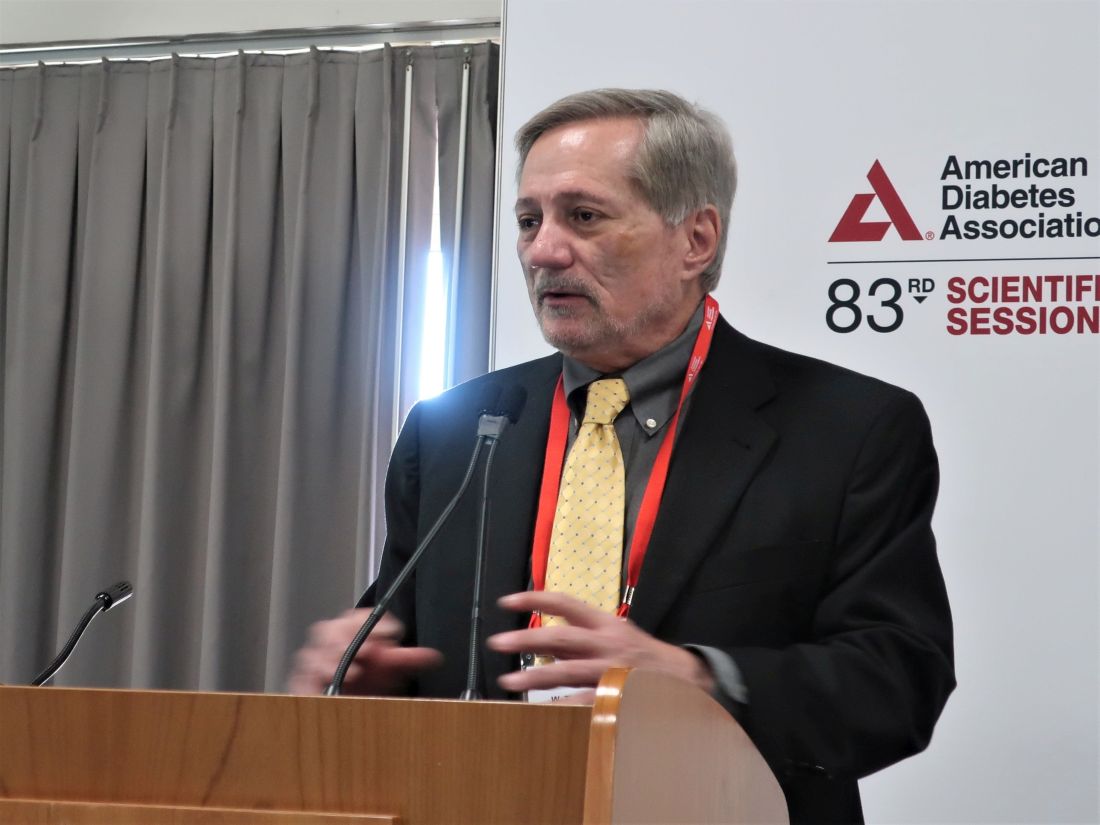
Although tirzepatide has not been compared head-to-head for weight loss with any of the several available GLP-1 agonists, the reported weight-loss numbers seem to favor tirzepatide, said Dr. Garvey, director of the Diabetes Research Center of the University of Alabama at Birmingham.
“If you look at the degree of weight loss across trials, we see a clinically significant difference in weight loss” compared with semaglutide and other agents that only act on the GLP-1 receptor, he noted. (Although cross-trial comparisons of different medications often have uncertain reliability.)
“The data suggest an incremental effect from tirzepatide” compared with the GLP-1 agonists now approved for weight loss, said Marlon Pragnell, PhD, vice president, research and science, ADA, who was not involved in the tirzepatide studies.
This is a “step forward for treating people with obesity and type 2 diabetes; it’s a very promising treatment option,” Dr. Pragnell said in an interview.
Tirzepatide the ‘most effective agent’
Ildiko Lingvay, MD, the designated discussant for the SURMOUNT-2 presentation at the meeting, fully agreed. The new findings “confirm that tirzepatide is the most effective agent currently on the [U.S.] market to help achieve the two coprimary goals for patients with type 2 diabetes – weight loss and glycemic control – while also having favorable effects on cardiovascular risk factors,” said Dr. Lingvay, an endocrinologist at UT Southwestern Medical Center in Dallas, who was not involved with the SURMOUNT studies.

Dr. Lingvay offered as evidence the performance of tirzepatide’s main rival for weight loss semaglutide (Wegovy), delivered at the 2.4 mg/week subcutaneous injected dosage approved for weight loss. The semaglutide trial that SURMOUNT-2 most resembles is the STEP-2 trial, she said, which showed as its primary outcome a 9.6% average weight loss from baseline after 68 weeks of weekly semaglutide that compares, in a cross-trial way, with the 14.7% average drop from baseline weight with 15 mg tirzepatide weekly for 72 weeks and an average 12.8% weight loss with a weekly 10-mg tirzepatide dose.
“It’s fair to say that tirzepatide has an edge,” despite the limitations of cross-trial comparisons, Dr. Lingvay said in an interview.
But she acknowledged that superior weight loss efficacy takes a back seat in U.S. practice to access and affordability when making a prescribing decision for individual patients as these newer drugs are all expensive.
Affordability and access will remain a ‘big problem’
Dr. Garvey, too, cautioned that access and affordability of tirzepatide as well as other GLP-1 agonists remains a major sticking point.
“These medications are very expensive – more than $1,000 a dose – and this cost limits access ... [which is] a big problem,” Dr. Garvey noted. U.S. health care payers “do not want to open the gates [to expensive treatments] for a disorder that’s as common as obesity.”
“Access and affordability are always an issue for these medications,” agreed Janet Brown-Friday, RN, president, health care and education, ADA, who had no role in the tirzepatide studies.
SURMOUNT-2 randomized 938 adults with type 2 diabetes and overweight or obesity at 77 centers in seven countries including the United States from March 2021 to April 2023. The study had two primary outcomes: Average percent change in body weight from baseline to week 72, and percentage of participants who achieved a weight reduction from baseline of at least 5% after 72 weeks.
In-trial weight loss of 12.8%-14.7%
The in-trial analysis showed that a 10-mg weekly subcutaneous dose of tirzepatide resulted in an average 12.8% weight loss from baseline, and a 15-mg weekly subcutaneous dose led to an average 14.7% drop from baseline weight. People randomized to receive a placebo injection averaged a 3.2% drop from their baseline weight after 72 weeks, a finding that documents significant improvements compared with placebo with both tirzepatide doses.
The percentage of patients who achieved at least a 5% reduction in weight from baseline was 79% with the 10-mg dose of tirzepatide, 83% with the 15-mg dose, and 32% with placebo; these improvements were significant for both tirzepatide doses compared with placebo.
A 15% or greater reduction in weight from baseline occurred in 40%-48% of people who received tirzepatide compared with 3% of those who received placebo. A reduction in weight of this magnitude from baseline “will prevent a broad array of complications,” Dr. Garvey noted.
The results were simulatenously published online in The Lancet.
Glucose control without severe hypoglycemia
The safety profile of tirzepatide in SURMOUNT-2 was consistent with prior studies of the agent, as well as with other medications in the GLP-1 agonist class, with gastrointestinal adverse effects such as nausea and vomiting predominating, especially during the dose-escalation phase at treatment onset.
Dr. Garvey especially highlighted the overall safety of tirzepatide, and particularly its ability to produce clinically important reductions in A1c that averaged more than two percentage points from baseline values without producing a single episode of severe hypoglycemia, and an incidence of milder hypoglycemia of less than a 5%.
The absence of any severe hypoglycemia was “amazing,” Dr. Garvey said, especially given that 46%-49% of people taking tirzepatide in SURMOUNT-2 achieved normalization of their A1c to less than 5.7% on treatment compared with 4% of participants taking placebo.
The results also showed the benefit of a “big reduction in fasting insulin levels,” which averaged a 41% cut from baseline in those who received the 15-mg subcutaneous weekly dose of tirzepatide, coupled with increased insulin sensitivity, Dr. Garvey said.
Dr. Garvey disclosed ties to Eli Lilly, which sponsored SURMOUNT-2 and markets tirzepatide (Mounjaro), as well Boehringer Ingelheim, Novo Nordisk, Pfizer, Fractyl Health, Alnylam Pharmaceuticals, Inogen, and Merck. He has been an investigator for studies sponsored by Novo Nordisk, Epitomee, Neurovalens, and Pfizer. Dr. Pragnell and Dr. Brown-Friday have disclosed no relevant financial relationships.
A version of this article first appeared on Medscape.com.
SAN DIEGO – in the SURMOUNT-2 pivotal trial, a finding that will likely lead to Food and Drug Administration approval of a new indication for weight loss for tirzepatide.
Tirzepatide received FDA approval as a treatment for type 2 diabetes in adults, marketed as Mounjaro, in 2022. The agent – a “twincretin” that acts as an agonist at both the glucagon-like peptide-1 (GLP-1) receptor and glucose-dependent insulinotropic polypeptide (GIP) receptor – had also previously scored a decisive win for weight loss in adults with overweight or obesity without diabetes in the SURMOUNT-1 pivotal trial.
Taken together, results from SURMOUNT-1 and SURMOUNT-2 appear to make a good case for a weight-loss indication that will not depend on whether a patient also has type 2 diabetes.
“We anticipate that tirzepatide will be [FDA] approved for weight loss later this year,” W. Timothy Garvey, MD, lead researcher for SURMOUNT-2, said during a press briefing at the annual scientific sessions of the American Diabetes Association.
Tirzepatide ‘fills the gap’
Tirzepatide “fills the gap to get [medication-driven] weight loss in the range of 15% of baseline weight or better,” Dr. Garvey noted, which puts it in a favorable position relative to a 2.4-mg weekly subcutaneous injection with the GLP-1 agonist semaglutide (Wegovy), which produced an average weight loss from baseline of about 9.6% in people with type 2 diabetes in the STEP-2 trial.
Although tirzepatide has not been compared head-to-head for weight loss with any of the several available GLP-1 agonists, the reported weight-loss numbers seem to favor tirzepatide, said Dr. Garvey, director of the Diabetes Research Center of the University of Alabama at Birmingham.
“If you look at the degree of weight loss across trials, we see a clinically significant difference in weight loss” compared with semaglutide and other agents that only act on the GLP-1 receptor, he noted. (Although cross-trial comparisons of different medications often have uncertain reliability.)
“The data suggest an incremental effect from tirzepatide” compared with the GLP-1 agonists now approved for weight loss, said Marlon Pragnell, PhD, vice president, research and science, ADA, who was not involved in the tirzepatide studies.
This is a “step forward for treating people with obesity and type 2 diabetes; it’s a very promising treatment option,” Dr. Pragnell said in an interview.
Tirzepatide the ‘most effective agent’
Ildiko Lingvay, MD, the designated discussant for the SURMOUNT-2 presentation at the meeting, fully agreed. The new findings “confirm that tirzepatide is the most effective agent currently on the [U.S.] market to help achieve the two coprimary goals for patients with type 2 diabetes – weight loss and glycemic control – while also having favorable effects on cardiovascular risk factors,” said Dr. Lingvay, an endocrinologist at UT Southwestern Medical Center in Dallas, who was not involved with the SURMOUNT studies.
Dr. Lingvay offered as evidence the performance of tirzepatide’s main rival for weight loss semaglutide (Wegovy), delivered at the 2.4 mg/week subcutaneous injected dosage approved for weight loss. The semaglutide trial that SURMOUNT-2 most resembles is the STEP-2 trial, she said, which showed as its primary outcome a 9.6% average weight loss from baseline after 68 weeks of weekly semaglutide that compares, in a cross-trial way, with the 14.7% average drop from baseline weight with 15 mg tirzepatide weekly for 72 weeks and an average 12.8% weight loss with a weekly 10-mg tirzepatide dose.
“It’s fair to say that tirzepatide has an edge,” despite the limitations of cross-trial comparisons, Dr. Lingvay said in an interview.
But she acknowledged that superior weight loss efficacy takes a back seat in U.S. practice to access and affordability when making a prescribing decision for individual patients as these newer drugs are all expensive.
Affordability and access will remain a ‘big problem’
Dr. Garvey, too, cautioned that access and affordability of tirzepatide as well as other GLP-1 agonists remains a major sticking point.
“These medications are very expensive – more than $1,000 a dose – and this cost limits access ... [which is] a big problem,” Dr. Garvey noted. U.S. health care payers “do not want to open the gates [to expensive treatments] for a disorder that’s as common as obesity.”
“Access and affordability are always an issue for these medications,” agreed Janet Brown-Friday, RN, president, health care and education, ADA, who had no role in the tirzepatide studies.
SURMOUNT-2 randomized 938 adults with type 2 diabetes and overweight or obesity at 77 centers in seven countries including the United States from March 2021 to April 2023. The study had two primary outcomes: Average percent change in body weight from baseline to week 72, and percentage of participants who achieved a weight reduction from baseline of at least 5% after 72 weeks.
In-trial weight loss of 12.8%-14.7%
The in-trial analysis showed that a 10-mg weekly subcutaneous dose of tirzepatide resulted in an average 12.8% weight loss from baseline, and a 15-mg weekly subcutaneous dose led to an average 14.7% drop from baseline weight. People randomized to receive a placebo injection averaged a 3.2% drop from their baseline weight after 72 weeks, a finding that documents significant improvements compared with placebo with both tirzepatide doses.
The percentage of patients who achieved at least a 5% reduction in weight from baseline was 79% with the 10-mg dose of tirzepatide, 83% with the 15-mg dose, and 32% with placebo; these improvements were significant for both tirzepatide doses compared with placebo.
A 15% or greater reduction in weight from baseline occurred in 40%-48% of people who received tirzepatide compared with 3% of those who received placebo. A reduction in weight of this magnitude from baseline “will prevent a broad array of complications,” Dr. Garvey noted.
The results were simulatenously published online in The Lancet.
Glucose control without severe hypoglycemia
The safety profile of tirzepatide in SURMOUNT-2 was consistent with prior studies of the agent, as well as with other medications in the GLP-1 agonist class, with gastrointestinal adverse effects such as nausea and vomiting predominating, especially during the dose-escalation phase at treatment onset.
Dr. Garvey especially highlighted the overall safety of tirzepatide, and particularly its ability to produce clinically important reductions in A1c that averaged more than two percentage points from baseline values without producing a single episode of severe hypoglycemia, and an incidence of milder hypoglycemia of less than a 5%.
The absence of any severe hypoglycemia was “amazing,” Dr. Garvey said, especially given that 46%-49% of people taking tirzepatide in SURMOUNT-2 achieved normalization of their A1c to less than 5.7% on treatment compared with 4% of participants taking placebo.
The results also showed the benefit of a “big reduction in fasting insulin levels,” which averaged a 41% cut from baseline in those who received the 15-mg subcutaneous weekly dose of tirzepatide, coupled with increased insulin sensitivity, Dr. Garvey said.
Dr. Garvey disclosed ties to Eli Lilly, which sponsored SURMOUNT-2 and markets tirzepatide (Mounjaro), as well Boehringer Ingelheim, Novo Nordisk, Pfizer, Fractyl Health, Alnylam Pharmaceuticals, Inogen, and Merck. He has been an investigator for studies sponsored by Novo Nordisk, Epitomee, Neurovalens, and Pfizer. Dr. Pragnell and Dr. Brown-Friday have disclosed no relevant financial relationships.
A version of this article first appeared on Medscape.com.
SAN DIEGO – in the SURMOUNT-2 pivotal trial, a finding that will likely lead to Food and Drug Administration approval of a new indication for weight loss for tirzepatide.
Tirzepatide received FDA approval as a treatment for type 2 diabetes in adults, marketed as Mounjaro, in 2022. The agent – a “twincretin” that acts as an agonist at both the glucagon-like peptide-1 (GLP-1) receptor and glucose-dependent insulinotropic polypeptide (GIP) receptor – had also previously scored a decisive win for weight loss in adults with overweight or obesity without diabetes in the SURMOUNT-1 pivotal trial.
Taken together, results from SURMOUNT-1 and SURMOUNT-2 appear to make a good case for a weight-loss indication that will not depend on whether a patient also has type 2 diabetes.
“We anticipate that tirzepatide will be [FDA] approved for weight loss later this year,” W. Timothy Garvey, MD, lead researcher for SURMOUNT-2, said during a press briefing at the annual scientific sessions of the American Diabetes Association.
Tirzepatide ‘fills the gap’
Tirzepatide “fills the gap to get [medication-driven] weight loss in the range of 15% of baseline weight or better,” Dr. Garvey noted, which puts it in a favorable position relative to a 2.4-mg weekly subcutaneous injection with the GLP-1 agonist semaglutide (Wegovy), which produced an average weight loss from baseline of about 9.6% in people with type 2 diabetes in the STEP-2 trial.
Although tirzepatide has not been compared head-to-head for weight loss with any of the several available GLP-1 agonists, the reported weight-loss numbers seem to favor tirzepatide, said Dr. Garvey, director of the Diabetes Research Center of the University of Alabama at Birmingham.
“If you look at the degree of weight loss across trials, we see a clinically significant difference in weight loss” compared with semaglutide and other agents that only act on the GLP-1 receptor, he noted. (Although cross-trial comparisons of different medications often have uncertain reliability.)
“The data suggest an incremental effect from tirzepatide” compared with the GLP-1 agonists now approved for weight loss, said Marlon Pragnell, PhD, vice president, research and science, ADA, who was not involved in the tirzepatide studies.
This is a “step forward for treating people with obesity and type 2 diabetes; it’s a very promising treatment option,” Dr. Pragnell said in an interview.
Tirzepatide the ‘most effective agent’
Ildiko Lingvay, MD, the designated discussant for the SURMOUNT-2 presentation at the meeting, fully agreed. The new findings “confirm that tirzepatide is the most effective agent currently on the [U.S.] market to help achieve the two coprimary goals for patients with type 2 diabetes – weight loss and glycemic control – while also having favorable effects on cardiovascular risk factors,” said Dr. Lingvay, an endocrinologist at UT Southwestern Medical Center in Dallas, who was not involved with the SURMOUNT studies.
Dr. Lingvay offered as evidence the performance of tirzepatide’s main rival for weight loss semaglutide (Wegovy), delivered at the 2.4 mg/week subcutaneous injected dosage approved for weight loss. The semaglutide trial that SURMOUNT-2 most resembles is the STEP-2 trial, she said, which showed as its primary outcome a 9.6% average weight loss from baseline after 68 weeks of weekly semaglutide that compares, in a cross-trial way, with the 14.7% average drop from baseline weight with 15 mg tirzepatide weekly for 72 weeks and an average 12.8% weight loss with a weekly 10-mg tirzepatide dose.
“It’s fair to say that tirzepatide has an edge,” despite the limitations of cross-trial comparisons, Dr. Lingvay said in an interview.
But she acknowledged that superior weight loss efficacy takes a back seat in U.S. practice to access and affordability when making a prescribing decision for individual patients as these newer drugs are all expensive.
Affordability and access will remain a ‘big problem’
Dr. Garvey, too, cautioned that access and affordability of tirzepatide as well as other GLP-1 agonists remains a major sticking point.
“These medications are very expensive – more than $1,000 a dose – and this cost limits access ... [which is] a big problem,” Dr. Garvey noted. U.S. health care payers “do not want to open the gates [to expensive treatments] for a disorder that’s as common as obesity.”
“Access and affordability are always an issue for these medications,” agreed Janet Brown-Friday, RN, president, health care and education, ADA, who had no role in the tirzepatide studies.
SURMOUNT-2 randomized 938 adults with type 2 diabetes and overweight or obesity at 77 centers in seven countries including the United States from March 2021 to April 2023. The study had two primary outcomes: Average percent change in body weight from baseline to week 72, and percentage of participants who achieved a weight reduction from baseline of at least 5% after 72 weeks.
In-trial weight loss of 12.8%-14.7%
The in-trial analysis showed that a 10-mg weekly subcutaneous dose of tirzepatide resulted in an average 12.8% weight loss from baseline, and a 15-mg weekly subcutaneous dose led to an average 14.7% drop from baseline weight. People randomized to receive a placebo injection averaged a 3.2% drop from their baseline weight after 72 weeks, a finding that documents significant improvements compared with placebo with both tirzepatide doses.
The percentage of patients who achieved at least a 5% reduction in weight from baseline was 79% with the 10-mg dose of tirzepatide, 83% with the 15-mg dose, and 32% with placebo; these improvements were significant for both tirzepatide doses compared with placebo.
A 15% or greater reduction in weight from baseline occurred in 40%-48% of people who received tirzepatide compared with 3% of those who received placebo. A reduction in weight of this magnitude from baseline “will prevent a broad array of complications,” Dr. Garvey noted.
The results were simulatenously published online in The Lancet.
Glucose control without severe hypoglycemia
The safety profile of tirzepatide in SURMOUNT-2 was consistent with prior studies of the agent, as well as with other medications in the GLP-1 agonist class, with gastrointestinal adverse effects such as nausea and vomiting predominating, especially during the dose-escalation phase at treatment onset.
Dr. Garvey especially highlighted the overall safety of tirzepatide, and particularly its ability to produce clinically important reductions in A1c that averaged more than two percentage points from baseline values without producing a single episode of severe hypoglycemia, and an incidence of milder hypoglycemia of less than a 5%.
The absence of any severe hypoglycemia was “amazing,” Dr. Garvey said, especially given that 46%-49% of people taking tirzepatide in SURMOUNT-2 achieved normalization of their A1c to less than 5.7% on treatment compared with 4% of participants taking placebo.
The results also showed the benefit of a “big reduction in fasting insulin levels,” which averaged a 41% cut from baseline in those who received the 15-mg subcutaneous weekly dose of tirzepatide, coupled with increased insulin sensitivity, Dr. Garvey said.
Dr. Garvey disclosed ties to Eli Lilly, which sponsored SURMOUNT-2 and markets tirzepatide (Mounjaro), as well Boehringer Ingelheim, Novo Nordisk, Pfizer, Fractyl Health, Alnylam Pharmaceuticals, Inogen, and Merck. He has been an investigator for studies sponsored by Novo Nordisk, Epitomee, Neurovalens, and Pfizer. Dr. Pragnell and Dr. Brown-Friday have disclosed no relevant financial relationships.
A version of this article first appeared on Medscape.com.
AT ADA 2023
Harvard medical school sued over stolen body part scandal
Plaintiffs include relatives of people whose remains were allegedly stolen and sold. The lawsuit alleges that as many as 400 cadavers may have been trafficked in a multi-year scheme. Details were revealed in a June 13 indictment by the U.S. attorney for the Middle District of Pennsylvania.
“Medical schools like Harvard have a duty to ensure [donated remains] are handled properly and with decency and to ensure they are used for their intended purpose of scientific study,” attorney Jeff Catalano said in a statement.
“I do think Harvard has that duty,” said Arthur Caplan, PhD, director, Division of Medical Ethics, New York University. But, he added, “I will say there’s not much they can do when employees set out to systematically undermine them.”
The indictment alleges that from 2018 through August 2022, Harvard morgue manager Cedric Lodge stole dissected portions of donated cadavers, including heads, brains, skin, and bones, which were then sold by him and his wife, Denise Lodge, to Katrina Maclean, owner of Kat’s Creepy Creations, Peabody, Mass. Ms. Maclean allegedly sold human remains to Joshua Taylor and Jeremy Pauley, both Pennsylvania residents.
On occasion, Mr. Lodge allowed Ms. Maclean, Mr. Taylor, and others into the morgue to choose which parts they wanted, according to the indictment. Mr. Taylor, Ms. Maclean, and Denise Lodge are all named in the indictment. Mr. Pauley was charged separately.
They each face a maximum of 15 years in prison.
Ms. Maclean allegedly bought two dissected faces for $600 and shipped human skin to Mr. Pauley to be made into leather; Mr. Pauley then eventually shipped the “tanned human skin” back to Ms. Maclean, according to the indictment. Over a 3-year period, Mr. Taylor paid the Lodges some $37,000 for stolen human remains, the indictment charges.
Mr. Pauley also purchased human remains from Candace Chapman Scott, who stole them from her employer, a mortuary in Little Rock, Ark. The mortuary received remains for cremation from an area medical school, according to the indictment.
After being notified of the investigation in March, Harvard cooperated fully, the school said in a statement from George Q. Daley, MD, PhD, dean of the Faculty of Medicine.
“We are appalled to learn that something so disturbing could happen on our campus – a community dedicated to healing and serving others,” the statement said. “The reported incidents are a betrayal of HMS and, most importantly, each of the individuals who altruistically chose to will their bodies to HMS through the Anatomical Gift Program to advance medical education and research.”
The U.S. attorney thanked Harvard for its cooperation, saying that it “is also a victim here.”
Dr. Caplan, who also writes an ethics column for this news organization, agrees. The school was betrayed, he said.
“You expect professionalism, integrity on the part of your doctors, on the part of your technicians, on the part of your workforce,” he said. He noted that those expectations are explained in institutions’ codes of ethics and policies.
Harvard said Mr. Lodge had worked in the morgue since 1995 and that he took several leaves: from September 2021 to February 2022, and again starting February 14. The school terminated his employment on May 6.
His duties included intake of anatomic donors’ bodies. He coordinated embalming and oversaw the storage and movement of cadavers to and from teaching labs. When studies were complete, he prepared remains to be transported to and from the external crematorium and, when appropriate, for burial, according to a Harvard fact sheet for families.
The medical school has convened an outside expert panel to evaluate the Anatomical Gift Program and morgue policies and practices. The panel is expected to make its findings public at the end of the summer.
Dr. Caplan said he hoped the committee recommends unannounced audits of cadaver donation programs and medical tissue and bone suppliers, which could help expose illicit diversions. “You need to keep an eye, which no one seems to do because it’s a state issue and it’s not a priority, on that trade in body parts,” he said.
He believes other medical schools will reexamine their donation programs, especially given Harvard’s status.
“With a prominent place like that having this kind of problem, I can’t imagine there’s not a little bit of a scramble at a lot of the body programs to make sure that they know that things are as they should be,” Dr. Caplan said.
A version of this article first appeared on Medscape.com.
Plaintiffs include relatives of people whose remains were allegedly stolen and sold. The lawsuit alleges that as many as 400 cadavers may have been trafficked in a multi-year scheme. Details were revealed in a June 13 indictment by the U.S. attorney for the Middle District of Pennsylvania.
“Medical schools like Harvard have a duty to ensure [donated remains] are handled properly and with decency and to ensure they are used for their intended purpose of scientific study,” attorney Jeff Catalano said in a statement.
“I do think Harvard has that duty,” said Arthur Caplan, PhD, director, Division of Medical Ethics, New York University. But, he added, “I will say there’s not much they can do when employees set out to systematically undermine them.”
The indictment alleges that from 2018 through August 2022, Harvard morgue manager Cedric Lodge stole dissected portions of donated cadavers, including heads, brains, skin, and bones, which were then sold by him and his wife, Denise Lodge, to Katrina Maclean, owner of Kat’s Creepy Creations, Peabody, Mass. Ms. Maclean allegedly sold human remains to Joshua Taylor and Jeremy Pauley, both Pennsylvania residents.
On occasion, Mr. Lodge allowed Ms. Maclean, Mr. Taylor, and others into the morgue to choose which parts they wanted, according to the indictment. Mr. Taylor, Ms. Maclean, and Denise Lodge are all named in the indictment. Mr. Pauley was charged separately.
They each face a maximum of 15 years in prison.
Ms. Maclean allegedly bought two dissected faces for $600 and shipped human skin to Mr. Pauley to be made into leather; Mr. Pauley then eventually shipped the “tanned human skin” back to Ms. Maclean, according to the indictment. Over a 3-year period, Mr. Taylor paid the Lodges some $37,000 for stolen human remains, the indictment charges.
Mr. Pauley also purchased human remains from Candace Chapman Scott, who stole them from her employer, a mortuary in Little Rock, Ark. The mortuary received remains for cremation from an area medical school, according to the indictment.
After being notified of the investigation in March, Harvard cooperated fully, the school said in a statement from George Q. Daley, MD, PhD, dean of the Faculty of Medicine.
“We are appalled to learn that something so disturbing could happen on our campus – a community dedicated to healing and serving others,” the statement said. “The reported incidents are a betrayal of HMS and, most importantly, each of the individuals who altruistically chose to will their bodies to HMS through the Anatomical Gift Program to advance medical education and research.”
The U.S. attorney thanked Harvard for its cooperation, saying that it “is also a victim here.”
Dr. Caplan, who also writes an ethics column for this news organization, agrees. The school was betrayed, he said.
“You expect professionalism, integrity on the part of your doctors, on the part of your technicians, on the part of your workforce,” he said. He noted that those expectations are explained in institutions’ codes of ethics and policies.
Harvard said Mr. Lodge had worked in the morgue since 1995 and that he took several leaves: from September 2021 to February 2022, and again starting February 14. The school terminated his employment on May 6.
His duties included intake of anatomic donors’ bodies. He coordinated embalming and oversaw the storage and movement of cadavers to and from teaching labs. When studies were complete, he prepared remains to be transported to and from the external crematorium and, when appropriate, for burial, according to a Harvard fact sheet for families.
The medical school has convened an outside expert panel to evaluate the Anatomical Gift Program and morgue policies and practices. The panel is expected to make its findings public at the end of the summer.
Dr. Caplan said he hoped the committee recommends unannounced audits of cadaver donation programs and medical tissue and bone suppliers, which could help expose illicit diversions. “You need to keep an eye, which no one seems to do because it’s a state issue and it’s not a priority, on that trade in body parts,” he said.
He believes other medical schools will reexamine their donation programs, especially given Harvard’s status.
“With a prominent place like that having this kind of problem, I can’t imagine there’s not a little bit of a scramble at a lot of the body programs to make sure that they know that things are as they should be,” Dr. Caplan said.
A version of this article first appeared on Medscape.com.
Plaintiffs include relatives of people whose remains were allegedly stolen and sold. The lawsuit alleges that as many as 400 cadavers may have been trafficked in a multi-year scheme. Details were revealed in a June 13 indictment by the U.S. attorney for the Middle District of Pennsylvania.
“Medical schools like Harvard have a duty to ensure [donated remains] are handled properly and with decency and to ensure they are used for their intended purpose of scientific study,” attorney Jeff Catalano said in a statement.
“I do think Harvard has that duty,” said Arthur Caplan, PhD, director, Division of Medical Ethics, New York University. But, he added, “I will say there’s not much they can do when employees set out to systematically undermine them.”
The indictment alleges that from 2018 through August 2022, Harvard morgue manager Cedric Lodge stole dissected portions of donated cadavers, including heads, brains, skin, and bones, which were then sold by him and his wife, Denise Lodge, to Katrina Maclean, owner of Kat’s Creepy Creations, Peabody, Mass. Ms. Maclean allegedly sold human remains to Joshua Taylor and Jeremy Pauley, both Pennsylvania residents.
On occasion, Mr. Lodge allowed Ms. Maclean, Mr. Taylor, and others into the morgue to choose which parts they wanted, according to the indictment. Mr. Taylor, Ms. Maclean, and Denise Lodge are all named in the indictment. Mr. Pauley was charged separately.
They each face a maximum of 15 years in prison.
Ms. Maclean allegedly bought two dissected faces for $600 and shipped human skin to Mr. Pauley to be made into leather; Mr. Pauley then eventually shipped the “tanned human skin” back to Ms. Maclean, according to the indictment. Over a 3-year period, Mr. Taylor paid the Lodges some $37,000 for stolen human remains, the indictment charges.
Mr. Pauley also purchased human remains from Candace Chapman Scott, who stole them from her employer, a mortuary in Little Rock, Ark. The mortuary received remains for cremation from an area medical school, according to the indictment.
After being notified of the investigation in March, Harvard cooperated fully, the school said in a statement from George Q. Daley, MD, PhD, dean of the Faculty of Medicine.
“We are appalled to learn that something so disturbing could happen on our campus – a community dedicated to healing and serving others,” the statement said. “The reported incidents are a betrayal of HMS and, most importantly, each of the individuals who altruistically chose to will their bodies to HMS through the Anatomical Gift Program to advance medical education and research.”
The U.S. attorney thanked Harvard for its cooperation, saying that it “is also a victim here.”
Dr. Caplan, who also writes an ethics column for this news organization, agrees. The school was betrayed, he said.
“You expect professionalism, integrity on the part of your doctors, on the part of your technicians, on the part of your workforce,” he said. He noted that those expectations are explained in institutions’ codes of ethics and policies.
Harvard said Mr. Lodge had worked in the morgue since 1995 and that he took several leaves: from September 2021 to February 2022, and again starting February 14. The school terminated his employment on May 6.
His duties included intake of anatomic donors’ bodies. He coordinated embalming and oversaw the storage and movement of cadavers to and from teaching labs. When studies were complete, he prepared remains to be transported to and from the external crematorium and, when appropriate, for burial, according to a Harvard fact sheet for families.
The medical school has convened an outside expert panel to evaluate the Anatomical Gift Program and morgue policies and practices. The panel is expected to make its findings public at the end of the summer.
Dr. Caplan said he hoped the committee recommends unannounced audits of cadaver donation programs and medical tissue and bone suppliers, which could help expose illicit diversions. “You need to keep an eye, which no one seems to do because it’s a state issue and it’s not a priority, on that trade in body parts,” he said.
He believes other medical schools will reexamine their donation programs, especially given Harvard’s status.
“With a prominent place like that having this kind of problem, I can’t imagine there’s not a little bit of a scramble at a lot of the body programs to make sure that they know that things are as they should be,” Dr. Caplan said.
A version of this article first appeared on Medscape.com.
Low-dose colchicine approved for CVD: Now what?
The recent U.S. approval of a new low dose of colchicine 0.5 mg (Lodoco; Agepha Pharma) with a broad indication for use in atherosclerotic cardiovascular disease (ASCVD) represents a completely new approach to treatment, specifically targeting inflammation as a driver of atherosclerosis.
The Food and Drug Administration granted colchicine a very broad label: to reduce the risk for cardiovascular events in adult patients with established ASCVD or with multiple risk factors for cardiovascular disease. But how will the drug be used in clinical practice?
“The idea of inflammation as a driver of atherosclerosis and cardiovascular risk has been around for decades, and it is very well known that atherosclerosis is an inflammatory process. However, treating inflammation is new as we haven’t had a specific agent targeting inflammation before, noted Michael Joseph Blaha, MD, director of clinical research, Ciccarone Center for the Prevention of Cardiovascular Disease at Johns Hopkins Hospital, Baltimore.
Dr. Blaha, who has been an unpaid scientific adviser to Agepha, added that the approval of low-dose colchicine “will open the door toward having a routine conversation about residual inflammatory risk in our patients; and we need to work out exactly how we do that.”
Dr. Blaha is not surprised by the FDA-approved indication for colchicine, pointing out that the main large-scale trial supporting its use in ASCVD, the LoDoCo-2 trial, included a similar broad population.
“I think the approval was appropriate as the indication should always follow the data. But I think how the drug will actually be used will depend on the context for different individual patients,” he said.
“The paradigm coming forward is the idea of residual risk that patients have after they been treated with the standard of care – which in most cases is a statin and blood pressure control – and what is driving that residual risk,” he noted. “If we think patients are still at high risk of recurrent cardiovascular events, we have to think what we will do next. This is where this drug will come in.”
Dr. Blaha pointed out that there are now multiple options for reducing residual risk; he believes that it will depend on the profile of the patient as to which of those options is chosen first.
“If after high-dose statin treatment they still have raised LDL, then we can add another LDL lowering drug; or it might be diabetes and obesity that we want to address first; or elevated triglycerides. But now, we can also consider residual inflammatory risk if we think the patient has residual plaque inflammation,” he said. “So, colchicine will be one of several choices beyond a statin that we can think about as the next step for treating residual risk.”
Is CRP measurement necessary?
Though elevated levels of high-sensitivity C-reactive protein (hsCRP) is a marker of inflammation in ASCVD, the two main trials of colchicine in ASCVD, both of which showed large benefits of the drug, did not measure hsCRP, leading to questions as to whether measurement of this biomarker is necessary to select patients for colchicine treatment.
“Some clinicians will favor testing hsCRP and treating those with levels above 2 mg/L. I think that’s very reasonable,” Dr. Blaha said. “However, because hsCRP was not measured in the trials, I don’t think testing for this biomarker is mandatory to establish that there is inflammation,” he added.
“The label does not stipulate that CRP has to be measured. It is giving physicians latitude; they can measure CRP, or they don’t have to.”
Dr. Blaha added that clinicians need to think about what is driving residual risk in each individual patient: “If you think their other risk factors are well controlled but they are still having recurrent events, then we can consider colchicine as a way of reducing their residual risk which is likely being caused by inflammation.
“We are at a great place in cardiovascular medicine as we have several different options to use after a statin, and now we have this new therapy targeted at inflammation as well. While we can use all these options together, I think most clinicians will want to prioritize therapies by using the ones that they believe will reduce the residual risk the most in each individual patient,” Dr. Blaha explained.
‘An entire other axis driving atherosclerosis’
Paul Ridker, MD, director of the Center for Cardiovascular Disease Prevention at Brigham and Women’s Hospital in Boston, is one of the major players in the cardiovascular inflammation field and has helped develop hsCRP testing. He has similar views.
“This FDA approval is extremely important, as it will draw attention to the role of inflammation in atherosclerosis and the need to treat it,” he said.
“Physicians need to be aware that, yes, we need to lower cholesterol aggressively, but they also need to know that there is an entire other axis driving atherosclerosis – and that is inflammation. And until now, we haven’t had an FDA-approved drug to treat inflammation.”
Dr. Ridker stressed that he doesn’t want to undermine lowering lipids: “Therapies aimed at inflammation are not in competition with those aimed at lipid lowering. We know lipid lowering works. But now we have another approach as well. The challenge here is educating physicians on this new approach.”
Dr. Ridker said he already uses low-dose colchicine for patients whom he refers to as “frequent flyers”; those who keep coming back despite aggressive lipid lowering. “They have multiple angioplasties, bypass surgery, etc.”
Like Dr. Blaha, Dr. Ridker thinks that doctors should start using this drug in high-risk patients who are already on a statin and who have residual inflammatory risk: “[The] patient whose underlying biologic problem is inflammation [is whom] we really want to treat with this drug. That is where it is most likely to be highly effective and where the comfort level will be the greatest.”
He said that measurement of hsCRP is an appropriate way to select these patients.
“I think this is a great impetus to start having much wider CRP measurement so we can actually target this anti-inflammatory drug to the patients with residual inflammatory risk – those with hsCRP level above 2 mg/L,” he said, estimating that this could apply to around 30%-40% of patients with ASCVD who are already taking a statin.
A second pillar of ASCVD treatment?
A somewhat different view is held by Jean-Claude Tardif, MD, director of the Research Centre at the Montréal Heart Institute, Canada, who was the lead investigator of the other randomized controlled trial of colchicine in heart disease, the COLCOT trial.
He said that colchicine should become the “second pillar” of ASCVD treatment, along with statins, for almost all patients.
Tardif referred to the recent study (led by Dr. Ridker) in The Lancet, which showed that among patients who are already on a statin, those with high inflammation levels had the highest risk for future events.
“So, the next step after a statin has to be to consider inflammation reduction,” he said.
“Despite all the drugs we have, ASCVD remains the leading cause of death in the Western world. What drives these events is largely inflammation, so it makes sense to directly tackle reduction of inflammation in the vessel, with a drug like colchicine,” he noted.
“I would say all patients with coronary atherosclerosis are potential candidates for low-dose colchicine as long as they do not have severe kidney disease, which is a contraindication,” Dr. Tardif said.
“If you want to fine tune this a bit more, those that are at particular risk are those that have recurrent events, those with multiple risk factors, and those with a recent [myocardial infarction]. In these patients, it would make a lot of sense to add low-dose colchicine to high-dose statins,” he added.
Dr. Tardif said he is not going to use CRP measurements to select patients for colchicine treatment: “Although measuring CRP may make sense intuitively, both large, randomized trials of colchicine did not select patients based on raised CRP, and they showed a benefit across the board.
If I consider a patient with ASCVD to be at high risk of future events and they are already on a statin I’m going to consider colchicine in all these patients, as long as they don’t have severe kidney disease.”
Dr. Tardif said that ASCVD needs to follow the model of heart failure which has several pillars of treatment directed at different targets that are all used together.
“I think we should apply the same approach to patients with ASCVD,” he added. “Yes, we need to hit the cholesterol with a statin, but we can now also hit the inflammation with colchicine.”
Polypharmacy concerns
Steve Nissen, MD, professor of medicine at the Cleveland Clinic, who was not involved in the colchicine trials, is also enthusiastic about use of colchicine. But like Dr. Ridker and Dr. Blaha, he favors selecting patients who are likely to benefit the most.
“I have been an advocate of the inflammatory hypothesis for many years, and we have been on a quest for a pure anti-inflammatory therapy that we can add to the standard treatment of patients with coronary disease. And colchicine has the safety and efficacy to do this,” Dr. Nissen said.
“What colchicine offers here is an inexpensive drug with pretty good data on reduction in morbidity from coronary disease. It has a completely different mechanism, so its benefit is likely to be additive to statins. I think we could probably do a lot of good at very little expense by just using these two therapies,” he said.
“But at present my preference will be to use colchicine selectively in those with raised CRP. I think that’s logical. I’m just worried about polypharmacy. Some of my patients are already on five, six, or seven meds. I need to have a reason to add an additional drug, and I’m not sure if we really analyze this carefully that patients with a low CRP would derive the same benefit. They might do, but I doubt it,” he noted.
“There may be further research and analyses that help us understand the relationship between CRP and efficacy of colchicine, and that may help us figure this out,” he added.
Safety is reassuring
In terms of safety and tolerability of the 0.5-mg colchicine dose, the experts seem to think that this is very manageable.
“When used for gout or pericarditis, colchicine is generally given at a dose of 0.6 mg twice a day and this can cause a lot of gastrointestinal [GI] side effects,” Dr. Nissen said. “But the low dose approved for ASCVD – 0.5 mg once a day – appears to be much better tolerated. There are some GI side effects, but these are not intolerable, and they generally go away with time.”
Dr. Ridker added that in the randomized trials, the adverse effects were “quite minimal,” but, “that being said, this drug is not to be used in severe kidney or liver disease, and there are some drug interactions that we need to be aware of. But in general, side effects are rare with the low dose. There may be some GI effects but they are mainly mild and you can generally treat through them.”
Dr. Blaha agreed that this is not a drug for patients with advanced kidney disease, “and there are some drug interactions that we have to be mindful of, but the list is not so long. There is a signal of modest gastrointestinal and muscle side effects, but most patients will be able to take it without issues. Because it’s already used in gout, physicians are already quite comfortable with its use.”
Part of the backbone of CV treatment?
Concluding, Dr. Blaha said he believes that prescribing of colchicine will start with cardiologists who will use it in their highest-risk patients first.
“But as we become comfortable with it, I think we will start using it in a broader range of patients and eventually primary care doctors will start prescribing it – much like what has happened with the statins,” he suggested.
“Where it sits along with statins in the future will be very interesting to see, but I think some people can envision it being up there with statins as part of the backbone of cardiovascular treatment in future.”
Dr. Tardif holds patents on methods for using low-dose colchicine after myocardial infarction, licensed to Montreal Heart Institute. Dr. Ridker is a consultant to Agepha and has research grants from Novo Nordisk related to the development of alternative anti-inflammatory therapies for atherosclerotic disease. Dr. Blaha reports being an unpaid scientific adviser to Agepha Pharma.
A version of this article first appeared on Medscape.com.
The recent U.S. approval of a new low dose of colchicine 0.5 mg (Lodoco; Agepha Pharma) with a broad indication for use in atherosclerotic cardiovascular disease (ASCVD) represents a completely new approach to treatment, specifically targeting inflammation as a driver of atherosclerosis.
The Food and Drug Administration granted colchicine a very broad label: to reduce the risk for cardiovascular events in adult patients with established ASCVD or with multiple risk factors for cardiovascular disease. But how will the drug be used in clinical practice?
“The idea of inflammation as a driver of atherosclerosis and cardiovascular risk has been around for decades, and it is very well known that atherosclerosis is an inflammatory process. However, treating inflammation is new as we haven’t had a specific agent targeting inflammation before, noted Michael Joseph Blaha, MD, director of clinical research, Ciccarone Center for the Prevention of Cardiovascular Disease at Johns Hopkins Hospital, Baltimore.
Dr. Blaha, who has been an unpaid scientific adviser to Agepha, added that the approval of low-dose colchicine “will open the door toward having a routine conversation about residual inflammatory risk in our patients; and we need to work out exactly how we do that.”
Dr. Blaha is not surprised by the FDA-approved indication for colchicine, pointing out that the main large-scale trial supporting its use in ASCVD, the LoDoCo-2 trial, included a similar broad population.
“I think the approval was appropriate as the indication should always follow the data. But I think how the drug will actually be used will depend on the context for different individual patients,” he said.
“The paradigm coming forward is the idea of residual risk that patients have after they been treated with the standard of care – which in most cases is a statin and blood pressure control – and what is driving that residual risk,” he noted. “If we think patients are still at high risk of recurrent cardiovascular events, we have to think what we will do next. This is where this drug will come in.”
Dr. Blaha pointed out that there are now multiple options for reducing residual risk; he believes that it will depend on the profile of the patient as to which of those options is chosen first.
“If after high-dose statin treatment they still have raised LDL, then we can add another LDL lowering drug; or it might be diabetes and obesity that we want to address first; or elevated triglycerides. But now, we can also consider residual inflammatory risk if we think the patient has residual plaque inflammation,” he said. “So, colchicine will be one of several choices beyond a statin that we can think about as the next step for treating residual risk.”
Is CRP measurement necessary?
Though elevated levels of high-sensitivity C-reactive protein (hsCRP) is a marker of inflammation in ASCVD, the two main trials of colchicine in ASCVD, both of which showed large benefits of the drug, did not measure hsCRP, leading to questions as to whether measurement of this biomarker is necessary to select patients for colchicine treatment.
“Some clinicians will favor testing hsCRP and treating those with levels above 2 mg/L. I think that’s very reasonable,” Dr. Blaha said. “However, because hsCRP was not measured in the trials, I don’t think testing for this biomarker is mandatory to establish that there is inflammation,” he added.
“The label does not stipulate that CRP has to be measured. It is giving physicians latitude; they can measure CRP, or they don’t have to.”
Dr. Blaha added that clinicians need to think about what is driving residual risk in each individual patient: “If you think their other risk factors are well controlled but they are still having recurrent events, then we can consider colchicine as a way of reducing their residual risk which is likely being caused by inflammation.
“We are at a great place in cardiovascular medicine as we have several different options to use after a statin, and now we have this new therapy targeted at inflammation as well. While we can use all these options together, I think most clinicians will want to prioritize therapies by using the ones that they believe will reduce the residual risk the most in each individual patient,” Dr. Blaha explained.
‘An entire other axis driving atherosclerosis’
Paul Ridker, MD, director of the Center for Cardiovascular Disease Prevention at Brigham and Women’s Hospital in Boston, is one of the major players in the cardiovascular inflammation field and has helped develop hsCRP testing. He has similar views.
“This FDA approval is extremely important, as it will draw attention to the role of inflammation in atherosclerosis and the need to treat it,” he said.
“Physicians need to be aware that, yes, we need to lower cholesterol aggressively, but they also need to know that there is an entire other axis driving atherosclerosis – and that is inflammation. And until now, we haven’t had an FDA-approved drug to treat inflammation.”
Dr. Ridker stressed that he doesn’t want to undermine lowering lipids: “Therapies aimed at inflammation are not in competition with those aimed at lipid lowering. We know lipid lowering works. But now we have another approach as well. The challenge here is educating physicians on this new approach.”
Dr. Ridker said he already uses low-dose colchicine for patients whom he refers to as “frequent flyers”; those who keep coming back despite aggressive lipid lowering. “They have multiple angioplasties, bypass surgery, etc.”
Like Dr. Blaha, Dr. Ridker thinks that doctors should start using this drug in high-risk patients who are already on a statin and who have residual inflammatory risk: “[The] patient whose underlying biologic problem is inflammation [is whom] we really want to treat with this drug. That is where it is most likely to be highly effective and where the comfort level will be the greatest.”
He said that measurement of hsCRP is an appropriate way to select these patients.
“I think this is a great impetus to start having much wider CRP measurement so we can actually target this anti-inflammatory drug to the patients with residual inflammatory risk – those with hsCRP level above 2 mg/L,” he said, estimating that this could apply to around 30%-40% of patients with ASCVD who are already taking a statin.
A second pillar of ASCVD treatment?
A somewhat different view is held by Jean-Claude Tardif, MD, director of the Research Centre at the Montréal Heart Institute, Canada, who was the lead investigator of the other randomized controlled trial of colchicine in heart disease, the COLCOT trial.
He said that colchicine should become the “second pillar” of ASCVD treatment, along with statins, for almost all patients.
Tardif referred to the recent study (led by Dr. Ridker) in The Lancet, which showed that among patients who are already on a statin, those with high inflammation levels had the highest risk for future events.
“So, the next step after a statin has to be to consider inflammation reduction,” he said.
“Despite all the drugs we have, ASCVD remains the leading cause of death in the Western world. What drives these events is largely inflammation, so it makes sense to directly tackle reduction of inflammation in the vessel, with a drug like colchicine,” he noted.
“I would say all patients with coronary atherosclerosis are potential candidates for low-dose colchicine as long as they do not have severe kidney disease, which is a contraindication,” Dr. Tardif said.
“If you want to fine tune this a bit more, those that are at particular risk are those that have recurrent events, those with multiple risk factors, and those with a recent [myocardial infarction]. In these patients, it would make a lot of sense to add low-dose colchicine to high-dose statins,” he added.
Dr. Tardif said he is not going to use CRP measurements to select patients for colchicine treatment: “Although measuring CRP may make sense intuitively, both large, randomized trials of colchicine did not select patients based on raised CRP, and they showed a benefit across the board.
If I consider a patient with ASCVD to be at high risk of future events and they are already on a statin I’m going to consider colchicine in all these patients, as long as they don’t have severe kidney disease.”
Dr. Tardif said that ASCVD needs to follow the model of heart failure which has several pillars of treatment directed at different targets that are all used together.
“I think we should apply the same approach to patients with ASCVD,” he added. “Yes, we need to hit the cholesterol with a statin, but we can now also hit the inflammation with colchicine.”
Polypharmacy concerns
Steve Nissen, MD, professor of medicine at the Cleveland Clinic, who was not involved in the colchicine trials, is also enthusiastic about use of colchicine. But like Dr. Ridker and Dr. Blaha, he favors selecting patients who are likely to benefit the most.
“I have been an advocate of the inflammatory hypothesis for many years, and we have been on a quest for a pure anti-inflammatory therapy that we can add to the standard treatment of patients with coronary disease. And colchicine has the safety and efficacy to do this,” Dr. Nissen said.
“What colchicine offers here is an inexpensive drug with pretty good data on reduction in morbidity from coronary disease. It has a completely different mechanism, so its benefit is likely to be additive to statins. I think we could probably do a lot of good at very little expense by just using these two therapies,” he said.
“But at present my preference will be to use colchicine selectively in those with raised CRP. I think that’s logical. I’m just worried about polypharmacy. Some of my patients are already on five, six, or seven meds. I need to have a reason to add an additional drug, and I’m not sure if we really analyze this carefully that patients with a low CRP would derive the same benefit. They might do, but I doubt it,” he noted.
“There may be further research and analyses that help us understand the relationship between CRP and efficacy of colchicine, and that may help us figure this out,” he added.
Safety is reassuring
In terms of safety and tolerability of the 0.5-mg colchicine dose, the experts seem to think that this is very manageable.
“When used for gout or pericarditis, colchicine is generally given at a dose of 0.6 mg twice a day and this can cause a lot of gastrointestinal [GI] side effects,” Dr. Nissen said. “But the low dose approved for ASCVD – 0.5 mg once a day – appears to be much better tolerated. There are some GI side effects, but these are not intolerable, and they generally go away with time.”
Dr. Ridker added that in the randomized trials, the adverse effects were “quite minimal,” but, “that being said, this drug is not to be used in severe kidney or liver disease, and there are some drug interactions that we need to be aware of. But in general, side effects are rare with the low dose. There may be some GI effects but they are mainly mild and you can generally treat through them.”
Dr. Blaha agreed that this is not a drug for patients with advanced kidney disease, “and there are some drug interactions that we have to be mindful of, but the list is not so long. There is a signal of modest gastrointestinal and muscle side effects, but most patients will be able to take it without issues. Because it’s already used in gout, physicians are already quite comfortable with its use.”
Part of the backbone of CV treatment?
Concluding, Dr. Blaha said he believes that prescribing of colchicine will start with cardiologists who will use it in their highest-risk patients first.
“But as we become comfortable with it, I think we will start using it in a broader range of patients and eventually primary care doctors will start prescribing it – much like what has happened with the statins,” he suggested.
“Where it sits along with statins in the future will be very interesting to see, but I think some people can envision it being up there with statins as part of the backbone of cardiovascular treatment in future.”
Dr. Tardif holds patents on methods for using low-dose colchicine after myocardial infarction, licensed to Montreal Heart Institute. Dr. Ridker is a consultant to Agepha and has research grants from Novo Nordisk related to the development of alternative anti-inflammatory therapies for atherosclerotic disease. Dr. Blaha reports being an unpaid scientific adviser to Agepha Pharma.
A version of this article first appeared on Medscape.com.
The recent U.S. approval of a new low dose of colchicine 0.5 mg (Lodoco; Agepha Pharma) with a broad indication for use in atherosclerotic cardiovascular disease (ASCVD) represents a completely new approach to treatment, specifically targeting inflammation as a driver of atherosclerosis.
The Food and Drug Administration granted colchicine a very broad label: to reduce the risk for cardiovascular events in adult patients with established ASCVD or with multiple risk factors for cardiovascular disease. But how will the drug be used in clinical practice?
“The idea of inflammation as a driver of atherosclerosis and cardiovascular risk has been around for decades, and it is very well known that atherosclerosis is an inflammatory process. However, treating inflammation is new as we haven’t had a specific agent targeting inflammation before, noted Michael Joseph Blaha, MD, director of clinical research, Ciccarone Center for the Prevention of Cardiovascular Disease at Johns Hopkins Hospital, Baltimore.
Dr. Blaha, who has been an unpaid scientific adviser to Agepha, added that the approval of low-dose colchicine “will open the door toward having a routine conversation about residual inflammatory risk in our patients; and we need to work out exactly how we do that.”
Dr. Blaha is not surprised by the FDA-approved indication for colchicine, pointing out that the main large-scale trial supporting its use in ASCVD, the LoDoCo-2 trial, included a similar broad population.
“I think the approval was appropriate as the indication should always follow the data. But I think how the drug will actually be used will depend on the context for different individual patients,” he said.
“The paradigm coming forward is the idea of residual risk that patients have after they been treated with the standard of care – which in most cases is a statin and blood pressure control – and what is driving that residual risk,” he noted. “If we think patients are still at high risk of recurrent cardiovascular events, we have to think what we will do next. This is where this drug will come in.”
Dr. Blaha pointed out that there are now multiple options for reducing residual risk; he believes that it will depend on the profile of the patient as to which of those options is chosen first.
“If after high-dose statin treatment they still have raised LDL, then we can add another LDL lowering drug; or it might be diabetes and obesity that we want to address first; or elevated triglycerides. But now, we can also consider residual inflammatory risk if we think the patient has residual plaque inflammation,” he said. “So, colchicine will be one of several choices beyond a statin that we can think about as the next step for treating residual risk.”
Is CRP measurement necessary?
Though elevated levels of high-sensitivity C-reactive protein (hsCRP) is a marker of inflammation in ASCVD, the two main trials of colchicine in ASCVD, both of which showed large benefits of the drug, did not measure hsCRP, leading to questions as to whether measurement of this biomarker is necessary to select patients for colchicine treatment.
“Some clinicians will favor testing hsCRP and treating those with levels above 2 mg/L. I think that’s very reasonable,” Dr. Blaha said. “However, because hsCRP was not measured in the trials, I don’t think testing for this biomarker is mandatory to establish that there is inflammation,” he added.
“The label does not stipulate that CRP has to be measured. It is giving physicians latitude; they can measure CRP, or they don’t have to.”
Dr. Blaha added that clinicians need to think about what is driving residual risk in each individual patient: “If you think their other risk factors are well controlled but they are still having recurrent events, then we can consider colchicine as a way of reducing their residual risk which is likely being caused by inflammation.
“We are at a great place in cardiovascular medicine as we have several different options to use after a statin, and now we have this new therapy targeted at inflammation as well. While we can use all these options together, I think most clinicians will want to prioritize therapies by using the ones that they believe will reduce the residual risk the most in each individual patient,” Dr. Blaha explained.
‘An entire other axis driving atherosclerosis’
Paul Ridker, MD, director of the Center for Cardiovascular Disease Prevention at Brigham and Women’s Hospital in Boston, is one of the major players in the cardiovascular inflammation field and has helped develop hsCRP testing. He has similar views.
“This FDA approval is extremely important, as it will draw attention to the role of inflammation in atherosclerosis and the need to treat it,” he said.
“Physicians need to be aware that, yes, we need to lower cholesterol aggressively, but they also need to know that there is an entire other axis driving atherosclerosis – and that is inflammation. And until now, we haven’t had an FDA-approved drug to treat inflammation.”
Dr. Ridker stressed that he doesn’t want to undermine lowering lipids: “Therapies aimed at inflammation are not in competition with those aimed at lipid lowering. We know lipid lowering works. But now we have another approach as well. The challenge here is educating physicians on this new approach.”
Dr. Ridker said he already uses low-dose colchicine for patients whom he refers to as “frequent flyers”; those who keep coming back despite aggressive lipid lowering. “They have multiple angioplasties, bypass surgery, etc.”
Like Dr. Blaha, Dr. Ridker thinks that doctors should start using this drug in high-risk patients who are already on a statin and who have residual inflammatory risk: “[The] patient whose underlying biologic problem is inflammation [is whom] we really want to treat with this drug. That is where it is most likely to be highly effective and where the comfort level will be the greatest.”
He said that measurement of hsCRP is an appropriate way to select these patients.
“I think this is a great impetus to start having much wider CRP measurement so we can actually target this anti-inflammatory drug to the patients with residual inflammatory risk – those with hsCRP level above 2 mg/L,” he said, estimating that this could apply to around 30%-40% of patients with ASCVD who are already taking a statin.
A second pillar of ASCVD treatment?
A somewhat different view is held by Jean-Claude Tardif, MD, director of the Research Centre at the Montréal Heart Institute, Canada, who was the lead investigator of the other randomized controlled trial of colchicine in heart disease, the COLCOT trial.
He said that colchicine should become the “second pillar” of ASCVD treatment, along with statins, for almost all patients.
Tardif referred to the recent study (led by Dr. Ridker) in The Lancet, which showed that among patients who are already on a statin, those with high inflammation levels had the highest risk for future events.
“So, the next step after a statin has to be to consider inflammation reduction,” he said.
“Despite all the drugs we have, ASCVD remains the leading cause of death in the Western world. What drives these events is largely inflammation, so it makes sense to directly tackle reduction of inflammation in the vessel, with a drug like colchicine,” he noted.
“I would say all patients with coronary atherosclerosis are potential candidates for low-dose colchicine as long as they do not have severe kidney disease, which is a contraindication,” Dr. Tardif said.
“If you want to fine tune this a bit more, those that are at particular risk are those that have recurrent events, those with multiple risk factors, and those with a recent [myocardial infarction]. In these patients, it would make a lot of sense to add low-dose colchicine to high-dose statins,” he added.
Dr. Tardif said he is not going to use CRP measurements to select patients for colchicine treatment: “Although measuring CRP may make sense intuitively, both large, randomized trials of colchicine did not select patients based on raised CRP, and they showed a benefit across the board.
If I consider a patient with ASCVD to be at high risk of future events and they are already on a statin I’m going to consider colchicine in all these patients, as long as they don’t have severe kidney disease.”
Dr. Tardif said that ASCVD needs to follow the model of heart failure which has several pillars of treatment directed at different targets that are all used together.
“I think we should apply the same approach to patients with ASCVD,” he added. “Yes, we need to hit the cholesterol with a statin, but we can now also hit the inflammation with colchicine.”
Polypharmacy concerns
Steve Nissen, MD, professor of medicine at the Cleveland Clinic, who was not involved in the colchicine trials, is also enthusiastic about use of colchicine. But like Dr. Ridker and Dr. Blaha, he favors selecting patients who are likely to benefit the most.
“I have been an advocate of the inflammatory hypothesis for many years, and we have been on a quest for a pure anti-inflammatory therapy that we can add to the standard treatment of patients with coronary disease. And colchicine has the safety and efficacy to do this,” Dr. Nissen said.
“What colchicine offers here is an inexpensive drug with pretty good data on reduction in morbidity from coronary disease. It has a completely different mechanism, so its benefit is likely to be additive to statins. I think we could probably do a lot of good at very little expense by just using these two therapies,” he said.
“But at present my preference will be to use colchicine selectively in those with raised CRP. I think that’s logical. I’m just worried about polypharmacy. Some of my patients are already on five, six, or seven meds. I need to have a reason to add an additional drug, and I’m not sure if we really analyze this carefully that patients with a low CRP would derive the same benefit. They might do, but I doubt it,” he noted.
“There may be further research and analyses that help us understand the relationship between CRP and efficacy of colchicine, and that may help us figure this out,” he added.
Safety is reassuring
In terms of safety and tolerability of the 0.5-mg colchicine dose, the experts seem to think that this is very manageable.
“When used for gout or pericarditis, colchicine is generally given at a dose of 0.6 mg twice a day and this can cause a lot of gastrointestinal [GI] side effects,” Dr. Nissen said. “But the low dose approved for ASCVD – 0.5 mg once a day – appears to be much better tolerated. There are some GI side effects, but these are not intolerable, and they generally go away with time.”
Dr. Ridker added that in the randomized trials, the adverse effects were “quite minimal,” but, “that being said, this drug is not to be used in severe kidney or liver disease, and there are some drug interactions that we need to be aware of. But in general, side effects are rare with the low dose. There may be some GI effects but they are mainly mild and you can generally treat through them.”
Dr. Blaha agreed that this is not a drug for patients with advanced kidney disease, “and there are some drug interactions that we have to be mindful of, but the list is not so long. There is a signal of modest gastrointestinal and muscle side effects, but most patients will be able to take it without issues. Because it’s already used in gout, physicians are already quite comfortable with its use.”
Part of the backbone of CV treatment?
Concluding, Dr. Blaha said he believes that prescribing of colchicine will start with cardiologists who will use it in their highest-risk patients first.
“But as we become comfortable with it, I think we will start using it in a broader range of patients and eventually primary care doctors will start prescribing it – much like what has happened with the statins,” he suggested.
“Where it sits along with statins in the future will be very interesting to see, but I think some people can envision it being up there with statins as part of the backbone of cardiovascular treatment in future.”
Dr. Tardif holds patents on methods for using low-dose colchicine after myocardial infarction, licensed to Montreal Heart Institute. Dr. Ridker is a consultant to Agepha and has research grants from Novo Nordisk related to the development of alternative anti-inflammatory therapies for atherosclerotic disease. Dr. Blaha reports being an unpaid scientific adviser to Agepha Pharma.
A version of this article first appeared on Medscape.com.
No safe dose of cardiac radiation in children?
TOPLINE:
METHODOLOGY:
- Review of 25,481 patients in the Childhood Cancer Survivor Study who had no cardiac complications in the first 5 years following cancer treatment from 1970 to 1999; nearly half (48.2%) had been exposed to radiotherapy.
- Radiation doses to the coronary arteries, heart chambers, heart valves, and whole heart were calculated based on radiotherapy records.
- Median age at follow up was 29.8 years and ranged from 5.6 to 65.9 years.
TAKEAWAY:
- Mean radiation doses of 5.0-9.9 Gy to the whole heart did not increase the risk for later cardiac disease.
- Mean doses of 5.0-9.9 Gy to the right coronary artery (rate ratio, 2.6) and left ventricle (RR, 2.2) did increase the risk for subsequent coronary artery disease.
- Mean doses of 5.0-9.9 Gy to the tricuspid valve (RR, 5.5) and right ventricle (RR, 8.4) increased the risk for later valvular disease.
- Linear modeling adequately described the dose-response relationship for many cardiac substructures, suggesting there is no threshold dose necessary for cardiac damage.
IN PRACTICE:
“These findings solidify the need to consider cardiac substructure doses in [pediatric] radiation treatment planning and in survivorship care. Future work to ascertain optimal cardiac dose constraints, especially in the era of highly conformal [radiotherapy] techniques such as [intensity-modulated radiotherapy] and proton therapy, remains critical,” the authors concluded.
STUDY DETAILS:
The study was led by James Bates, MD, of Emory University, Atlanta, and published in the Journal of Clinical Oncology.
LIMITATIONS:
Chronic conditions were self-reported.
Current radiotherapy techniques are much more precise than in the decades when these cancer survivors were treated, allowing preferential sparing of various heart structures.
The study did not assess other treatments and lifestyle issues that may have affected heart health.
DISCLOSURES:
The work was funded by the National Cancer Institute. Investigators reported ties to Doximity, Abbott, Merck, Grail, and other companies.
A version of this article first appeared on Medscape.com.
TOPLINE:
METHODOLOGY:
- Review of 25,481 patients in the Childhood Cancer Survivor Study who had no cardiac complications in the first 5 years following cancer treatment from 1970 to 1999; nearly half (48.2%) had been exposed to radiotherapy.
- Radiation doses to the coronary arteries, heart chambers, heart valves, and whole heart were calculated based on radiotherapy records.
- Median age at follow up was 29.8 years and ranged from 5.6 to 65.9 years.
TAKEAWAY:
- Mean radiation doses of 5.0-9.9 Gy to the whole heart did not increase the risk for later cardiac disease.
- Mean doses of 5.0-9.9 Gy to the right coronary artery (rate ratio, 2.6) and left ventricle (RR, 2.2) did increase the risk for subsequent coronary artery disease.
- Mean doses of 5.0-9.9 Gy to the tricuspid valve (RR, 5.5) and right ventricle (RR, 8.4) increased the risk for later valvular disease.
- Linear modeling adequately described the dose-response relationship for many cardiac substructures, suggesting there is no threshold dose necessary for cardiac damage.
IN PRACTICE:
“These findings solidify the need to consider cardiac substructure doses in [pediatric] radiation treatment planning and in survivorship care. Future work to ascertain optimal cardiac dose constraints, especially in the era of highly conformal [radiotherapy] techniques such as [intensity-modulated radiotherapy] and proton therapy, remains critical,” the authors concluded.
STUDY DETAILS:
The study was led by James Bates, MD, of Emory University, Atlanta, and published in the Journal of Clinical Oncology.
LIMITATIONS:
Chronic conditions were self-reported.
Current radiotherapy techniques are much more precise than in the decades when these cancer survivors were treated, allowing preferential sparing of various heart structures.
The study did not assess other treatments and lifestyle issues that may have affected heart health.
DISCLOSURES:
The work was funded by the National Cancer Institute. Investigators reported ties to Doximity, Abbott, Merck, Grail, and other companies.
A version of this article first appeared on Medscape.com.
TOPLINE:
METHODOLOGY:
- Review of 25,481 patients in the Childhood Cancer Survivor Study who had no cardiac complications in the first 5 years following cancer treatment from 1970 to 1999; nearly half (48.2%) had been exposed to radiotherapy.
- Radiation doses to the coronary arteries, heart chambers, heart valves, and whole heart were calculated based on radiotherapy records.
- Median age at follow up was 29.8 years and ranged from 5.6 to 65.9 years.
TAKEAWAY:
- Mean radiation doses of 5.0-9.9 Gy to the whole heart did not increase the risk for later cardiac disease.
- Mean doses of 5.0-9.9 Gy to the right coronary artery (rate ratio, 2.6) and left ventricle (RR, 2.2) did increase the risk for subsequent coronary artery disease.
- Mean doses of 5.0-9.9 Gy to the tricuspid valve (RR, 5.5) and right ventricle (RR, 8.4) increased the risk for later valvular disease.
- Linear modeling adequately described the dose-response relationship for many cardiac substructures, suggesting there is no threshold dose necessary for cardiac damage.
IN PRACTICE:
“These findings solidify the need to consider cardiac substructure doses in [pediatric] radiation treatment planning and in survivorship care. Future work to ascertain optimal cardiac dose constraints, especially in the era of highly conformal [radiotherapy] techniques such as [intensity-modulated radiotherapy] and proton therapy, remains critical,” the authors concluded.
STUDY DETAILS:
The study was led by James Bates, MD, of Emory University, Atlanta, and published in the Journal of Clinical Oncology.
LIMITATIONS:
Chronic conditions were self-reported.
Current radiotherapy techniques are much more precise than in the decades when these cancer survivors were treated, allowing preferential sparing of various heart structures.
The study did not assess other treatments and lifestyle issues that may have affected heart health.
DISCLOSURES:
The work was funded by the National Cancer Institute. Investigators reported ties to Doximity, Abbott, Merck, Grail, and other companies.
A version of this article first appeared on Medscape.com.