User login
How to Optimize EHR Use in Gastroenterology Practices
, a new practice management article suggests.
Michelle Kang Kim, MD, PhD, AGAF, chair of gastroenterology at Cleveland Clinic, Ohio, and colleagues provide EHR improvement strategies and examples that can be adapted for use in a variety of gastroenterology clinic settings.

Their article, which was published online in Clinical Gastroenterology and Hepatology , includes the following suggestions, among others:
- Develop optimization teams. An example is SPRINT, a short, intensive team-based intervention at the University of Colorado Health, Aurora, Colorado, that developed specialty-specific tools, provided EHR efficiency training, and helped streamline workflows. The optimization project increased EHR satisfaction scores and reduced documentation time.
- Reroute low-acuity messages. Low-risk medication refills or appointment requests can be handled by nurses and medical assistants. This strategy has helped reduce the inbox burden.
- Create order sets for complex treatment dosing. One example is Cleveland Clinic’s Helicobacter pylori order set, which enables clinicians to quickly place orders with built-in dosages.
- Personalize EHR drop-down menus. Incorporate inflammatory bowel disease (IBD) severity scores, biopsy sampling, resection protocols, specimen container numbering, and other workflow-specific documentation into the EHR.
- Employ medical scribes. These professionals can serve as personal assistants, supporting care teams and reducing clinician documentation time. Alternatively, clinical support staff, such as nurses, can assist with documentation and messages, helping to reduce physician burnout. “These models could be particularly useful in GI specialties that require a multidisciplinary approach, for example, IBD and hepatology,” the authors write.
- Provide real-time training on best practices. There is no widely accepted EHR training curriculum for students, and experienced physicians face time constraints in learning new practices. Real-time training can help clinicians at all levels optimize their time outside the clinic.
In addition, the authors addressed novel tools and strategies that have been recently deployed and/or are in development, which are based largely on artificial intelligence (AI), natural language processing, and speech recognition. For now, these tools are digitizing data to help automate some EHR tasks, supporting communications with patients, and assisting in clinical decision making.
However, the authors note that although current optimization tools are promising, “there is still a lack of knowledge about their usability and effects on provider and patient well-being. More research is needed to evaluate current methodologies and design intelligent tools for the future that will help GI providers overcome the EHR-related obstacles specific to our field and harness the enormous potential of AI in optimizing the busy GI practice.”
This work received no external funding, and the authors disclosed no conflicts.
A version of this article appeared on Medscape.com.
, a new practice management article suggests.
Michelle Kang Kim, MD, PhD, AGAF, chair of gastroenterology at Cleveland Clinic, Ohio, and colleagues provide EHR improvement strategies and examples that can be adapted for use in a variety of gastroenterology clinic settings.
Their article, which was published online in Clinical Gastroenterology and Hepatology , includes the following suggestions, among others:
- Develop optimization teams. An example is SPRINT, a short, intensive team-based intervention at the University of Colorado Health, Aurora, Colorado, that developed specialty-specific tools, provided EHR efficiency training, and helped streamline workflows. The optimization project increased EHR satisfaction scores and reduced documentation time.
- Reroute low-acuity messages. Low-risk medication refills or appointment requests can be handled by nurses and medical assistants. This strategy has helped reduce the inbox burden.
- Create order sets for complex treatment dosing. One example is Cleveland Clinic’s Helicobacter pylori order set, which enables clinicians to quickly place orders with built-in dosages.
- Personalize EHR drop-down menus. Incorporate inflammatory bowel disease (IBD) severity scores, biopsy sampling, resection protocols, specimen container numbering, and other workflow-specific documentation into the EHR.
- Employ medical scribes. These professionals can serve as personal assistants, supporting care teams and reducing clinician documentation time. Alternatively, clinical support staff, such as nurses, can assist with documentation and messages, helping to reduce physician burnout. “These models could be particularly useful in GI specialties that require a multidisciplinary approach, for example, IBD and hepatology,” the authors write.
- Provide real-time training on best practices. There is no widely accepted EHR training curriculum for students, and experienced physicians face time constraints in learning new practices. Real-time training can help clinicians at all levels optimize their time outside the clinic.
In addition, the authors addressed novel tools and strategies that have been recently deployed and/or are in development, which are based largely on artificial intelligence (AI), natural language processing, and speech recognition. For now, these tools are digitizing data to help automate some EHR tasks, supporting communications with patients, and assisting in clinical decision making.
However, the authors note that although current optimization tools are promising, “there is still a lack of knowledge about their usability and effects on provider and patient well-being. More research is needed to evaluate current methodologies and design intelligent tools for the future that will help GI providers overcome the EHR-related obstacles specific to our field and harness the enormous potential of AI in optimizing the busy GI practice.”
This work received no external funding, and the authors disclosed no conflicts.
A version of this article appeared on Medscape.com.
, a new practice management article suggests.
Michelle Kang Kim, MD, PhD, AGAF, chair of gastroenterology at Cleveland Clinic, Ohio, and colleagues provide EHR improvement strategies and examples that can be adapted for use in a variety of gastroenterology clinic settings.
Their article, which was published online in Clinical Gastroenterology and Hepatology , includes the following suggestions, among others:
- Develop optimization teams. An example is SPRINT, a short, intensive team-based intervention at the University of Colorado Health, Aurora, Colorado, that developed specialty-specific tools, provided EHR efficiency training, and helped streamline workflows. The optimization project increased EHR satisfaction scores and reduced documentation time.
- Reroute low-acuity messages. Low-risk medication refills or appointment requests can be handled by nurses and medical assistants. This strategy has helped reduce the inbox burden.
- Create order sets for complex treatment dosing. One example is Cleveland Clinic’s Helicobacter pylori order set, which enables clinicians to quickly place orders with built-in dosages.
- Personalize EHR drop-down menus. Incorporate inflammatory bowel disease (IBD) severity scores, biopsy sampling, resection protocols, specimen container numbering, and other workflow-specific documentation into the EHR.
- Employ medical scribes. These professionals can serve as personal assistants, supporting care teams and reducing clinician documentation time. Alternatively, clinical support staff, such as nurses, can assist with documentation and messages, helping to reduce physician burnout. “These models could be particularly useful in GI specialties that require a multidisciplinary approach, for example, IBD and hepatology,” the authors write.
- Provide real-time training on best practices. There is no widely accepted EHR training curriculum for students, and experienced physicians face time constraints in learning new practices. Real-time training can help clinicians at all levels optimize their time outside the clinic.
In addition, the authors addressed novel tools and strategies that have been recently deployed and/or are in development, which are based largely on artificial intelligence (AI), natural language processing, and speech recognition. For now, these tools are digitizing data to help automate some EHR tasks, supporting communications with patients, and assisting in clinical decision making.
However, the authors note that although current optimization tools are promising, “there is still a lack of knowledge about their usability and effects on provider and patient well-being. More research is needed to evaluate current methodologies and design intelligent tools for the future that will help GI providers overcome the EHR-related obstacles specific to our field and harness the enormous potential of AI in optimizing the busy GI practice.”
This work received no external funding, and the authors disclosed no conflicts.
A version of this article appeared on Medscape.com.

Tapinarof Cream Under FDA Review for Atopic Dermatitis Indication
On February 14, Dermavant Sciences announced that the company had submitted a supplemental New Drug Application (sNDA) to the Food and Drug Administration for tapinarof cream, 1%, for treating atopic dermatitis (AD) in adults and children 2 years of age and older.
Tapinarof cream, 1%, is an aryl hydrocarbon receptor agonist marketed under the brand name VTAMA that was approved in 2022 for treating plaque psoriasis in adults.
According to a Dermavant press release, the sNDA is based on positive data from the phase 3 ADORING 1 and ADORING 2 pivotal trials and interim results from the phase 3 ADORING 3 open-label, long-term extension 48-week trial. In ADORING 1 and ADORING 2, tapinarof cream demonstrated statistically significant improvements in the primary endpoint of Validated Investigator Global Assessment for Atopic Dermatitis (vIGA-AD) treatment success, defined as a vIGA-AD score of 0 (clear) or 1 (almost clear) with at least a 2-grade improvement from baseline; demonstrated treatment success over vehicle at week 8; and met all key secondary endpoints with statistical significance, according to the company.
The most common adverse reactions in patients treated with VTAMA cream include folliculitis, nasopharyngitis, contact dermatitis, headache, and pruritus.
On February 14, Dermavant Sciences announced that the company had submitted a supplemental New Drug Application (sNDA) to the Food and Drug Administration for tapinarof cream, 1%, for treating atopic dermatitis (AD) in adults and children 2 years of age and older.
Tapinarof cream, 1%, is an aryl hydrocarbon receptor agonist marketed under the brand name VTAMA that was approved in 2022 for treating plaque psoriasis in adults.
According to a Dermavant press release, the sNDA is based on positive data from the phase 3 ADORING 1 and ADORING 2 pivotal trials and interim results from the phase 3 ADORING 3 open-label, long-term extension 48-week trial. In ADORING 1 and ADORING 2, tapinarof cream demonstrated statistically significant improvements in the primary endpoint of Validated Investigator Global Assessment for Atopic Dermatitis (vIGA-AD) treatment success, defined as a vIGA-AD score of 0 (clear) or 1 (almost clear) with at least a 2-grade improvement from baseline; demonstrated treatment success over vehicle at week 8; and met all key secondary endpoints with statistical significance, according to the company.
The most common adverse reactions in patients treated with VTAMA cream include folliculitis, nasopharyngitis, contact dermatitis, headache, and pruritus.
On February 14, Dermavant Sciences announced that the company had submitted a supplemental New Drug Application (sNDA) to the Food and Drug Administration for tapinarof cream, 1%, for treating atopic dermatitis (AD) in adults and children 2 years of age and older.
Tapinarof cream, 1%, is an aryl hydrocarbon receptor agonist marketed under the brand name VTAMA that was approved in 2022 for treating plaque psoriasis in adults.
According to a Dermavant press release, the sNDA is based on positive data from the phase 3 ADORING 1 and ADORING 2 pivotal trials and interim results from the phase 3 ADORING 3 open-label, long-term extension 48-week trial. In ADORING 1 and ADORING 2, tapinarof cream demonstrated statistically significant improvements in the primary endpoint of Validated Investigator Global Assessment for Atopic Dermatitis (vIGA-AD) treatment success, defined as a vIGA-AD score of 0 (clear) or 1 (almost clear) with at least a 2-grade improvement from baseline; demonstrated treatment success over vehicle at week 8; and met all key secondary endpoints with statistical significance, according to the company.
The most common adverse reactions in patients treated with VTAMA cream include folliculitis, nasopharyngitis, contact dermatitis, headache, and pruritus.
Alagille Syndrome
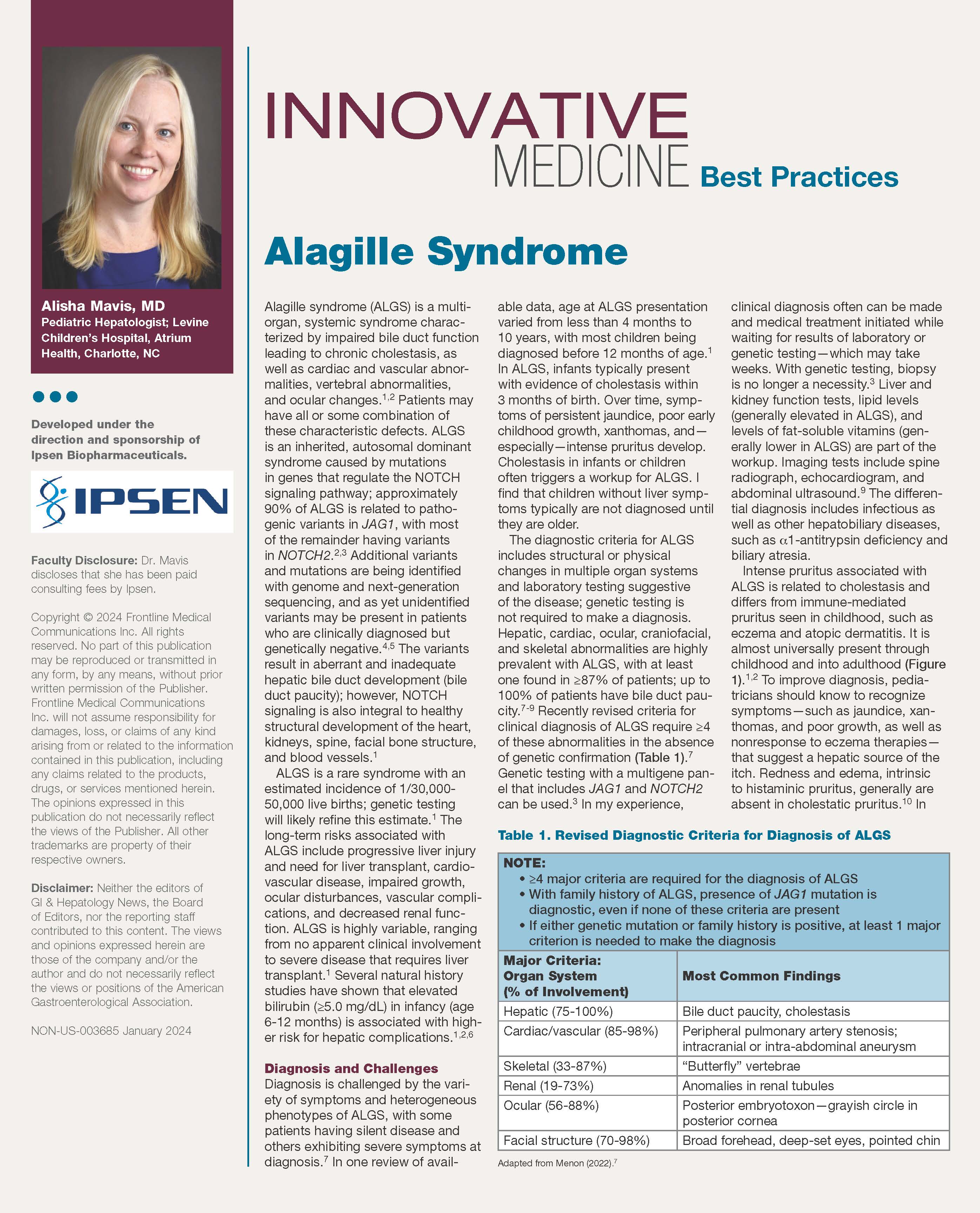
In this article Alisha Mavis, MD, discusses the prevalence, diagnosis, challenges, and management of patients with this Alagille Syndrome, as well as the need for a multidisciplinary approach to care.
In this article Alisha Mavis, MD, discusses the prevalence, diagnosis, challenges, and management of patients with this Alagille Syndrome, as well as the need for a multidisciplinary approach to care.
In this article Alisha Mavis, MD, discusses the prevalence, diagnosis, challenges, and management of patients with this Alagille Syndrome, as well as the need for a multidisciplinary approach to care.
Physicians as First Responders II
I recently wrote about a fledgling program here in Maine in which some emergency room physicians were being outfitted with equipment and communications gear that would allow them to respond on the fly to emergencies in the field when they weren’t working in the hospital. I questioned the rationale of using in-house personnel, already in short supply, for the few situations in which trained EMT personnel would usually be called. At the same time, I promised to return to the broader subject of the role of physicians as first responders in a future letter. And, here it is.
Have you ever been on a plane or at a large public gathering and the public addressed system crackled, “Is there a doctor on board” or in the audience? Or have you been on the highway and come upon a fresh accident in which it appears that there may have been injuries? Or at a youth soccer game in which a player has been injured and is still on the ground?

How do you usually respond in situations like this? Do you immediately identify yourself as a physician? Or, do you routinely shy away from involvement? What thoughts run through your head?
Do you feel your training and experience with emergencies is so outdated that you doubt you could be of any assistance? Has your practice become so specialized that you aren’t comfortable with anything outside of your specialty? Maybe getting involved is likely to throw your already tight travel schedule into disarray? Or are you afraid that should something go wrong while you were helping out you could be sued?
Keeping in mind that I am a retired septuagenarian pediatrician more than a decade removed from active practice, I would describe my usual response to these situations as “attentive hovering.” I position myself to have a good view of the victim and watch to see if there are any other responders. Either because of their personality or their experience, often there is someone who steps forward to help. Trained EMTs seem to have no hesitancy going into action. If I sense things aren’t going well, or the victim is a child, I will identify myself as a retired pediatrician and offer my assistance. Even if the response given by others seems appropriate, I may still eventually identify myself, maybe to lend an air of legitimacy to the process.
What are the roots of my hesitancy? I have found that I generally have little to add when there is a trained first responder on hand. They have been-there-and-done-that far more recently than I have. They know how to stabilize potential or obvious fractures. They know how to position the victim for transport. Even when I am in an environment where my medical background is already known, I yield to the more recently experienced first responders.
I don’t particularly worry about being sued. Every state has Good Samaritan laws. Although the laws vary from state to state, here in Maine I feel comfortable with the good sense of my fellow citizens. I understand if you live or practice in a more litigious environment you may be more concerned. On an airplane there is the Aviation Medical Assistant Act, which became law in 1998, and provides us with some extra protection.
What if there is a situation in which even with my outdated skills I seem to be the only show in town? Fortunately, that situation hasn’t occurred for me in quite a few years, but the odds are that one might occur. In almost 1 out of 600 airline flights, there is an inflight emergency. I tend to hang out with other septuagenarians and octogenarians doing active things. And I frequent youth athletic events where there is unlikely to be a first responder assigned to the event.
Should I be doing more to update my skills? It’s been a while since I refreshed by CPR techniques. I can’t recall the last time I handled a defibrillator. Should I be learning more about exsanguination prevention techniques?
Every so often there are some rumblings to mandate that all physicians should be required to update these first responder skills to maintain their license or certification. That wouldn’t cover those of us who are retired or who no longer practice medicine. And, I’m not sure we need to add another layer to the system. I think there are enough of us out there who would like to add ourselves to the first responder population, maybe not as fully trained experts but as folks who would like to be more ready to help by updating old or seldom-used skills.
Dr. Wilkoff practiced primary care pediatrics in Brunswick, Maine, for nearly 40 years. He has authored several books on behavioral pediatrics, including “How to Say No to Your Toddler.” Other than a Littman stethoscope he accepted as a first-year medical student in 1966, Dr. Wilkoff reports having nothing to disclose. Email him at pdnews@mdedge.com.
I recently wrote about a fledgling program here in Maine in which some emergency room physicians were being outfitted with equipment and communications gear that would allow them to respond on the fly to emergencies in the field when they weren’t working in the hospital. I questioned the rationale of using in-house personnel, already in short supply, for the few situations in which trained EMT personnel would usually be called. At the same time, I promised to return to the broader subject of the role of physicians as first responders in a future letter. And, here it is.
Have you ever been on a plane or at a large public gathering and the public addressed system crackled, “Is there a doctor on board” or in the audience? Or have you been on the highway and come upon a fresh accident in which it appears that there may have been injuries? Or at a youth soccer game in which a player has been injured and is still on the ground?
How do you usually respond in situations like this? Do you immediately identify yourself as a physician? Or, do you routinely shy away from involvement? What thoughts run through your head?
Do you feel your training and experience with emergencies is so outdated that you doubt you could be of any assistance? Has your practice become so specialized that you aren’t comfortable with anything outside of your specialty? Maybe getting involved is likely to throw your already tight travel schedule into disarray? Or are you afraid that should something go wrong while you were helping out you could be sued?
Keeping in mind that I am a retired septuagenarian pediatrician more than a decade removed from active practice, I would describe my usual response to these situations as “attentive hovering.” I position myself to have a good view of the victim and watch to see if there are any other responders. Either because of their personality or their experience, often there is someone who steps forward to help. Trained EMTs seem to have no hesitancy going into action. If I sense things aren’t going well, or the victim is a child, I will identify myself as a retired pediatrician and offer my assistance. Even if the response given by others seems appropriate, I may still eventually identify myself, maybe to lend an air of legitimacy to the process.
What are the roots of my hesitancy? I have found that I generally have little to add when there is a trained first responder on hand. They have been-there-and-done-that far more recently than I have. They know how to stabilize potential or obvious fractures. They know how to position the victim for transport. Even when I am in an environment where my medical background is already known, I yield to the more recently experienced first responders.
I don’t particularly worry about being sued. Every state has Good Samaritan laws. Although the laws vary from state to state, here in Maine I feel comfortable with the good sense of my fellow citizens. I understand if you live or practice in a more litigious environment you may be more concerned. On an airplane there is the Aviation Medical Assistant Act, which became law in 1998, and provides us with some extra protection.
What if there is a situation in which even with my outdated skills I seem to be the only show in town? Fortunately, that situation hasn’t occurred for me in quite a few years, but the odds are that one might occur. In almost 1 out of 600 airline flights, there is an inflight emergency. I tend to hang out with other septuagenarians and octogenarians doing active things. And I frequent youth athletic events where there is unlikely to be a first responder assigned to the event.
Should I be doing more to update my skills? It’s been a while since I refreshed by CPR techniques. I can’t recall the last time I handled a defibrillator. Should I be learning more about exsanguination prevention techniques?
Every so often there are some rumblings to mandate that all physicians should be required to update these first responder skills to maintain their license or certification. That wouldn’t cover those of us who are retired or who no longer practice medicine. And, I’m not sure we need to add another layer to the system. I think there are enough of us out there who would like to add ourselves to the first responder population, maybe not as fully trained experts but as folks who would like to be more ready to help by updating old or seldom-used skills.
Dr. Wilkoff practiced primary care pediatrics in Brunswick, Maine, for nearly 40 years. He has authored several books on behavioral pediatrics, including “How to Say No to Your Toddler.” Other than a Littman stethoscope he accepted as a first-year medical student in 1966, Dr. Wilkoff reports having nothing to disclose. Email him at pdnews@mdedge.com.
I recently wrote about a fledgling program here in Maine in which some emergency room physicians were being outfitted with equipment and communications gear that would allow them to respond on the fly to emergencies in the field when they weren’t working in the hospital. I questioned the rationale of using in-house personnel, already in short supply, for the few situations in which trained EMT personnel would usually be called. At the same time, I promised to return to the broader subject of the role of physicians as first responders in a future letter. And, here it is.
Have you ever been on a plane or at a large public gathering and the public addressed system crackled, “Is there a doctor on board” or in the audience? Or have you been on the highway and come upon a fresh accident in which it appears that there may have been injuries? Or at a youth soccer game in which a player has been injured and is still on the ground?
How do you usually respond in situations like this? Do you immediately identify yourself as a physician? Or, do you routinely shy away from involvement? What thoughts run through your head?
Do you feel your training and experience with emergencies is so outdated that you doubt you could be of any assistance? Has your practice become so specialized that you aren’t comfortable with anything outside of your specialty? Maybe getting involved is likely to throw your already tight travel schedule into disarray? Or are you afraid that should something go wrong while you were helping out you could be sued?
Keeping in mind that I am a retired septuagenarian pediatrician more than a decade removed from active practice, I would describe my usual response to these situations as “attentive hovering.” I position myself to have a good view of the victim and watch to see if there are any other responders. Either because of their personality or their experience, often there is someone who steps forward to help. Trained EMTs seem to have no hesitancy going into action. If I sense things aren’t going well, or the victim is a child, I will identify myself as a retired pediatrician and offer my assistance. Even if the response given by others seems appropriate, I may still eventually identify myself, maybe to lend an air of legitimacy to the process.
What are the roots of my hesitancy? I have found that I generally have little to add when there is a trained first responder on hand. They have been-there-and-done-that far more recently than I have. They know how to stabilize potential or obvious fractures. They know how to position the victim for transport. Even when I am in an environment where my medical background is already known, I yield to the more recently experienced first responders.
I don’t particularly worry about being sued. Every state has Good Samaritan laws. Although the laws vary from state to state, here in Maine I feel comfortable with the good sense of my fellow citizens. I understand if you live or practice in a more litigious environment you may be more concerned. On an airplane there is the Aviation Medical Assistant Act, which became law in 1998, and provides us with some extra protection.
What if there is a situation in which even with my outdated skills I seem to be the only show in town? Fortunately, that situation hasn’t occurred for me in quite a few years, but the odds are that one might occur. In almost 1 out of 600 airline flights, there is an inflight emergency. I tend to hang out with other septuagenarians and octogenarians doing active things. And I frequent youth athletic events where there is unlikely to be a first responder assigned to the event.
Should I be doing more to update my skills? It’s been a while since I refreshed by CPR techniques. I can’t recall the last time I handled a defibrillator. Should I be learning more about exsanguination prevention techniques?
Every so often there are some rumblings to mandate that all physicians should be required to update these first responder skills to maintain their license or certification. That wouldn’t cover those of us who are retired or who no longer practice medicine. And, I’m not sure we need to add another layer to the system. I think there are enough of us out there who would like to add ourselves to the first responder population, maybe not as fully trained experts but as folks who would like to be more ready to help by updating old or seldom-used skills.
Dr. Wilkoff practiced primary care pediatrics in Brunswick, Maine, for nearly 40 years. He has authored several books on behavioral pediatrics, including “How to Say No to Your Toddler.” Other than a Littman stethoscope he accepted as a first-year medical student in 1966, Dr. Wilkoff reports having nothing to disclose. Email him at pdnews@mdedge.com.

Long-Acting Injectable Antipsychotics Reduce Schizophrenia Readmission
Investigators reported the findings support the use of LAI antipsychotics over oral medication following a hospital stay for schizophrenia or schizoaffective disorder.
“I suspect the lower readmission rate that has been observed with long-acting injections has more to do with people forgetting to take a pill each and every day than with any inherent superiority of the injectable medication,” lead author Daniel Greer, PharmD, BCPP, clinical assistant professor at Rutgers University Ernest Mario School of Pharmacy, Piscataway, New Jersey, said in a news release.
“Other studies on the use of antipsychotic medication have found that roughly three fourths of patients do not take oral medications exactly as directed, and it’s much easier to get a shot every few months than it is to take a pill every day, even though the shot requires a trip to the doctor,” Dr. Greer added.
The study was published online on January 17, 2024, in the Journal of Clinical Psychopharmacology.
Fewer Repeat Stays
Investigators compared 30-day readmission rates for all 343 patients with schizophrenia or schizoaffective disorder who were discharged from an inpatient psychiatric unit between August 2019 and June 2022.
A total of 240 patients (70%) were discharged on an oral antipsychotic, most commonly risperidone or olanzapine, and 103 (30%) were sent home on an LAI antipsychotic, most commonly aripiprazole lauroxil or haloperidol decanoate.
Within 30 days of discharge, 22 patients (6.4%) were readmitted for a schizophrenic or schizoaffective exacerbation — two in the LAI antipsychotic group and 20 in the oral antipsychotic group (1.9% vs 8.3%; P = .03).
The LAI antipsychotic group had a higher average daily chlorpromazine equivalent antipsychotic dose than the oral group (477.3 mg vs 278.6 mg; P < .001), which investigators said may indicate a difference in illness severity between the patient groups.
There was no significant between-group difference in the use of anticholinergic medications to treat extrapyramidal symptoms (22% in the LAI group and 31% in the oral group) despite the LAI group receiving greater doses.
That suggests “that both formulations may be equally as likely to cause these adverse effects,” the researchers noted.
Thirty-day readmission rates are important both medically and financially, investigators noted. In schizophrenia, access to medications and nonadherence are “significant problems.” LAI antipsychotic medications may alleviate some of these burdens but come with a high up-front cost.
“Medication access through pharmaceutical company free trial replacement programs may be an option for facilities with restricted formularies or limited medication funding to decrease 30-day readmissions,” investigators wrote.
“The cost of the injections is far lower than the cost of hospital treatments,” Dr. Greer added in the news release. “And each additional visit to the hospital increases the odds that there will be more visits in the future. Every time someone experiences psychosis, they lose gray matter, and they suffer damage that never heals. That’s why it’s so vital to minimize psychotic episodes.”
Chief limitations of the study included its single-center, retrospective chart review design and small sample size. Also, complete patient medication history was not obtained.
The study had no specific funding. The authors declared no relevant conflicts of interest.
A version of this article appeared on Medscape.com.
Investigators reported the findings support the use of LAI antipsychotics over oral medication following a hospital stay for schizophrenia or schizoaffective disorder.
“I suspect the lower readmission rate that has been observed with long-acting injections has more to do with people forgetting to take a pill each and every day than with any inherent superiority of the injectable medication,” lead author Daniel Greer, PharmD, BCPP, clinical assistant professor at Rutgers University Ernest Mario School of Pharmacy, Piscataway, New Jersey, said in a news release.
“Other studies on the use of antipsychotic medication have found that roughly three fourths of patients do not take oral medications exactly as directed, and it’s much easier to get a shot every few months than it is to take a pill every day, even though the shot requires a trip to the doctor,” Dr. Greer added.
The study was published online on January 17, 2024, in the Journal of Clinical Psychopharmacology.
Fewer Repeat Stays
Investigators compared 30-day readmission rates for all 343 patients with schizophrenia or schizoaffective disorder who were discharged from an inpatient psychiatric unit between August 2019 and June 2022.
A total of 240 patients (70%) were discharged on an oral antipsychotic, most commonly risperidone or olanzapine, and 103 (30%) were sent home on an LAI antipsychotic, most commonly aripiprazole lauroxil or haloperidol decanoate.
Within 30 days of discharge, 22 patients (6.4%) were readmitted for a schizophrenic or schizoaffective exacerbation — two in the LAI antipsychotic group and 20 in the oral antipsychotic group (1.9% vs 8.3%; P = .03).
The LAI antipsychotic group had a higher average daily chlorpromazine equivalent antipsychotic dose than the oral group (477.3 mg vs 278.6 mg; P < .001), which investigators said may indicate a difference in illness severity between the patient groups.
There was no significant between-group difference in the use of anticholinergic medications to treat extrapyramidal symptoms (22% in the LAI group and 31% in the oral group) despite the LAI group receiving greater doses.
That suggests “that both formulations may be equally as likely to cause these adverse effects,” the researchers noted.
Thirty-day readmission rates are important both medically and financially, investigators noted. In schizophrenia, access to medications and nonadherence are “significant problems.” LAI antipsychotic medications may alleviate some of these burdens but come with a high up-front cost.
“Medication access through pharmaceutical company free trial replacement programs may be an option for facilities with restricted formularies or limited medication funding to decrease 30-day readmissions,” investigators wrote.
“The cost of the injections is far lower than the cost of hospital treatments,” Dr. Greer added in the news release. “And each additional visit to the hospital increases the odds that there will be more visits in the future. Every time someone experiences psychosis, they lose gray matter, and they suffer damage that never heals. That’s why it’s so vital to minimize psychotic episodes.”
Chief limitations of the study included its single-center, retrospective chart review design and small sample size. Also, complete patient medication history was not obtained.
The study had no specific funding. The authors declared no relevant conflicts of interest.
A version of this article appeared on Medscape.com.
Investigators reported the findings support the use of LAI antipsychotics over oral medication following a hospital stay for schizophrenia or schizoaffective disorder.
“I suspect the lower readmission rate that has been observed with long-acting injections has more to do with people forgetting to take a pill each and every day than with any inherent superiority of the injectable medication,” lead author Daniel Greer, PharmD, BCPP, clinical assistant professor at Rutgers University Ernest Mario School of Pharmacy, Piscataway, New Jersey, said in a news release.
“Other studies on the use of antipsychotic medication have found that roughly three fourths of patients do not take oral medications exactly as directed, and it’s much easier to get a shot every few months than it is to take a pill every day, even though the shot requires a trip to the doctor,” Dr. Greer added.
The study was published online on January 17, 2024, in the Journal of Clinical Psychopharmacology.
Fewer Repeat Stays
Investigators compared 30-day readmission rates for all 343 patients with schizophrenia or schizoaffective disorder who were discharged from an inpatient psychiatric unit between August 2019 and June 2022.
A total of 240 patients (70%) were discharged on an oral antipsychotic, most commonly risperidone or olanzapine, and 103 (30%) were sent home on an LAI antipsychotic, most commonly aripiprazole lauroxil or haloperidol decanoate.
Within 30 days of discharge, 22 patients (6.4%) were readmitted for a schizophrenic or schizoaffective exacerbation — two in the LAI antipsychotic group and 20 in the oral antipsychotic group (1.9% vs 8.3%; P = .03).
The LAI antipsychotic group had a higher average daily chlorpromazine equivalent antipsychotic dose than the oral group (477.3 mg vs 278.6 mg; P < .001), which investigators said may indicate a difference in illness severity between the patient groups.
There was no significant between-group difference in the use of anticholinergic medications to treat extrapyramidal symptoms (22% in the LAI group and 31% in the oral group) despite the LAI group receiving greater doses.
That suggests “that both formulations may be equally as likely to cause these adverse effects,” the researchers noted.
Thirty-day readmission rates are important both medically and financially, investigators noted. In schizophrenia, access to medications and nonadherence are “significant problems.” LAI antipsychotic medications may alleviate some of these burdens but come with a high up-front cost.
“Medication access through pharmaceutical company free trial replacement programs may be an option for facilities with restricted formularies or limited medication funding to decrease 30-day readmissions,” investigators wrote.
“The cost of the injections is far lower than the cost of hospital treatments,” Dr. Greer added in the news release. “And each additional visit to the hospital increases the odds that there will be more visits in the future. Every time someone experiences psychosis, they lose gray matter, and they suffer damage that never heals. That’s why it’s so vital to minimize psychotic episodes.”
Chief limitations of the study included its single-center, retrospective chart review design and small sample size. Also, complete patient medication history was not obtained.
The study had no specific funding. The authors declared no relevant conflicts of interest.
A version of this article appeared on Medscape.com.
Cancer Surgery Tied to Increased Venous Thromboembolism Risk
TOPLINE:
Cancer surgery poses an elevated risk for venous thromboembolism, which can vary depending on the type of cancer and the timing of surgery, a study suggested.
METHODOLOGY:
- Both major surgery and cancer increase the risk for venous thromboembolism, which can lead to severe illness and death. Research showed that approximately 2% of patients who have cancer surgery experience clinically significant venous thromboembolism, which accounts for about half of the deaths that occur immediately after surgery.
- The American Society of Clinical Oncology and European Association of Urology guidelines recommend an extended 28-day prophylaxis for patients undergoing cancer surgery. These guidelines also provide specific estimates of the excess risk for thromboembolic events for each disease.
- This retrospective study included data on 432,218 patients (median age, 67 years) from Swedish nationwide registers who underwent major surgery for eight types of cancer (bladder, breast, colorectal, gynecologic, lung, prostate, gastroesophageal, and kidney or upper tract urothelial cancer) from 1998 to 2016.
- The researchers matched the patients with 4,009,343 cancer-free individuals from the general population in a 1:10 ratio.
- The primary outcome was the incidence of venous thromboembolic events, including subsegmental pulmonary embolism and deep venous thromboembolism in the calf, within 1 year after the surgery.
TAKEAWAY:
- The researchers found an increased absolute risk for pulmonary embolism at 1 year following cancer surgery, with the highest increase in patients with bladder cancer (a 2.69 percentage point difference), followed by lung (a 2.61 percentage point difference), gastroesophageal (2.13), colorectal (1.57), kidney or upper urinary tract (1.38), gynecologic (1.32), breast (0.59), and prostate cancer (0.57).
- The increased 1-year absolute risk for deep vein thrombosis (in percentage points) was highest for the bladder (a 4.67 percentage point difference), followed by gastroesophageal (2.19), colorectal (2.15), upper urinary tract (2.14), gynecologic (2.02), lung (1.40), breast (1.36), and prostate cancer (0.75).
- The temporal trends showed that the risk for pulmonary embolism and deep vein thrombosis peaked immediately after surgery and plateaued within 120 days for most cancers. At 30 days after surgery, the risk for pulmonary embolism following cancer surgery was 10- to 30-fold times higher than with no surgery for all cancers aside from breast cancer (hazard ratio, 5.18). The researchers observed a similar elevated risk for deep vein thrombosis 30 days following surgery.
- The risk for pulmonary embolism and deep vein thrombosis remained significant at 1 year for all cancer types, except prostate.
IN PRACTICE:
“The marked variation in the occurrence patterns of postoperative venous thromboembolic events indicates a need for a more tailored approach to prophylaxis,” the authors noted, advocating for individualized venous thromboembolism risk evaluation and prophylaxis regimens.
SOURCE:
This study, led by Johan Björklund, MD, PhD, from Karolinska Institute, Stockholm, Sweden, was published online in JAMA Network Open.
LIMITATIONS:
The information regarding treatments other than surgery that might be linked to an elevated risk for venous thromboembolism was not available. Additionally, changes in clinical practices and diagnostics over time could affect both the occurrence and detection of outcomes. Adoption of minimally invasive surgical techniques, increased use of thromboprophylaxis over time, improved diagnostic capabilities, and a trend toward operating on older patients with more comorbidities over time may have influenced outcomes.
DISCLOSURES:
The work was funded by the Karolinska Institute and the Swedish Cancer Society. Two study authors reported receiving personal or consulting fees. Other authors reported no conflicts of interest.
A version of this article appeared on Medscape.com.
TOPLINE:
Cancer surgery poses an elevated risk for venous thromboembolism, which can vary depending on the type of cancer and the timing of surgery, a study suggested.
METHODOLOGY:
- Both major surgery and cancer increase the risk for venous thromboembolism, which can lead to severe illness and death. Research showed that approximately 2% of patients who have cancer surgery experience clinically significant venous thromboembolism, which accounts for about half of the deaths that occur immediately after surgery.
- The American Society of Clinical Oncology and European Association of Urology guidelines recommend an extended 28-day prophylaxis for patients undergoing cancer surgery. These guidelines also provide specific estimates of the excess risk for thromboembolic events for each disease.
- This retrospective study included data on 432,218 patients (median age, 67 years) from Swedish nationwide registers who underwent major surgery for eight types of cancer (bladder, breast, colorectal, gynecologic, lung, prostate, gastroesophageal, and kidney or upper tract urothelial cancer) from 1998 to 2016.
- The researchers matched the patients with 4,009,343 cancer-free individuals from the general population in a 1:10 ratio.
- The primary outcome was the incidence of venous thromboembolic events, including subsegmental pulmonary embolism and deep venous thromboembolism in the calf, within 1 year after the surgery.
TAKEAWAY:
- The researchers found an increased absolute risk for pulmonary embolism at 1 year following cancer surgery, with the highest increase in patients with bladder cancer (a 2.69 percentage point difference), followed by lung (a 2.61 percentage point difference), gastroesophageal (2.13), colorectal (1.57), kidney or upper urinary tract (1.38), gynecologic (1.32), breast (0.59), and prostate cancer (0.57).
- The increased 1-year absolute risk for deep vein thrombosis (in percentage points) was highest for the bladder (a 4.67 percentage point difference), followed by gastroesophageal (2.19), colorectal (2.15), upper urinary tract (2.14), gynecologic (2.02), lung (1.40), breast (1.36), and prostate cancer (0.75).
- The temporal trends showed that the risk for pulmonary embolism and deep vein thrombosis peaked immediately after surgery and plateaued within 120 days for most cancers. At 30 days after surgery, the risk for pulmonary embolism following cancer surgery was 10- to 30-fold times higher than with no surgery for all cancers aside from breast cancer (hazard ratio, 5.18). The researchers observed a similar elevated risk for deep vein thrombosis 30 days following surgery.
- The risk for pulmonary embolism and deep vein thrombosis remained significant at 1 year for all cancer types, except prostate.
IN PRACTICE:
“The marked variation in the occurrence patterns of postoperative venous thromboembolic events indicates a need for a more tailored approach to prophylaxis,” the authors noted, advocating for individualized venous thromboembolism risk evaluation and prophylaxis regimens.
SOURCE:
This study, led by Johan Björklund, MD, PhD, from Karolinska Institute, Stockholm, Sweden, was published online in JAMA Network Open.
LIMITATIONS:
The information regarding treatments other than surgery that might be linked to an elevated risk for venous thromboembolism was not available. Additionally, changes in clinical practices and diagnostics over time could affect both the occurrence and detection of outcomes. Adoption of minimally invasive surgical techniques, increased use of thromboprophylaxis over time, improved diagnostic capabilities, and a trend toward operating on older patients with more comorbidities over time may have influenced outcomes.
DISCLOSURES:
The work was funded by the Karolinska Institute and the Swedish Cancer Society. Two study authors reported receiving personal or consulting fees. Other authors reported no conflicts of interest.
A version of this article appeared on Medscape.com.
TOPLINE:
Cancer surgery poses an elevated risk for venous thromboembolism, which can vary depending on the type of cancer and the timing of surgery, a study suggested.
METHODOLOGY:
- Both major surgery and cancer increase the risk for venous thromboembolism, which can lead to severe illness and death. Research showed that approximately 2% of patients who have cancer surgery experience clinically significant venous thromboembolism, which accounts for about half of the deaths that occur immediately after surgery.
- The American Society of Clinical Oncology and European Association of Urology guidelines recommend an extended 28-day prophylaxis for patients undergoing cancer surgery. These guidelines also provide specific estimates of the excess risk for thromboembolic events for each disease.
- This retrospective study included data on 432,218 patients (median age, 67 years) from Swedish nationwide registers who underwent major surgery for eight types of cancer (bladder, breast, colorectal, gynecologic, lung, prostate, gastroesophageal, and kidney or upper tract urothelial cancer) from 1998 to 2016.
- The researchers matched the patients with 4,009,343 cancer-free individuals from the general population in a 1:10 ratio.
- The primary outcome was the incidence of venous thromboembolic events, including subsegmental pulmonary embolism and deep venous thromboembolism in the calf, within 1 year after the surgery.
TAKEAWAY:
- The researchers found an increased absolute risk for pulmonary embolism at 1 year following cancer surgery, with the highest increase in patients with bladder cancer (a 2.69 percentage point difference), followed by lung (a 2.61 percentage point difference), gastroesophageal (2.13), colorectal (1.57), kidney or upper urinary tract (1.38), gynecologic (1.32), breast (0.59), and prostate cancer (0.57).
- The increased 1-year absolute risk for deep vein thrombosis (in percentage points) was highest for the bladder (a 4.67 percentage point difference), followed by gastroesophageal (2.19), colorectal (2.15), upper urinary tract (2.14), gynecologic (2.02), lung (1.40), breast (1.36), and prostate cancer (0.75).
- The temporal trends showed that the risk for pulmonary embolism and deep vein thrombosis peaked immediately after surgery and plateaued within 120 days for most cancers. At 30 days after surgery, the risk for pulmonary embolism following cancer surgery was 10- to 30-fold times higher than with no surgery for all cancers aside from breast cancer (hazard ratio, 5.18). The researchers observed a similar elevated risk for deep vein thrombosis 30 days following surgery.
- The risk for pulmonary embolism and deep vein thrombosis remained significant at 1 year for all cancer types, except prostate.
IN PRACTICE:
“The marked variation in the occurrence patterns of postoperative venous thromboembolic events indicates a need for a more tailored approach to prophylaxis,” the authors noted, advocating for individualized venous thromboembolism risk evaluation and prophylaxis regimens.
SOURCE:
This study, led by Johan Björklund, MD, PhD, from Karolinska Institute, Stockholm, Sweden, was published online in JAMA Network Open.
LIMITATIONS:
The information regarding treatments other than surgery that might be linked to an elevated risk for venous thromboembolism was not available. Additionally, changes in clinical practices and diagnostics over time could affect both the occurrence and detection of outcomes. Adoption of minimally invasive surgical techniques, increased use of thromboprophylaxis over time, improved diagnostic capabilities, and a trend toward operating on older patients with more comorbidities over time may have influenced outcomes.
DISCLOSURES:
The work was funded by the Karolinska Institute and the Swedish Cancer Society. Two study authors reported receiving personal or consulting fees. Other authors reported no conflicts of interest.
A version of this article appeared on Medscape.com.
Adverse pregnancy outcomes in first pregnancy are likely to recur
NATIONAL HARBOR, MARYLAND — Women who experience an adverse pregnancy outcome during their first pregnancy are significantly more likely to experience either the same or any adverse pregnancy outcome in a subsequent pregnancy than are those with no adverse pregnancy outcome during a first pregnancy, based on data from more than 4000 individuals.
Adverse pregnancy outcomes (APOs) occur in approximately 20%-30% of pregnancies and contribute to significant perinatal morbidity, William A. Grobman, MD, of The Ohio State University, Columbus, said in a presentation at the Pregnancy Meeting sponsored by the Society for Maternal-Fetal Medicine (abstract 17).
Risk factors for APOs include nulliparity and prior APOs, as well as age, body mass index, and blood pressure, he said. However, less is known about factors identified early in a first pregnancy that might predict an APO in a second pregnancy, he explained.
Dr. Grobman and colleagues used data from the nuMoM2b Heart Health Study, a cohort of more than 10,000 nulliparous women at eight sites in the United States.
The current study included a subset of individuals with two pregnancies of at least 20 weeks’ gestation who were followed for up to 7 years after delivery via telephone and in-person visits and for whom APO information was available.
An APO was defined as any of a range of outcomes including hypertensive disorders of pregnancy, preterm birth at less than 37 weeks’ gestation, small-for-gestational age at birth (less than 5th percentile for weight), gestational diabetes, or fetal death.
The goal of the study was to determine patterns of APOs across two pregnancies, and to identify factors in the first pregnancy that might be associated with these patterns, Dr. Grobman said.
The study population included 4253 women from the nuMOM2b; of these, 1332 (31%) experienced an APO during their first pregnancies.
Women with an APO during the first pregnancy were significantly more likely to have a second APO than were those with no initial APO (40% vs. 15%), said Dr. Grobman. Overall, the APO that occurred most frequently in the first pregnancy was the one most likely to occur in the second.
However, “the increased risk for an APO during a second pregnancy was greater for any APO in women with a history of any APO compared to women with no prior APO,” he said.
In this study, the most common APOs were gestational diabetes and hypertensive disorders of pregnancy.
“In general, no risk markers were associated with a particular pattern of APO development,” Dr. Grobman said.
However, some markers from the first trimester of the first pregnancy were significantly associated with an APO in the second pregnancy, including body mass index, age older than 35 years, blood pressure, and cardiometabolic serum analytes. Also, the magnitude of APO recurrence risk was highest among non-Hispanic Black individuals compared with other ethnicities.
The findings were limited by a lack of data on placental pathology, Dr. Grobman noted during the discussion. However, the findings underscored the need to better understand the risk factors for APOs and develop prevention strategies, he said. The results also emphasize the need to account for transitions of care for patients who experience an APO, he added.
Data May Inform Patient Guidance
“Patients with an adverse pregnancy outcome in a first pregnancy often experience considerable anxiety when thinking about a second pregnancy,” Joseph R. Biggio Jr., MD, a maternal-fetal medicine specialist at Ochsner Health in New Orleans, said in an interview.
“This study helps to provide insight into factors which may be associated with increased risk in a subsequent pregnancy, and importantly identifies some factors that are potentially modifiable, such as BMI and blood pressure,” said Dr. Biggio, who served as a moderator for the session in which the study was presented.
“Based on the findings from this analysis, we need research to determine whether these findings apply to not only patients having their first pregnancy, but also adverse outcomes in any pregnancy,” Dr. Biggio said in an interview. “In addition, we need to explore whether modification of any of these risk factors can improve pregnancy outcomes, so that all patients can have the birth experience that they desire,” he said.
The study received no outside funding. Dr. Grobman and Dr. Biggio had no financial conflicts to disclose.
NATIONAL HARBOR, MARYLAND — Women who experience an adverse pregnancy outcome during their first pregnancy are significantly more likely to experience either the same or any adverse pregnancy outcome in a subsequent pregnancy than are those with no adverse pregnancy outcome during a first pregnancy, based on data from more than 4000 individuals.
Adverse pregnancy outcomes (APOs) occur in approximately 20%-30% of pregnancies and contribute to significant perinatal morbidity, William A. Grobman, MD, of The Ohio State University, Columbus, said in a presentation at the Pregnancy Meeting sponsored by the Society for Maternal-Fetal Medicine (abstract 17).
Risk factors for APOs include nulliparity and prior APOs, as well as age, body mass index, and blood pressure, he said. However, less is known about factors identified early in a first pregnancy that might predict an APO in a second pregnancy, he explained.
Dr. Grobman and colleagues used data from the nuMoM2b Heart Health Study, a cohort of more than 10,000 nulliparous women at eight sites in the United States.
The current study included a subset of individuals with two pregnancies of at least 20 weeks’ gestation who were followed for up to 7 years after delivery via telephone and in-person visits and for whom APO information was available.
An APO was defined as any of a range of outcomes including hypertensive disorders of pregnancy, preterm birth at less than 37 weeks’ gestation, small-for-gestational age at birth (less than 5th percentile for weight), gestational diabetes, or fetal death.
The goal of the study was to determine patterns of APOs across two pregnancies, and to identify factors in the first pregnancy that might be associated with these patterns, Dr. Grobman said.
The study population included 4253 women from the nuMOM2b; of these, 1332 (31%) experienced an APO during their first pregnancies.
Women with an APO during the first pregnancy were significantly more likely to have a second APO than were those with no initial APO (40% vs. 15%), said Dr. Grobman. Overall, the APO that occurred most frequently in the first pregnancy was the one most likely to occur in the second.
However, “the increased risk for an APO during a second pregnancy was greater for any APO in women with a history of any APO compared to women with no prior APO,” he said.
In this study, the most common APOs were gestational diabetes and hypertensive disorders of pregnancy.
“In general, no risk markers were associated with a particular pattern of APO development,” Dr. Grobman said.
However, some markers from the first trimester of the first pregnancy were significantly associated with an APO in the second pregnancy, including body mass index, age older than 35 years, blood pressure, and cardiometabolic serum analytes. Also, the magnitude of APO recurrence risk was highest among non-Hispanic Black individuals compared with other ethnicities.
The findings were limited by a lack of data on placental pathology, Dr. Grobman noted during the discussion. However, the findings underscored the need to better understand the risk factors for APOs and develop prevention strategies, he said. The results also emphasize the need to account for transitions of care for patients who experience an APO, he added.
Data May Inform Patient Guidance
“Patients with an adverse pregnancy outcome in a first pregnancy often experience considerable anxiety when thinking about a second pregnancy,” Joseph R. Biggio Jr., MD, a maternal-fetal medicine specialist at Ochsner Health in New Orleans, said in an interview.
“This study helps to provide insight into factors which may be associated with increased risk in a subsequent pregnancy, and importantly identifies some factors that are potentially modifiable, such as BMI and blood pressure,” said Dr. Biggio, who served as a moderator for the session in which the study was presented.
“Based on the findings from this analysis, we need research to determine whether these findings apply to not only patients having their first pregnancy, but also adverse outcomes in any pregnancy,” Dr. Biggio said in an interview. “In addition, we need to explore whether modification of any of these risk factors can improve pregnancy outcomes, so that all patients can have the birth experience that they desire,” he said.
The study received no outside funding. Dr. Grobman and Dr. Biggio had no financial conflicts to disclose.
NATIONAL HARBOR, MARYLAND — Women who experience an adverse pregnancy outcome during their first pregnancy are significantly more likely to experience either the same or any adverse pregnancy outcome in a subsequent pregnancy than are those with no adverse pregnancy outcome during a first pregnancy, based on data from more than 4000 individuals.
Adverse pregnancy outcomes (APOs) occur in approximately 20%-30% of pregnancies and contribute to significant perinatal morbidity, William A. Grobman, MD, of The Ohio State University, Columbus, said in a presentation at the Pregnancy Meeting sponsored by the Society for Maternal-Fetal Medicine (abstract 17).
Risk factors for APOs include nulliparity and prior APOs, as well as age, body mass index, and blood pressure, he said. However, less is known about factors identified early in a first pregnancy that might predict an APO in a second pregnancy, he explained.
Dr. Grobman and colleagues used data from the nuMoM2b Heart Health Study, a cohort of more than 10,000 nulliparous women at eight sites in the United States.
The current study included a subset of individuals with two pregnancies of at least 20 weeks’ gestation who were followed for up to 7 years after delivery via telephone and in-person visits and for whom APO information was available.
An APO was defined as any of a range of outcomes including hypertensive disorders of pregnancy, preterm birth at less than 37 weeks’ gestation, small-for-gestational age at birth (less than 5th percentile for weight), gestational diabetes, or fetal death.
The goal of the study was to determine patterns of APOs across two pregnancies, and to identify factors in the first pregnancy that might be associated with these patterns, Dr. Grobman said.
The study population included 4253 women from the nuMOM2b; of these, 1332 (31%) experienced an APO during their first pregnancies.
Women with an APO during the first pregnancy were significantly more likely to have a second APO than were those with no initial APO (40% vs. 15%), said Dr. Grobman. Overall, the APO that occurred most frequently in the first pregnancy was the one most likely to occur in the second.
However, “the increased risk for an APO during a second pregnancy was greater for any APO in women with a history of any APO compared to women with no prior APO,” he said.
In this study, the most common APOs were gestational diabetes and hypertensive disorders of pregnancy.
“In general, no risk markers were associated with a particular pattern of APO development,” Dr. Grobman said.
However, some markers from the first trimester of the first pregnancy were significantly associated with an APO in the second pregnancy, including body mass index, age older than 35 years, blood pressure, and cardiometabolic serum analytes. Also, the magnitude of APO recurrence risk was highest among non-Hispanic Black individuals compared with other ethnicities.
The findings were limited by a lack of data on placental pathology, Dr. Grobman noted during the discussion. However, the findings underscored the need to better understand the risk factors for APOs and develop prevention strategies, he said. The results also emphasize the need to account for transitions of care for patients who experience an APO, he added.
Data May Inform Patient Guidance
“Patients with an adverse pregnancy outcome in a first pregnancy often experience considerable anxiety when thinking about a second pregnancy,” Joseph R. Biggio Jr., MD, a maternal-fetal medicine specialist at Ochsner Health in New Orleans, said in an interview.
“This study helps to provide insight into factors which may be associated with increased risk in a subsequent pregnancy, and importantly identifies some factors that are potentially modifiable, such as BMI and blood pressure,” said Dr. Biggio, who served as a moderator for the session in which the study was presented.
“Based on the findings from this analysis, we need research to determine whether these findings apply to not only patients having their first pregnancy, but also adverse outcomes in any pregnancy,” Dr. Biggio said in an interview. “In addition, we need to explore whether modification of any of these risk factors can improve pregnancy outcomes, so that all patients can have the birth experience that they desire,” he said.
The study received no outside funding. Dr. Grobman and Dr. Biggio had no financial conflicts to disclose.
FROM THE PREGNANCY MEETING
Mixing Paxlovid With Specific Immunosuppressants Risks Serious Adverse Reactions
The Pharmacovigilance Risk Assessment Committee (PRAC) of the European Medicines Agency (EMA) has issued a reminder to healthcare professionals regarding the potential serious adverse reactions associated with Paxlovid when administered in combination with specific immunosuppressants.
These immunosuppressants, encompassing calcineurin inhibitors (tacrolimus and ciclosporin) and mTOR inhibitors (everolimus and sirolimus), possess a narrow safe dosage range. They are recognized for their role in diminishing the activity of the immune system and are typically prescribed for autoimmune conditions and organ transplant recipients.
The highlighted risk arises due to drug-drug interactions, which can compromise the body’s ability to eliminate these medicines effectively.
Paxlovid, also known as nirmatrelvir with ritonavir, is an antiviral medication used to treat COVID-19 in adults who do not require supplemental oxygen and who are at an increased risk of progressing to severe COVID-19. It should be administered as soon as possible after a diagnosis of COVID-19 has been made and within 5 days of symptom onset.
Conditional marketing authorization for Paxlovid was granted across the European Union (EU) on January 28, 2022, and subsequently transitioned to full marketing authorization on February 24, 2023.
Developed by Pfizer, Paxlovid exhibited an 89% reduction in the risk for hospitalization or death among unvaccinated individuals in a phase 2-3 clinical trial. This led the National Institutes of Health to prioritize Paxlovid over other COVID-19 treatments. Subsequent real-world studies have affirmed its effectiveness, even among the vaccinated.
When combining Paxlovid with tacrolimus, ciclosporin, everolimus, or sirolimus, healthcare professionals need to actively monitor their blood levels. This proactive approach is essential to mitigate the risk for drug-drug interactions and potential serious reactions. They should collaborate with a multidisciplinary team of specialists to navigate the complexities of administering these medications concurrently.
Further, Paxlovid must not be coadministered with medications highly reliant on CYP3A liver enzymes for elimination, such as the immunosuppressant voclosporin. When administered together, there is a risk for these drugs interfering with each other’s metabolism, potentially leading to altered blood levels, reduced effectiveness, or an increased risk for adverse reactions.
After a thorough review, PRAC has highlighted potential serious adverse reactions, including fatal cases, due to drug interactions between Paxlovid and specified immunosuppressants. Thus, it issued a direct healthcare professional communication (DHPC) to emphasize the recognized risk for these interactions, as previously outlined in Paxlovid’s product information.
The DHPC for Paxlovid will undergo further evaluation by EMA’s Committee for Medicinal Products for Human Use and, upon adoption, will be disseminated to healthcare professionals. The communication plan will include publication on the DHPCs page and in national registers across EU Member States.
A version of this article appeared on Medscape.com.
The Pharmacovigilance Risk Assessment Committee (PRAC) of the European Medicines Agency (EMA) has issued a reminder to healthcare professionals regarding the potential serious adverse reactions associated with Paxlovid when administered in combination with specific immunosuppressants.
These immunosuppressants, encompassing calcineurin inhibitors (tacrolimus and ciclosporin) and mTOR inhibitors (everolimus and sirolimus), possess a narrow safe dosage range. They are recognized for their role in diminishing the activity of the immune system and are typically prescribed for autoimmune conditions and organ transplant recipients.
The highlighted risk arises due to drug-drug interactions, which can compromise the body’s ability to eliminate these medicines effectively.
Paxlovid, also known as nirmatrelvir with ritonavir, is an antiviral medication used to treat COVID-19 in adults who do not require supplemental oxygen and who are at an increased risk of progressing to severe COVID-19. It should be administered as soon as possible after a diagnosis of COVID-19 has been made and within 5 days of symptom onset.
Conditional marketing authorization for Paxlovid was granted across the European Union (EU) on January 28, 2022, and subsequently transitioned to full marketing authorization on February 24, 2023.
Developed by Pfizer, Paxlovid exhibited an 89% reduction in the risk for hospitalization or death among unvaccinated individuals in a phase 2-3 clinical trial. This led the National Institutes of Health to prioritize Paxlovid over other COVID-19 treatments. Subsequent real-world studies have affirmed its effectiveness, even among the vaccinated.
When combining Paxlovid with tacrolimus, ciclosporin, everolimus, or sirolimus, healthcare professionals need to actively monitor their blood levels. This proactive approach is essential to mitigate the risk for drug-drug interactions and potential serious reactions. They should collaborate with a multidisciplinary team of specialists to navigate the complexities of administering these medications concurrently.
Further, Paxlovid must not be coadministered with medications highly reliant on CYP3A liver enzymes for elimination, such as the immunosuppressant voclosporin. When administered together, there is a risk for these drugs interfering with each other’s metabolism, potentially leading to altered blood levels, reduced effectiveness, or an increased risk for adverse reactions.
After a thorough review, PRAC has highlighted potential serious adverse reactions, including fatal cases, due to drug interactions between Paxlovid and specified immunosuppressants. Thus, it issued a direct healthcare professional communication (DHPC) to emphasize the recognized risk for these interactions, as previously outlined in Paxlovid’s product information.
The DHPC for Paxlovid will undergo further evaluation by EMA’s Committee for Medicinal Products for Human Use and, upon adoption, will be disseminated to healthcare professionals. The communication plan will include publication on the DHPCs page and in national registers across EU Member States.
A version of this article appeared on Medscape.com.
The Pharmacovigilance Risk Assessment Committee (PRAC) of the European Medicines Agency (EMA) has issued a reminder to healthcare professionals regarding the potential serious adverse reactions associated with Paxlovid when administered in combination with specific immunosuppressants.
These immunosuppressants, encompassing calcineurin inhibitors (tacrolimus and ciclosporin) and mTOR inhibitors (everolimus and sirolimus), possess a narrow safe dosage range. They are recognized for their role in diminishing the activity of the immune system and are typically prescribed for autoimmune conditions and organ transplant recipients.
The highlighted risk arises due to drug-drug interactions, which can compromise the body’s ability to eliminate these medicines effectively.
Paxlovid, also known as nirmatrelvir with ritonavir, is an antiviral medication used to treat COVID-19 in adults who do not require supplemental oxygen and who are at an increased risk of progressing to severe COVID-19. It should be administered as soon as possible after a diagnosis of COVID-19 has been made and within 5 days of symptom onset.
Conditional marketing authorization for Paxlovid was granted across the European Union (EU) on January 28, 2022, and subsequently transitioned to full marketing authorization on February 24, 2023.
Developed by Pfizer, Paxlovid exhibited an 89% reduction in the risk for hospitalization or death among unvaccinated individuals in a phase 2-3 clinical trial. This led the National Institutes of Health to prioritize Paxlovid over other COVID-19 treatments. Subsequent real-world studies have affirmed its effectiveness, even among the vaccinated.
When combining Paxlovid with tacrolimus, ciclosporin, everolimus, or sirolimus, healthcare professionals need to actively monitor their blood levels. This proactive approach is essential to mitigate the risk for drug-drug interactions and potential serious reactions. They should collaborate with a multidisciplinary team of specialists to navigate the complexities of administering these medications concurrently.
Further, Paxlovid must not be coadministered with medications highly reliant on CYP3A liver enzymes for elimination, such as the immunosuppressant voclosporin. When administered together, there is a risk for these drugs interfering with each other’s metabolism, potentially leading to altered blood levels, reduced effectiveness, or an increased risk for adverse reactions.
After a thorough review, PRAC has highlighted potential serious adverse reactions, including fatal cases, due to drug interactions between Paxlovid and specified immunosuppressants. Thus, it issued a direct healthcare professional communication (DHPC) to emphasize the recognized risk for these interactions, as previously outlined in Paxlovid’s product information.
The DHPC for Paxlovid will undergo further evaluation by EMA’s Committee for Medicinal Products for Human Use and, upon adoption, will be disseminated to healthcare professionals. The communication plan will include publication on the DHPCs page and in national registers across EU Member States.
A version of this article appeared on Medscape.com.
Healing From Trauma
“You’ll never walk alone.” — Nettie Fowler, Carousel
A few winters ago, a young man and his fiancée were driving on the 91 freeway in southern California during a torrential downpour when their Honda Civic hydroplaned, slamming into the jersey barrier. They were both unhurt. Unsure what to do next, they made the catastrophic decision to exit the vehicle. As the man walked around the back of the car he was nearly hit by a black sedan sliding out of control trying to avoid them. When he came around the car, his fiancé was nowhere to be found. She had been struck at highway speed and lay crushed under the sedan hundreds of feet away.
I know this poor man because he was referred to me. Not as a dermatologist, but as a fellow human healing from trauma. On January 1, 2019, at about 9:30 PM, while we were home together, my beloved wife of 24 years took her own life. Even 5 years on it is difficult to believe that she isn’t proofing this paragraph like she had done for every one of my Derm News columns for years. We had been together since teenagers and had lived a joy-filled life. There isn’t any medical reason to share. But that day I joined the community of those who have carried unbearable heaviness of grief and survived. Sometimes others seek me out for help.
At first, my instinct was to guide them, to give advice, to tell them what to do and where to go. But I’ve learned that people in this dark valley don’t need a guide. They need someone to accompany them. To walk with them for a few minutes on their lonely journey. I recently read David Brooks’s new book, How to Know a Person. I’ve been a fan of his since he joined the New York Times in 2003 and have read almost everything he’s written. I sometimes even imagine how he might approach a column whenever I’m stuck (thank you, David). His The Road to Character book is in my canon of literature for self-growth. This latest book is an interesting digression from that central theme. He argues that our society is in acute need of forming better connections and that an important way we can be moral is to learn, and to practice, how to know each other. He shares an emotional experience of losing a close friend to suicide and writes a poignant explanation of what it means to accompany someone in need. It particularly resonated with me. We are doctors and are wired to find the source of a problem, like quickly rotating through the 4X, 10X, 40X on a microscope. Once identified, we spend most of our time creating and explaining treatments. I see how this makes me a great dermatologist but just an average human.
Brooks tells the story of a woman with a brain tumor who often finds herself on the ground surrounded by well-meaning people trying to help. She explains later that what she really needs in those moments is just for someone to get on the ground and lie with her. To accompany her.
Having crossed the midpoint of life, I see with the benefit of perspective how suffering has afforded me wisdom: I am more sensitive and attuned to others. It also gave me credibility: I know how it feels to walk life’s loneliest journey. I’ve also learned to make myself vulnerable for someone to share their story with me. I won’t be afraid to hear the details. I won’t judge them for weeping too little or for sobbing too much. I don’t answer whys. I won’t say what they should do next. But for a few minutes I can walk beside them as a person who cares.
I do not try to remember the hours and days after Susan’s death, but one moment stands out and makes my eyes well when I think of it. That following day my dear brother flew across the country on the next flight out. I was sitting in a psychiatry waiting room when he came down the hall with his luggage in tow. He hugged me as only a brother could, then looked me in my eyes, which were bloodshot from tears just as his were, and he said, “We’re going to be OK.” And with that he walked with me into the office.
We physicians are blessed to have so many intimate human interactions. This book reminded me that sometimes my most important job is not to be the optimized doctor, but just a good human walking alongside.
I have no conflict of interest and purchased these books.
Dr. Benabio is director of Healthcare Transformation and chief of dermatology at Kaiser Permanente San Diego. The opinions expressed in this column are his own and do not represent those of Kaiser Permanente. Dr. Benabio is @Dermdoc on X. Write to him at dermnews@mdedge.com.
“You’ll never walk alone.” — Nettie Fowler, Carousel
A few winters ago, a young man and his fiancée were driving on the 91 freeway in southern California during a torrential downpour when their Honda Civic hydroplaned, slamming into the jersey barrier. They were both unhurt. Unsure what to do next, they made the catastrophic decision to exit the vehicle. As the man walked around the back of the car he was nearly hit by a black sedan sliding out of control trying to avoid them. When he came around the car, his fiancé was nowhere to be found. She had been struck at highway speed and lay crushed under the sedan hundreds of feet away.
I know this poor man because he was referred to me. Not as a dermatologist, but as a fellow human healing from trauma. On January 1, 2019, at about 9:30 PM, while we were home together, my beloved wife of 24 years took her own life. Even 5 years on it is difficult to believe that she isn’t proofing this paragraph like she had done for every one of my Derm News columns for years. We had been together since teenagers and had lived a joy-filled life. There isn’t any medical reason to share. But that day I joined the community of those who have carried unbearable heaviness of grief and survived. Sometimes others seek me out for help.
At first, my instinct was to guide them, to give advice, to tell them what to do and where to go. But I’ve learned that people in this dark valley don’t need a guide. They need someone to accompany them. To walk with them for a few minutes on their lonely journey. I recently read David Brooks’s new book, How to Know a Person. I’ve been a fan of his since he joined the New York Times in 2003 and have read almost everything he’s written. I sometimes even imagine how he might approach a column whenever I’m stuck (thank you, David). His The Road to Character book is in my canon of literature for self-growth. This latest book is an interesting digression from that central theme. He argues that our society is in acute need of forming better connections and that an important way we can be moral is to learn, and to practice, how to know each other. He shares an emotional experience of losing a close friend to suicide and writes a poignant explanation of what it means to accompany someone in need. It particularly resonated with me. We are doctors and are wired to find the source of a problem, like quickly rotating through the 4X, 10X, 40X on a microscope. Once identified, we spend most of our time creating and explaining treatments. I see how this makes me a great dermatologist but just an average human.
Brooks tells the story of a woman with a brain tumor who often finds herself on the ground surrounded by well-meaning people trying to help. She explains later that what she really needs in those moments is just for someone to get on the ground and lie with her. To accompany her.
Having crossed the midpoint of life, I see with the benefit of perspective how suffering has afforded me wisdom: I am more sensitive and attuned to others. It also gave me credibility: I know how it feels to walk life’s loneliest journey. I’ve also learned to make myself vulnerable for someone to share their story with me. I won’t be afraid to hear the details. I won’t judge them for weeping too little or for sobbing too much. I don’t answer whys. I won’t say what they should do next. But for a few minutes I can walk beside them as a person who cares.
I do not try to remember the hours and days after Susan’s death, but one moment stands out and makes my eyes well when I think of it. That following day my dear brother flew across the country on the next flight out. I was sitting in a psychiatry waiting room when he came down the hall with his luggage in tow. He hugged me as only a brother could, then looked me in my eyes, which were bloodshot from tears just as his were, and he said, “We’re going to be OK.” And with that he walked with me into the office.
We physicians are blessed to have so many intimate human interactions. This book reminded me that sometimes my most important job is not to be the optimized doctor, but just a good human walking alongside.
I have no conflict of interest and purchased these books.
Dr. Benabio is director of Healthcare Transformation and chief of dermatology at Kaiser Permanente San Diego. The opinions expressed in this column are his own and do not represent those of Kaiser Permanente. Dr. Benabio is @Dermdoc on X. Write to him at dermnews@mdedge.com.
“You’ll never walk alone.” — Nettie Fowler, Carousel
A few winters ago, a young man and his fiancée were driving on the 91 freeway in southern California during a torrential downpour when their Honda Civic hydroplaned, slamming into the jersey barrier. They were both unhurt. Unsure what to do next, they made the catastrophic decision to exit the vehicle. As the man walked around the back of the car he was nearly hit by a black sedan sliding out of control trying to avoid them. When he came around the car, his fiancé was nowhere to be found. She had been struck at highway speed and lay crushed under the sedan hundreds of feet away.
I know this poor man because he was referred to me. Not as a dermatologist, but as a fellow human healing from trauma. On January 1, 2019, at about 9:30 PM, while we were home together, my beloved wife of 24 years took her own life. Even 5 years on it is difficult to believe that she isn’t proofing this paragraph like she had done for every one of my Derm News columns for years. We had been together since teenagers and had lived a joy-filled life. There isn’t any medical reason to share. But that day I joined the community of those who have carried unbearable heaviness of grief and survived. Sometimes others seek me out for help.
At first, my instinct was to guide them, to give advice, to tell them what to do and where to go. But I’ve learned that people in this dark valley don’t need a guide. They need someone to accompany them. To walk with them for a few minutes on their lonely journey. I recently read David Brooks’s new book, How to Know a Person. I’ve been a fan of his since he joined the New York Times in 2003 and have read almost everything he’s written. I sometimes even imagine how he might approach a column whenever I’m stuck (thank you, David). His The Road to Character book is in my canon of literature for self-growth. This latest book is an interesting digression from that central theme. He argues that our society is in acute need of forming better connections and that an important way we can be moral is to learn, and to practice, how to know each other. He shares an emotional experience of losing a close friend to suicide and writes a poignant explanation of what it means to accompany someone in need. It particularly resonated with me. We are doctors and are wired to find the source of a problem, like quickly rotating through the 4X, 10X, 40X on a microscope. Once identified, we spend most of our time creating and explaining treatments. I see how this makes me a great dermatologist but just an average human.
Brooks tells the story of a woman with a brain tumor who often finds herself on the ground surrounded by well-meaning people trying to help. She explains later that what she really needs in those moments is just for someone to get on the ground and lie with her. To accompany her.
Having crossed the midpoint of life, I see with the benefit of perspective how suffering has afforded me wisdom: I am more sensitive and attuned to others. It also gave me credibility: I know how it feels to walk life’s loneliest journey. I’ve also learned to make myself vulnerable for someone to share their story with me. I won’t be afraid to hear the details. I won’t judge them for weeping too little or for sobbing too much. I don’t answer whys. I won’t say what they should do next. But for a few minutes I can walk beside them as a person who cares.
I do not try to remember the hours and days after Susan’s death, but one moment stands out and makes my eyes well when I think of it. That following day my dear brother flew across the country on the next flight out. I was sitting in a psychiatry waiting room when he came down the hall with his luggage in tow. He hugged me as only a brother could, then looked me in my eyes, which were bloodshot from tears just as his were, and he said, “We’re going to be OK.” And with that he walked with me into the office.
We physicians are blessed to have so many intimate human interactions. This book reminded me that sometimes my most important job is not to be the optimized doctor, but just a good human walking alongside.
I have no conflict of interest and purchased these books.
Dr. Benabio is director of Healthcare Transformation and chief of dermatology at Kaiser Permanente San Diego. The opinions expressed in this column are his own and do not represent those of Kaiser Permanente. Dr. Benabio is @Dermdoc on X. Write to him at dermnews@mdedge.com.
No-Biopsy Approach to Celiac Disease Diagnosis Appears Effective for Select Adult Patients
Select adult patients with immunoglobulin A-tissue transglutaminase antibody levels (IgA-tTG) greater than or equal to 10 times the upper limit of normal (ULN) and a moderate-to-high pretest probability of celiac disease could be diagnosed without undergoing invasive endoscopy and duodenal biopsy, according to a new study.
, the authors wrote.
“Our study confirms the high accuracy of serology-based diagnosis of coeliac disease in select adult patients,” said Mohamed G. Shiha, MBBCh, MRCP, lead author and a clinical research fellow in gastroenterology at Sheffield Teaching Hospitals in the United Kingdom.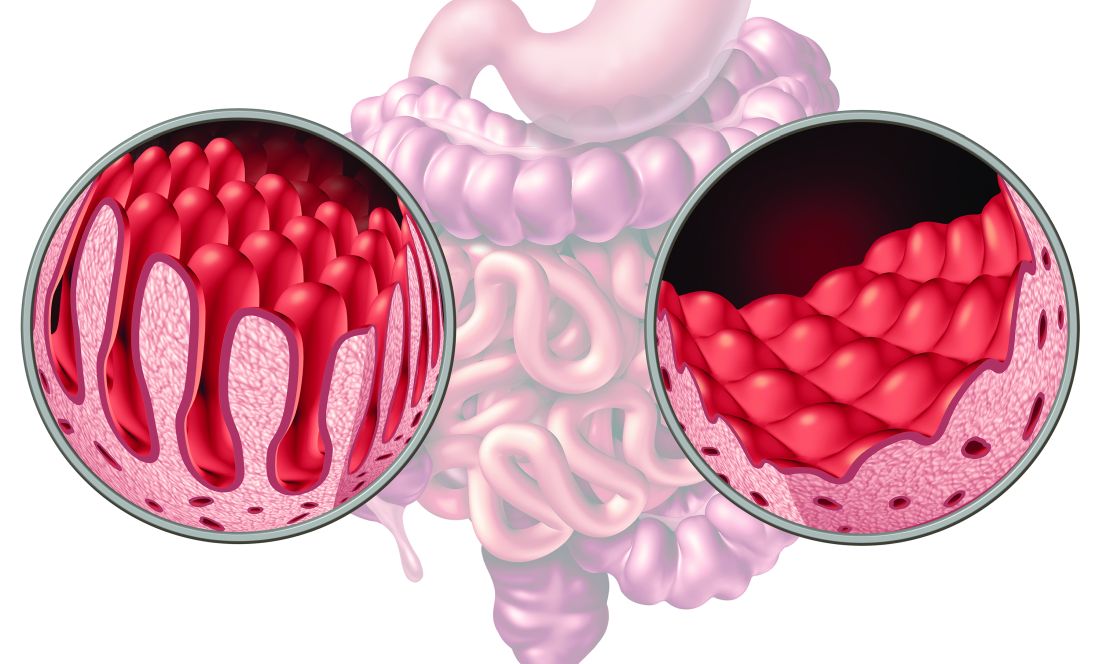
“This no-biopsy approach could lead to a shorter time to diagnosis, increased patient satisfaction, and reduced healthcare costs,” he said.
The study was published online in Gastroenterology.
Evaluating the No-Biopsy Approach
Dr. Shiha and colleagues conducted a systematic review and meta-analysis to evaluate to the accuracy of a no-biopsy approach for diagnosing celiac disease in adults. They looked for studies that reported the sensitivity and specificity of IgA-tTG ≥10xULN compared with duodenal biopsies (with a Marsh grade ≥2) in adults with suspected celiac disease.
The research team used a bivariate random-effects model to calculate the summary estimates of sensitivity, specificity, and positive and negative likelihood ratios. Then the positive and negative likelihood ratios were used to calculate the positive predictive value (PPV) of the no-biopsy approach across different pretest probabilities of celiac disease.
Among 18 studies with 12,103 participants from 15 countries, the pooled prevalence of biopsy-proven celiac disease was 62%. The proportion of patients with IgA-tTG ≥10xULN was 32%.
The summary sensitivity of IgA-tTG ≥10xULN was 51%, and the summary specificity was 100% for the diagnosis of celiac disease. The positive and negative likelihood ratios were 183.42 and .49, respectively. The area under the summary receiver operating characteristic curve was .83.
Overall, the PPV of IgA-tTG ≥10xULN to identify patients with celiac disease was 98%, which varied according to pretest probability of celiac disease in the studied population. Specifically, the PPV was 65%, 88%, 95%, and 99% if celiac disease prevalence was 1%, 4%, 10%, and 40%, respectively. The 40% prevalence represents the lower confidence interval of the pooled prevalence from the included studies, the authors noted.
“We provided PPV estimates of IgA-tTG ≥10xULN for common pretest probabilities of coeliac disease to aid clinicians and patients in reaching an informed decision on a no-biopsy diagnosis based on the best available evidence,” the authors wrote.
Considering Additional Factors
Due to the increased accuracy of serological tests, pediatric guidelines have adopted a no-biopsy approach, the authors wrote. Children with IgA-tTG ≥10xULN and positive serum endomysial antibodies (EMA) can be diagnosed with celiac disease without biopsy.
However, the no-biopsy approach remains controversial for diagnosing adult patients and requires additional study, the authors wrote. They noted a limitation that all included studies were conducted in secondary and tertiary care settings and excluded patients with known celiac disease or on a gluten-free diet, so the results may not be generalizable to primary care settings.
In addition, relying on serology testing alone could lead to potential false-positive diagnoses, unnecessary dietary restriction, and negative effects on patients’ quality of life, the authors wrote.
At the same time, duodenal biopsy may not always be accurate due to inadequate sampling and could result in false-negative histology. The no-biopsy approach could mitigate this potential risk, the authors noted.
“This study systematically collates the growing data supporting the accuracy of antibody testing to diagnose celiac disease,” said Benjamin Lebwohl, MD, AGAF, professor of medicine and epidemiology at Columbia University Medical Center and director of clinical research for the Celiac Disease Center at Columbia University, New York. Dr. Lebwohl wasn’t involved with this study.
“We have historically relied on duodenal biopsy to confirm the diagnosis of celiac disease, and the biopsy will still have a central role in most cases in the foreseeable future,” he said. “But as we hone our understanding of antibody testing, one day we may be able to accept or even recommend a biopsy-free approach in select patients.”
Two authors reported grant support from the National Institute for Health and Care Research and National Institute of Diabetes and Digestive and Kidney Diseases. Dr. Shiha reported speaker honorarium from Thermo Fisher. Dr. Lebwohl reported no relevant disclosures.
Select adult patients with immunoglobulin A-tissue transglutaminase antibody levels (IgA-tTG) greater than or equal to 10 times the upper limit of normal (ULN) and a moderate-to-high pretest probability of celiac disease could be diagnosed without undergoing invasive endoscopy and duodenal biopsy, according to a new study.
, the authors wrote.
“Our study confirms the high accuracy of serology-based diagnosis of coeliac disease in select adult patients,” said Mohamed G. Shiha, MBBCh, MRCP, lead author and a clinical research fellow in gastroenterology at Sheffield Teaching Hospitals in the United Kingdom.
“This no-biopsy approach could lead to a shorter time to diagnosis, increased patient satisfaction, and reduced healthcare costs,” he said.
The study was published online in Gastroenterology.
Evaluating the No-Biopsy Approach
Dr. Shiha and colleagues conducted a systematic review and meta-analysis to evaluate to the accuracy of a no-biopsy approach for diagnosing celiac disease in adults. They looked for studies that reported the sensitivity and specificity of IgA-tTG ≥10xULN compared with duodenal biopsies (with a Marsh grade ≥2) in adults with suspected celiac disease.
The research team used a bivariate random-effects model to calculate the summary estimates of sensitivity, specificity, and positive and negative likelihood ratios. Then the positive and negative likelihood ratios were used to calculate the positive predictive value (PPV) of the no-biopsy approach across different pretest probabilities of celiac disease.
Among 18 studies with 12,103 participants from 15 countries, the pooled prevalence of biopsy-proven celiac disease was 62%. The proportion of patients with IgA-tTG ≥10xULN was 32%.
The summary sensitivity of IgA-tTG ≥10xULN was 51%, and the summary specificity was 100% for the diagnosis of celiac disease. The positive and negative likelihood ratios were 183.42 and .49, respectively. The area under the summary receiver operating characteristic curve was .83.
Overall, the PPV of IgA-tTG ≥10xULN to identify patients with celiac disease was 98%, which varied according to pretest probability of celiac disease in the studied population. Specifically, the PPV was 65%, 88%, 95%, and 99% if celiac disease prevalence was 1%, 4%, 10%, and 40%, respectively. The 40% prevalence represents the lower confidence interval of the pooled prevalence from the included studies, the authors noted.
“We provided PPV estimates of IgA-tTG ≥10xULN for common pretest probabilities of coeliac disease to aid clinicians and patients in reaching an informed decision on a no-biopsy diagnosis based on the best available evidence,” the authors wrote.
Considering Additional Factors
Due to the increased accuracy of serological tests, pediatric guidelines have adopted a no-biopsy approach, the authors wrote. Children with IgA-tTG ≥10xULN and positive serum endomysial antibodies (EMA) can be diagnosed with celiac disease without biopsy.
However, the no-biopsy approach remains controversial for diagnosing adult patients and requires additional study, the authors wrote. They noted a limitation that all included studies were conducted in secondary and tertiary care settings and excluded patients with known celiac disease or on a gluten-free diet, so the results may not be generalizable to primary care settings.
In addition, relying on serology testing alone could lead to potential false-positive diagnoses, unnecessary dietary restriction, and negative effects on patients’ quality of life, the authors wrote.
At the same time, duodenal biopsy may not always be accurate due to inadequate sampling and could result in false-negative histology. The no-biopsy approach could mitigate this potential risk, the authors noted.
“This study systematically collates the growing data supporting the accuracy of antibody testing to diagnose celiac disease,” said Benjamin Lebwohl, MD, AGAF, professor of medicine and epidemiology at Columbia University Medical Center and director of clinical research for the Celiac Disease Center at Columbia University, New York. Dr. Lebwohl wasn’t involved with this study.
“We have historically relied on duodenal biopsy to confirm the diagnosis of celiac disease, and the biopsy will still have a central role in most cases in the foreseeable future,” he said. “But as we hone our understanding of antibody testing, one day we may be able to accept or even recommend a biopsy-free approach in select patients.”
Two authors reported grant support from the National Institute for Health and Care Research and National Institute of Diabetes and Digestive and Kidney Diseases. Dr. Shiha reported speaker honorarium from Thermo Fisher. Dr. Lebwohl reported no relevant disclosures.
Select adult patients with immunoglobulin A-tissue transglutaminase antibody levels (IgA-tTG) greater than or equal to 10 times the upper limit of normal (ULN) and a moderate-to-high pretest probability of celiac disease could be diagnosed without undergoing invasive endoscopy and duodenal biopsy, according to a new study.
, the authors wrote.
“Our study confirms the high accuracy of serology-based diagnosis of coeliac disease in select adult patients,” said Mohamed G. Shiha, MBBCh, MRCP, lead author and a clinical research fellow in gastroenterology at Sheffield Teaching Hospitals in the United Kingdom.
“This no-biopsy approach could lead to a shorter time to diagnosis, increased patient satisfaction, and reduced healthcare costs,” he said.
The study was published online in Gastroenterology.
Evaluating the No-Biopsy Approach
Dr. Shiha and colleagues conducted a systematic review and meta-analysis to evaluate to the accuracy of a no-biopsy approach for diagnosing celiac disease in adults. They looked for studies that reported the sensitivity and specificity of IgA-tTG ≥10xULN compared with duodenal biopsies (with a Marsh grade ≥2) in adults with suspected celiac disease.
The research team used a bivariate random-effects model to calculate the summary estimates of sensitivity, specificity, and positive and negative likelihood ratios. Then the positive and negative likelihood ratios were used to calculate the positive predictive value (PPV) of the no-biopsy approach across different pretest probabilities of celiac disease.
Among 18 studies with 12,103 participants from 15 countries, the pooled prevalence of biopsy-proven celiac disease was 62%. The proportion of patients with IgA-tTG ≥10xULN was 32%.
The summary sensitivity of IgA-tTG ≥10xULN was 51%, and the summary specificity was 100% for the diagnosis of celiac disease. The positive and negative likelihood ratios were 183.42 and .49, respectively. The area under the summary receiver operating characteristic curve was .83.
Overall, the PPV of IgA-tTG ≥10xULN to identify patients with celiac disease was 98%, which varied according to pretest probability of celiac disease in the studied population. Specifically, the PPV was 65%, 88%, 95%, and 99% if celiac disease prevalence was 1%, 4%, 10%, and 40%, respectively. The 40% prevalence represents the lower confidence interval of the pooled prevalence from the included studies, the authors noted.
“We provided PPV estimates of IgA-tTG ≥10xULN for common pretest probabilities of coeliac disease to aid clinicians and patients in reaching an informed decision on a no-biopsy diagnosis based on the best available evidence,” the authors wrote.
Considering Additional Factors
Due to the increased accuracy of serological tests, pediatric guidelines have adopted a no-biopsy approach, the authors wrote. Children with IgA-tTG ≥10xULN and positive serum endomysial antibodies (EMA) can be diagnosed with celiac disease without biopsy.
However, the no-biopsy approach remains controversial for diagnosing adult patients and requires additional study, the authors wrote. They noted a limitation that all included studies were conducted in secondary and tertiary care settings and excluded patients with known celiac disease or on a gluten-free diet, so the results may not be generalizable to primary care settings.
In addition, relying on serology testing alone could lead to potential false-positive diagnoses, unnecessary dietary restriction, and negative effects on patients’ quality of life, the authors wrote.
At the same time, duodenal biopsy may not always be accurate due to inadequate sampling and could result in false-negative histology. The no-biopsy approach could mitigate this potential risk, the authors noted.
“This study systematically collates the growing data supporting the accuracy of antibody testing to diagnose celiac disease,” said Benjamin Lebwohl, MD, AGAF, professor of medicine and epidemiology at Columbia University Medical Center and director of clinical research for the Celiac Disease Center at Columbia University, New York. Dr. Lebwohl wasn’t involved with this study.
“We have historically relied on duodenal biopsy to confirm the diagnosis of celiac disease, and the biopsy will still have a central role in most cases in the foreseeable future,” he said. “But as we hone our understanding of antibody testing, one day we may be able to accept or even recommend a biopsy-free approach in select patients.”
Two authors reported grant support from the National Institute for Health and Care Research and National Institute of Diabetes and Digestive and Kidney Diseases. Dr. Shiha reported speaker honorarium from Thermo Fisher. Dr. Lebwohl reported no relevant disclosures.
FROM GASTROENTEROLOGY